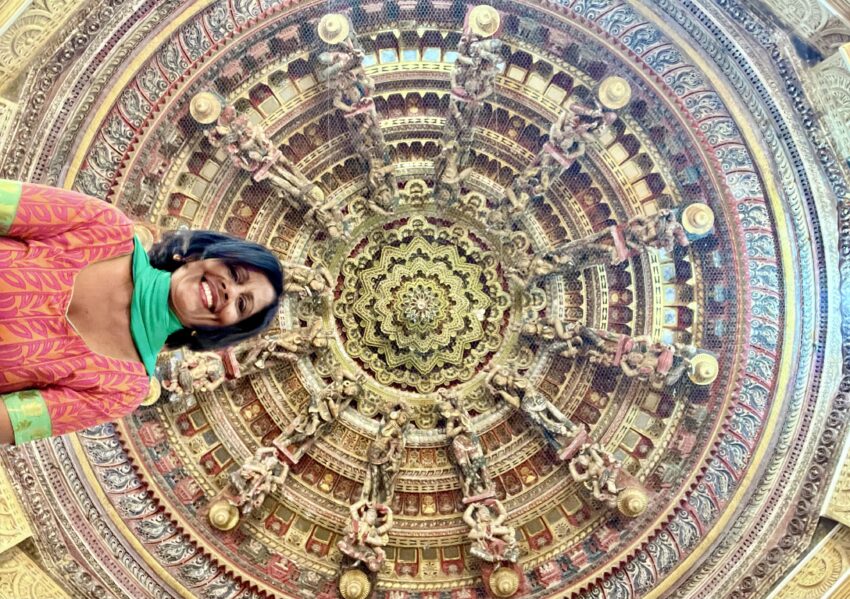
A tour of Rajasthan is a journey through India’s most colorful and culturally rich landscapes. Each city in this state offers its own charm – Jaipur dazzles with its pink-hued palaces and majestic forts; Udaipur enchants with serene lakes and romantic white-marble architecture; Jodhpur impresses with its towering Mehrangarh Fort rising above a sea of blue houses; and Jaisalmer captivates with its golden sandstone fortress glowing in the desert sun.
We went on a guided tour of the four cities in November 2025. Temperatures were mild during the day and not too cold in the night. We had planned the itinerary in each city and also selected the hotels we wanted to stay, and our travel agent put everything together for us seamlessly.
Our detailed itinerary
- Day 1 – Morning flight to Jaipur and site seeing
- Day 2, 3 – Jaipur site seeing
- Day 4 – Morning flight to Jaisalmer and site seeing
- Day 5 – Jaisalmer site seeing in the morning and drive to Jodhpur in the afternoon.
- Day 6 – Jodhpur site seeing
- Day 7 – Jodhpur site seeing in the morning and drive to Udaipur
- Day 8 – Udaipur site seeing
- Day 9 – Udaipur site seeing in the morning and fly out in the afternoon
City names in Rajasthan (and India) with suffixes –pur, –mer, and –bad
On our first day in Jaipur, our guide explained the difference between city names in Rajasthan (and across India) that end with the suffixes –pur, –mer, and –bad.
- -pur – come from the Sanskrit word pura, meaning ‘city’ or ‘settlement’. It was commonly used in ancient and medieval India to denote a fortified city like – Jaipur, Kanpur, Udaipur.
- -mer – refers to a ‘hill’ or ‘hill fort’. So names like Jaisalmer or Amer literally point to fortified settlements built on hilltops.
- -bad – This suffix comes from the Persian word abad, meaning ‘inhabited’. All such names were given during the Mughal and Sultanate eras, like – Hyderabad, Ahmedabad, Aurangabad.
Hindi/Rajasthani Terms
- Pol – Gate
- Haveli – Mansion
- Mandir – Temple
- Mor – Peacock
- Tirthankara – Used for Jain supreme preachers of dharma
- Mahal – Palace
- Sheesh – Mirror
- Suraj – Sun
- Chand – Moon
- Moti – Pearl
Influential kings of Rajasthan
- Jaipur’s history is shaped by a line of influential Kachwaha Rajput kings, each leaving a distinctive mark on the city.
- Maharaja Sawai Jai Singh II (1688–1743) – is the most celebrated and founder of Jaipur in 1727. He also helped in building the Jantar Mantar.
- Maharaja Pratap Singh (1764–1803) – added to the city’s charm with the iconic Hawa Mahal.
- Maharaja Madho Singh II (1862–1922) – blended European influences with Rajput traditions, further enriching the city’s architecture.
- Maharaja Sawai Man Singh II (1911–1970) – Jaipur’s last ruling king, modernized the city and helped transform royal palaces into world-famous heritage hotels.
- Jaisalmer’s history is closely tied to the Bhati Rajput kings, each leaving a lasting mark on the city’s heritage.
- Rawal Jaisal (1156–1168) – the founder, established Jaisalmer Fort in 1156 on Trikuta Hill, laying the foundation of the city.
- Rawal Lunkaran (16th century) – extended the kingdom’s territories and patronized several havelis and temples, enriching the city’s architectural legacy.
- Maharawal Jawahar Singh (20th century) – The last ruling king, modernized Jaisalmer while preserving its unique cultural and architectural heritage.
- Jodhpur’s rich history is deeply intertwined with the Rathore dynasty.
- Rao Jodha (1438–1489) – founded the city in 1459 and built the majestic Mehrangarh Fort.
- Raja Sur Singh (1595–1619) – consolidated the kingdom under Mughal influence while promoting art and trade.
- Maharaja Jaswant Singh (1629–1678) – extended Jodhpur’s influence across Rajasthan and beyond.
- Maharaja Umaid Singh (1923–1947) – The last ruling king, modernized the city and commissioned the iconic Umaid Bhawan Palace.
- Udaipur’s history is shaped by the legendary Sisodia rulers of Mewar.
- Maharana Udai Singh II (1537–1572) – founded the city in 1559, building the City Palace and establishing Udaipur as the new capital after Chittorgarh was sacked.
- Maharana Pratap Singh (1540–1597) – son of Uday Singh II, Pratap Singh became a symbol of Rajput valor for resisting Mughal emperor Akbar and fighting the famous Battle of Haldighati.
- Maharana Bhupal Singh (1930–1955) – The last ruling king, oversaw modernization and the preservation of Udaipur’s heritage before its integration into independent India.
In Rajasthan, royal titles vary by region and tradition
- Maharaja simply means “Great King” and was used widely across India.
- Maharana used mainly in Mewar (Udaipur), highlights both kingship and warrior valor, with rulers like Maharana Pratap embodying this spirit.
- Maharawal used in Jaisalmer, is a title for the Bhati Rajput kings, combining royal authority with the desert kingdom’s warrior tradition.