2 Nights in Trident Udaipur
Udaipur, often called the City of Lakes, is one of Rajasthan’s most romantic and picturesque destinations, and it quickly became my favorite. Surrounded by the Aravalli Hills, the city is known for its shimmering lakes, historic palaces, and elegant havelis. Like other cities in Rajasthan, Udaipur is rich with places to explore, and our guide had a busy itinerary planned for us during our two-day stay.
Udaipur lies about 264 km south of Jodhpur, and our drive took a little over six hours since we made a worthwhile stop along the way to visit the splendid Ranakpur Jain Temple.
- Day 1
- Ranakpur Jain Temple
- Pichola Lake
- Day 2
- City Palace
- Jagdish temple
- Gangour Ghat
- Bagore Ki Haveli
- Dudh Talai
- Ahar Museum and cenotaph
- Saheliyon Ki Bari
- Maharana Pratap Smarak
- Rajiv Gandhi Garden
- Monsoon Palace – Evening Sunset
- Day 3 – Morning
- Boat ride on Pichola Lake to Jag Mandir Palace
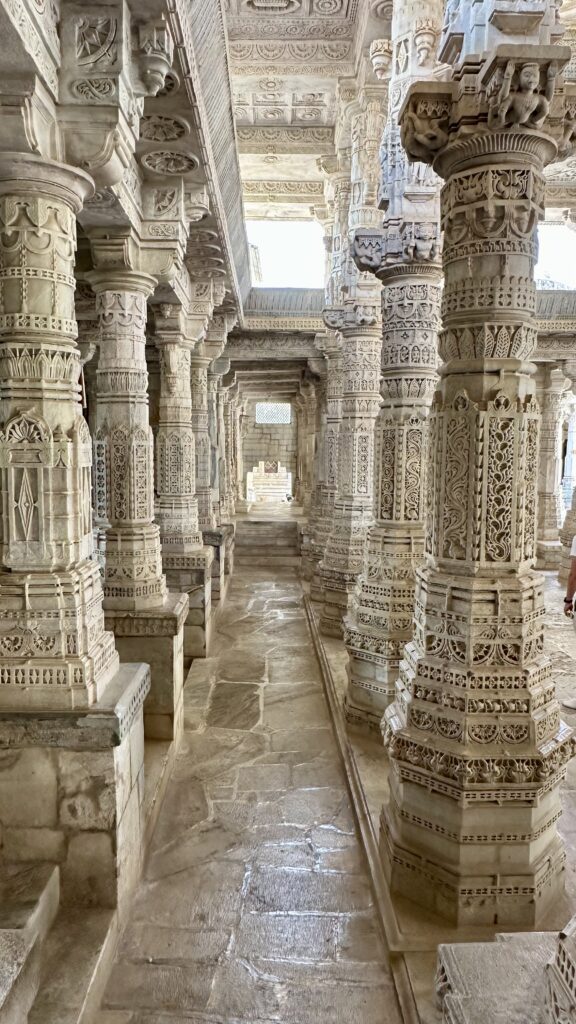
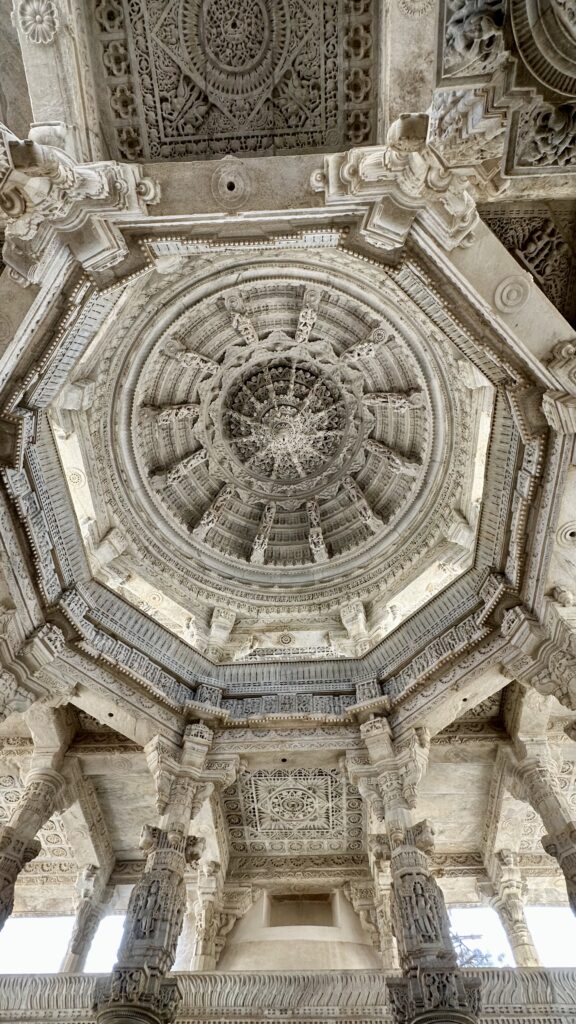
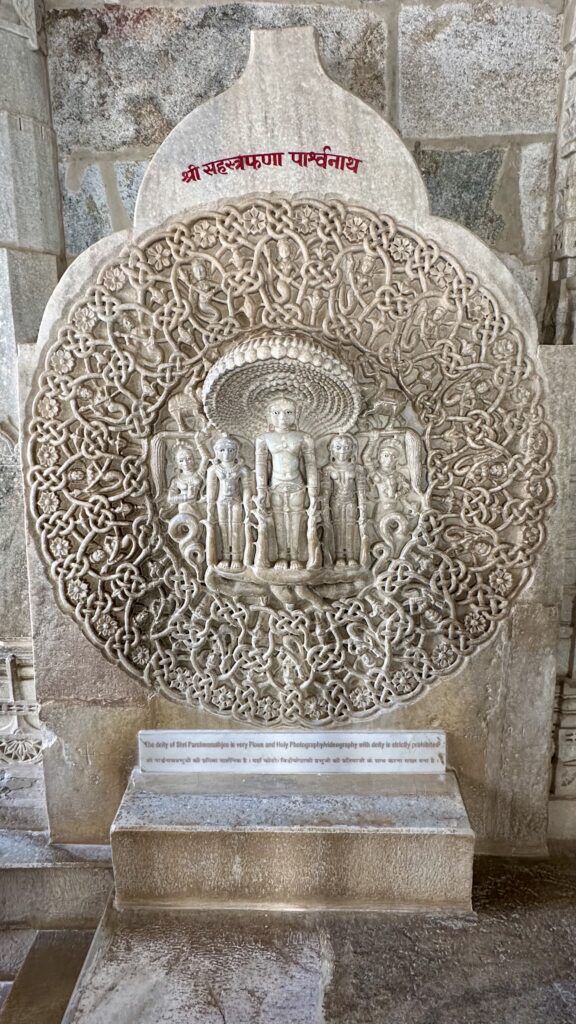
Ranakpur Jain Temple – This temple is another stunning and important Jain temples in Rajasthan and renowned for its breathtaking marble architecture.
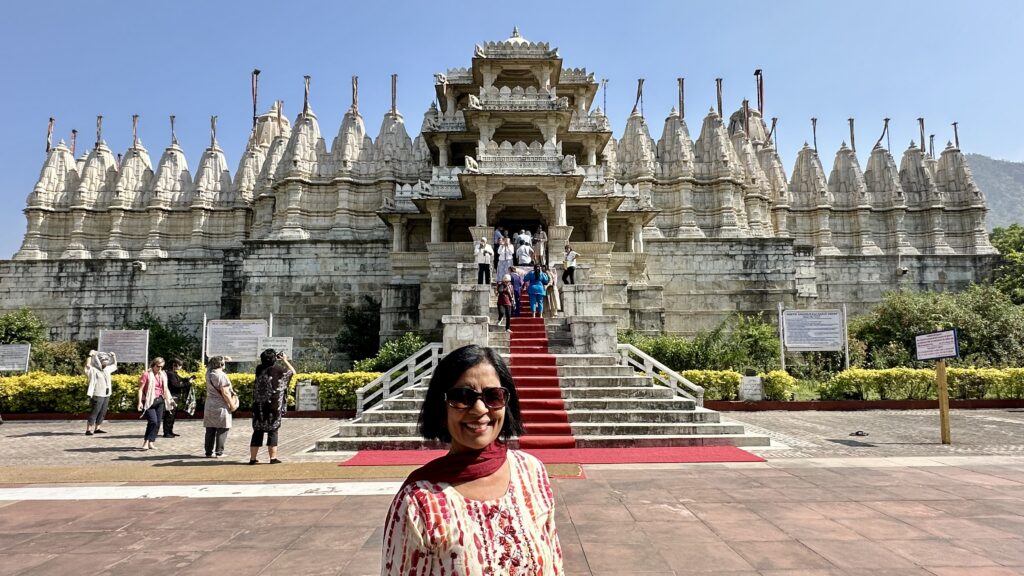
Dedicated to Tirthankara Adinatha, the temple was built in the 15th century and is famous for its 1,444 intricately carved marble pillars, no two of which are alike. The temple’s detailed ceilings, elaborate domes, and beautifully sculpted halls create an atmosphere of serenity and awe. It is a must-visit for anyone driving between Jodhpur and Udaipur or vice-versa.
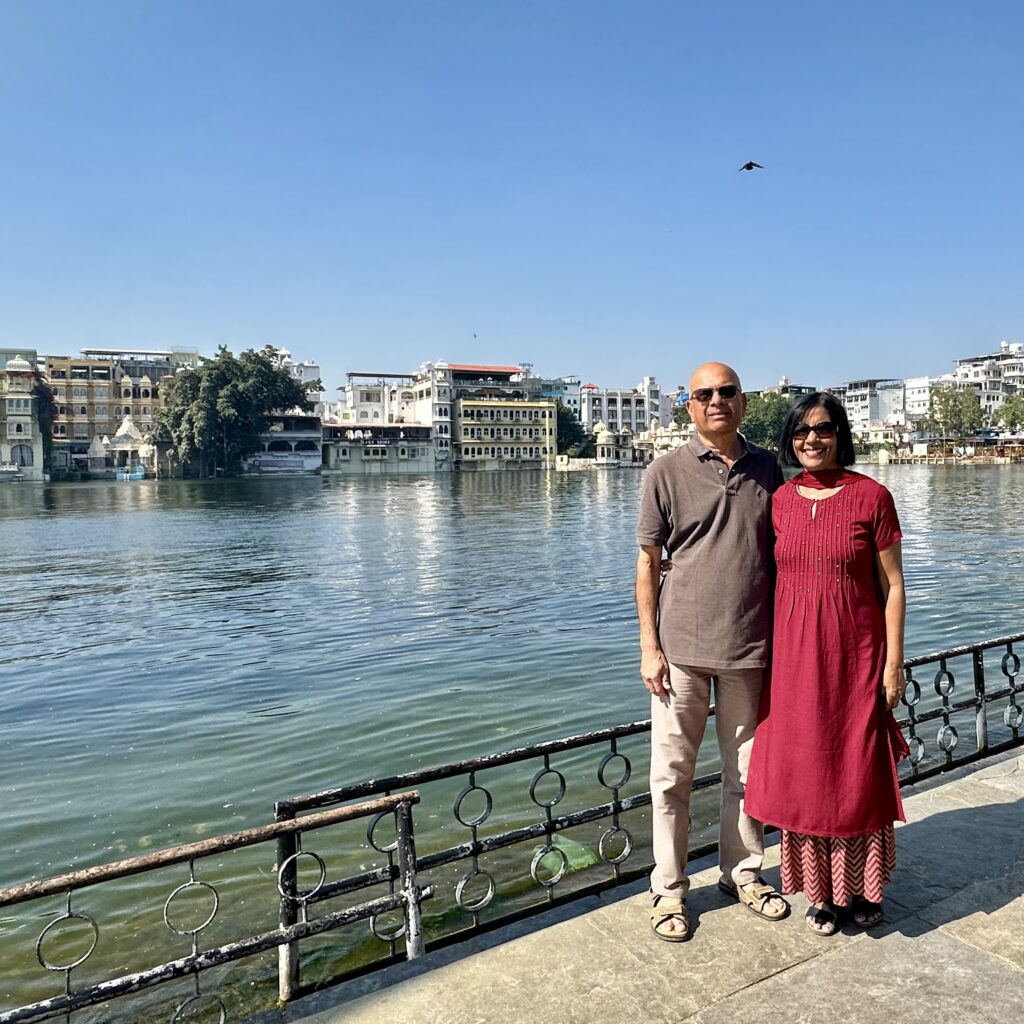
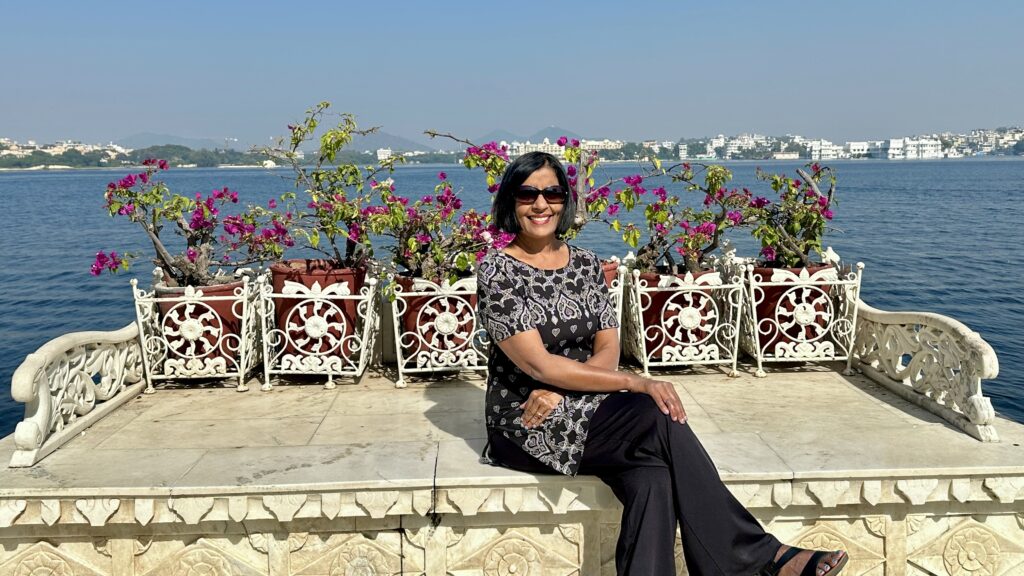
Pichola Lake – After checking into our beautiful hotel, we took a walk to the edge of Lake Pichola, accessible directly from within the hotel complex, where we were greeted with a fantastic view of the shimmering waters and the stunning palaces and hotels that surround the lake.
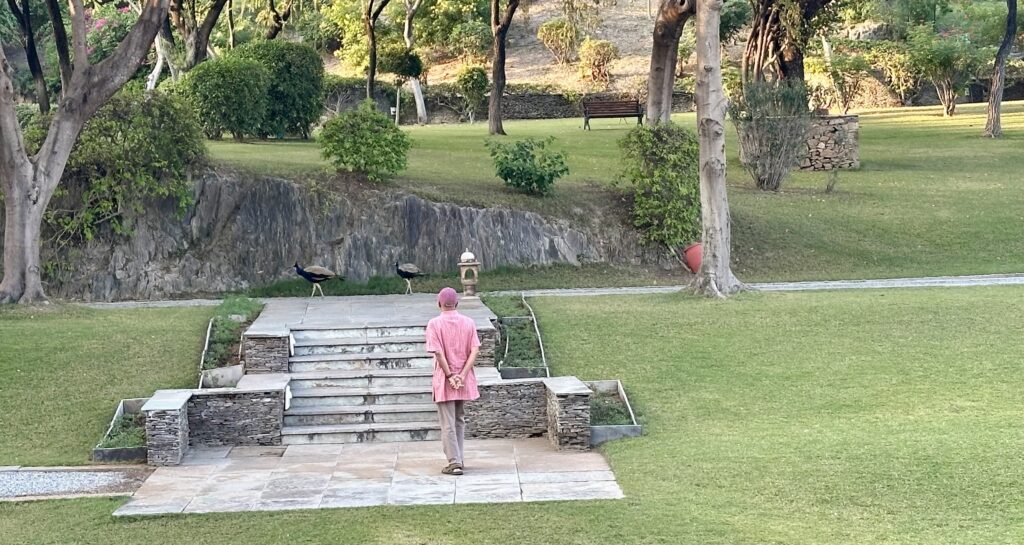
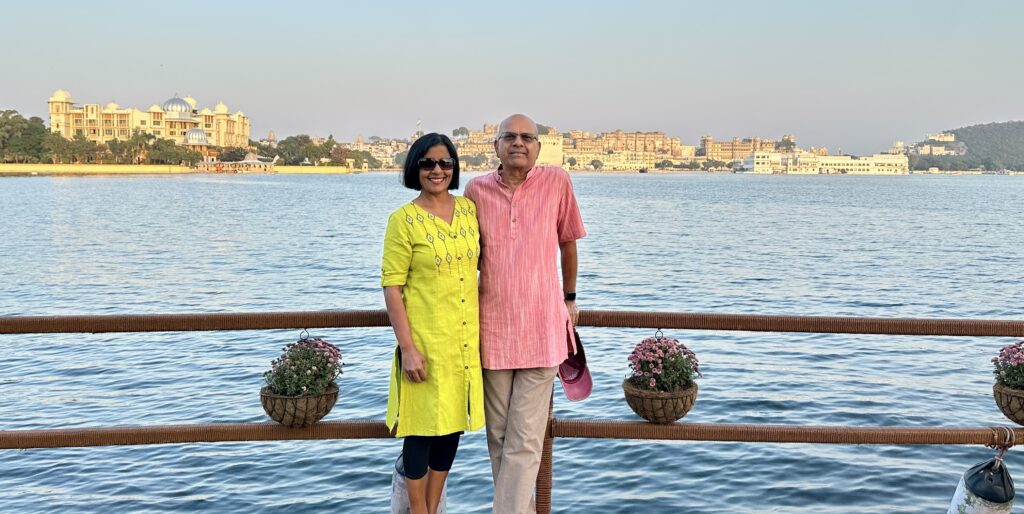
City Palace – It’s best to visit early in the morning to avoid the heat and the crowds. There is so much to explore here that even if you’re not particularly interested in history, you should still set aside 2-3 hours. After visiting the forts and palaces in other Rajasthan cities, we expected to see more of the familiar rooms like the Sheesh Mahal and Zenana Mahal—but Udaipur’s City Palace still managed to surprise us with its unique charm and stunning details.
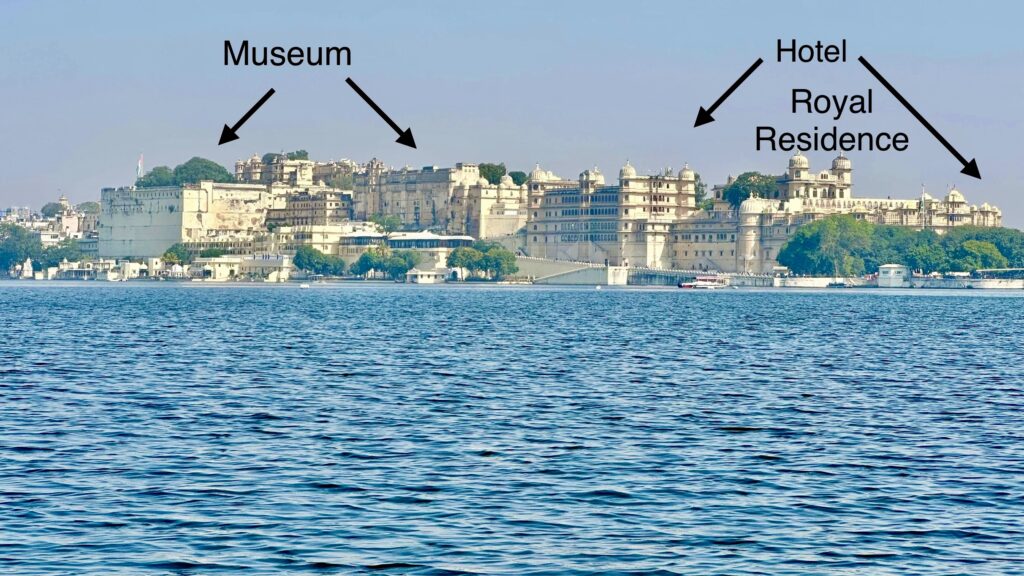
The picture below of Udaipur City Palace was taken during our boat ride on Lake Pichola. It clearly shows the palace’s three sections—the royal residence, the 2 hotels, and the museum. The museum area, which is open to visitors, is quite extensive, so it’s best to set aside 2–3 hours to explore it comfortably.
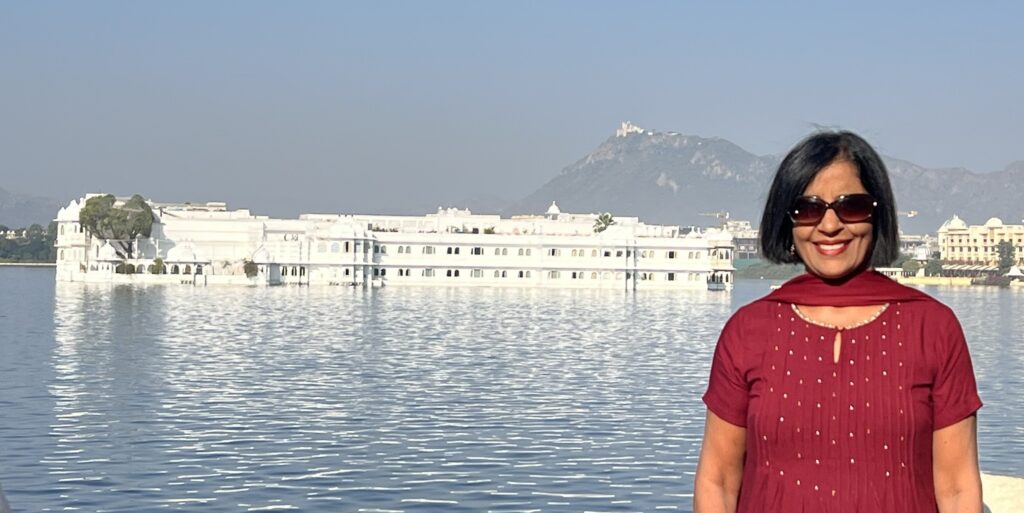
There are many courtyards and rooms to explore inside the palace, along with plenty of steps to climb. We first walked up a rampart that offered a stunning view of Lake Pichola and the beautiful, snow-white Taj Lake Palace seemingly floating on the water.
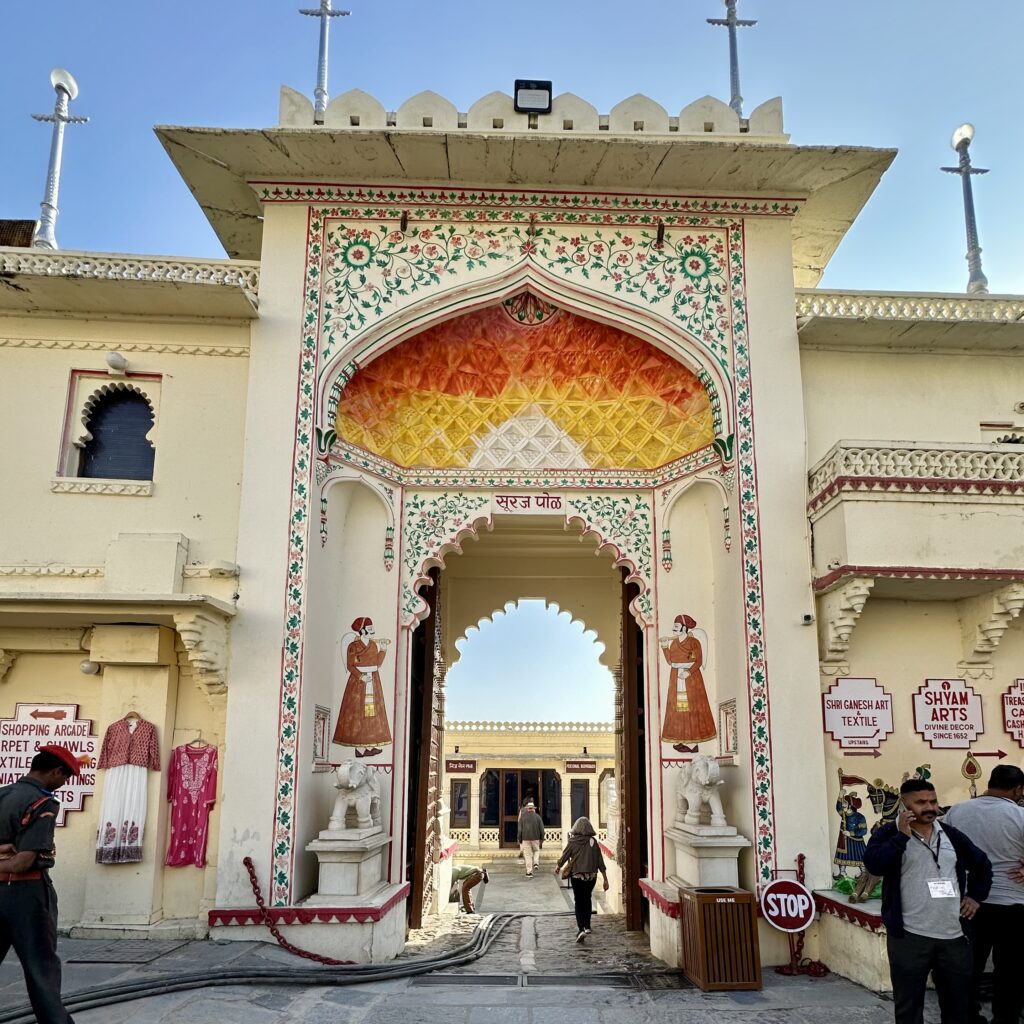
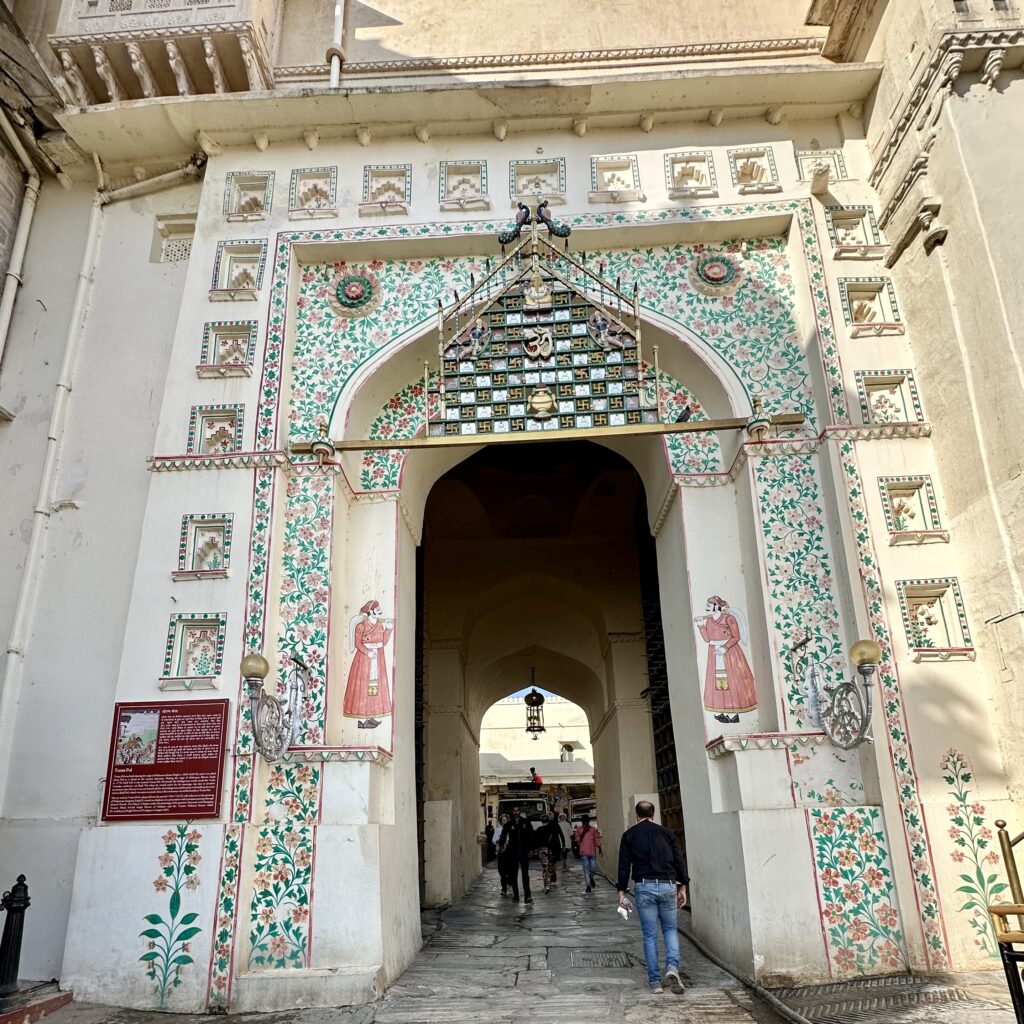
City Palace Gates – There are a number of gates to enter the City Palace. We entered the palace from an area where there were 2 gates – Torana Gate and Suraj Pol positioned opposite each other for symbolic and ceremonial reasons. Suraj Pol represents the rising sun, reflecting the Sisodia Rajputs’ lineage from the Sun God. Torana Gate was used to welcome victorious kings back into the palace with auspicious rituals. Together, the two gates express the fusion of Rajput identity, ritual, and architecture.
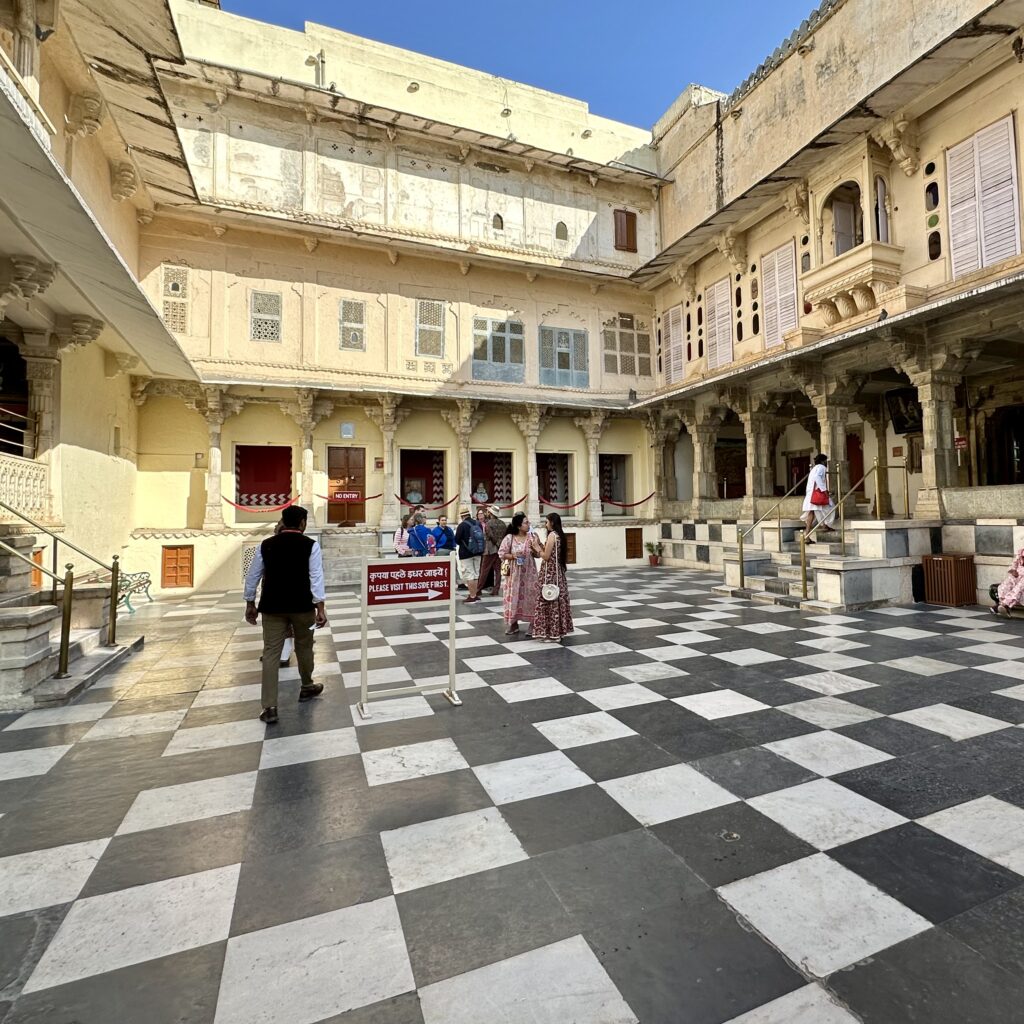
City Palace, Royal Angan – This courtyard is the oldest part of the palace, laid by Maharana Udai Singh, and the site of historical coronation ceremonies.
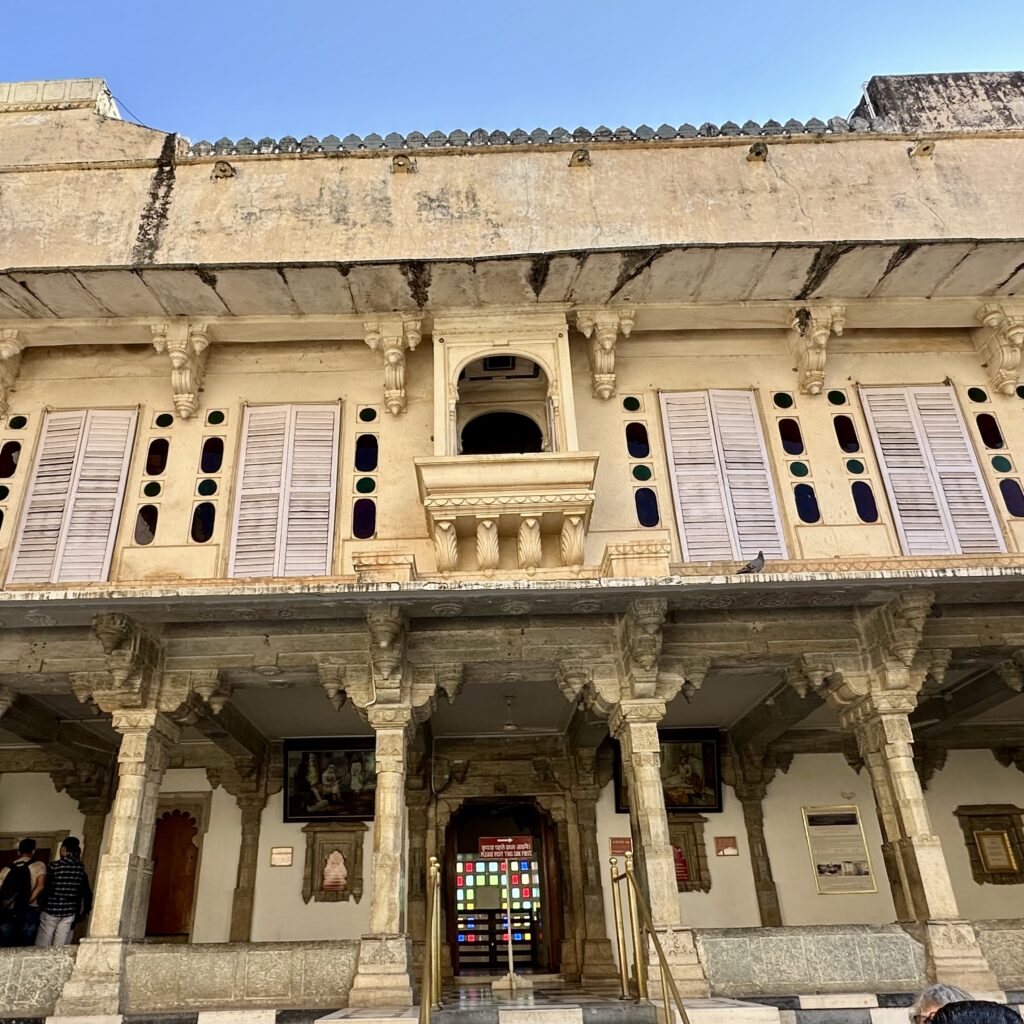
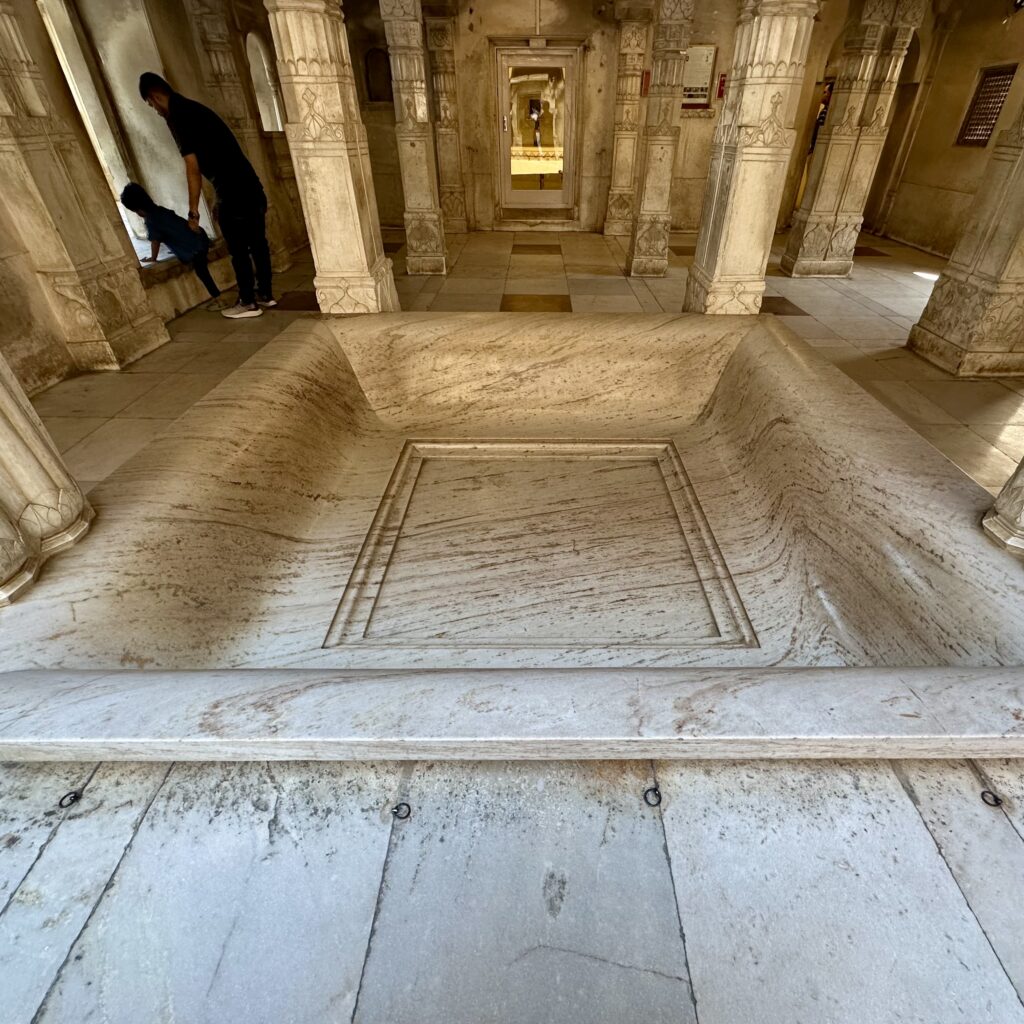
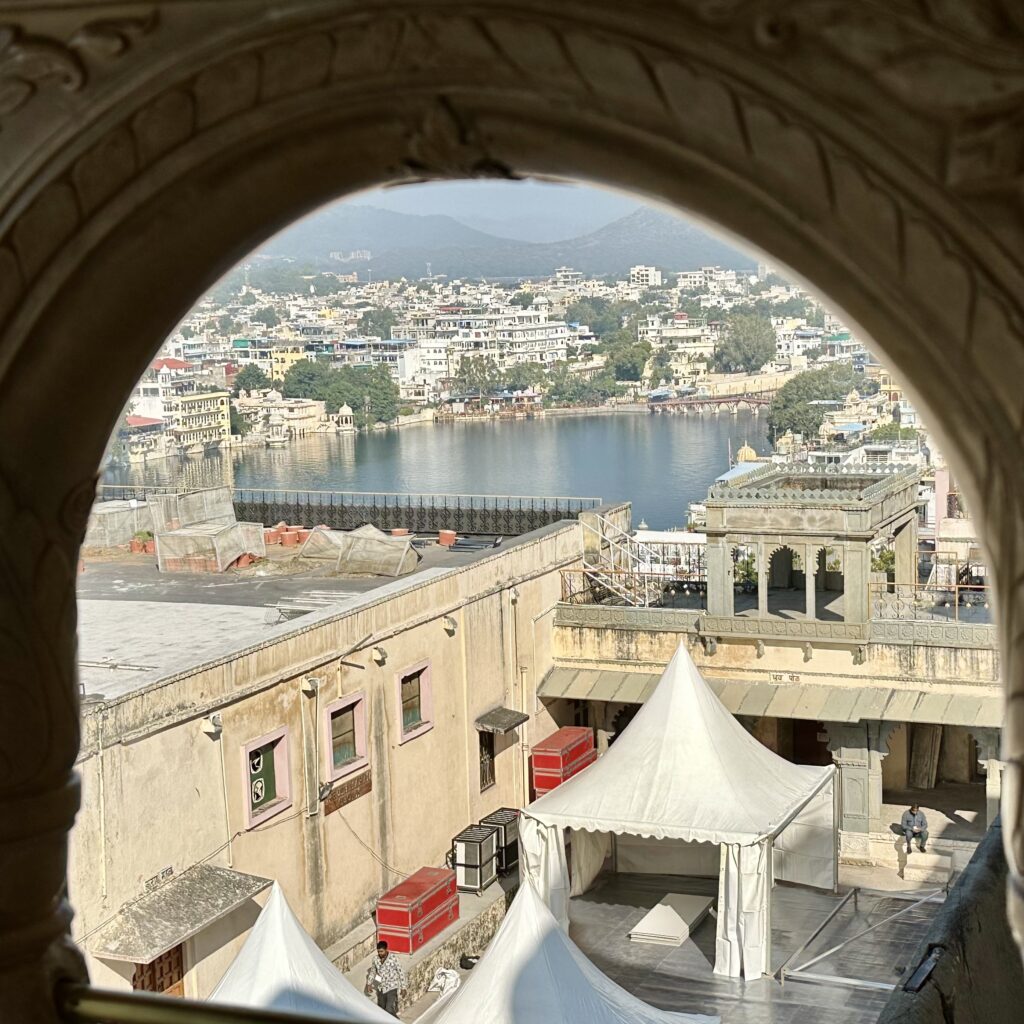
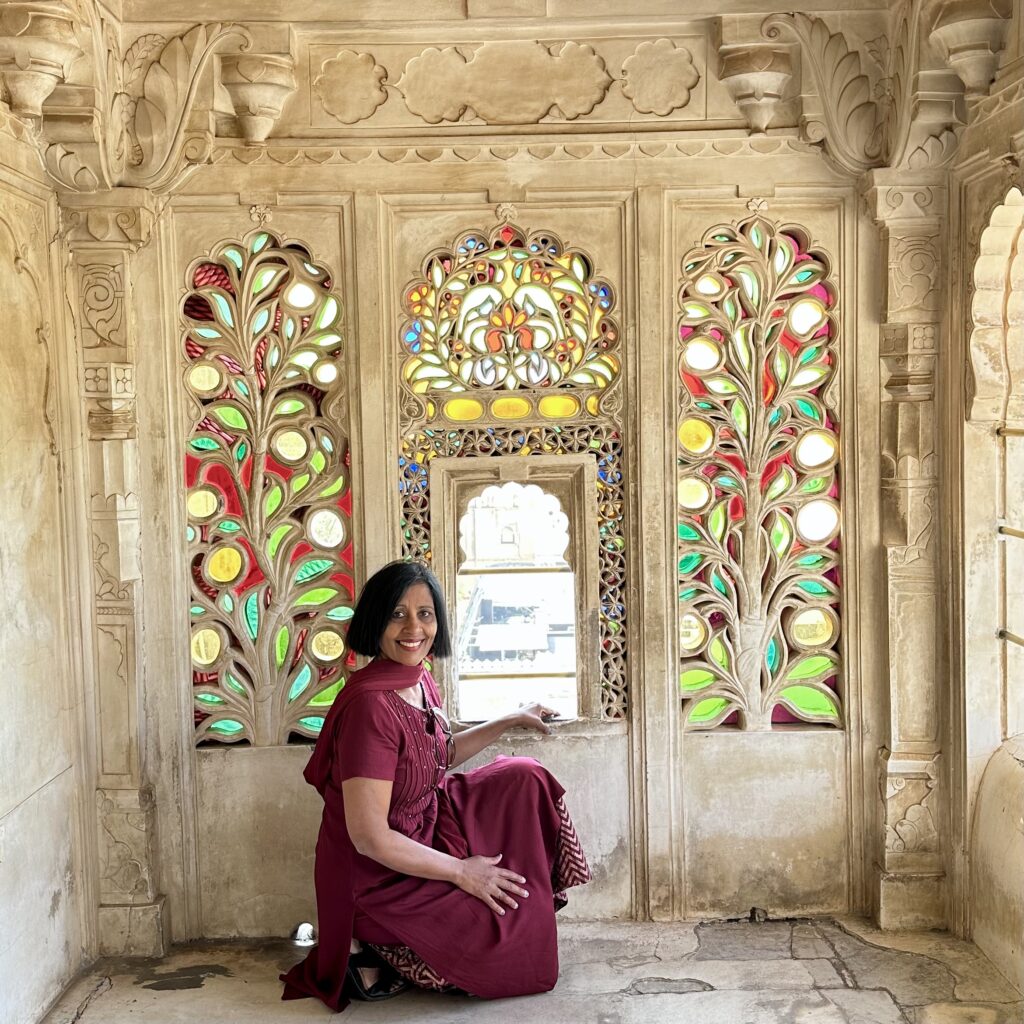
After our walk through Royal Angan, we continued past a part of the City Palace featuring the coronation tub and then along a series of ornate, colorful windows offering stunning views of the city.
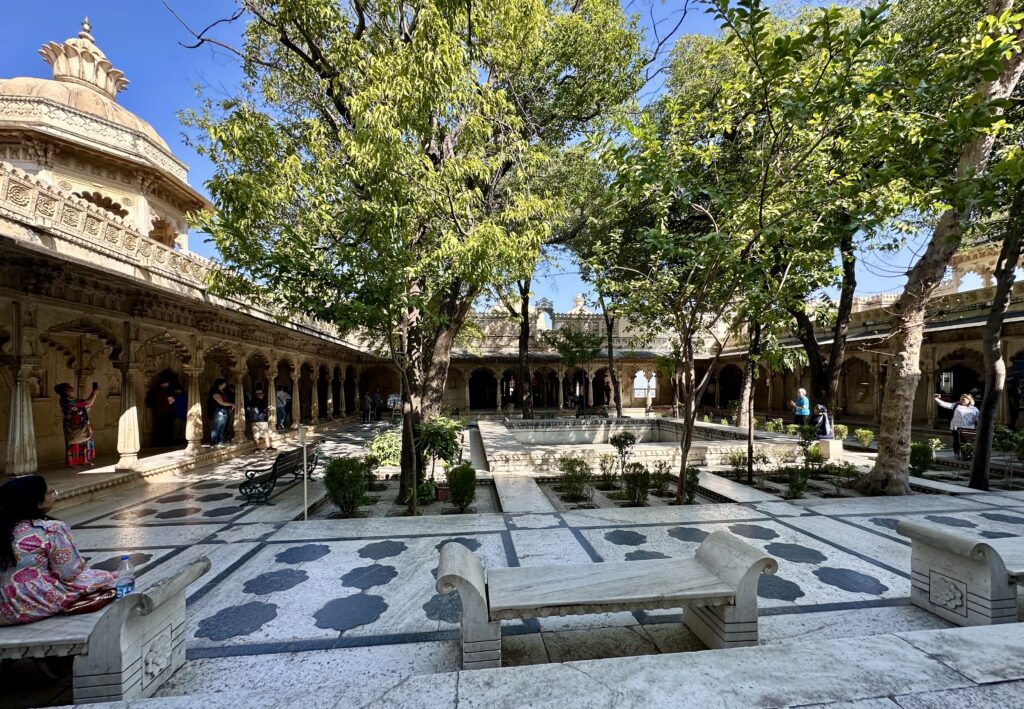
City Palace, Badi Mahal – or the Garden Palace is a large courtyard situated on a natural rock formation and features a swimming pool used for Holi celebrations.
City Palace, Sheesh Mahal – or Palace of Mirrors, features elaborate mirror work on its walls and ceilings and was used for royal gatherings and celebrations.
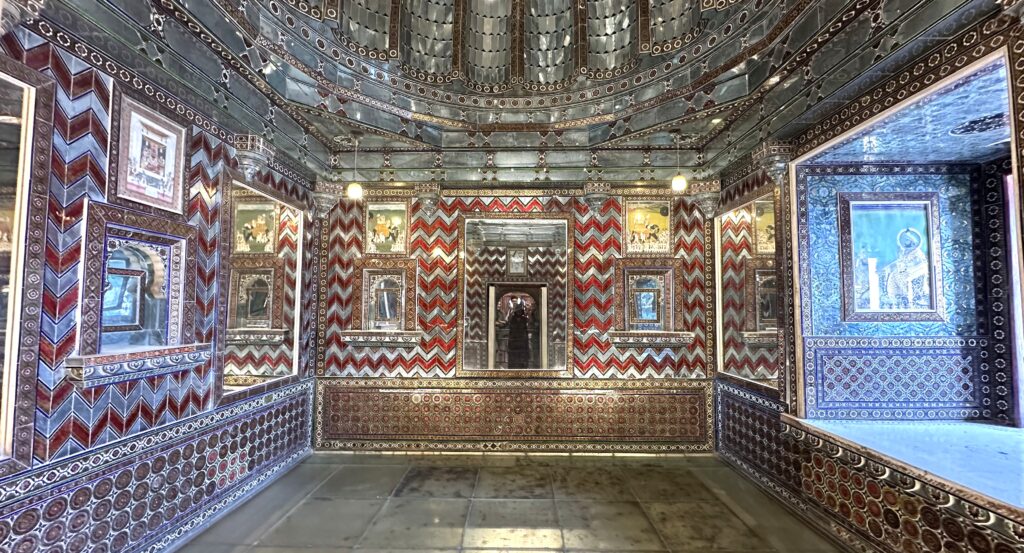
City Palace, Chini Chitrashala – The courtyard is adorned with a collection of decorative tiles from both Dutch and Chinese influences, including fine porcelain and glass work.
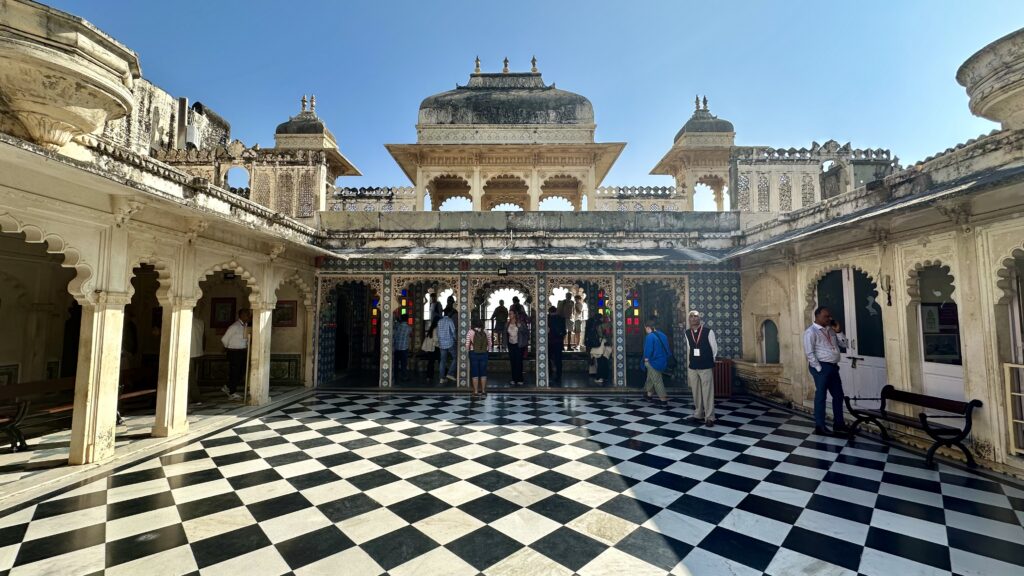
City Palace, Moti Mahal (Private Audience Hall) – Moti means pearl. This room known for its rich interiors, and serene, pearl-like elegance was used for private royal gatherings and important ceremonies.
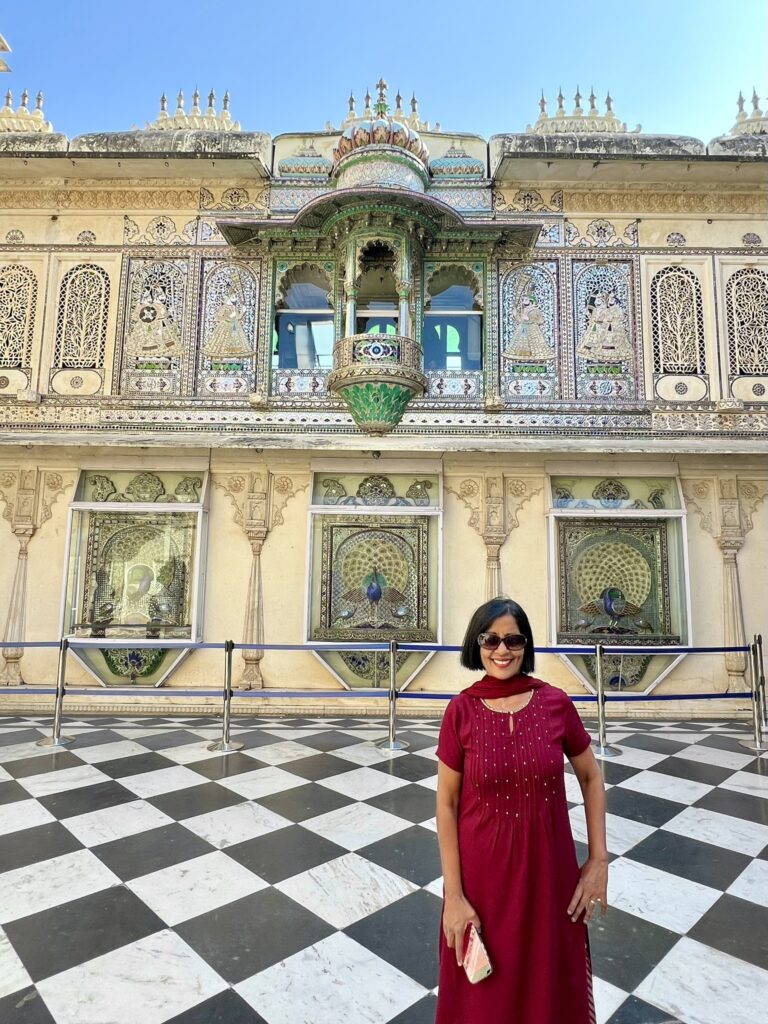
City Palace, Mor Chowk (Peacock Square) – This stunning courtyard is integral to the inner courts of the palace. The elaborate design of this square consists of three peacocks (representing the three seasons of summer, winter, and monsoon) modeled in high relief and faced with coloured glass mosaic, built into successive niches in the wall area or Jharokhas. These were built during Maharana Sajjan Singh’s reign, 200 years after the palace was established. The peacocks have been crafted with 5000 pieces of glass, which shine in green, gold, and blue colours.
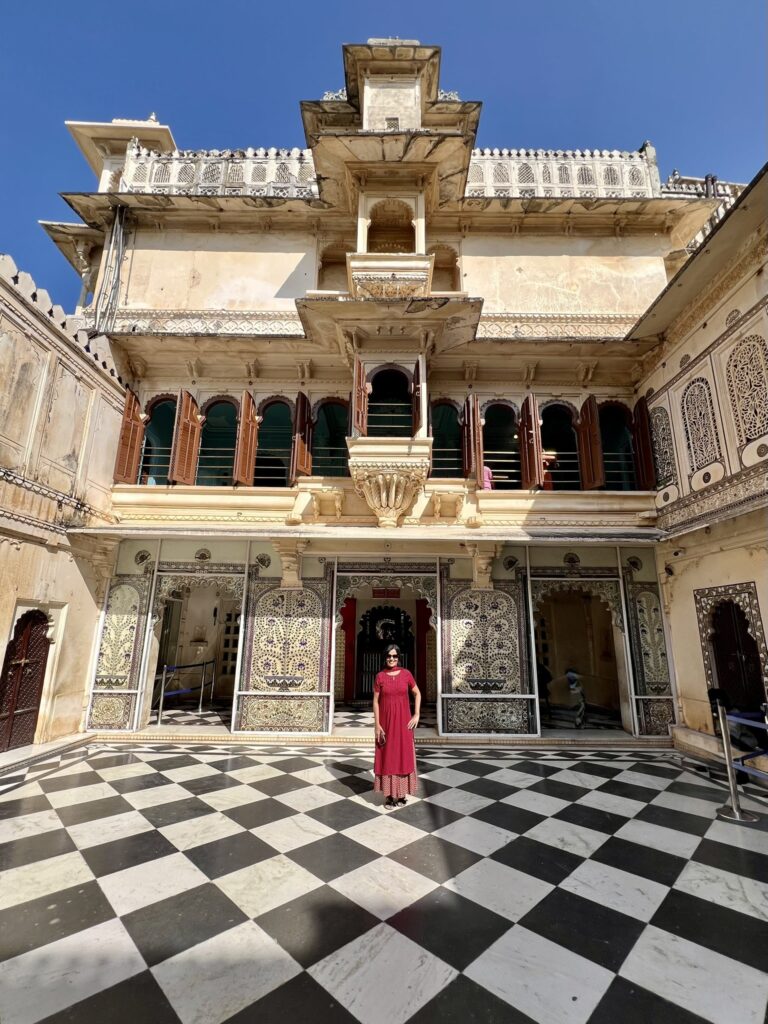
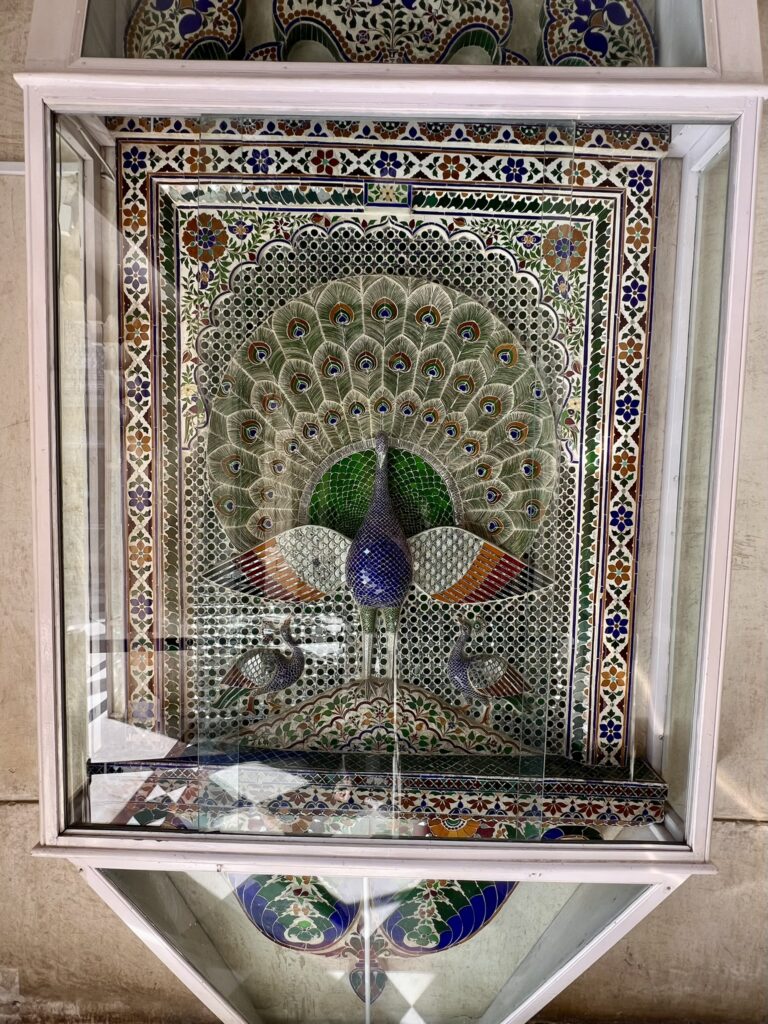
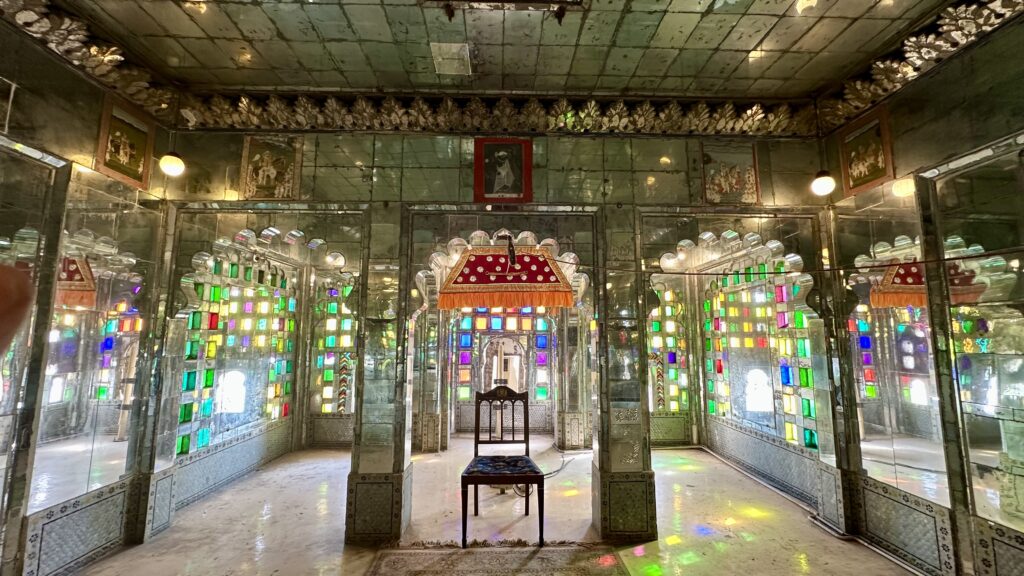
City Palace, Manak Mahal (Public Audience Hall) – Also known as the Ruby Palace, this beautifully decorated hall features intricate glass and crystal work. It once served as the formal audience chamber where the Mewar rulers held official meetings and addressed visitors and dignitaries.
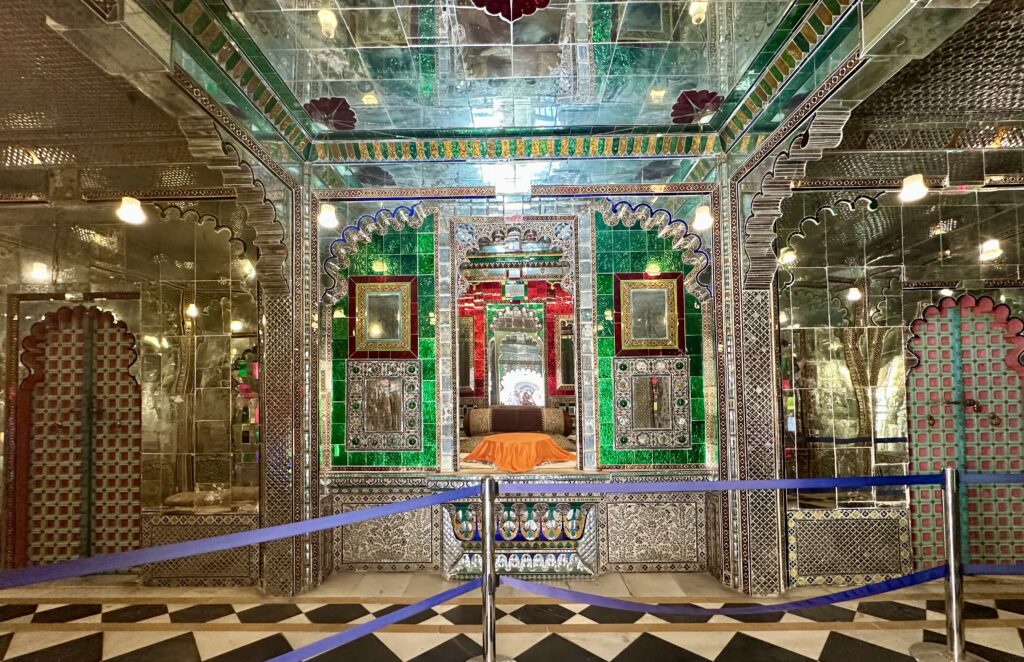
Up to this point, we had been exploring the Mardana Mahal (the King’s Palace). We then proceeded into the Zenana Mahal, also known as the Queen’s Palace.
City Palace, Zenana Mahal – or Queen’s Palace, is a distinct section of Udaipur’s City Palace complex, separate from other areas like the King’s Palace (Mardana Mahal). It is specifically designated for the queen and is accessible to visitors. The Zenana Mahal was constructed in different phases between 1620-1628 with contributions from Maharana Karan Singh.
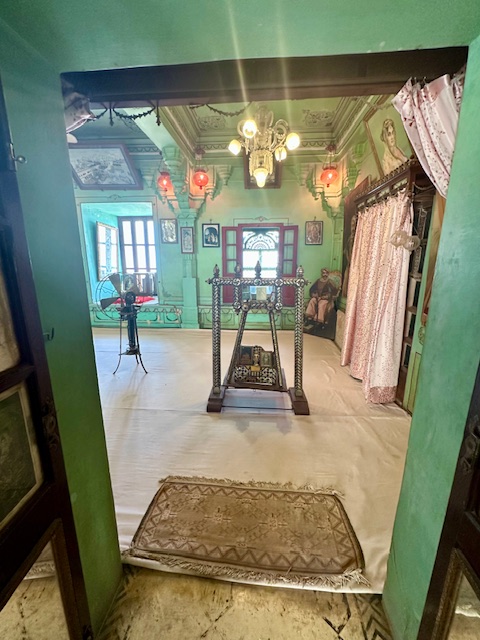
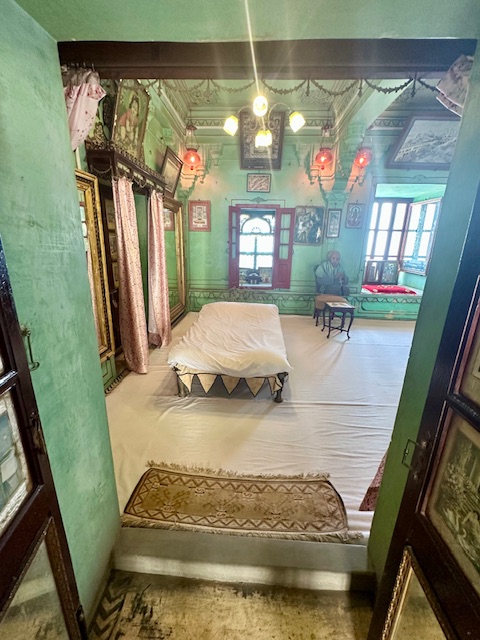
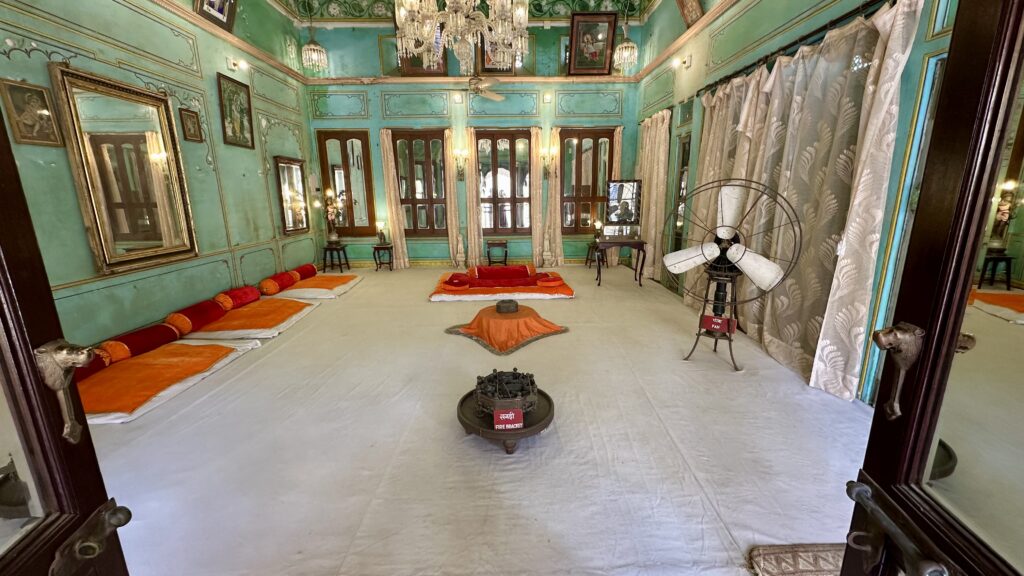
City Palace, Lakshmi Chowk – This prominent and beautiful courtyard named after the Hindu goddess Lakshmi was constructed as part of Queens Palace and was witness to many festivals and events.
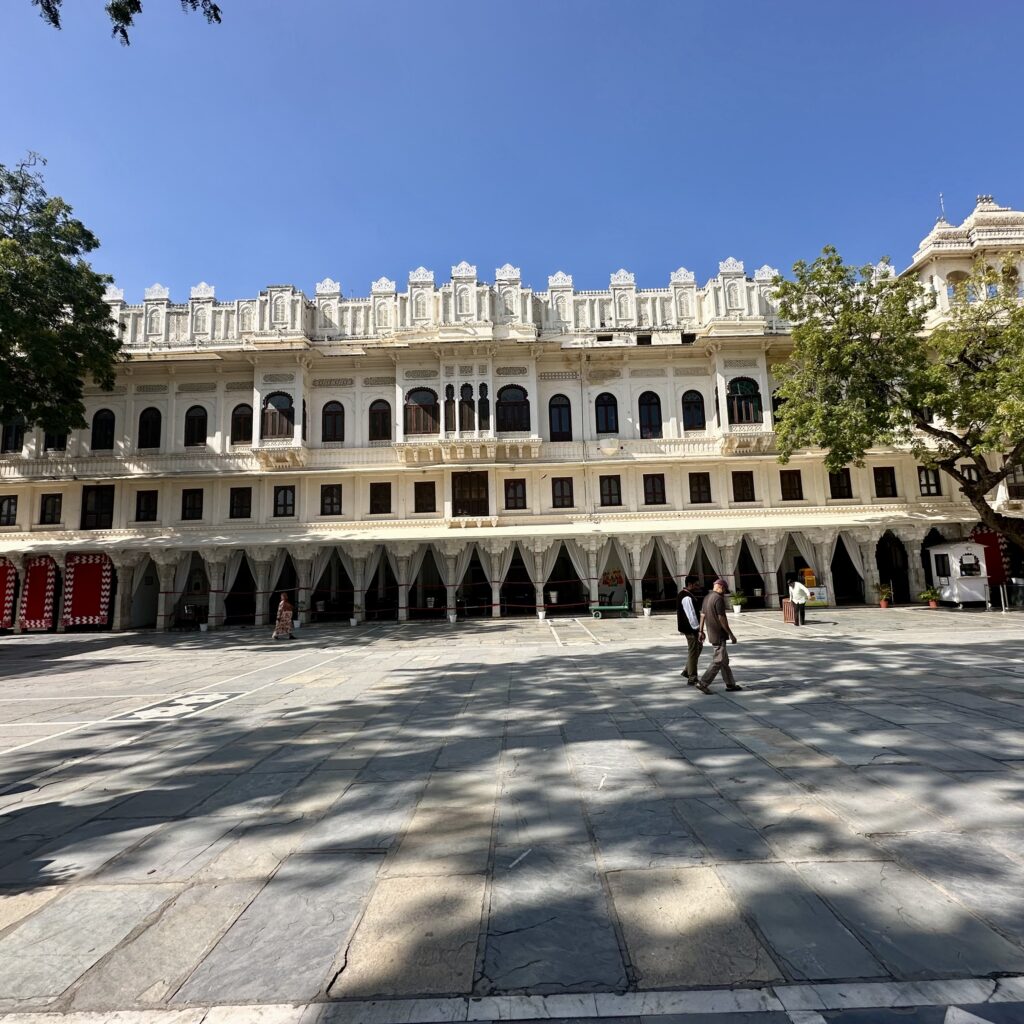
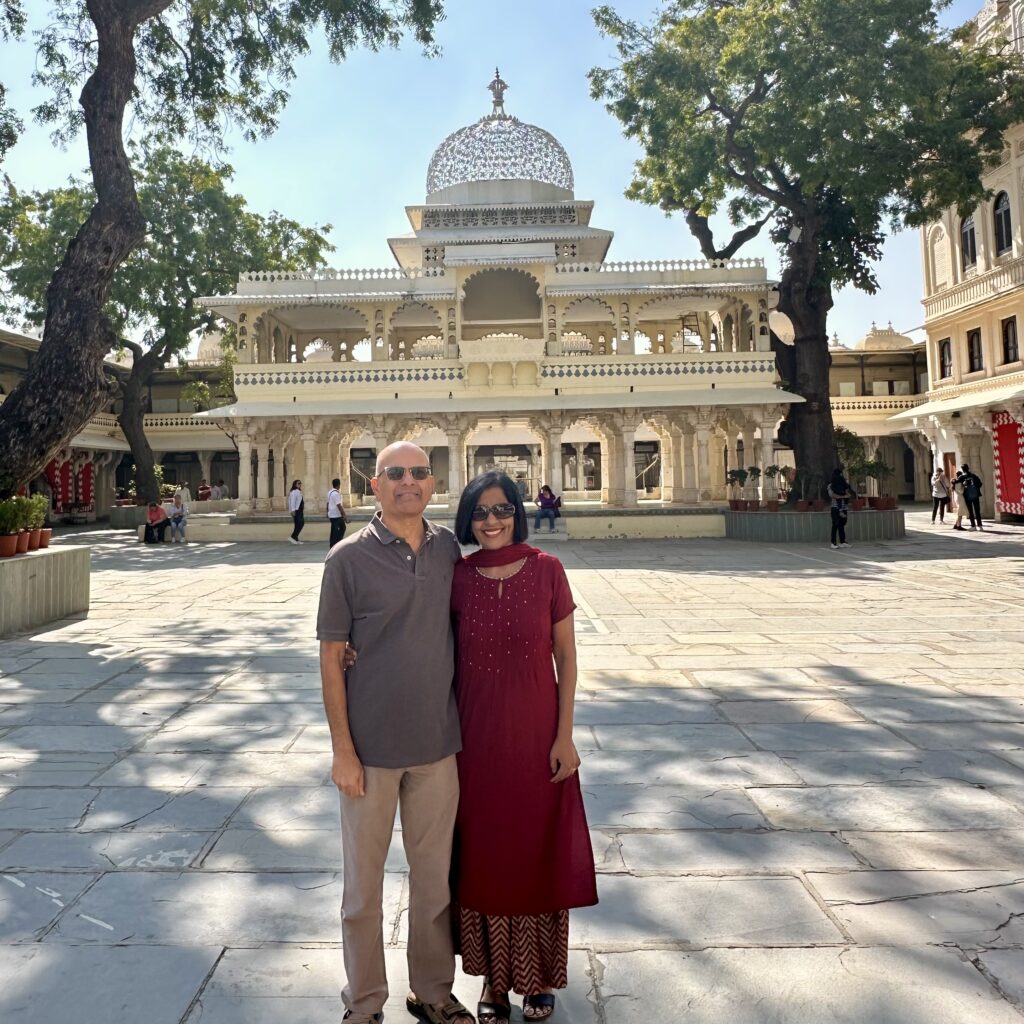
City Palace, Amar Mahal – Built in the early 17th century by Rana Amar Singh as living quarters for the Royal Ladies, this was later used as a treasury for valuables from Rana Ari Singh’s time (1761-1773)
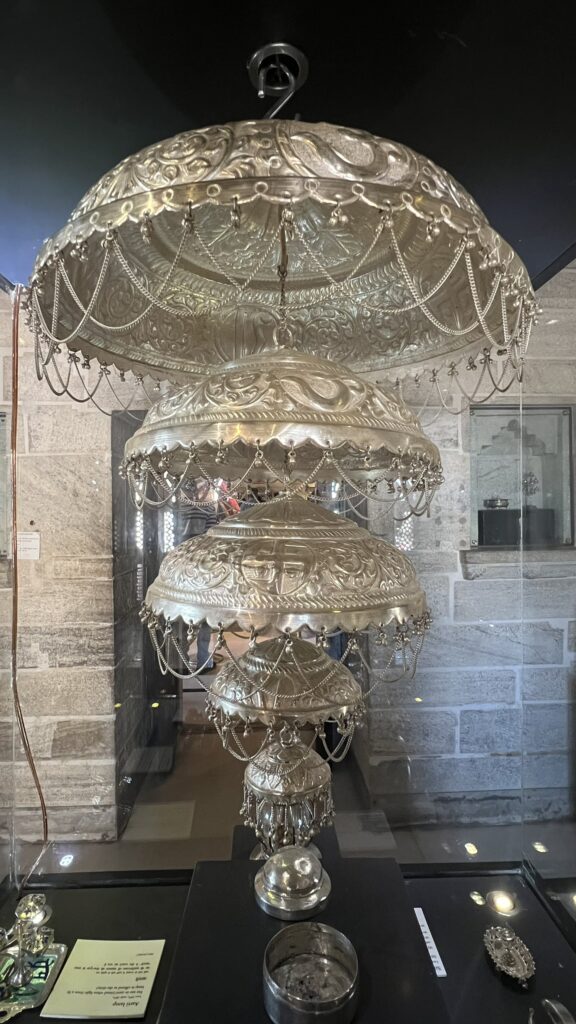
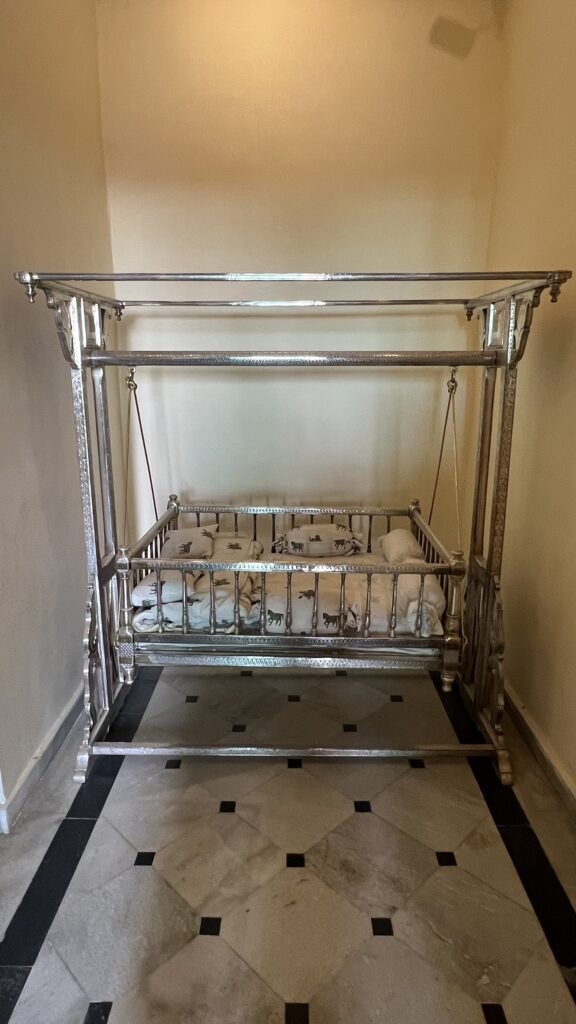
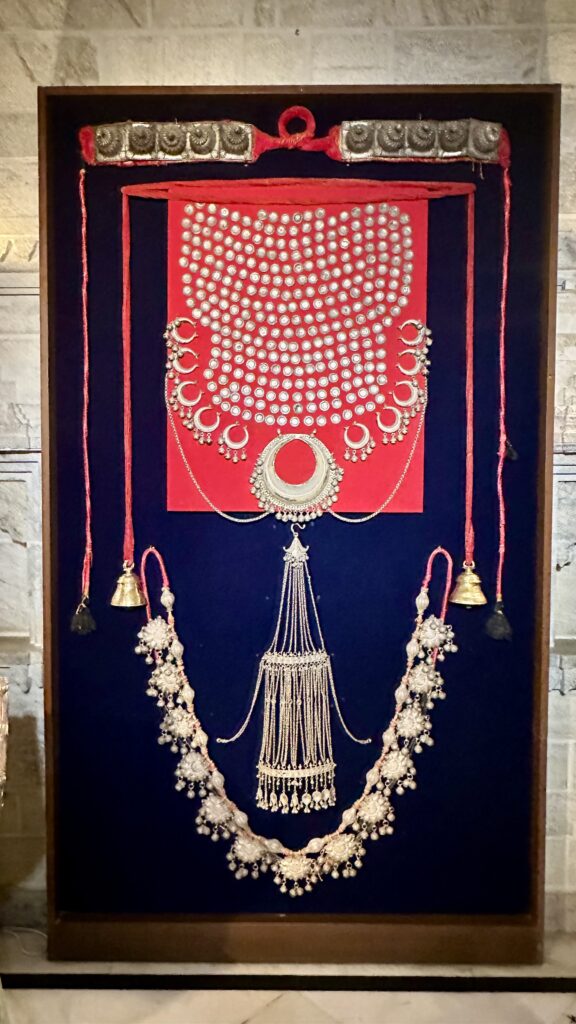
We exited through the Tripolia Gate, another entrance that can be used to access the City Palace. This is a triple-arched gate built in 1725, which provides the northern entry.
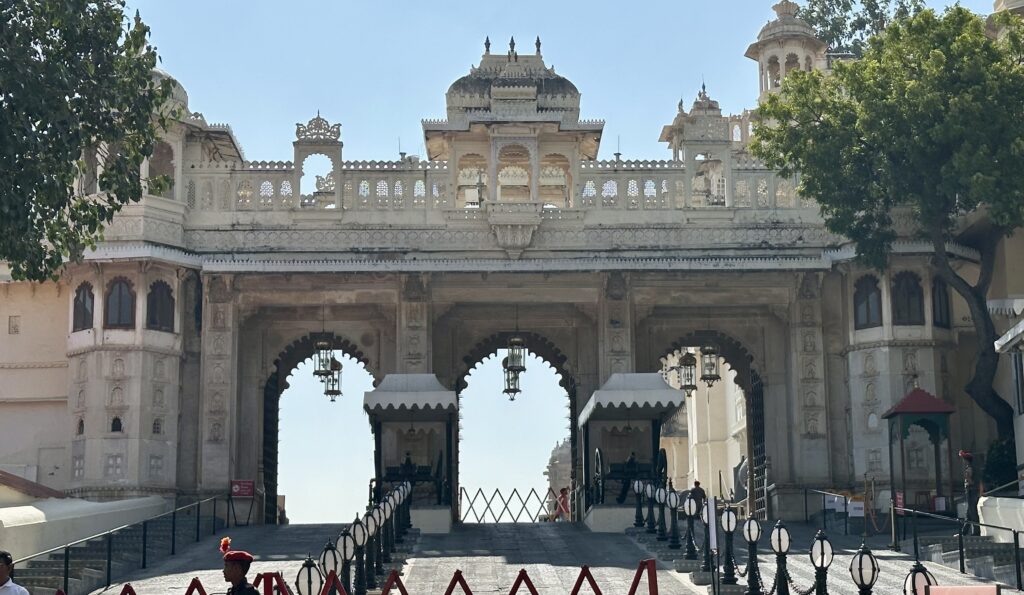
There was so much to see in this palace that I may not have covered every room, painting, or intricate carving in this blog, and we took far more photos than I could possibly share. Here are a few more important pictures before we go onto the next attraction in Udaipur.
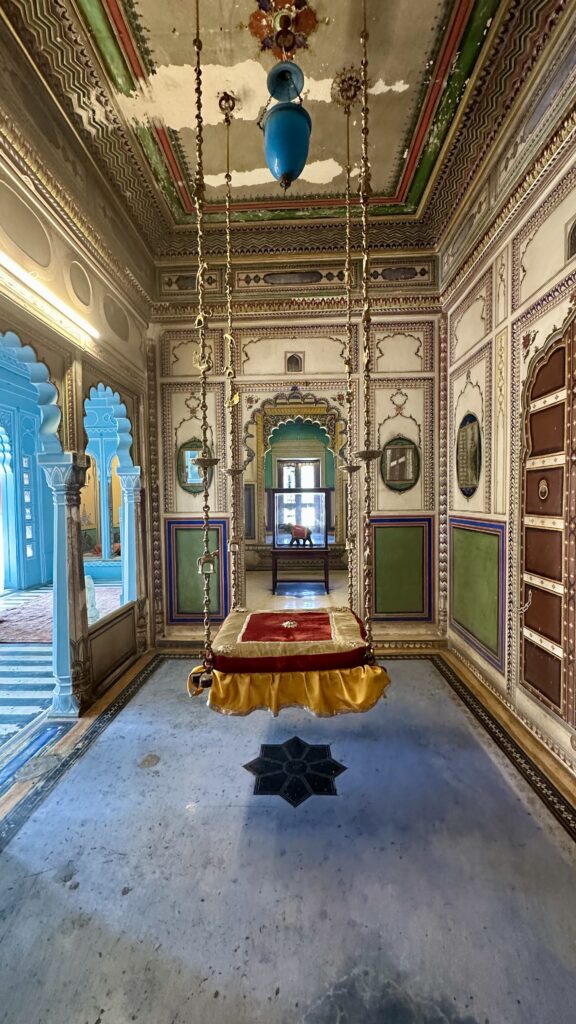
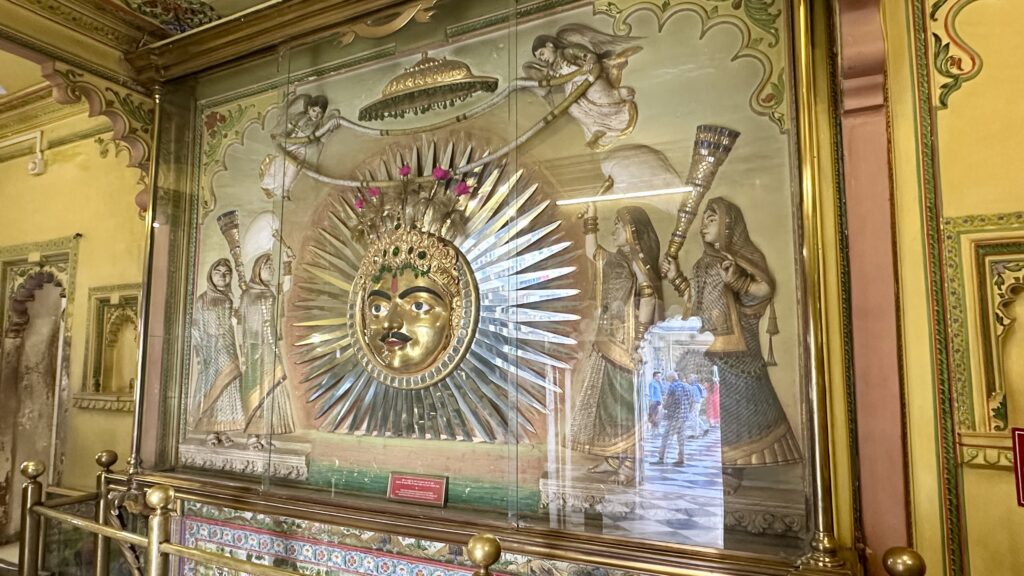
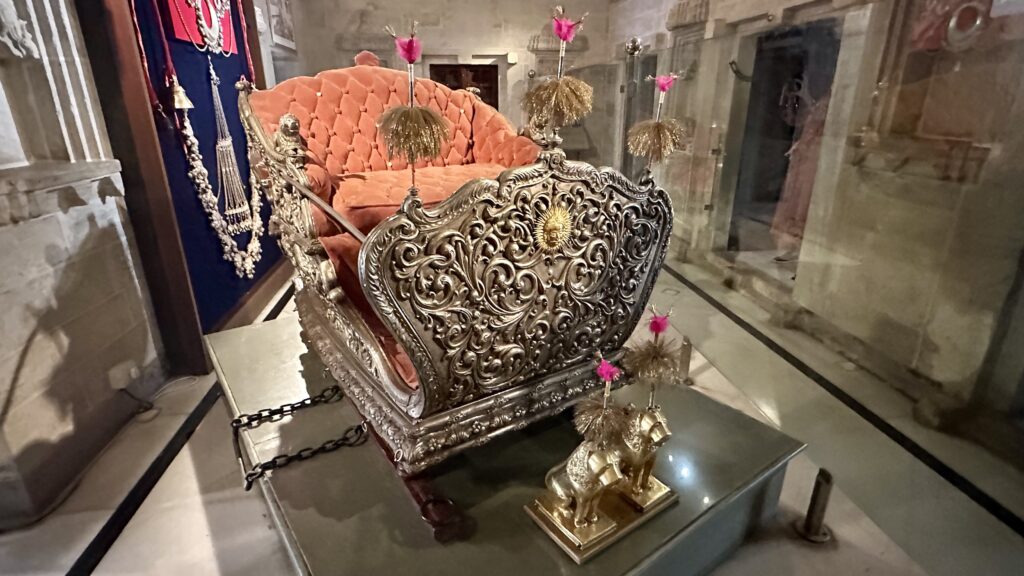
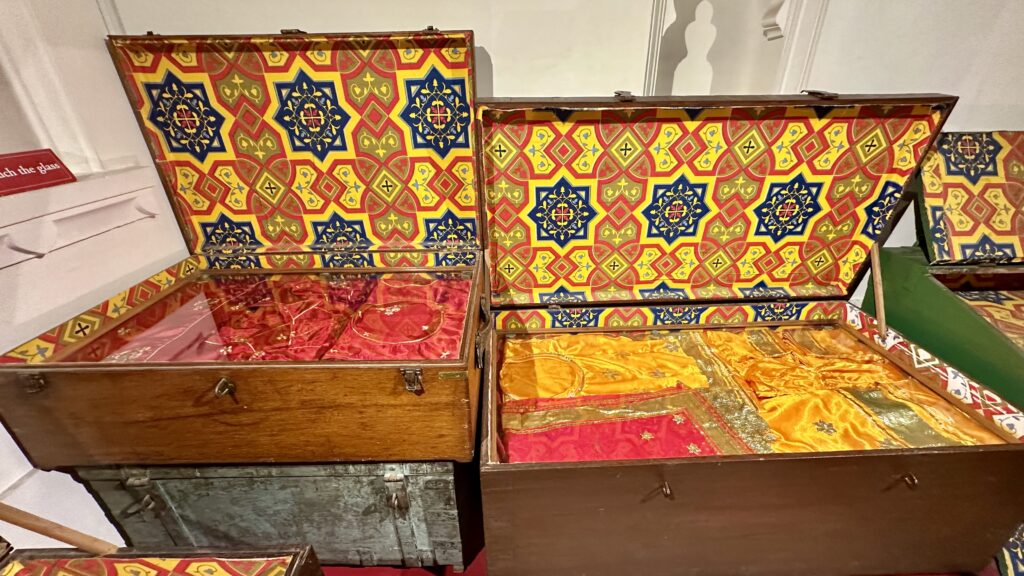
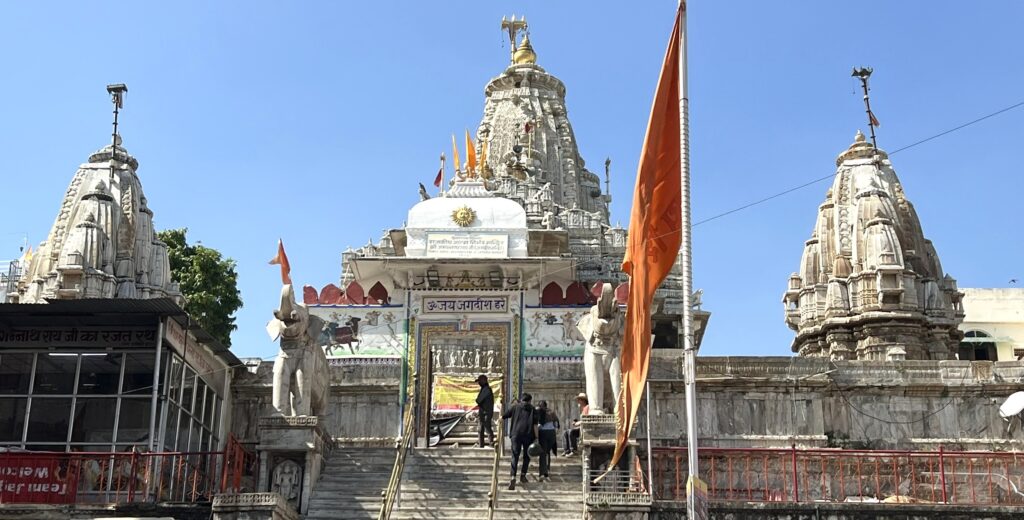
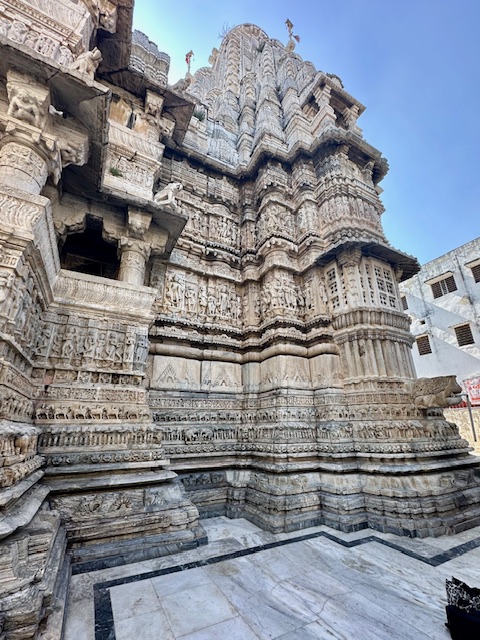
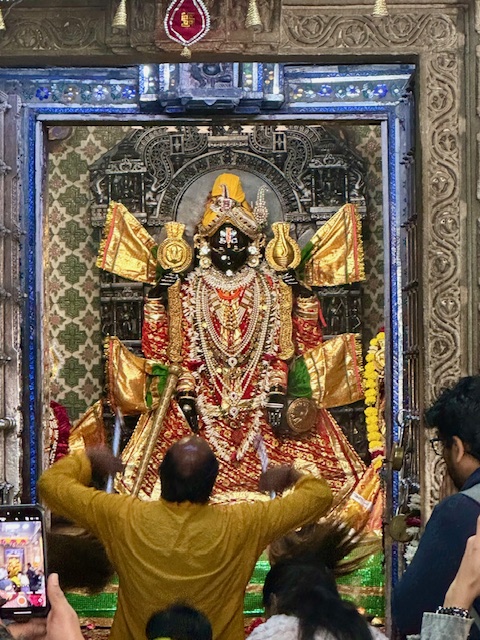
Jagdish Temple – was our next stop, located less than a 10-minute walk from City Palace and the largest temple in Udaipur. Built by Maharana Jagat Singh in 1651, the temple features a double-storey mandapa (hall) connected to a double-storey saandhara sanctum with a covered walkway around it. To reach the main shrine, you climb 32 marble steps.
Gangour Ghat – There are many ghats (broad flight of steps leading to riverfront) along the Lake Pichola waterfront in Udaipur, but Gangaur Ghat is the most famous. It’s a lively and picturesque spot where you can watch a beautiful sunset over the lake, and it’s also a popular venue for religious and cultural celebrations.
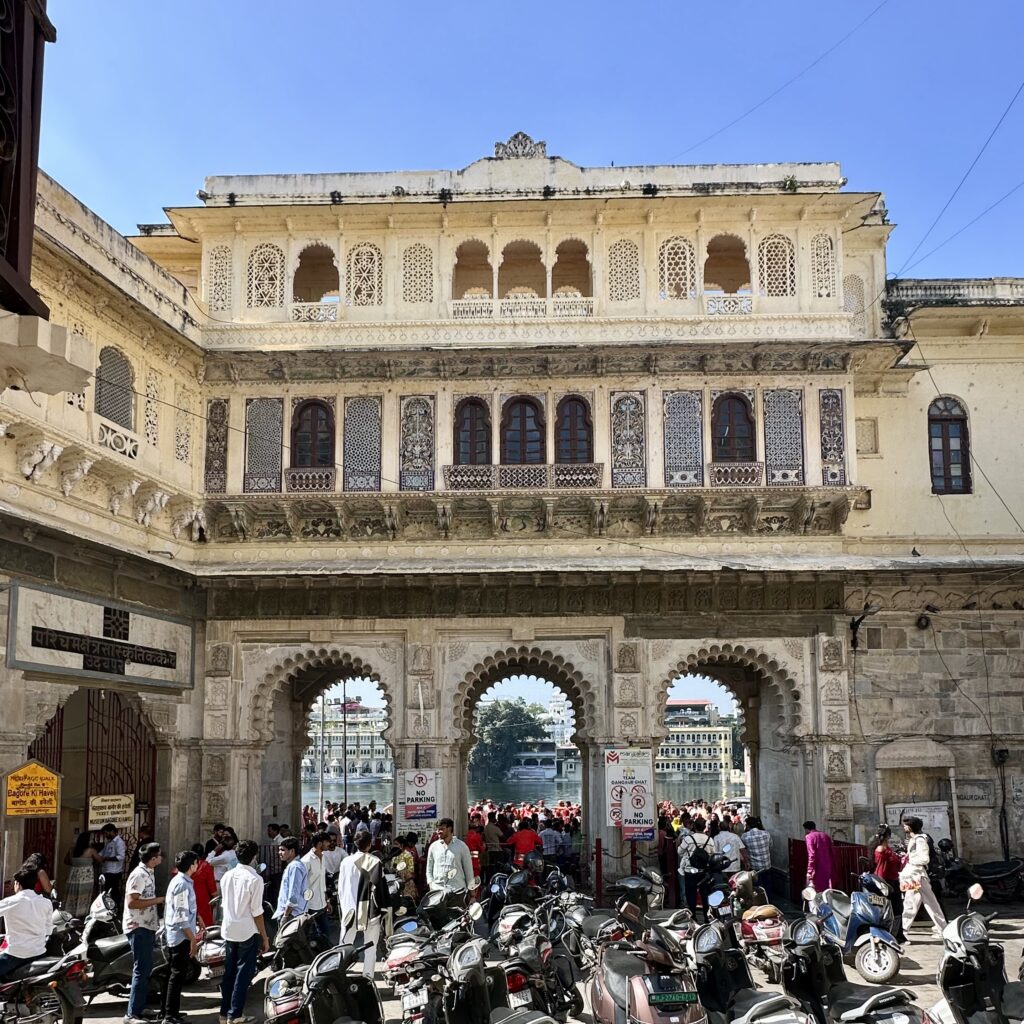
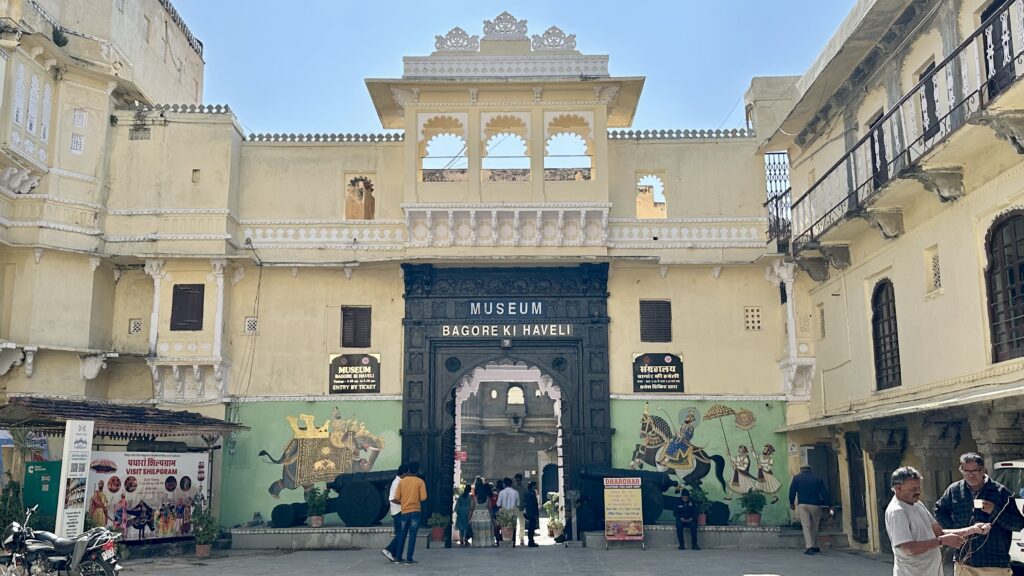
Bagore Ki Haveli – is an 18th-century haveli located on the waterfront of Lake Pichola at Gangaur Ghat. Built by Amar Chand Badwa, a Prime Minister of Mewar, the haveli boasts over a hundred rooms filled with displays of traditional costumes and modern art. Its interiors feature intricate glass and mirror work, while the walls of the Queen’s Chamber showcase exquisite examples of Mewar painting.
We passed by this impressive haveli on our way to Gangaur Ghat, but didn’t have time to explore the museum inside.
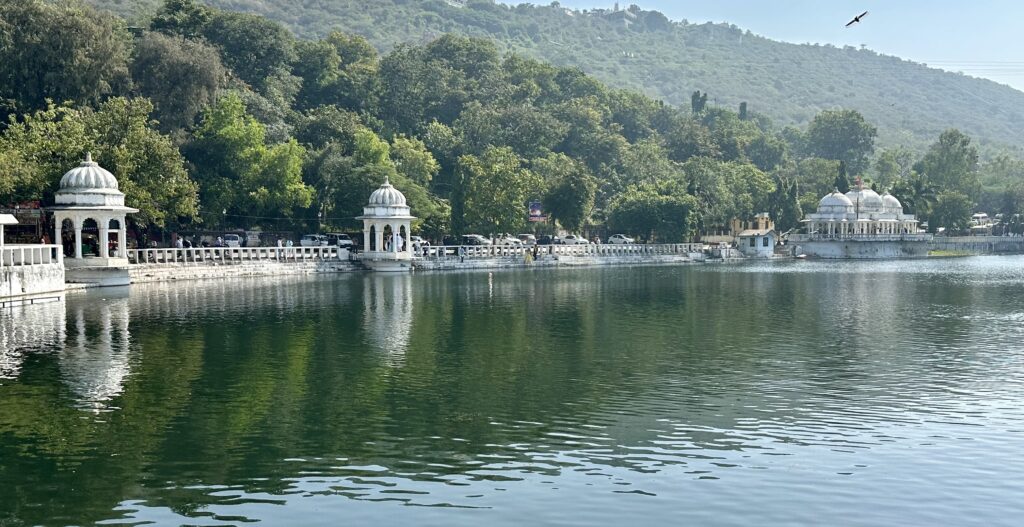
Doodh Talai Lake – The name Doodh Talai means milk pond, and it is believed that the lake once served the cows kept in government shelters, which supplied milk to the royal kitchen. It provided them with water for drinking, bathing, and grazing, making the lake an essential source of nourishment.
Located next to the iconic Lake Pichola, Doodh Talai is surrounded by small hillocks that offer lovely panoramic views.
Ahar Museum – This museum was established in 1960 by the Department of Archaeology and Museums, Government of Rajasthan, with the objective of preserving and displaying ancient antiquities excavated from the archaeological site of Dhoolkot, situated at Ahar. The museum houses a collection of sculptures dating from the 7th-16th century CE, depicting Hindu and Jain deities from Ahar and southeastern Rajasthan. Additionally, miniature paintings from various regions are displayed, showcasing the artistic creativity of the people of that era. The museum also exhibits weapons and armaments obtained from the Government Museum, Udaipur, and the Government Museum, Chittorgarh.
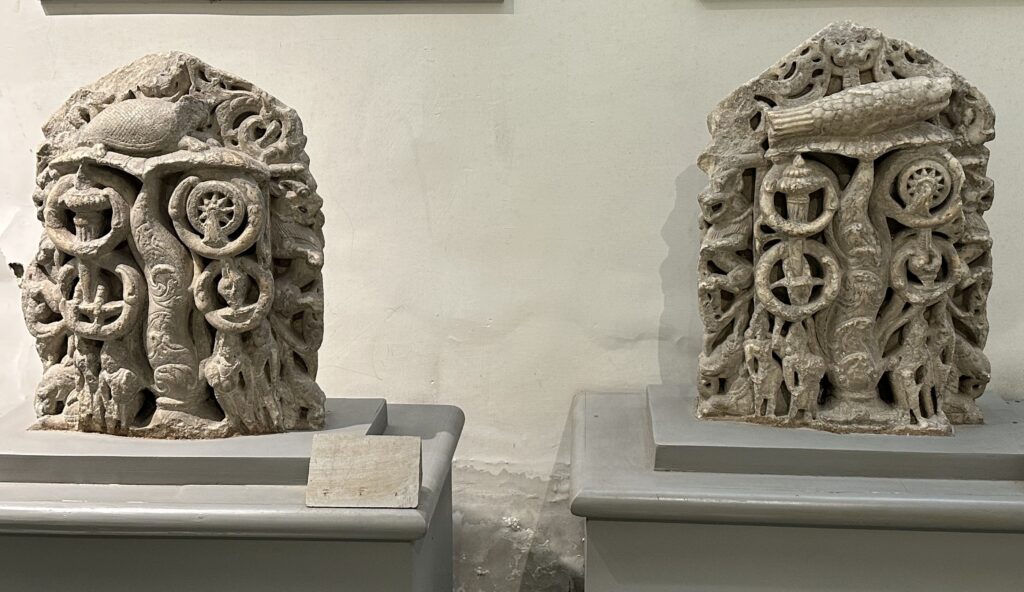
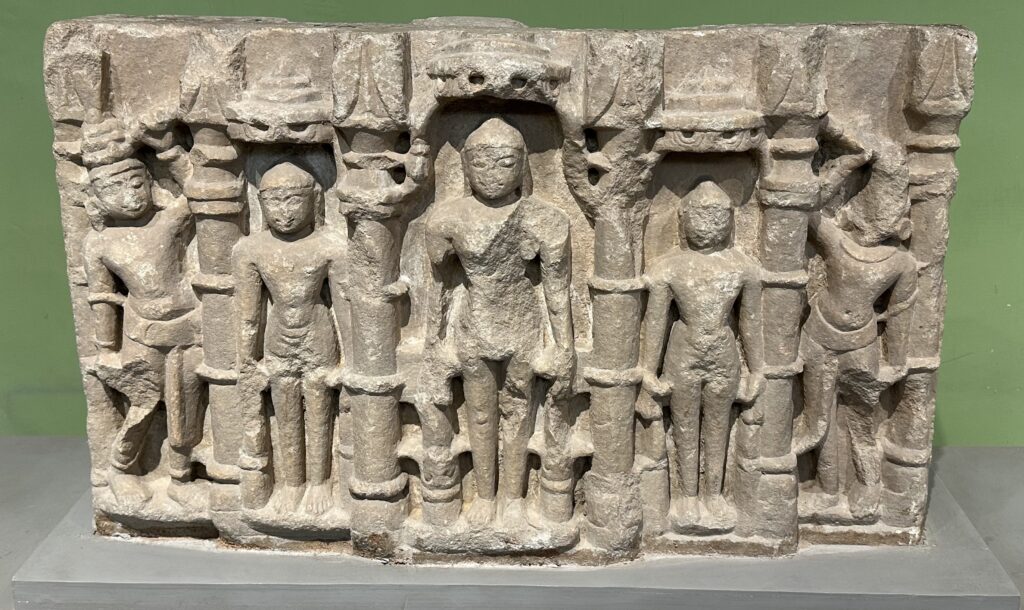
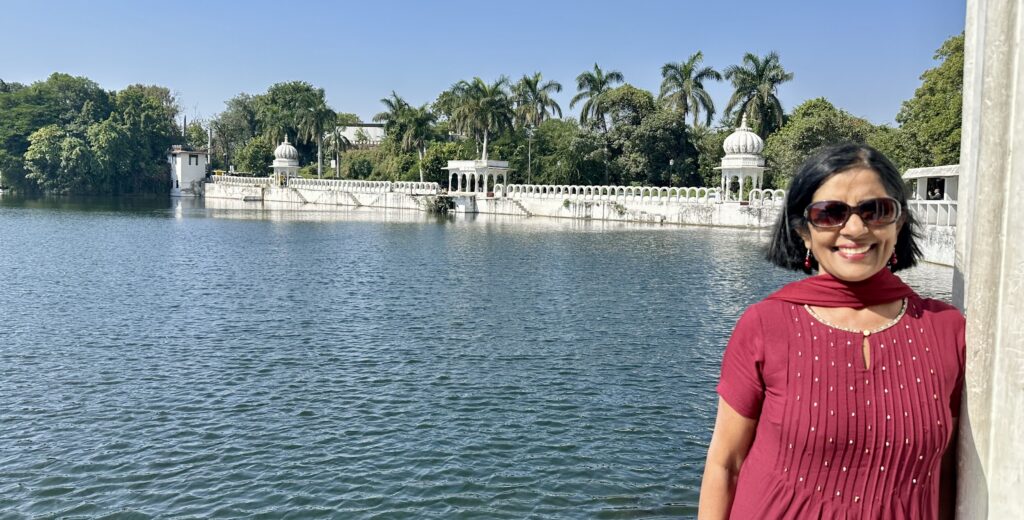
Ahar Cenotaph – Located close to the Ahar Museum and on the outskirts of Udaipur, the Ahar Cenotaphs are an impressive collection of more than 250 dome-shaped chhatris built over nearly 350 years. These white-marble memorials honor the rulers of the Mewar dynasty, with around 19 cenotaphs dedicated specifically to Maharanas who were cremated here.
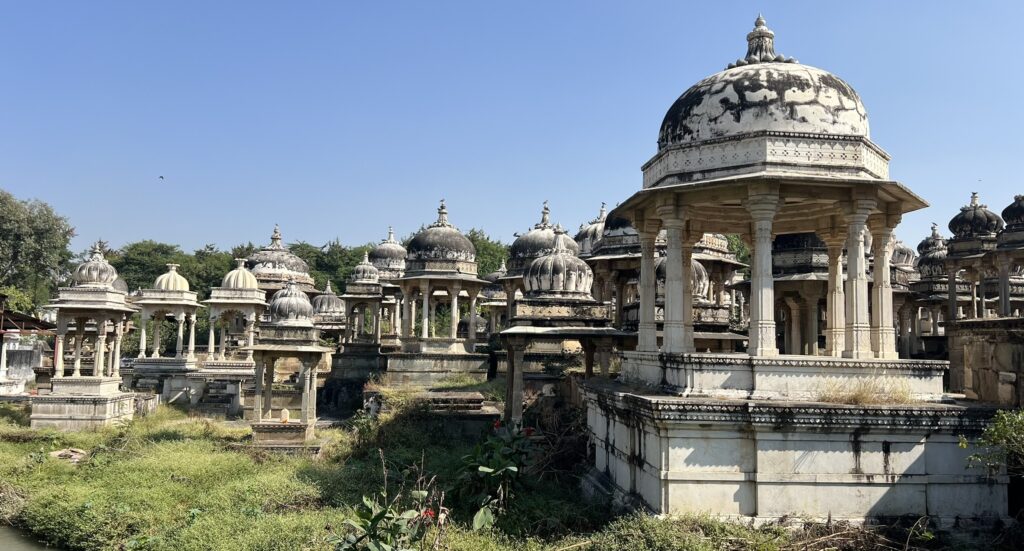
The cenotaphs of Amar Singh and Sangram Singh II are among the most remarkable, showcasing exquisite details inspired by Jain architectural styles.
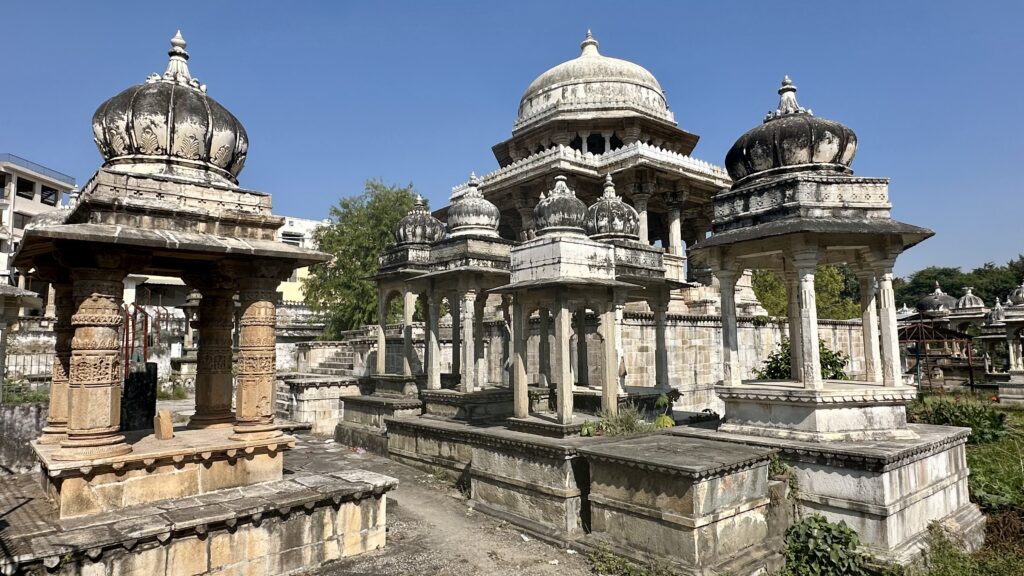
This site is also known as Mahasati, meaning Great Place of Sati, as it was historically the cremation ground where, in earlier times, the Maharana’s wives or concubines would sometimes commit sati.
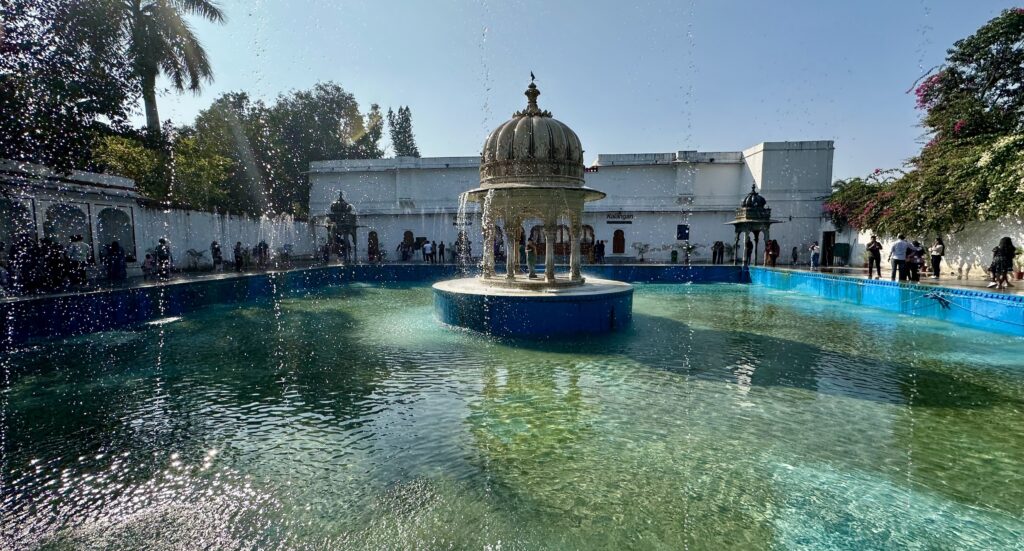
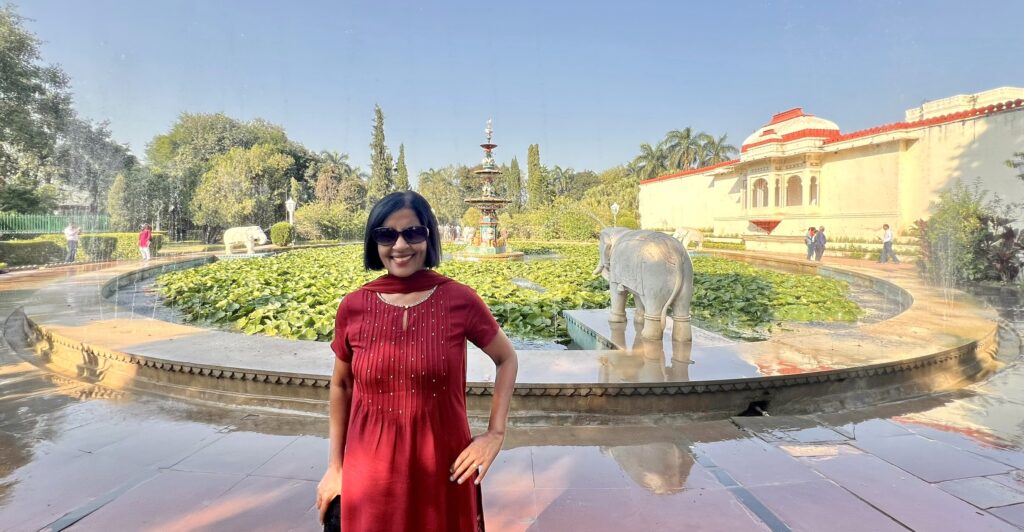
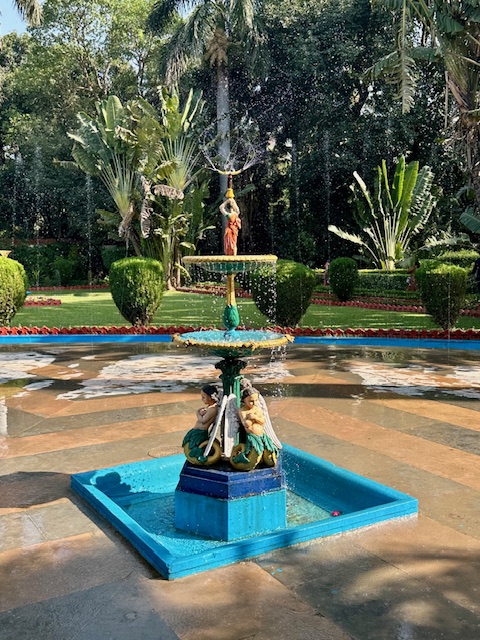
Saheliyon Ki Bari – or the Garden of the Maidens, is a beautifully designed garden that combines regal elegance with natural beauty. The garden was laid out by Maharana Sangram Singh between 1710-1734 for the entertainment of the royal ladies and her maidens.
We spent close to an hour exploring this expansive garden, but one could easily spend half a day strolling through the garden, admiring the multiple layers of beauty—from its fountains and lotus pools to the marble pavilions and lush greenery.
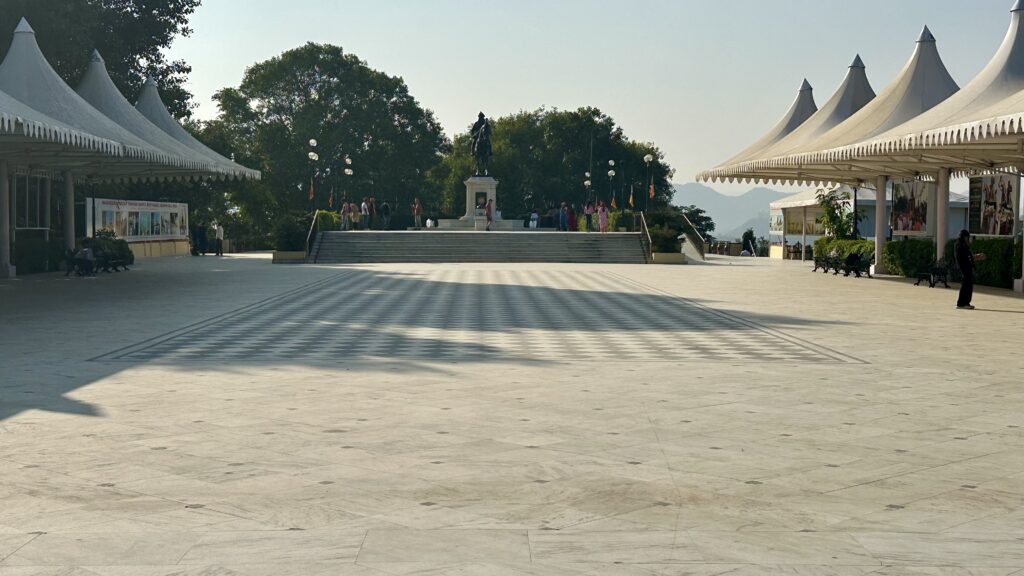
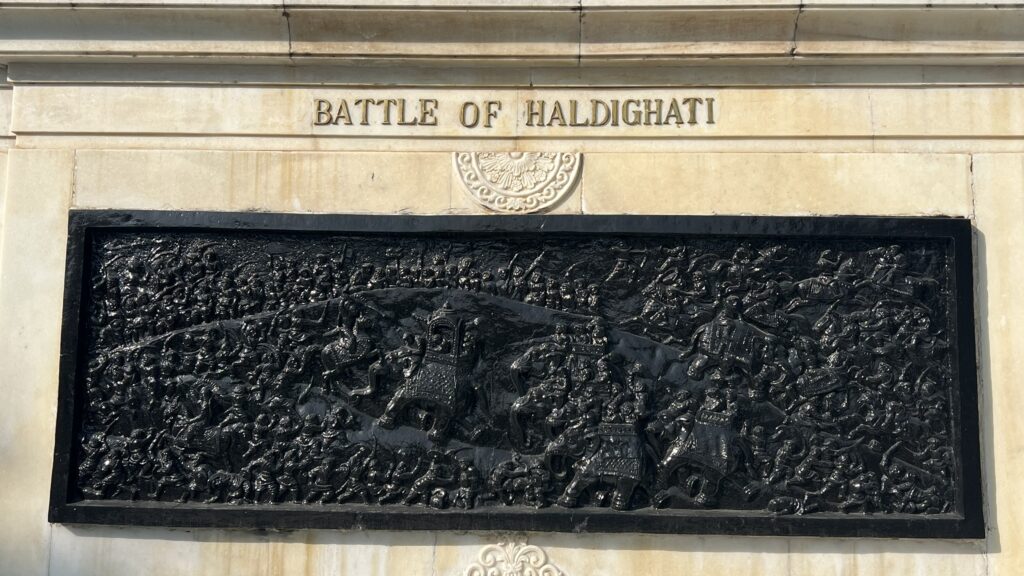
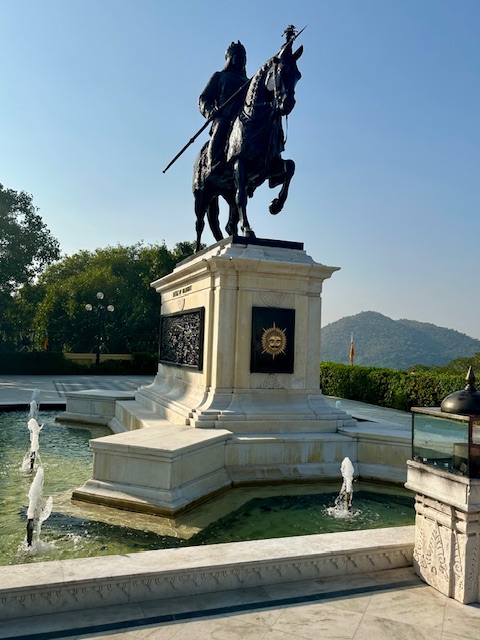
Maharana Pratap Smarak – Situated on Moti Magri (Pearl Hill), the Samrak is a memorial dedicated to the 13th king of Mewar, Maharana Pratap. It features a large bronze statue of him on his favorite and brave horse, Chetak, and is known for its scenic location overlooking Fateh Sagar Lake. The memorial celebrates Pratap’s resistance against the Mughal Empire and there is a museum located nearby providing further historical context.
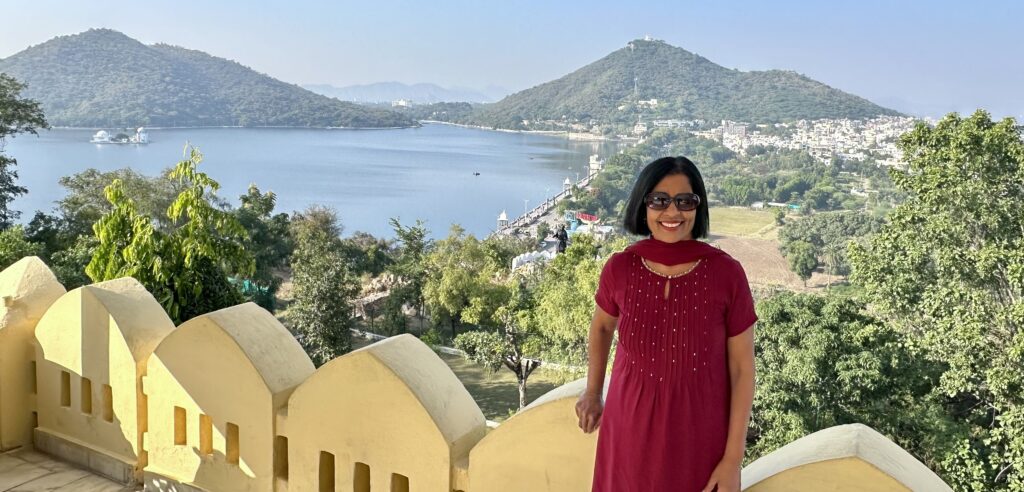
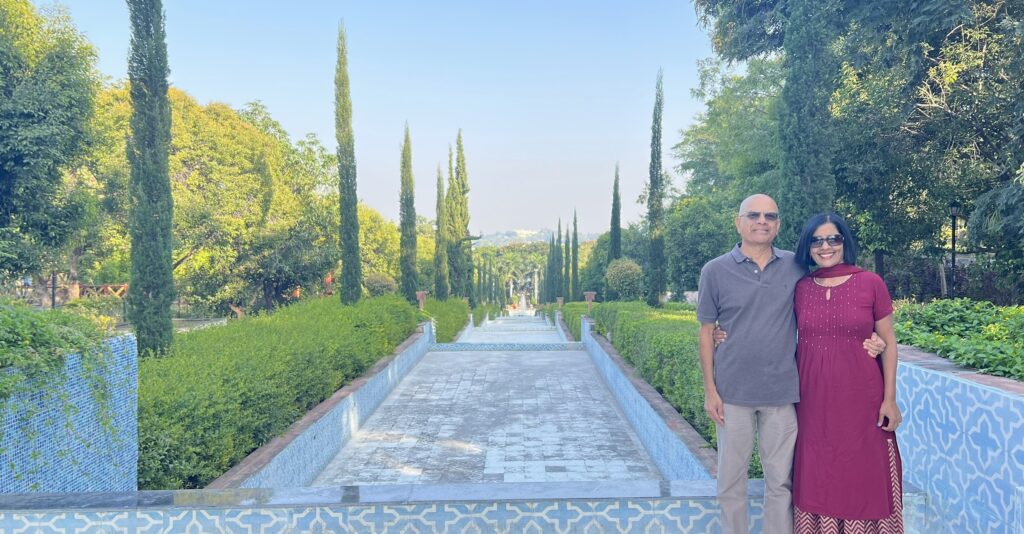
Rajiv Gandhi Garden – We made a 20-minute stop at this tranquil lakeside park, which features walking paths, animal statues, play areas, gazebos, and beautiful views. Steps lead up through the Mughal-style terraces to the top of the garden, making it a pleasant place to explore.
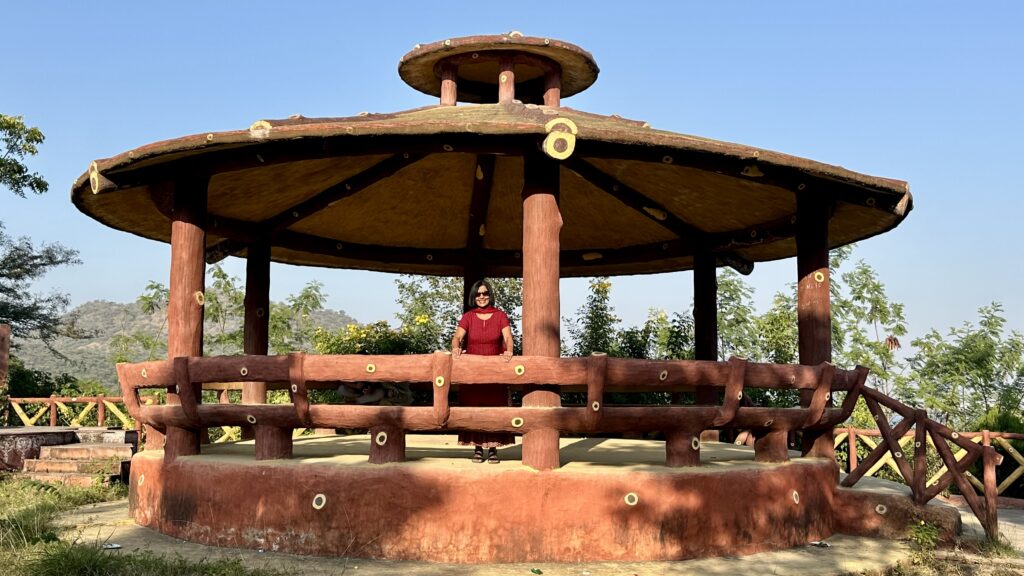
Monsoon Palace (Sajjan Garh Palace) – Perched high in the Aravalli Hills, the Monsoon Palace overlooks the shimmering Fateh Sagar and Pichola Lake and offers one of the best panoramic views of Udaipur. Built in 1884 for Maharana Sajjan Singh, it was originally intended to be a five-storey astronomical center, but after the Maharana’s untimely death, it was completed as a monsoon retreat and royal hunting lodge. The palace was designed so the Maharana could watch the monsoon clouds rolling in and even see his ancestral home, Chittorgarh, from afar.
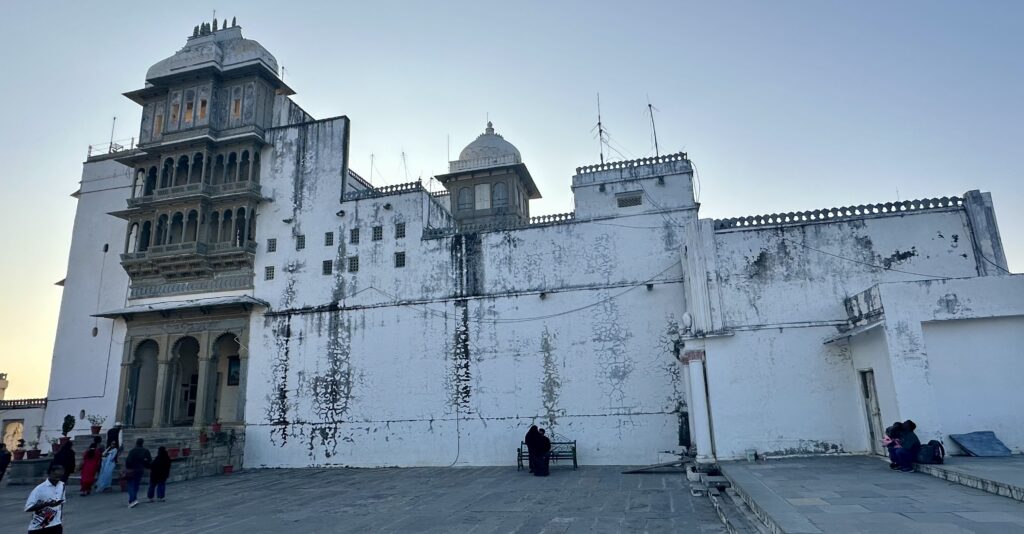
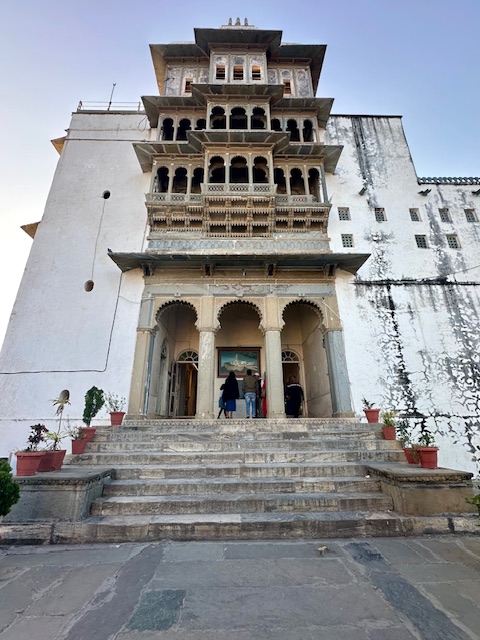
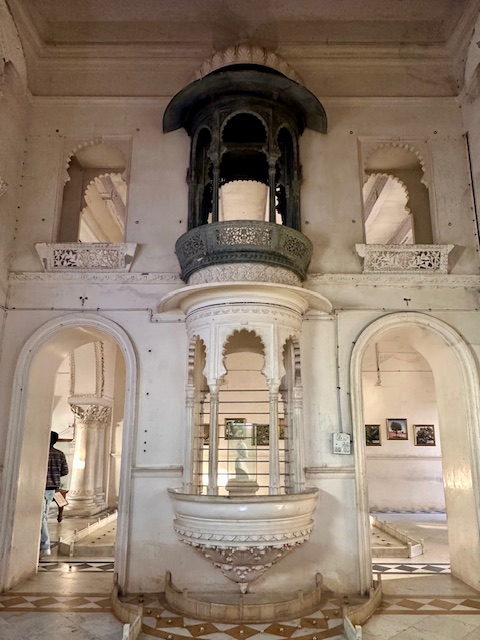
Currently maintained by the Rajasthan Forest Department, the palace is open to the public and is especially popular at sunset, when the hilltop glows in golden light. Movie lovers may also recognize it from the James Bond film Octopussy, where it appeared as the residence of the character Kamal Khan.
Boat Ride on Lake Pichola to Jagmandir Palace – This boat ride is extremely popular and tends to get crowded later in the day, so we chose to do it on the morning of our last day in Udaipur, and our final day in Rajasthan. With our flight scheduled for the evening, we had plenty of time to enjoy the peaceful morning ride across the lake and explore the beautiful Jag Mandir Palace at a relaxed pace.
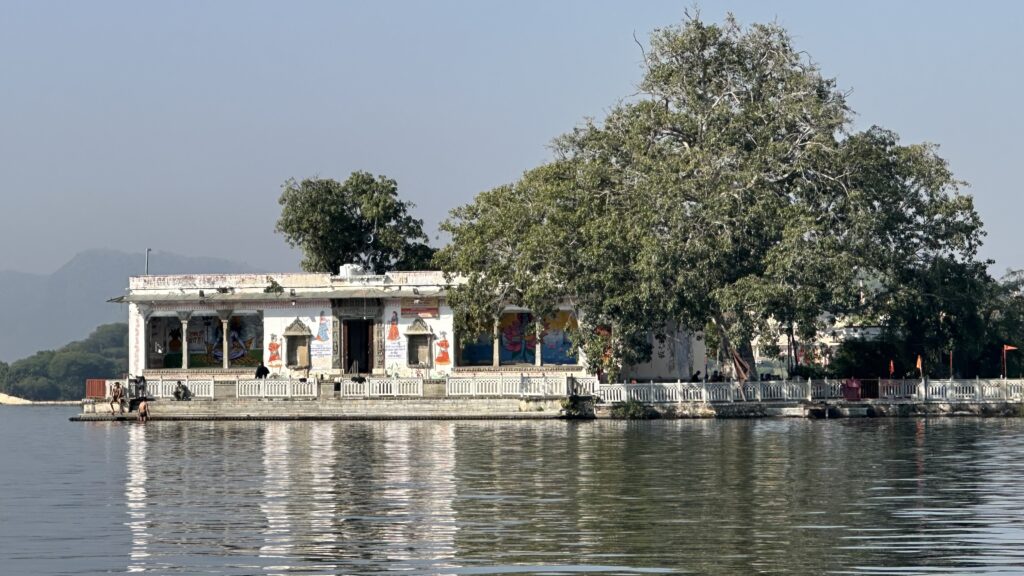
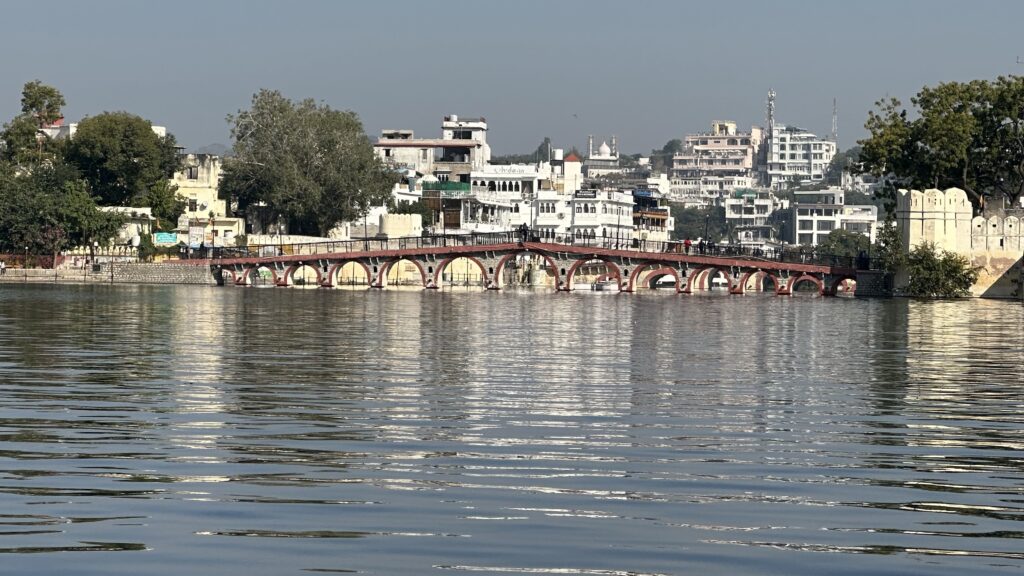
The boat ride was a relaxed 20-minute journey that took us past several picturesque ghats – Roop, Pipali, Nav, Ambrai as well as Mohan Mandir (temple) and Daiji ka Puliya (foot bridge over Lake Pichola), offering lovely views of life along the shores of Lake Pichola.
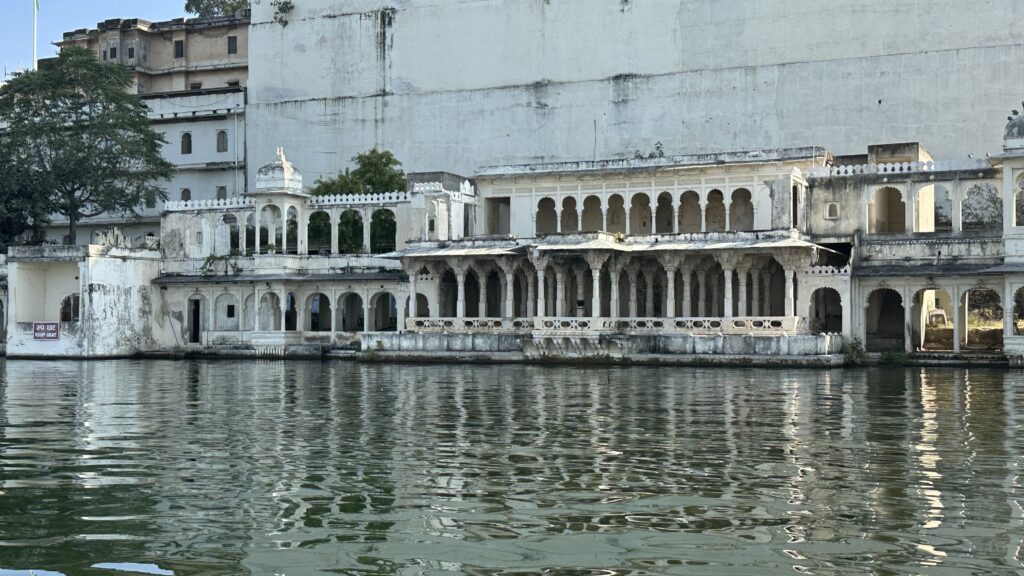
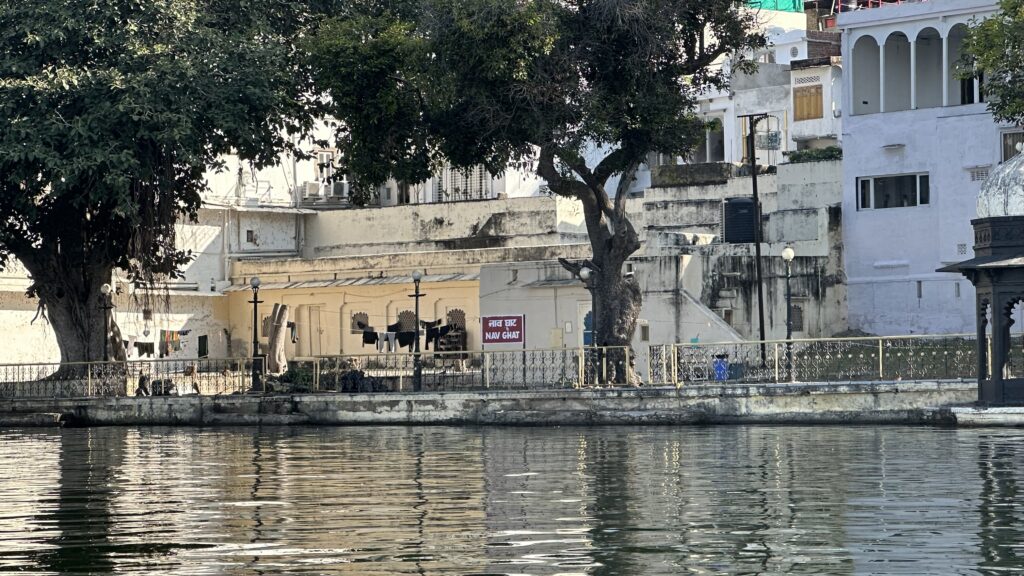
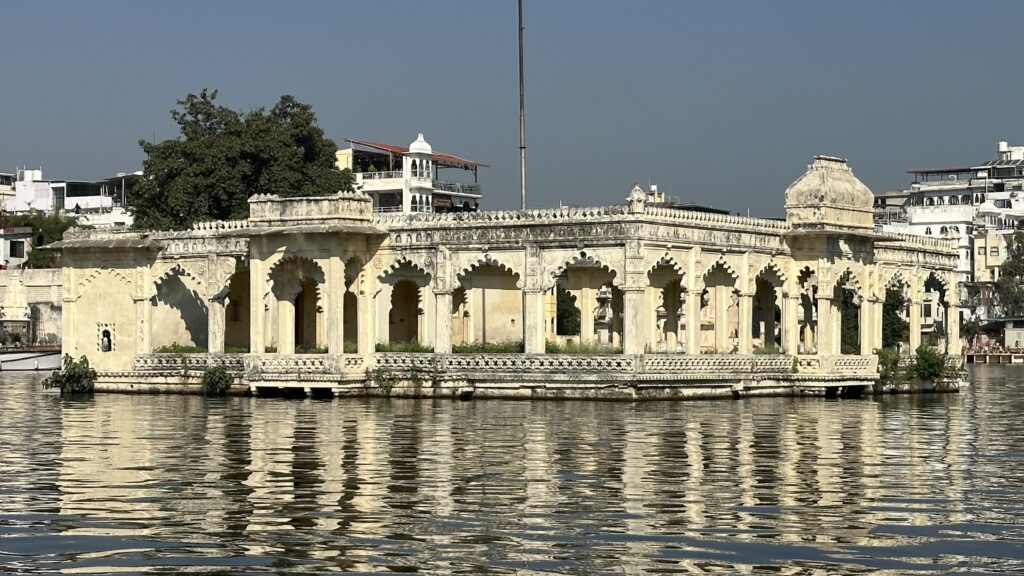
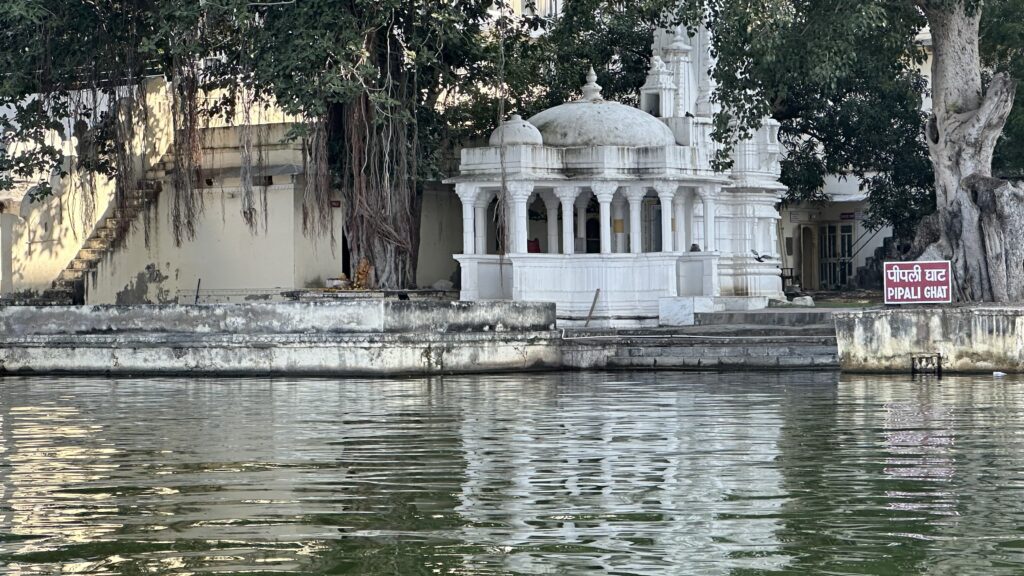
Jagmandir Island Palace – Often called the Lake Garden Palace, Jagmandir was built by three Maharajas of the Sisodia Rajput dynasty of Mewar and dates back to the early 1600s. Renowned for its impressive stone carvings and elegant blend of Hindu and Mughal architectural styles, the palace is believed to have inspired the design of the world-famous Taj Mahal. Over the centuries, it served as a summer retreat for the royal family and a grand venue for celebrations and important gatherings.
After disembarking from the boat, you will enter a spacious plaza with a Ganesh shrine at one end. This open courtyard leads into a garden courtyard adorned with green marble chhatris and the striking Gol Mahal, one of the highlights of the island palace.
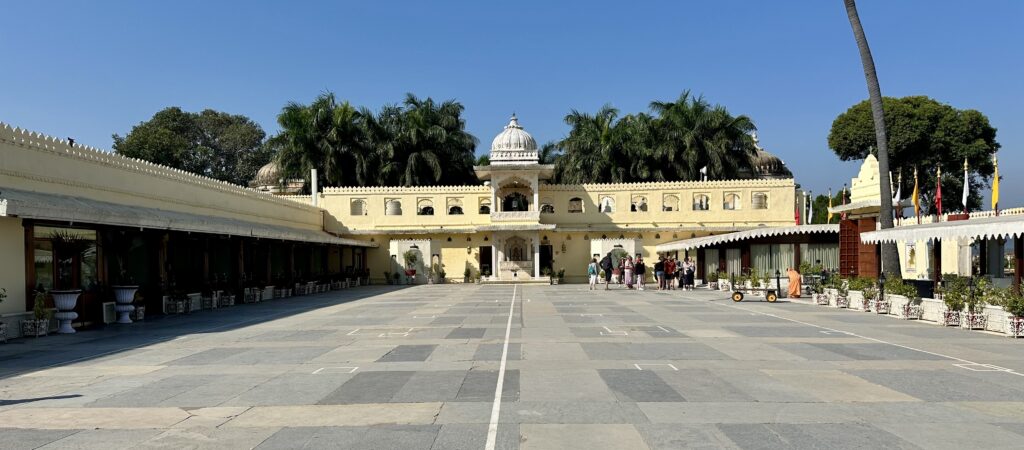
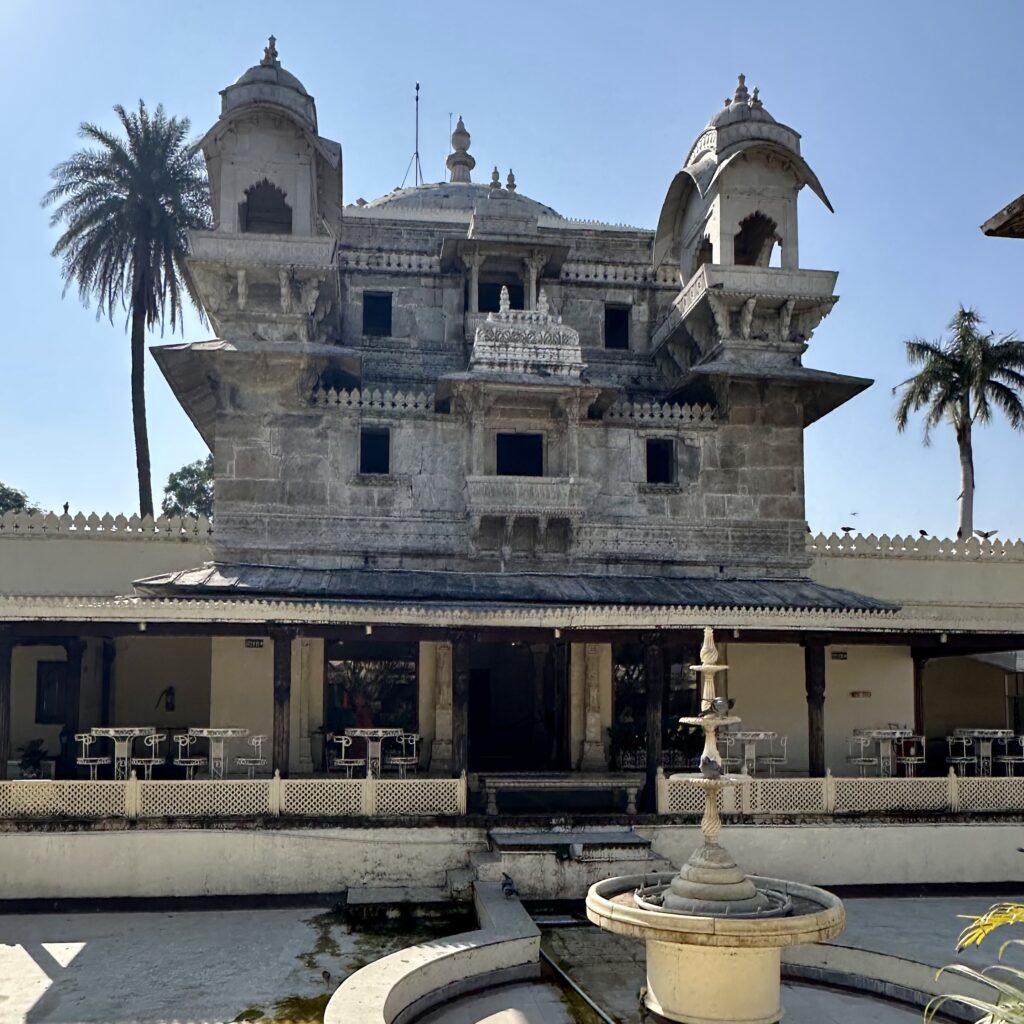
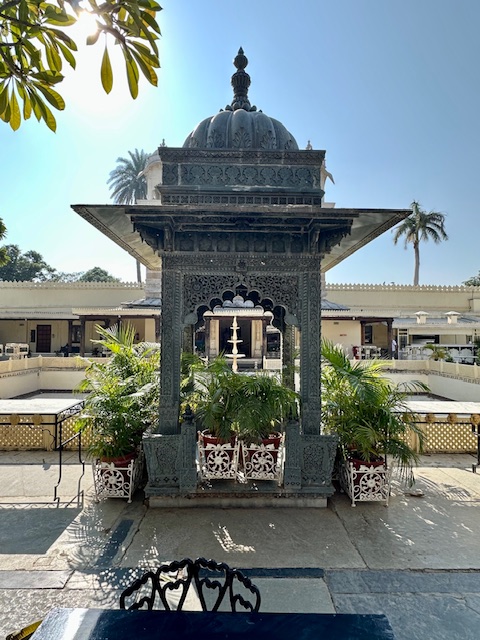
Some parts of the palace have been converted into a heritage hotel managed by the HRH Group of Hotels.