3 Nights in ITC Rajputna
Known as the Pink City, Jaipur is the vibrant capital of Rajasthan and one of India’s most captivating destinations. Founded in 1727 by Maharaja Sawai Jai Singh II, the city is renowned for its grand forts, elegant palaces, and the UNESCO World Heritage Site of Jantar Mantar, an astronomical observatory. Most of the city’s iconic landmarks have a blend of Rajput and Mughal architecture and part of the City Palace is still home to the Royal family.
- Day 1
- Patrika Gate
- Birla Mandir
- Ganesha Temple
- Jaipur Central Park
- Albert Museum
- Day 2
- Pink City
- Panna Meena ka Kund
- Jagat Shiromani Temple
- Amber Fort
- Nahargarh Fort
- Jaigarh Fort
- Jal Mahal
- Gaitore Ki Chhatriyan
- Maharaniyon Ki Chhatriyan
- Day 3
- Hawa Mahal
- Govind Dev Ji Temple
- City Palace
- Jantar Mantar
- Sawai Mansingh Cricket Stadium
- Amar Jawan Jyoti (Flame Of The Immortal Soldier)
- Rajasthan Vidhan Sabha
- Other structures around old city
Patrika Gate – After we landed in Jaipur in the morning, we began our tour with a visit to Patrika Gate, located just 5 minutes from the airport. This recently built landmark is designed to give visitors a glimpse of Jaipur’s rich heritage. The architecture, carvings, and paintings on this structure reflect the artistic styles found throughout the city’s major sites. The explosion of colors and patterns creates a stunning visual experience, making it a popular spot for photography and a symbolic introduction to the city’s grandeur.
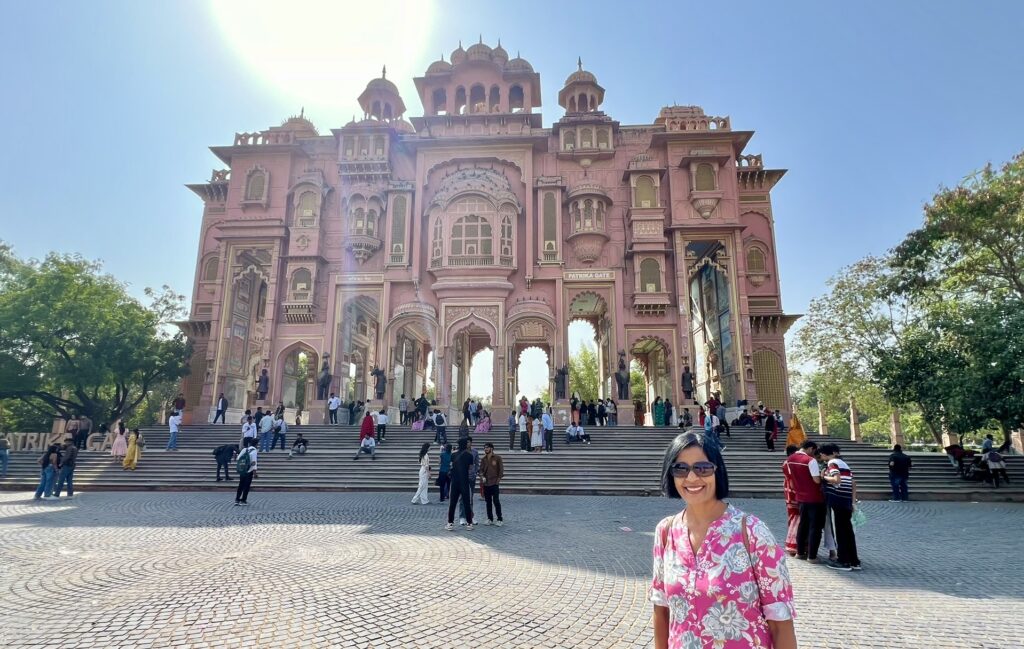
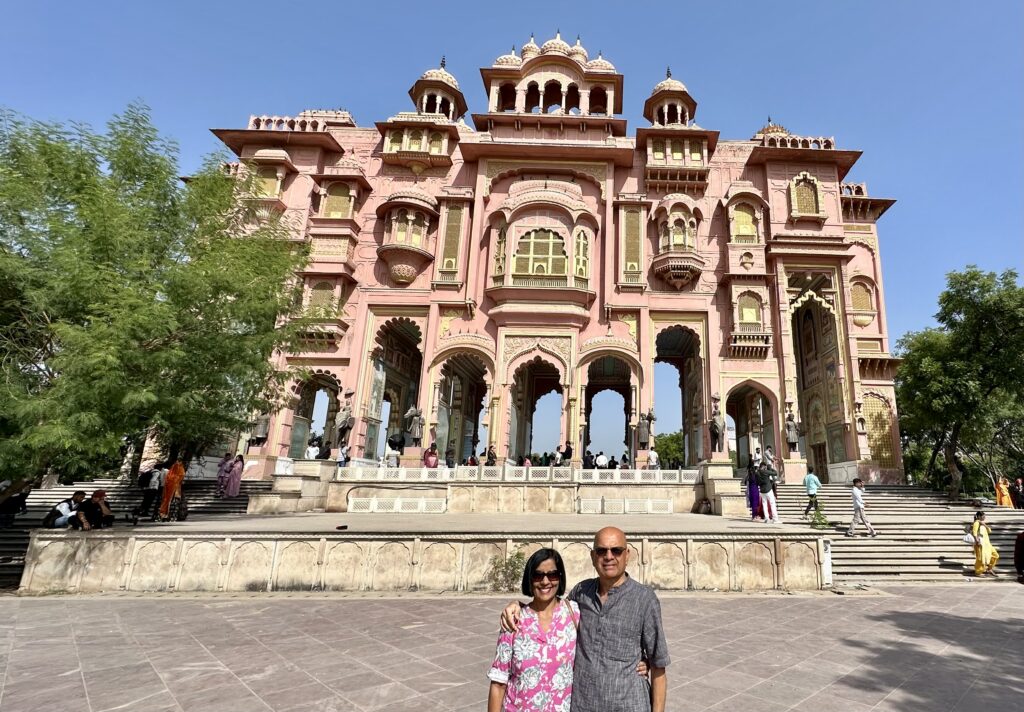
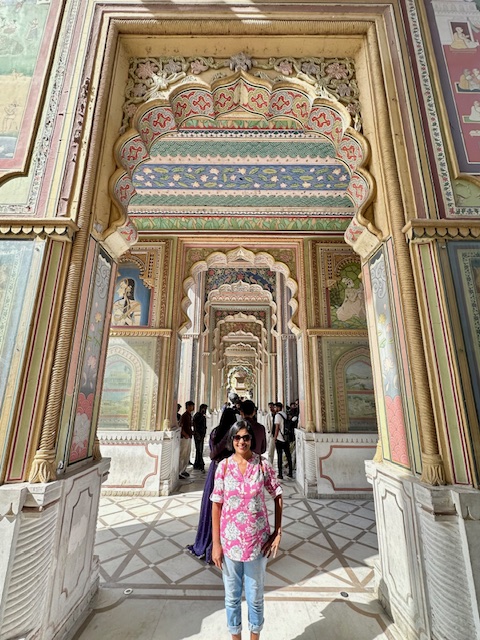
There were many people with professional photographers taking pictures throughout the area, making it difficult to capture the architectural details inside Patrika Gate.
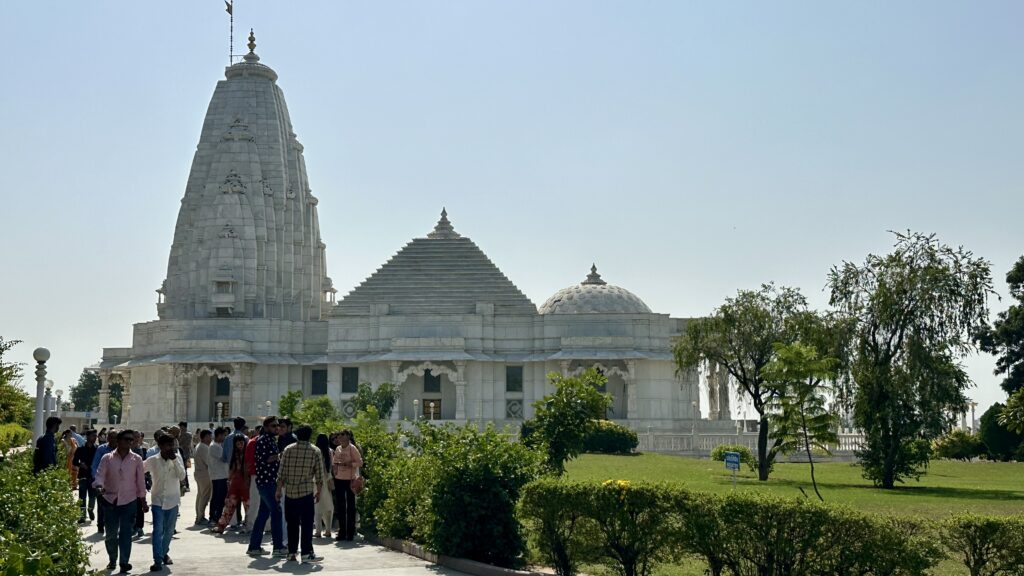
Birla Mandir – This temple was our next stop. Inside the sanctuary are beautiful marble statues of Lakshmi the goddess of wealth and god Vishnu, the preserver of life. The large rotunda in front of the shrine features intricate carvings on its walls and inner dome. You are not allowed to take pictures inside the temple.
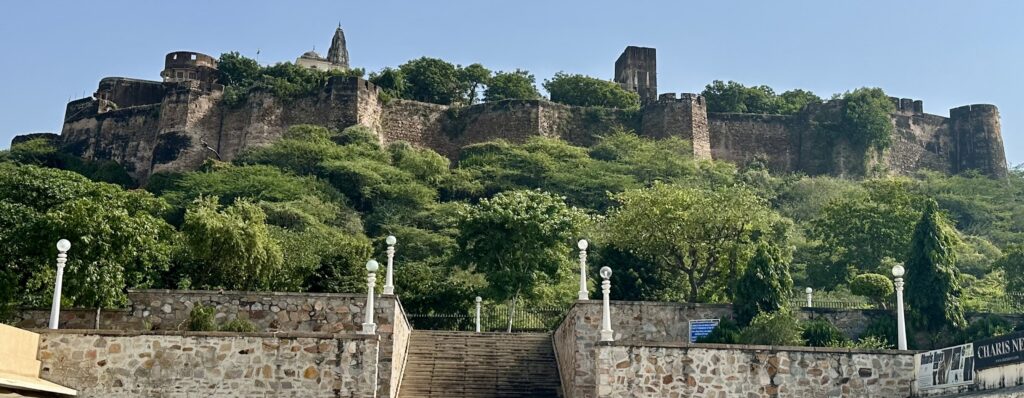
Moti Dungri Fort – From Birla Mandir, you can see this large fort perched on the hills behind the temple. This is a private property of the former royal family of Jaipur and the last residence of Gayatri Devi, who passed away in 2009 at the age of 90. Gayatri Devi was the third Maharani (Queen) Consort of Jaipur from 1940 to 1949 through her marriage to Maharaja Sawai Man Singh II and remains one of the most admired royal figures of Rajasthan.
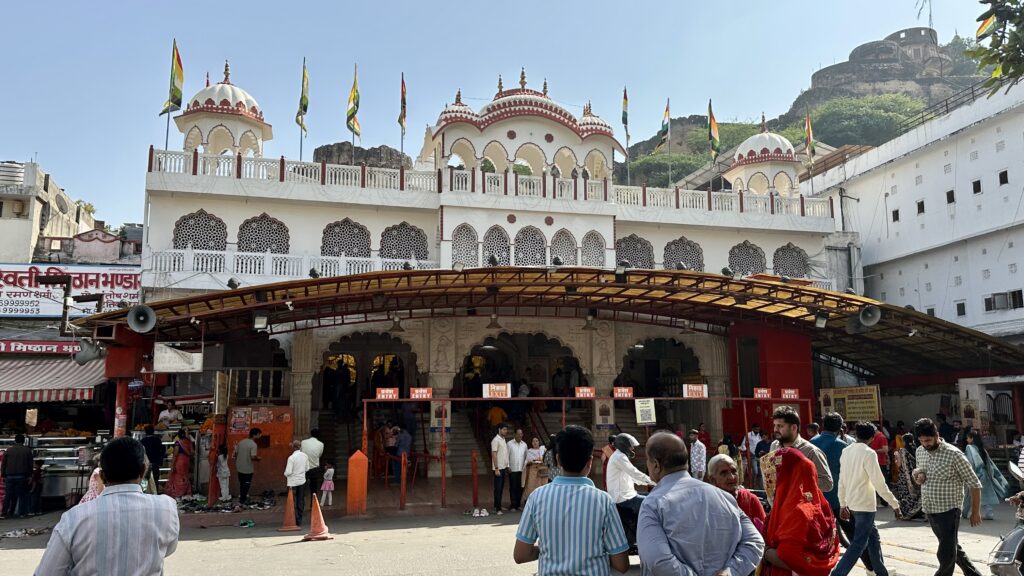
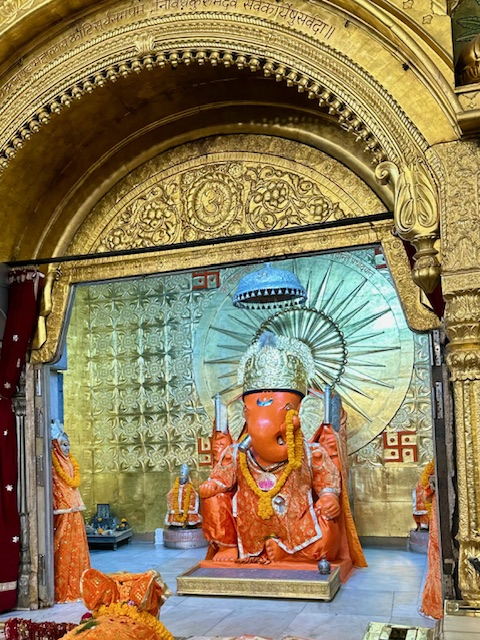
Moti Dungri Ganesh Ji Temple – This Ganesh Temple was within walking distance of Birla Mandir. The shrine has a huge and colorful statue of Lord Ganesha.
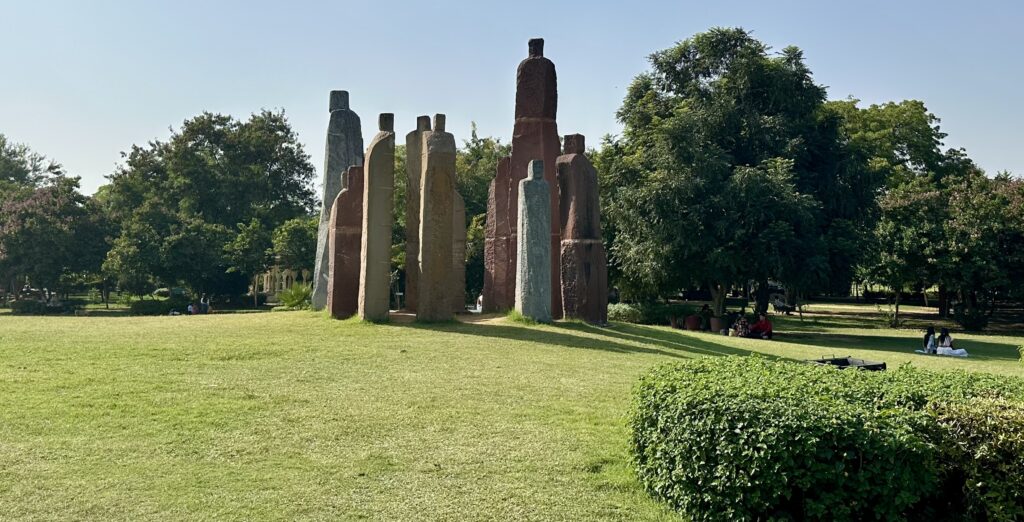
Central Park – After a quick lunch, we enjoyed a leisurely half hour stroll through Jaipur Central Park, a serene, green space with benches and picnic areas. The park has 13 carved stone figures arranged to represent the constellation of Capricornus. The stones were installed in 2011.
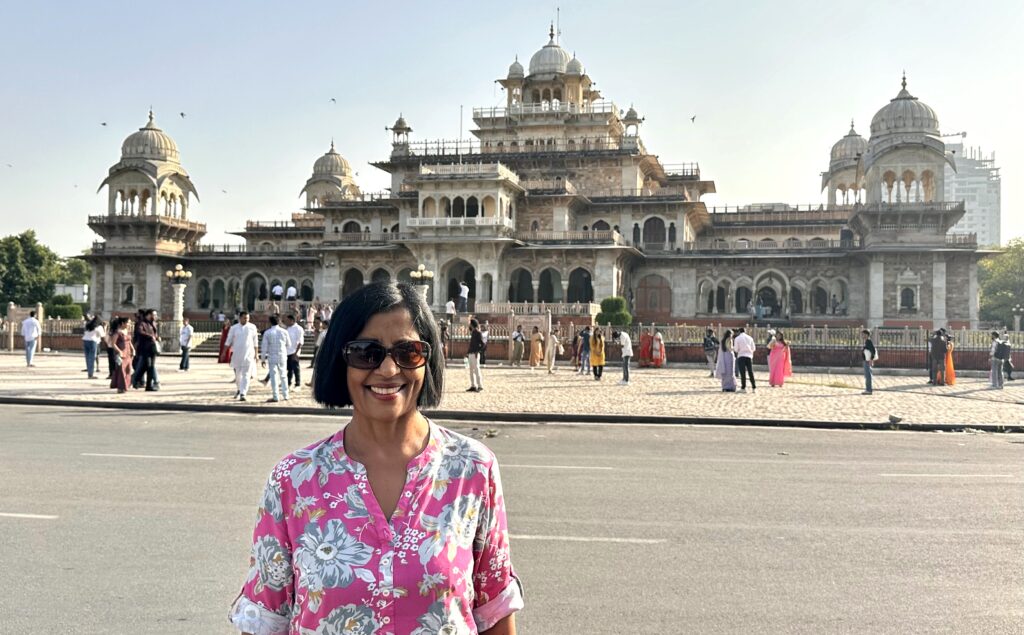
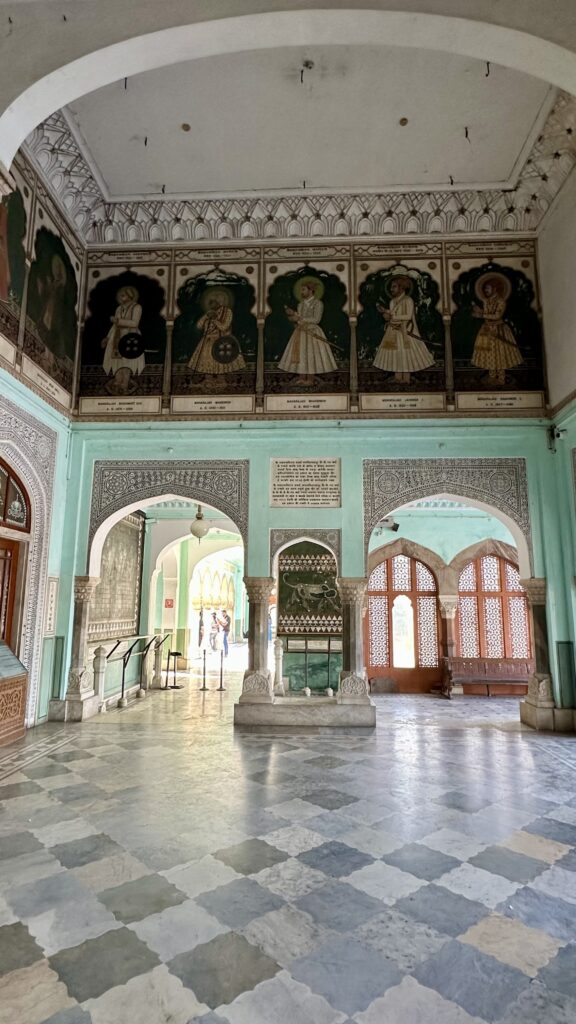
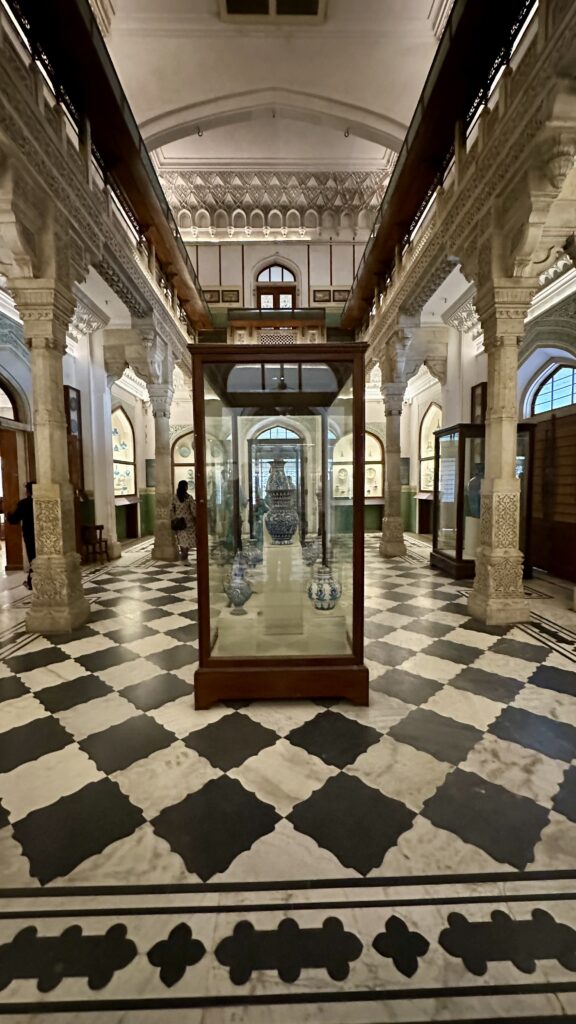
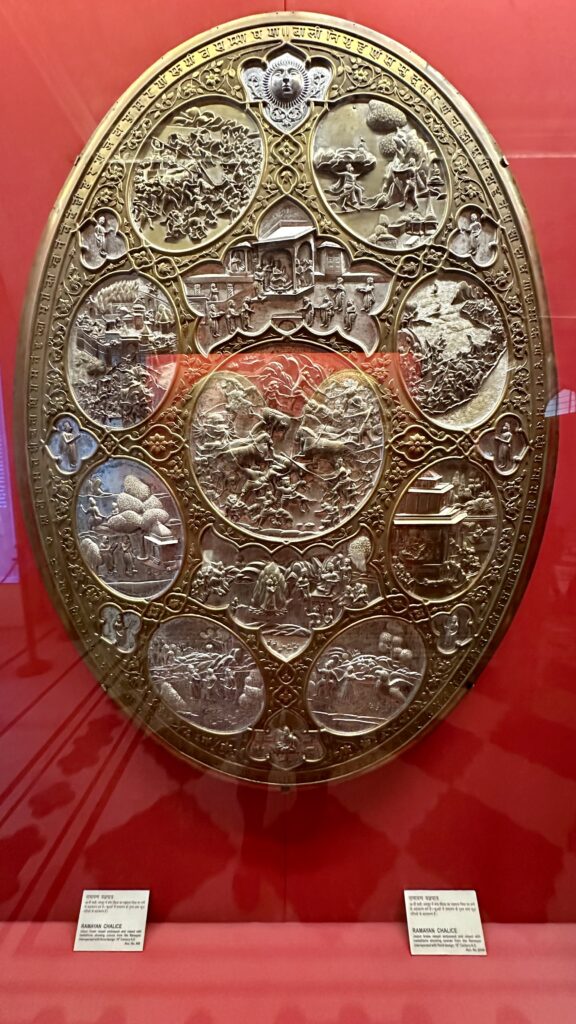
Albert Museum – Our last stop for the day was the Albert Museum which is the oldest museum in Rajasthan. The museum which opened in 1887, was commissioned by Maharaja Sawai Ram Singh II. Besides its beautiful façade, the two-floor museum holds an amazing mix of sculptures, paintings, coins, ceramics, and jewelry.
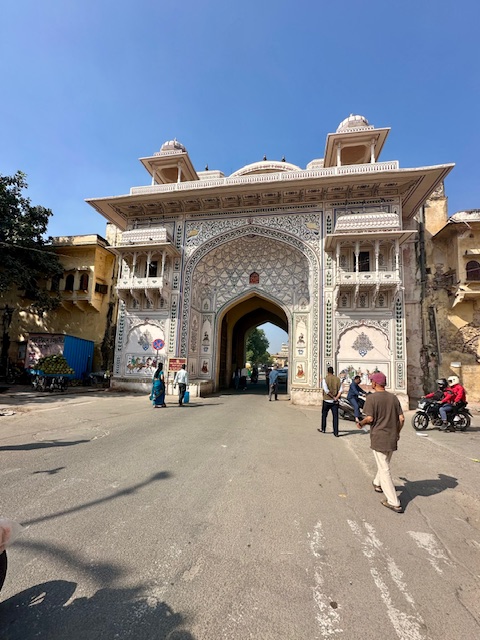
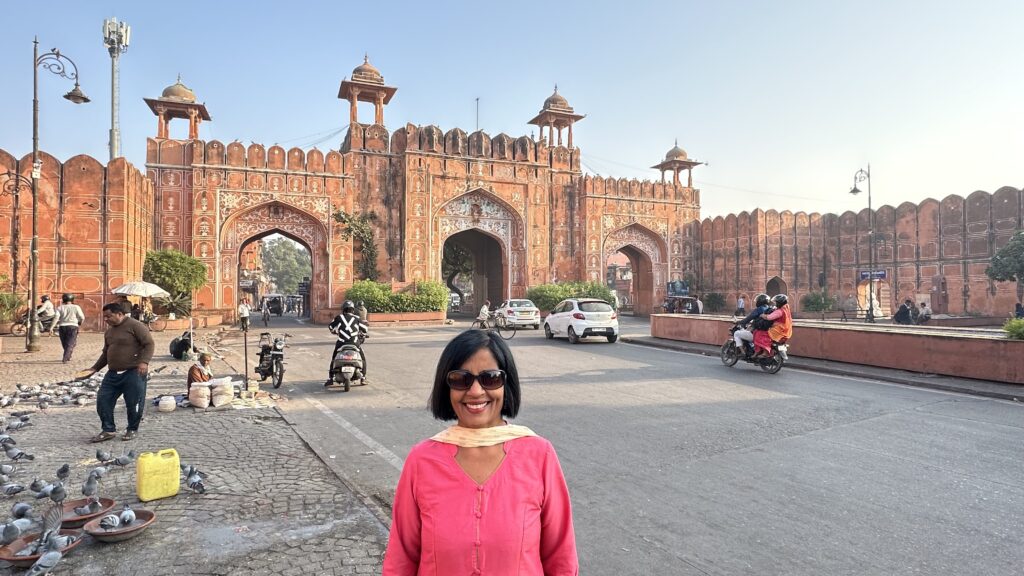
Pink City – In 1876, Jaipur’s ruler Maharaja Sawai Ram Singh II ordered the entire city to be painted terracotta pink to welcome the Prince of Wales (later King Edward VII). The color symbolized hospitality and warmth and this color scheme became so iconic that Jaipur has been known as the Pink City ever since. To preserve the look, the local government still enforces regulations that require buildings in the old walled city to maintain their pink hue. The Pink City includes many iconic sites like the Govind Dev Ji Temple, Hawa Mahal (Palace of Winds), City Palace, Jantar Mantar (UNESCO World Heritage Site), and Albert Hall Museum.
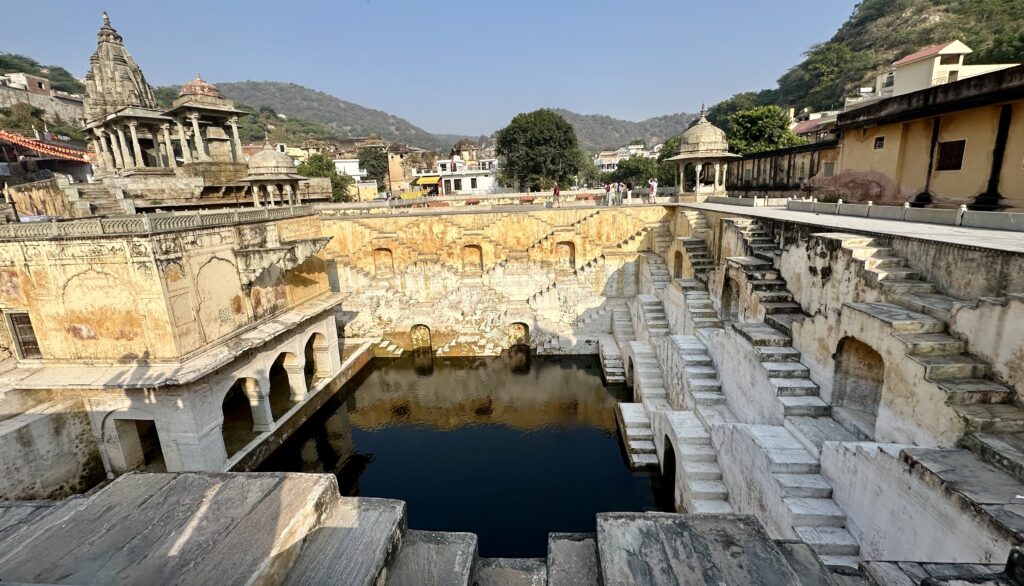
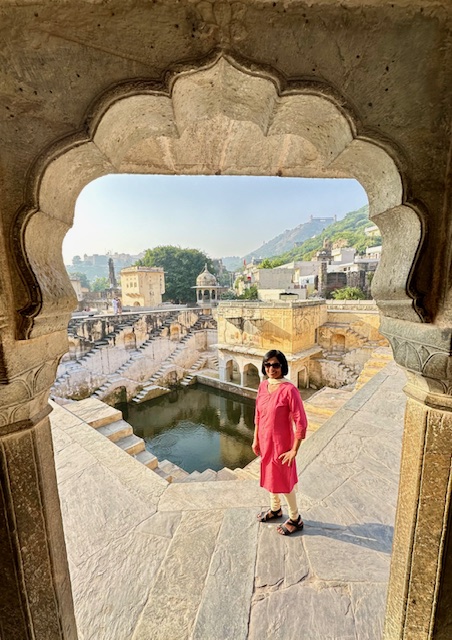
Panna Meena ka Kund – aka Panna Meena Stepwell, this beautifully preserved 16th–17th century stepwell located near Amber Fort is one of Rajasthan’s most photogenic stepwells. It is built in a symmetrical, crisscross staircase pattern, and is roughly 8 stories deep with varying step width and angles. Historically, it served as a water storage system for Amer residents and also as a community gathering place. For safety and preservation, visitors are not allowed to walk on the steps.
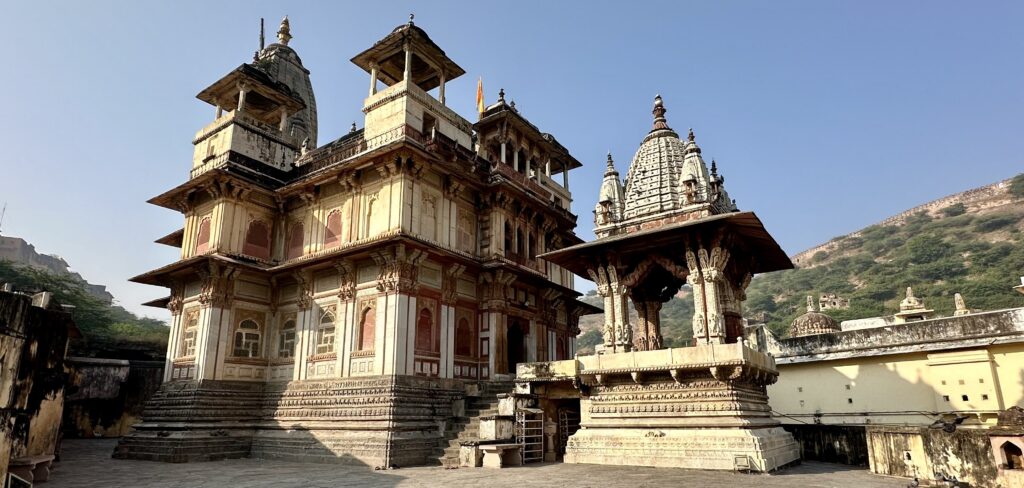
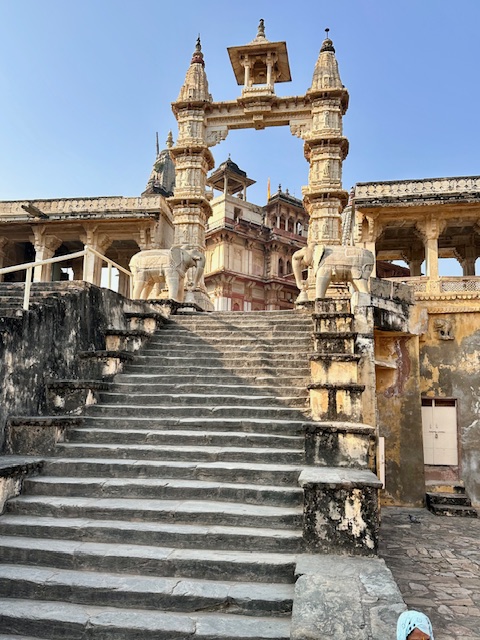
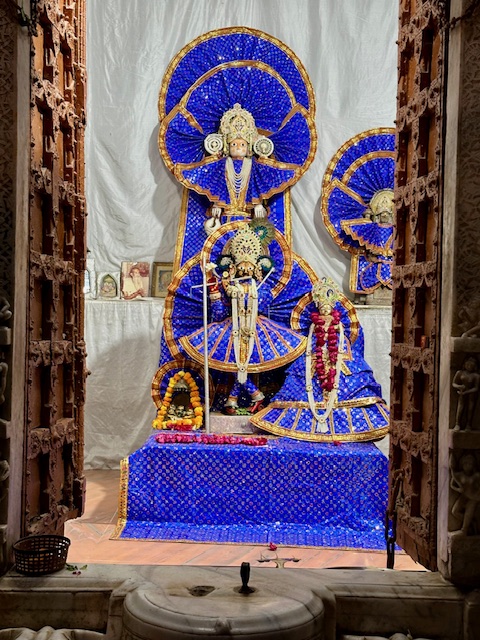
Jagat Shiromani Temple – was withing walking distance of the stepwell and we stopped here for 10 minutes. This 17th-century Hindu temple is unique for being dedicated to Lord Krishna, Meera Bai, and Vishnu. It is one of the few temples in India where Meera Bai, the poet-saint of the Bhakti movement, is enshrined alongside Lord Krishna.
Amber Fort – Perched high above Amer, this 16th century fort overlooking the Maota Lake, is a stunning blend of sandstone and marble, with ornate courtyards, glittering mirror work, and panoramic views of the Aravalli Hills. As we approached Amber Fort, a viewpoint along Maota Lake offered a striking panorama of the majestic fort above.
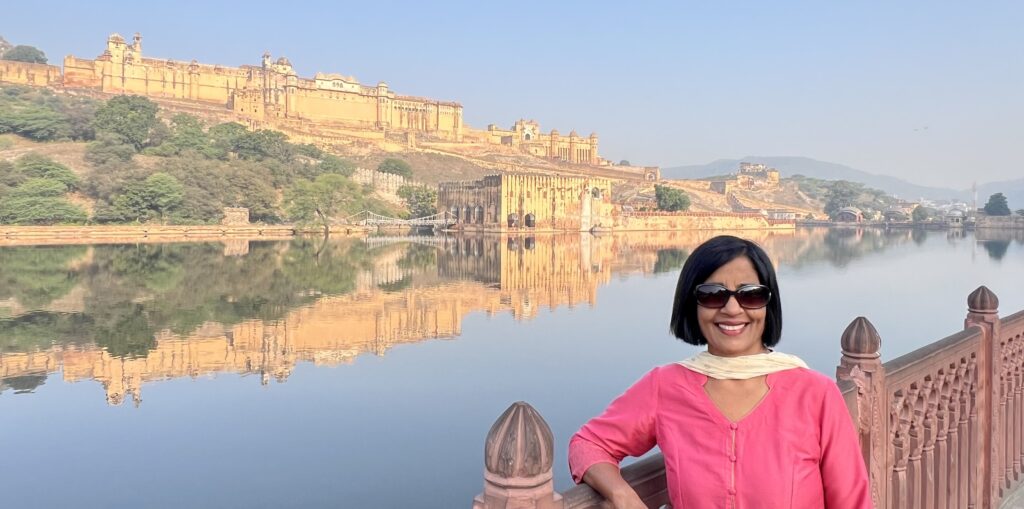
You will need at least 2 hours to cover all the points of interest within this fort.
Amber Fort, Suraj Pol and Chand Pol – The fort is divided into four main sections, each featuring its own courtyard. Visitors typically enter Amer Fort through Suraj Pol (Sun Gate), though those arriving by car usually use Chand Pol. We entered the fort through Chand Pol (Moon Gate). Suraj Pol and Chand Pol are situated on opposite sides of Jaleb Chowk.
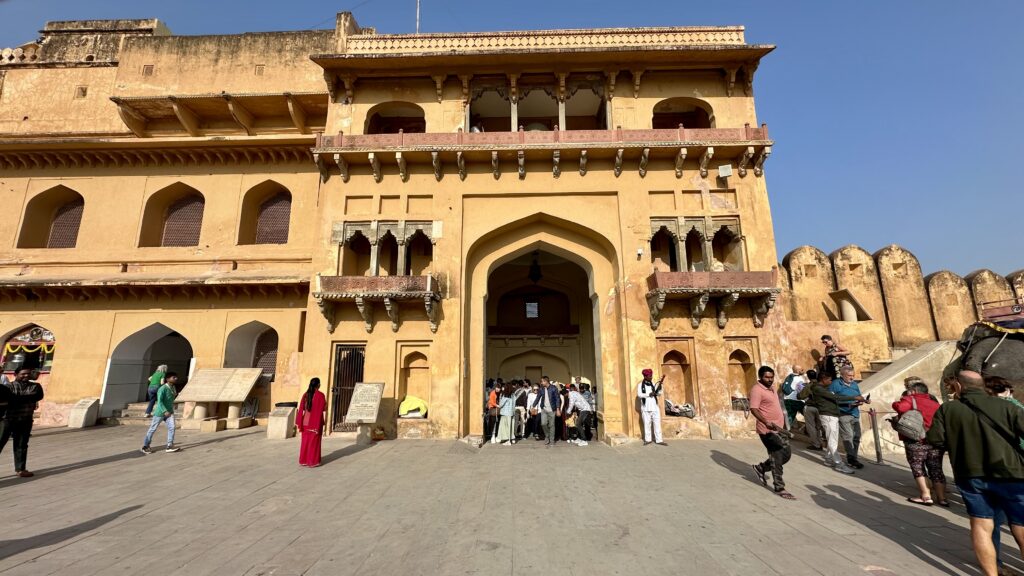
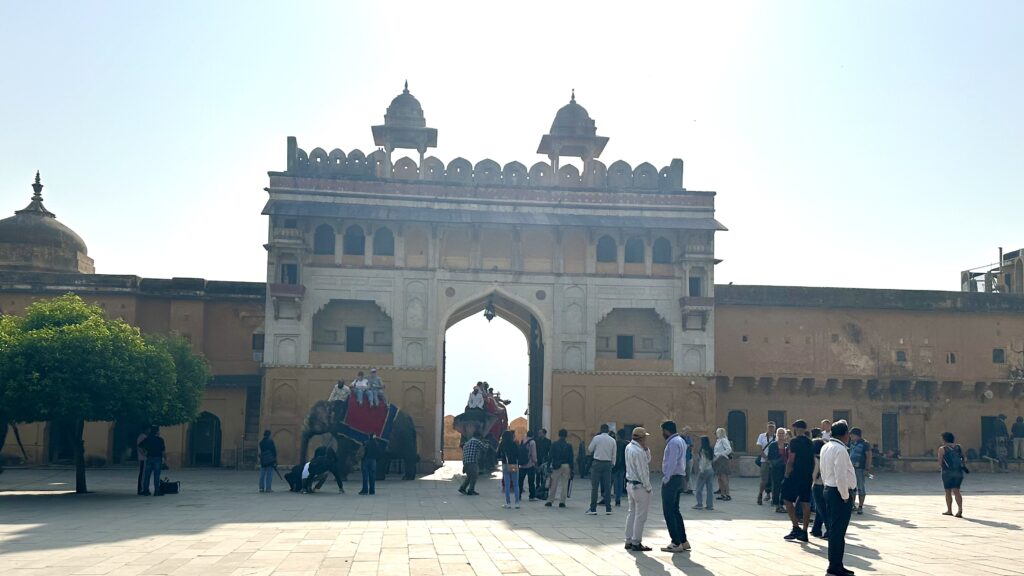
Amber Fort, Jaleb Chowk – The Chand or Suraj gate leads into the first courtyard commonly called Jaleb Chowk.
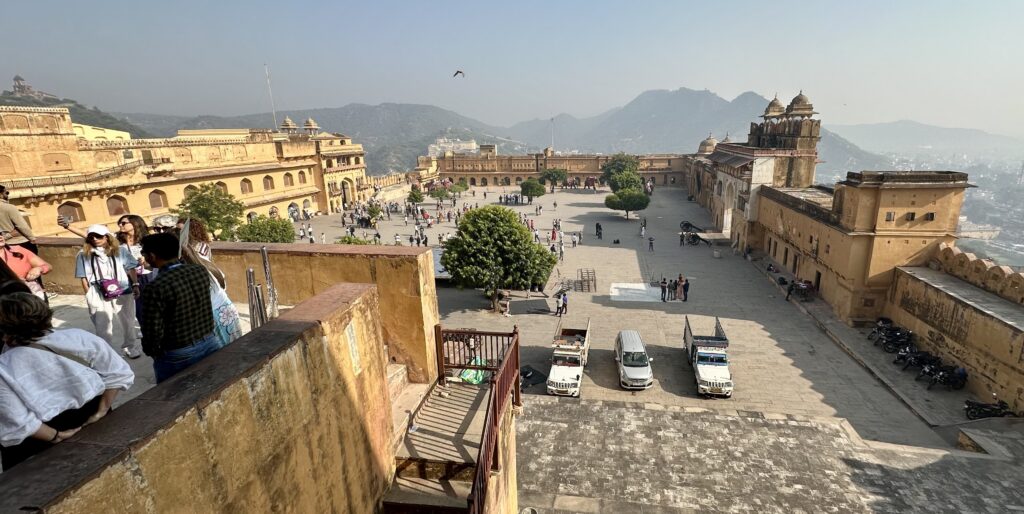
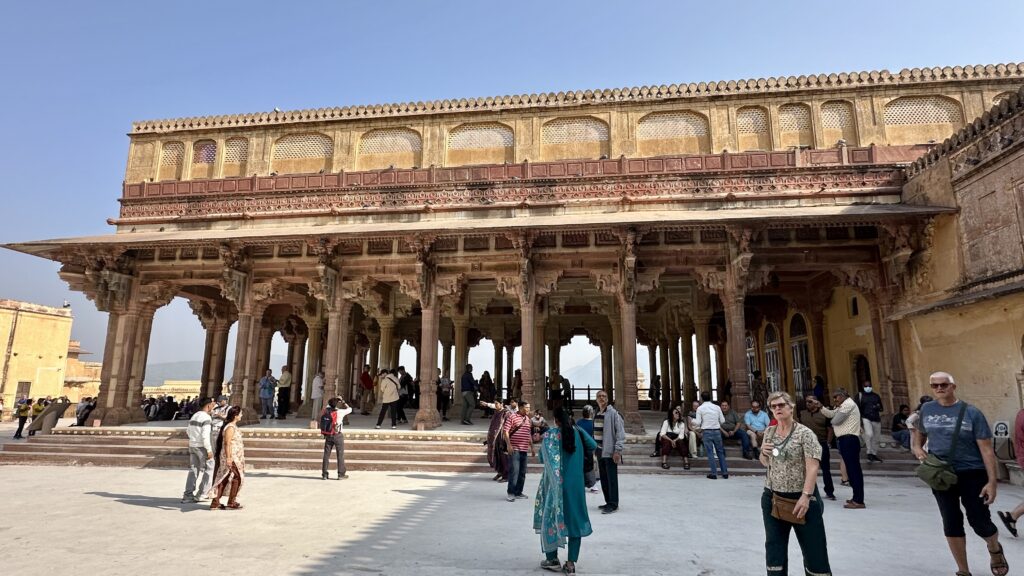
Amber Fort, Diwan‑i‑Aam (Hall of Public Audience) – From Jaleb Chowk, you proceed (up a stairway) into the second courtyard, which contains Diwan‑i‑Aam. AKA The Hall of Public Audience, this large hall with many pillars was where the ruler would address the general public.
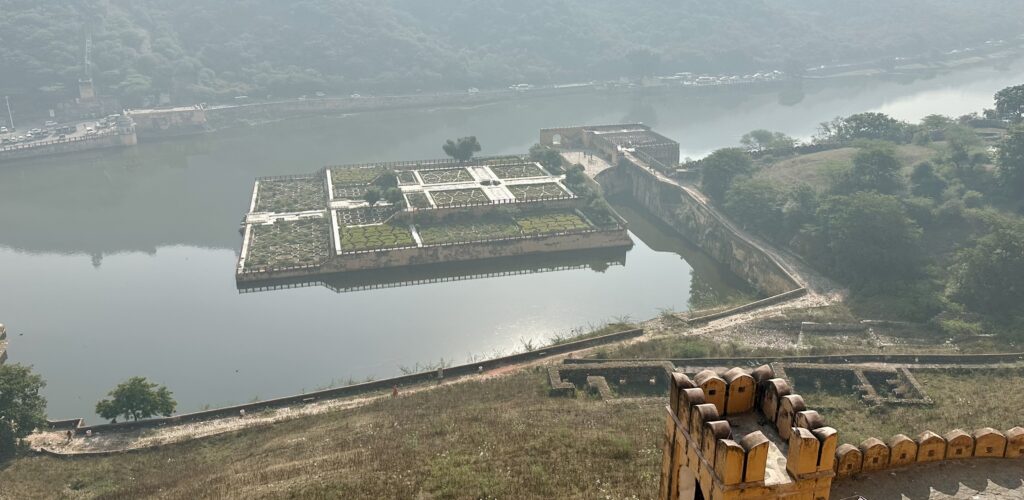
From the second courtyard, you get a spectacular view of Maota Lake and the floating Kesar Kyari Garden (saffron plot). This historical garden is laid out in precise geometrical patterns and was reportedly created in the early 1600s for the royal women of the Amber Fort harem to enjoy views from above.
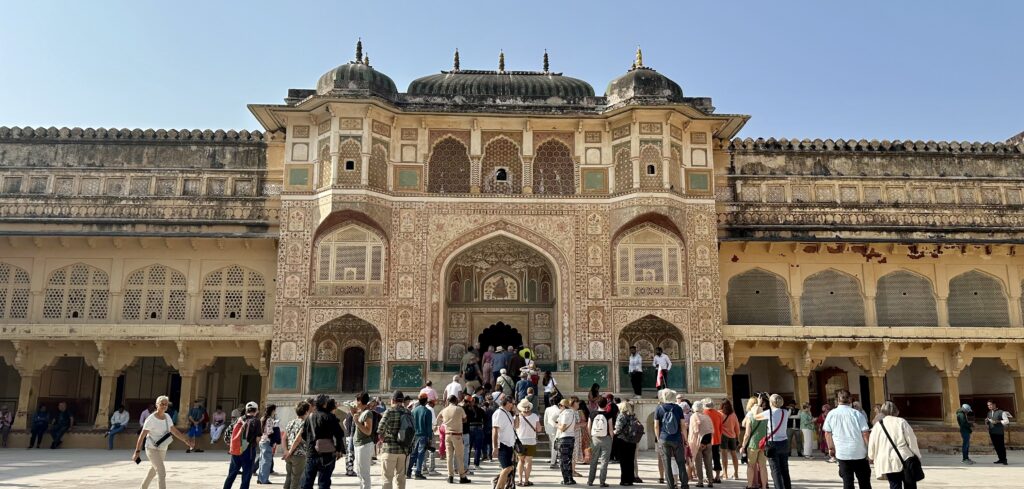
Amber Fort, Ganesh Pol – The second courtyard features the beautiful Ganesh Pol (gate) which leads to the private royal quarters. This gate marks the transition from public to private areas of the palace and is one of the most beautiful entrance in Amber Fort. Built under the order of Mirza Raja Jai Singh, it is covered with elaborate frescoes and a Ganesh painted above the gate, symbolizing good luck.
Amber Fort, Dewan-i-Khas (Private courtyard) – Once you enter through Ganesh Pol you arrive in the third courtyard, the private courtyard designed for the royal family. In this courtyard, to one side lies Jai Mandir (also called Sheesh Mahal or mirror palace), and on the other side lies Sukh Niwas. Between them is a well laid out Mughal garden.
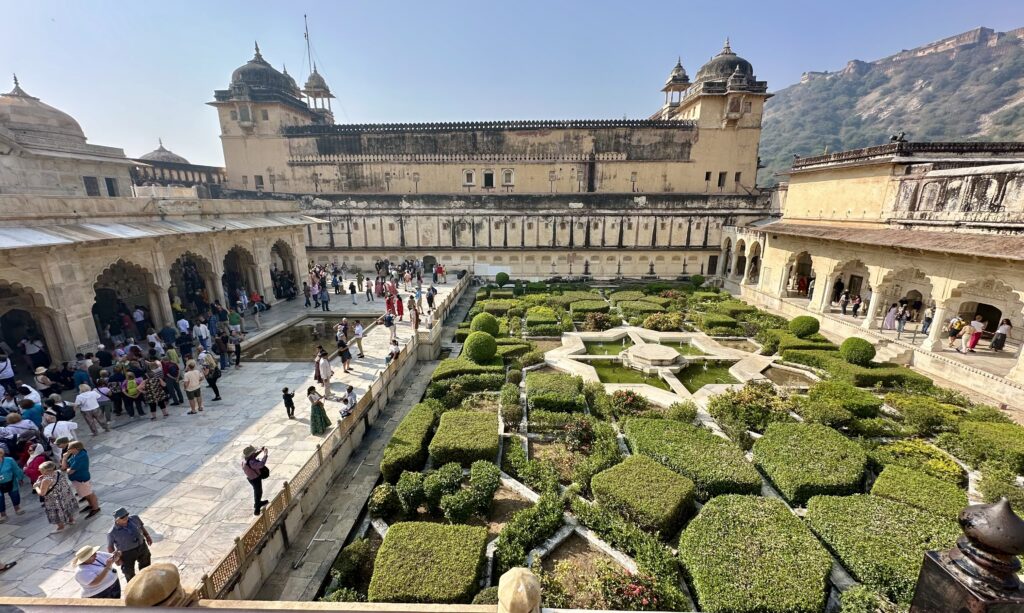
Sukh Niwas (Hall of Pleasure) on the opposite side to the Hall of Private Audience is where the Maharaja rested in his private apartment. The marble rooms were built with water channels in the walls and floors to cool the temperature.
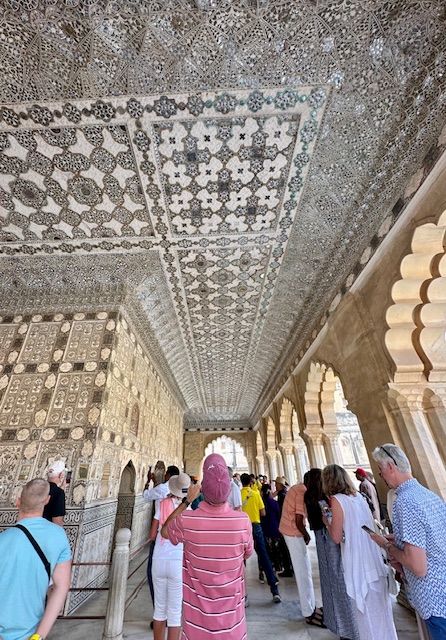
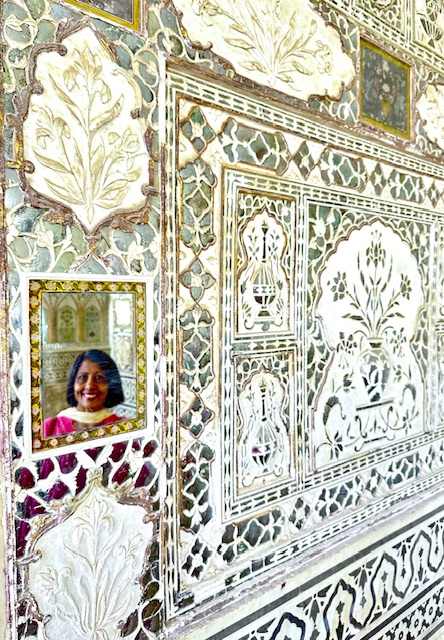
Sheesh Mahal, or the Mirror Palace, is adorned with tiny pieces of glass embedded in its walls and ceilings, designed so that the flicker of a single candle creates the illusion of thousands of twinkling stars.
Above Ganesh Pol lies the Suhag Mandir, a private chamber from which royal ladies could discreetly observe the activities in the Diwan-e-Aam through intricately latticed screens and windows.
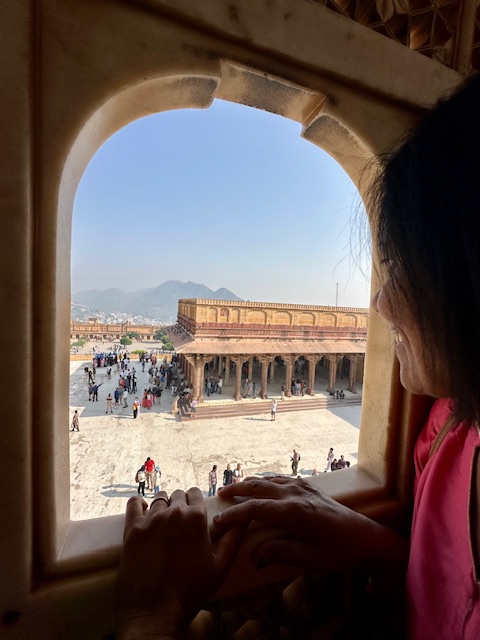
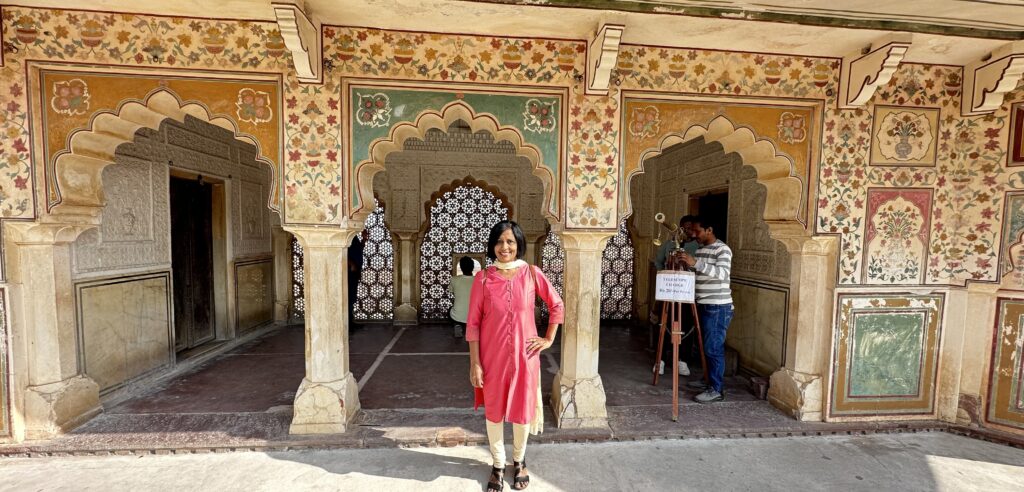
Amber Fort, Zenani Deohri – We then followed a series of steps and corridors to the final courtyard, Zenani Deohri, where the queen mother and the Maharaja’s consorts resided, along with their female attendants. The courtyard contains twelve apartments, one for each of the Maharaja’s wives, with allocation based on rank, as some apartments are more spacious than others. At the center of the courtyard stands a pavilion, the Baradari, where the royal ladies could gather privately behind the shelter of curtains.
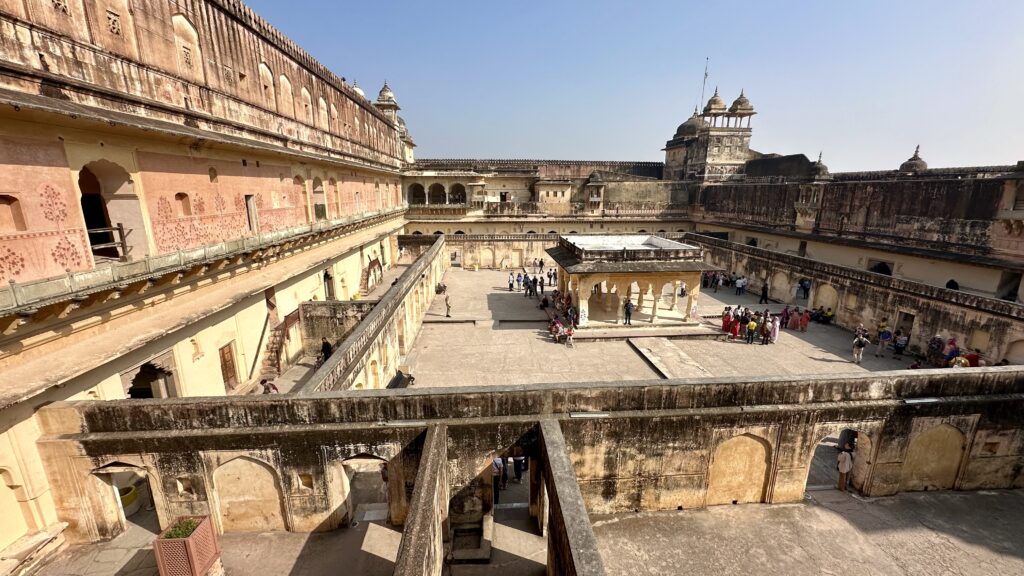
Other highlights of Amber Fort include the mysterious underground tunnel that links the fort to the nearby Jaigarh Fort.
Nahargarh Fort – sits on a ridge of the Aravalli Hills overlooking the city of Jaipur. It was built in 1734 by Maharaja Sawai Jai Singh II, originally as a retreat and part of the defensive ring alongside nearby forts.
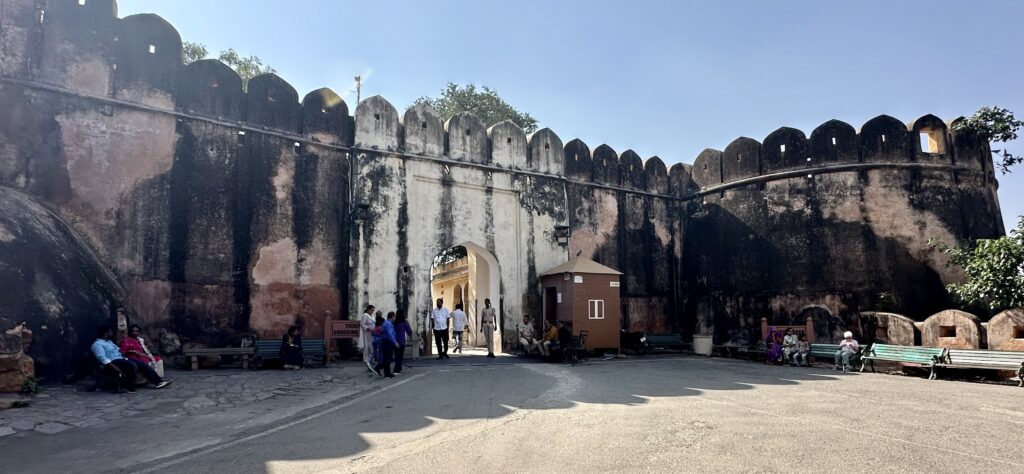
Nahargarh Fort, Step-well (baolis) – like many traditional forts in Rajasthan, Nahargarh has step-wells used historically to store water during sieges or dry seasons.
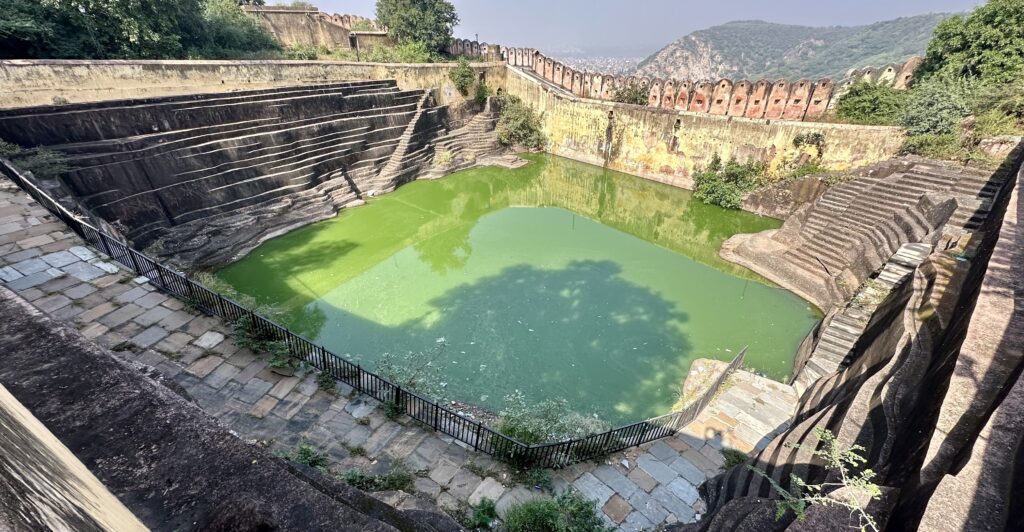
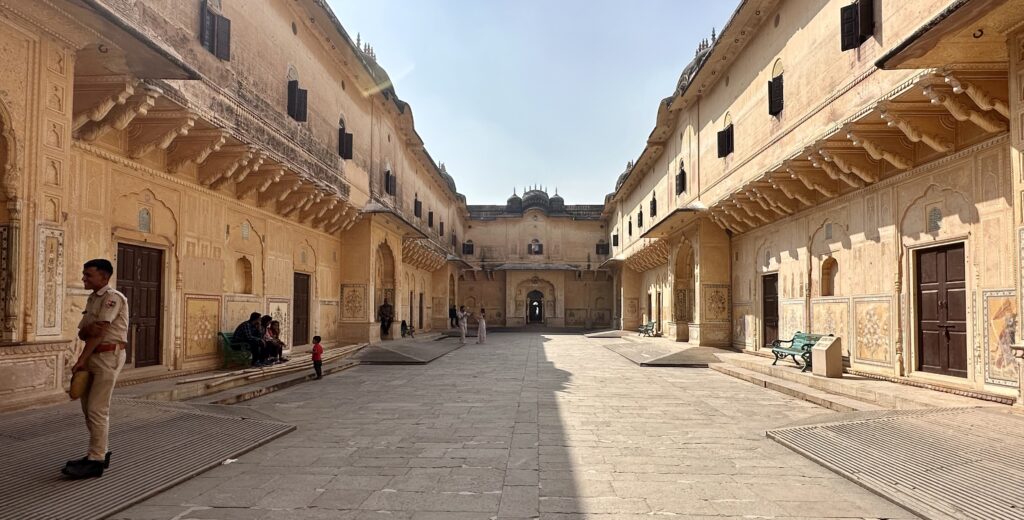
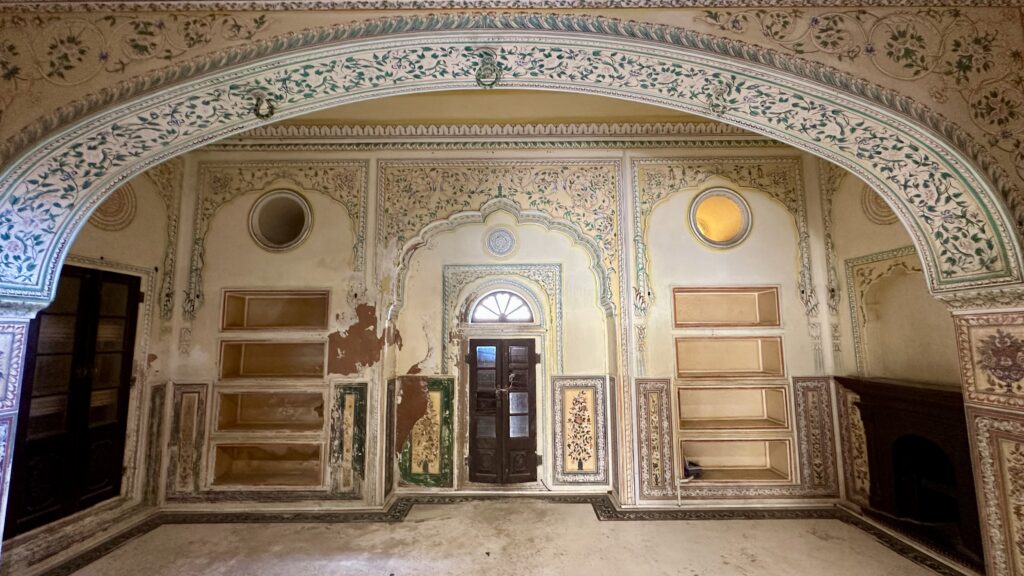
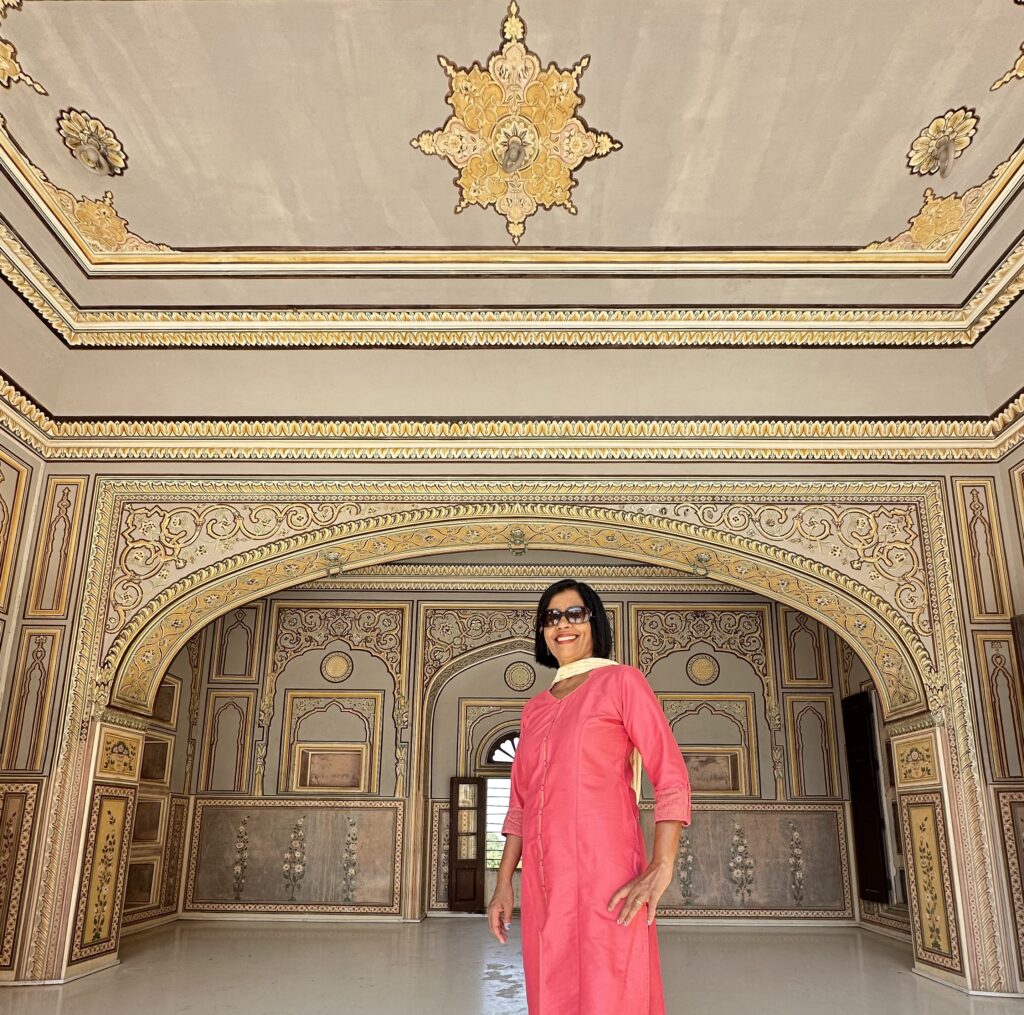
Nahargarh Fort, Madhavendra Bhawan – this palace complex inside the fort has suites that once housed the king and his queens. The suites are arranged around a courtyard; many still retain delicate frescoes and decorated interiors.
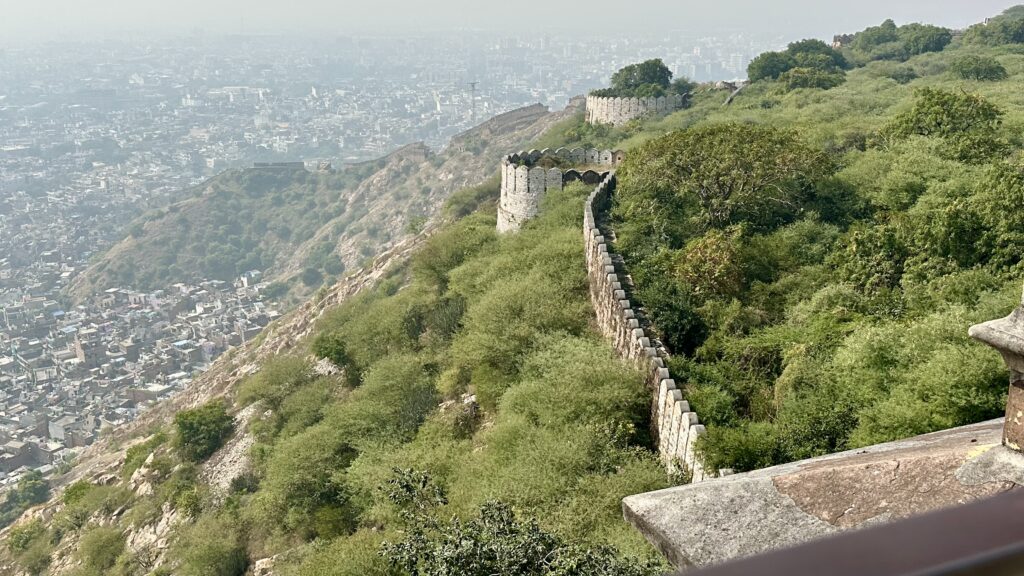
Jaigarh Fort – sits atop the ridge called Cheel ka Teela (Hill of Eagles) of the Aravalli range, and is at a higher elevation than Amber Fort, giving commanding views of the surrounding hills. The fort was built under Maharaja Sawai Jai Singh II in the early 18th century to serve as a stronghold and protective bastion for Amber Fort and the surrounding region.
Jaigarh Fort, Jaivana Cannon – is the star attraction here. This massive cannon, once the largest wheeled cannon in the world, was cast right in the fort’s foundry. The barrel is about 6 m long and weighs ~50 tons.
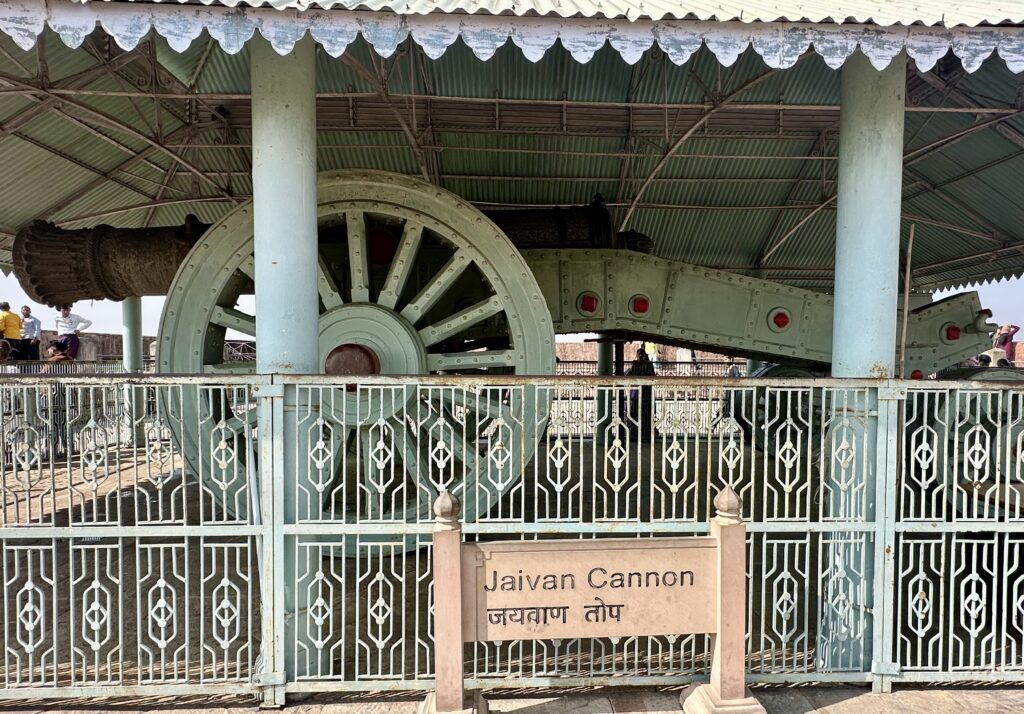
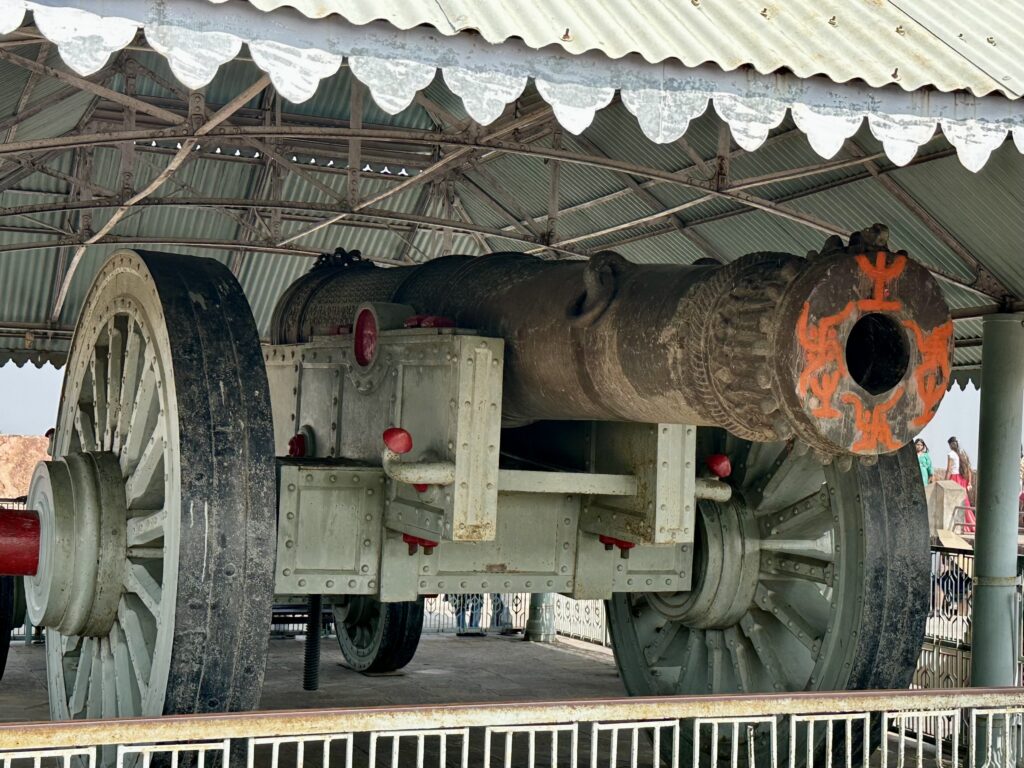
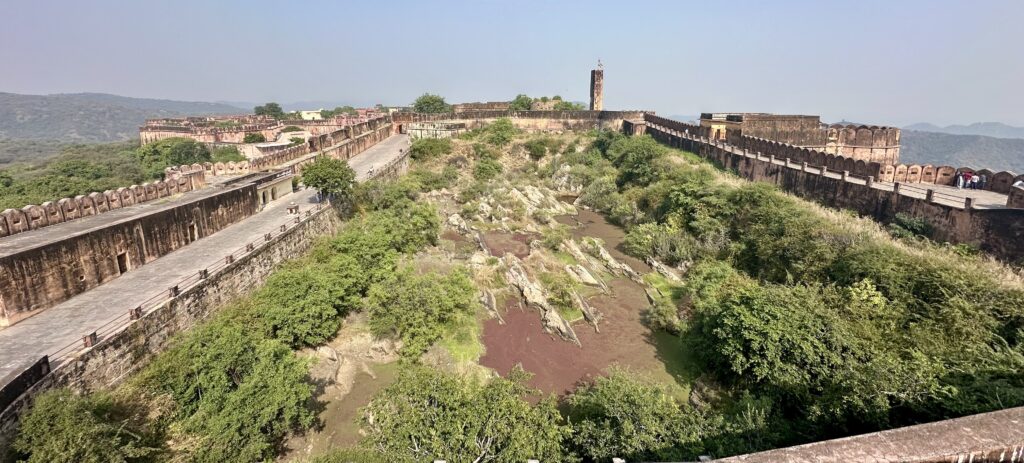
The fort stretches across the ridge, and as you wander along its wide stone pathways and ramparts, you are rewarded with sweeping views of the Aravalli Hills and the Amber Fort far below. The tall structure that comes into view as you walk around is the watchtower, Diya Burj, rising high above the fort’s massive walls. It once served as a crucial lookout point, giving guards a commanding view of the hills, Amber Fort, and the vast plains stretching toward Jaipur.
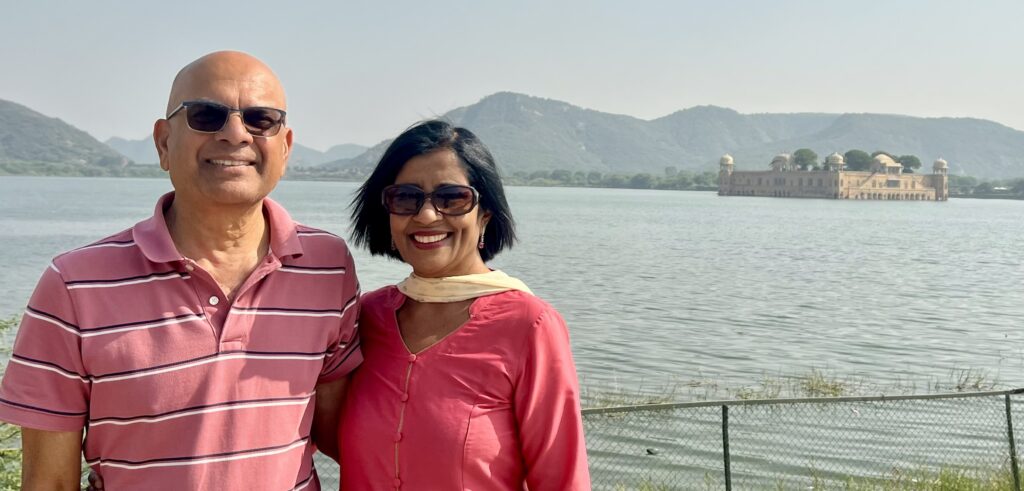
Jal Mahal (or Water Palace) – This beautiful palace is situated in the middle of Man Sagar Lake in Jaipur.
Although it looks like a single-story structure, five stories exist, with four submerged under water when the lake is full. The palace was originally built in the 18th century by Maharaja Madho Singh I as a place for royal leisure and duck hunting trips. Currently, entry inside Jal Mahal is not allowed to the general public, but you can enjoy beautiful views from the lakefront and take a boat ride when available. Constructed using red sandstone, it features beautifully carved balconies and chhatris
Gaitore Ki Chhatriyan – is the royal crematorium and cenotaph complex for the Kachwaha Rajput kings of Jaipur. The site features ornate cenotaphs, designed by Maharaja Sawai Jai Singh II in the 18th century. Each cenotaph is topped with an umbrella-shaped dome (chhatri) and is elaborately decorated with intricate carvings. The cenotaph of Maharaja Sawai Jai Singh II, the founder of Jaipur, is particularly noteworthy for its intricate carvings and is one of the older cenotaph.
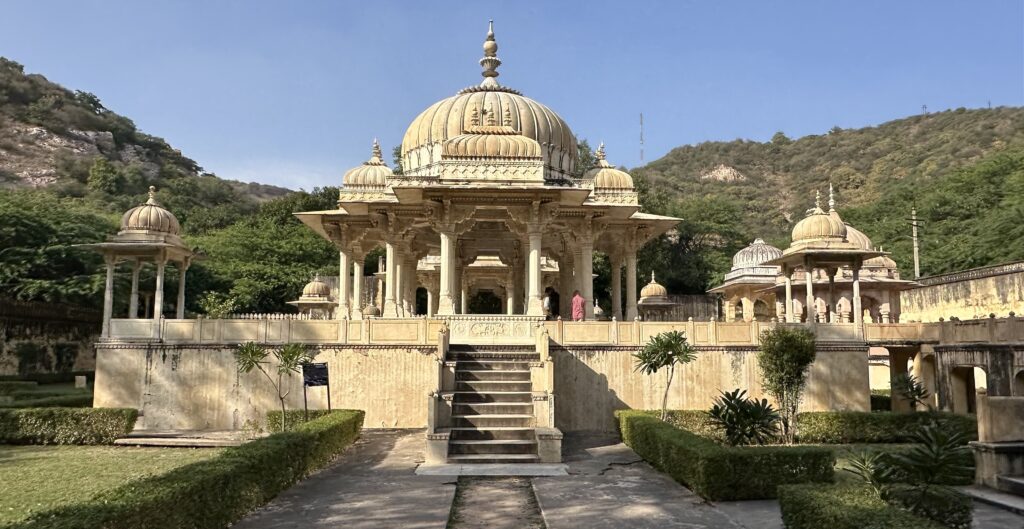
The newer cenotaphs are located toward the front of the complex, closer to the entrance. These are more recent memorials built for the later members of the Jaipur royal family. The older cenotaphs are toward the back, deeper into the site and include chhatris belonging to the founders of Jaipur and early Kachwaha rulers. Additionally, the older chhatris tend to be more intricately carved in white marble or sandstone, while some of the newer ones are simpler in design but still elegant.
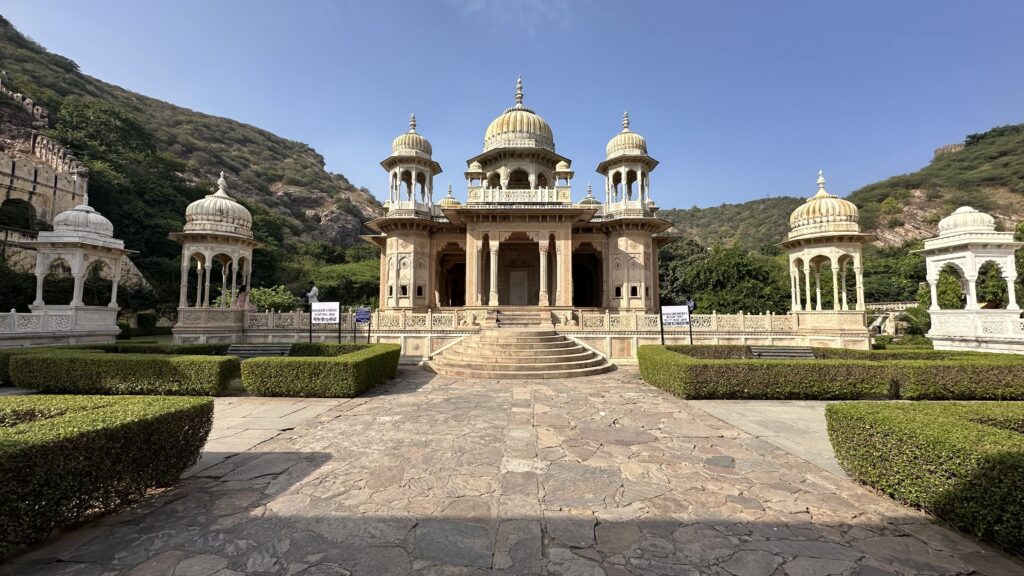
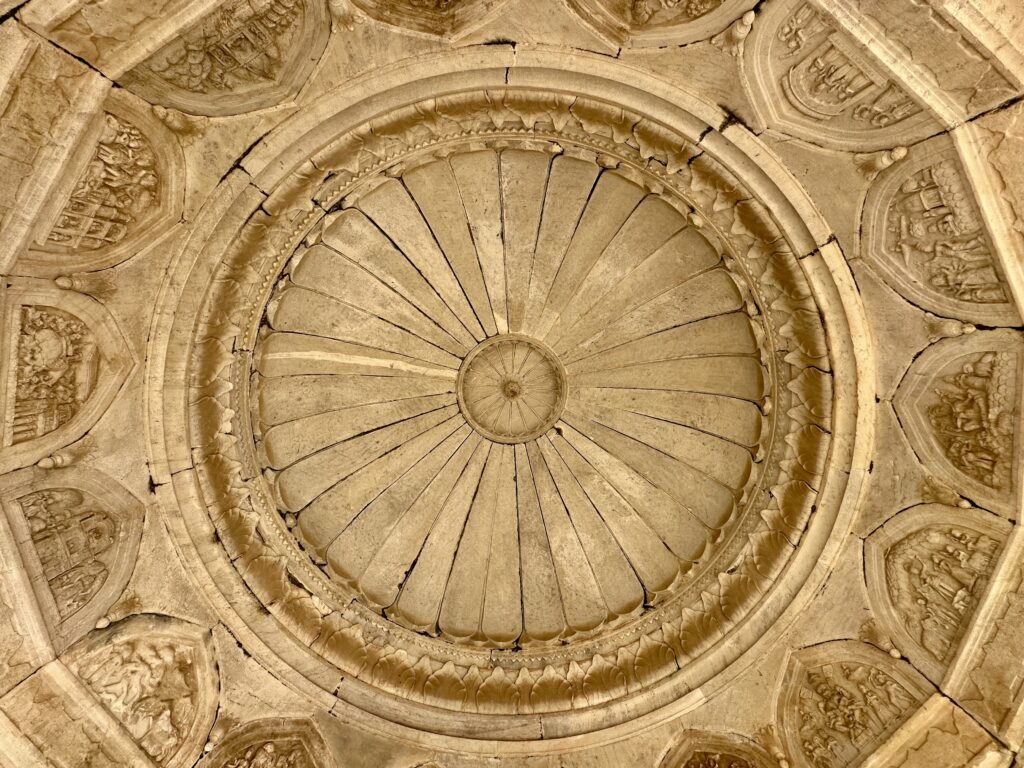
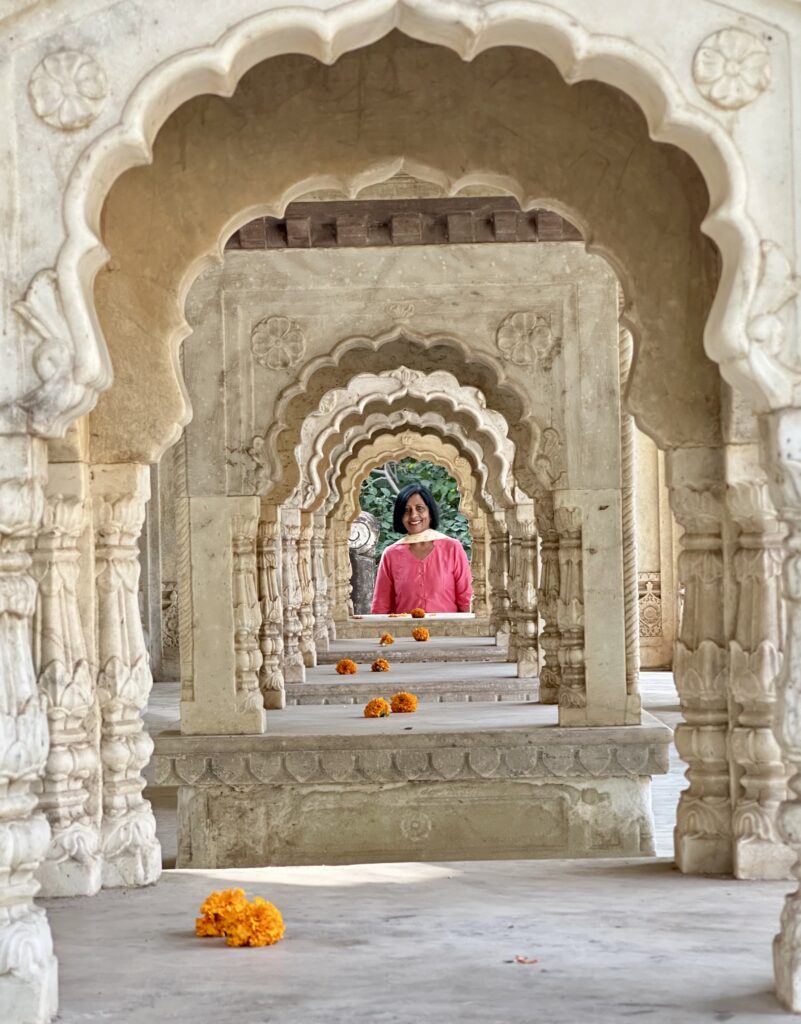
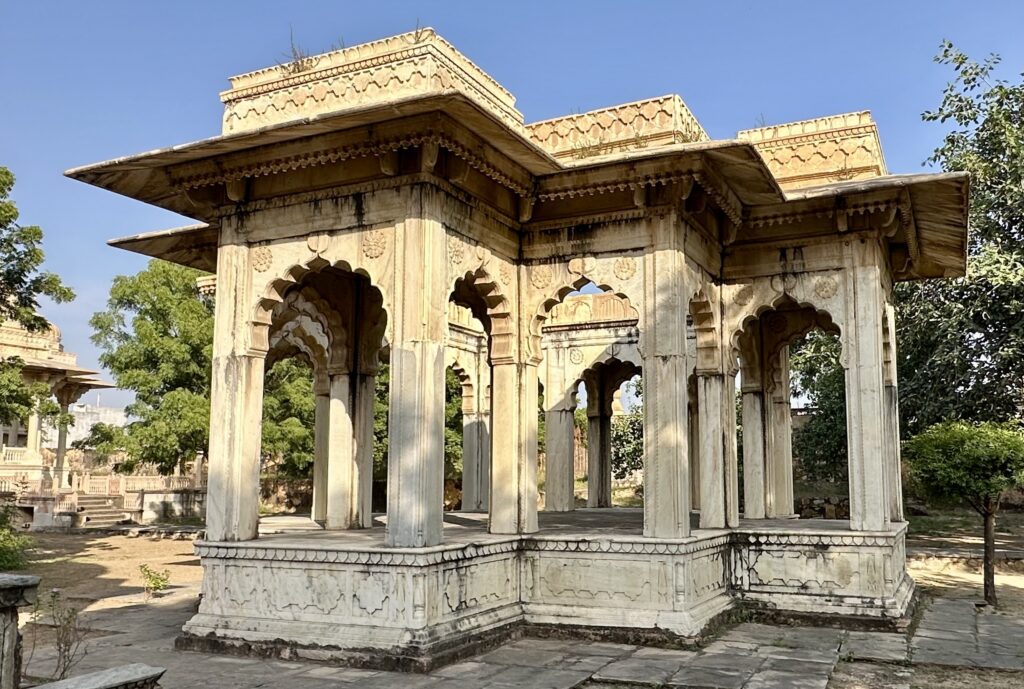
Maharani ki Chhatris – is famous for its magnificent cenotaphs which were built in the memory of various ladies of the Kachwaha Royal family. Over nearly 280 years, 11 beautiful memorials have been erected at the site—dedicated to the spouses of various kings who have ruled over the city.
The first chhatri to be built here was in the early 1740s, for one of the three queens of Maharaja Sawai Jai Singh II (1688–1743), whose own chhatri is in Gaitore. The eleventh (and so far, latest) monument was added in 2009 for Rajmata Gayatri Devi (1919-2009), the third consort of Maharaja Man Singh II (d. 1970).
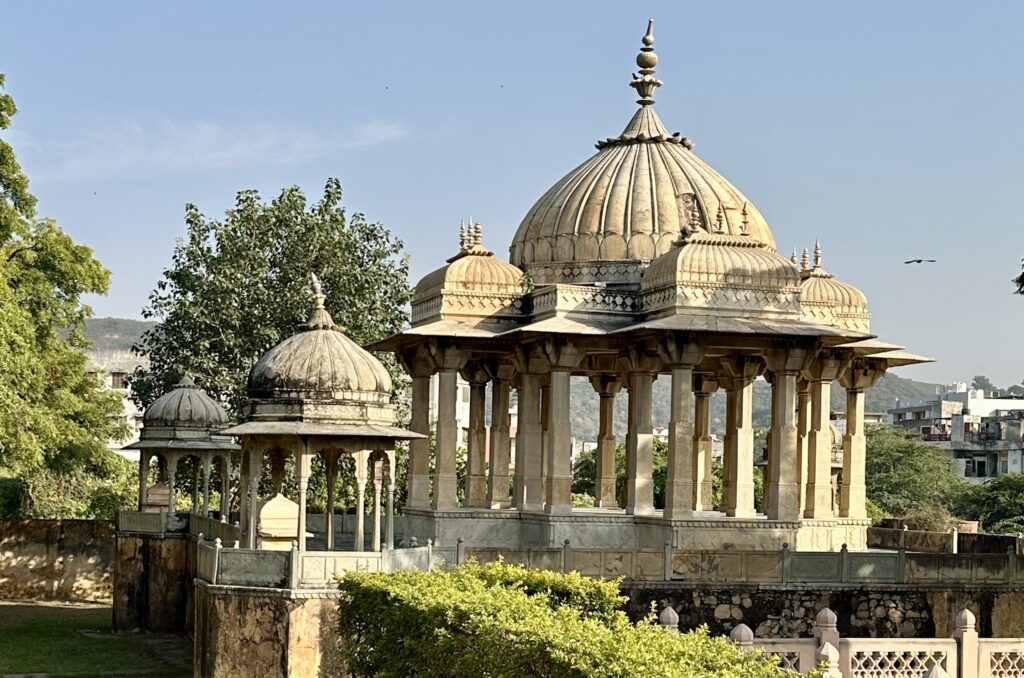
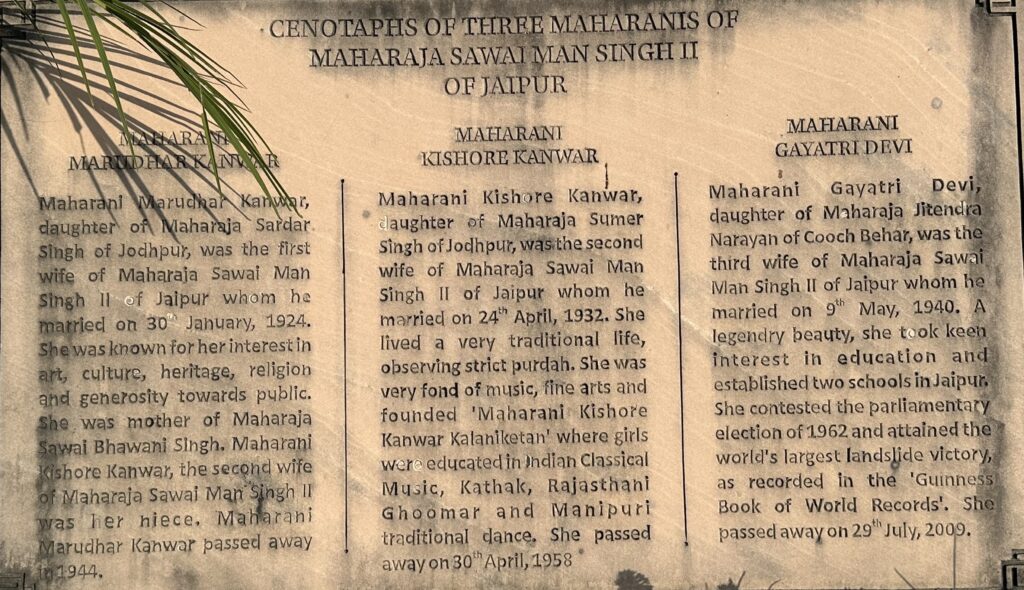
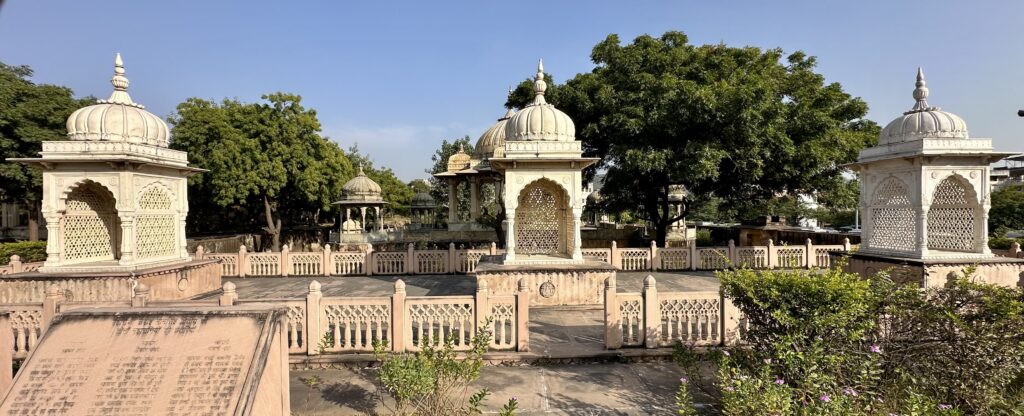
A couple of cenotaphs did not have a roof or Chhatri – the person at the ticket counter said that these structures were damaged.
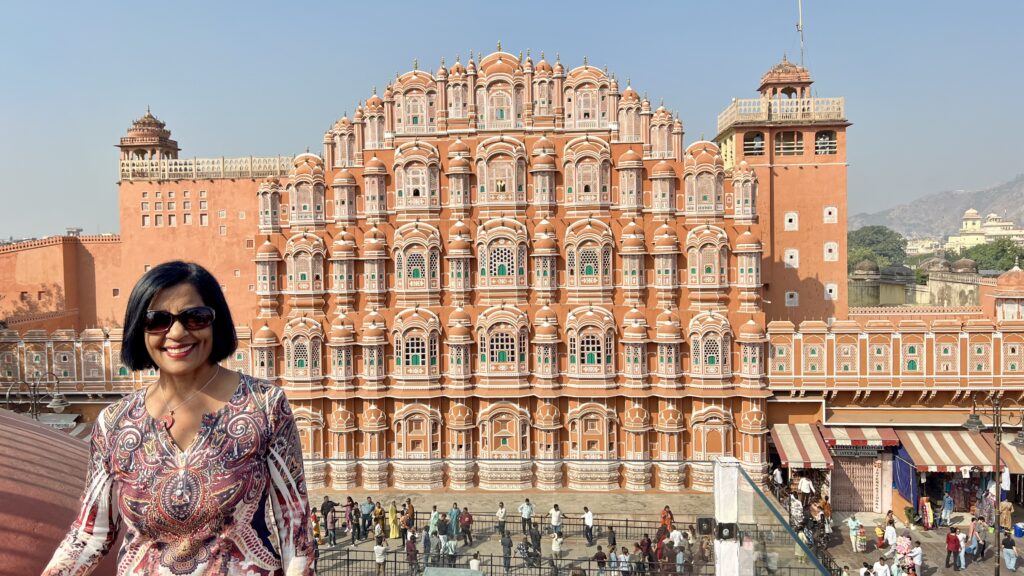
Hawa Mahal (Palace of Winds) – We first stopped across the road to marvel at this five-story facade, which is designed like the crown of Lord Krishna and features 953 small windows. Built in 1799 by Maharaja Sawai Pratap Singh, Hawa Mahal was designed as an extension of the City Palace. Its main purpose was to allow the royal women (who followed purdah) to observe street processions and everyday city life without being seen. The 953 small windows, called jharokhas, decorated with intricate latticework allows cool air to pass through, naturally ventilating the palace—hence the name Palace of Winds.
There are a couple of coffee shops that offer a great view for photos. We paid 500 rupees to take pictures, which was deducted from our bill when we ordered coffee.
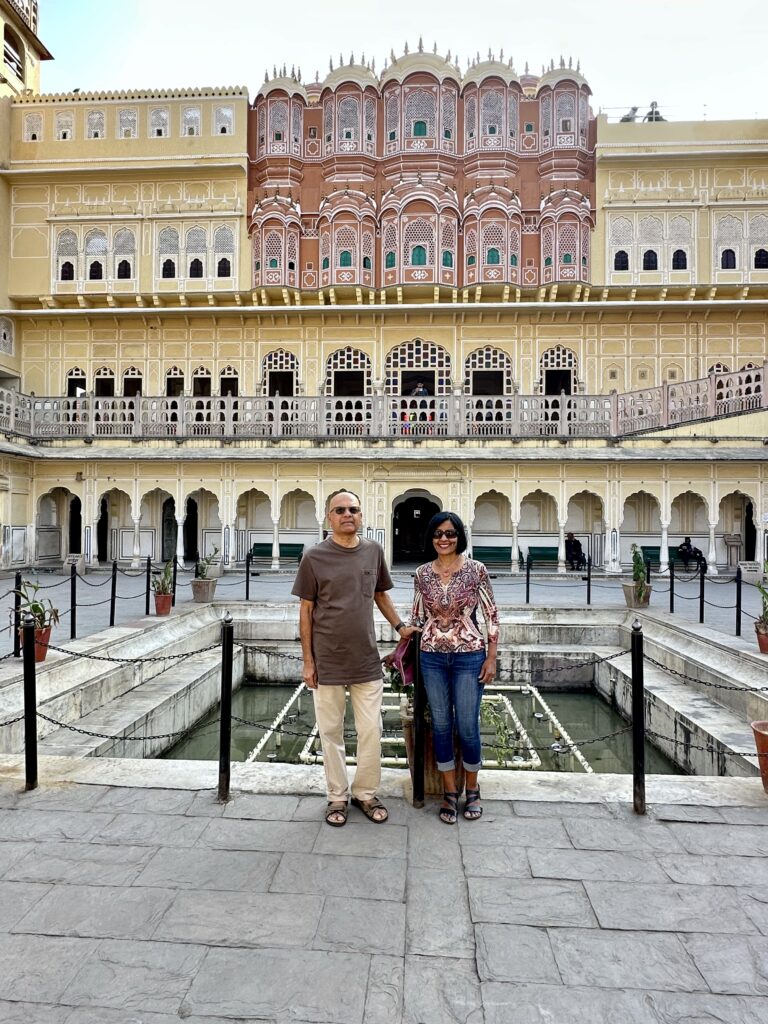
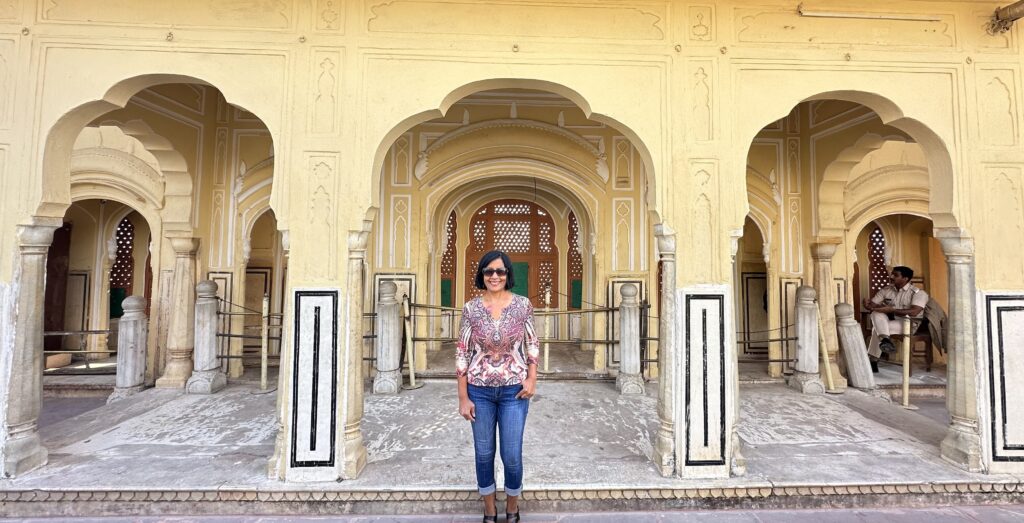
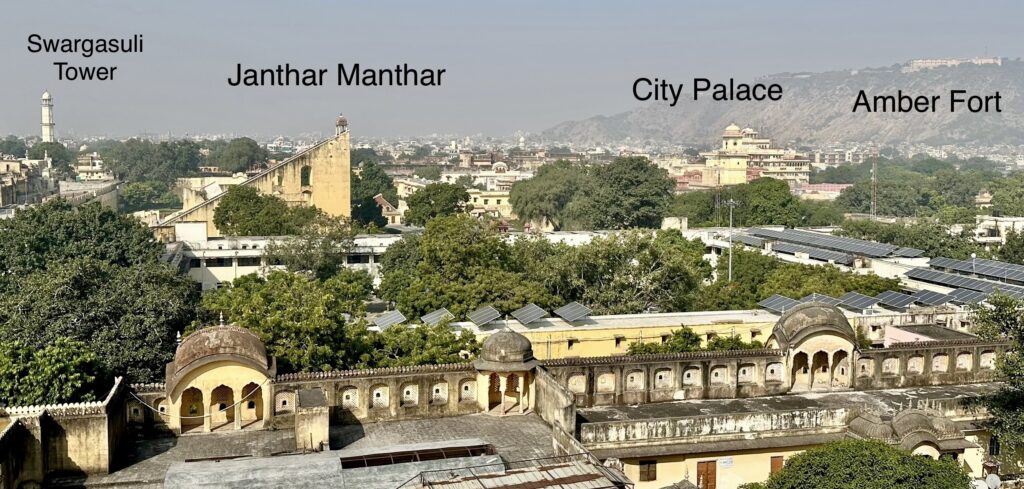
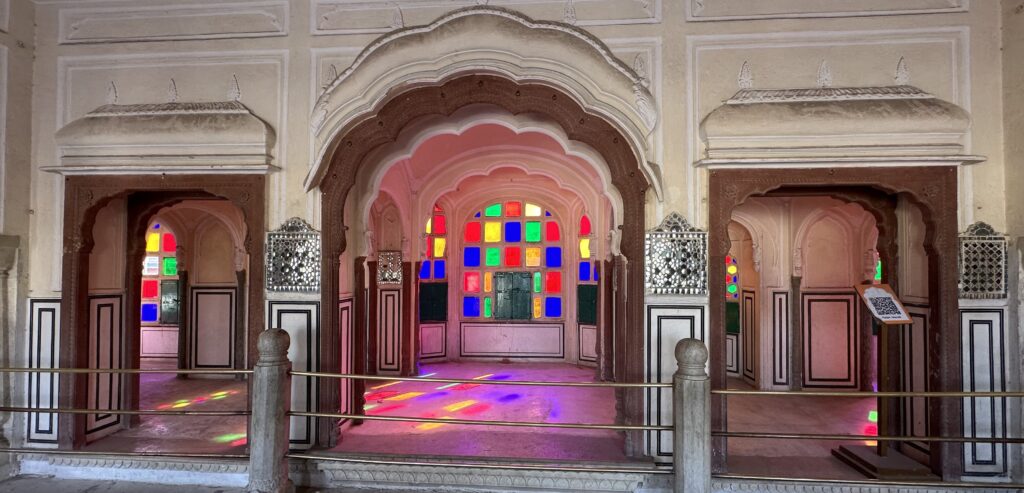
We then went around into the Mahal. The ground floor of Hawa Mahal, features courtyard with a fountain and an archaeological museum displaying Rajput artifacts, weapons, and miniature paintings. After passing through a courtyard, a ramp leads up to the chambers which were once used by the royal ladies. From the upper floors, you can enjoy panoramic views of the City Palace, Jantar Mantar, and Amber Fort.
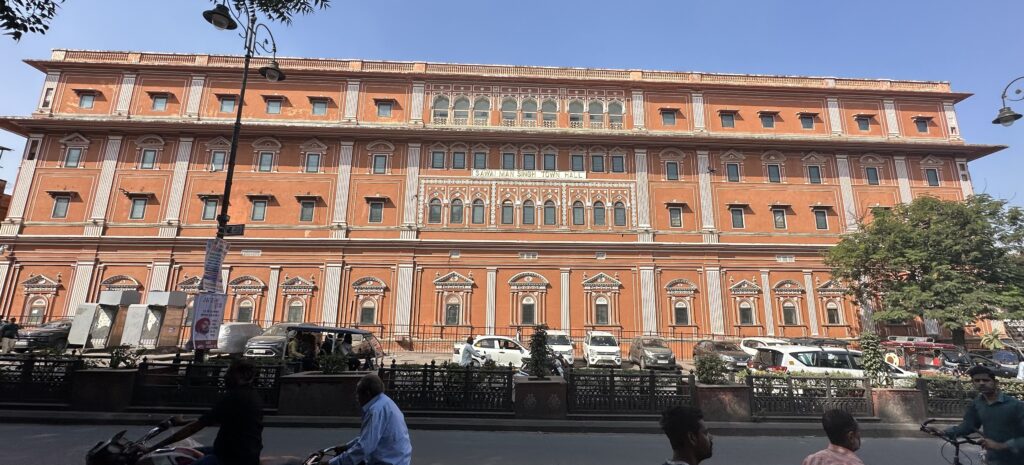
Sawai Man Singh Town Hall (aka Old Vidhan Sabha) – You will come across this building as you walk from Hawa Mahal towards the City Palace. Completed around 1880 CE under the rule of Sawai Ram Singh II, the building features a fusion of Rajput, Mughal and European design motifs with ornate arches, jalis (latticed stone screens), decorative stonework and a stately sandstone façade. From 1952 until 2000, it served as the seat of the state legislative assembly, making it the political‑administrative heart of the region. The building fell out of use as the assembly moved to a newer facility. There is now a project to restore and repurpose it as a heritage museum.
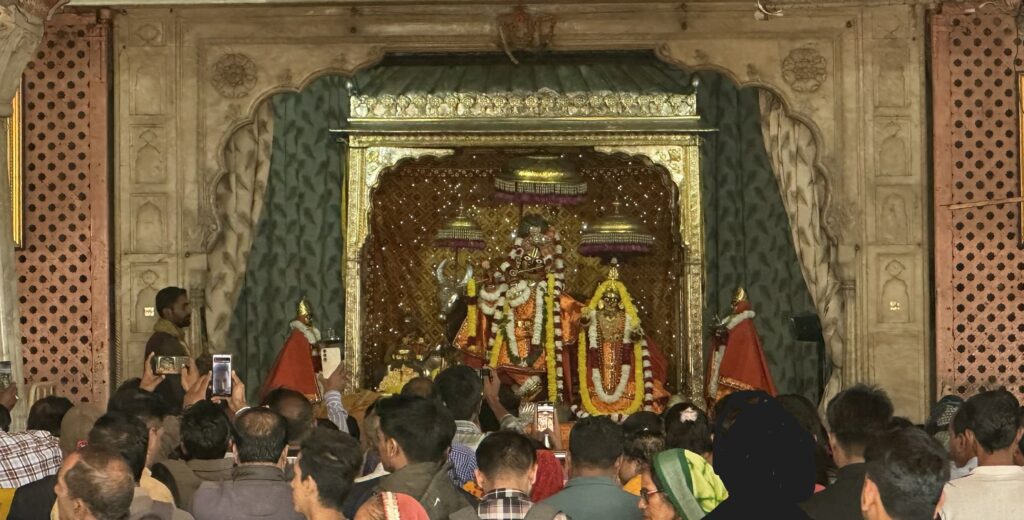
Govind Dev Ji Temple – Located inside the City Palace complex, this well‑known Krishna temple was established in 1735 by the then‑ruler Maharaja Sawai Jai Singh II (founder of Jaipur). The idol of Govind Dev Ji is believed to have been brought from Vrindavan, a place strongly associated with Krishna worship.
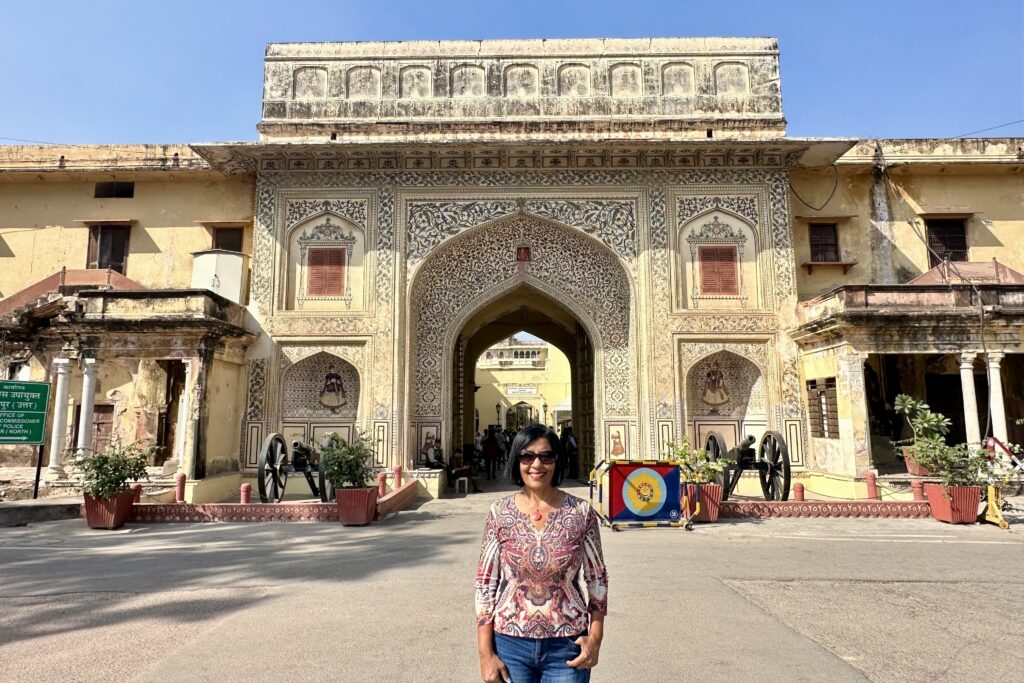
City Palace – We paid 4000 rupees/person to see some of the private rooms in the palace. Jaipur’s City Palace is a stunning fusion of Rajput, Mughal, and European architectural styles, standing proudly in the heart of the Pink City. Built in the 18th century by Maharaja Sawai Jai Singh II, it showcases grand courtyards, intricately carved doorways, and vibrant frescoes. The palace complex houses the Chandra Mahal and Mubarak Mahal, each filled with royal artifacts and timeless elegance. Its famous four seasonal gates, especially the Peacock Gate, are a photographer’s delight. Visiting the City Palace offers a glimpse into Rajasthan’s opulent heritage and regal lifestyle.
City Palace, Museum – We started in the ground floor of Chandra Mahal which has a museum. The museum inside displays royal costumes, weapons, and precious manuscripts. It also has the Sabha Niwas, one of the palace’s most elegant and historically important halls. Also known as the Hall of Public Audience (Diwan-i-Aam), it was traditionally used by the Maharajas to meet the public, address administrative matters, and hold formal gatherings. The hall features high ceilings, beautifully painted walls, and intricate marble pillars that reflect classic Rajput artistry.
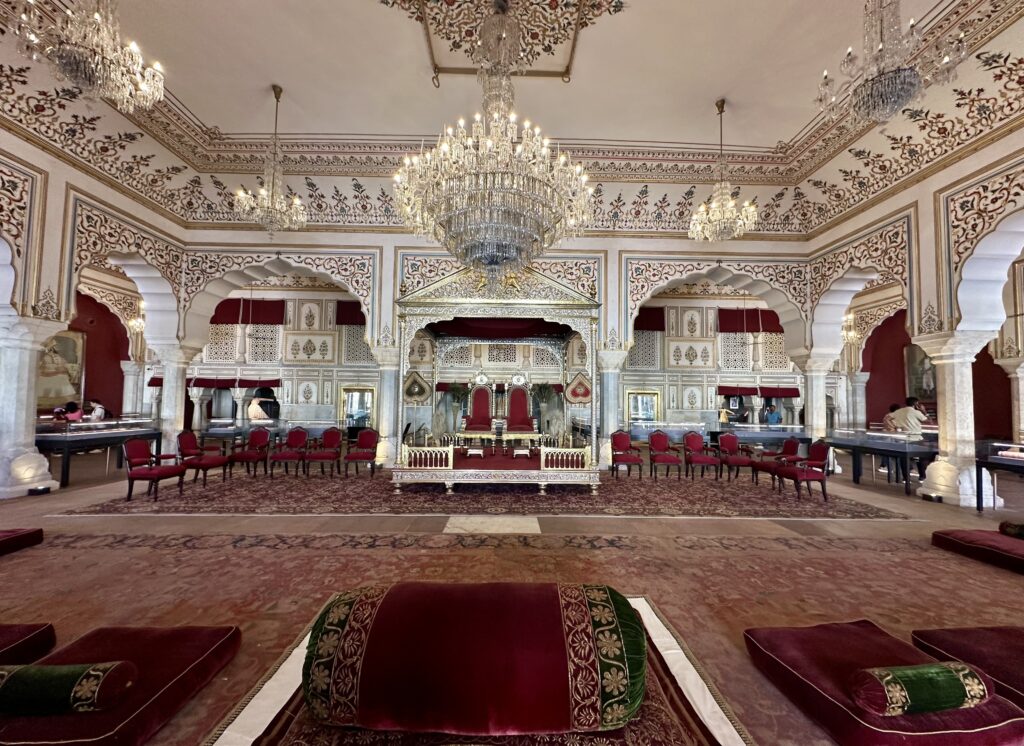
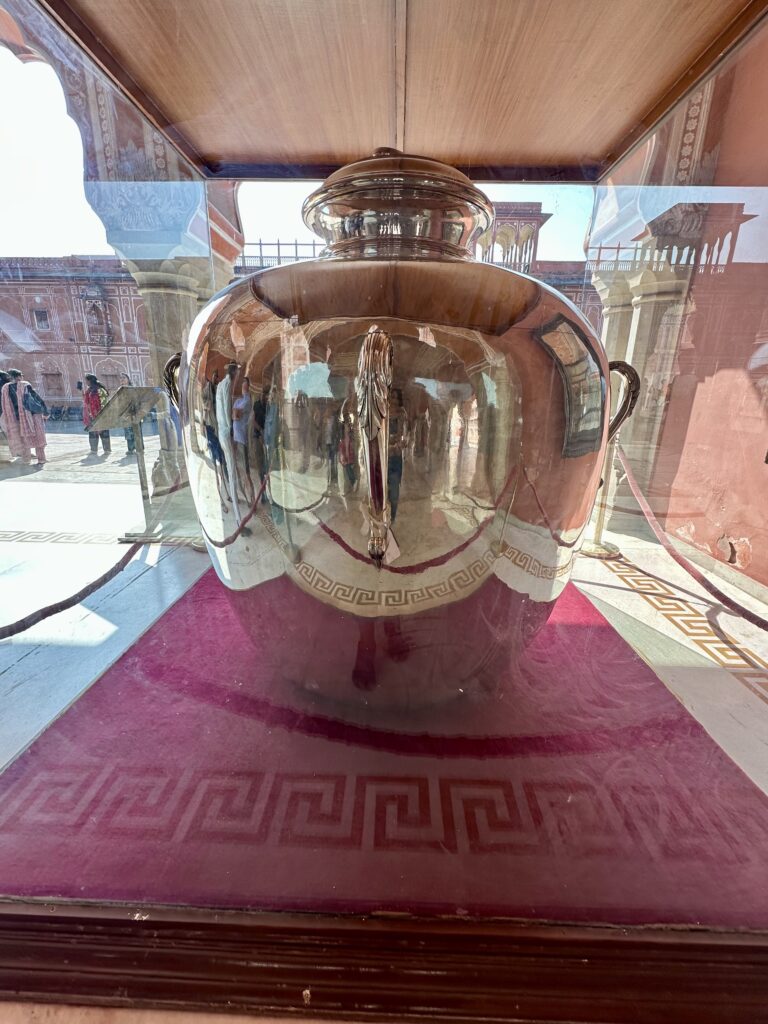
City Palace, Diwan-i-Khas – is the Hall of Private Audience, where Maharajas met important guests and dignitaries. Famous for its ornate arches, marble pillars, and chandeliers, it exudes royal grandeur. A highlight is the giant silver Gangajalis, once used to carry sacred Ganga water on royal journeys.
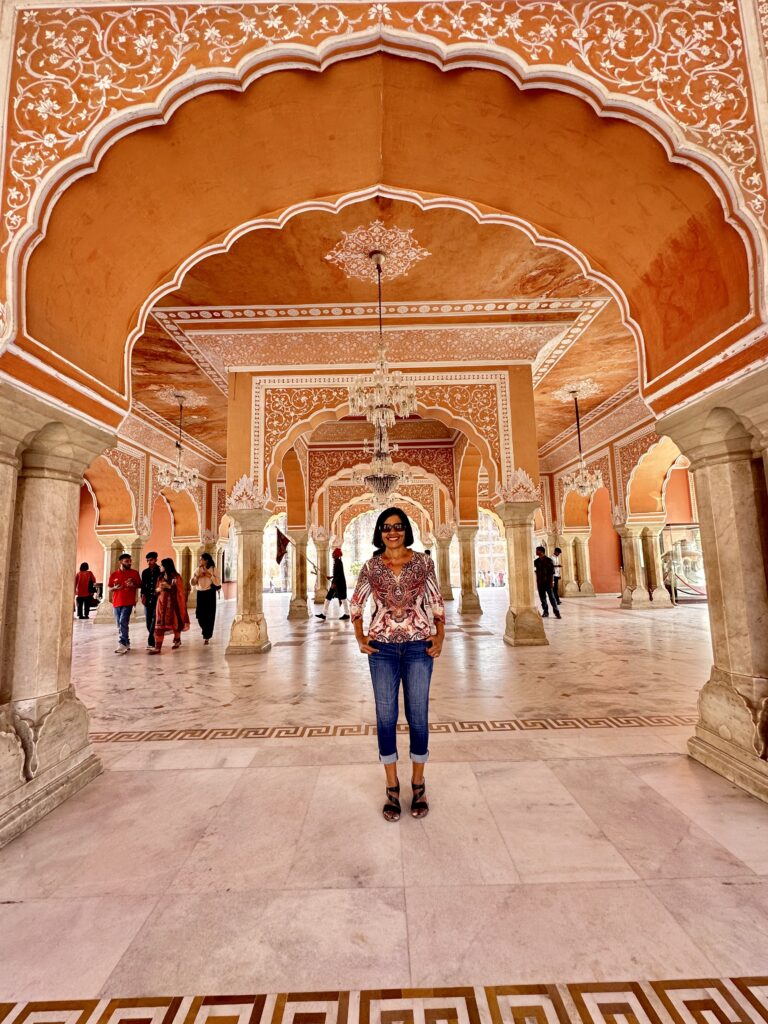
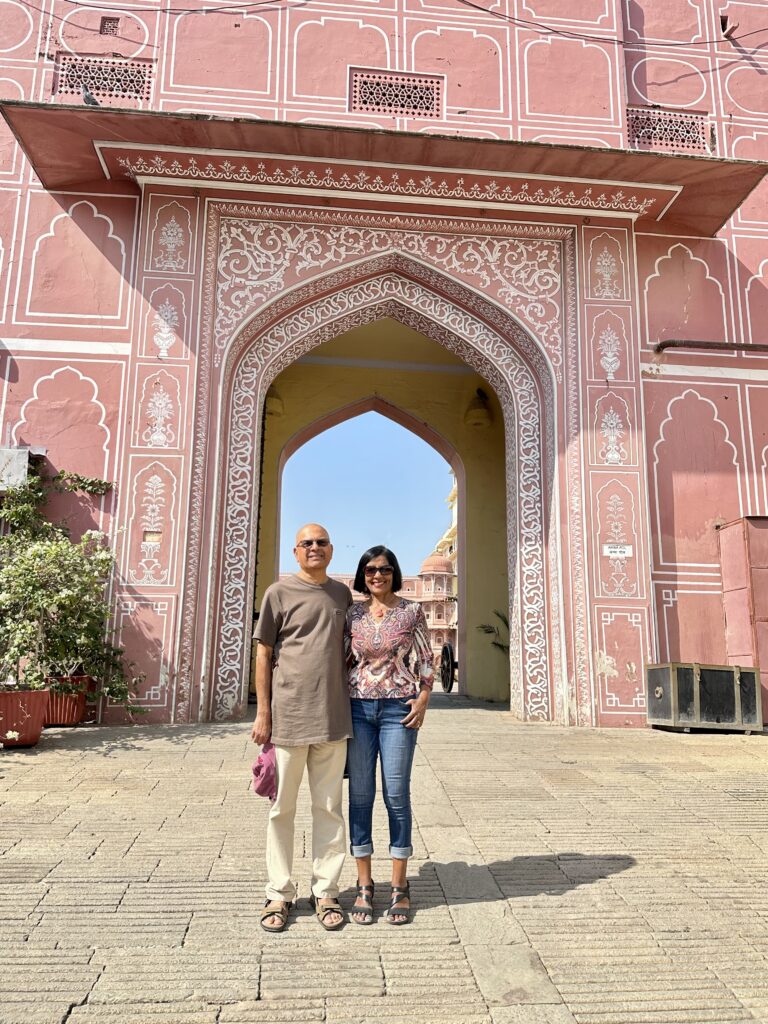
City Palace, Pritam Niwas – also called the Court of the Beloved, Pritam Nivas is a vibrant inner courtyard that connects the palace’s grand halls and royal residence. It is famous for its four exquisitely decorated gates, each representing a season and adorned with colorful motifs of peacocks, flowers, waves, and roses. The courtyard once served as a ceremonial space for royal processions and gatherings, blending functionality with artistry.
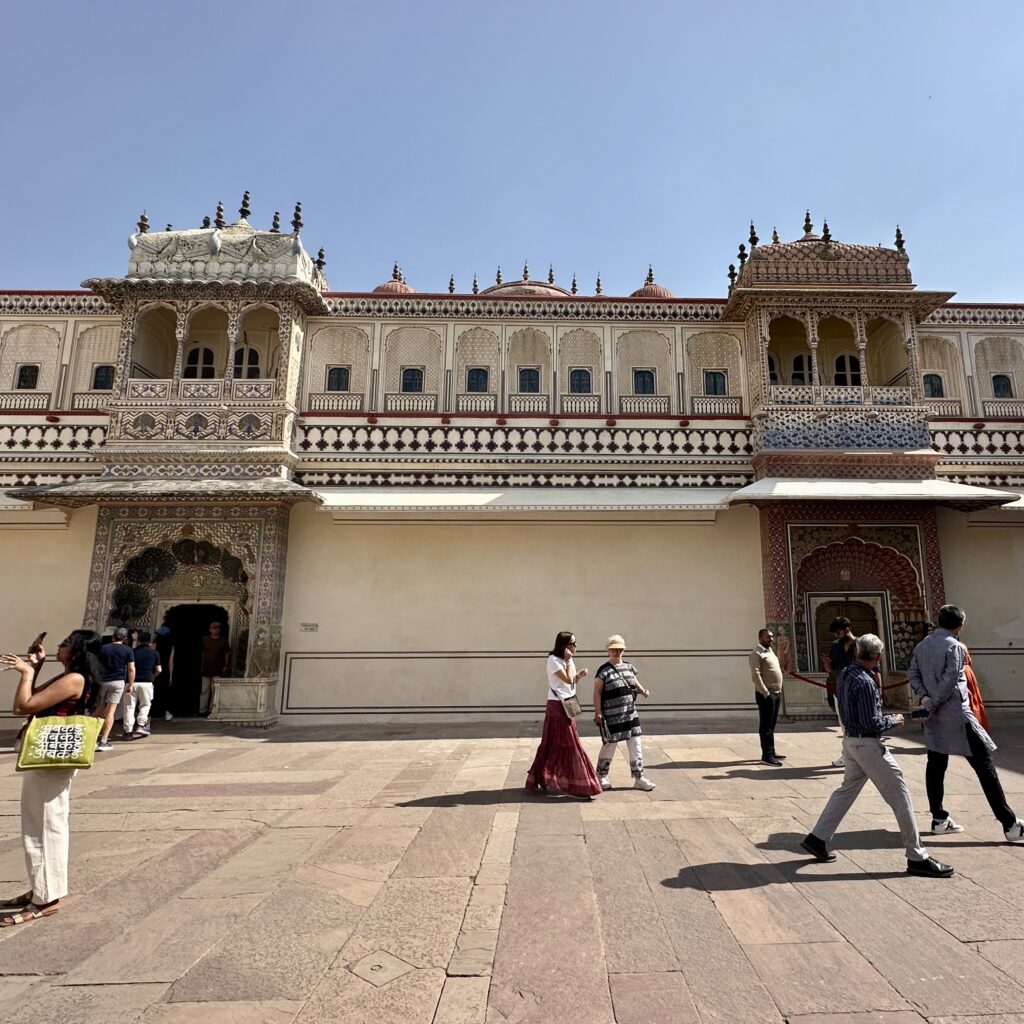
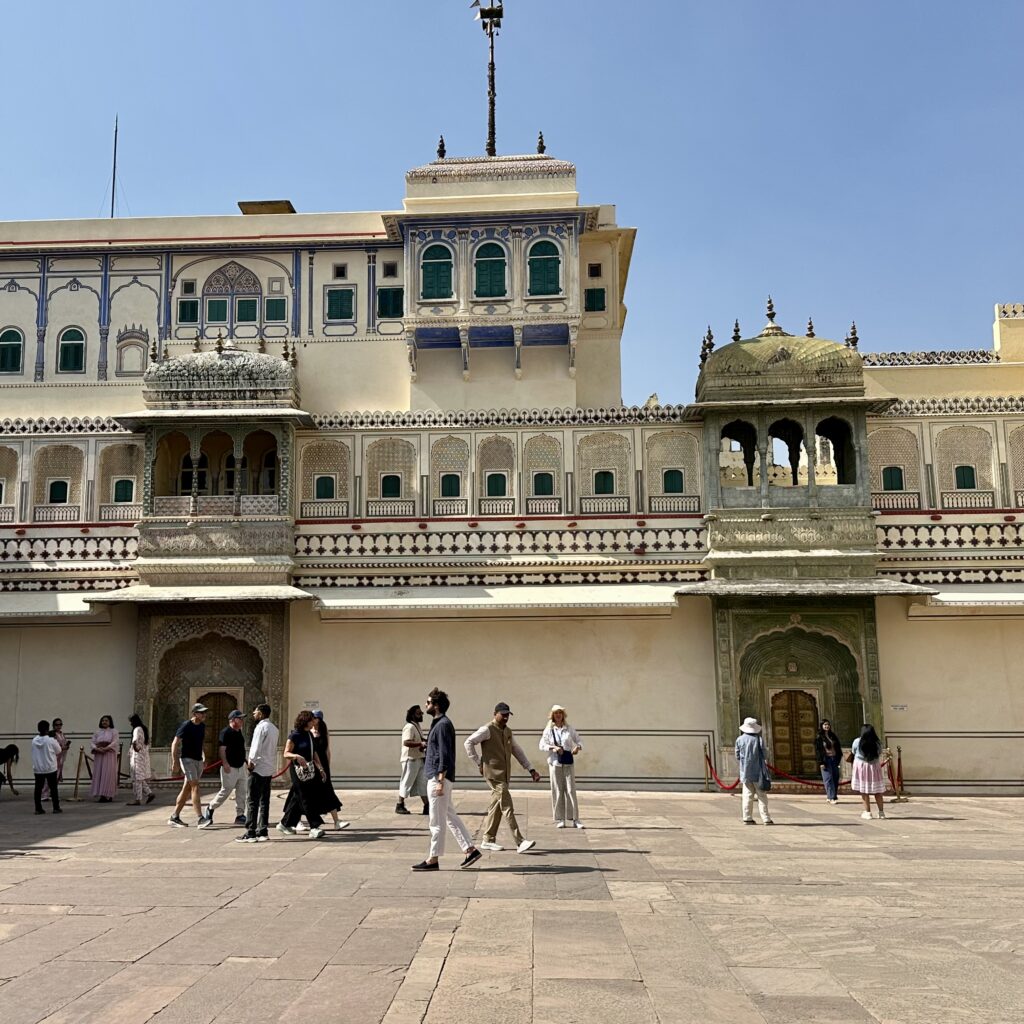
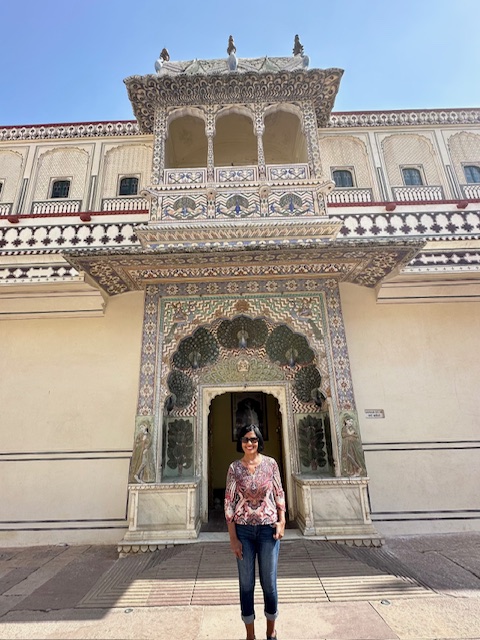
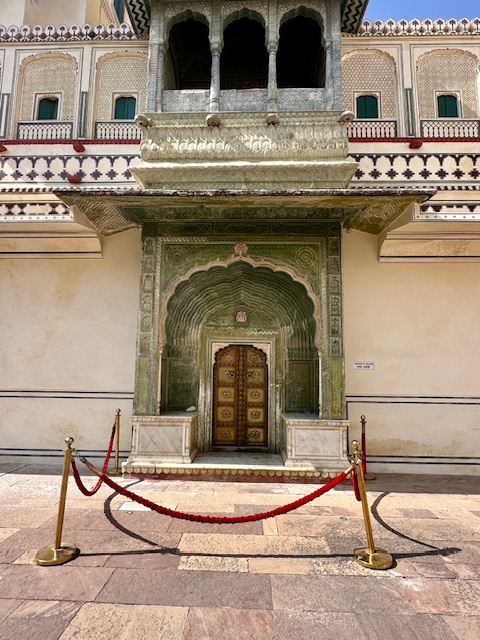
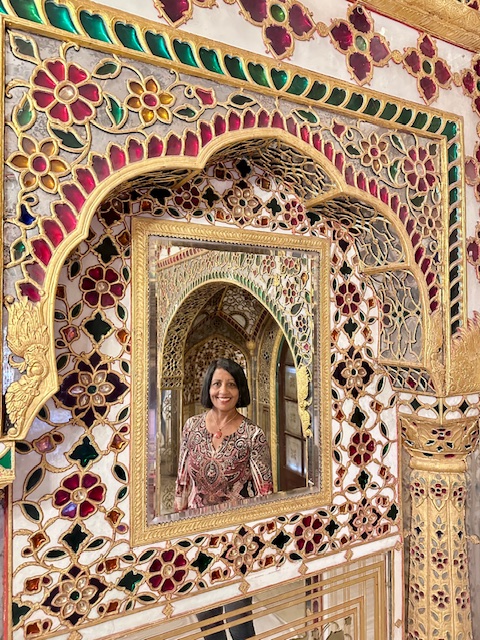
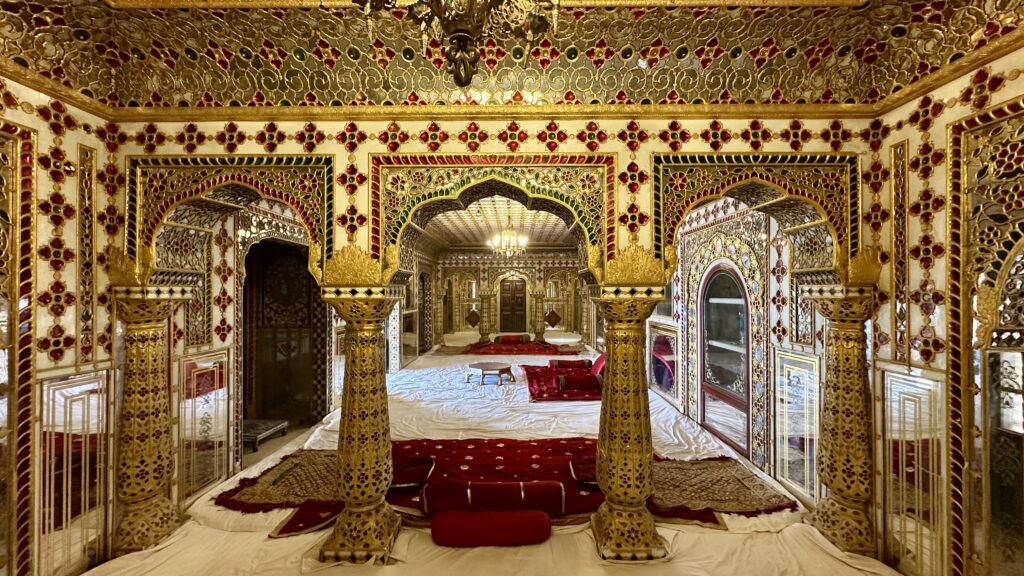
City Palace, Shoba Niwas – or the Hall of Splendor is on the 3rd floor of the Chandra Mahal and is adorned with intricate mirror work and glass paintings, reflects the royal taste for luxury and elegance. The rich color scheme, featuring shades of red, gold, and blue, makes it ideal for some creative photography.
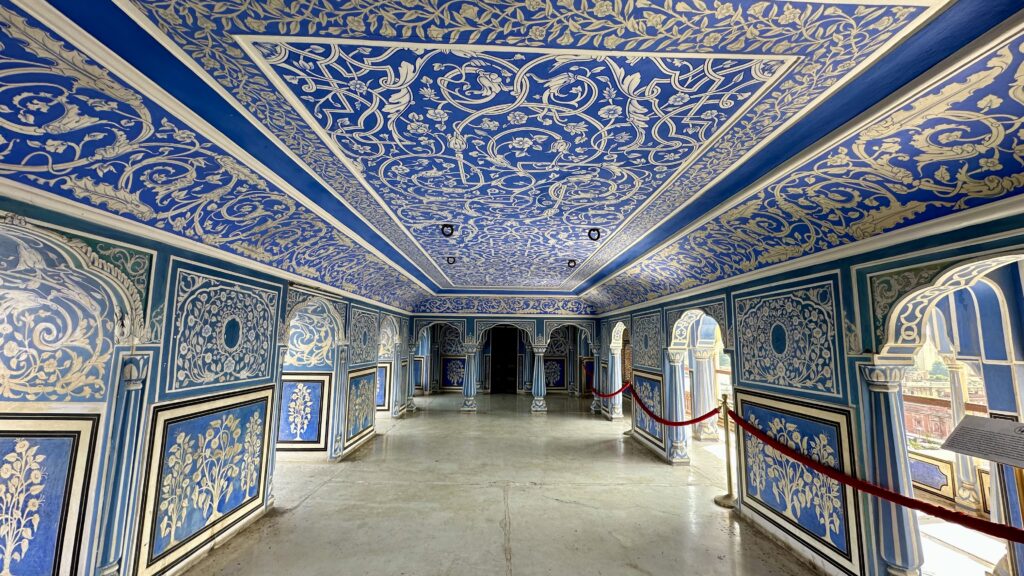
City Palace, Chhavi Niwas – Located on the 4th floor and known as the Blue Room, Chhavi Niwas is decorated in blue and white tones, designed with motifs that reflect skies and clouds, creating a calm, serene ambience. Historically, it served as a monsoon retreat for the Maharajas, a private space possibly used for rest or retreat during rains or as a quieter chamber.
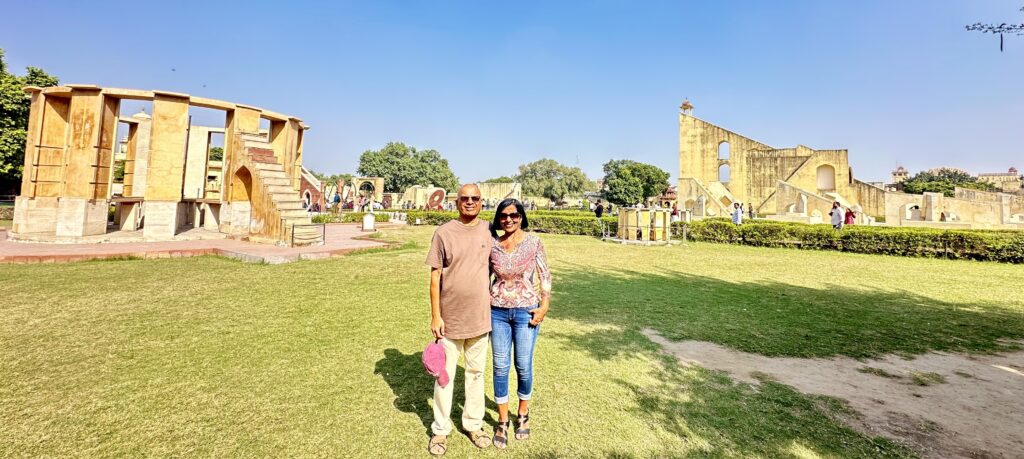
Jantar Mantar – located in the heart of Jaipur, this 18th-century astronomical observatory built by Maharaja Sawai Jai Singh II, houses a collection of geometric instruments designed to measure time, track celestial bodies, and predict eclipses with remarkable precision. The observatory’s most iconic structure, Samrat Yantra, is one of the world’s largest sundials. With its combination of scientific ingenuity and striking architecture, Jantar Mantar offers visitors a fascinating glimpse into India’s rich astronomical heritage. The Jantar Mantar was inscribed as a UNESCO World Heritage Site in 2010.
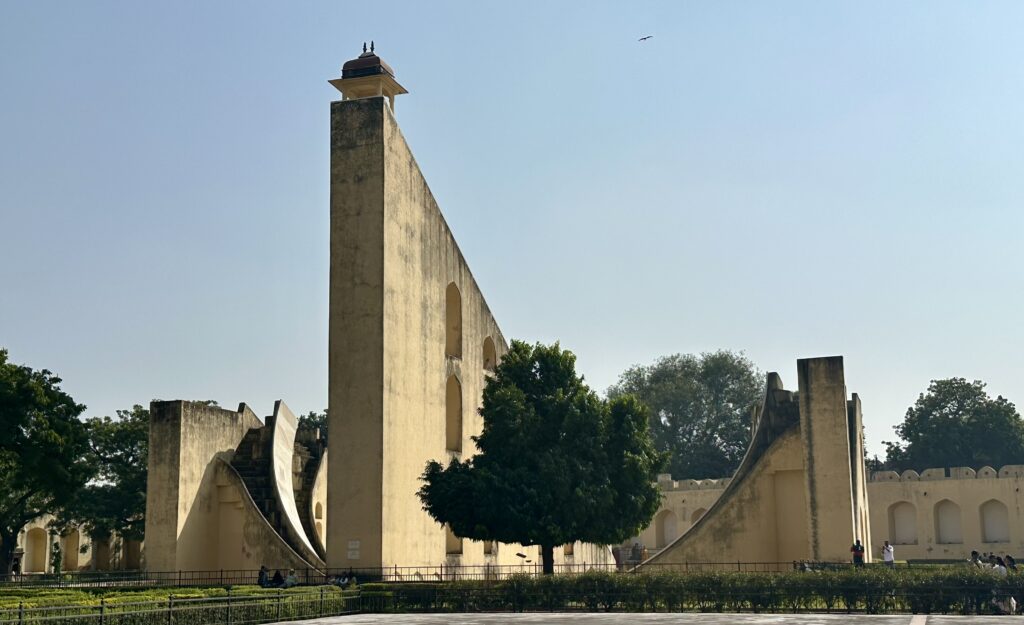
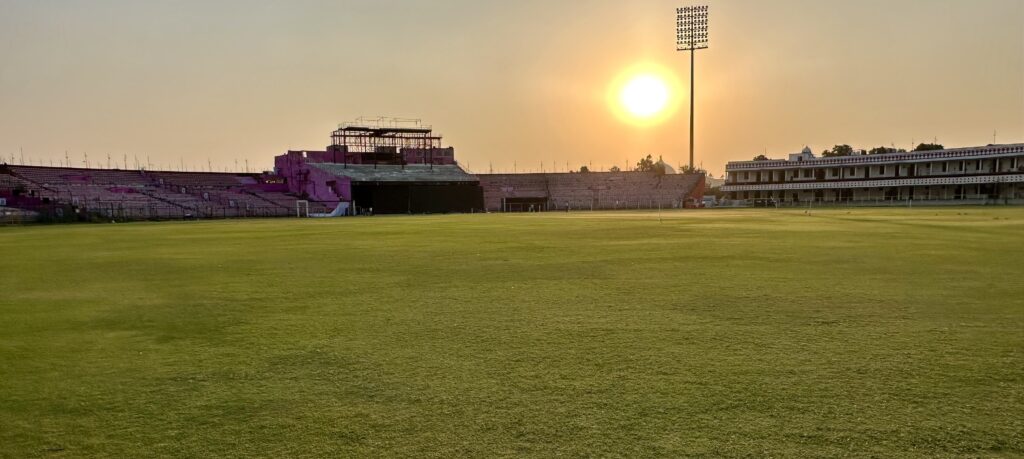
The next 3 attractions are all within walking distance of each other – Sawai Mansingh Stadium, Amar Jawan Jyoti, and Rajasthan Vidhan Bhavan
Sawai Mansingh Cricket Stadium – Established in 1969, the stadium is owned by the Government of Rajasthan and has a seating capacity of about 30,000 spectators. Since 2008, the stadium is the home ground of Rajasthan Royals in the Indian Premier League (IPL) and is one of the most renowned cricket stadiums in India. It has been named after Sawai Man Singh II, the former Maharaja of the state of Jaipur.
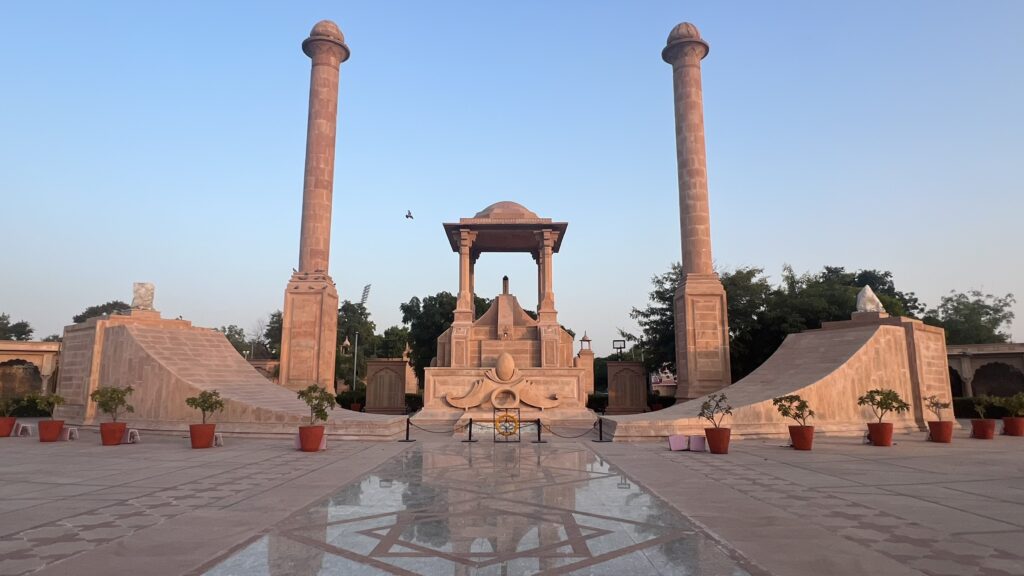
Amar Jawan Jyoti (Flame Of The Immortal Soldier) – is a powerful symbol of sacrifice, courage, and patriotism. Erected in honor of the brave soldiers from Rajasthan who laid down their lives for the nation, this War Memorial is located close to the Rajasthan Vidhan Sabha, making it one of the most respected sites in the city.
Rajasthan Vidhan Bhavan – is the seat of the Rajasthan Legislative Assembly. The current building was constructed between 1994 and 2001 and is designed as a modern legislature-complex, yet richly inspired by traditional Rajasthani architecture with its exterior featuring classical elements like jharokhas, chhatris, arches, kamani, baradaries etc. The structure is eight stories tall, about 145 feet in height, with a total floor area around 608,000 square feet. The main dome of the building has a diameter of 104 feet. The Assembly hall in the building can seat 260 members, allowing for representation even if the number of seats increases in future.
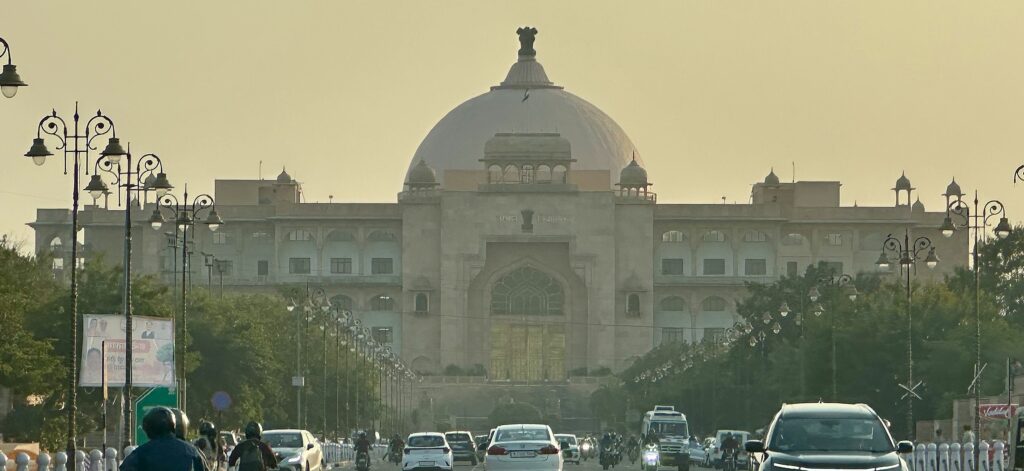
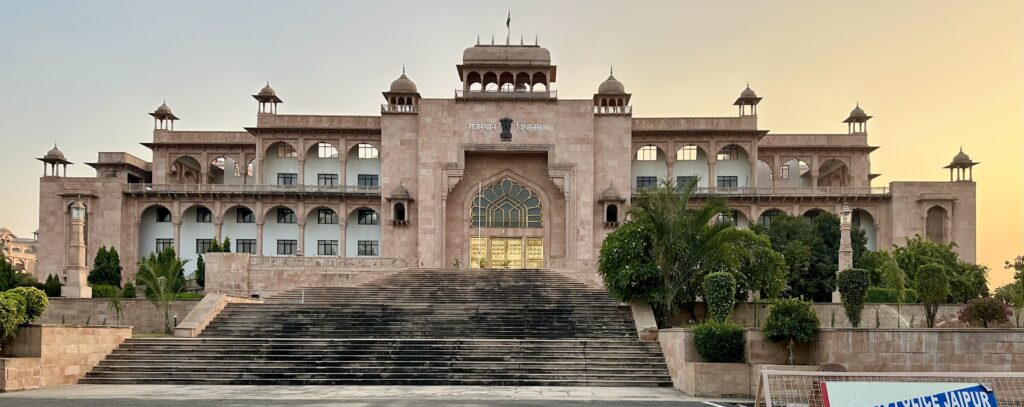
Visiting the interior – It is possible to visit some parts of the building using a valid Indian ID. Not sure if foreigners are allowed to visit.
Other structures around old city
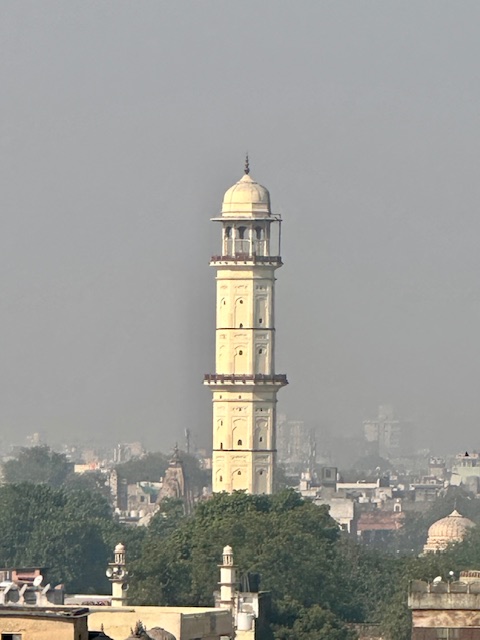
Swargasuli Tower – also known as Isar Lat, this seven-storey victory monument was built in 1749 by Maharaja Sawai Ishwari Singh. Its distinctive octagonal structure and yellow façade make it stand out amid Jaipur’s pink streets. A narrow spiral staircase leads to the top, offering panoramic 360° views of the old city. Blending Rajput and Mughal design, the tower once served as a watchpoint over the walled city.
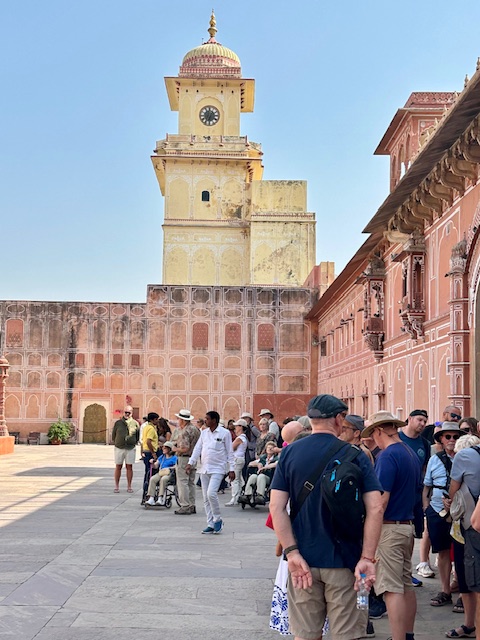
City Palace, Clock Tower – The Clock Tower added in 1873, blends traditional Rajput architecture with elegant European clockwork. Its four-sided clock faces once kept time for the royal court and still rise proudly over the palace courtyards.