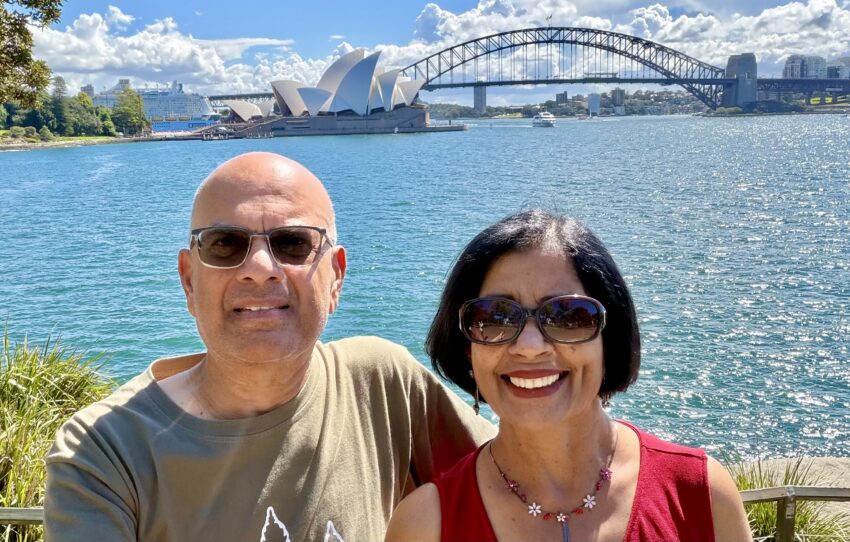
The Commonwealth of Australia, is the sixth-largest country, comprising the mainland, Tasmania, and many smaller islands. It is the flattest and driest inhabited continent, yet highly biodiverse with landscapes from deserts to tropical rainforests. Aboriginal Australians arrived 50,000–65,000 years ago, forming one of the world’s oldest continuous cultures. European exploration began in the 17th century, followed by British colonization in 1788. Australia became fully independent from the United Kingdom in 1986.
We spent two whole weeks exploring eastern Australia in March, enjoying pleasant weather throughout. We flew into Melbourne and flew out of Brisbane. Our itinerary –
- Victoria
- Melbourne – Day 1-3
- Great Ocean Road – Day 4
- New South Wales
- Sydney – Day 5–7
- Blue Mountains – Day 8
- Tasmania
- Hobart – Day 9-10
- Tasman Peninsula – Day 11
- Queensland
- Brisbane – Day 12–13
- Gold Coast – Day 13–14
Tips for traveling in Australia:
- Cash isn’t necessary—credit cards can be used everywhere, including public transport like trams, trains, and buses.
- Driving is straightforward and easy. Australia had great roads everywhere we traveled. Just remember that Australians drive on the left side of the road. This rule also applies to pedestrians. Regardless of location, whether on a hiking trail in the Tasmania or strolling through downtown Brisbane, Australians tend to keep to the left. Walking on the wrong side in a busy area might earn you a few annoyed sideways glances.
- Self-driving along the Great Ocean Road in Victoria is highly recommended, as it allows flexibility to stop for longer period of time at scenic lookouts, waterfalls, and hiking spots. Planning an overnight stay makes the experience more relaxing and gives you time to explore additional detour
- Tipping – Australia’s minimum wage is one of the highest in the world. As a result, tipping is uncommon and not generally viewed as necessary. Restaurants, hotels, and bars factor the cost of service into their pricing. However, if you receive exceptional service, you’re welcome to leave a cash tip as a gesture of appreciation.
- Respect Indigenous culture, especially when visiting sacred sites – Australia is home to the Aboriginal peoples and Torres Strait Islanders, whose cultures date back around 65,000 years. Respect their cultures—use original site names like Uluru, stay on paths, and ask before taking photos.
- Weather – We visited in mid-March, and the weather ranged between 65–80°F in the cities we explored. It is advisable to carry an umbrella, especially when traveling in Sydney and Tasmania, as the weather can change quickly from sunny to cloudy or rainy within minutes. On one day in Sydney, we left the hotel without an umbrella, confident it wouldn’t rain since it was bright, sunny, and in the mid-70s. Within 30 minutes, the weather suddenly turned cloudy and heavy rain poured down, lasting for about half an hour.
- In Australia, CBD stands for Central Business District, representing the commercial, financial, and administrative heart of a city. It is the main downtown area characterized by high-density offices, retail, and public transport hubs.