Overnight in Hyatt Regency
Located along the Brisbane River, Brisbane is the capital and largest city of Queensland, and the third-most populous city in Australia. Originally established as a penal settlement in 1824, Brisbane later became the state capital in 1859 and played a key role during World War II as an Allied headquarters. Today, it is known for its diverse population, green spaces, and outdoor lifestyle. The city has hosted major events like World Expo 88 and the G20 summit, and is set to host the 2032 Summer Olympics, making it one of Australia’s most dynamic and globally recognized cities.
Brisbane GuruWalk – After checking into our hotel in Brisbane, we joined a walking tour through GuruWalk, an international community that connects travelers with local guides. These tours typically last 2–3 hours and operate on a tip-based system (with a recommended minimum of around $10).
Our walk lasted about 3 hours, and the guide shared fascinating stories behind many of the city’s landmarks, even taking us inside places like churches and the Town Hall. With all the insights we gained from the tour, we later explored Brisbane more thoroughly on our own.
All the sites on this page were all within walking distance of each other and located in the heart of Brisbane’s CBD (Central Business District).
- Brisbane City Hall
- Queens Street Mall
- Brisbane Arcade
- Regent Theater
- Burnett Lane
- St John’s Cathedral
- ANZAC Square
- Brisbane Central Station
- Post Office Square
- Customs House
- Story Bridge
- Cathedral of St Stephen
- Brisbane Botanical Gardens
- Parliament Building
- Queensland Club
- Sky Deck and Glass-Floor
- Neville Bonner Bridge
- Brisbane Sign
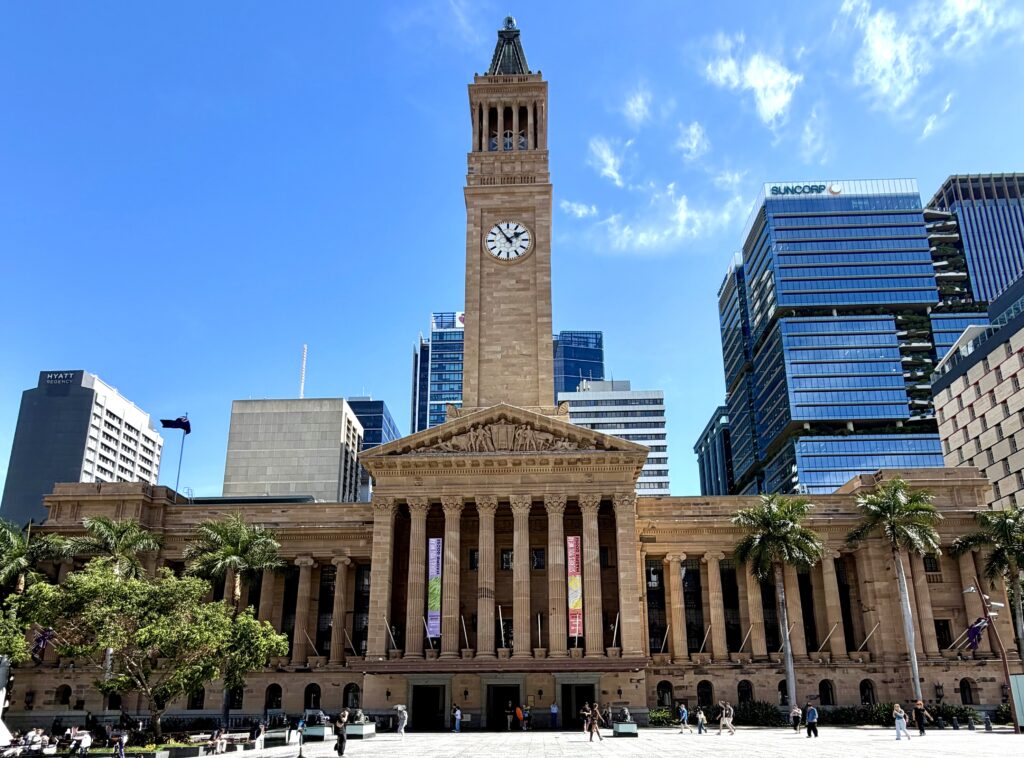
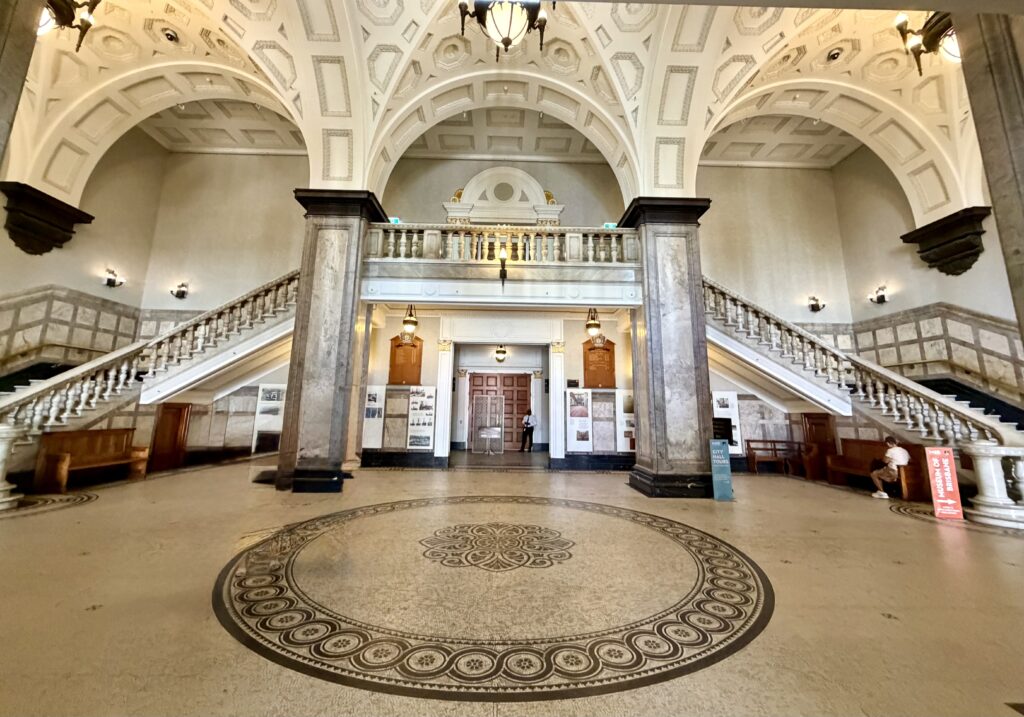
Brisbane City Hall – We started our tour at the Brisbane City Hall which was located within 5 minutes walking distance of our hotel. The City Hall serves as the seat of the Brisbane City Council, and its design is inspired by classical architecture, combining elements of the Roman Pantheon and St Mark’s Campanile in Venice, and it is well known for its clock tower and Westminster chimes. Opened in the early 20th century, the building has hosted numerous events including concerts, civic ceremonies, and public gatherings.
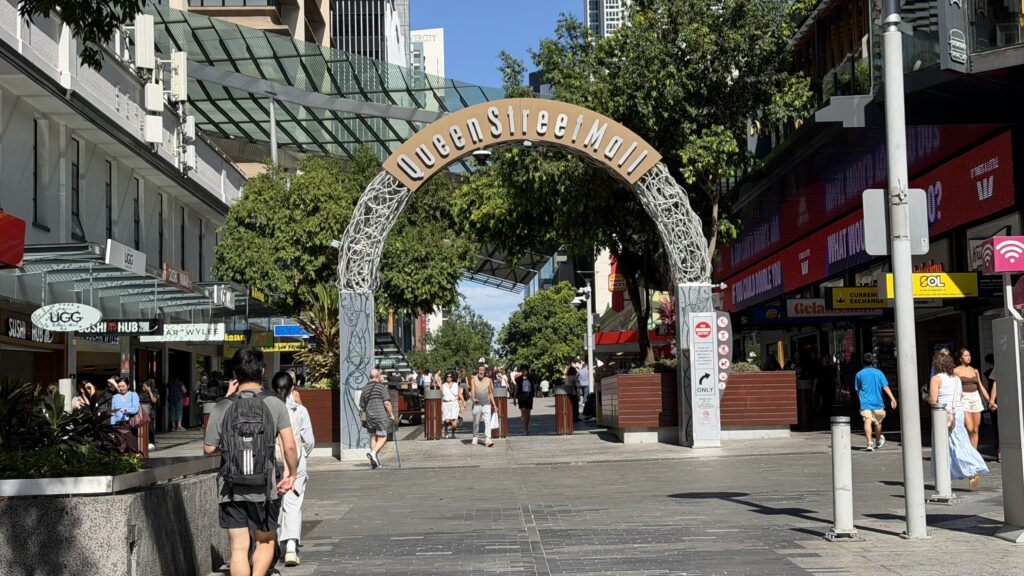
Queens Street Mall – is a vibrant, open-air pedestrian shopping precinct in the heart of Brisbane’s CBD. It features hundreds of stores, ranging from international fashion brands and luxury boutiques to casual shops and diverse dining options. The area also showcases historic sites like the Brisbane Arcade, blending modern retail with heritage charm, making it one of the city’s main hubs for shopping, food, and entertainment.
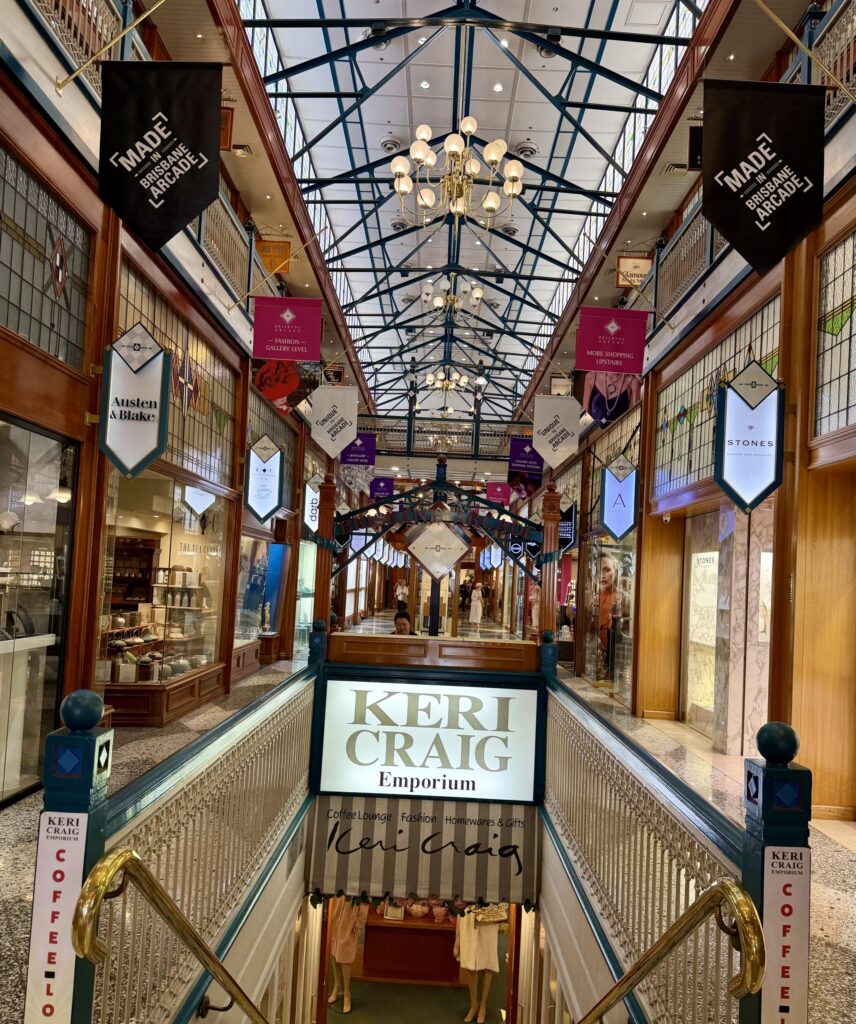
Queens Street Mall, Brisbane Arcade – is a heritage-listed shopping arcade in the heart of Brisbane CBD, linking Queen Street to Adelaide Street. Opened in 1924, it is the city’s oldest and most elegant arcade, known for its classic architecture and boutique shopping experience. The arcade has long been associated with luxury retail, offering high-end fashion, jewelry, and specialty stores.
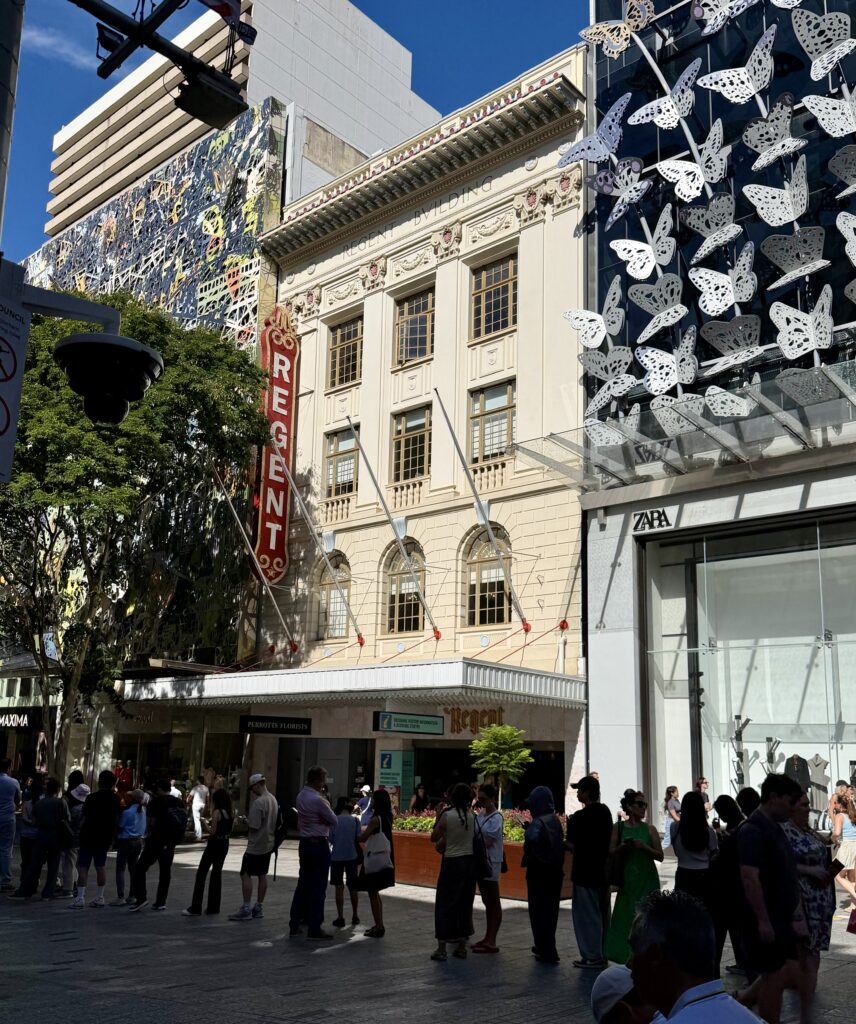
Queens Street Mall, Regent Theatre – was a grand, heritage-listed cinema built between 1928 and 1929 on Queen Street. It was one of Australia’s finest picture palaces, inspired by Hollywood’s golden era and known for its lavish interiors and seating for over 2,500 people. The theatre showcased films, live performances, and grand events, making it a key part of Brisbane’s cultural life. Although the original auditorium was largely lost during redevelopment in the late 1970s, the building’s ornate entrance and grand foyer were preserved. Today, it remains heritage-listed and stands as an important reminder of Brisbane’s vibrant entertainment history and architectural grandeur.
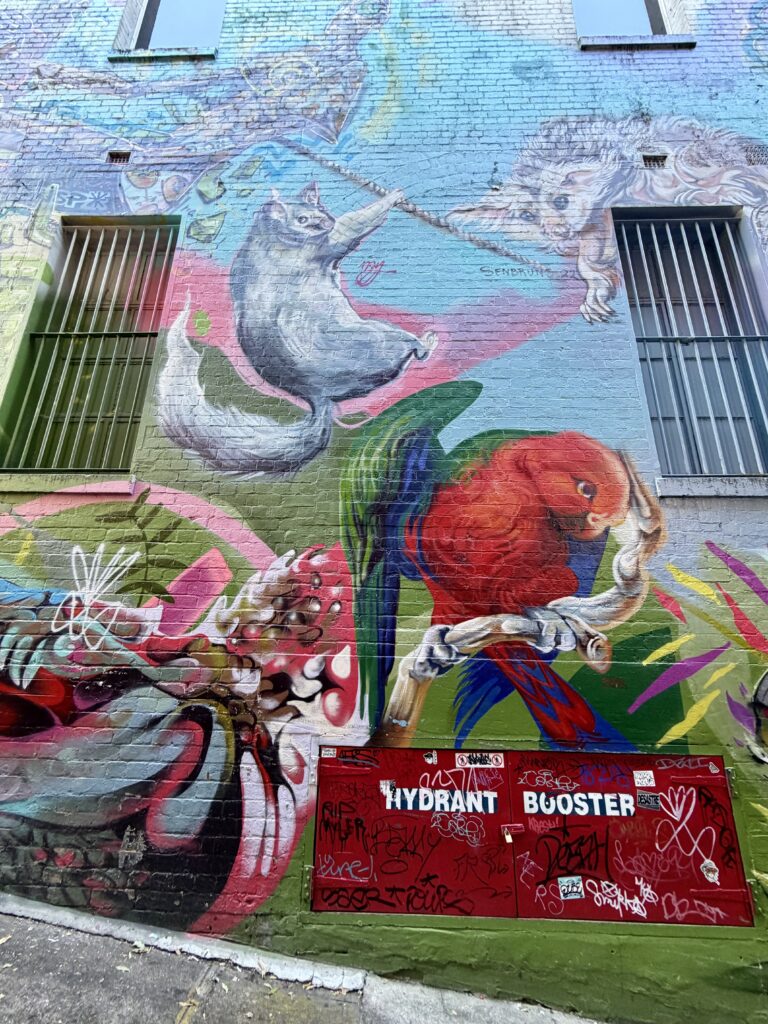
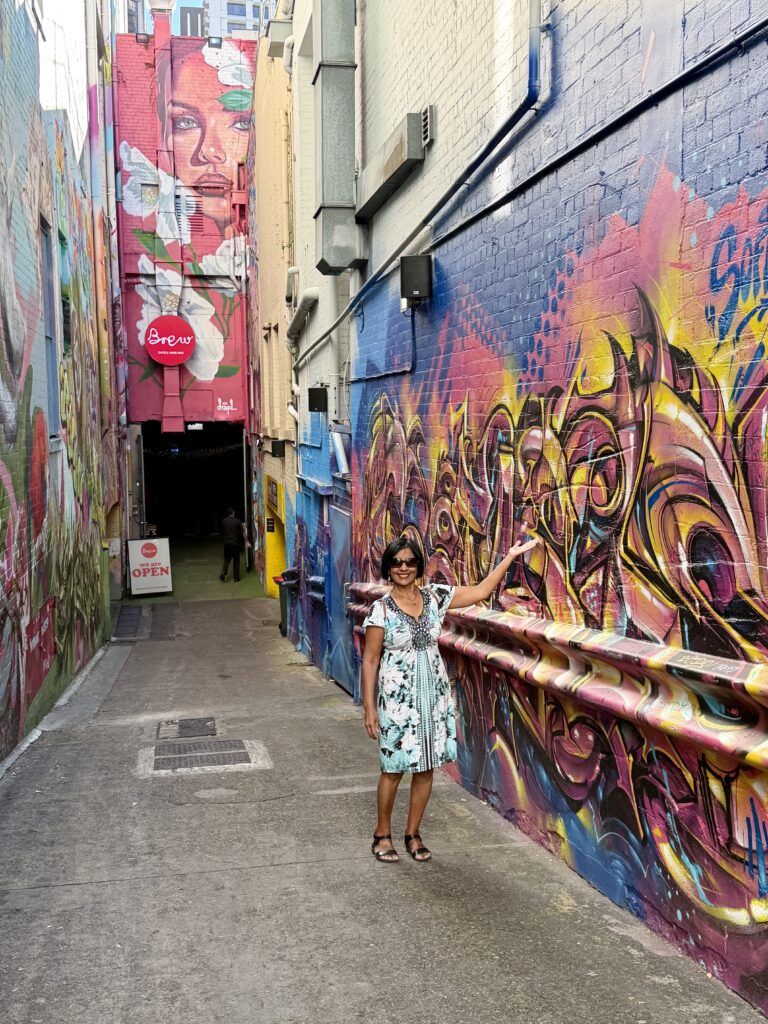
Burnett Lane is Brisbane’s oldest and most iconic laneway dating back to 1829. Running parallel to Queen Street Mall it is a vibrant street art hub in the CBD featuring a dynamic mix of murals, installations, and graffiti, giving it a raw, urban character that contrasts with the nearby luxury shopping areas.
Burnett Lane has deep historical roots—it originally served as a prison yard during Brisbane’s early penal colony days and is named after the colony’s first surveyor. In 2010, it was revitalized as part of the city’s Vibrant Laneways Project, transforming it into a buzzing hub filled with street art, dining, and culture, while preserving its historic significance.
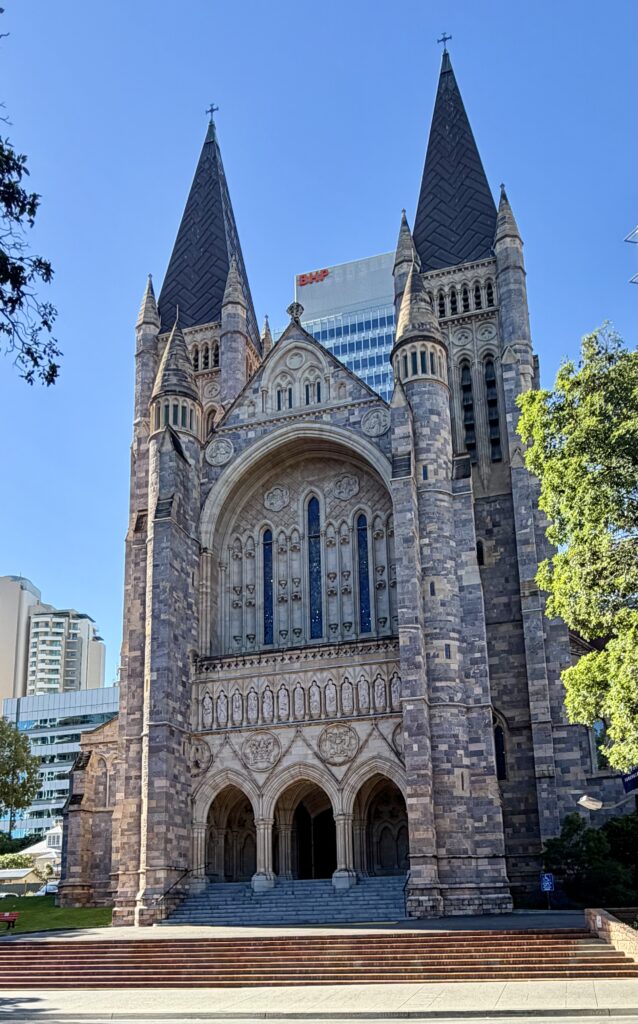
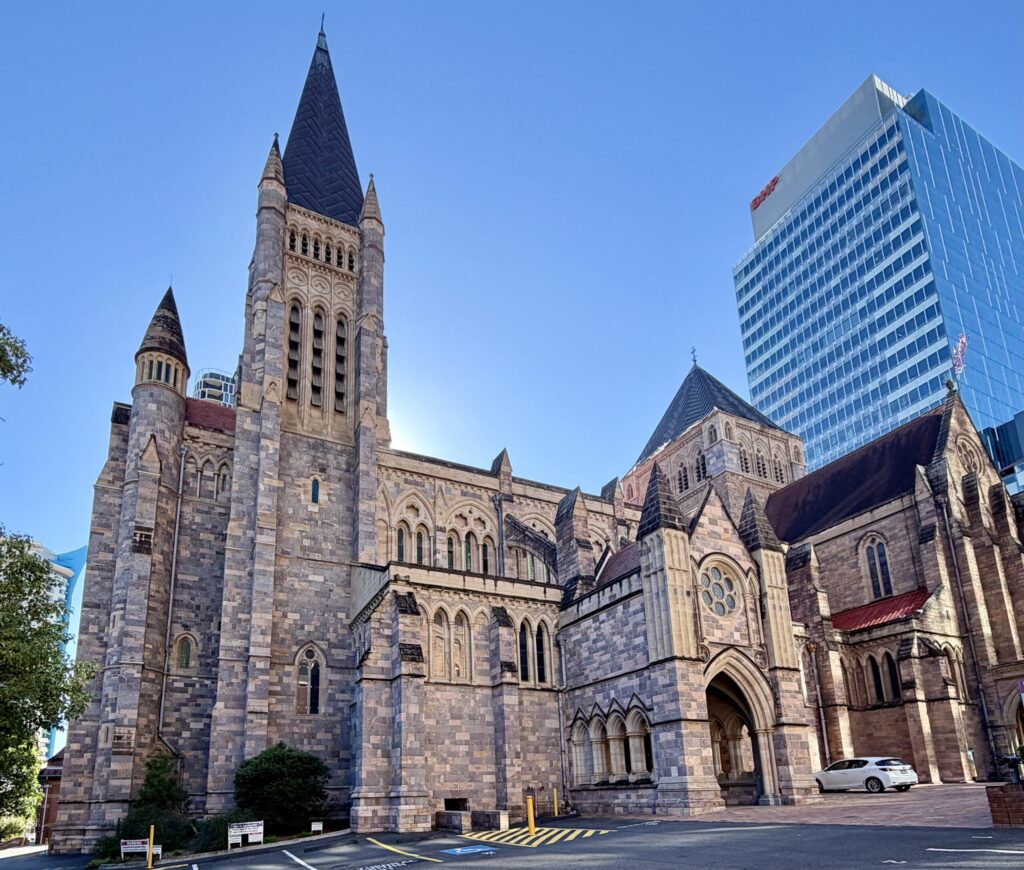
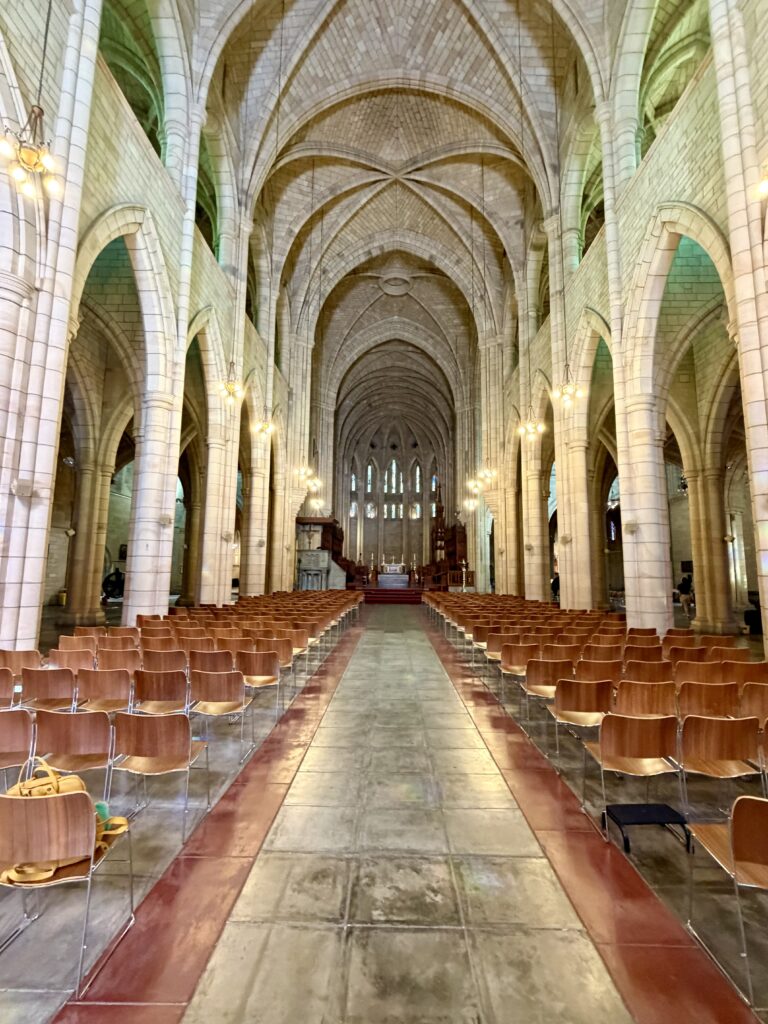
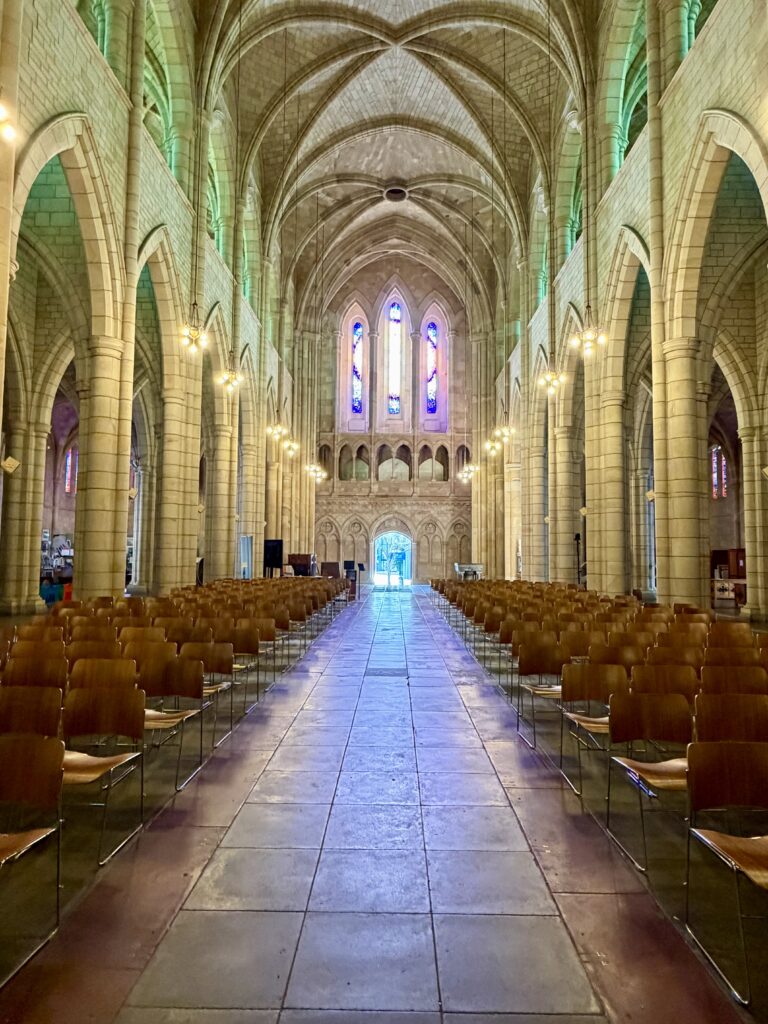
St John’s Cathedral – Dedicated to St John the Evangelist, it is one of Brisbane’s oldest Anglican churches and is heritage-listed. The cathedral serves as a center for major religious events such as ordinations, while also functioning as a parish church for a diverse congregation.
Beyond its religious role, it is a significant cultural and musical venue, hosting concerts and housing one of Australia’s largest pipe organs. Notably, the cathedral was constructed over nearly 100 years, with contributions from architects, clergy, and stonemasons—mirroring the traditional building methods of European Gothic cathedrals.
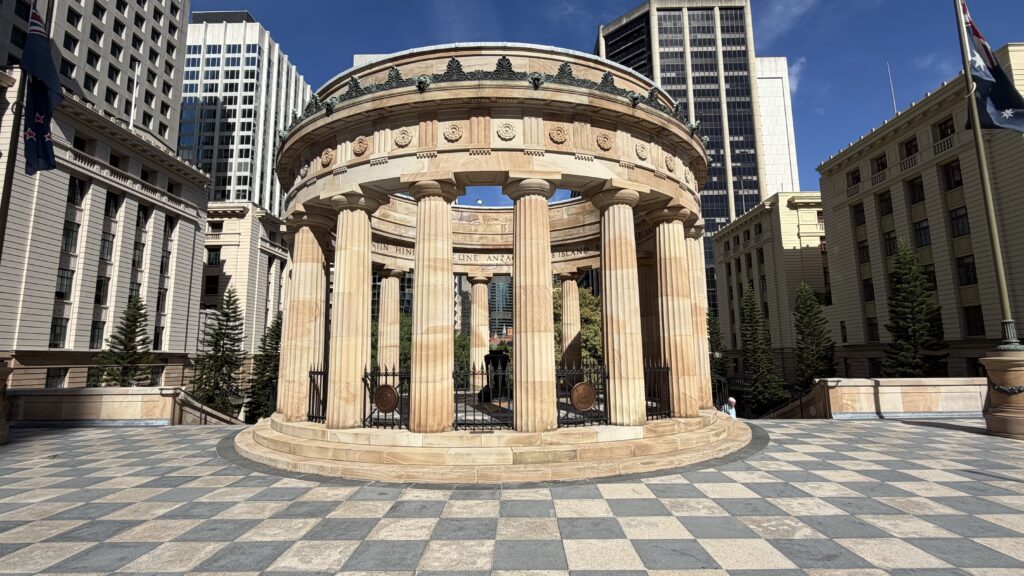
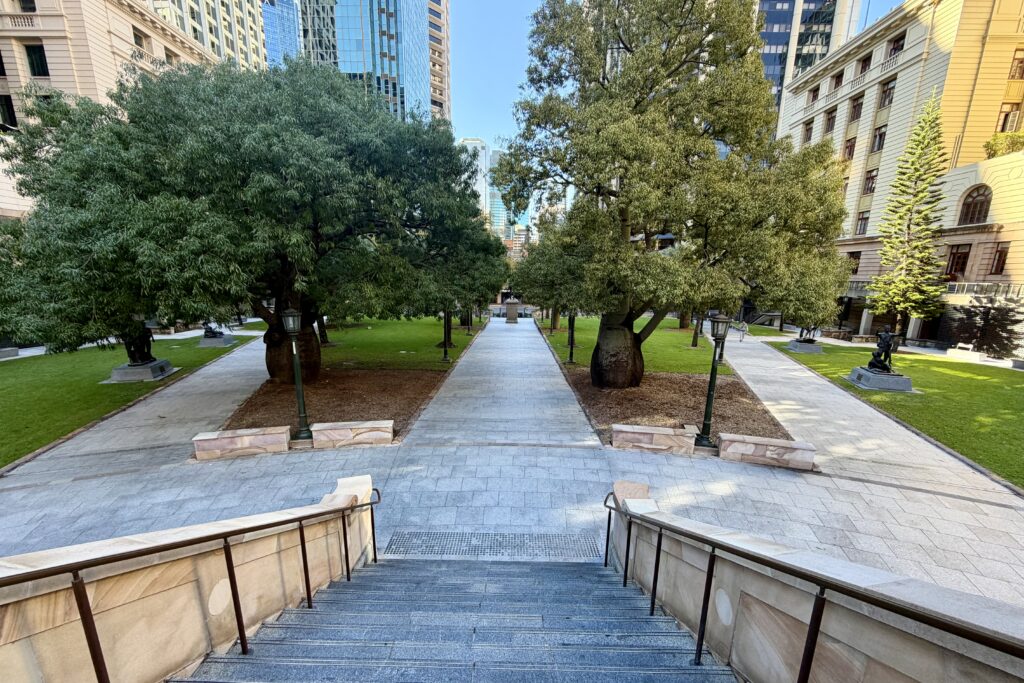
ANZAC Square – is a heritage-listed town square and important war memorial that was opened on Armistice Day in 1930, and it commemorates Australian and New Zealand service men and women who served overseas, particularly during World War I.
At its heart is the Shrine of Remembrance, featuring the Eternal Flame, along with the nearby Shrine of Memories. The site also includes memorials for multiple conflicts, from the Boer War to World War II, Vietnam, and more recent campaigns, as well as a dedicated monument honoring Aboriginal and Torres Strait Islander service members.
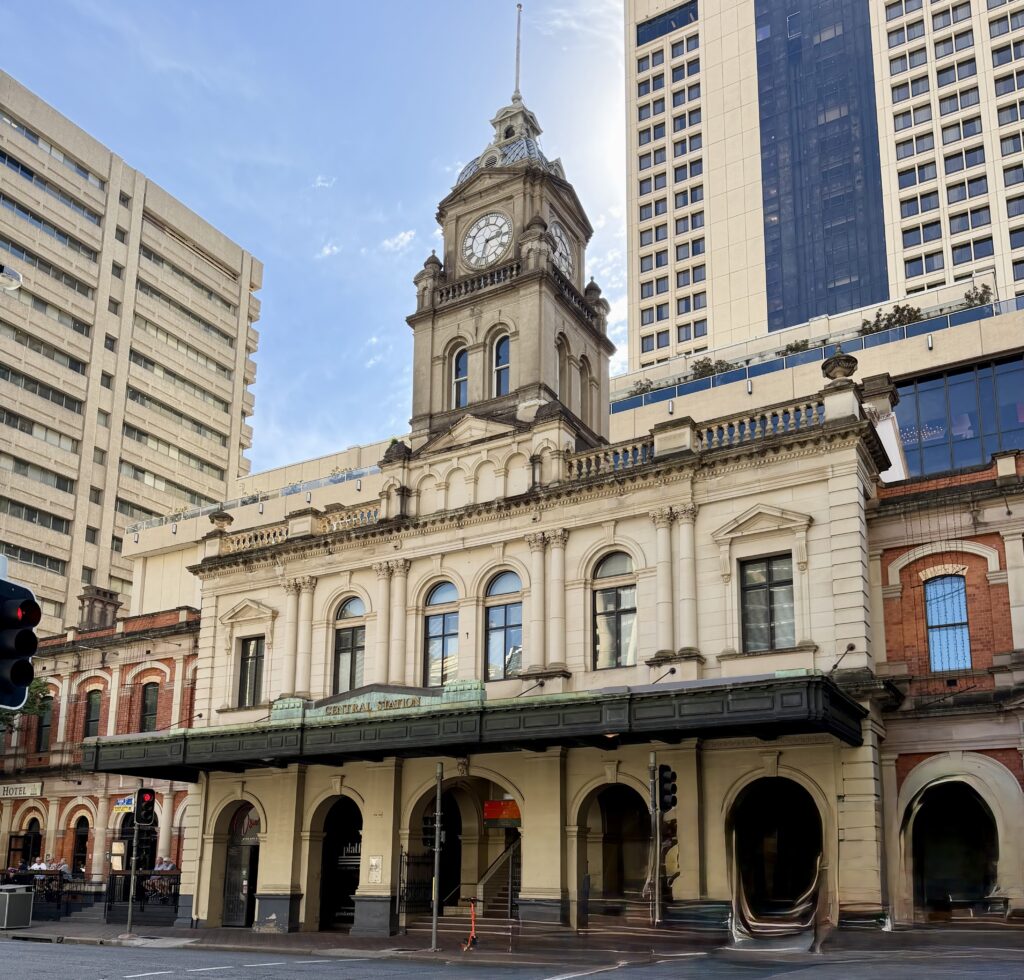
Brisbane Central Station – This impressive looking station is located directly opposite ANZAC Square. The original station opened in 1889 as a simple structure made of wood and corrugated galvanized iron.
A more elegant station was built and opened in 1899, featuring arched roofing over the platforms and a grand portico on Ann Street. A major upgrade in 1901 added the distinctive clock tower overlooking Ann Street, giving the station much of the character it retains today.
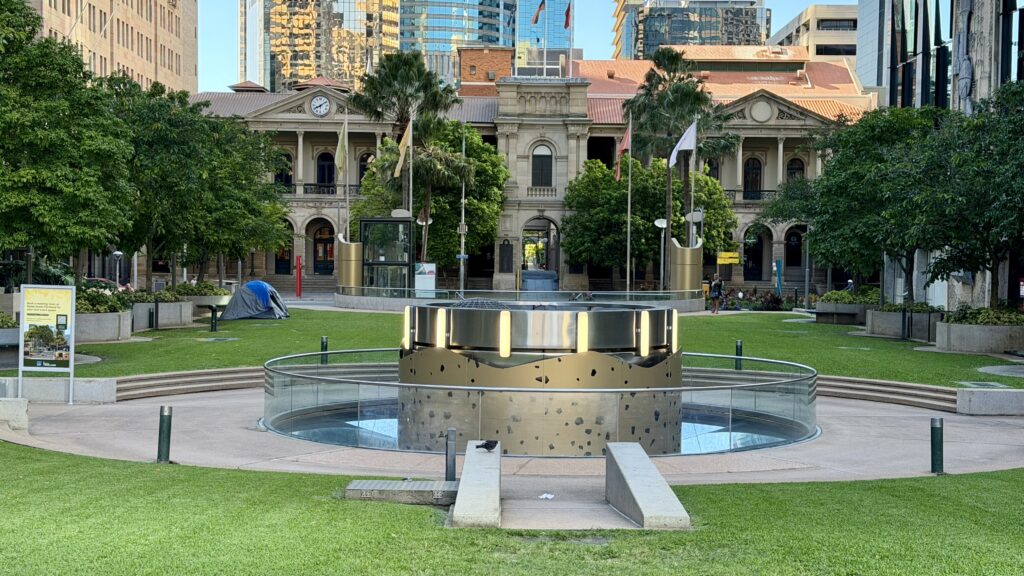
Post Office Square – Opened in 1984, this public square sits opposite the General Post Office on one side and ANZAC Square on the other. Beneath the square is a shopping arcade and a six-level car park, while the ground above serves as a popular green space for workers and visitors. The square is also home to the Sir William Glasgow Memorial and has been a site for public gatherings and events.
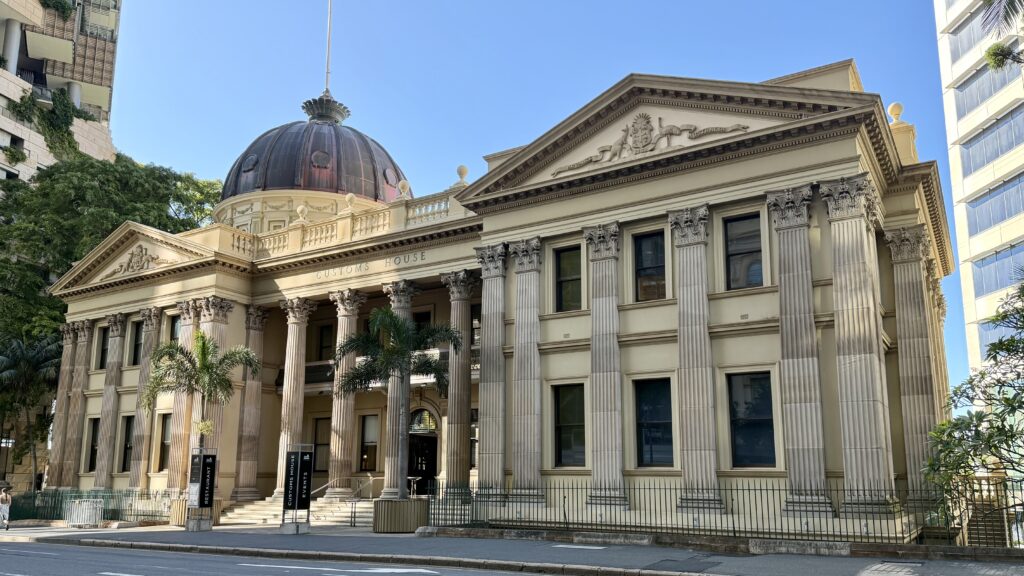
Customs House – is one of those buildings in Brisbane that instantly makes you pause and take notice. This grand heritage-listed landmark was constructed between 1886 and 1889 and originally served as the centre for collecting customs duties when Brisbane was a major port city. Its striking Victorian Classical design—featuring tall columns, ornate detailing, and a distinctive copper dome—made it one of the city’s most prominent buildings.
Today, after restoration, it is used by the University of Queensland as a venue for events, dining, and cultural activities, while remaining one of Brisbane’s most iconic riverside landmarks.
Story Bridge – is a heritage-listed steel cantilever bridge spanning the Brisbane River, connecting Fortitude Valley with Kangaroo Point. Opened in 1940 and once tolled until 1947, it remains the longest cantilever bridge in Australia and carries vehicles, cyclists, and pedestrians across the river. The bridge is named after John Douglas Story, a senior and influential public servant who strongly advocated for the bridge’s construction.
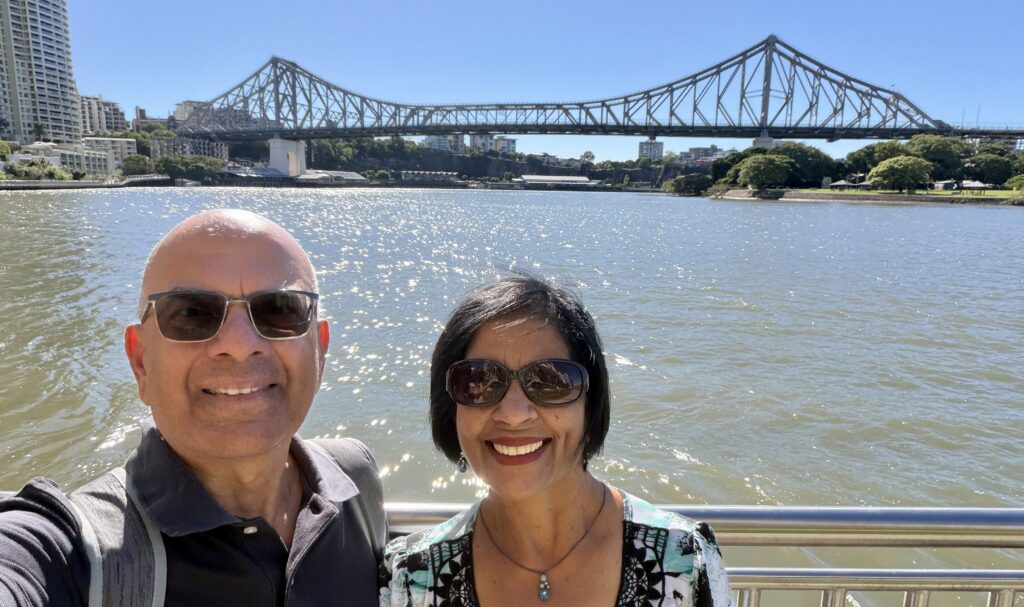
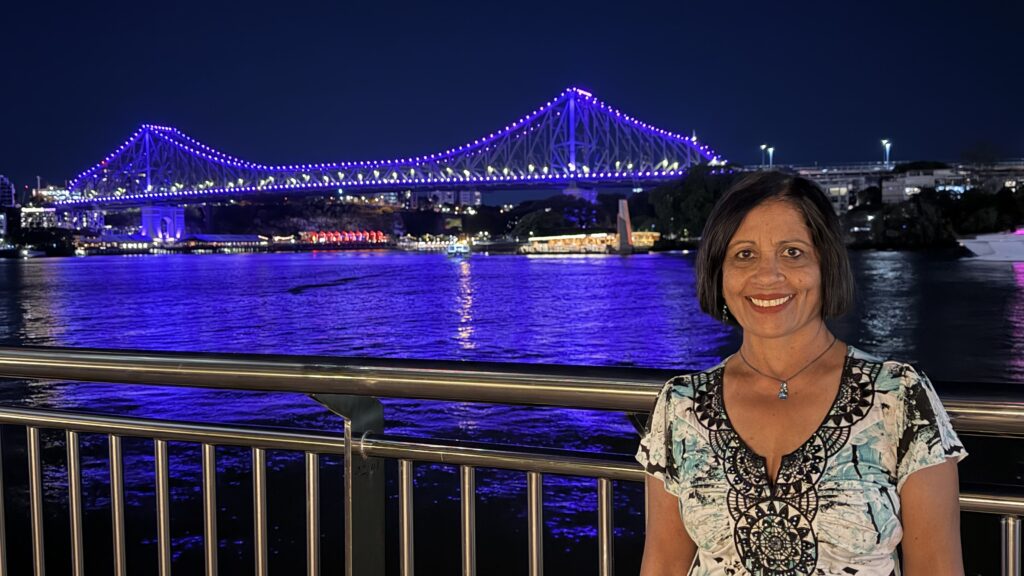
Walking on the Brisbane Story Bridge offers two distinct experiences –
- Public Pedestrian Footpath – Walking the full length of the Story Bridge offers a simple but memorable way to experience Brisbane from above the river. The pedestrian walkway runs alongside traffic, giving you uninterrupted views of the Brisbane River, the CBD skyline, and nearby riverside precincts like Howard Smith Wharves below.
- Guided Story Bridge Adventure Climb – this immersive experience, offers a guided ascent to about 80 meters above sea level, with panoramic views stretching across Brisbane, Moreton Bay, and even distant mountain ranges on clear days. The climb experience takes approximately 1.5 hours which includes your briefing, safety demonstration and the climb route. You will walk 1 km up over the bridge’s superstructure with a viewing platform 80m above the Brisbane River.
We didn’t have time to do the Story Bridge Adventure Climb, instead, we walked the full length of the Story Bridge from Howard Smith Wharves all the way across to Kangaroo Point. It was a great way to experience the river and city views at our own pace.
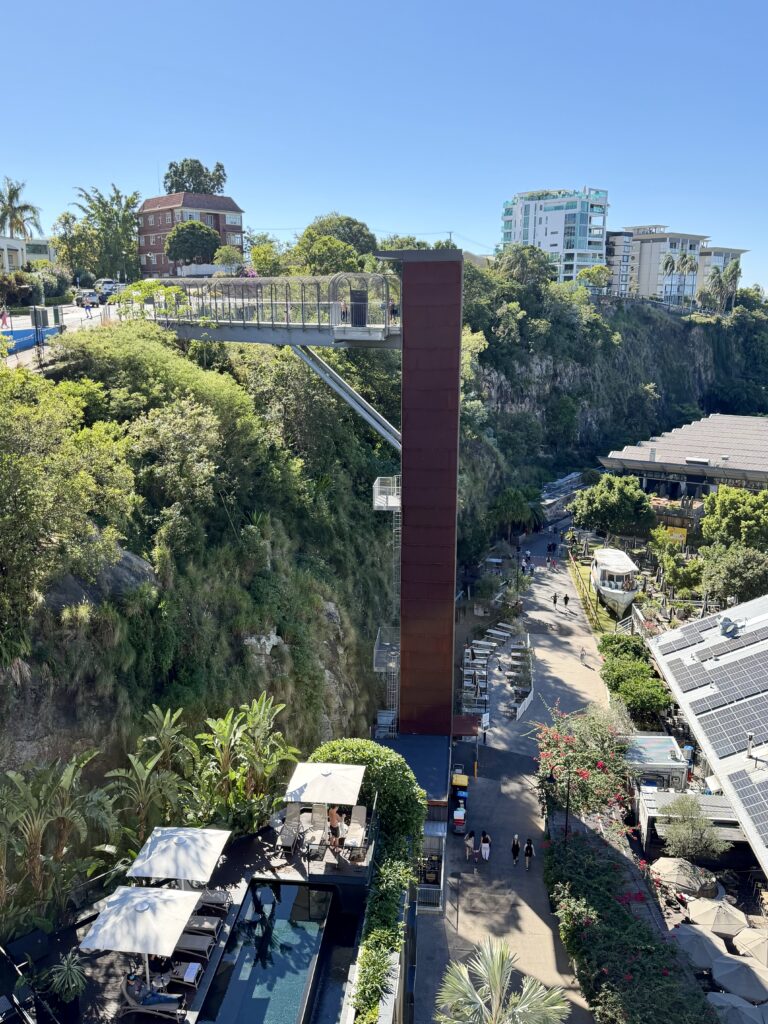
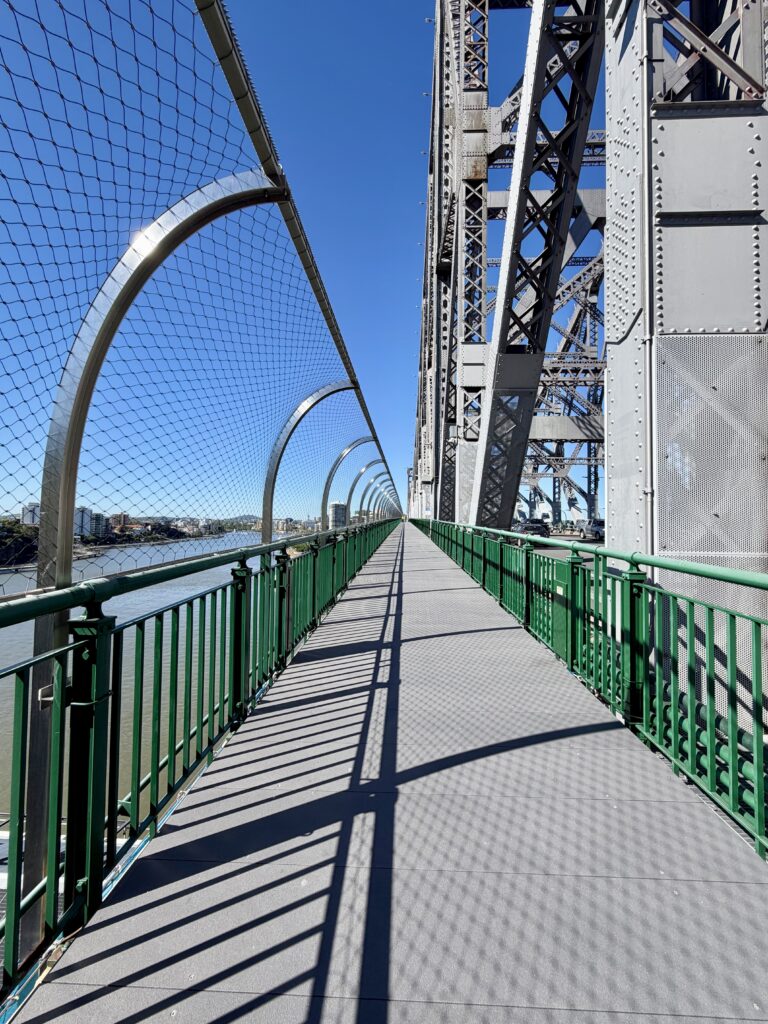
After reaching the other side of the Story Bridge, we continued our walk across the nearby Kangaroo Point connection (often referred to locally as the Kangaroo Point pedestrian crossing/bridge area), extending the riverfront walk and connecting further into the riverside paths.
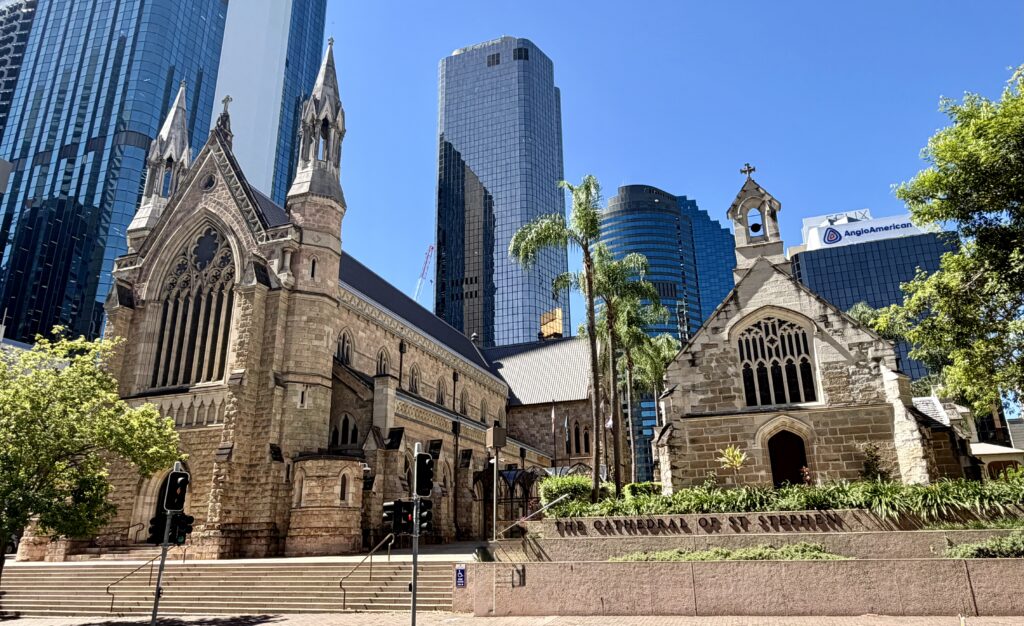
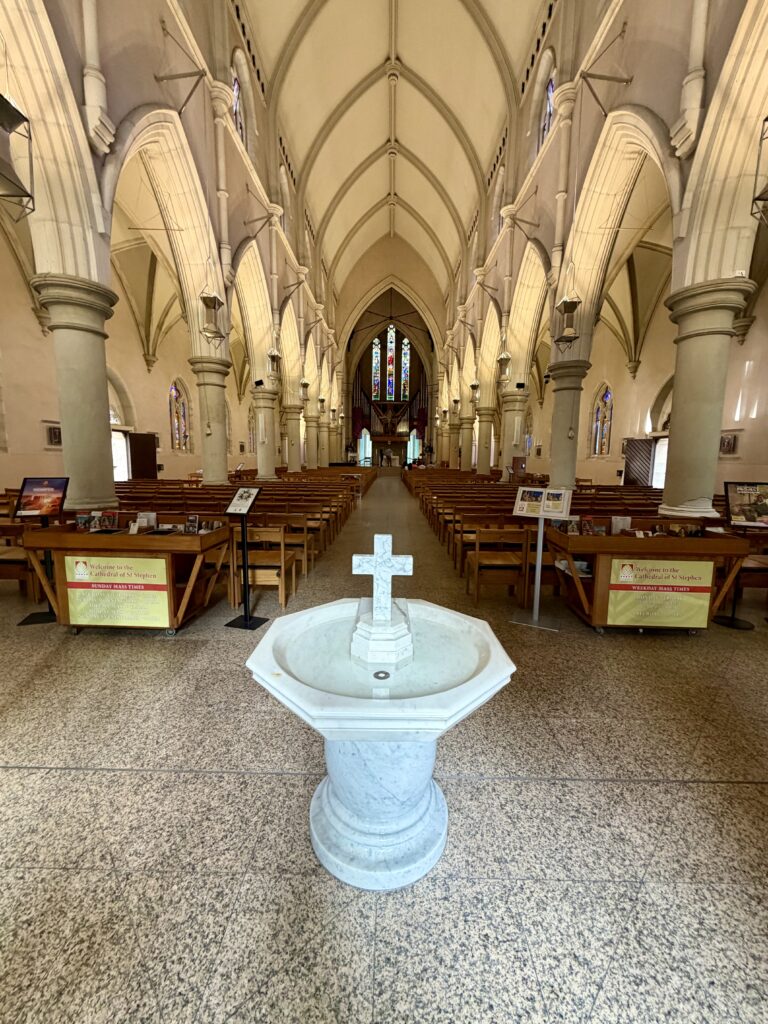
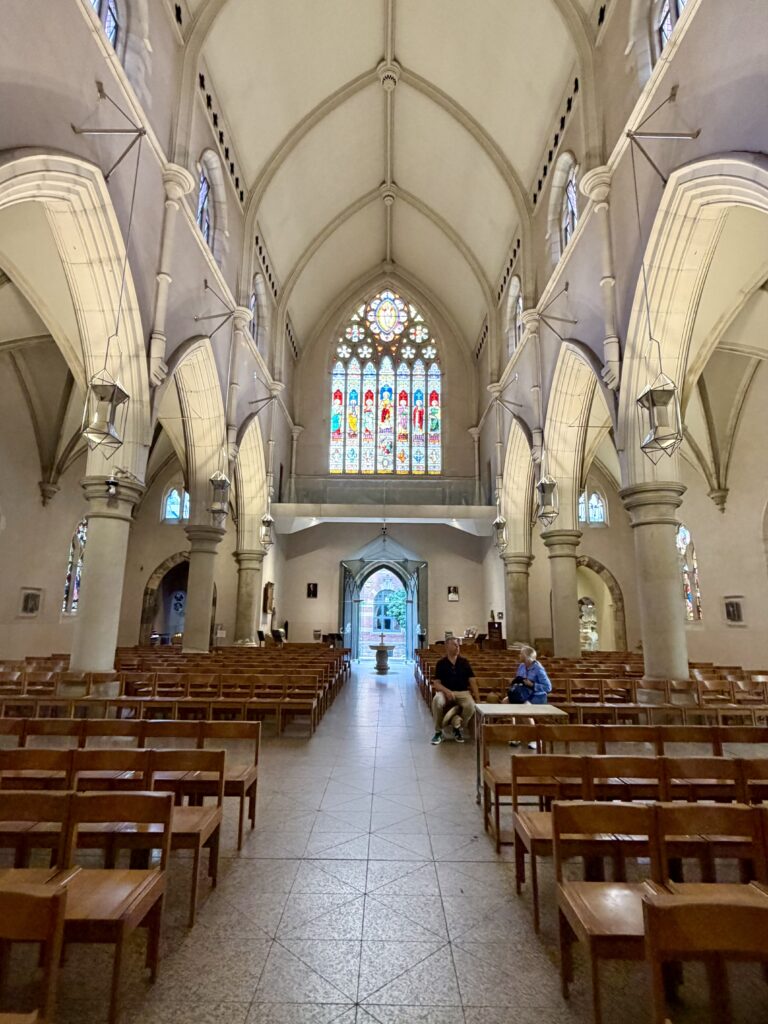
Cathedral of St Stephen – is the heritage-listed cathedral of the Roman Catholic Archdiocese of Brisbane and the seat of its archbishop. Construction began in the 1860s under Bishop James Quinn, with the main nave built between 1870 and 1874, and the front gables and spires completed 1884. Designed in Gothic Revival style, the cathedral features sandstone towers, stained glass windows and a cruciform layout. Inside, the colorful stained glass creates a serene and striking atmosphere, making it both a place of worship and an architectural highlight in Brisbane.
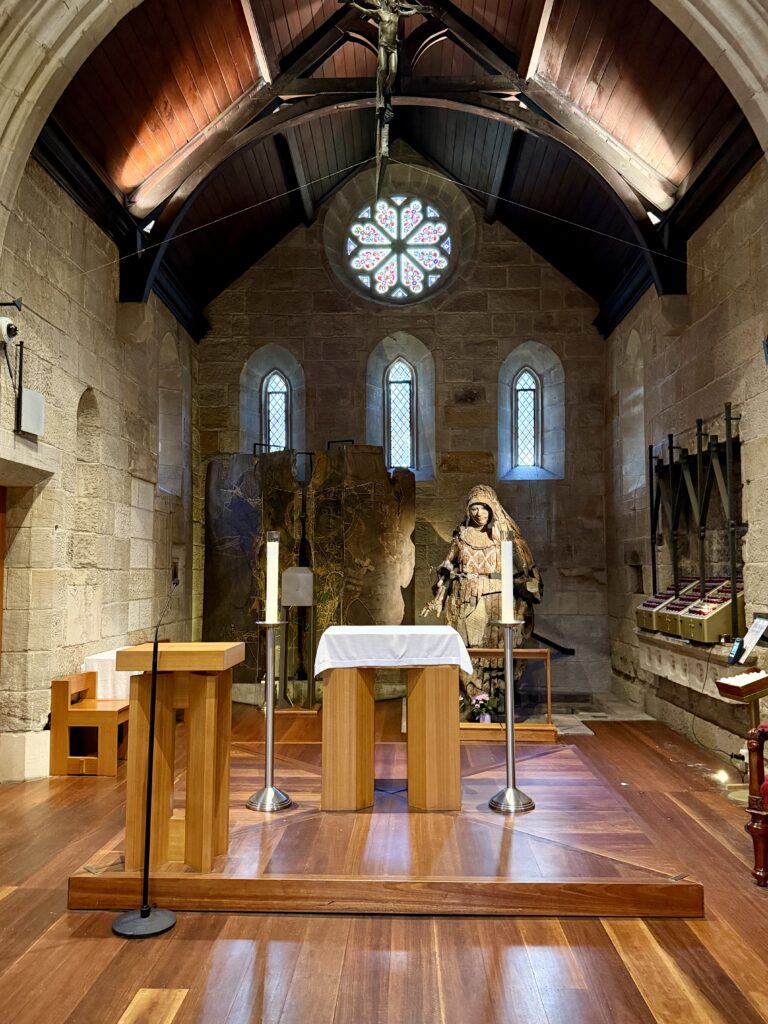
St Stephen’s Chapel (also known as Old St Stephen’s Church) stands immediately to the south-west of the cathedral and was built between 1847 and 1850. The first Mass was celebrated in the completed building on 12 May 1850. In June 1859 it became the cathedral for the first Bishop of Brisbane. It is the oldest Catholic church in Queensland.
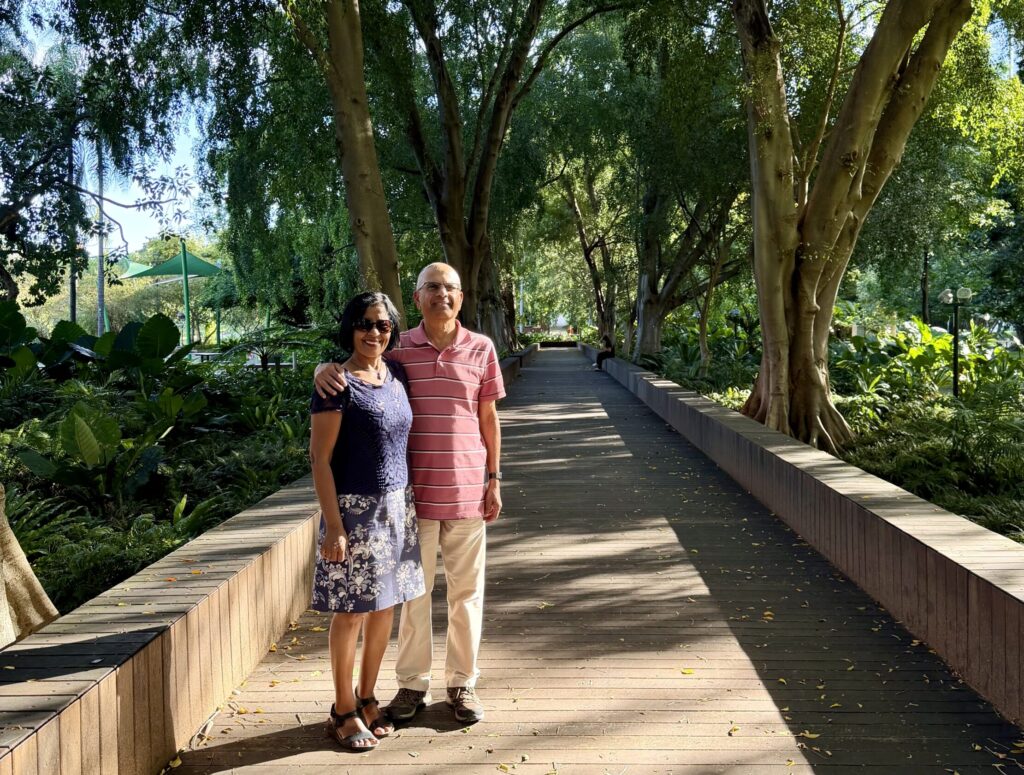
Brisbane Botanical Garden – Covering 52 hectares, these gardens offer free entry, making them a popular spot for both locals and tourists. Established by the Brisbane City Council in 1970 and officially opened in 1976, the gardens feature themed sections, walking paths, and a library, and plans have been approved for a year-round light show to enhance the visitor experience.
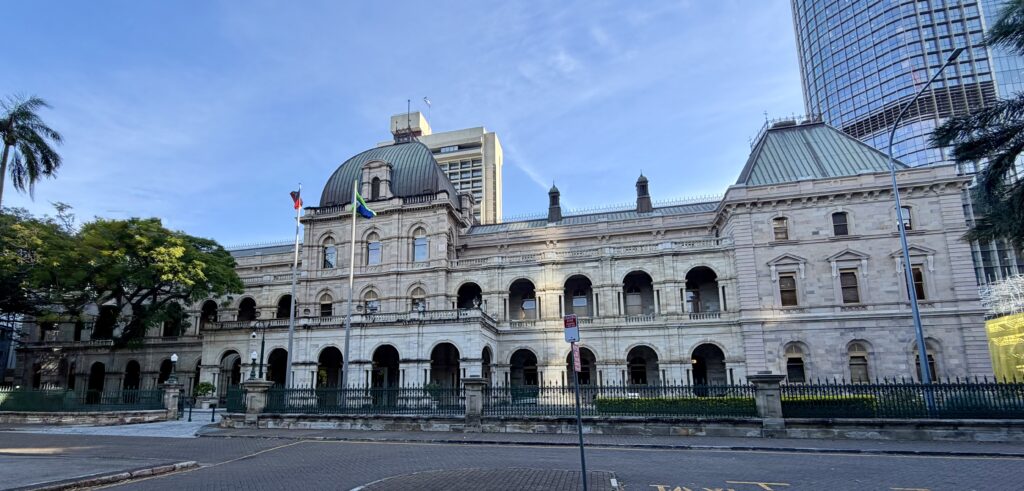
Parliament Building – is the meeting place of the Parliament of Queensland, located at Gardens Point in Brisbane’s CBD near the City Botanic Gardens. Construction began in 1865, with the first section completed in 1867, allowing Parliament to move from its earlier location in the old convict barracks. Constructed using local sandstone, the building was developed in stages, with the George Street frontage finished in 1868, additional arcades added in 1878, and the Alice Street wing completed in 1889. Notably, it became the first parliament house in Australia to be electrified in 1886.
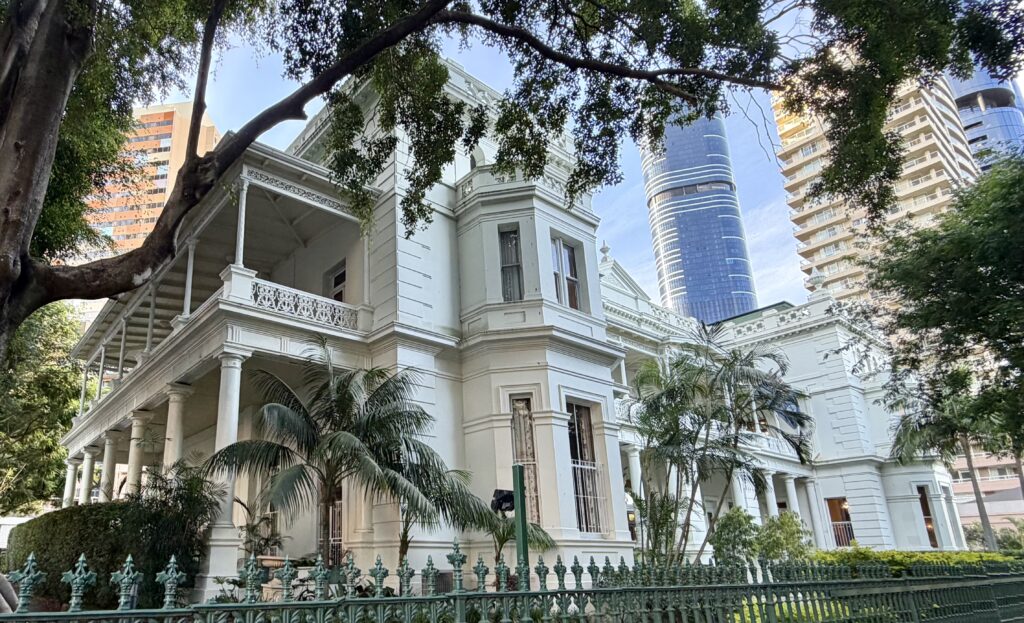
Queensland Club – has a long and fascinating history dating back to 6 December 1859, when it was founded—just four days before Queensland officially became a separate state. Originally located in a two-storey house on Mary Street, the club quickly expanded with facilities like a smoking room, billiards room, and bedrooms. After a major fire in 1870 and growing membership, the club outgrew its original premises. The current site was purchased in 1881, and the new building was completed and occupied in 1884.
The club faced another significant fire in 1985, which damaged much of the building, but it was fully restored and reopened in 1987. Today, it remains one of Brisbane’s most historic and exclusive private clubs.
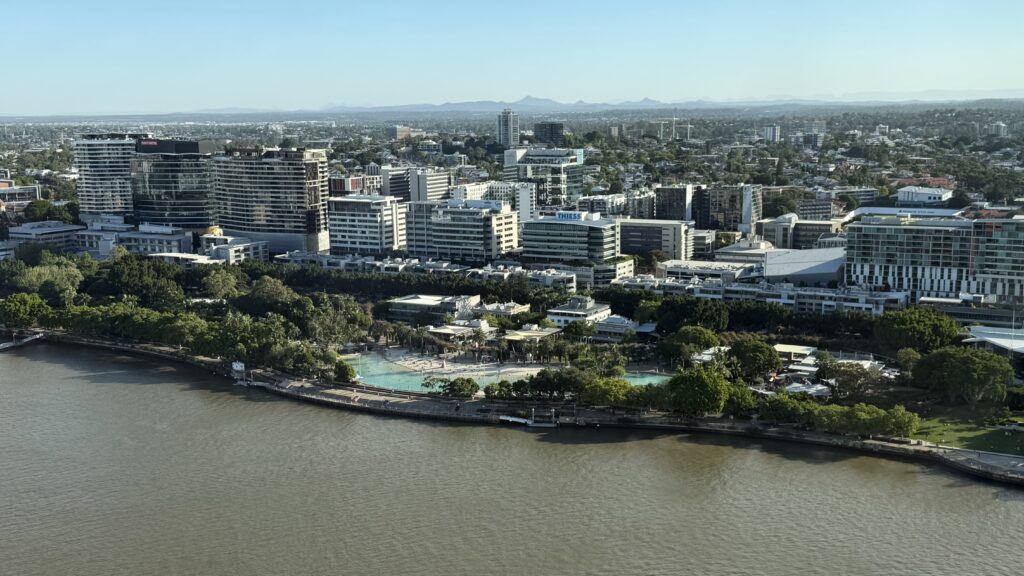
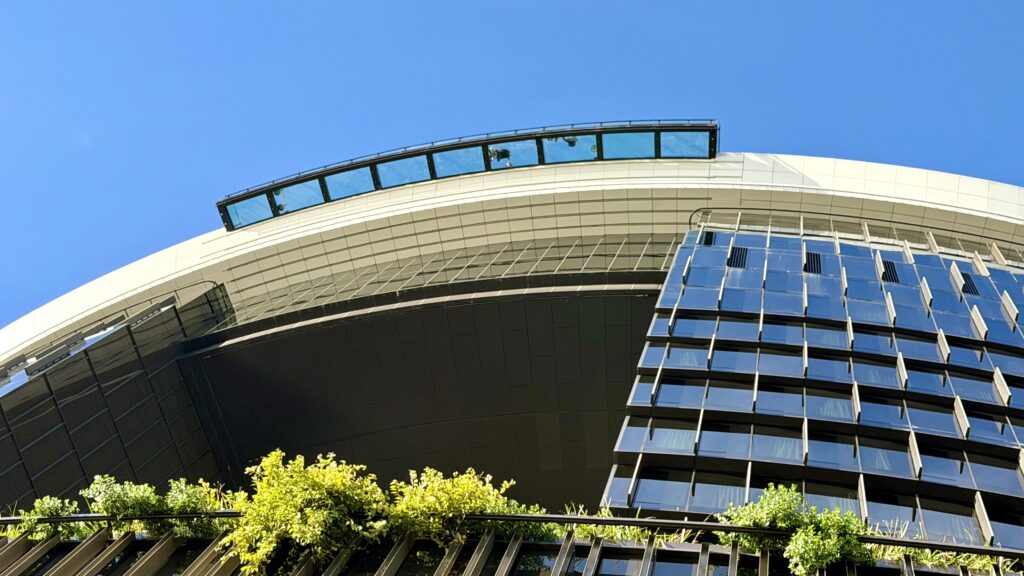
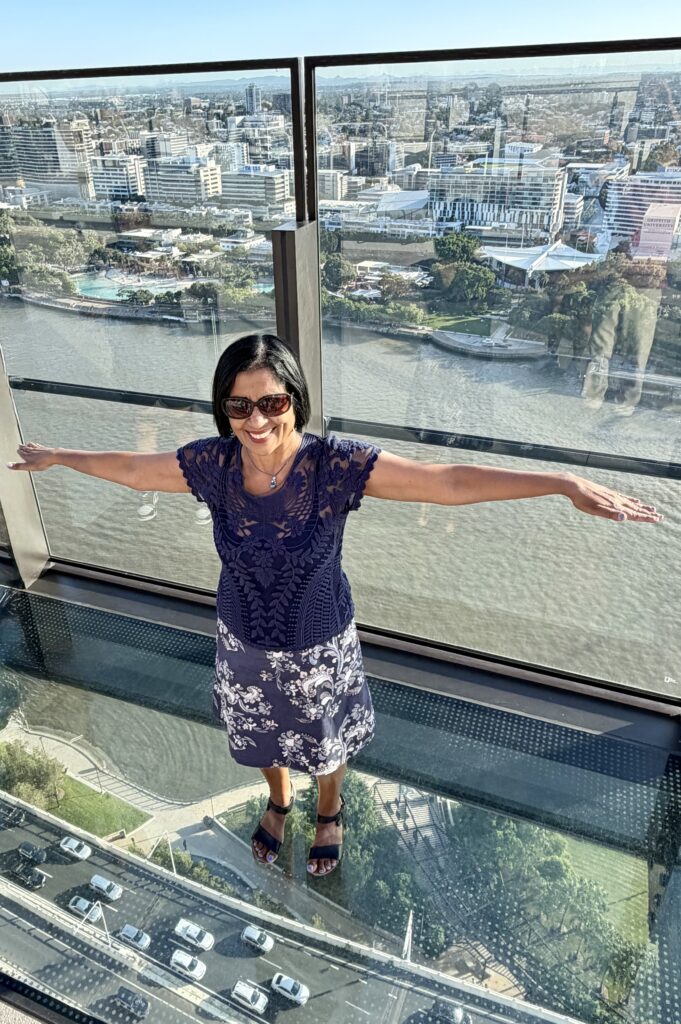
Sky Deck and Glass-Floor – The Sky Deck is a spectacular open-air viewing platform located about 100 meters above the ground, stretching roughly 250 meters in length. It offers stunning 360-degree views over Brisbane, including the Brisbane River and CBD skyline.
One of its standout features is the glass-floor section at the center of the deck, allowing visitors to look straight down onto the streets below, including the Riverside Expressway—an exhilarating experience. The Sky Deck is designed for public access throughout the day and into the evening, making it a great spot for both daytime views and nighttime city lights.
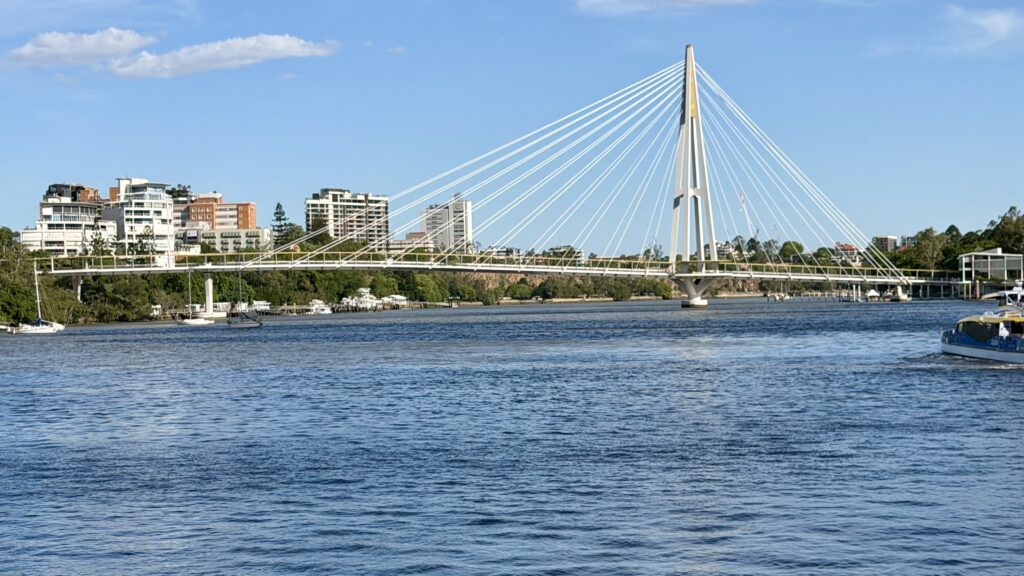
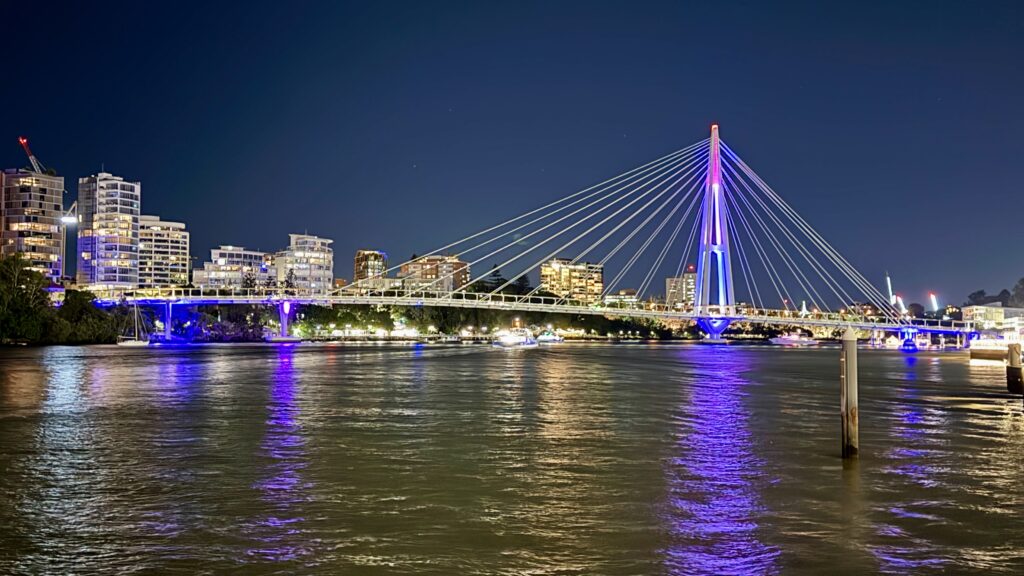
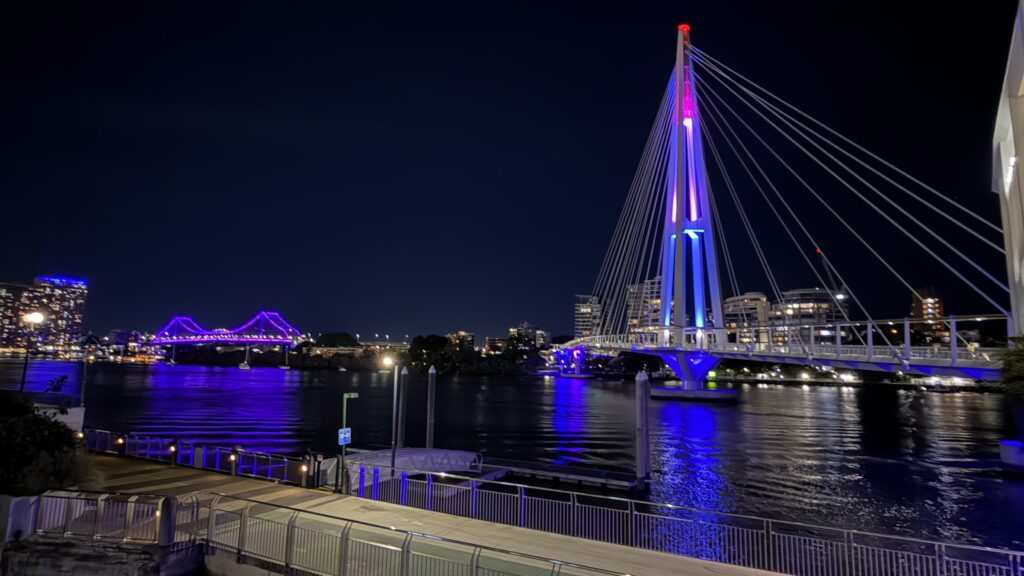
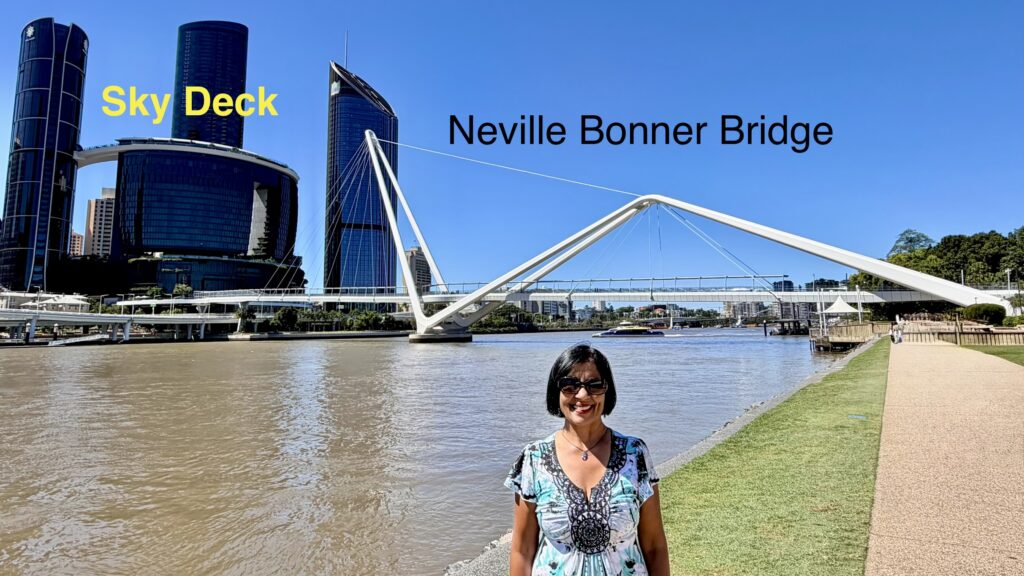
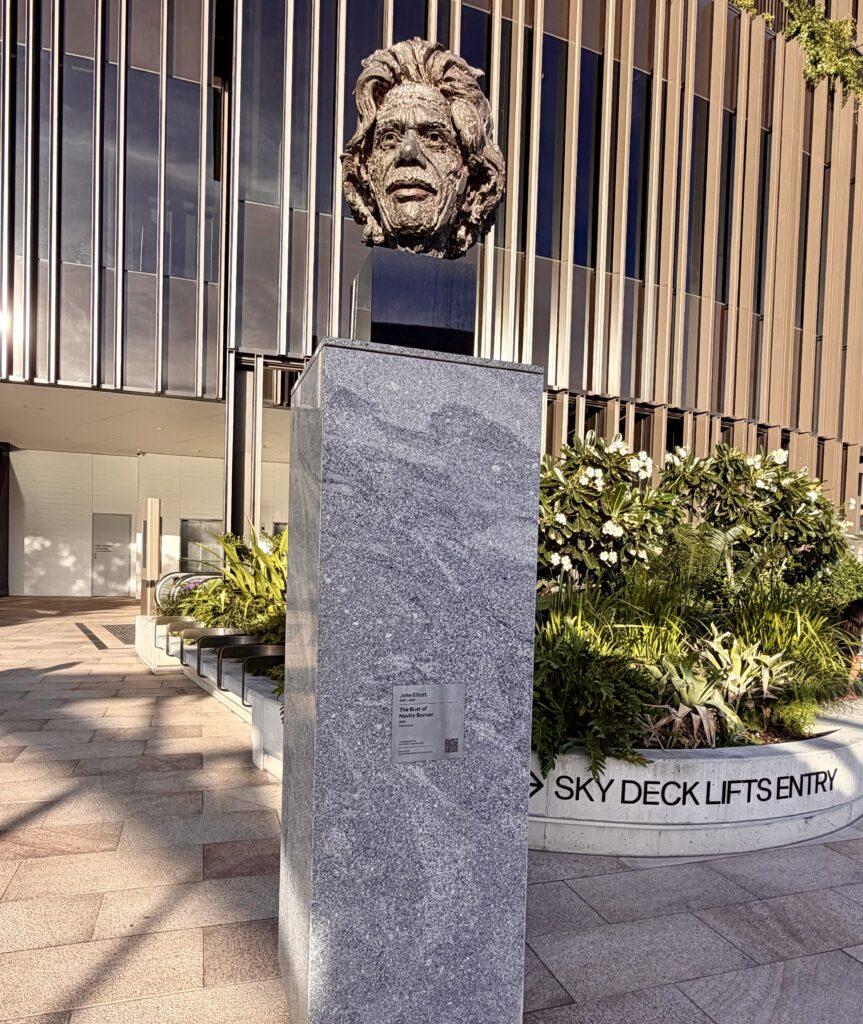
Neville Bonner Bridge – After visiting the Sky Deck, we walked across the Neville Bonner Bridge to reach South Bank. This 320-meter pedestrian bridge spans the Brisbane River and connects South Bank Parklands with the Queen’s Wharf Brisbane precinct. Opened in August 2024, it has quickly become an important link between the cultural hub of South Bank and the CBD.
The bridge features a graceful, sinuous ribbon design with a 77-meter mast, showcasing a modern hybrid arch-and-cable-stayed structure. Named after Neville Bonner—the first Indigenous Australian to serve in the federal Parliament—it adds cultural and historical significance to this impressive new Brisbane landmark.
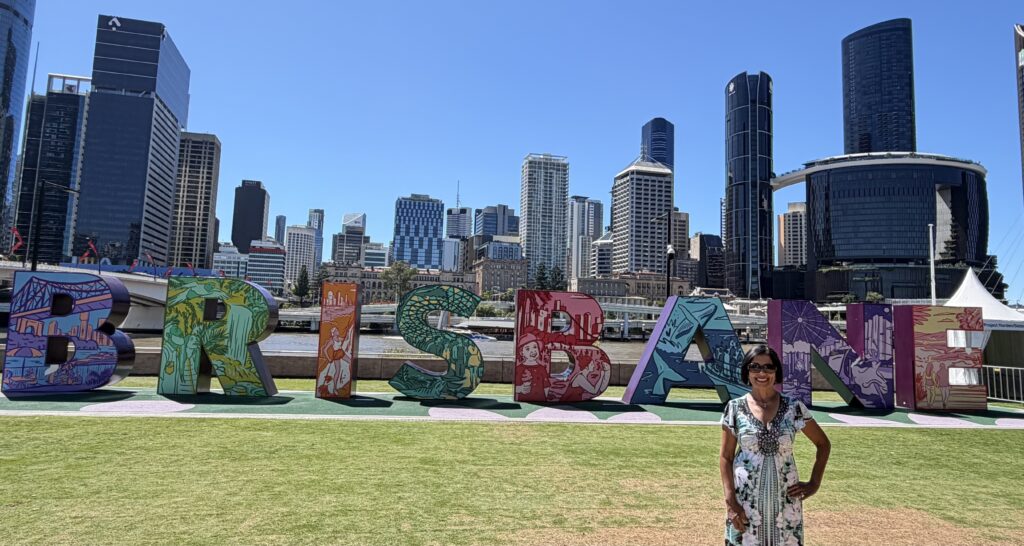
Brisbane Sign – is a large-scale installation spelling out BRISBANE and is one of the most popular photo spots in the city. Located at South Bank Parklands, it offers a perfect backdrop with the Brisbane skyline across the river, making it a must-visit for visitors looking to capture a memorable shot of the city.