The Great Ocean Road is a 243 km scenic coastal drive known for dramatic cliffs, surf beaches, and landmarks like the Twelve Apostles. Built between 1919–1932 by returned soldiers, it is the world’s longest war memorial. Most of the highlights are concentrated in Port Campbell National Park.
Our Melbourne-based friend, familiar with the area, drove us around, so we didn’t have to search for attractions. Since it was a one-day trip, we had to skip some spots like the Cape Otway Lighthouse, Erskine Falls, and many more which needed a bit of a detour. For a fuller experience, it’s best to explore the Great Ocean Road over 2-3 days. We still managed to hit many of the popular spots.
- Torquay and Bells Beach
- Great Ocean Road Chocolaterie & Ice Creamery
- Kangaroo in Angelsea Golf
- Split Point Lighthouse – Aireys Inlet
- Great Ocean Road Memorial Arch
- Lorne (Teddy’s Lookout)
- Great Otway National Park
- Maits Rest Rainforest
- Lookouts along the way
- Gibsons Steps
- The Twelve Apostles
- Loch Ard Gorge, The Wreck, and The Razorback
- London Bridge
- The Grotto
Torquay and Bells Beach – This peaceful surfer town of Torquay is the first stop for most people along this road. It offers scenic viewpoints and the famous Bells Beach. We enjoyed watching surfers in action and captured many photos and videos.
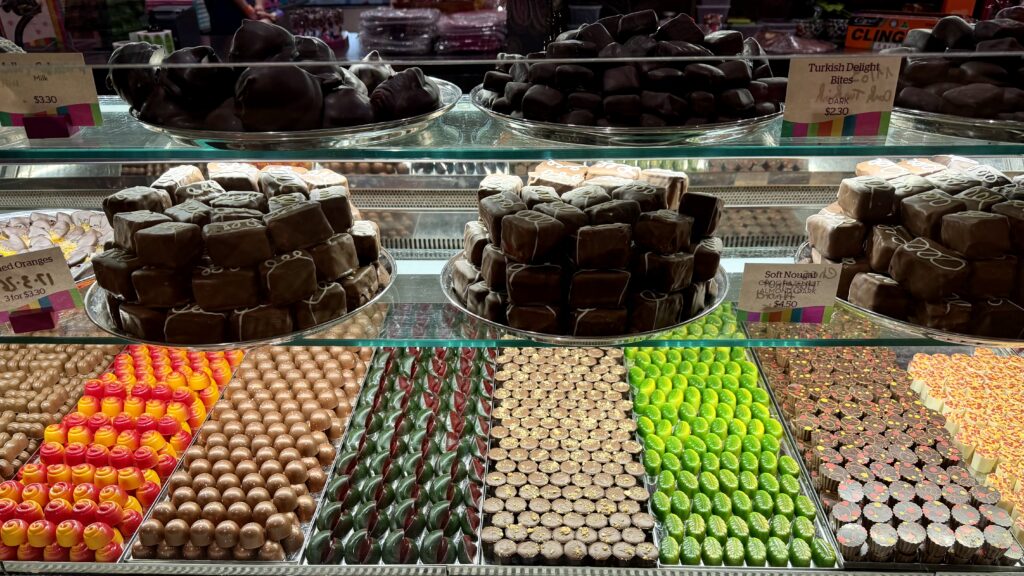
Great Ocean Road Chocolaterie and Ice Creamery – is a popular stop for chocolate and ice cream lovers along the Great Ocean Road. The shop offers an extensive range of chocolates, with samples available for tasting and a large viewing window into the production area. We enjoyed trying some alcohol-flavored chocolates and bought several varieties to share with our friends.
Kangaroo in Angelsea Golf – The Anglesea Golf Club is famous for its large population of wild Eastern Grey kangaroos that lounge on the fairways. Visitors can take 25-minute Roo Tours by golf cart, guided by volunteers, for close-up photo opportunities. We found a great spot to observe them and captured some amazing videos of the kangaroos in action.
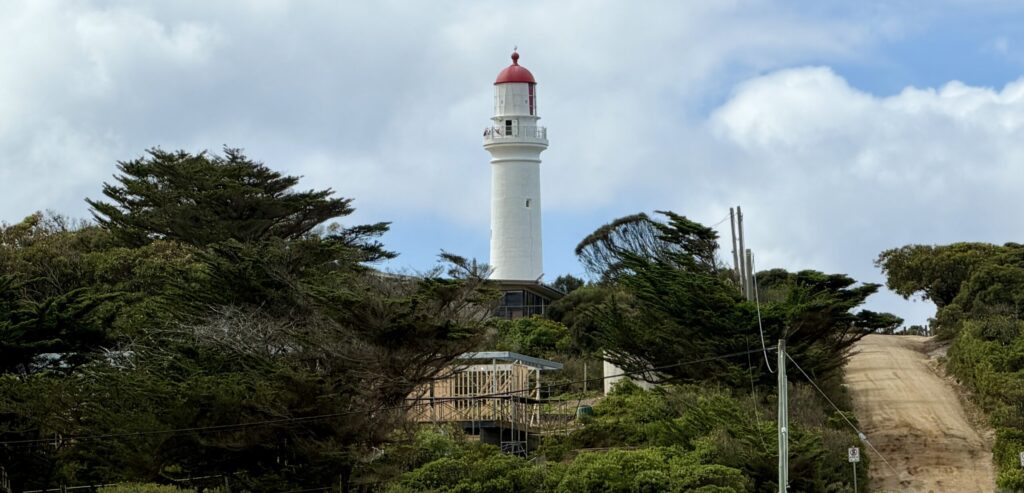
Split Point Lighthouse – This easily accessible lighthouse was originally called Eagles Nest Point, and was built in 1891 on the Great Ocean Road. For 27 years, lighthouse keepers maintained the light and communicated with ships using various codes. The tower retains its original staircase and timber fittings, with its British-made Chance Brothers Fresnel lens still in use.
Automated in 1919 with acetylene gas and upgraded to electric operation in 1972, the 34-metre-tall lighthouse has been guiding thousands of vessels along the jagged coastline. Since 2005, regular tours allow visitors to climb the staircase and enjoy 360-degree coastal views from the lantern room balcony, with four landings providing stops along the way.
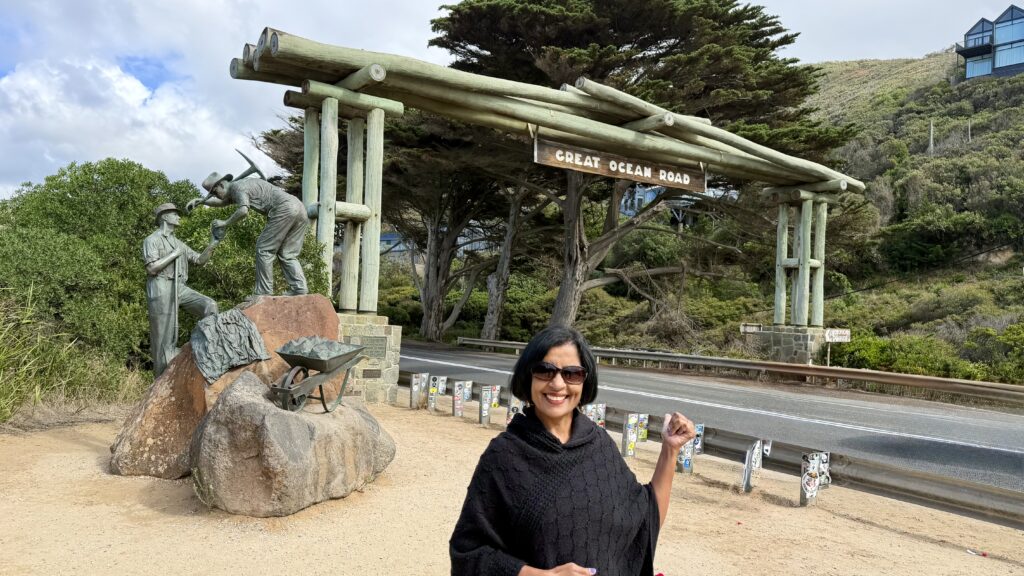
Great Ocean Road Memorial Arch – is a famous landmark honoring the soldiers who built the Great Ocean Road after World War I. Often called a triumphal arch, it symbolizes resilience, commitment, and unity.
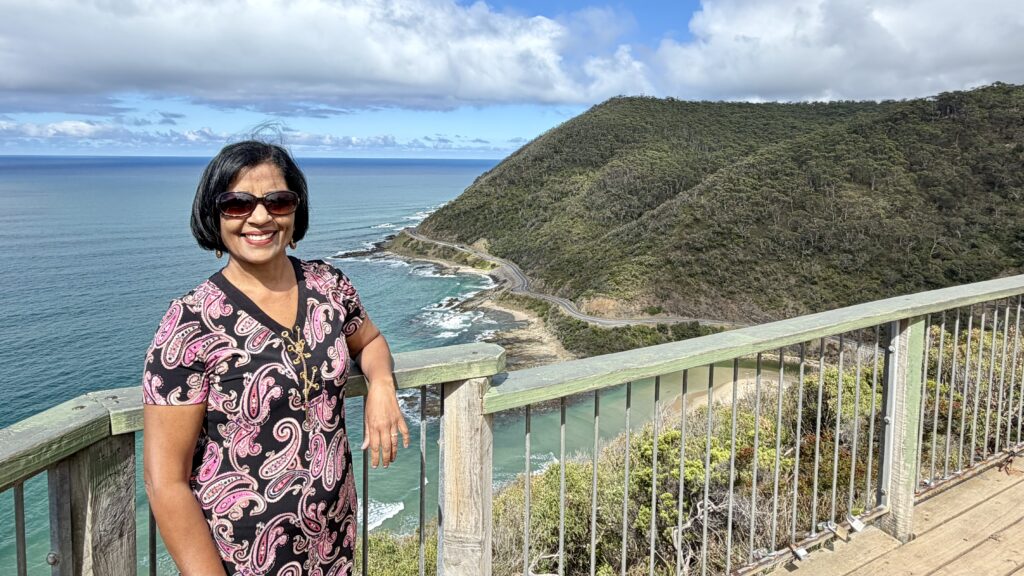
Lorne (Teddy’s Lookout) – Located just 2 km from Lorne, Teddy’s Lookout is one of the most scenic viewpoints along the Great Ocean Road. A newly constructed walkway leads to the viewing platform, offering breathtaking views of the winding road below, the St George River mouth, and the vibrant blue hues of the Southern Ocean.
Great Otway National Park – is a vast park in the Otway Ranges, covering over 103,000 hectares and home to Mount Cowley, its highest peak. It features diverse landscapes including lush rainforests, waterfalls, and coastal scenery. Parts of the park run alongside the Great Ocean Road, with many attractions easily accessible from the drive.
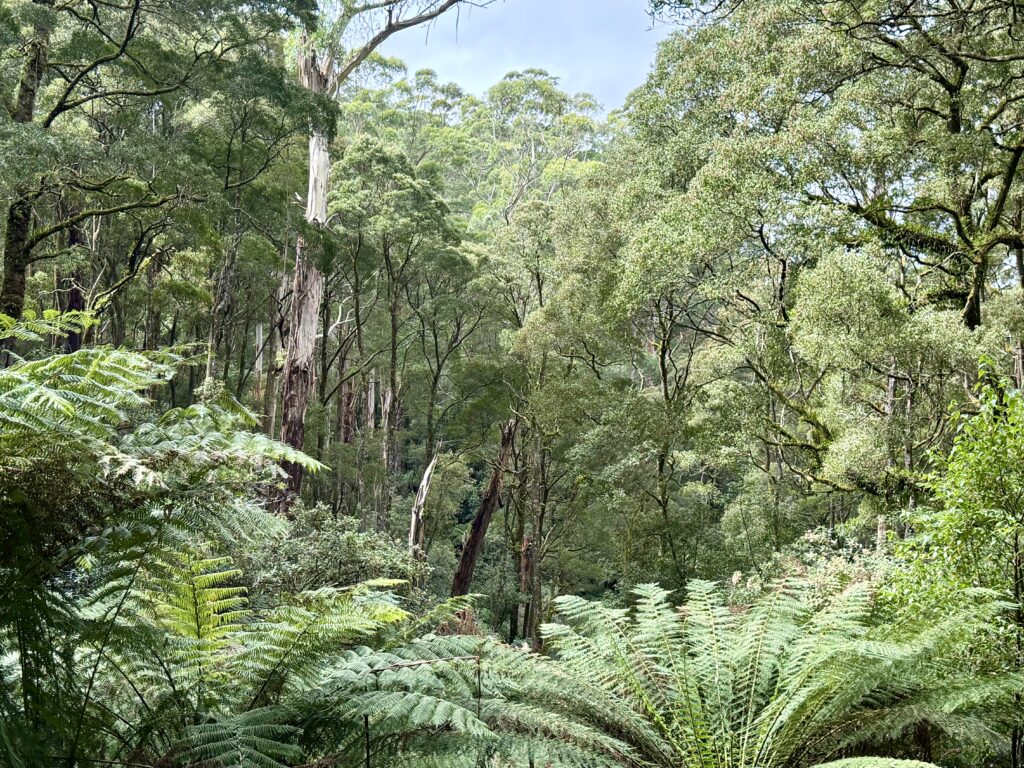
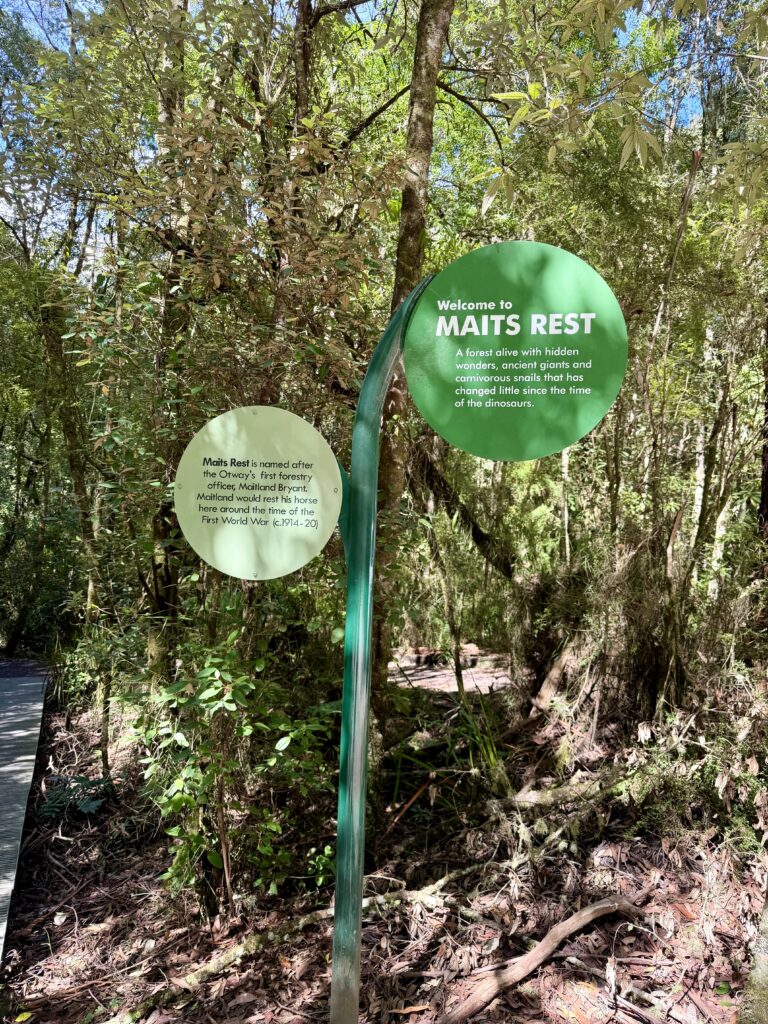
Maits Rest Rainforest – Part of Great Otway National Park, Maits Rest, is an 800 m self-guided circuit walk through cool temperate rainforest in the Otway Ranges near Apollo Bay. A wooden boardwalk has been built over the tree-fern gullies and moss-covered roots of ancient rainforest trees, protecting the delicate ecosystem while providing visitors with unique views of the forest. You will be in the midst of beautiful fern gardens and giant rainforest trees up to 300 years old.
If you’re lucky, you may run into some of the local inhabitants, including swamp wallabies, koalas, ring-tailed possums and grey kangaroos. Rarely seen, but often heard at night, are the yellow-bellied gliders screaming out as they glide from tree to tree.
Lookouts Along The Way
Port Campbell National Park, Gibsons Steps – are the first popular stop in Port Campbell National Park along the Great Ocean Road. The name refers to the 86-step staircase that leads down to Gibson Beach, offering a unique view from sea level. They are located just a short drive from the Twelve Apostles.
At this place you will get incredible views of the two jutting rock stacks that languish in the ocean nearby. Known as Gog and Magog, these two sea stacks can be viewed from either the lookout at the top or the beach below.
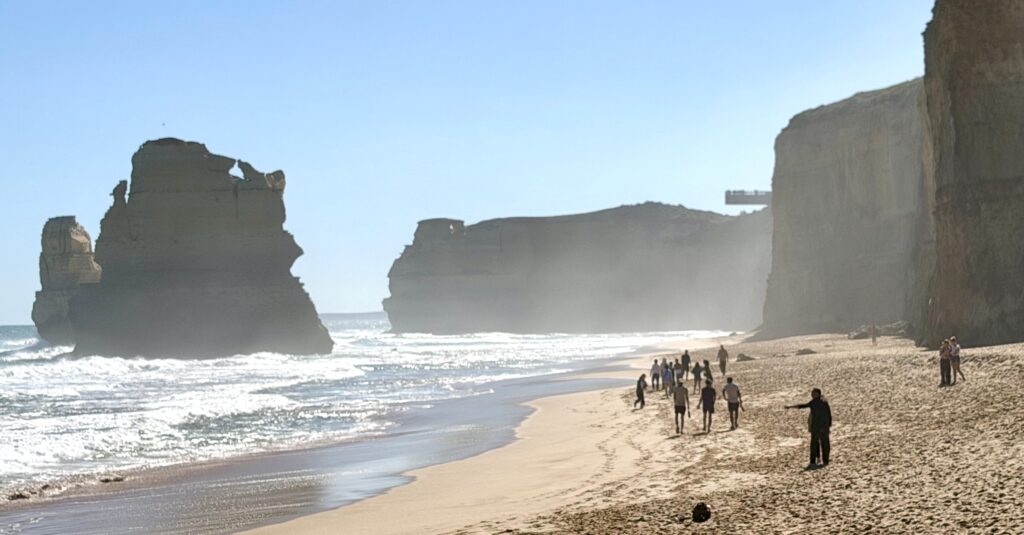
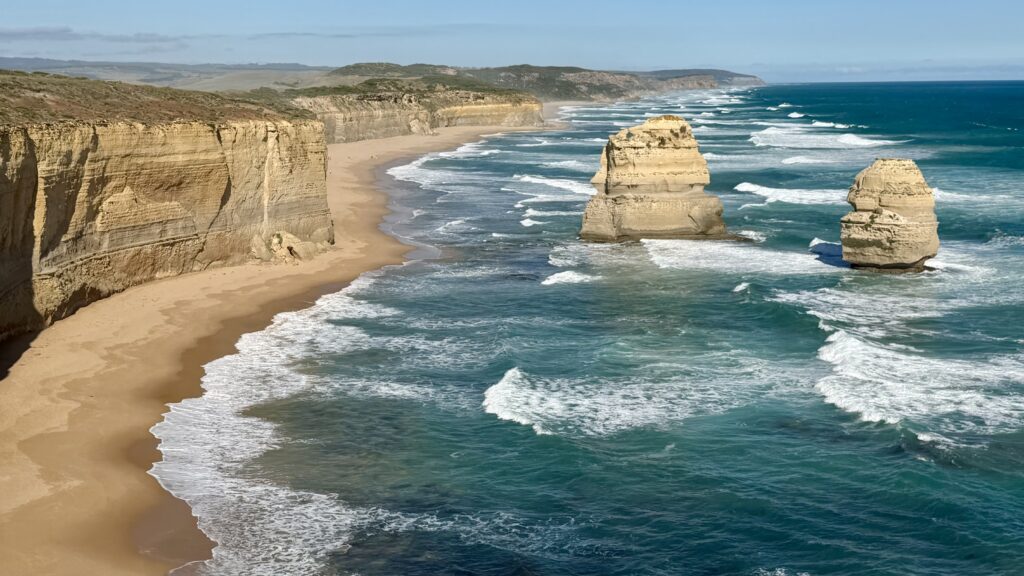
Port Campbell National Park, The Twelve Apostles – are a group of limestone stacks along the Great Ocean Road. Despite the name, there were never twelve stacks—only nine originally, with seven still standing today, though fewer are visible from the main viewpoint. Formed over millions of years from Port Campbell Limestone, they were shaped by erosion from the Southern Ocean, where cliffs turned into caves, arches, and eventually isolated rock stacks (which will also eventually collapse back into the ocean).
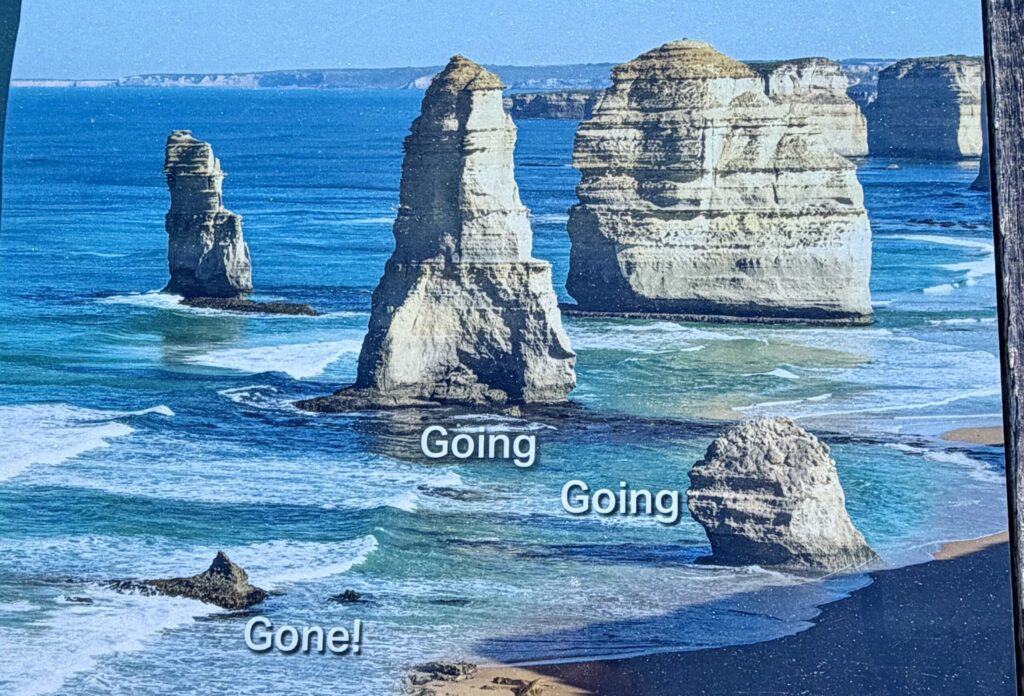
You will be able to see six out of the seven rocks in the classic view that you see in millions of pictures, the seventh is located several meters away from the corner of the main viewing platform. We spent a lot of time at the lookout trying to get a perfect picture of the Twelve Apostles. Since we visited around 4:30 pm, the sun was behind the stacks, making most photos appear dark. Selfies turned out a little better, as they captured a brighter view of the rocks.
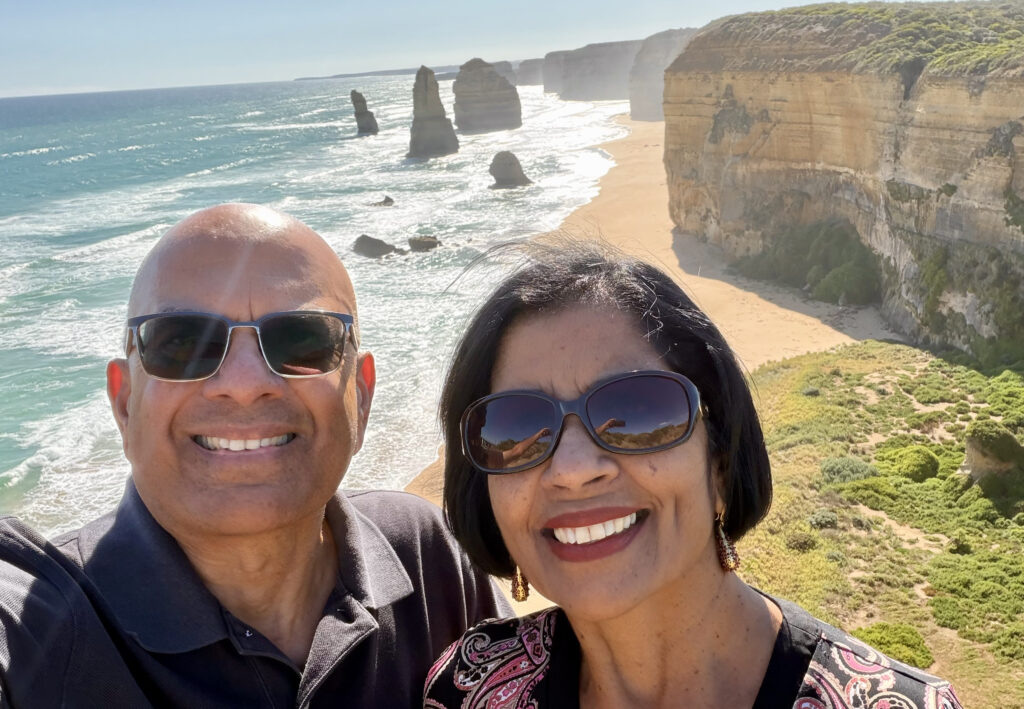
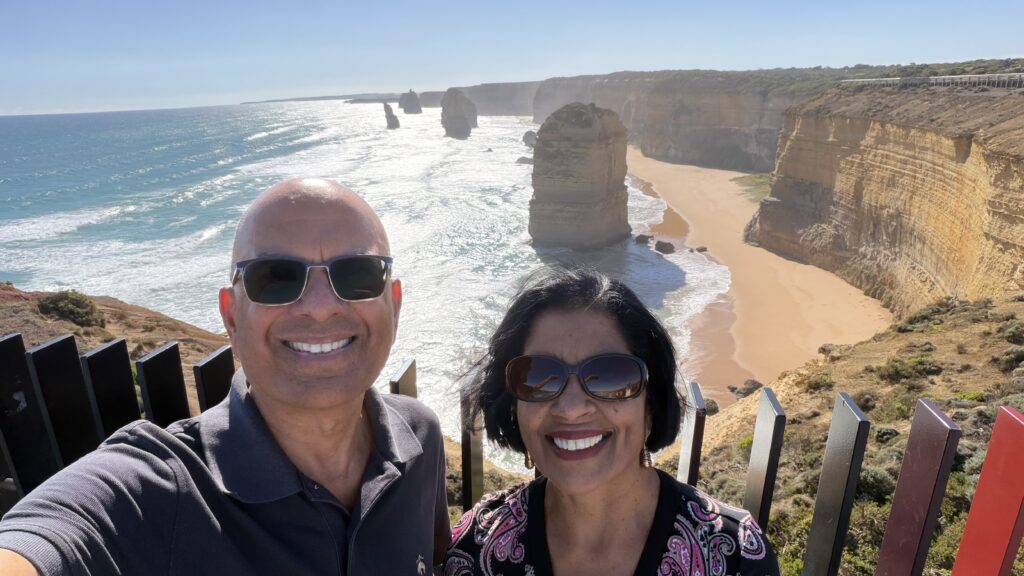
Port Campbell National Park, Loch Ard Gorge, The Wreck, and The Razorback – This is where raw beauty meets wild history. The gorge’s golden cliffs and turquoise waters create a stunning contrast, but it’s the story of the shipwreck survivors who found refuge here that gives it a magical, almost eerie vibe. Wander the trails and let the drama of the past sink in.
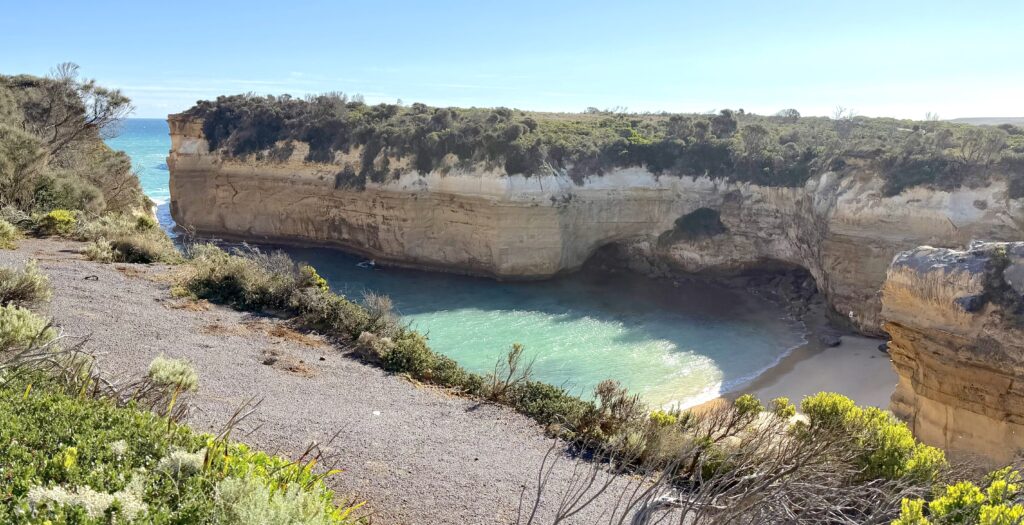
The Shipwreck Story – The Loch Ard clipper ship was sailing from England to Melbourne in 1878 when it ran aground in the shallow waters along this coastline. There were 54 people on board and only two survived. 19 year old Tom who was a sailor’s apprentice, jumped from the ship as it sank and swam to the shore. When he made it to land, he heard a woman (Eva) shouting for help. Tom jumped into the water and dragged her to shore. She was an Irish woman emigrating to Melbourne with her family.
Tom climbed out the gorge and fetched help. The alarm was raised and local men tried to save those on board the ship, but were ultimately too late. The rest of the ship’s passengers and crew died, including Eva’s family. Tom was called a hero and as the news spread in Australia, many people assumed Tom and Eva would marry. That was not the case. Tom continued his calling as a sailor and Eva returned to England 3 months later where she later married. The neighboring gorge was named Loch Ard Gorge after the ship and those lost to the shipwreck.
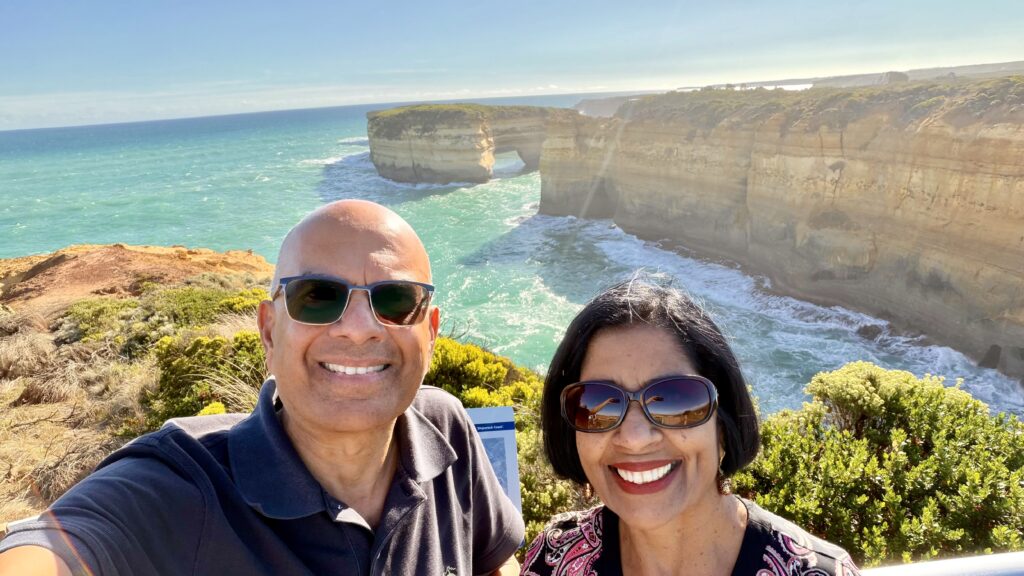
Island Archway – was a 25 m high, naturally formed rock arch. The structure collapsed in June 2009 due to erosion, leaving behind two separate pillars now known as Tom and Eva, the only 2 survivors of the 1878 shipwreck. The national and international press reported extensively on this geological event.
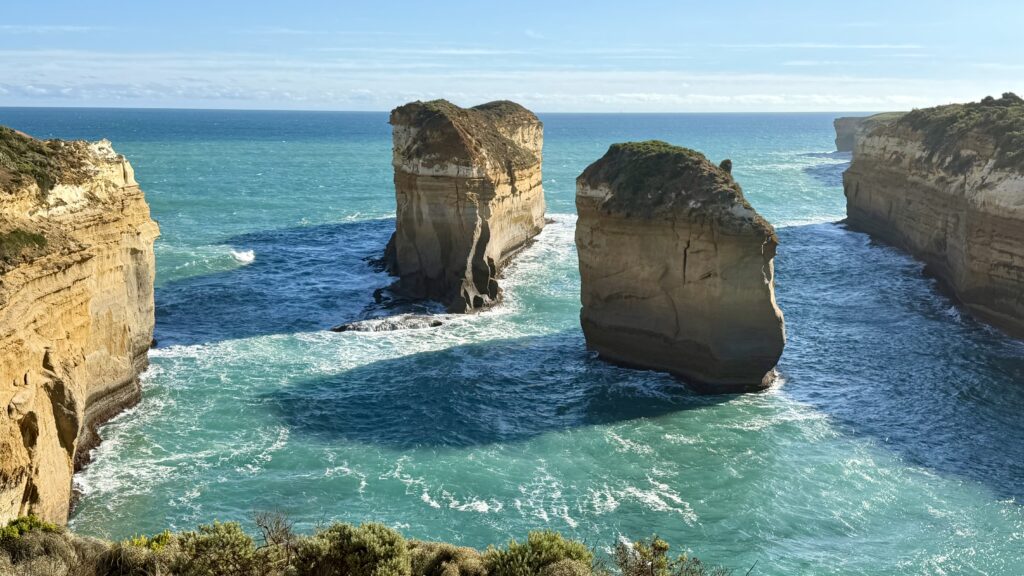
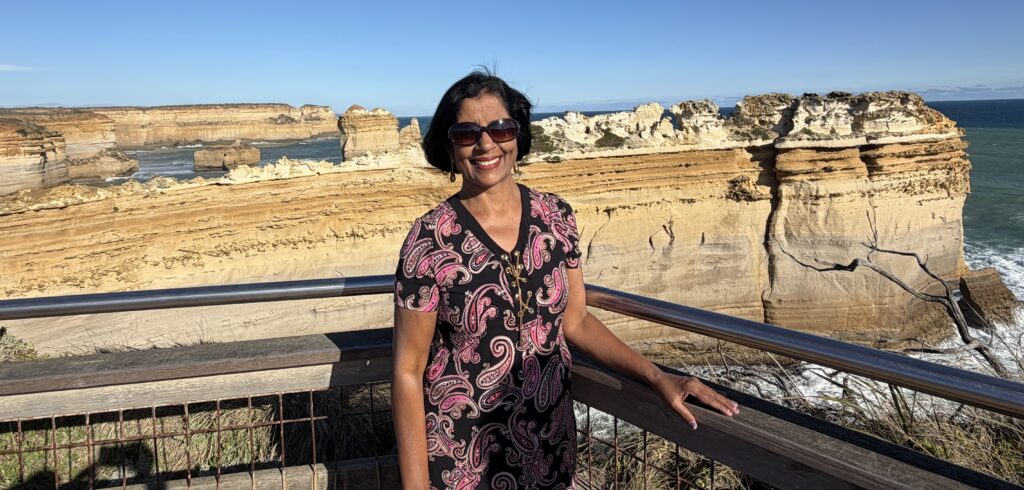
The Razorback – is a striking coastal rock formation shaped by erosion along the Great Ocean Road and once extended much further out into the sea. Its sharp edges and uneven surface are formed as wind-blown spray hardens parts of the rock, while softer sections erode away. Over time, waves undercut the base and rainwater widened cracks, causing large sections to collapse. What remains today is a rugged rock shelf, once part of a much larger formation extending further into the sea.
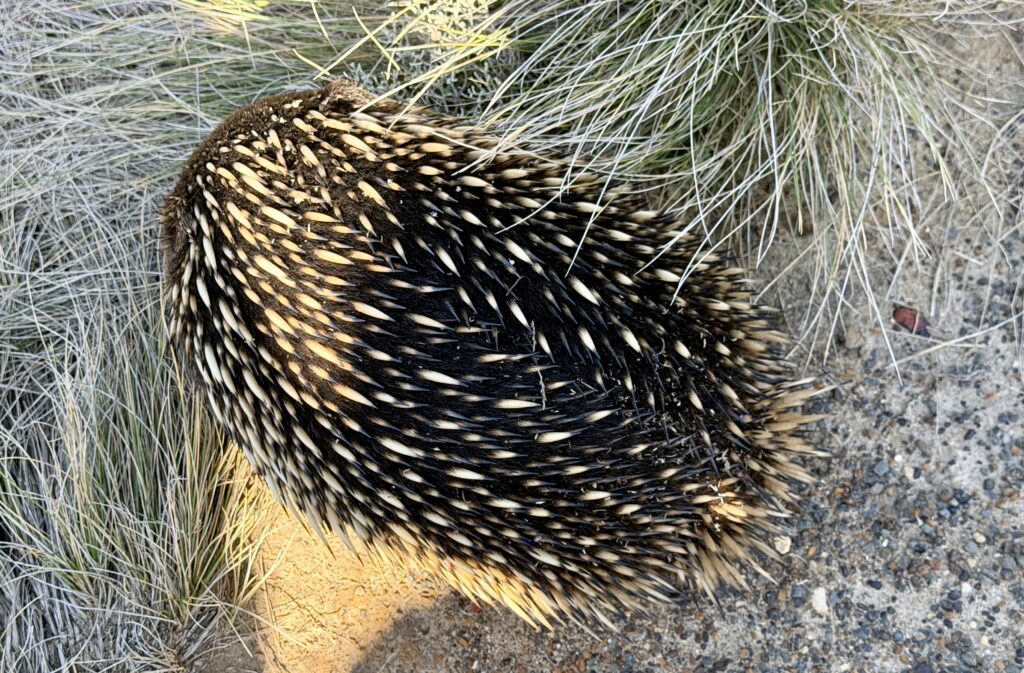
On the path leading to The Razorback, we saw the Short Beaked Echidna. This unique egg-laying mammal is found across Australia and parts of New Guinea. Covered in spines and fur, it uses a long snout and fast, sticky tongue to catch insects. Echidnas are powerful diggers with strong claws and can curl into a ball for protection. Although widespread, their population is affected by habitat loss and introduced predators.
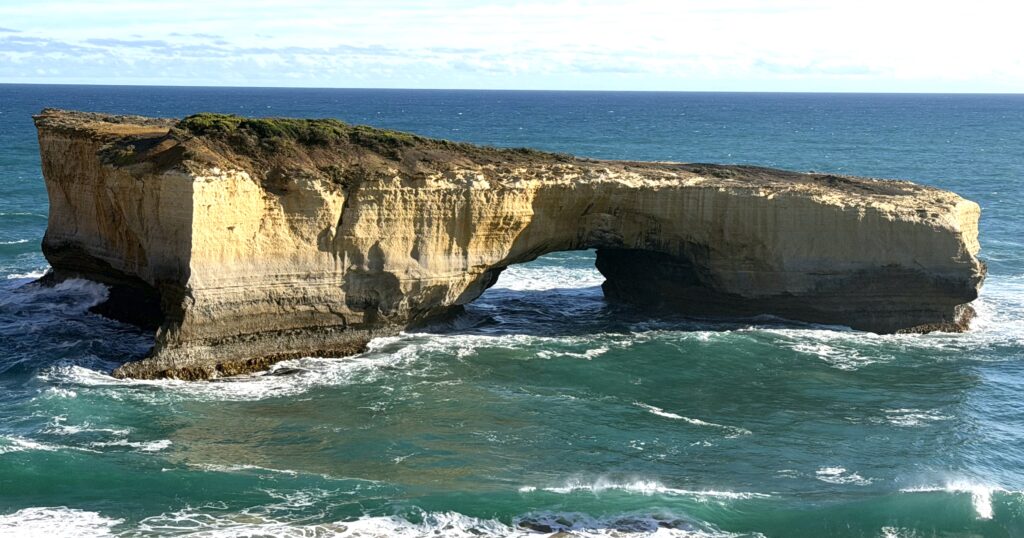
Port Campbell National Park, London Bridge – now often called London Arch, this dramatic natural rock formation was originally a double-span natural bridge connected to the mainland. The span closest to shore collapsed in 1990, leaving an isolated archway. Two tourists were stranded on the outer section before being rescued by helicopter.
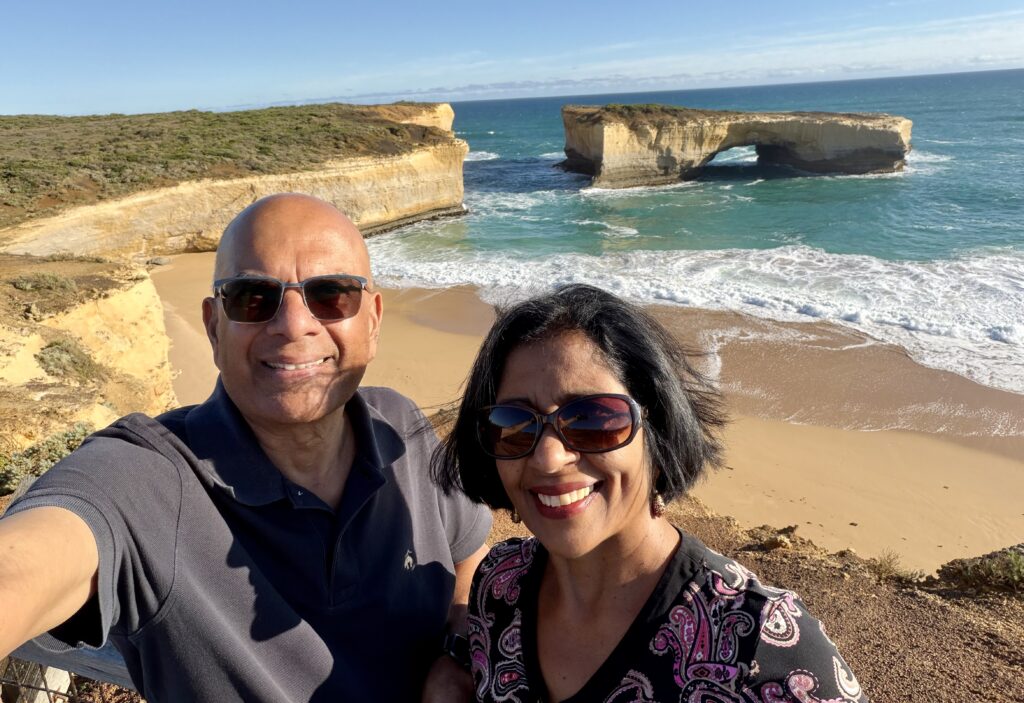
The structure is composed of soft limestone, sculpted over centuries by the Southern Ocean’s waves and wind. There is an easy walking path from the parking ares to 2 viewing platforms – upper-western and lower-eastern for different angles.
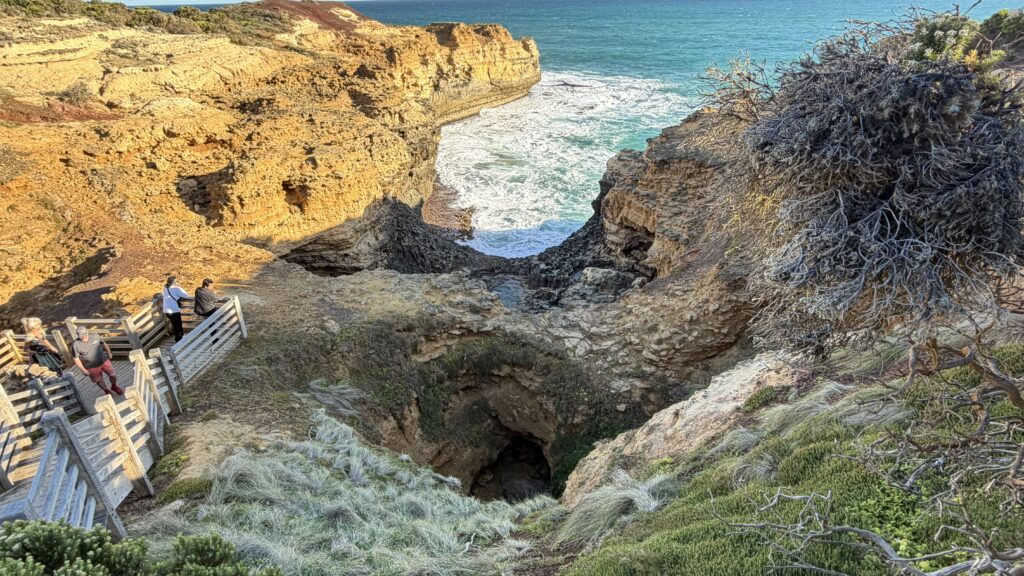
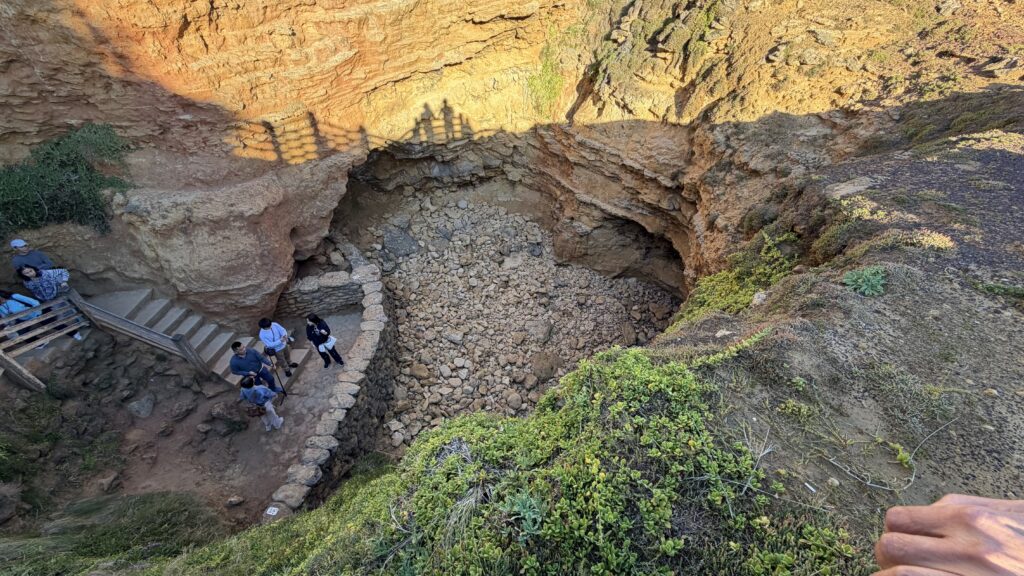
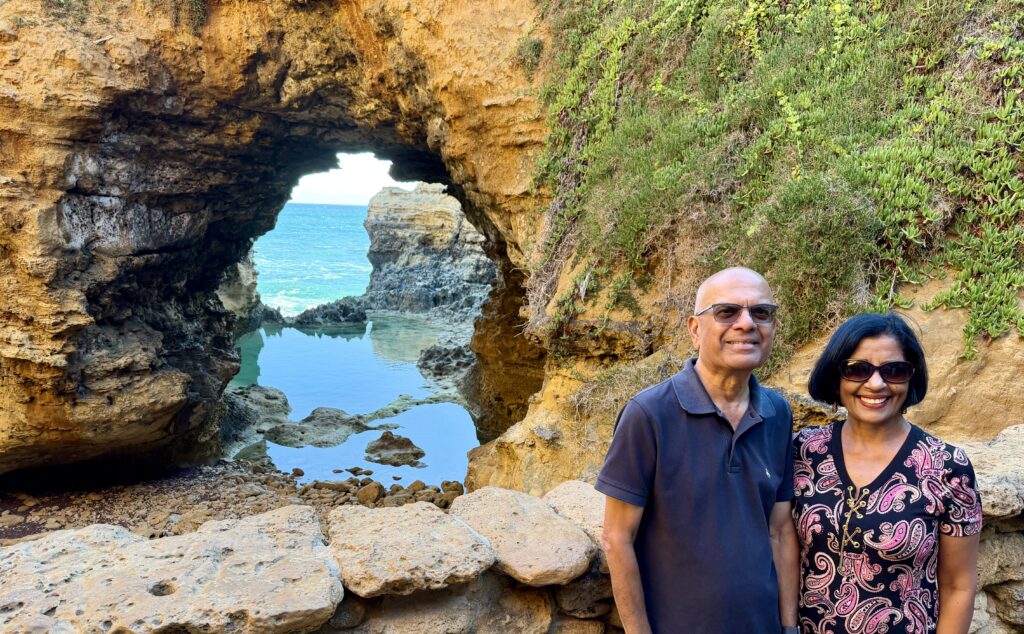
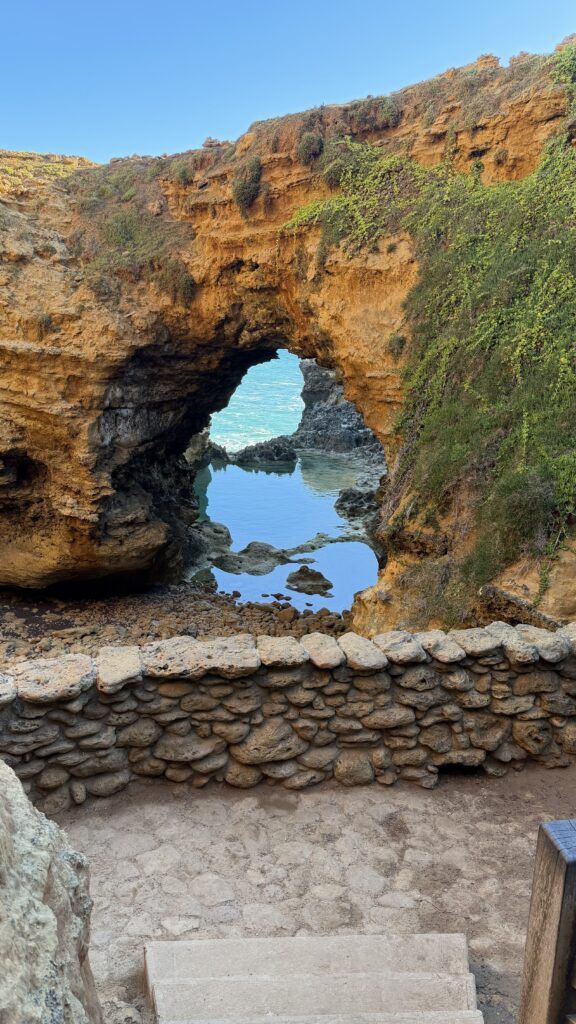
Port Campbell National Park, The Grotto – is a breathtaking natural formation where the ocean meets a sculpted limestone sinkhole and beautifully showcases the raw character of the region’s cliffs. This unique feature creates a window-like opening that frames the crashing waves of the Southern Ocean beyond. At low tide, calm tidal pools form at the base, contrasting with the relentless motion of the sea.
A short walk from the car park leads visitors along a well maintained path to an upper viewing platforms where you will be treated to spectacular views of the rugged coastline and Southern Ocean. Continuing further down a set of steps will lead to the lower platform from where you can enjoy the Grotto. The round trip to the lower platform and back is about 700m.
Note about the rock formations along Great Ocean Road – Along the road, powerful ocean waves both create and destroy rock formations. Cliffs are gradually eroded into caves, arches, and bridges, which eventually collapse to form rock stacks like the Twelve Apostles. Over time, these stacks continue to erode and collapse back into the ocean, showing the constant cycle of formation and destruction.