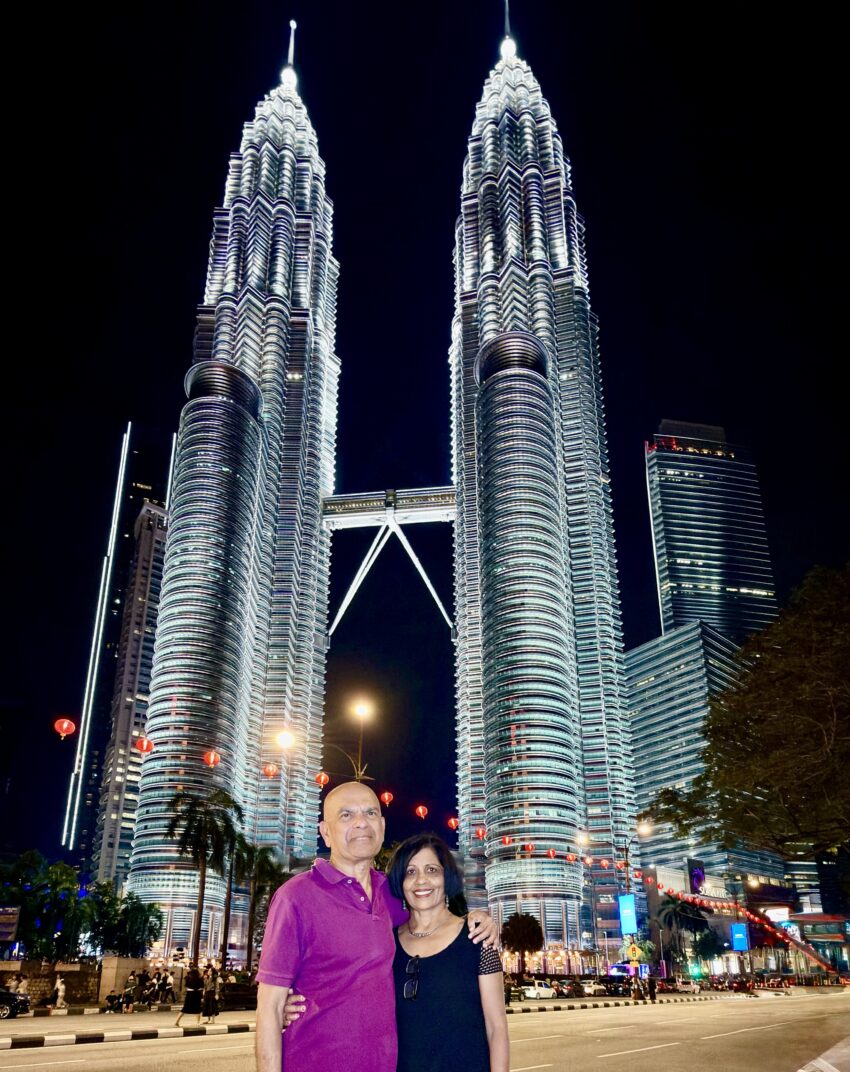
Visited in 2026
Malaysia is a vibrant Southeast Asian country divided into Peninsular Malaysia and East Malaysia on the island of Borneo, separated by the South China Sea. Known for its cultural diversity, it blends Malay, Chinese, Indian, and Indigenous influences in its food, languages, festivals, and architecture. Malaysia features lush rainforests, tropical islands, and rich wildlife, alongside a strong economy driven by manufacturing, natural resources, and tourism.
We took a 8-day guided tour of Malaysia with another couple from Pittsburgh. We planned the itinerary ourselves and used the services of H&H Private Chauffeur and Tours, who provided transportation and a guide throughout the journey. The experience allowed us to explore the country comfortably while learning about its diverse culture, history, and landscapes. Our driver and guide, William Hoi, was excellent, and I would highly recommend him to my friends.
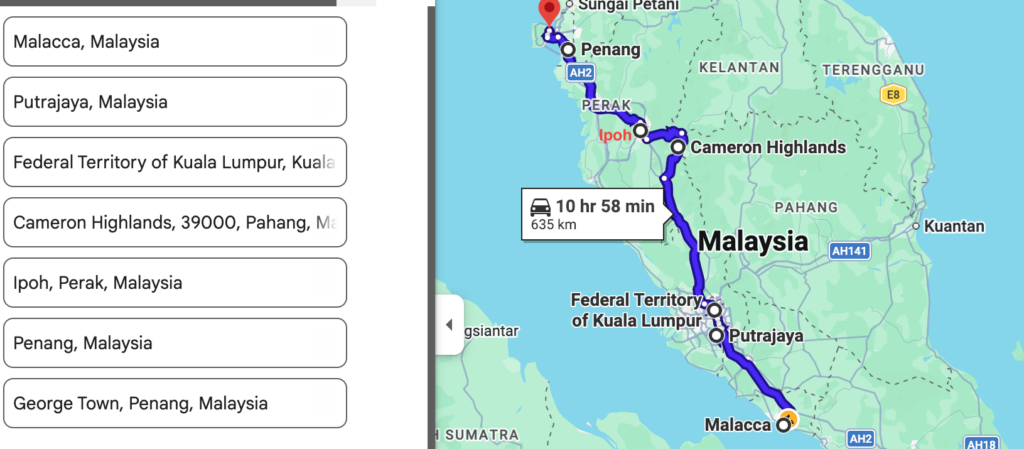
We covered the cities and sites on the Peninsular Malaysia (or West Malaysia) –
- Kuala Lumpur – Day 1-3
- Malacca and Putrajaya – Day 3 (Day trip from Kuala Lumpur)
- Ipoh – Day 4-5
- Cameron Highlands – Day 5 (Day trip from Ipoh)
- Penang – Day 6-8
———- On the Map ———-
———- Travel Tips for Visiting Malaysia ———-
- Weather – We visited Malaysia in February and found the weather hot and humid, especially between 12 PM and 4 PM. Locals often say the country has just one season year-round — essentially summer mixed with monsoon conditions. It rained on many of the eight days we were there, usually in the late afternoon after we had finished visiting outdoor sites. The showers ranged from brief downpours to a couple of hours, so it’s wise to keep an umbrella handy.
- Chinese New Year – We visited the country before/during/after Chinese New Year and all the places we visited was beautifully and colorfully decorated. Throughout Malaysia streets and shops were adorned with bright red lanterns and festive ornaments, creating a vibrant and celebratory atmosphere. Red lanterns symbolizes happiness, joy, and good fortune while scaring away evil spirits.
- Currency – The currency of Malaysia is the Malaysian Ringgit (MYR), symbolized as RM. There are notes of RM1, RM5, RM10, RM20, RM50, RM100. Credit cards are widely accepted in all the major cities, but it’s useful to carry some cash for street markets, small shops, and food stalls.
- At the time of our visit 1 US $ = 3.90 RM
- Driving in Malaysia – Driving in Malaysia was generally a pleasant experience. The highways and city roads in the places we visited were well maintained and easy to navigate. Renting a car and driving around is a good option for flexibility and convenience. However, parking near major attractions—especially in busy areas like Kuala Lumpur—can be challenging, so it’s important to plan ahead.
- Grab (the regional equivalent of Uber) – In Malaysia, using Grab is a convenient and reliable option for getting around cities and intercity trips. Within major cities such as Kuala Lumpur, Penang, Johor Bahru, and Malacca, Grab is widely available, affordable, and easy to use, making car rentals generally unnecessary. For longer distances between cities, taking a domestic flight—often via Kuala Lumpur International Airport—is usually faster and sometimes surprisingly inexpensive; once you arrive, you can conveniently use Grab again to travel within the city.
- Dress Code when visiting religious sites – There are generally no strict dress rules when visiting Hindu, Buddhist, or Chinese temples in Malaysia, but it is advisable to dress modestly out of respect. When we visited the Pink Mosque in Putrajaya, we were required to wear fully covered attire provided by the staff.