3 nights in Mariott Executive Suites
Founded in 1857 as a tin-mining town, Kuala Lumpur is the vibrant capital of Malaysia. Known for its modern skyline, it has grown into a major economic hub that blends colonial architecture with contemporary skyscrapers. The city has a distinctly multicultural feel, reflecting a harmonious mix of Malay, Chinese, and Indian traditions.
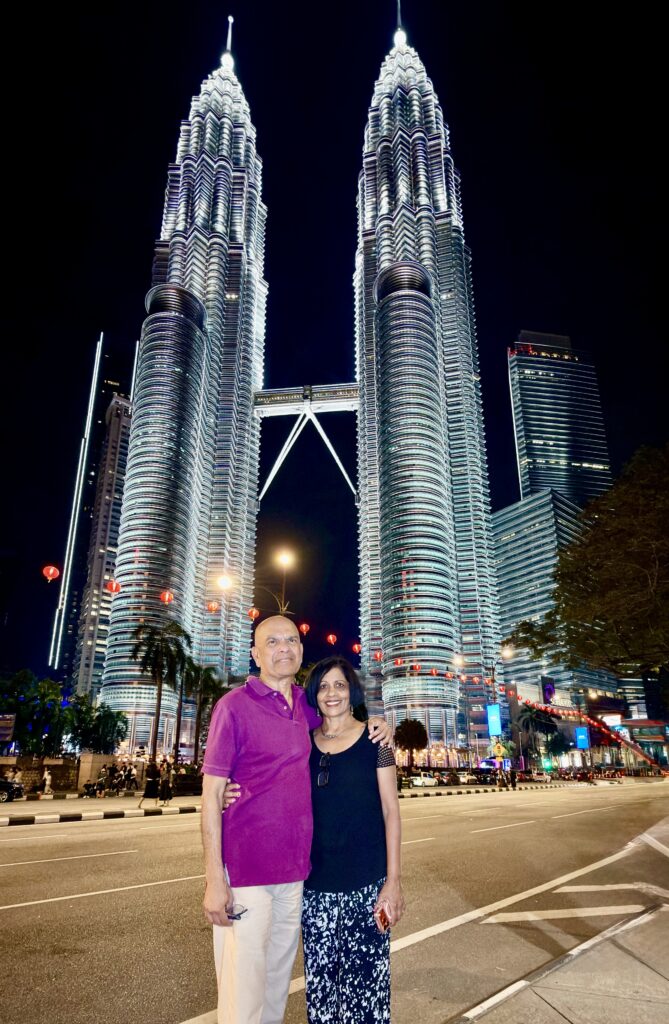
We landed in Kuala Lumpur at 6:00 PM, and our driver-guide was waiting at the airport to pick us up. It was about a one-hour drive to our hotel in downtown Kuala Lumpur. After checking in, we walked about a kilometer to the beautifully illuminated Petronas Twin Towers, where we took plenty of photos and admired the stunning night skyline.
- Petronas Twin Towers
- KLCC Park
- Kuala Lumpur railway station (old)
- Majestic Hotel Kuala Lumpur
- Merdeka Square
- Royal Palace Istana Negara
- Batu Cave
- Petaling Street
- Sri Mahamariamman Temple
- Central Market
- Kuala Lumpur Tower
- Kuala Lumpur City Hall (DBKL) – Viewed from KL Tower
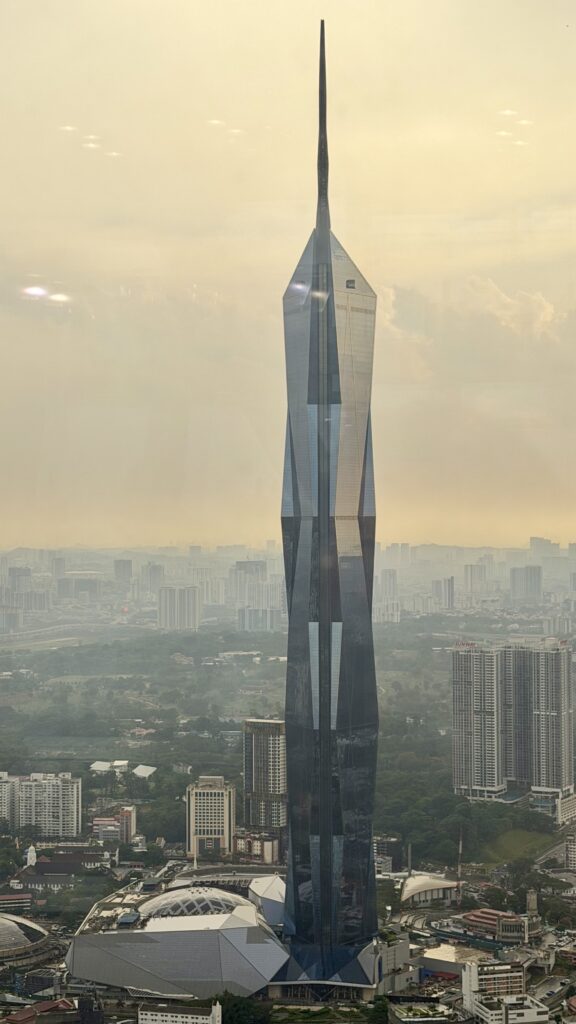
- Merdeka 118 – Viewed from KL Tower
- Bukit Bintang Shopping District
- Jalan Alor
———- Day 1 – Kuala Lumpur ———-
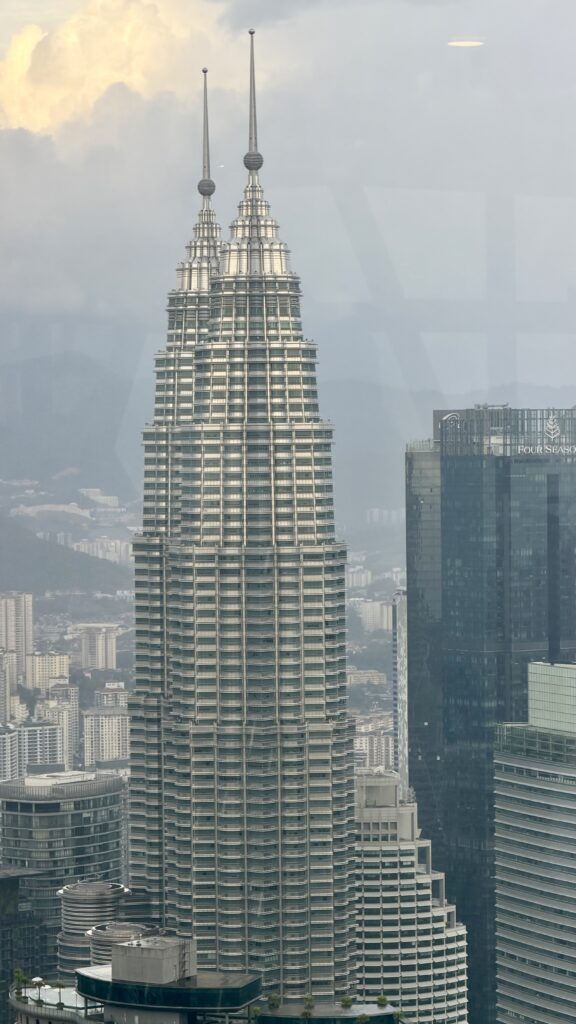
Petronas Twin Towers – This 88-story twin skyscrapers is a symbol of Malaysia’s modern development. Standing at 451.9 meters tall, they were the tallest buildings in the world from 1996 to 2004. They currently remain the tallest twin towers globally. They were Malaysia’s tallest buildings until 2021, when they were surpassed by Merdeka 118.
The towers’ design reflects Islamic geometric patterns, based on the Rub el Hizb symbol, with a steel and glass façade and reinforced concrete structure. Construction began in 1993 and was completed in 1996, with the official opening in 1999 by Prime Minister Mahathir Mohamad.
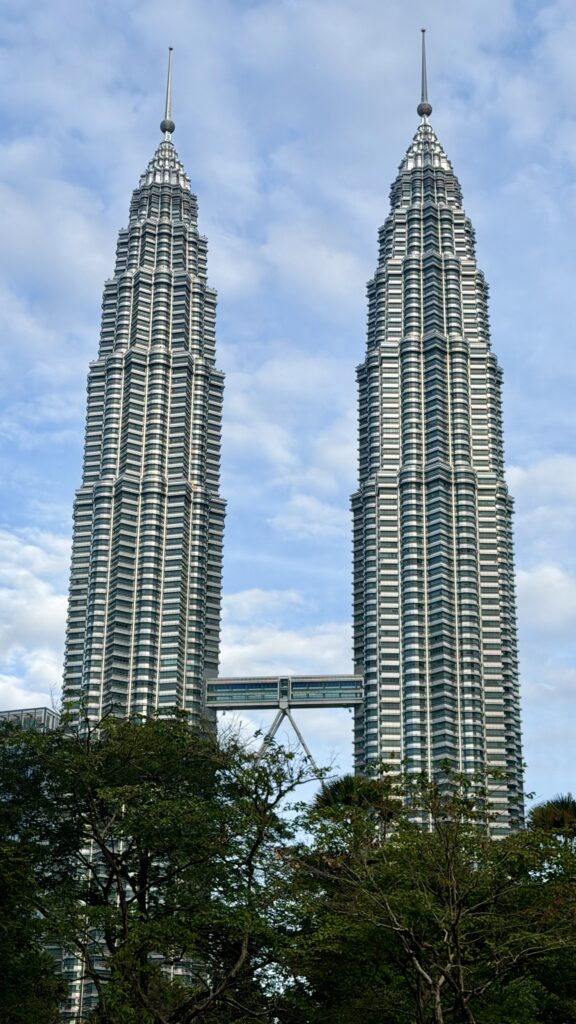
Visitors can take the elevator to the Skybridge (Level 41/42) and the Observation Deck (Level 86). The experience begins with a high-speed elevator ride that takes you to the Skybridge connecting the two towers, followed by access to the upper observation deck, which offers breathtaking panoramic views of Kuala Lumpur. Tickets must be purchased in advance, as visits to the top of the Petronas Twin Towers are timed and the number of visitors allowed each day is limited. We skipped visiting the top of the Petronas Twin Towers since we planned to go up the Kuala Lumpur Tower instead.
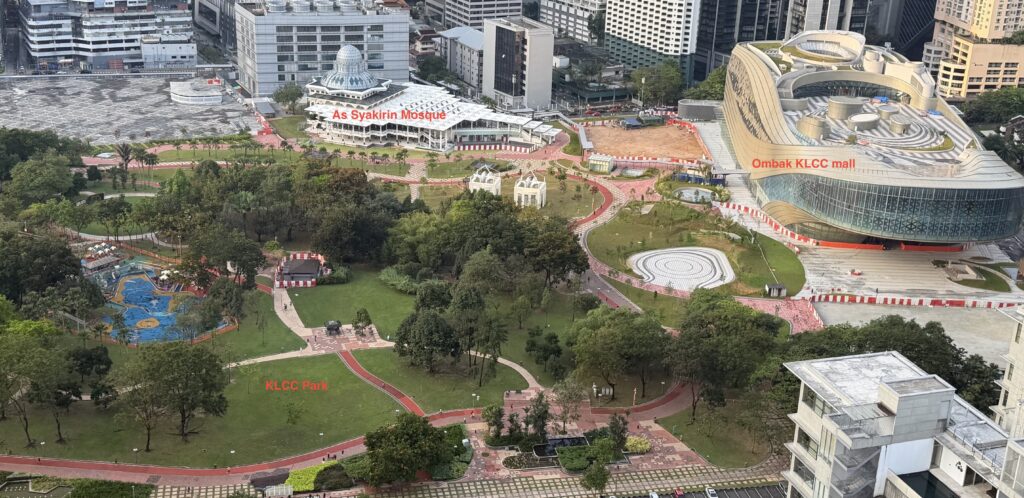
KLCC Park – is a landscaped urban park that was created to provide greenery around the Petronas Twin Towers. The park features nearly 2,000 indigenous trees and 66 species of palms, planted to attract local and migratory birds.
Our hotel overlooked the garden area near the Petronas Twin Towers, and we enjoyed a beautiful view from the top. On one of the mornings we walked to a small café in front of the gardens, ordered a cup of coffee and rolls, and watched locals walking and exercising in the garden. Some of the buildings around the park include –
- As Syakirin Mosque – also known as KLCC Mosque, it originally opened on 12 July 1999 as a prayer facility for Petronas staff, it was later granted full mosque status and is now administered by the Federal Territory Islamic Religious Council. In 2009, the mosque underwent major renovations, increasing its capacity from 6,000 to 12,000 worshippers.
- Ombak KLCC mall – is a new shopping mall being developed by KLCC Property Holdings, a subsidiary of Petronas. The mall will feature six levels of retail space with around 120 shops and a sky garden on the seventh level.
———- Day 2 – Kuala Lumpur ———-
Many of the sites we visited on the second day of our Malaysian trip were part of Kuala Lumpur Heritage Trail. Our first major stop was going to be Merdeka Square. On the way we stopped by a couple of colonial buildings.
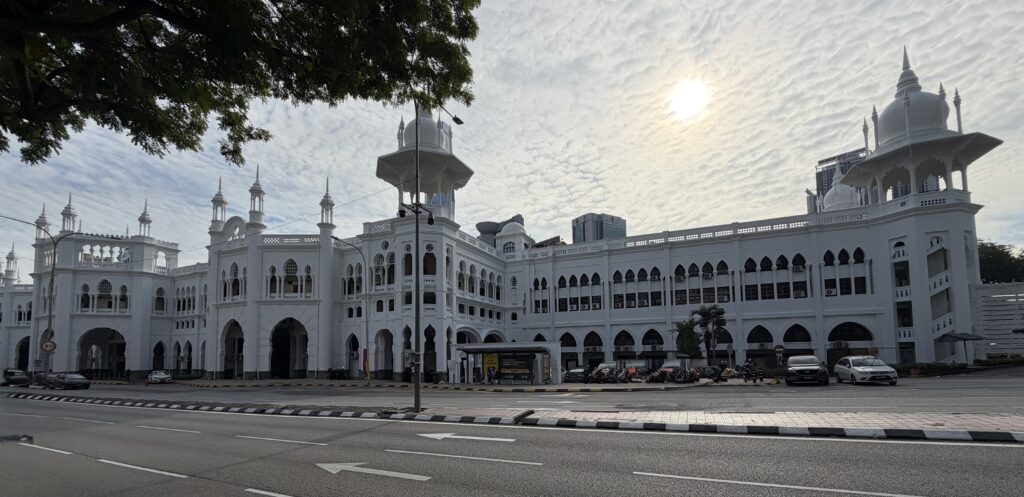
- Kuala Lumpur railway station – was built between 1910 and 1917 and served as the city’s main rail hub until Kuala Lumpur Sentral took over much of its role in 2001. Renowned for its striking Moorish-style architecture that blends Eastern and Western design elements, the station is now primarily a heritage landmark and tourist attraction, popular for photography in Kuala Lumpur.
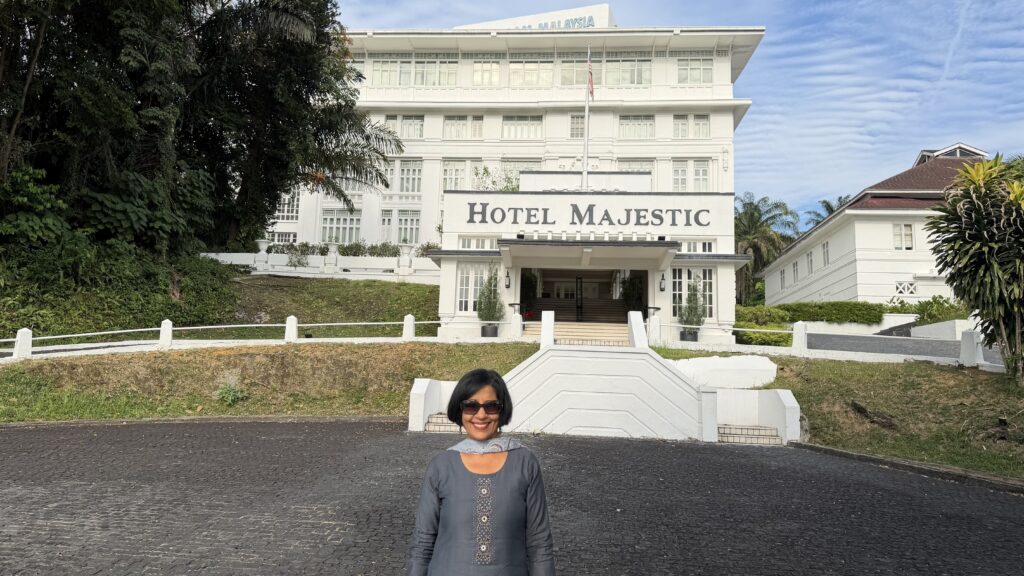
- Hotel Majestic – is one of Kuala Lumpur’s most historic hotels, located opposite the Kuala Lumpur railway station and now part of Marriott’s Autograph Collection. Originally opened in 1932, it was a favorite gathering place for British colonial and social elites with 51 luxurious rooms, imported English furnishings, modern plumbing, and a rooftop garden with a dance floor. By the 1970s, the hotel faced competition from newer hotels and closed in 1983 after being declared a historic landmark. The Malaysian government used the building to house the National Art Gallery from 1984 to 1998. The property was later restored and expanded with a new tower wing, reopening in 2012 as a luxury heritage hotel.
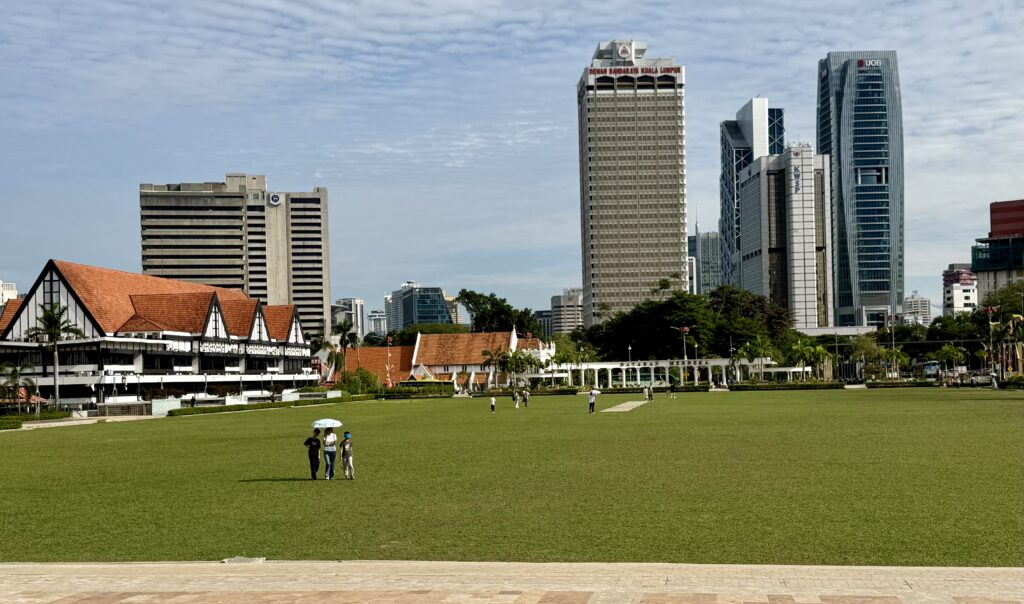
Merdeka Square (aka Independence Square) – This is a historic square located in front of the Sultan Abdul Samad Building. Originally called the Selangor Club Padang, it served as a cricket field for the Selangor Club (now Royal Selangor Club). The square is historically significant as the site where the Union Flag was lowered and the Malaysian flag hoisted for the first time at midnight on 31 August 1957. Since then, it has hosted the annual Independence Day Parade.
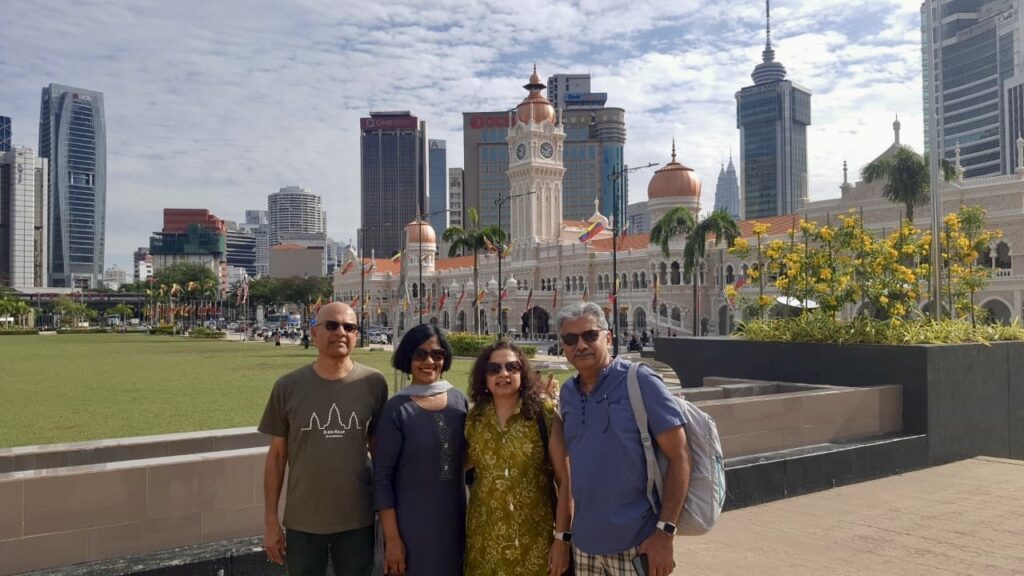
Surrounding Landmarks include –
- Royal Selangor Club – is a historic social club founded in 1884 during British colonial rule in Kuala Lumpur. It was originally established as a gathering place for high-ranking and educated members of colonial society. The clubhouse was rebuilt in 1910 and today, it continues to operate as a private members’ social and sports club.
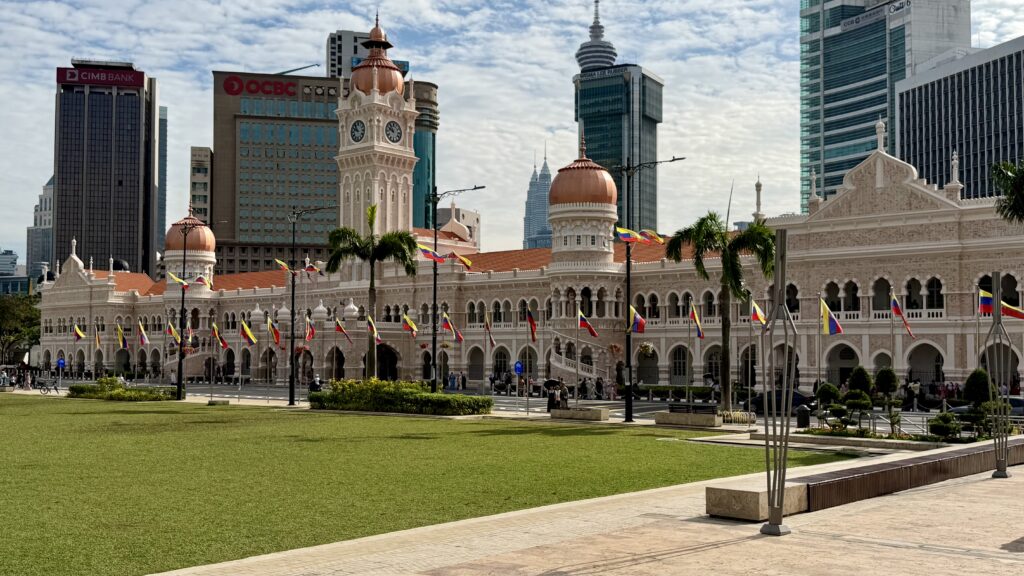
- Sultan Abdul Samad Building – is a striking late-19th-century landmark, built to house the British colonial administration offices. It was renamed in 1974 after Sultan Abdul Samad of Selangor. Today, it is being repurposed as a cultural and public space, with plans to house a gallery and several cafés, while remaining a major historic and tourist landmark.
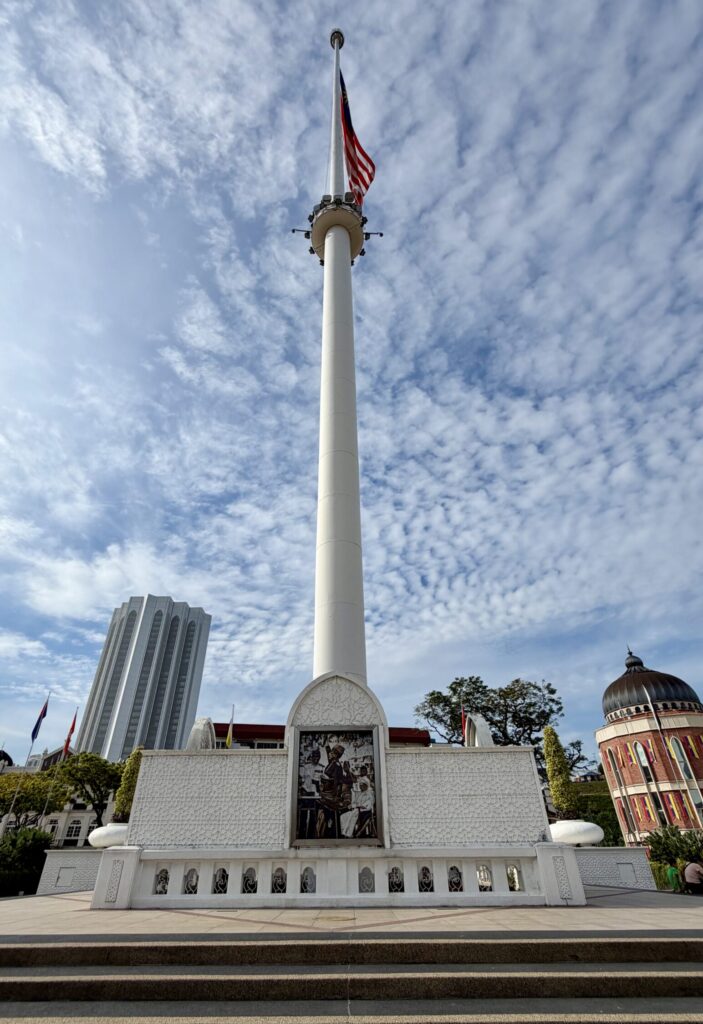
- Flagpole – is one of the tallest in the world, standing at 95 meters.
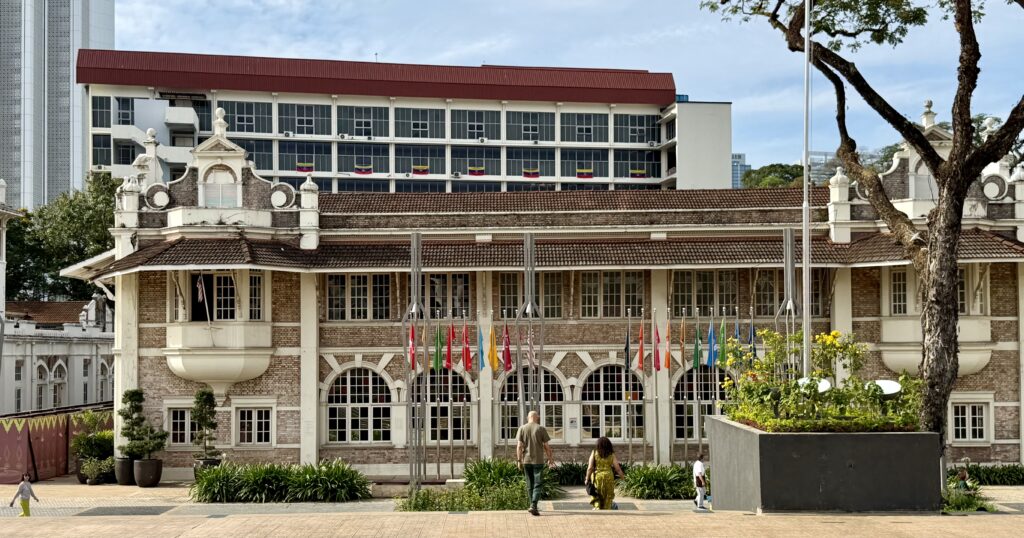
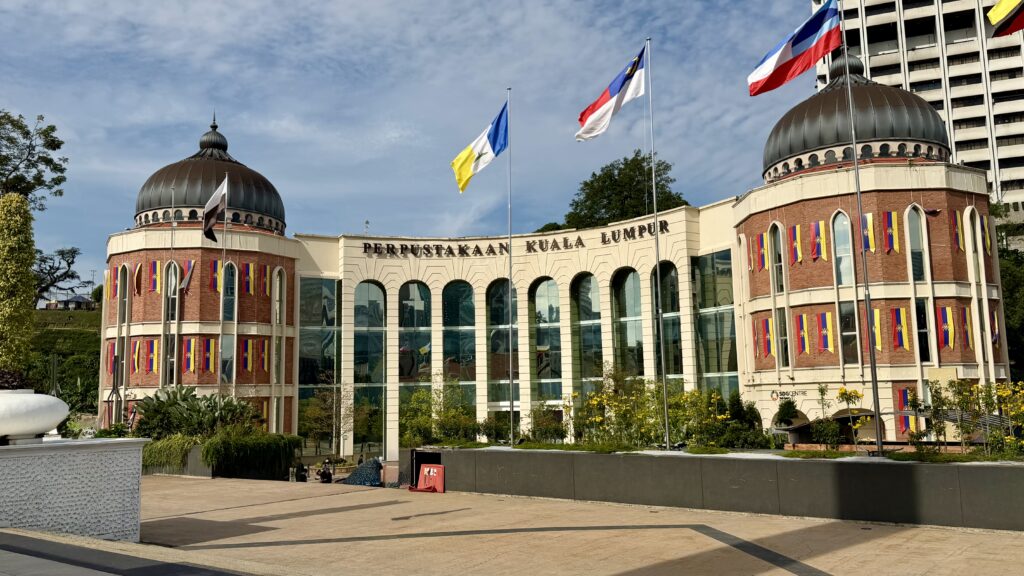
- Kuala Lumpur City Gallery – Built in 1898, the building originally served as the British administration’s printing office. Today, it functions as a museum and tourist information centre, showcasing the history and development of the city.
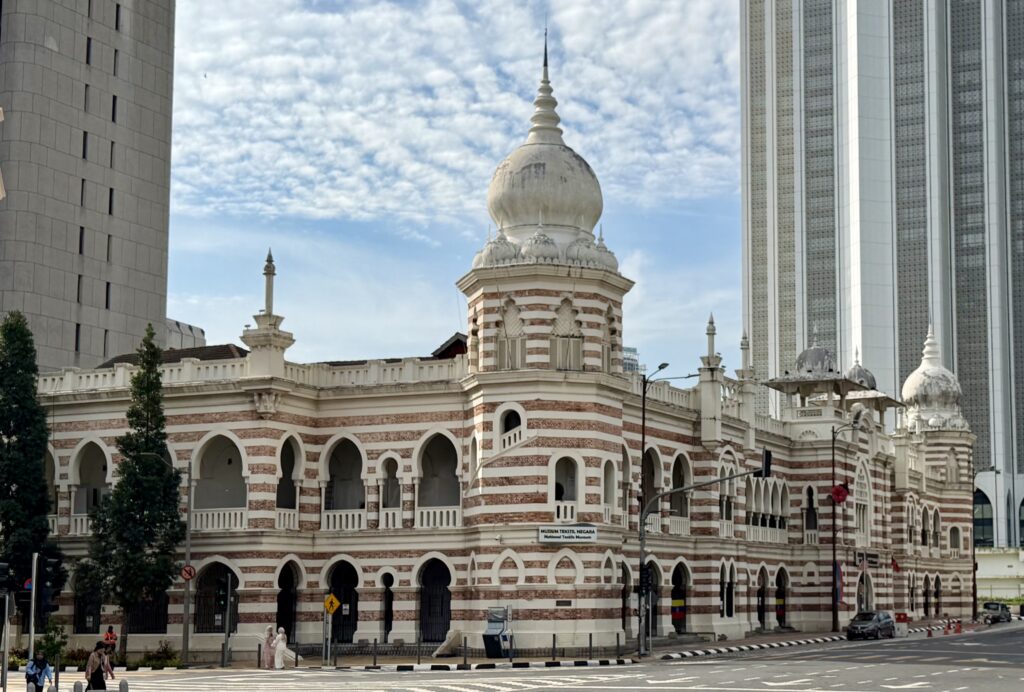
- National Textile Museum – Showcases Malaysia’s textile heritage.
Royal Palace Istana Negara – is the official residence of the King of Malaysia. Opened in 2011, the palace complex spans 97.65 hectares and features 22 domes with intricate Islamic and Malay-inspired architecture. While the interior is closed to the public, visitors can view and photograph the grand main gate, often with ceremonial guards.
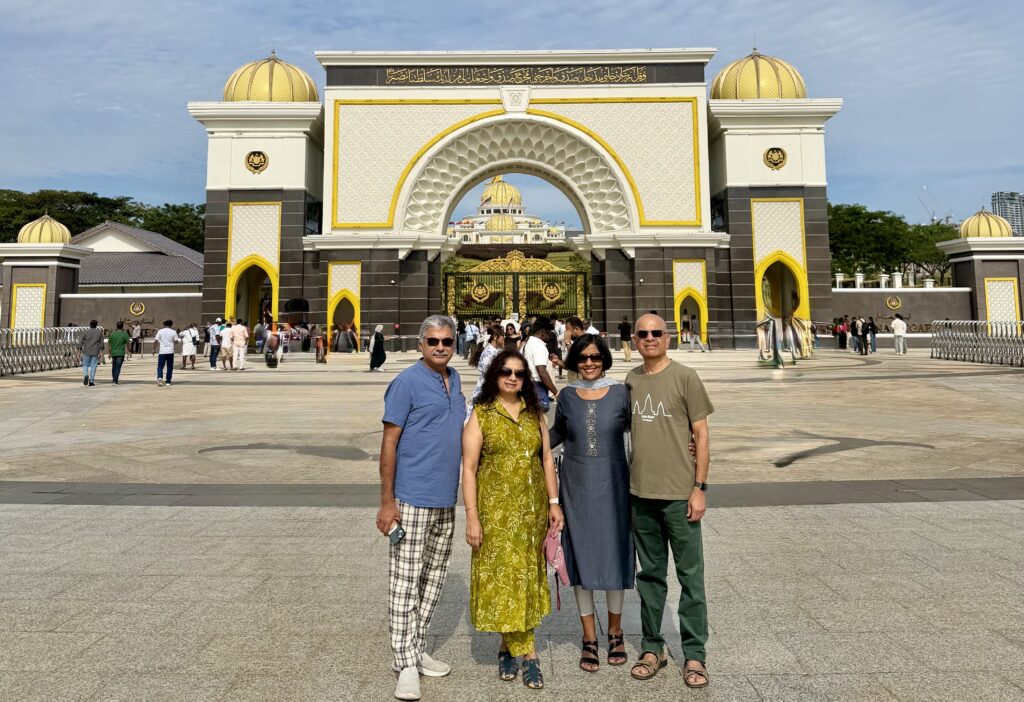
The former Istana Negara is now the Royal Museum, where visitors can tour the interior and learn about Malaysia’s royal history.
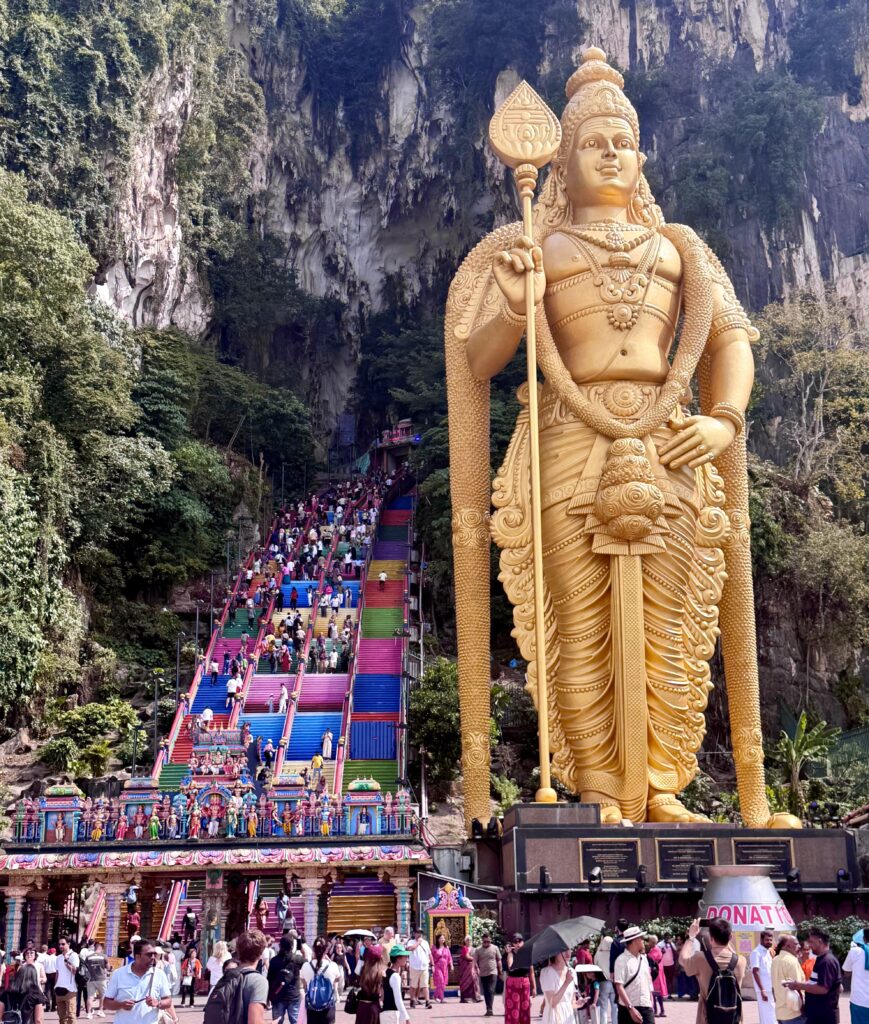
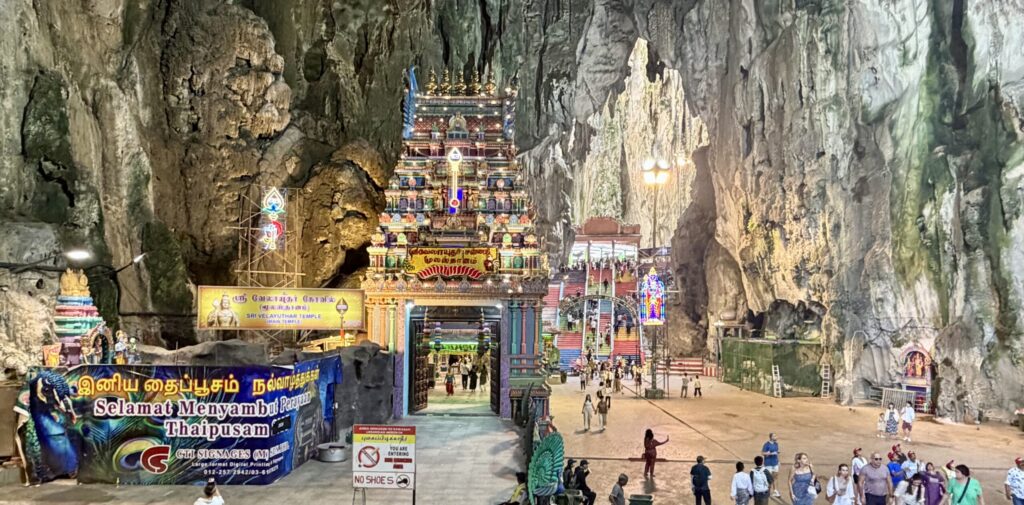
Batu Caves – Plan on spending a minimum of 2 hours here. located about 13 km north of Kuala Lumpur, Batu Caves is a 325-meter-tall limestone hill with a series of caves that houses several Hindu temples, dedicated to the deity Murugan. The entrance features a 43-meter-high golden Murugan statue, one of the largest in the world.
The caves were originally shelters for the indigenous Temuan people. Indian Tamil trader K. Thamboosamy promoted it as a place of Hindu worship, leading to the construction of a Murugan temple in 1891 and the start of annual Thaipusam celebrations in 1892.
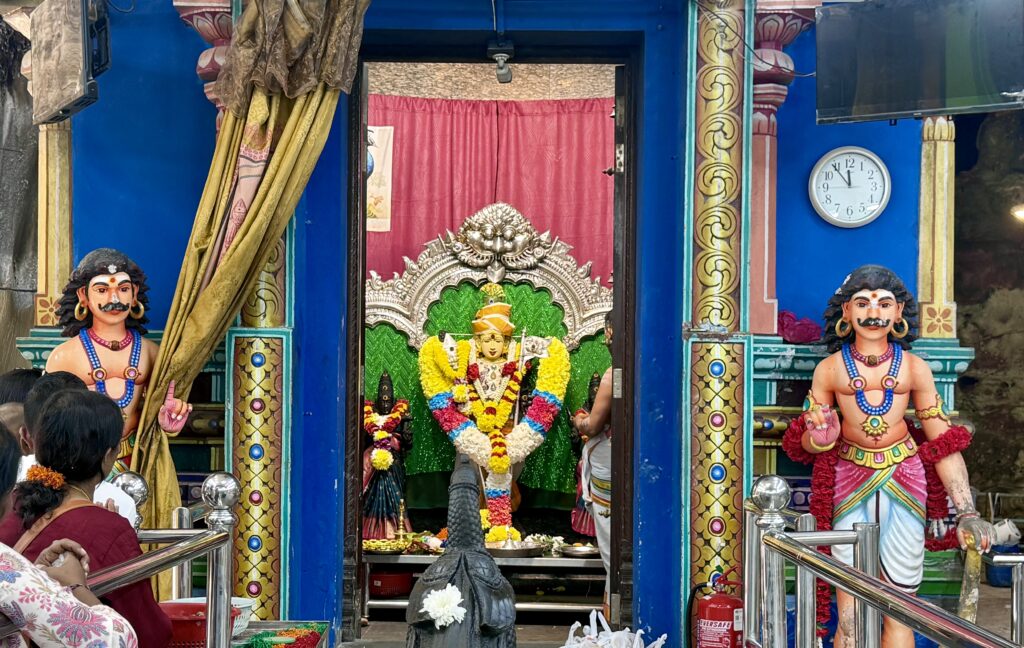
Inside Batu Caves, there are several plazas featuring shrines dedicated to Murugan. These plazas serve as important spaces for worship, ceremonies, and offerings, especially during the annual Thaipusam festival, when devotees honor the deity.
The next 3 sites are within walking distance of each other. Our Guide/Driver, parked the car in the parking lot in front of Central Market and walked us to Petaling Street first.
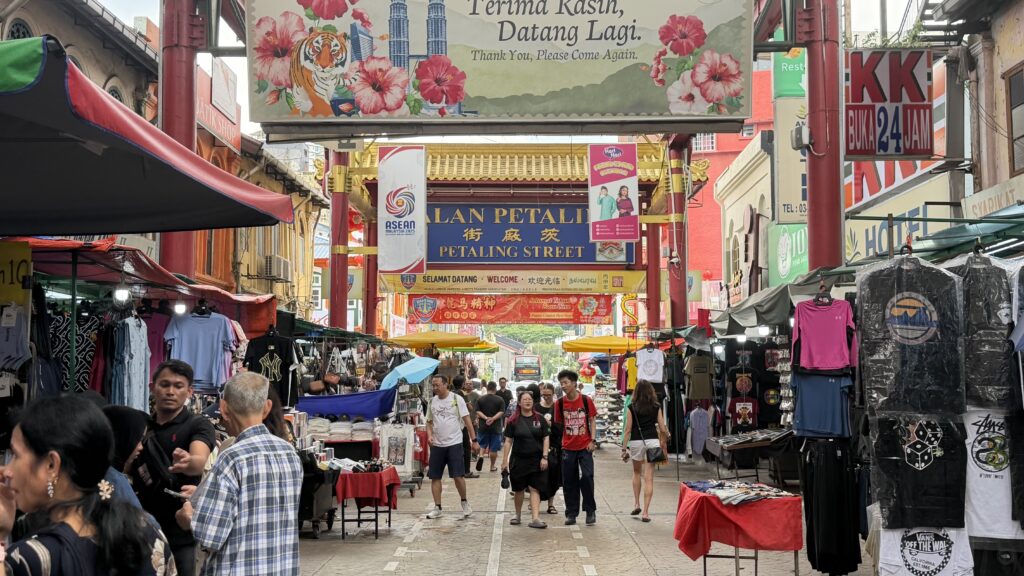
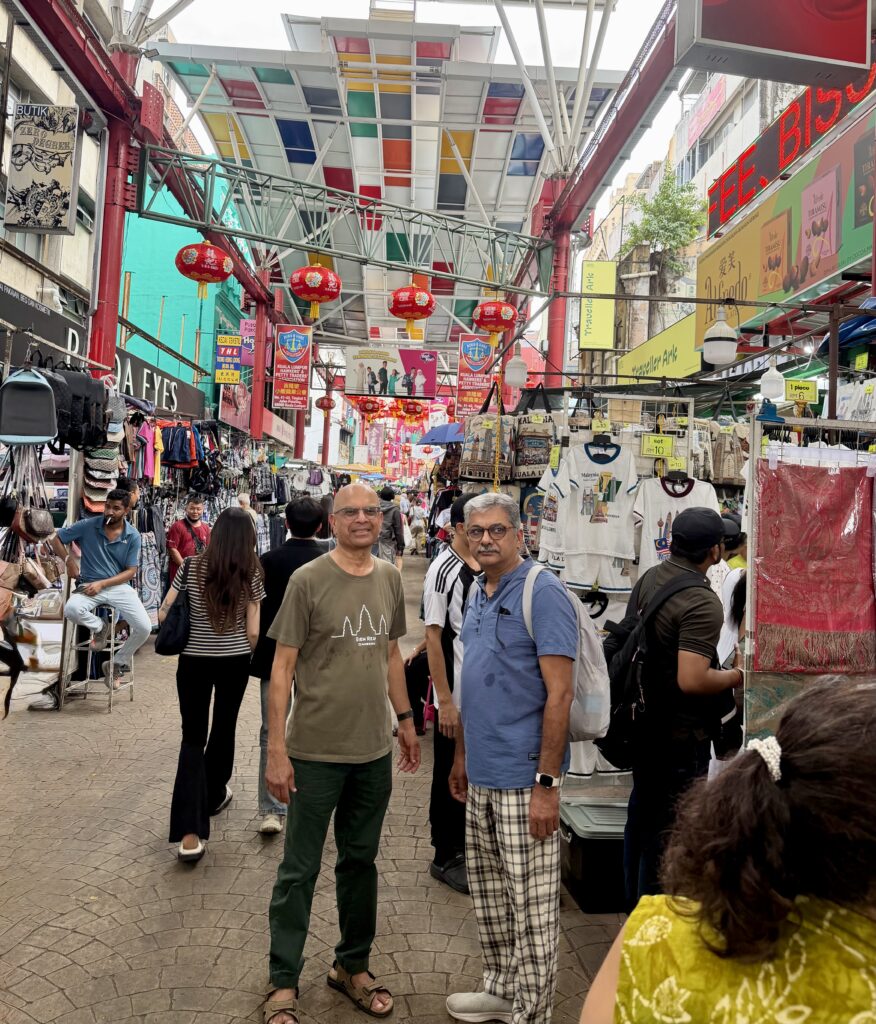
Petaling Street – is the heart of Chinatown in Kuala Lumpur known for its lively atmosphere, bargaining culture, and busy street market. The area is popular with both locals and tourists and is filled with shops, stalls, and restaurants serving local favorites. We walked the entire length of the street shopping and haggling with vendors on clothes and other items. The vendors mostly accept Malaysian currency, although, we convinced a few to take Indian rupees. If you pay by card they add a 10% fee.
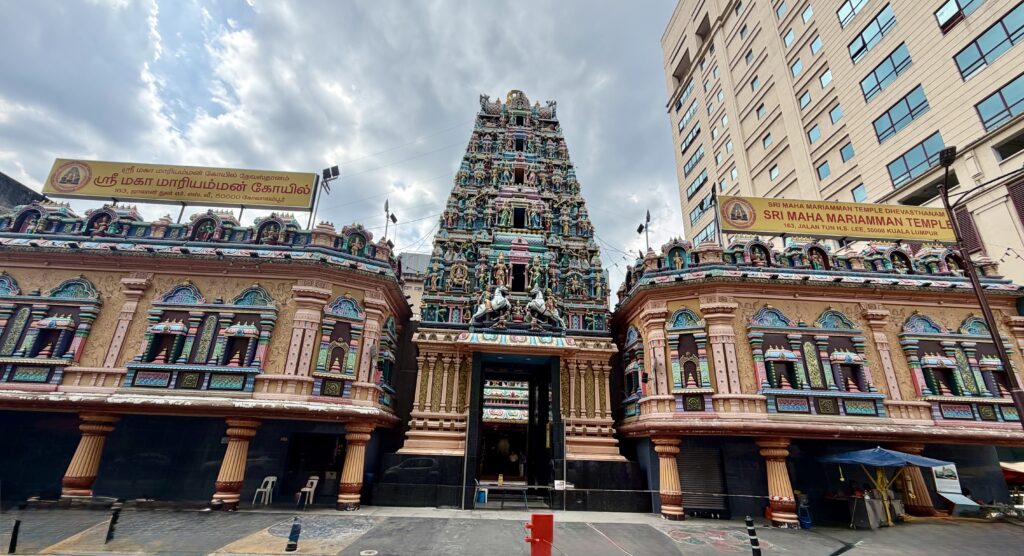
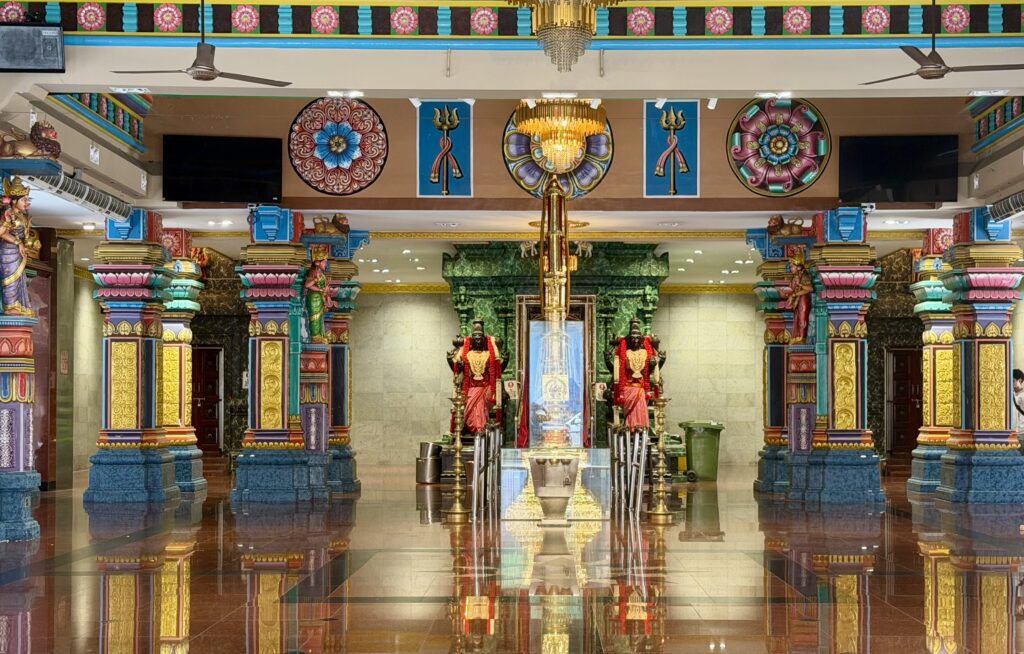
Sri Mahamariamman Temple – Founded in 1873, it is the oldest functioning Hindu temple in Kuala Lumpur and is located at the edge of Chinatown and within walking distance of Petaling Street. Established by K.Thamboosamy Pillai as a private shrine, it later opened to the public and became an important religious and cultural center for the Indian community in Malaysia. Originally built near the Kuala Lumpur railway station, the temple moved to its present site in 1885. The current structure was completed in 1968, with its iconic gateway tower (gopuram) finished in 1972 and consecrated in 1973.
Built in the South Indian style, the temple’s most striking feature is its 22.9-meter-high, five-tiered gopuram, richly decorated with 228 sculpted depictions of Hindu deities created by artisans from Tamil Nadu. Today, it stands as a significant national heritage and cultural landmark.
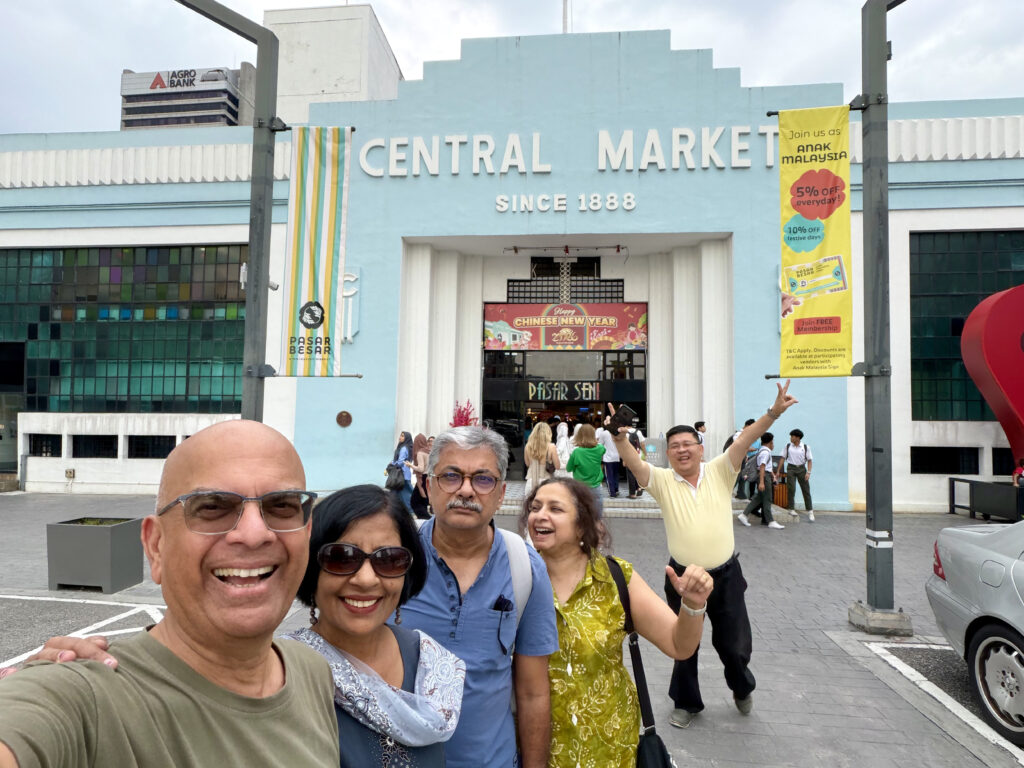
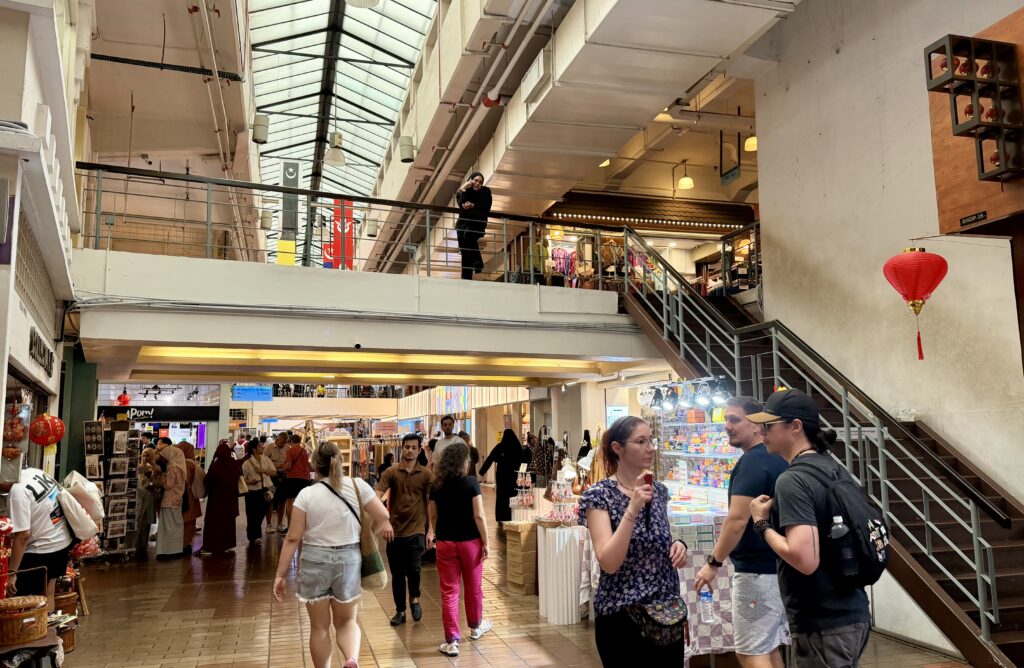
Central Market – Located near Petaling Street, Central Market was established in 1888 as a wet market during British colonial rule. The current Art Deco-style building was completed in 1937 and became a vital part of early city life due to its proximity to the bus terminal and railway station. In the 1970s, redevelopment plans threatened demolition, but intervention by the Malaysian Heritage Society led to its preservation as a Heritage Site. Today, Central Market is an air-conditioned cultural landmark featuring handicrafts, souvenirs, art, and local products.
Kuala Lumpur Tower – Our next stop was the KL Tower. Built between 1991 and 1996, this 421-meter-tall telecommunication tower is the seventh-tallest in the world. Its observation deck and revolving restaurant provide panoramic views of the city, and it also serves as an Islamic falak observatory to sight the crescent moon for important religious dates.
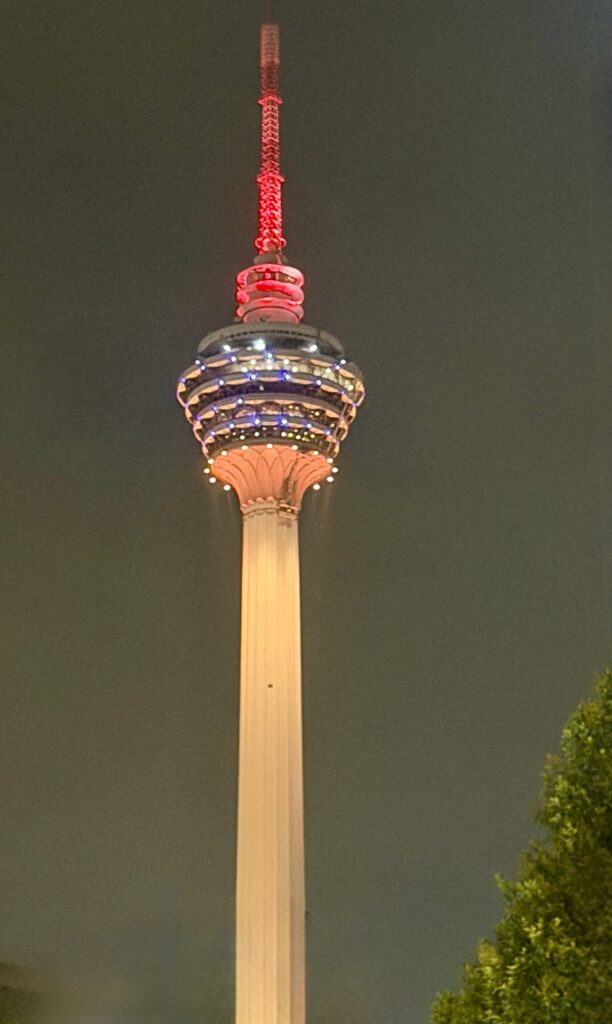
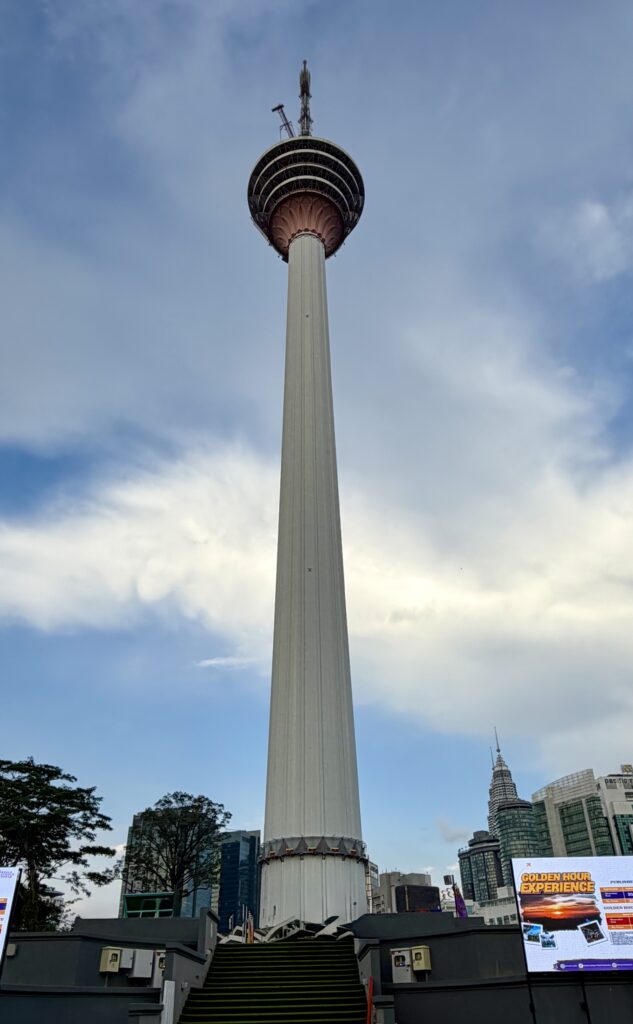
The tower’s main lobby features intricate glass-clad domes designed by Iranian craftsmen, arranged in the form of the Muqarnas. Visitors can also relax in the spacious plaza in front of the tower. It’s a great spot to unwind, take photos, or watch locals and tourists enjoying the open area.
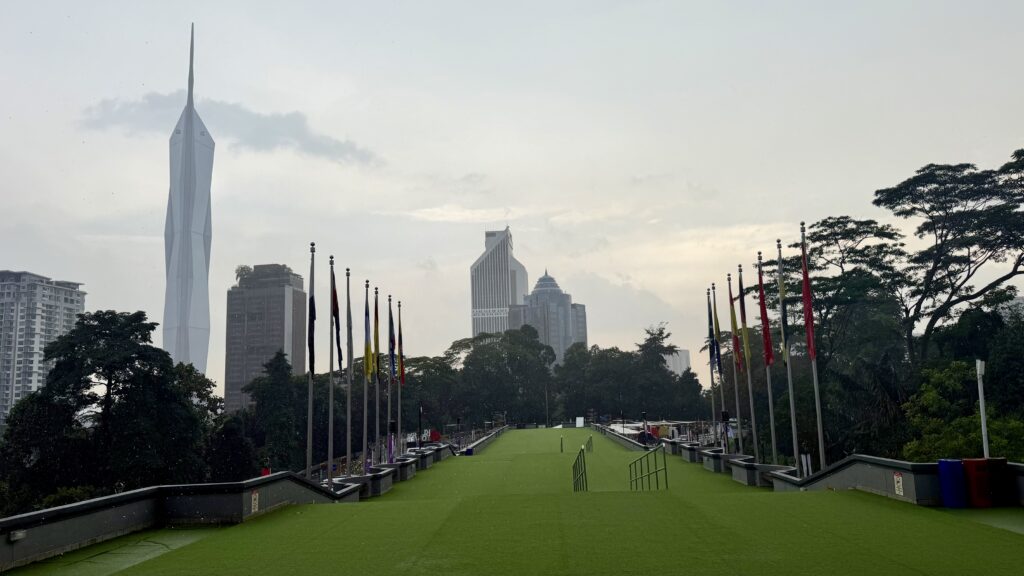
We took the elevator up to the observation deck, and the view was absolutely stunning. The Petronas Twin Tower looked amazing. A few other building you can get a great view of include –
- Merdeka 118 – is a 118-story megatall skyscraper, standing at 678.9 m(2,227 ft), making it the tallest building in Malaysia and the second-tallest in the world after Burj Khalifa. Completed in 2023, the tower features office spaces, hotels—including the Park Hyatt Kuala Lumpur on level 75—retail areas, and the highest observation deck in Southeast Asia. Its name, meaning independence, is inspired by nearby Stadium Merdeka.
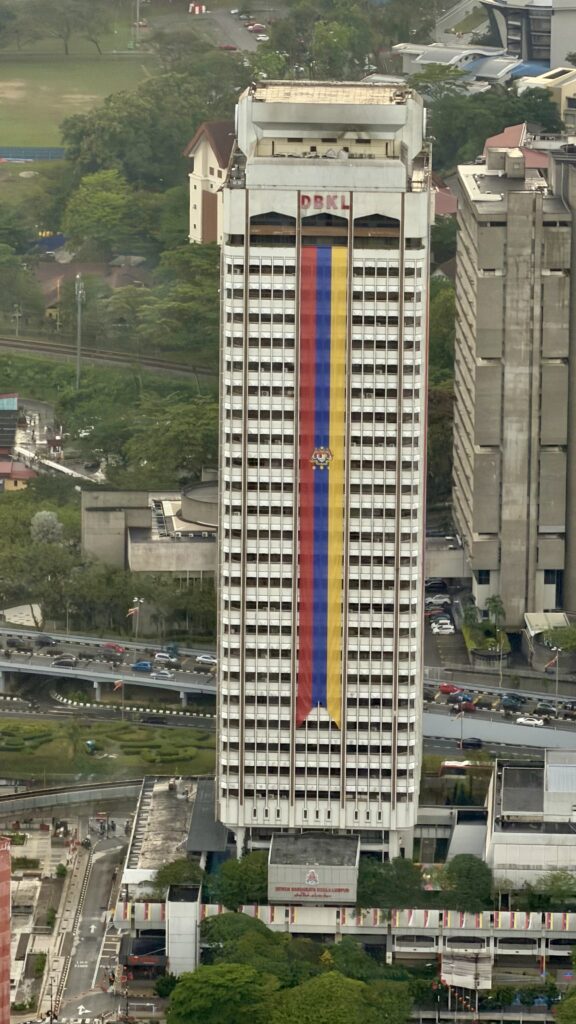
- Kuala Lumpur City Hall (DBKL) – is the city council responsible for administering Kuala Lumpur, covering an area of 243 square km. Established after Kuala Lumpur gained city status in 1972, the council consists of the mayor and fifteen advisory board members appointed by the Minister of Federal Territories.
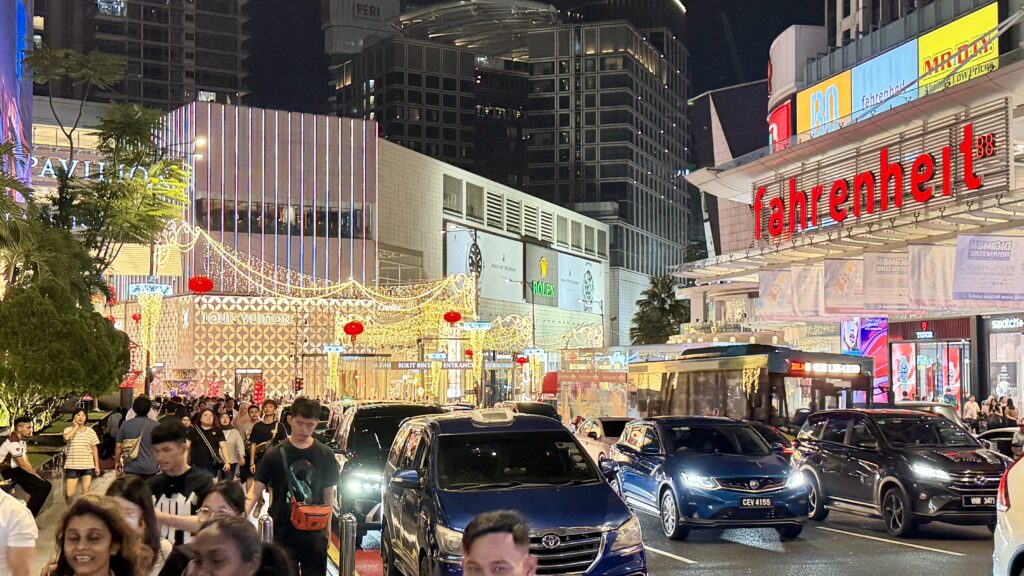
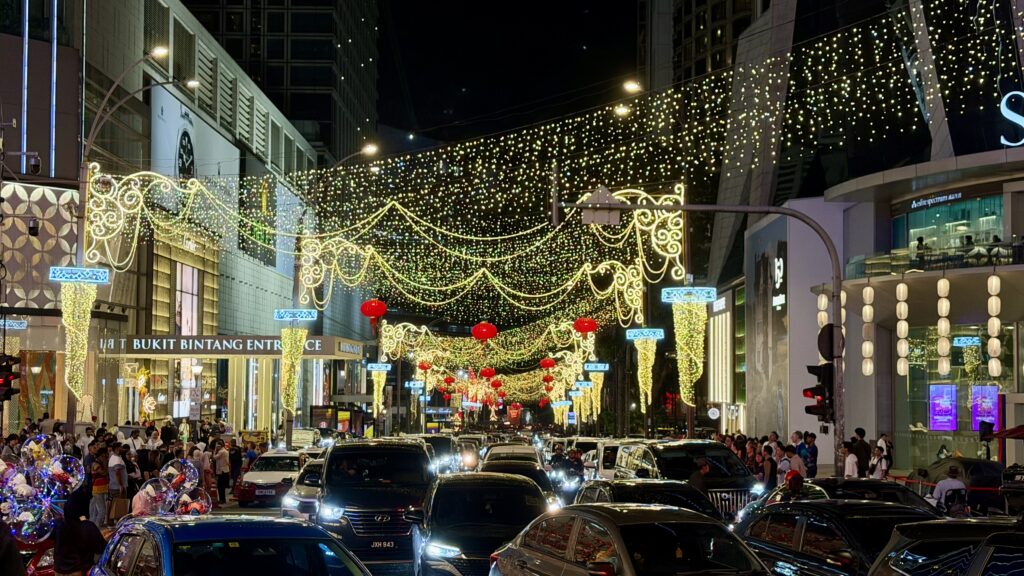
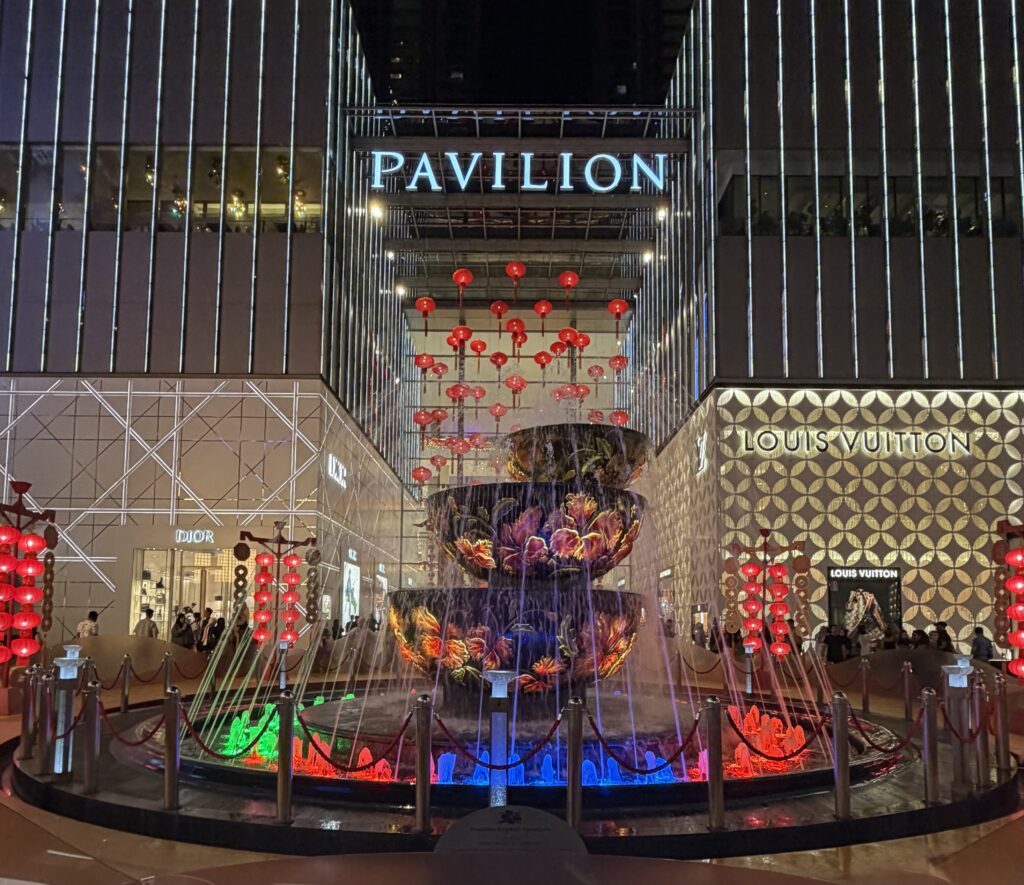
Bukit Bintang Shopping District – is a bustling area, famous for its shopping and food scene. Visitors can explore a wide range of international cuisines as well as local Malaysian dishes. Many of the city’s major retail malls are located in this area, including Imbi Plaza, Fahrenheit 88, Starhill Gallery, Lot 10, and Pavilion Kuala Lumpur.
On the day we visited Bukit Bintang Shopping District, the streets were beautifully decorated for the upcoming Chinese New Year. The area was crowded with cars on the road and bustling with locals in a joyful and celebratory mood, adding a festive charm to the vibrant district.
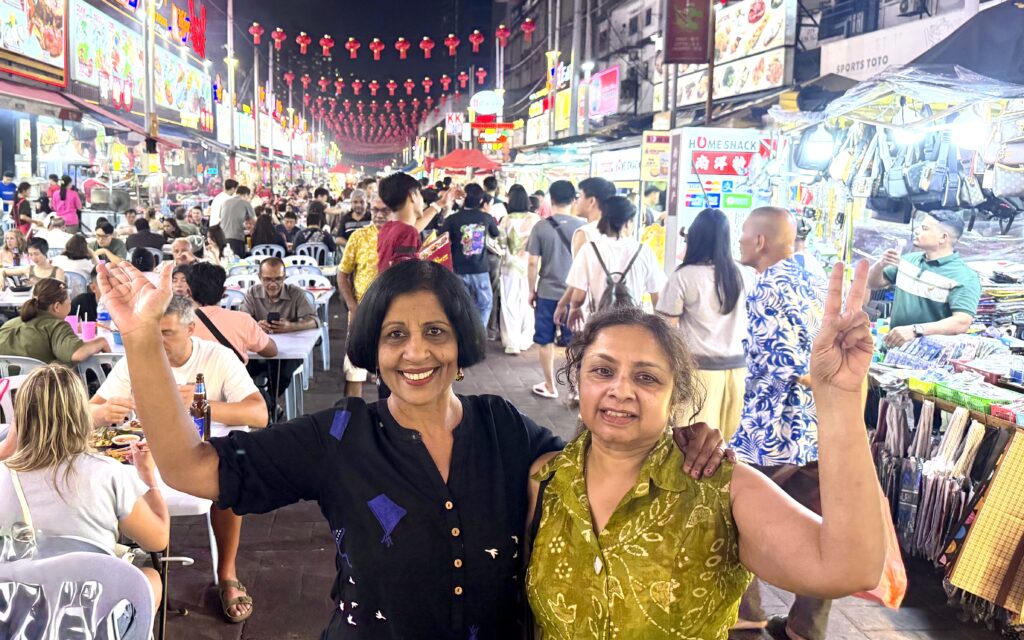
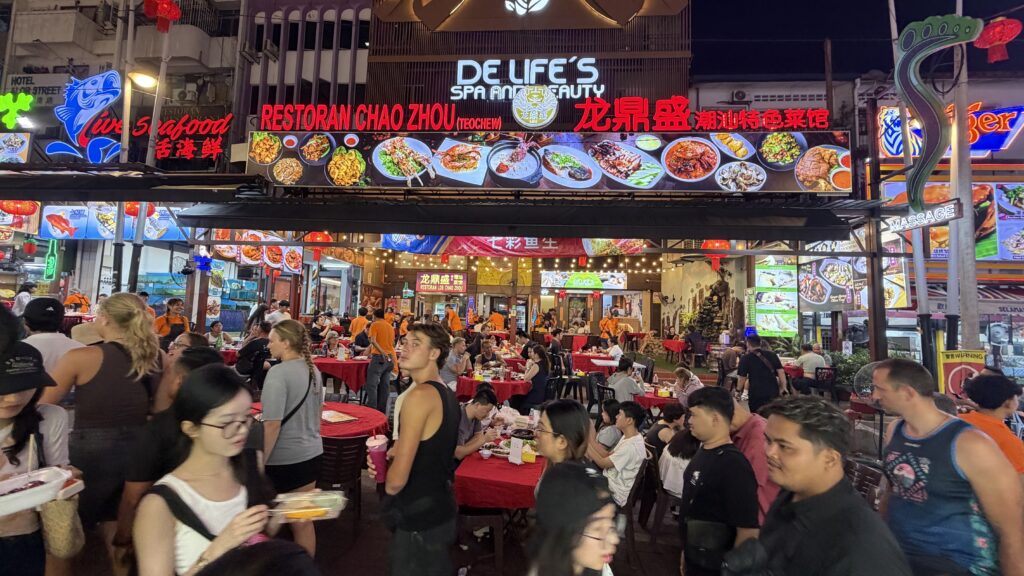
Jalan Alor – Late evening, we strolled to Jalan Alor for dinner, about a 20-minute walk from our hotel. The street was alive with restaurants on every side, with waiters enthusiastically promoting their menus. Most menus were quite similar, but we finally chose a place with red tablecloths. While the food had more non-vegetarian than vegetarian options, we enjoyed the lively atmosphere more than the meal itself.