Day trip from Kuala Lumpur
———- Malacca ———-
Malacca City or Kota Melaka is the capital of the Malaysian state of Malacca and the oldest city along the Strait of Malacca. Founded in 1396 by the Sumatran prince Parameswara, it became a major trading hub during the Malacca Sultanate. The city was successively controlled by the Portuguese, Dutch, and British, each leaving a mark on its heritage. Today, it is a UNESCO World Heritage Site, known for its historical architecture and cultural diversity. Malacca is 145km south of Kuala Lumpur and it took us more than 2 hours to reach.
- Malacca Historic City Council
- Little India Malacca
- Church of St. Francis Xavier
- Jalan Laksamana Street
- Dutch Square (or Red Square)
- Stadthuys
- Christ Church
- Queen Victoria Fountain
- Malacca Clock Tower
- Strolling Malacca Streets
- Temple Street (aka Harmony Street)
- Jonker Walk
- St. Paul’s Hill
- Taming Sari Tower
- A Famosa Fort
- Malacca Sultanate Palace Museum
- Portuguese Settlement
- Putrajaya
- Perdana Putra – Capitol Building
- Pink Mosque
- Putra Square
- Palace of Justice
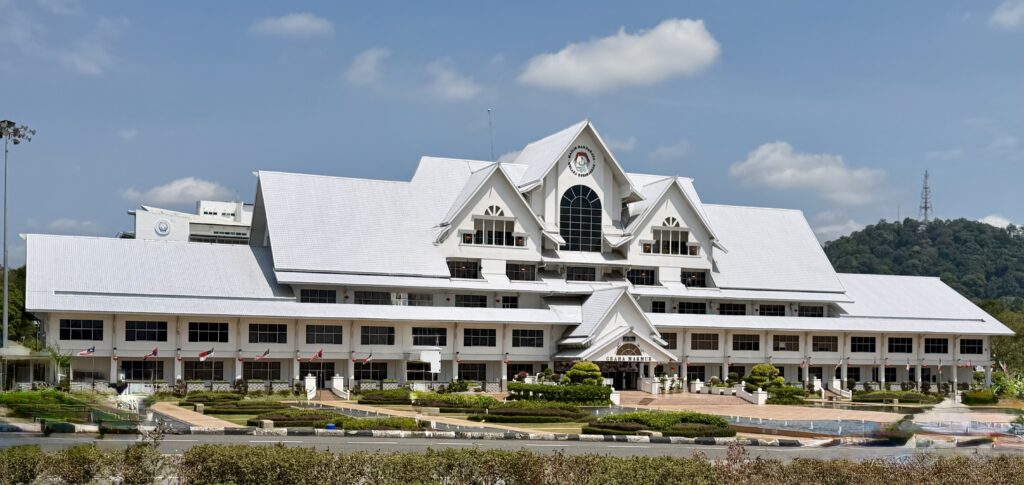
After we entered the city limits, we passed by the Malacca City Council and Little India.
- Malacca Historic City Council (Majlis Bandaraya Melaka Bersejarah, MBMB or MHCC) – governs Malacca City and oversees public health, sanitation, town planning, environmental protection, building control, urban infrastructure, and socio-economic development.
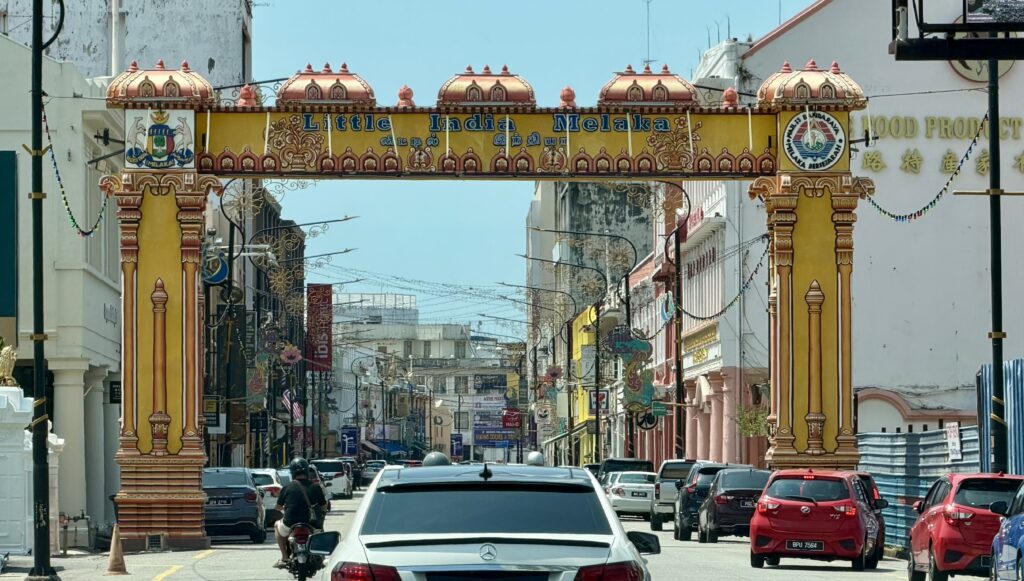
- Little India Malacca – We drove past this area reflecting strong Indian heritage with its colorful shops and festive decorations. The street is lined with shops selling traditional Indian clothing, gold jewelry, spices, flower garlands, and authentic South Indian cuisine.
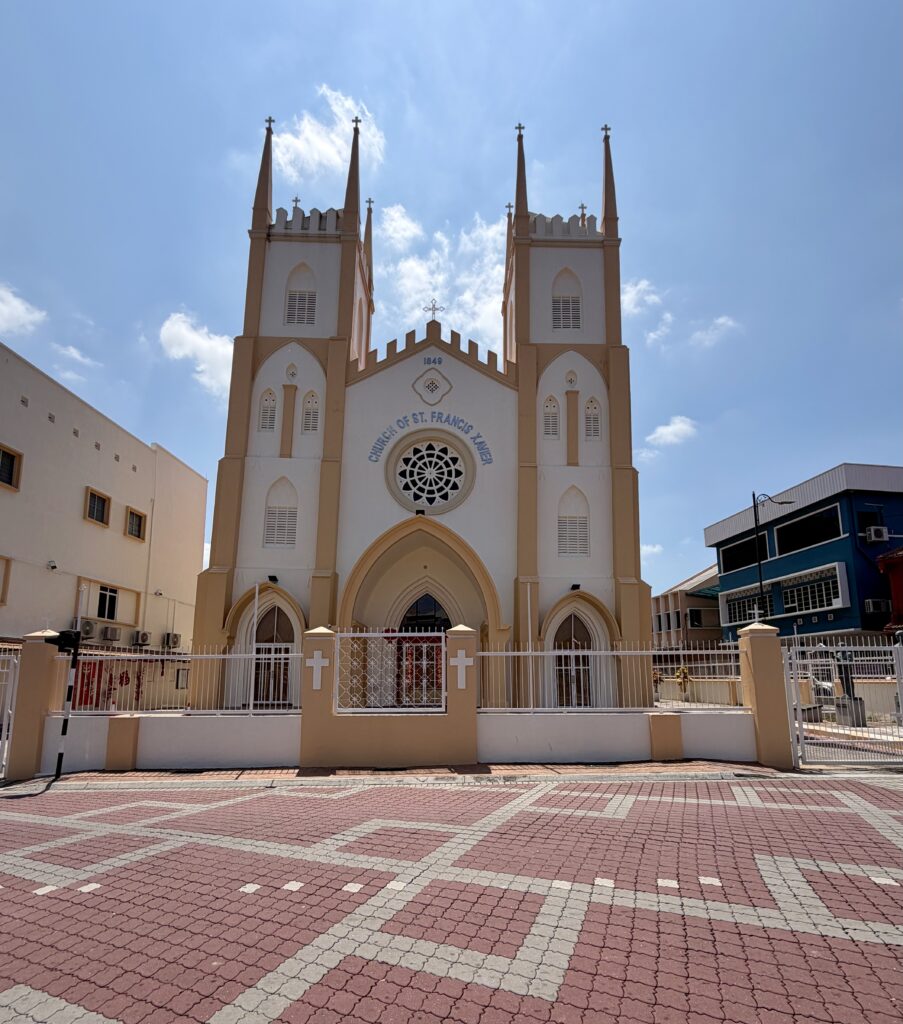
Our guide parked the car near a parking lot close to Church of St. Francis Xavier. Beyond the church, is traffic free zone, making it easy to explore on foot and the start of UNESCO World Heritage Site.
- Church of St. Francis Xavier – is the largest church in Malacca City and the third oldest in Melaka, after St. Peter’s Church and Christ Church. Built in 1849 on the site of a former Portuguese church, it was constructed by French missionary Father Farvé, with final touches completed in 1856. The church has remained largely unchanged over the years, apart from the addition of a portico in 1965 and a shrine in front of the building.
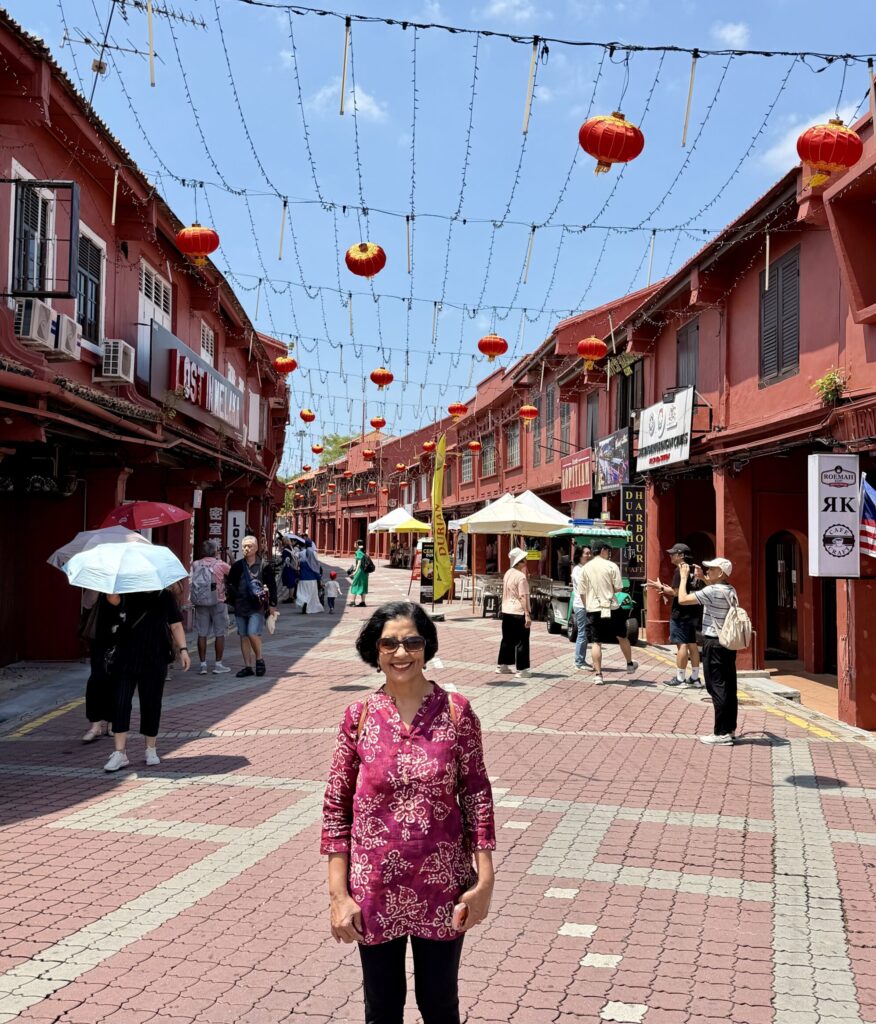
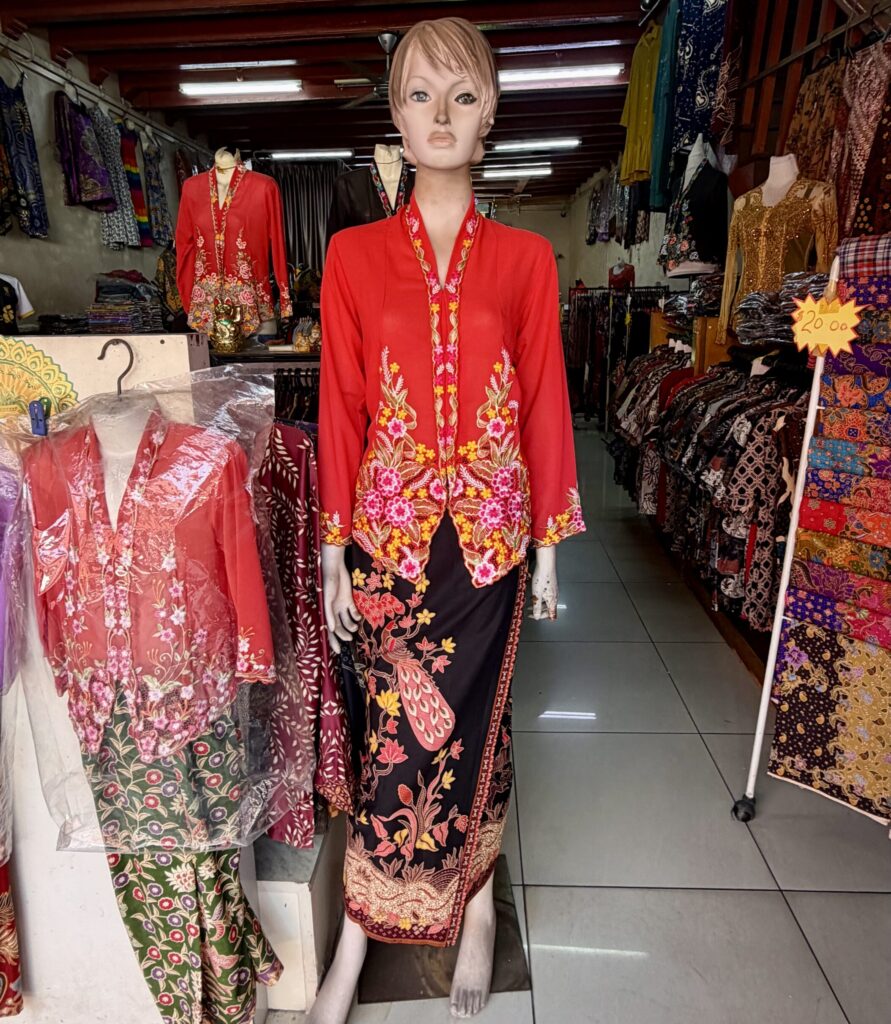
- Jalan Laksamana Street – The plaza in front of Church of St. Francis Xavier leads to the Jalan Laksamana which is the main street in the heritage area. As you take a stroll on this street, you will find a charming mix of souvenir shops, small boutiques, antique stores, cafés, and local handicraft outlets. Many of the shops are housed in restored heritage shophouses, adding to the old-world atmosphere.
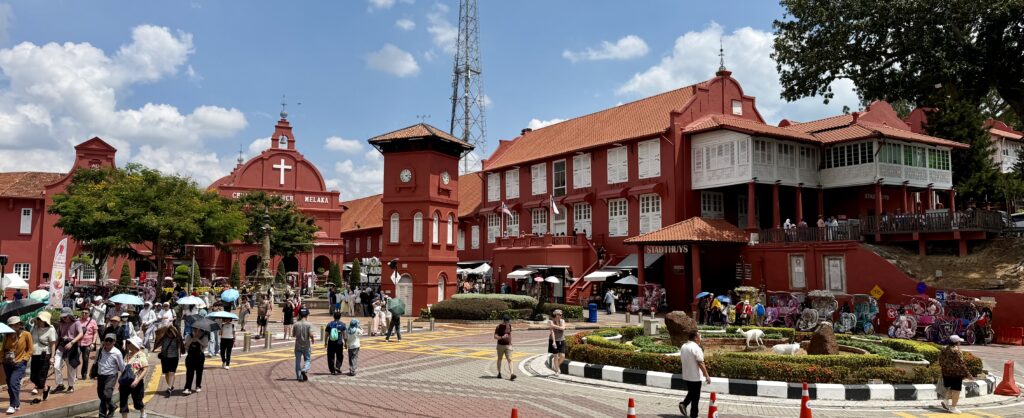
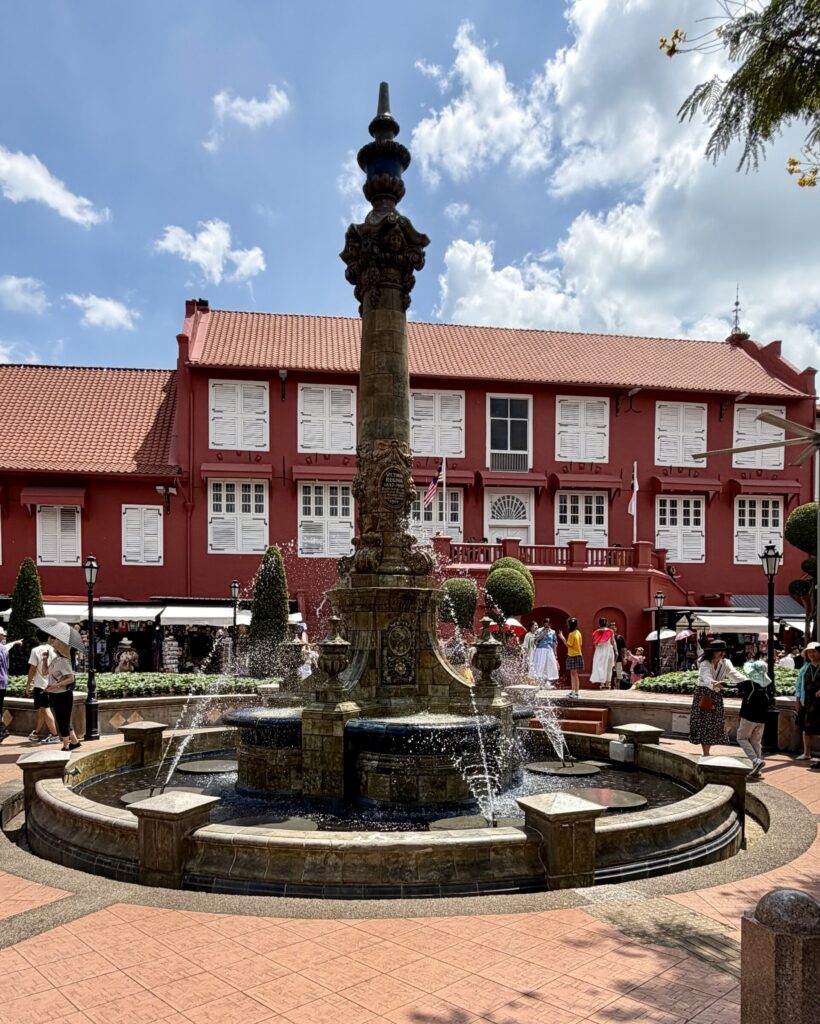
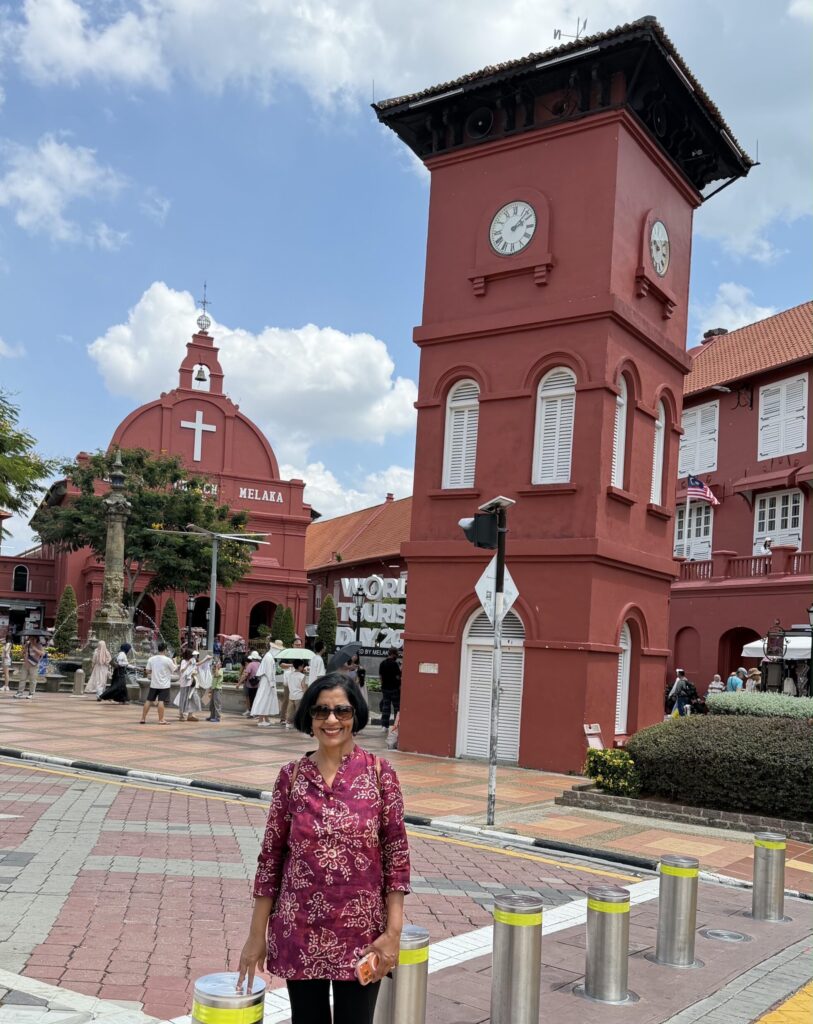
Dutch Square (or Red Square) – The Jalan Laksamana Street leads into the Red Square which is the historic heart of Malacca, famous for its striking red colonial buildings. Built during the Dutch era (1641–1901), the square includes the Stadthuys, Christ Church, Clock Tower, and the Queen Victoria Fountain.
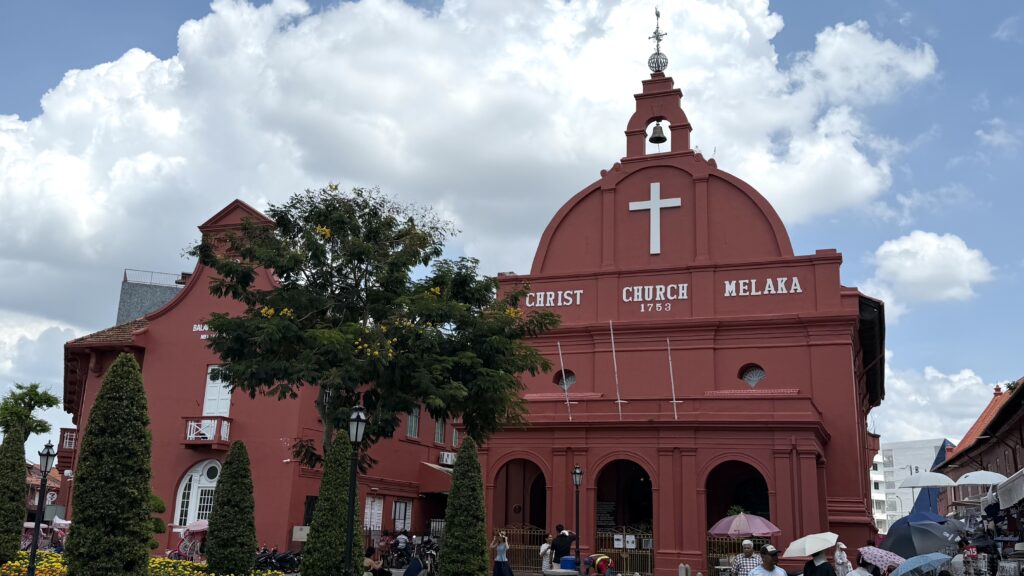
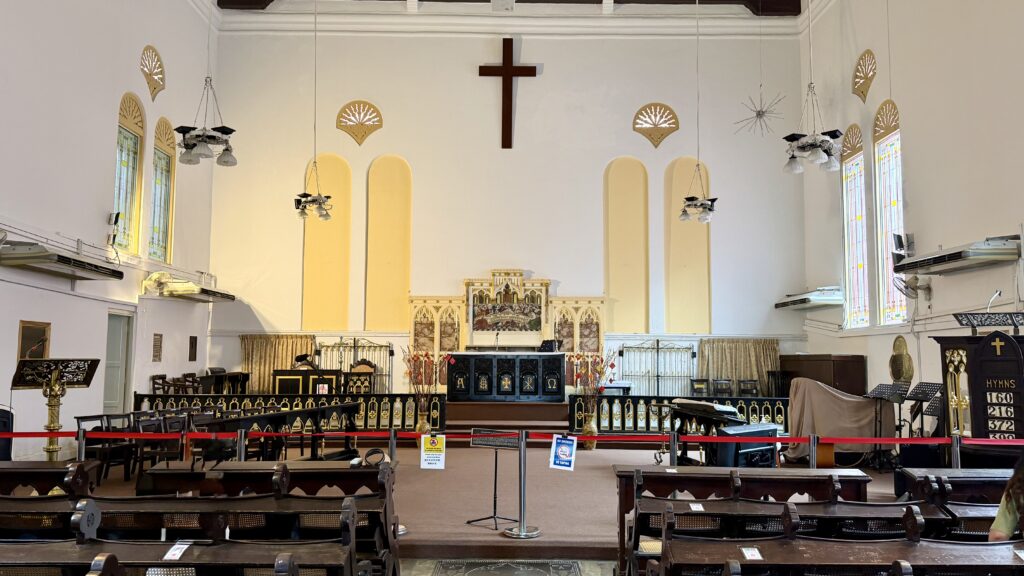
- Christ Church – A distinctive bright red Anglican church built by the Dutch in 1753. The cathedral’s interior is noted for its 200-year-old hand-carved pews.
- Queen Victoria Fountain – An ornate, British-built fountain from 1901 located in the center of the square.
- Melaka Clock Tower – A 50-foot, red clock tower constructed in 1886 in memory of local philanthropist Tan Beng Swee.
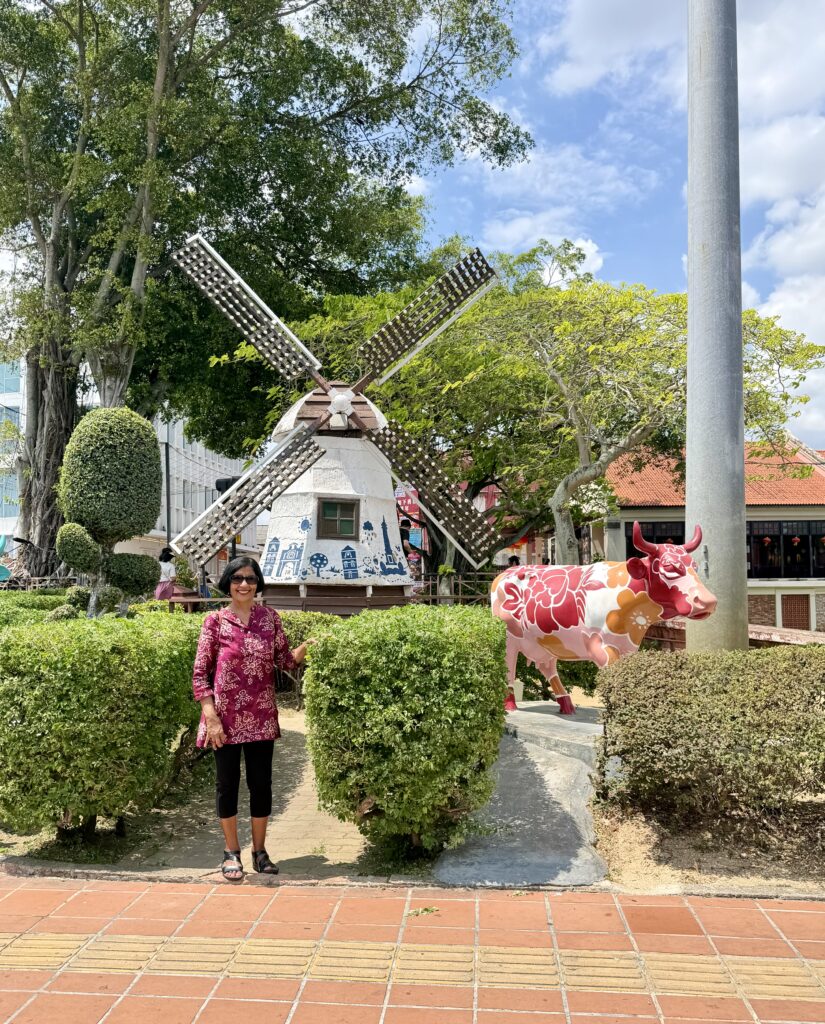
- Melaka Windmill – A replica of a Dutch windmill and colorful cows in a pasture setting sit across the Stadthuys. This is a nod to the colonial ties to the Dutch, and is a nice spot for photography.
- The Stadthuys – Built between 1641–1660, it is the oldest-existing Dutch building in the Orient and formerly the Governor’s residence, now housing the History and Ethnography Museum.
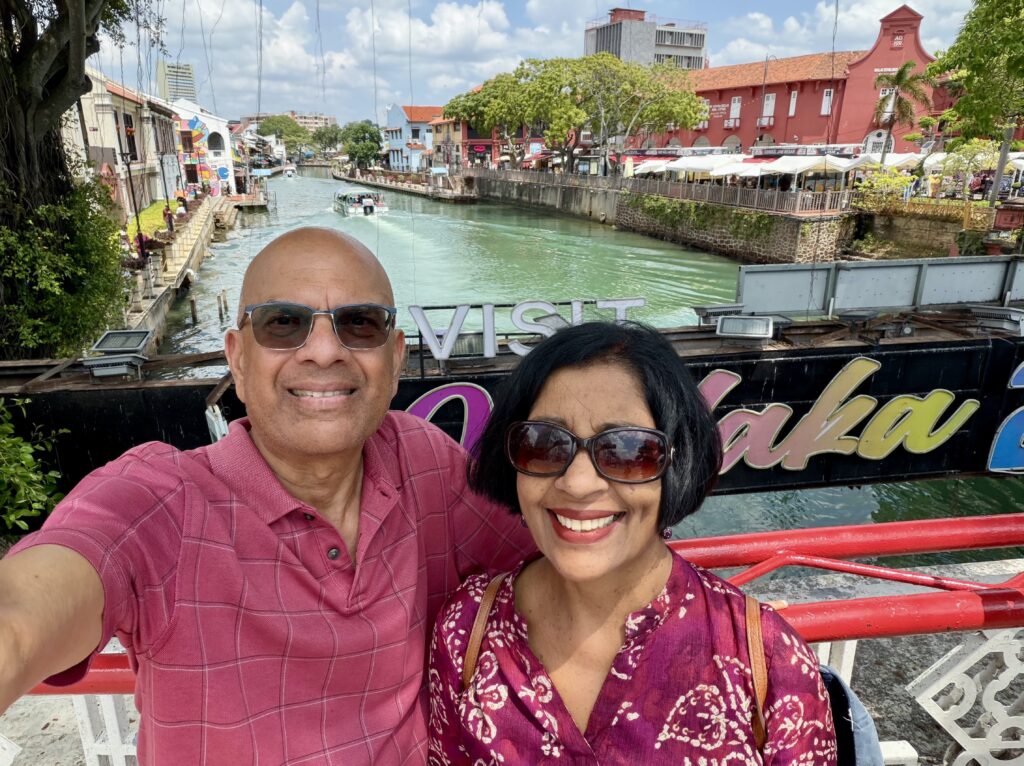
Strolling Malacca Streets – After we checked out all the attractions on the Red Square, we walked across the Tan Kim Seng bridge over the Malacca River.
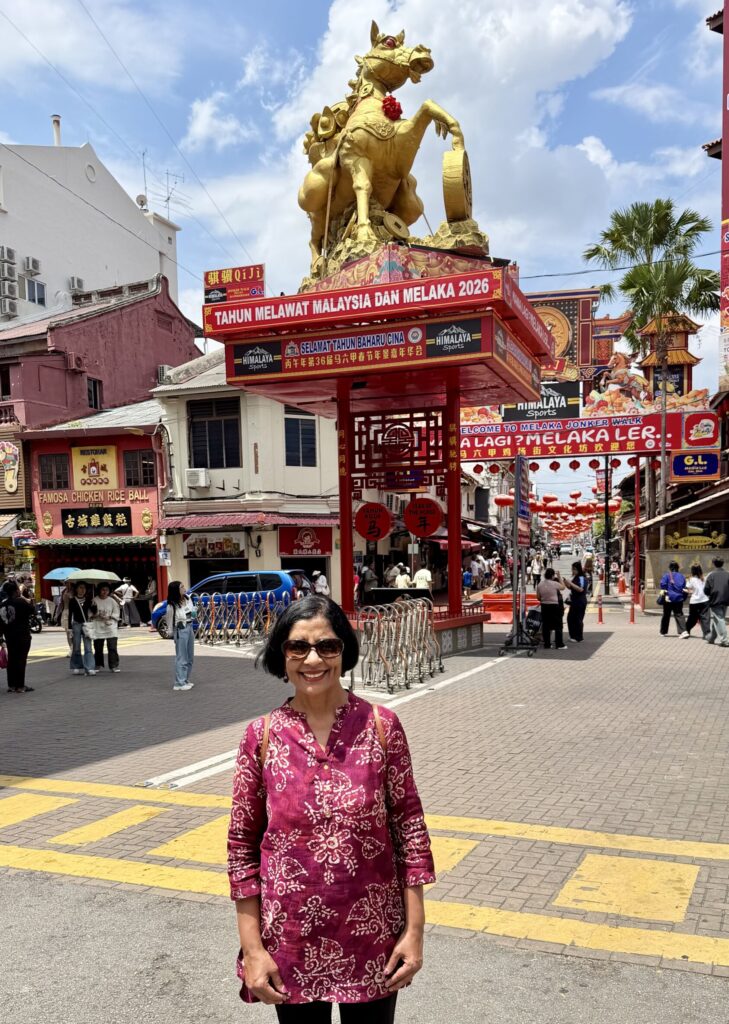
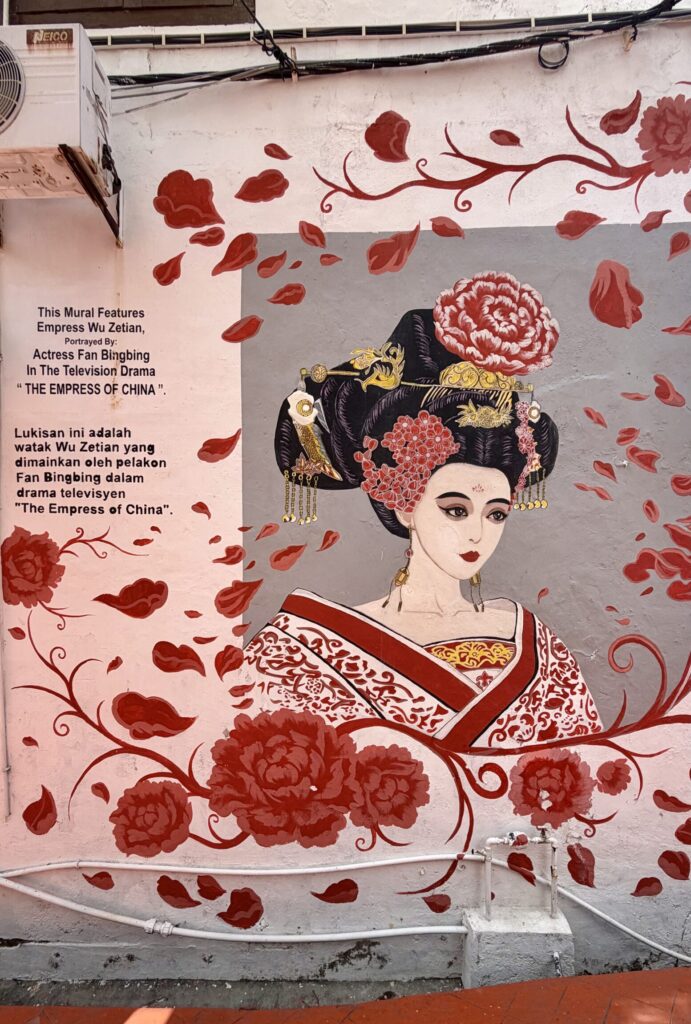
After crossing the bridge, you’ll immediately spot a striking 5.49-metre-tall golden horse sculpture named Qi Ji, installed in early 2026 to celebrate the Chinese New Year and mark the Year of the Horse. Just behind the statue stands the main gateway to Jonker Walk. We didn’t enter Jonker Walk at that point. Instead, we turned onto the street on the right, as our guide planned for us to explore Jonker Walk later from the opposite end. We checked out some street art on a side road.
We then walked onto the Jalan Tukang Besi (Blacksmith Street) where houses are over 600 years old. This is one of the three connected streets that make up Malacca’s famous Harmony Street (See next section), along with Jalan Tukang Emas (Goldsmith Street) and Jalan Tokong (Temple Street). During the Malacca Sultanate and later the Dutch and British periods, this street was home to blacksmiths and metalworkers who crafted tools, household items, and trade goods. Like many streets in the old town, it was named after the trades that once operated there.
Today, while traditional blacksmith shops are no longer common, the street retains its historical charm and has a quieter atmosphere compared to nearby Jonker Walk.
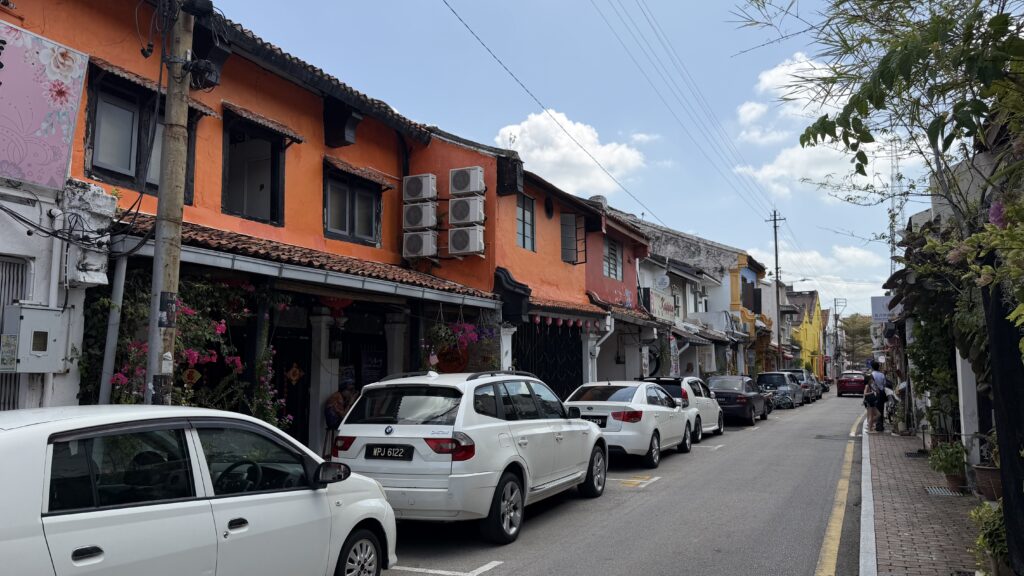
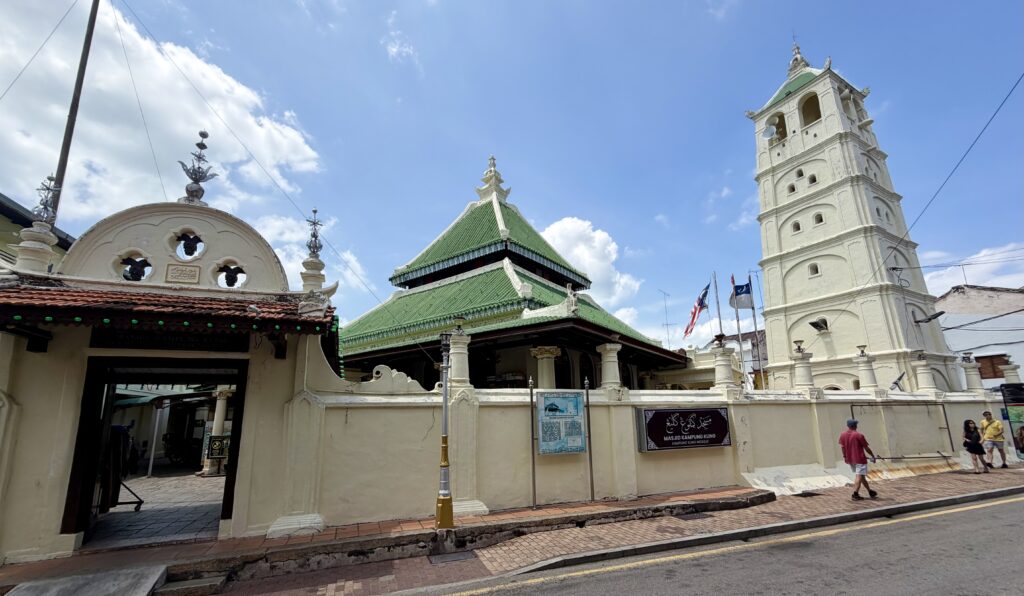
Temple Street (or Harmony Street) – This historic street which is part of UNESCO World Heritage Site in Malacca City is locally known by three names—Jalan Tukang Emas (Goldsmith), Jalan Tukang Besi (Blacksmith), and Jalan Tokong (Temple)—each referring to different segments of what is essentially one long, curved road. Tourists often call it Temple Street because of the coexistence of major religions along the stretch. Here you’ll find Kampung Kling Mosque (Islam), Sri Poyyatha Vinayagar Moorthi Temple (Hinduism), Cheng Hoon Teng Temple (Taoism/Buddhism/Confucianism), and Xiang Lin Si Temple (Buddhism)—all standing peacefully side by side, symbolizing Malaysia’s multicultural heritage. but it is most beautifully known as Harmony Street.
The Kampung Kling Mosque is one of the oldest mosques in Malacca City. Originally built in 1748 by Indian Muslim traders as a wooden structure, it was rebuilt in brick in 1872 and still retains much of its traditional design. The mosque’s architecture is a unique blend of Sumatran, Chinese, Hindu, and Malay influences.
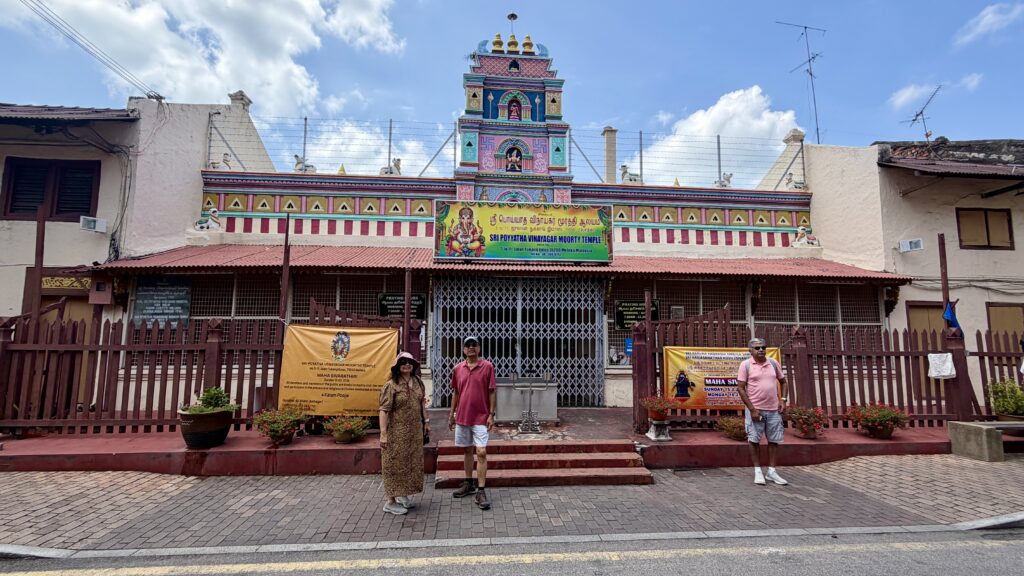
Sri Poyyatha Vinayagar Moorthi Temple is the oldest existing Hindu temple in Malaysia and one of the oldest functioning Hindu temples in Maritime Southeast Asia. It stands close to Kampung Kling Mosque and Cheng Hoon Teng Temple, symbolizing religious harmony. Built in 1781 by Thavinayagar Chitty, leader of the Chitty community, the temple is dedicated to Lord Vinayagar (Ganesha), the elephant-headed deity. It also features a shrine to Lord Murugan.
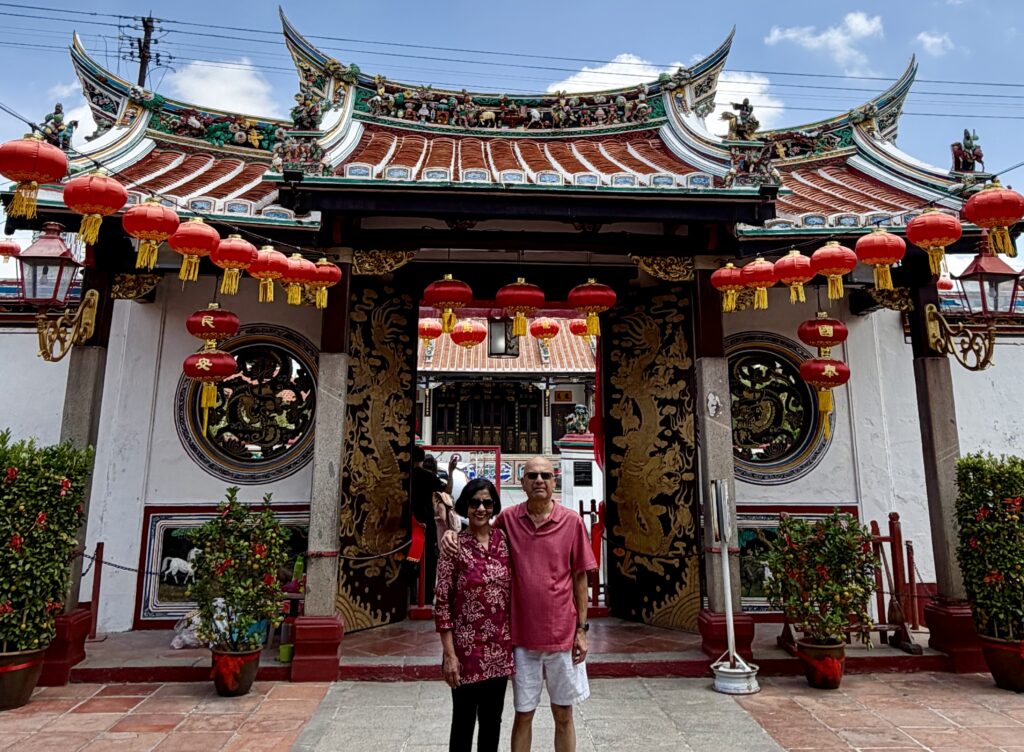
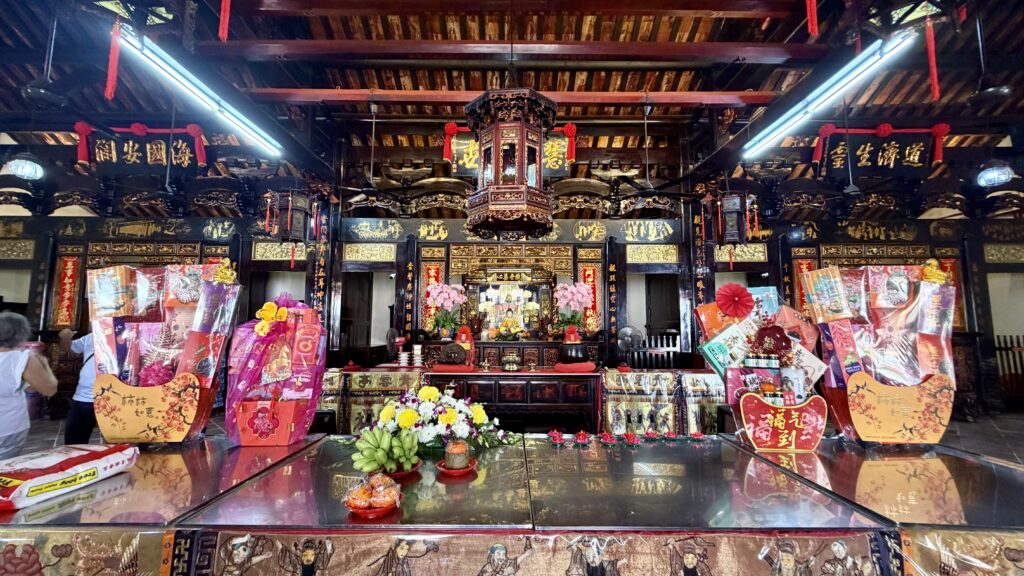
Cheng Hoon Teng Temple, also known as the Temple of Green Cloud, is the oldest functioning Chinese temple in Malaysia. It practices the Three Doctrinal Systems — Buddhism, Confucianism, and Taoism. The temple was founded in 1645 during the Dutch colonial period by Chinese Kapitans Tay Kie Ki and Tay Hong Yong. Some inscriptions suggest the site may date back even earlier.
Xiang Lin Si Temple is a Chinese Mahāyāna Buddhist temple located directly opposite Cheng Hoon Teng Temple. Established in 1958, the temple began as a simple wooden village house and was later rebuilt in 1985 into the present double-storey brick structure with a more modern architectural style. The temple features three arched doorways on each level. Inside the Buddha Hall, visitors are welcomed by a smiling statue of Maitreya (Mi-lo Fwo), with the Eighteen Luohan (Arhats) displayed along the sides.
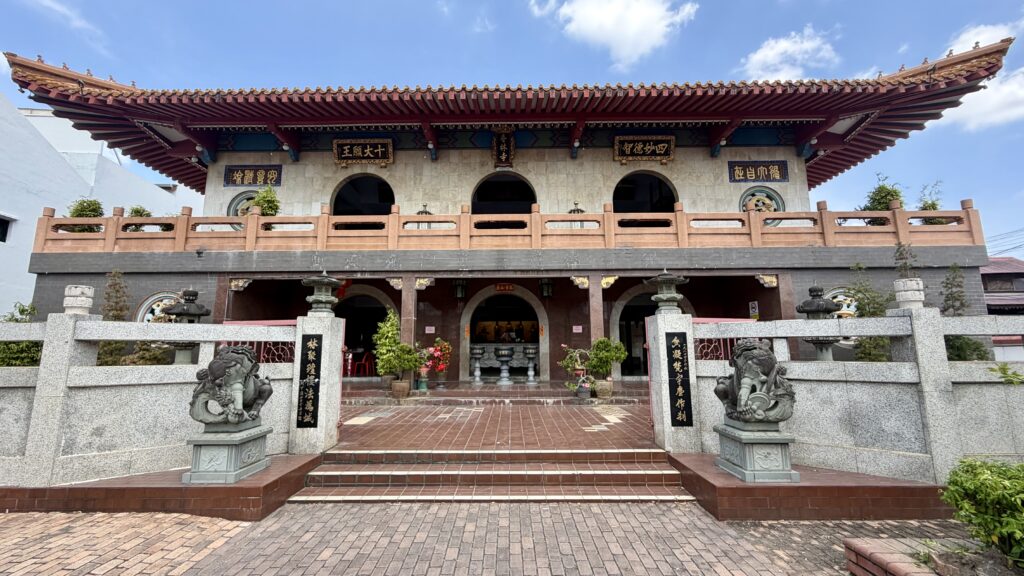
Jonker Walk – After we finished exploring the temple street we walked on the famous Jonker street all the way back to the Red Square. It is the most famous street in Malacca City, and was once home to wealthy Peranakan families and antique traders. Today, it is known for its shops, cafés, and traditional shophouses. On weekends, it transforms into a lively night market where visitors and locals can enjoy street food, souvenirs, and live performances. It’s one of the best places to experience Malacca’s vibrant culture and atmosphere.
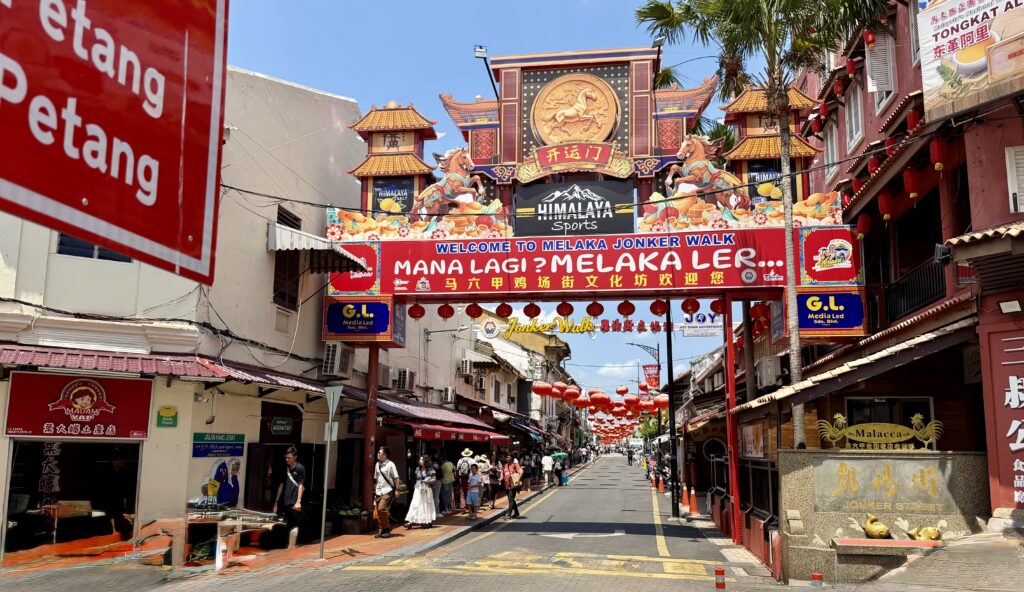
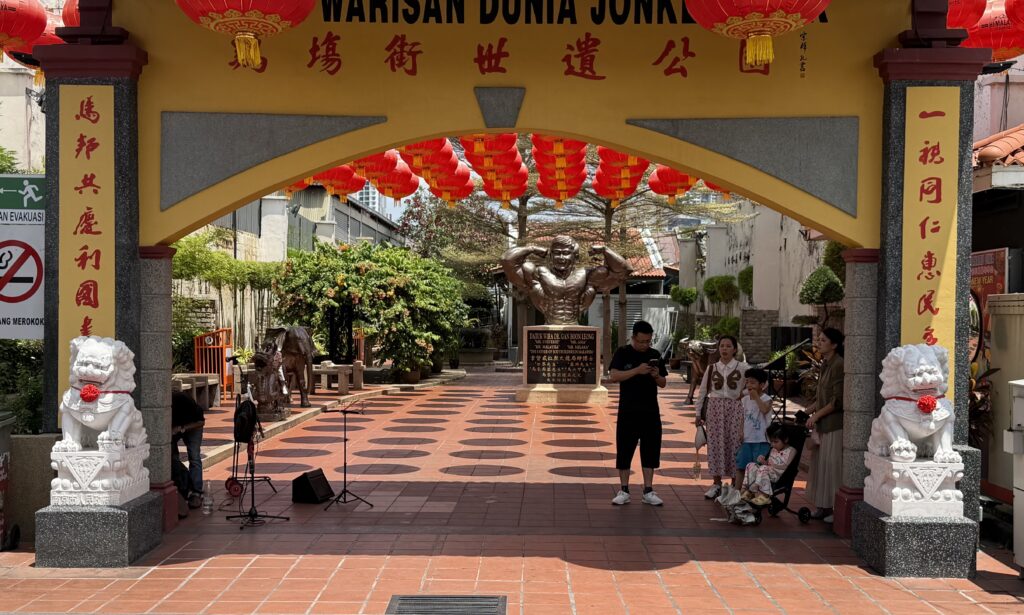
You will also come across a striking statue of Gan Boon Leong, widely known as the Father of Bodybuilding in Malaysia on Jonker Walk. The large, muscular sculpture honors his achievements as a champion bodybuilder — including titles such as Mr. Malaysia, Mr. Asia, and Mr. Universe — as well as his role as a former state executive councillor. Beyond sports, he played a key role in developing Jonker Walk into the vibrant night market and major tourist attraction it is today.
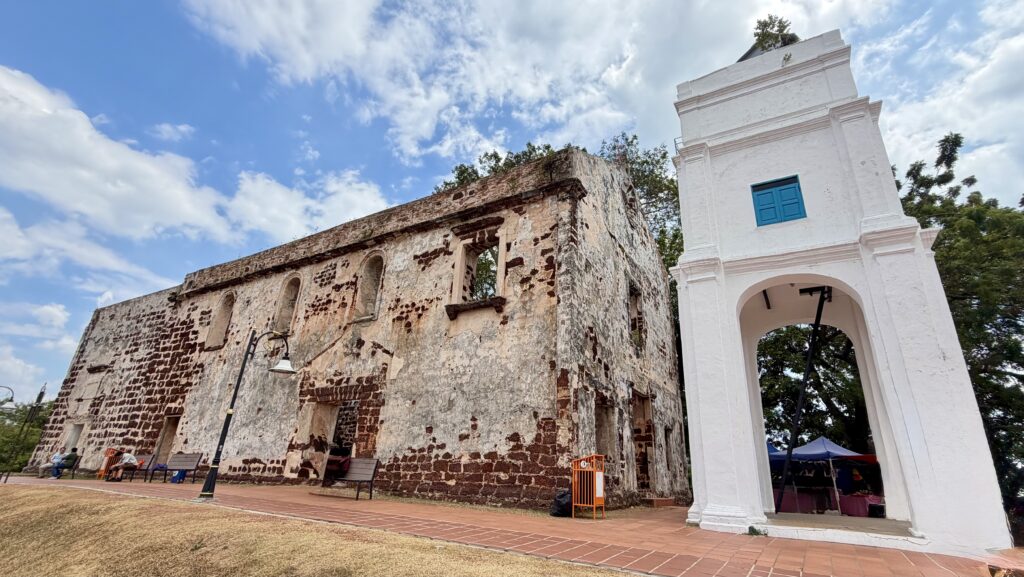
St. Paul’s Hill – This hill is located directly behind the Red Square and features the 16th-century ruins of St. Paul’s Church, the old Portuguese fortress walls, and panoramic views of the city and Malacca Strait. There are 2 ways to access this hill –
- You can take a short, steep walk up steps from the back of the Stadthuys – We took this path
- There are steps leading up to the hill from behind the A Famosa fortress.
The St. Paul’s Church at the summit was built in 1521, making it the oldest church building in Malaysia and Southeast Asia. A small white, functional lighthouse was built directly in front of the church ruins by the British in 1814, serving as a beacon.
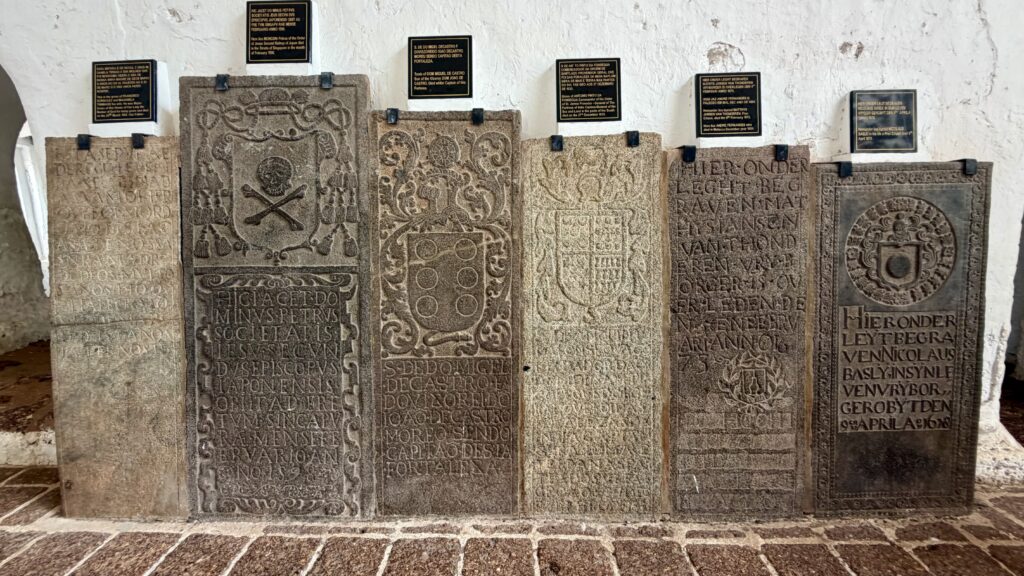
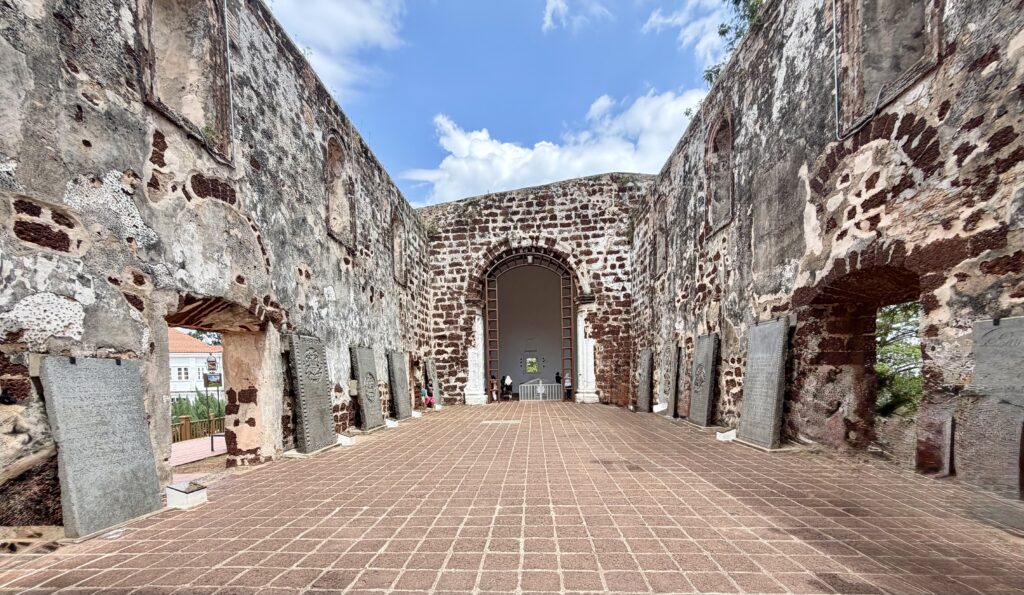
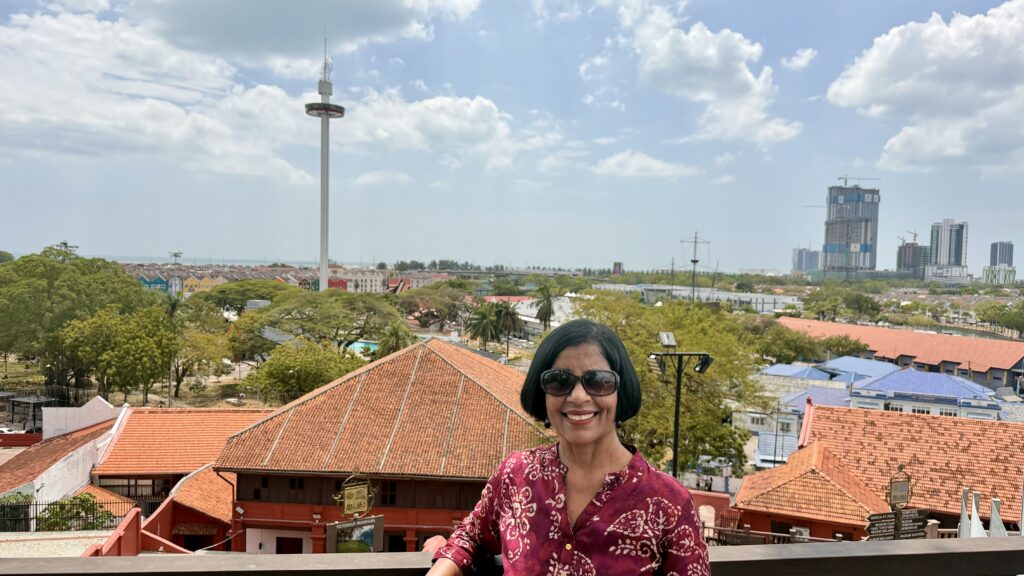
After we explored the ruins of the church, we spent some time enjoying the view from the top. We could see the Melaka Menara Taming Sari (Taming Sari Tower) which is a 110 m tall gyro tower. Opened in 2008, the rotating observation cabin carries up to 80 visitors per session, rising to provide a 360-degree panoramic view of Malacca City and its surroundings during a 7-minute ride.
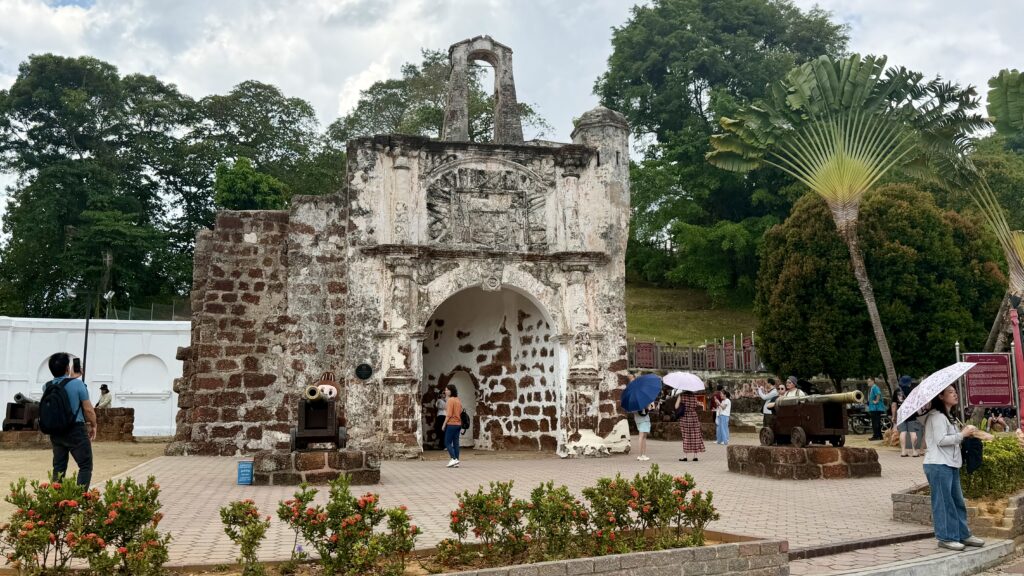
A Famosa Fort (The Famous in Portuguese) – From St. Paul’s Hill, a series of steps leads down to this historic Portuguese fortress which was built in 1512, shortly after the Portuguese captured Malacca in 1511 under Afonso de Albuquerque. Originally centered around a five-storey keep, the fortress was constructed to secure Malacca as a key trading port along the Spice Route. After the Dutch took control in 1641, parts of the fortress were modified, but in 1811 the British demolished most of the structure. Today, only the Porta de Santiago gateway and the rebuilt Middelburg Bastion remain.
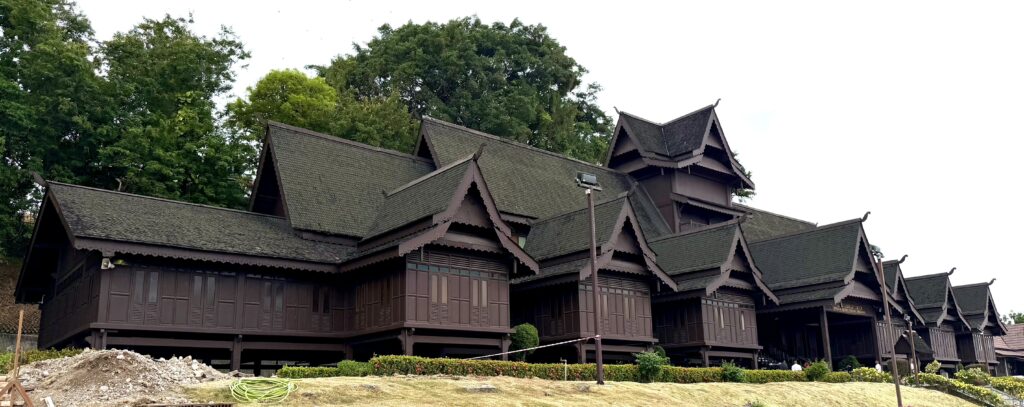
Malacca Sultanate Palace Museum is located at the foot of St. Paul’s Hill and within walking distance of the A Famosa Fort gateway. It is a modern reconstruction of the 15th-century palace of the Malacca Sultanate, built based on descriptions from the Malay Annals. It was constructed between 1984 and 1986. The museum has three floors featuring the throne room, royal chambers, and galleries displaying around 1,350 artifacts, including weapons, clothing, regalia, and paintings. We did not have time to check out the interior of the museum.
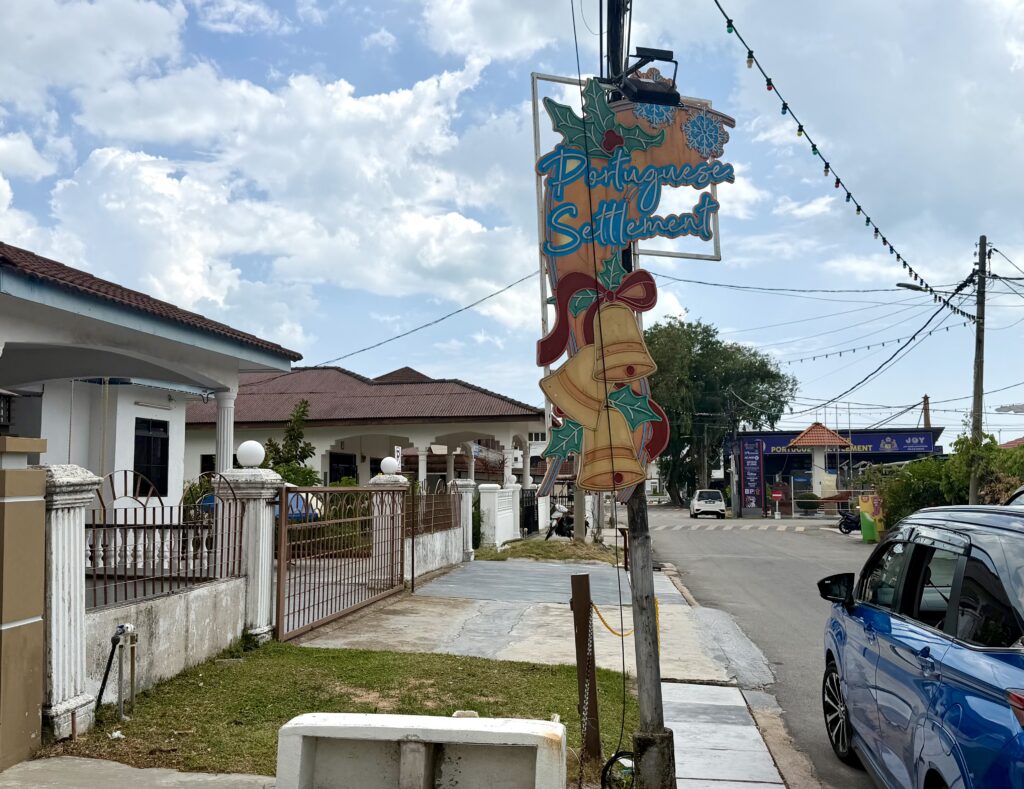
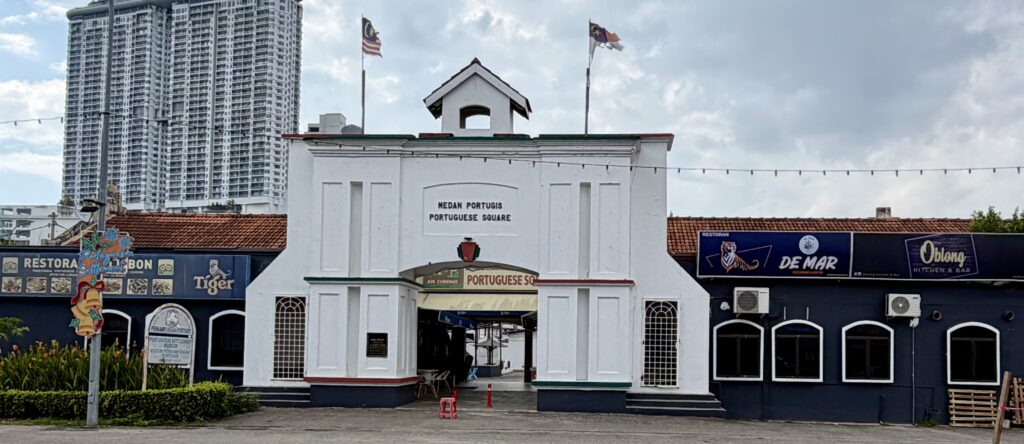
Portuguese Settlement – is at a distance of less than 5 miles from the Dutch Red Square and takes less than 15 min to reach by car. Portuguese rule in Malacca began in 1511 when Afonso de Albuquerque captured the city, leading to over a century of colonial presence and cultural intermarriage. Although the Dutch took control in 1641, many Portuguese descendants remained.
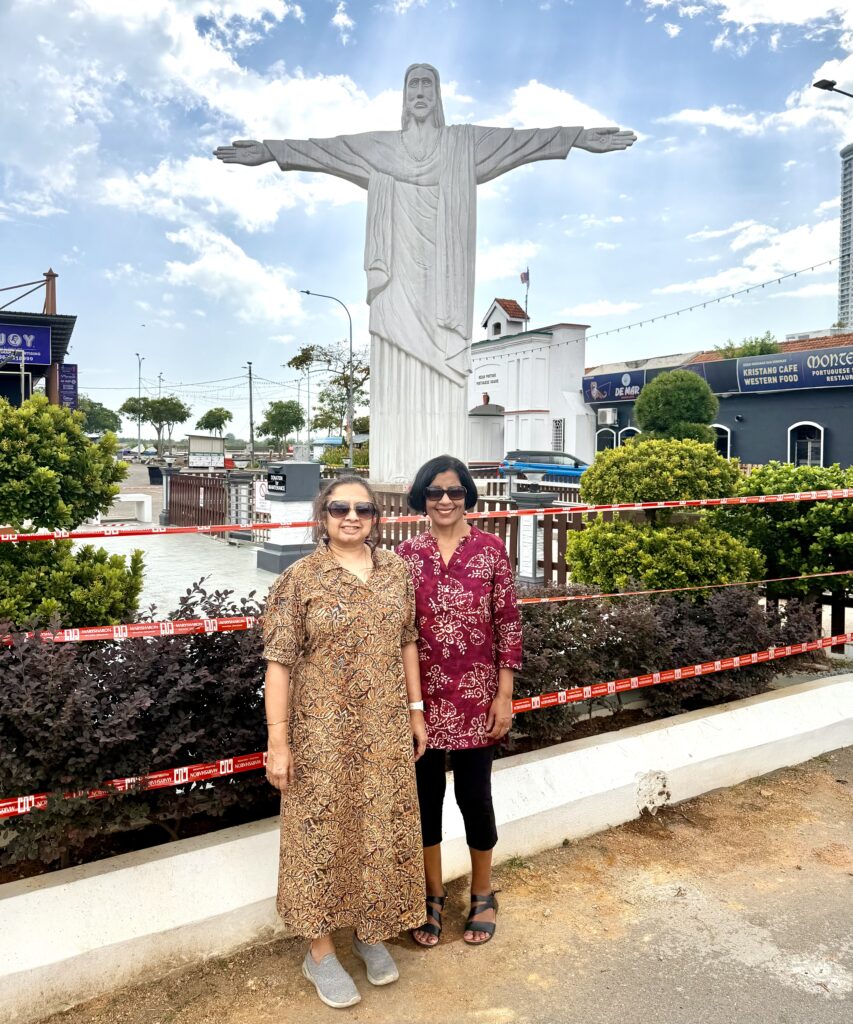
The Portuguese Square (Medan Portugis), built in 1985 in the heart of the settlement, is a lively hub of Kristang (Portuguese-Eurasian) culture in Malacca City. Often called Mini Lisbon, it features open-air seafood restaurants, colorful buildings, and a relaxed seaside atmosphere. The square also features an 8m replica of Christ the Redeemer statue. Constructed in 2017 by local villagers to celebrate Christmas, this white statue symbolizes the community’s, heritage and faith.
———- Putrajaya ———-
We stopped by Putrajaya on the way back to Kuala Lumpur from Malacca. It is 35 km south of Kuala Lumpur
Putrajaya is Malaysia’s administrative centre and a federal territory. In 1999, the federal government moved to Putrajaya from Kuala Lumpur due to overcrowding and congestion. In 2003, the judiciary also relocated to Putrajaya. However, Kuala Lumpur remains Malaysia’s constitutional national capital, housing the head of state and Parliament, and continues to serve as the country’s commercial and financial centre.
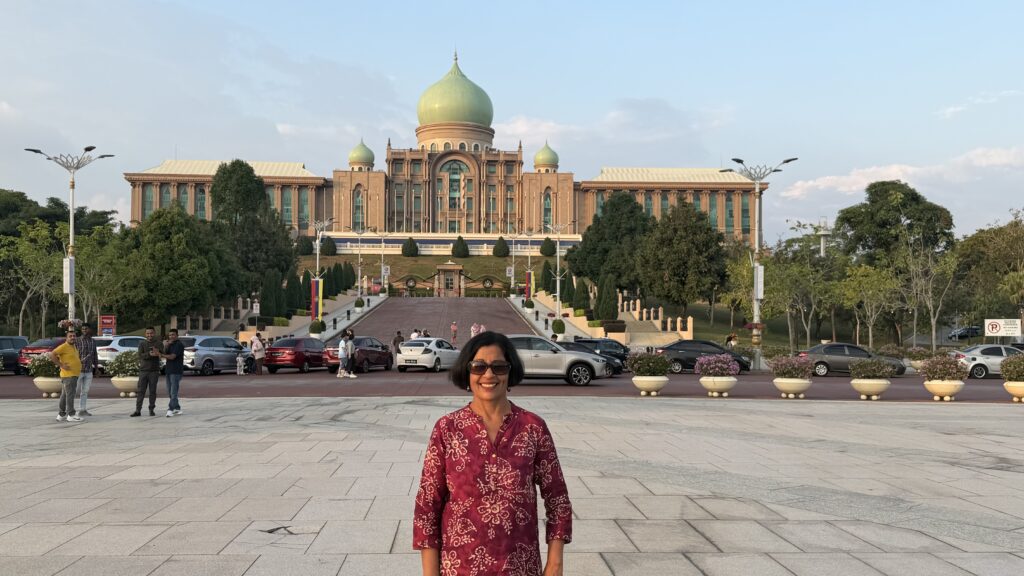
Perdana Putra is the main administrative building of Malaysia’s federal government and serves as the official office of the Prime Minister. It is located on the main hill in Putrajaya, overlooking Putrajaya Boulevard. Completed in 1999, the building is easily recognized by its large green dome and grand façade. Its architecture blends Islamic, Malay, and European design influences, giving it a majestic and symbolic presence.
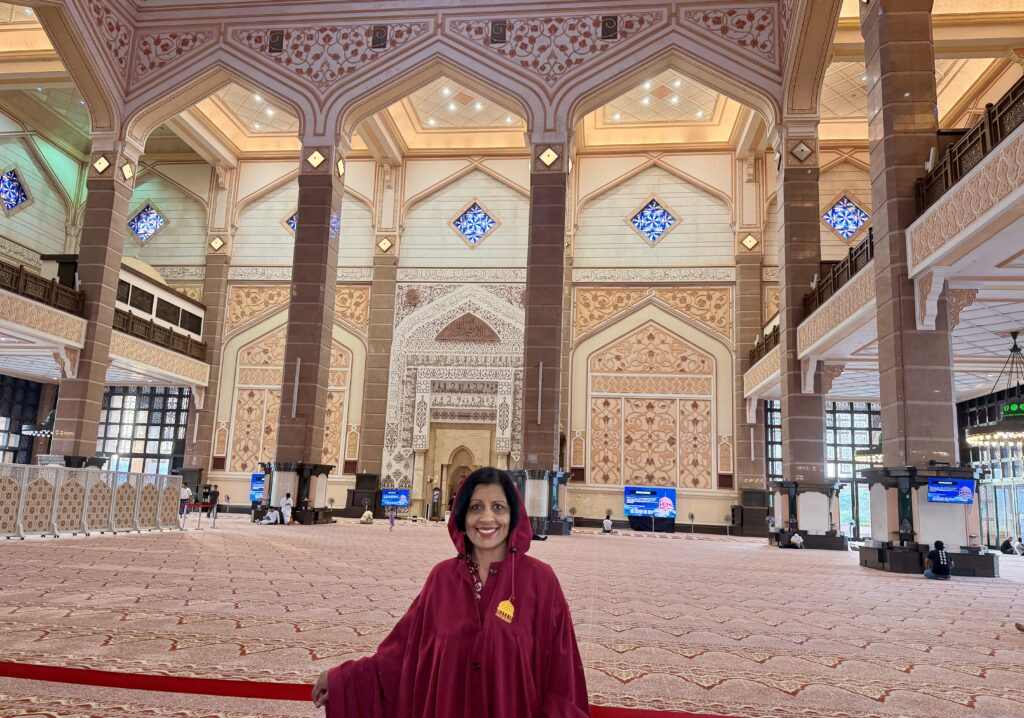
Putra Mosque – is the principal mosque of Putrajaya. Construction began in 1997 and was completed in 1999. Located at Putra Square beside the scenic Putrajaya Lake, the mosque is famous for its striking pink dome made of rose-tinted granite. It consists of three main areas — the prayer hall, the courtyard (Sahn), and various learning and function rooms — and can accommodate up to 15,000 worshippers at a time.
Visiting the interior of Putra Mosque is free of charge. Before entering, visitors are required to dress modestly. If needed, the staff will provide a robe (for women, a full-length outer garment with a hood) that covers you from head to foot.
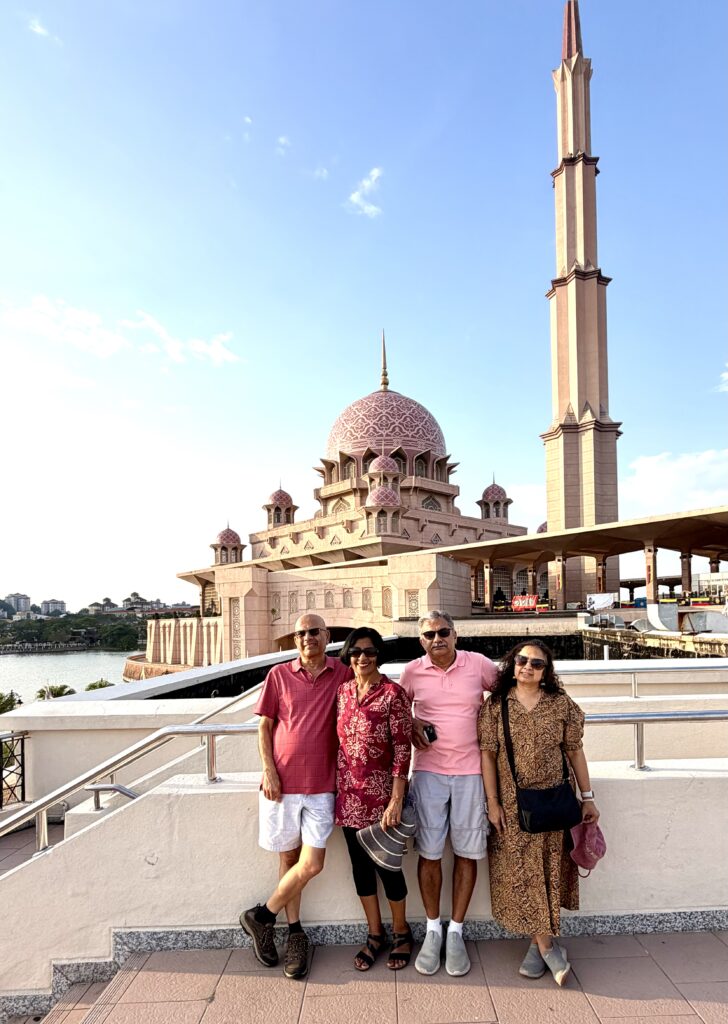
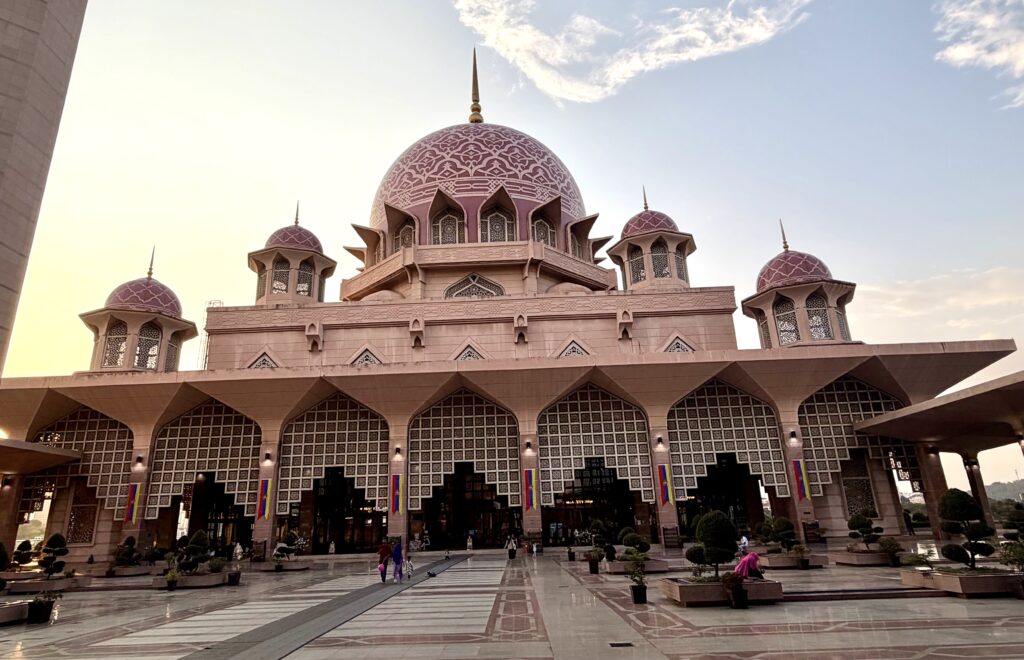
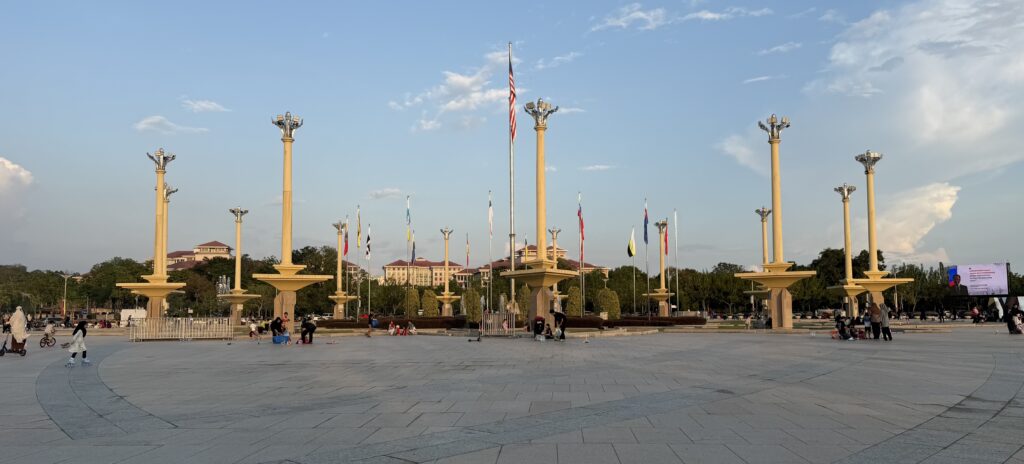
Putra Square – This large open space between Putra Mosque and Perdana Putra offers stunning views of the pink-domed mosque on one side and the green-domed Prime Minister’s Office on the hill above. The square is beautifully landscaped and overlooks Putrajaya Lake, making it a popular spot for photos and evening strolls.
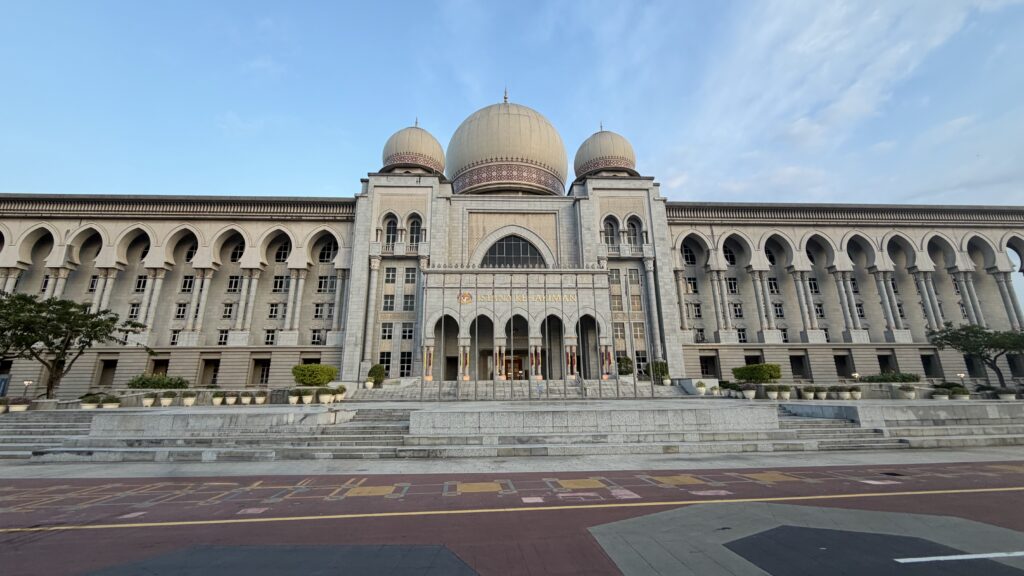
Palace of Justice (Istana Kehakiman) – is a prominent landmark in Putrajaya and houses Malaysia’s highest courts, including the Federal Court and the Court of Appeal. Built in the early 21st century, the building features a grand central dome, elegant columns, and a symmetrical layout that symbolizes balance and justice. Its architecture blends Islamic and Western influences, giving it a regal and dignified appearance along Putrajaya’s main boulevard.
We stopped in front of this magnificent building to take a picture.