3 Nights in Gurney Bay Hotel
Penang is a vibrant state in northwest Malaysia, comprising Penang Island and Seberang Perai on the mainland. Its capital, George Town, is a UNESCO World Heritage Site known for its colonial architecture, street art, and multicultural heritage blending Malay, Chinese, Indian, and European influences. Penang is also famous for its culinary scene, from hawker street food to fine dining, earning it the nickname Food Paradise of Malaysia.
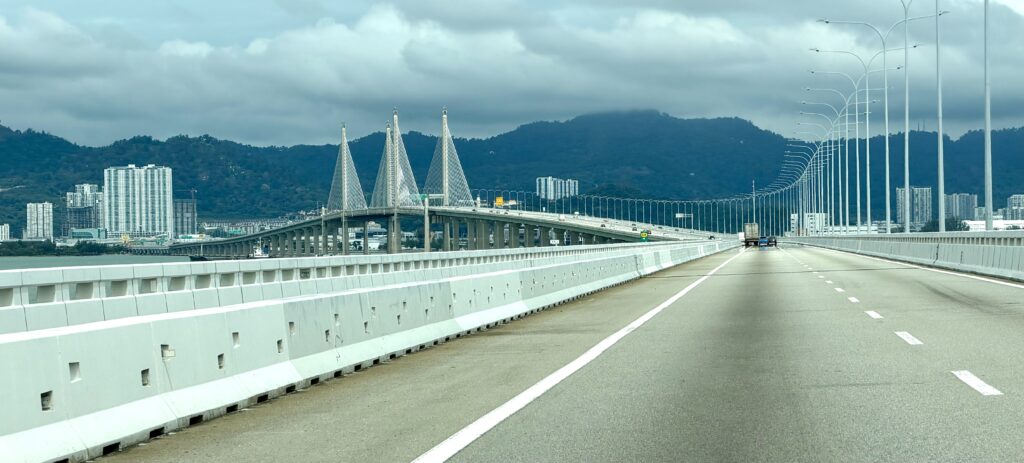
On Day 6, we drove from Ipoh to George Town, which took a little over 2 hours. Along the way, we crossed the Penang Second Bridge (Sultan Abdul Halim Muadzam Shah Bridge), a striking structure spanning about 24 km, making it the longest bridge in Malaysia.
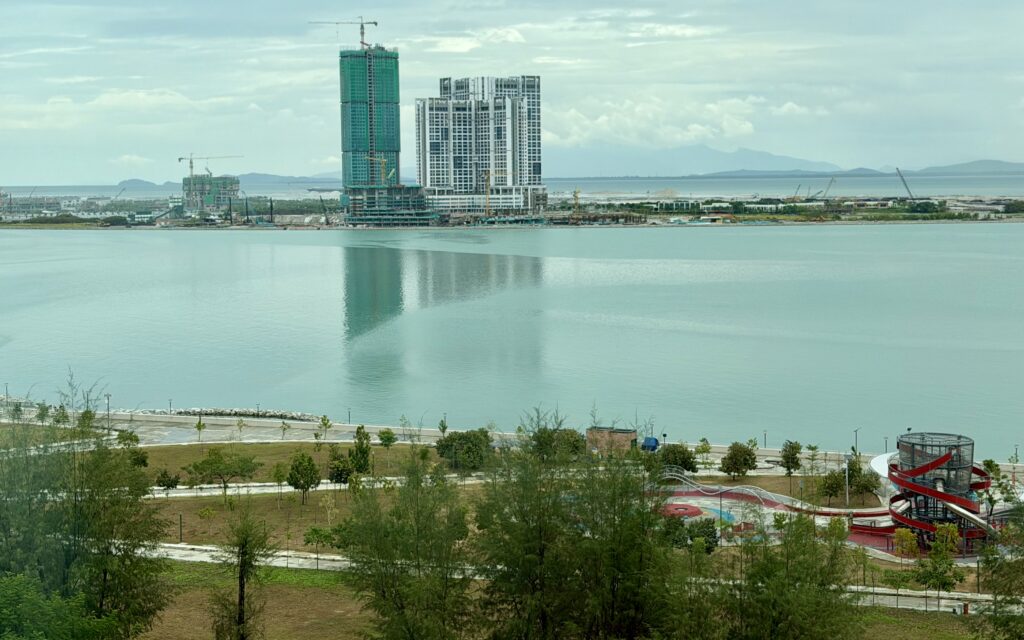
We checked into our Gurney Bay Hotel, beautifully situated along the waterfront, with our rooms offering a stunning view of the water. The water body in front of Gurney Bay Hotel is part of Gurney Drive’s coastal area, which faces the Straits of Malacca.
After checking into our hotel, our guide/driver dropped us off in George Town and concluded his services. We planned to explore the island on our own and used Grab (the Malaysian equivalent of Uber) whenever needed.
- Chew Jetty
- Lion Dance in Gurney Paragon Mall
- Exploring Interactive Murals in Colorful Rickshaw
- Fort Cornwallis
- Church of the Assumption
- Kek Lok Si Temple
- Wat Chayamangkalaram (Thai Buddhist Temple)
- Dhammikarama Burmese Temple
- Penang Hill
- Chowrasta Market in George Town
Chew Jetty – This is one of the many Clan Jetties in George Town. It was established by the Chew clan in the mid-19th century, and is one of George Town’s most famous clan jetties. Built on wooden stilts over tidal waters, its traditional houses are connected by wooden walkways, preserving the settlement’s authentic charm. Families have lived here for generations, maintaining close-knit community ties and traditional customs. Festivals, especially Chinese New Year, bring vibrant decorations, performances, and local delicacies to life.
Fishing remains a primary livelihood for many of the inhabitants living here. Additionally, some residents run small businesses, such as grocery shops and eateries, catering to both locals and visitors. These enterprises often operate out of traditional wooden houses that line the jetty, adding to the area’s distinctive charm.
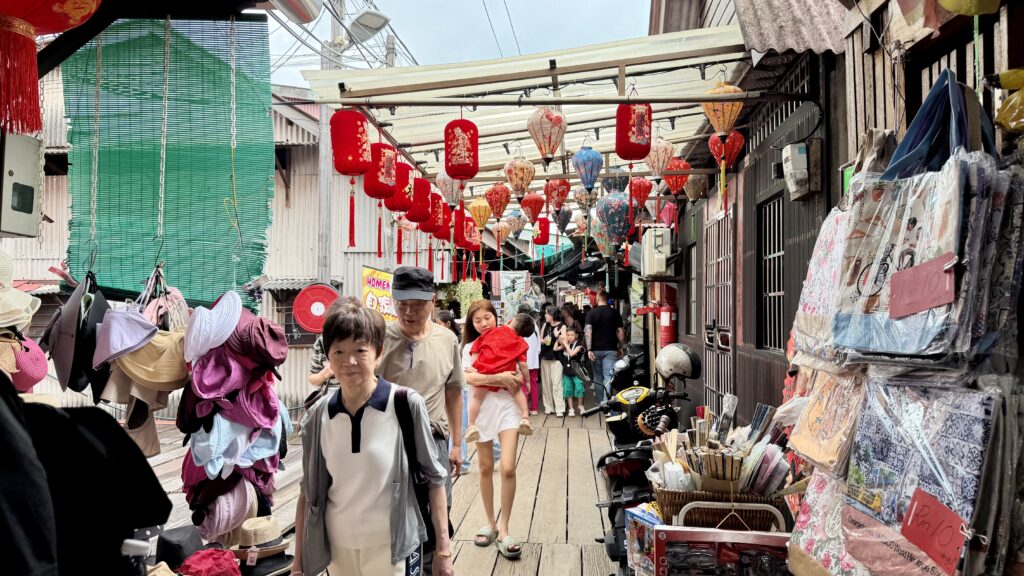
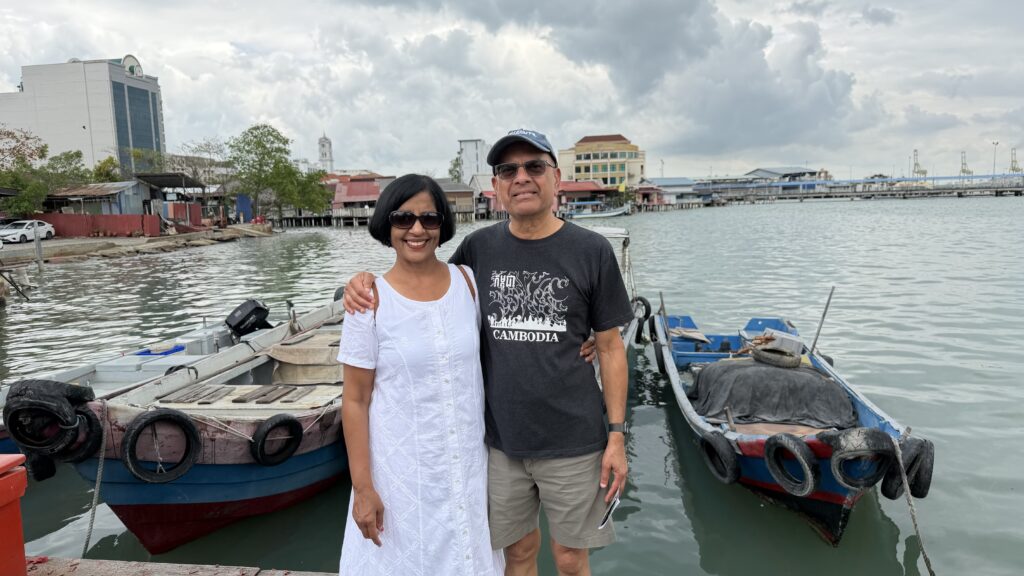
We spent around 45 minutes exploring Chew Jetty before heavy rain started. With no umbrellas, we quickly got a Grab ride to Gurney Paragon Mall to continue our day indoors.
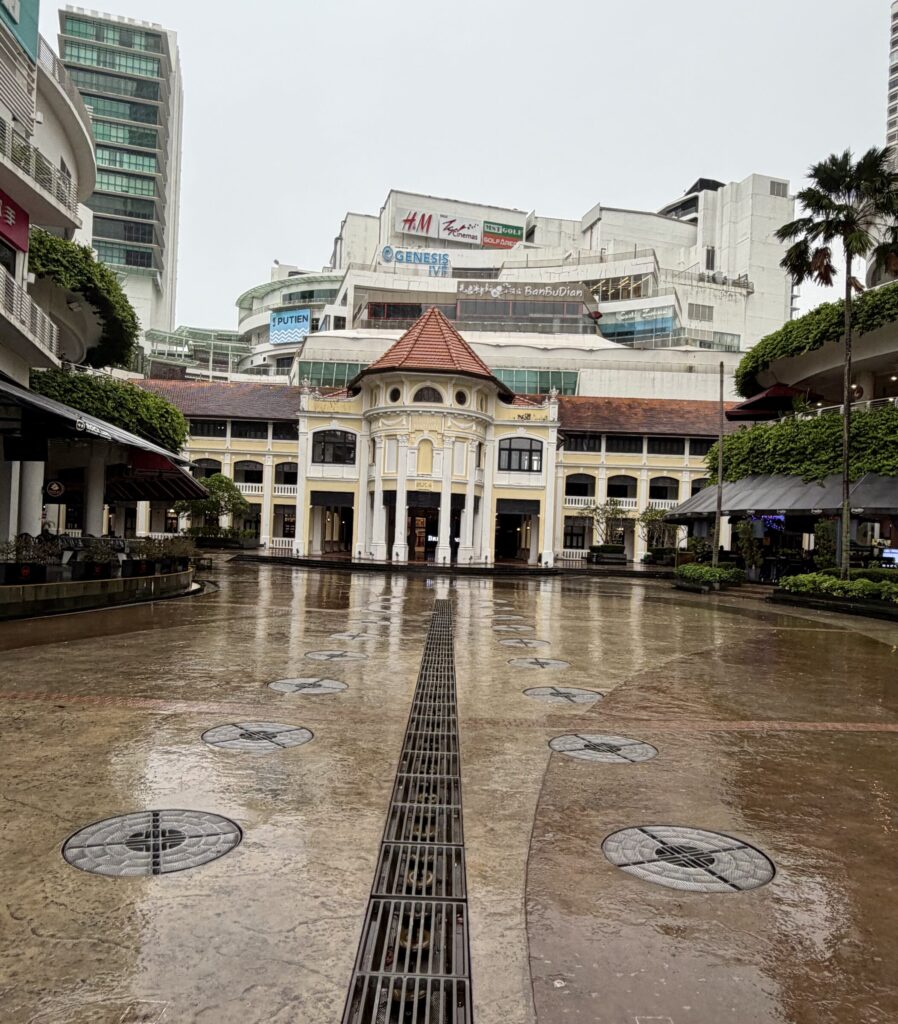
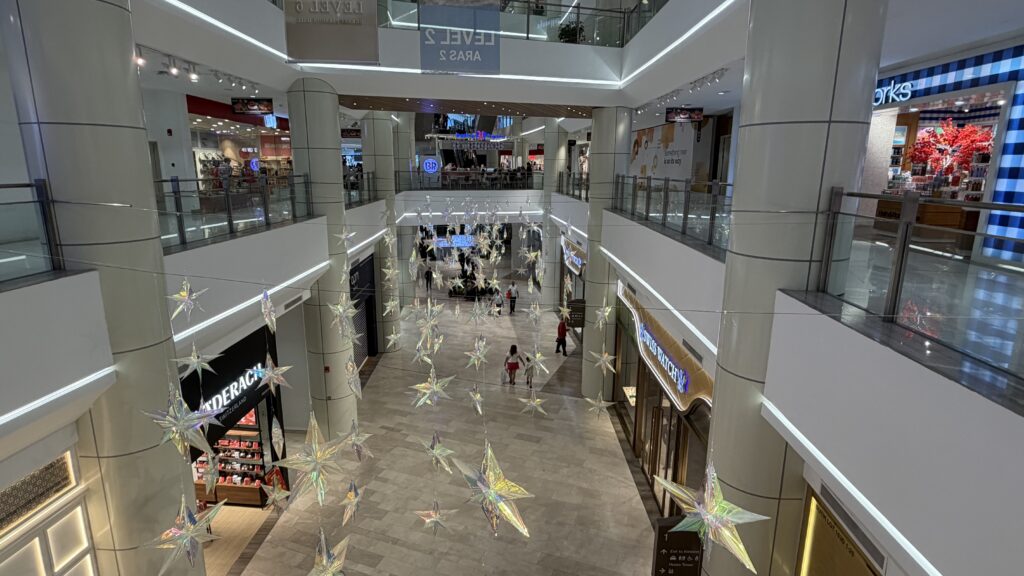
Lion Dance in Gurney Paragon Mall – Opened in 2013, Gurney Paragon Mall is a modern nine-storey shopping mall that houses over 200 outlets, including international brands, fashion boutiques, and a wide range of dining options.
On the day we arrived in Penang, it happened to be Chinese New Year, and we discovered there would be a lively Lion Dance performance at Gurney Paragon that afternoon. We had lunch at one of the mall’s food court restaurants and then found a good spot, ready to enjoy the festive performance and the celebratory atmosphere.
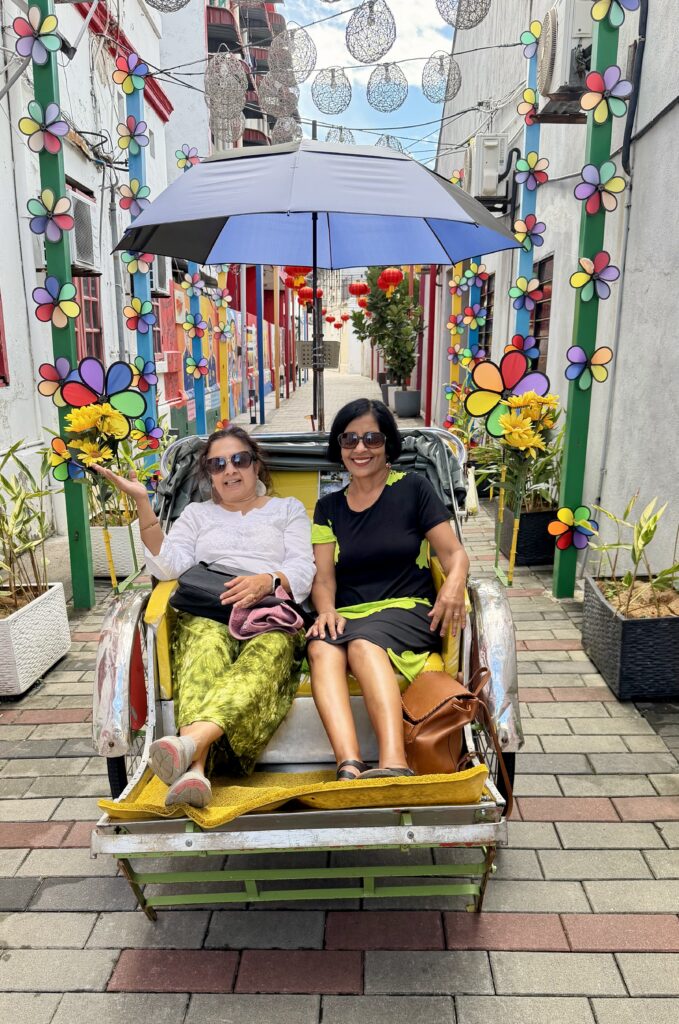
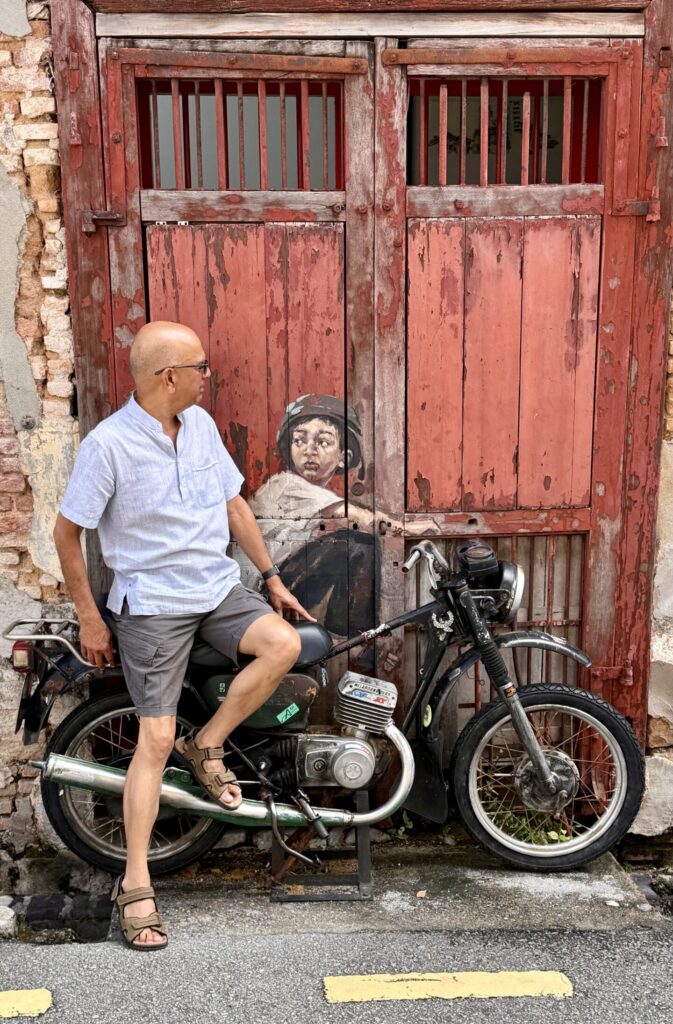
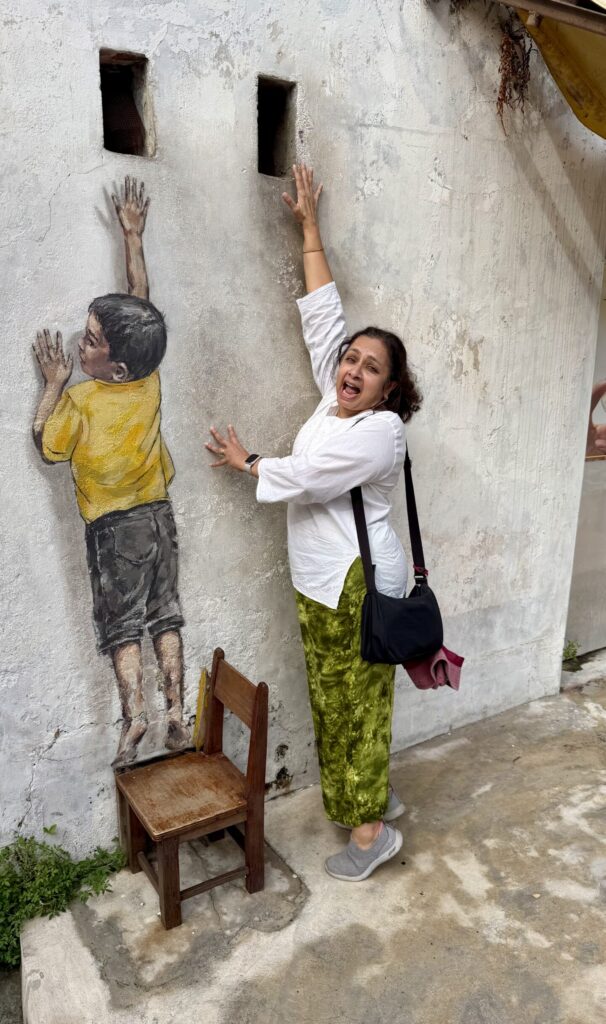
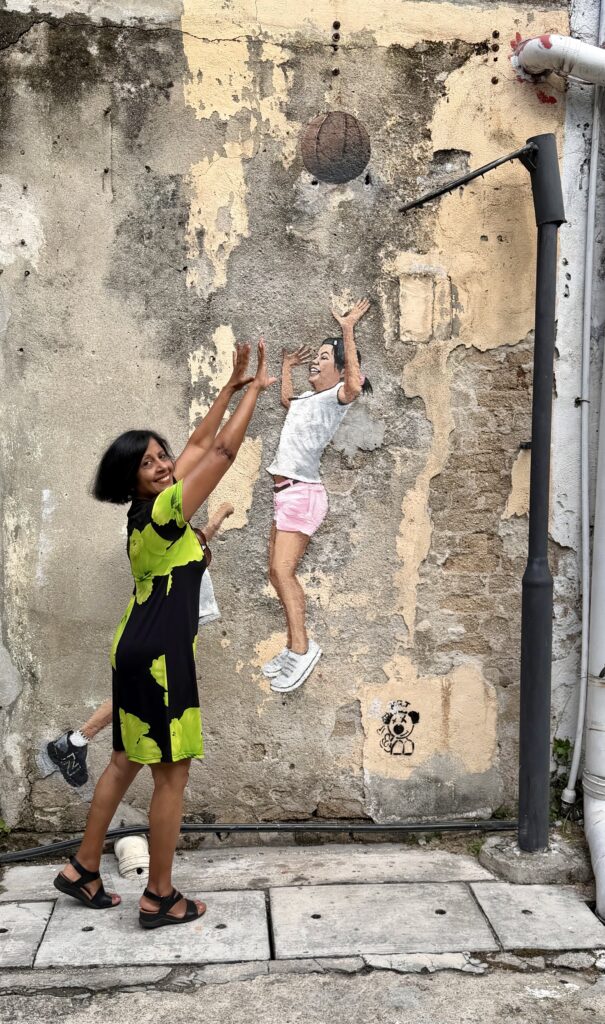
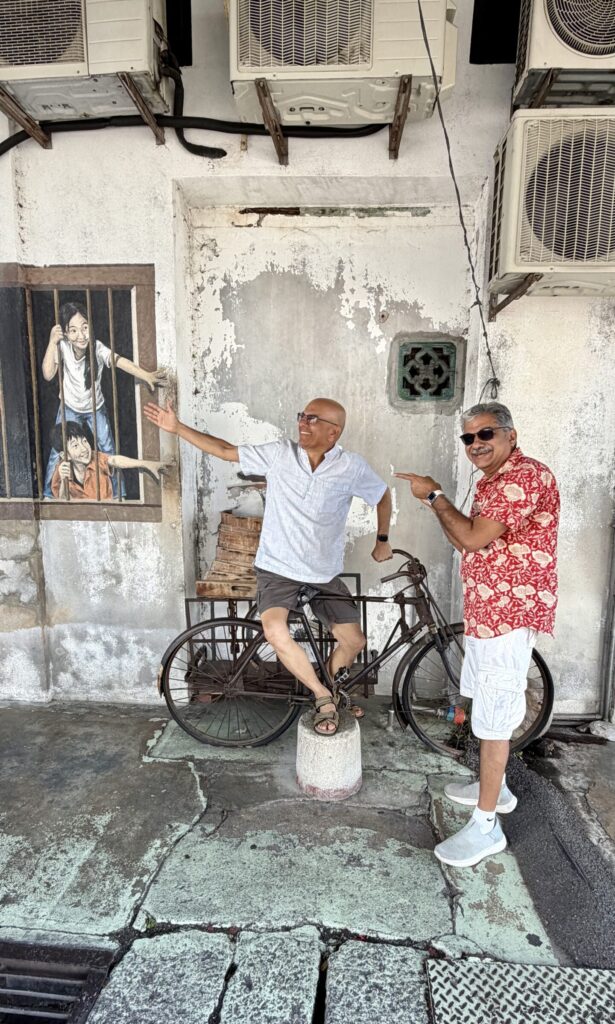
Exploring Interactive Murals in Colorful trishaw – Colorful traditional trishaws are one of the most charming sights in George Town, offering nostalgic rides through the UNESCO-listed heritage streets. These three-wheeled vehicles, often brightly decorated with flowers, lights, and cartoon characters, take visitors past historic landmarks and famous murals. They are commonly found along Armenian Street, Jalan Masjid Kapitan Keling, and near Chowrasta Market, waiting for passengers eager to explore the old town.
We paid RM40 for a 30-minute trishaw ride, and it turned out to be totally worth it. The driver took us to all the interactive murals around George Town, showed us exactly how to pose, and even helped take our photos. It was by far the most efficient and enjoyable way to cover the murals. We had earlier tried walking around with a map, but it was surprisingly challenging to locate them quickly and easily on our own.
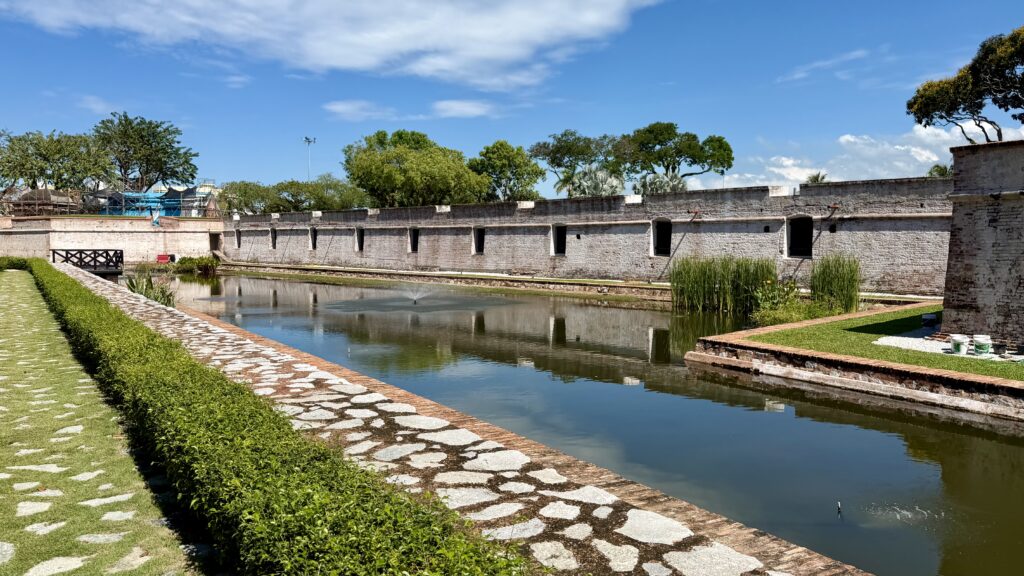
Fort Cornwallis – is the largest standing fort in Malaysia, built in the late 18th century by the British East India Company. It was named after Charles Cornwallis, who was Governor-General of Bengal at the time. The bastion fort was constructed to defend against potential threats during the Napoleonic Wars — though those attacks never materialized.
The lighthouse at Fort Cornwallis, was built in 1882, and is actually a 70-foot skeletal steel lighthouse, quite different from the traditional stone tower ones. It was constructed to guide ships safely into Penang Harbour and is one of the few surviving colonial-era lighthouses in Malaysia.
The clock tower at the entrance of Fort Cornwallis is the Queen Victoria Memorial Clock Tower. It was built in 1897 to commemorate Queen Victoria’s 60 years on the British throne.
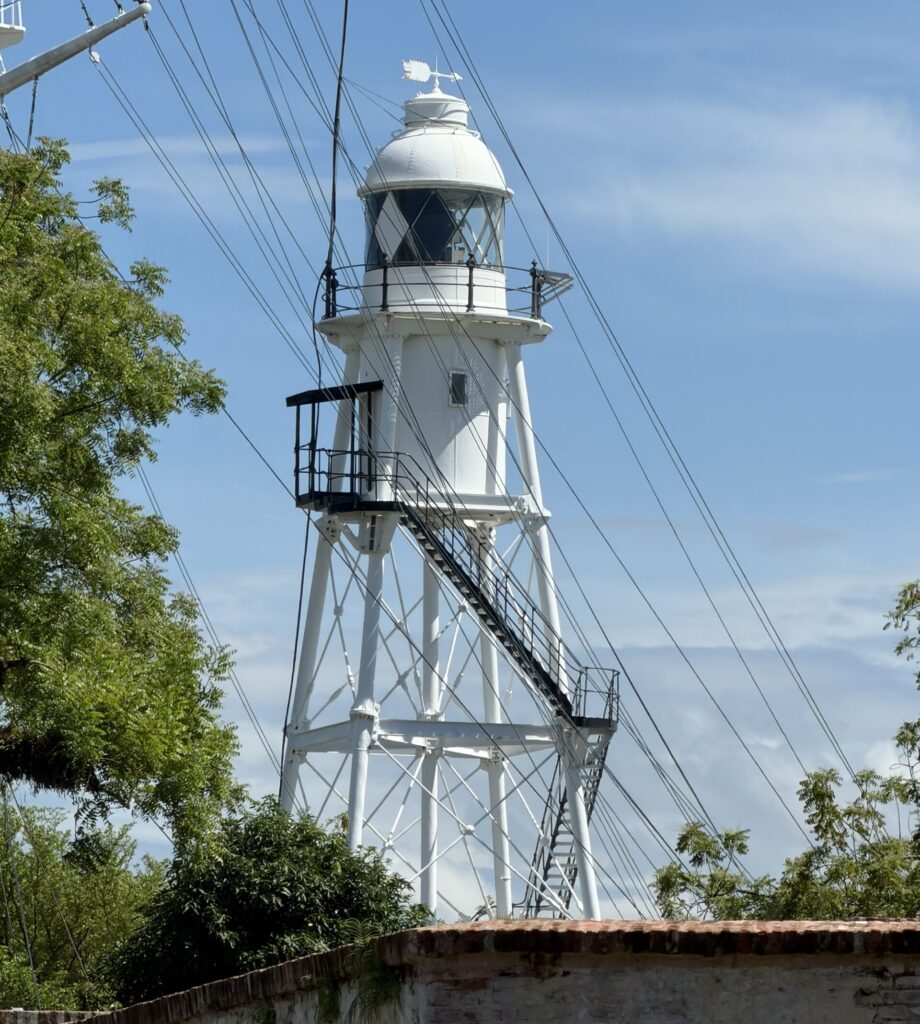
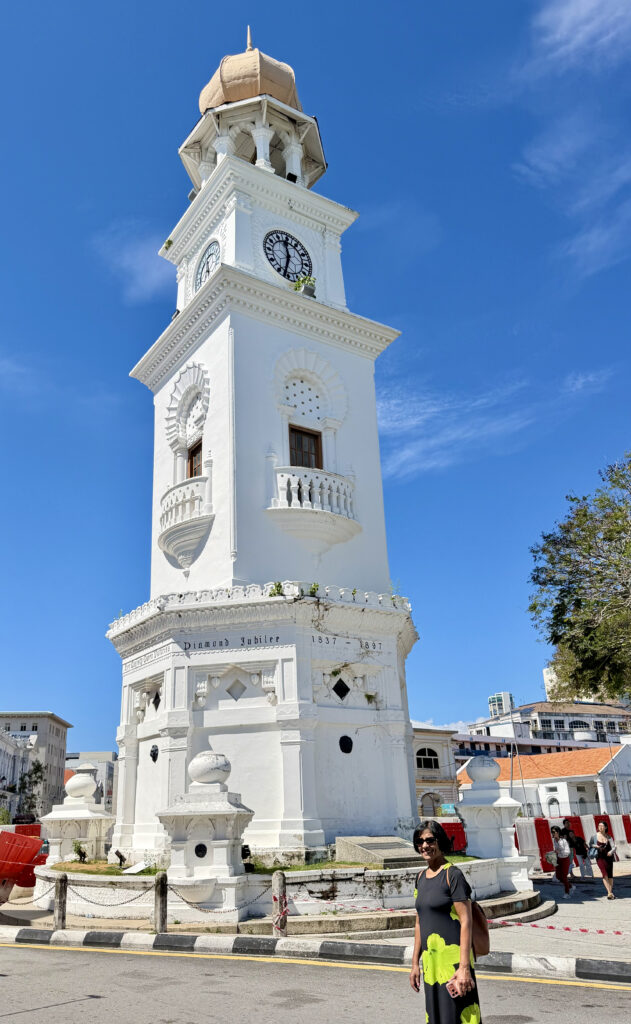
The fort was closed due to on-going renovations at the time of our visit. We spent 15 minutes walking around the fort and taking pictures of the fort walls, the lighthouse, and the clock tower.
Church of the Assumption – is a historic Roman Catholic church that was built in 1786 and is one of the oldest Catholic churches in Penang. The church features a simple yet elegant colonial-style façade, with a bell tower added later. Its interior houses traditional altars and religious statues. It serves as a center for the local Catholic community and remains an active place of worship, reflecting Penang’s multicultural heritage.
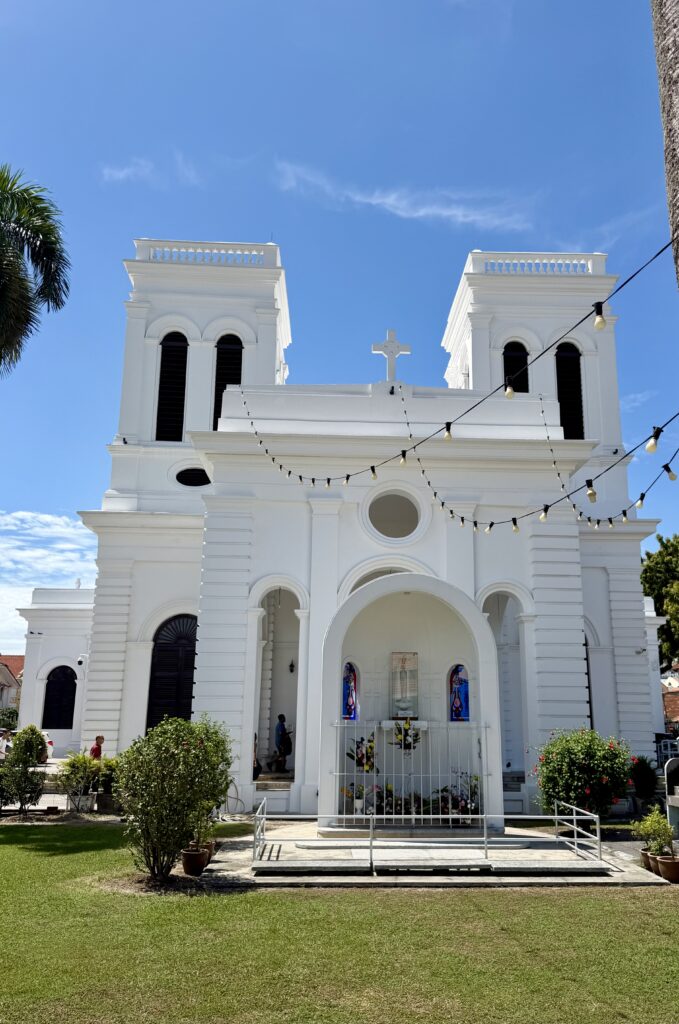
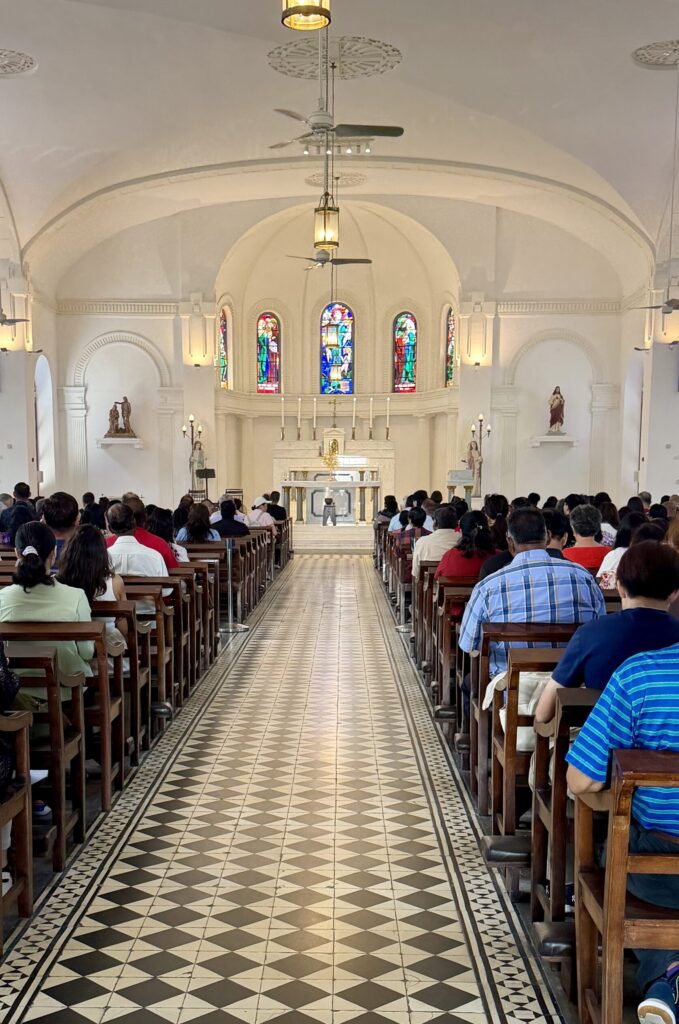
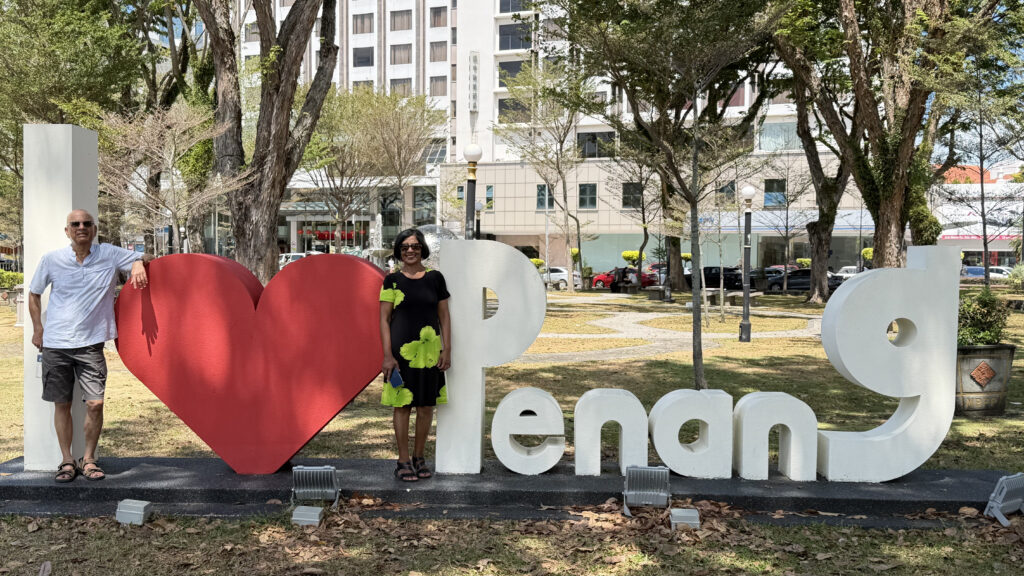
There was a I Love Penang sign close to the church where we stopped to take a picture.
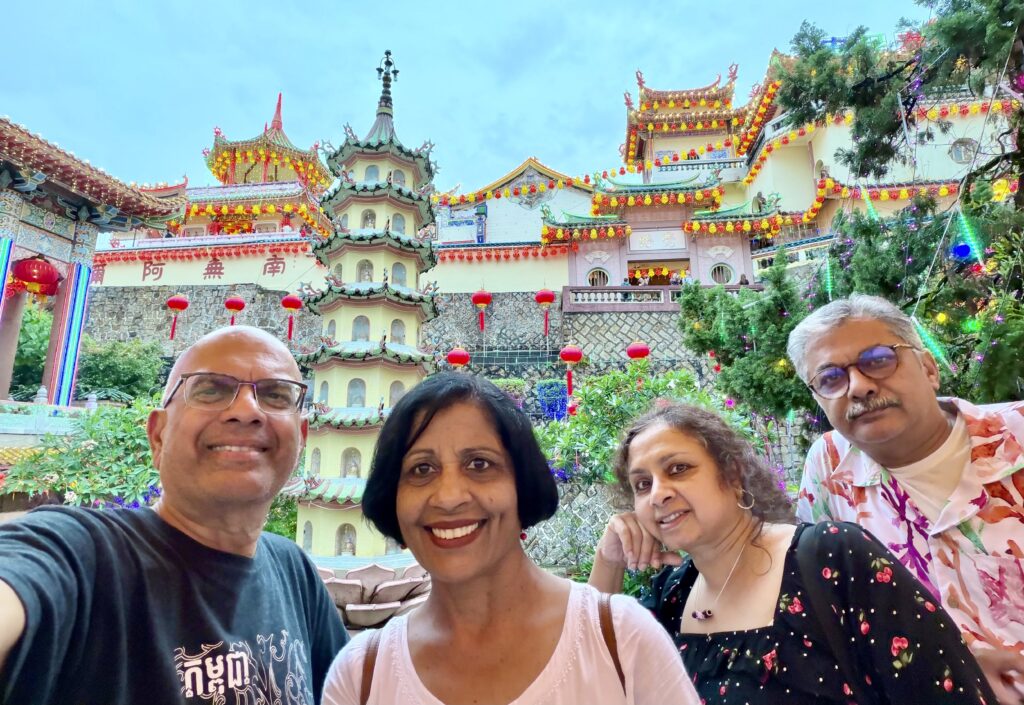
Kek Lok Si Temple (Temple of Supreme Joy or Heavenly Temple) – is the largest Buddhist temple in Malaysia. Built between 1890 and 1905 the temple complex blends Mahāyāna and Theravāda Buddhist traditions with Chinese rituals. A major pilgrimage center for Buddhists from Southeast Asia, it houses multiple shrines, Bodhisattva statues, Lohans, and guardian deities.
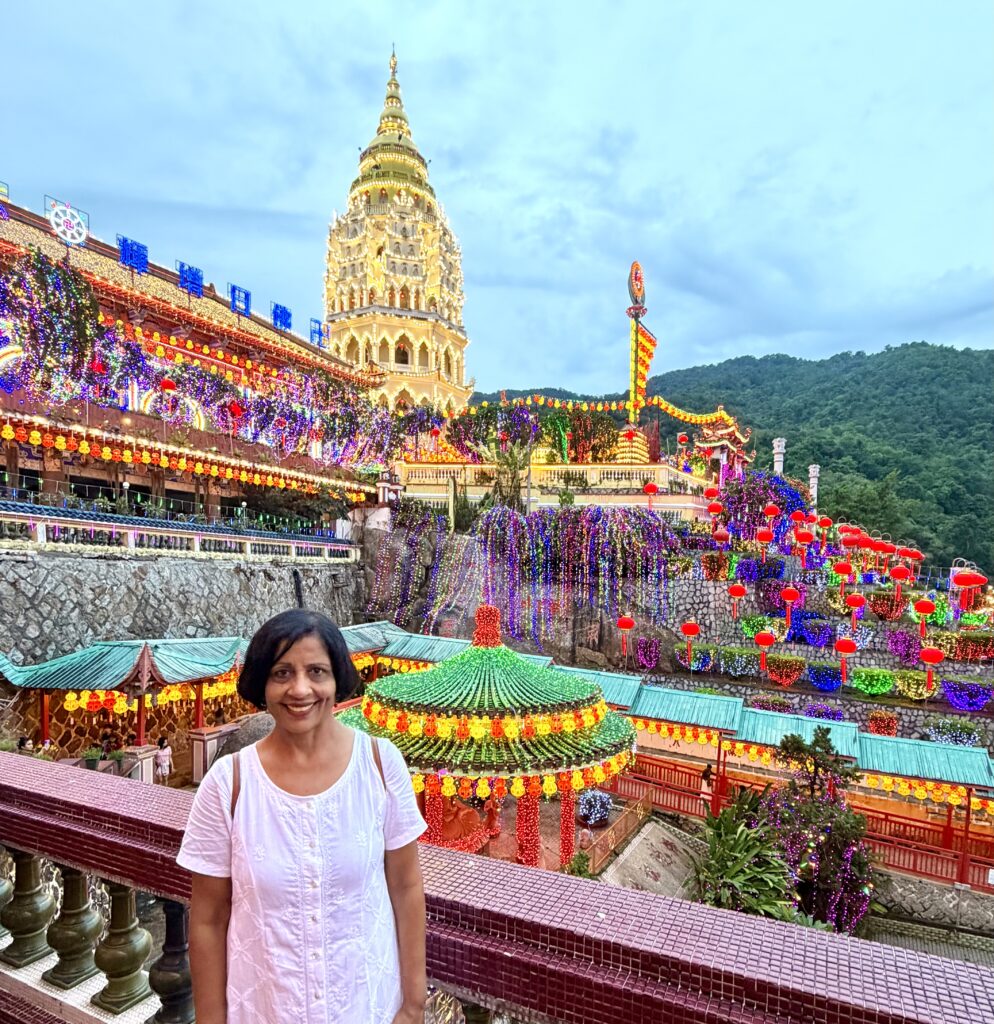
- Ten Thousand Buddhas Pagoda (Ban Po Thar) – The seven-story pagoda is a 30 m structure that was completed in 1930. It features a unique architectural blend of a Chinese octagonal base, a Thai middle tier, and a Burmese crown. The pagoda houses 10,000 alabaster and bronze Buddha statues.
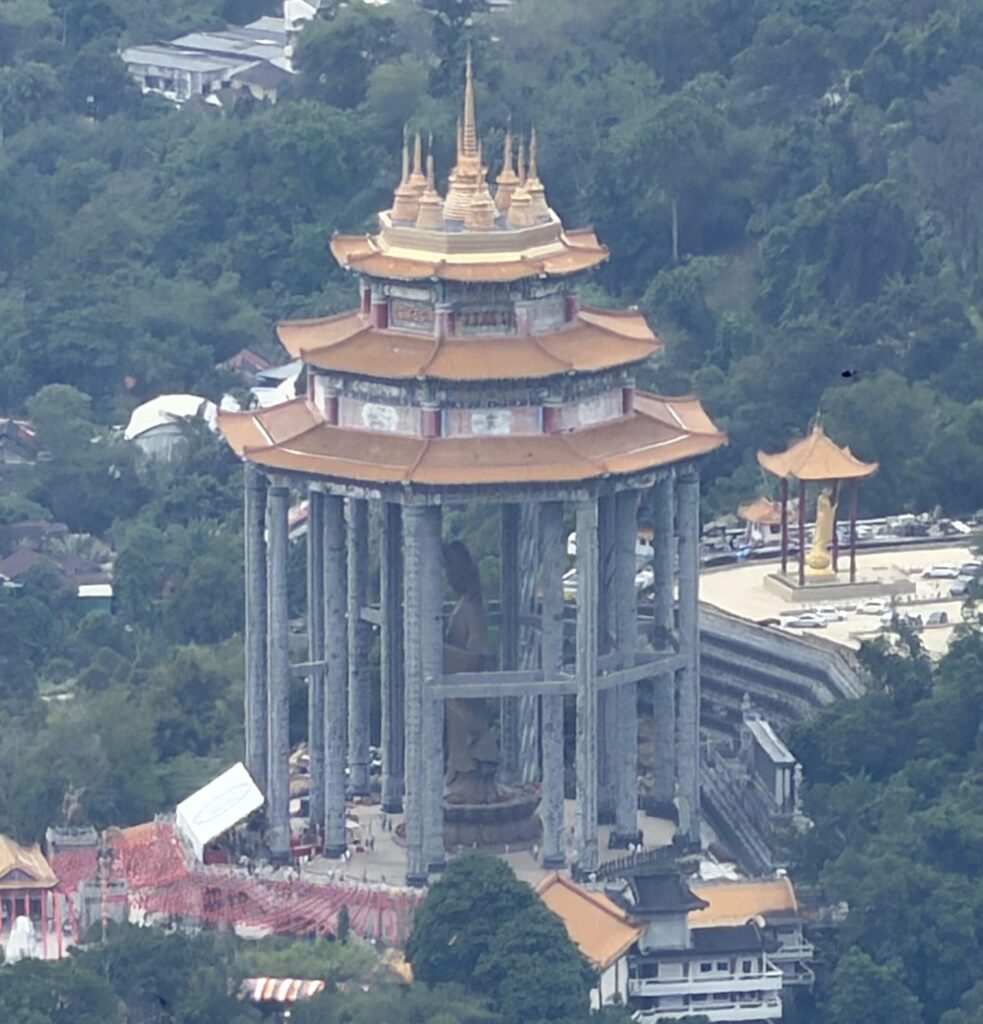
- Guanyin, the Goddess of Mercy – is 36.57-meter-tall bronze statue housed in an octagonal pavilion.
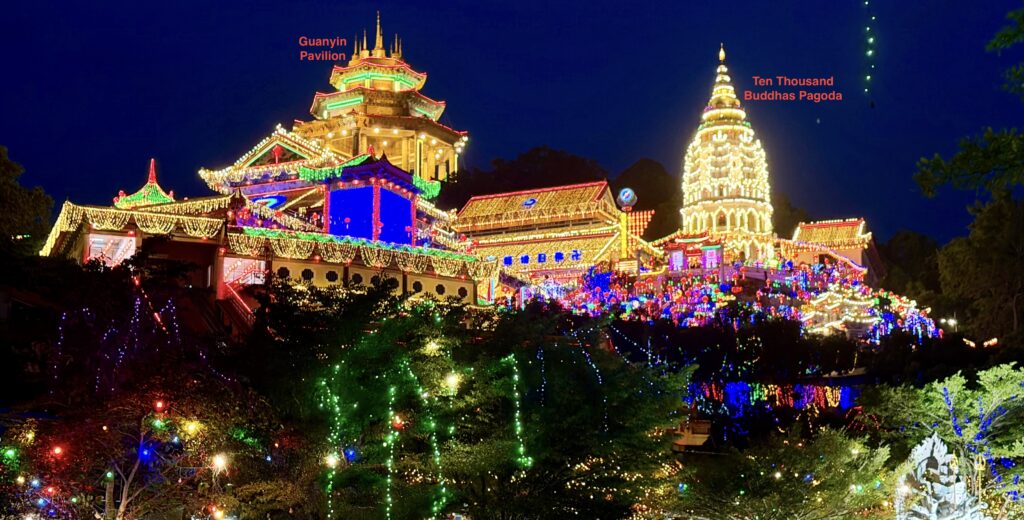
We visited the temple in the evening, and since it was Chinese New Year, the entire complex was brilliantly illuminated with colorful lights, making the temple look absolutely stunning.
Wat Chayamangkalaram (Thai Buddhist Temple) – This temple was within walking distance of our hotel. It is a prominent Theravada Buddhist temple famous for housing one of the world’s longest reclining Buddha statues and is the oldest Siamese temple in the state, founded in 1845. The reclining Buddha statue named Phra Chaiya Mongkol is 33 m long.
The temple features intricate, colorful Thai-style architecture, complete with ornate, mythical dragon statues (Nagas) guarding the entrance. It serves as a major focal point for Thai festivals in Penang, including Songkran (Thai New Year) and Loy Krathong.
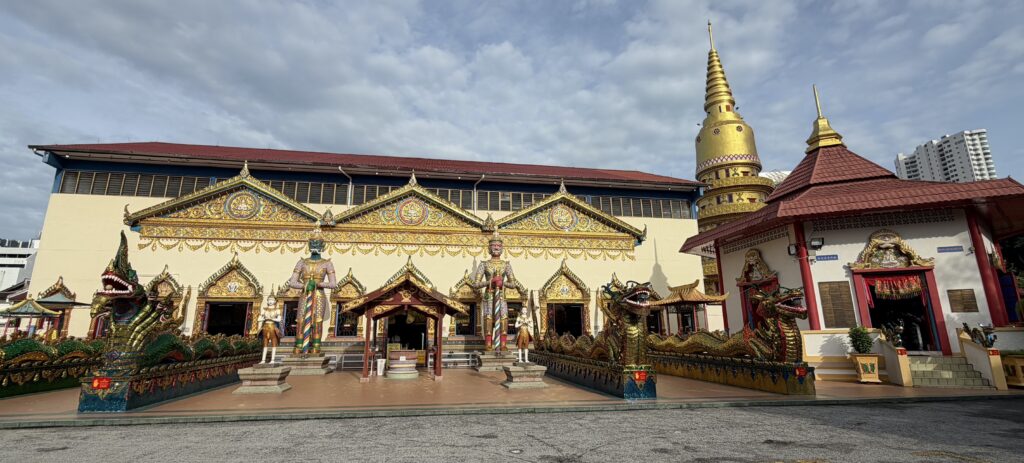
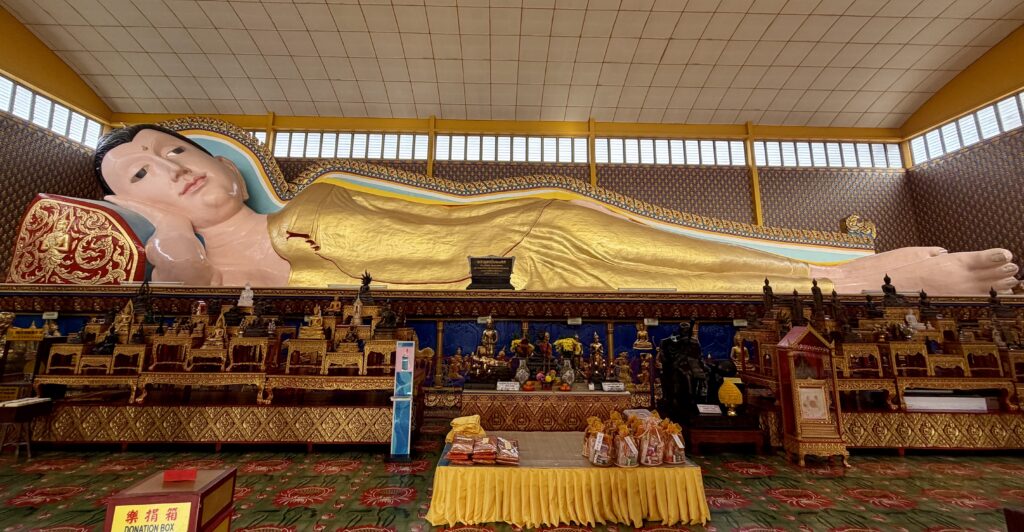
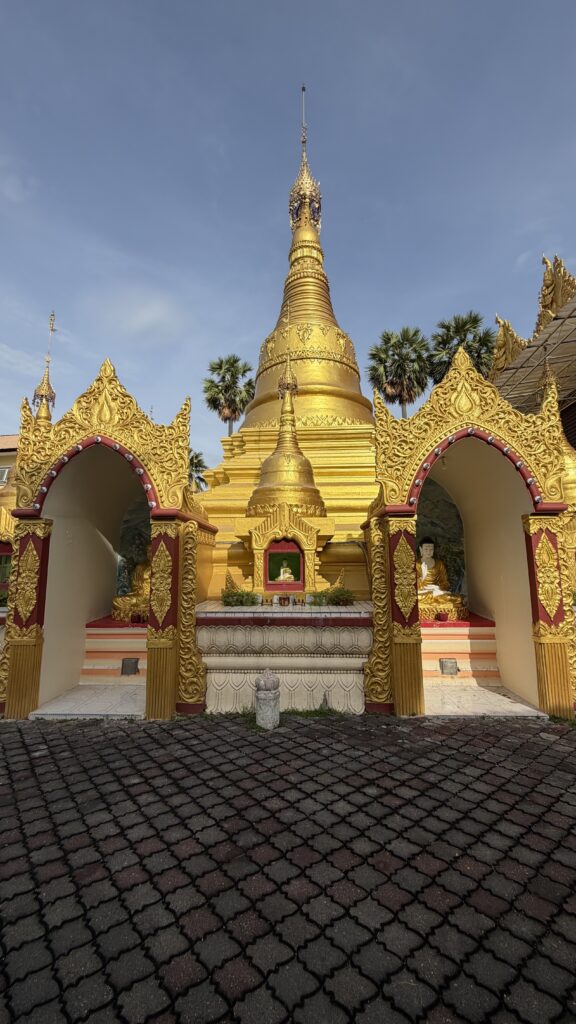
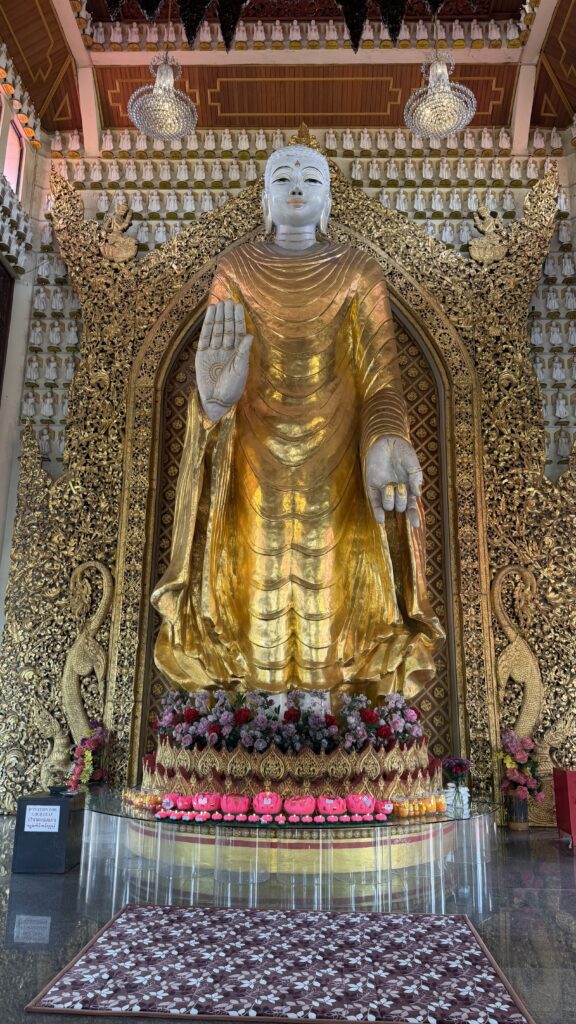
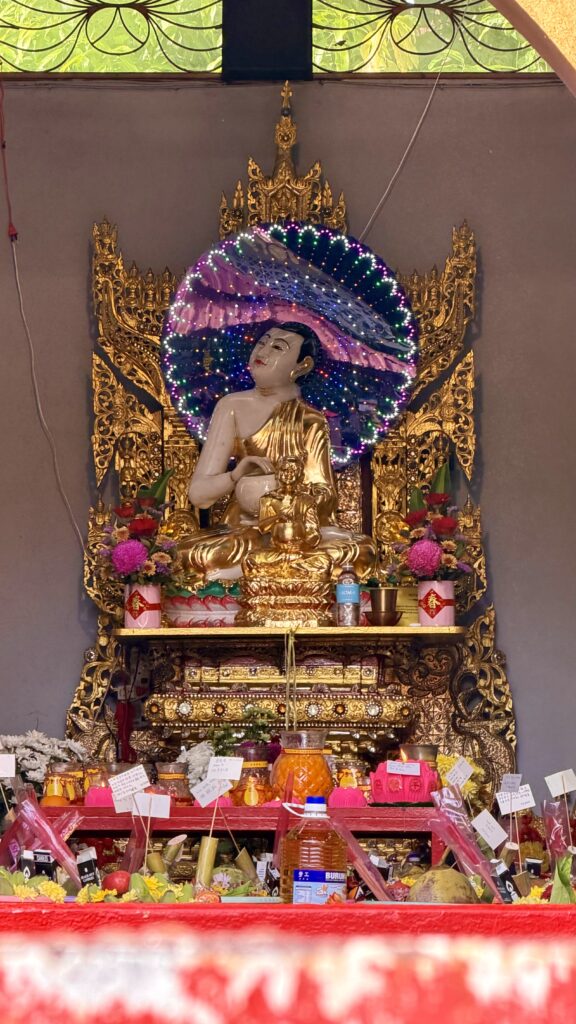
Dhammikarama Burmese Temple – is the only Burmese Buddhist temple in Penang, located directly opposite Wat Chayamangkalaram. The oldest portion of the temple is its stupa which was consecrated in 1805. Over the years the temple was expanded and the shrine hall was last renovated in 1995 to cope with the increase in the number of devotees.
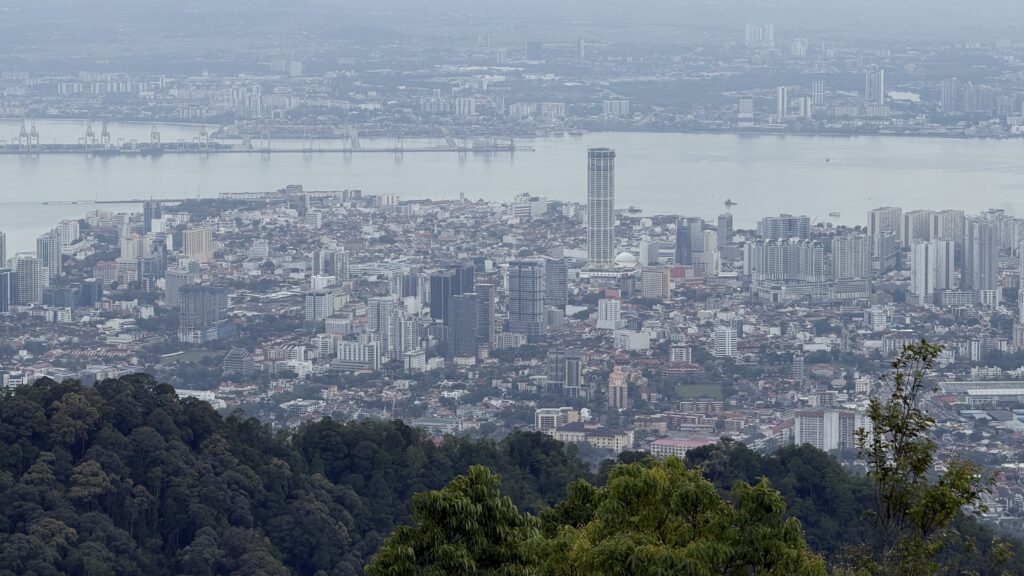
Penang Hill – Rising 833 meters above sea level, Penang Hill is a popular eco-tourism destination about 9 km west of George Town. Known for its cooler climate and sweeping panoramic views of Penang Island, it offers a refreshing escape from the city heat.
Visitors have 3 options to reach the summit –
- Penang Hill Funicular Railway – Most popular option. Buy tickets online in advance, or you may not get your preferred time slot. We tried purchasing at the counter and the wait time was over 2 hours, and fast-lane tickets were already sold out for the day.
- Jeep – This is the option we chose. The pickup point is next to Penang Botanic Gardens, about a 20-minute drive from the funicular station.
- Hike – Starting point is near the Moon Gate at Penang Botanic Gardens. The hiking trail follows the same steep jeep track and takes 2–4 hours each way, depending on your fitness level. It’s a continuous uphill climb, so come prepared with water and good shoes.
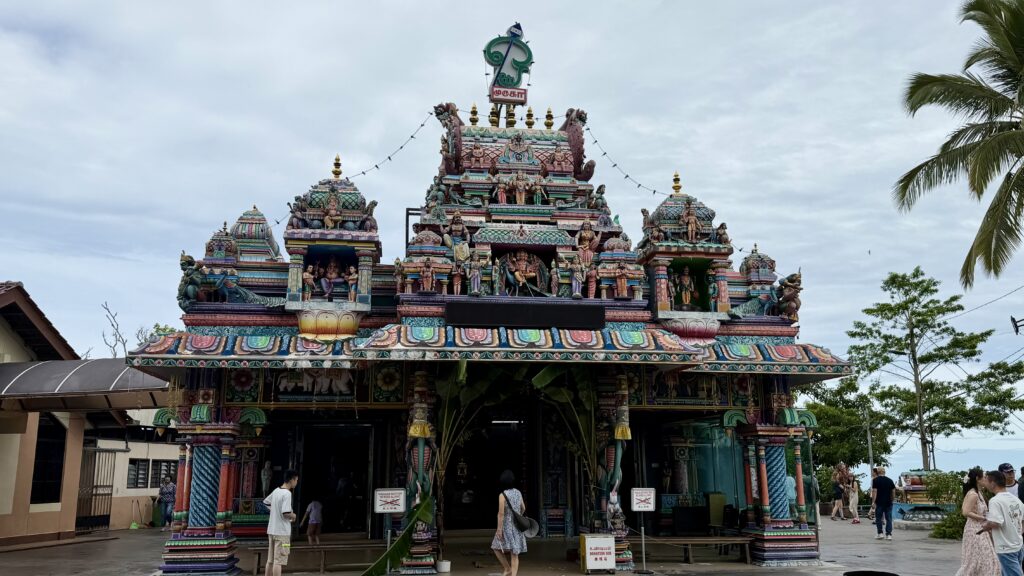
After we reached the top, we first took the steps up to the Hindu temple – Sri Aruloli Thirumurugan.
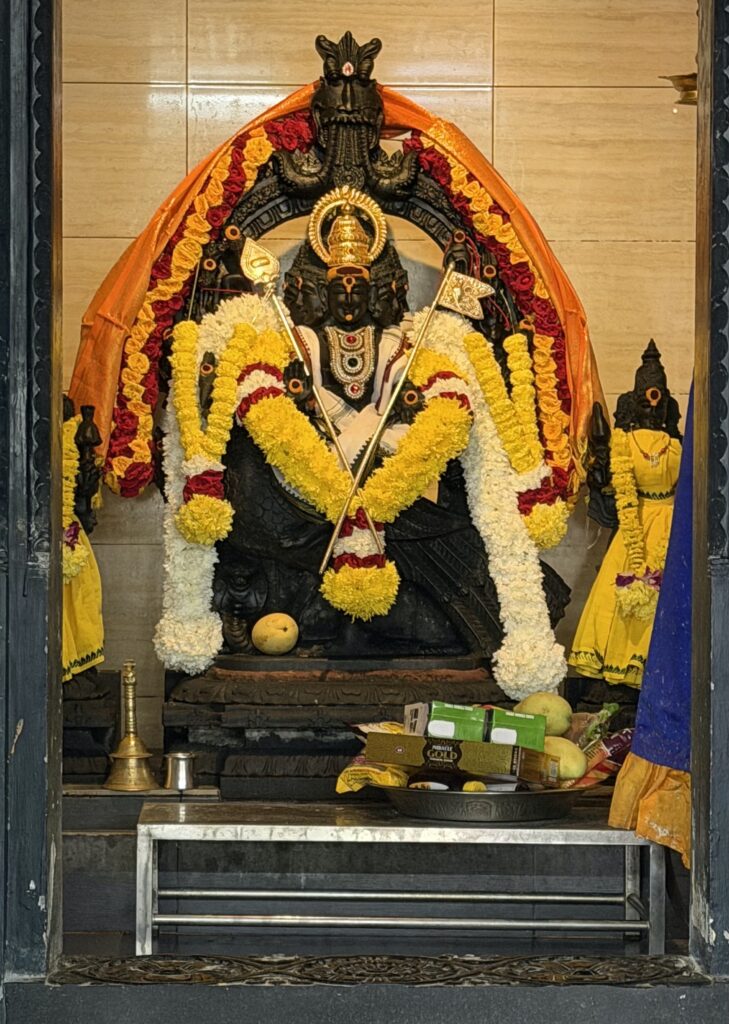
Sri Aruloli Thirumurugan Temple – set up in 1800s, it is dedicated to Lord Murugan (Karthikeya), the Hindu God of War and son of Lord Shiva. He is commonly depicted holding a spear (vel) and accompanied by a blue peacock, his sacred mount.
We then walked around taking in the view of Penang from various view points.
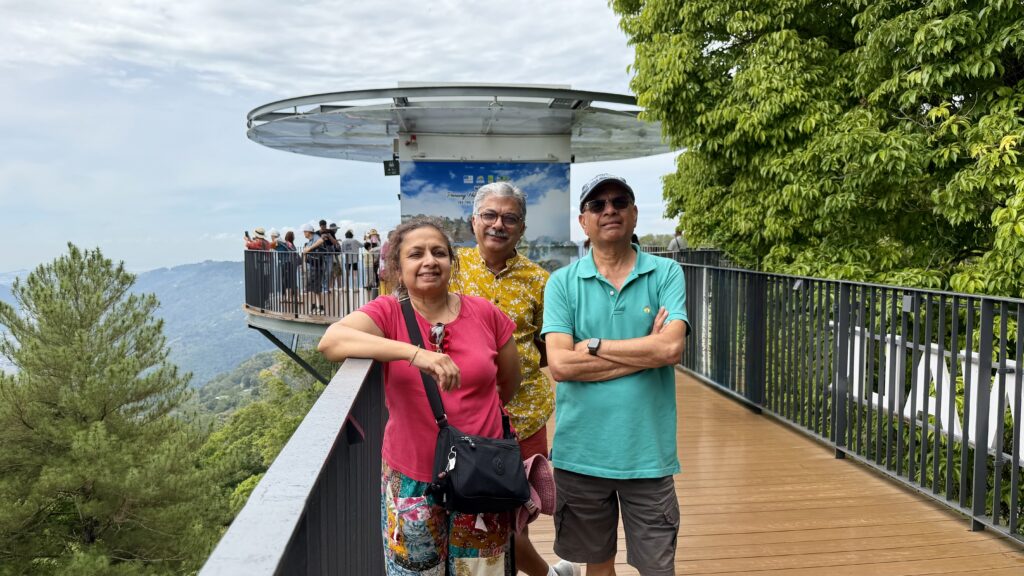
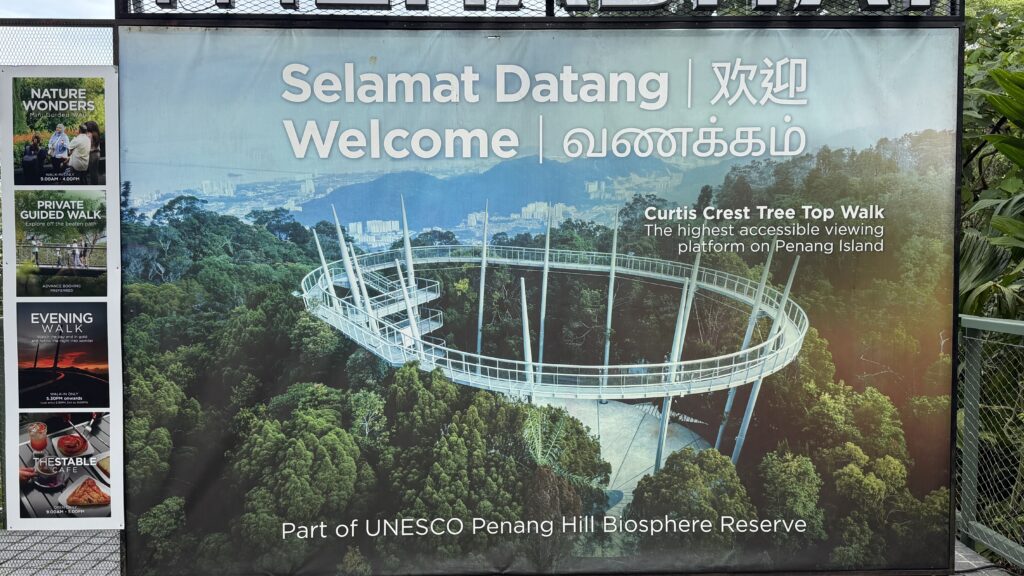
We stopped by The Habitat to check it out, but none of us felt like spending another hour exploring at the top, so we decided to skip the canopy walk and took the jeep back down.
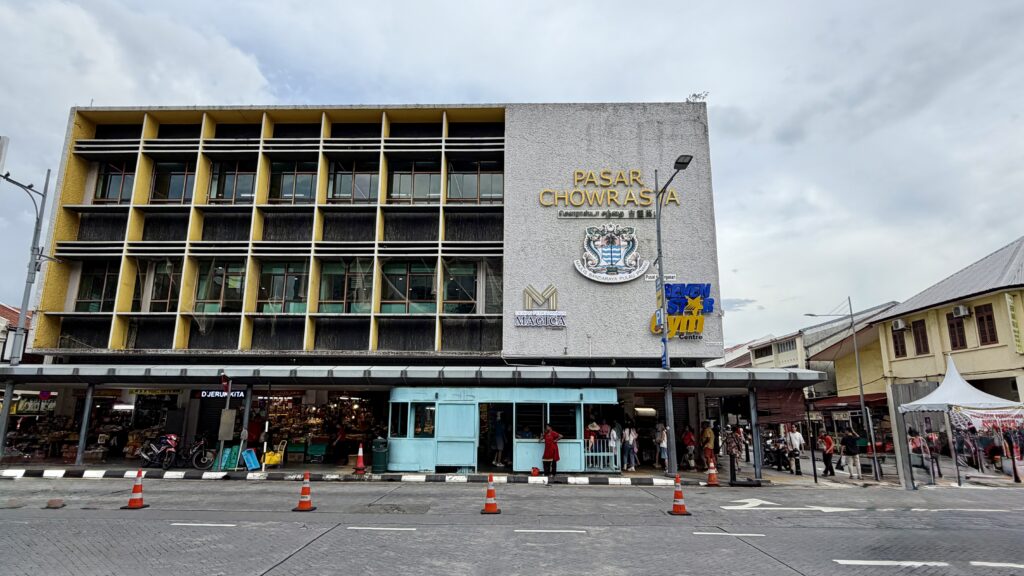
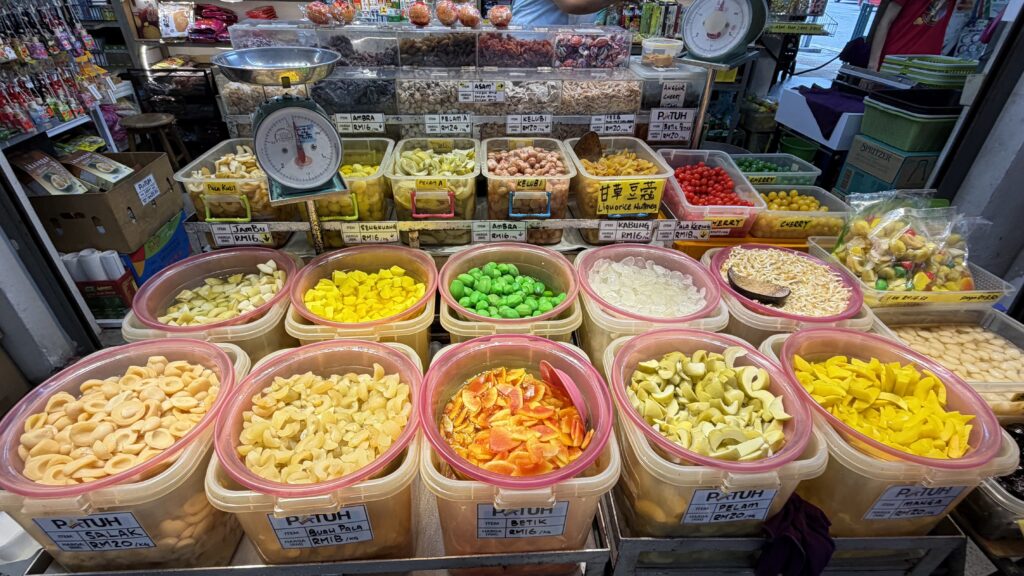
Chowrasta Market in George Town – Located along Penang Road, Chowrasta Market is one of the oldest traditional markets in George Town dating back to the late 19th century and remains a lively hub for locals. The ground floor is a wet market selling fresh vegetables, fruits, seafood, and meat, while the upper level features stalls offering local products such as nutmeg, pickled fruits, spices, and Penang souvenirs.