3 Nights in Grandezza Hotel
After exploring Telč, we arrived in Brno, the second-largest city in the Czech Republic and the historic capital of Moravia. While often overshadowed by Prague, Brno has its own distinctive character, combining a rich history with a vibrant modern atmosphere. As we explored the city, we discovered a fascinating blend of medieval architecture, elegant squares, grand churches, and contemporary buildings.
- Zelný trh (Vegetable Market)
- Grandezza Hotel
- Parnassus Fountain
- Pillar of the Holy Trinity
- Reduta Theatre
- Brno Underground
- Capuchin Monastery
- Old Town Hall
- Liberty Square (Náměstí Svobody)
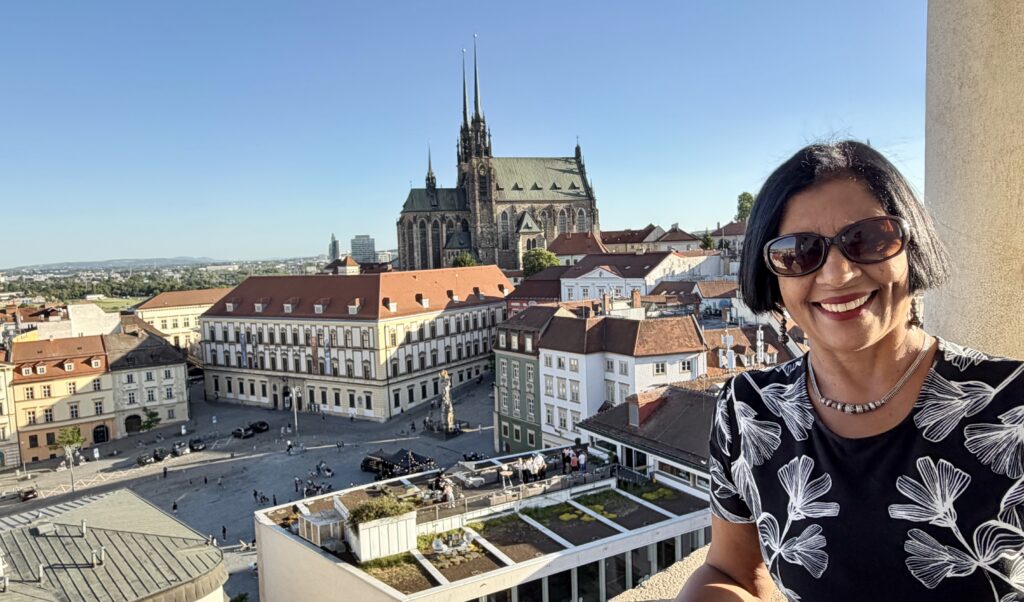
- Cathedral of Saint Peter and Paul
- The Church of Saint James
- Denis Gardens
- Mendel Museum of Masaryk University
- Villa Tugendhat
- Villa Löw-Beer
- Lužánky Park
- Špilberk Castle
Zelný trh (Vegetable Market) – We began our exploration of Brno at this historic square where our hotel was conveniently located. Staying here turned out to be an excellent choice, as many of the city’s main attractions were within easy walking distance.
One of the oldest squares in Brno, Zelný trh has served as a marketplace for centuries and continues to host a lively daily market. Each morning, stalls fill the square with fresh fruits, vegetables, flowers, and local produce. We spent some time browsing the colorful displays and picked up a box of sweet, juicy strawberries to enjoy while wandering through the city.
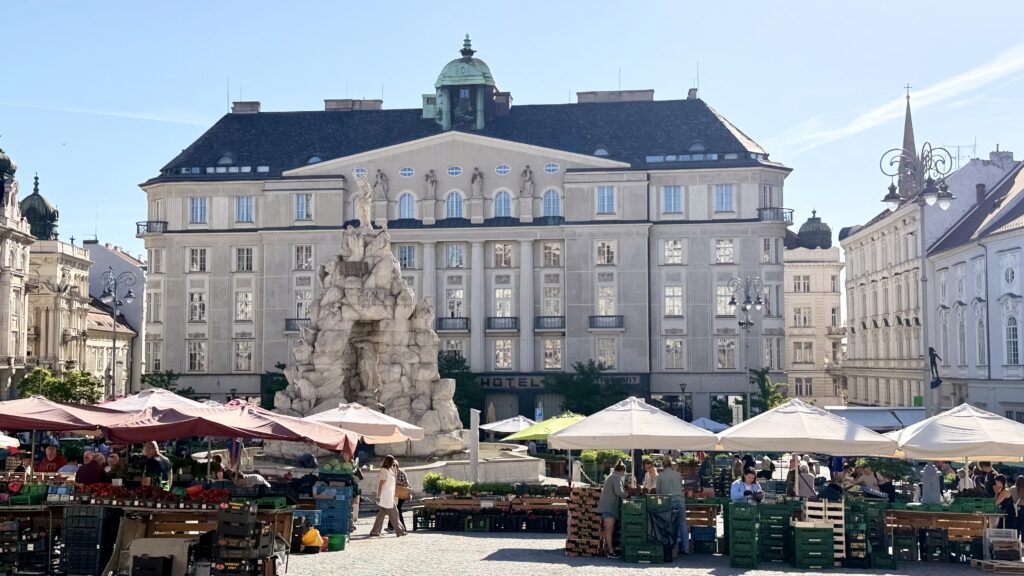
The square is also home to a few historic buildings and fountains –
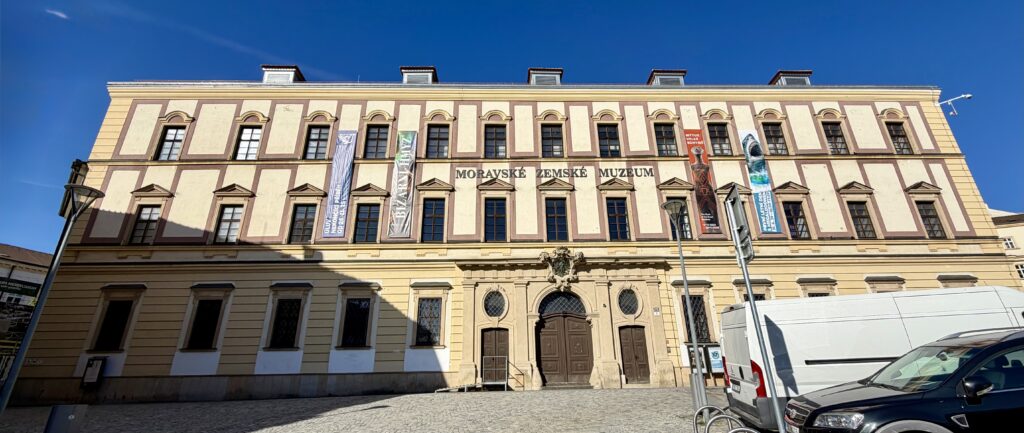
- The Dietrichstein Palace – This building was originally constructed in the early 17th century for Cardinal Franz von Dietrichstein and later rebuilt in Baroque style. Today the building houses the Moravian Museum and is the country’s second-largest and second-oldest museum in Czech Republic, housing millions of objects across scientific and cultural fields. A notable episode in its history involves a Beethoven manuscript owned by the Petschek family during World War II. After the Nazi occupation, the Gestapo intercepted the manuscript, but a museum expert falsely declared it inauthentic to prevent it from being seized, allowing the museum to keep it for decades.
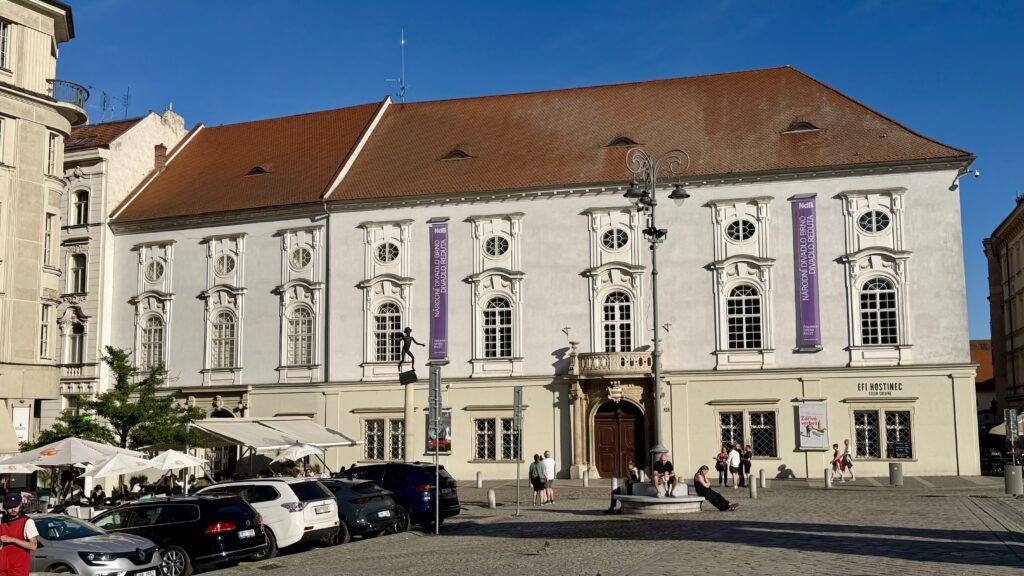
- Reduta Theatre – is considered the oldest theatre building in Central Europe. It originally began as the Taverna Theatre in Renaissance times and was first mentioned in records in 1608. In the 1730s, it was remodeled to include a dedicated theatre and ballroom. A famous highlight in its history is that Wolfgang Amadeus Mozart performed there in 1767 with his sister. Limited guided tours are available on certain days but the theater was closed during the time of our visit.
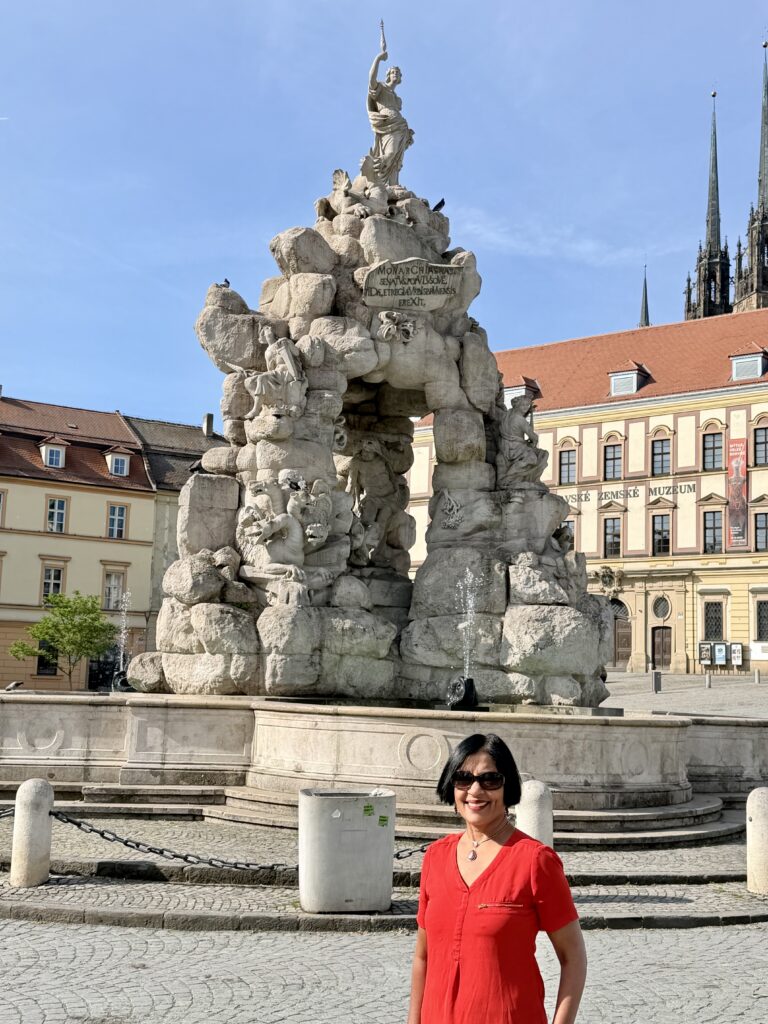
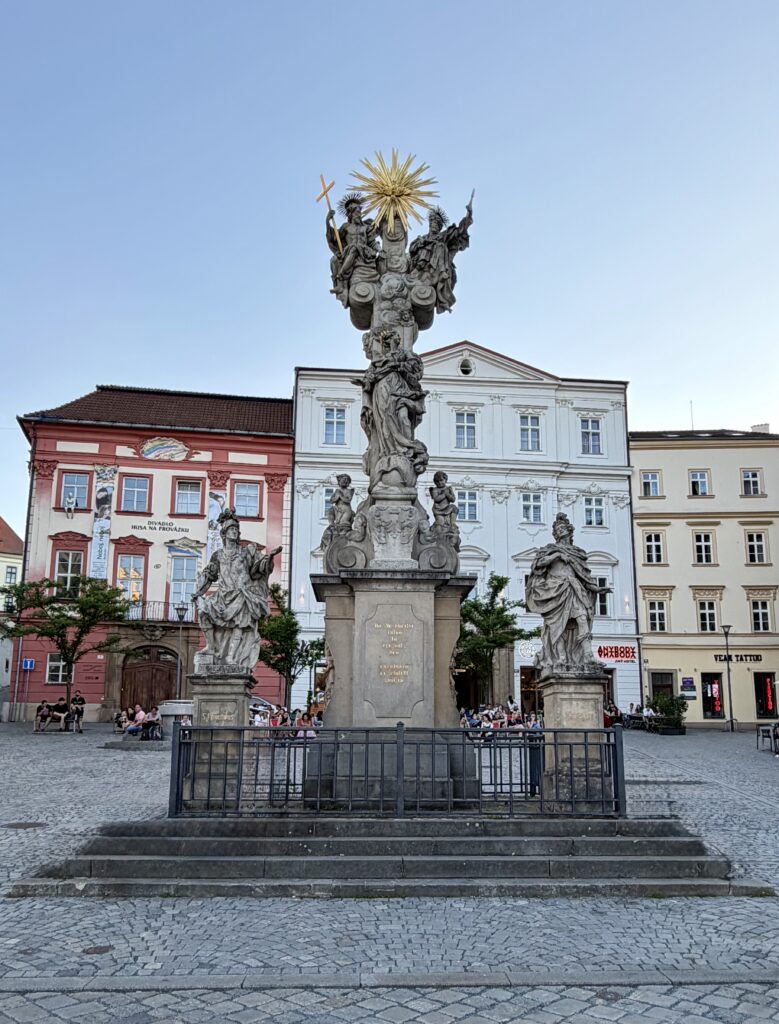
- Parnassus Fountain – this striking Baroque monument located at the center of the square was built between 1690 and 1695 and features a distinctive six-pointed star-shaped design. The fountain is a highly ornate example of Baroque art, combining mythology, symbolism, and dramatic sculptural design.
- Pillar of the Holy Trinity – Located in the lower half of the square, this column features traditional religious iconography common in Central European historical plazas.
Brno Underground, Labyrinth under Zelný trh – Beneath the square lies a Baroque-era cellar system used for storage and shelter, featuring exhibits like food storage area, wine cellar, alchemist’s workshop, a well, and historical punishments such as pillories and cages. We went on a guided tour which runs every hour.
There are other Brno Underground tours available if you have more time to explore like – Ossuary at the Church of St. James, and Underground Reservoirs at Žlutý kopec. Together, these sites reveal different periods of Brno’s past—from medieval commerce and burial traditions to modern military history—all connected through its underground spaces.
Capuchin Monastery – located near Zelný trh (Vegetable Market) this baroque-style building has an ornate rococo interior, including a memorable fresco and a preserved library with shelves of ancient volumes climbing to ornate ceilings.
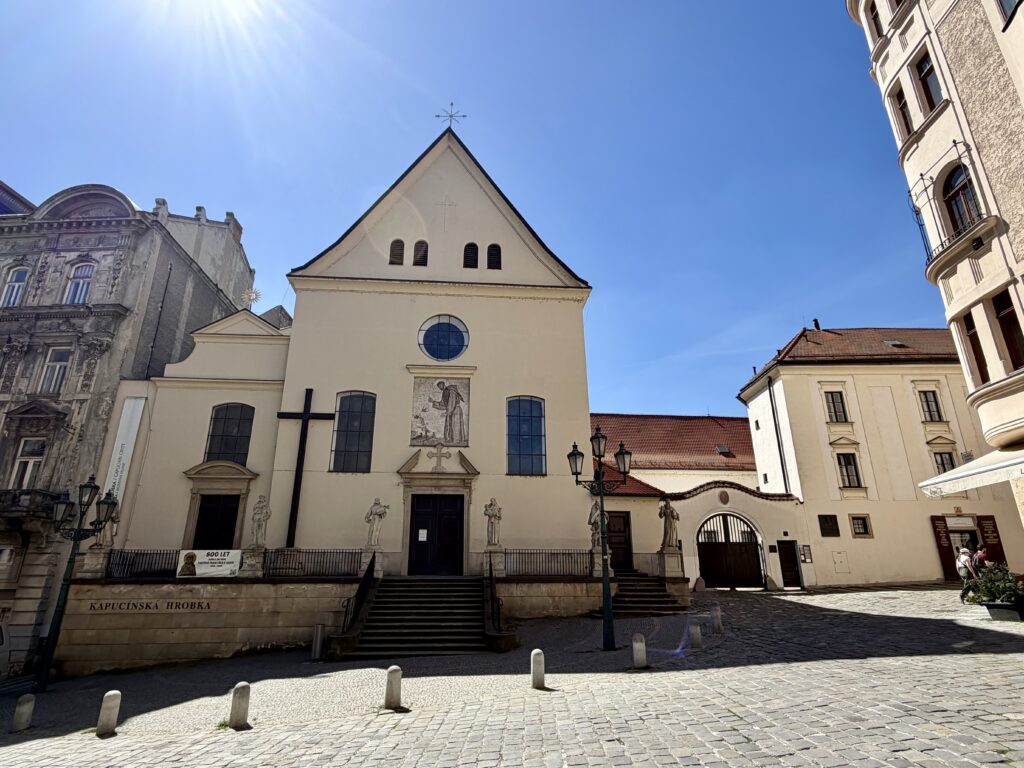
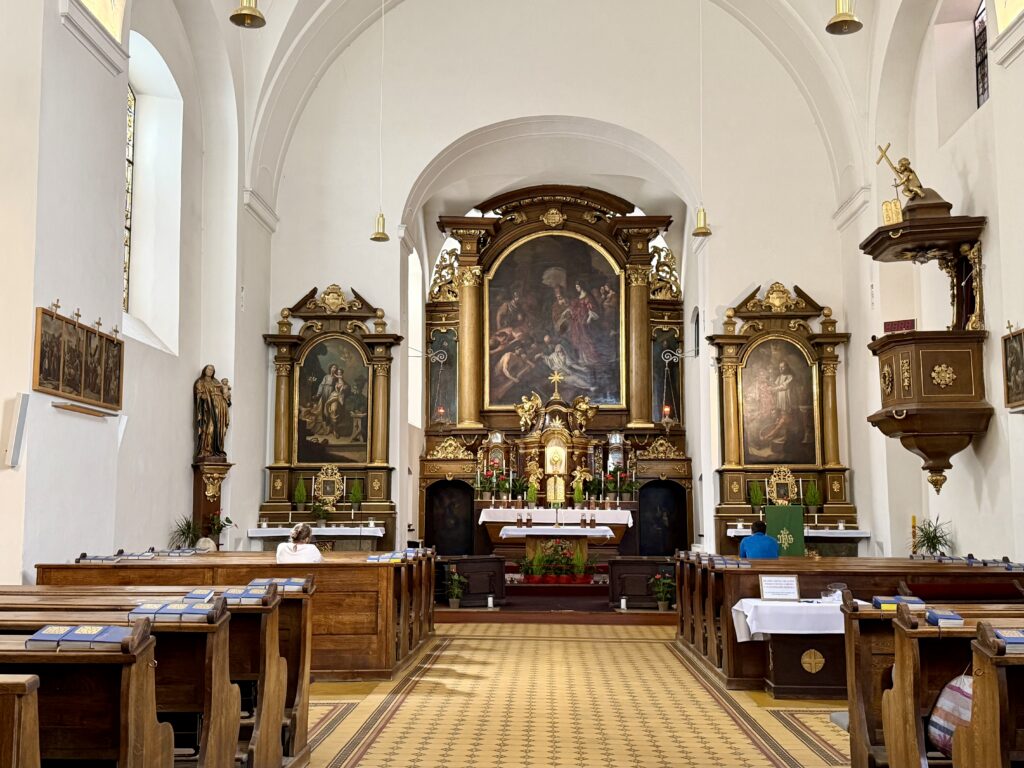
Downstairs though and you’ll be confronted by an 18th-century crypt where members of the Capuchin order and other important figures of the time are lying around mummified like they’ve decided to take 200-year naps – We did not go downstairs.
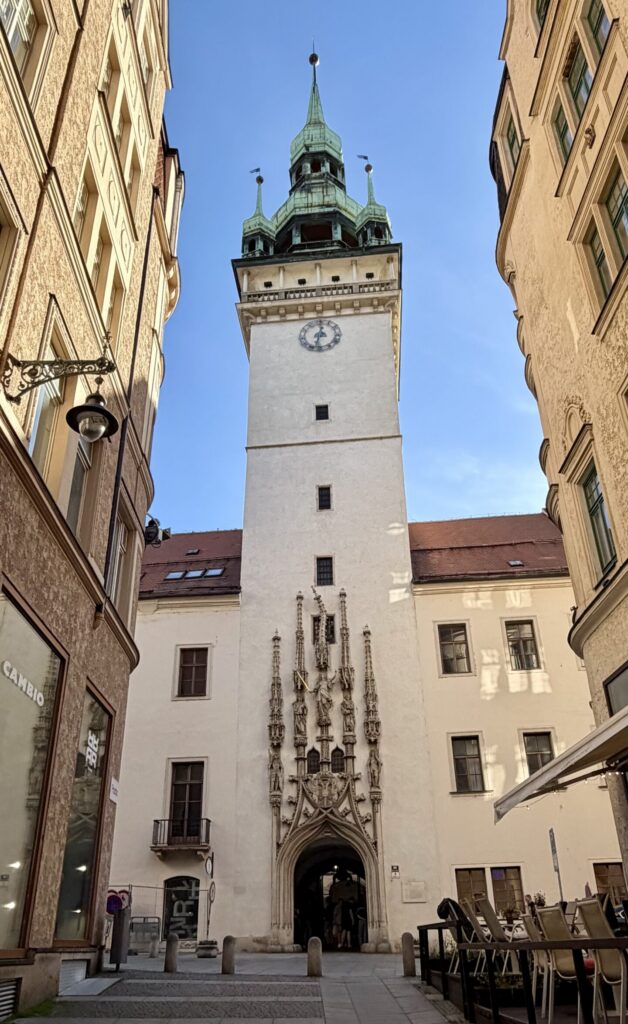
Old Town Hall – is one of the city’s oldest historic buildings, dating back to the 13th century. Visitors can climb its tower for panoramic views over the city. One of its most famous architectural features is a crooked turret on the decorative Gothic façade. According to local legend, the architect Anton Pilgram intentionally distorted it after a dispute over payment with the city council. Another, less flattering story claims the mistake was caused by excessive drinking.
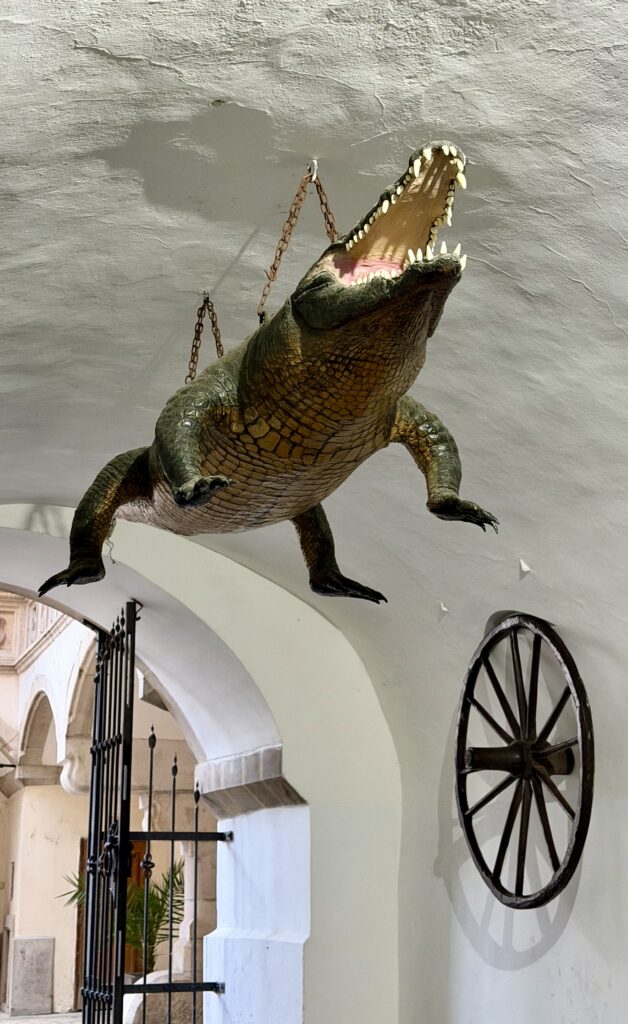
Inside the passage beneath the tower hangs one of Brno’s most famous curiosities – what appears to be a large stuffed crocodile. Locals know it as the Brno Dragon, a legendary creature said to have terrorized the city and its livestock. According to the legend, a clever butcher killed the beast by feeding it a sack filled with lime; after swallowing it, the dragon became desperately thirsty, drank enormous amounts of water, and died. There is also the Brno Wheel on the wall, a wagon wheel supposedly built and delivered from the city of Teplice 45 km away in just 12 hours as part of a medieval bet. It’s a symbol for Brno’s work ethic.
Liberty Square (Náměstí Svobody) – is the lively central square and social hub of Brno. Dating back to the 13th century, its distinctive triangular shape was formed by ancient trade routes and has long served as the city’s main marketplace and gathering place. At one end of the square is The Plague Column – A beautiful 17th-century Baroque monument erected to honor the saints and protect the city’s residents during devastating epidemics and at another end is the Astronomical Clock.
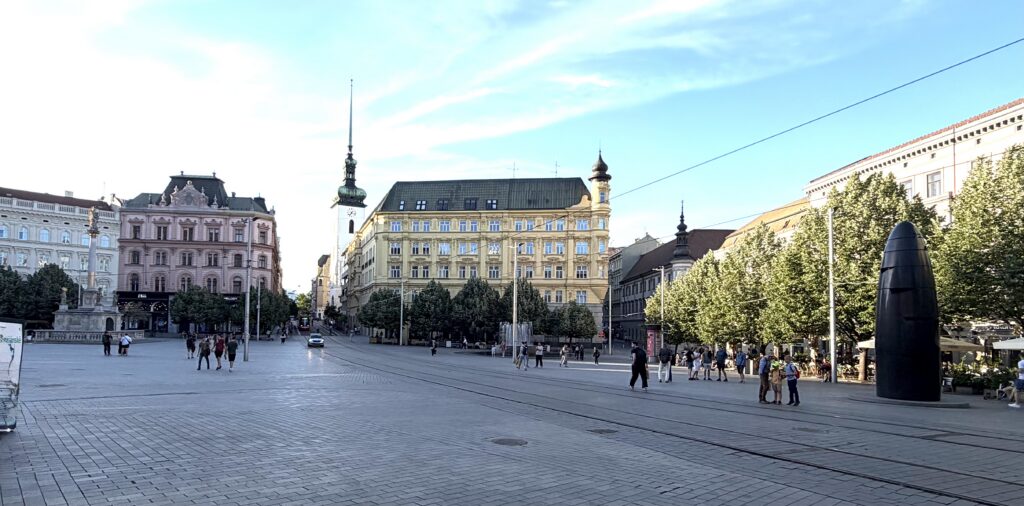
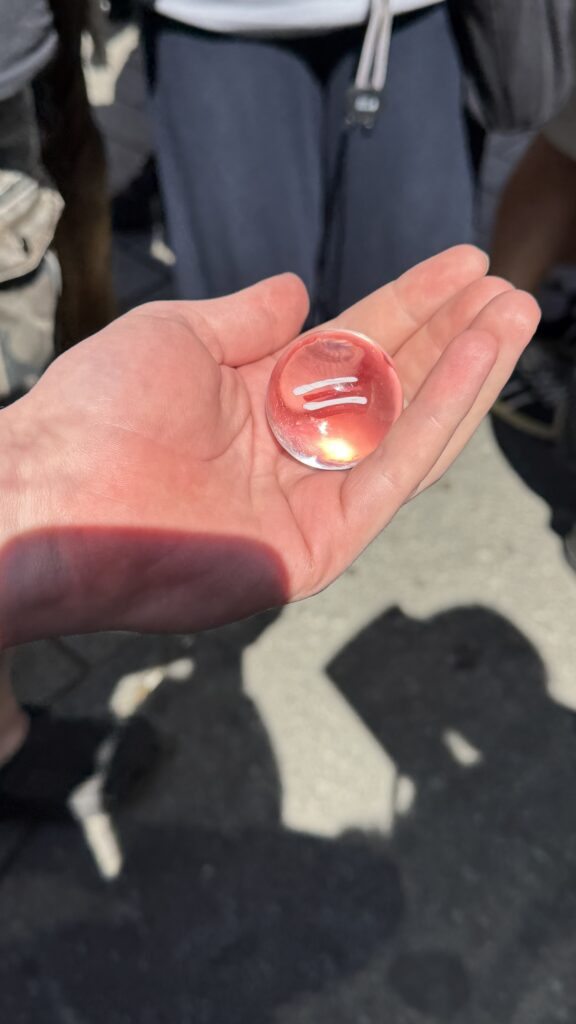
Brno Astronomical Clock – The square is popular for this modern black granite sculpture which looks more like a giant bullet than a traditional clock. Installed in 2010, it commemorates the successful defense of Brno against Swedish forces in 1645. At 11 a.m. each day, the Brno Astronomical Clock releases a glass marble that can be claimed by anyone lucky enough to catch it. Visitors gather around the clock and place their hands inside one of its openings, hoping the marble will emerge on their side.
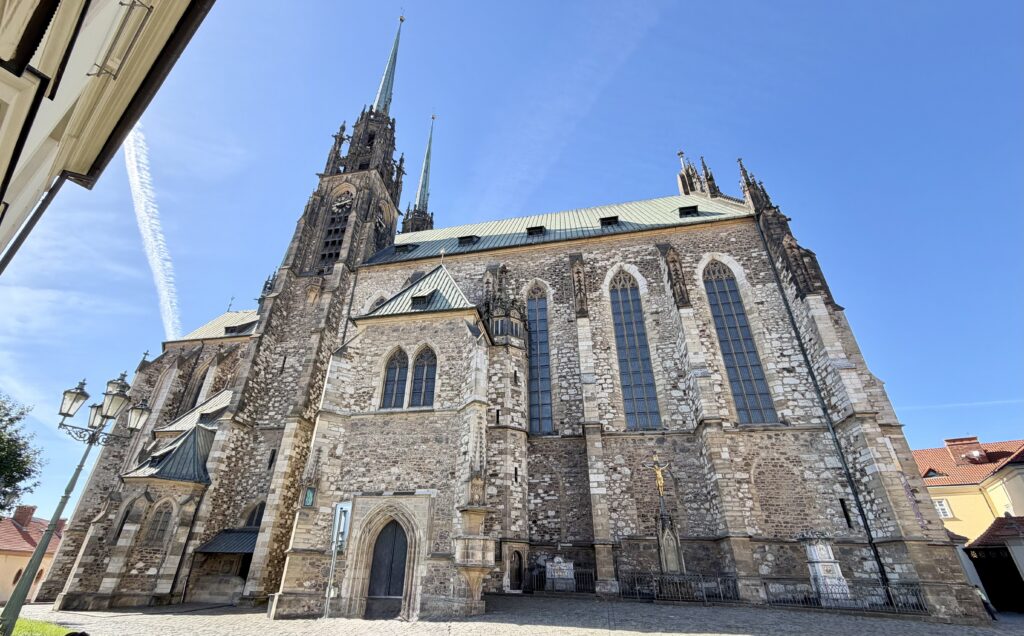
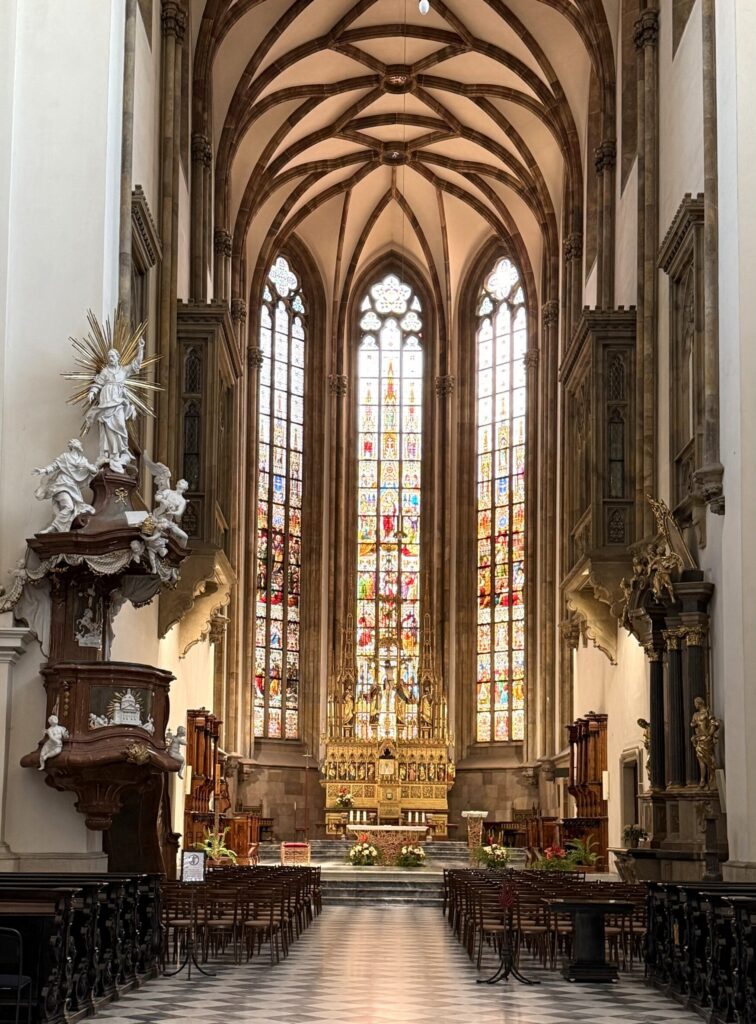
Cathedral of Saint Peter and Paul – commonly known as Petrov, the cathedral has been a religious site since the 11th century and has undergone numerous reconstructions after fires, wars, and architectural changes. Its exterior is primarily Gothic, highlighted by two striking 84-meter towers added in the early 20th century, while its interior is largely Baroque due to extensive 18th-century renovations. The entry to the church is free. There is a fee to climb up the tower.
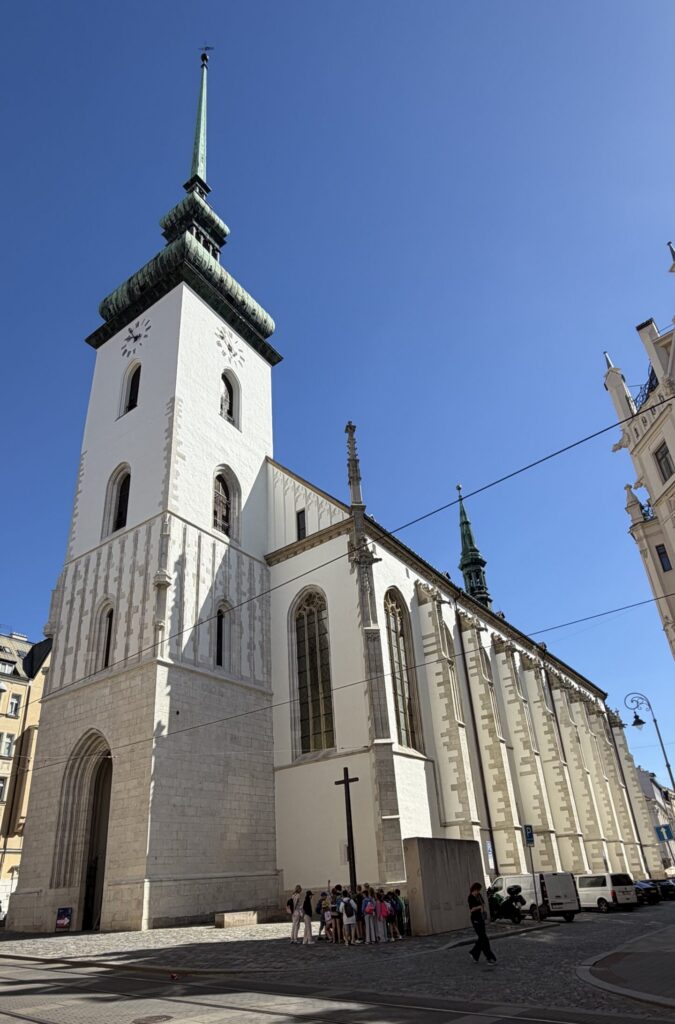
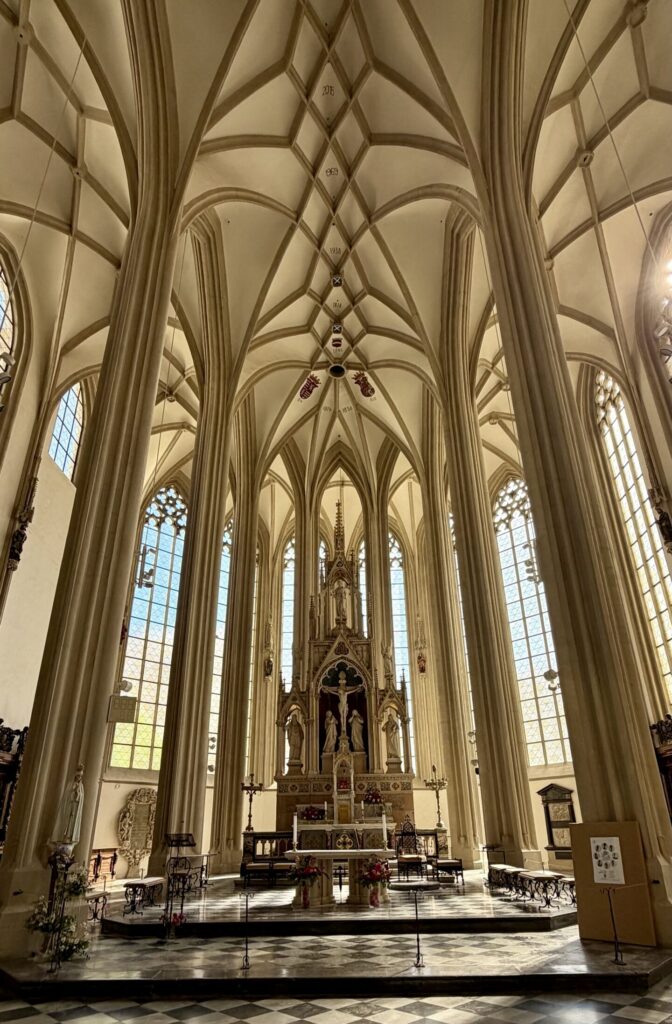
The Church of Saint James (Kostel svatého Jakuba) – dates back to the early 13th century, when a Romanesque church served German and Flemish settlers. The present late-Gothic three-nave hall church was largely built between the 15th and 16th centuries, featuring an impressive presbytery, elaborate vaulting, and a 94-meter tower that dominates the city skyline. Beneath the church lies the famous Ossuary at the Church of St. James, one of the largest ossuaries in Europe, making the site both an architectural and historical highlight of Brno.
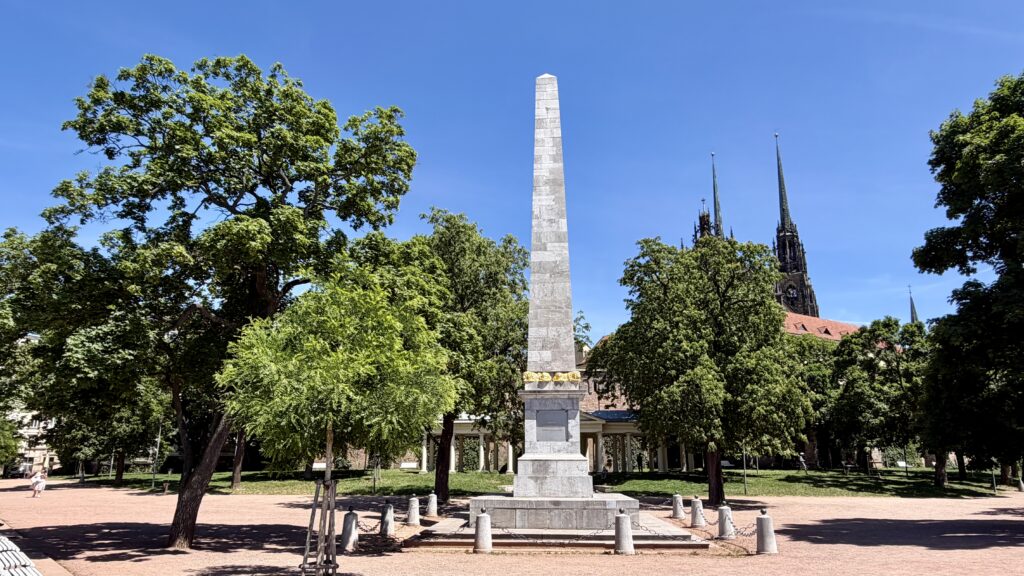
Denis Gardens – This garden was a bit of an uphill walk from our hotel. The park was established in 1804, making it is one of the city’s oldest park. It connects Peter and Paul Cathedral with Špilberk Castle. Known for its peaceful atmosphere, the park features winding pathways, scenic lookout terraces with panoramic views of Brno, and an elegant colonnade. In 1818, an obelisk was erected in the park to commemorate the end of the Napoleonic Wars and the return of peace after years of conflict.
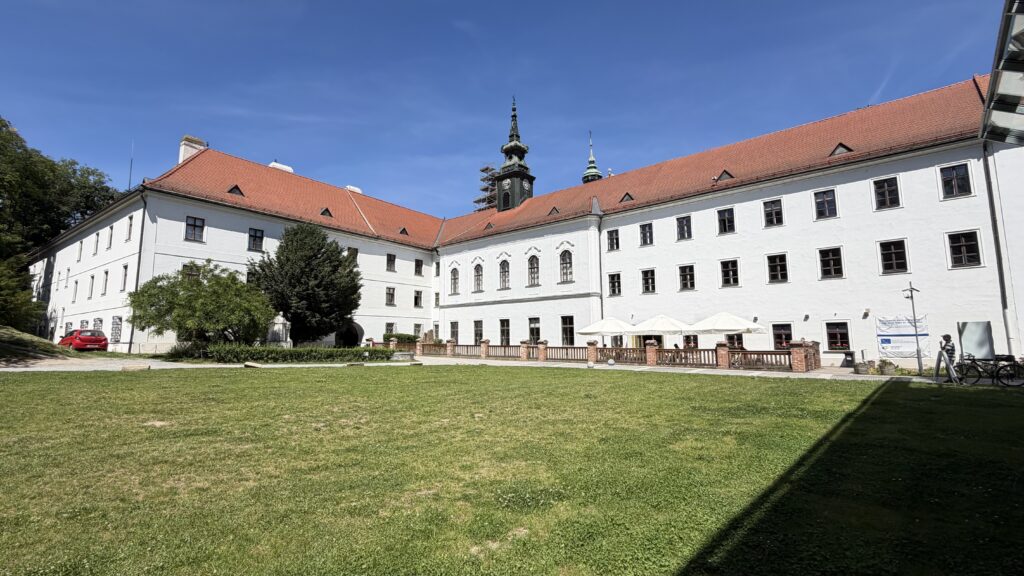
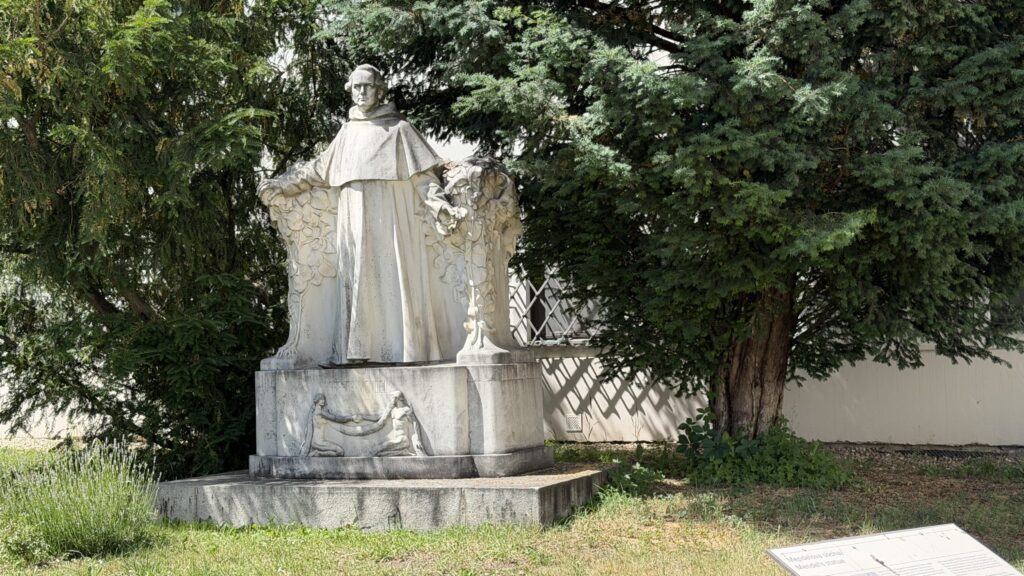
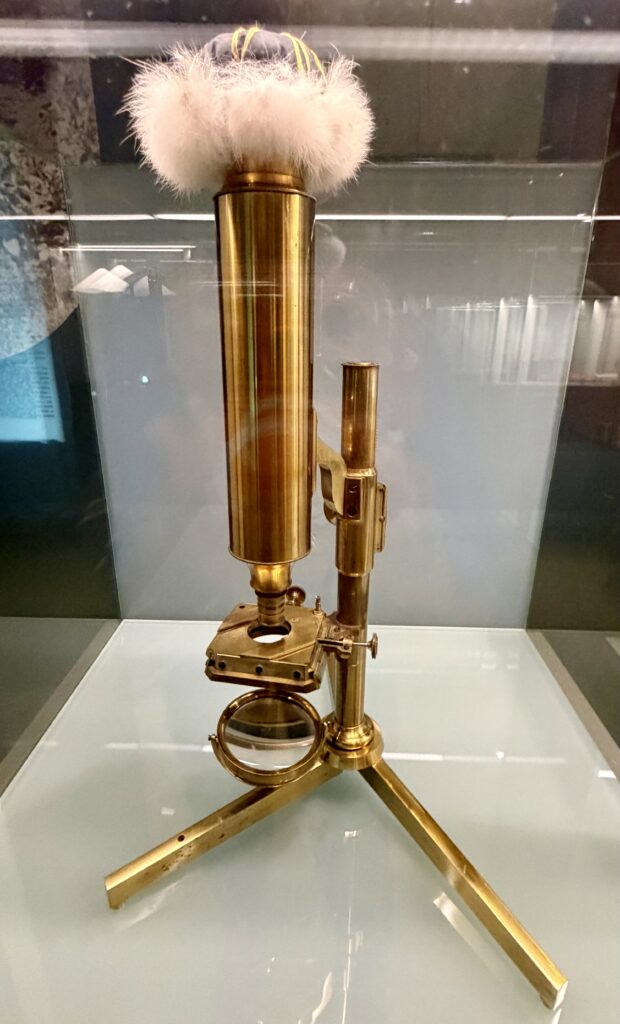
Mendel Museum of Masaryk University – is located in the historic Augustinian Abbey of St. Thomas, the very place where Gregor Johann Mendel, the father of genetics, lived and conducted his pioneering 19th-century pea plant experiments that formed the basis of modern genetics. The museum features exhibitions on Mendel’s life and scientific work, including his studies in genetics, meteorology, and beekeeping, along with original manuscripts, personal items, and scientific instruments. Visitors can also explore the abbey gardens where Mendel carried out his experiments, as well as a reconstructed apiary, making it both a historical and scientific landmark in Brno.
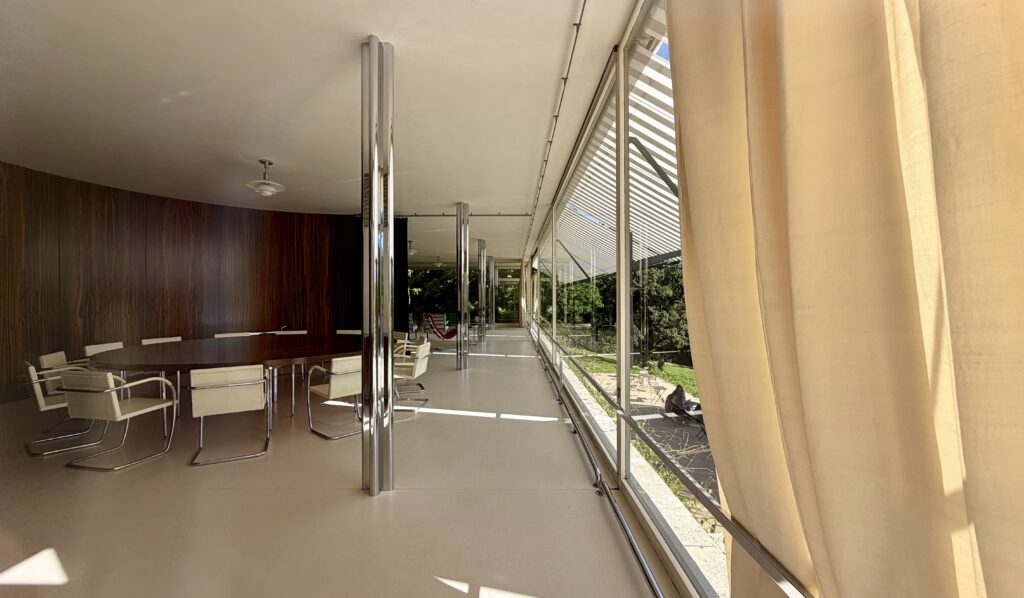
Villa Tugendhat – is an important masterpiece of modern architecture in Europe and a UNESCO World Heritage Site. Designed by architects Ludwig Mies van der Rohe and Lilly Reich, it was built between 1928 and 1930 for Fritz Tugendhat and Greta Tugendhat. The villa became an icon of modernism through its open-plan design, reinforced concrete structure, floor-to-ceiling glass walls, and the architect’s philosophy of less is more. Its innovative features included air conditioning, electrically retractable windows, and luxurious materials such as a translucent Moroccan onyx wall and rare tropical woods. It is one of the Czech Republic’s most celebrated architectural landmarks and a pioneering example of functionalist architecture.
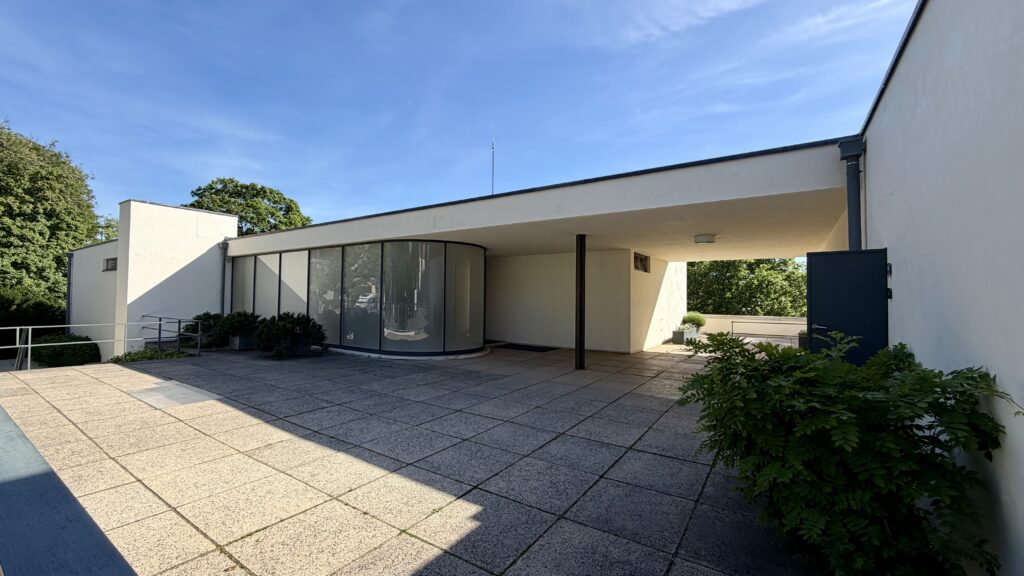
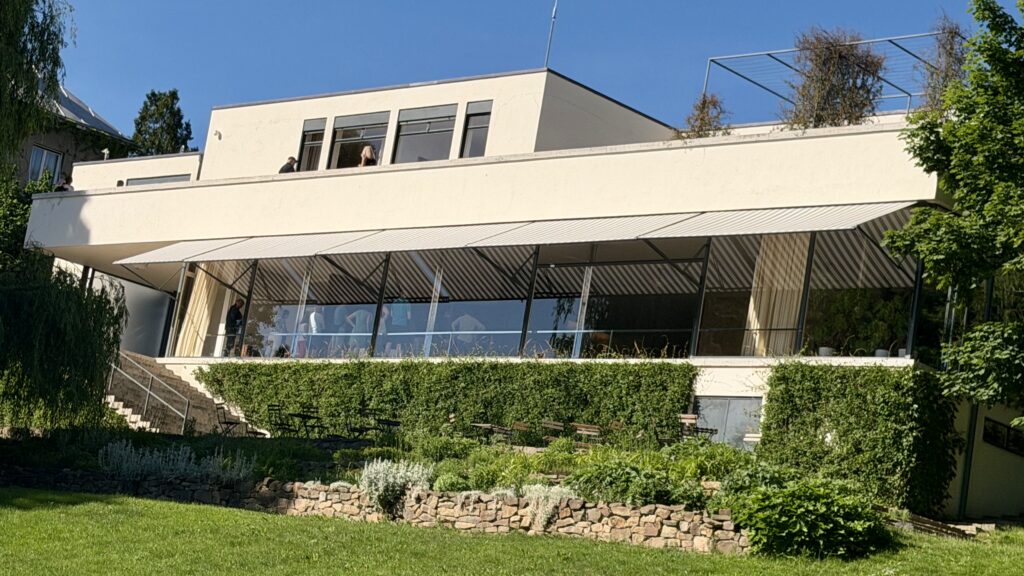
The original owners of Villa Tugendhat, Fritz Tugendhat and Greta Tugendhat, were members of a prominent Jewish family who were forced to flee Brno after the Nazi occupation of Czechoslovakia in 1938. The villa was taken over and used by the Gestapo, and after the 2nd World War, it served as quarters for the Soviet army. In 1967, Greta Tugendhat returned to the villa for the first time since fleeing, helping to renew interest in preserving the landmark.
Visitors can take guided tours of the interior, but even without a tour ticket, the grounds and gardens can be enjoyed free of charge. Walking around the villa offers excellent views of the building’s innovative architecture, and visitors can often glimpse the famous main living space through the large windows, making it worthwhile even for those who do not enter the house itself.
————————————————————————————-
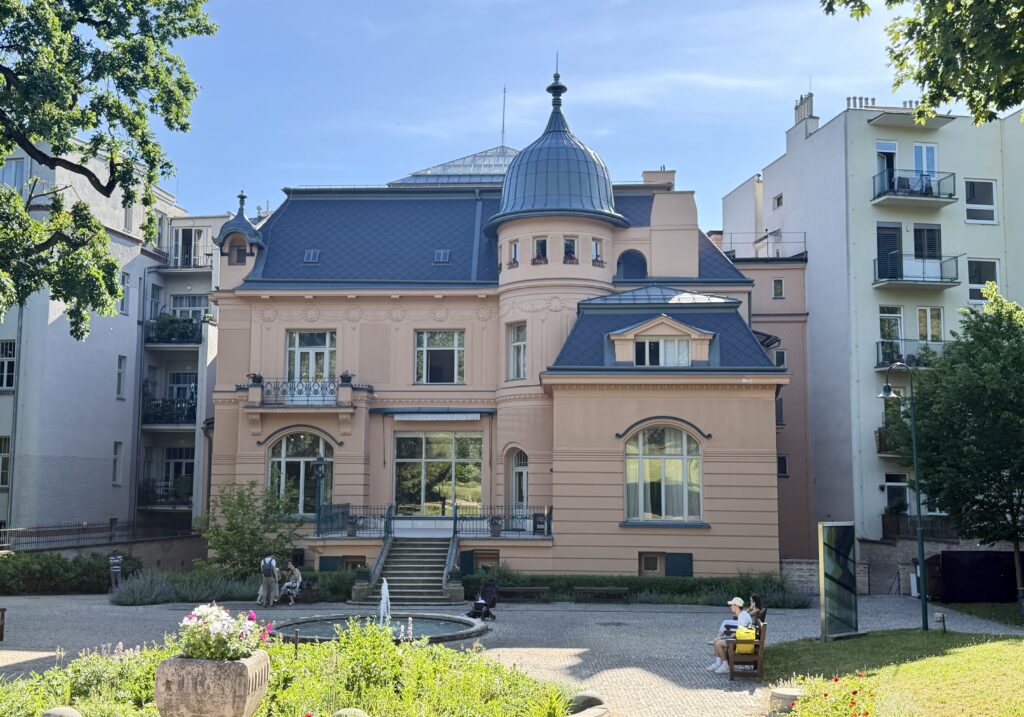
Villa Löw-Beer – is located next to Villa Tugendhat, with the two properties connected by a shared historic garden. Built in 1903 for factory owner Moritz Fuhrmann and later purchased by textile magnate Alfred Löw-Beer in 1913, the villa provides a fascinating look at the lives of Brno’s wealthy industrial families during the early 20th century. In 1929, Alfred gave part of the estate to his daughter Greta Tugendhat, where the celebrated Villa Tugendhat was subsequently built. Today, the restored Art Nouveau villa hosts the exhibition The World of the Brno Bourgeoisie Around the Löw-Beers and the Tugendhats, which explores the architecture, culture, and lifestyle of Brno’s upper classes from the mid-19th to the early 20th century.
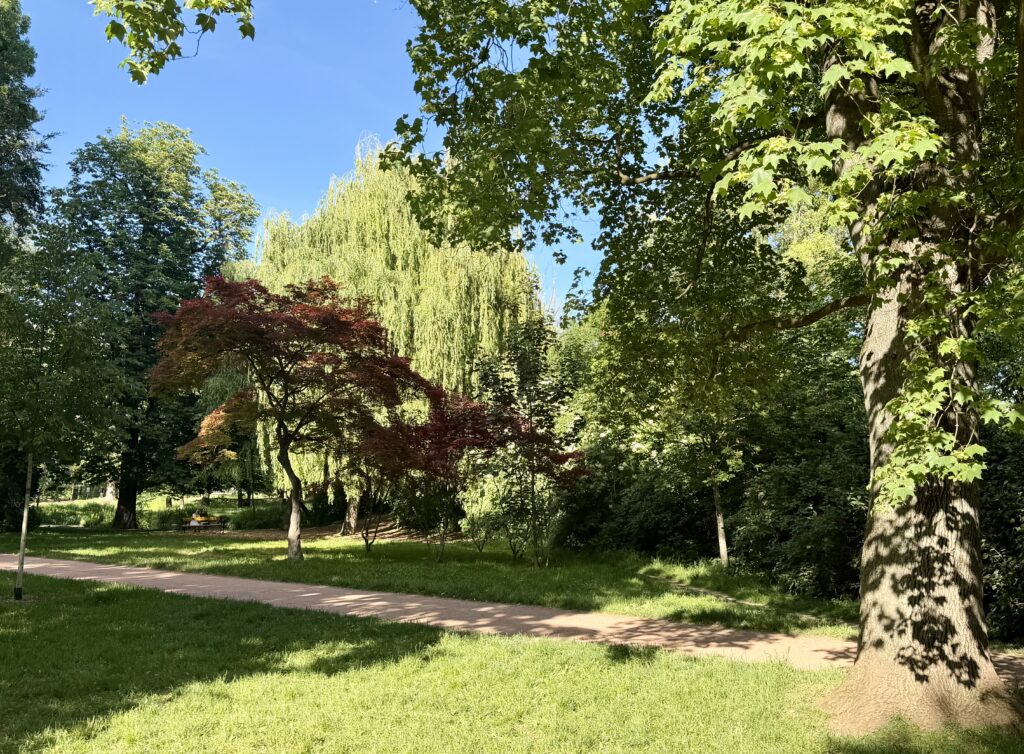
Lužánky Park – is the largest city park in Brno and the oldest municipal park in the Czech Republic, covering more than 22 hectares in the city center. Its history dates back to the 13th century, when the land was donated to a monastery, and later, during the 16th century, the Jesuits transformed it into an ornamental garden used for meditation and spiritual retreats. After the Jesuit order was dissolved in 1786, the land was given to the city of Brno and became one of the first public parks in Central Europe and the first municipal park in the Czech lands.
This park is within walking distance of Vila Low Beer.
Špilberk Castle – is Brno’s most prominent historic fortress, perched on a hill overlooking the city. Originally built in the first half of the 13th century by the Přemyslid dynasty and completed under Ottokar II of Bohemia, it began as a royal castle and later became the seat of the Moravian margraves. Over the centuries, it was transformed into a massive Baroque fortress and gained notoriety as one of the harshest prisons in the Austrian Empire. Today, Špilberk Castle is one of Brno’s leading cultural attractions, offering museums, exhibitions, historic casemates, and panoramic views of the city.
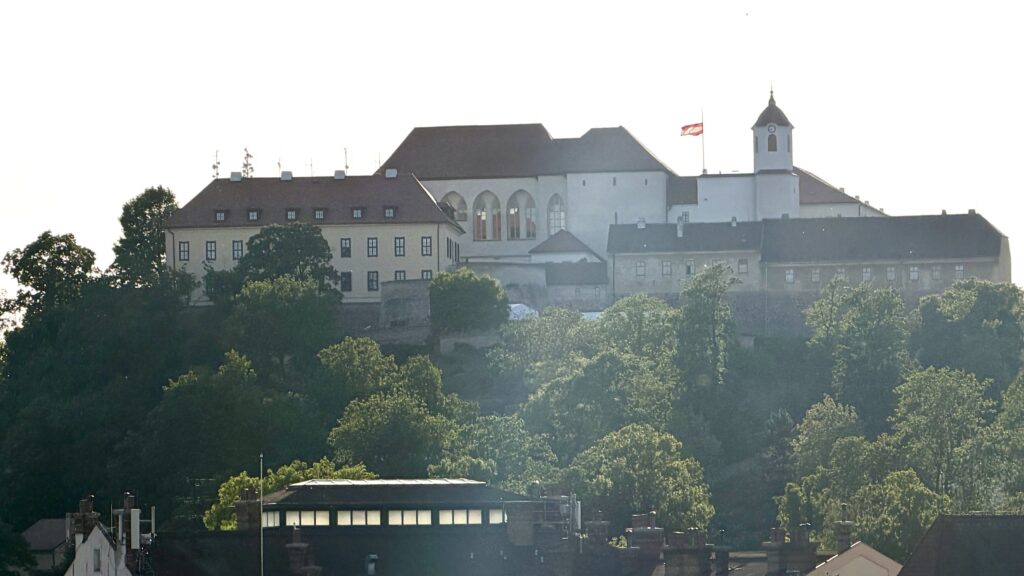
We did not have time to visit the castle but if you have time it is worth a visit.