Half Day trip from Brno
We drove to Olomouc which is about 79 km northeast of Brno and took an hour to reach. We found parking near the city’s main square and since it was a weekend, parking was free.
- Horní Náměstí and Dolní Náměstí
- Upper Square (Horní náměstí)
- Town Hall and Olomouc Astronomical Clock
- Holy Trinity Column
- Lower Square (Dolní Náměstí)
- Six historic Baroque fountains
- Church of Saint Maurice (Kostel svatého Mořice)
- Church of Saint Michael (Kostel svatého Michala)
- Church of Virginia Mary
- Olomouc Castle (Olomoucký hrad) complex
- Saint Wenceslas Cathedral
- Macocha Abyss and Punkva Cave
Horní Náměstí and Dolni Náměstí – The historic center of Olomouc is centered around two adjoining squares—Horní náměstí (Upper Square) and Dolní náměstí (Lower Square). Together, they form the heart of the city’s UNESCO-listed heritage area and are connected by a short pedestrian street, making it easy to explore both on foot.
Upper Square (Horní náměstí) is the city’s main square and the focal point of civic life. It is home to some of Olomouc’s most important landmarks, including the Renaissance Town Hall with its unusual astronomical clock and the magnificent Holy Trinity Column, a UNESCO World Heritage Site. Surrounded by historic palaces, colorful townhouses, cafés, and shops, the square has a lively atmosphere and serves as the city’s primary gathering place.
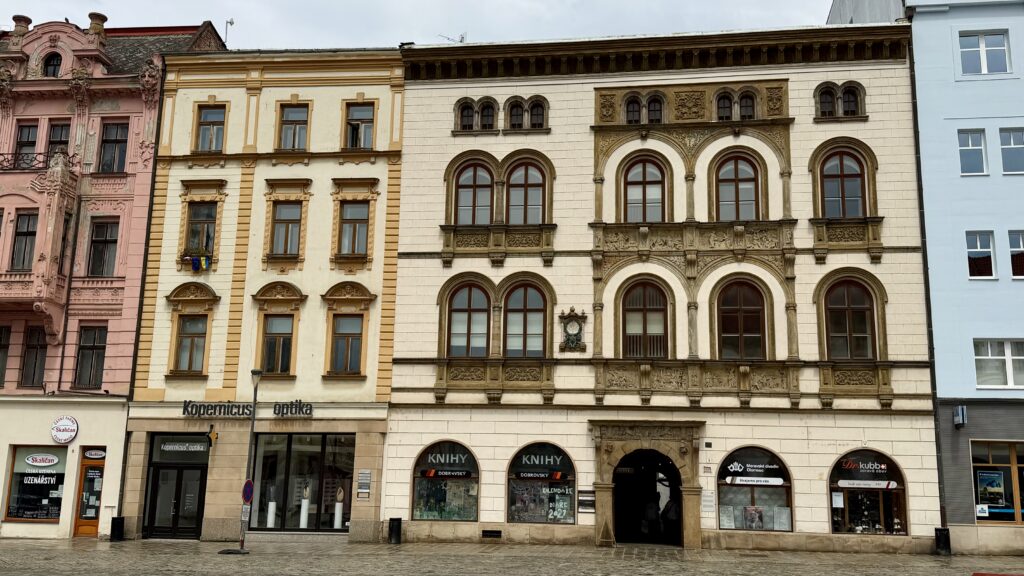
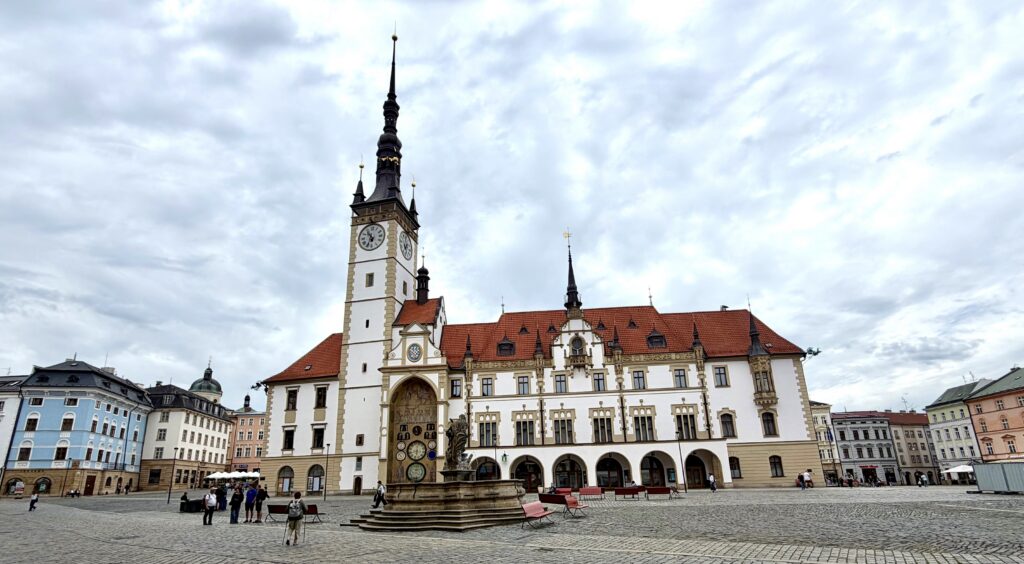
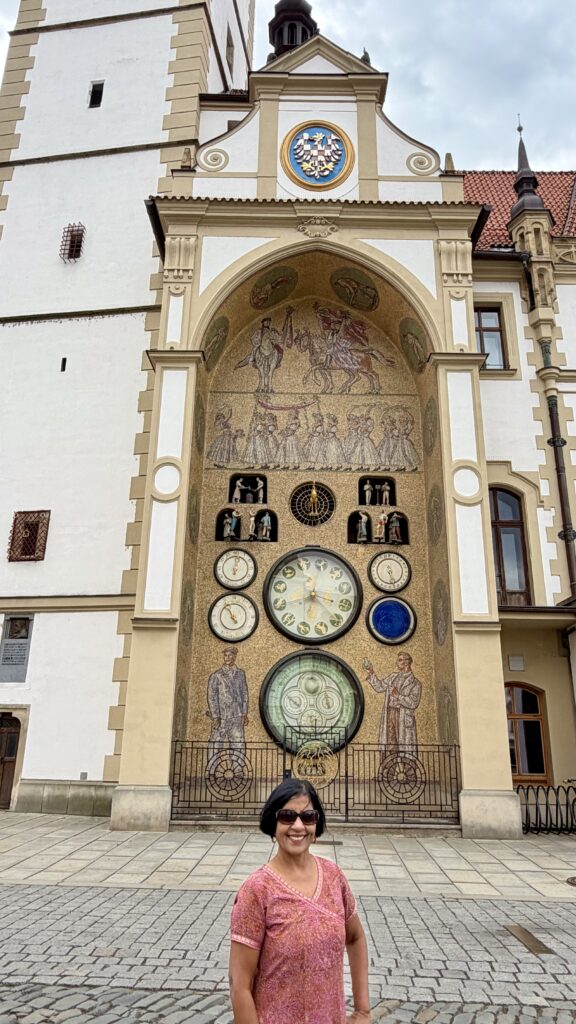
- Town Hall and Olomouc Astronomical Clock – is one of Olomouc’s most recognizable landmarks and has served as the center of civic life for centuries. Its impressive 75-metre-high tower rises above the surrounding rooftops, making it a focal point of the historic city center. Set into its northern wall is the Astronomical Clock. Originally dating from the 16th century, the clock was extensively rebuilt after World War II in the Socialist Realist style, making it unique among Europe’s astronomical clocks. Instead of saints and religious figures, the clock features workers, farmers, scientists, and other representatives of everyday life under socialism. The clock puts on a show everyday at noon. You can also climb the Town Hall tower to get a view of Olomouc’s Upper and Lower Squares.
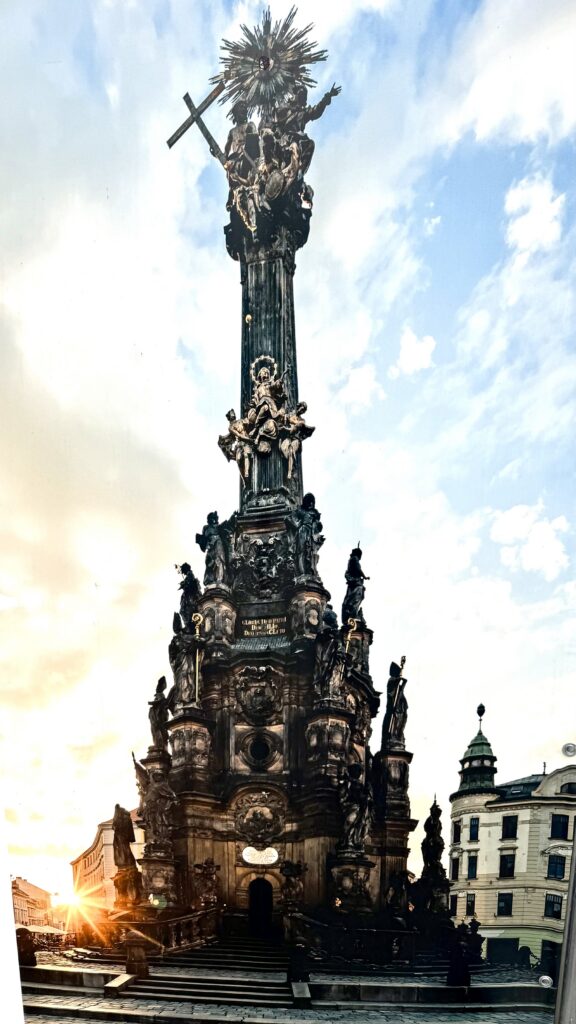
- Holy Trinity Column – This UNESCO World Heritage Site is a monumental Baroque masterpiece that dominates the Upper Square. Unfortunately, during our visit the column was undergoing a major restoration project scheduled to continue until 2027, so we were unable to see the monument itself. Instead, we had to rely on photographs and display panels showing what it normally looks like. The column was constructed between 1716 and 1754 as a celebration of the Catholic faith and as a thanksgiving monument following the end of a devastating plague that struck Moravia between 1713 and 1715. It is also a powerful symbol of local pride, as the design and construction were carried out entirely by craftsmen and artists from Olomouc.
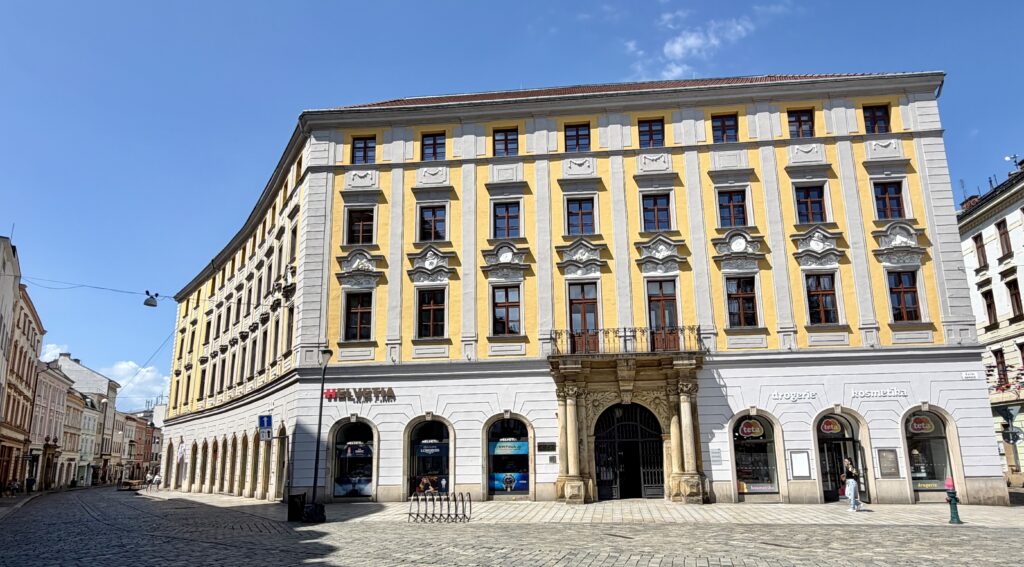
Upper Square (Horní náměstí), Salm Palace – One of the building on this square that grabs your attention is the imposing Salm Palace. Built in the second half of the 17th century for Count Julius Salm on the site of three earlier burgher houses, it is the largest palace on the square, with an impressive five-wing layout that reflects the wealth and influence of its aristocratic owners. Today, the Salm Palace is a protected cultural monument and serves primarily as commercial and administrative space.
Lower Square (Dolní náměstí) – Adjoining the upper square (and you can walk around to it), the Lower Square is smaller and quieter. It nevertheless possesses its own charm and several monuments – the Marian Plague Column and 2 of the historic Baroque fountains – the Neptune Fountain and the Jupiter Fountain.
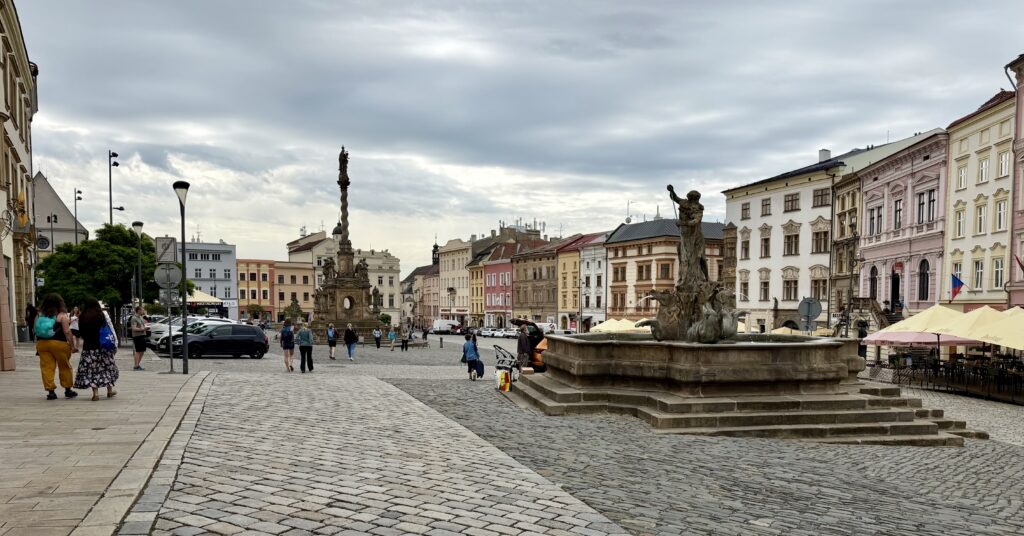
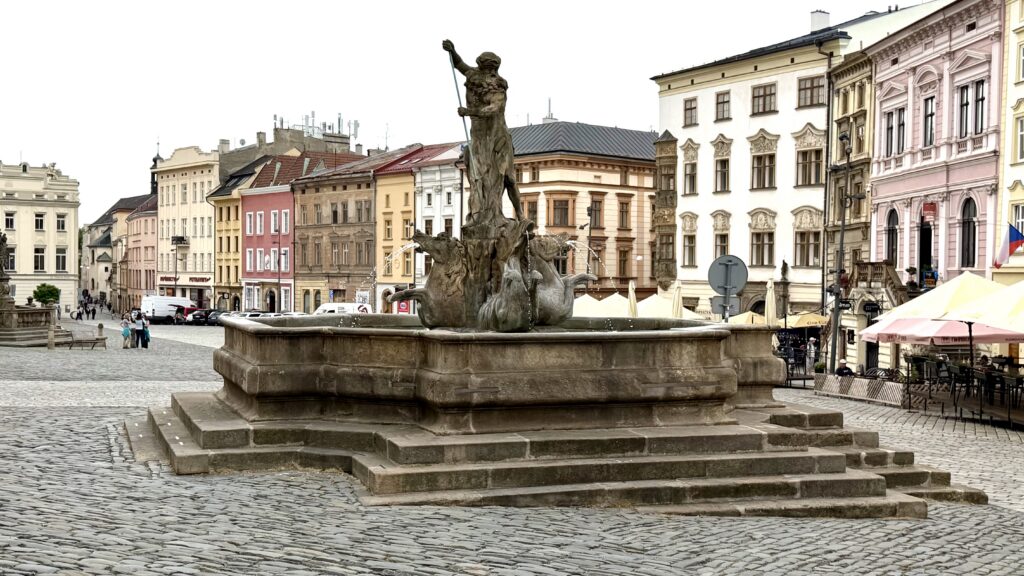
Six historic Baroque fountains – were built between 1683 and 1735 and feature exact depictions of figures from Roman mythology and legendary history. They can be found spread across the various plazas in Olomouc and within walking distances.
- Neptune Fountain (1683) – Located on Lower Square (Dolní náměstí), it is the oldest fountain, and depicts the Roman god of the sea holding a trident, flanked by four spouting seahorses.
- Hercules Fountain (1688) – Situated on Upper Square (Horní náměstí), this sculpture depicts the legendary hero defeating the Hydra while holding the checkered Olomouc eagle.
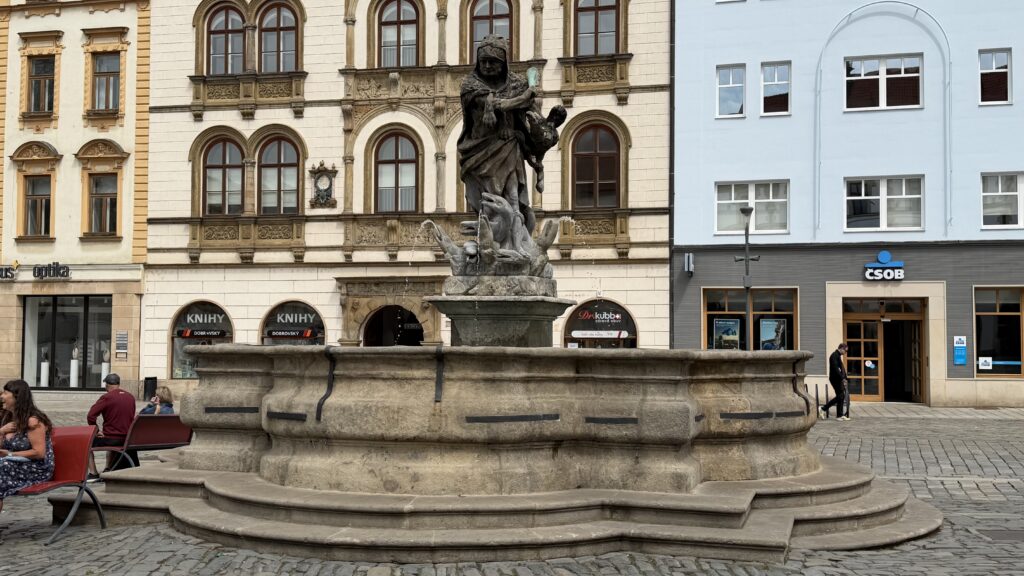
- Triton Fountain (1709) – Located on Republic Square (náměstí Republiky), this dynamic piece was inspired by Bernini’s fountain in Rome and features two Tritons holding up a large shell.
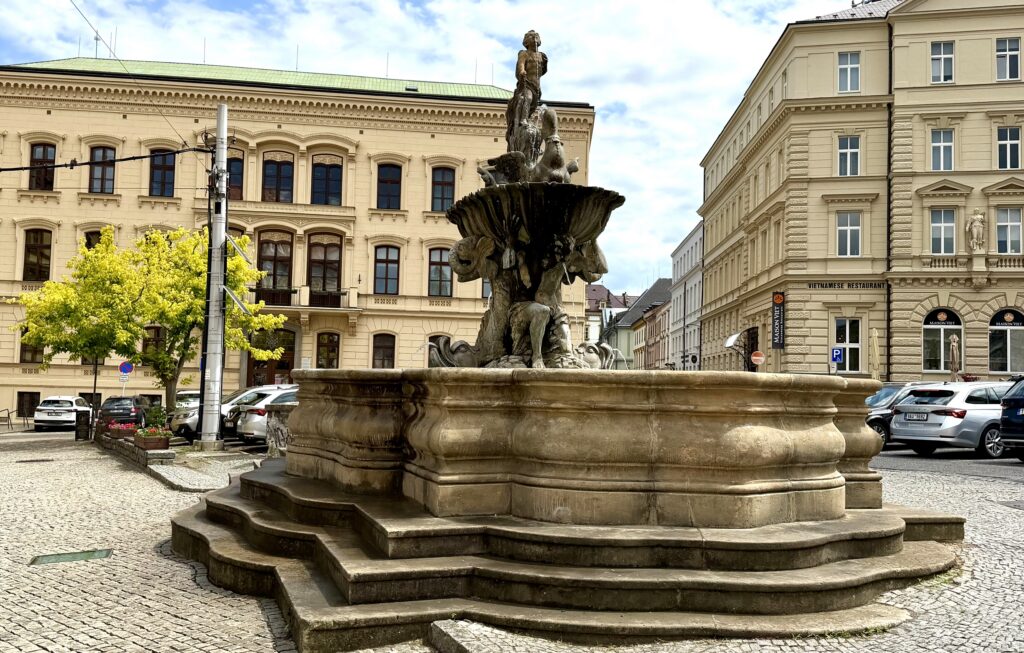
- Caesar Fountain (1725) – The largest and most technically impressive fountain, is located on Upper Square. It depicts the Roman Emperor Gaius Julius Caesar astride a prancing horse, honoring the local legend that he founded the city.
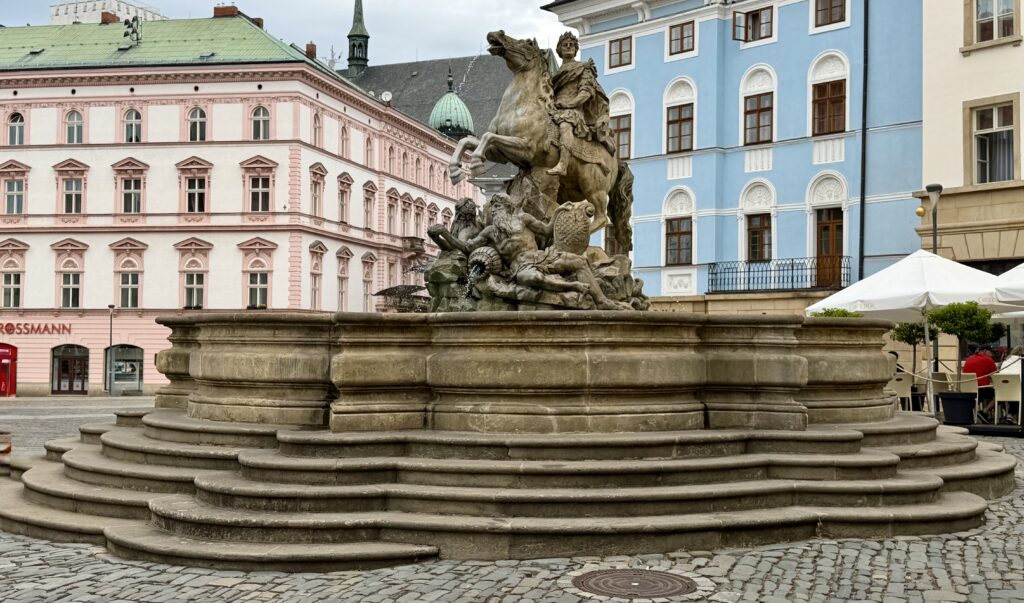
- Mercury Fountain (1727): Located on 8. května Street, this statue features the winged messenger of the gods carrying a caduceus, surrounded by putti.
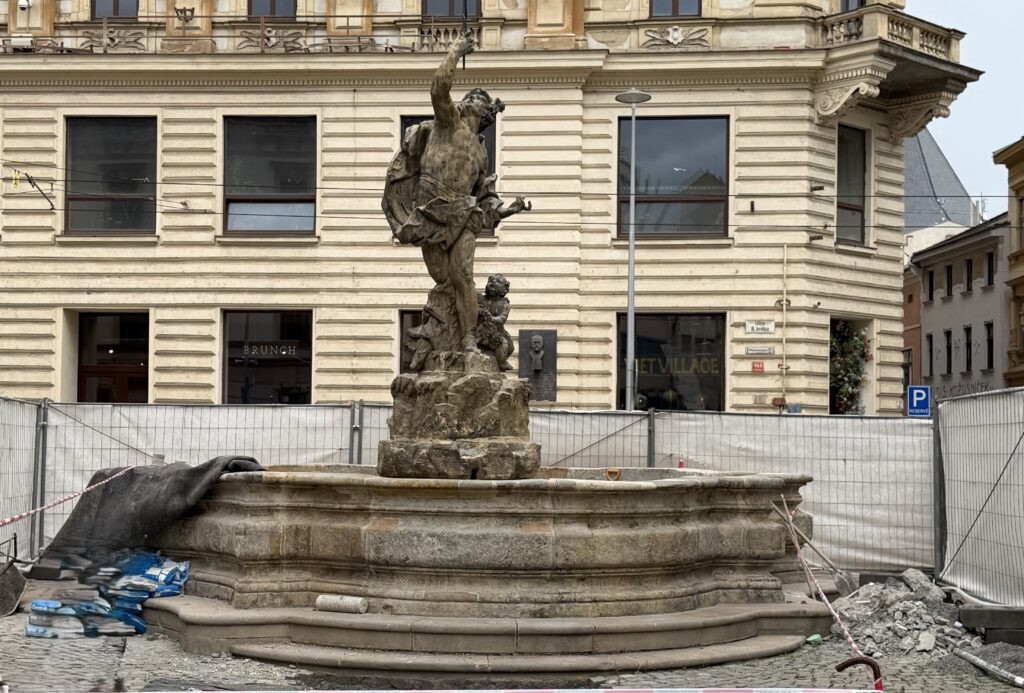
- Jupiter Fountain (1735): Found on Lower Square near the Neptune Fountain, this monument portrays the king of the gods with an eagle at his
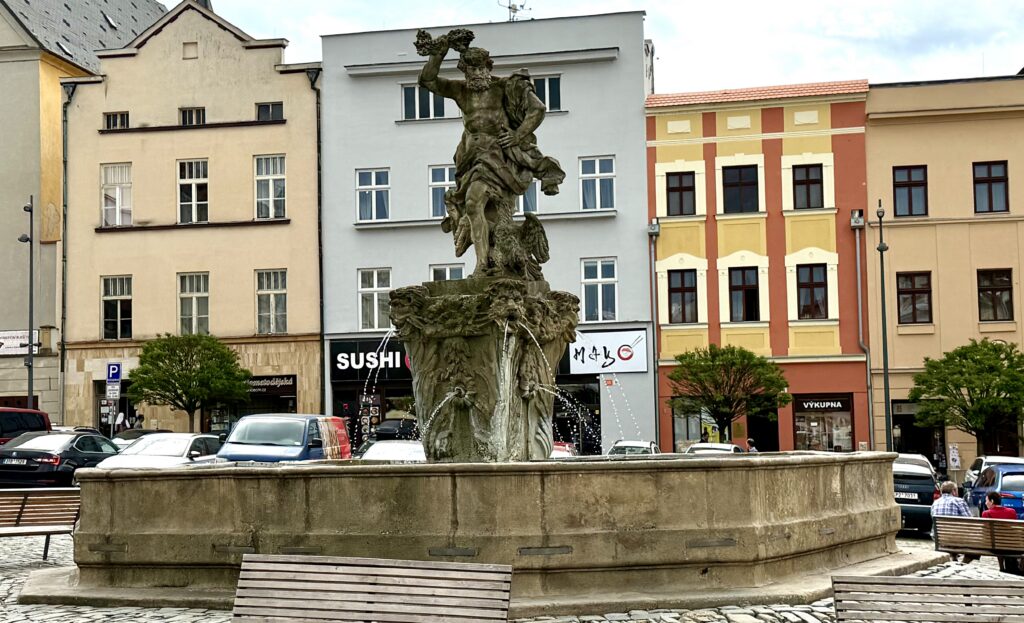
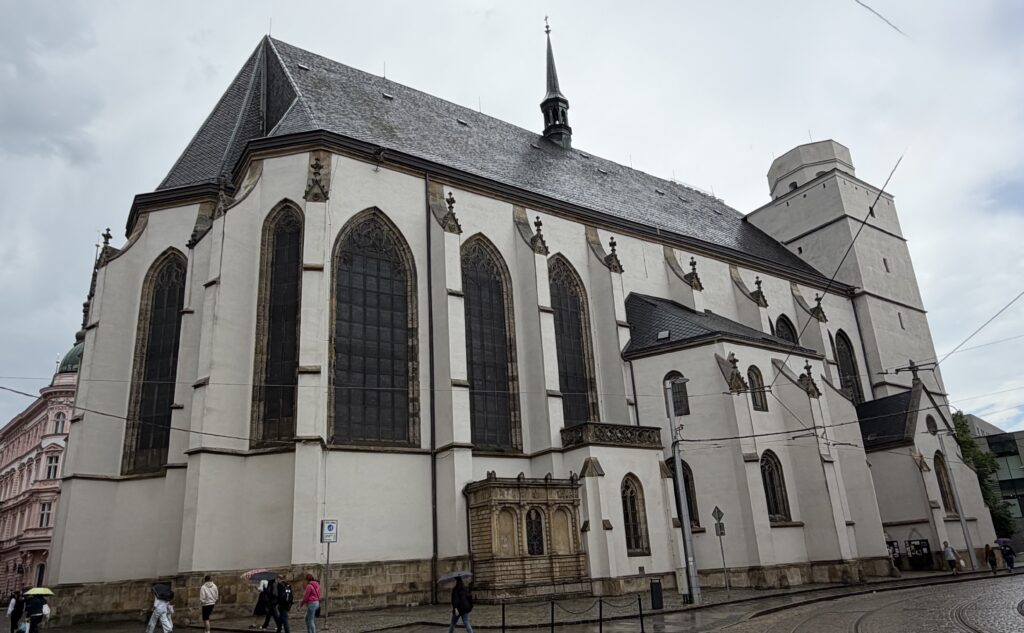
Church of Saint Maurice (Kostel svatého Mořice) – Located a short walk from Olomouc’s Upper Square, the church has dominated the skyline of Olomouc for centuries. Its two towers were built in the early 15th century, with the southern tower dating from 1403 and the northern tower from 1412, making them among the oldest surviving parts of the structure. The church was likely consecrated in 1492 and is built as a spacious Gothic three-nave hall church.
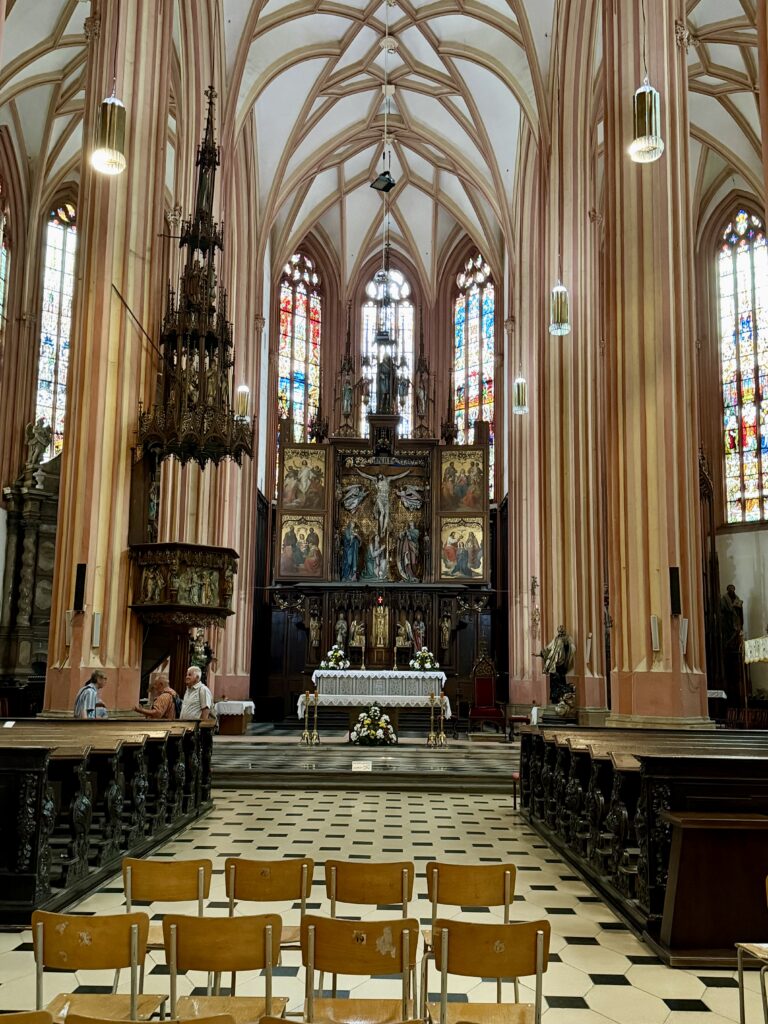
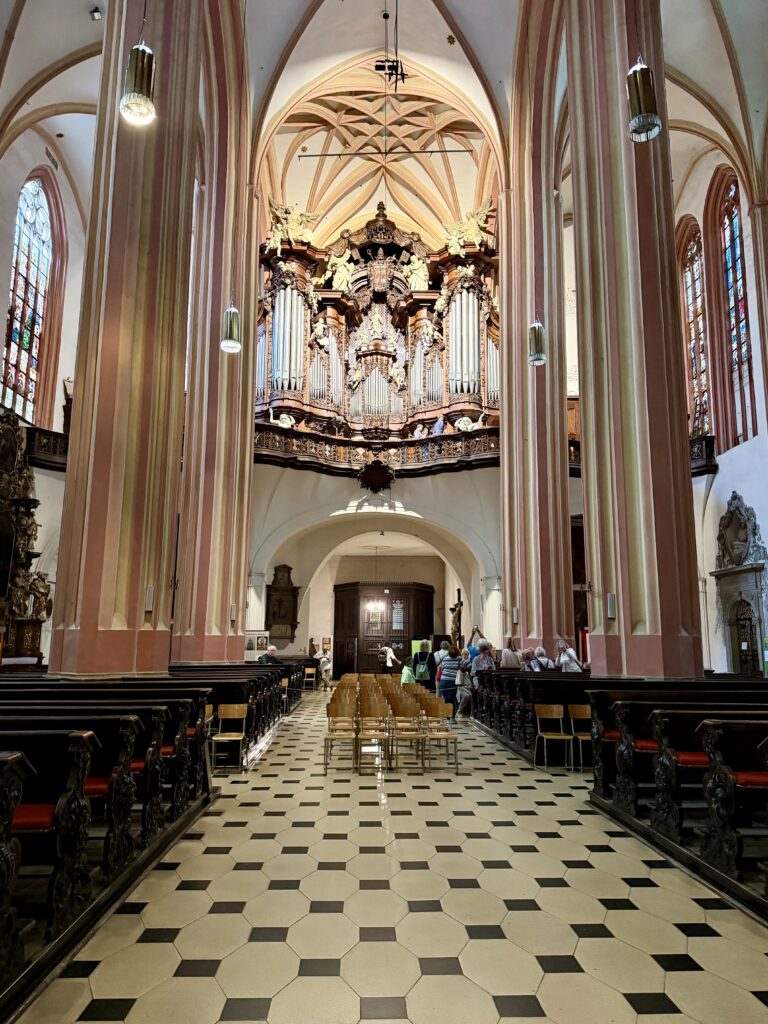
Inside, visitors can admire the Neo-Gothic main altar, installed in 1861, as well as one of the church’s greatest treasures—its monumental pipe organ. Built between 1740 and 1745 by master organ builder Michael Engler, the instrument is considered one of the largest historic organs in the world.
Visitors can also climb the southern tower, which serves as a lookout point and offers sweeping views over Olomouc’s historic center and the surrounding countryside.
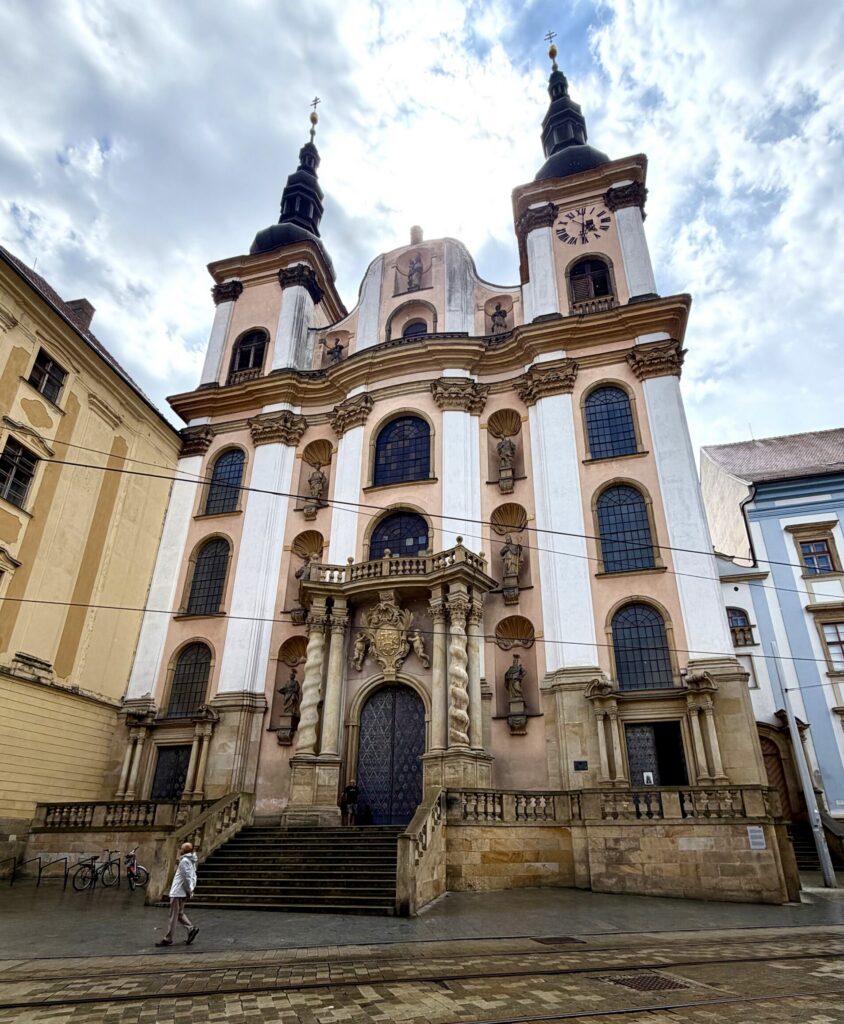
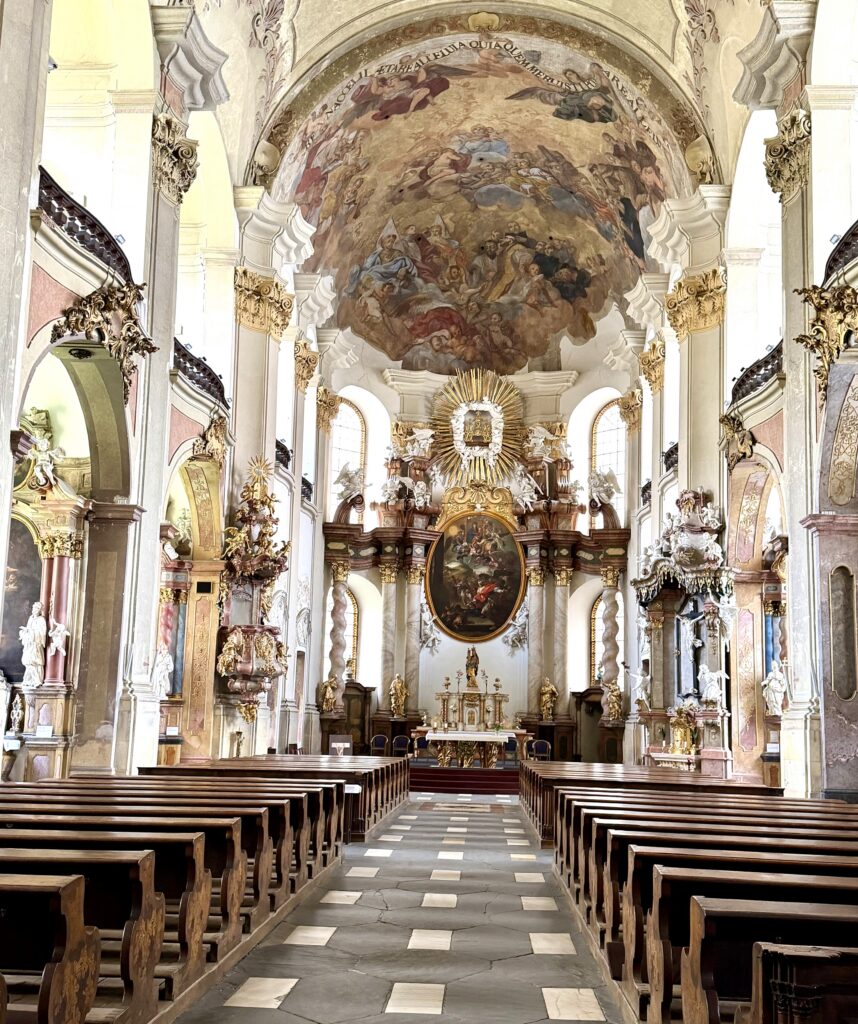
Church of Saint Michael (Kostel svatého Michala) – Originally founded in the 13th century, the church was extensively rebuilt between 1676 and 1703, when it was transformed into its present Baroque form. Architecturally, the church is notable for its three domes, which symbolically represent the Holy Trinity. The undersides of the domes are adorned with frescoes that enhance the sense of height and grandeur within the interior.
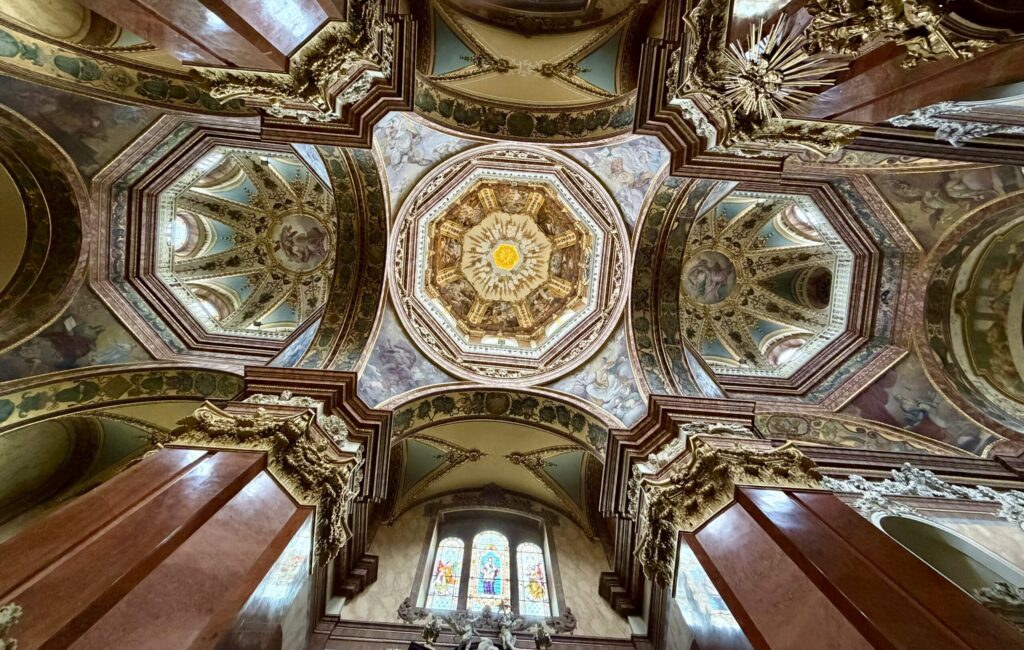
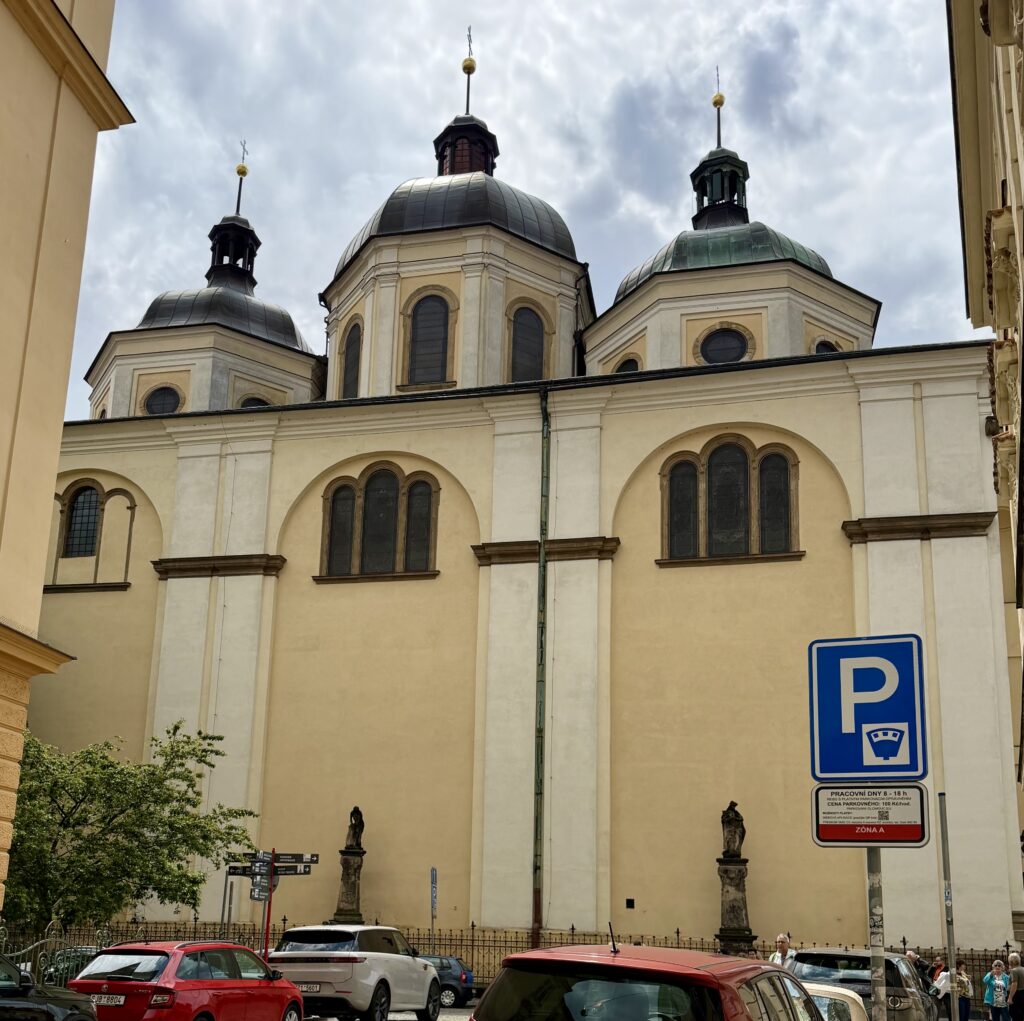
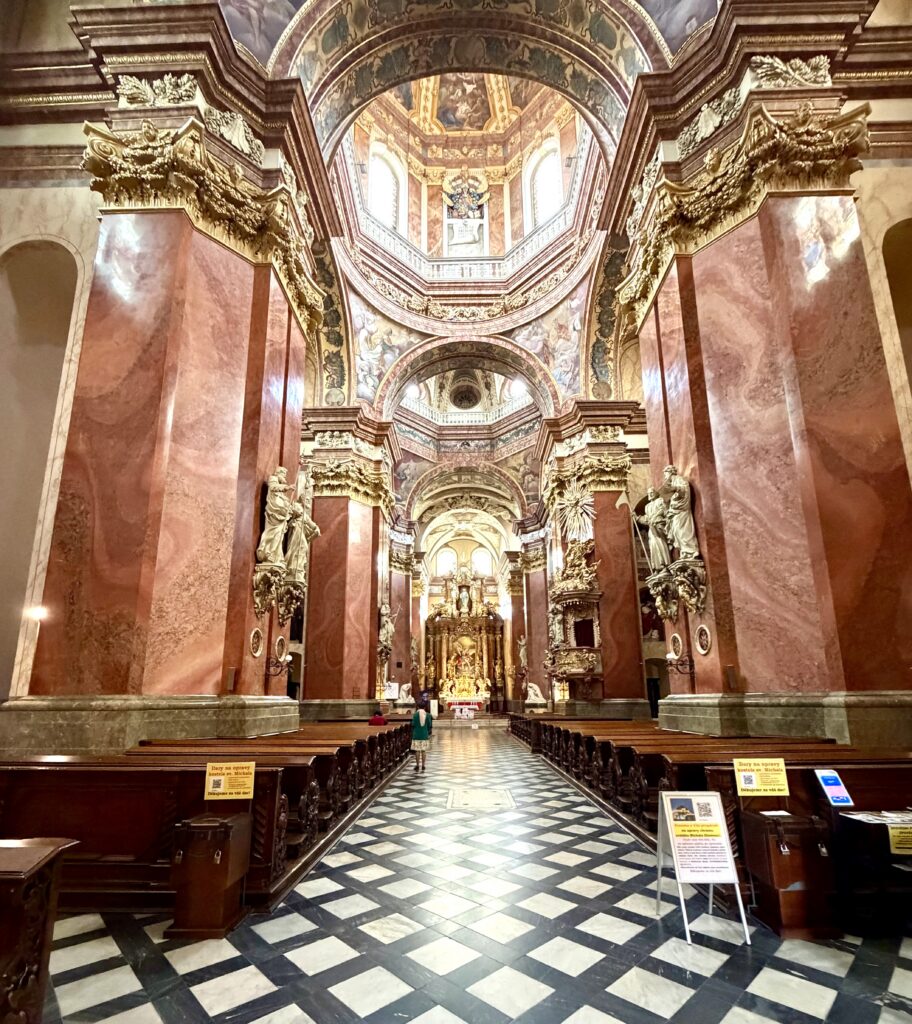
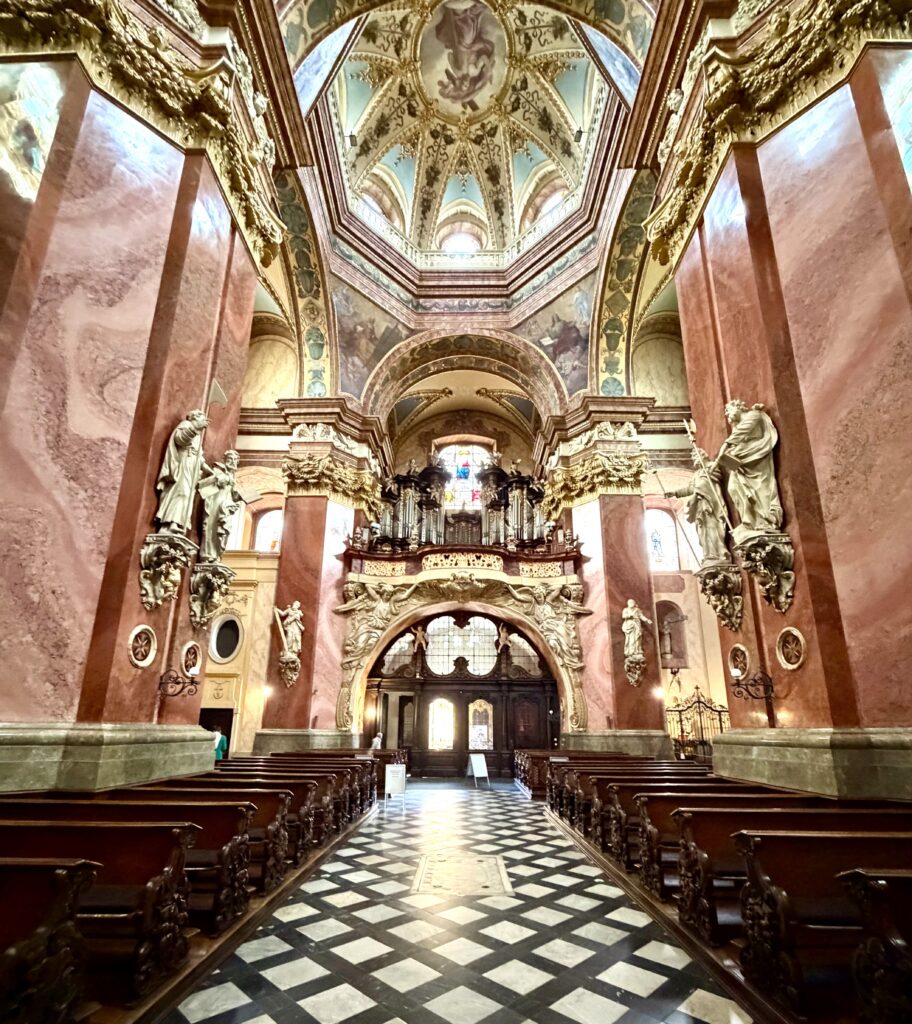
The richly decorated interior is stunning from every angle, with intricate Baroque detailing, gilded accents, and vibrant colors that invite you to spend hours simply admiring the artistry and atmosphere. Another important feature is the historic pipe organ, built in 1706 by David Sieber of Brno, which remains an outstanding example of early 18th-century craftsmanship.
Church of Virginia Mary – was founded in the 17th century on the site of an earlier chapel and quickly developed into one of the most significant pilgrimage destinations in the region, attracting tens of thousands of visitors each year during the 18th century. The site gained modern recognition when it was visited by Pope John Paul II in 1995, who elevated it to the status of a minor basilica.
Olomouc Castle (Olomoucký hrad) complex – is a historic, millennia-old site located on Wenceslas Hill, one of the most significant elevated areas in the city. It is best known for its deep medieval roots, the impressive St. Wenceslas Cathedral, and the Archdiocesan Museum, which together showcase the religious, political, and architectural history of the region.
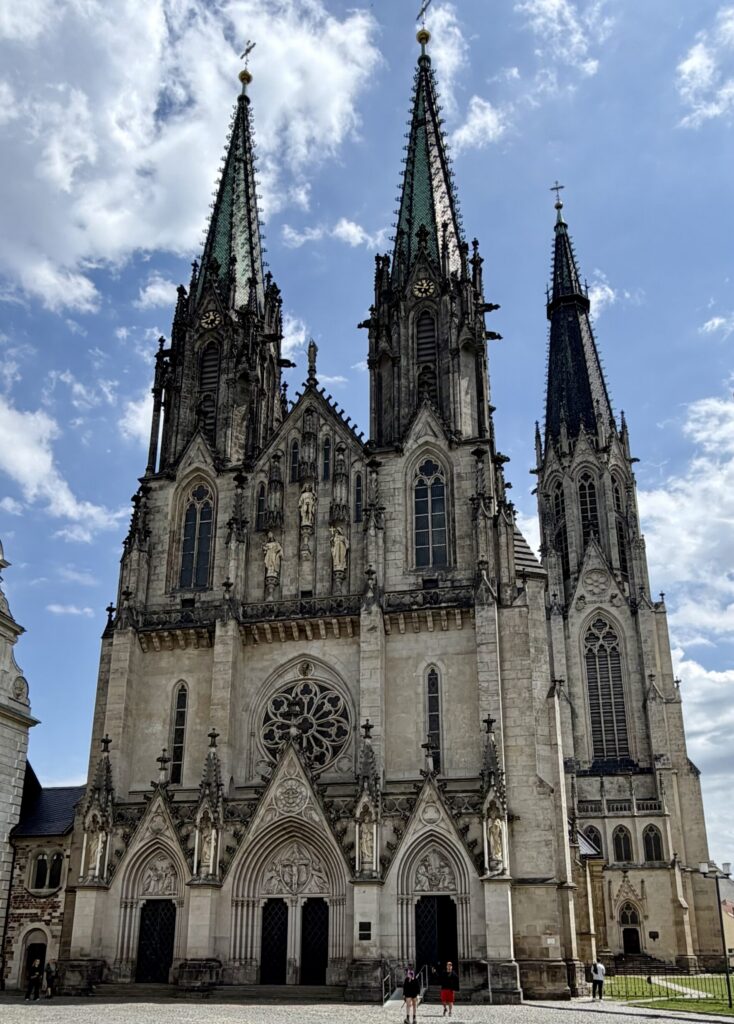
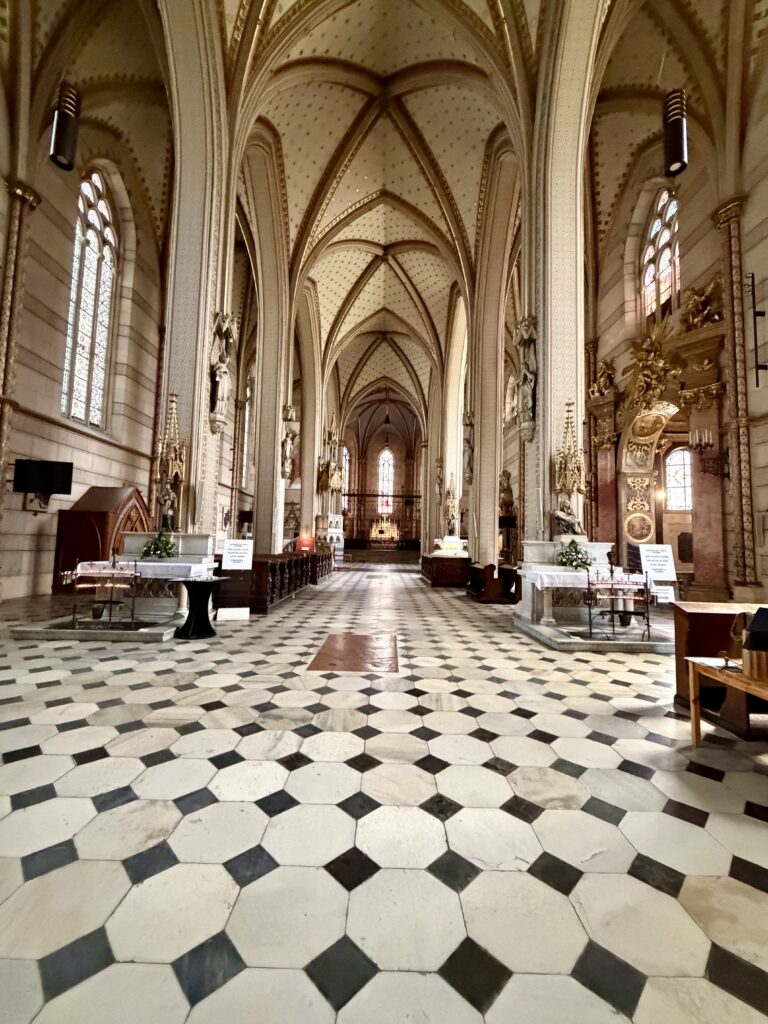
St. Wenceslas Cathedral – is the most dominant feature of the complex and the tallest church tower in Moravia. Founded in 1107, it was originally built in the Romanesque style and consecrated in 1131. A key historical event associated with the site is the 1306 assassination of Wenceslaus III of Bohemia, marking the end of the male line of the Přemyslid dynasty.
In the late 19th century (1883–1892), the cathedral was extensively rebuilt in the Neo-Gothic style. Today, it is notable for its three towers—especially the southern tower, which at over 100 meters is the tallest church tower in Moravia and among the tallest in the Czech Republic.
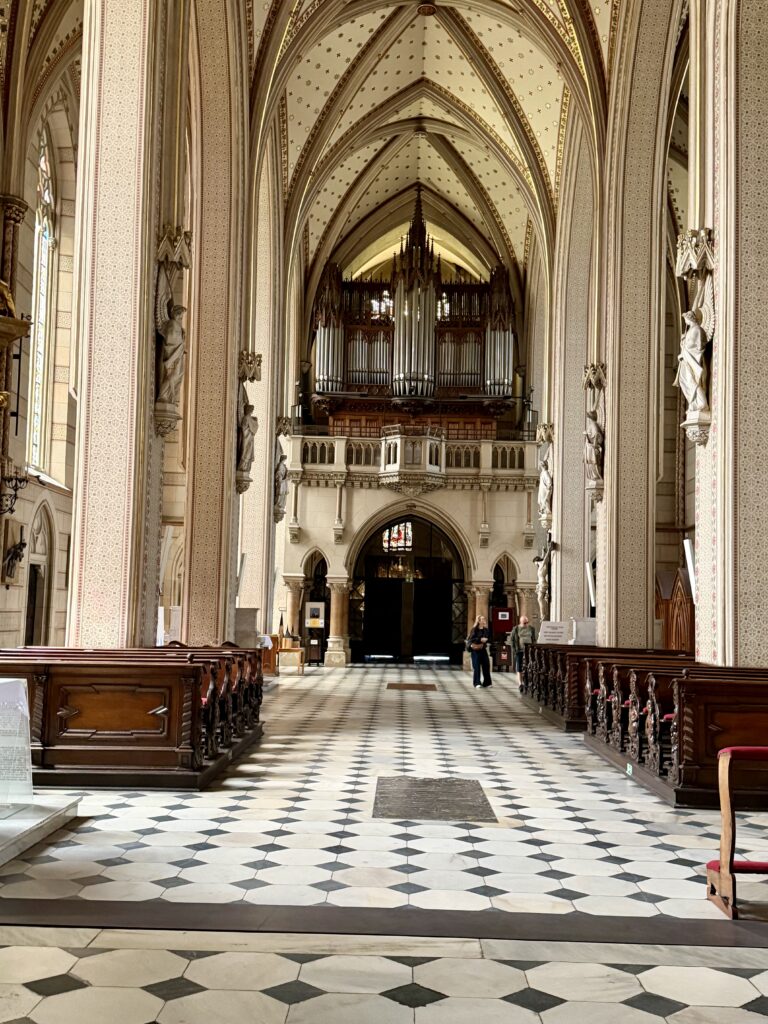
Přemyslid Palace (Bishop’s Palace) & Archdiocesan Museum – Within the complex and opposite St. Wenceslas Cathedral is the Přemyslid Palace , a significant example of Romanesque residential architecture, dating back to the 12th century. Its preserved double and triple arched windows offer a glimpse into early medieval building techniques and aristocratic life. The complex also includes the Archdiocesan Museum, housed partly within the palace and contains a rich collection of religious artifacts, fine art, and liturgical objects that trace the spiritual and cultural development of the region over many centuries.
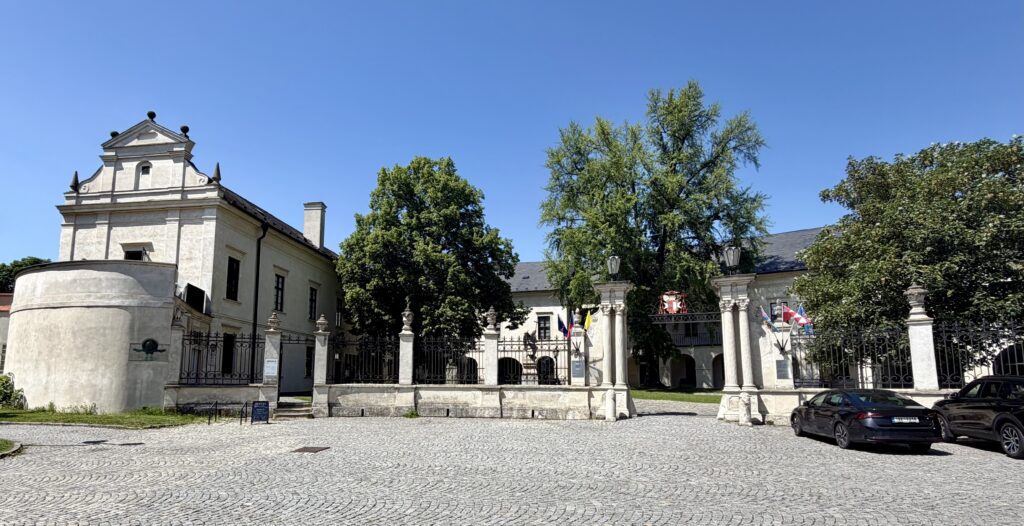
There is a cafe within the Přemyslid Palace complex which serves some good coffee and sweet treats.
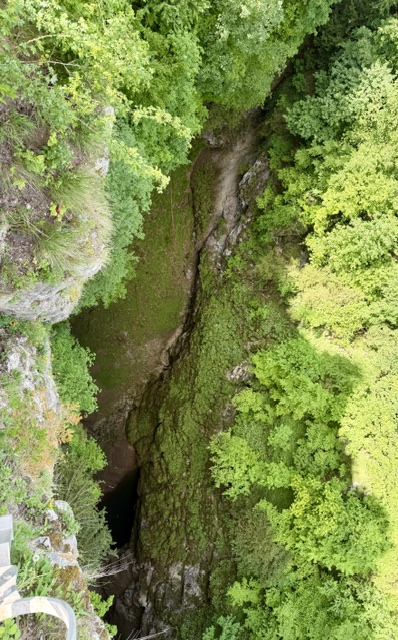
Macocha Abyss – On the way back to Brno, we stopped at this sinkhole. Also known as Macocha Gorge, this dramatic sinkhole lies about 20 km north of Brno in the South Moravian Region and forms part of the extensive Punkva Cave system, through which the Punkva River flows. At 138.5 metres deep, it is the deepest sinkhole of its kind in Central Europe. The abyss measures approximately 174 metres in length and 76 metres in width, and its depth increases further below the surface of the lower lake, with explored underground passages reaching about 187.5 metres.
Visitors can view the abyss from an observation platforms located along the rim of the sinkhole. From these viewpoints, the scale of the chasm becomes immediately apparent, with sheer limestone walls plunging down to the small lake at the bottom.
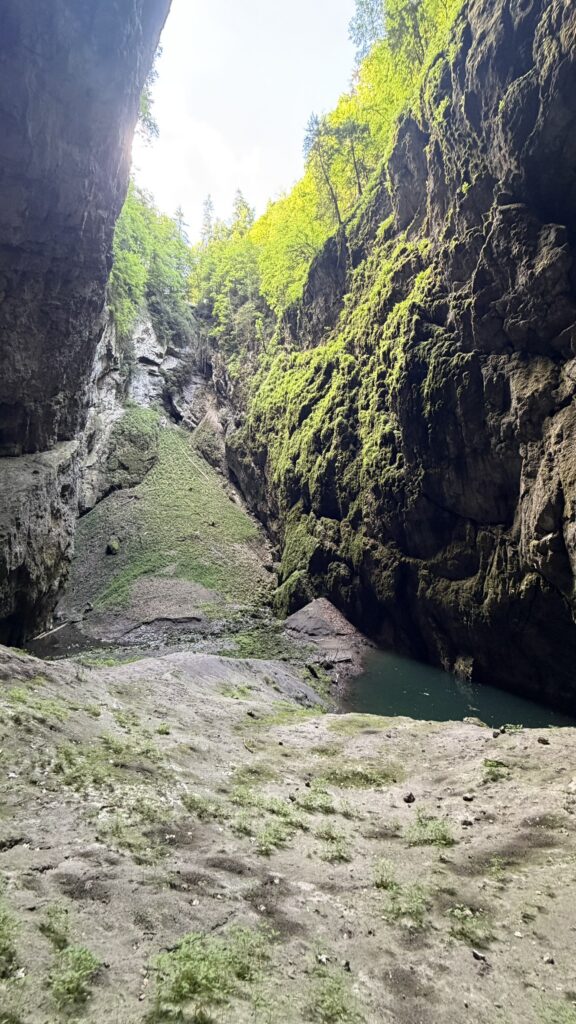
We later got to see this sinkhole from the bottom at the end of our Punkva Cave tour (see next section). Looking up 138 metres to the opening high above provided a completely different perspective and an appreciation of this remarkable natural wonder.
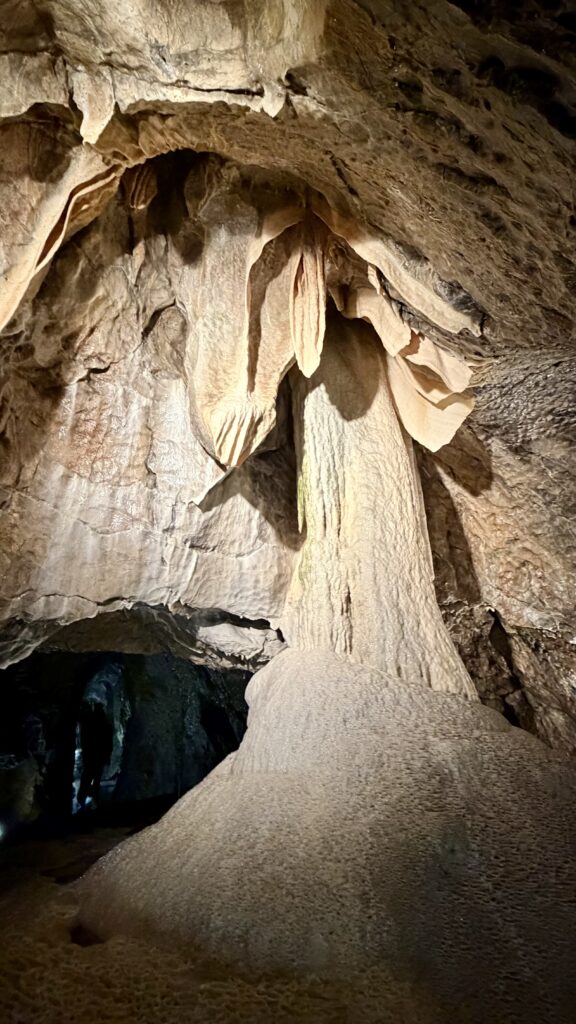
Punkva Cave – To visit the Punkva Caves, we first purchased round-trip cable car tickets, which conveniently carried us down into the valley and back up again after our tour. We then joined a timed-entry guided tour of the caves. The walking portion of the tour leads through a series of vast underground chambers resembling natural cathedrals, filled with spectacular stalactites, stalagmites, and other limestone formations created over thousands of years. The scale and beauty of these caverns are truly impressive.
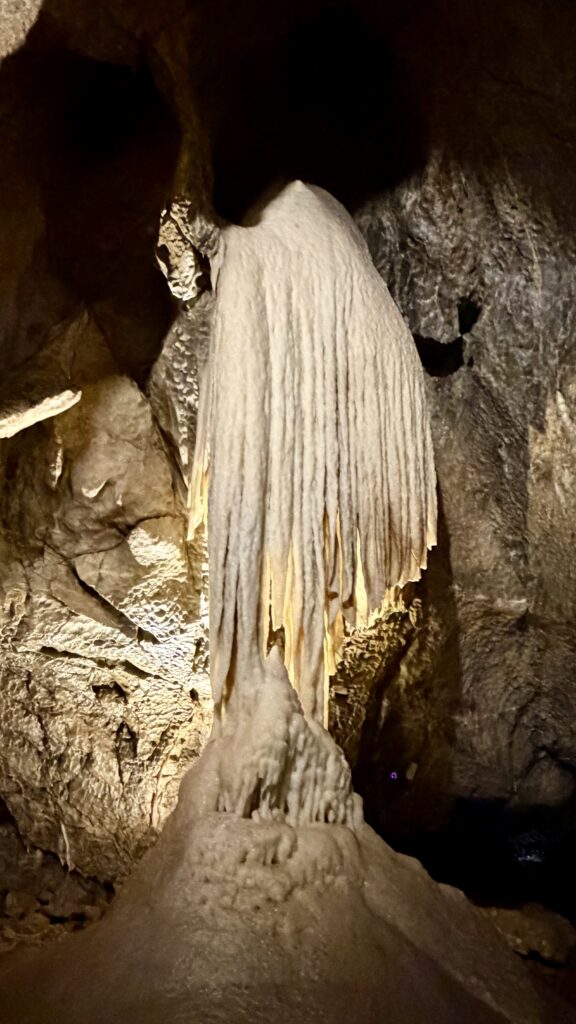
The highlight of the tour is reaching the bottom of the Macocha Abyss. Standing on the floor of this enormous sinkhole and looking straight up 138 metres to the patch of sky above is a surreal and unforgettable experience that gives a true sense of the abyss’s immense size.
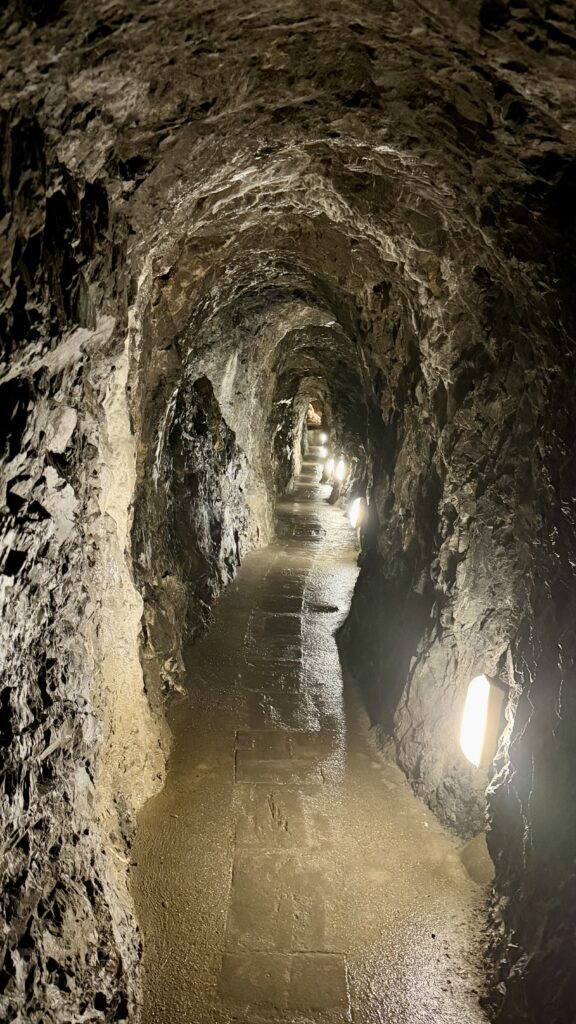
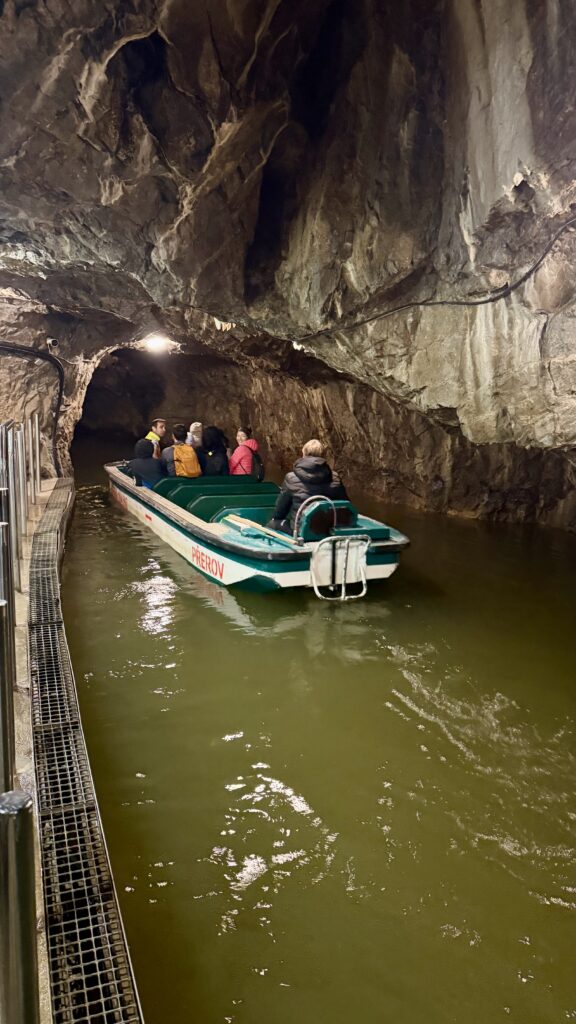
The second half of the tour takes place by boat on the underground Punkva River. We boarded a narrow electric boat and glided through dark subterranean waterways, passing between towering limestone walls. In several places the ceiling dipped so low that we had to duck our heads to avoid the rock formations overhead, while the boatmen expertly navigated the narrow passages. The combination of the cave walk, the Macocha Abyss, and the underground boat ride was a memorable experience.