2 nights in SORO Montevideo
Montevideo is the capital and largest city of Uruguay, with about 1.3 million residents in the city and nearly 2 million in its metropolitan area. Located along the Río de la Plata, it features a 22-kilometer seaside promenade and a mild, temperate climate. Founded in 1726, the city is known for its rich history, tango, candombe music, and lively carnival. As Uruguay’s political, economic, and cultural center, Montevideo is also an important port city, recognized for its relaxed lifestyle and relatively high quality of life.
We began our exploration of Montevideo with a quick stop at Plaza Tomás Gomensoro, just across the road from our hotel. Later that morning, we joined a GuruWalk guided walking tour of Ciudad Vieja (the Old Town), home to many of Montevideo’s most important historic landmarks. The tour was a wonderful way to discover the city’s rich history, architecture, and culture on foot.
- Plaza Tomas Gomensoro
- Plaza Independencia
- Equestrian statue of Mausoleo de José Gervasio Artigas
- Puerta de la Ciudadela (Citadel Gate)
- Executive Tower
- Estevez Palace
- Solis Theater
- Plaza de la Diversidad Sexual (Sexual Diversity Square)
- Peatonal Sarandí (Sarandí Street)
- Paseo de los Soles
- Puro Verso Bookstore
- Plaza Constitución
- Cabildo de Montevideo
- Montevideo Metropolitan Cathedral
- Zabala Square
- Mercado del Puerto (Port Market)
- Legislative Palace of Uruguay
- Montevideo sign
- Rambla de Montevideo
Plaza Tomas Gomensoro – We began our exploration of Montevideo at this charming public square located just across the road from our hotel. Created in 1897, the plaza reflects the European-inspired style of the period and retains its distinctive two-level design. The upper terrace offers lovely views of the surrounding neighborhood and coastline, while steps lead down to a lower garden area featuring a circular pergola, a classical gazebo, brick pathways, benches, and lush vegetation. Originally, the sea reached as far as the upper part of the square, where local residents once enjoyed a private beach.
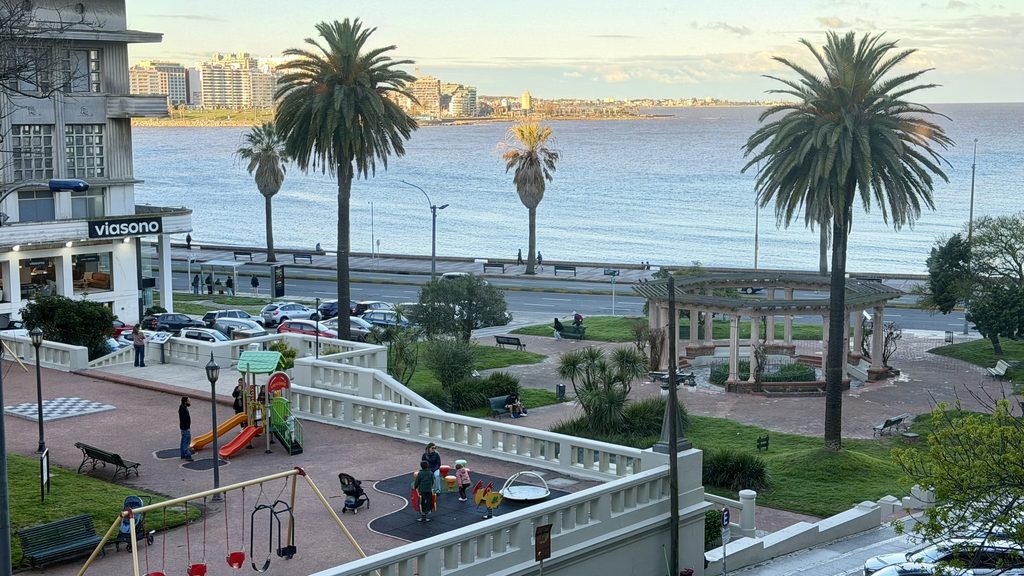
Named after Tomás Gomensoro, Uruguay’s president from 1872 to 1873, the plaza has undergone several renovations to preserve its historic character.
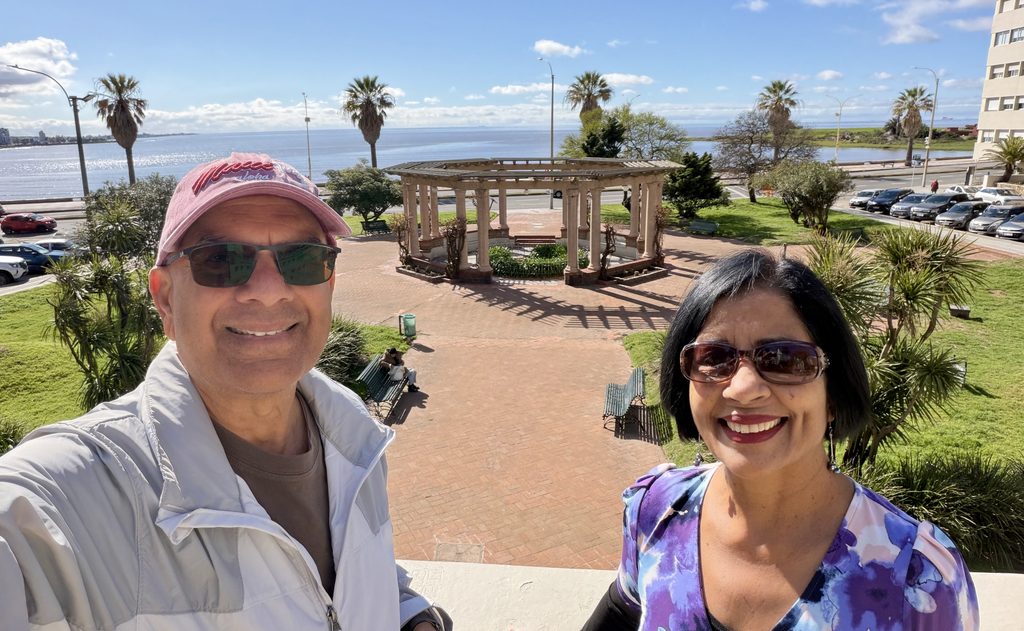
We took an uber to Plaza Independencia which was going to be the start of our Guru Walk. It was 2.5 hours long and the guide spoke excellent English and took us to all the important sites. He also gave us time to visit the interior of some of the buildings. In addition to providing information about the sites we were seeing, he also gave us good information of the political, economic, and social conditions in Uruguay.
Plaza Independencia — is the city’s main square and located at the boundary between the Old Town and the modern city center. At its heart stands the equestrian monument to José Gervasio Artigas, Uruguay’s national independence hero, above an underground mausoleum. The square is surrounded by impressive historic buildings, including the iconic Palacio Salvo, the Solís Theatre, and the former Citadel Gate.
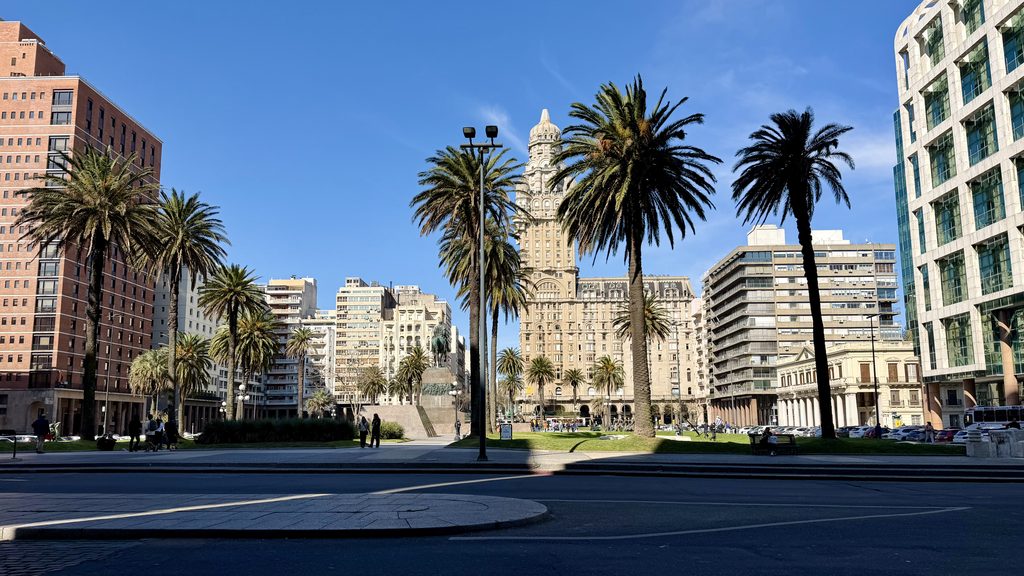
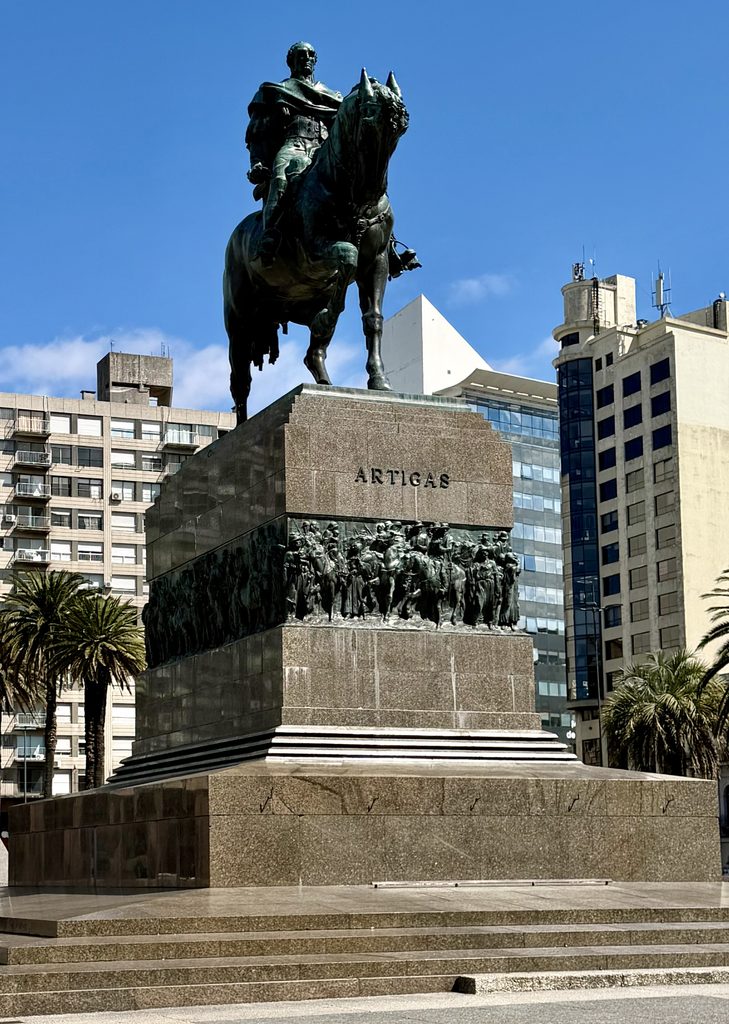
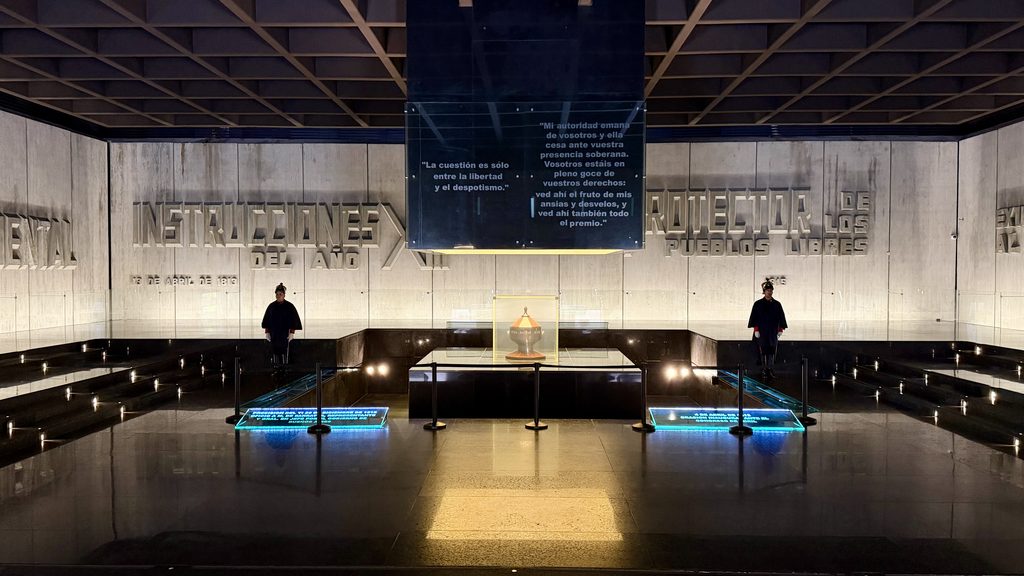
Equestrian statue of Mausoleo de José Gervasio Artigas – Located in the center of the plaza, it occupies the site of the former Citadel and houses the monument and mausoleum of José Gervasio Artigas, a national hero and leader of the independence movement.
——————————————-
Two other landmarks that stand out in the square are the Puerta de la Ciudadela (Citadel Gate) and iconic Palacio Salvo
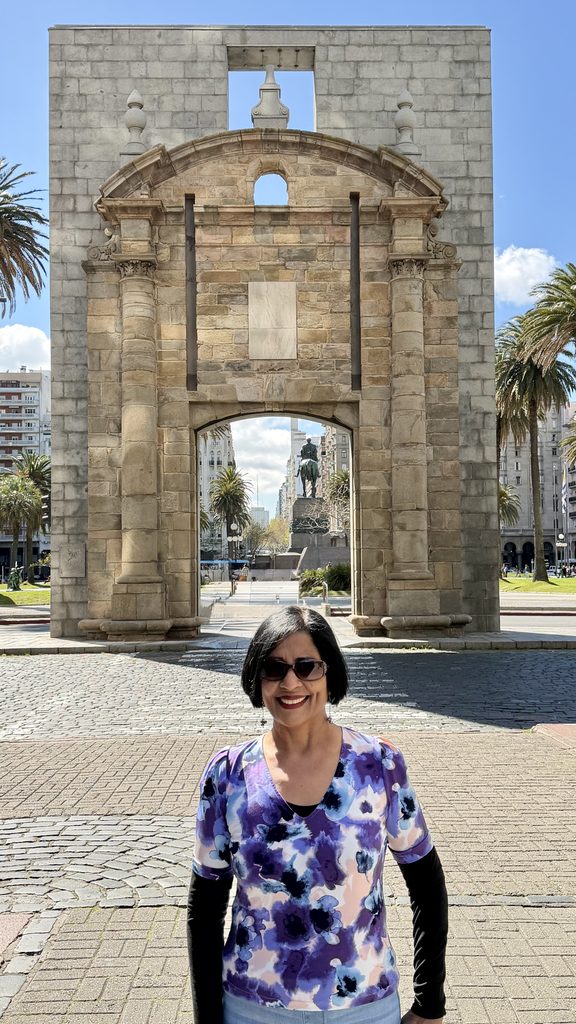
- Puerta de la Ciudadela (Citadel Gate) – is one of Montevideo’s most important historic landmarks, marking the entrance to Ciudad Vieja (the Old Town) from Plaza Independencia. It was originally the main entrance to an 18th-century Spanish military fortress that protected the walled colonial city. When the city expanded, the walls and citadel were demolished in 1877, and the gate was dismantled and relocated. In 1959, it was carefully reconstructed near its original location, aligned with Sarandí pedestrian street. Restored again in 2009, the gate now stands as a reminder of Montevideo’s colonial past and a popular starting point for exploring the Old Town.
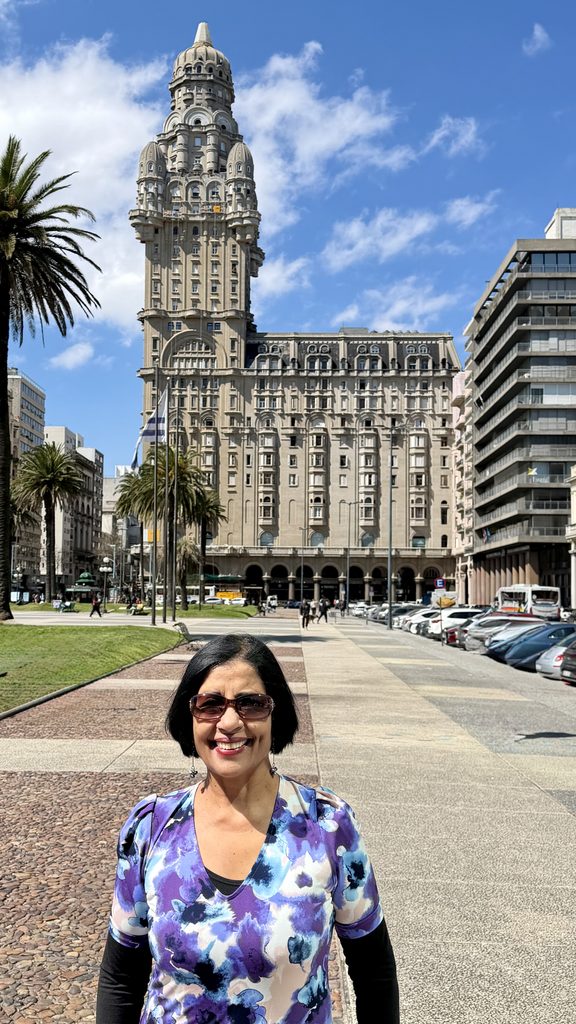
- Palacio Salvo – Completed in 1928, this striking 27-story building rises 105 metres (344 feet) to its rooftop beacon. Designed by Italian architect Mario Palanti, its eclectic architecture combines Renaissance, Gothic, and Neoclassical influences. It was briefly the tallest building in Latin America and, at the time of its completion, the tallest reinforced-concrete structure in the world. Originally intended to include a hotel, the building now houses a mix of private residences, offices, shops and a Tango Museum. Interestingly, Palanti designed a similar building, Palacio Barolo in Buenos Aires, Argentina, which was completed in 1923.
——————————————-
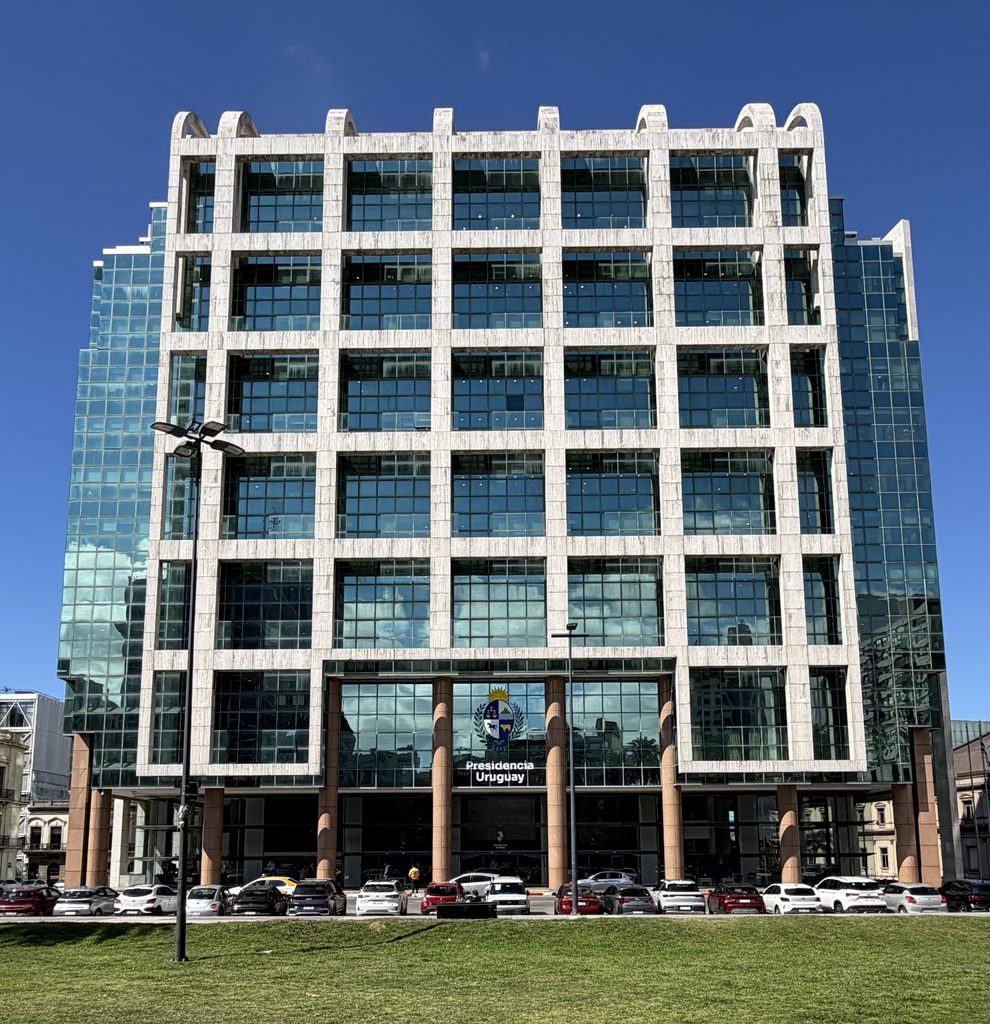
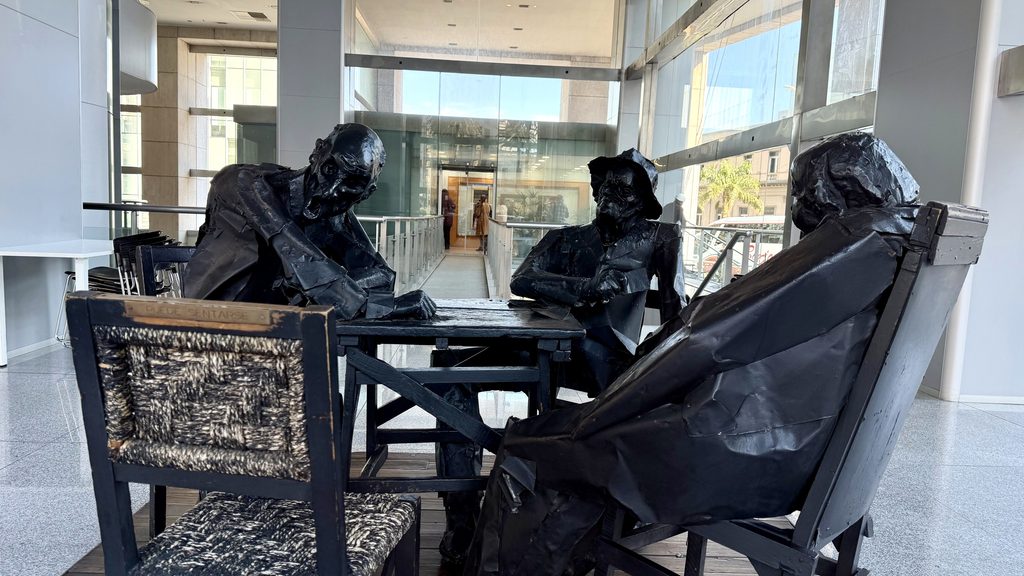
Executive Tower (Torre Ejecutiva) – is the official workplace of Uruguay’s president, located directly across from Plaza Independencia in central Montevideo. The 12-story building has an interesting history – construction began in 1965, when it was intended to become a Palace of Justice, but the project was interrupted by the 1973 coup d’état. Decades later, in 2006, President Tabaré Vázquez revived the project, and the building was completed for government use. The president’s offices moved there in September 2009 from the Liberty Building. Today, the tower houses the Presidency of the Republic and several government departments, making it an important centre of Uruguay’s national administration.
——————————————-
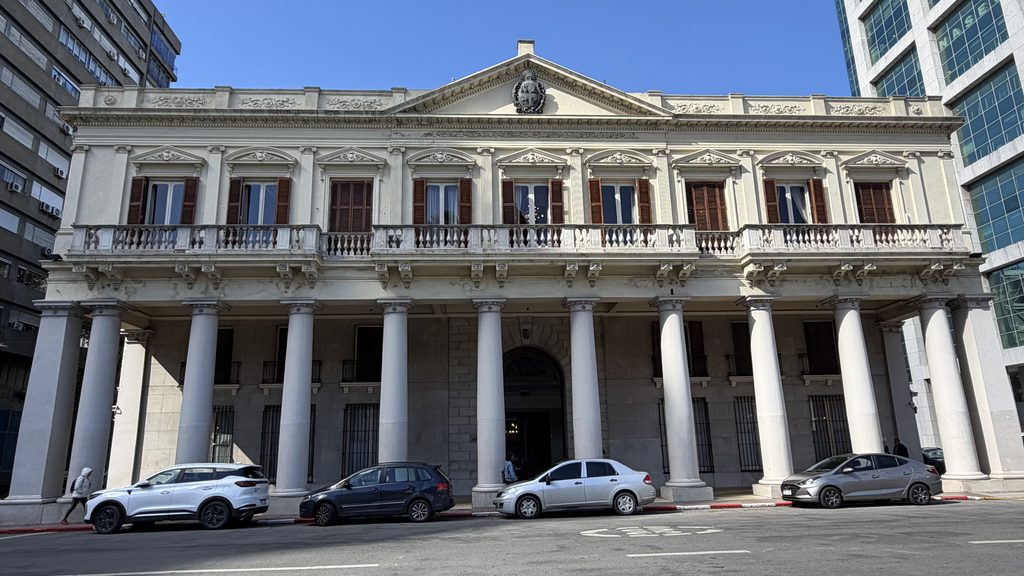
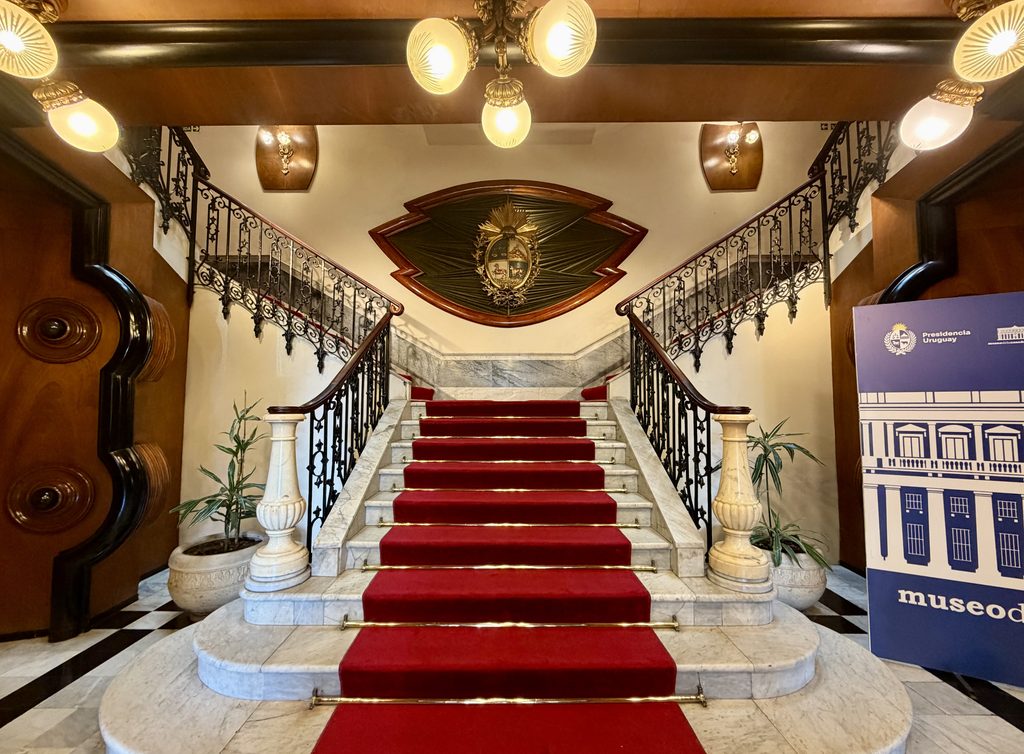
Estévez Palace (Palacio Estévez) – Completed in 1874, this elegant Neoclassical building served as Uruguay’s seat of government from 1880 to 1985. Originally commissioned as a private residence by Argentine businessman Francisco Estévez, it was later acquired by the Uruguayan state and converted into a government building. Today, it serves as a ceremonial venue for state occasions and official events, while the neighboring Executive Tower (see above section) houses the president’s offices. Declared a National Historic Monument in 1975, the palace also contains a museum showcasing memorabilia and artifacts relating to Uruguay’s presidents and political history.
The building is open Mon-Fri 10am-5pm and you can take a free tour of the interior.
——————————————-
Solís Theatre (Teatro Solís) – is Uruguay’s most prestigious and historic theatre, located beside Plaza Independencia on the edge of Montevideo’s Old Town. Opened in 1856, it was designed by Italian architect Carlo Zucchi and named after Spanish explorer Juan Díaz de Solís, the first European known to have reached present-day Uruguay. The theatre has played a central role in the country’s cultural life for more than a century, hosting opera, concerts, and theatrical performances. In 1998, an extensive renovation began, and the restored theatre reopened in 2004, incorporating contemporary design elements.
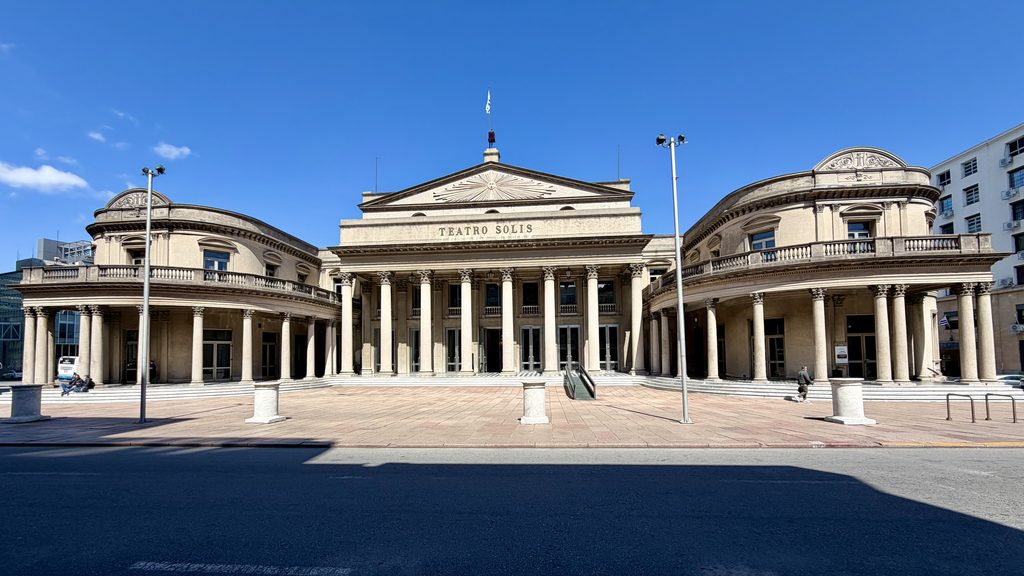
The theatre was closed on the day of our visit, so we weren’t able to explore its beautiful interior. Guided tours are available on selected days and at specific times for a fee, and it’s worth checking the tour schedule in advance if you’re planning a visit to Montevideo.
From Plaza Independencia, Avenida 18 de Julio leads into Montevideo’s city center, while the pedestrian street Sarandí takes visitors into the historic Ciudad Vieja, where we continued our guided GuruWalk tour.
Peatonal Sarandí (Sarandí Street) – is the main pedestrian thoroughfare of Montevideo’s Ciudad Vieja, connecting historic landmarks, museums, cafés, and shops while reflecting the city’s colonial past and cultural evolution. The street leads to Matriz Square, home to the Metropolitan Cathedral and Montevideo City Hall, historic symbols of the city’s religious and civic life.
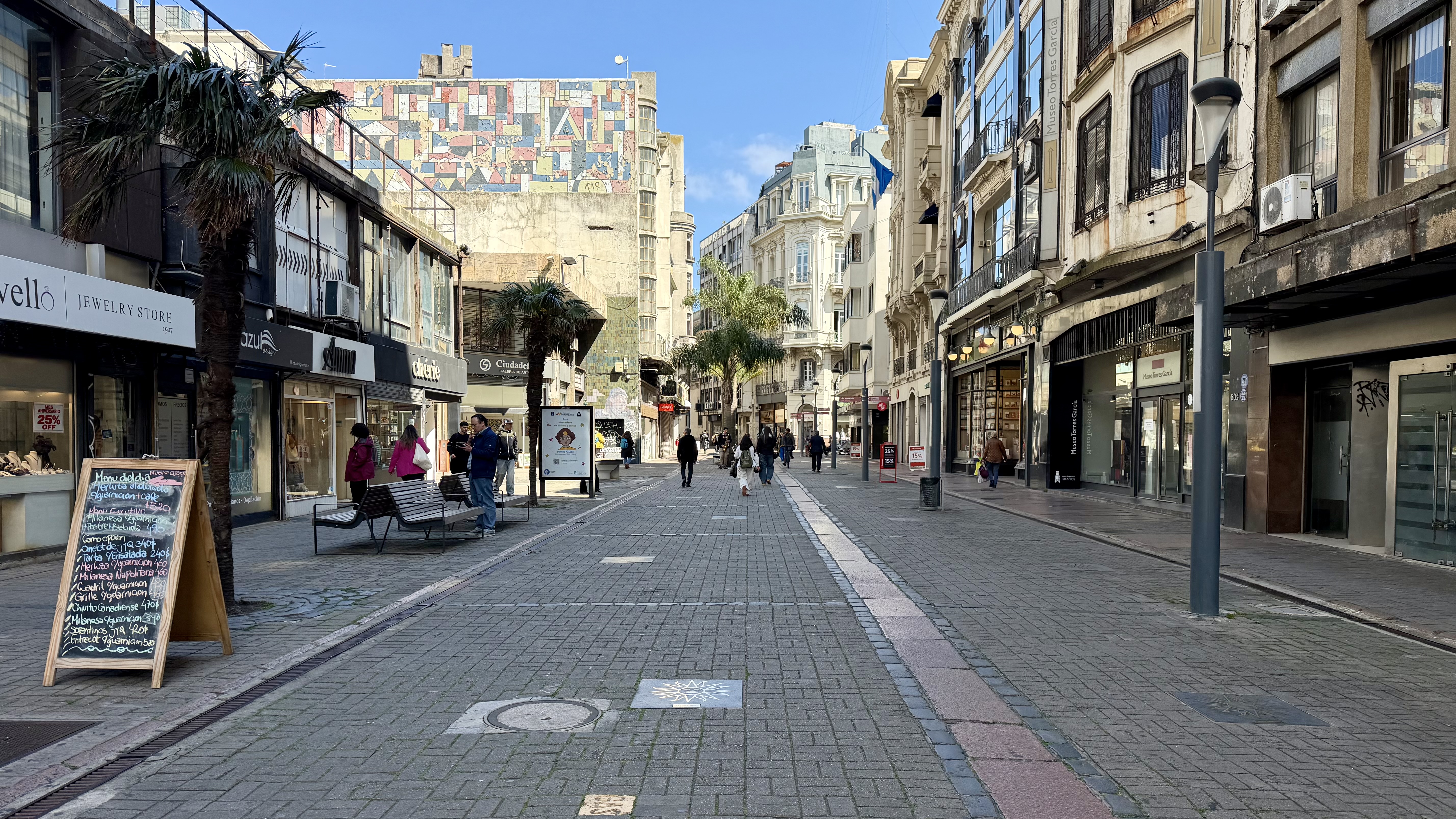
Some notable stops on the Sarandí Street include –
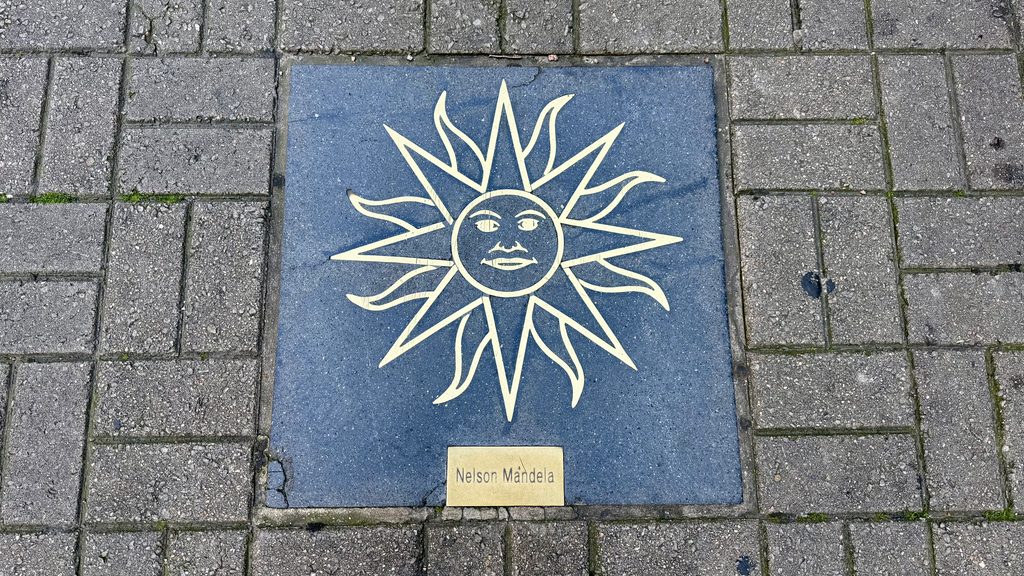
- Space of the Suns (Espacio de los Soles) – is a commemorative section of Sarandí pedestrian street honoring prominent Uruguayan and international figures. Established in 2006, it features square tiles bearing the Sun of May, a symbol on Uruguay’s flag, alongside bronze plaques with the honorees’ names.
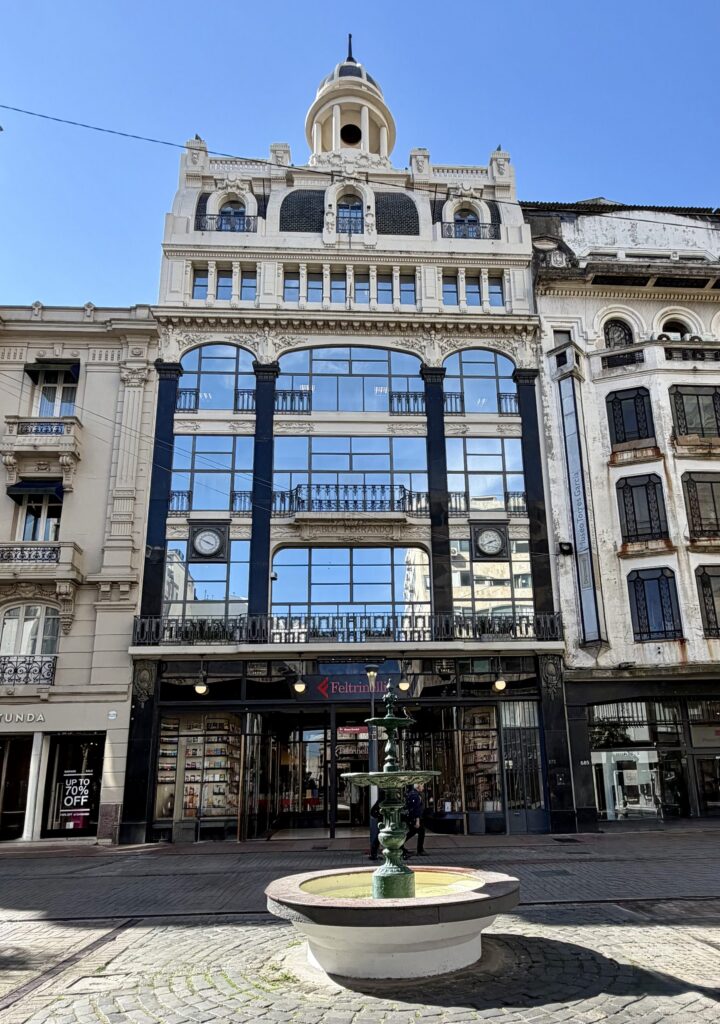
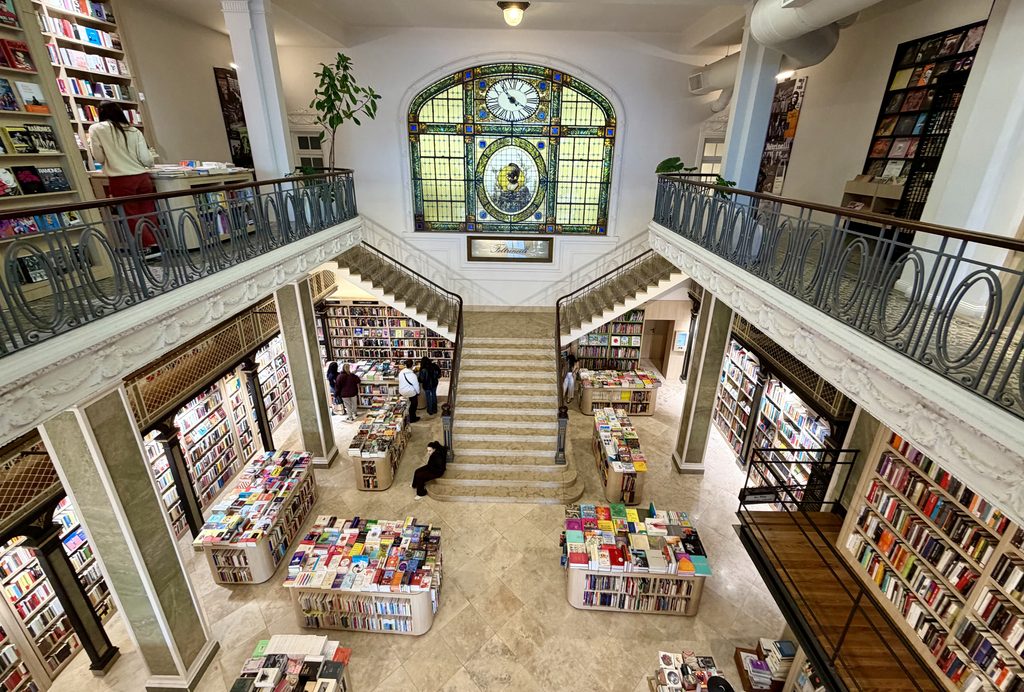
- Puro Verso – aka Más Puro Verso, is a historic bookstore at the beginning of Sarandí street. Housed in the elegant 1917 Pablo Ferrando building, it combines Art Nouveau and Neoclassical architecture with stained-glass windows, a grand marble staircase, and an antique elevator. The bookstore offers an extensive collection of books across many genres, while its upstairs café serves coffee, desserts, and light meals, making it a charming cultural stop along Sarandí pedestrian street.
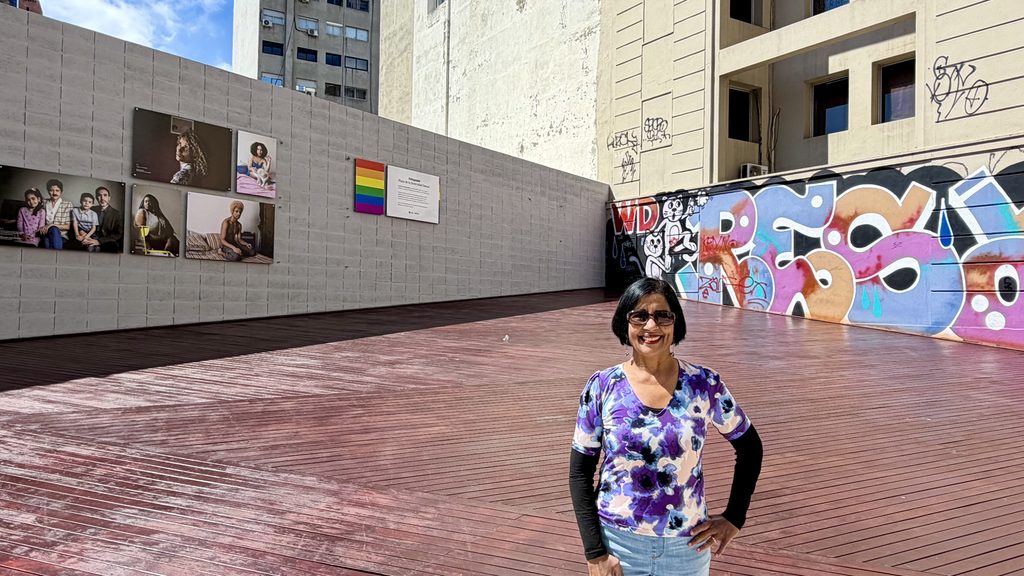
Plaza de la Diversidad Sexual (Sexual Diversity Square) – The public square was inaugurated in 2004 as the first monument of its kind in Latin America. Located between Sarandí and Bartolomé Mitre streets, it features a prominent pink triangular granite monument, reclaiming the pink triangle once used to persecute LGBTQ+ people during the Nazi era. Its inscription promotes respect for all genders, identities, and sexual orientations. The plaza serves as an important symbol of inclusion, equality, and human rights, hosting cultural exhibitions and community events.
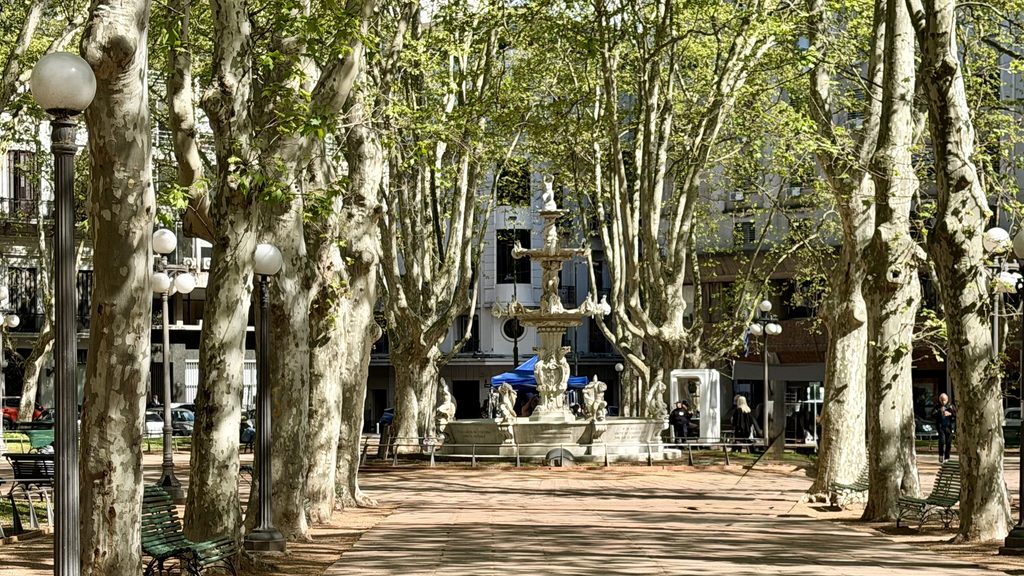
Plaza de la Constitución – aka Plaza Matriz, is Montevideo’s oldest public square, established in 1726 as the central gathering place of the original colonial city. Located in Ciudad Vieja, it is surrounded by historic landmarks, including the Metropolitan Cathedral and the former Cabildo, once the seat of colonial government. The square has hosted civic celebrations, military events, and even bullfights. Its centerpiece is an ornate fountain inaugurated in 1871 to celebrate the arrival of piped water to the city. Today, the square remains a lively historic and cultural hub, closely connected to Sarandí pedestrian street.
Important buildings in the plaza include –
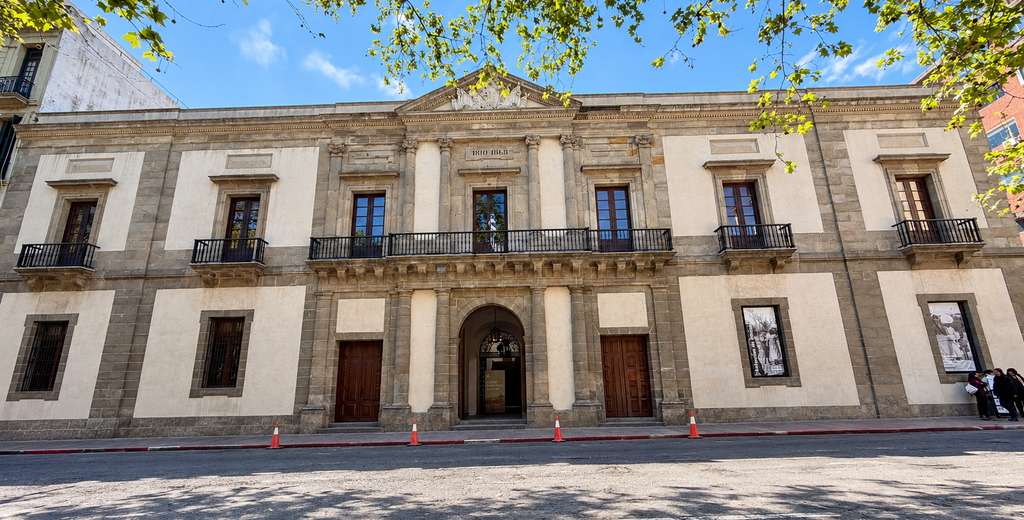
- Cabildo de Montevideo – facing Plaza Constitución, this is one of Uruguay’s most important colonial landmarks. Construction began in 1804 during Spanish colonial rule to serve as the city hall and government headquarters. On July 18, 1830, Uruguay’s first Constitution was sworn in within its halls. After housing various government functions and diplomatic events, it officially opened as a municipal historical museum in September 1958. Visitors can see historical documents, maps, paintings, and artifacts depicting life in Montevideo during the 1800s, as well as the room where Uruguay’s first constitution was sworn in 1830. Admission to the interior is free and open Mon-Fri 12pm to 5:45pm, (most of the labels on displays are in Spanish).
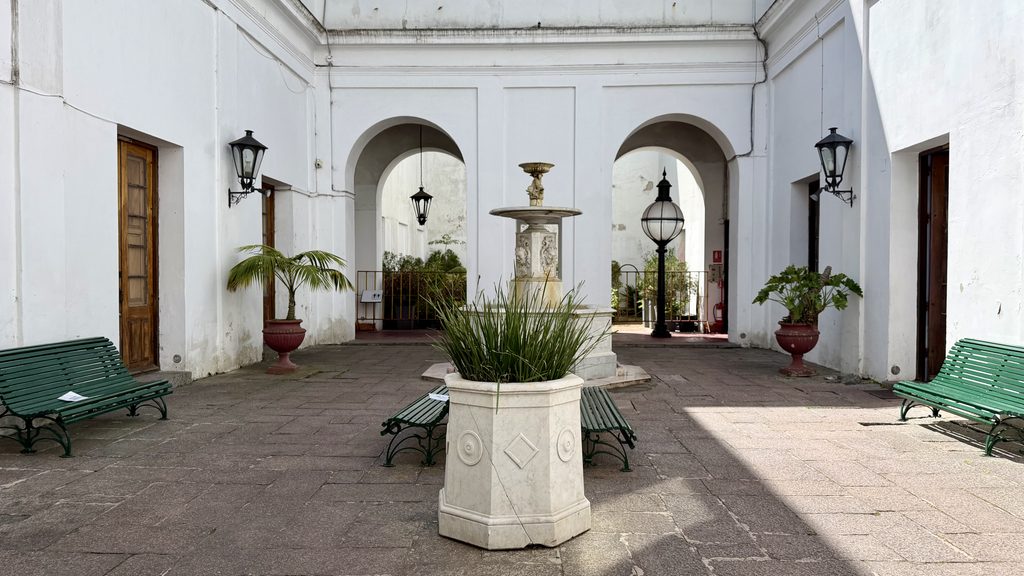
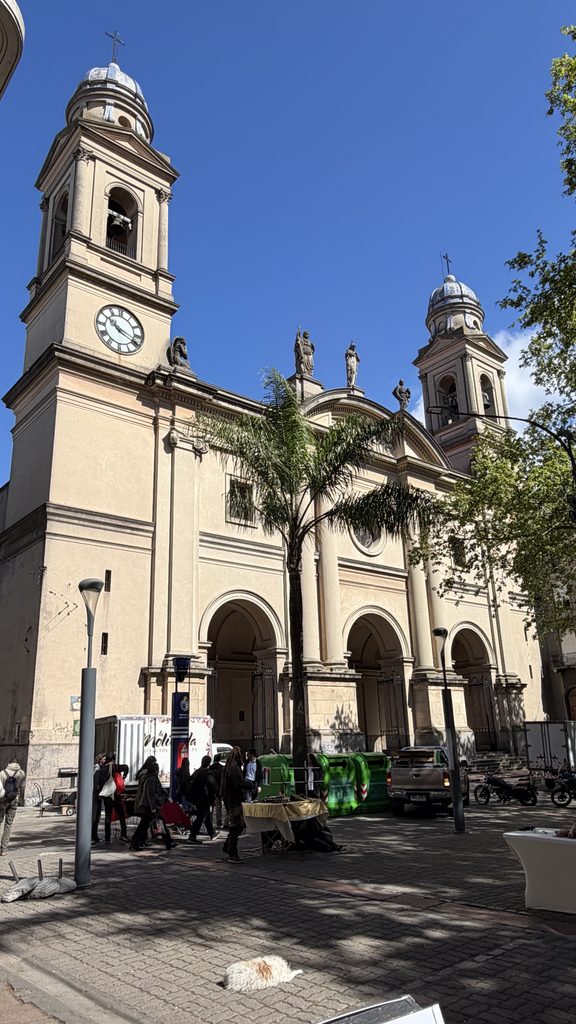
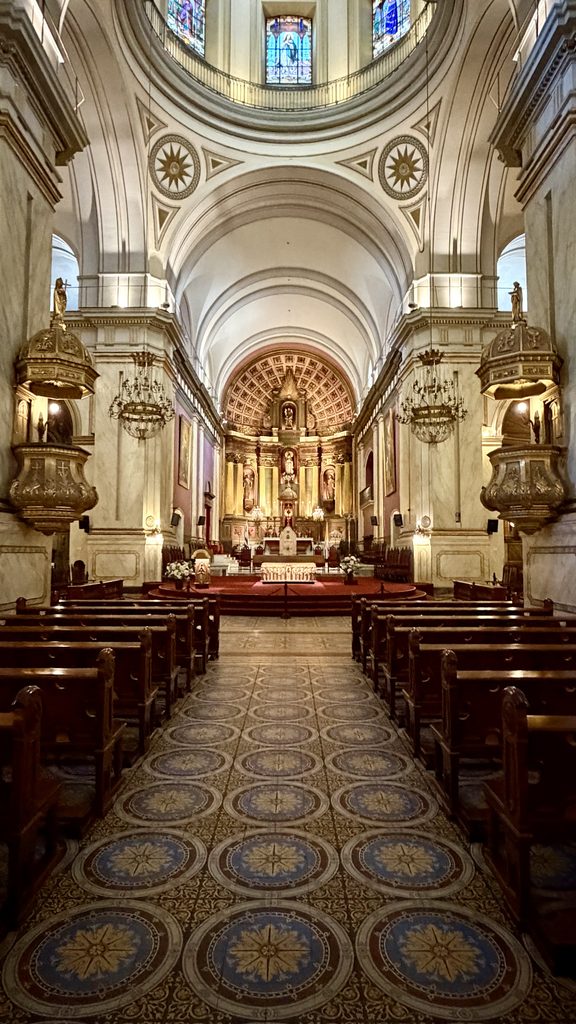
- Montevideo Metropolitan Cathedral is the principal Roman Catholic church in Montevideo and the seat of the city’s archdiocese. Located opposite the Cabildo, its origins date to 1740, with construction of the present Neoclassical building beginning in 1790. Consecrated in 1804, the cathedral is dedicated to the Immaculate Conception and Saints Philip and James, the patron saints of Montevideo.
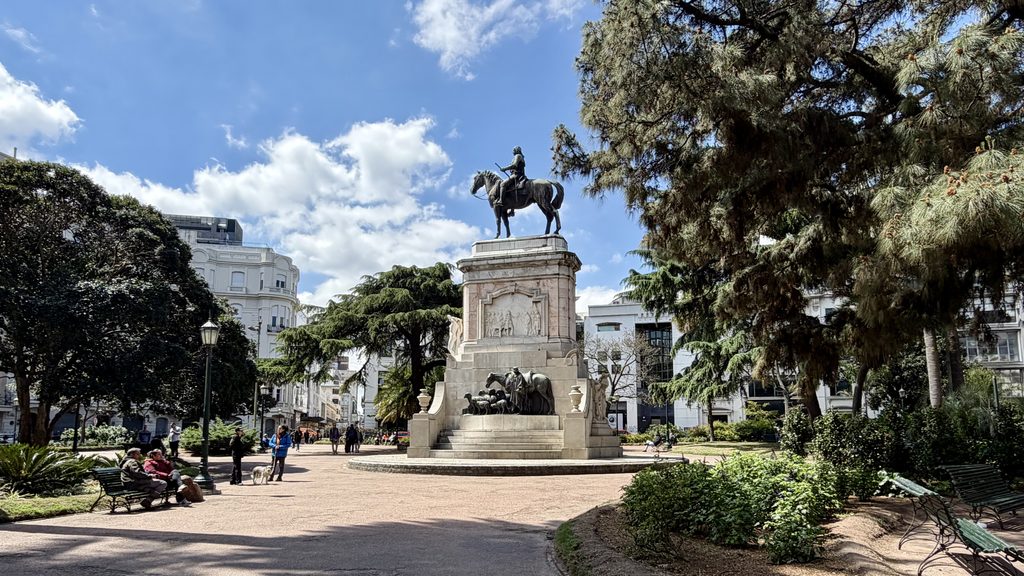
Zabala Square – The square is named after Bruno Mauricio de Zabala, the founder of the city. Planned in 1878 on the site of the former fort, the plaza was established in 1890 and features an equestrian statue of Zabala, inaugurated in 1931. Its distinctive diagonal layout contrasts with the surrounding colonial street grid, while its landscaped gardens and traditional iron fences create a charming, European-inspired atmosphere.
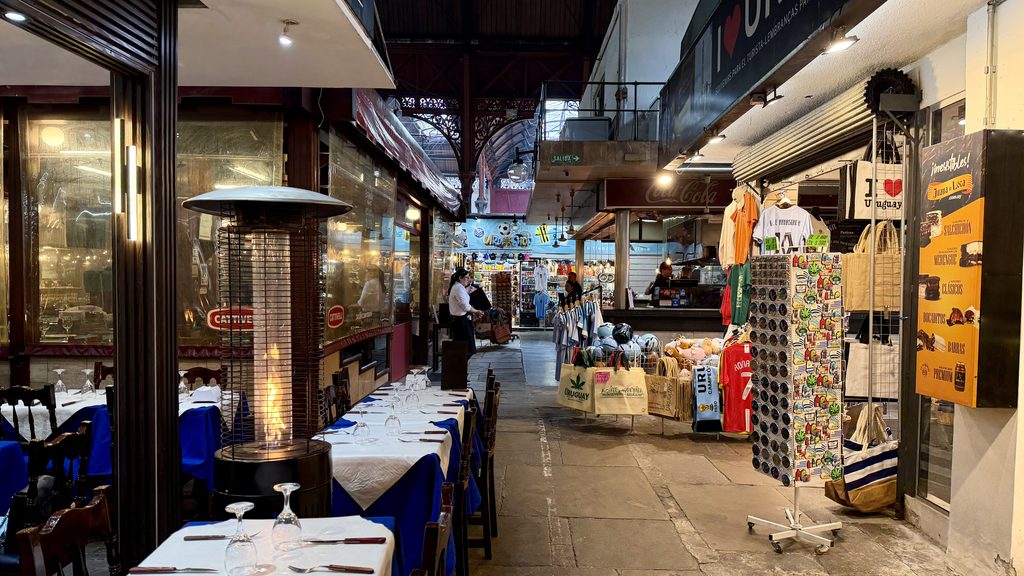
Mercado del Puerto (Port Market) – From Zabala square, our guide took us down to Montevideo’s premier gastronomic and cultural destination. Inaugurated in 1868, this historic iron-framed building originally served as a wholesale market for fruits and vegetables, with its components manufactured in Liverpool, England. Since the 1970s, it has evolved into a lively food hub featuring restaurants specializing in traditional Uruguayan cuisine, particularly asado cooked over open-fire grills. Its distinctive four-faced clock, souvenir shops, tango performances, and local traditions make it a popular attraction.
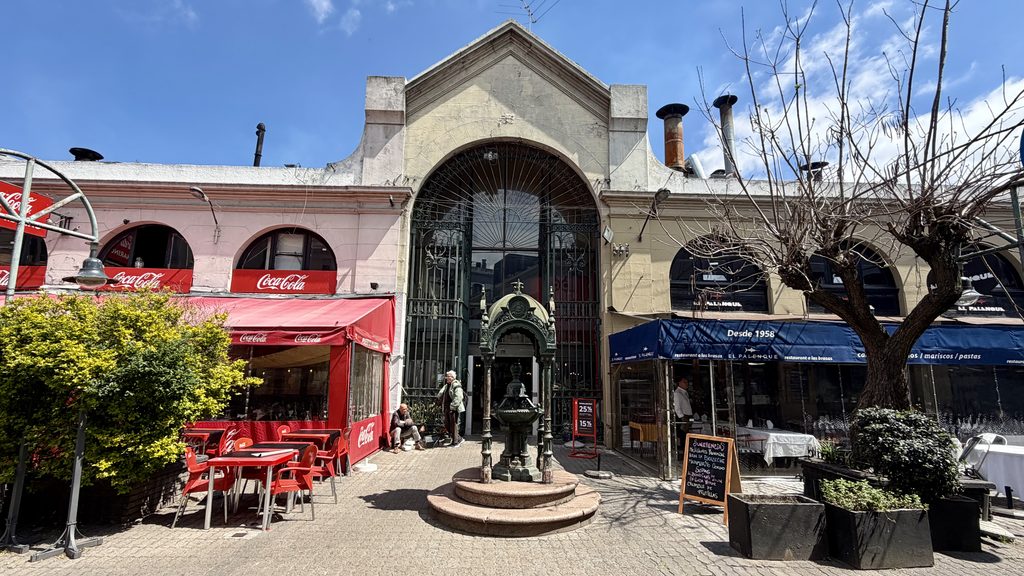
Mercado del Puerto (Port Market) was the final stop on our guided tour. We enjoyed lunch at one of the restaurants inside the market.
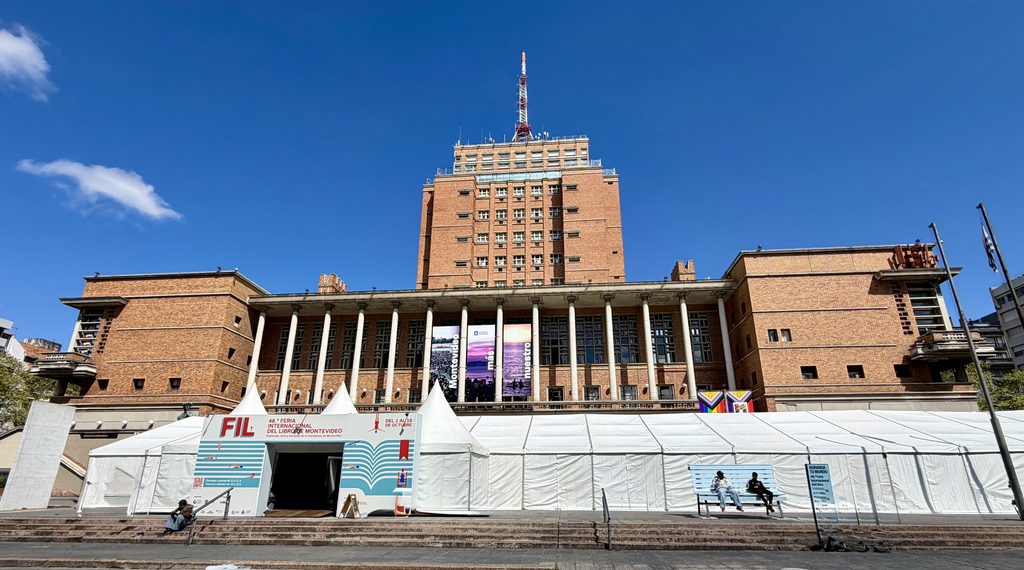
Montevideo City Hall (Intendencia de Montevideo) – Following our guide’s recommendation, we took an Uber to visit the City Hall which is the seat of the city’s municipal government, located on Avenida 18 de Julio in the Centro neighborhood. Built between 1935 and 1941, the 78-meter-tall building houses administrative offices, cultural spaces, art exhibitions, and the Museum of History of Art (MuHAr).
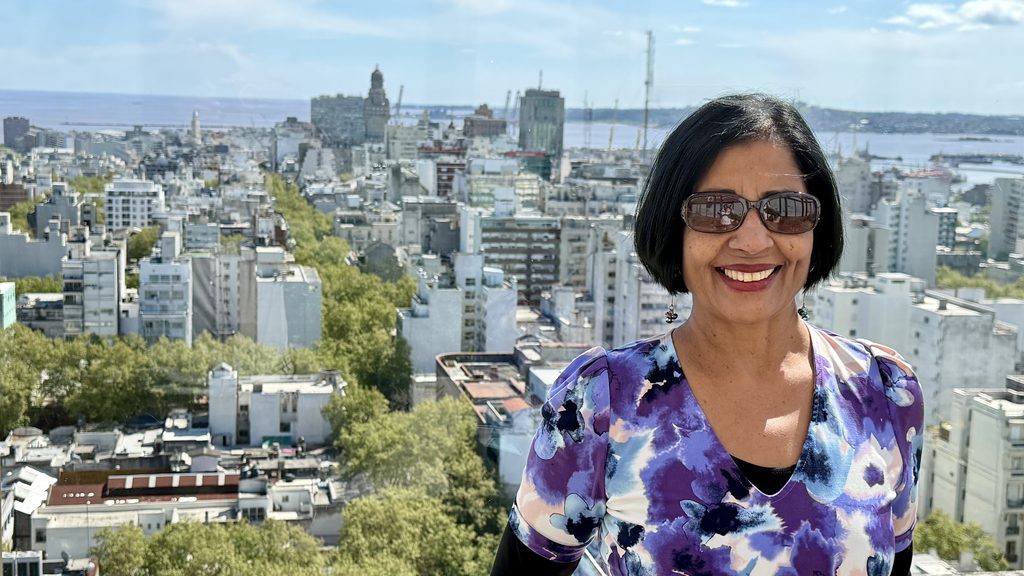
One of its highlights is the free observation deck on the 22nd floor, offering panoramic 360-degree views of Montevideo and the Río de la Plata. The access to the observation deck is at the back of the building and is free.
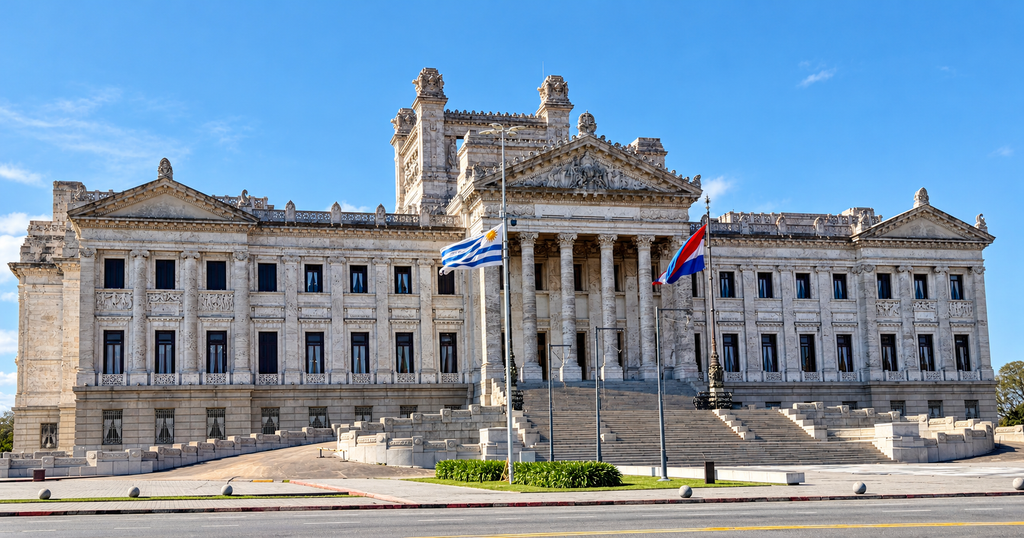
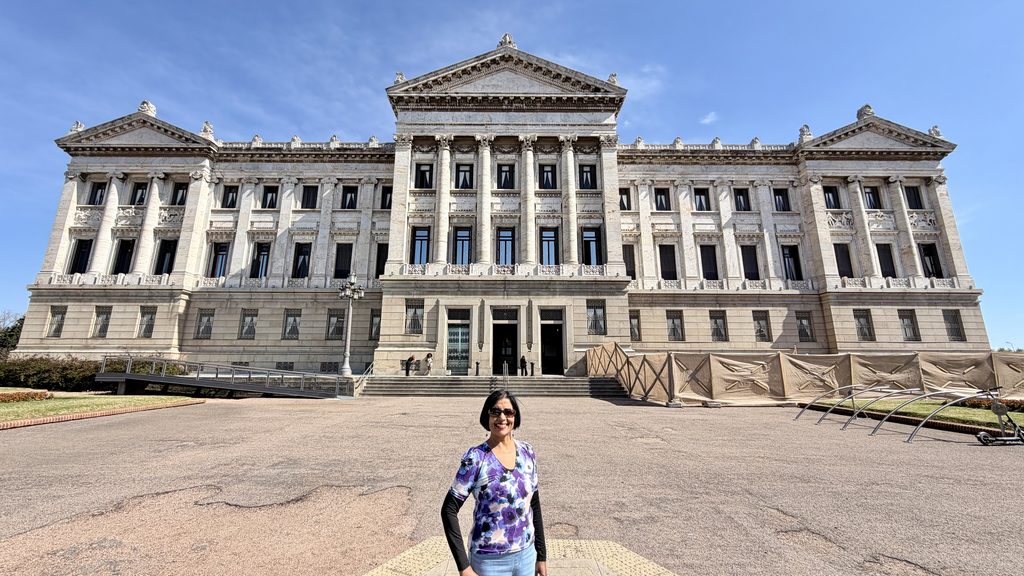
Legislative Palace of Uruguay – is the seat of the General Assembly and one of the country’s most important public buildings. Constructed between 1904 and 1925, it was inaugurated on August 25, 1925, to mark the centenary of Uruguay’s Declaration of Independence and was declared a National Historic Monument in 1975. The palace features a grand Greco-Roman style with extensive use of Uruguayan marble. Inside are the Senate and House of Representatives chambers, the impressive Hall of the Lost Steps, which hosts state ceremonies and exhibitions, and the Legislative Library with more than 250,000 volumes. The building also preserves the original 1825 Declaration of Independence and 1830 Constitution, making it both a functioning parliament and a symbol of Uruguay’s democratic heritage.
Free tours are available in Spanish and English at 3pm on weekdays. On the day of our visit the tour was cancelled.
Montevideo Sign – We then took an Uber to the iconic Montevideo sign along the famous Rambla de Montevideo. We spent some time admiring the scenery and taking pictures.
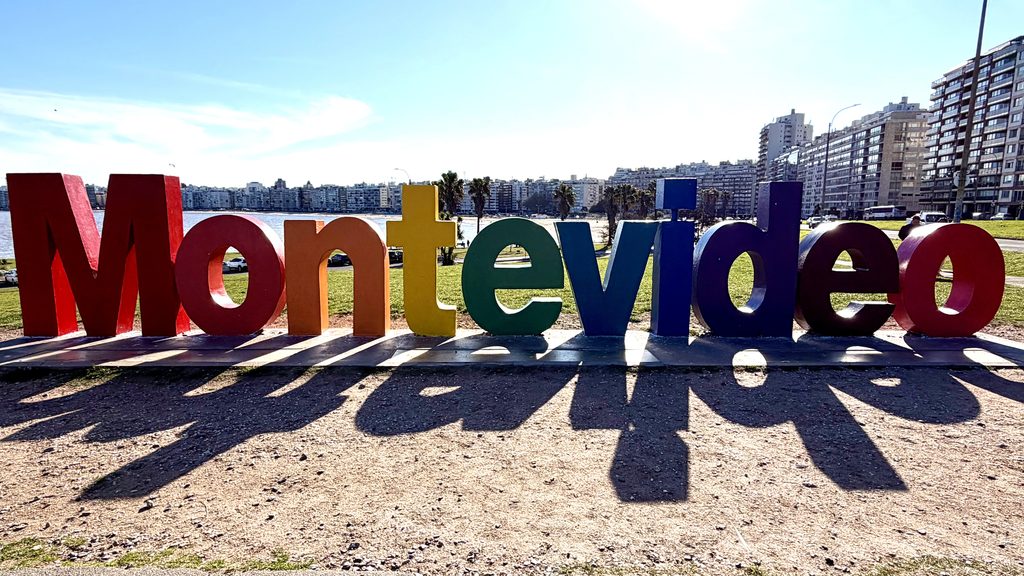
Rambla de Montevideo – Stretching 22 uninterrupted kilometers (13.7 miles) along the coastline, the Rambla de Montevideo is an integral part of the city’s identity and has been proposed for UNESCO World Heritage status. Our hotel was also located along the Rambla, about a mile from the famous Montevideo sign. We set off on foot along the waterfront promenade, with the vast Río de la Plata stretching beside us. It was the perfect way to end the day, strolling leisurely back to our hotel while soaking in the beautiful evening views.