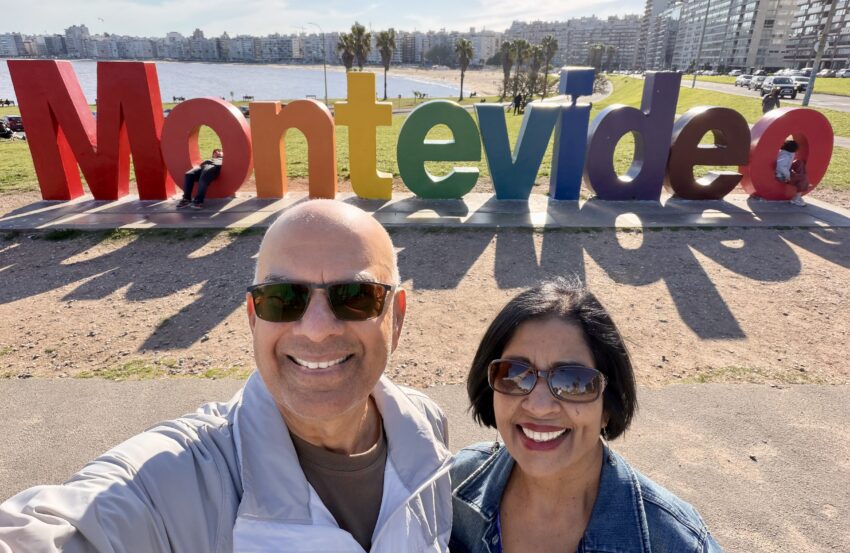
Officially the Oriental Republic of Uruguay, this country is located in southeastern South America, bordered by Argentina, Brazil, the Río de la Plata, and the Atlantic Ocean. It has a population of approximately 3.5 million people, with nearly half living in the metropolitan area of its capital, Montevideo.
The region was inhabited by Indigenous peoples for thousands of years before European arrival in the 16th century. Uruguay gained independence in 1828 and adopted its first constitution in 1830. After a military dictatorship from 1973 to 1985, democracy was restored. Today, Uruguay is known for its democratic institutions, high living standards, social equality, and progressive policies, including the legalization of cannabis, same-sex marriage, abortion, and euthanasia.
When planning our trip to Buenos Aires, we discovered that Colonia del Sacramento in Uruguay was just a one-hour ferry ride away. We decided to explore the country and spend three days visiting the UNESCO World Heritage Site of Colonia del Sacramento and the capital, Montevideo. Some things to know about Uruguay –
- Currency – The local currency is the Uruguayan peso (UYU). We used credit cards almost everywhere, so carrying large amounts of cash was unnecessary.
- Language – Spanish is the official language. We managed comfortably without speaking much Spanish at the places we visited and were prepared to use Google Translate whenever needed.
- Transportation – We used Uber to get around Montevideo, which was a convenient way to explore the city.
- Safety – Uruguay is generally considered one of the safer countries in South America. However, it’s always wise to take standard travel precautions and stay aware of your surroundings.
- Weather – We visited in October, during the Southern Hemisphere spring. The weather was fairly warm, with occasional rain showers, but the rain didn’t interfere with our sightseeing plans.
- Local Cuisine – Since we are vegetarians, we can’t offer much insight into Uruguay’s local cuisine, which is well known for its meat-heavy dishes. Mate, a traditional herbal infusion made from yerba mate leaves, is an important part of Uruguayan culture, just as it is in Argentina. You’ll often see locals carrying their mate cups and thermoses as they go about their day.
Detailed plan for Uruguay –
- Day 1 morning – We took an early morning ferry from Buenos Aires to Colonia del Sacramento. We had rented a car, and the rental office was just a stone’s throw from the ferry terminal, making pickup quick and convenient.
- Explore Colonia del Sacramento – We spent about three hours exploring the UNESCO World Heritage Site on foot. Parking was easy to find and free throughout much of the town. Just be careful to avoid parking along curbs marked with red or yellow lines. After exploring the historic quarter, we drove about 15–20 minutes to visit the old bullring, Plaza de Toros Real de San Carlos
- Day 1 afternoon – We then set off for Montevideo, a drive of approximately two and a half hours. Along the way, we stopped in Nueva Helvecia, a charming town known for its Swiss heritage and European influences.
- Day 2, Explore Montevideo – We spent the whole day in Montevideo, discovering the capital through a combination of guided tours and self-guided explorations, which gave us a chance to experience the city’s history, culture, and local charm.
- Day 3, Ferry Back to Buenos Aires – We took the 11am ferry from Montevideo back to Buenos Aires. This was a direct ferry, taking approximately three hours to reach Buenos Aires.
———————————————–
- Colonia del Sacramento
- Nueva Helvecia
- Montevideo