This charming city is located in southwestern Uruguay, along the Río de la Plata across from Buenos Aires, Argentina. Founded by the Portuguese in 1680, it was contested between Portugal and Spain for nearly a century before becoming part of Uruguay. Its historic quarter features cobblestone streets, colonial architecture, and a unique blend of Portuguese and Spanish influences. Recognized as a UNESCO World Heritage Site, Colonia del Sacramento is a popular destination for its rich history, charming atmosphere, and scenic waterfront.
We had booked our ferry tickets from Buenos Aires to Colonia del Sacramento online a few weeks in advance. You will need to carry your passport, as you’ll be crossing an international border. We were advised to arrive at the port 1–1.5 hours before departure to allow enough time for immigration. Thankfully, we had no issues and boarded the ferry on time, ready for our journey to Uruguay.

The crossing took about an hour, with endless water stretching out in every direction. As we approached Colonia, we caught our first glimpse of the charming historic town, with its distinctive lighthouse rising above the rooftops—a lovely welcome to Uruguay!
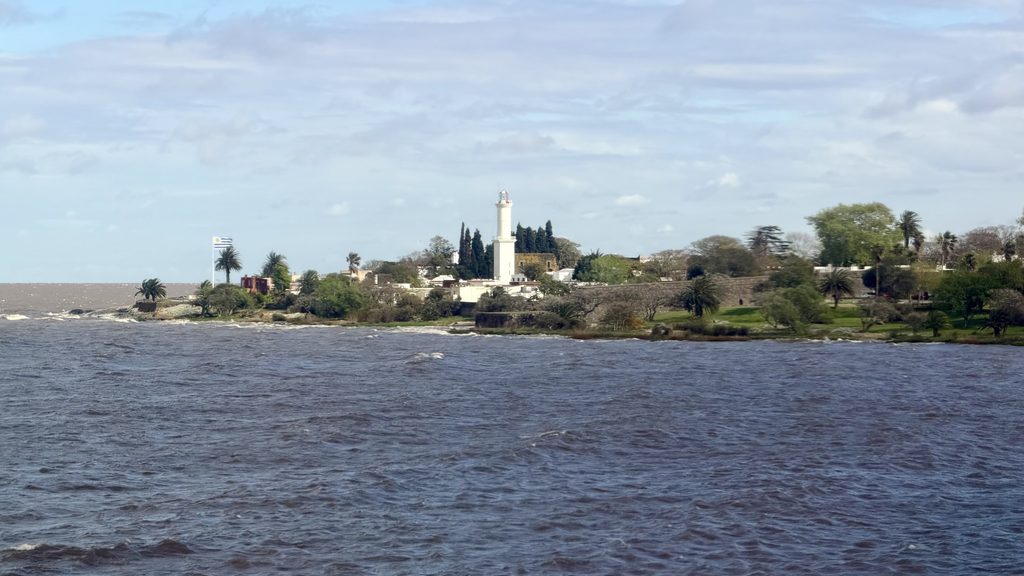
after we got off the ferry, we walked over to the rental car company and picked up our car. Our first stop was the Barrio Histórico (Historic Quarter), which is the heart of Colonia del Sacramento on the banks of the Río de la Plata.
- Barrio Histórico (Historic Quarter)
- Puerta de la Ciudadela
- Walk along a portion of the old city walls around the gate
- Stroll the cobblestone streets
- Main Square (Plaza de Armas)
- Basilica del Santisimo Sacramento, (aka Matriz Church)
- Calle de los Suspiros (or Street of Sighs)
- El Faro Lighthouse
- Wandering the streets of Colonia
- Plaza de los Toros
- Nueva Helvecia
- Plaza de los Fundadores (Founders’ Square)
- Hotel Nirvana
Puerta de la Ciudadela – This restored stone gateway, complete with a drawbridge and sections of the old defensive wall, marks the historic entrance to the Portuguese settlement. It’s a wonderful place to begin exploring the Barrio Histórico.
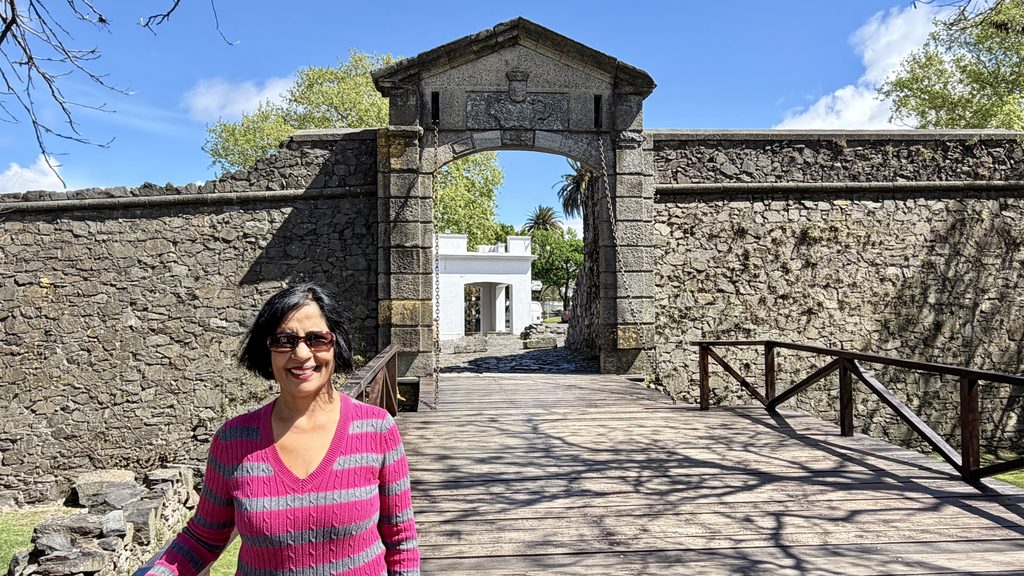
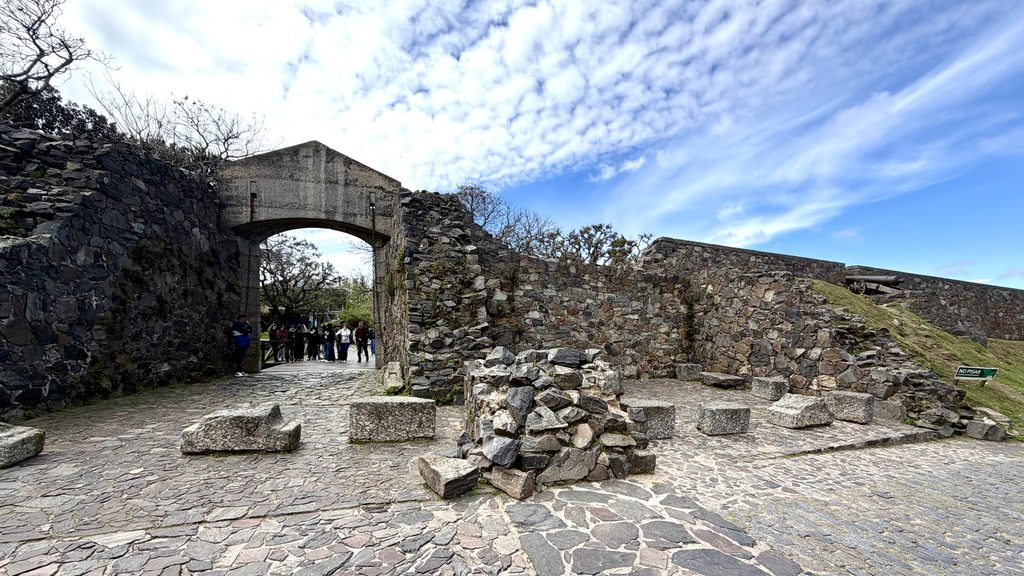
Walk along a portion of the old city walls around the gate – After entering the historic quarter through the Portón de Campo (City Gate), we walked along a section of the old city walls toward the waterfront. This short, scenic walk offers a glimpse into Colonia’s colonial past, when the walls helped protect the Portuguese settlement. The path eventually leads you close to the Río de la Plata, where you can enjoy lovely views of the water.
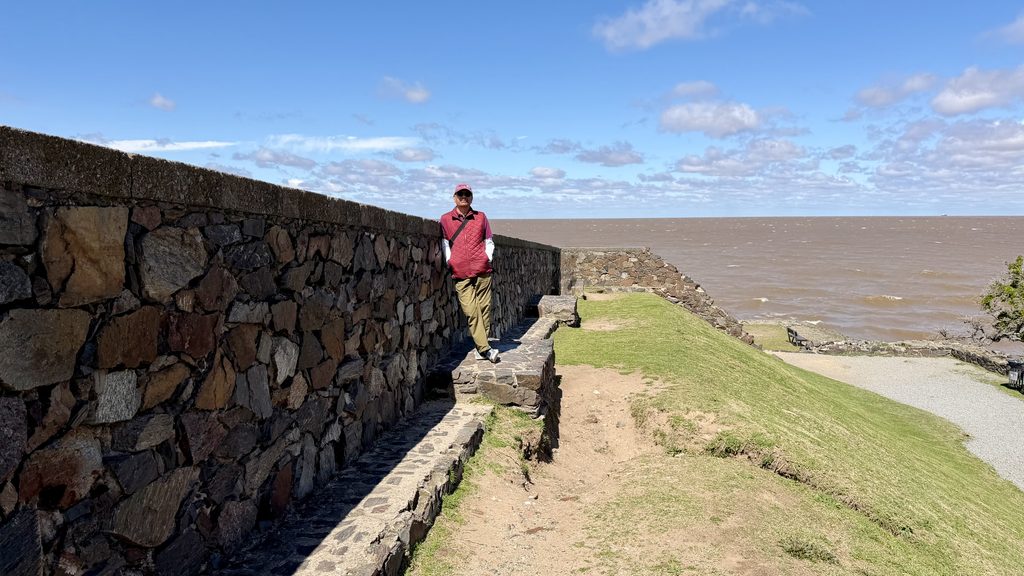
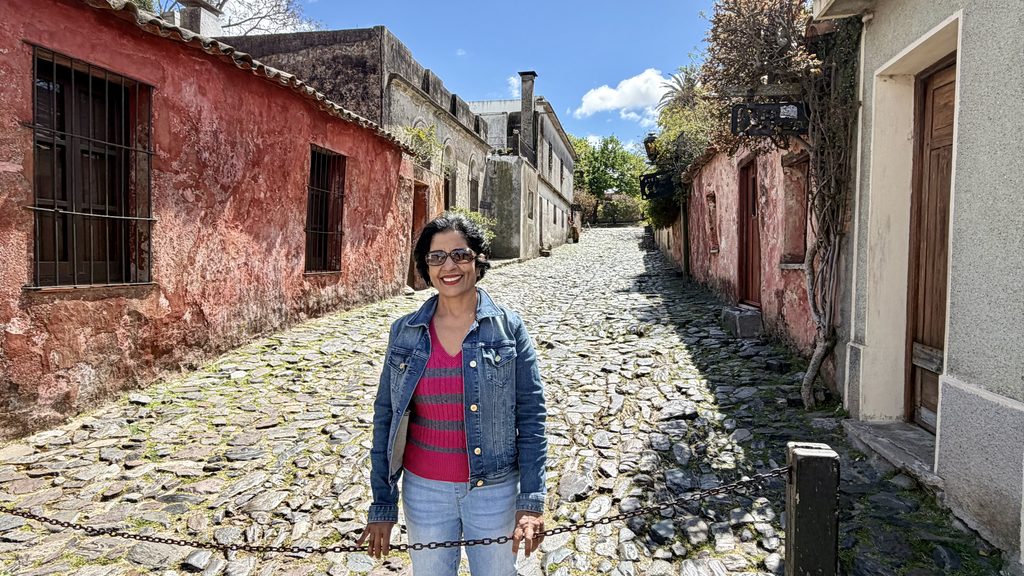
Stroll the cobblestone streets – We wandered through the charming cobblestone streets taking in the peaceful morning atmosphere. Visiting in early October meant there were very few crowds, allowing us to explore the historic quarter at a leisurely pace without the hustle and bustle of peak tourist season.
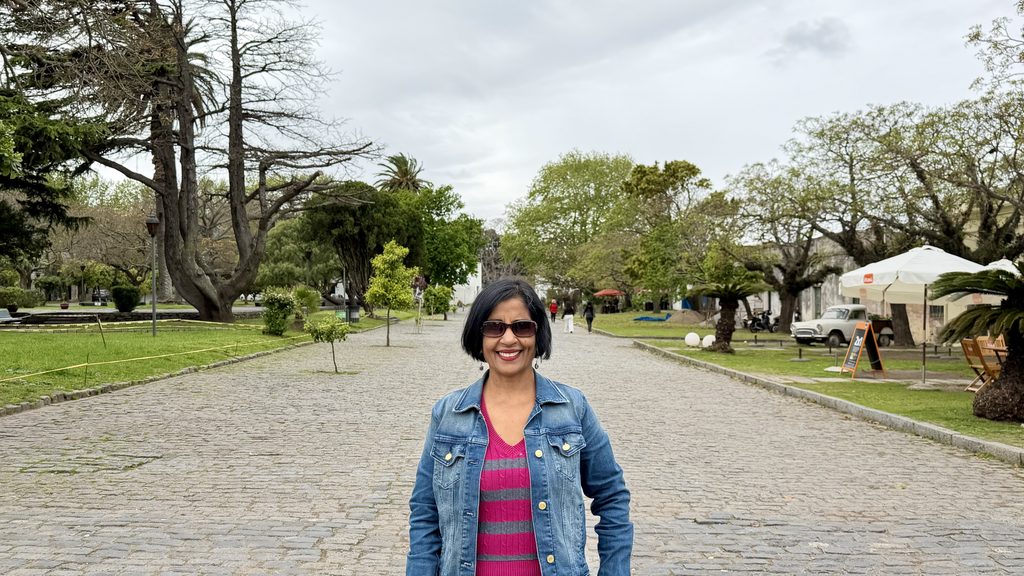
Main Square (Plaza de Armas) – also known as Plaza Mayor or Plaza 25 de Mayo, was once the center of colonial life in Colonia del Sacramento. Today, it offers a peaceful spot to pause while exploring the historic quarter, surrounded by charming colonial architecture and shaded pathways.
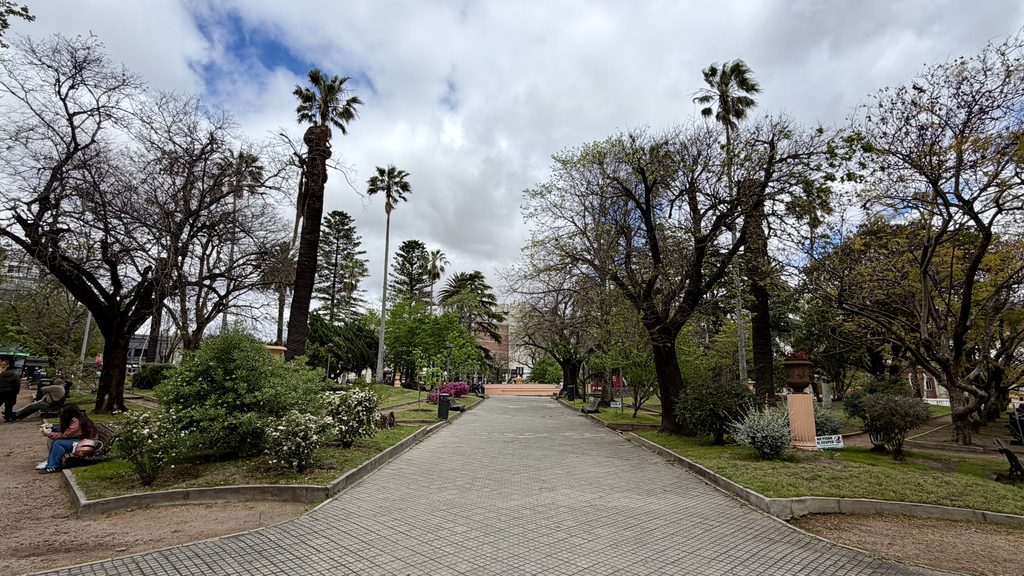
The square is home to the Basílica del Santísimo Sacramento, also known as Iglesia Matriz, which is generally considered Uruguay’s oldest church. Its origins date back to 1680, when a simple chapel made of straw and clay was built in the same year as the town’s founding. The original chapel was replaced by a stone church in the late 17th century, but the building suffered damage during the town’s turbulent history and was rebuilt several times. The church we see today reflects its reconstruction in the early 19th century.
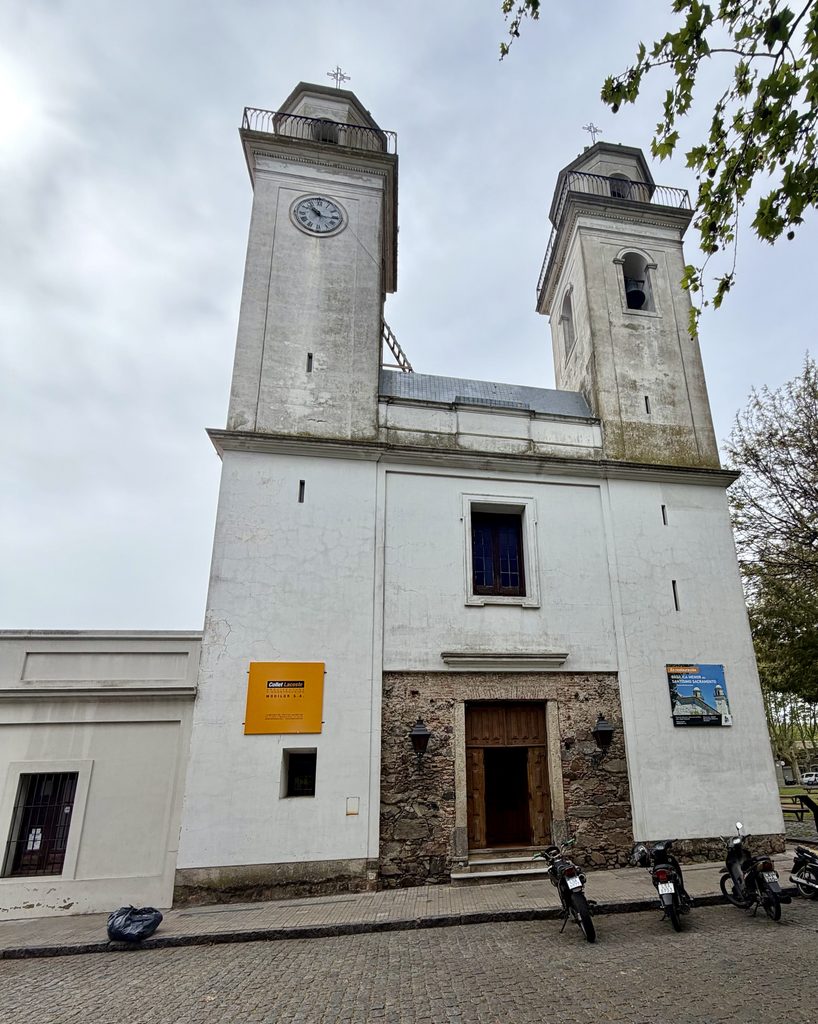
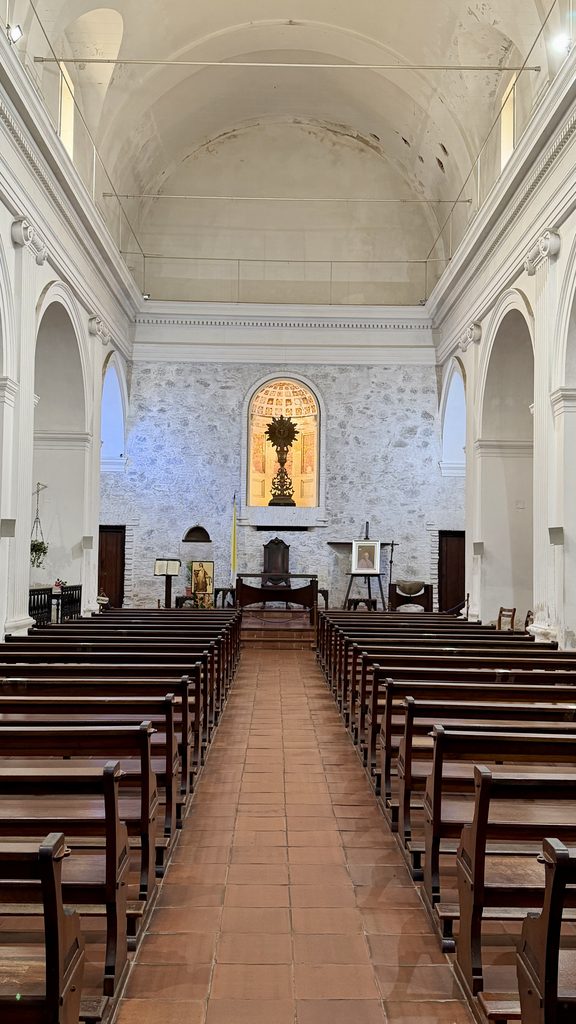
Calle de los Suspiros (or Street of Sighs) – One of the most photographed streets in Colonia, this picturesque pedestrian lane is lined with old buildings and uneven cobblestones. Its historic charm makes it a favorite spot for photographs.
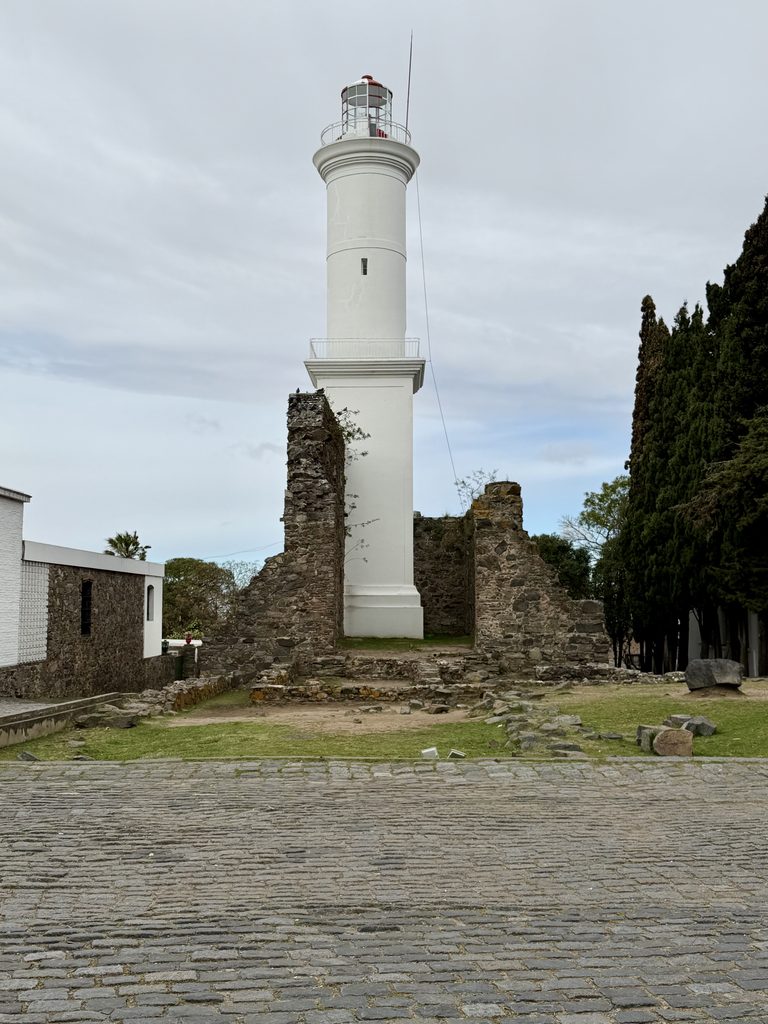
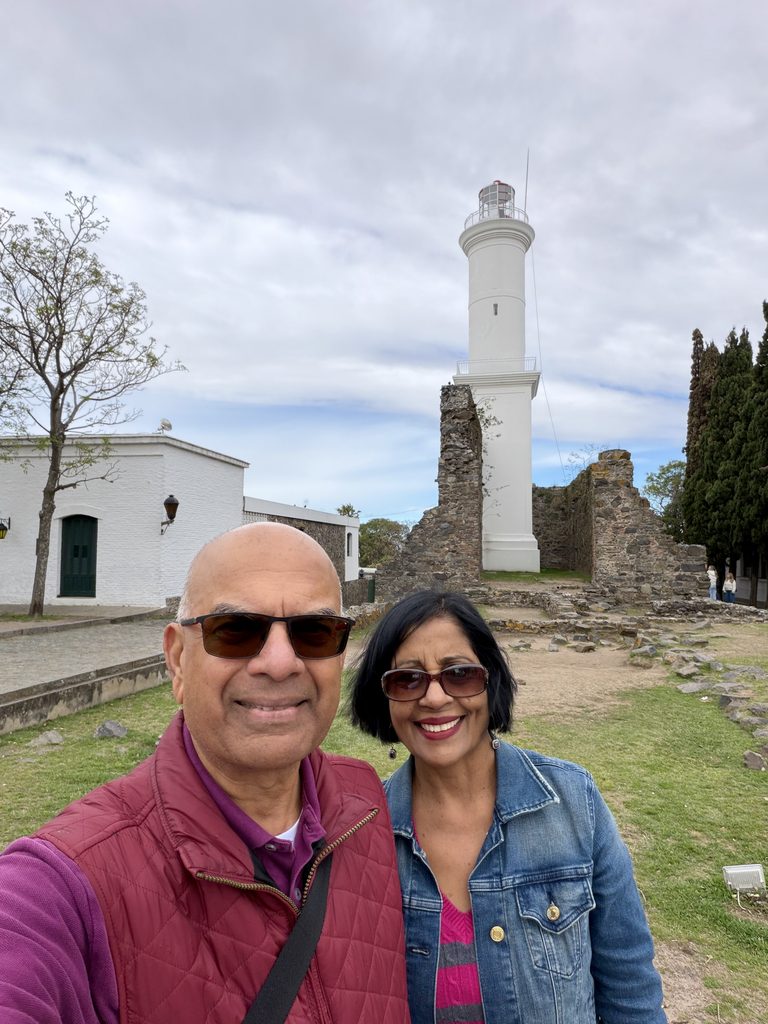
Colonia Lighthouse (Faro) – Built in the 19th century, the lighthouse stands among the ruins of the old convent of San Francisco. If it’s open, you can climb to the top for beautiful views of the historic town and the Río de la Plata. It was not open on the day of our visit.
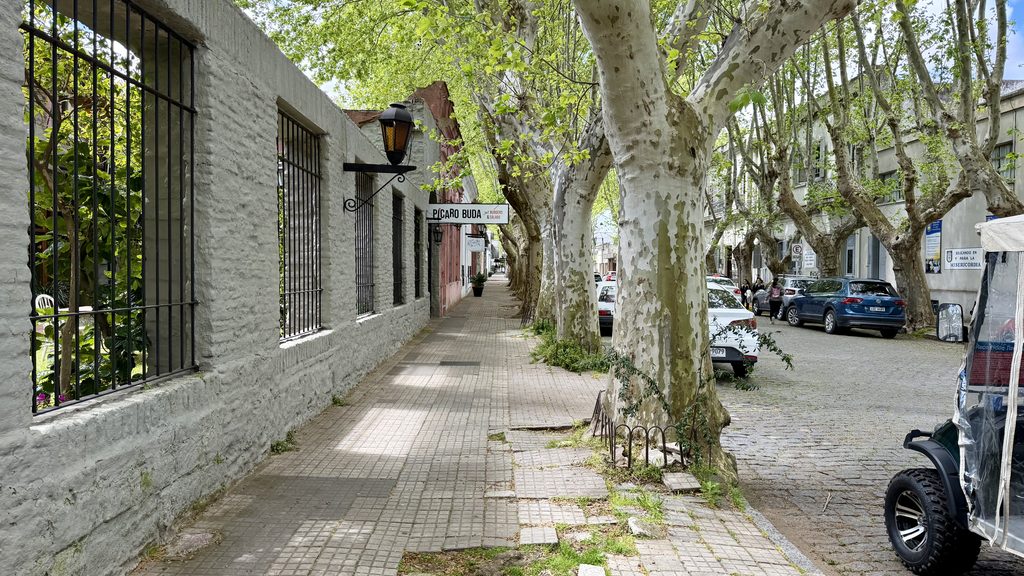
Wandering the streets of Colonia – We continued wandering through the charming little town, discovering that Colonia del Sacramento has several museums for those interested in its rich history and culture. These include the Spanish Museum, Portuguese Museum, Indigenous Museum, and Paleontological Museum, among others. The town also has a unique Origami Museum, featuring a small but thoughtfully curated collection of paper-folding art.
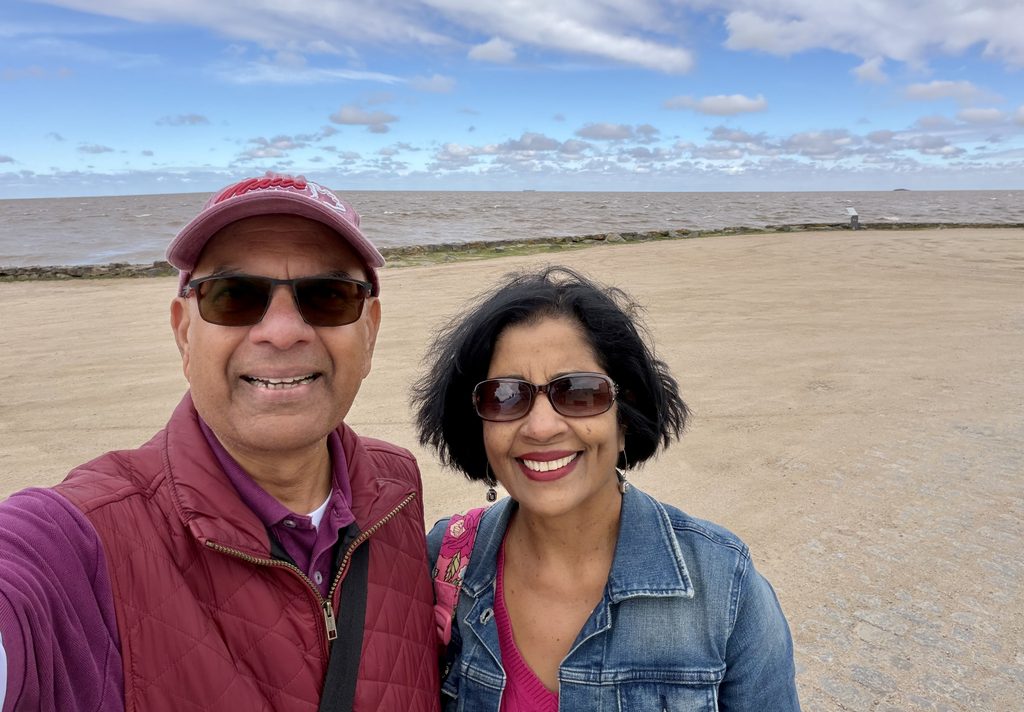
Another lovely way to spend some time in Colonia is to relax on the sandy beaches along the Río de la Plata. The waterfront offers a peaceful setting to unwind and enjoy the views. Unfortunately, during our visit in early October, the weather was a little too cold and windy for a leisurely beach stop.
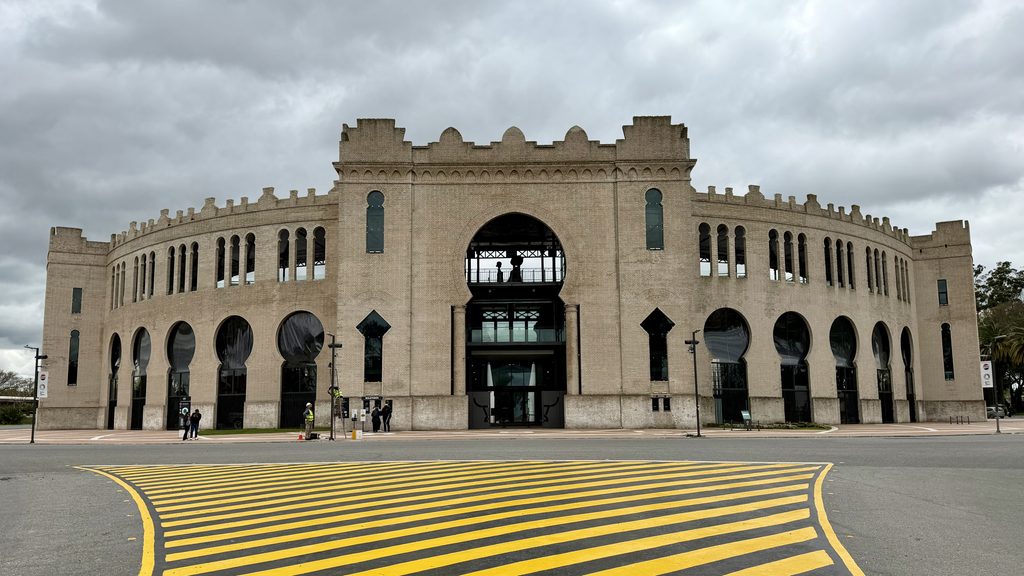
Plaza de los Toros – This bullfighting arena showcases Colonia’s Spanish heritage, with Moorish-inspired architecture.
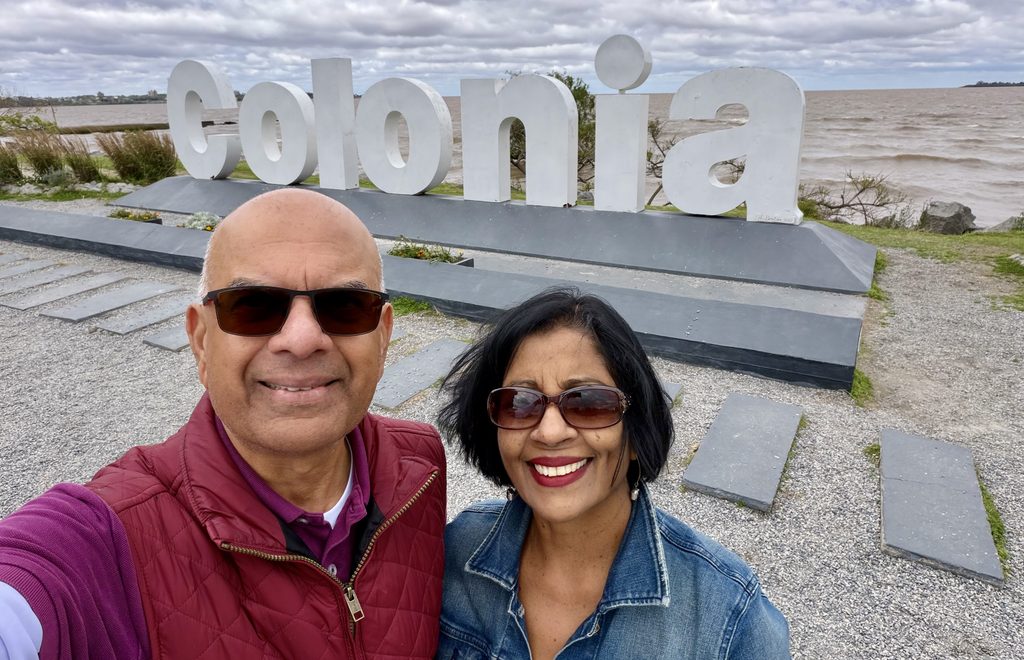
To reach Plaza de los Toros, we had to drive for about 15 minutes along Rambla de las Américas, a beautiful waterfront road in Colonia del Sacramento. The drive itself was a highlight, with wide roads and a pedestrian pathway running alongside the Río de la Plata. We stopped along the way to take a photo in front of the iconic Colonia sign and watch the waves crashing against the shore. The area was wonderfully scenic, with people jogging, walking, and enjoying the pleasant surroundings.
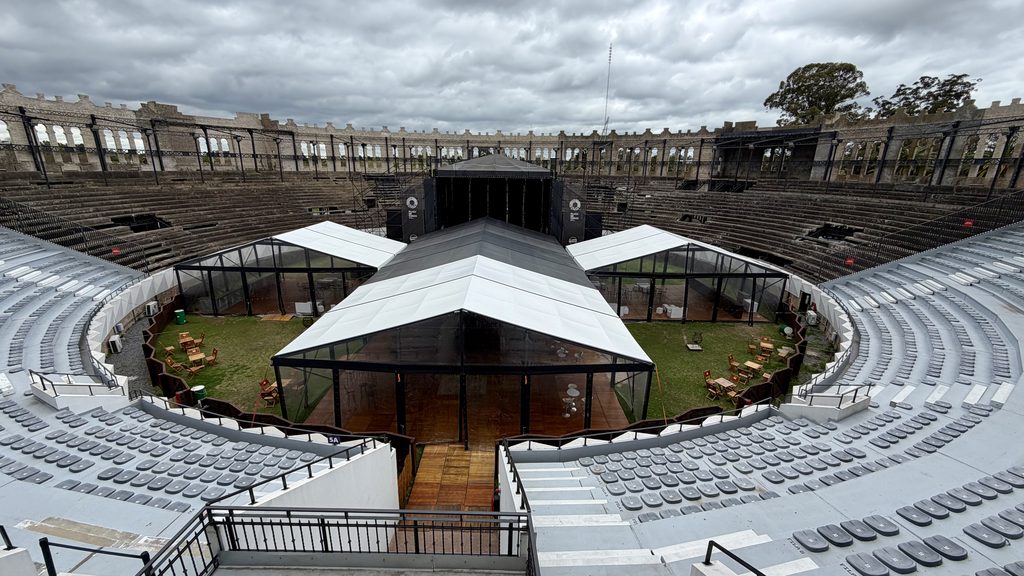
We arrived at the bullring, where we purchased entry tickets to explore the interior. Built in 1909 and officially opened in January 1910, this impressive arena could accommodate up to 10,000 spectators and features distinctive Moorish-style architecture. Its history was surprisingly short-lived. The bullring hosted only eight bullfights before Uruguay banned the practice in 1912, leaving the building abandoned for nearly a century. After extensive restoration, it reopened in 2021 as a cultural venue for concerts, sporting events, and other activities.
Nueva Helvecia
On our drive from Colonia del Sacramento to Montevideo, we stopped in Nueva Helvecia, a charming town located about 58 kilometers from Colonia del Sacramento and known for its distinctive Swiss and Central European heritage. Nueva Helvecia was founded as an agricultural colony in 1862, following the arrival of European immigrants, primarily from Switzerland, along with French, Austrian, and German settlers. These immigrants came seeking new opportunities amid economic difficulties and changing conditions in Europe.
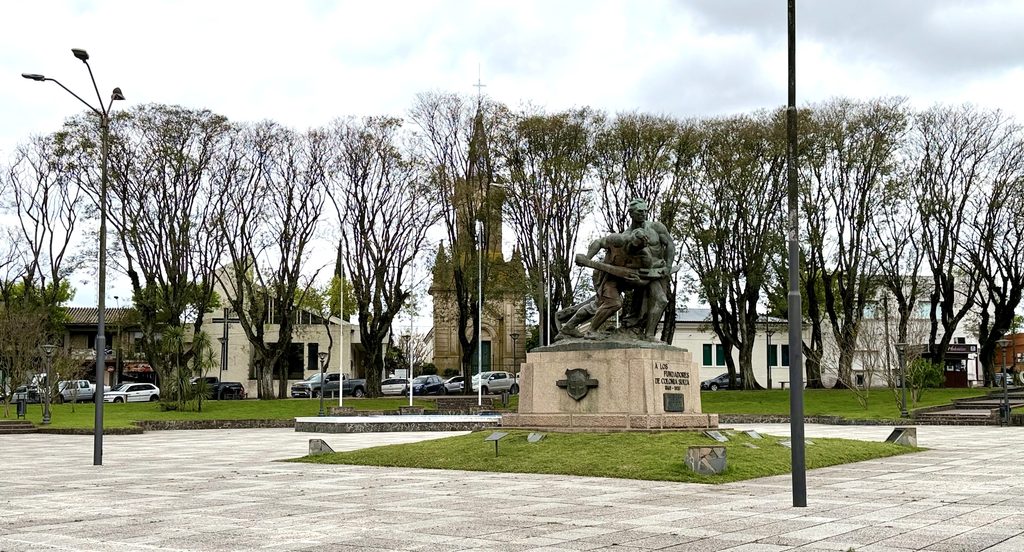
Plaza de los Fundadores (Founders’ Square) – This is one of the notable public spaces in Nueva Helvecia. Originally known as Plaza Libertad, the square was renamed in honor of the town’s founders and its history as a European immigrant settlement. The plaza’s current design dates to 1943 and was created by Luis Mazzini, who skillfully adapted the layout to the area’s steep terrain and a small stream running through it.
The focal point of the square is the monument El Surco (The Furrow) which honors the memory and contributions of the European settlers who founded the Swiss colony. Created by Italian sculptor Arístides Bassi, the monument was officially inaugurated on May 26, 1944.
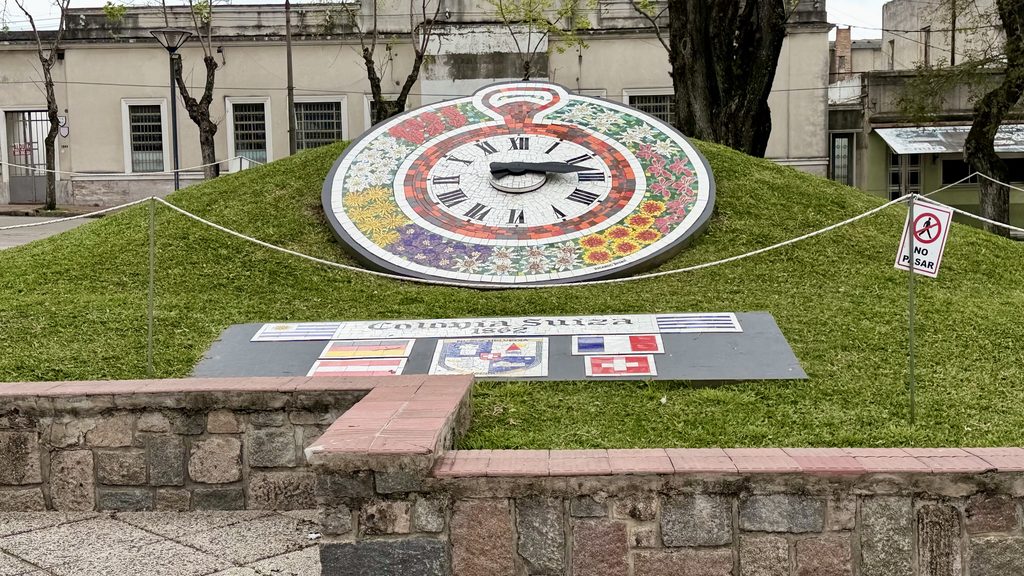
Another charming feature of the square is El Reloj de Flores, a functioning floral clock that celebrates the town’s Swiss heritage and love of nature. Decorated with seasonal flowers and Alpine-inspired designs, the clock was carefully landscaped by the Garden Club Edelweiss. It also features mosaic work created by local students from the Hulda W. de Parrilla Home School, along with the coats of arms of the Swiss cantons from which the founding families originated.
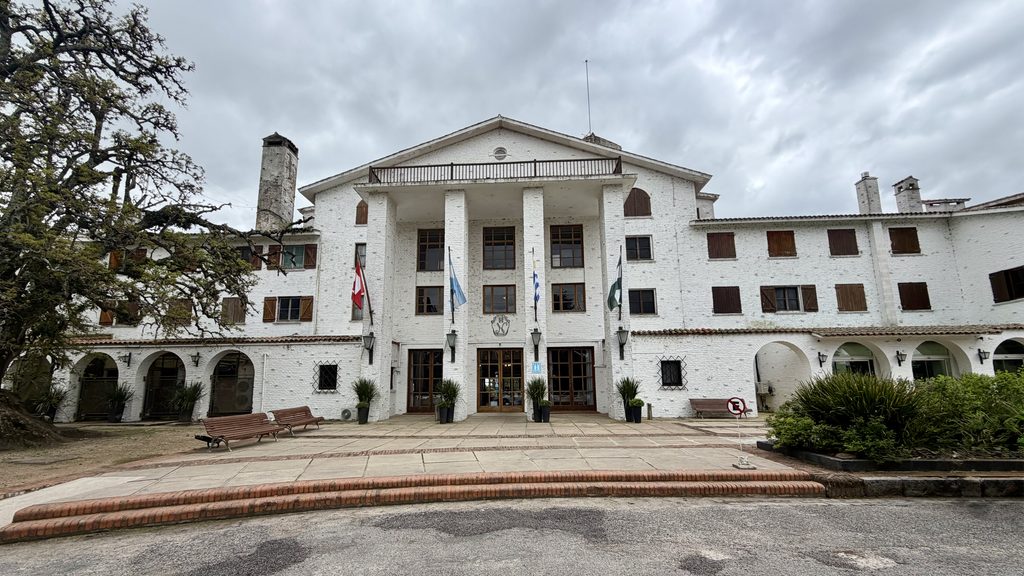
Hotel Nirvana – We made a brief stop at this hotel, another landmark in Nueva Helvecia that reflects the town’s Swiss roots and European charm. The story behind its name dates back to 1861, when early Swiss settlers Guillermo Ingold and Clara Wierz established a nearby farm. The hotel’s cornerstone was laid in 1941, and it officially opened on November 10, 1943. Since 1958, it has been owned and operated by the Chaquiriand family, who have carefully preserved its colonial architecture, beautiful gardens, and distinctive European character.
One of the unexpected highlights of our drive from Colonia del Sacramento to Montevideo was the sight of bright yellow fields stretching across the countryside along. These vibrant fields are canola, locally known as colza, an oilseed crop grown widely across Uruguay.
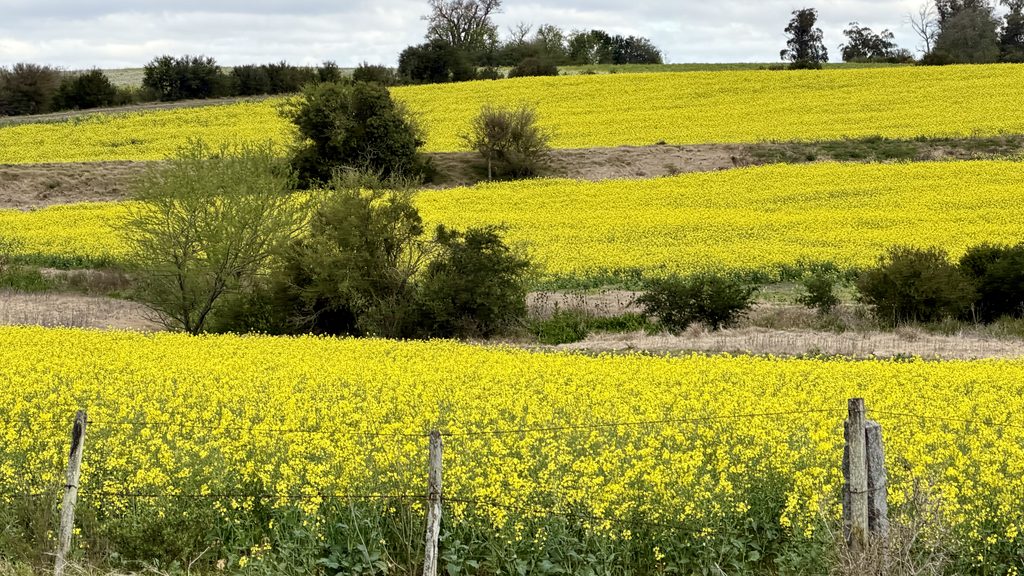
Canola belongs to the mustard and cabbage family and blooms with clusters of golden-yellow flowers during late winter and early spring, typically from August through October. We visited in early October, when the countryside was dotted with these beautiful splashes of yellow against the green landscape.