Half Day trip from Prague
Kutná Hora is a historic town in the Central Bohemian Region of the Czech Republic. Its development and prosperity were closely tied to medieval silver mining, which transformed it into one of the most important and wealthy towns in Bohemia.
We drove to Kutná Hora from Prague, a journey that took a little over an hour. Upon arriving in the city, we began looking for parking near St. Barbara’s Cathedral. After driving past the cathedral, we found a large parking area displaying a free parking sign. From the parking lot, it was an easy 5–7 minute walk to the cathedral complex.
- St. Barbara’s Cathedral
- Corpus Christi Chapel
- GASK – Central Bohemian Gallery & Galerie Soch
- Galerie Soch
- The Vinice vineyards
- Czech Silver Museum
- Gothic stone fountain
- St James Church
- Italian Court
- Palackého Náměstí – City Square
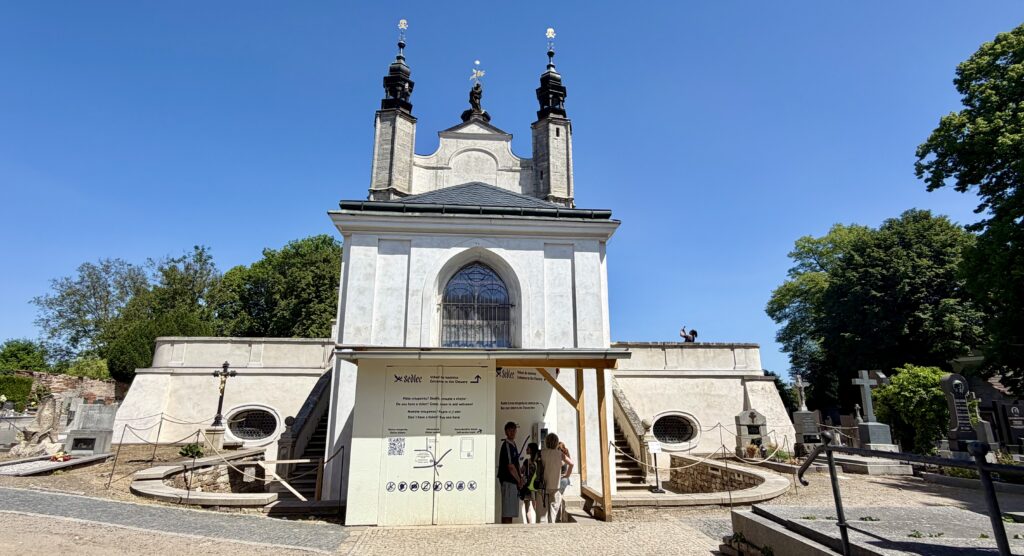
- Sedlec Ossuary
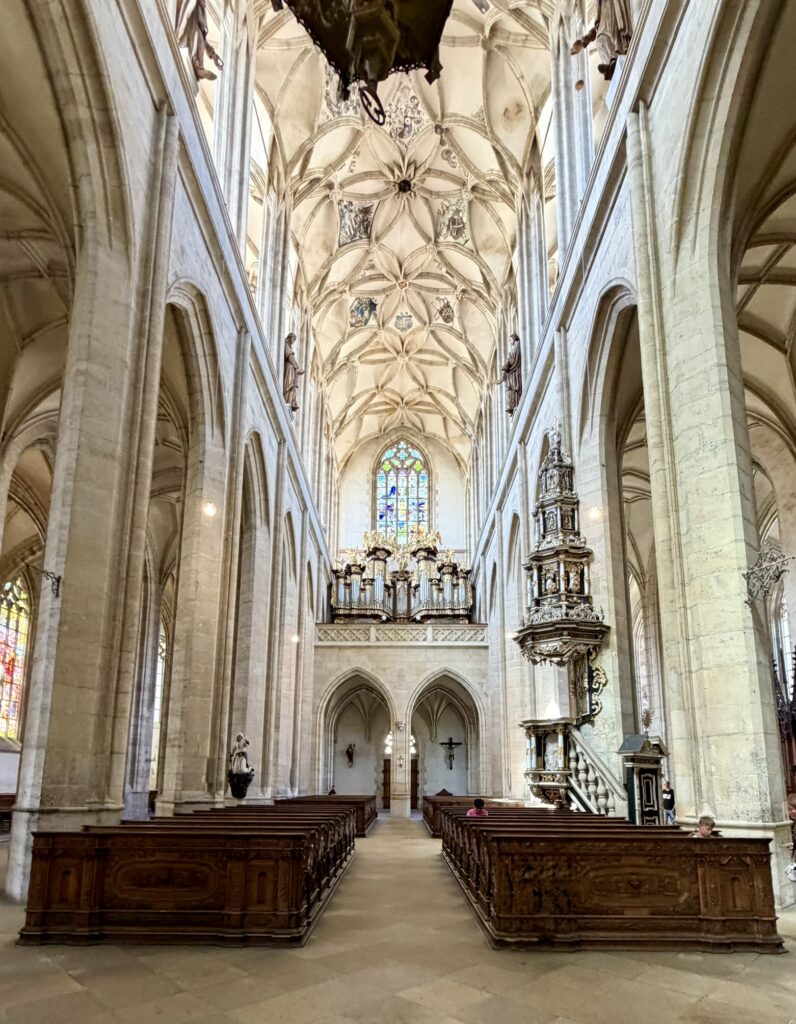
St. Barbara’s Cathedral (Paid Entry) – One of the finest Gothic churches in Central Europe, this magnificent cathedral is the symbol of Kutná Hora and a key part of the town’s UNESCO World Heritage designation. Dedicated to Saint Barbara, the patron saint of miners, the cathedral reflects the wealth and importance of Kutná Hora’s historic silver-mining industry.
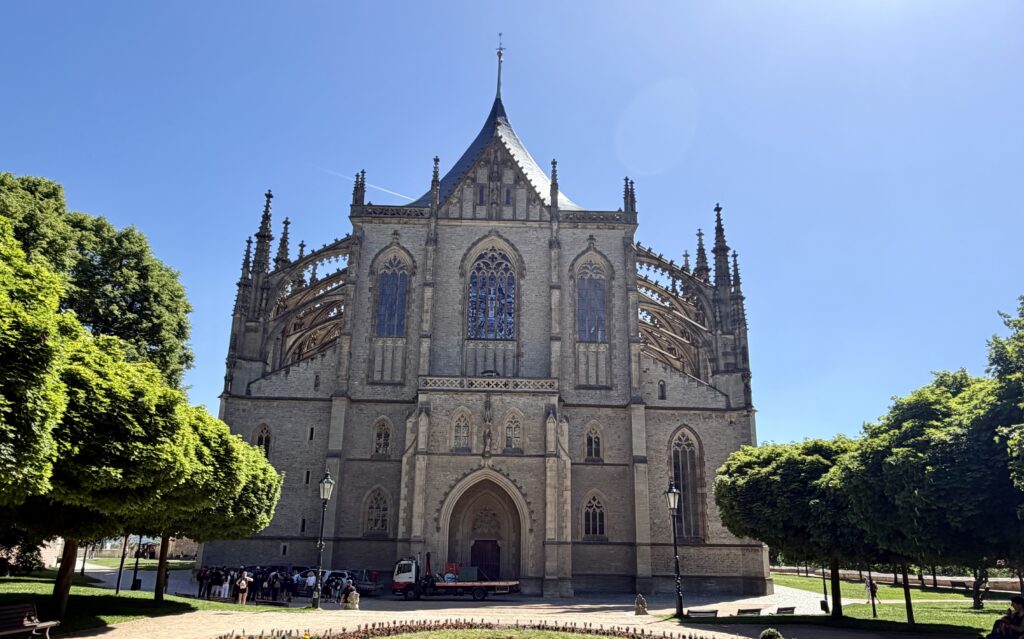
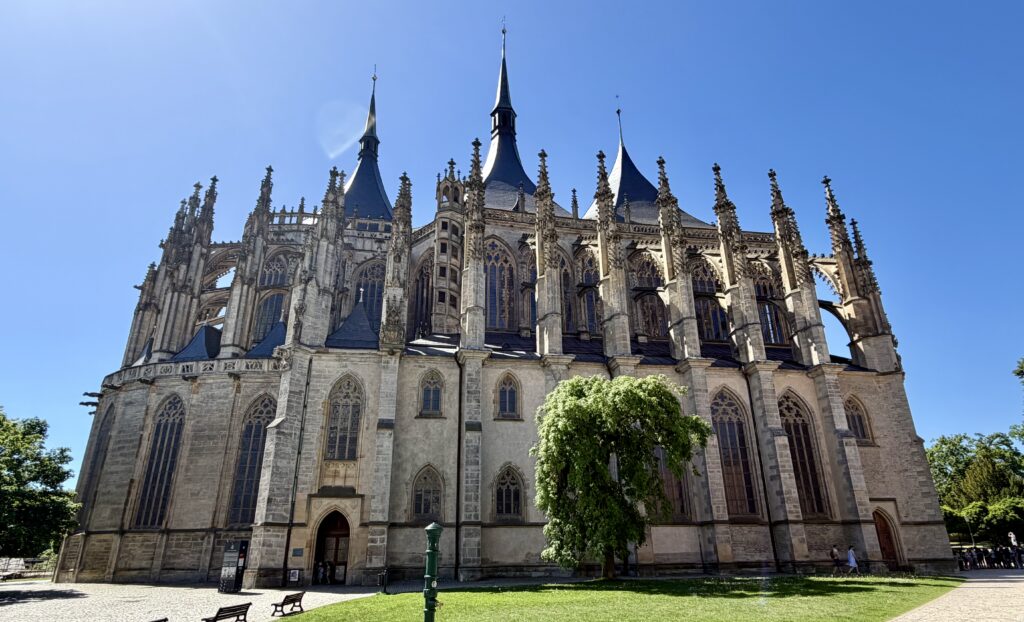
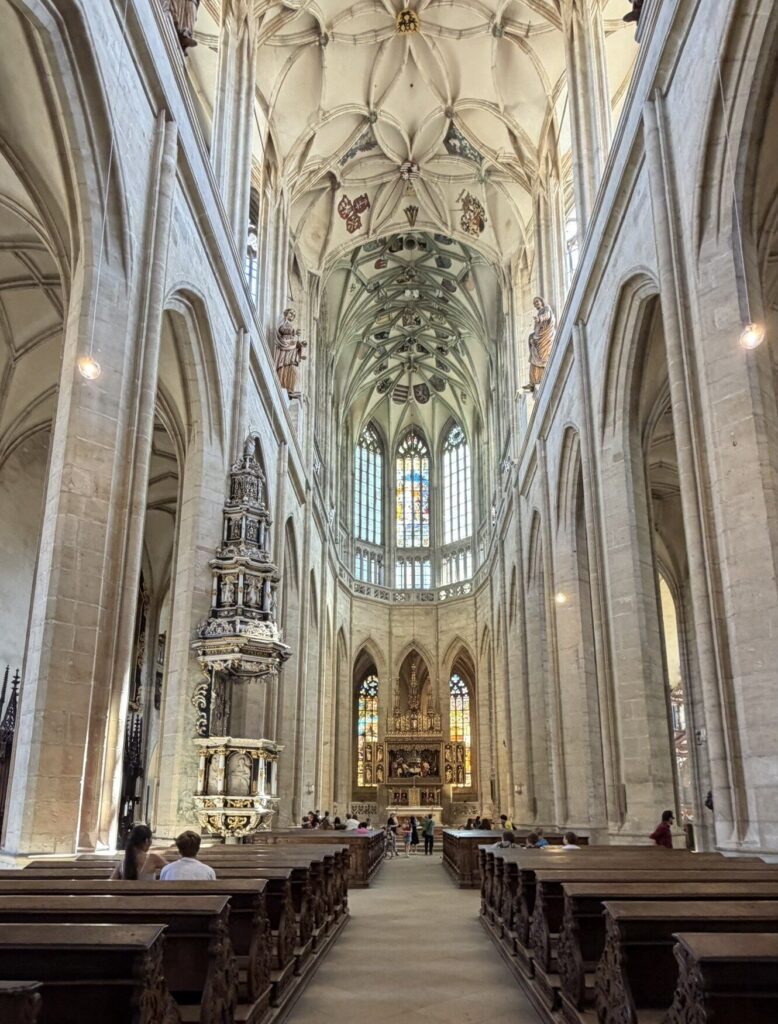
Construction began in 1388 and continued, with several interruptions, for more than 500 years before the cathedral was finally completed in 1905. Although originally planned to be much larger, the decline of the local silver mines led to a scaled-back design. The result is still a spectacular Gothic masterpiece, distinguished by its unique three-peaked roof, soaring vaulted interiors, stained-glass windows, and medieval frescoes depicting both religious scenes and everyday life in the mining town.
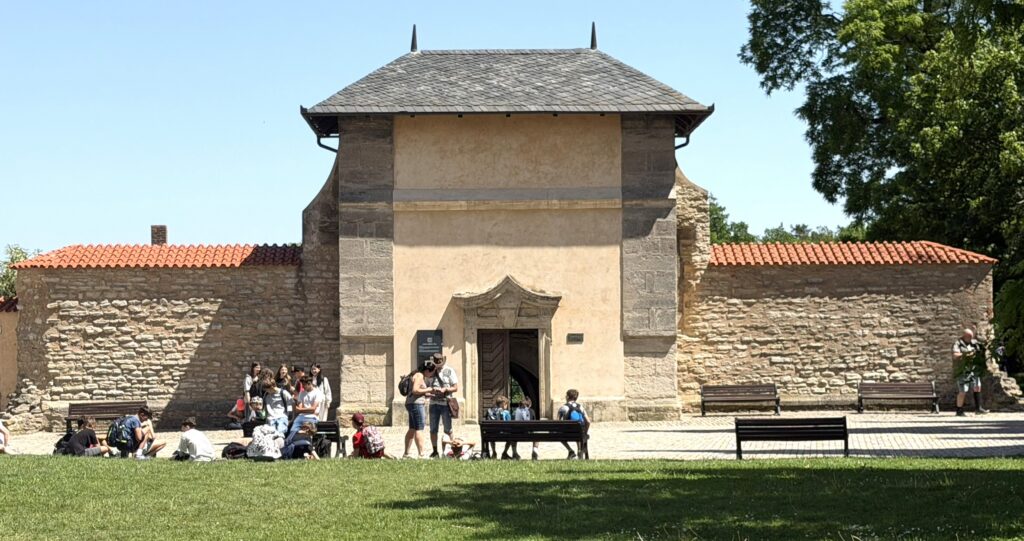
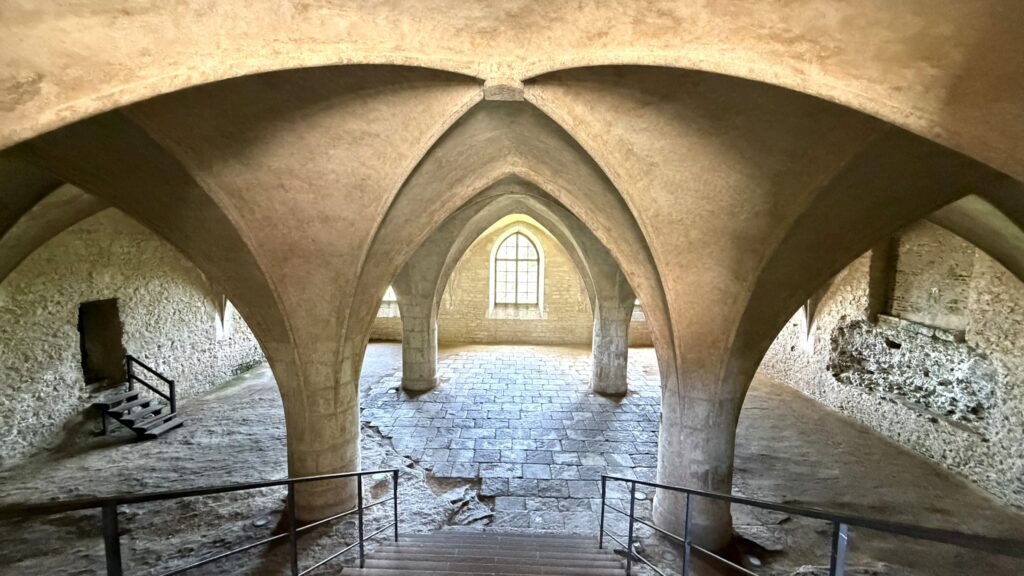
Corpus Christi Chapel – Located right next to St. Barbara’s Cathedral, this small Gothic chapel has a somewhat unclear history. It is believed to predate the cathedral and was later used by the Jesuits as an oratory. After the Jesuit order was dissolved in 1773, the chapel passed into private ownership and was repurposed for various uses over time, including at one point as a storage space for flour. Today, it is largely empty, with bare walls and simple architecture, but still worth a brief stop to appreciate its Gothic arches and the sense of history that remains within the structure.
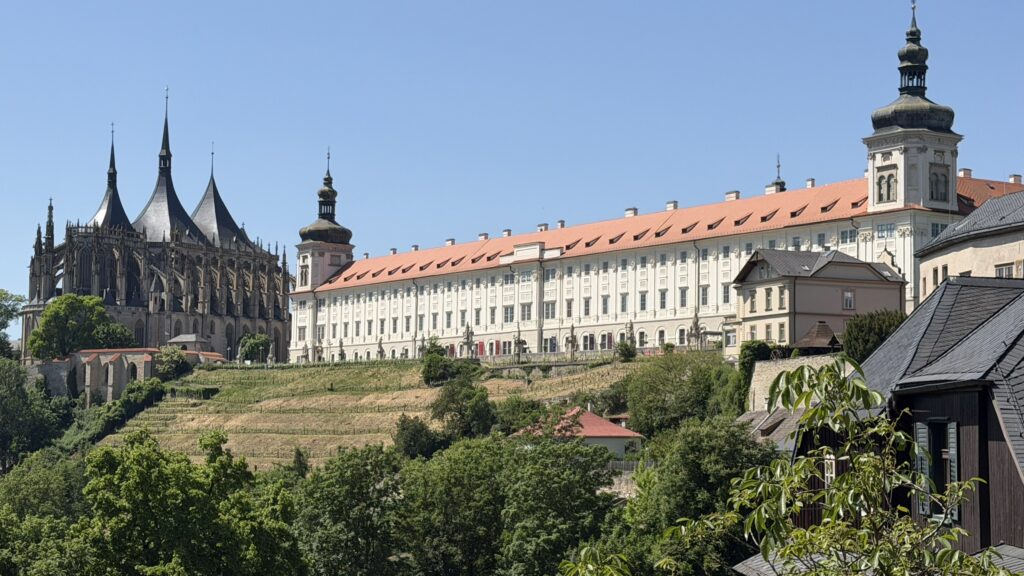
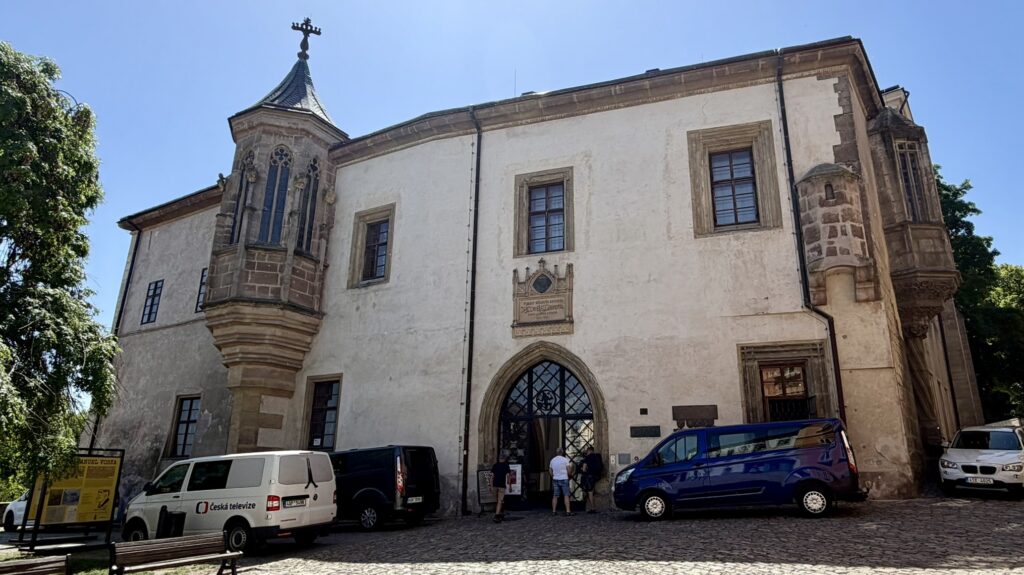
GASK – Central Bohemian Gallery (formerly the Jesuit College) is located beside both Corpus Christi Chapel and St. Barbara’s Cathedral. The building originally served as a Jesuit monastery and educational complex during the period when the Jesuits were active in the city.
Today, it has been transformed into a contemporary art gallery, showcasing exhibitions by Czech and international artists. We did not go inside to explore the artwork, but the contrast between its historic Baroque architecture and modern art installations would likely make it an interesting cultural stop.
Galerie Soch – This wall is on the opposite side of the GASK building. The Galerie Soch is a beautifully arranged wall of detailed sculptural works, creating one of the most photogenic viewpoints in Kutná Hora. With St. Barbara’s Cathedral rising dramatically in the background and the line of sculptures leading towards it, the setting creates a standout scenes in the city.
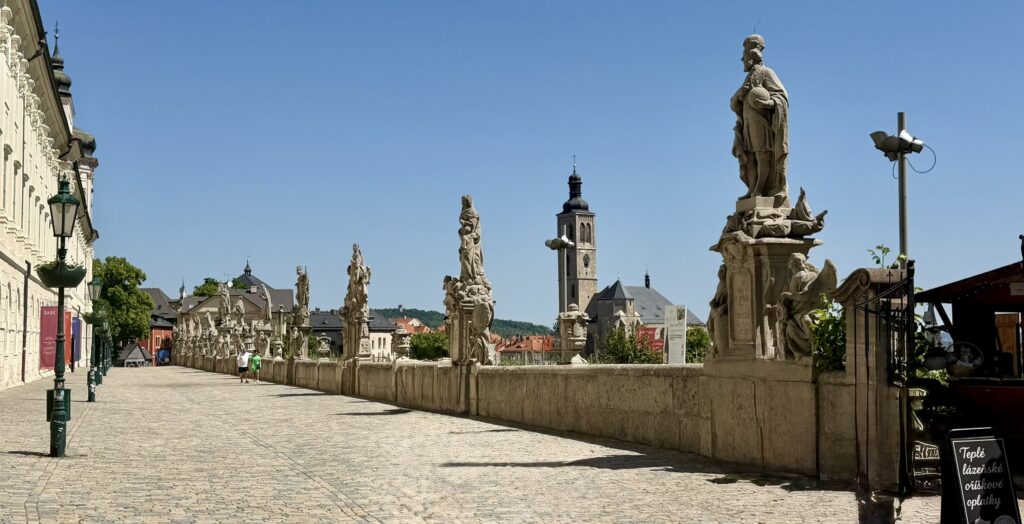
Vinice Vineyards – borders Galerie Soch, creating another picturesque viewpoints in Kutná Hora. Just beside the entrance to the Corpus Christi Chapel, a small gateway and shop lead into the vineyard area. Visitors can purchase a glass of wine made from grapes grown right in the surrounding vines and enjoy it at outdoor seating overlooking the historic complex, with views toward St. Barbara’s Cathedral. Payment is typically cash only, so it’s best to have local currency on hand.
See section GASK – Central Bohemian Gallery above, for a picture of the vineyards.
Czech Museum of Silver – After walking past the long corridor lined with statues, you arrive at the Czech Silver Museum. The museum showcases exhibits that explain the history of silver mining in Kutná Hora and its importance to the region’s development.
Kutná Hora’s silver mines were once a major source of wealth, shaping the city into one of the most influential settlements in medieval Bohemia. We spent about 45 minutes in the Museum and enjoyed reading the information on display.
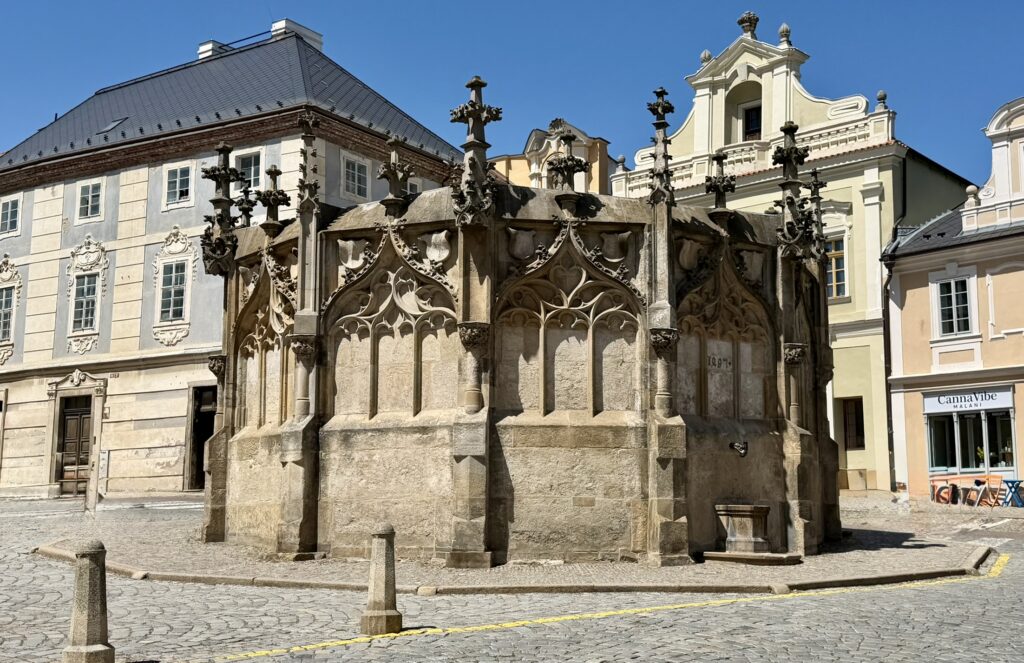
Gothic Stone Fountain – At the end of the path from GASK, a left turn leads you to the Gothic Stone Fountain which is a striking late-15th-century landmark, reflecting how valuable drinking water once was to the town’s residents.
In the Middle Ages, water was transported into Kutná Hora through long wooden pipelines feeding a network of reservoirs, making reliable sources like this fountain essential for daily life. Located on a picturesque square surrounded by historic civic houses, the fountain served as a drinking water reservoir for centuries and remained in use until 1890.
St James Church – At the end of the path from GASK, a right turn will lead you to the main city area starting with St James Church. It is a prominent Gothic landmark dating back to the early 14th century when the town was thriving from silver mining. The church is especially notable for its distinctive asymmetrical towers, which stand out in the town’s skyline.
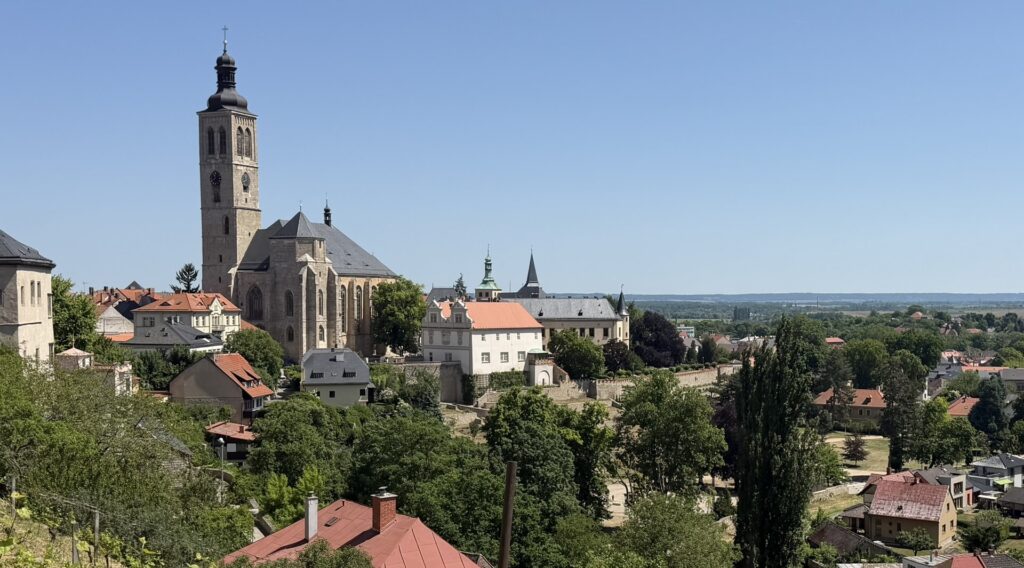
It was closed on the day we visited, so could not view the interior.
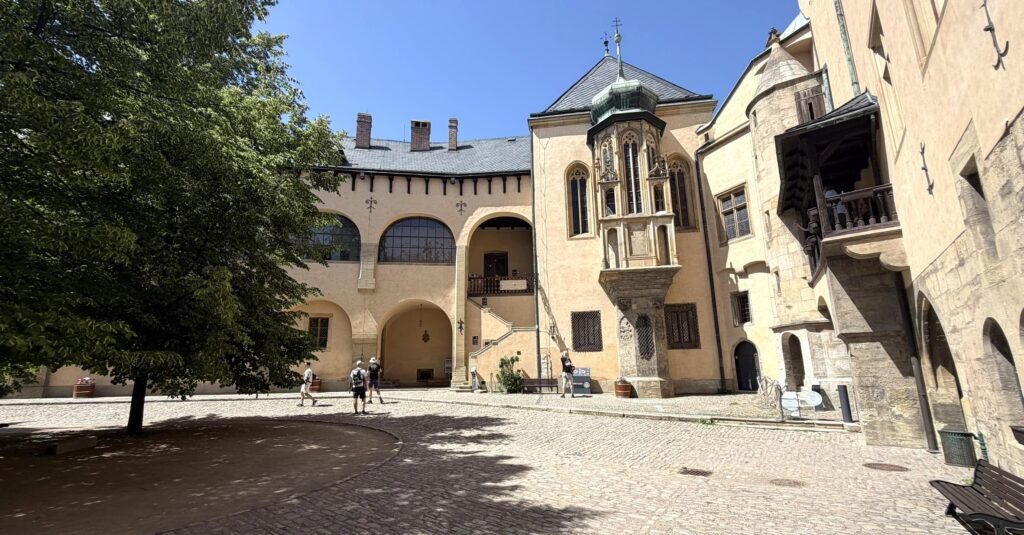
Italian Court – located right next to the St James church, this palace was originally built in the late 13th century as a fortified castle for storing silver ore from the region’s mines and was later extensively rebuilt in the late 14th century under King Wenceslas IV. This transformation turned it into a royal residence and an important mint, closely tied to the production of silver coinage and the wealth of Kutná Hora.
The mint continued operating for centuries before closing in the 18th century after a major fire in 1770. The building was later repurposed as the town hall and remains one of the key historic monuments reflecting the city’s mining and royal heritage.
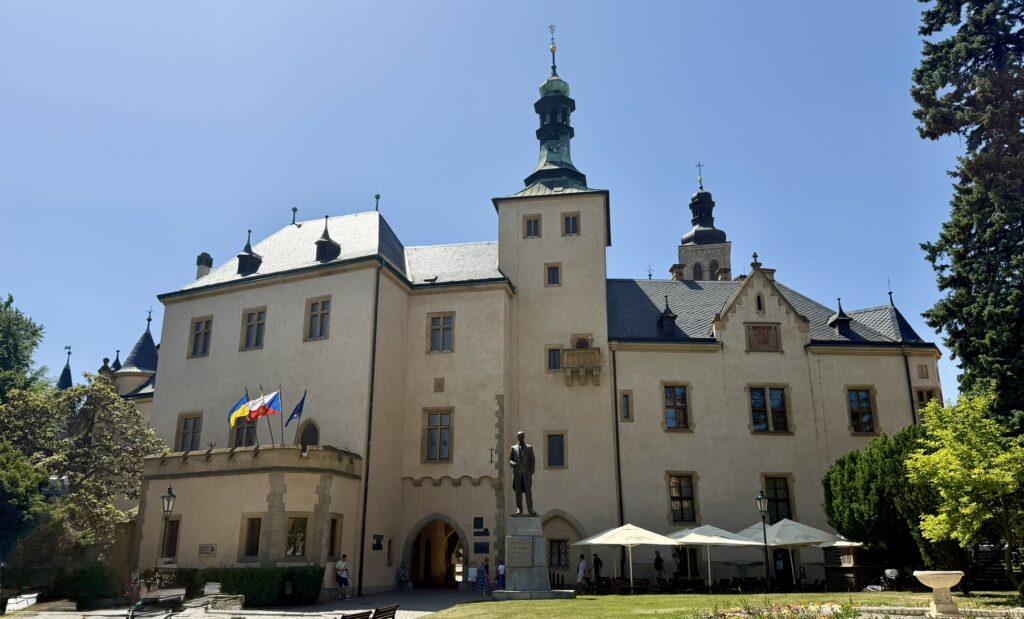
There are a wide variety of tours available at Italian Court – we did not join any of them. We briefly stepped into the courtyard just to take a look at the historic buildings inside before continuing on to the main square in town.
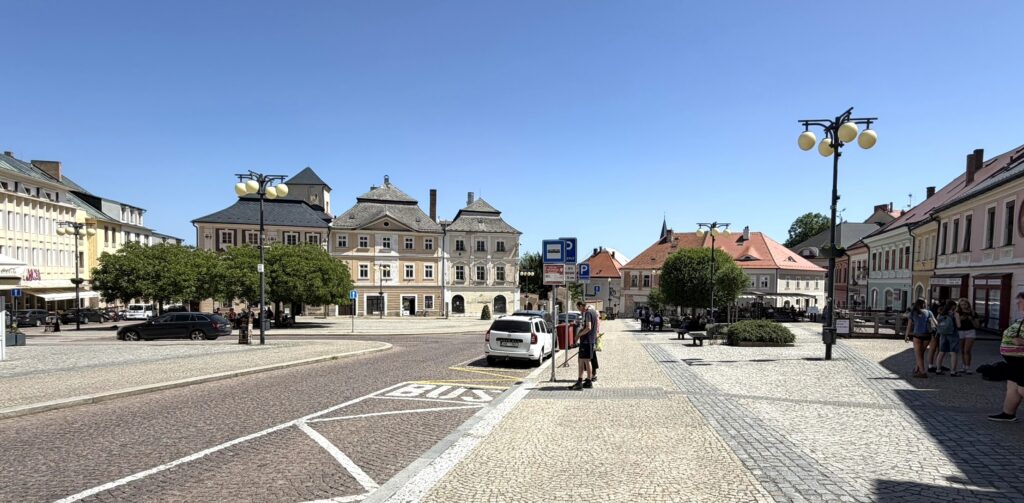
Palackého Náměstí – After we explored the Italian Court from outside, we continued walking the cobblestoned paths and down to a huge square Palackého náměstí which had a lot of locals relaxing and had a few restaurants. This square has a more everyday, lived-in atmosphere, reflecting the town’s residential and commercial life.
Sedlec Ossuary – is one of the most visited Roman Catholic chapel in the Czech Republic and is estimated to contain the bones of 40,000–70,000 people arranged into decorative forms, including a large bone chandelier (containing at least one bone from every part of the human body), garlands of skulls, and other ornamental displays.
The site’s origins date back to the 13th century when soil from Golgotha was spread over the cemetery, making it a desirable burial ground across Central Europe. After mass burials during the Black Death and Hussite Wars, the cemetery became overcrowded, leading to the creation of the ossuary.