Day trip from Prague
Český Krumlov is a historic town in South Bohemia, located on a bend of the Vltava River and its name means crooked meadow, referring to the river’s winding shape.
The town is best known for its exceptionally well-preserved medieval core and the Český Krumlov Castle, which together form a UNESCO World Heritage Site designated in 1992. The architecture reflects a mix of Gothic, Renaissance, and Baroque styles, developed over centuries under noble families such as the Rosenbergs and later the Schwarzenbergs. Český Krumlov developed around the castle in two parts—Latrán near the castle and the Old Town across the river—and grew into an important regional centre of trade, crafts, and mining.
We joined a guided tour of Český Krumlov arranged by the hotel. It was a 2-hour bus ride from Prague to Český Krumlov. After arriving, the guide led us through the town, explaining its history and key landmarks, and then gave us around four hours of free time to explore the town and Český Krumlov Castle at our own pace.
- Castle Cloak Bridge
- Široká Ulice (Wide Street)
- Town Square
- Church
- Český Krumlov Castle
- Lower Castle
- Upper Castle
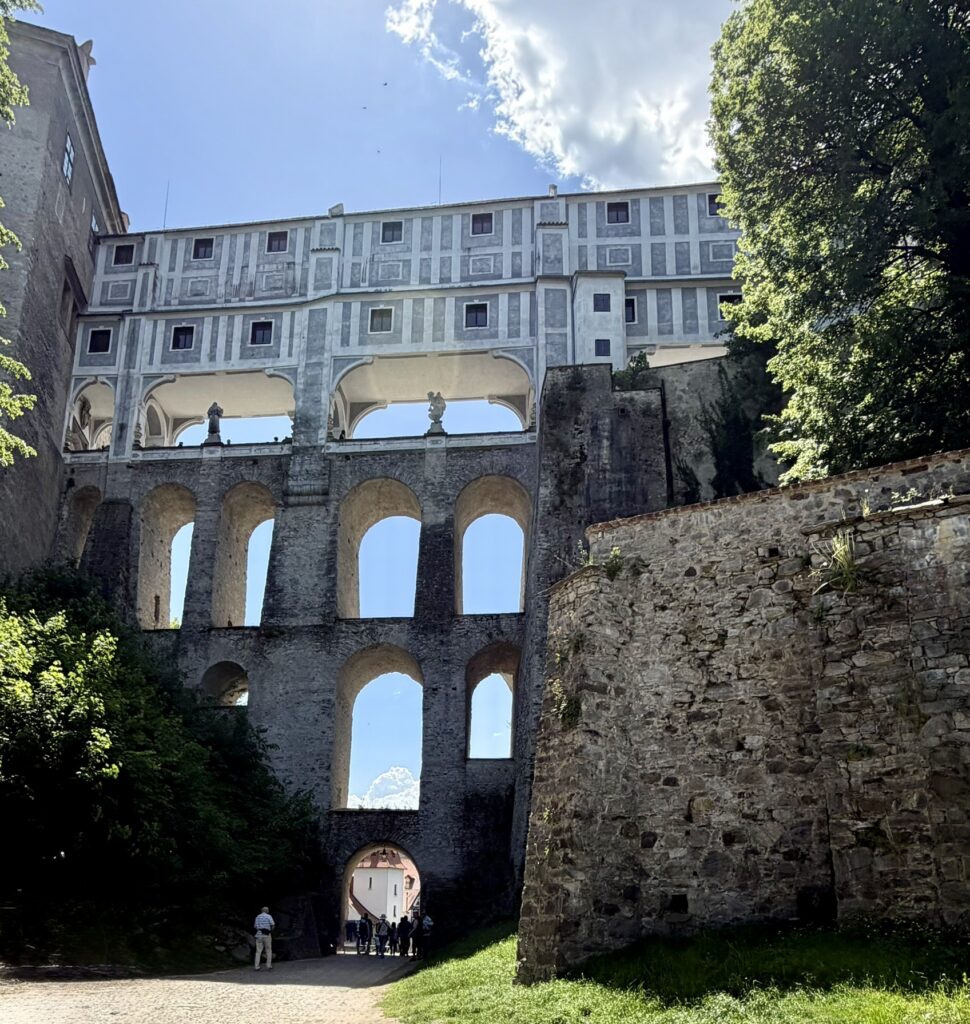
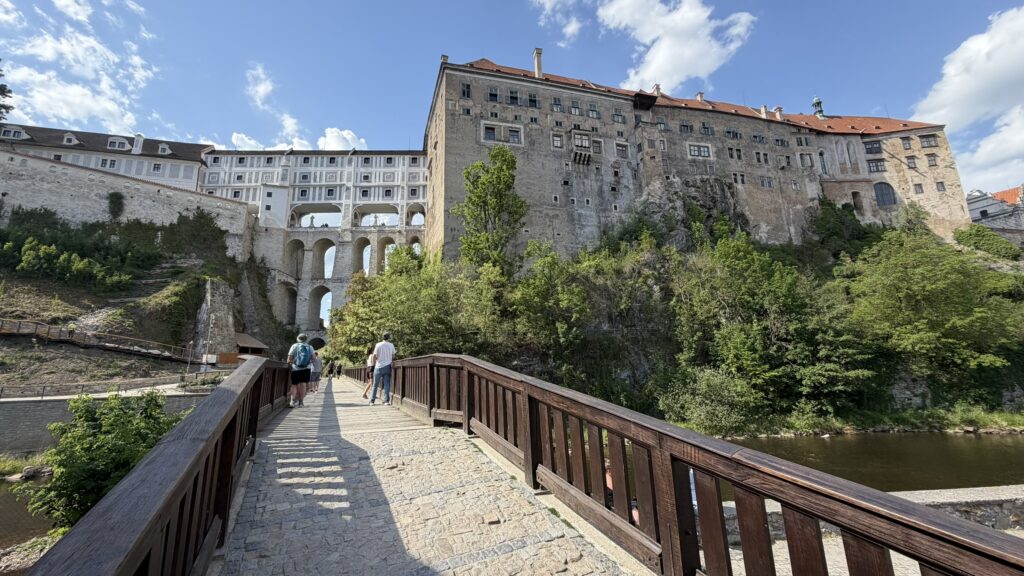
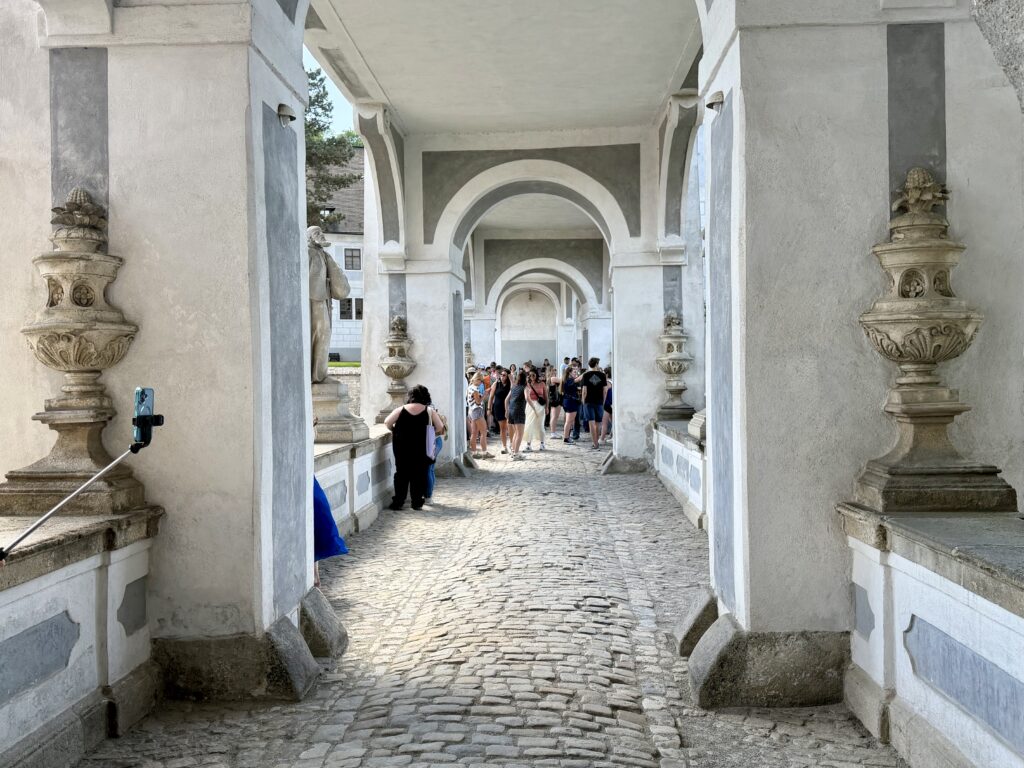
Castle Cloak Bridge – As we walked into the old city, we passed beneath this impressive structure, which forms part of Český Krumlov Castle. Located on the western side of the castle, the bridge connects the fourth and fifth courtyards and spans a deep moat separating different sections of the complex.
This unique five-story bridge takes its name from the former defensive fortifications, or cloak walls, that once protected the western side of the castle. Originally built for military purposes, it was later transformed into the elegant multi-level structure seen today.
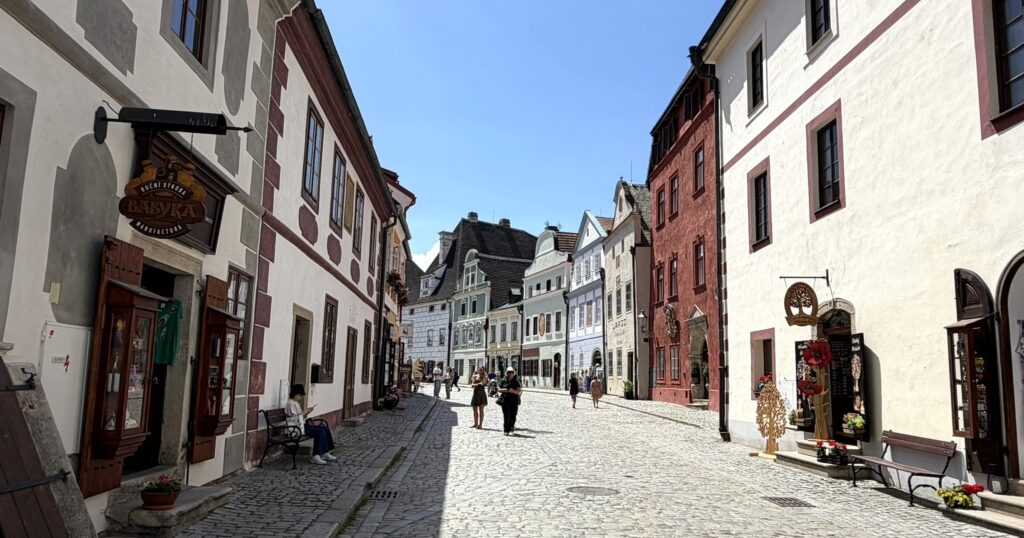
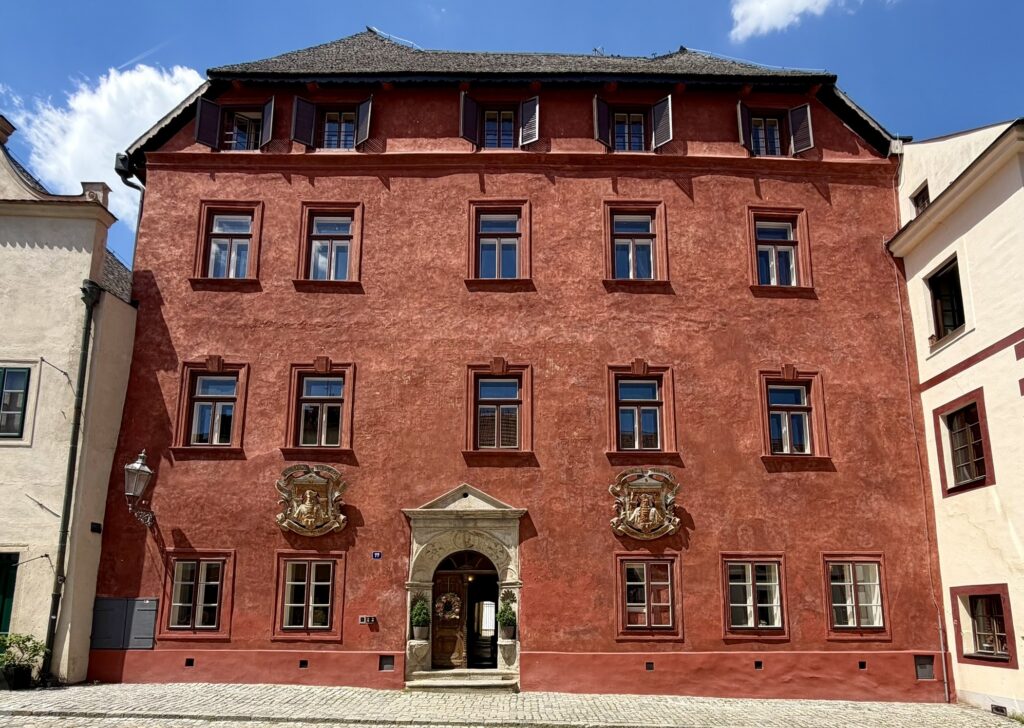
Široká Ulice (Wide Street) – We walked this cobbles street which is the widest street in Český Krumlov and was the town’s main marketplace during the Middle Ages. The street hosted annual, weekly, horse, and cattle markets, attracting hundreds of merchants and serving as the economic center of the town. Today, the street remains historically significant and features notable buildings like the Alchemist’s House.
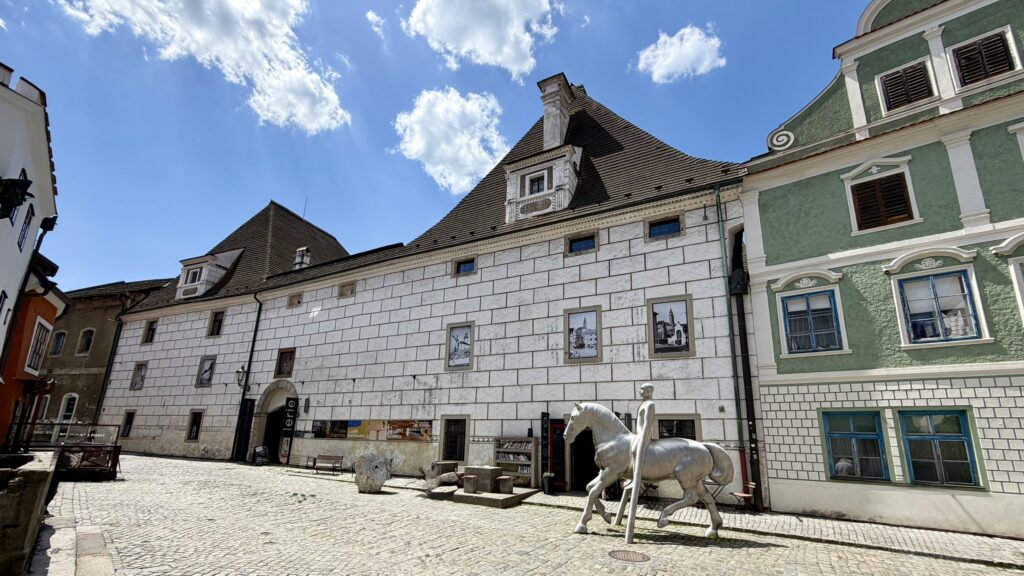
The other notable landmark on Široká (Wide) Street is the Egon Schiele Art Centrum, located in a former municipal brewery building at Široká 70–71. It was established in 1992–1993 and is dedicated to the Austrian Expressionist painter Egon Schiele, whose mother was from Český Krumlov and who spent time painting there.
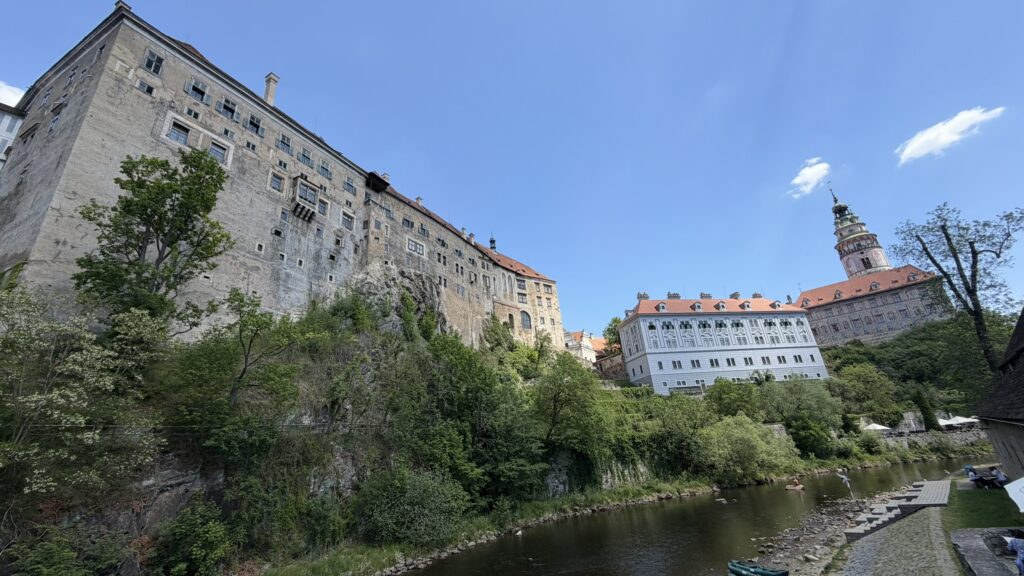
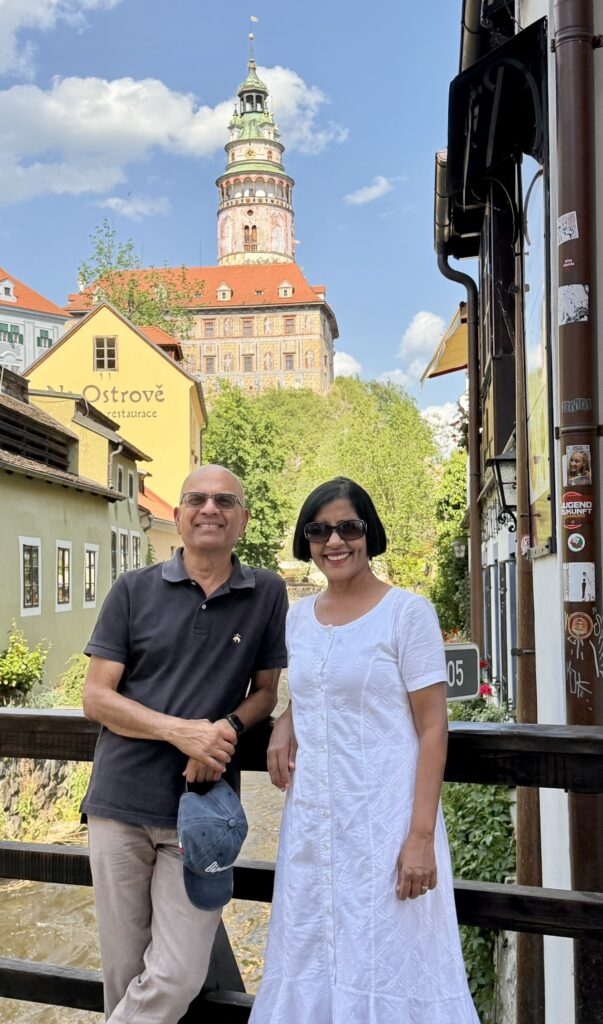
As we continued walking toward the town center and the castle entrance, we were treated to striking views of the castle complex and its iconic tower from several vantage points along the way. The elevated position of the town and the bends of the Vltava River create natural viewpoints where the castle appears above the rooftops, giving a dramatic sense of scale.
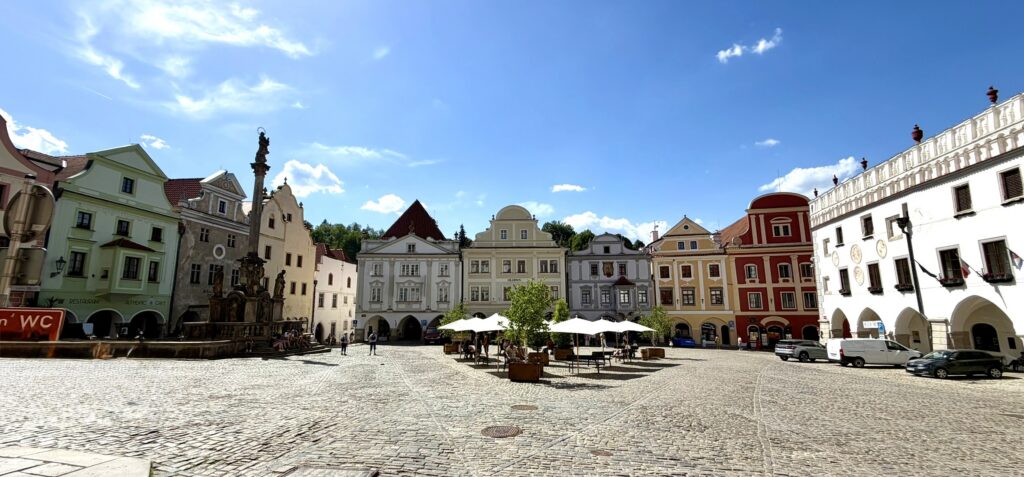
Náměstí Svornosti (Concord Square) – Český Krumlov’s main square, is the historic and social center of the UNESCO-listed Old Town. It is surrounded by well-preserved Renaissance and Baroque buildings built on earlier Gothic foundations, reflecting the town’s layered medieval history.
Key highlights include the Town Hall (Radnice), a 16th-century building that now houses the municipal office and a small torture museum in its cellars. At the center of the square stands the Marian Plague Column (1714–1716), topped with statues of the Virgin Mary and saints, alongside a later-added stone fountain from the 19th century. The square also features a historic pharmacy with a distinctive Baroque façade, which has operated in some form for centuries and adds to the square’s long-standing commercial tradition.
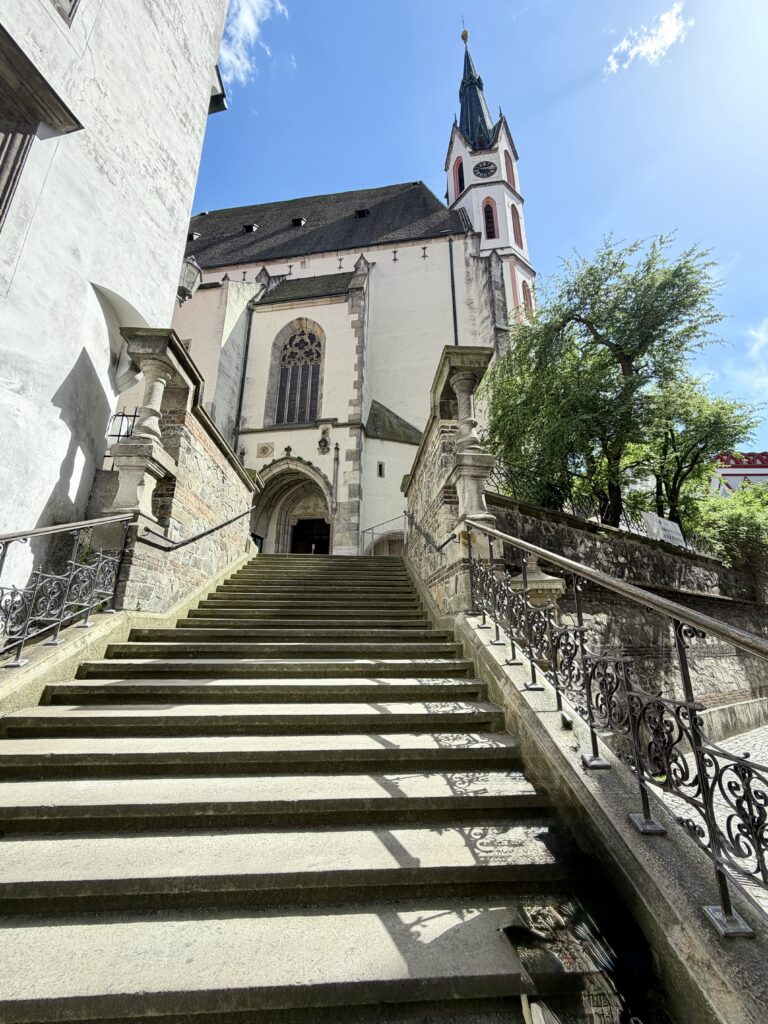
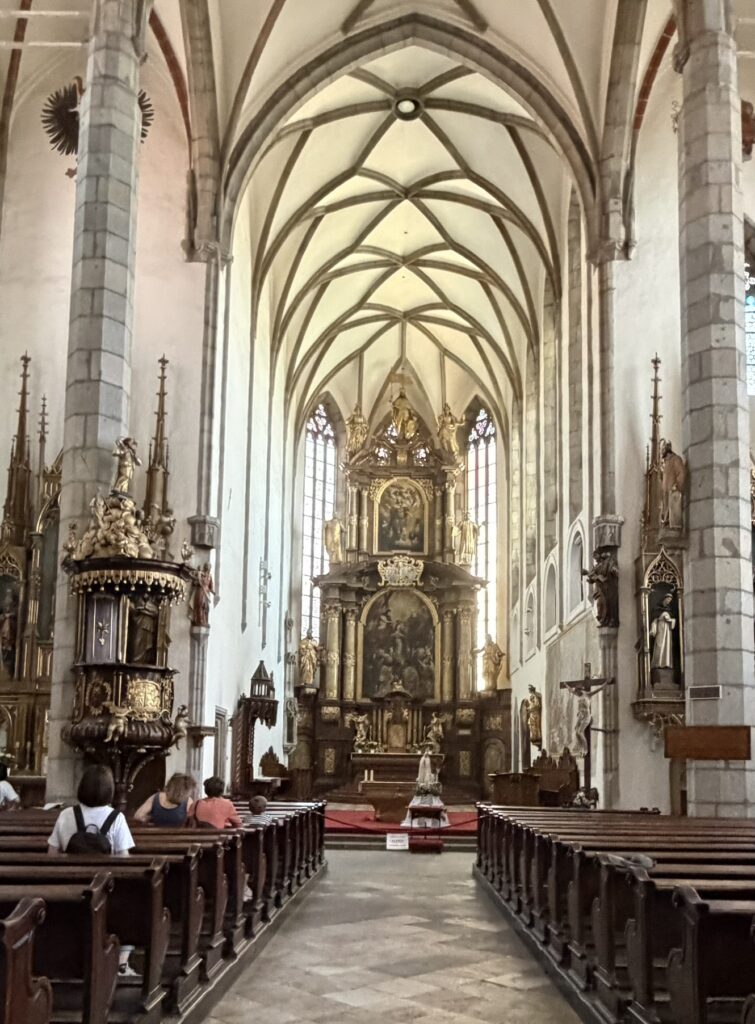
Church of Saint Vitus – A short lane from the Náměstí Svornosti leads to the church whose spires can be seen from all over. This major late-Gothic Roman Catholic church was built between 1407 and 1438, standing on the site of an earlier church first founded in 1309. In the 19th century, the church underwent a significant neo-Gothic renovation, during which earlier Baroque features were removed and the current tower was constructed.
Český Krumlov Castle – Český Krumlov Castle was built in 1253 by the Vítkovci family and later developed by powerful noble families including the Rosenbergs, Eggenbergs, and Schwarzenbergs. It is now a UNESCO World Heritage Site (since 1992) and is known for its dramatic location on a rocky bend of the Vltava River. It includes notable structures such as the Cloak Bridge(see section above), Upper and Lower Castles, and extensive gardens.
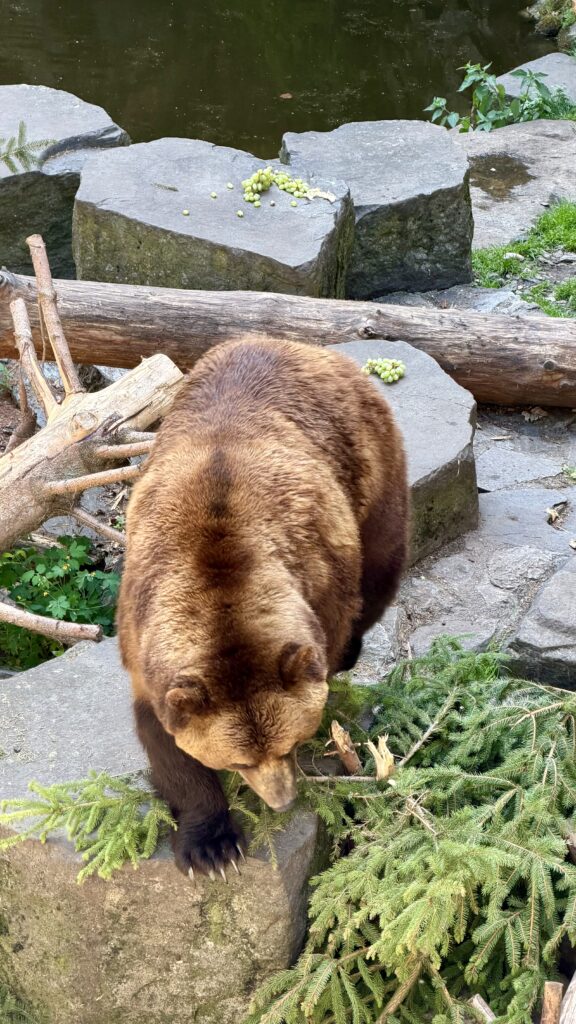
Lower Castle, Stone bridge and Bears – We entered the Lower Castle by crossing a stone bridge over the Bear Moat. On both sides of this bridge are deep moat pits where bears are kept, a long-standing tradition associated with the castle.
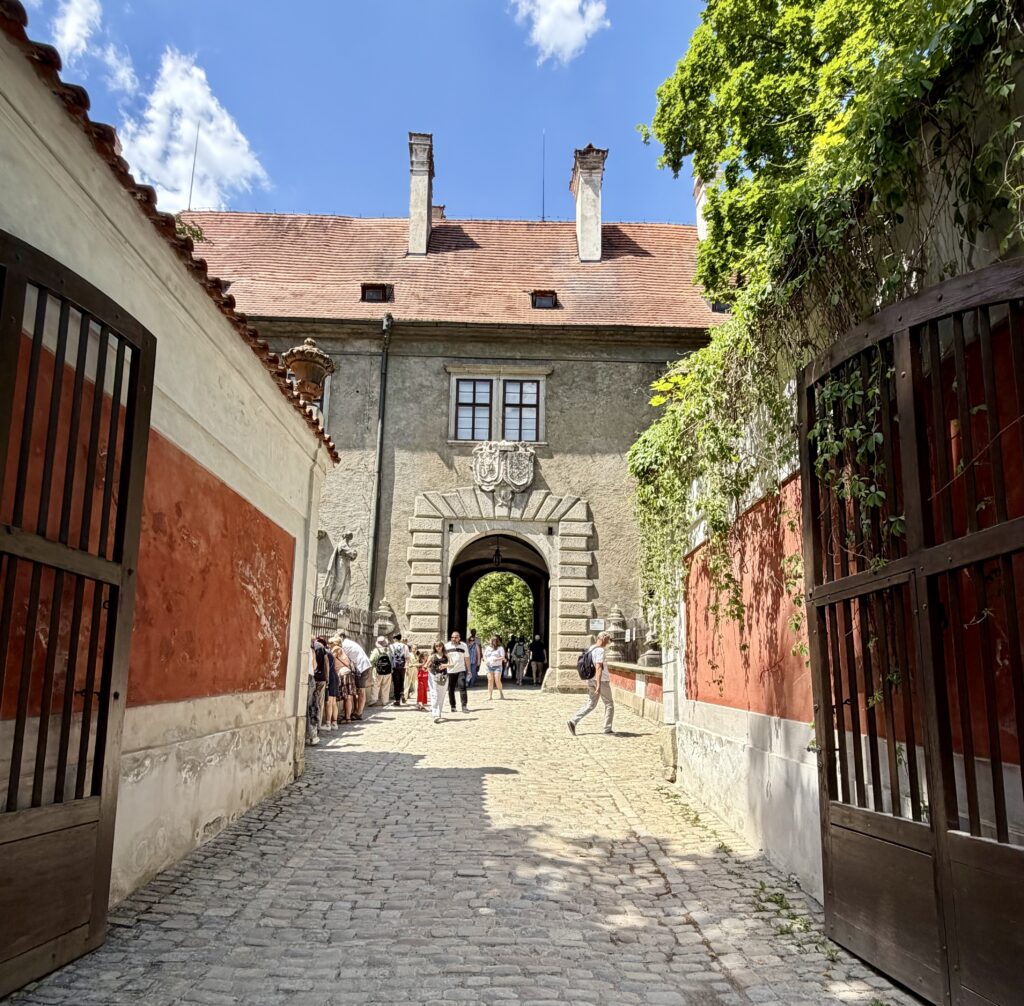
Lower Castle, Castle Museum and Tower – The Lower Castle area has the oldest section – the Hrádek, a 13th-century palace tower with historic paintings from 1580 and panoramic views over the castle and town. The Castle Museum which is also located here is a self-guided experience chronicling centuries of aristocratic life and features 29 historically furnished rooms.
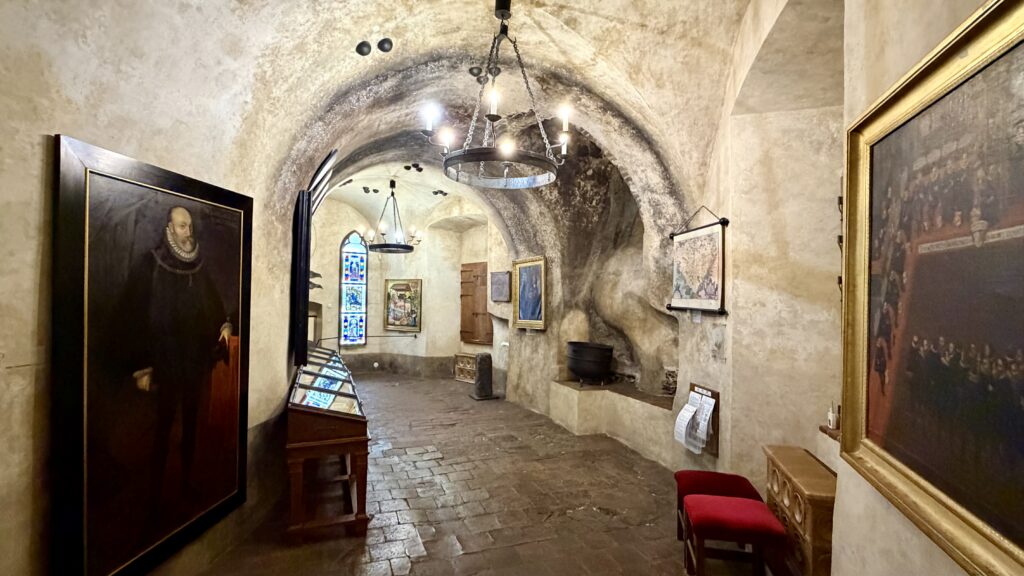
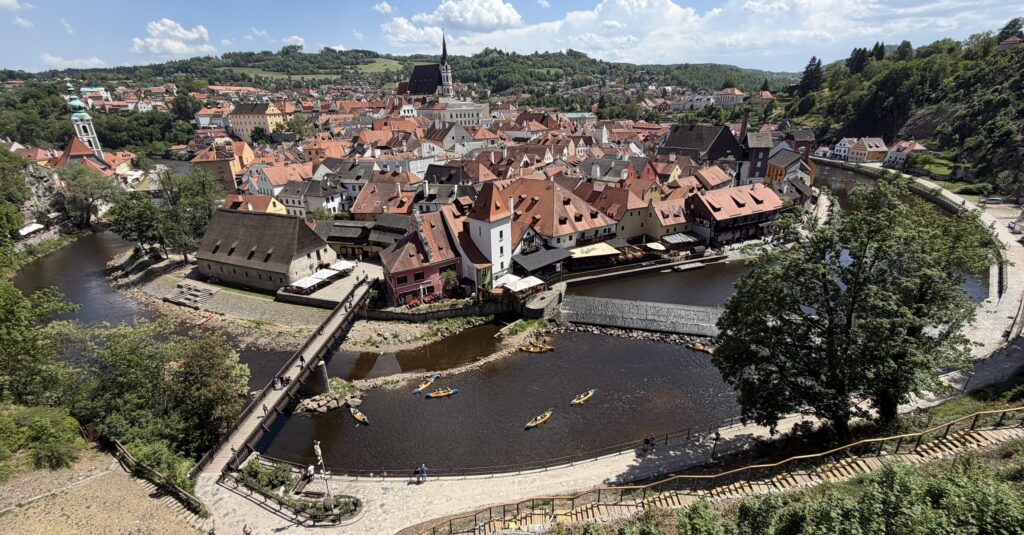
After spending about 30–40 minutes exploring the Castle Museum, we climbed the 162 steps to the top of the Castle Tower. The ascent was well worth the effort, as the viewing gallery offered spectacular panoramic views of the city and the river circling around it.
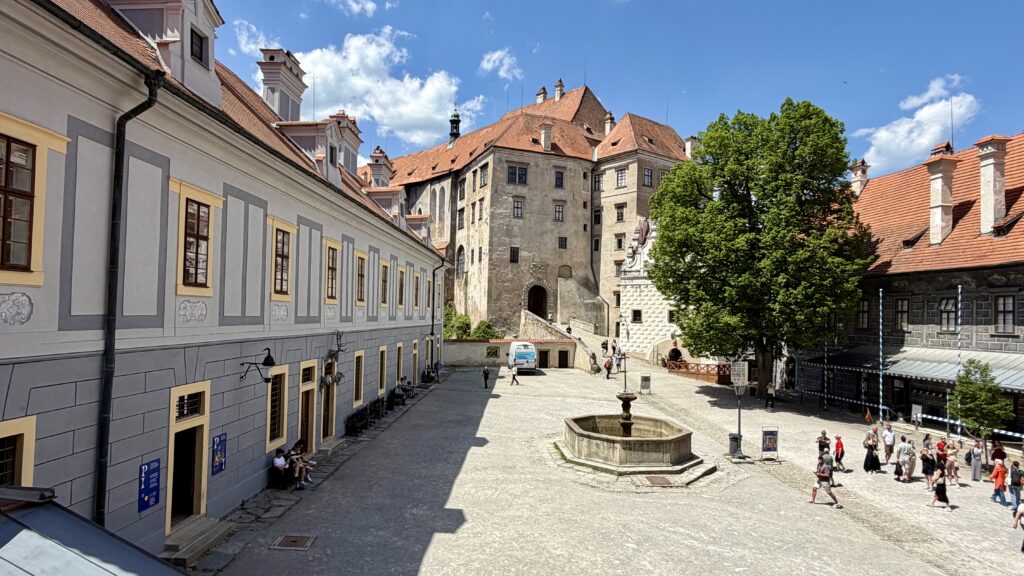
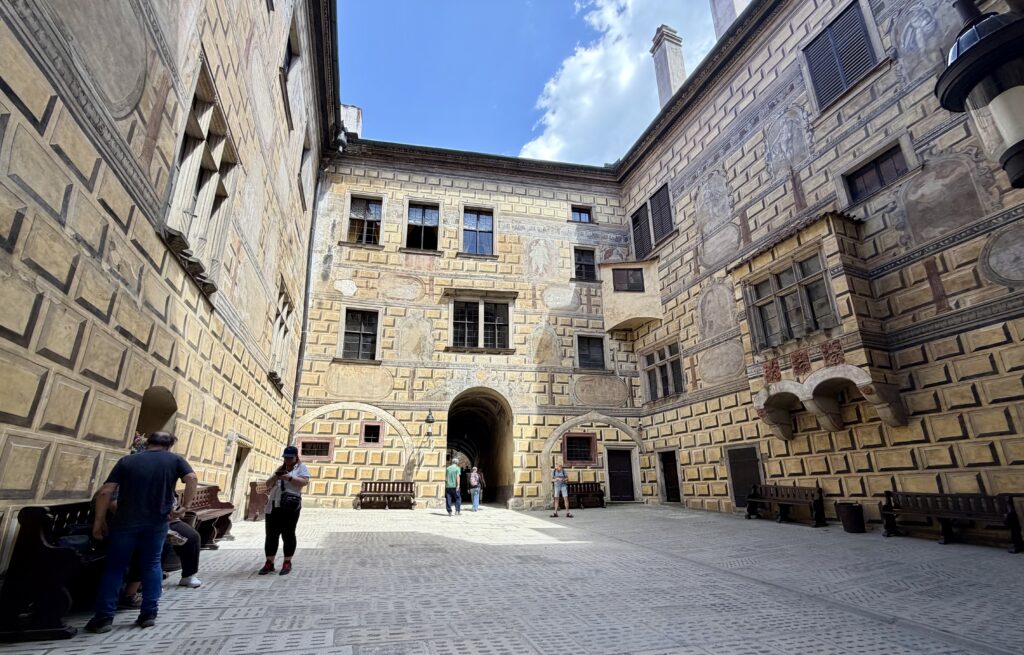
After descending from the Castle Tower, we walked through the spacious Lower Castle courtyard, passing a stone fountain built in 1641 at the center of the courtyard. A brick bridge spanning a second moat, led us into the Upper Castle, also known as the Rosenberg Palace.
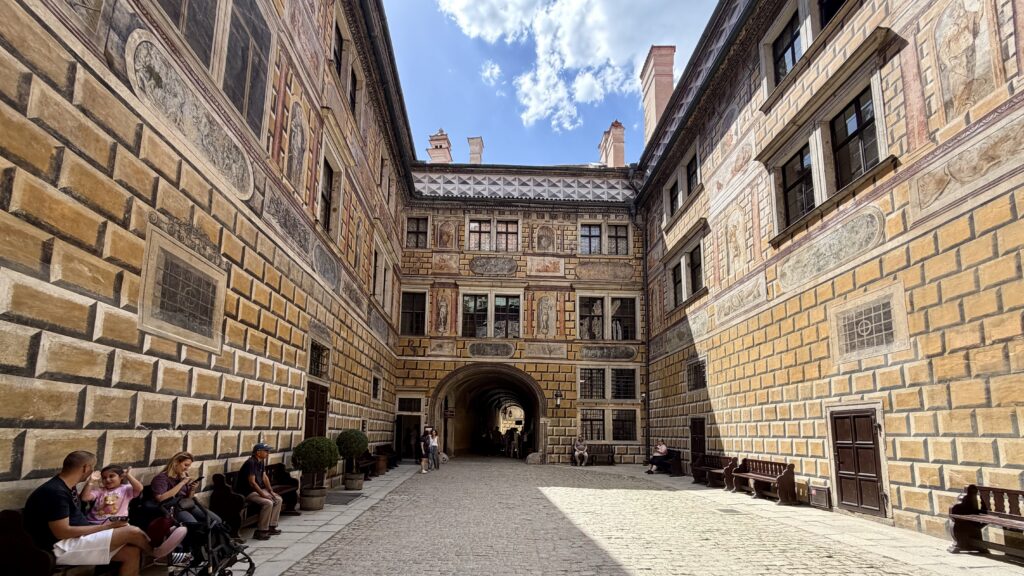
Upper Castle – This section of the castle complex served as the main residential and ceremonial area of the powerful Rosenberg family and is one of the most impressive parts of Český Krumlov Castle.
In the First Courtyard, visitors can enter the castle interiors by purchasing a separate admission ticket. We chose to explore only the exterior of the castle and continued past the second Courtyard and toward the famous Cloak Bridge.
The Cloak bridge connects the Upper Castle with the Castle Garden. We crossed the Cloak Bridge through its covered corridor, where statues lined both sides of the passageway, adding to the bridge’s grand Baroque atmosphere.
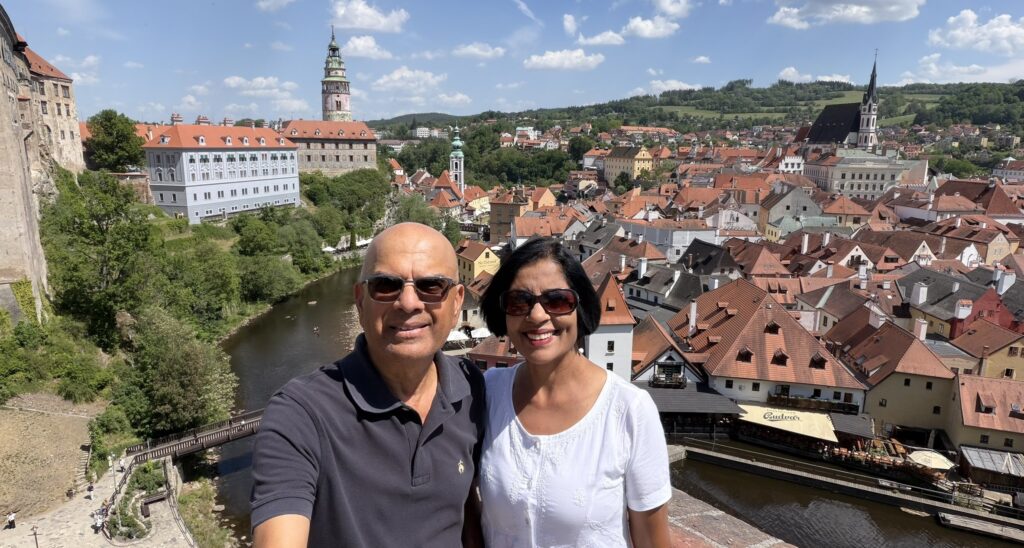
Continuing on, we reached a viewpoint that offered some of the finest panoramas of Český Krumlov. From here, we could admire more of the town’s red-roofed buildings, the curving Vltava River, and the Castle tower.
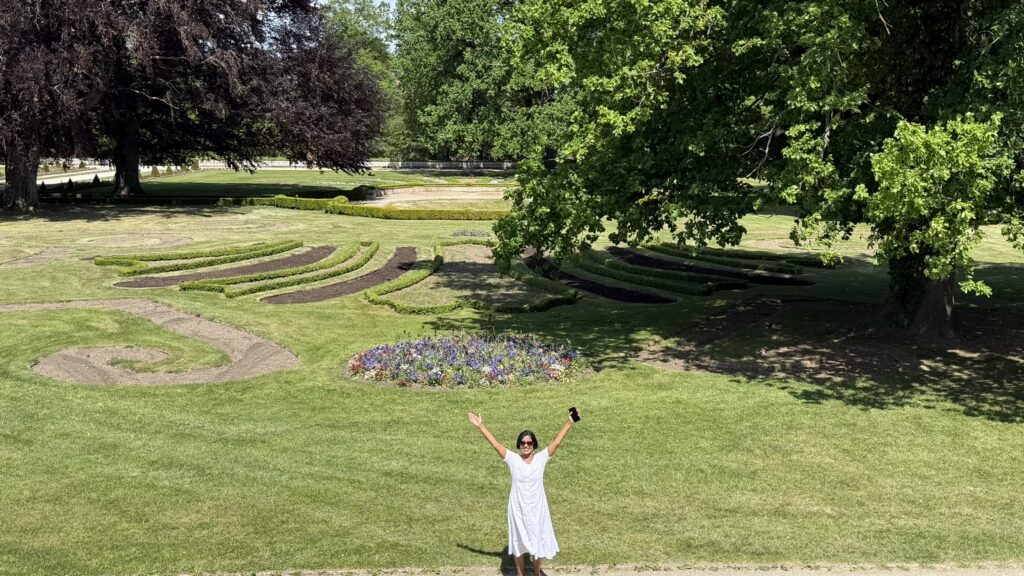
We then followed a steep path up to the castle gardens, enjoying additional views of both the town and the castle complex along the way. After exploring the gardens, we retraced our steps through the castle grounds and returned to the main square, where we stopped for a late lunch before making our way back to our tour bus.
If you have extra time in Český Krumlov, consider taking a kayak or rafting trip on the Vltava River. From the Upper Castle viewpoints, we could see numerous people paddling along the river’s winding course beneath the castle. The river offers a unique perspective of the town and is a popular activity during the warmer months.