Omaha is the biggest and most populous city in the state of Nebraska. The city is located directly across the Missouri River from Council Bluffs Iowa, making it very close to the Iowa border. Specifically, Omaha is on the west bank of the Missouri River, and Council Bluffs is on the east bank. There’s even a small portion of Omaha that is geographically in Iowa due to a shift in the river’s course.
- Bob Kerry Pedestrian Bridge
- First National’s Spirit of Nebraska’s Wilderness and Pioneer Courage Park
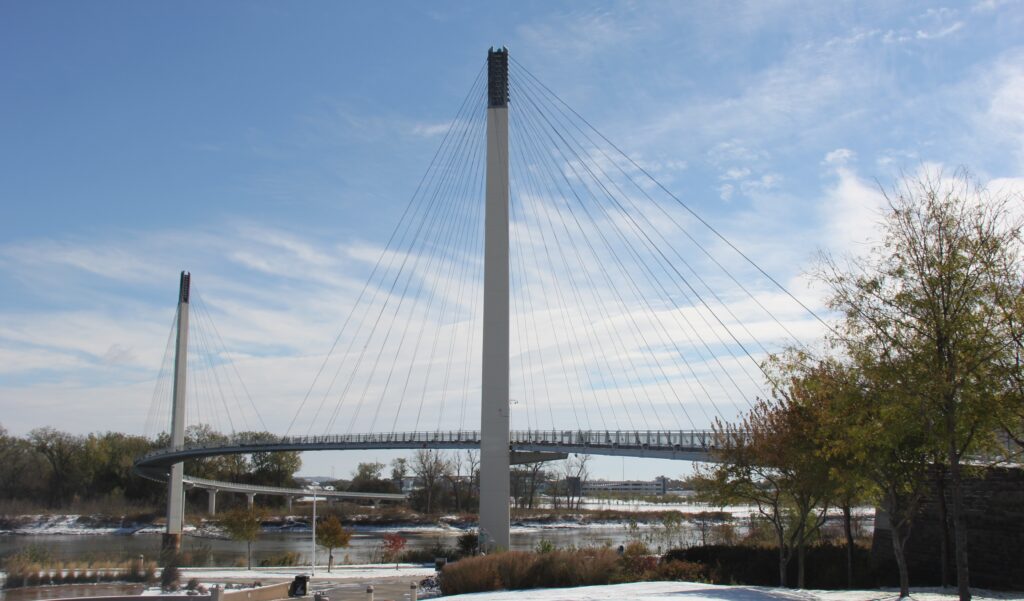
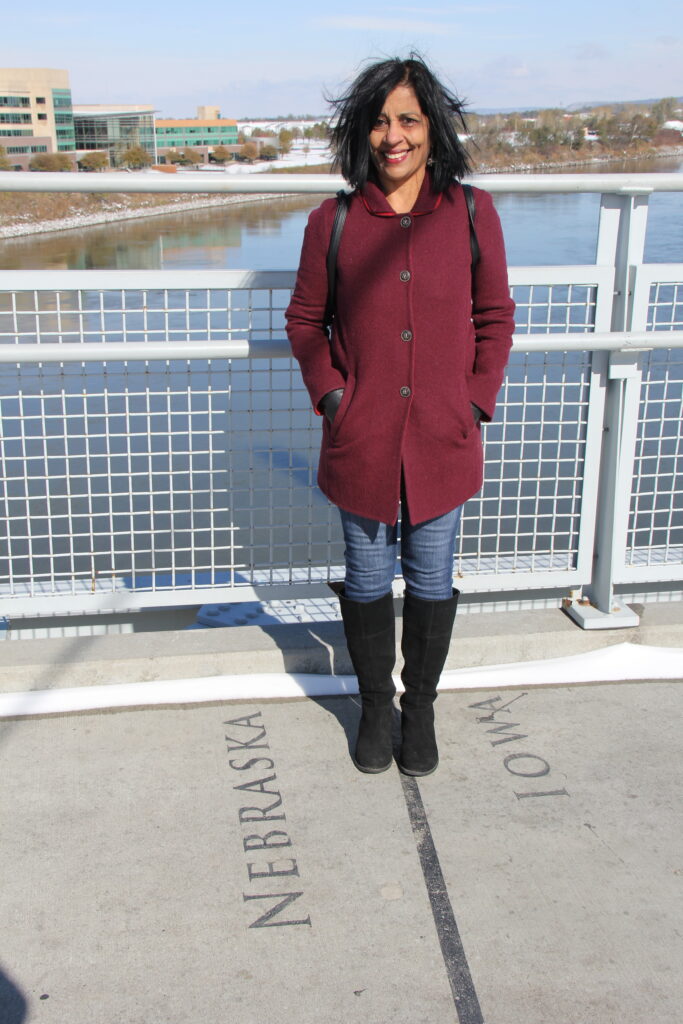
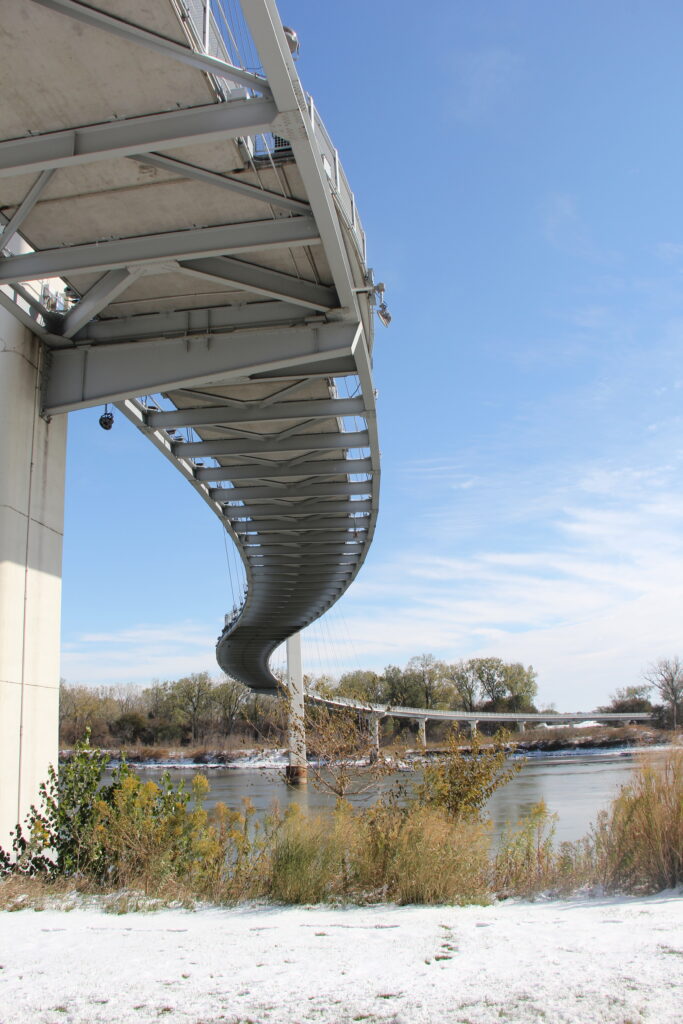
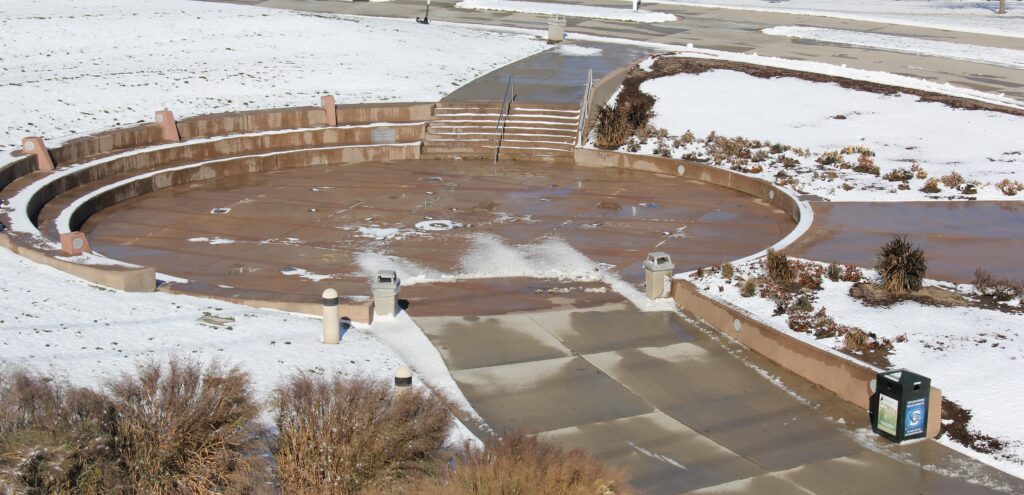
Bob Kerry Pedestrian Bridge – The Bob Kerrey Pedestrian Bridge is unique in the fact that it is the only foot bridge to connect two states – Iowa and Nebraska. A plaque marks the spot where the two states meet. This stunning, 3,000-foot long walkway stretches across the Missouri River, giving pedestrians a spectacular view of Omaha’s skyline and an almost airborne experience. On the Nebraska side, enjoy the 3-acre Omaha Plaza with an interactive water jet fountain, and access to the National Park Service Visitors Center.
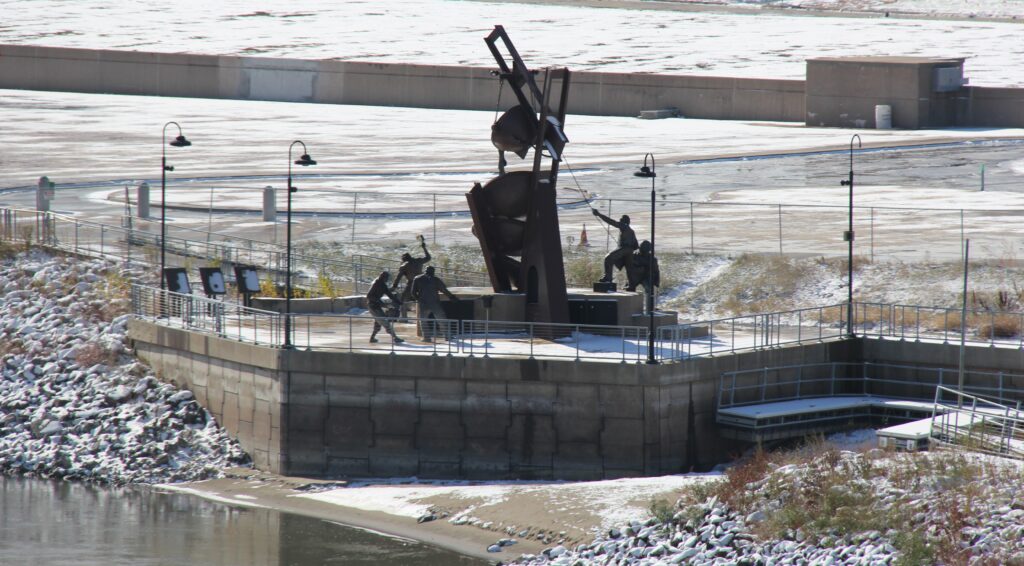
There is a Monument to Labor Sculpture on the riverfront. This monument, titled Labor, is a salute to the dedication and hard work of all those who built the grand city of Omaha. It is a tribute to the men and women who worked for and continue to forge a better life for themselves, their families and their community.
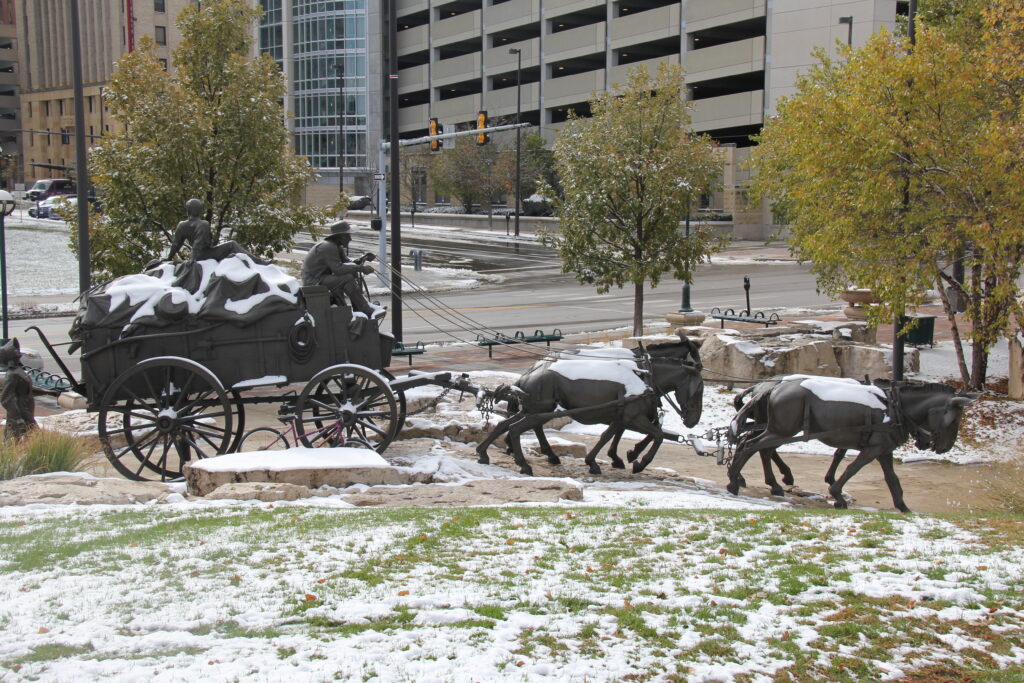
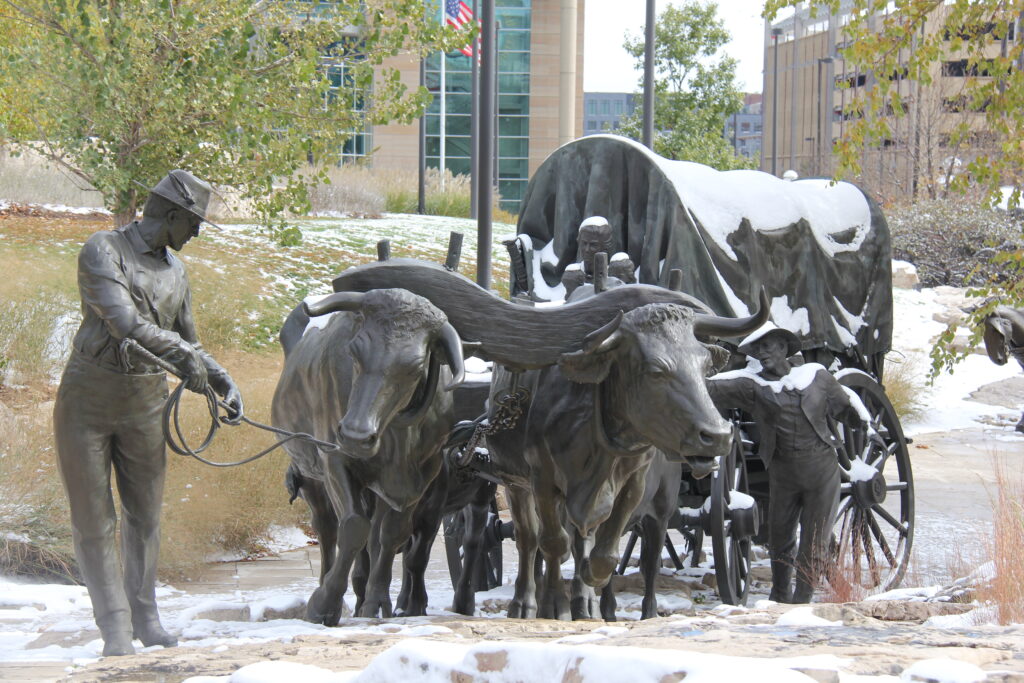
First National’s Spirit of Nebraska’s Wilderness and Pioneer Courage Park – is one of the largest display of bronze and stainless steel sculptures in the world. Located in downtown Omaha, this expansive public art display, spans five city blocks and features over 100 individual pieces. The sculptures vividly depict the pioneer era, and includes life-sized figures of pioneers, covered wagons, and wildlife, creating an immersive experience that transports visitors back to the 19th century.
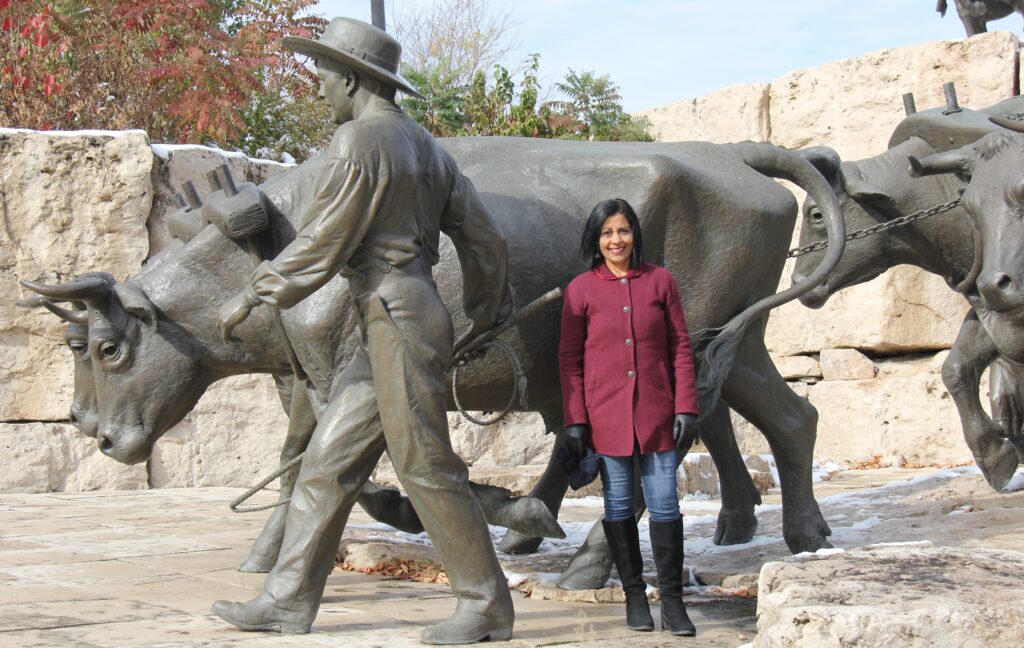
The Wagon Train – This central element shows pioneer families with covered wagons, oxen, horses, and mules, embarking on the challenging journey west in search of a new life and American dream. They depict the optimism, bravery, and hardship involved in this migration.
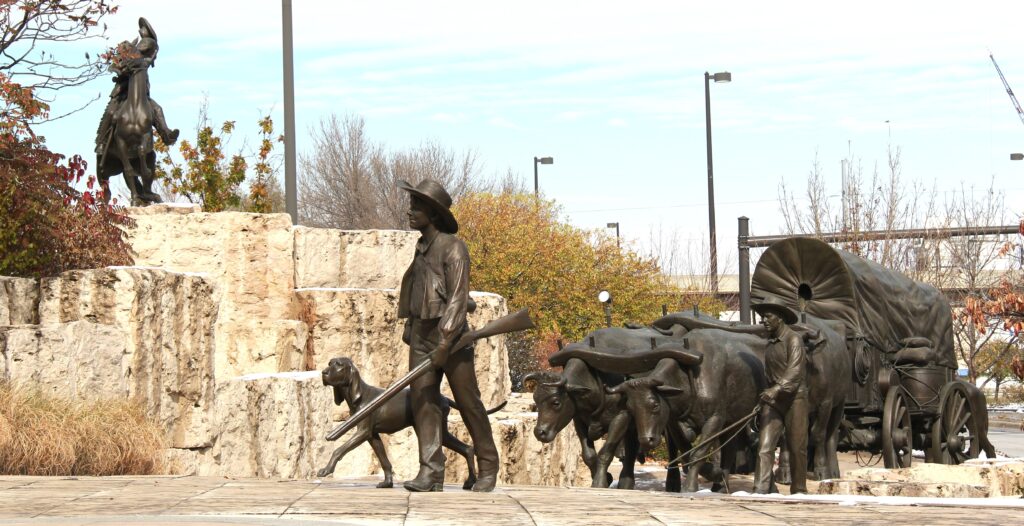
Visitors are encouraged to walk alongside the figures to immerse themselves in the experience of traversing the dry riverbed, which the sculptures depict.
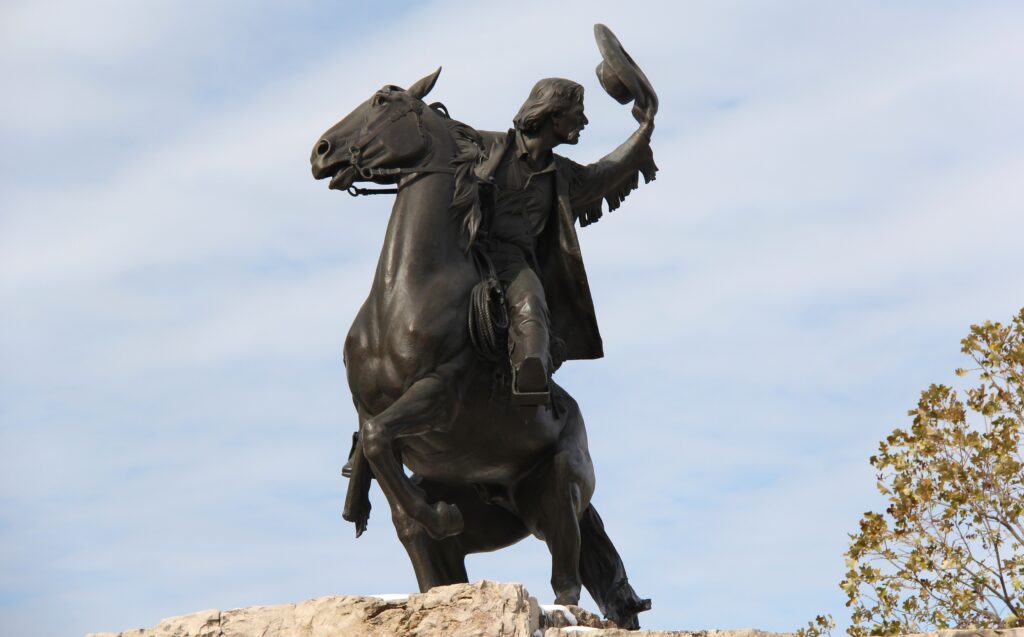
The Trail Boss – Mounted and waving his hat in the air, the trail boss signals to the wagon train that it’s safe to proceed, representing the leadership and guidance crucial for a successful journey.
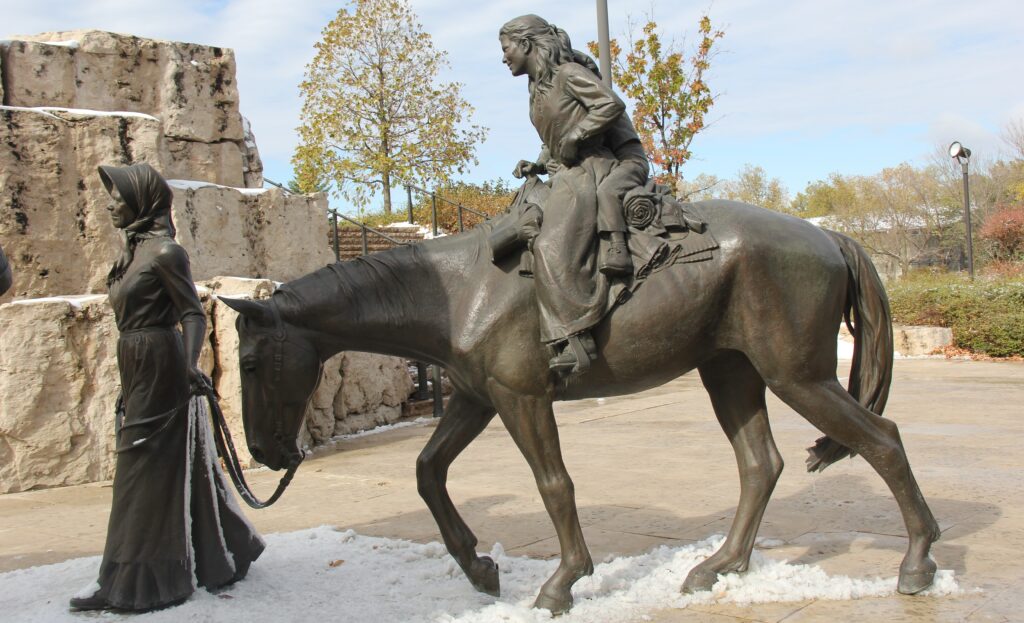
Settler Women – These sculptures highlight the role of women in the westward migration, showcasing their strength and resilience in the face of the arduous journey.
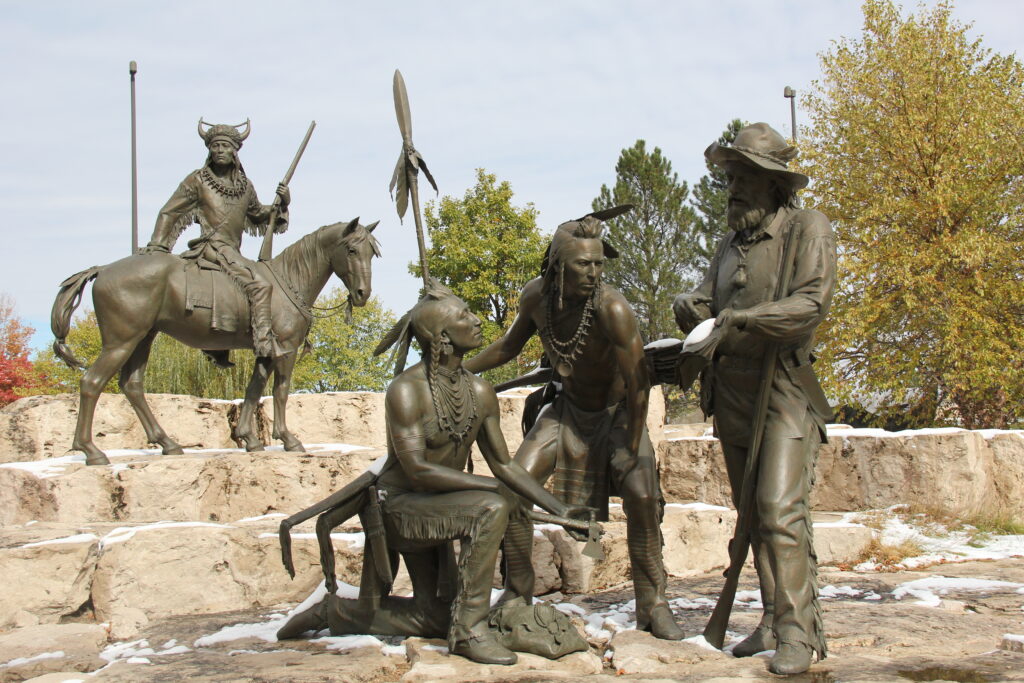
Native Americans – The inclusion of Native American sculptures, like the sentinel atop a horse and the Trading Directions grouping, acknowledge the presence of Indigenous peoples on the land traversed by the pioneers.
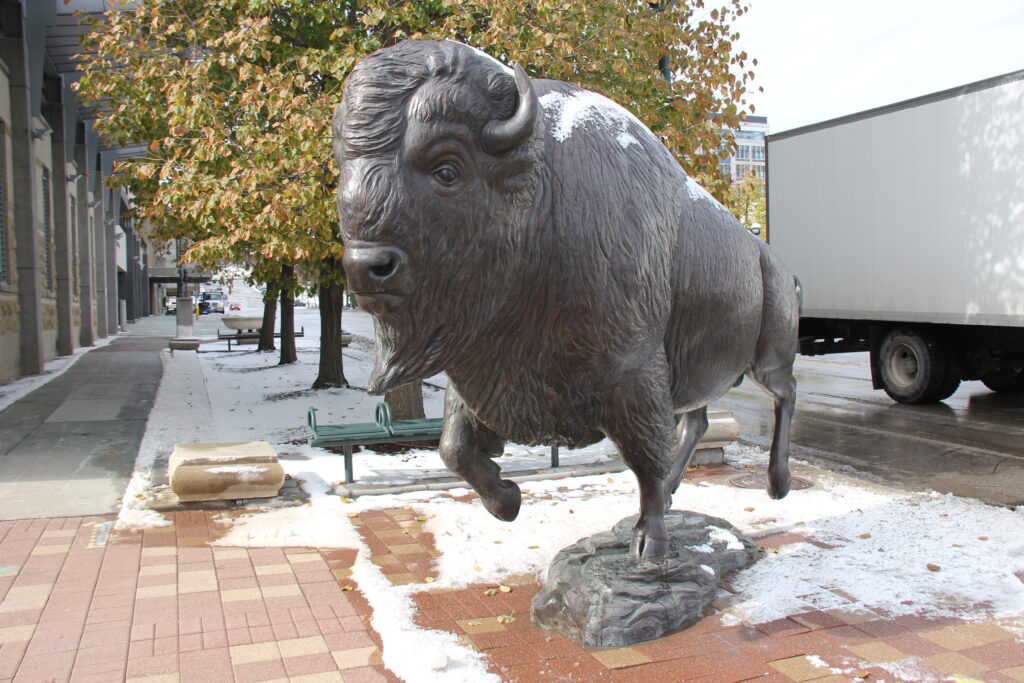
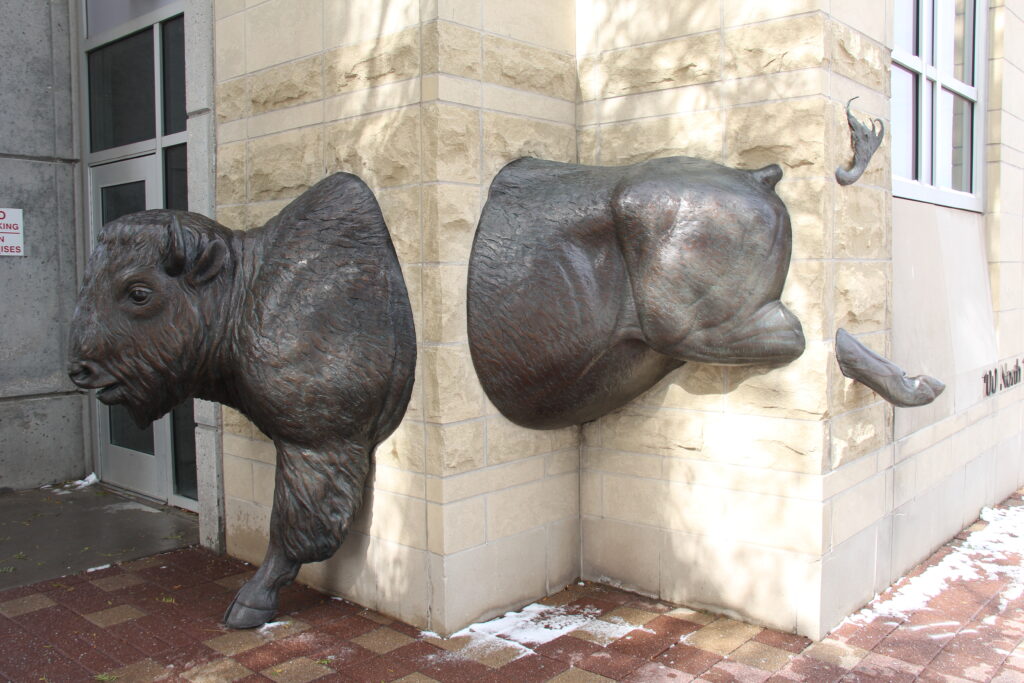
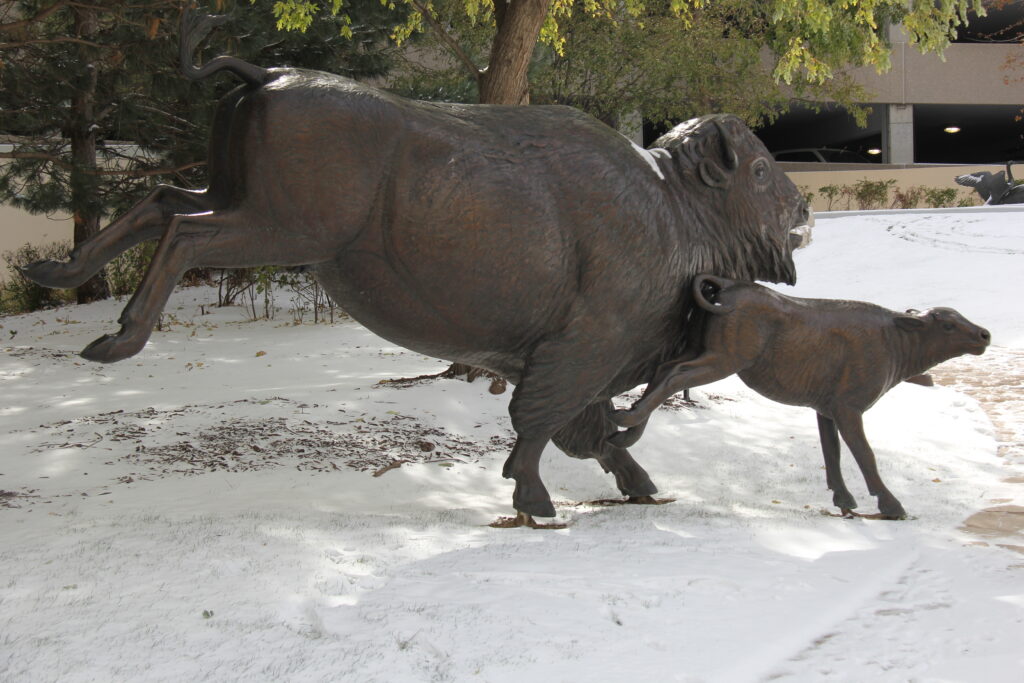
Bison – These bison sculptures along the street leading from Pioneer Courage Park towards the Sprit of Nebraska’s Wilderness Park represents the encounter with the vast herds of buffalo that roamed the prairies, and how the pioneer’s arrival impacted these herds.
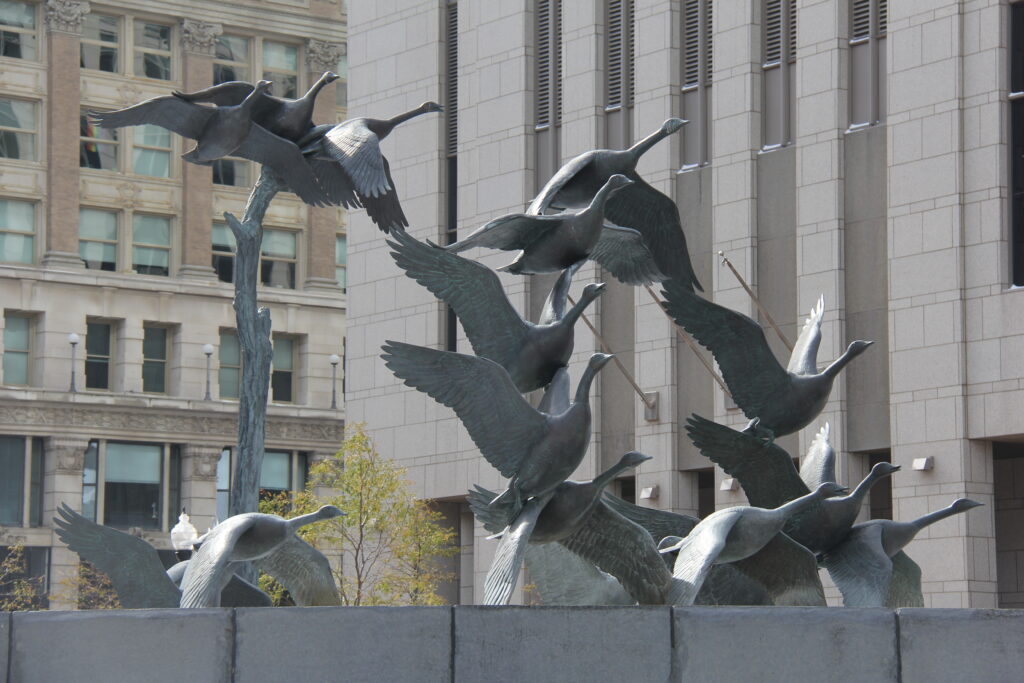
Canada Geese – The flock of geese taking flight near the end of the Sculpture parks, where the wilderness pond is located, represent the disruption caused by the pioneers’ arrival and the impact on the natural environment.
Although the sculpture park is spread out over five city blocks, it is easy to follow the flow from one piece to the next.