Trenčín
Located near the Czech border, Trenčín was our first stop after entering Slovakia. Situated along the Váh River, the city is best known for Trenčín Castle, a medieval fortress perched on a rocky hill overlooking the town. Trenčín is also famous for a rare Roman inscription dating to 179 AD, carved into the rock beneath the castle during the Marcomannic Wars. It is considered one of the northernmost pieces of evidence of the Roman presence in Central Europe.
We drove to Trenčín from Brno which took a little less than 2 hours. Parking was available near the Mierové Námestie, the main town square.
- Štúrovo námestie (Štúr Square)
- Vodník Valentín Fountain
- Trenčín Synagogue
- Mierové Námestie
- The Holy Trinity Plague Pillar
- Fountain of Marcus Aurelius
- Piarist Church of St. Francis Xavier
- Town Hall Tower
- Parish Church of the Nativity of the Virgin Mary
- Trenčín Castle
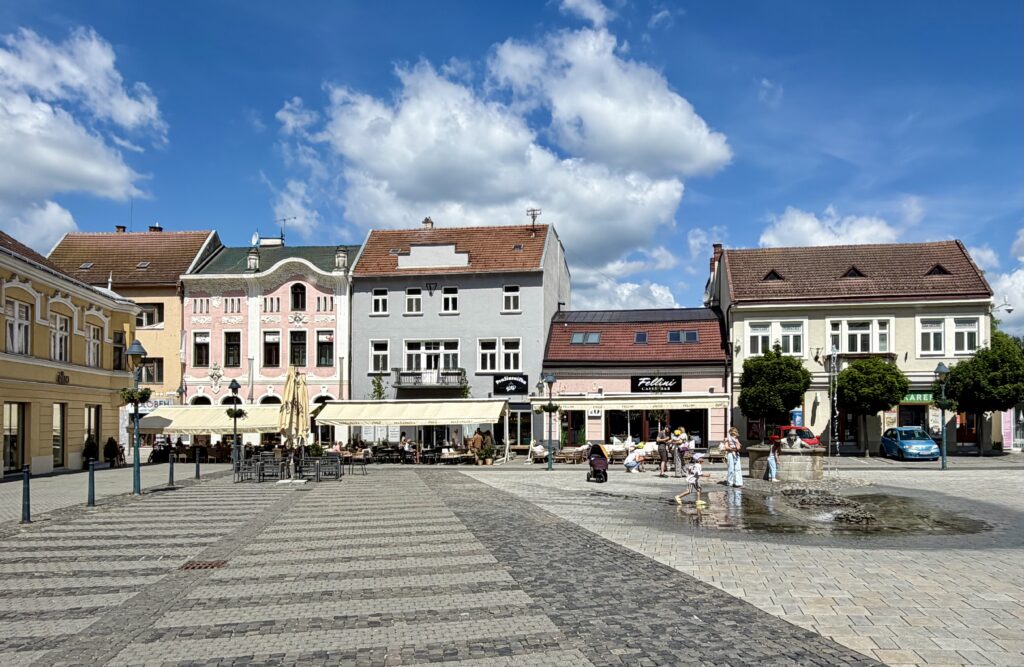
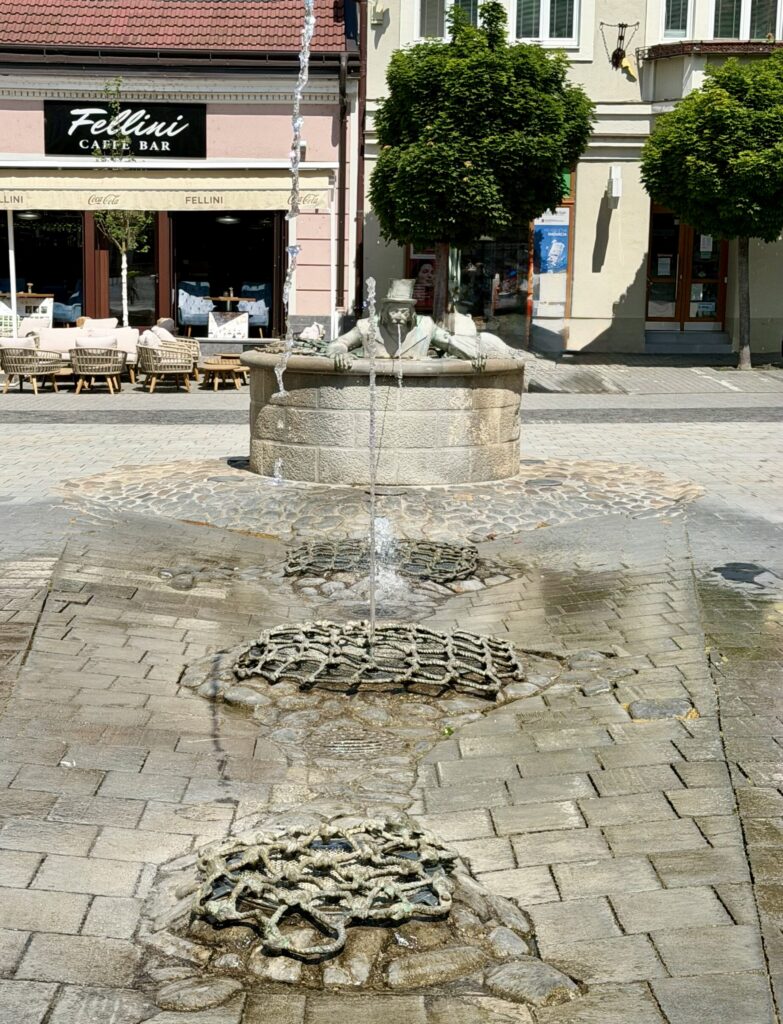
Štúrovo námestie (Štúr Square) – is a lively public square in the historic center of Trenčín named after Slovak national leader Ľudovít Štúr. At the center of the square is the Vodník Valentín Fountain, featuring a statue of a water goblin from Slovak folklore. During summer, the fountain is a popular place to cool off, while in winter it is transformed into a small ice-skating rink. The pedestrianized square is lined with cafés and restaurants, making it an ideal place to relax and enjoy local pastries and coffee.
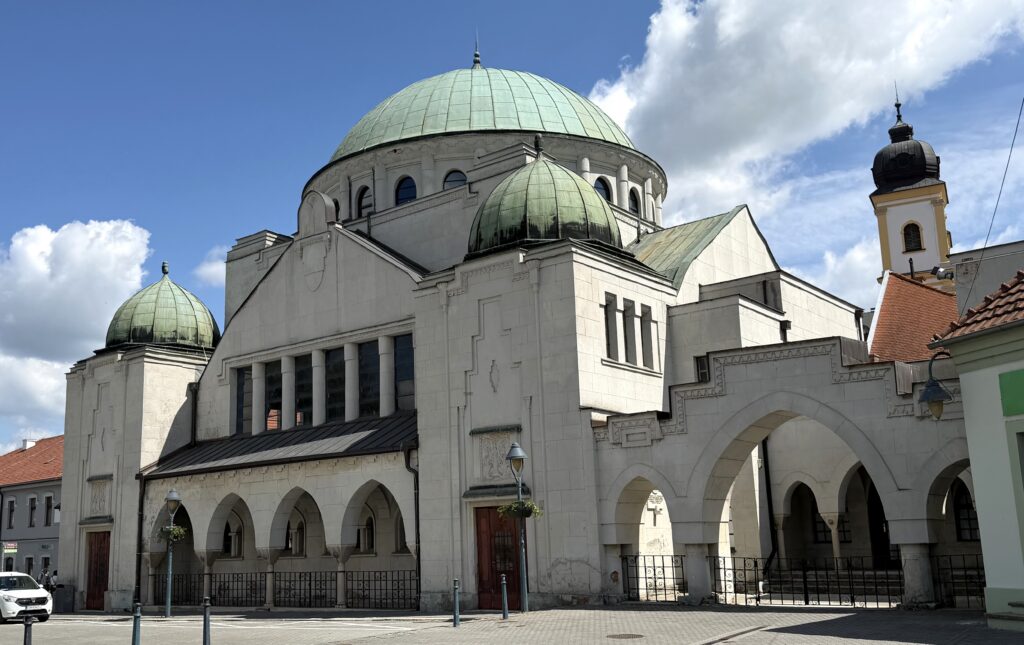
Trenčín Synagogue – Another notable building on the square is the Trenčín Synagogue, a striking Moorish-Byzantine building completed in 1913. Distinguished by its large concrete dome and colorful stained-glass windows, the synagogue now serves as an art gallery and cultural venue.
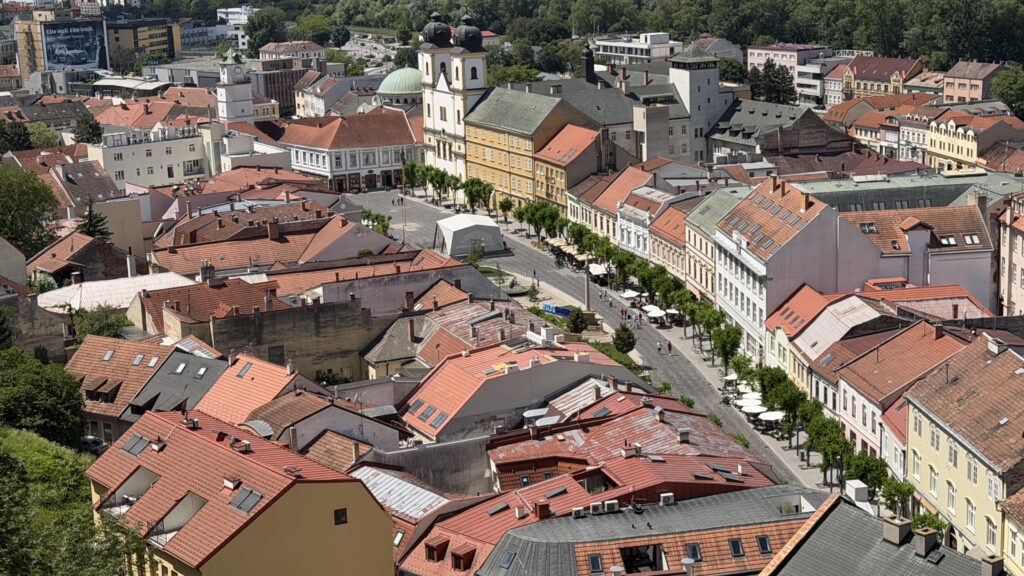
Mierové Námestie (Peace Square) – Located near Štúr Square, this historic square forms the heart of Trenčín. Its history dates back to the 11th century, and it underwent extensive restoration between 2017 and 2018. Today, the square features several notable landmarks, including a restored Plague Column, the Marko Aurélio Fountain, Piarist Church of St. Francis Xavier, and Town Hall. The street leading past the town hall leads to the city’s most famous landmark, Trenčín Castle.
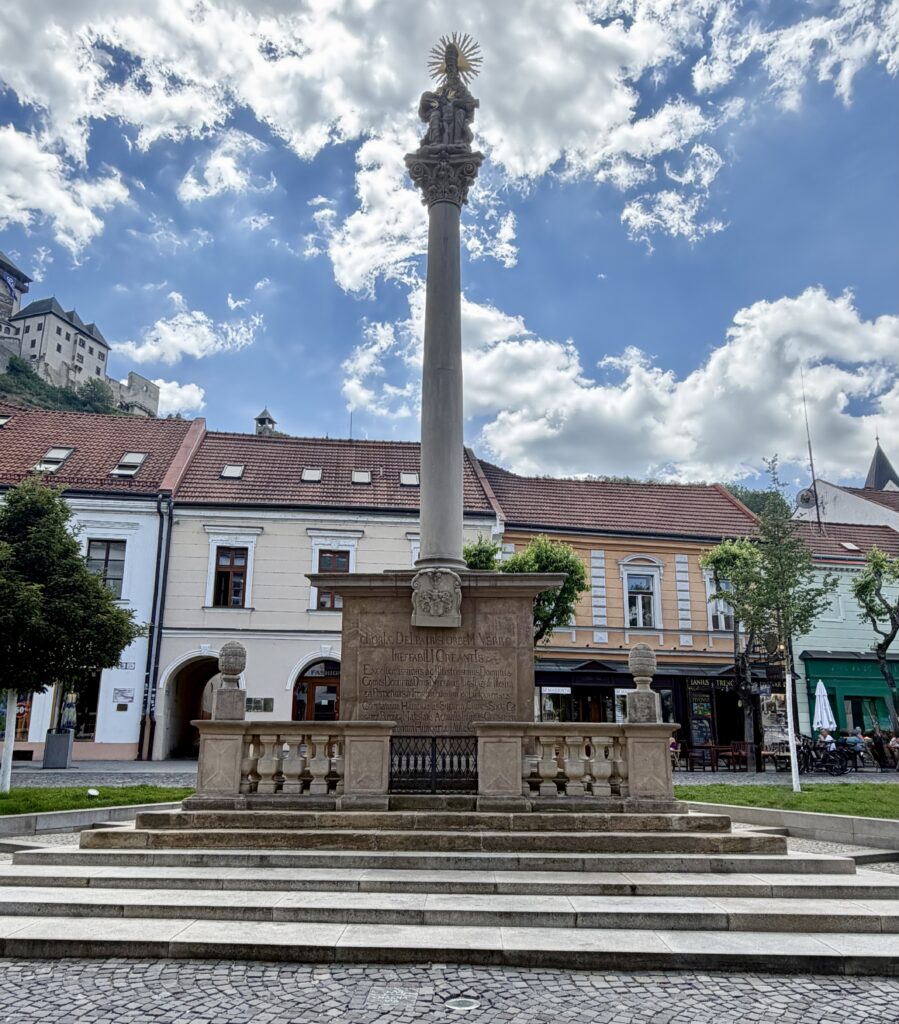
- The Holy Trinity Plague Pillar is a striking Baroque monument that was erected in 1712 to commemorate the devastating plague outbreak of 1710, which claimed the lives of more than 1,000 residents. Today, it stands in the square as a reminder of the city’s past.
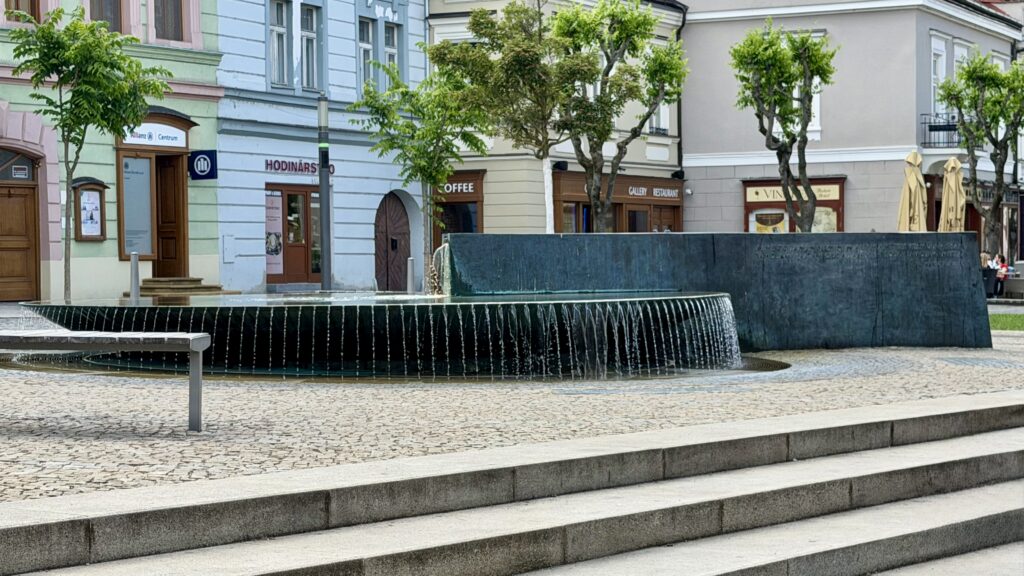
- Fountain of Marcus Aurelius stands as a striking centerpiece on the square. This modern circular fountain not only offers a refreshing respite from the summer heat but also serves as a gathering spot for locals and visitors alike.
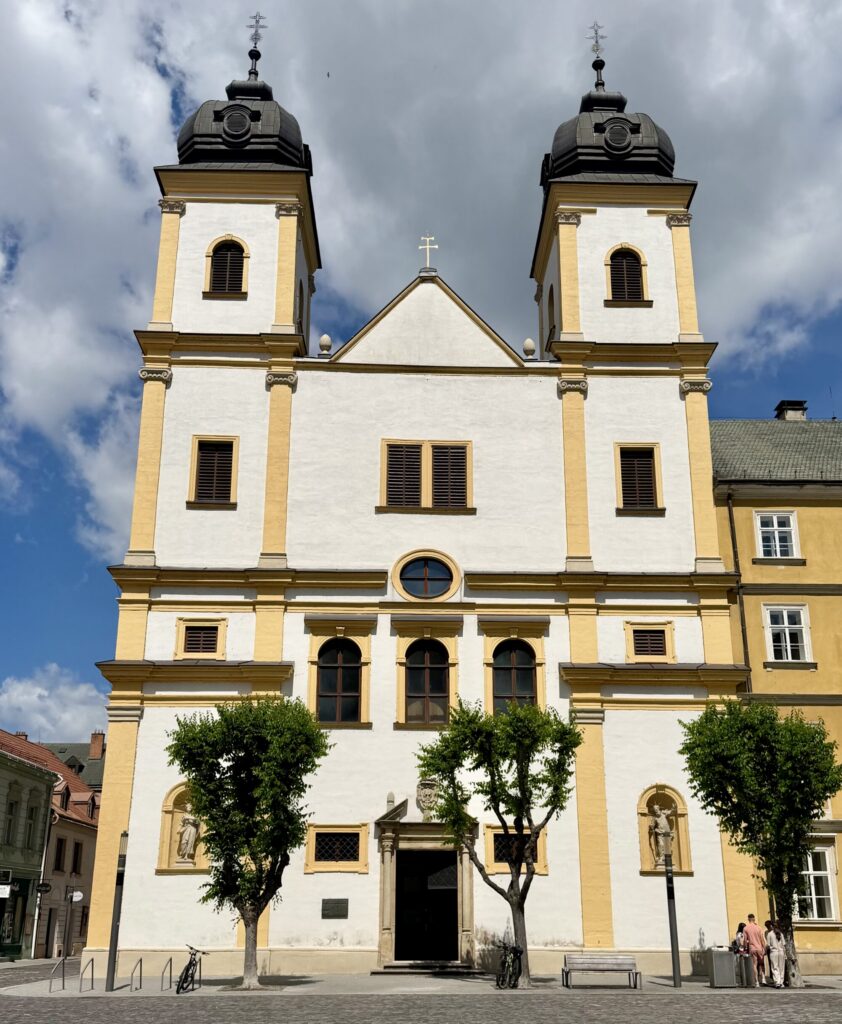
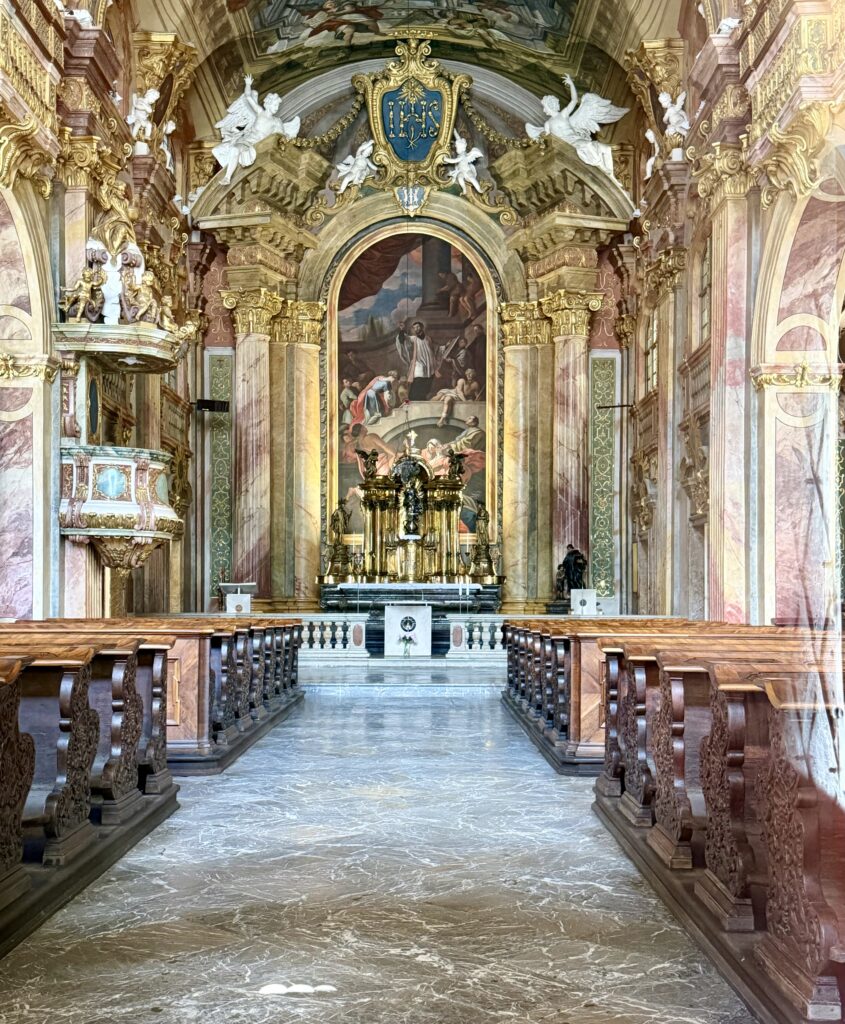
Piarist Church of St. Francis Xavier – is one of the most magnificent Baroque sacral monuments in Slovakia, originally built by the Jesuits in the 17th century.
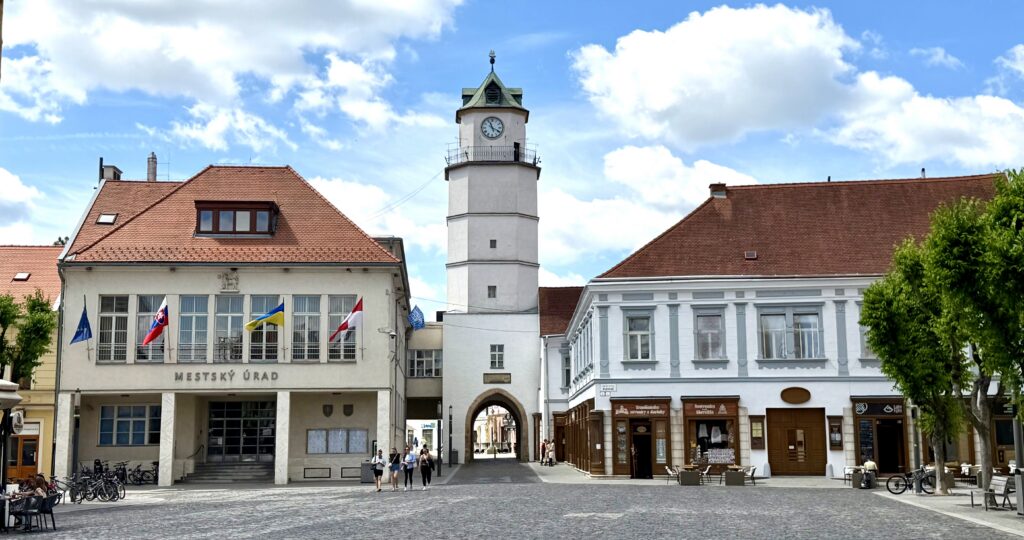
Town Hall and Tower – are among the most recognizable landmarks in Trenčín’s main square. Together, they form a focal point of the square and serve as a gateway to the city’s historic center. The 32-meter-tall City Tower, also known as the Lower Gate or Turkish Tower, is the best-preserved section of Trenčín’s medieval fortifications. Originally built in the early 15th century and later rebuilt in the 17th century, it played an important role in defending the town against Ottoman incursions. Above the gateway is a Latin inscription that reads, Unless the Lord guards the city, the watchman stays awake in vain.
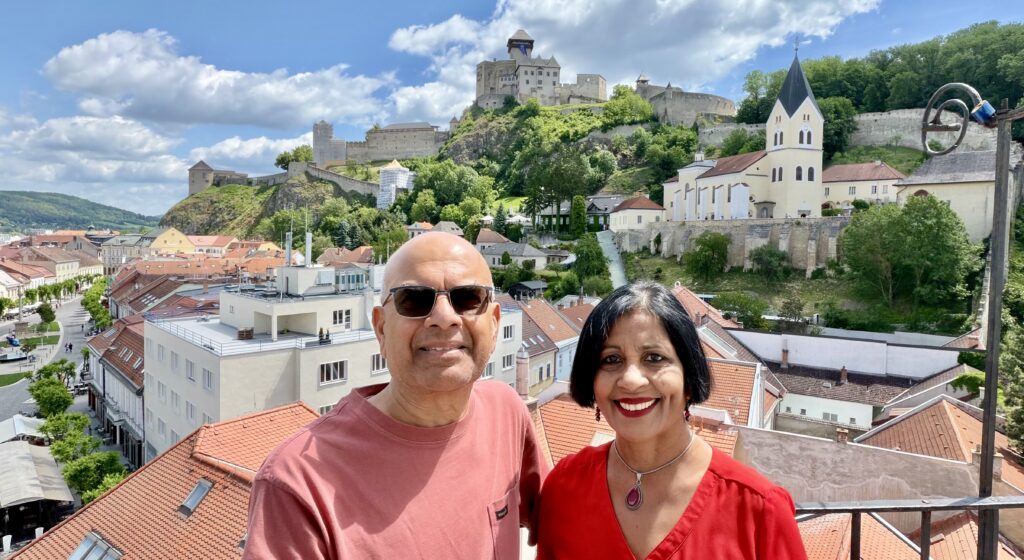
Visitors can take an elevator part of the way up the tower before climbing the remaining 65 steps to the viewing balcony, which offers panoramic views of the town square, the Váh River, and Trenčín Castle.
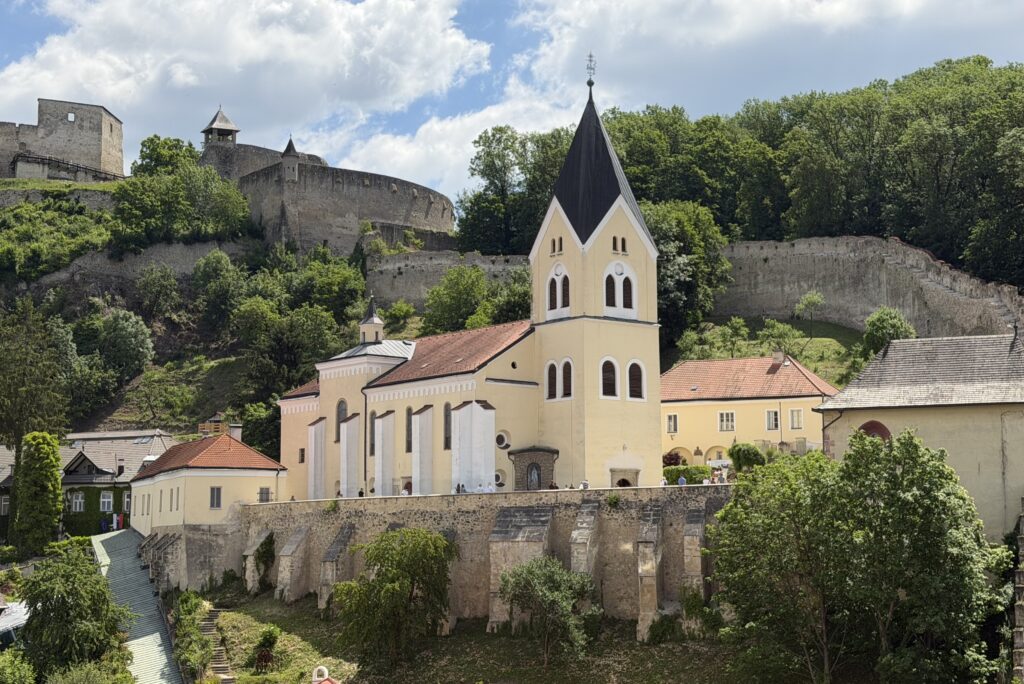
Parish Church of the Nativity of the Virgin Mary – is located near Mariánske Square about halfway up the route to Trenčín Castle, and is a popular stopping point for visitors. Built in 1324, likely on the foundations of an older 13th-century structure, the church is one of Trenčín’s oldest and most valuable religious monuments. It once formed part of the town’s defensive system protecting the road to the castle.
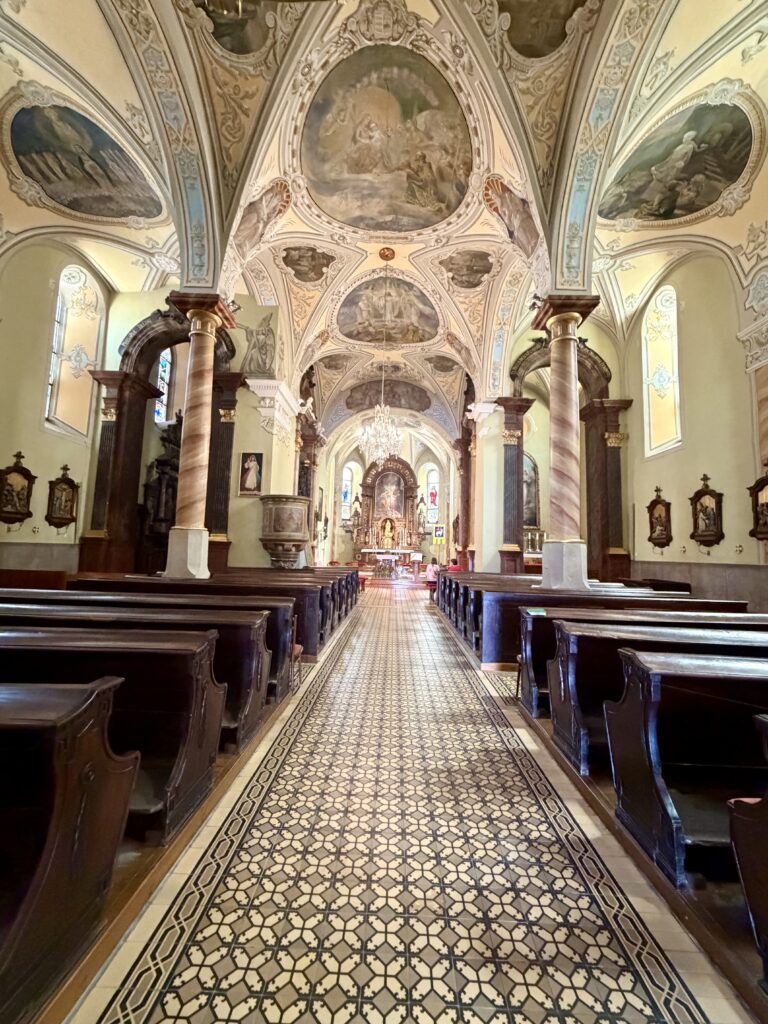
The church has endured several destructive fires. After a major fire in 1886, it underwent extensive reconstruction in the early 20th century, resulting in its present appearance, which features a redesigned façade, a domed tower, and colorful stained-glass windows.
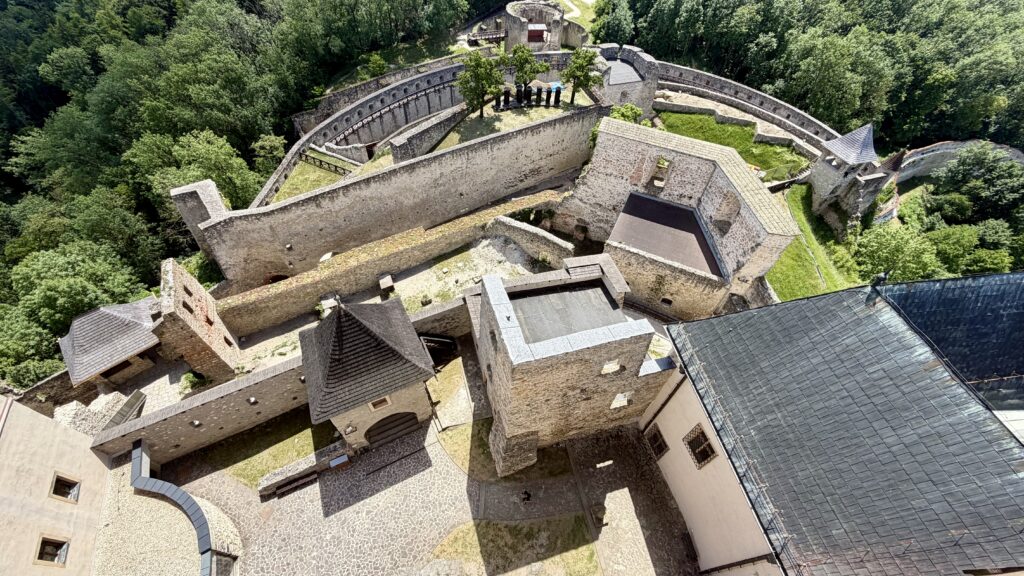
Trenčín Castle – is a historic fortress built on top of a rock in the 11th century to protect crossings of the Váh River and key Carpathian passes used by merchants traveling between Northern Hungary, central Slovak mining towns, and neighboring regions such as Bohemia, Moravia, Silesia, and Poland. Over time, it evolved into a border, royal, and later aristocratic administrative center. Today, the castle houses museum exhibitions and display rooms that showcase its history and cultural heritage.
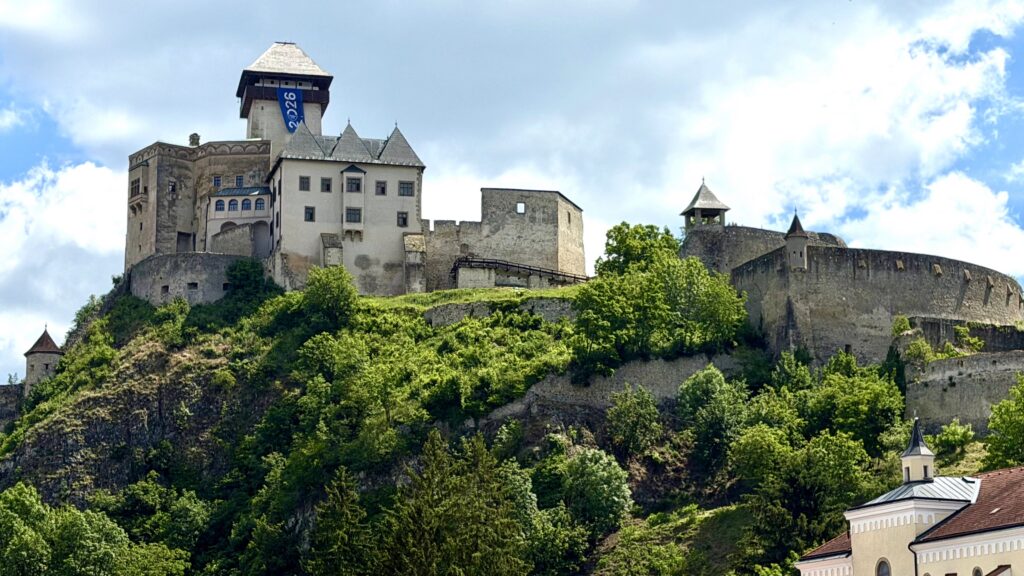
To reach Trenčín Castle, you can follow the path from the town hall up covered steps to the castle area, passing the Parish Church of the Nativity (see section above) and a restaurant. After a steep climb, visitors reach the ticket office, where they can choose between –
- Guided tour (more expensive and extensive, but not available in English)
- Cheaper self-guided basic tour (€10 per adult)
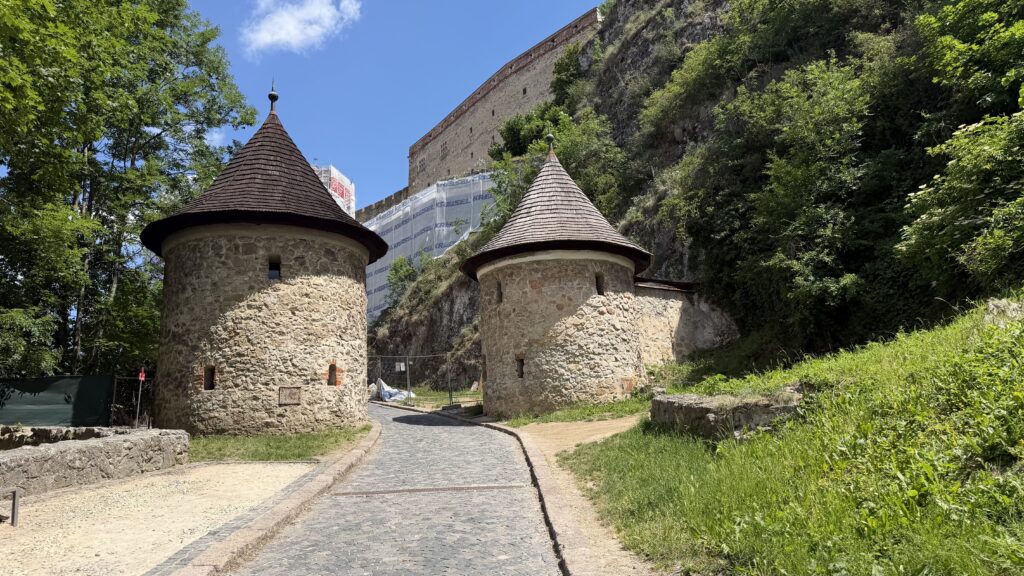
During our visit to Trenčín Castle, only the basic self-guided tour was available. The tour covered the castle grounds, exterior attractions, and the castle tower. The castle is divided into Upper and Lower sections, and it took about an hour to explore the areas highlighted in the self-guided tour booklet.
- The Lower Castle primarily functioned for defense, housing military forces, and economic operations.
- The Upper Castle served as the primary stronghold and living quarters for nobility.
The Lower Section of Trenčín Castle features the barracks, the dungeon tower (oubliette), the cannon bastion, and the famous Well of Love. The barracks, once used to house soldiers and store ammunition, now contain an exhibition of medieval and early modern firearms. The former observation tower later became the castle dungeon and today displays medieval torture devices.
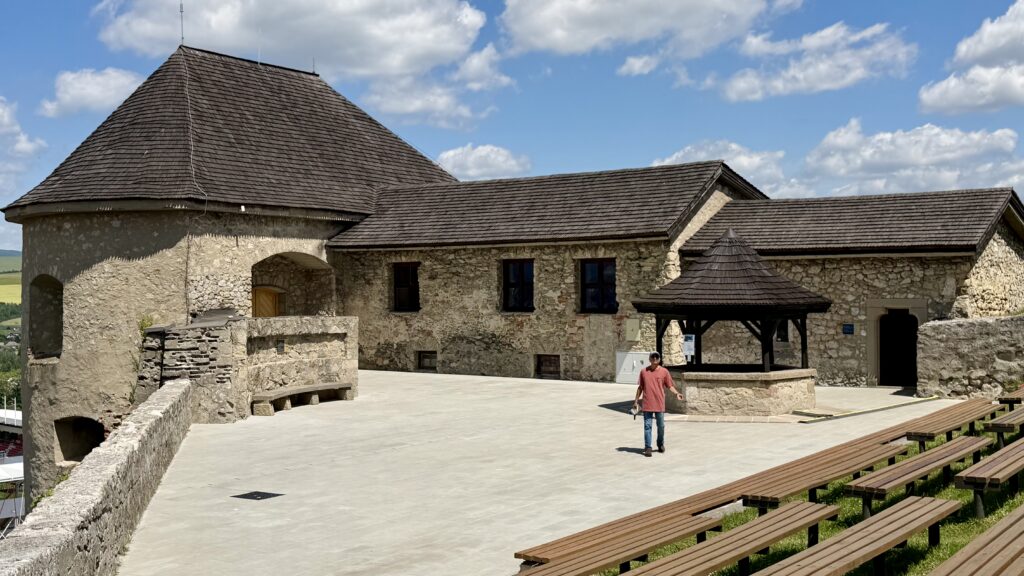
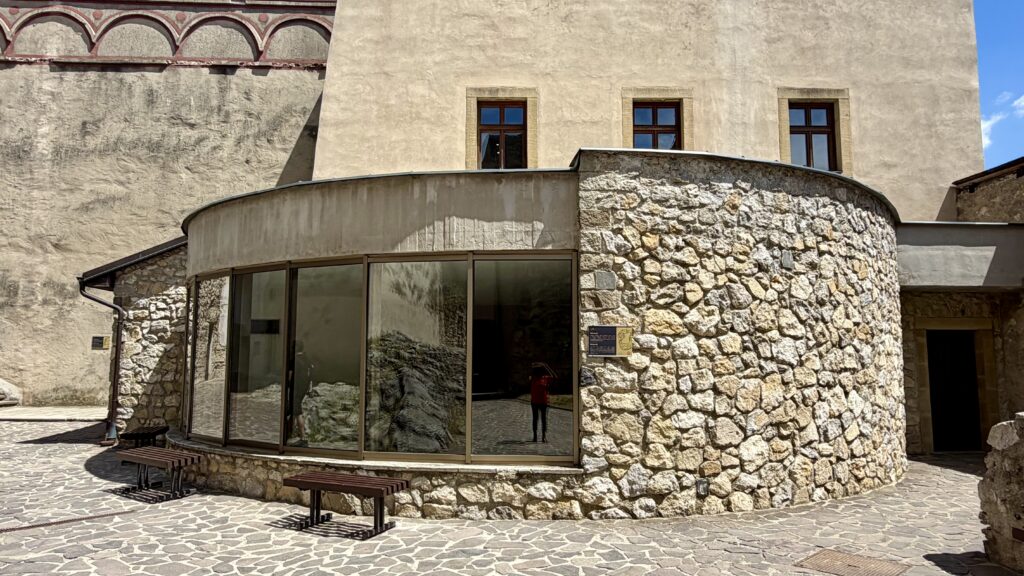
After exploring the Lower Section of Trenčín Castle and passing through several gates, we reached the oldest preserved residential structures in Trenčín Castle – the 11th-century stone residential tower, the iconic Matúš’s Tower and the nearby Romanesque stone rotunda.
The Rotunda – Near Matúš Tower and the Fifth Gate of Trenčín Castle, archaeologists uncovered the foundations of a pre-Romanesque rotunda during excavations conducted between 1972 and 1975. This discovery pushed the origins of the castle complex further back in time and revealed one of the oldest known religious structures in the region. Burial finds date it to the late 11th century, although some scholars believe it may have even older origins linked to the Great Moravian period.
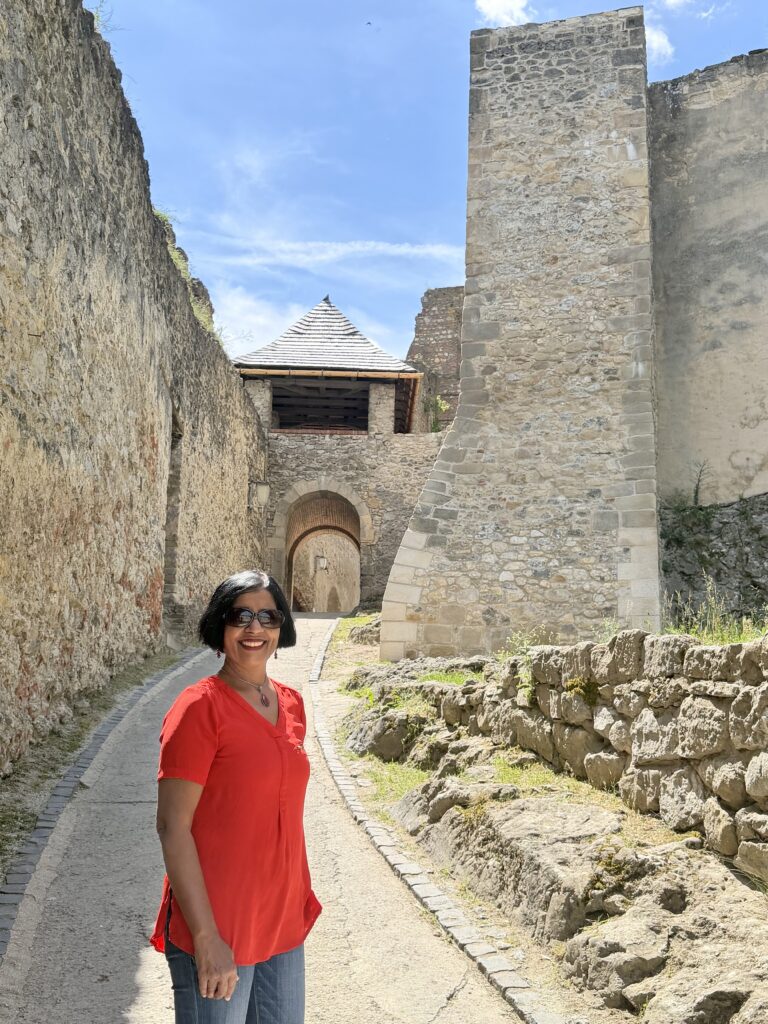
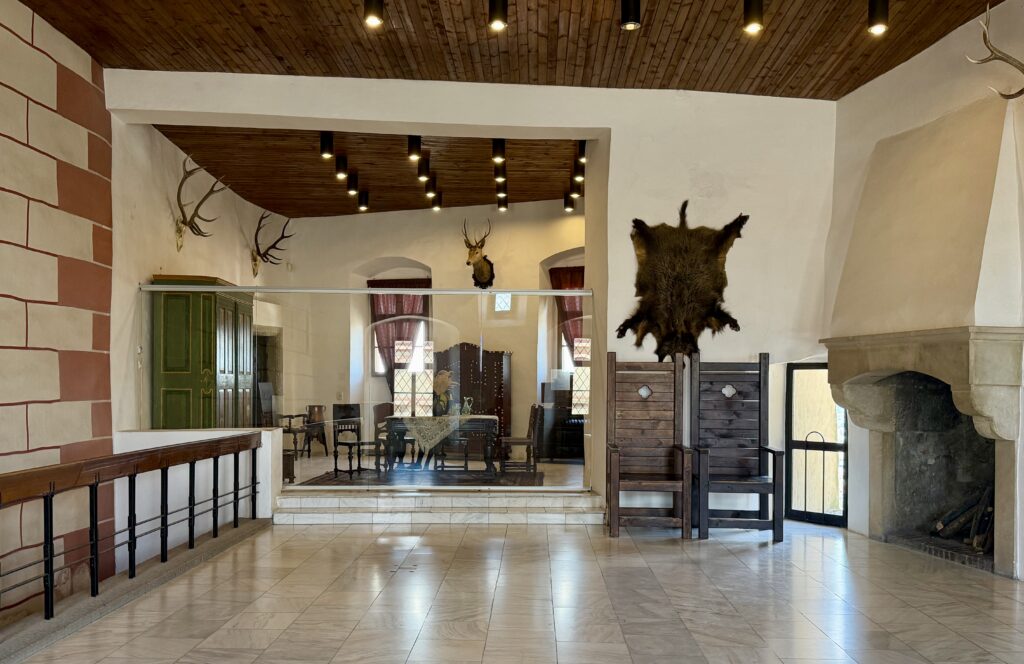
We climbed Matúš Tower, ascending through multiple levels connected by stairways. Each level contained a room with historical exhibits and displays. From the top, we enjoyed excellent panoramic views of Trenčín, the surrounding landscape, and the castle’s southern fortifications.
Vlkolínec
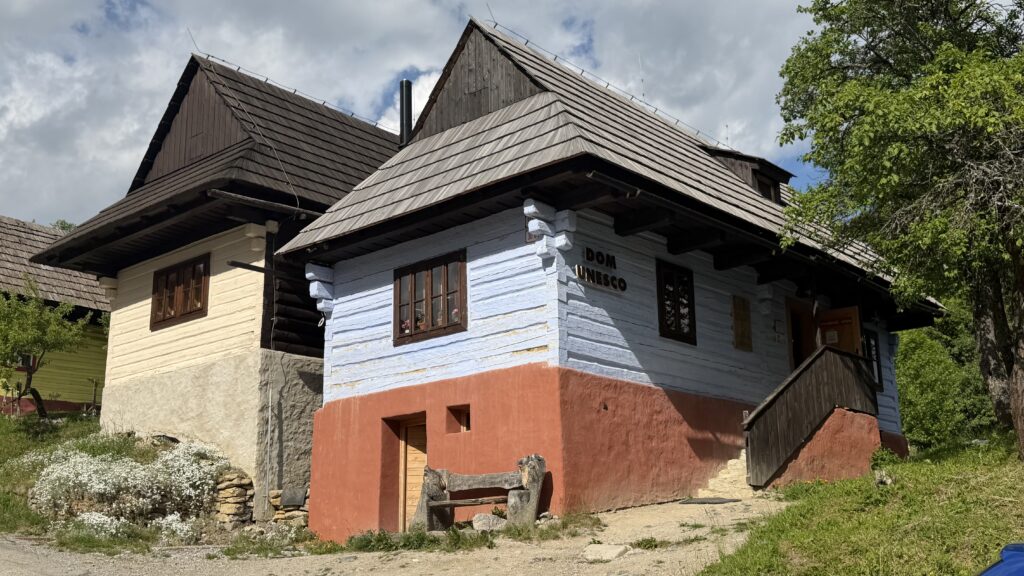
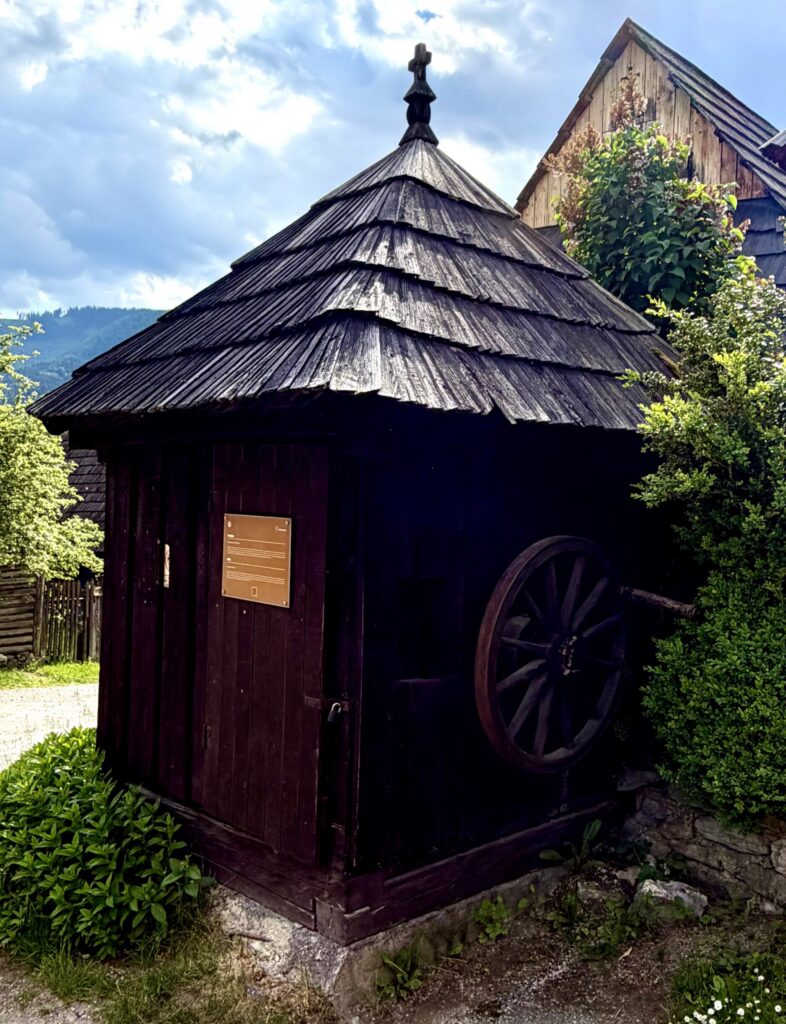
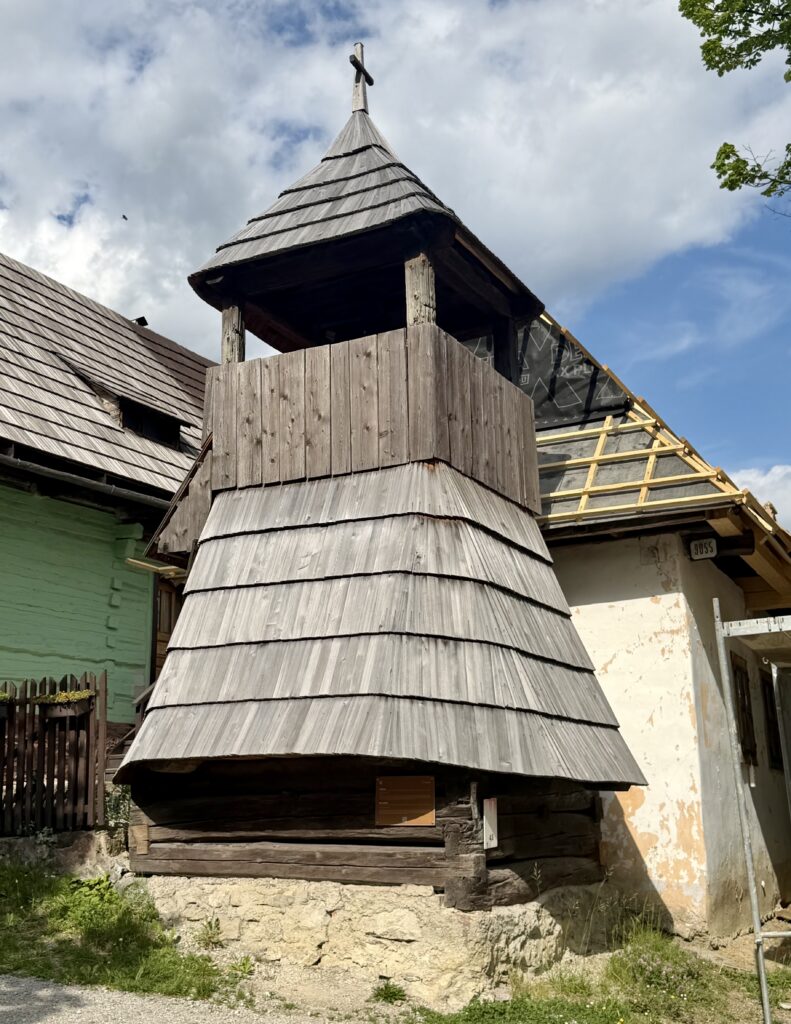
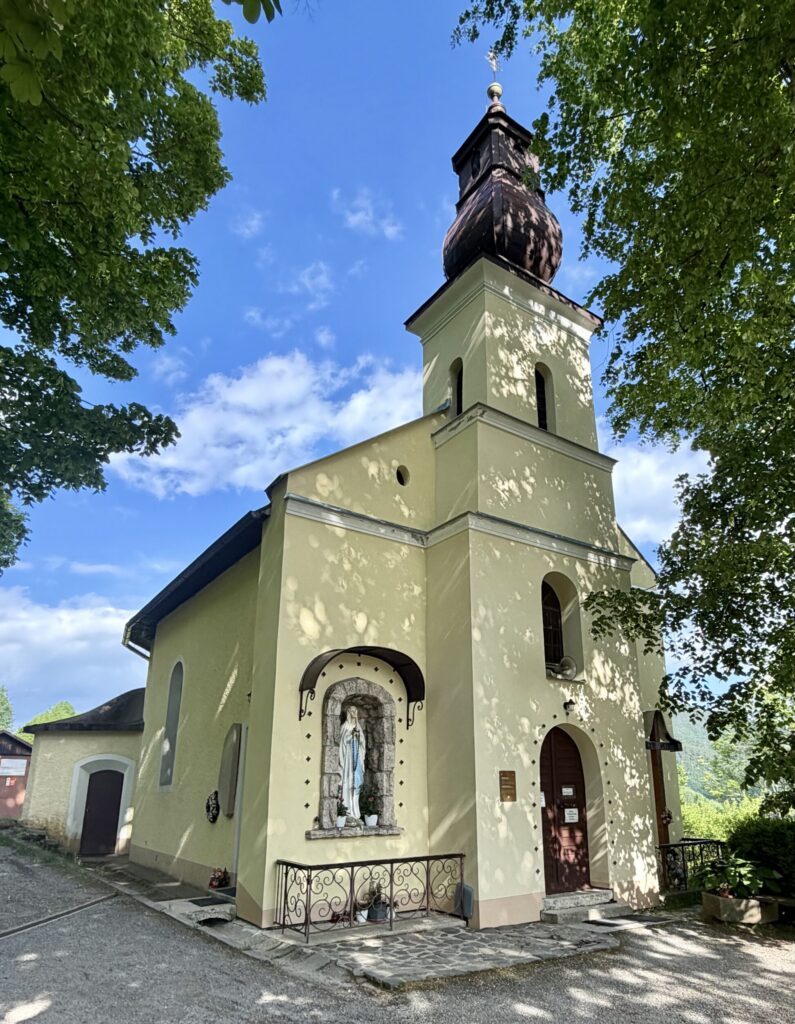
After visiting Trenčín, we drove about 141 km (roughly two hours) to Vlkolínec. Designated a UNESCO World Heritage Site in 1993, Vlkolínec is an exceptionally well-preserved example of a traditional Central European mountain village. The settlement features more than 45 colorful wooden log houses, many of which have retained their original appearance and layout. Other notable landmarks include an 18th-century wooden belfry and a Baroque chapel. Two of the houses have been converted into a folk museum, showcasing traditional tools, household items, and everyday life in the region. Unlike many static open-air museums, Vlkolínec is still inhabited by a small permanent community.
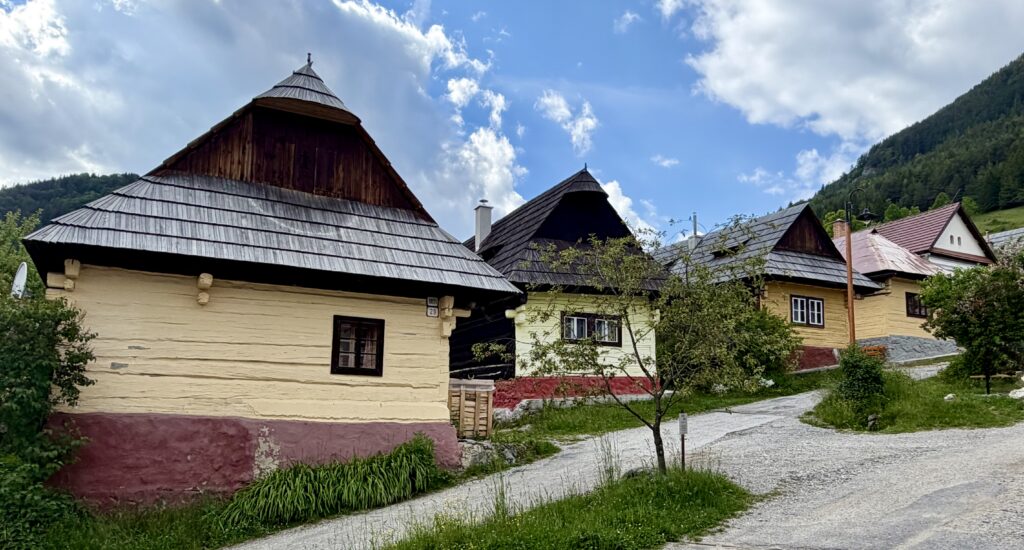
Near the parking area, an information board and map highlight the village’s main points of interest, all of which can be explored on foot. Because we arrived after 4:00 pm, the museum was already closed. The village was very quiet, with only a few tourists walking around and hardly any local residents visible, apart from those at the café. We spent about an hour walking around the peaceful village and also had coffee in the lively cafe at the end of the street.