Hotel Bishop’s House – 4 nights
Prague, the capital of the Czech Republic, is one of Europe’s most beautiful and well-preserved historic cities. Bisected by the Vltava River, it is often called the City of a Hundred Spires because of its striking skyline of church towers and historic buildings. Highlights include the Old Town Square, with its famous Prague Astronomical Clock, and the Charles Bridge, whose stone walkway is lined with statues of Catholic saints and offers spectacular views of the city.
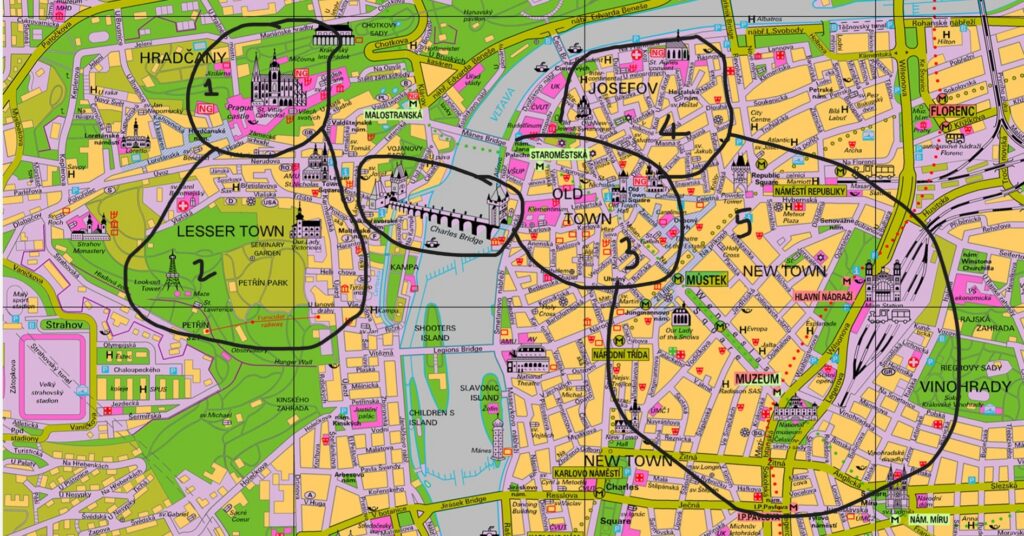
We explored the following 5 areas in Prague –
- Prague Castle
- Mala Strana (Lesser Town)
- Old Town
- Jewish Quarter
- Power Gate and New Town
The iconic Charles Bridge serves as a natural divider between Malá Strana and Prague Castle on one side, and Old Town, Jewish Quarter, and Powder Tower area on the other. Our hotel was conveniently located in Malá Strana, just steps from the entrance to Charles Bridge, which made it easy to explore all of these areas on foot.
————— Prague Castle —————
- First and Second Courtyards
- St Vitus Cathedral
- St Vitus Cathedral Tower
- Old Royal Palace
- St George Cathedral
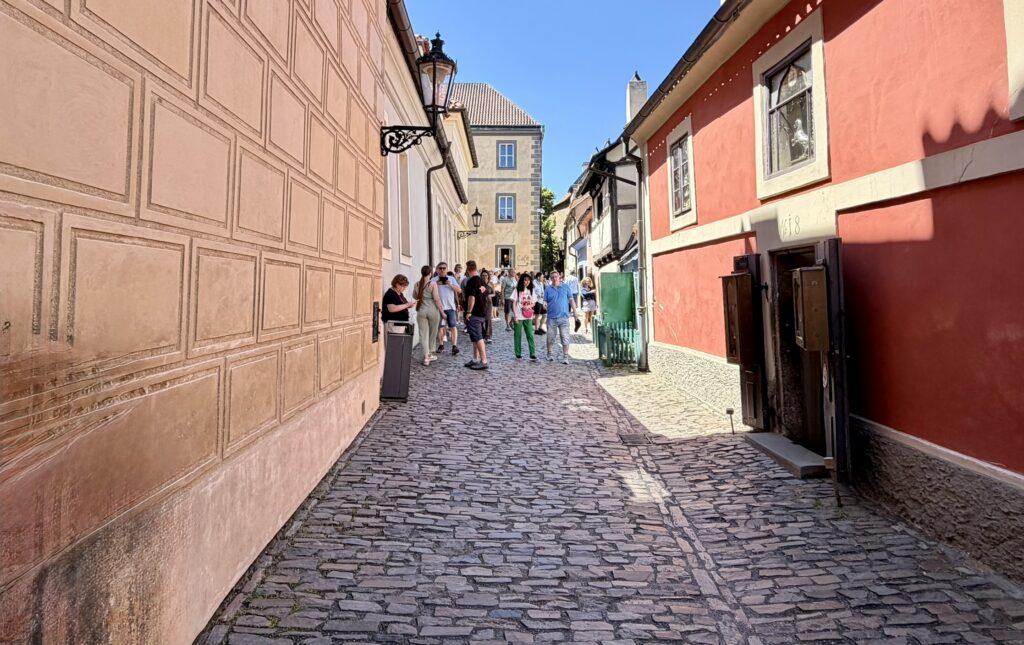
- Golden Lane
Prague Castle (area marked 1 on the map) – This historic castle complex and a UNESCO World Heritage Site, has served as a major center of political power since the 9th century. It was originally the seat of Bohemian dukes and kings and later became a residence of Holy Roman emperors. Since 1918, it has served as the official workplace of the President of the Czech Republic. The complex is also notable for housing the Bohemian Crown Jewels in a hidden chamber.
Visiting the Prague Castle involves a steady uphill walk and several flights of steps, as the complex sits on a hill overlooking Prague. After we reached the castle, we bought tickets for the Main circuit (450 CZK) and this included visits to Old Royal Palace, St. Vitus Cathedral, St. George‘s Basilica, and Golden Lane. We then had to buy a separate ticket to climb the St. Vitus Cathedral tower (200 CZK) which was totally worth it.
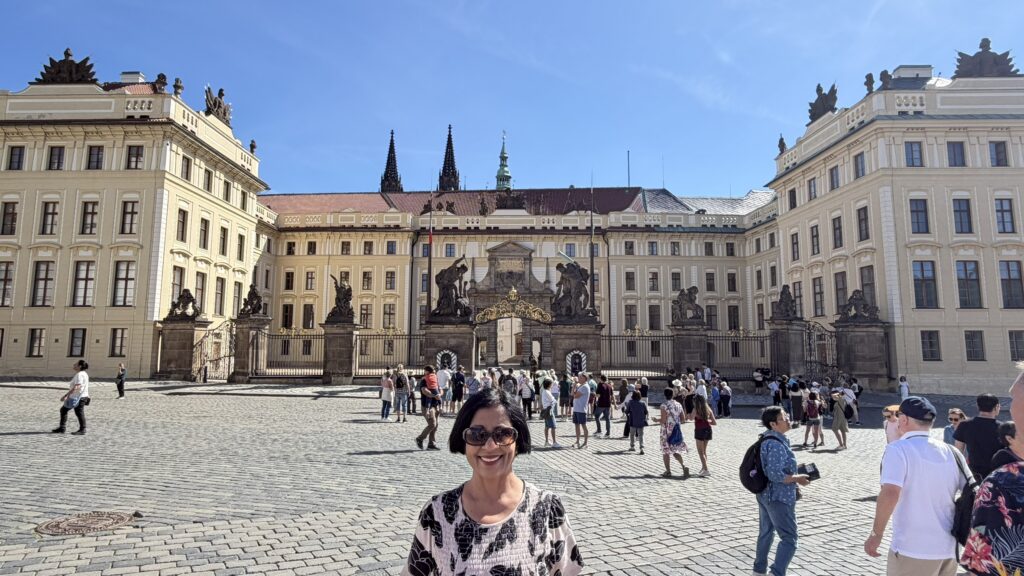
Prague Castle, First and Second Courtyards – The ceremonial Changing of the Guard including a fanfare and the flag ceremony happens daily at 12.00 noon in the First Courtyard of the Castle. The sentries at the gates of the medieval castle change on the hour from 7am – 8pm in the summer season and from 7am – 6pm in the winter season.
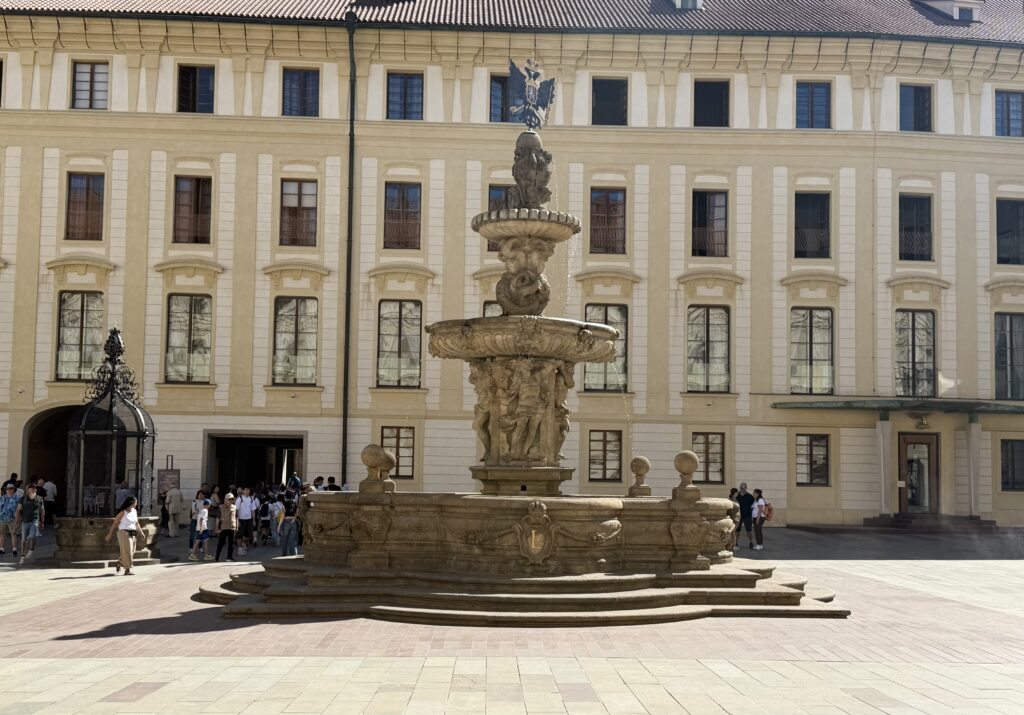
The huge Second Courtyard has the Kohl’s fountain embellished with lions’ heads and Roman gods.
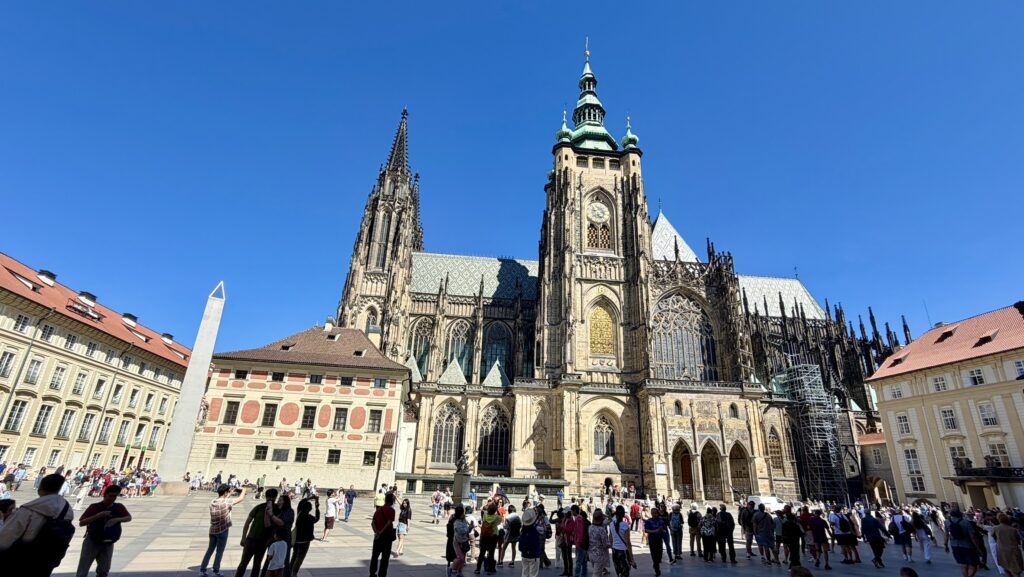
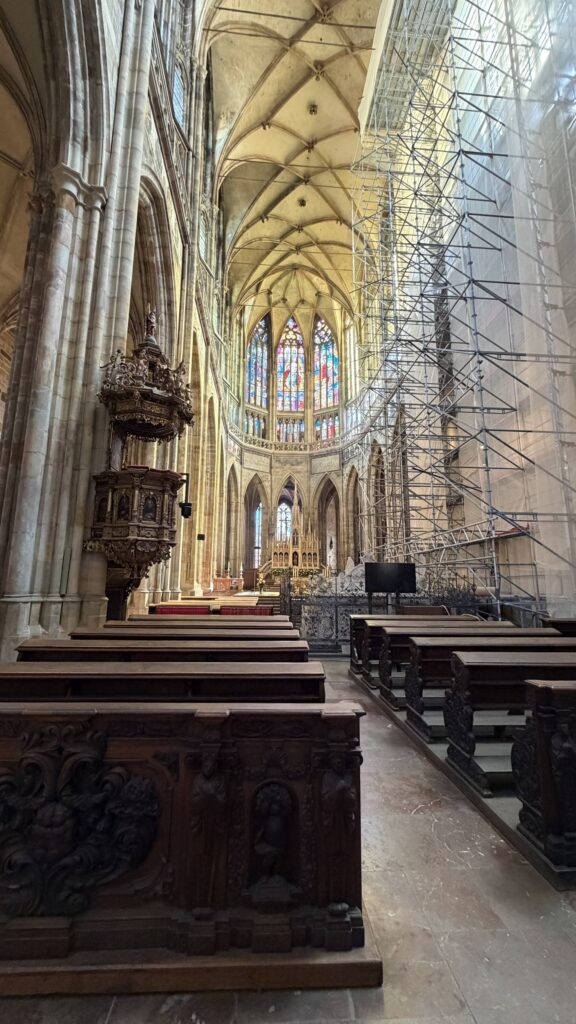
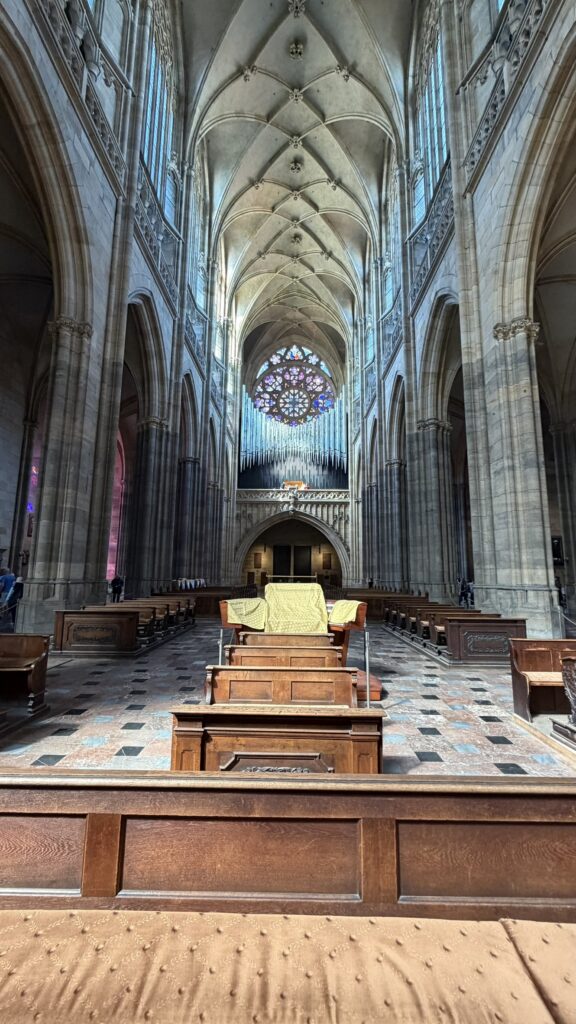
Prague Castle, St Vitus Cathedral – The huge 3rd courtyard is where you have St Vitus Cathedral, Old Royal Palace, and St George Cathedral. You will be staring at the huge St Vitus Cathedral facade as soon as you enter the courtyard. St. Vitus Cathedral is the largest church in the Czech Republic and a masterpiece of Gothic architecture.
The cathedral stands on a site that has been a place of worship for over a thousand years. Its origins date back to 930, when Wenceslaus I, Duke of Bohemia founded a Romanesque rotunda dedicated to St. Vitus. Over the centuries, the church was expanded and rebuilt, eventually becoming the magnificent Gothic cathedral seen today. The cathedral serves as the seat of the Archbishop of Prague and contains the tombs of numerous Bohemian kings and Holy Roman Emperors.
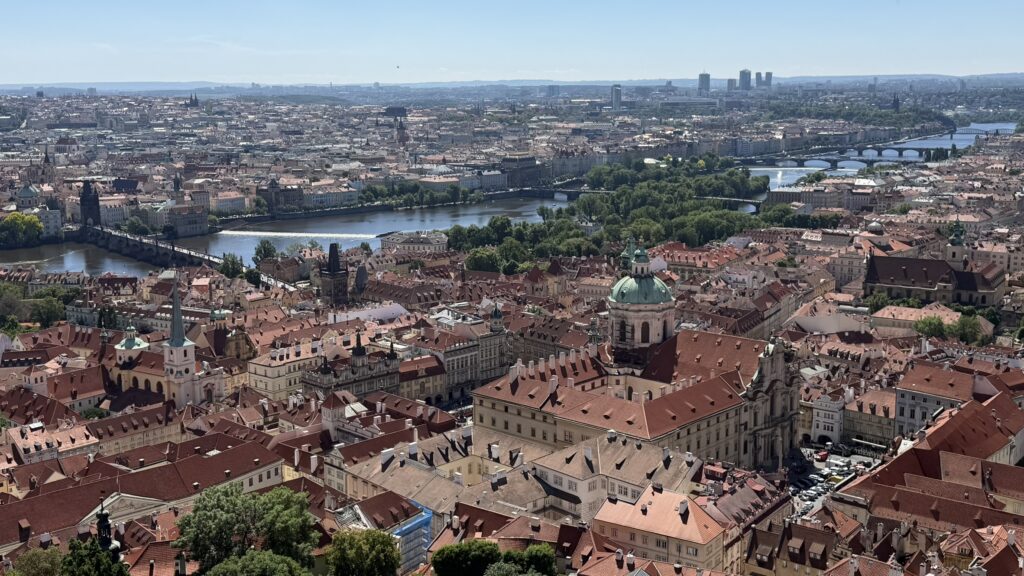
Prague Castle, St Vitus Cathedral Tower – The height of the beautiful Gothic tower is over 90 meters, and if you don’t mind climbing a winding staircase of 287 steps, you will be rewarded with a breathtaking, 360-degree view of Prague.
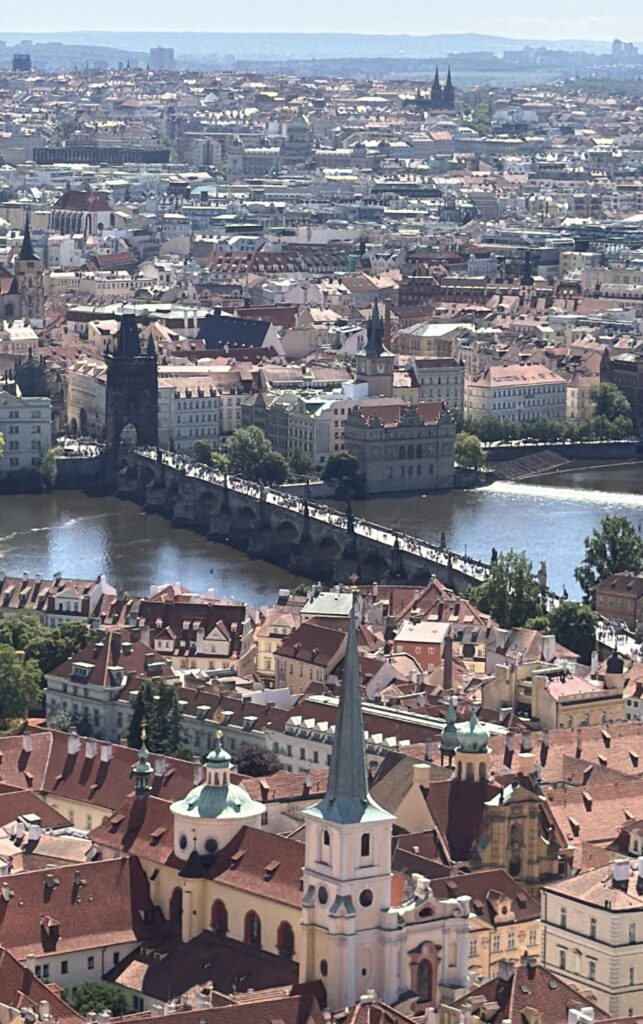
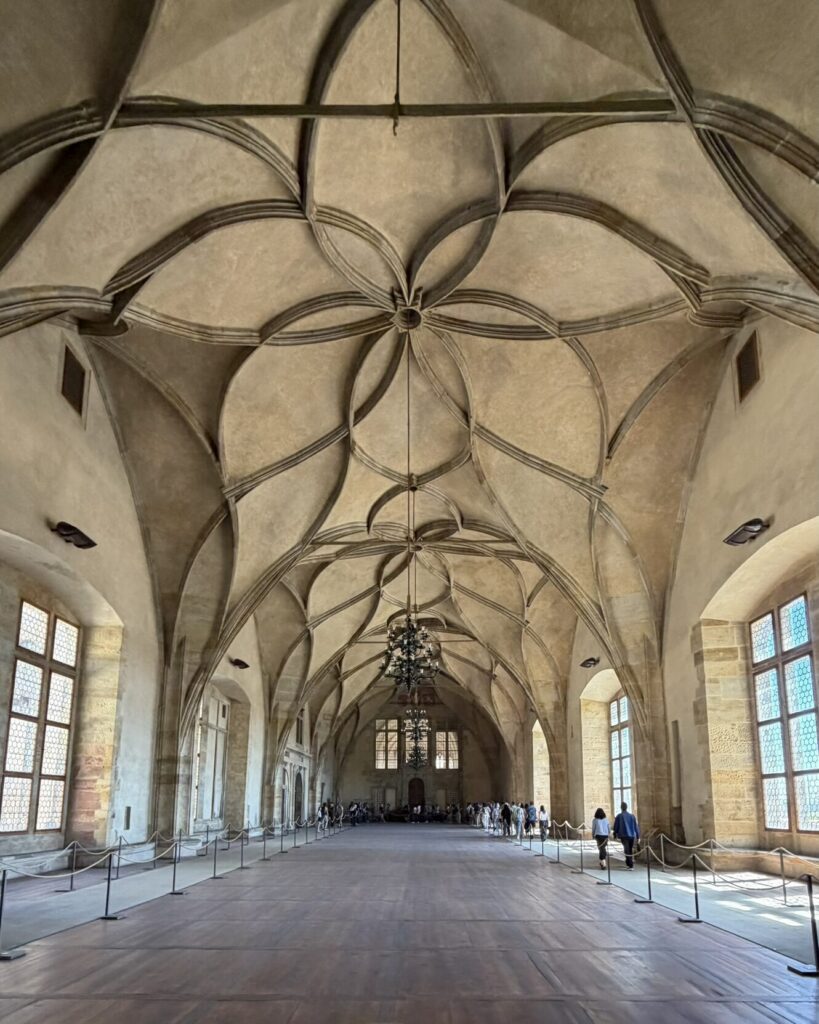
Prague Castle, Old Royal Palace – The history of the Old Royal Palace dates back to the 12th century.
- One of its most important spaces is the Vladislav Hall, which is used for major state ceremonies, including presidential inaugurations, and is considered the most important representative hall in the Czech Republic.
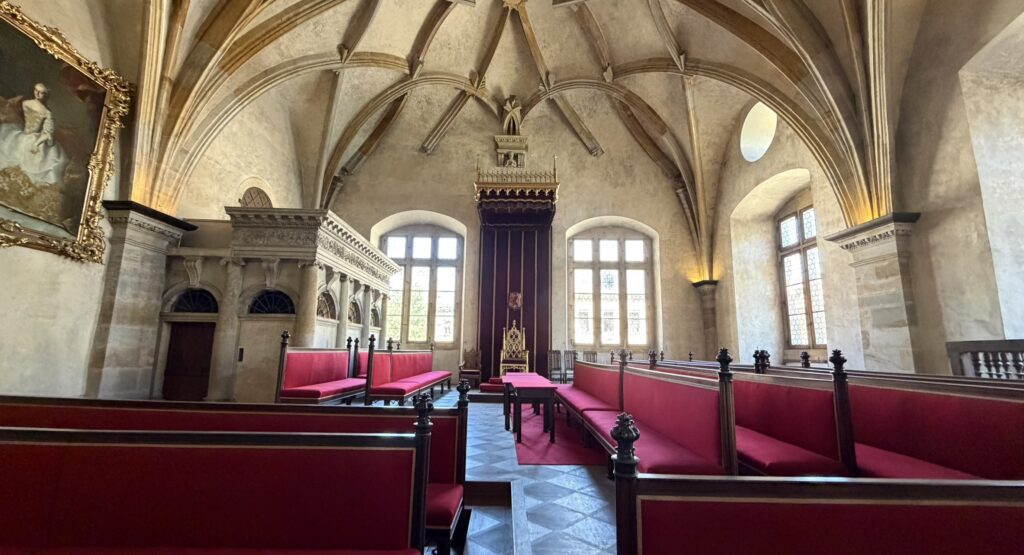
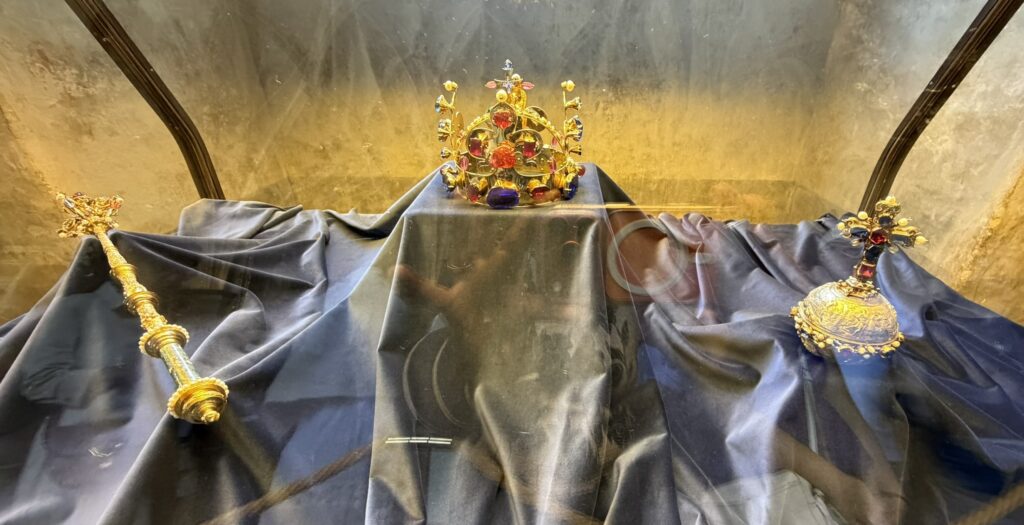
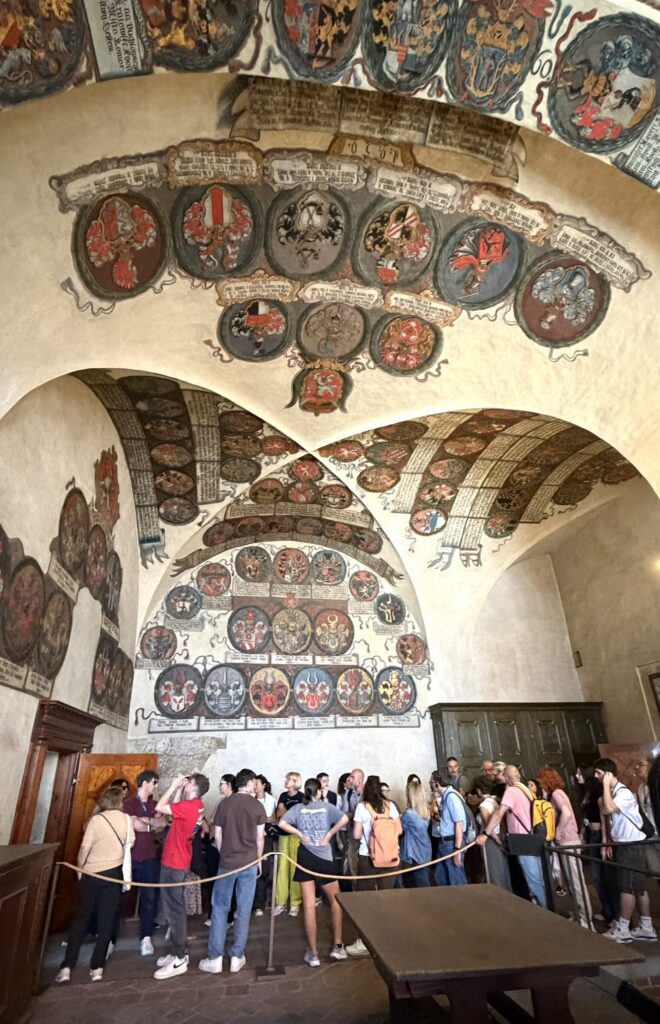
- The Diet Hall built in 1541, is located adjacent to Vladislav Hall. The diet hall was used to hold important political and judicial sessions. The throne in the room was for the ruler, the archbishop sat next to him and the upholstered benches were for the representatives. Copies of the crown jewels are displayed here.
- The Land Roll – are the official books of the court of the realm. It was the highest judicial authority with the power to decide on the questions of property of aristocracy, the royal towns, the church etc. This office held a record of who owned what for the entire country, and it actually burned down in 1541. On the walls are representation of what the land records looked like dating back to post 1541.
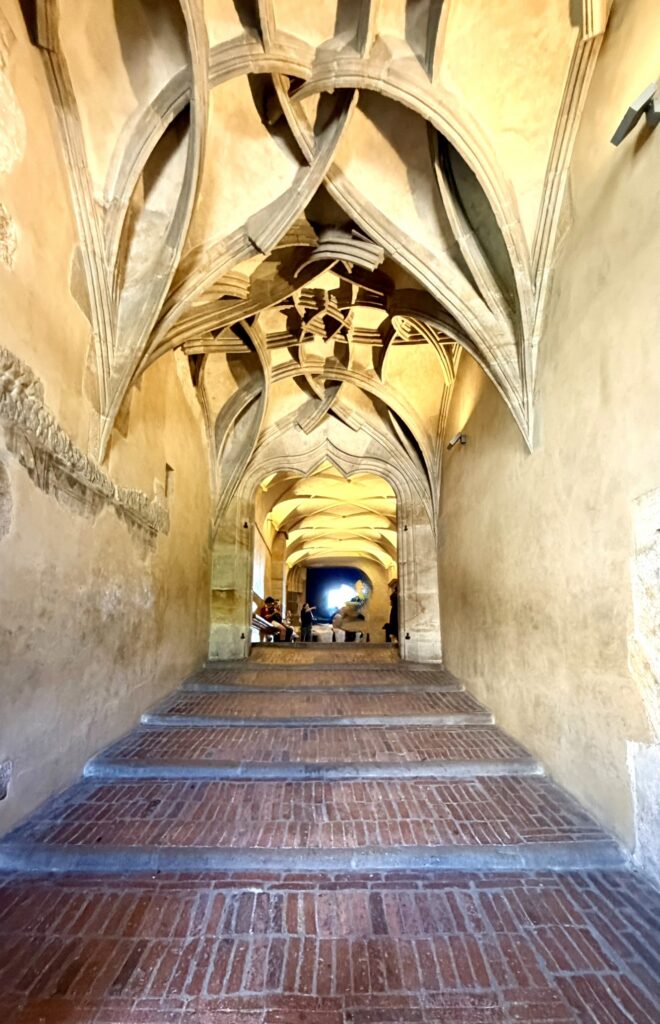
- Riders Staircase – Built around 1508, the staircase led to the Diet Hall. Its unusually wide and gently sloping design allowed knights and nobles to ride their horses directly into the palace for ceremonial events, tournaments, and official gatherings, reflecting the importance of the castle as the political center of the Bohemian Kingdom.
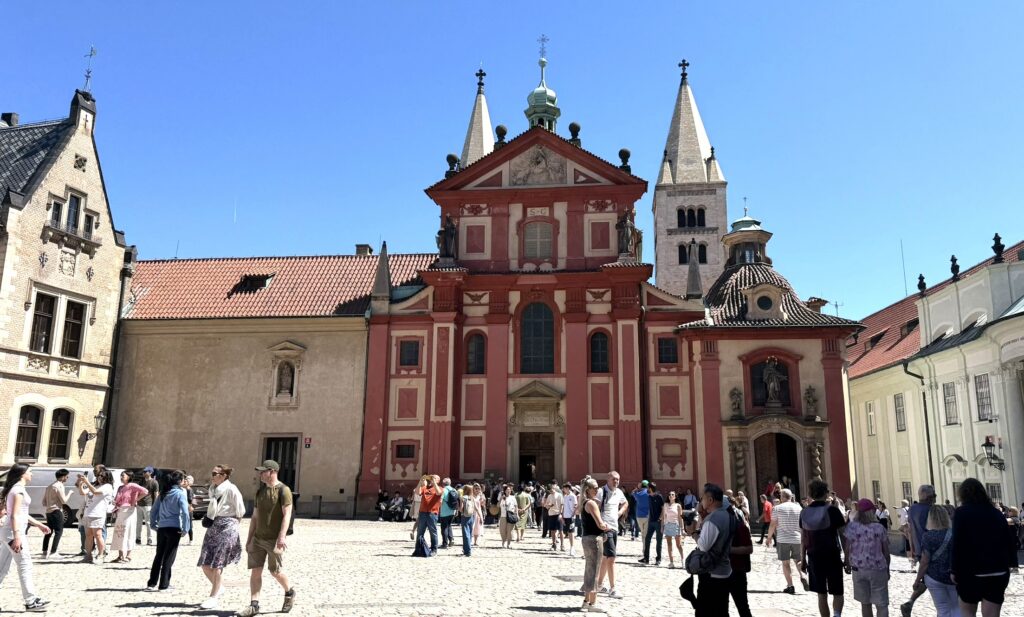
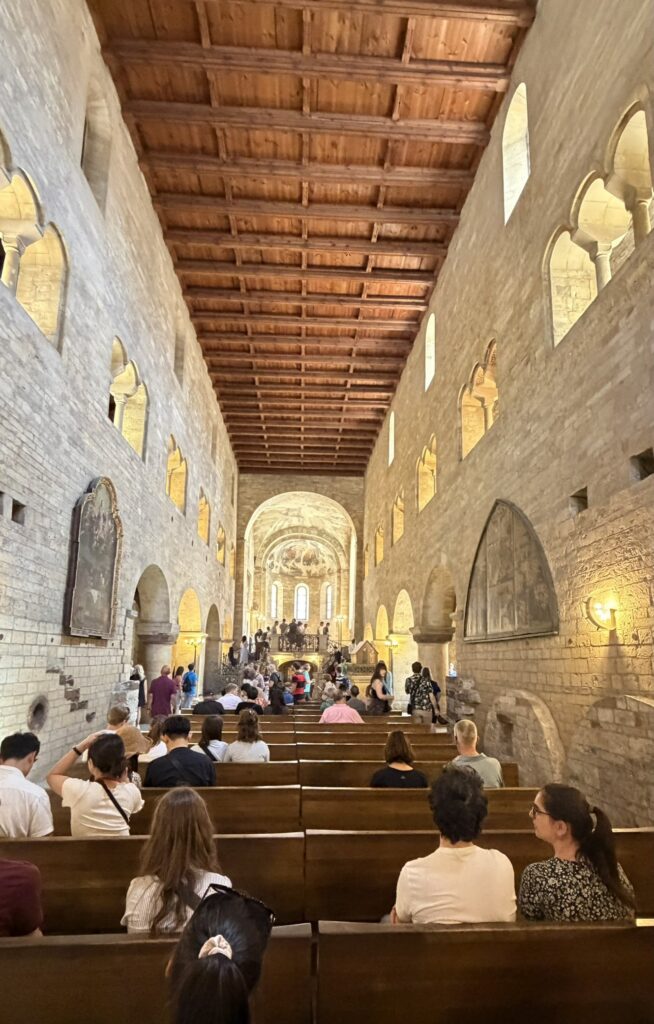
Prague Castle, St George Cathedral – Founded in 920 by Vratislaus I of Bohemia and consecrated in 921, it is one of the oldest churches in Prague and an outstanding example of Romanesque architecture. Although later renovations added Gothic and Baroque elements, the building has largely retained its Romanesque character, particularly its twin towers, known as Adam and Eve.
Prague Castle, Golden Lane – was originally built in the late 15th and early 16th centuries as part of the new northern fortifications of Prague Castle. The small houses built here were first occupied by castle guards and marksmen who were responsible for defending the castle walls. Over time, the lane became home to goldsmiths, craftsmen, servants, and other castle workers, which likely gave rise to the name Golden Lane.
Today, the restored houses function as small museums and exhibits, recreating the living and working conditions of former residents over the past 500 years. Some houses display period interiors, while others feature exhibits on traditional crafts, armor, and castle life, giving visitors a glimpse into the everyday history of Prague Castle.
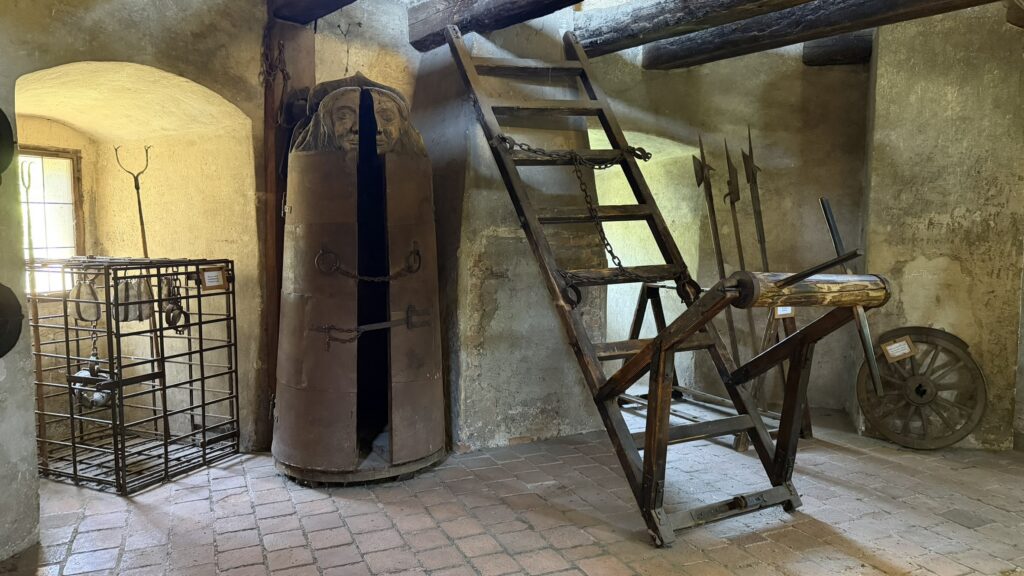
Prague Castle, Daliborka Tower – Located at the end of Golden Lane, this defensive tower was built in 1496 and was originally part of the castle’s northern fortifications. It later became a prison, initially reserved for members of the nobility but eventually used for prisoners of all social classes. At the base of the tower was a dungeon with thick walls where prisoners were lowered through an opening in the ceiling. Today, the tower contains historical displays related to the castle’s judicial and prison system, including replicas and examples of period restraint and torture devices, offering visitors insight into medieval justice and punishment practices.
————— Mala Strana —————
- Malostranské náměstí (Lesser Town Square)
- St Nicholas Church and Tower
- Lennon Wall
- Church of Our Lady Victorious and The Infant Jesus of Prague
- Charles Bridge
- Old Town Bridge Tower (Staroměstská Mostecká Věž)
- Mala Strana Bridge Tower
- Petřín Hill
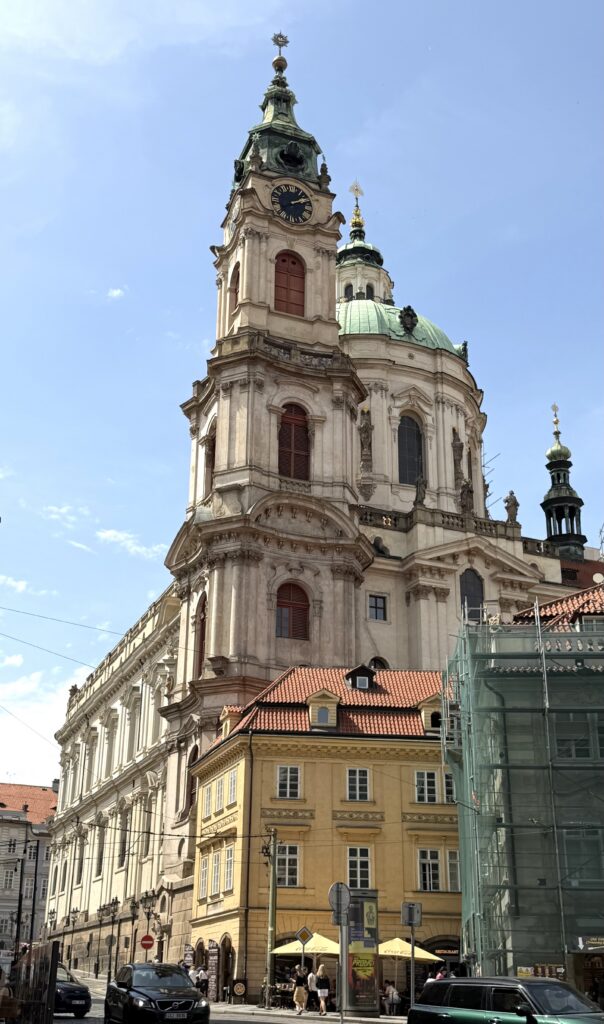
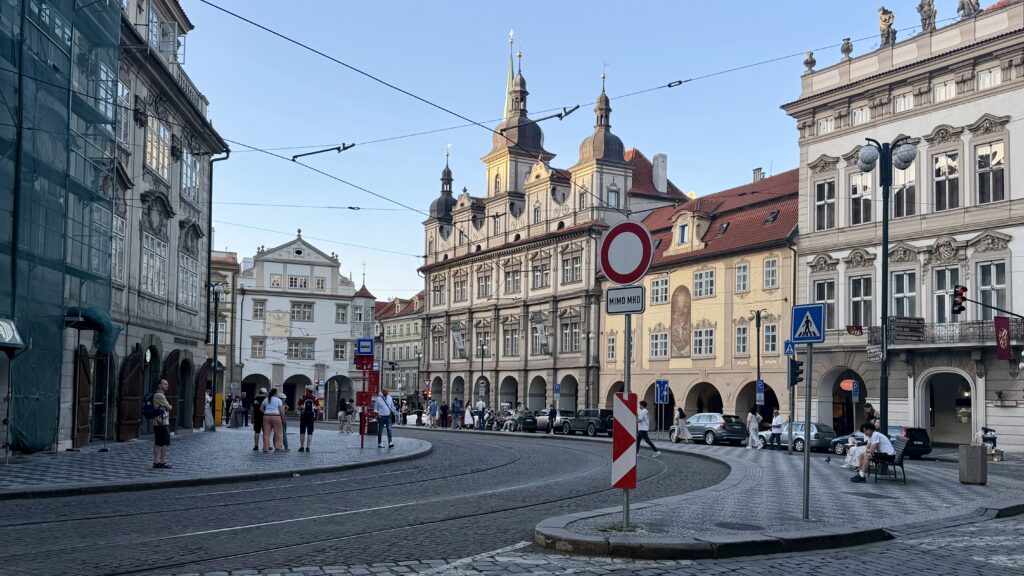
Malostranské náměstí (Lesser Town Square) – has been the heart of Malá Strana since the 10th century. Located on the main route between Charles Bridge and Prague Castle, it historically served as a marketplace, public gathering place, and civic center for the residents of the Lesser Town. Dominating the square is the magnificent St. Nicholas Church, one of the finest examples of Baroque architecture in Central Europe.
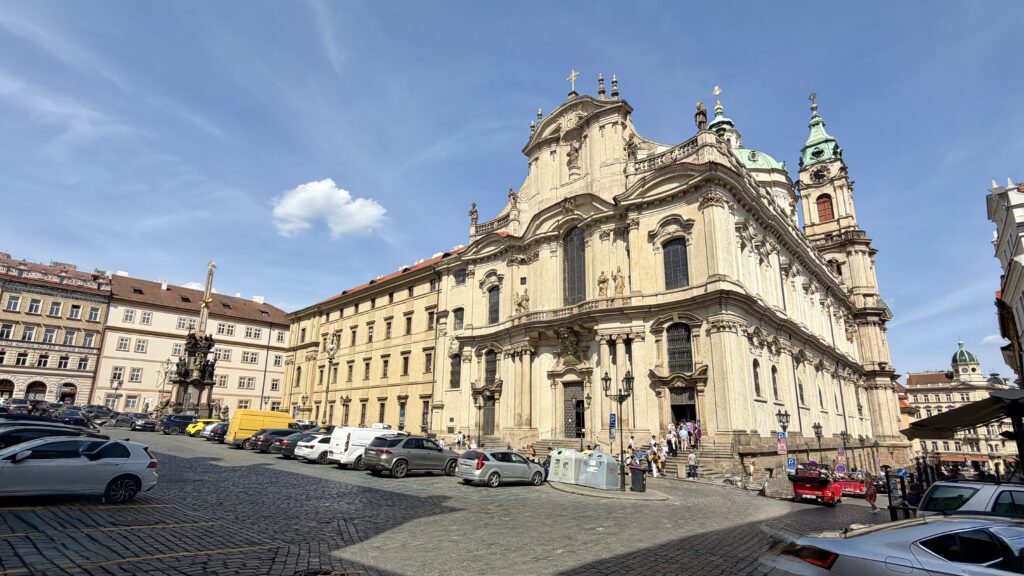
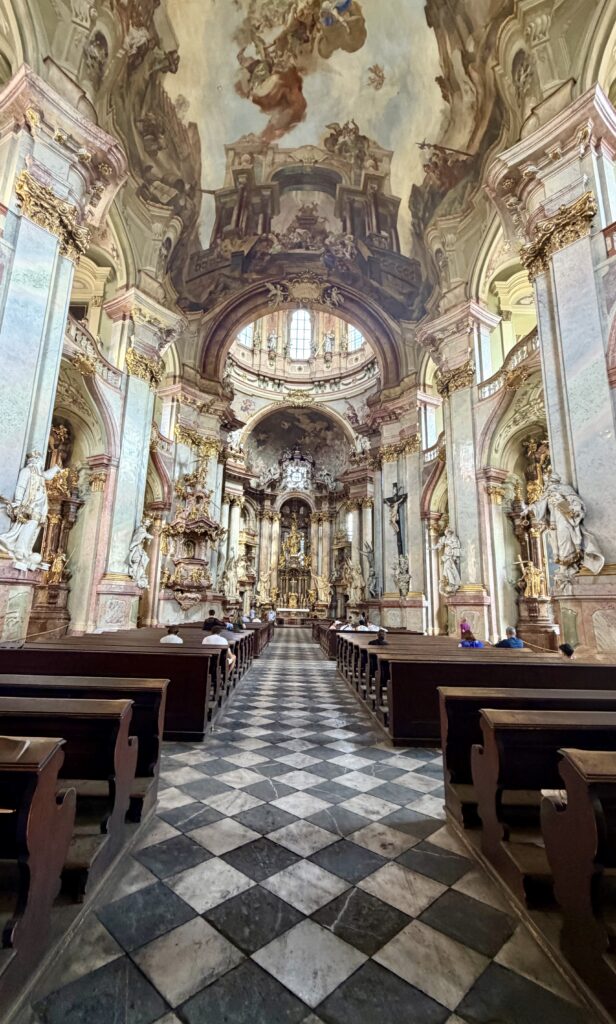
St Nicholas Church and Tower – the church was built between 1704 and 1755 on the site of an earlier 13th-century Gothic church dedicated to Saint Nicholas. The church is celebrated for its magnificent dome, soaring interior, elaborate frescoes, and richly decorated Baroque design. Its grand copper dome and bell tower dominate the skyline of Malá Strana and can be seen from many parts of Prague.
We climbed the bell tower of St. Nicholas Church, which rises 65 meters above the city. The climb involves 215 steps, but the effort is rewarded with excellent panoramic views of Malá Strana, Charles Bridge, and the surrounding rooftops of historic Prague.
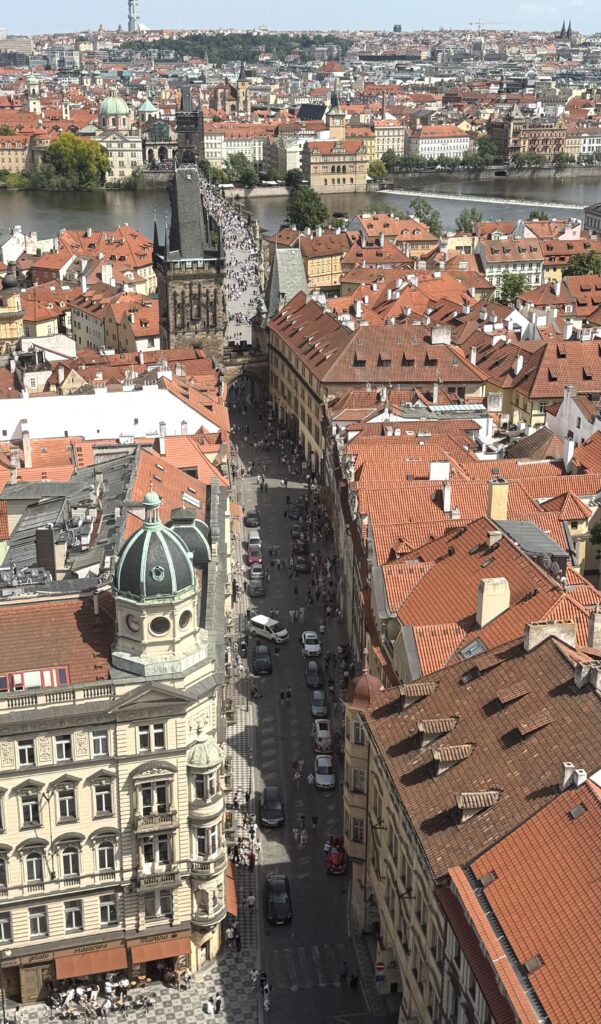
In the lower half of the square is a major Tram stop, from which passengers can travel in one direction to Prague Castle, and in the other across the Vltava River to the Old Town. The square is lined with elegant Renaissance and Baroque buildings, many of which once belonged to nobles who lived close to the seat of power at Prague Castle. Today, these buildings house cafés, restaurants, shops, and embassies, giving the area a lively yet historic atmosphere.
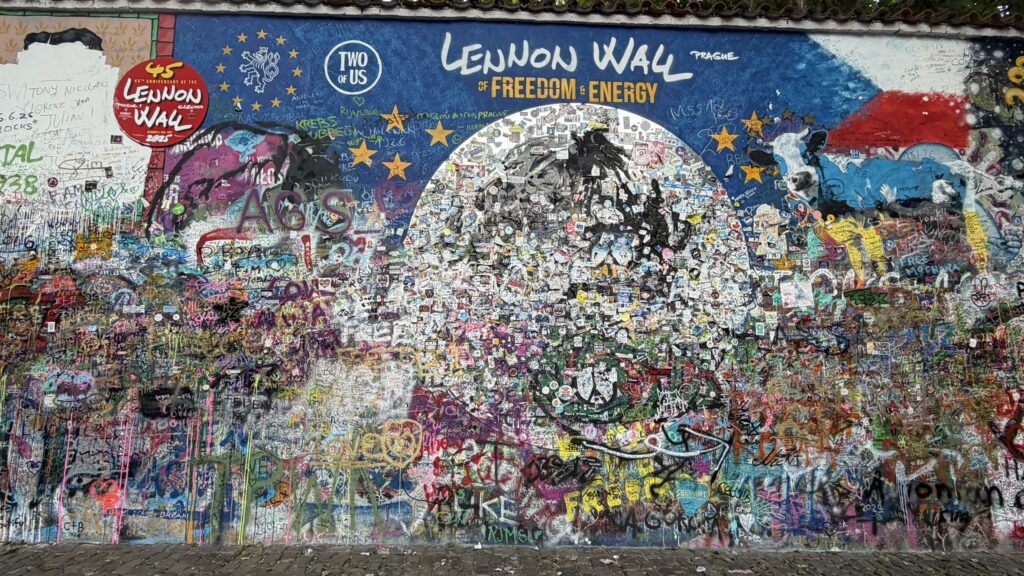
Lennon Wall – is located in Malá Strana near Charles Bridge. Following the murder of John Lennon in 1980, an unknown artist painted a mural of Lennon on the wall. Over time, it became covered with messages of peace, freedom, and hope, evolving into a powerful symbol of free expression during the communist era in Czechoslovakia. Today, the wall in addition to featuring artwork inspired by John Lennon and themes of peace, also reflects contemporary social and global issues. Following renovations in 2019, the wall became a regulated public art space, with designated areas where visitors can leave messages and artwork.
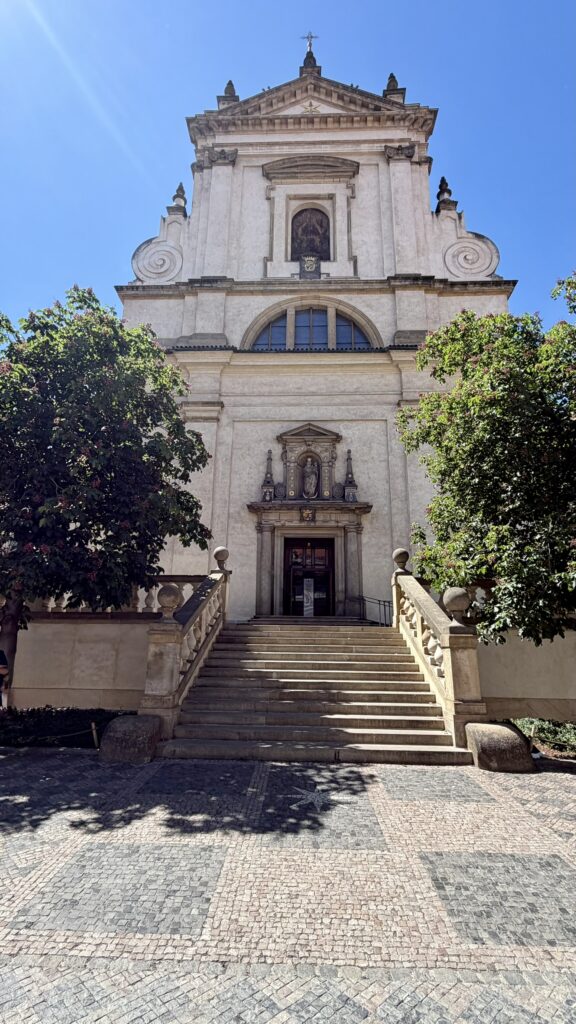
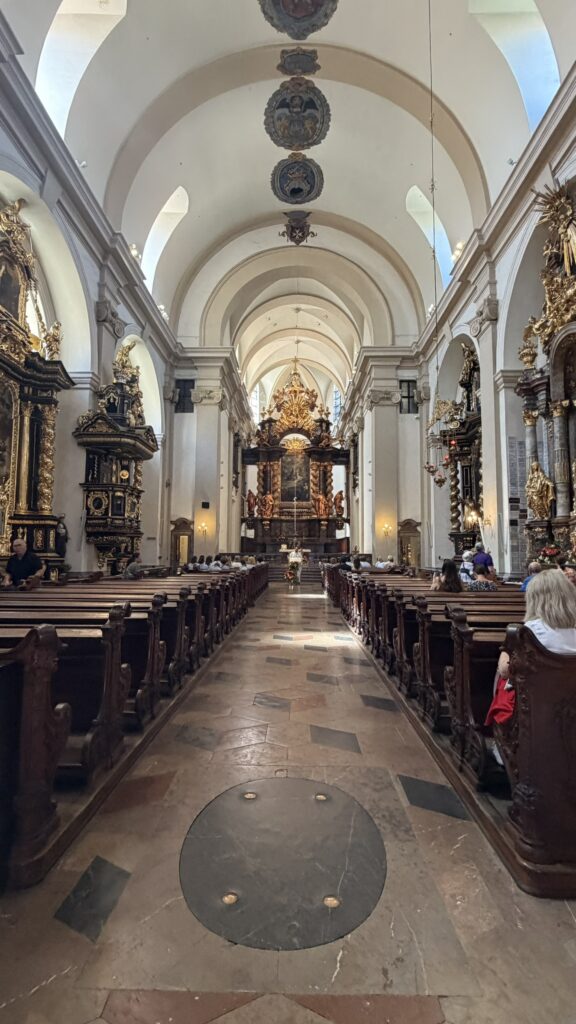
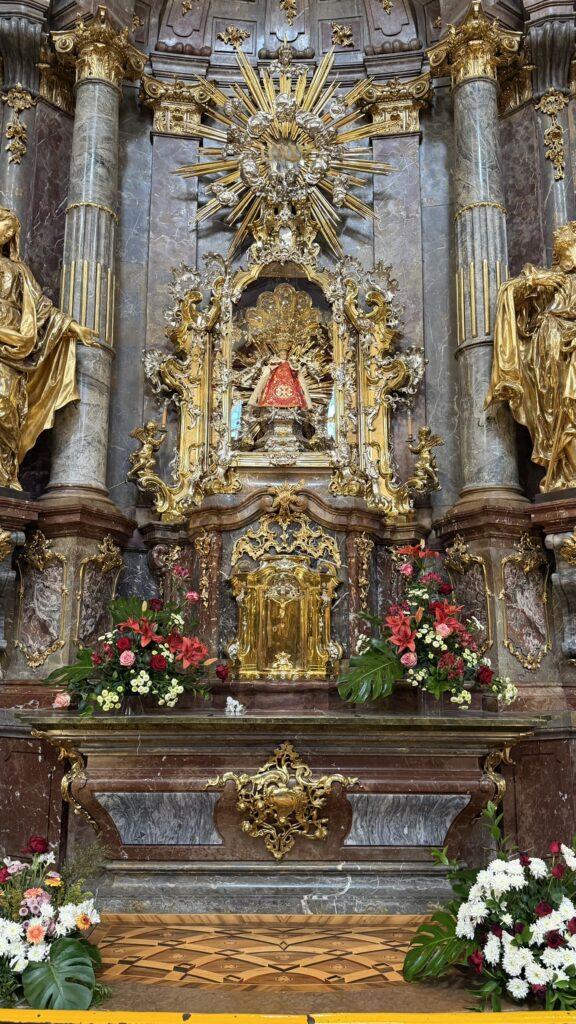
Church of Our Lady Victorious and The Infant Jesus of Prague – is best known for housing the famous statue of the Infant Jesus of Prague, a 16th-century Spanish devotional figure of the Child Jesus holding a globus cruciger.
The statue was donated in 1628 by Polyxena of Lobkowicz and became an important object of Catholic devotion. Over time, it gained international significance, receiving papal recognition and coronations, and attracting pilgrims from around the world. Architecturally, the church developed in the 17th century with Baroque additions, including its façade and tower. Despite periods of neglect—especially after the monastery was abolished in the 18th century—the shrine was restored in the 19th and 20th centuries and remains an active pilgrimage site today.
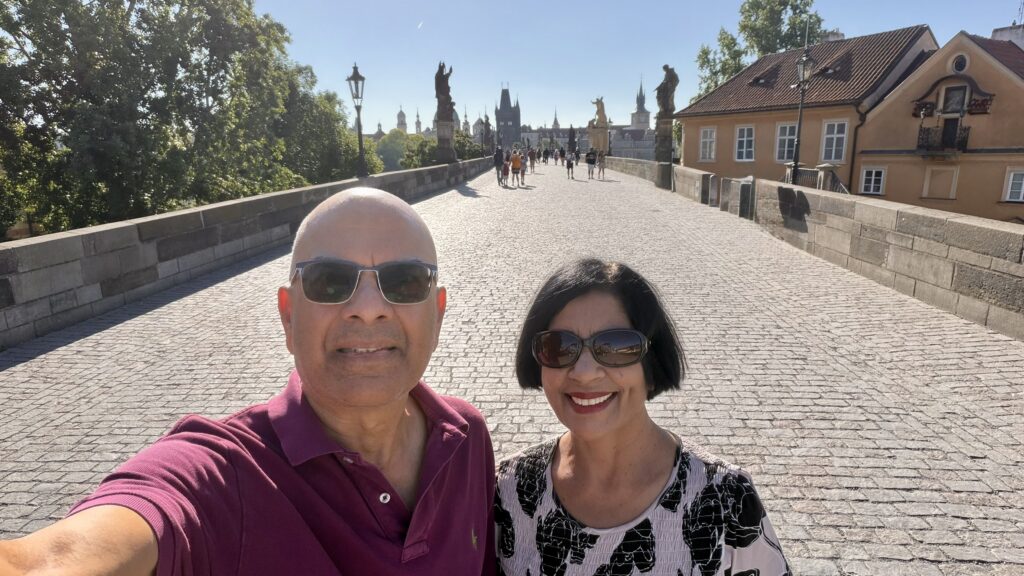
Charles Bridge – is a medieval stone bridge in Prague, built under Emperor Charles IV, Holy Roman Emperor between 1357 and the early 1400s. It crosses the Vltava River and for centuries served as the only connection between Old Town and Malá Strana. Its most distinctive feature is the row of 30 Baroque statues added mainly between the 17th and 18th centuries, depicting saints and religious figures. Today, the statues are replicas, while the originals are preserved in museums.
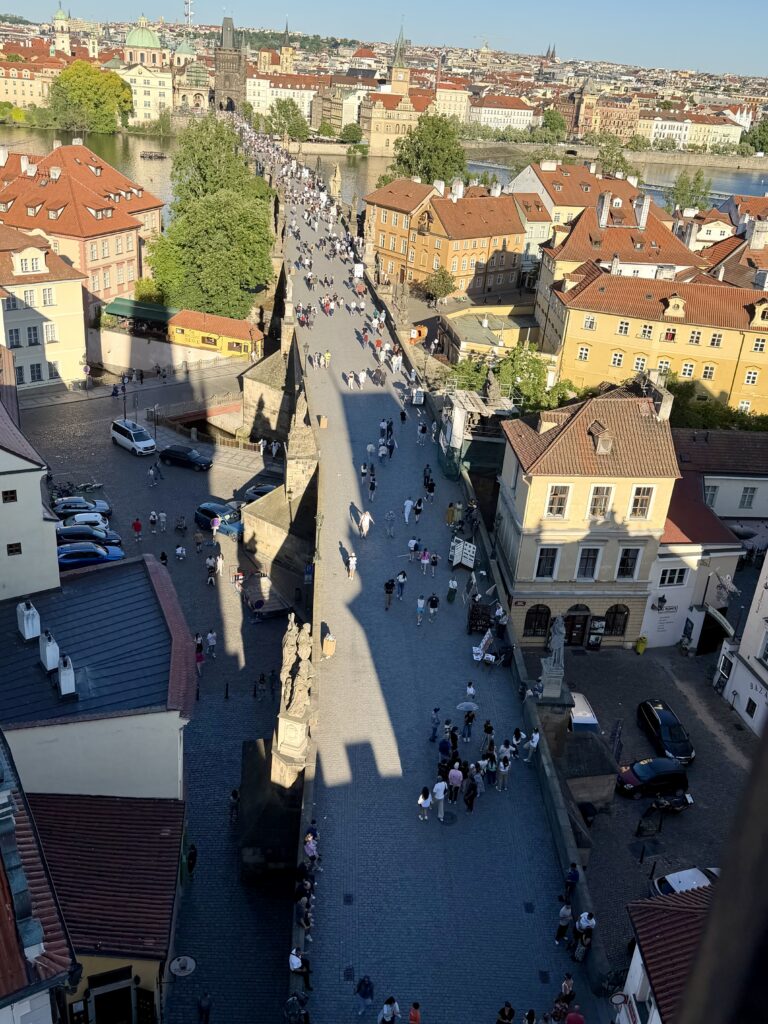
Since the late 1970s, it has been pedestrian-only and remains one of Prague’s most visited landmarks. A stroll across the 516m bridge is one of the free things to do here. We did the strolling before 9 am in the morning as the bridge gets quite crowded during the day and remains so way after 9 pm.
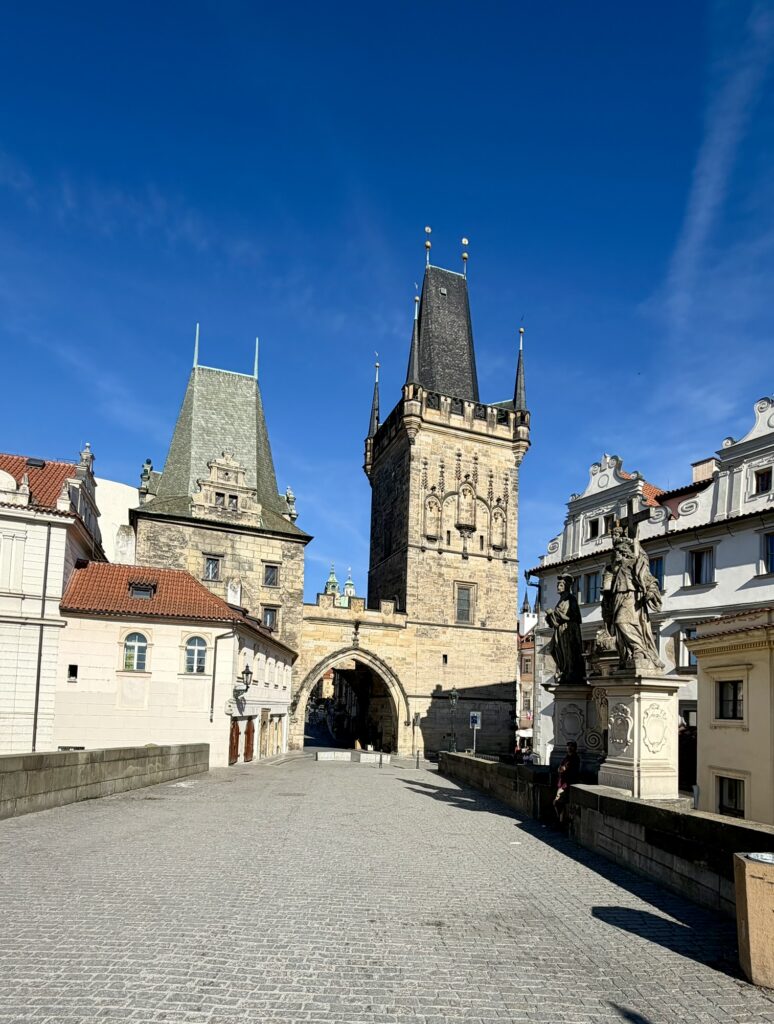
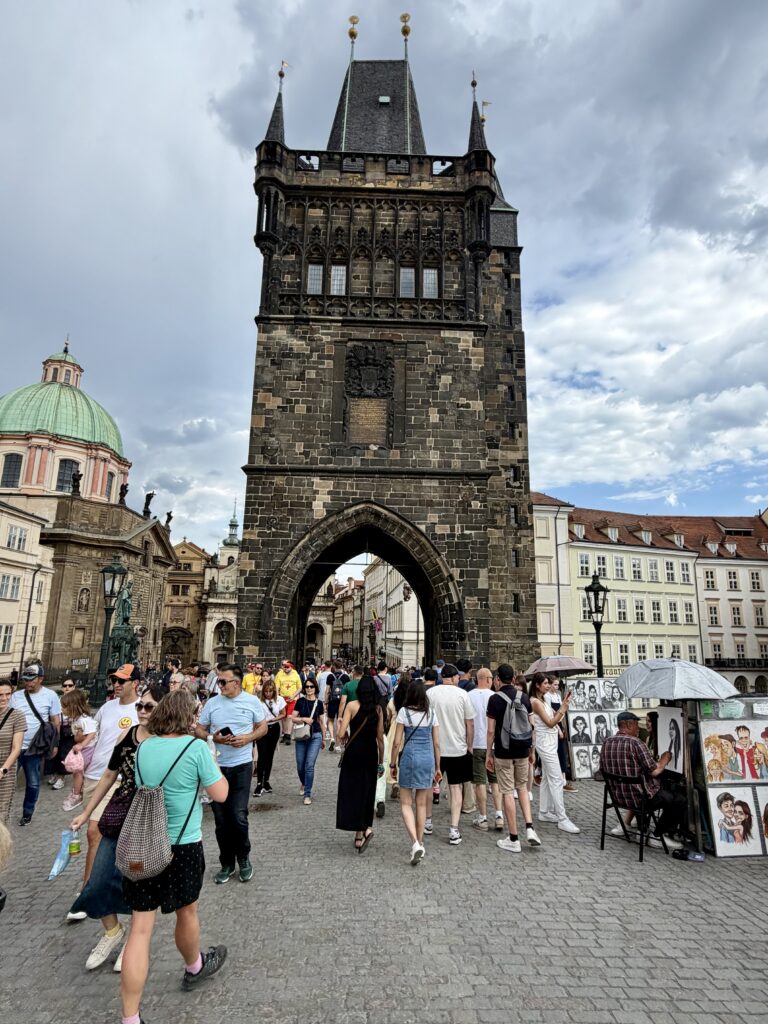
Old Town Bridge Tower and Mala Strana Bridge Tower – The Old Town Bridge Tower, constructed in 1357, stands at the eastern end of Charles Bridge and serves as the historic gateway to Old Town. On the western end, the Malá Strana Bridge Tower marks the entrance to Malá Strana. Together, these towers frame one of Prague’s most iconic landmarks and were originally built as part of the city’s medieval defensive system.
For a small fee, you can climb the top of the Mala Strana Bridge Tower, which we did and got a great view of the Charles Bridge.
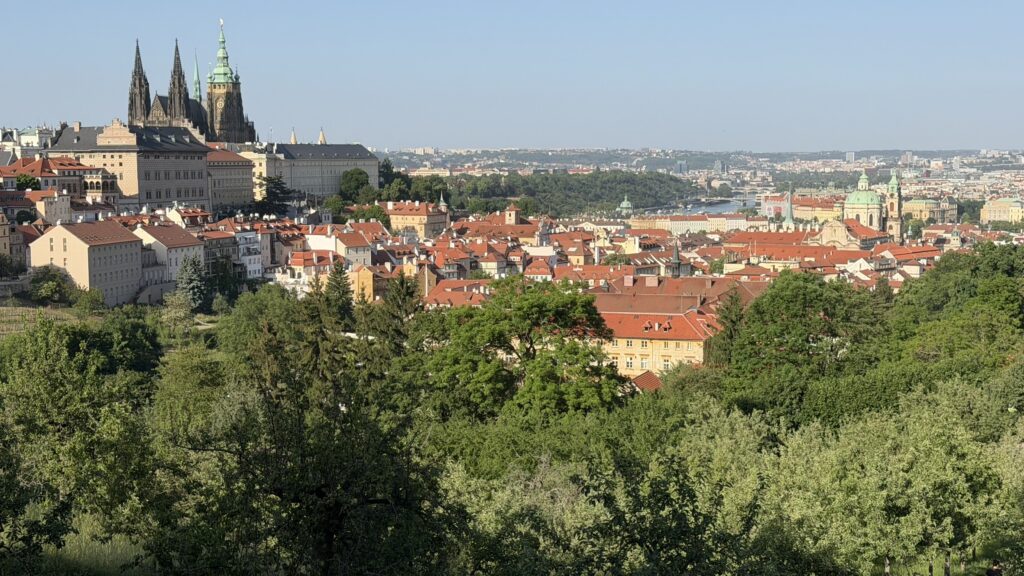
Petřín Hill – is a prominent hill overlooking Prague, rising about 130 meters above the Vltava River. Covered largely by parks and gardens, it is a popular recreational area for both locals and visitors and offers some of the best panoramic views of the city.
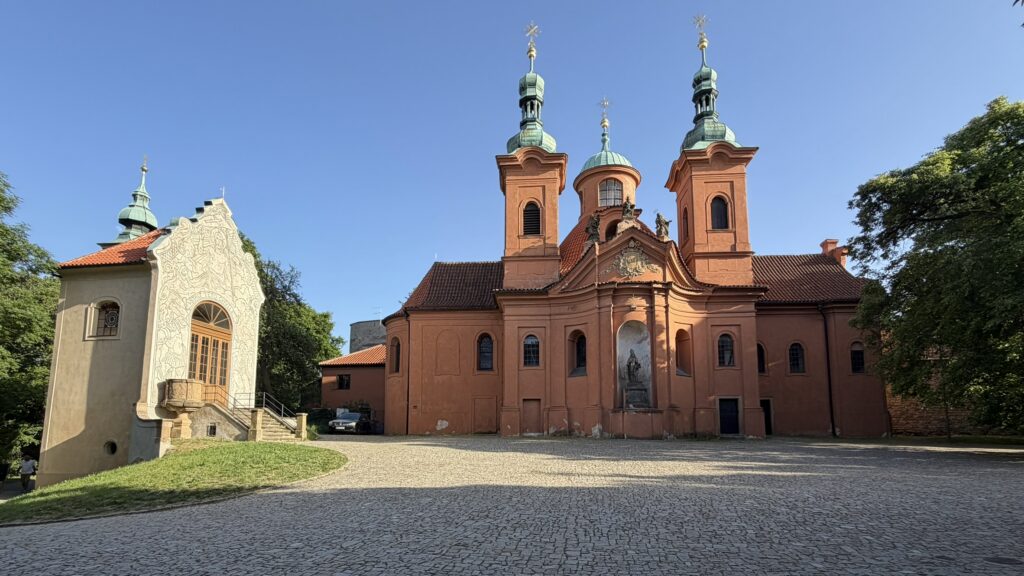
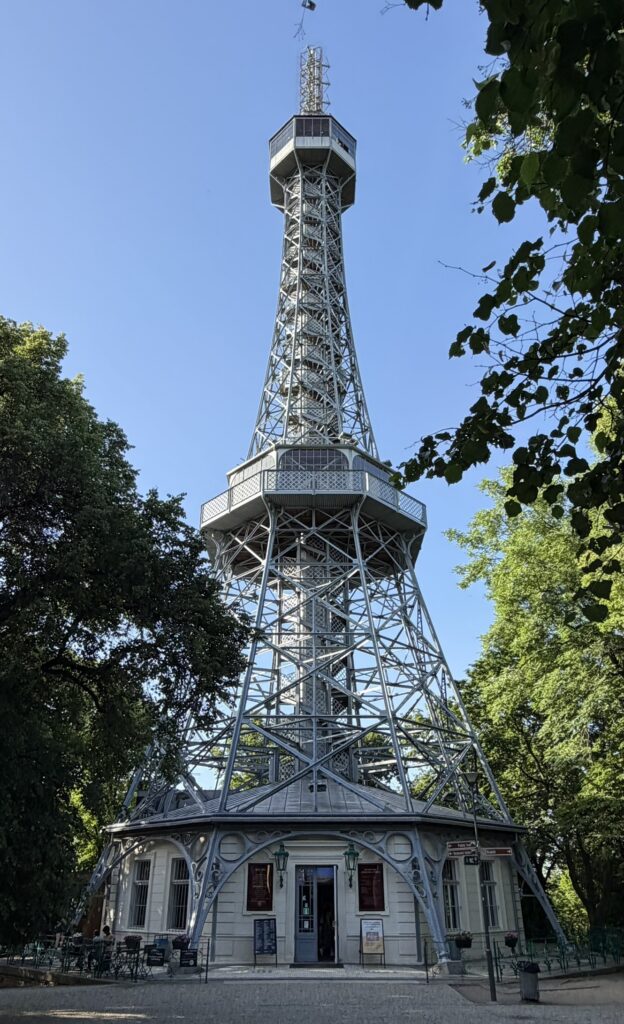
We hiked to the top of Petřín Hill, a climb that took about 40 minutes. The route consisted of a combination of uphill paths and stairways, but the effort was rewarded with spectacular views of Prague along the way. At the summit, visitors can explore attractions such as the Petřín Lookout Tower, the Rose Garden, the Mirror Maze, and St. Lawrence Church. For those who prefer not to walk, the summit can also be reached via the Petřín Funicular from Malá Strana.
————— Old Town —————
- Křižovnické Square or Knights of the Cross Square)
- Socha Karla IV. (Statue of Charles IV)
- St. Francis Of Assisi Church
- Church of St. Savior
- Mariánské Náměstí or Virgin Mary Square
- New City Hall
- Old Town Square
- St. Nicholas Church
- Church of Our Lady Before Tyn
- Old Town Hall and Astronomical Clock
- Malé Náměstí (Little Square)
- Church of St Giles
- Hanging statue of Sigmond Freud
- The House at Black Madonna
- Rudolfinum (Czech Philharmonic)
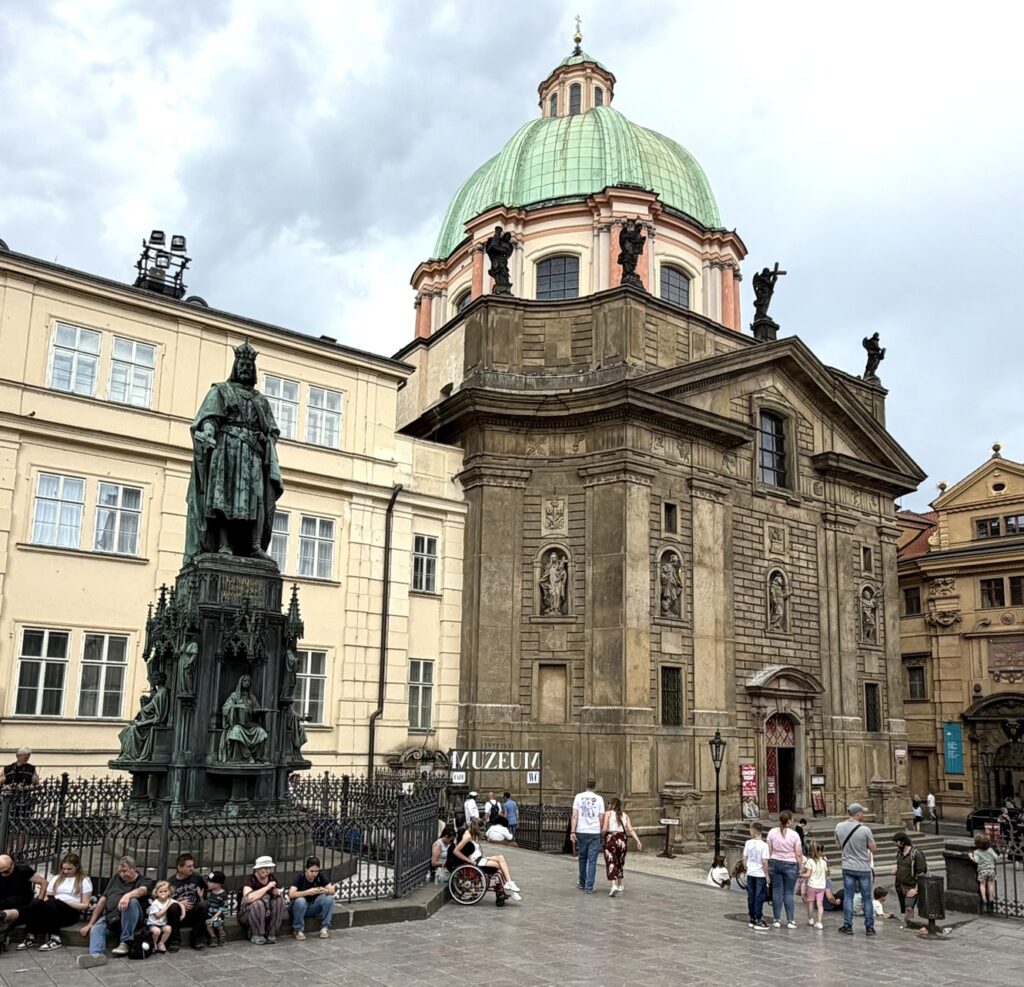
Křižovnické Square or Knights of the Cross Square – is located immediately beyond the Old Town Bridge Tower at the eastern end of Charles Bridge, marking the entrance to Old Town. This small but important square serves as a gateway between the bridge and Prague’s historic core and is a convenient starting point for exploring the many historic landmarks of Old Town.
- Socha Karla IV. (Statue of Charles IV) stands in the square. It depicts Charles IV, Holy Roman Emperor, who founded Charles Bridge and played a major role in establishing medieval Prague as an important European capital.
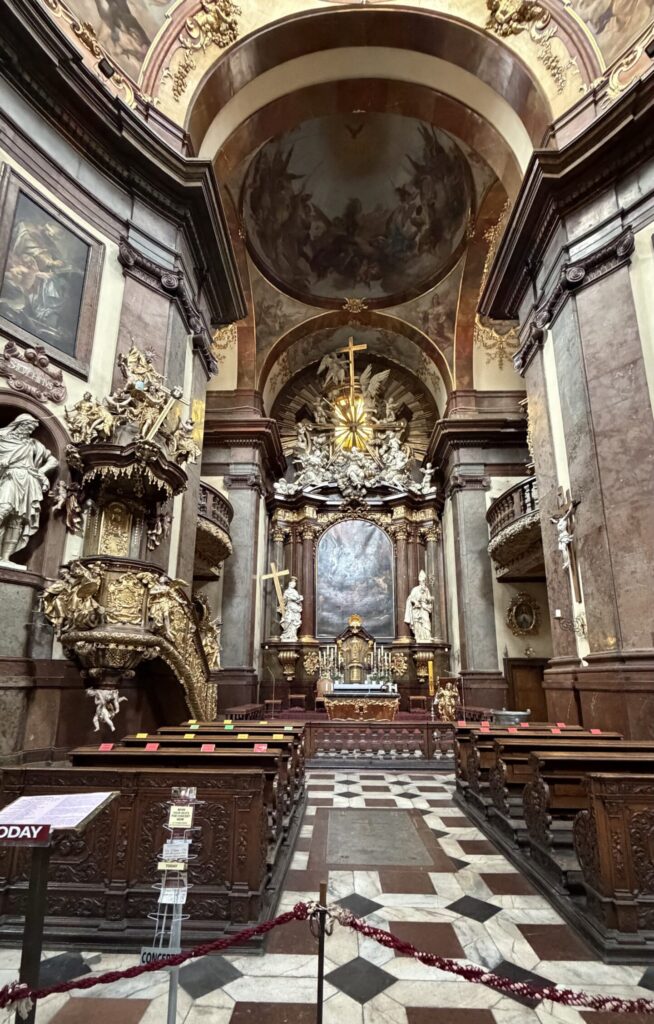
- St. Francis Of Assisi Church – is also located in the square with its prominent dome clearly visible from the Vltava River. The current building was constructed between 1679 and 1688, designed in the Baroque style, replacing an earlier Gothic church whose remains still lie beneath the structure. Today, St. Francis Church is used for services and classical music concerts, making it both a religious site and a cultural venue in the heart of Prague.
Church of St. Savior – This church is located on one side of the Křižovnické Square and was built on the foundations of an earlier Gothic church linked to the Dominican Order. It was undergoing some renovations at the time of our visit and we could not get a good view of the facade.
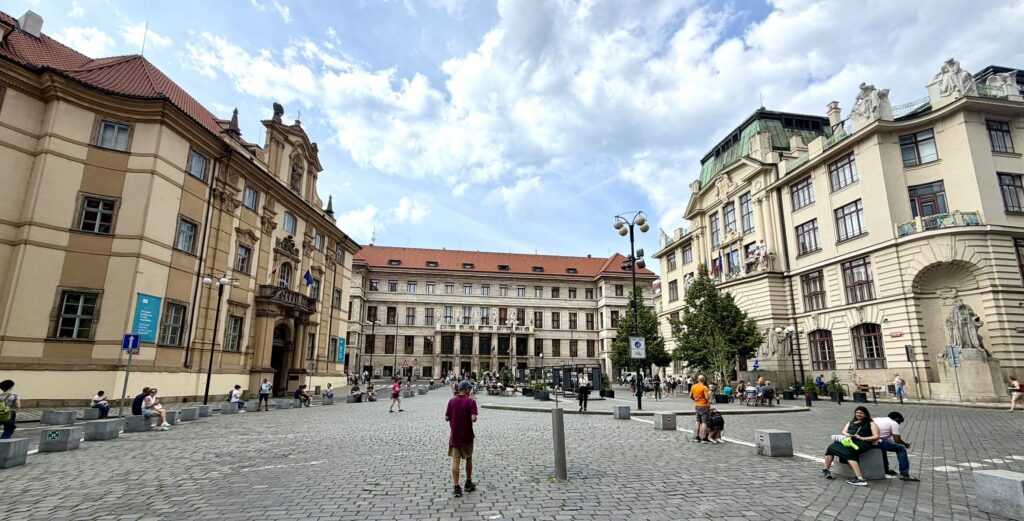
Mariánské Náměstí or Virgin Mary Square – lies between Křižovnické Square and Old Town Square. As you walk from Charles Bridge toward the heart of the Old Town, this attractive square is one of the first open spaces you encounter. Although often overlooked by visitors heading to Old Town Square, this square is a pleasant stop. The square is bordered by several important civic buildings – New City Hall, Clementinum, and Municipal Public Library.
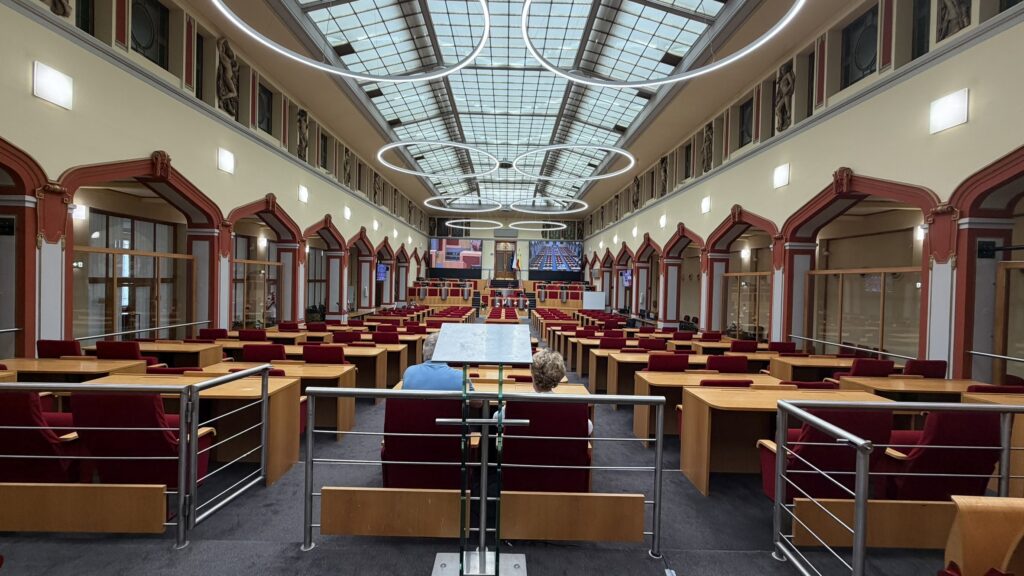
- New City Hall – The square is dominated on one side by the New City Hall which serves as the seat of Prague’s city administration. Visitors are free to enter the building and explore its interiors, including ceremonial halls, and courtyards.
- Klementinum & Municipal Library – Klementinum is a historic complex of buildings which houses the National Library of the Czech Republic. The Municipal Library is also located on Mariánské Náměstí, where you’ll find the famous Idiom installation (known as the book tower) in the foyer. You have to pay to enter the library buildings.
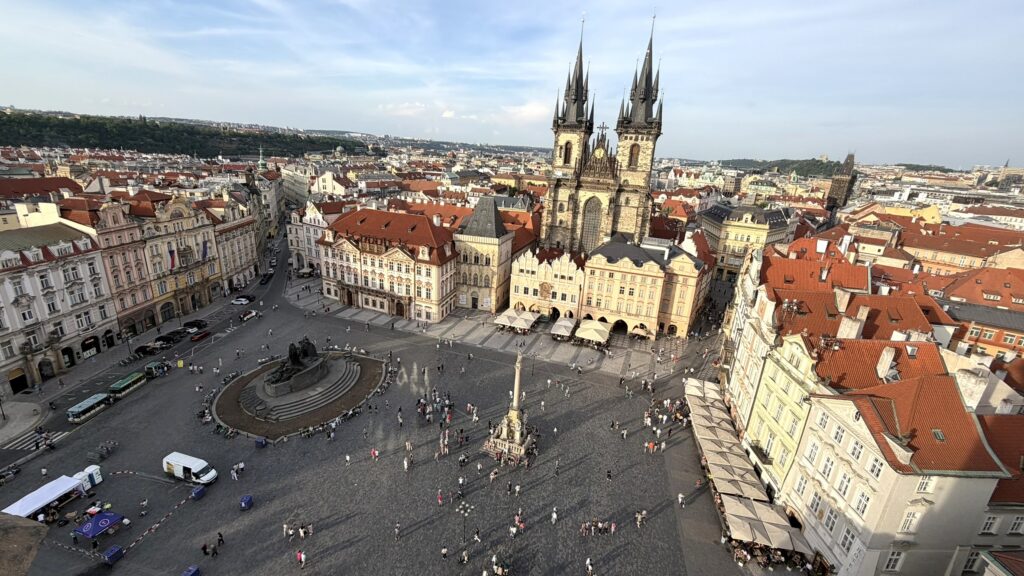
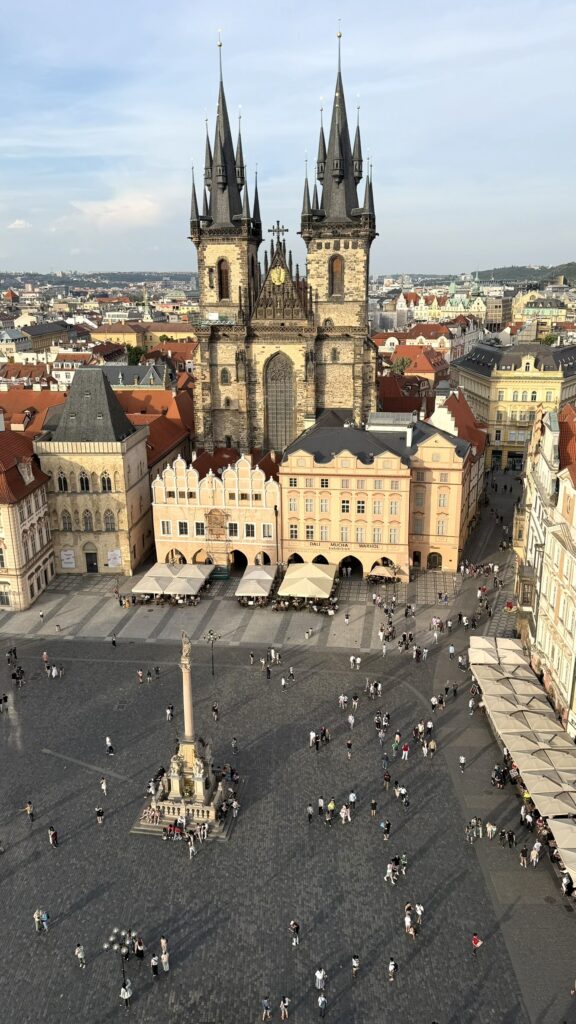
Old Town Square has been the heart of Prague since the 10th century and, despite the city’s long history of wars and invasions, has remained remarkably well preserved. Surrounded by a mix of Gothic, Renaissance, Baroque, and Rococo architecture, the square is one of the best places to appreciate Prague’s rich architectural heritage. Visitors can explore the historic buildings surrounding the square and climb the tower of Old Town Hall for spectacular views of the Old Town and the bustling square below.
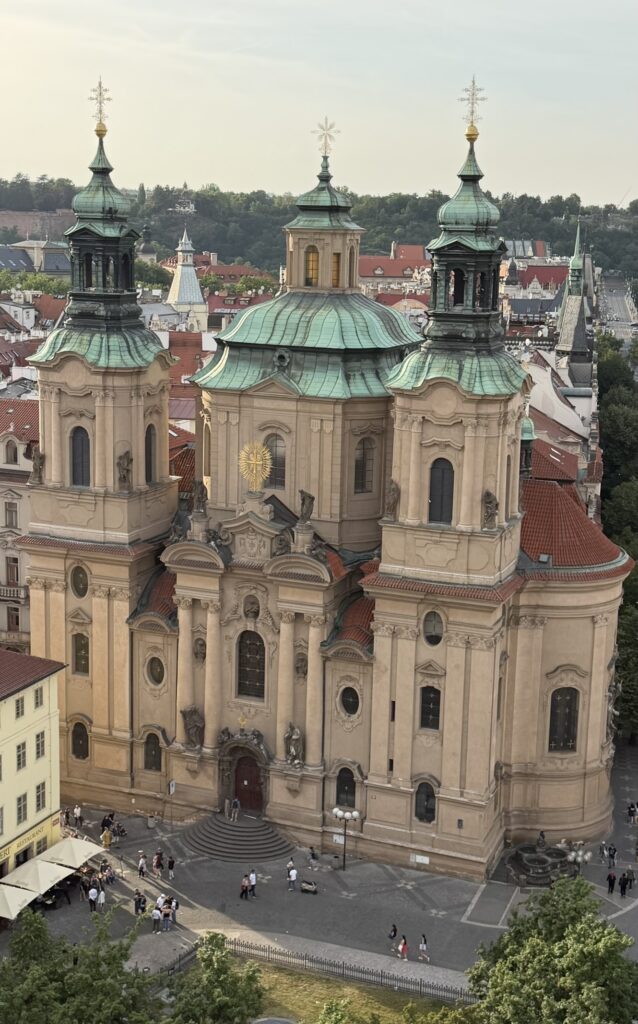
- St. Nicholas Church – this striking Baroque church is located in one corner of the Old Town Square. Built between 1732 and 1737 on the site of an earlier 13th-century Gothic church, it has an impressive exterior and interior. During the Prague Uprising in 1945, the church played an important role as a concealed broadcasting location for Radio Prague when the main radio building came under attack.
- Old Town Hall Tower has one of the best viewpoints in Prague. Part of the historic Old Town Hall, the tower rises above Old Town Square and offers panoramic views of the square, the red-tiled rooftops of the Old Town, and many of Prague’s iconic landmarks. Visitors can reach the observation deck by elevator or stairs. The tower is also home to the famous Prague Astronomical Clock, one of the oldest working astronomical clocks in the world.
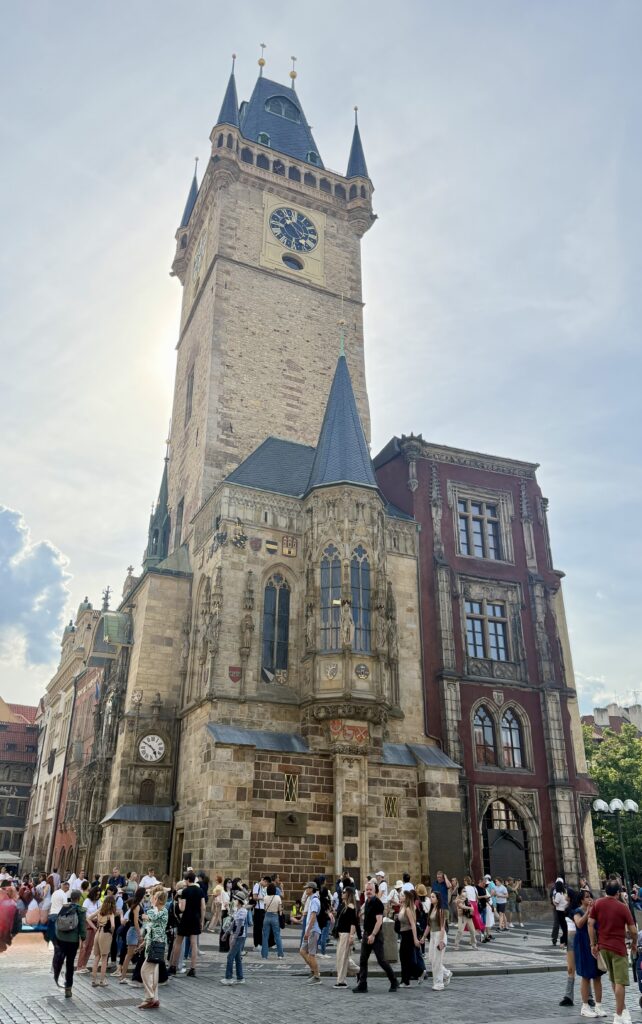
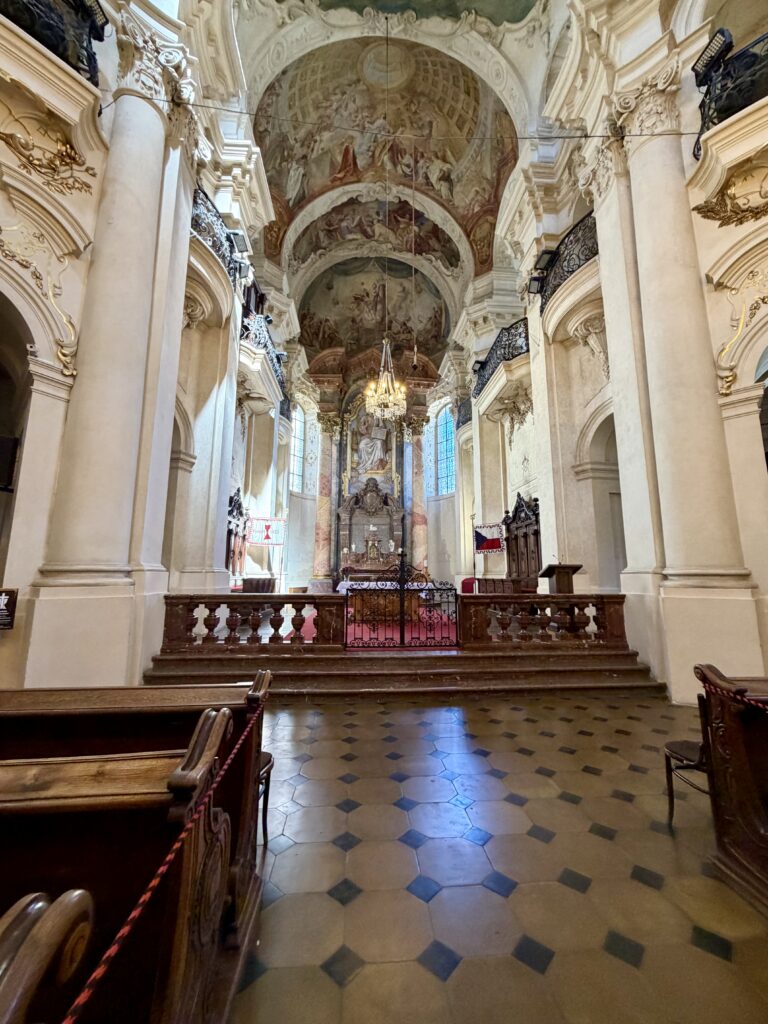
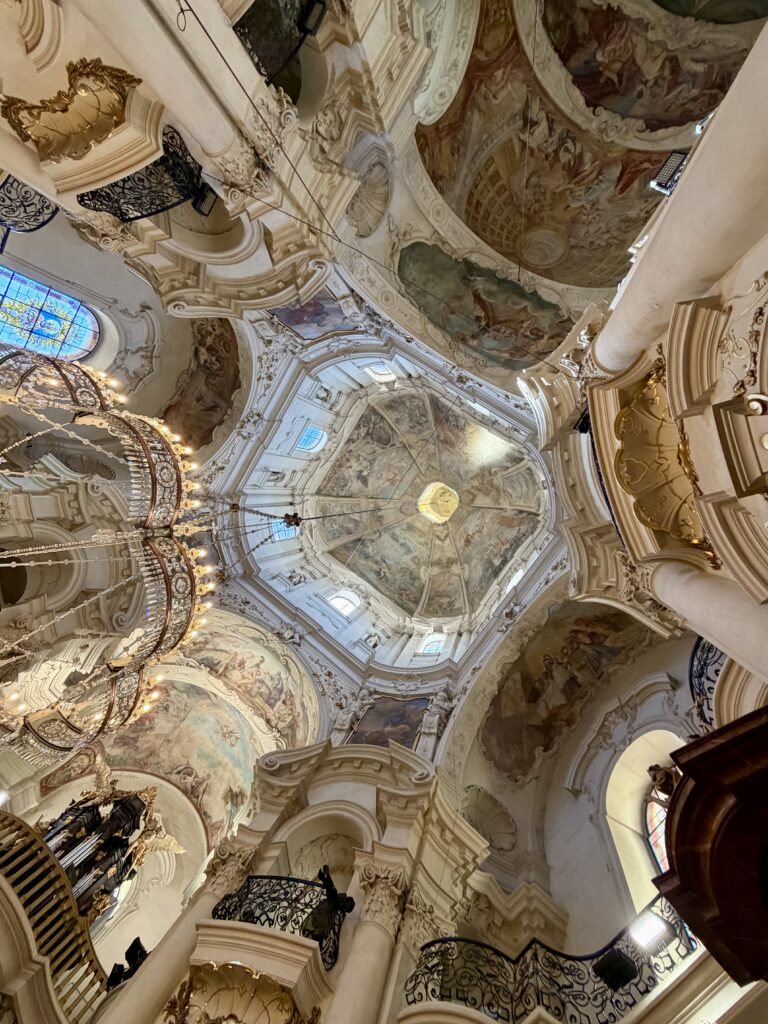
- Old Town Hall Astronomical Clock – Watching the Astronomical Clock Strike an Hour is one of an entertaining and free things to do in Prague. The clock itself is located on the south face of the town hall and is the pride of Prague. It was built in the fifteenth century and despite being damaged and repaired during its lifetime, it is widely regarded as the best preserved medieval mechanical clock in the world and the show it puts on at the top of the hour never fails to disappoint.
- Church of Our Lady Before Tyn – another impressive Gothic landmark, the church dominates the skyline of Old Town Square with its distinctive twin spires. Constructed between the mid-14th and early 16th centuries, its interior was extensively remodeled in the Baroque style during the late 17th century. The church houses an important collection of Gothic, Renaissance, and Early Baroque art, including altar paintings by Karel Škréta and the tomb of Tycho Brahe. It also contains Prague’s oldest organ, dating from 1673.
Malé Náměstí (Little Square) – is a charming triangular plaza, located just a short walk from Old Town Square. Situated along the historic Royal Route, it is known for its colorful medieval and Renaissance buildings, historic landmarks, and lively atmosphere.
Notable sights include the beautifully decorated Rott House, famous for its neo-Renaissance façade adorned with murals depicting medieval trades and craftsmen; the historic Iron Fountain, Prague’s oldest operational well; and the House at the White Lion, which housed Prague’s earliest printing press in the 15th century. The square offers a quieter atmosphere than nearby Old Town Square.
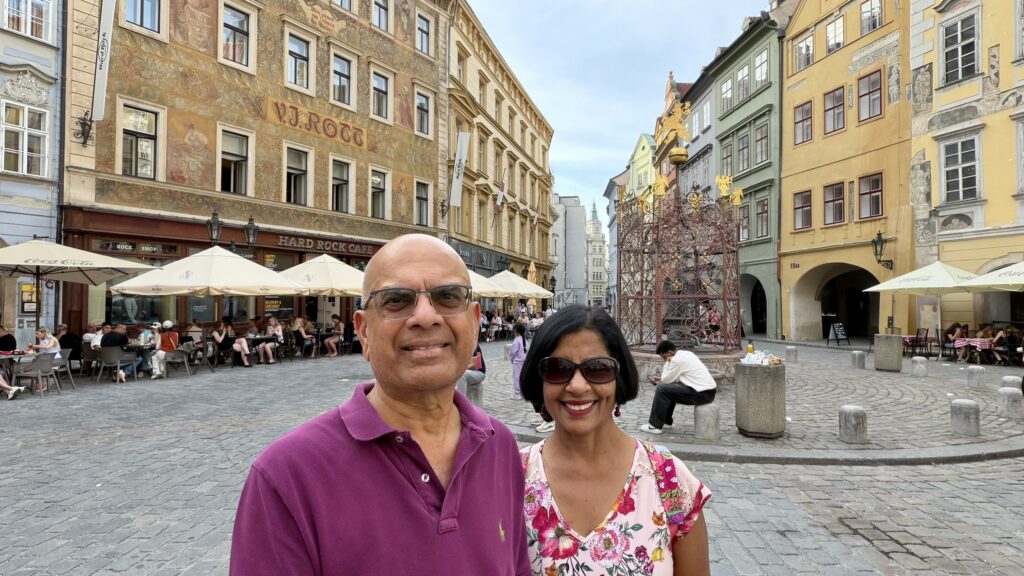
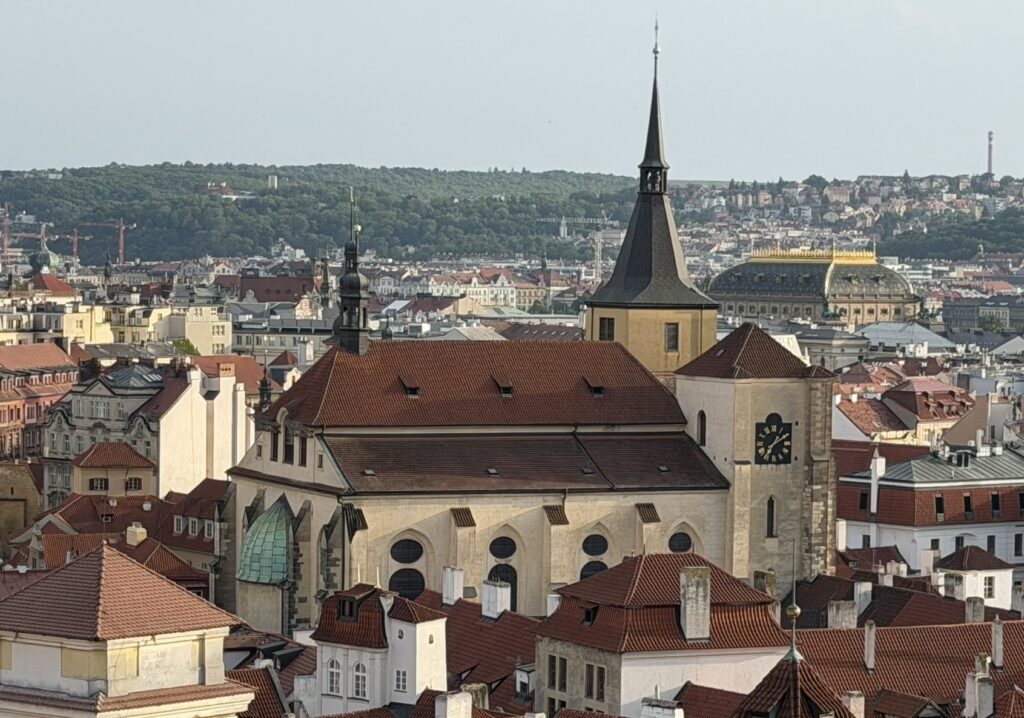
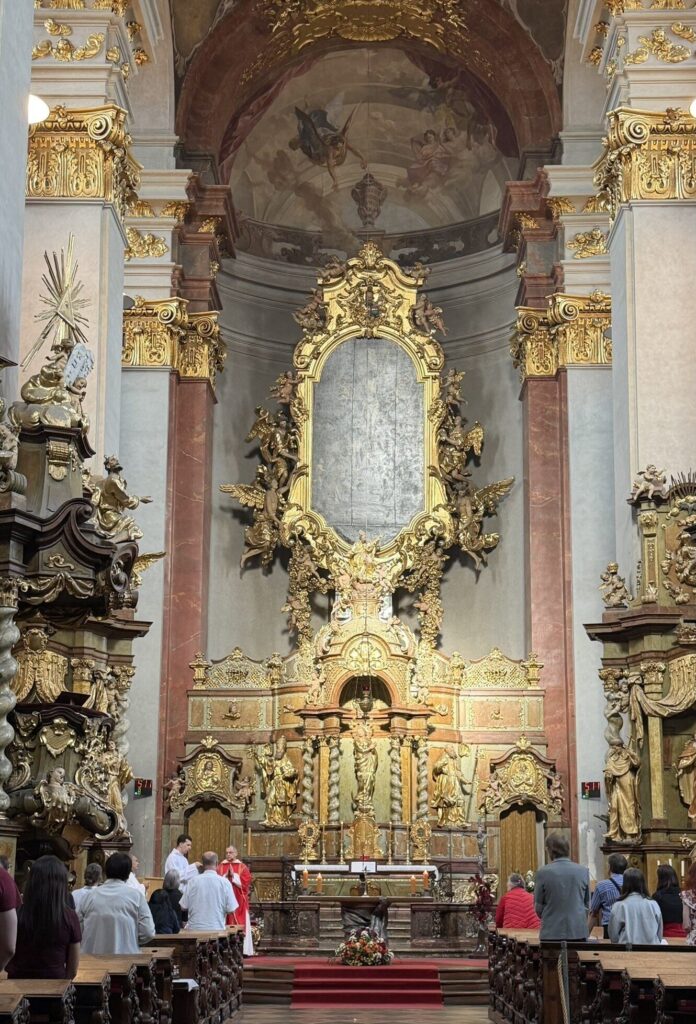
Church of St Giles – Continuing to walk the Royal Mile, you will come across this Cathedral which was founded in the 12th century and became a key center of worship during the Scottish Reformation associated with John Knox, and is often regarded as a symbol of Scottish Presbyterian history. The cathedral is best known for its striking architecture and interior highlights, especially the ornate Thistle Chapel.
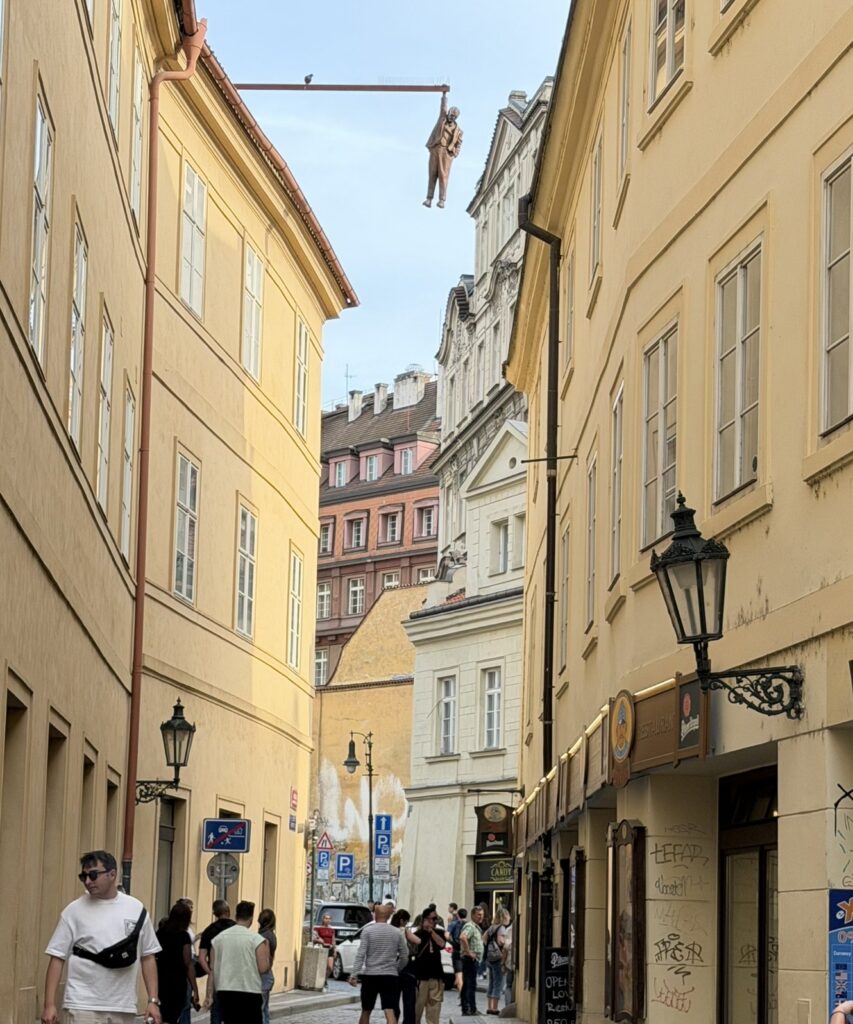
Hanging Sigmund Freud – As you continue walking in the Old Town area, you will come across a striking installation – a life-sized figure of psychoanalyst Sigmund Freud suspended from a high beam above the cobbled street. Created as an artistic statement, the sculpture explores themes of anxiety, intellectualism, and human existence, and has been exhibited in several cities worldwide.
House of the Black Madonna – is one of Prague’s important architectural landmarks and one of the earliest examples of Cubist architecture in the city. Designed by Josef Gočár and completed in 1912, the building stands on Celetná Street in the Old Town.
Named after the Baroque statue of the Black Madonna mounted on its corner, the building is distinguished by its sharp angles, geometric forms, and crystalline shapes that characterize Czech Cubist design. Today, the first floor houses the historic Grand Café Orient, while the upper floors contain the Museum of Czech Cubism. After extensive restoration, the building was returned to its original appearance in 2003 and remains one of the finest examples of Czech Cubist architecture.
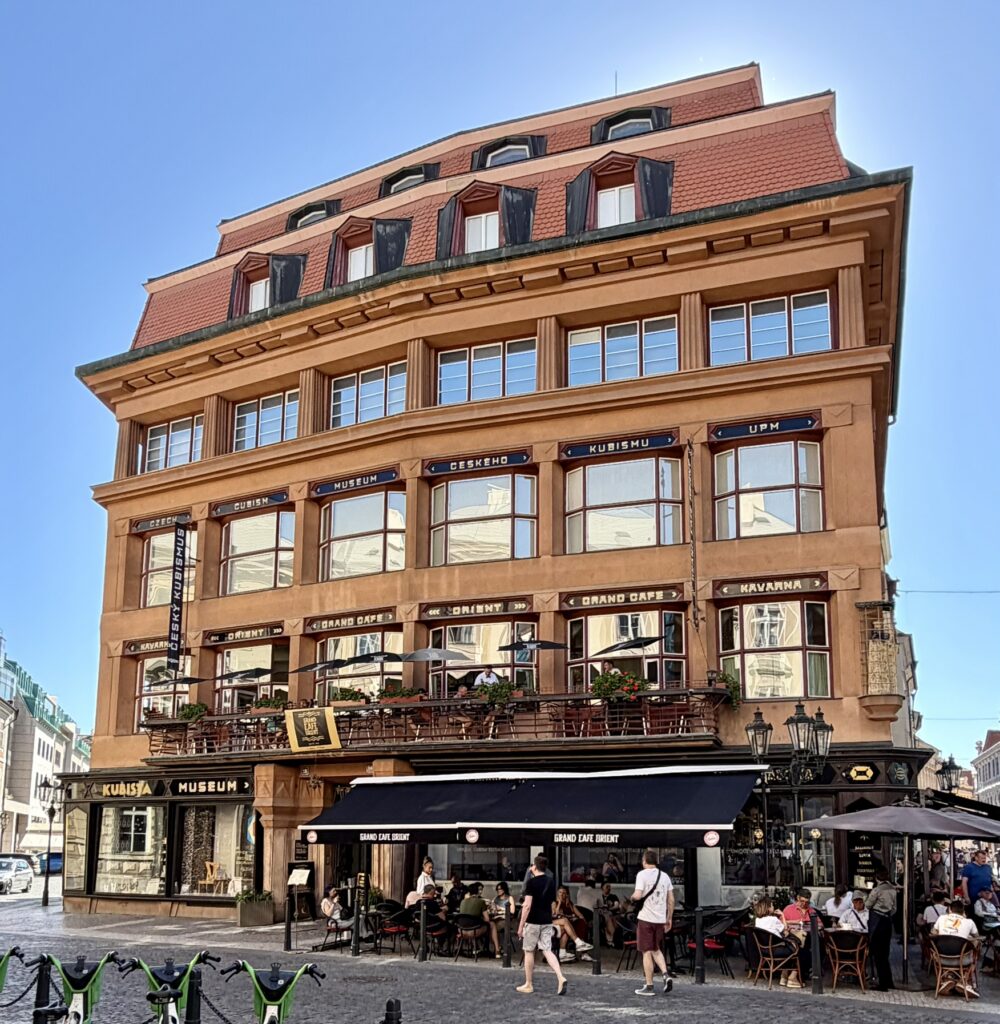
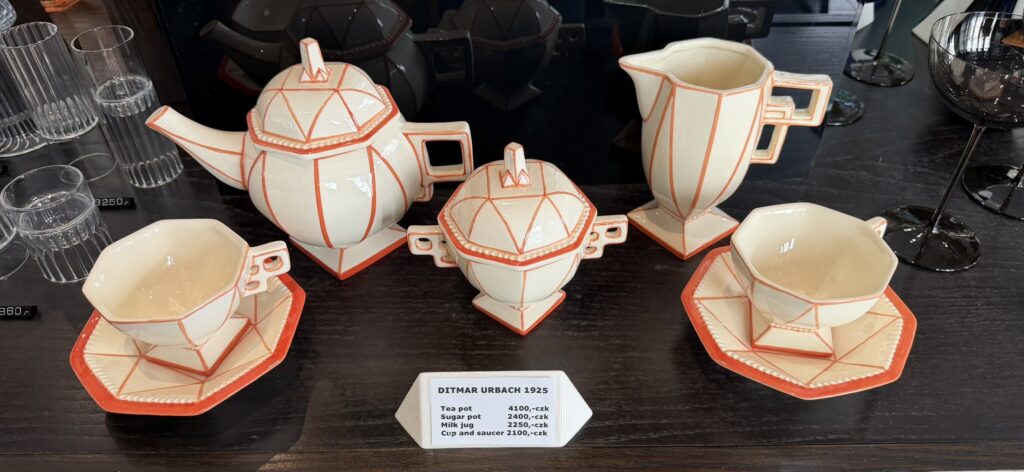
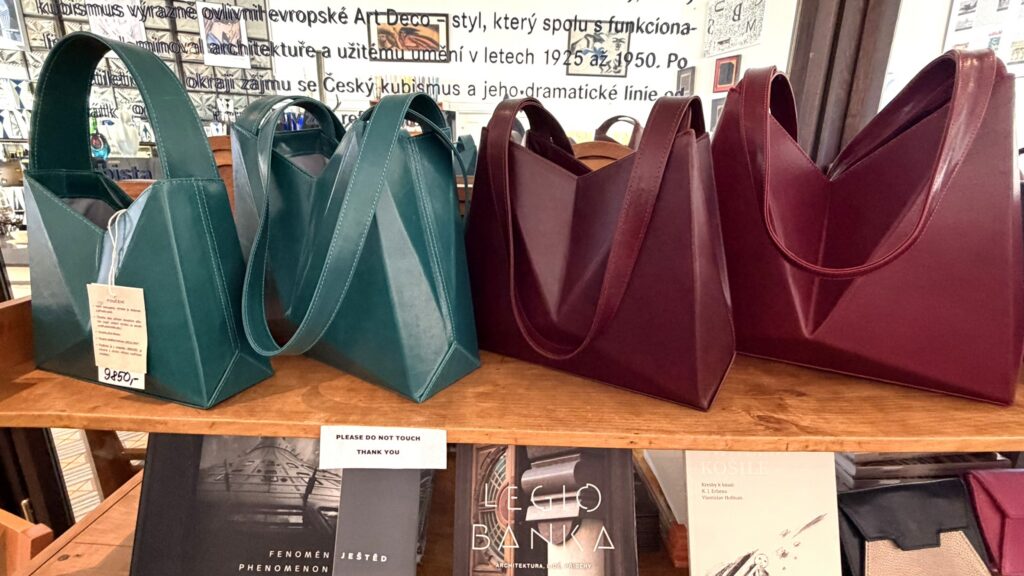
Rudolfinum – We came across this grand building on the banks of the Vltava Rive as we were walking around the Old Town. We found out that this grand Neo-Renaissance building is home to the Czech Philharmonic and the Galerie Rudolfinum. Its renowned Dvořák Hall is celebrated for its outstanding acoustics and serves as a principal venue for the Prague Spring International Music Festival.
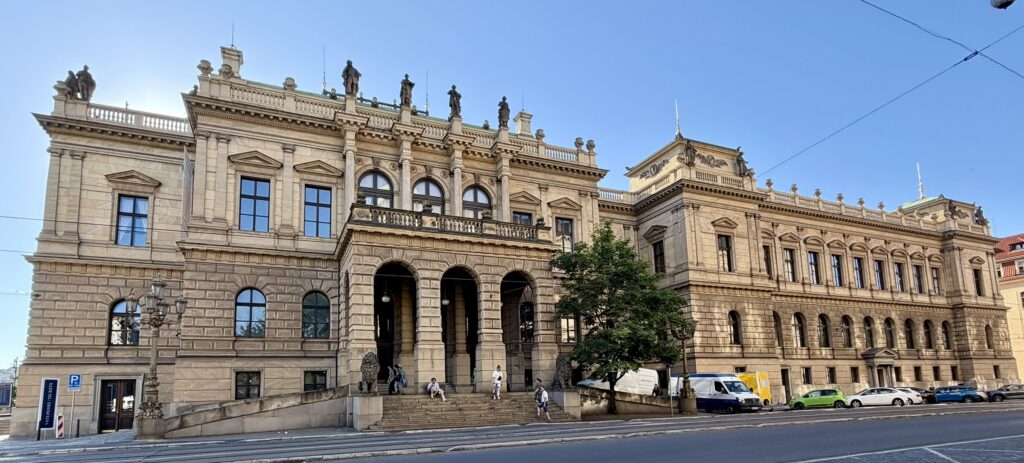
Opened in 1885, it has long been one of Prague’s most important cultural landmarks. Beyond its musical significance, the Rudolfinum also played an important political role, serving as the seat of the Czechoslovak parliament between 1919 and 1939. Today, it remains a leading center for classical music and contemporary art in Prague.
————— Jewish Quarter ————–
Josefov – is the historic Jewish Quarter of Prague, located between Old Town and the Vltava River. Its history dates back to the 13th century, when Jewish residents were required to settle in this designated area and were restricted from living elsewhere in the city, leading to the development of a dense and important Jewish community. Although much of the district was redesigned in the late 19th century, several key historical landmarks still remain, including a number of synagogues and the Old Jewish Cemetery.
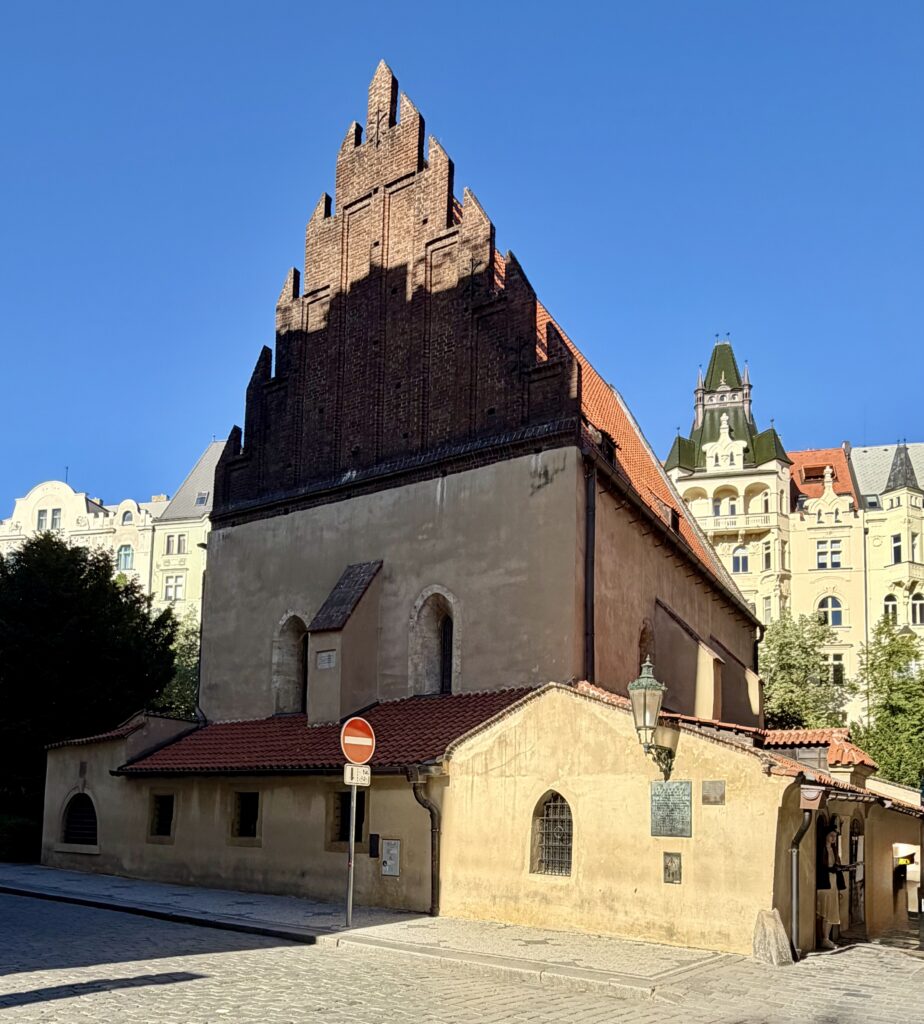
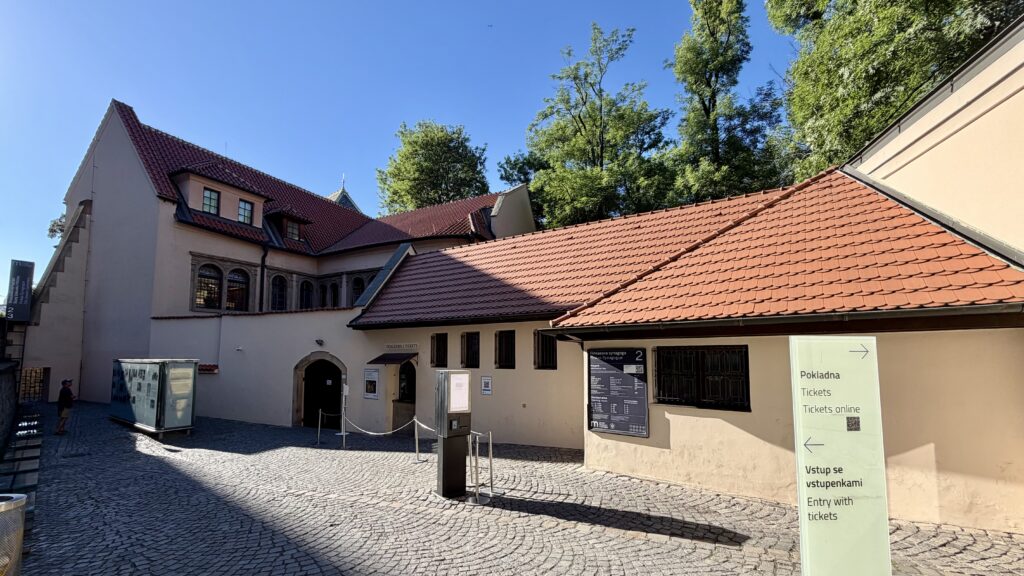
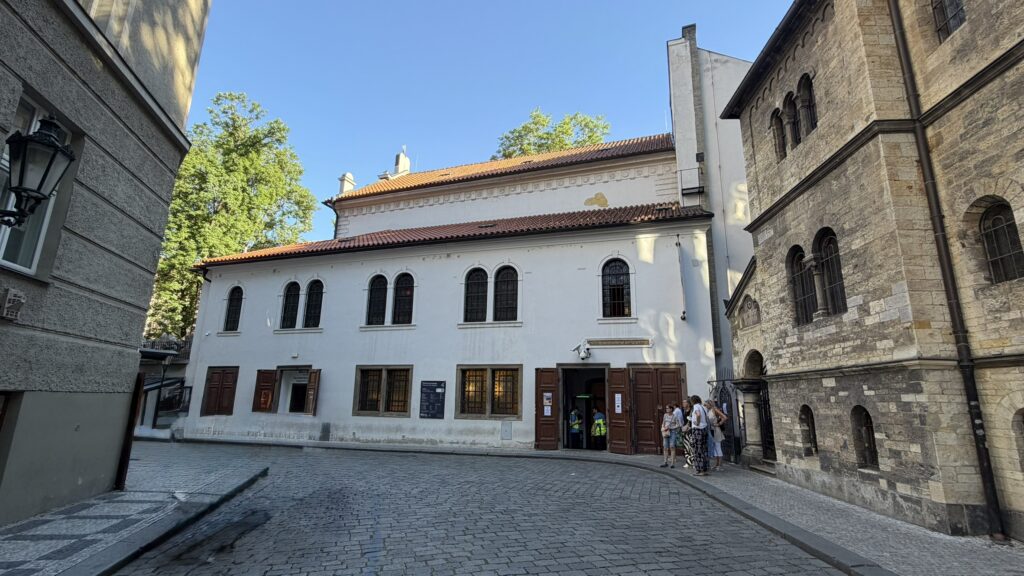
You can explore Josefov either on a guided or self-guided tour, with access to the interiors of the synagogues available for a combined ticket (around 600 CZK for all five). We chose to walk through the area and admire the synagogues from the outside, taking in the architecture and atmosphere here.
Old New Synagogue – is the oldest active synagogue in Europe dating back to around 1270 and remains an active place of worship for more than 750 years. Built in the Gothic style, the synagogue has served as the spiritual center of Prague’s Jewish community and is closely associated with the legendary Rabbi Judah Loew ben Bezalel.
Pinkas Synagogue – is the second-oldest surviving synagogue in Prague, dating from 1535. Today, the synagogue serves as one of the most moving memorials in Prague. Its interior walls are inscribed with the names of nearly 80,000 Jewish men, women, and children from Bohemia and Moravia who perished during the Holocaust.
Klausen Synagogue – is the largest synagogue in the Jewish Quarter and the only surviving example of a Baroque synagogue in the former ghetto. The current building was completed in 1694 after an earlier complex of synagogues and a Talmudic school, was destroyed in the great fire of 1689. Today, the synagogue is part of the Jewish Museum in Prague and houses exhibitions on Jewish traditions, religious practices, festivals, and family life.
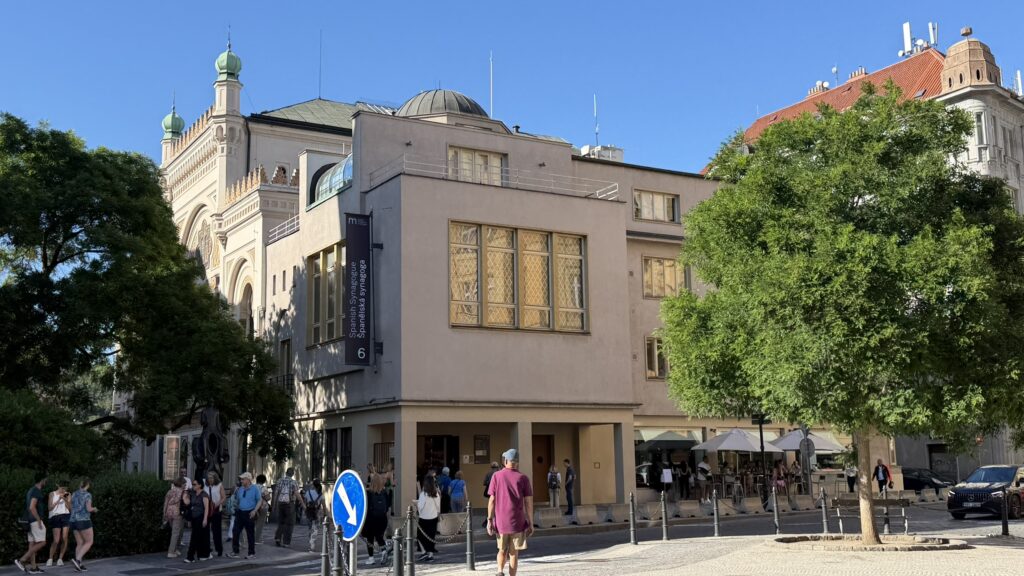
Spanish Synagogue – is the newest of Prague’s historic synagogues and is widely considered the most beautiful. It was built in 1868 on the site of the Old Shul, the oldest synagogue in the former ghetto. The synagogue is best known for its stunning Moorish Revival interior.
During World War II, the building was used as a storage facility for confiscated Jewish property. Following extensive restoration, it reopened to the public and today forms part of the Jewish Museum in Prague.
————— Powder Gate and New Town —————
- Powder Tower (Powder Gate)
- Náměstí Republiky – Republic Square
- Náměstí Republiky (Republic Square), Municipal House
- Rotating Head of Franz Kafka
- Wenceslas Square (Václavské náměstí)
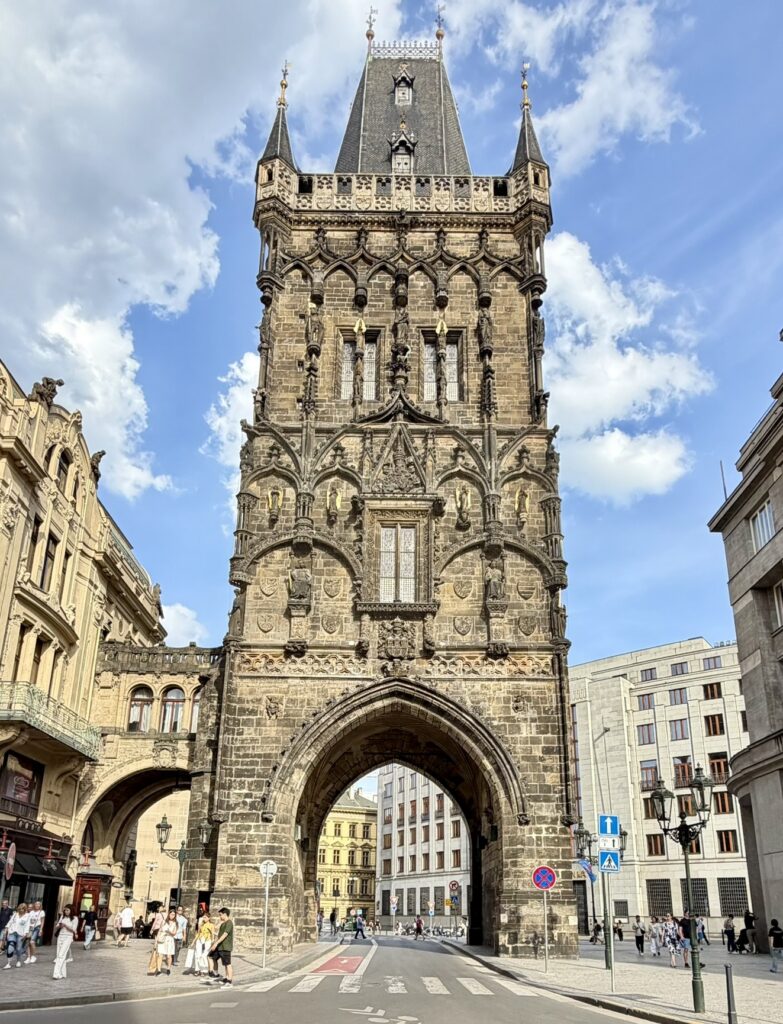
Powder Tower (Powder Gate) – is a Gothic tower in Prague that once formed part of the original medieval city fortifications. Built from 1475, it was designed as an ornamental entrance to the city rather than a defensive structure and was intended to connect the Old Town with the emerging New Town.
Located at the boundary between Old Town and New Town, the tower is one of the original city gates and is closely associated with Prague’s coronation route.
Despite its name, the Powder Tower was never used to store gunpowder. Over the centuries it has undergone damage, restoration, and preservation work, and today it remains one of Prague’s most recognizable Gothic landmarks and a symbolic entrance into the historic city center.
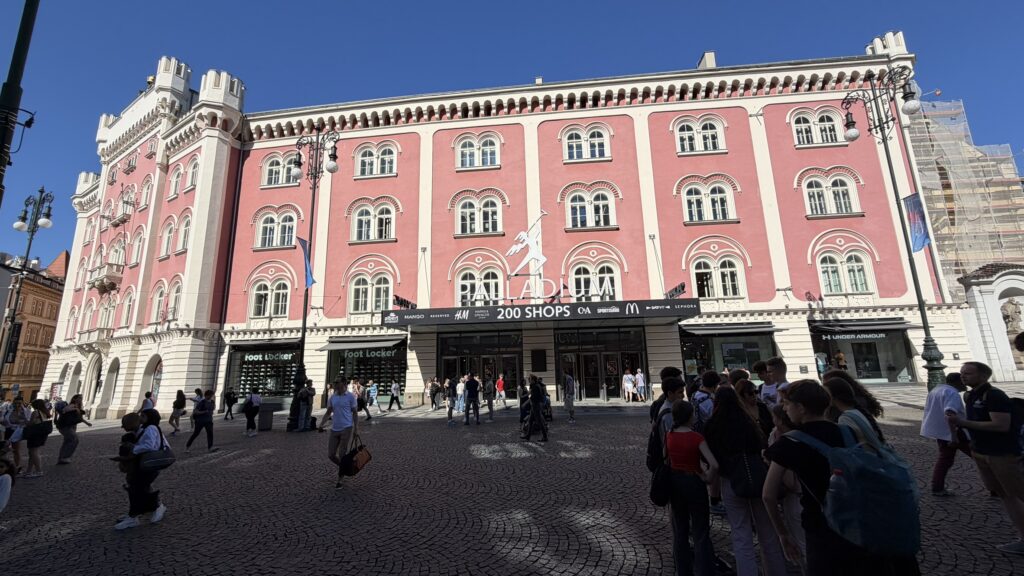
Náměstí Republiky (Republic Square) – lies just beyond the Powder Tower at the edge of Old Town. It acts as an important transition point between the historic core and the more modern commercial parts of the city. The square is known for its mix of historic architecture and modern shopping and business spaces. One of its main landmarks is the large shopping complex Palladium Prague, built on the site of a former military barracks. Alongside it are notable historic buildings such as the Municipal House, making the square a blend of cultural heritage and contemporary city life.
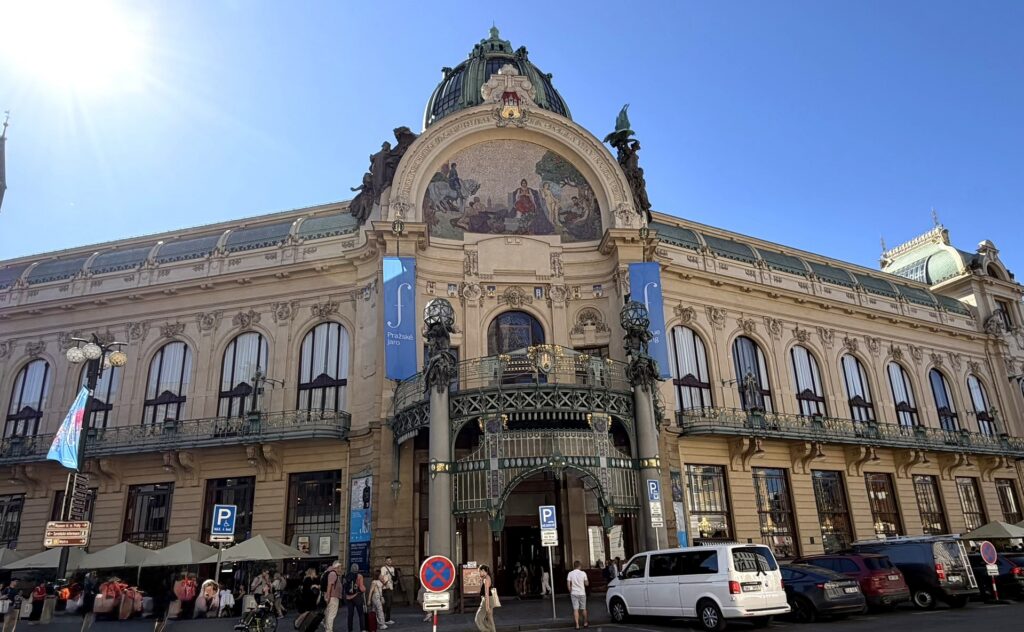
Náměstí Republiky (Republic Square), Municipal House – Located next to the Powder Tower, this striking building was built between 1905 and 1912 on the site of a former royal palace, and is one of the finest examples of Art Nouveau architecture in the city. The building is richly decorated with mosaics, sculptures, and features the famous Smetana Hall, a grand concert and ballroom space beneath its iconic glass dome.
The Municipal House is also historically significant as the site where the declaration of Czechoslovak independence was signed in 1918. Today, it serves as a cultural venue hosting concerts, exhibitions, and guided tours, along with cafés and restaurants.
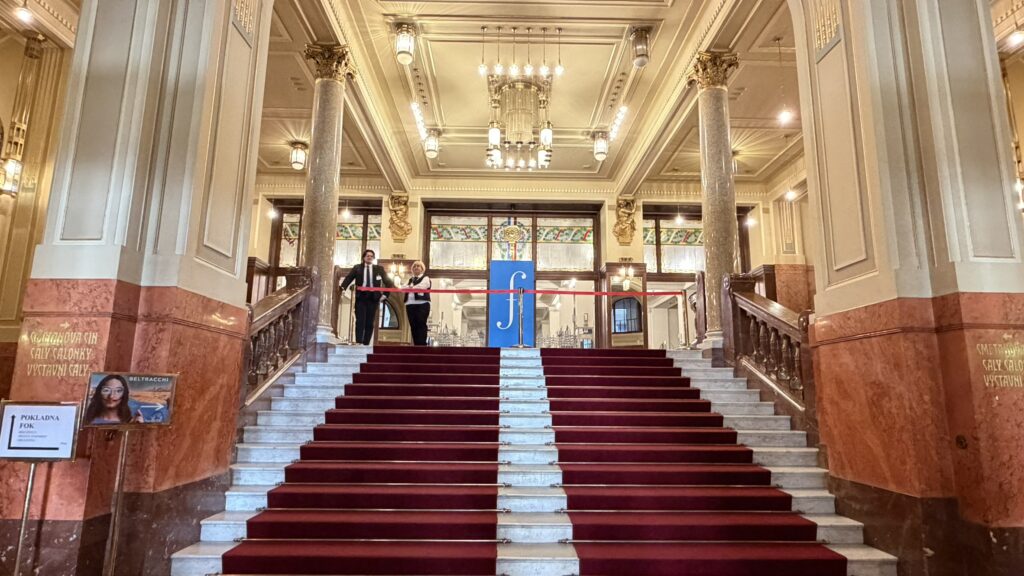
We were unable to join a guided tour of Municipal House on the day of our visit, but we did manage to step inside the entrance to take a quick look. Even from the lobby, the Art Nouveau detailing and grand interior design were impressive.
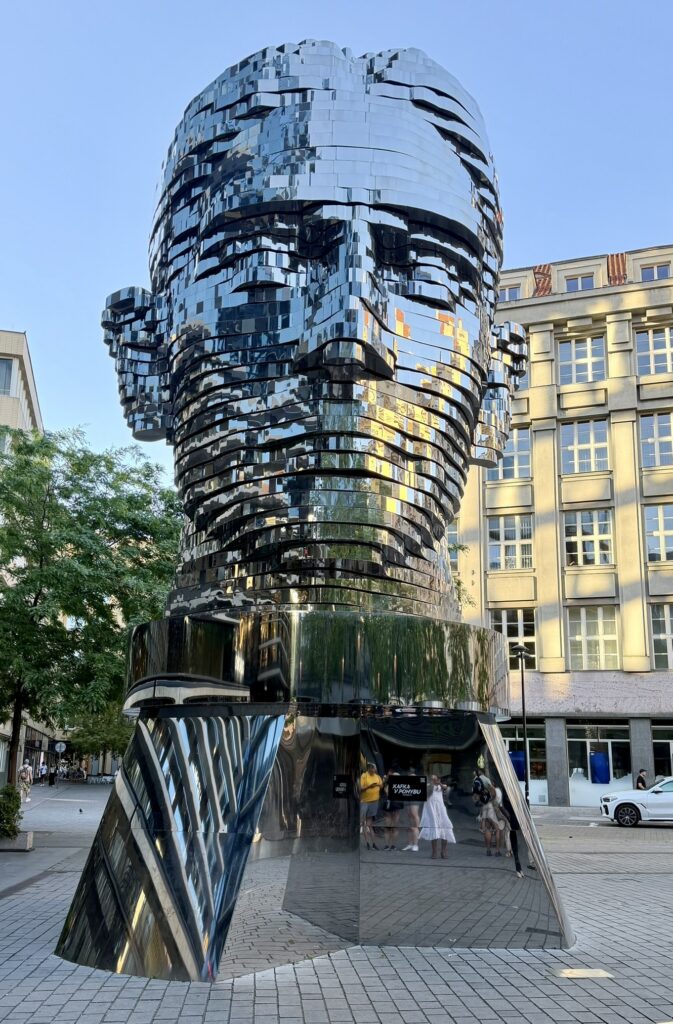
Rotating Head of Franz Kafka – is a large outdoor kinetic sculpture located outside the Quadrio Shopping Mall in Prague. Created by artist David Černý and installed in 2014, it depicts writer Franz Kafka as a 10.6-meter-high rotating head made of 42 stainless-steel panels that continuously shift to form and reform his face. The sculpture is fully mechanized, with thousands of components allowing it to rebuild Kafka’s face in constantly changing movements. It sits near the modern Quadrio complex, not far from areas where Kafka once worked in Prague.
Today, the installation is one of the city’s most popular contemporary artworks, attracting visitors for its striking design and dynamic motion, while also sparking debate about its artistic meaning and commercial setting.
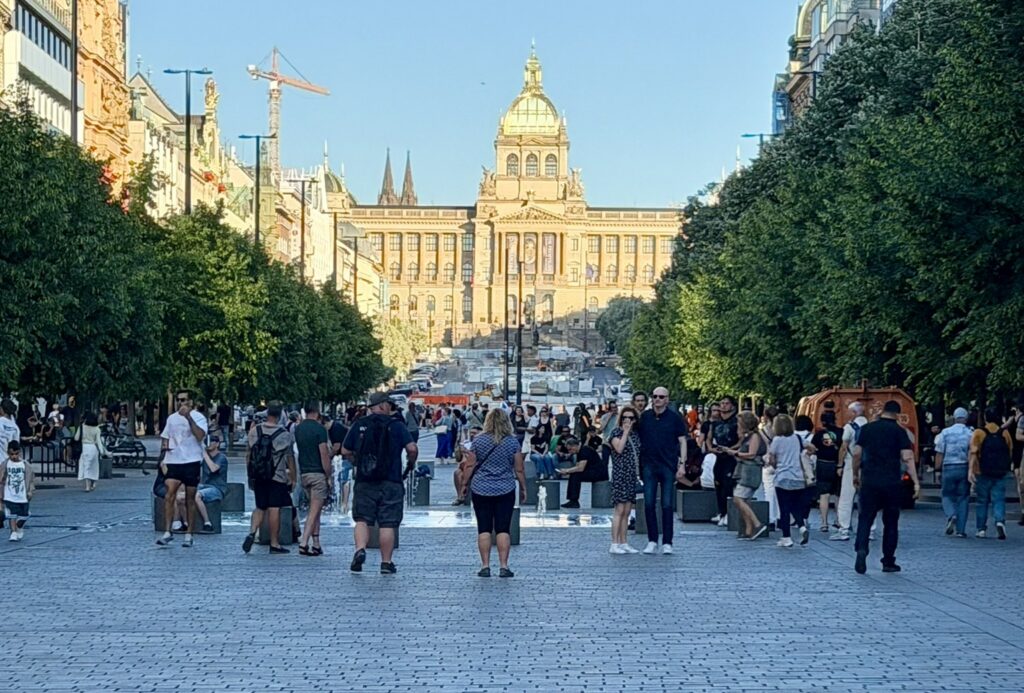
Wenceslas Square – Continuing our walk through Prague’s New Town and past the city’s high-end shopping district, we arrived at the expansive cobblestone Wenceslas Square. More a boulevard than traditional square, it has long been one of Prague’s main commercial and cultural centers and has been the setting for many significant events in Czech history. At the upper end of the square stands the impressive National Museum, whose grand Neo-Renaissance façade dominates the skyline and provides a striking focal point for the square.