2 Nights – Sun & Moon Riverside
We landed in Phnom Penh after 1 pm on the first day. The travel guide was at the airport to receive us. We first checked into our hotel before setting off to explore a few sites in Phnom Penh.
- Hotel – Sun & Moon Riverside
- Ministry of Interior
- Wat Ounalom
- Stupas of Wat Ounalom
- The Royal Palace
- Sisowath Quay
- River Boat Cruises
- Cambodia National Museum
- Wat Phnom
- Tuol Sleng Museum
- Choeung Ek
- Psar Thmei
- Independence Monument
- Phnom Preah Reach Throap, Oudong
- Vipassana Dhurak Buddhist Centre
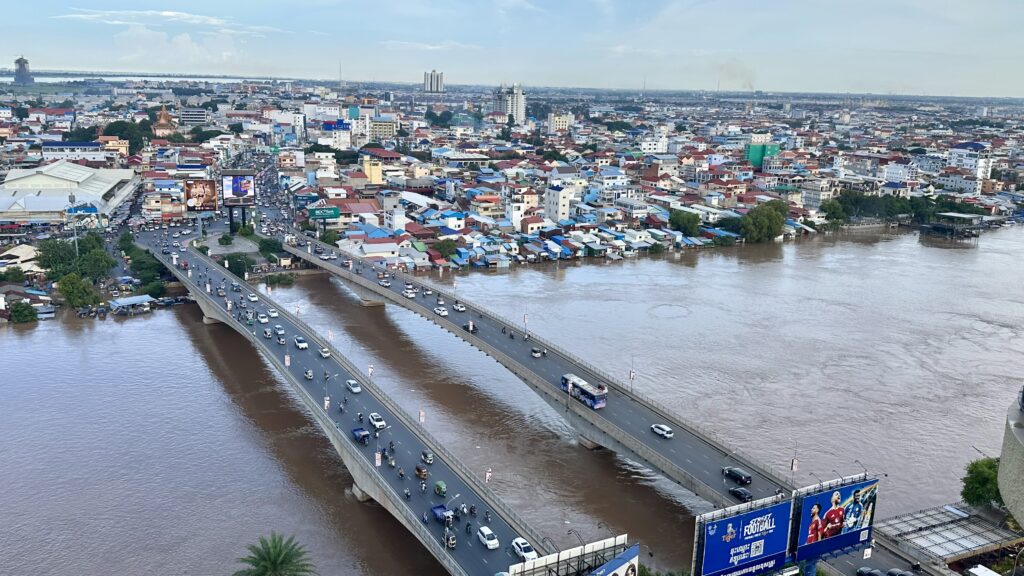
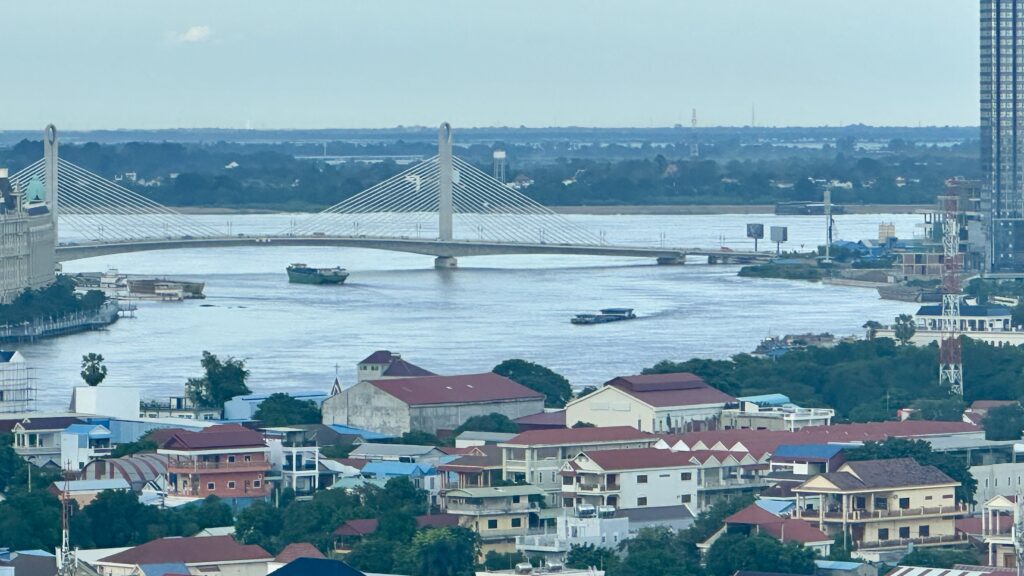
Hotel – Sun & Moon Riverside – The hotel we were staying in, was comfortable with a great view of the city and Tonle Sap-Mekong river.
Ministry of Interior – This stunning building caught our eye while we were driving towards the city center. Although not in our list of places to see, we stopped the car to admire this lavish Ministry of Interior building which was completed and inaugurated on November 6, 2023. Built in a classical Khmer architectural style, it was built in a short span of 18 months and cost over $60 million.
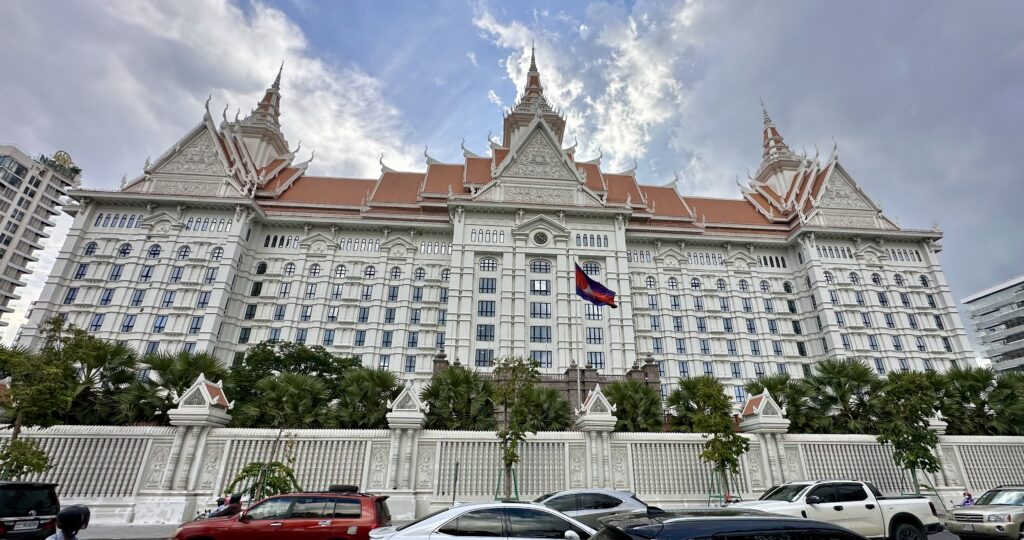
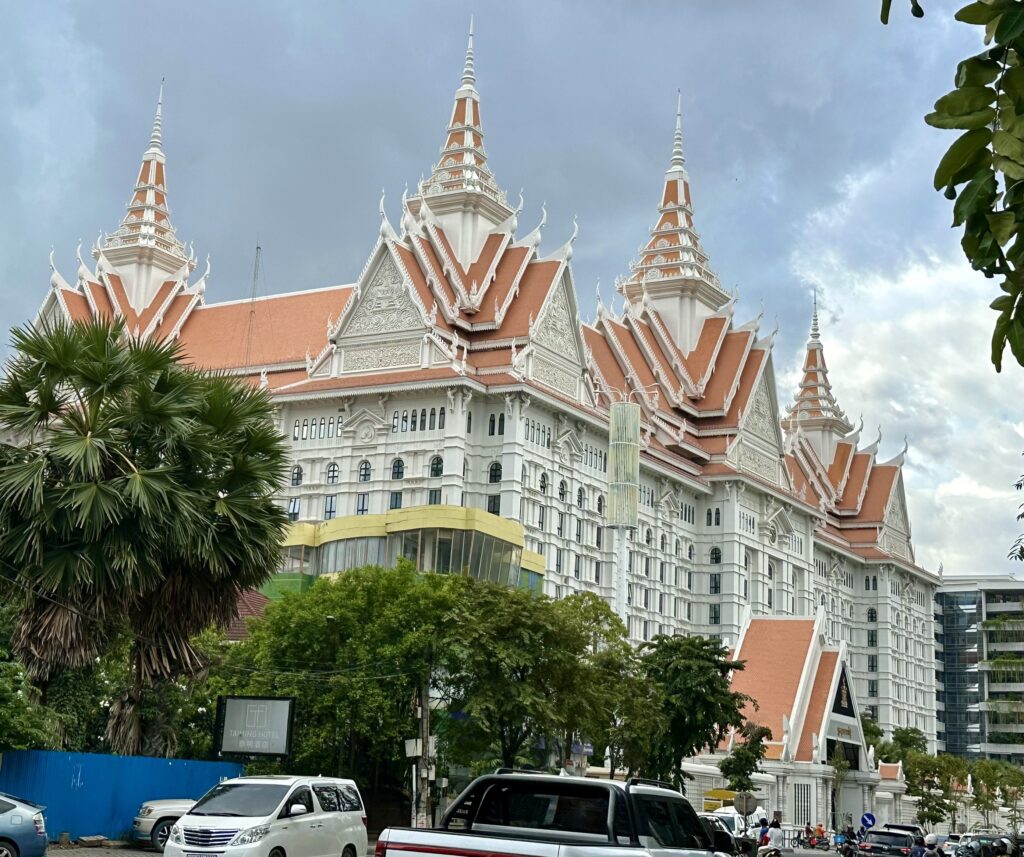
The Ministry of Interior is responsible for Cambodia’s internal security, public order, and law enforcement.
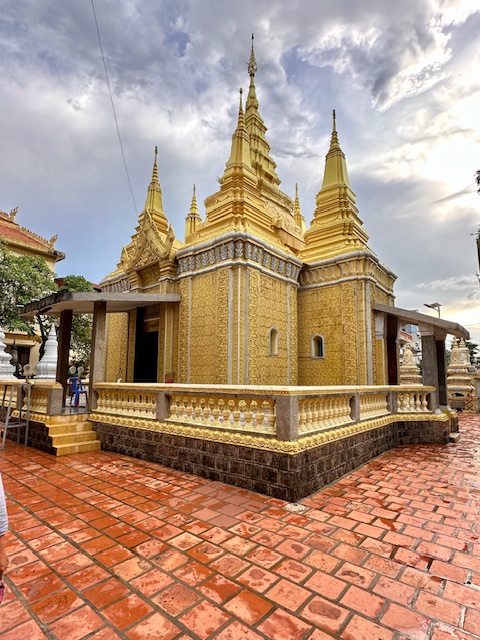
Wat Ounalom – This is one of the city’s most important Buddhist temples and is often bustling with locals leaving offerings and praying at the various shrines that surround the main sanctuary. The temple was established in 1443 and suffered a lot of damage during the Khmer Rouge period but has since been restored.
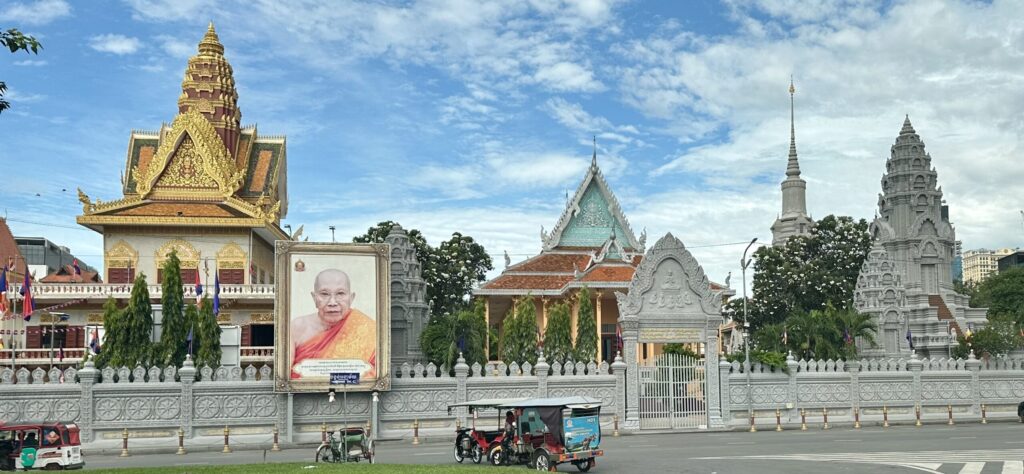
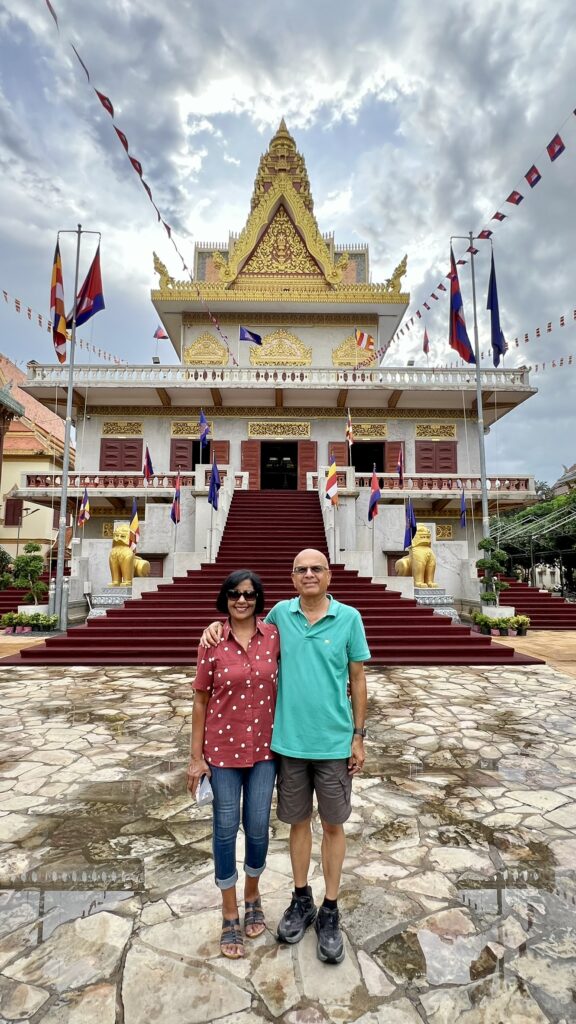
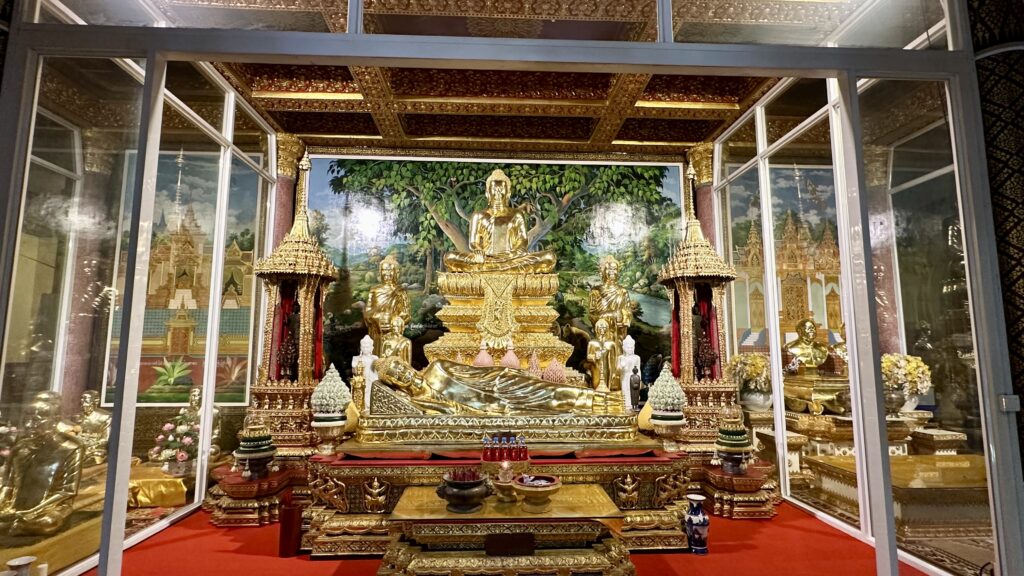
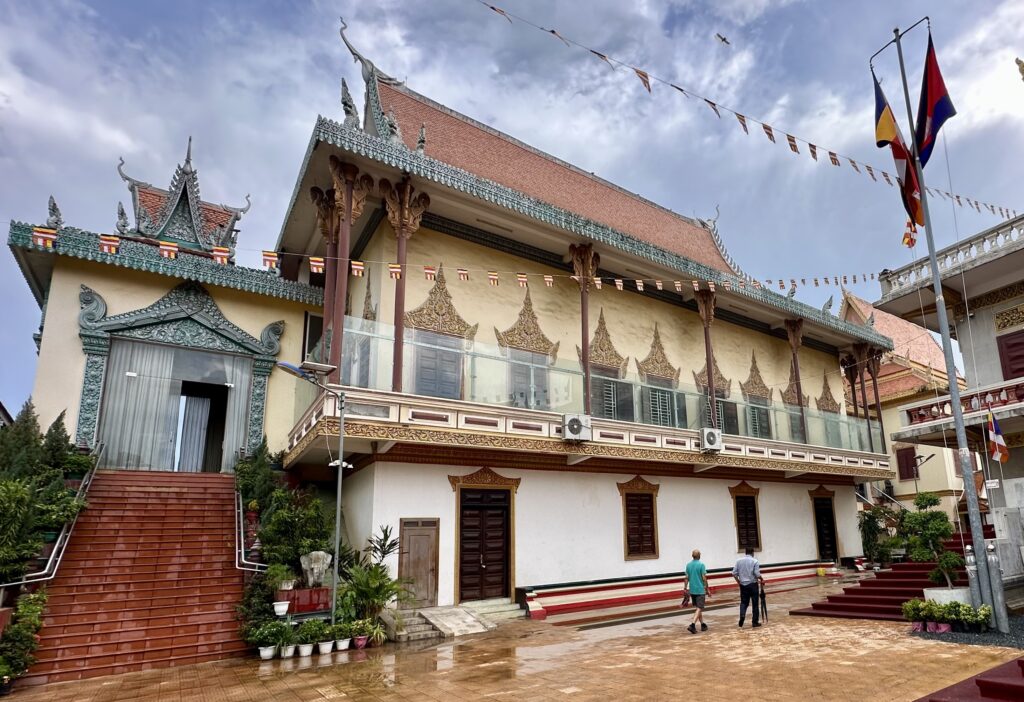
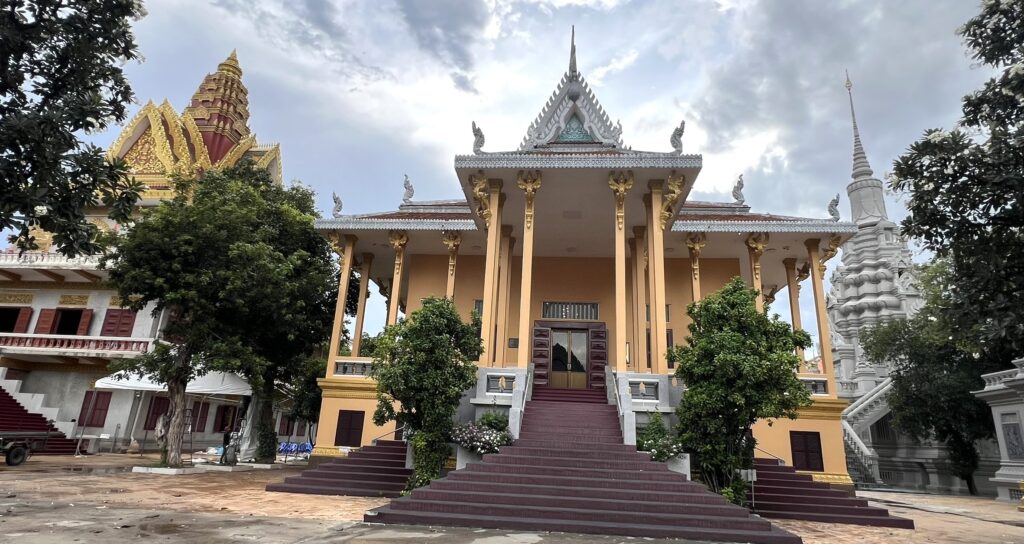
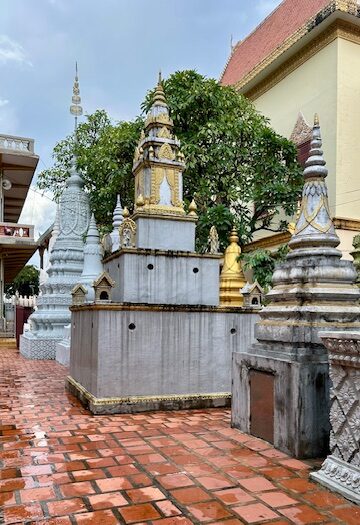
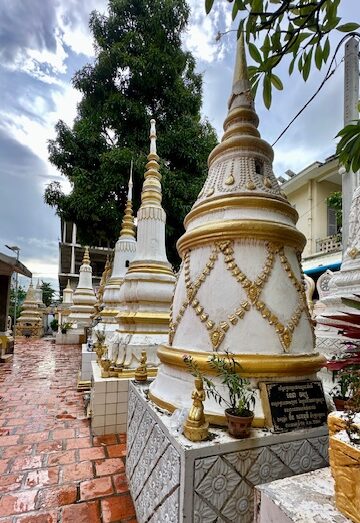
Stupas of Wat Ounalom – The main complex houses a stupa known as the Chetdai, that contains what is believed to be an eyebrow hair of Buddha. This complex with a number of stupas is at the rear end of the main complex. The Chetdai stupa was covered in cloth and nobody is allowed to enter the Stupa.
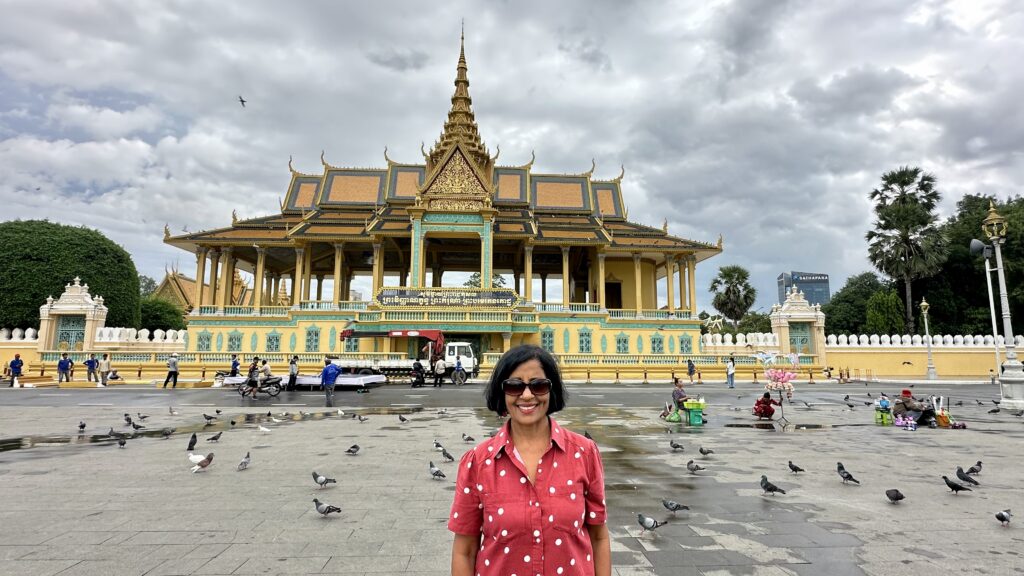
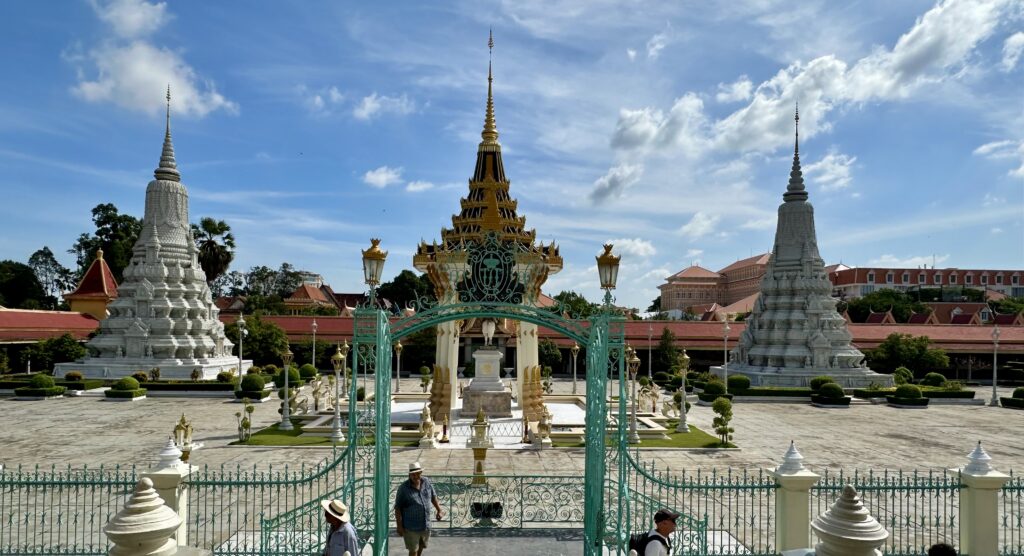
The Royal Palace – this beautiful Palace is the seat and residence of Cambodia’s royal family since the 1860s and is located at the western bank of the confluence of the Tonle Sap and the Mekong river called Chaktomuk (an allusion to Hindu God Brahma). The spired-roof pavilions of the complex are an excellent example of classic Khmer architecture.
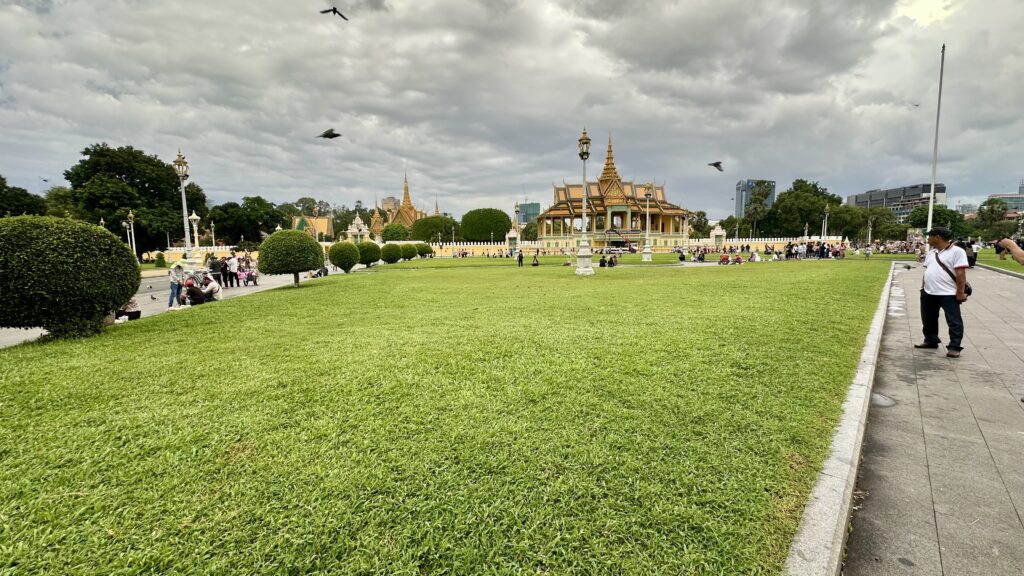
There is a huge well-manicured plaza in front of the Royal Palace, which is a popular area for tourists and locals to walk, take photos, and admire the palace’s architecture. The Royal Palace structure you see from the square is known as the Moonlight Pavilion which is an open-air pavilion that serves as stage for dance programs.
We went on a guided tour of the palace starting with the Throne Hall or the coronation hall which was built in 1917, replacing an earlier wooden structure. The Khmer name for this building is Preah Tineang Tevea Vinichhay and is used for royal coronations, royal weddings, and other significant ceremonies. It is also used as a meeting place for the king and other important guests, and it houses royal thrones and other ceremonial items. We were allowed to visit the interior of the hall but not allowed to take pictures.
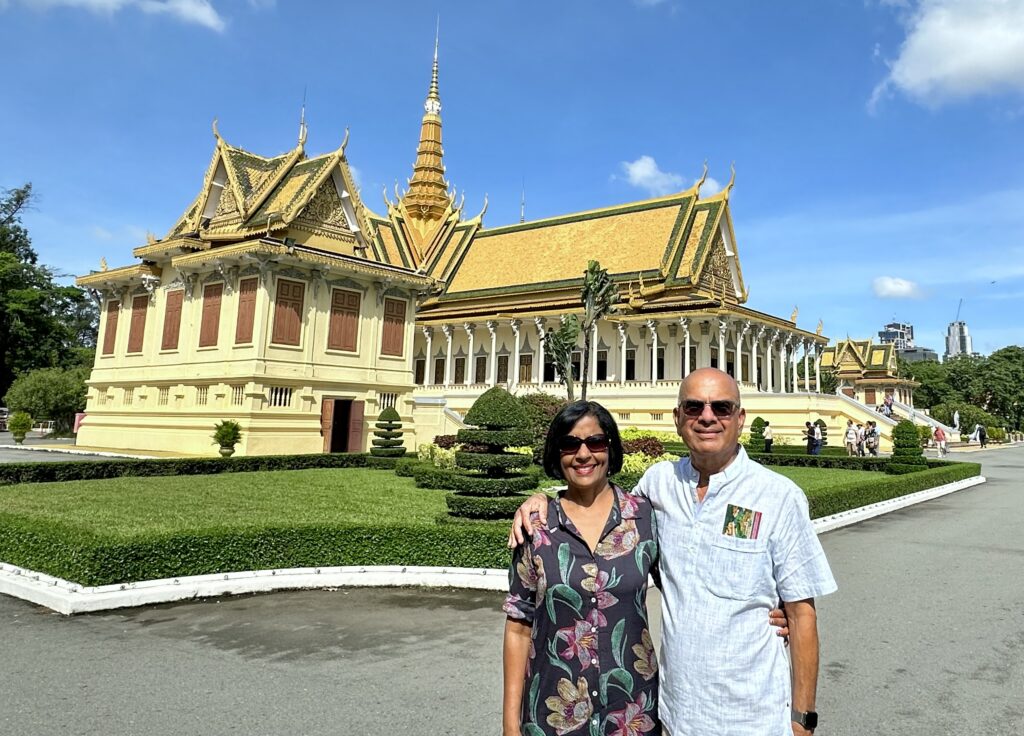
The other buildings around the Coronation hall include –
- Khemarin Palace – is used as the official residence of the King of Cambodia. On the day we visited the King was not at his home as there was no flag. This compound is separated from other buildings by a small wall and is located to the right of the Throne Hall.
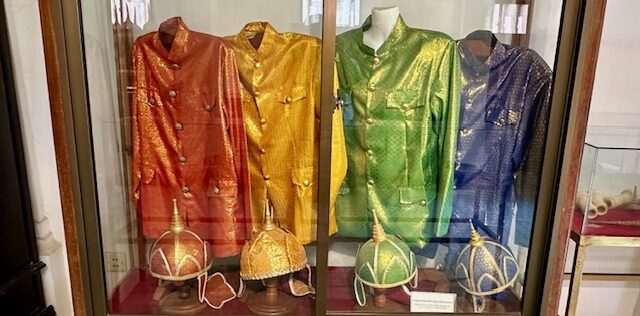
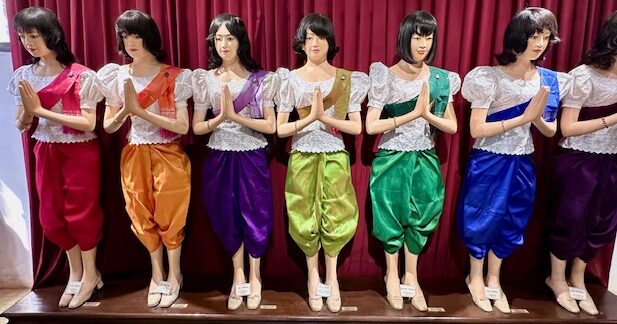
- Royal Costume Museum – Displays costumes worn by Cambodian royalty.
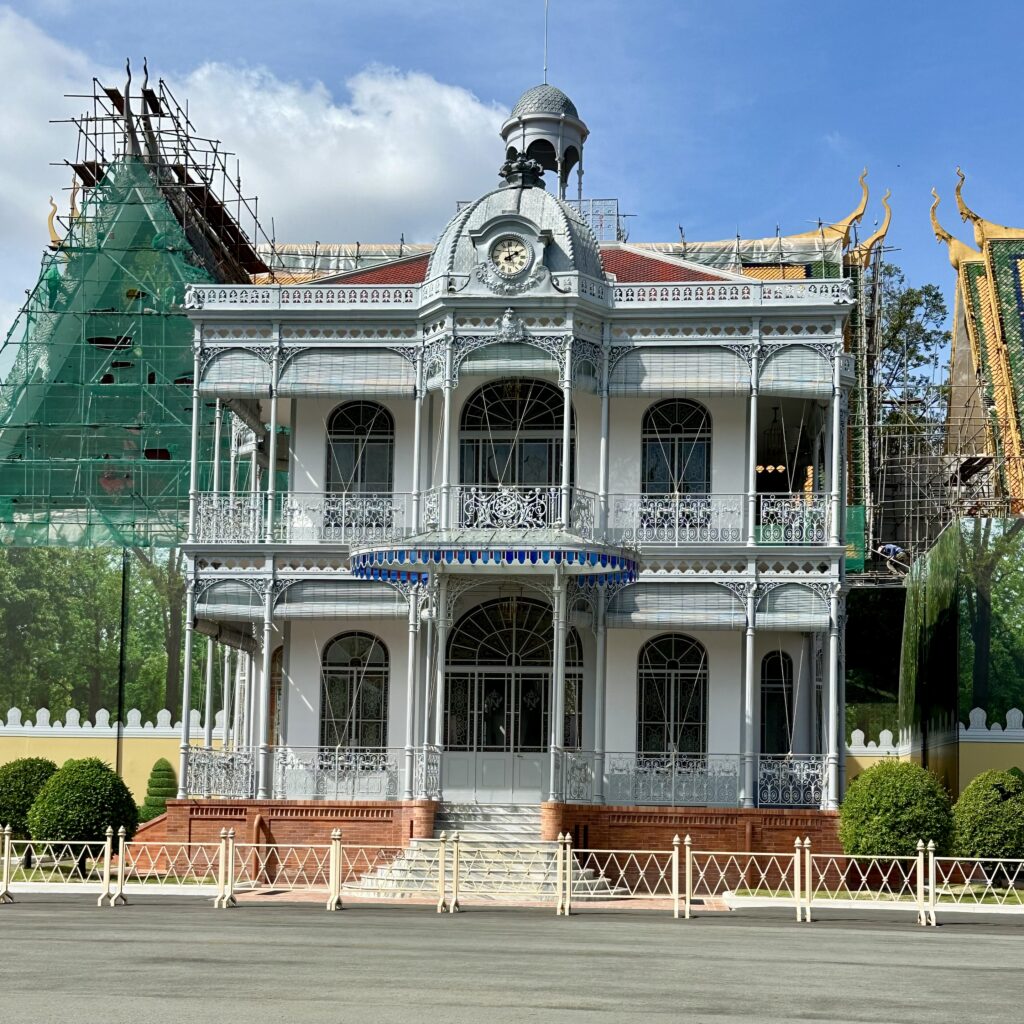
- Napoleon III Pavilion – was originally built in Egypt for Empress Eugénie and was gifted to Cambodia’s King Norodom by Napoleon III in 1876. Today, it serves as a small museum displaying royal memorabilia and is known for its intricate European design, contrasting with the surrounding Khmer architecture.
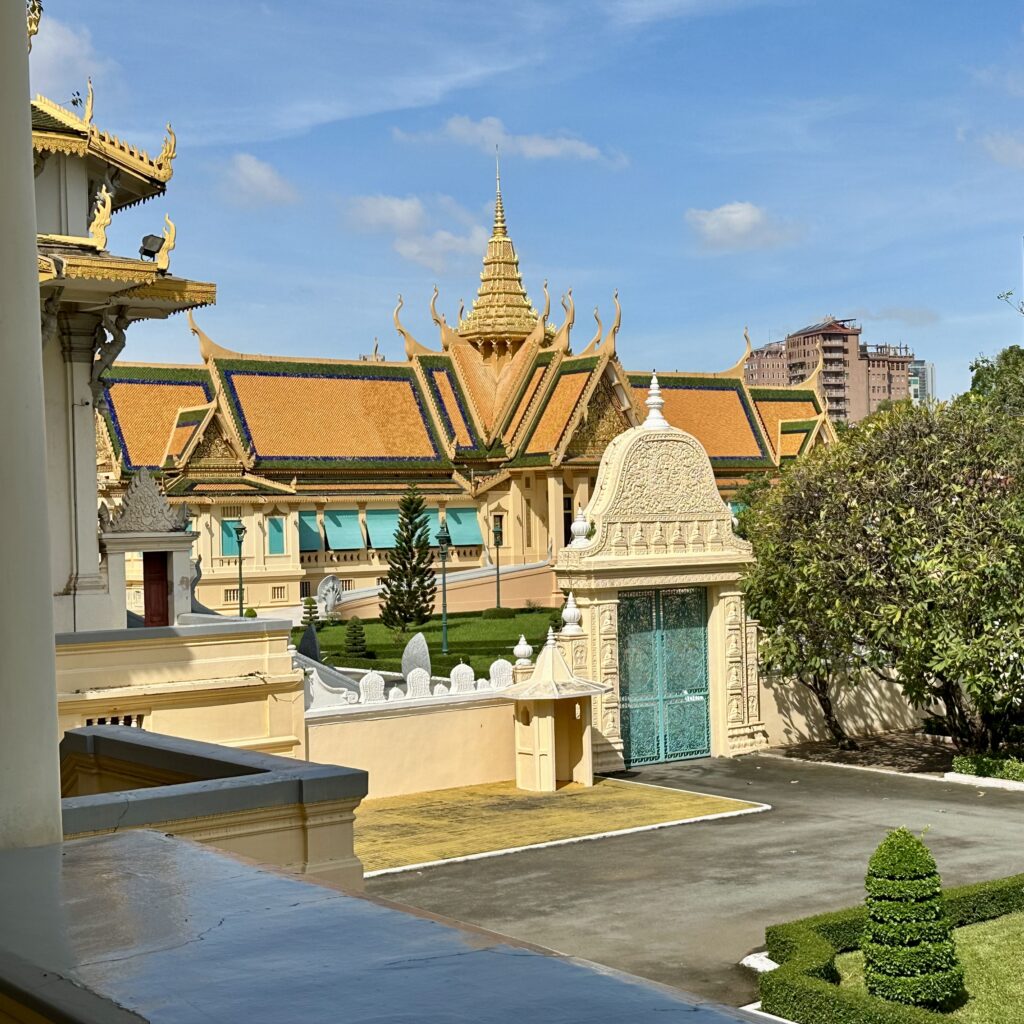
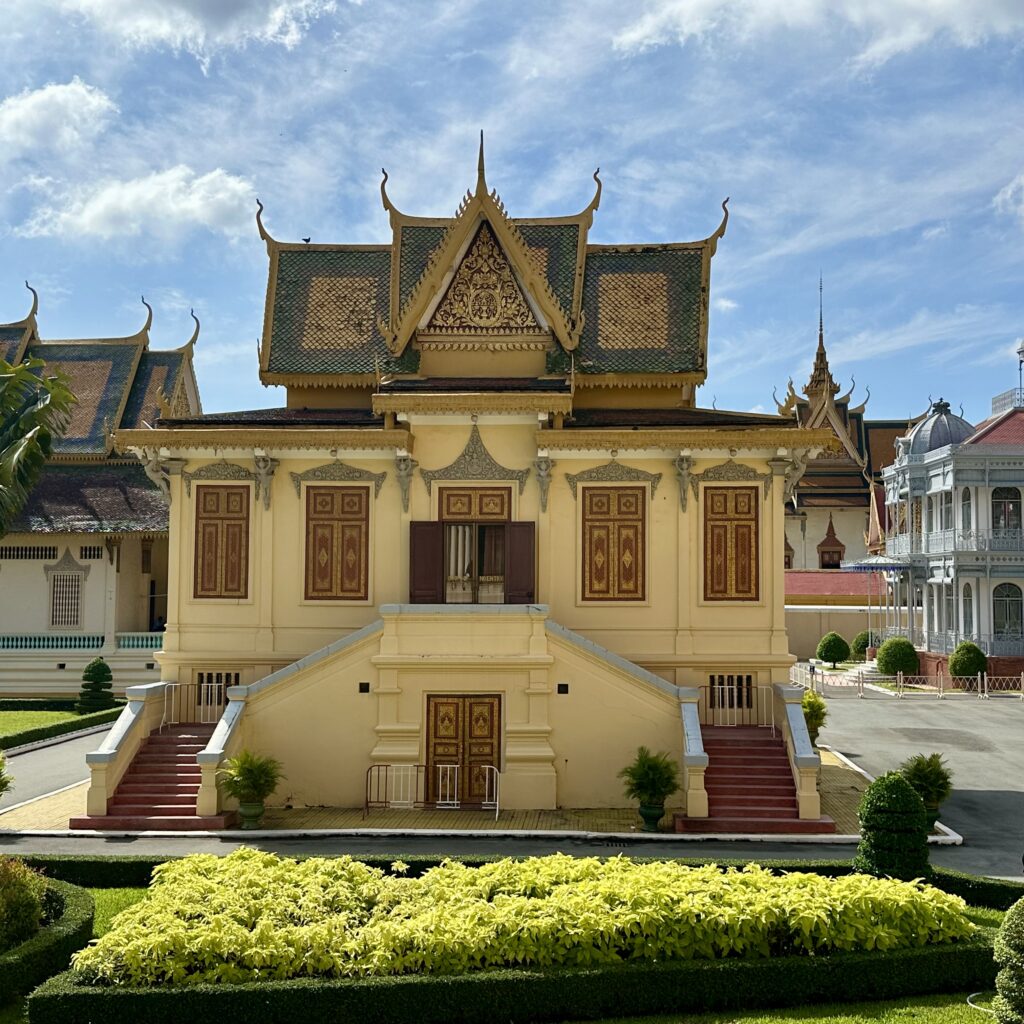
The Royal Palace, Silver Pagoda – is a royal temple with its floor covered with 5000 silver tiles. This complex is located on the South side of the royal palace complex and is officially called Preah Vihear Preah Keo Morakot or Wat Preah Keo. In addition to the silver tiles, the temple houses many national treasures such as gold and jeweled Buddha statues, Emerald Buddha of Cambodia and a near life size, Maitreya Buddha encrusted with 9,584 diamonds dressed in royal regalia commissioned by King Sisowath. It was during King Sihanouk’s pre-Khmer Rouge reign, that the Silver Pagoda was inlaid with more than 5,000 silver tiles and some of its outer facade was remodeled with Italian marble. We were not allowed to take pictures inside the pagoda.
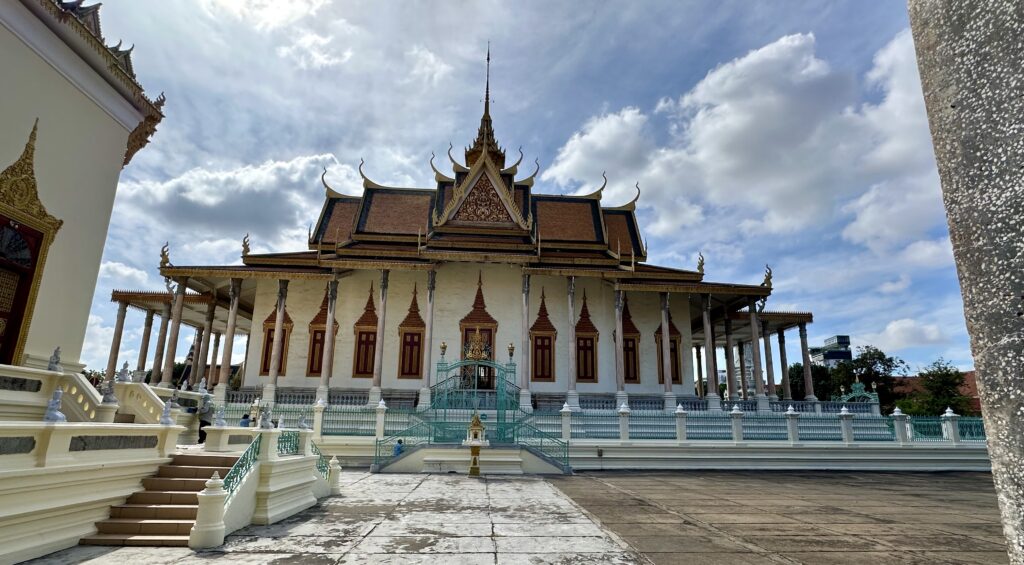
There are also other structures surrounding the main building or the vihear. To the east is the statue of King Norodom sitting on a white horse. To the north of the vihear is the library. The stupas on either side of the statue of King Norodom have cremated ashes of royals.
On the walls of the silver pagoda cloister, are paintings that tell the story of the Reamker (meaning Glory of Rama and is based on the epic Ramayana) from beginning to end. This mural was painted in 1903-1904 and is 642 meters long and 3 meters high. The painting displays have a lot of inaccuracies to the original Indian Ramayana. Today, these paintings are in a state of disrepair and are slowly disappearing due to weather and rock-eating germs, as well as human-caused vandalism.

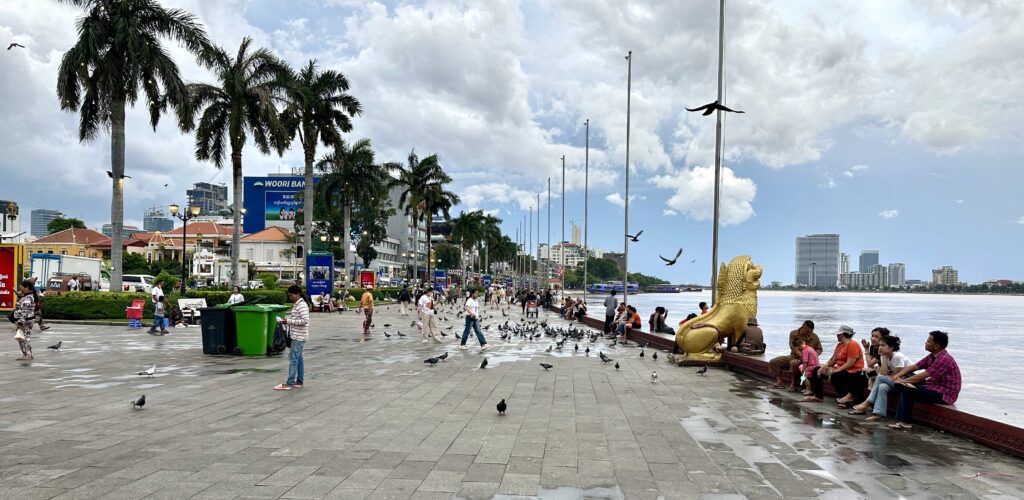
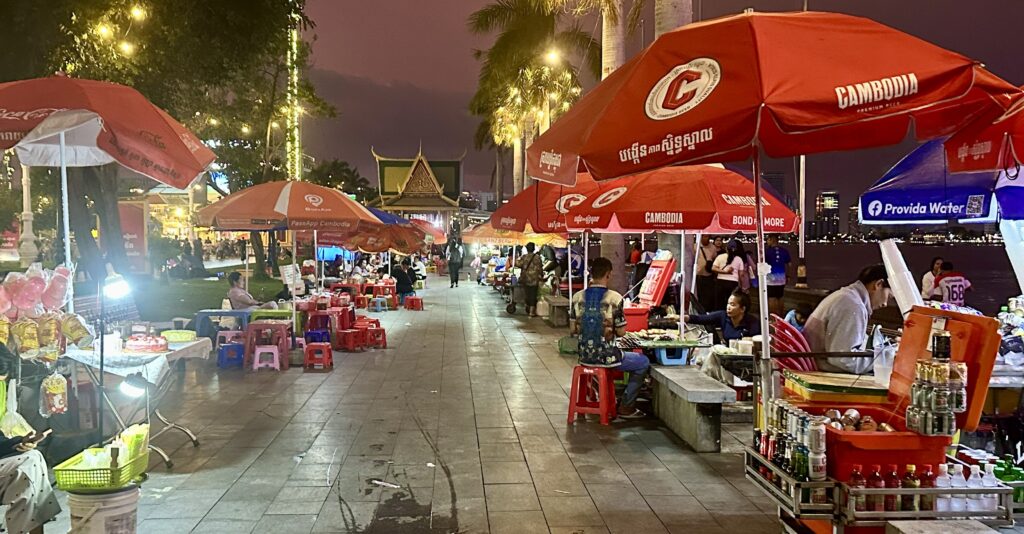
Sisowath Quay – is 3-km-long boulevard along the Tonle Sap and Mekong rivers, and is the beating heart of Phnom Penh. The promenade is always busy with visitors and locals. It is a great place to take a relaxed stroll, watch the sunset, or take a boat ride on the Tonle Sap-Mekong river. The Royal Palace and Wat Ounalom are located along the banks of the river.
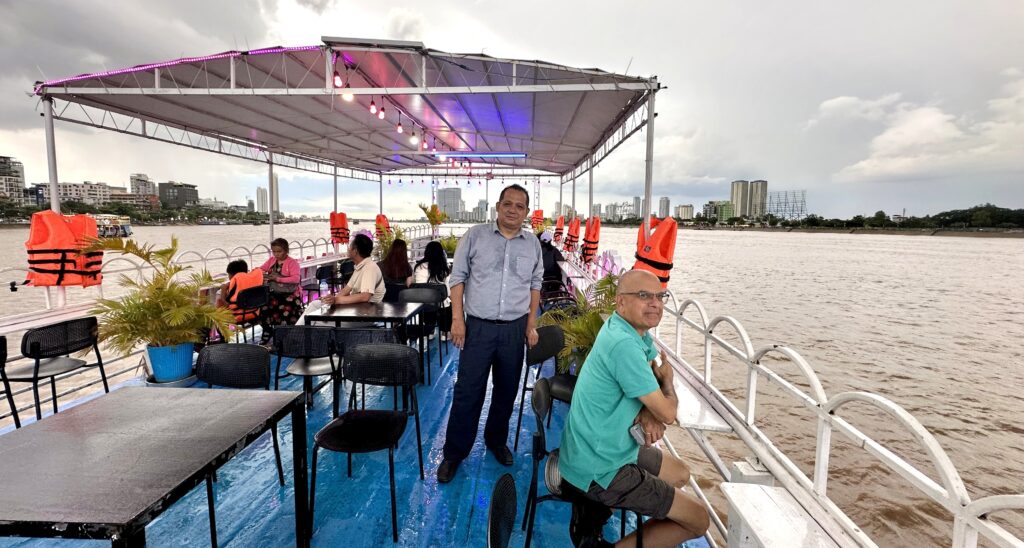
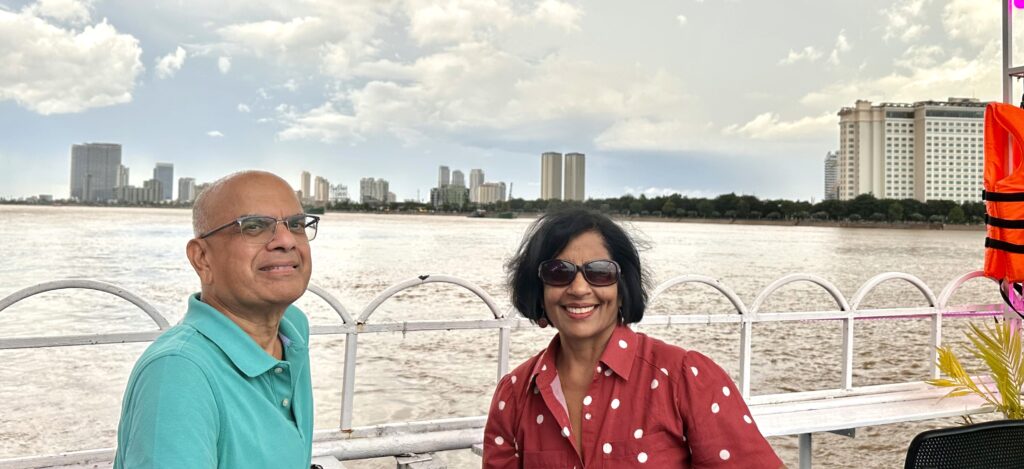
River Boat Cruise – Phnom Penh sits at the confluence of the Tonle Tonlé Sap and Mekong rivers, and is the start of the Bassac River. We went on a 1-hour boat cruise on the Tonle Sap-Mekong river in the evening as the sun was setting. Boat rides are available along the Sisowath Quay promenade around the Royal Palace area.
Cambodia National Museum – The museum was inaugurated during Khmer New Year on 13 April 1920 in the presence of H.M King Sisowath and the director of Cambodian Arts.
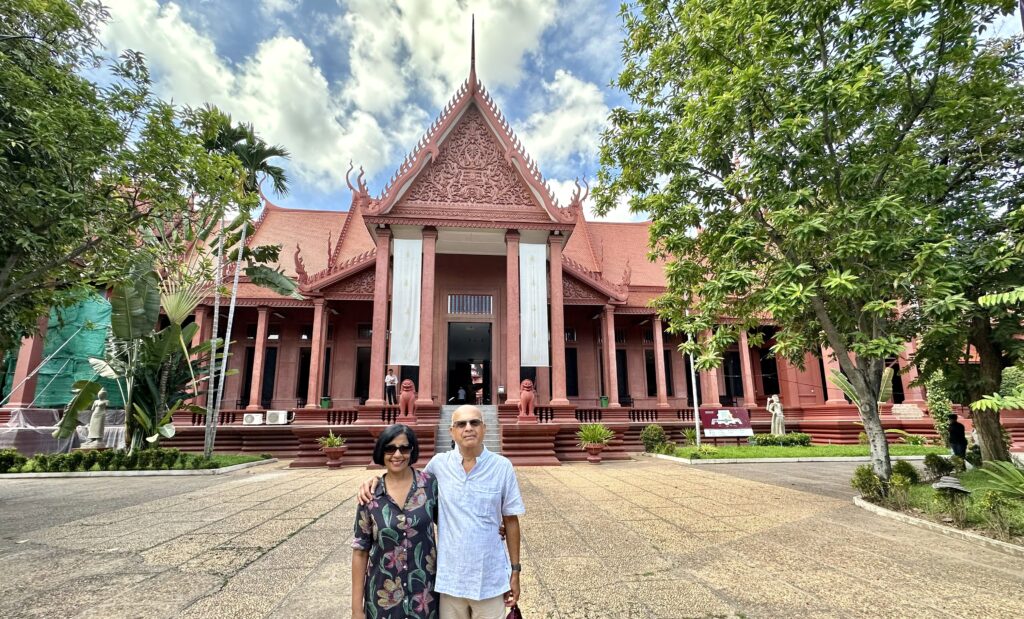
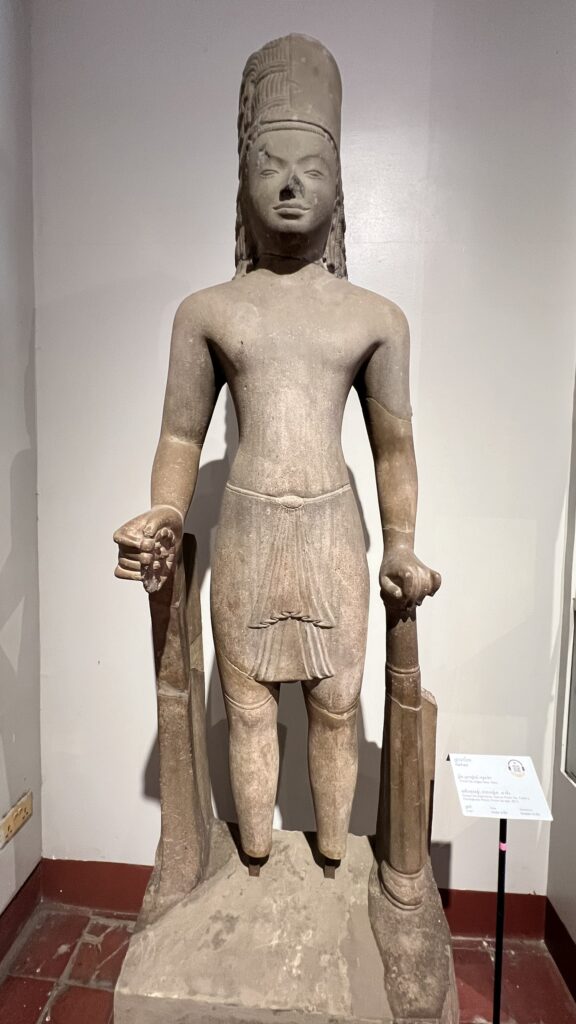
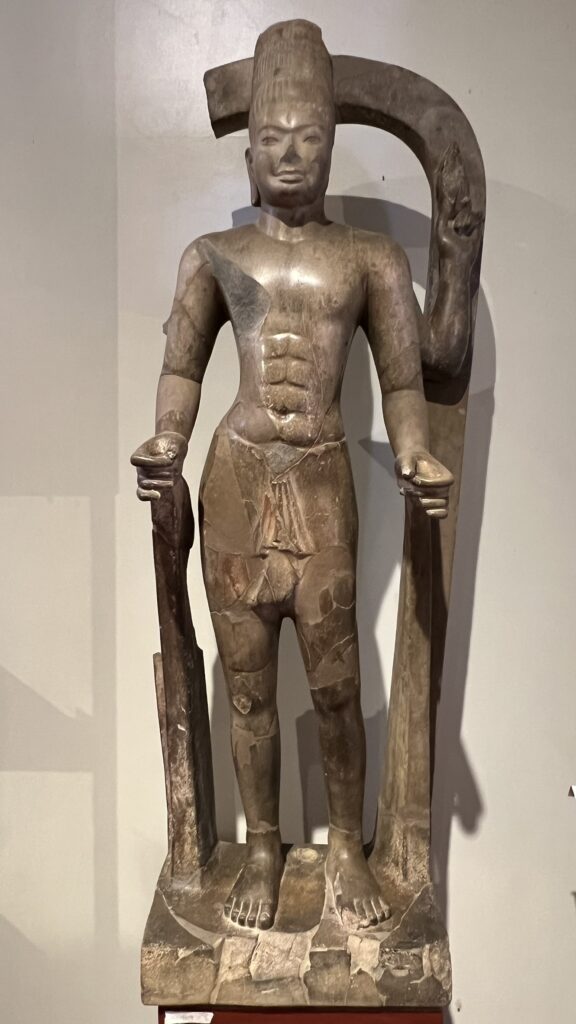
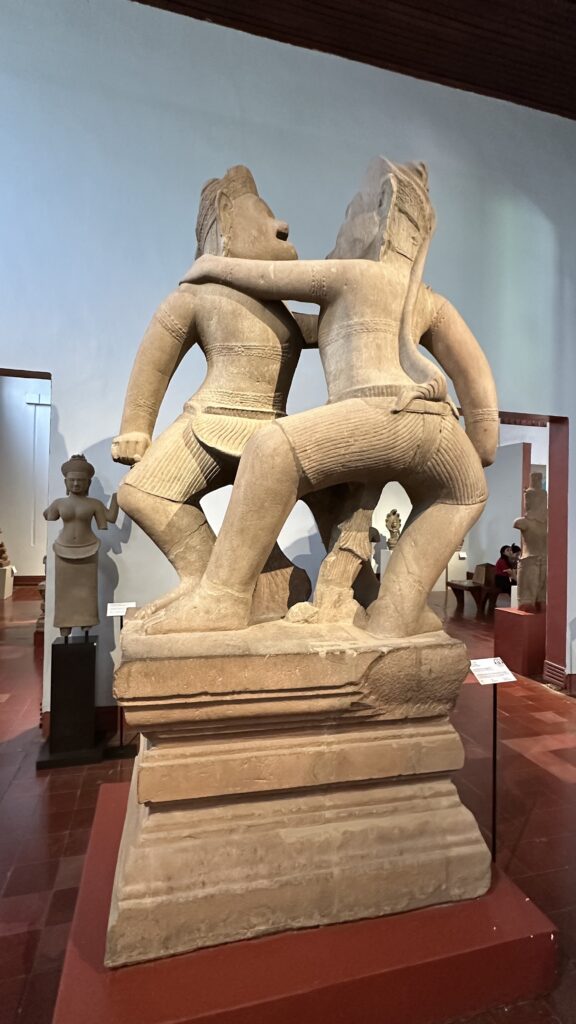
The museum houses one of the world’s largest collections of Khmer art, including wooden, bronze and stone sculptures. Its collection includes over 14,000 items, from prehistoric times to periods before, during and after the Khmer Empire, which at its height stretched from Thailand, across present-day Cambodia, to southern Vietnam. Many of the sculptures are depiction of Hindu god Vishnu.
Wat Phnom – is a Buddhist Temple and a historical site that is part of the Khmer national identity. According to legend, the first pagoda on this site was erected in 1372 to house four statues of Buddha deposited here by the waters of the Mekong River and discovered by Lady Penh. Hence the city name Phnom Penh or hill of Penh.
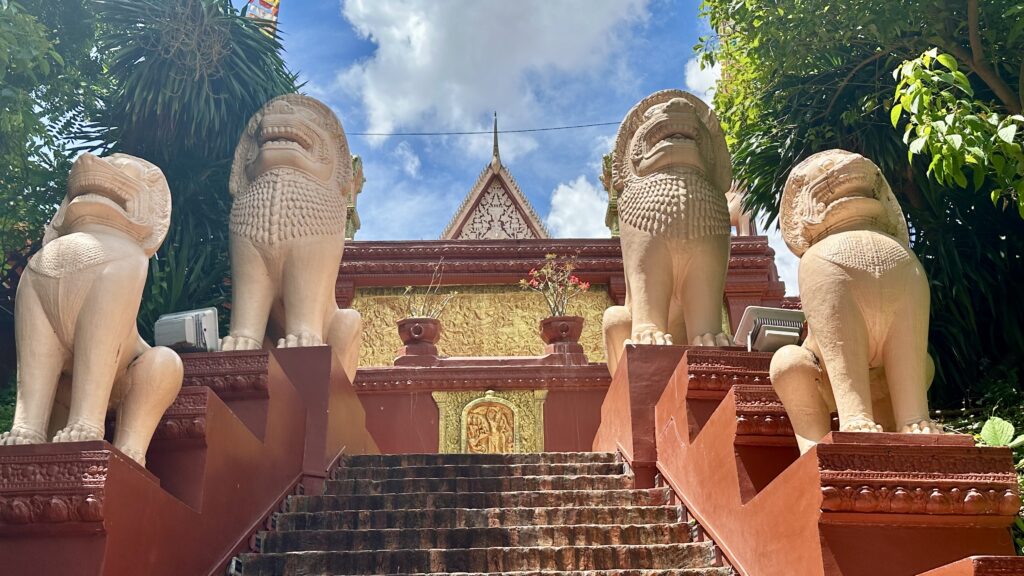
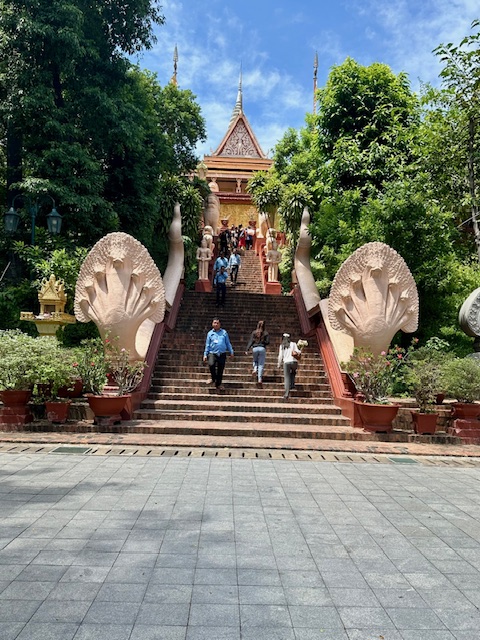
The main entrance to Wat Phnom is via the grand eastern staircase, which is guarded by lions and naga (mythical serpent-being) balustrades.
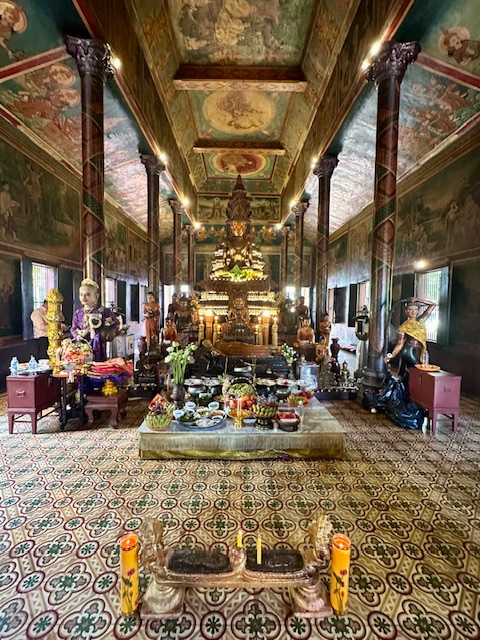
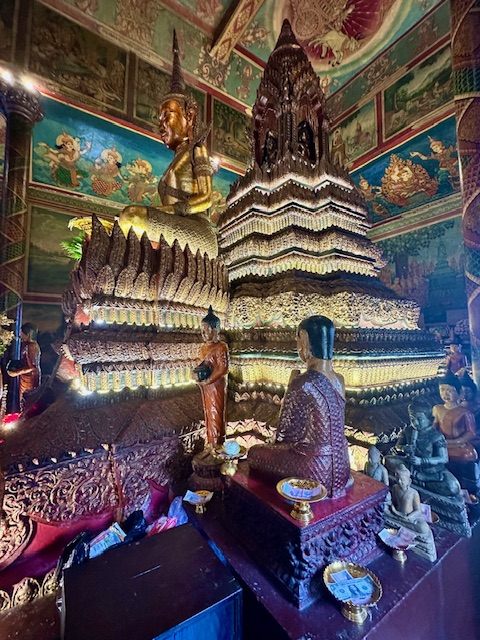
Today, many people come to this temple to pray for good luck and success in school exams or business affairs. The vihara (temple sanctuary) was rebuilt many times between 1434-1926. West of the vihara is a huge stupa containing the ashes of King Ponhea Yat (1405–67). In a pavilion on the southern side of the passage between the vihara and the stupa is a statue of a smiling Lady Penh.
Tuol Sleng Museum – or simply Tuol Sleng (meaning Hill of the Poisonous Trees), is a museum chronicling the Cambodian genocide that happened between 1976-1979 when the Khmer Rouge regime was in power. It was the site of a secondary school that was shut down by the Khmer Rouge regime and used as a Security Prison 21 (S-21).
From 1976 to 1979, an estimated 20,000 people were imprisoned at Tuol Sleng (the precise number is unknown). They were repeatedly tortured and coerced into naming family members and close associates, who were in turn arrested, tortured and killed. Most of the victims were from the previous Lon Nol regime and included soldiers, government officials, academics, doctors, teachers, monks, engineers, students, and factory workers. Later, the party leadership’s paranoia turned on its own ranks and purges throughout the country saw thousands of party activists and their families brought to Tuol Sleng and murdered. Many were executed at the Choeung Ek (see next section) extermination center.
In 1979, the prison was uncovered by the invading Vietnamese army. Today, the buildings at Tuol Sleng are preserved, with some rooms still appearing just as they were when the Khmer Rouge were driven out in 1979. The regime kept extensive records, including thousands of photographs. Several rooms of the museum are now lined, floor to ceiling, with black and white photographs of some of the estimated 20,000 prisoners who passed through the prison.
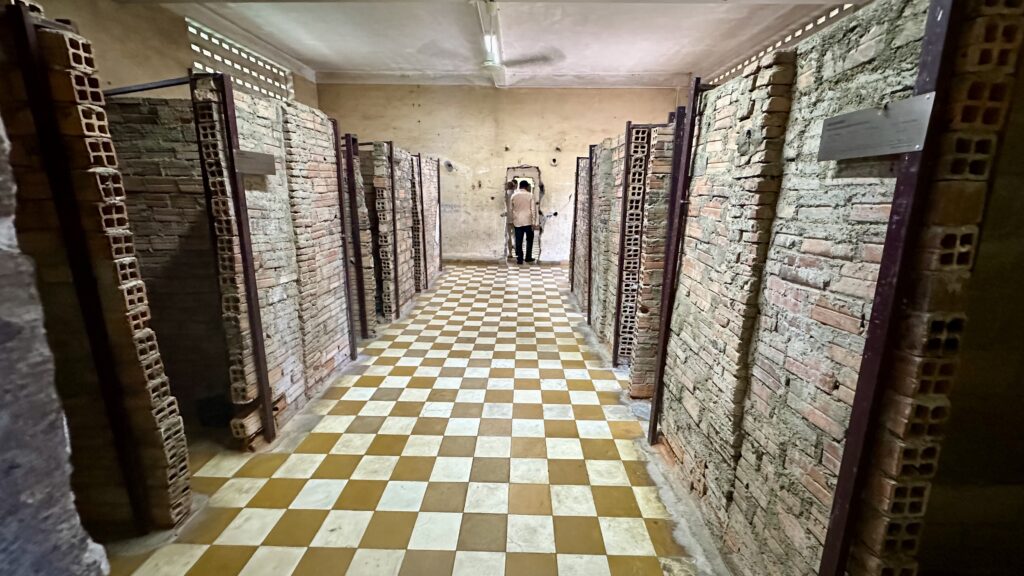
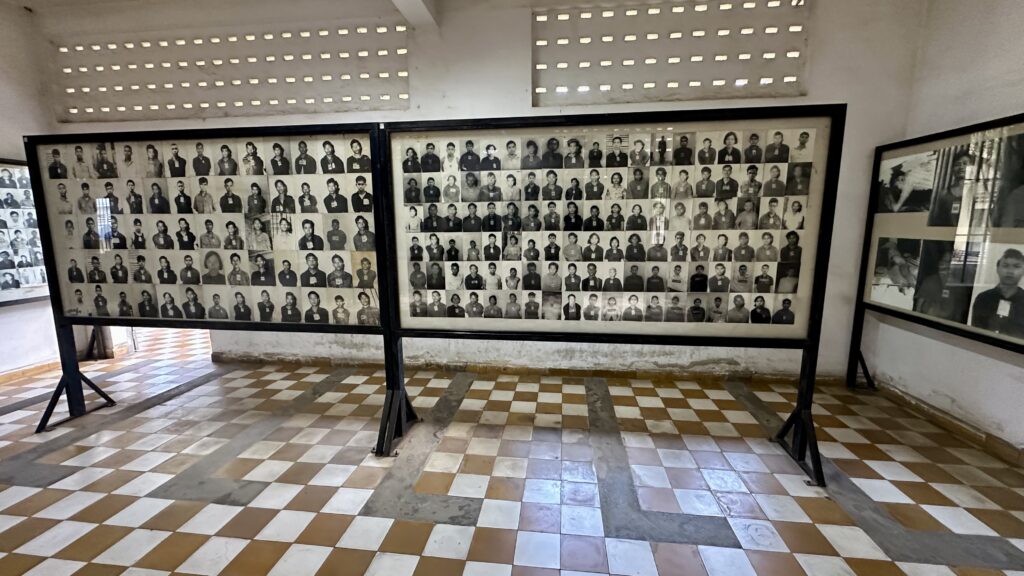
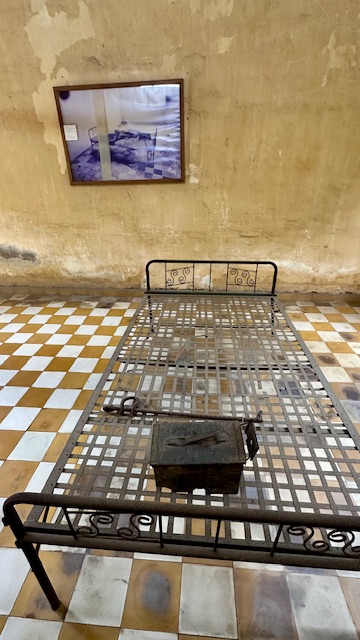
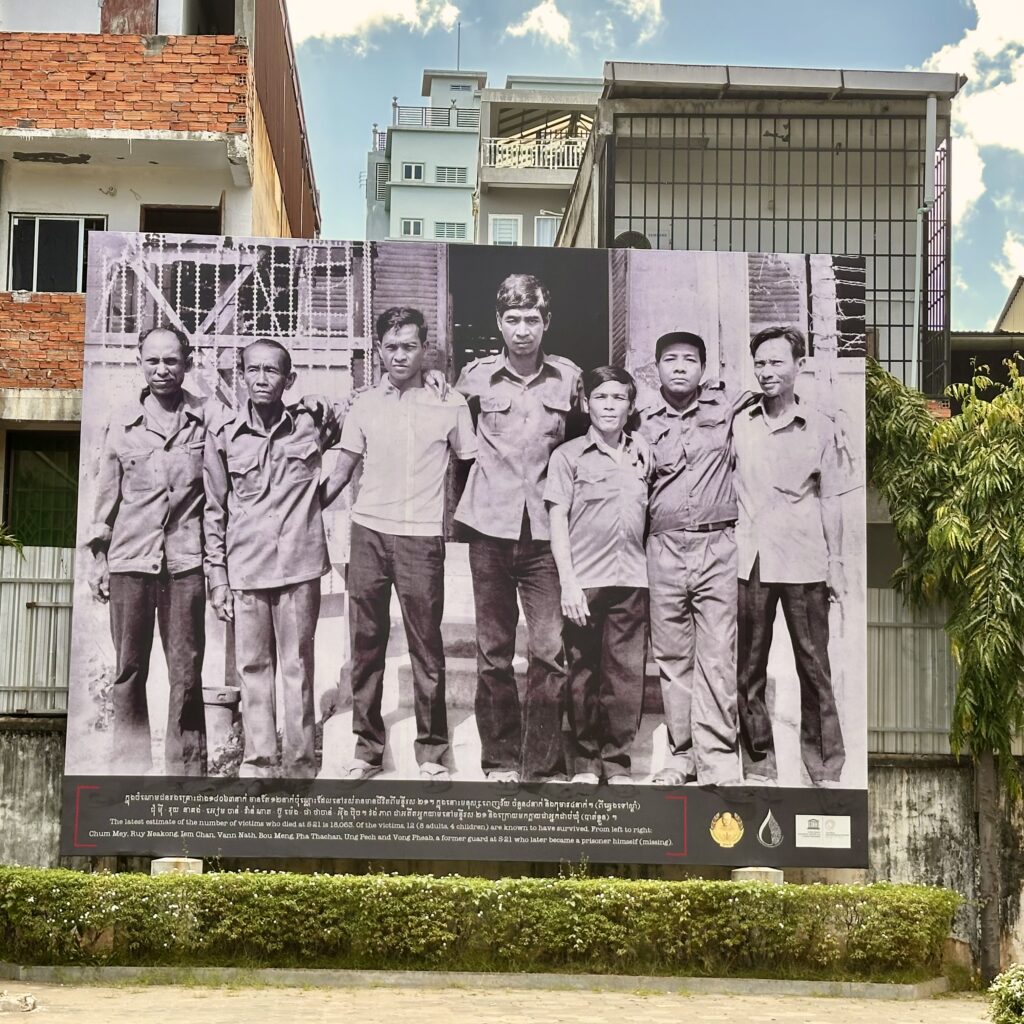
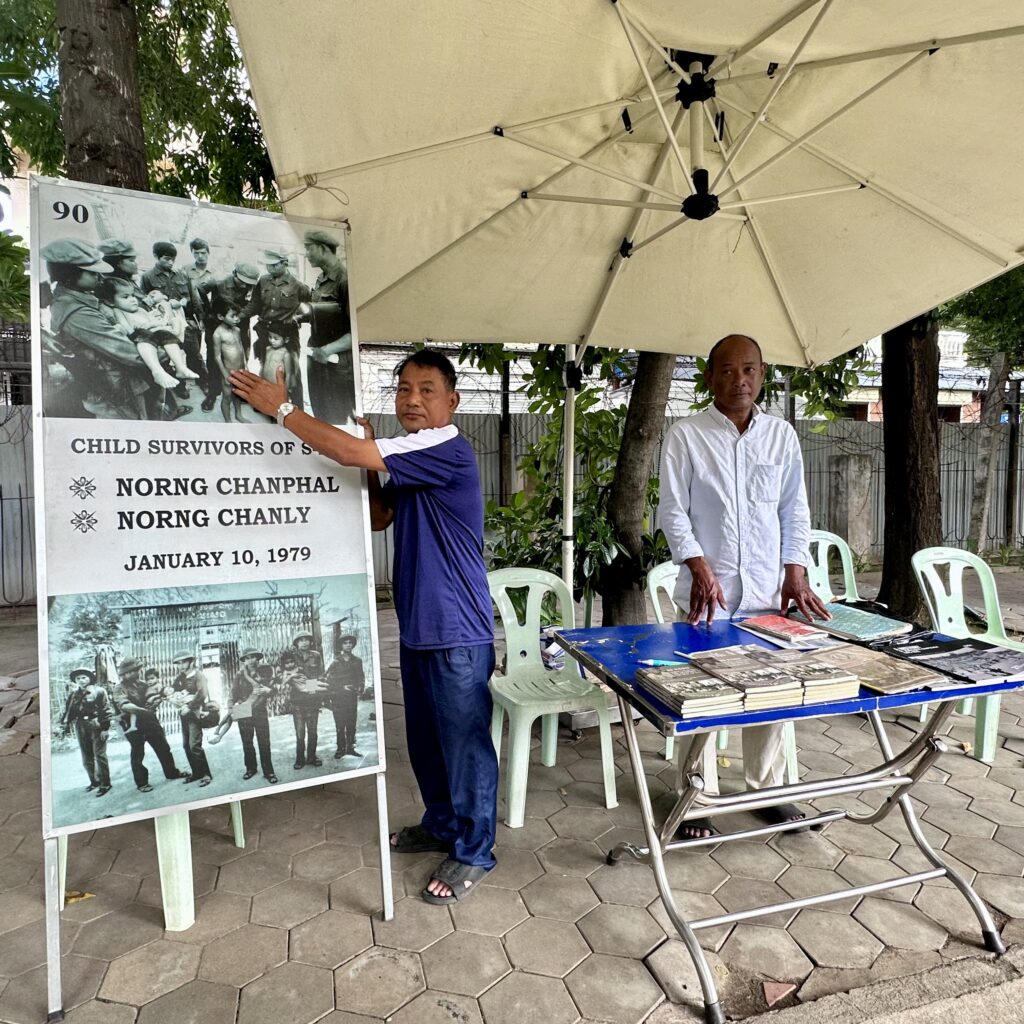
Out of an estimated 20,000 people imprisoned at Tuol Sleng, there were only twelve known survivors – seven adults and five children. One of the survivor (who was a child prisoner) was present at the museum site and wrote a book about his experience.
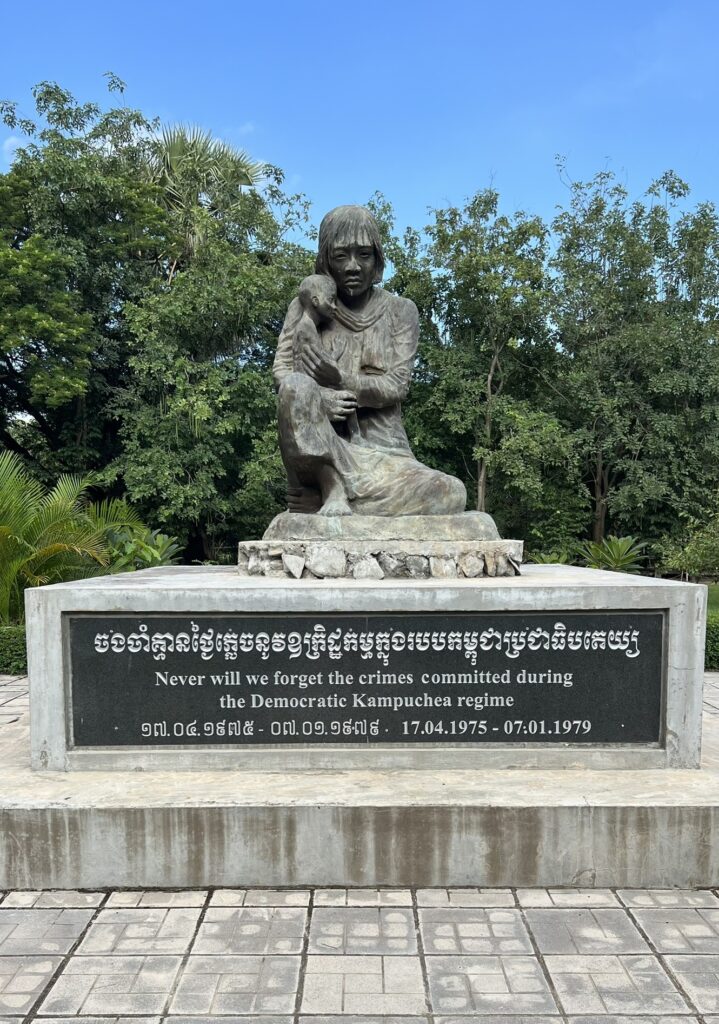
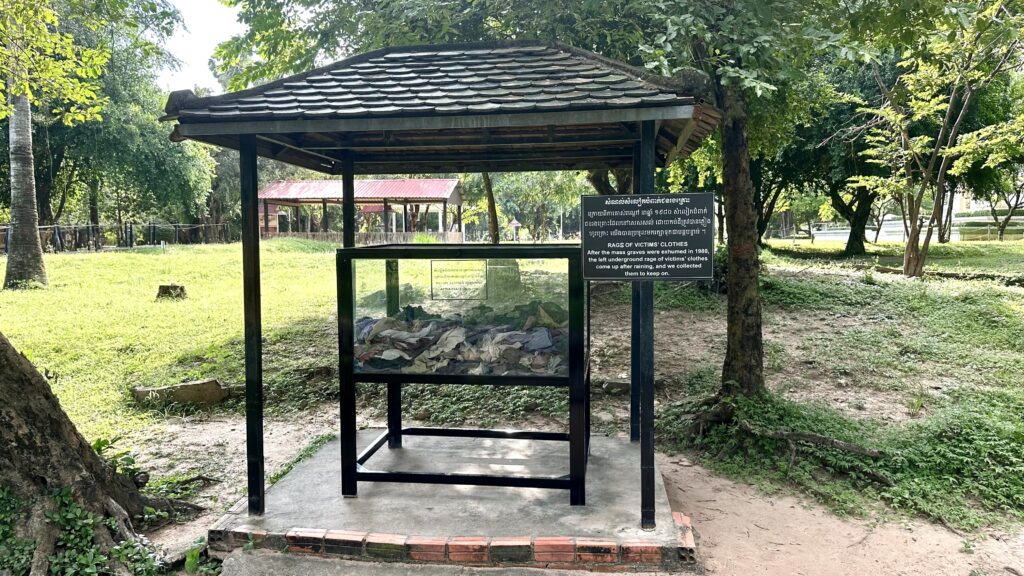
Choeung Ek – A former orchard field that was used as a Killing Field by Khmer Rouge regime between 1975-1979. In under four years, it’s estimated that between 1-3 three million Cambodians were killed under Pol Pot’s authoritarian command. Located about 17 km south of the city centre, it was attached to the Tuol Sleng detention center. The bodies of 8,895 victims were exhumed from the site after the fall of the Rouge, who would have been executed there – typically with pickaxes to conserve bullets – before being buried in mass graves.
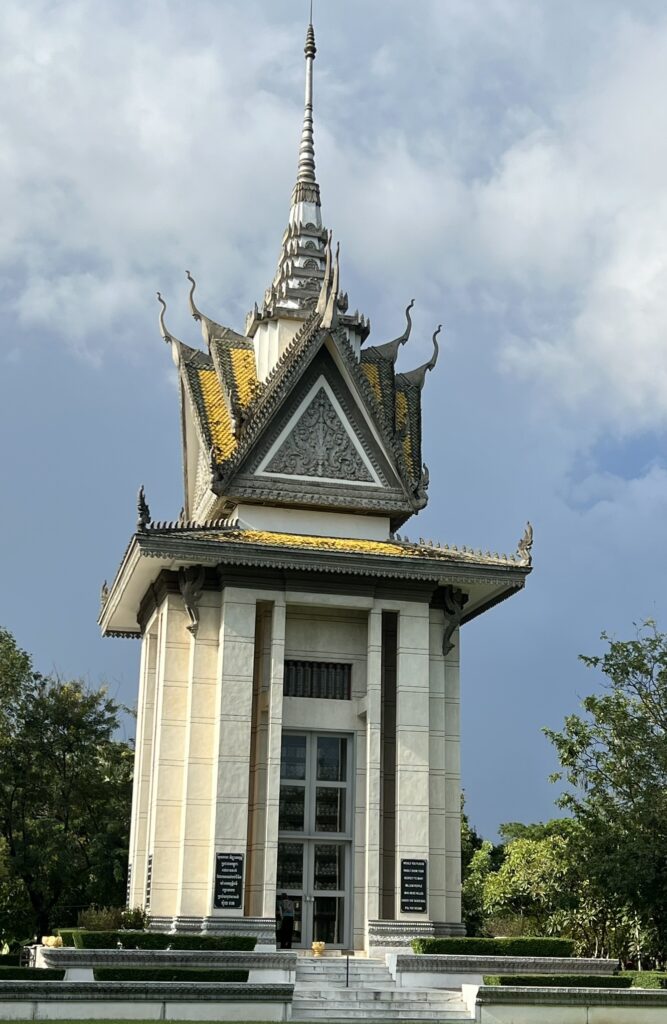
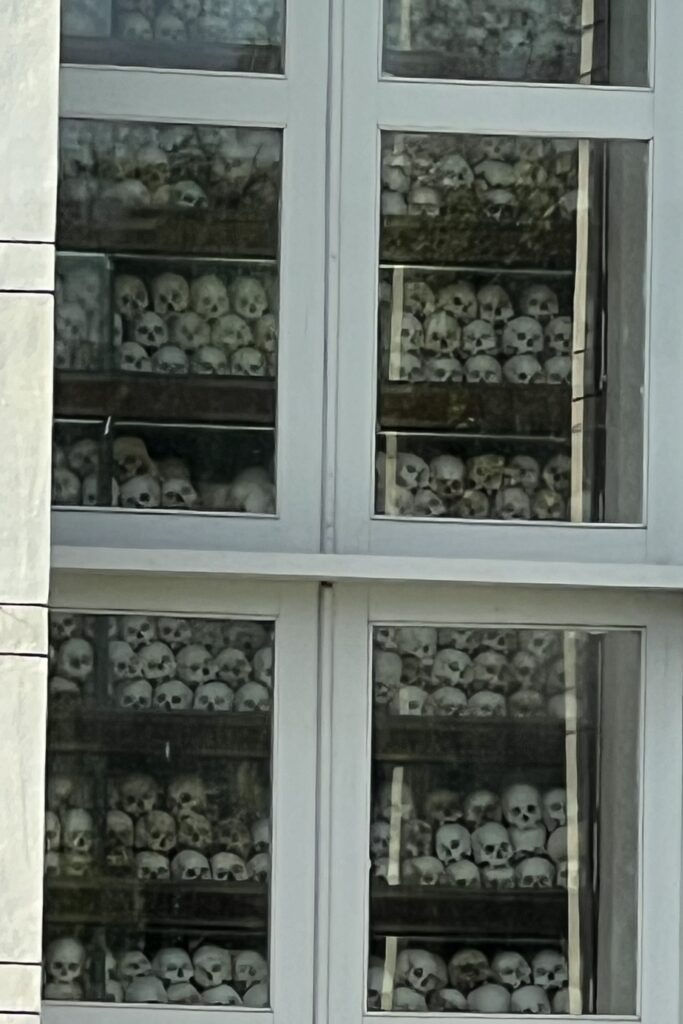
Today, Choeung Ek is a memorial, marked by a Buddhist Stupa. The stupa has acrylic glass sides and is filled with over 5,000 human skulls, many of which have been shattered or smashed in. Apart from the stupa, there are pits from which the bodies were exhumed. Human bones still litter the site.
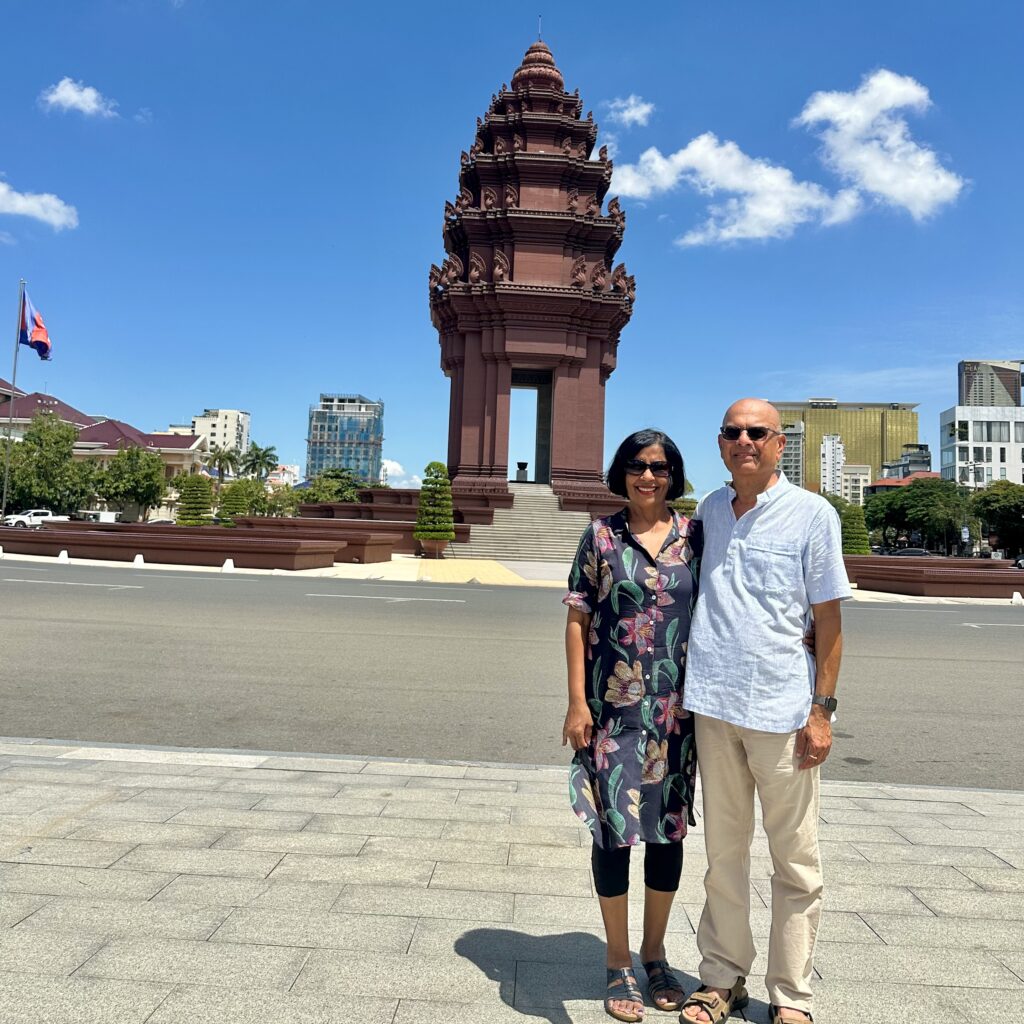
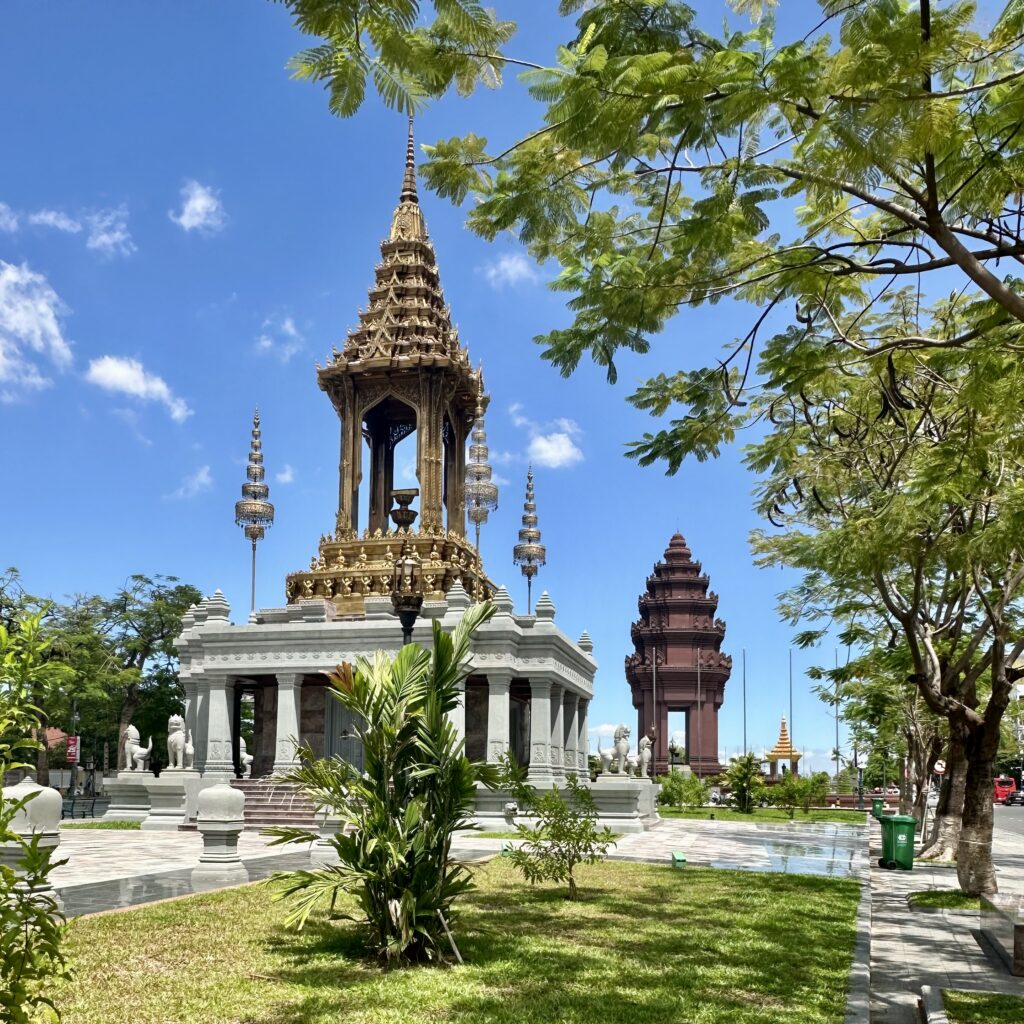
Independence Monument – You don’t have to go out of your way to visit this monument. It is located on a roundabout in the intersection of Norodom Boulevard and Sihanouk Boulevard in the centre of the city. The Monument was built to celebrate Cambodia’s independence from French colonial rule in 1953. The sandstone structure represents an Angkorian temple, intricately decorated with nagas (multi-headed snakes).
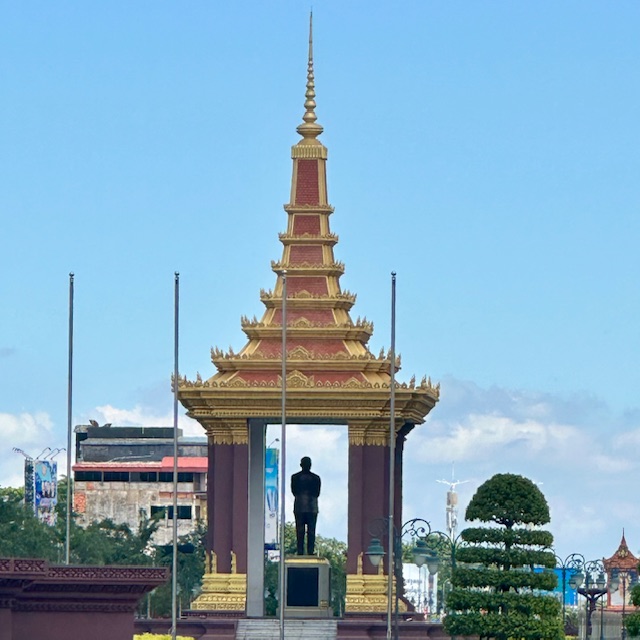
Norodom Sihanouk Memorial – also called the Statue of King Father Norodom Sihanouk, is located east of the Independent monument and it commemorates former King Norodom Sihanouk. The bronze statue is 4.5 meters tall and is housed under a 27 meter high stupa.
Psar Thmei – A landmark building in the capital, Psar Thmei (or New Market) is often called the Central Market, a reference to its location and size. It was built in 1937 and at that time was the biggest market in Asia.
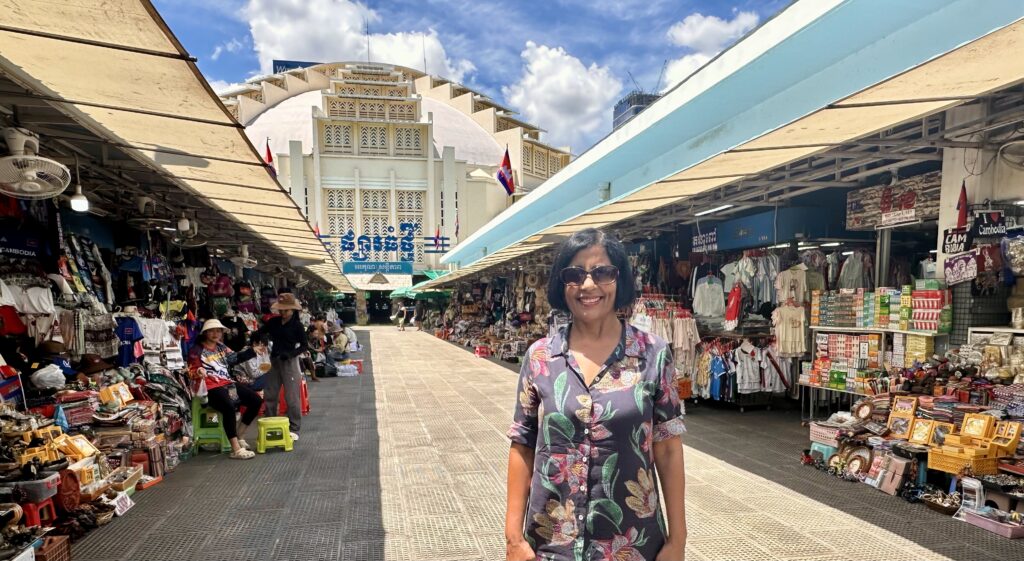
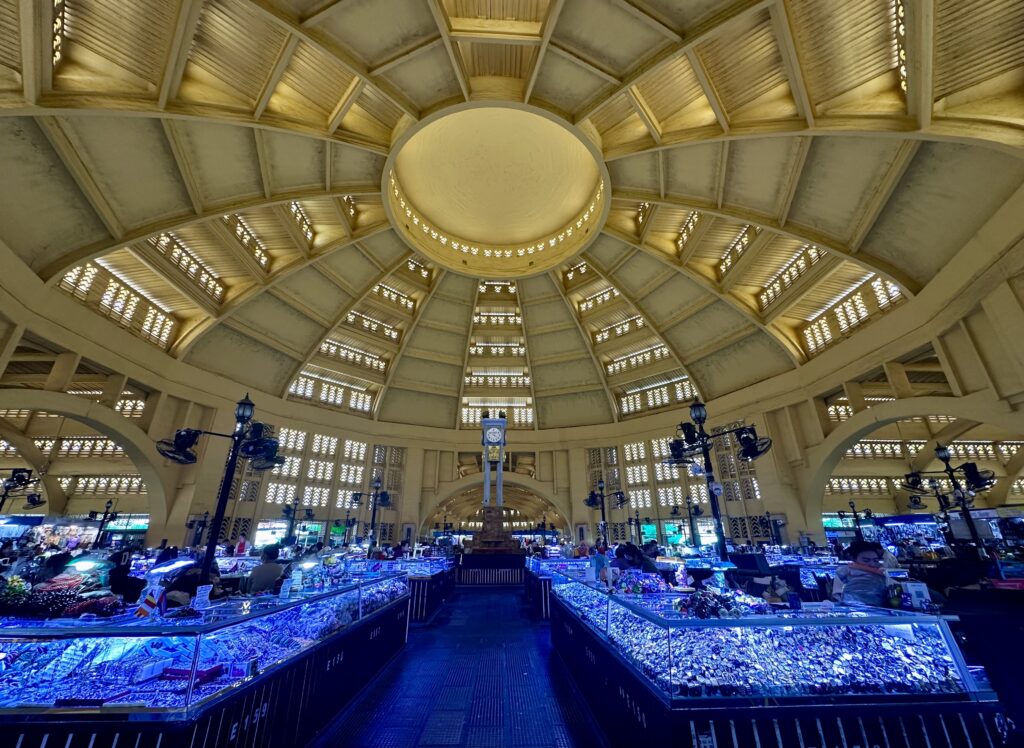
The huge domed hall resembles a Babylonian ziggurat and some claim it ranks as one of the 10 largest domes in the world. The central hall is cool and airy and has four wings filled with stalls selling gold and silver jewelry, antique coins, dodgy watches, clothing and other such items.
Russian Market – In addition to Psar Thmei (see section above), there is the Russian Market bustling with energy and filled with handmade crafts to clothes and souvenirs. The place is packed with shops selling all kinds of food, spices, clothes, art items and more.
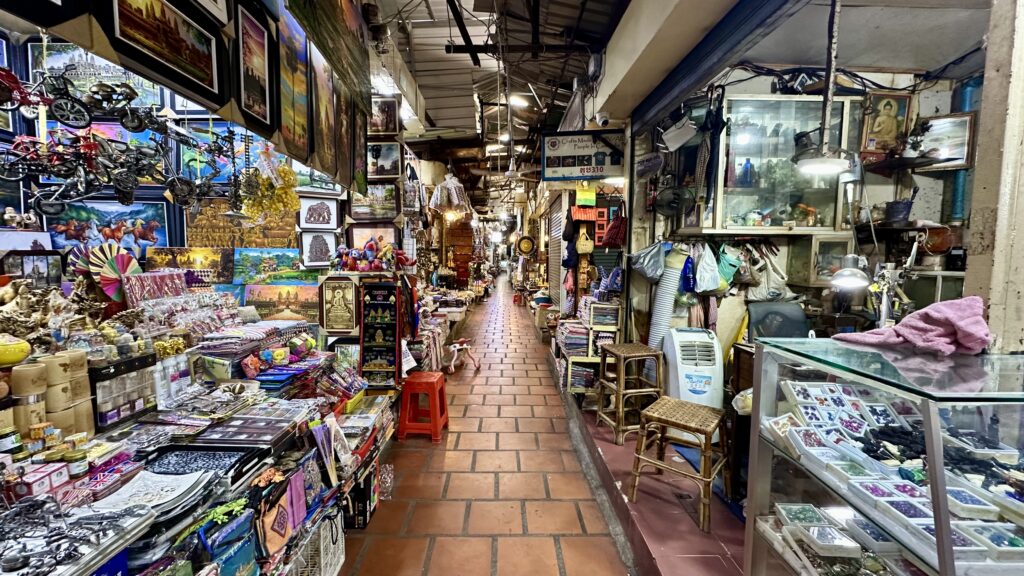
Why is It named Russian Market – In the 1980s, when Russians came to work and live in the capital Phnom Penh, they just preferred shopping at this market, hence the name.
Phnom Preah Reach Throap – We visited this stupa on the way to Battambang. It is located in Oudong, about 40km north of Phnom Penh, on a hilltop. Oudong used to be the capital of Cambodia after it shifted from nearby Longvek in 1618 and was the seat of power for over two centuries until around 1863 when it shifted to what is now Phnom Penh. The ancient capital once radiated out around the base of this mountain in all directions.
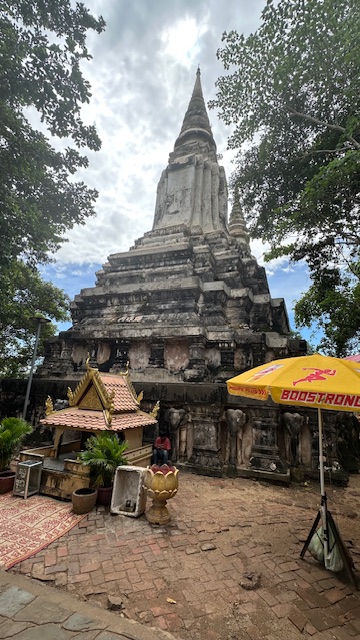
Phnom Preah Reach Throap, is a sacred mountain that features relics from settlements in ancient times well before becoming a sacred place for royalty and Theravada Buddhism in the 17th-century capital. After taking a flight of stairs, you will reach the stunning white stupa that is a modern addition completed in 2002, known as Preah Shakyamuni Chedi. It houses Buddha relics transferred from a stupa in Phnom Penh. The stupa is dedicated to King Norodom Sihanouk.
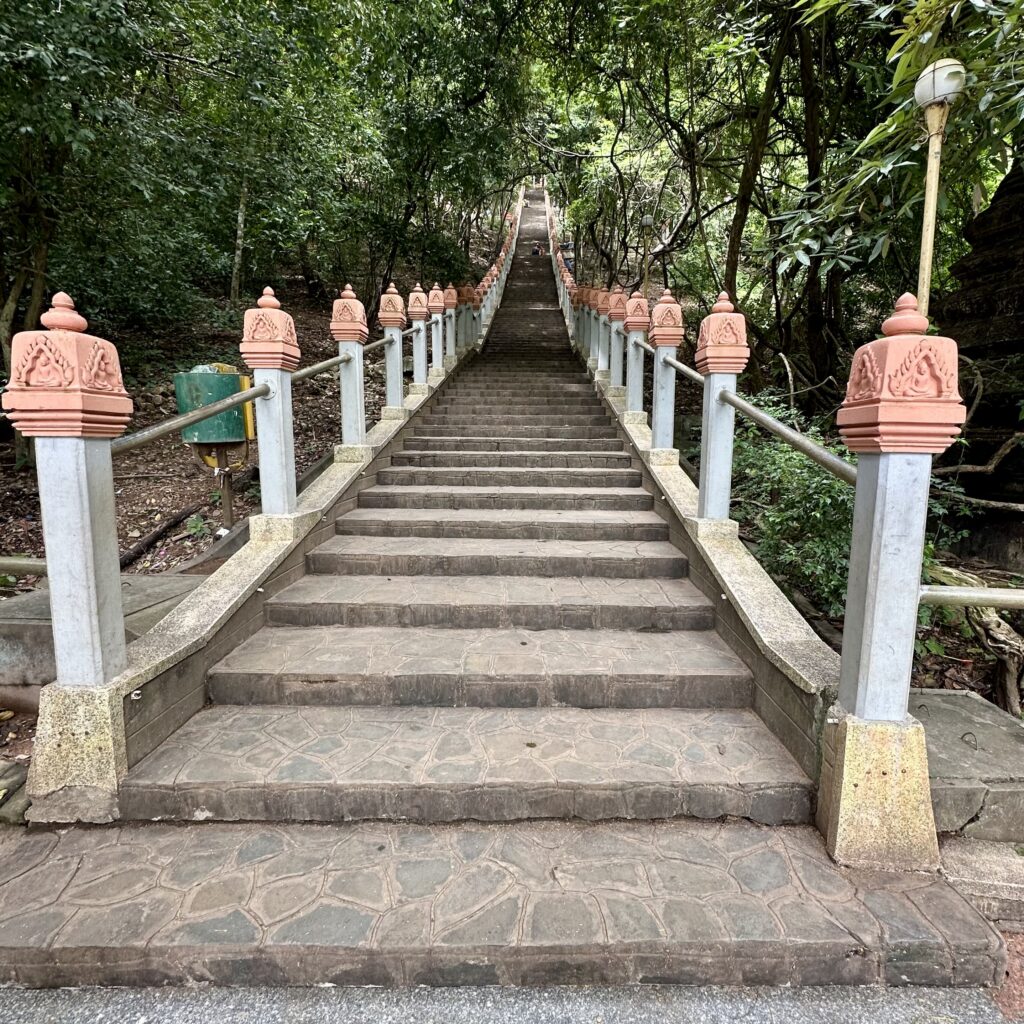
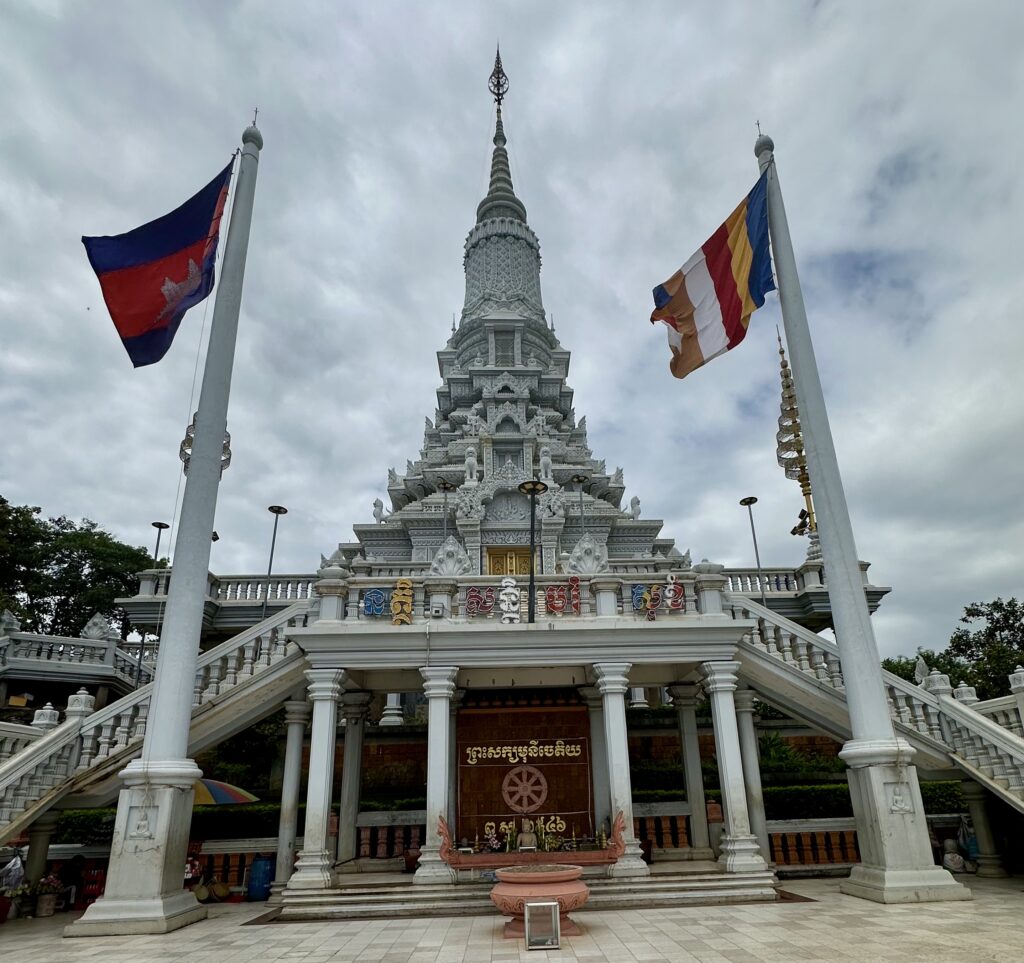
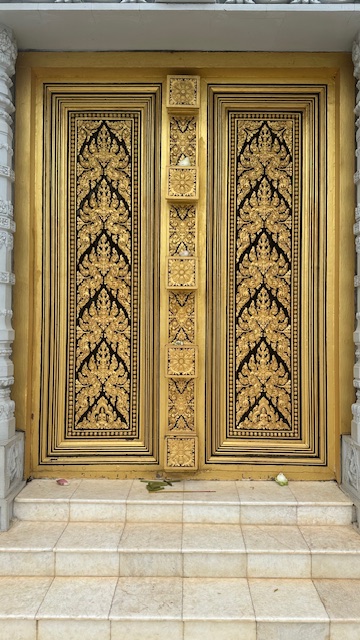
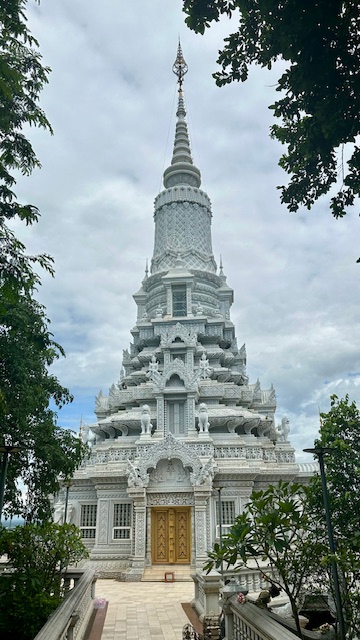
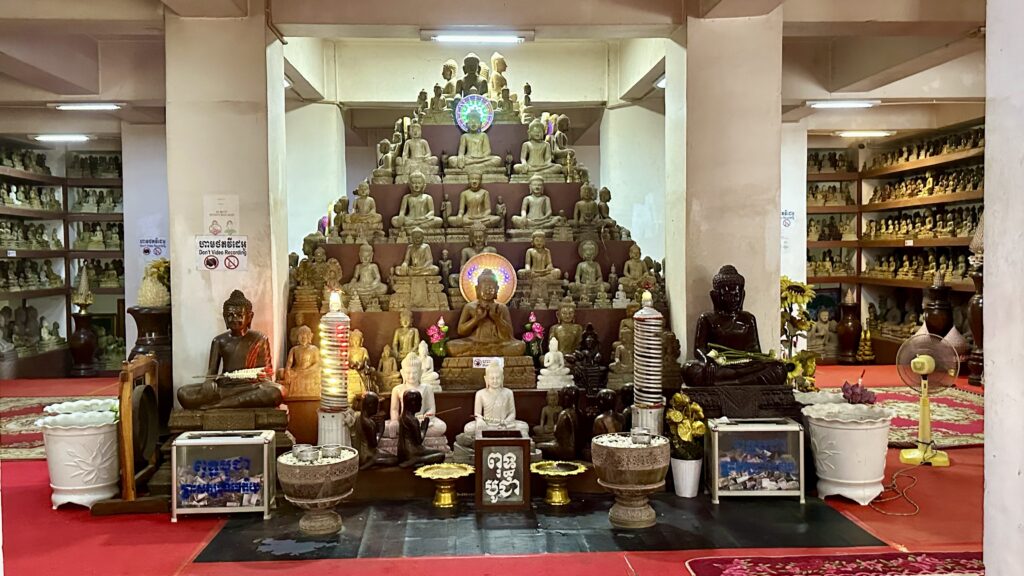
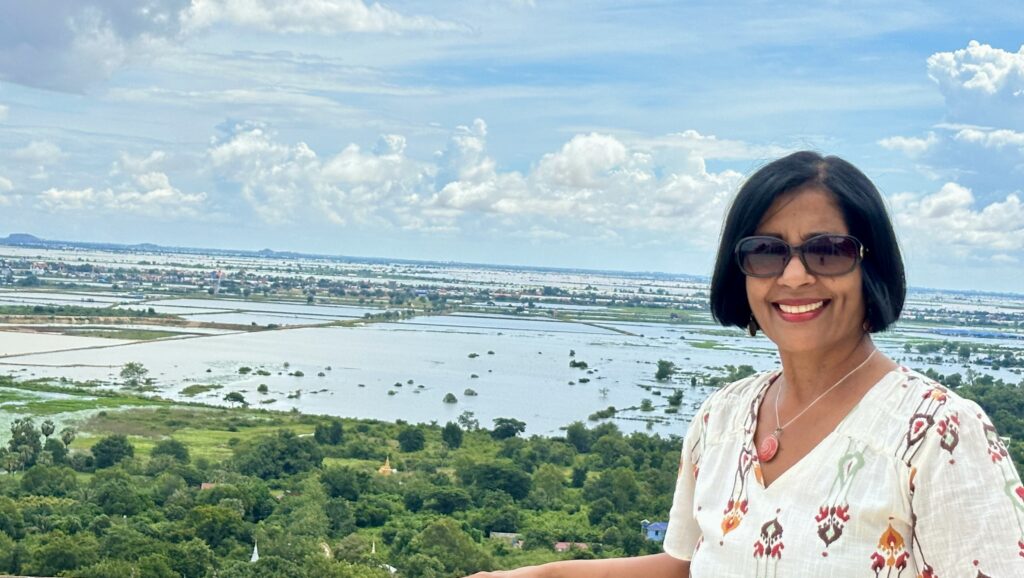
The shrine at the top has many Buddha statues arranged on shelves and in the center. The panoramic views from the top are breathtaking, making it a perfect spot for photography enthusiasts.
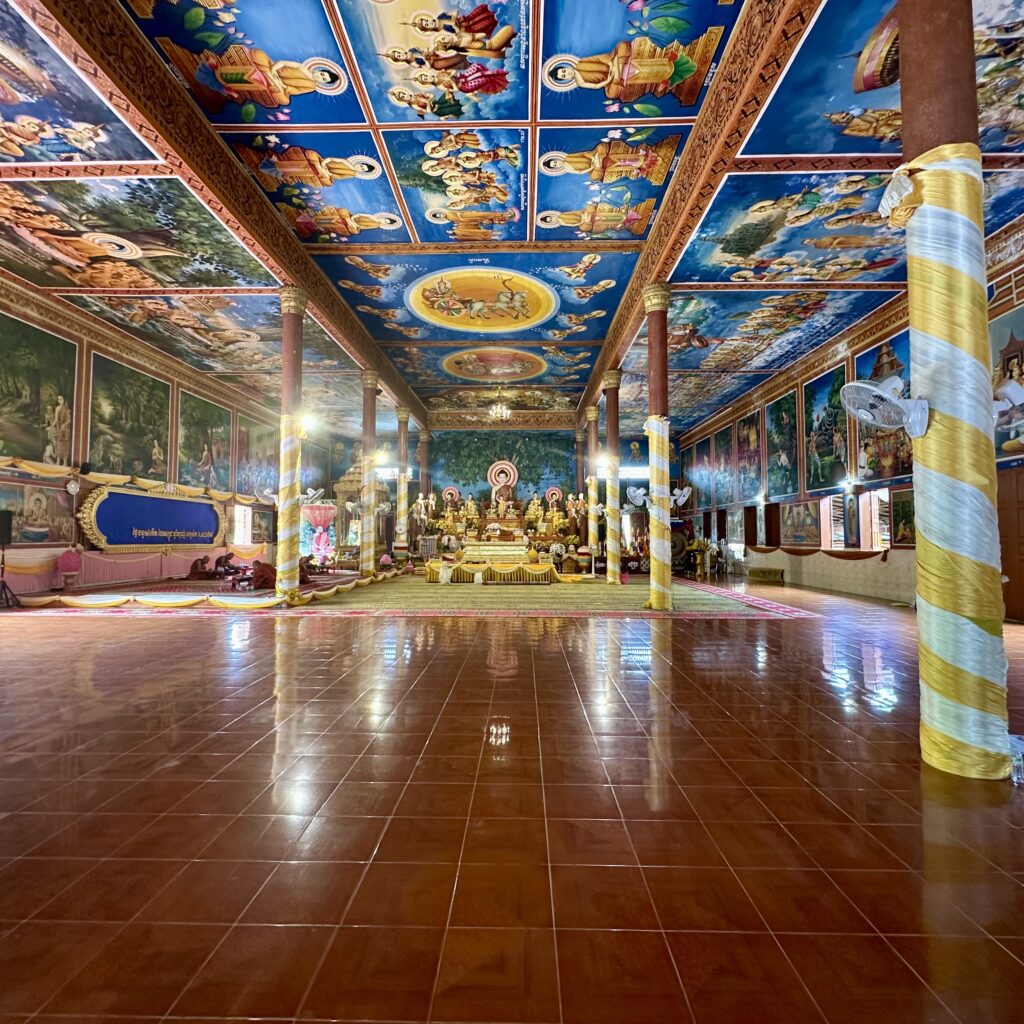
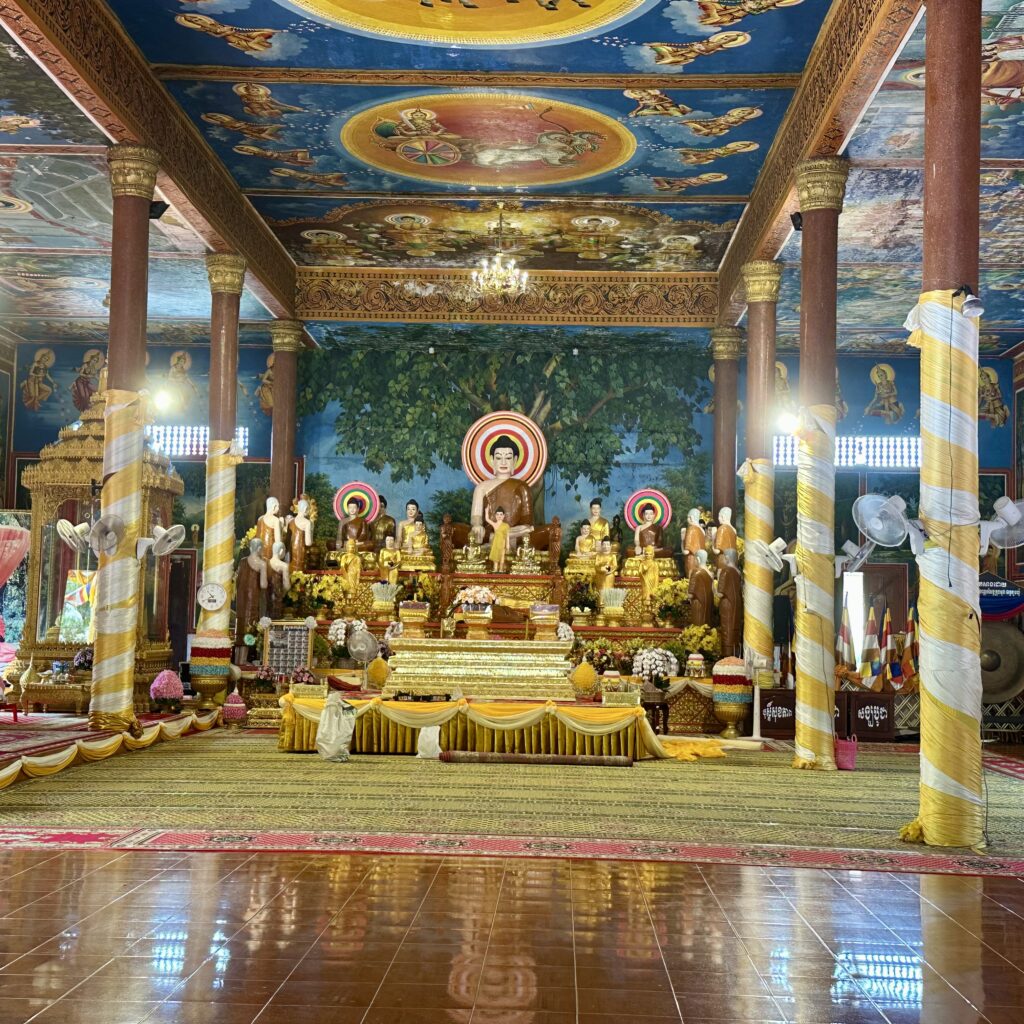
Vipassana Dhurak Buddhist Centre – We could see this ornate monastery from the top of Oudong mountain. it serves as a sanctuary for Vipassana meditation and features beautiful Khmer architecture, gardens with statues, a large pagoda, and murals. The centre is open to the public, offering guided meditation sessions, cultural workshops, and opportunities to learn from monks.
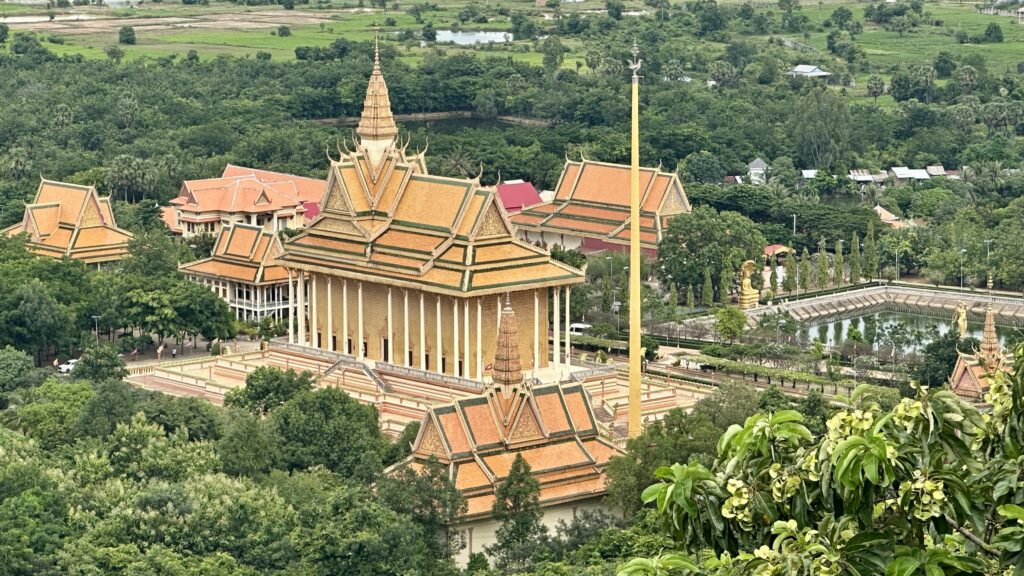
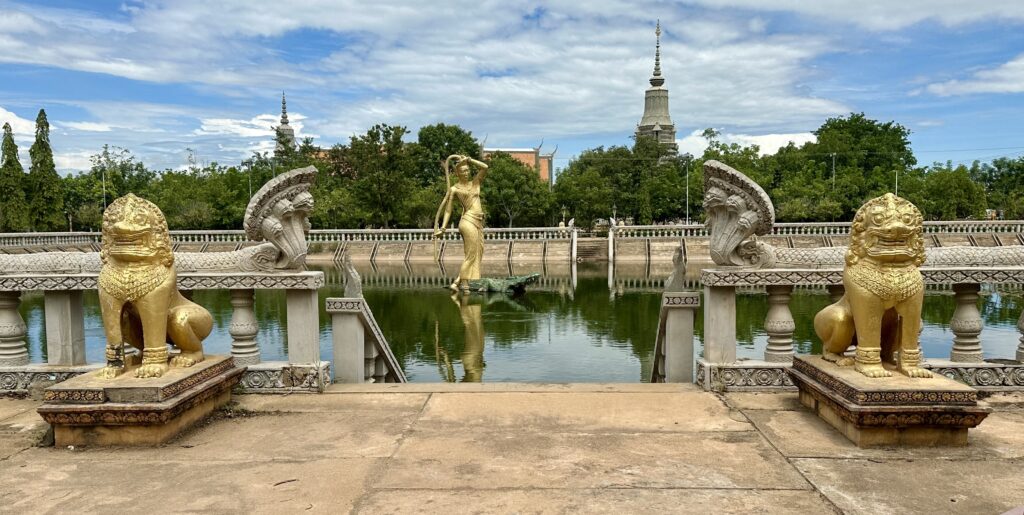
On the day of our visit the center was closed. We wandered around the grounds, checked out the huge monks’ dining hall and the garden which has a large pond with golden statues.