2 Nights at Cambana La River Hotel
Battambang is the capital of Battambang province and the third largest city in Cambodia. The Sangkae River, winds its way through the province. Battambang province is considered the rice bowl of Cambodia, with the city harbouring many mills that process rice for national and international markets. The city of Battambang is 290km north of Phnom Penh and it took us a little more than 5 hours to reach (4 hours if you don’t stop for lunch or site seeing)
- Lok Ta Dumbong Kro Nhong
- Battambang Central Market
- Old Stone Bridge
- Governors Residence
- Sar Kheng Park
- Independence Monument
- Ek Phnom Temple
- Killing Caves of Phnom Sampeau
- Battambang Bat Caves
- Battambang Bamboo Train
- Traditional way of making Rice Paper
- Rice Wine, Banana
- Banteay Chhmar Temple
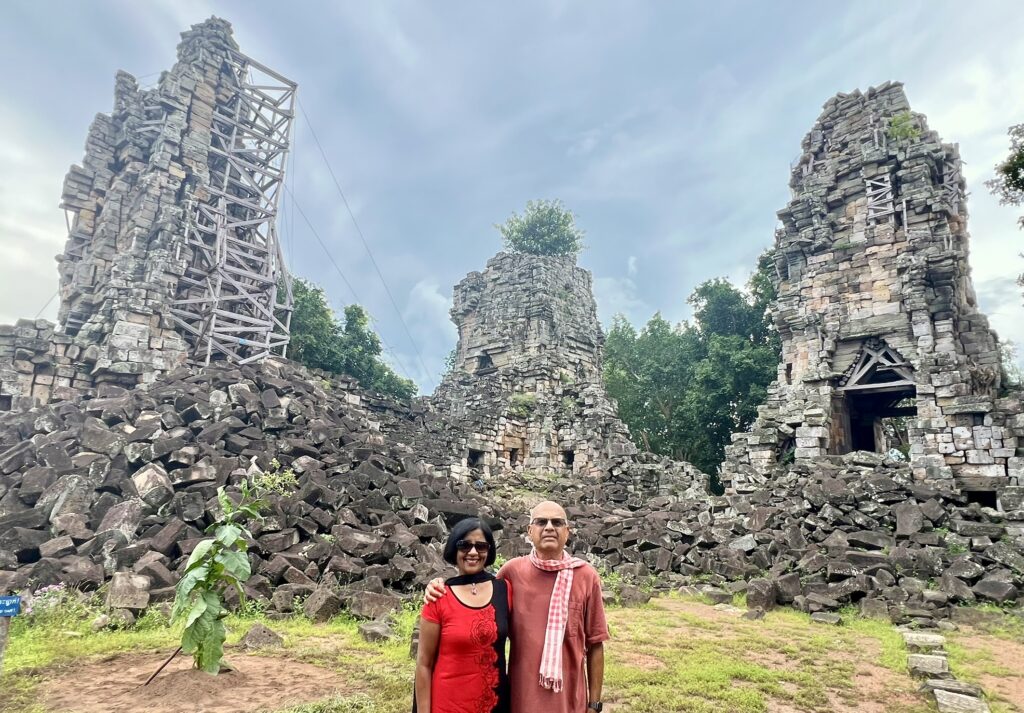
- Banteay Toap
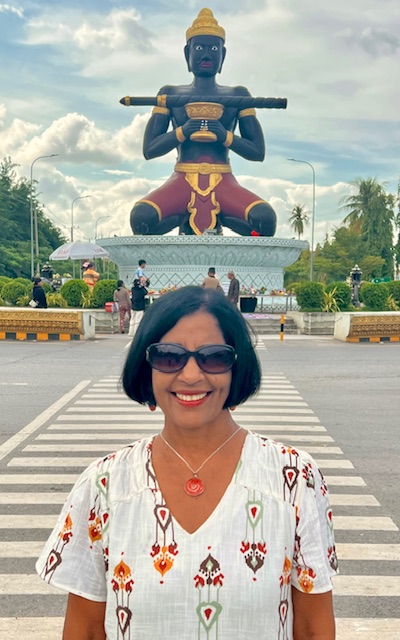
Lok Ta Dumbong Kro Nhong – This was the first site we encountered on reaching Battambang. Easily recognizable with its bright colors, the giant statue of a man holding a black stick, stands at a prominent roundabout and is a significant landmark in Battambang.
Legend has it that Ta Dumbong was a cow herder who used a magic stick to overthrow a King. Praying to Ta Dumbong Kro Nhong is believed to bring good fortune and prosperity. Visitors often bring lotus flowers and assorted donations as offerings while saying prayers for good luck.
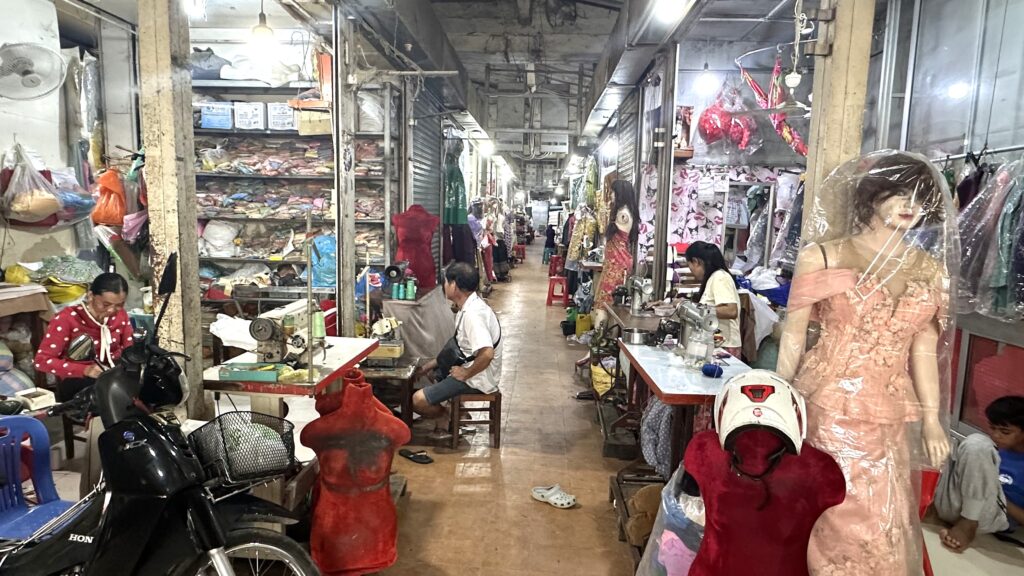
Battambang Central Market (Phsar Nath Market) – is a bustling hub located in the heart of the city. This vibrant market offers a wide array of goods, including fresh produce, textiles, and local handicrafts. Visitors can experience the lively atmosphere while exploring various stalls and interacting with local vendors.
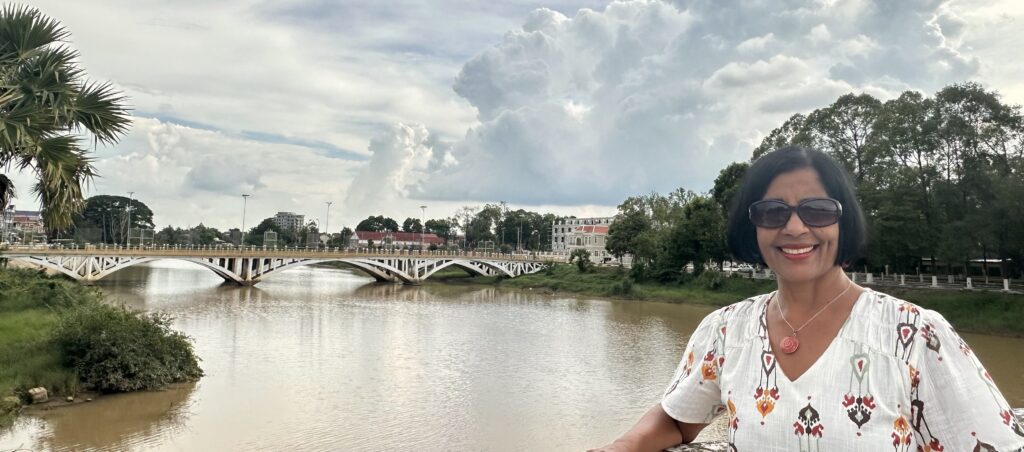
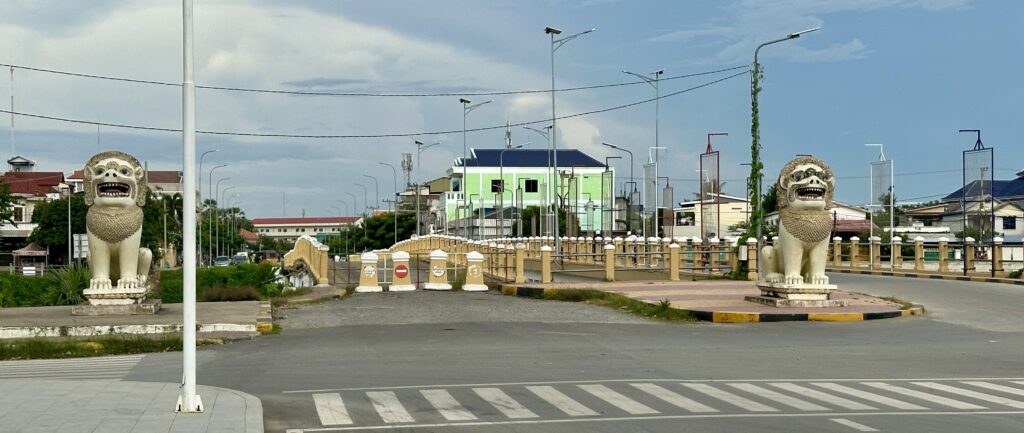
Old Stone Bridge – also known as Spean Thmor Chas in Khmer, this bridge is a remarkable historical landmark located in Battambang province. Constructed during the French colonial era in 1916, this bridge has stood the test of time for over a century and serves as a vital connection across the Sangkae River between the east and west sides of Battambang. Although vehicles can no longer traverse its aged structure, it remains accessible for pedestrians and cyclists who wish to soak up its rich history. We walked across the bridge a few times.
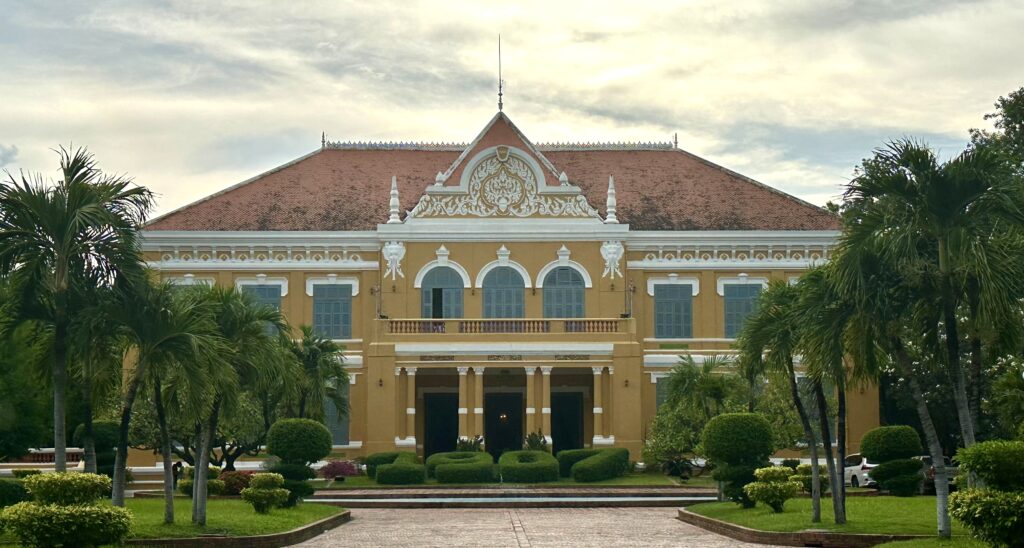
Governors Residence – Also known as Battambang Provincial Hall and Royal Residence, it was built during the era of Thai occupation and originally designed by an Italian architect in 1905 and later taken over by the French who used it as the provincial hall and governor’s residence during the colonial era. It later served as the provincial hall for Battambang until 2005. The building now operates as a heritage museum with collections and displays spread across several rooms and its two floors.
The building is located in front of the Old Stone Bridge(see above section) and the 2 visits can be combined.
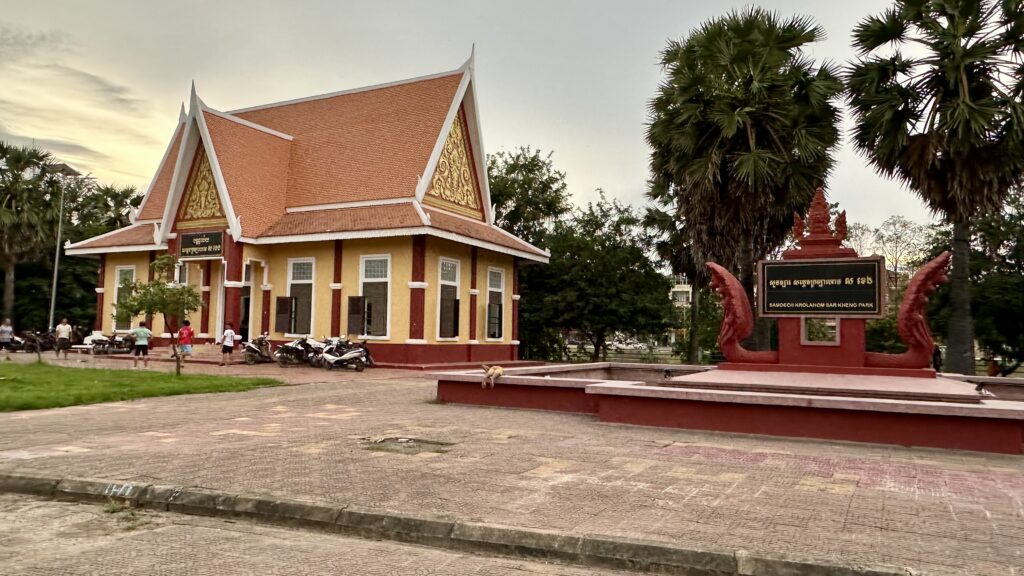
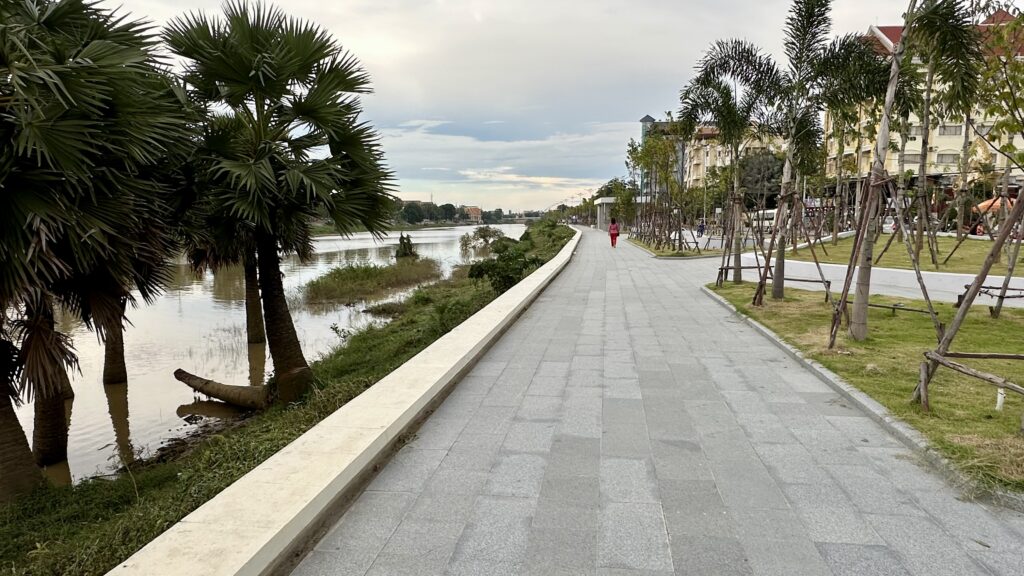
Sar Kheng Park – is a charming riverside spot with French-influenced architecture and is a lively place to relax and unwind amidst a pleasant environment. Locals gather here to socialize.
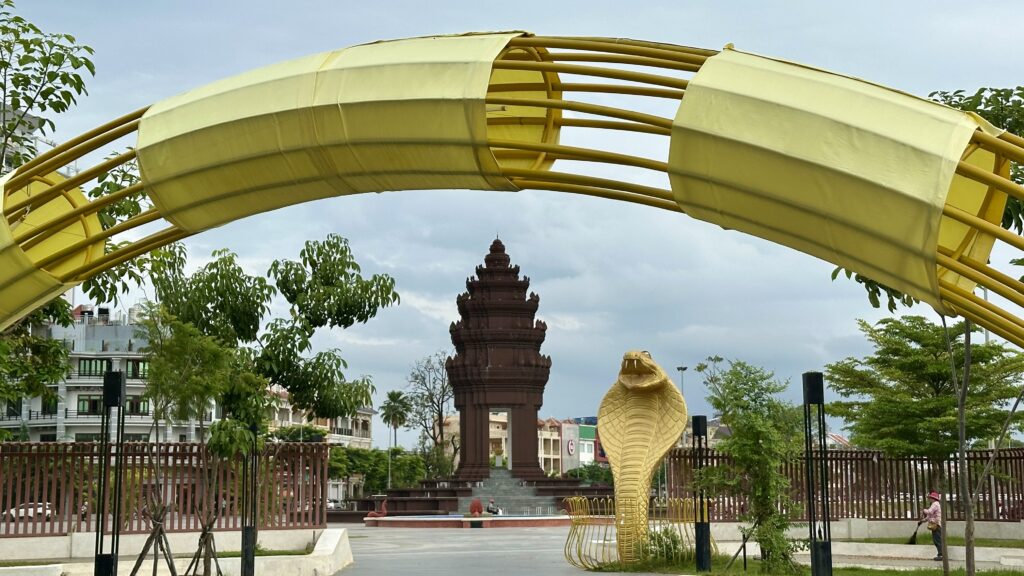
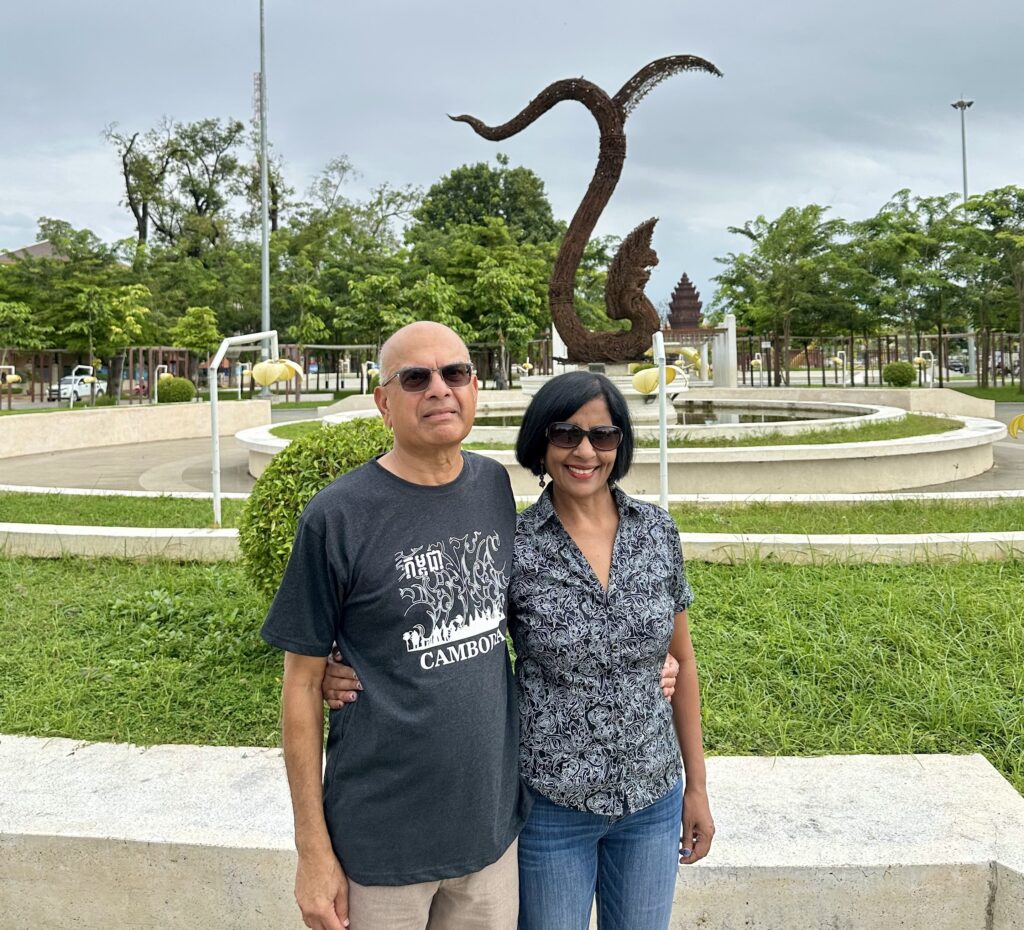
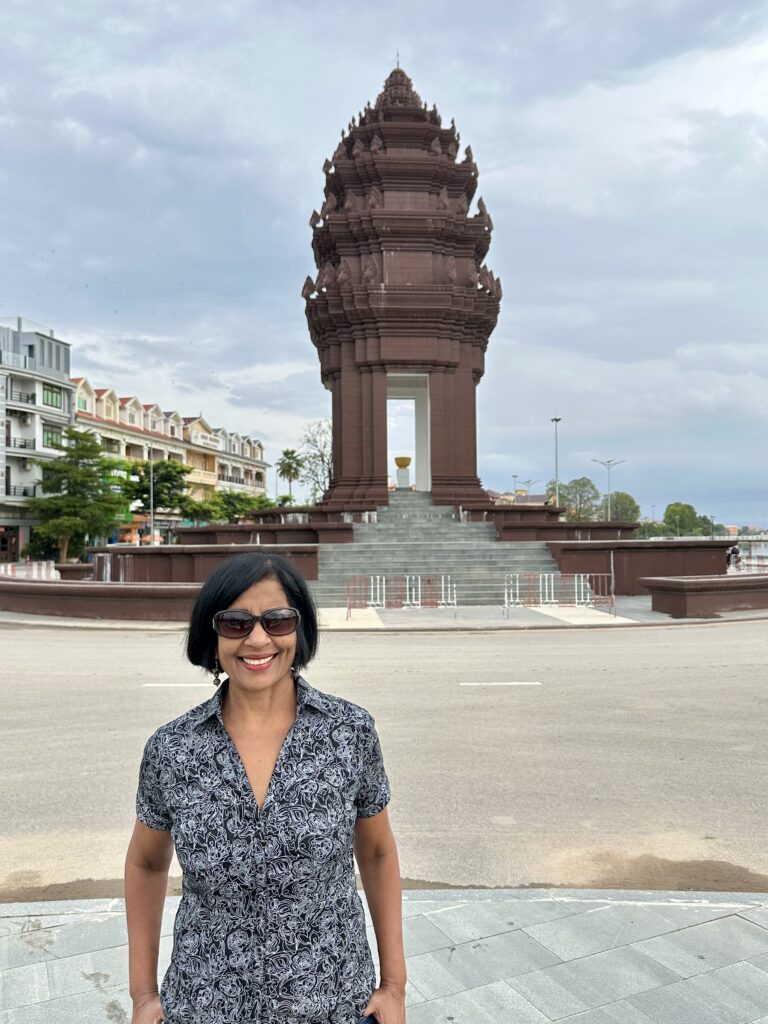
Independence Monument – Inaugurated to honor the Cambodian patriots who fought for independence from French colonial rule, the monument stands as a testament to the resilience and determination of the Cambodian people. The country gained independence from France in 1953. The monument’s design is deeply rooted in Khmer architectural traditions, drawing inspiration from iconic structures like Angkor Wat. Intricate motifs and carvings adorn the monument’s surface, showcasing the skill and artistry of Cambodian craftsmen.
Surrounding the Independence Monument is a meticulously maintained park, offering a serene oasis amidst the bustling city. The park serves as a popular gathering place for locals and tourists alike, providing a space for relaxation, recreation, and community engagement.
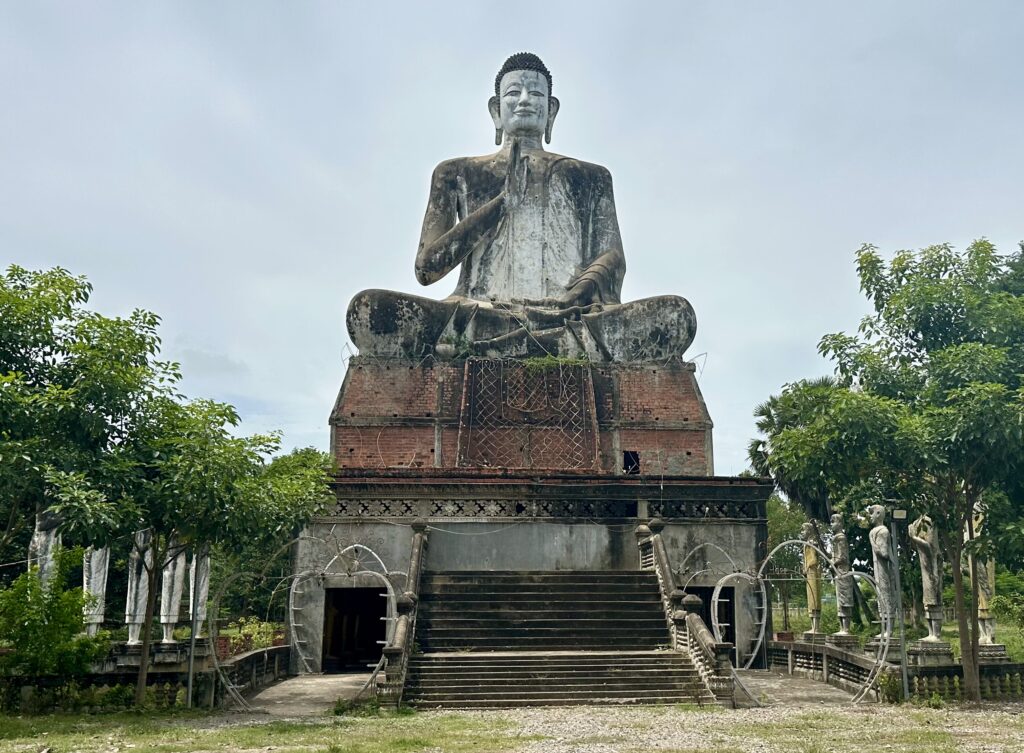
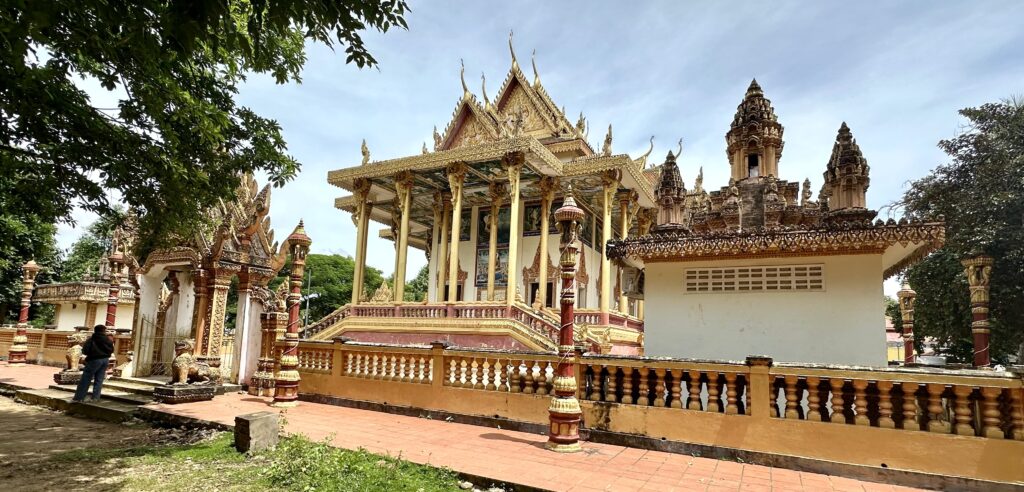
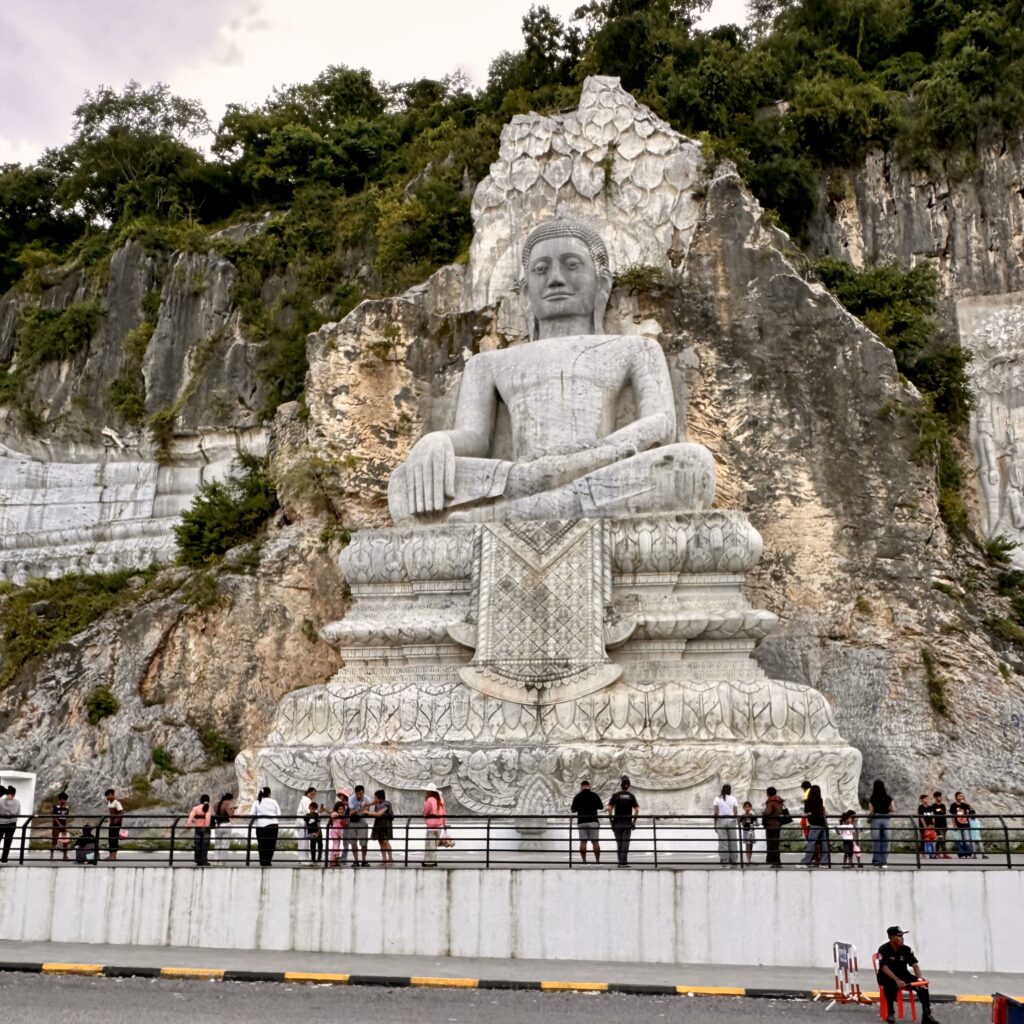
Ek Phnom Temple – This Angkorian temple is located on the left side of the Sangkae River and houses an ornate modern pagoda in front of a crumbling 11th-century temple, plus a huge sitting Buddha statue.
The centerpiece here is Wat Ek Phnom, a 11th-century Hindu temple built during the reign of King Suryavarman I. Though partly collapsed and weathered over time, the walls are adorned with intricate carvings depicting tales of Hindu mythology.
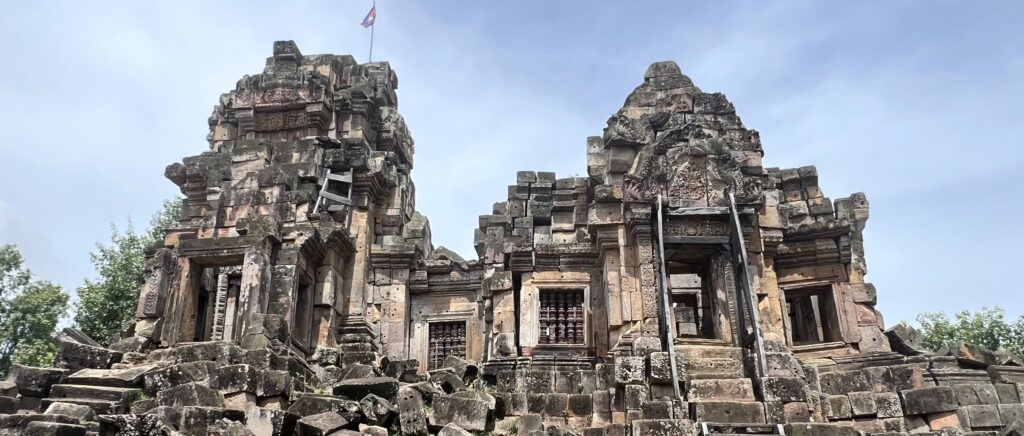
Adjacent to these ancient ruins, you’ll find a modern Buddhist pagoda known as Ek Phnom. This vibrant addition is home to a large white stone Buddha statue and is surrounded by 18 Bodhi trees, a significant symbol in Buddhism. With its unique blend of ancient and modern, the entire site holds immense cultural importance for Cambodians. It’s a popular pilgrimage and picnic destination, particularly during festive occasions.
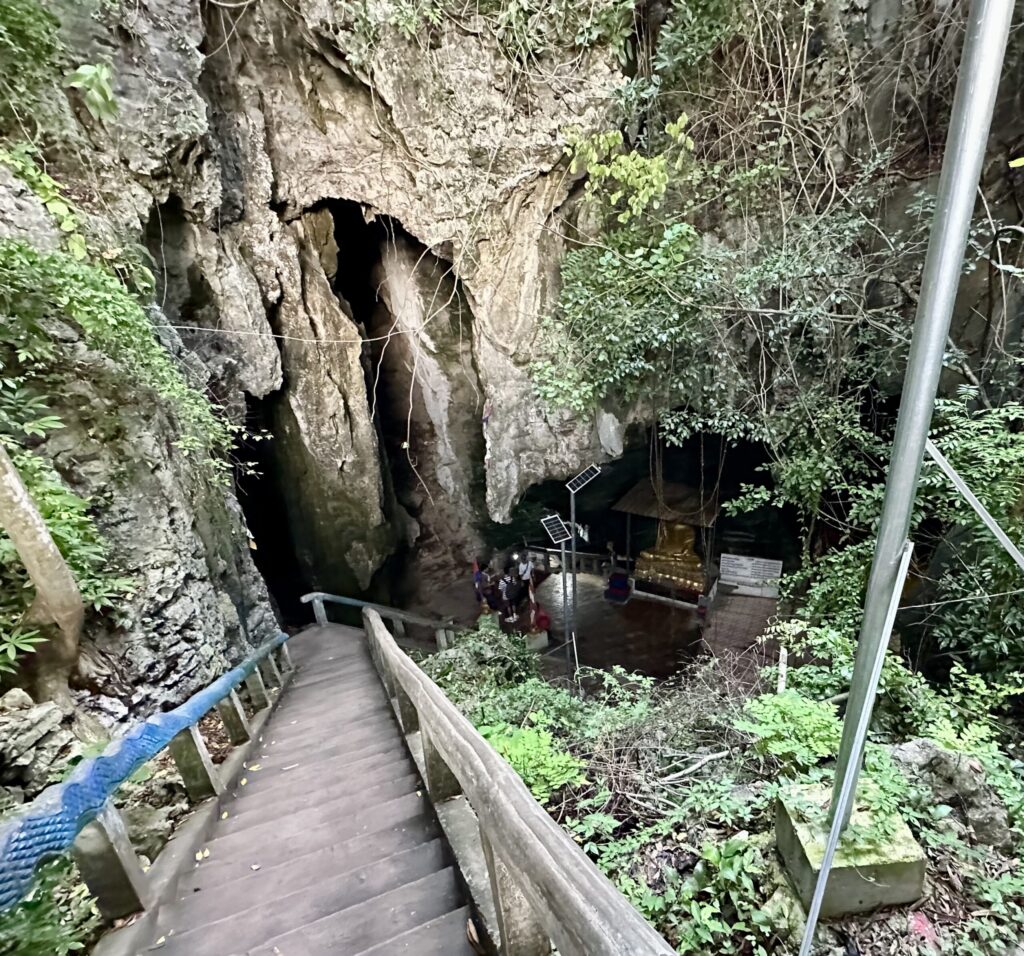
Killing caves of Phnom Sampeau – are Khmer Rouge execution site on Phnom Sampeau, a hill 7 miles from Battambang. You have to climb 650 steps to reach this place.
During the Khmer Rouge in the period 1975 to 1979, the mountain of Phnom Sampov and its caves were used to accumulate the war victims who were later executed. They killed their victims on top of the cave at the rim of a daylight shaft or ceiling hole and threw the corpses into the cave. The caves are now a reminder of the dark history and have multiple important religious temples. A large glass memorial in the cave with skulls and bones, and a golden reclining Buddha, mark the massacre.
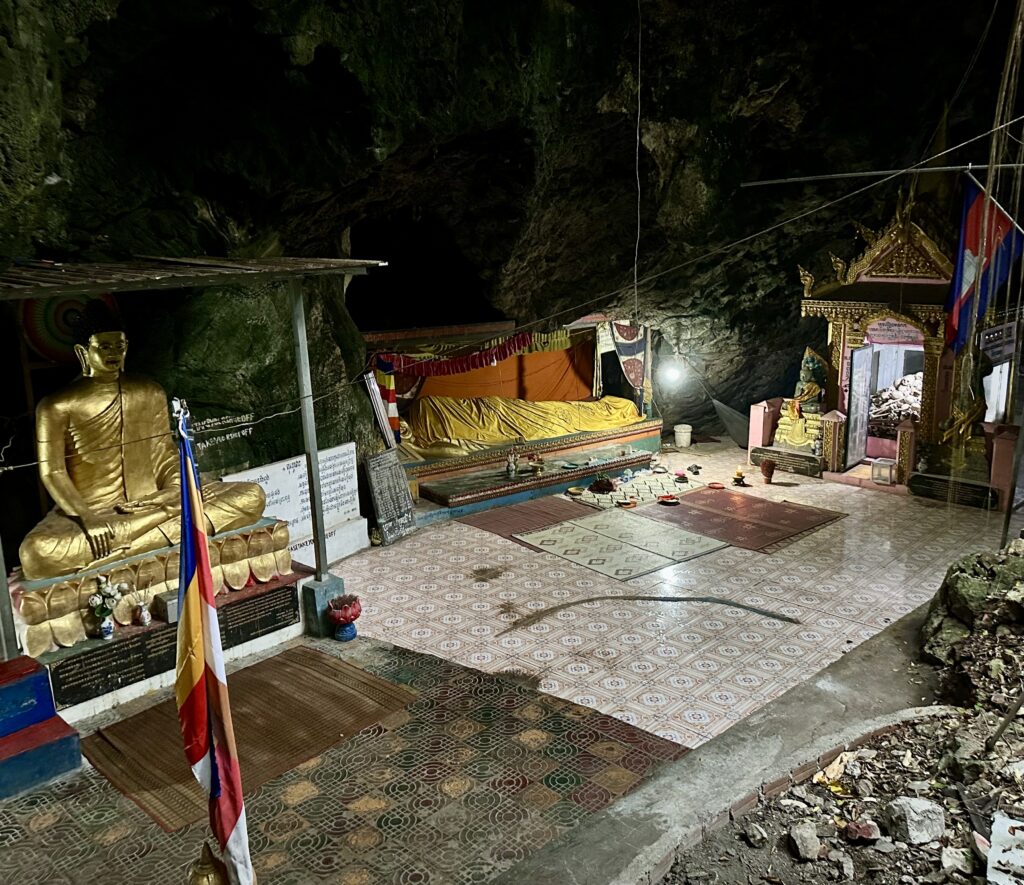
There are a number of temples near the killing cave, including the golden stupa, built in 1964. The summit also offers a sweeping view of the surrounding countryside and contains various other monuments and altars.
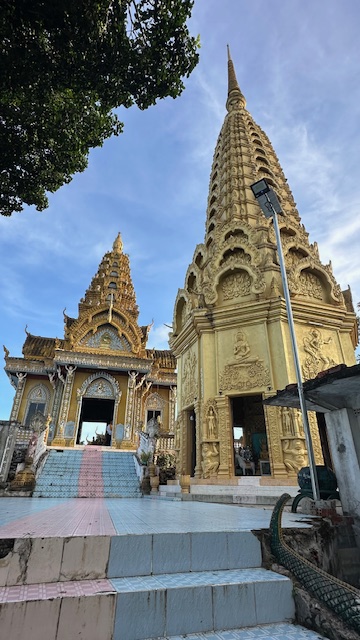
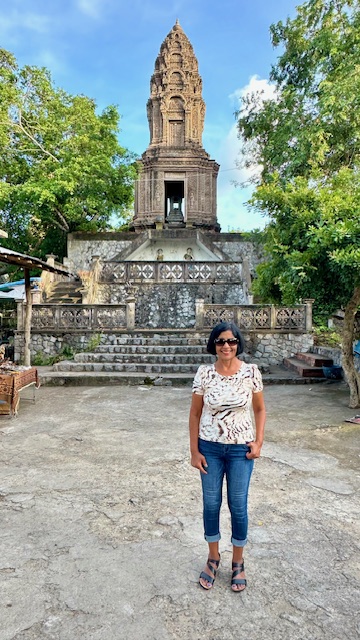
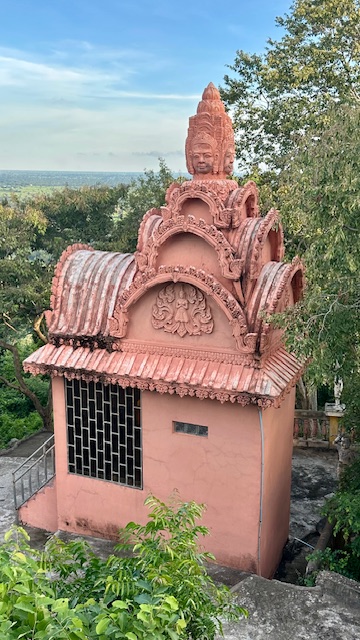
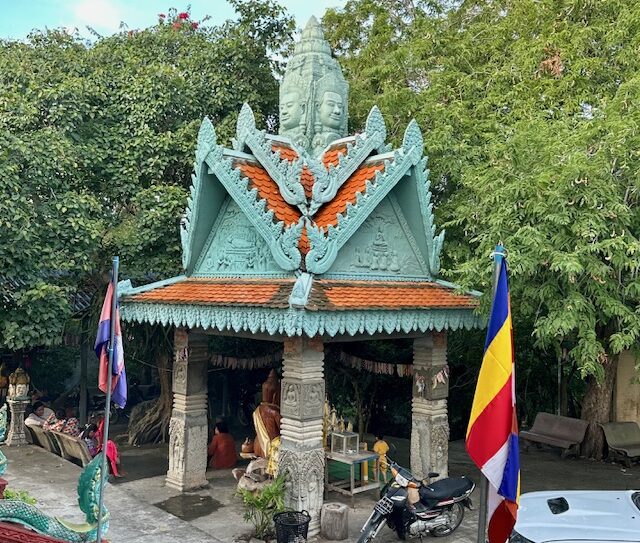
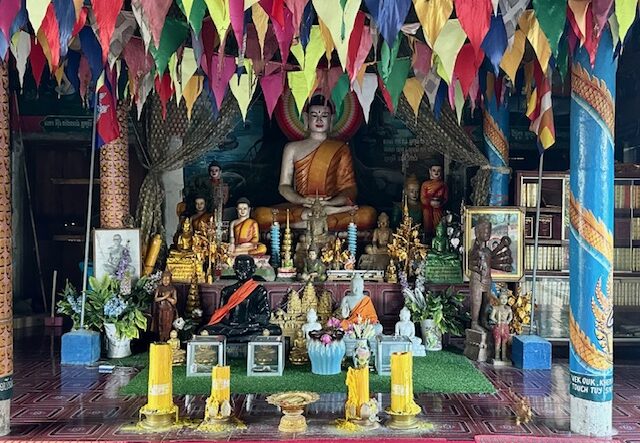
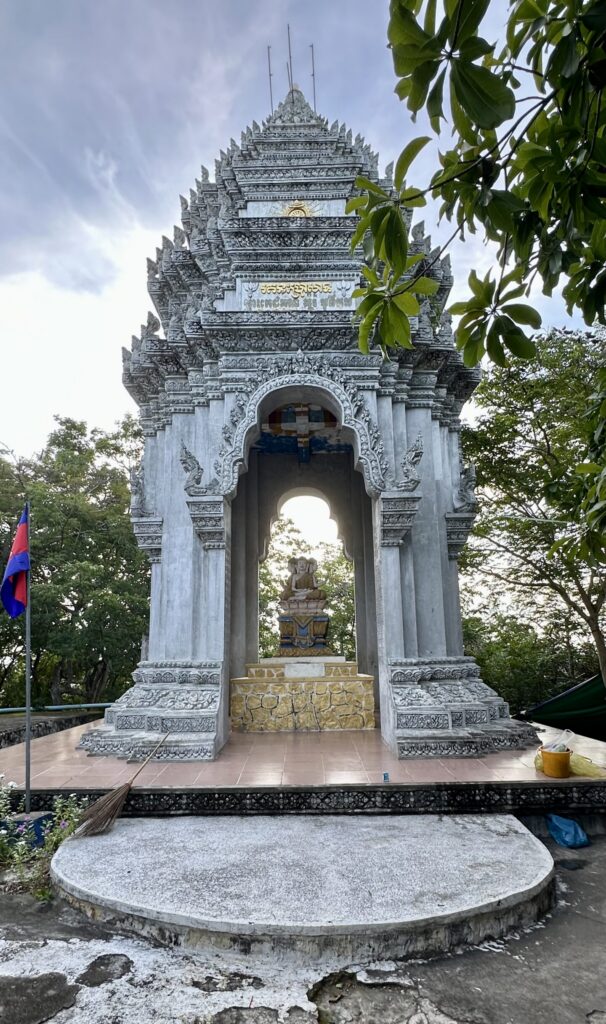
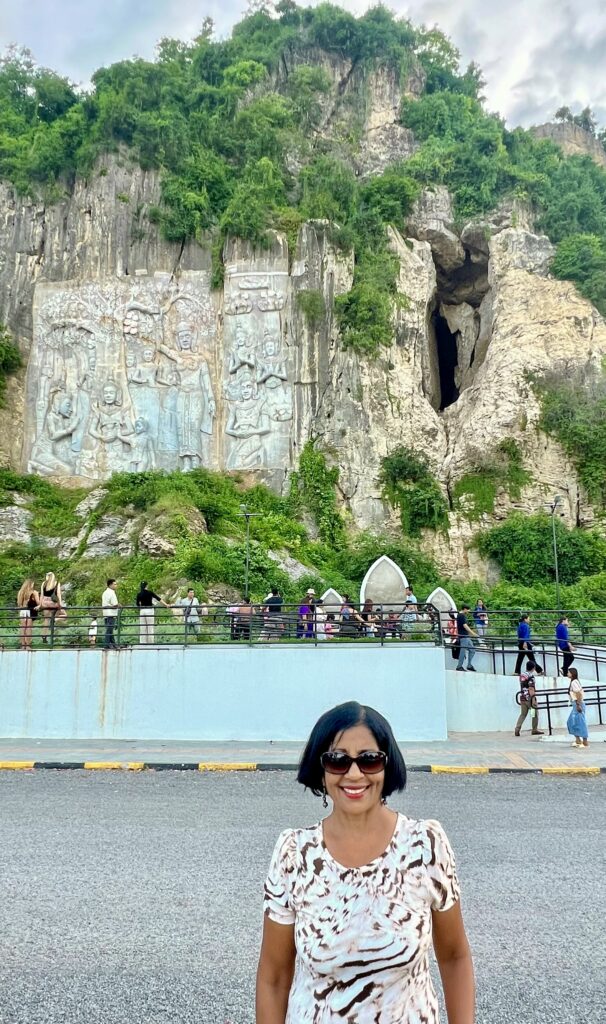
Battambang Bat Caves – Located at the base of the mountain Phnom Sampov, the caves house about 15 million bats which emerge every evening in search of food. The spectacular site of the bats emerging out of the cave at dusk covers the sky with a black streak for a good 30-45 minutes. The temple area also includes giant sleeping and sitting Buddha sculptures as well as a beautiful carving next to the bat cave.
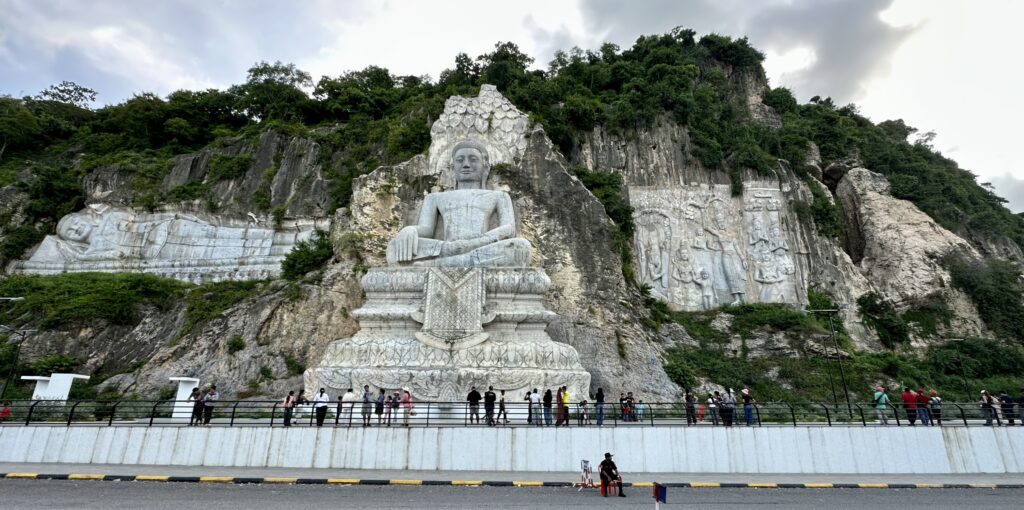
The species of bat found here is wrinkled-lipped bats, which have a characteristic feature of living in large groups. The bats are crucial to the ecosystem of Battambang as they reduce the agricultural pests and insects. The bats head on a journey of around 50 km in search of prey. The inside of the cave has stalactites and stalagmite formations reaching as high as 65 feet.
Battambang Bamboo train – This activity is basically an exhilarating ride on a lightweight bamboo platform on wheels and a motor at the back. These contraptions known as norries, operate on the former French colonial railway line which is hardly used. The train was travelling at a speed of about 50 km/h.
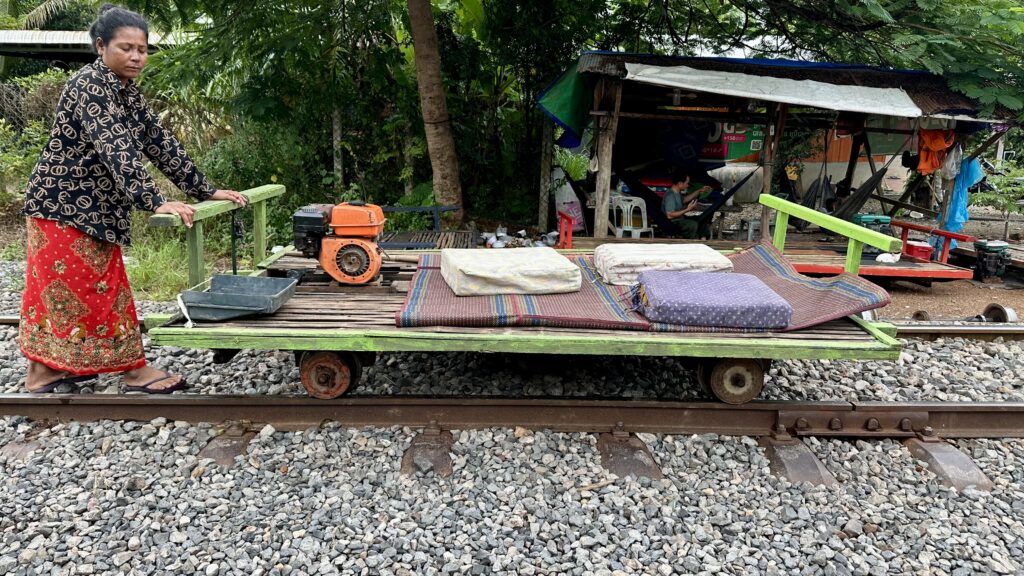
Although, I would consider this a tourist trap, the ride which lasted for about 30-40 minutes, was a lot of fun and enjoyable. The ride was scenic with rice fields and greenery all around.
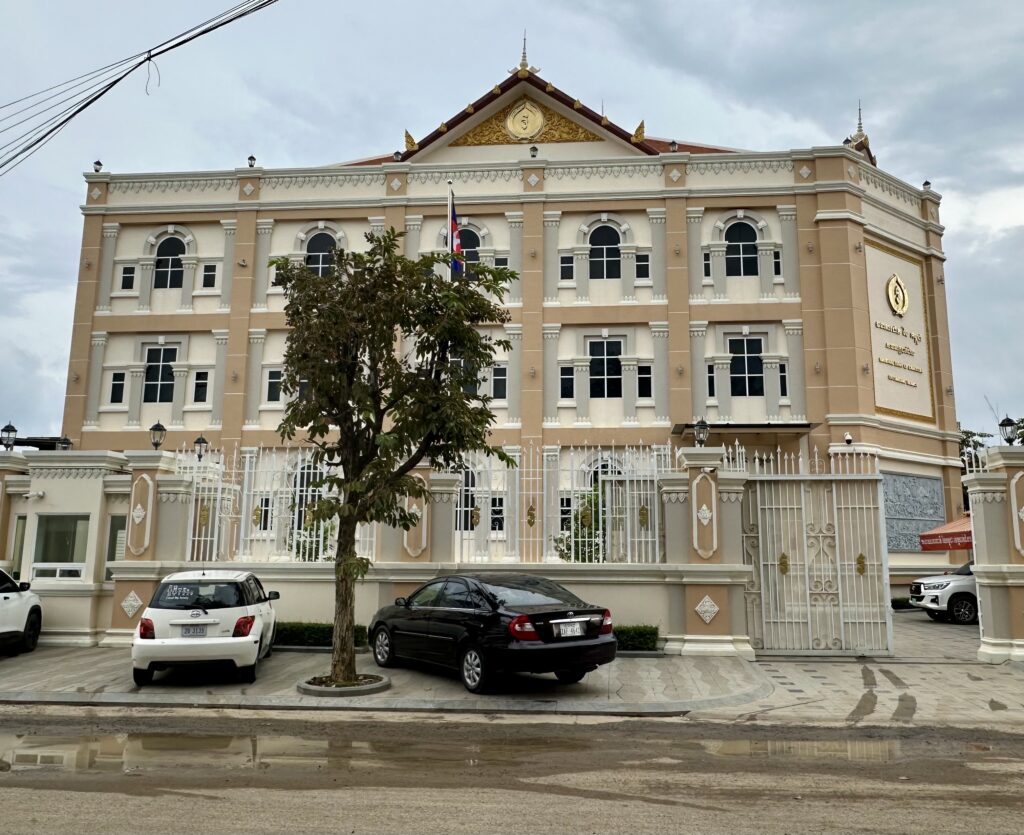
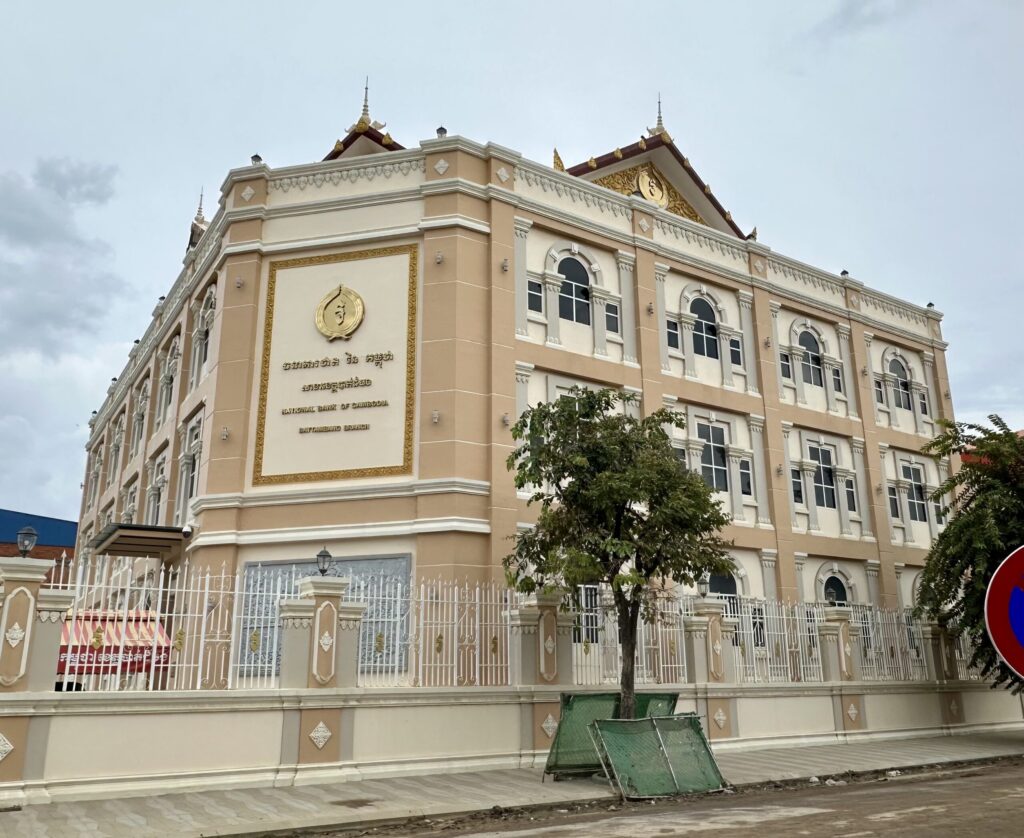
National Bank of Cambodia – One of the many colonial French buildings, this one was restored and is now used by the National Bank of Cambodia.
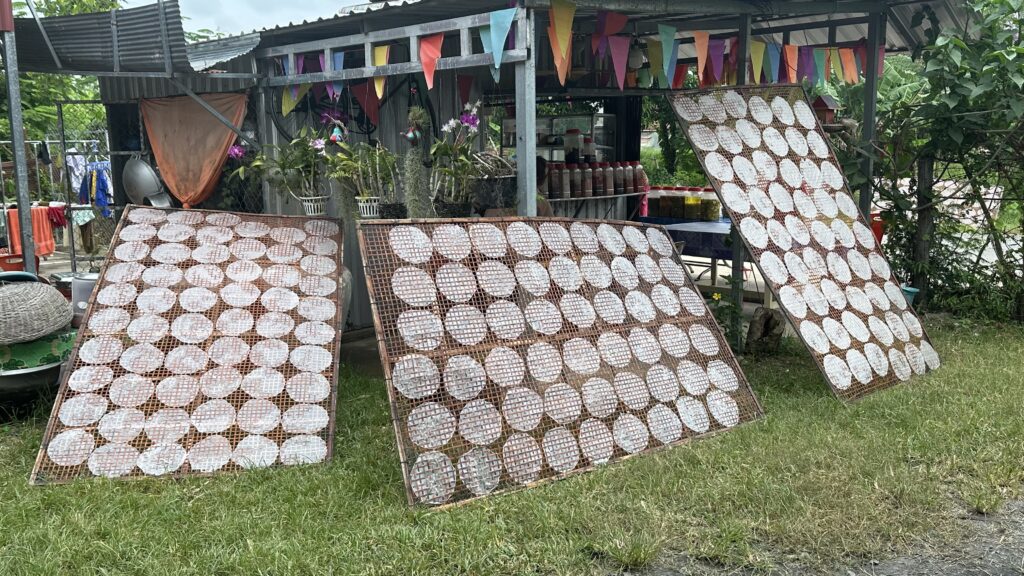
Traditional way of making Rice Paper – Rice paper is a thin edible sheet made primarily from rice flour, water, and tapioca starch. It is then dried in the sun. Just before being used, it is rehydrated in water to become soft and pliable before being wrapped around fillings. When fried, it becomes crispy.
Banteay Chhmar Temple – Located about 128 km north of Battambang, this temple was built in the Angkorian period (802-1432) under Jayavarman VII. It is a large complex, with the main temple, built of grey sandstone, measuring 770 x 690 m. The complex is known for its towers featuring smiling faces, in the style of the Bayon temple at Angkor Thom in Siem Reap. The walls are adorned with sandstone reliefs depicting historical and religious scenes, including war scenes between the Khmer and the Cham.
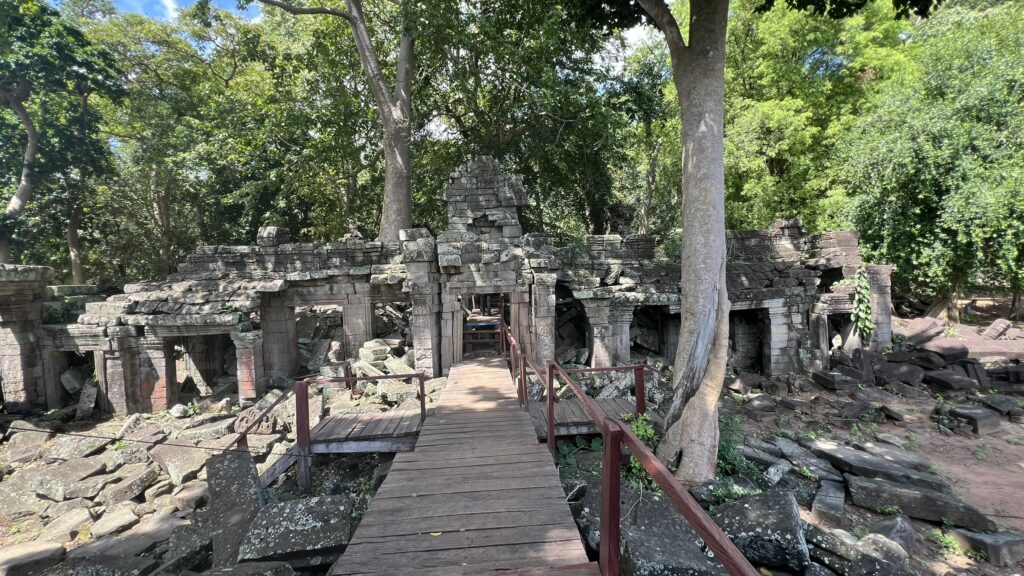
Banteay Chhmar is well-maintained with wooden walkways that allow visitors to walk over the rubble of the collapsed temple complex. These boardwalks are part of an effort to make the site accessible while protecting it, as the site is still undergoing significant restoration.
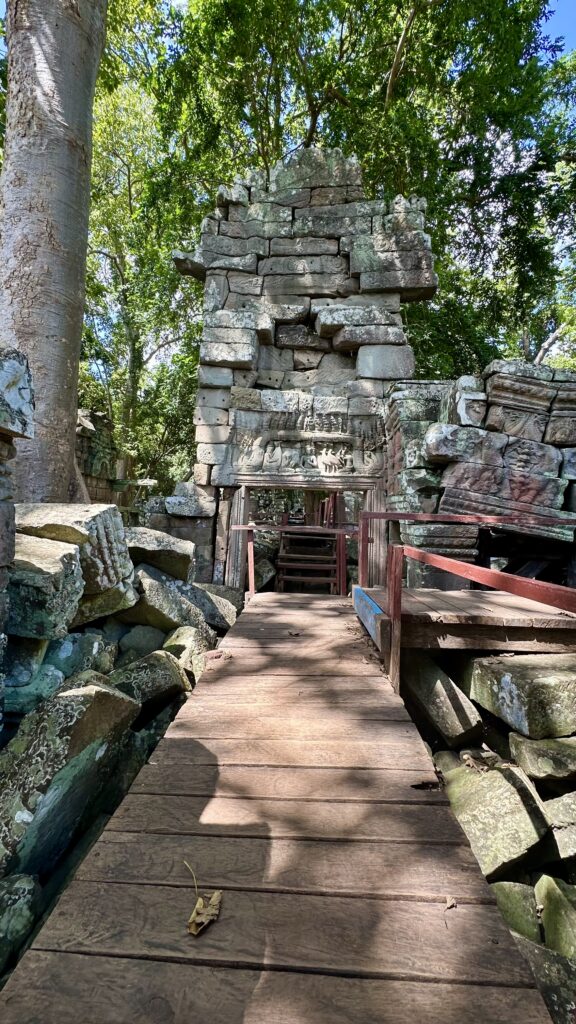
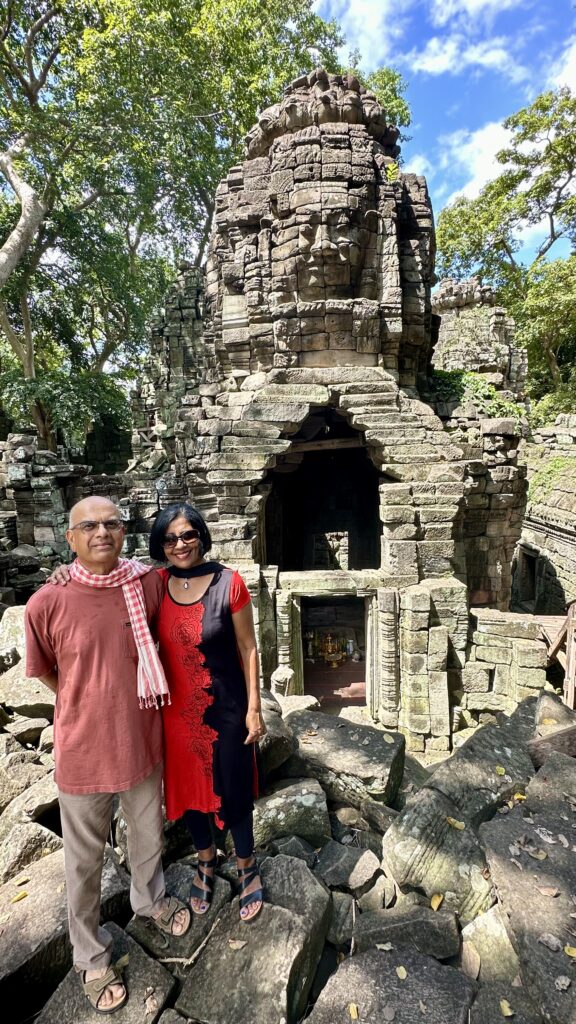
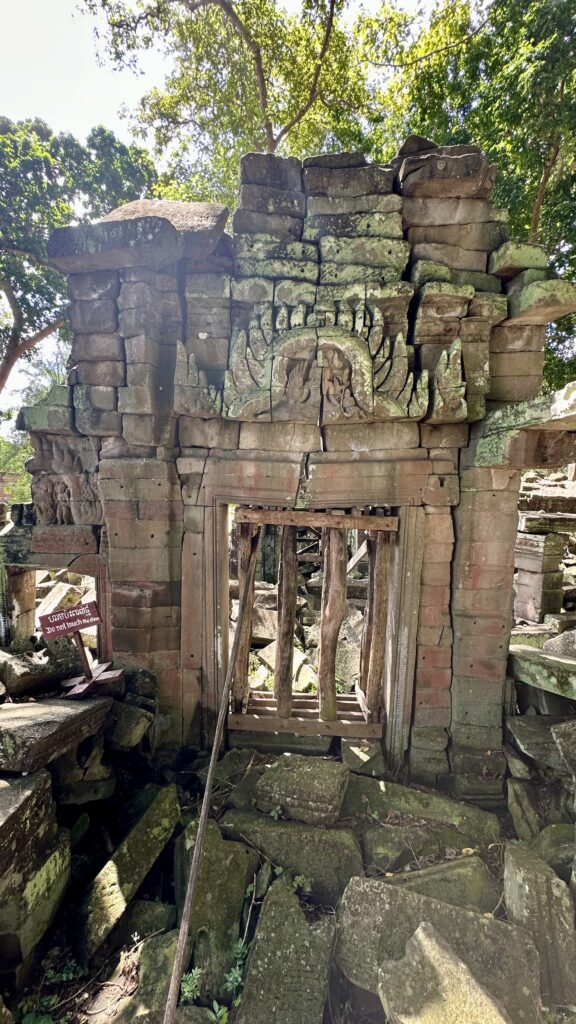
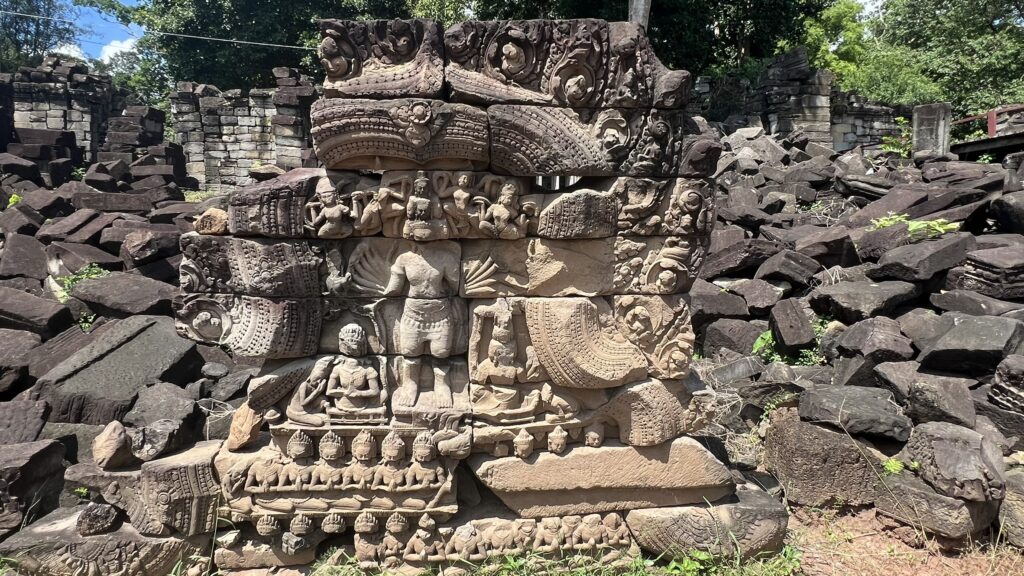
Banteay Toap Temple – Located within 10km from Banteay Chhmar, this temple was built during the same period (802-1432). Its name translates to Fortress of the Army as it was believed to have been built as a tribute to the Khmer army for their defeat of the Cham army leading to Khmer control of the region. The site basically consists of three large and precarious-looking stone towers.