4 Nights – Sokhalay Angkor Villa
Located in northwestern region of Cambodia, Siem Reap is the gateway to the ruins of Angkor, the seat of the Khmer kingdom from the 9th–15th centuries. The UNESCO World Heritage Site of Angkor Wat complex in Siem Reap, is one of the most significant archaeological sites in Southeast Asia and a major global attraction.
- Angkor Wat
- Angkor Thom and Bayon Temple
- Terrace of Leper King
- Terrace of the Elephants
- Ta Prohm Temple (Lara Croft’s Tomb)
- Kulen Mountain (Phnom Kulen)
- Banteay Srei
- Banteay Samre
- Pre Rup
- Kampong Kdei Bridge
- Sambo Prei Kuk
- Boating on Tonle Sap
- Town of Siem Reap
Angkor Wat – We had been planning, researching, and looking forward to visiting this place for the last couple of years. However, no amount of reading or looking at pictures can prepare you for the in-person experience of this incredible temple complex. The extensive and intricately detailed bas-relief carvings—depicting Hindu epics such as the Ramayana, Mahabharata, the Churning of the Sea of Milk, and other historical scenes that cover vast areas of the temple, are truly breathtaking and offer a profound appreciation for the artistry of ancient Khmer craftsmanship.
Some facts about Angkor Wat –
- Originally built in the 12th century by King Suryavarman II as a Hindu temple for the god Vishnu, it was gradually transformed into a Buddhist temple and is now a symbol of Cambodia, appearing on its national flag.
- It is the largest religious monument in the world, a UNESCO World Heritage Site, and the country’s prime tourist attraction.
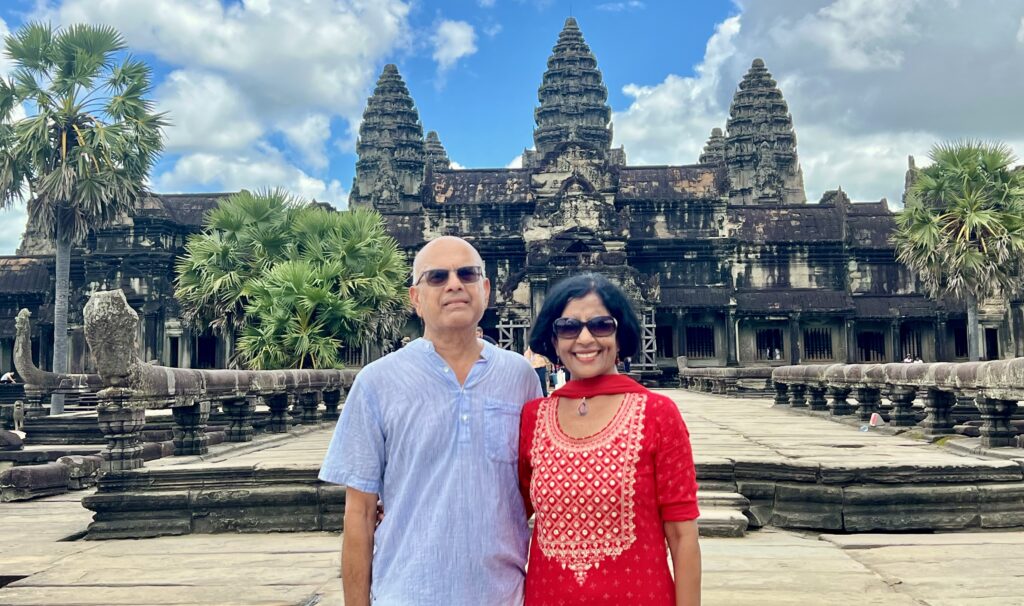
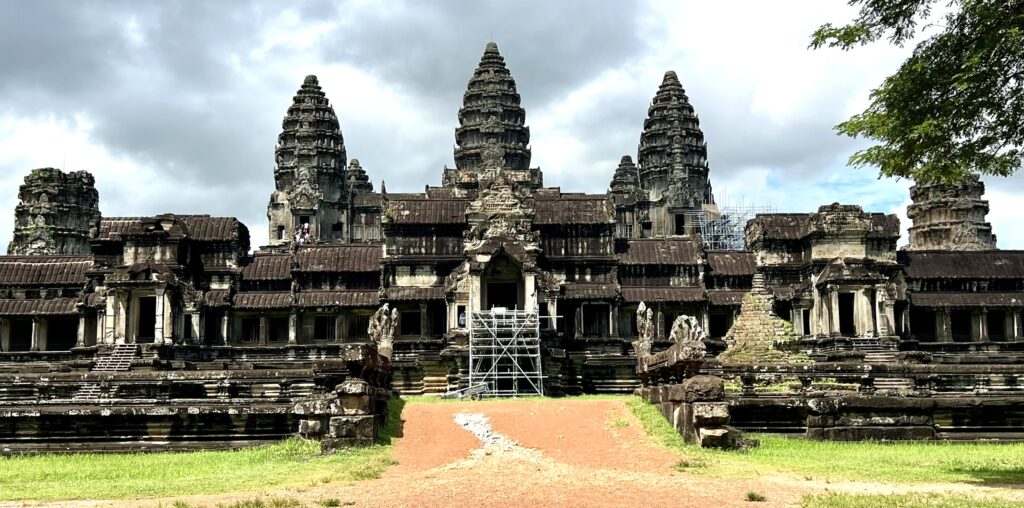
Angkor Wat, Entrance – The primary entrance to the sanctuary is the long iconic stone causeway spanning the outer moat, and flanked by naga (serpent) balustrades.
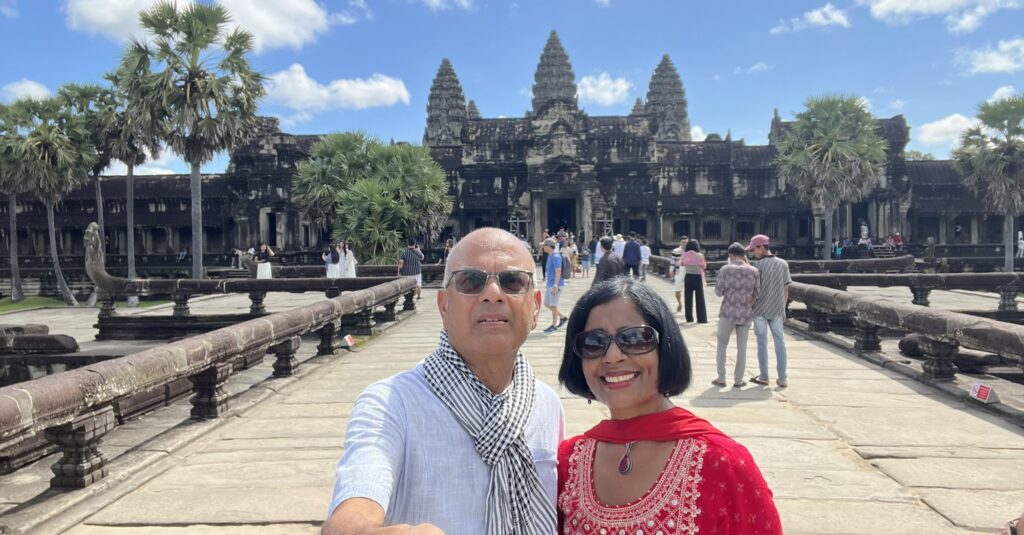
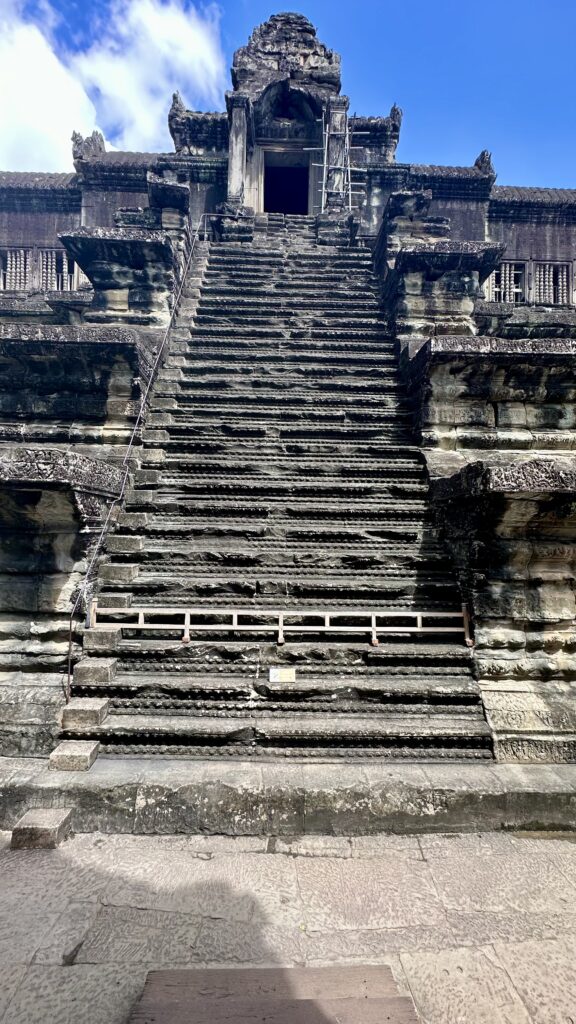
Angkor Wat Layout – The interior has 3 main levels which represent the mythical Mount Meru and are connected by steep staircases.
- The lower level or the outer gallery features the intricately carved scenes from Hindu epic Ramayana and Mahabharata
- The middle level also features a intricate carvings and long corridors with pillars
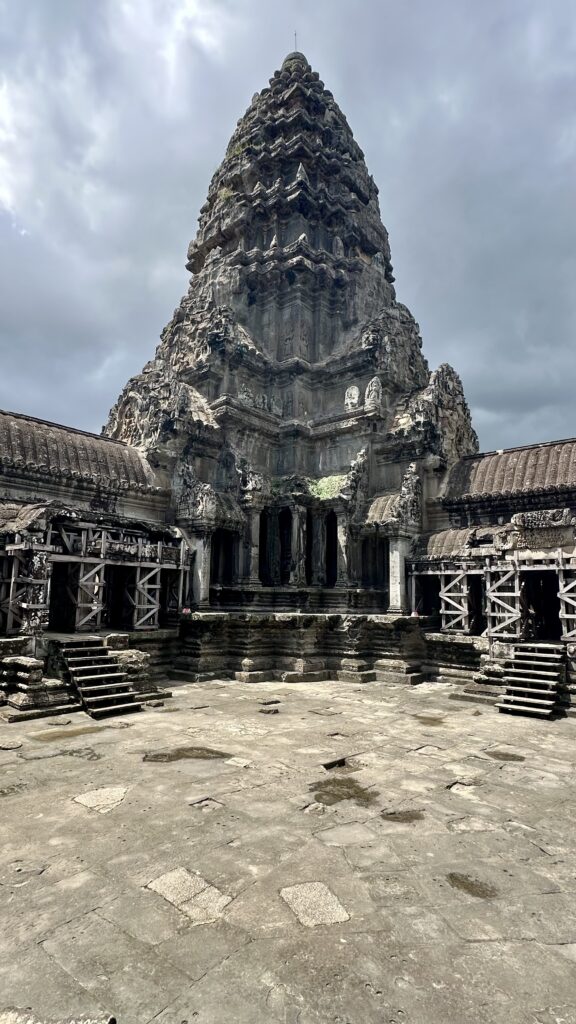
- Third and highest level symbolizing the home of the Hindu gods and is crowned by the 5 towers
Angkor Wat – Lower Level
Angkor Wat, Scenes from Ramayana – The carvings on the wall depict battle scenes between Rama and Ravana in Lanka, monkey soldiers fighting along with Rama, chariots, Hanuman carrying the entire Dronagiri mountain which has the herbs to heal his army in the battlefield.
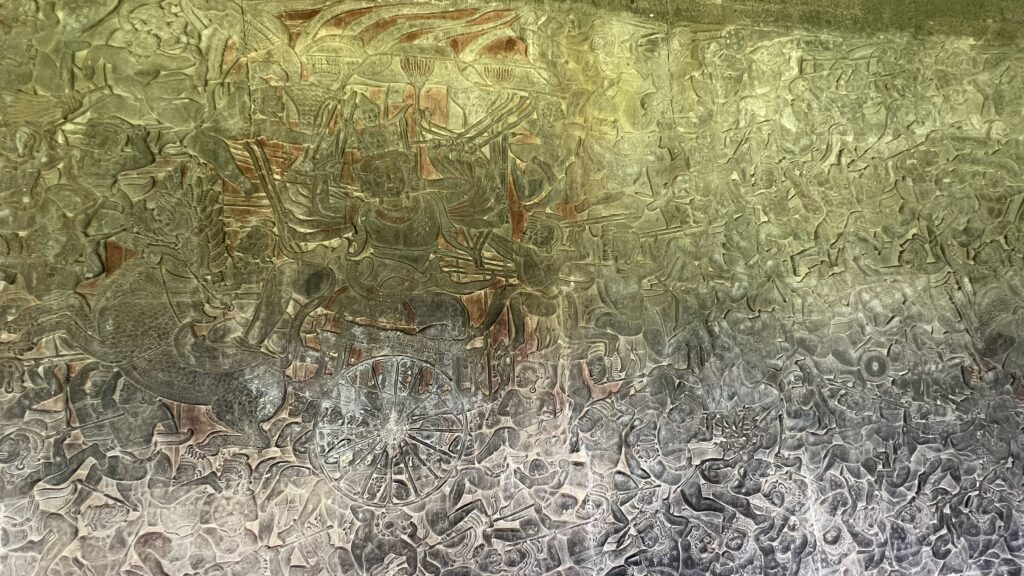
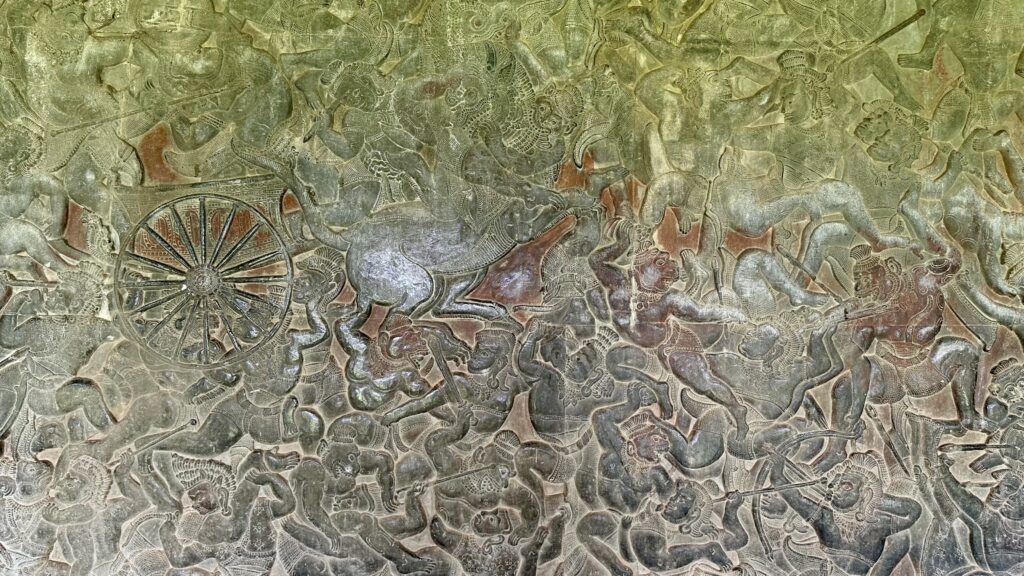
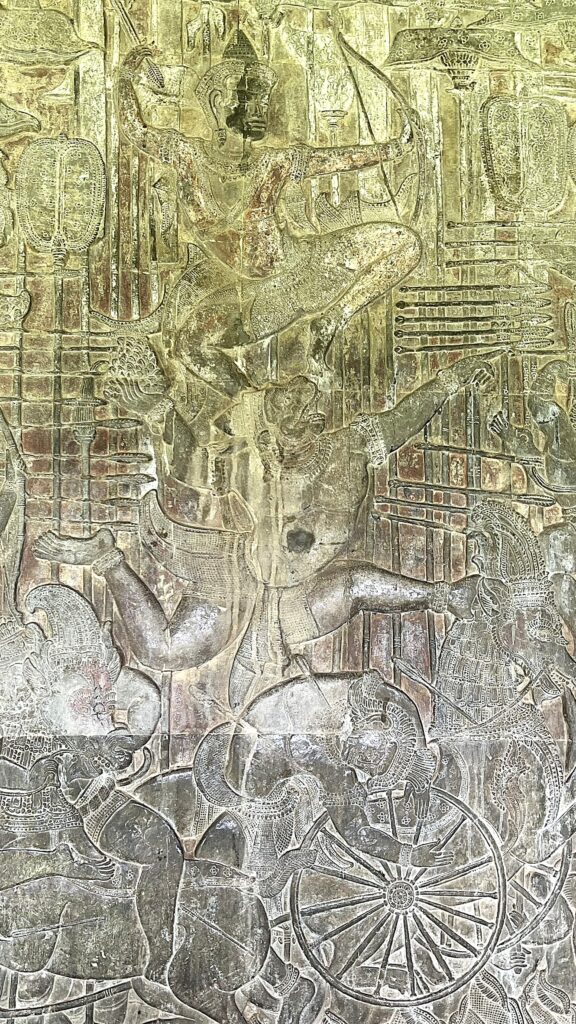
Angkor Wat, Scenes from Mahabharat – The battle of Kurukshetra between Kauravas and Pandavas is depicted with many carvings of the army, Arjuna, Krishna, Bhishma, and Drona. This is one of the longest bas-reliefs in the world, stretching over 160 feet, depicting the entire battle scenes.
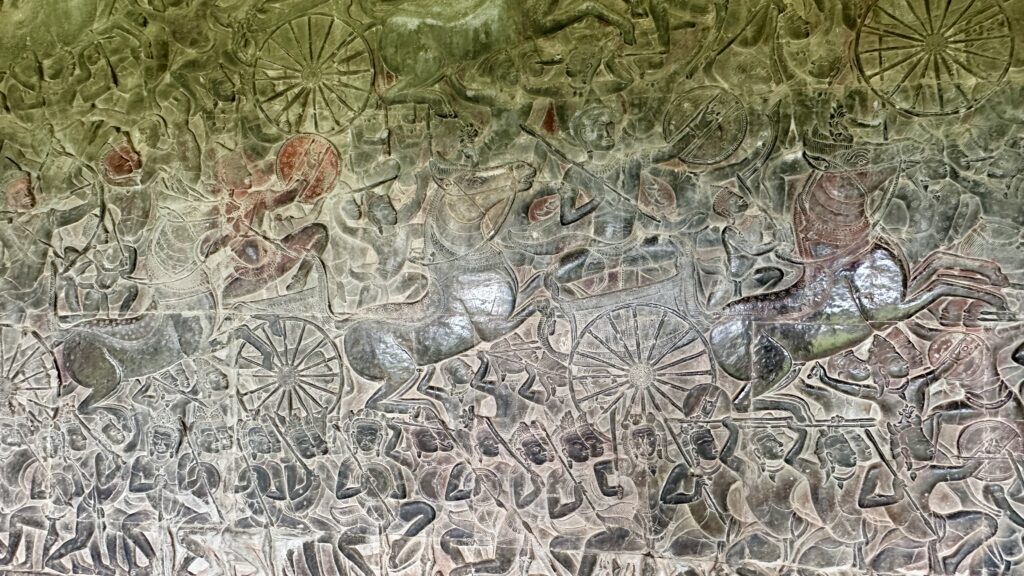
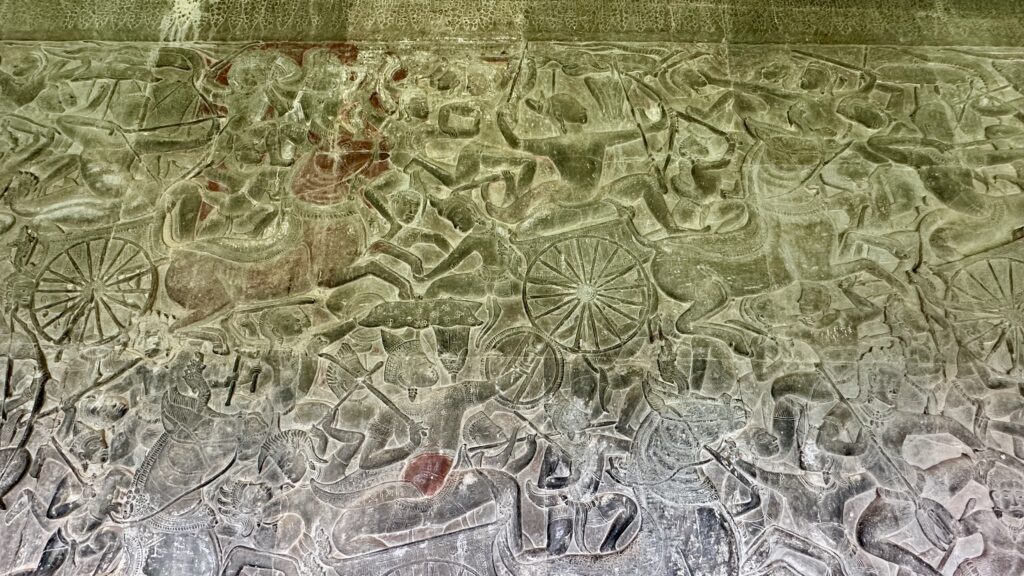
Angkor Wat, Military Parade of King Suryavarman II – This 94m long gallery describes the military parade of the king on Shivabat’s mountain (mountain of God Shiva’s palm foot).
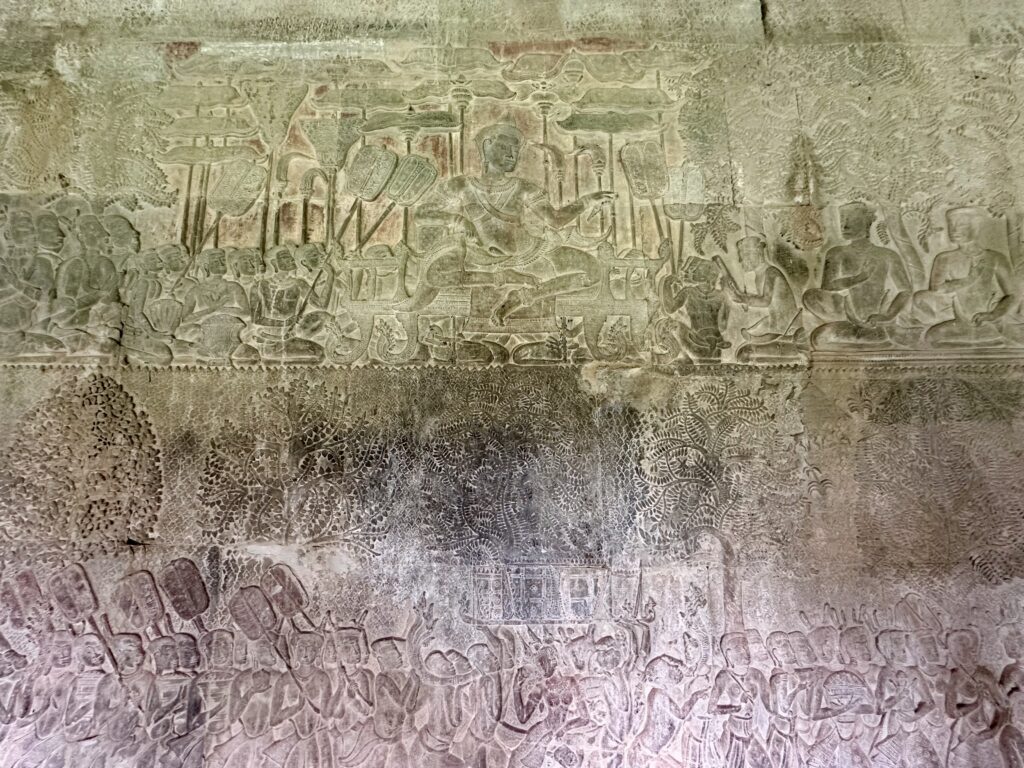
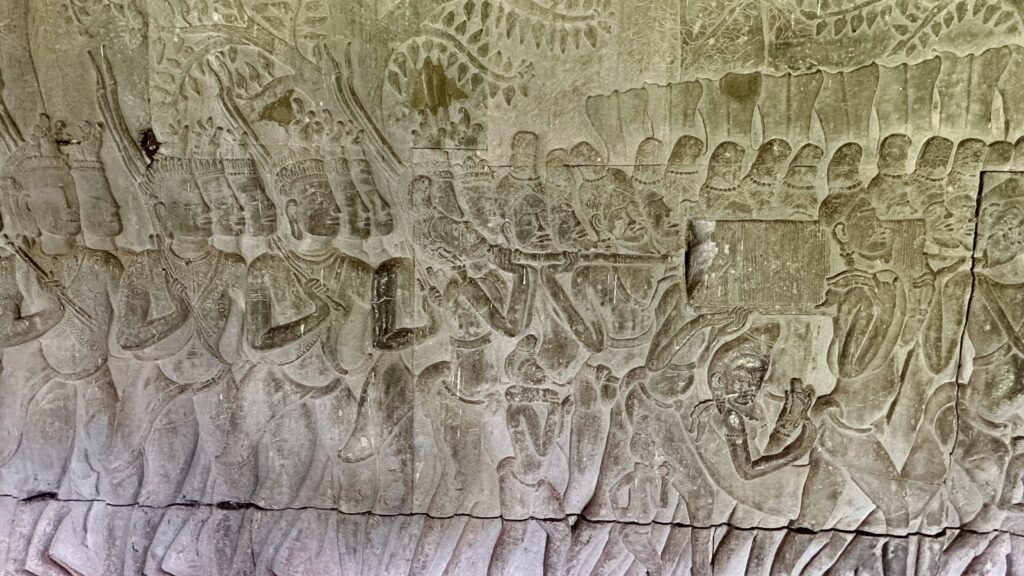
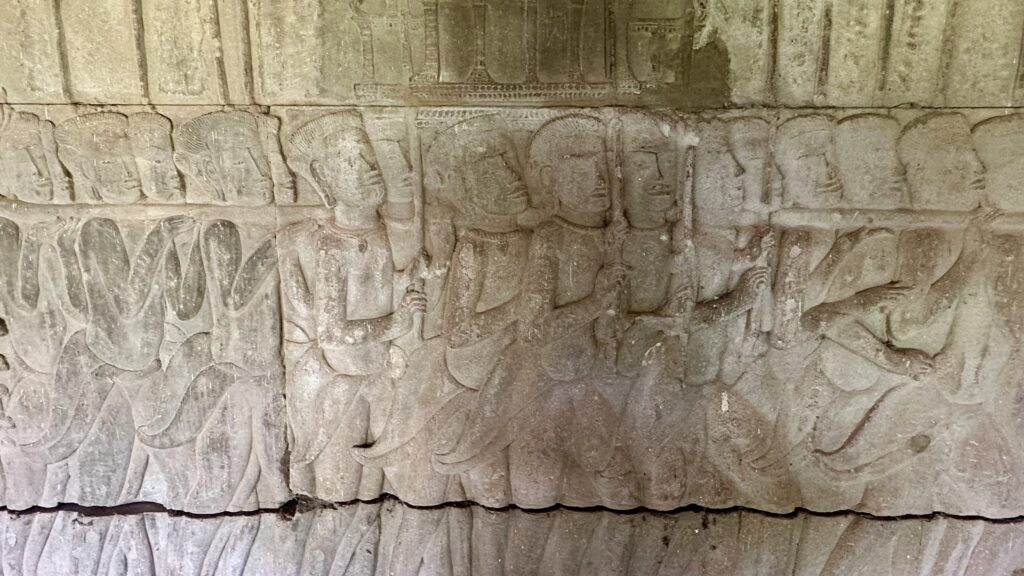
Angkor Wat, Heaven and Hell – The bas-relief here shows 3 horizontal layers with the Upper layer depicting Swarga (heaven), Middle Layer depicting Bhoomi(earth) and lower layer depicting Naraka(hell). There are 37 depictions of heaven and 32 depictions of hell with the hell depictions being more elaborate and gory.
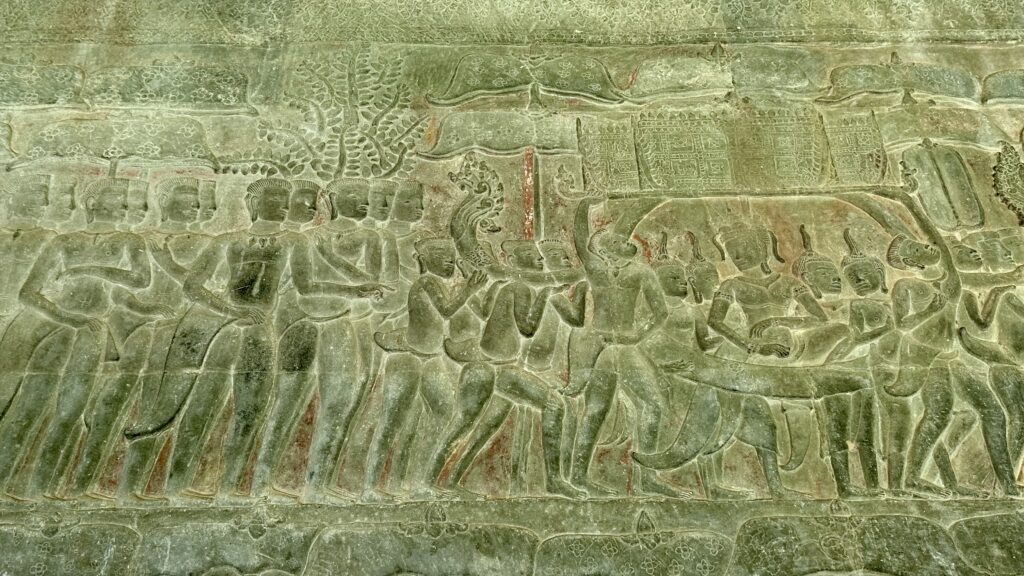
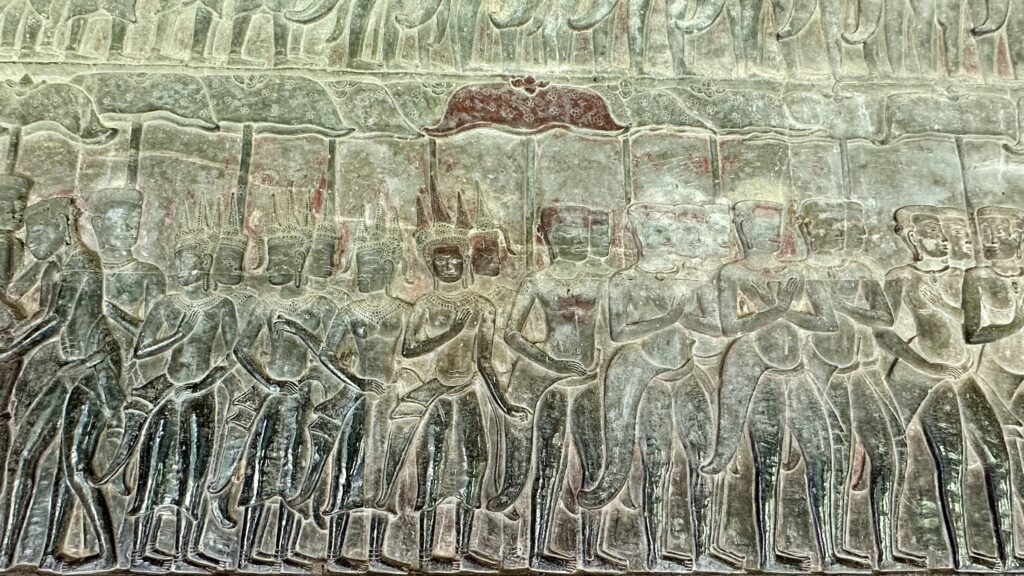
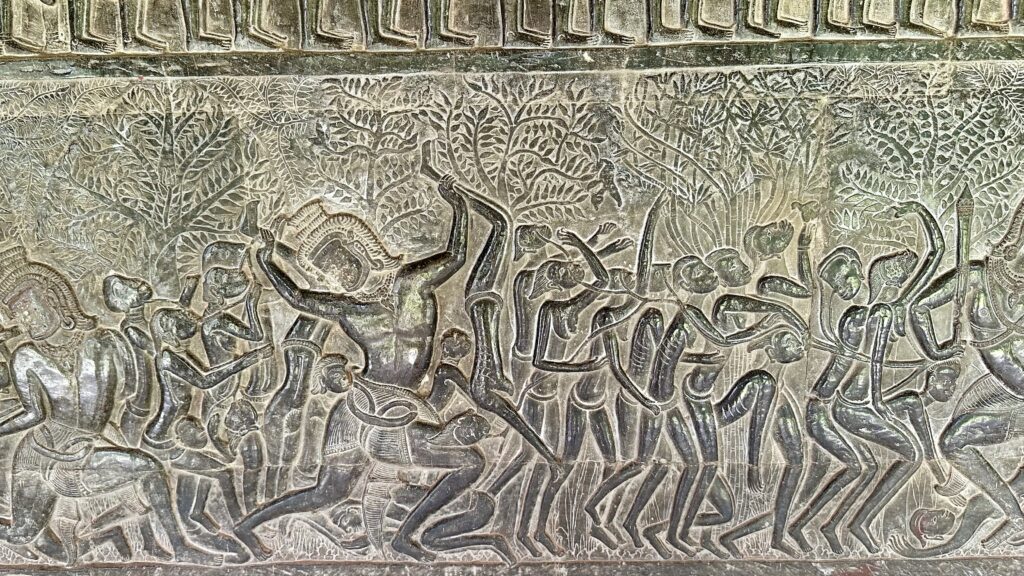
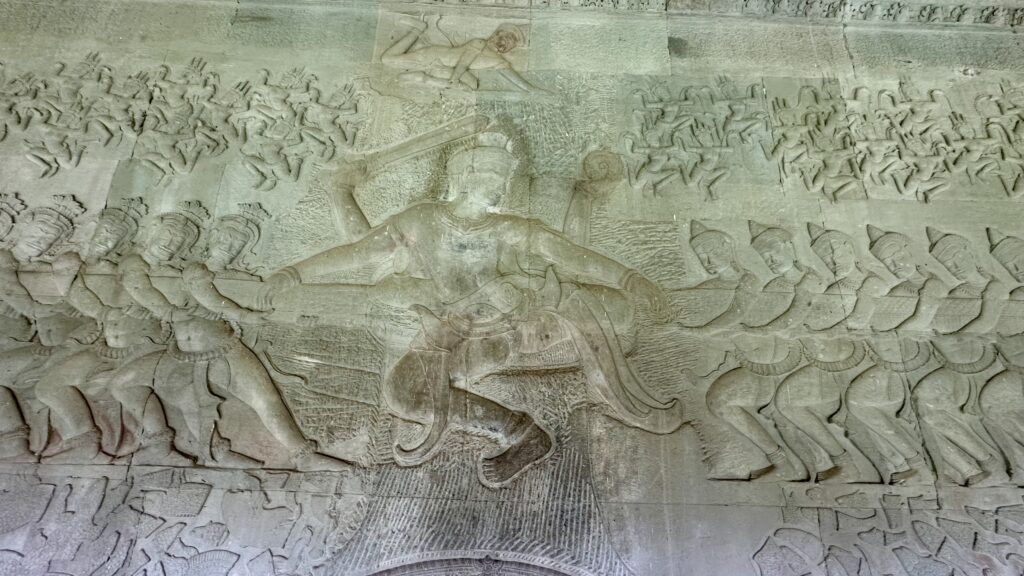
Angkor Wat, Churning of the Ocean of Milk – This 48.5m gallery tells the story about a deal reached between the asuras(evil) and devas(good) to churn the ocean of milk in order to extract the amrita to drink to become immortal. Mount Mandara is used as the churning rod and the serpent Vasuki the churning rope. When placed in the ocean, Mount Mandara began to sink. Lord Vishnu transformed into the Kurma avatar (giant tortoise) and supported the mountain on his back. As the churning continued for a few years, a dangerous poison emerged from the ocean. Terrified, the devas approached Lord Shiva, who agreed to drink the poison to save the universe. The poison left a blue mark on Shiva’s throat, earning him the name “Neelkant” (the blue-throated one). Eventually the nectar of immortality emerged which lead to a war between Devas and Asuras.
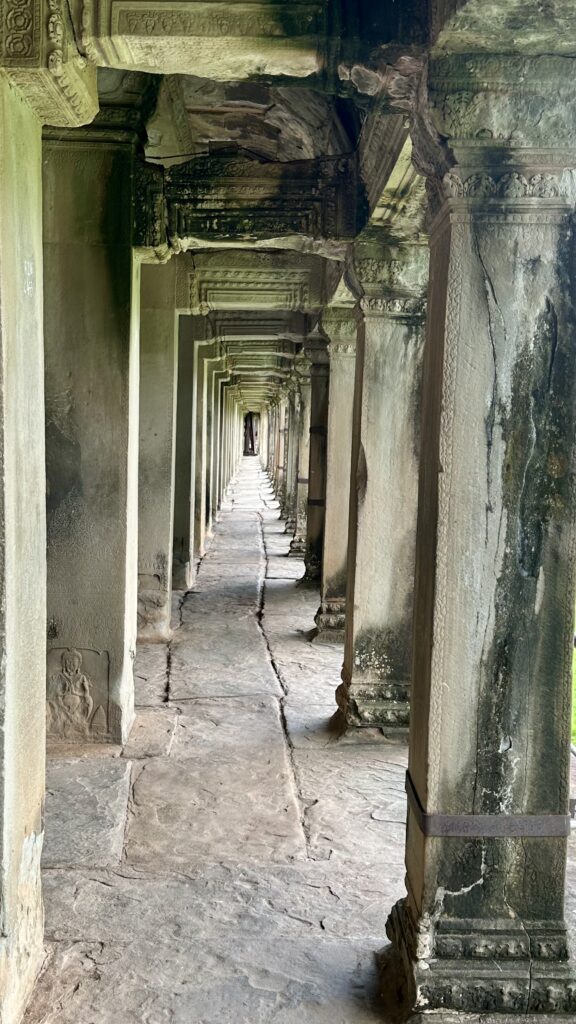
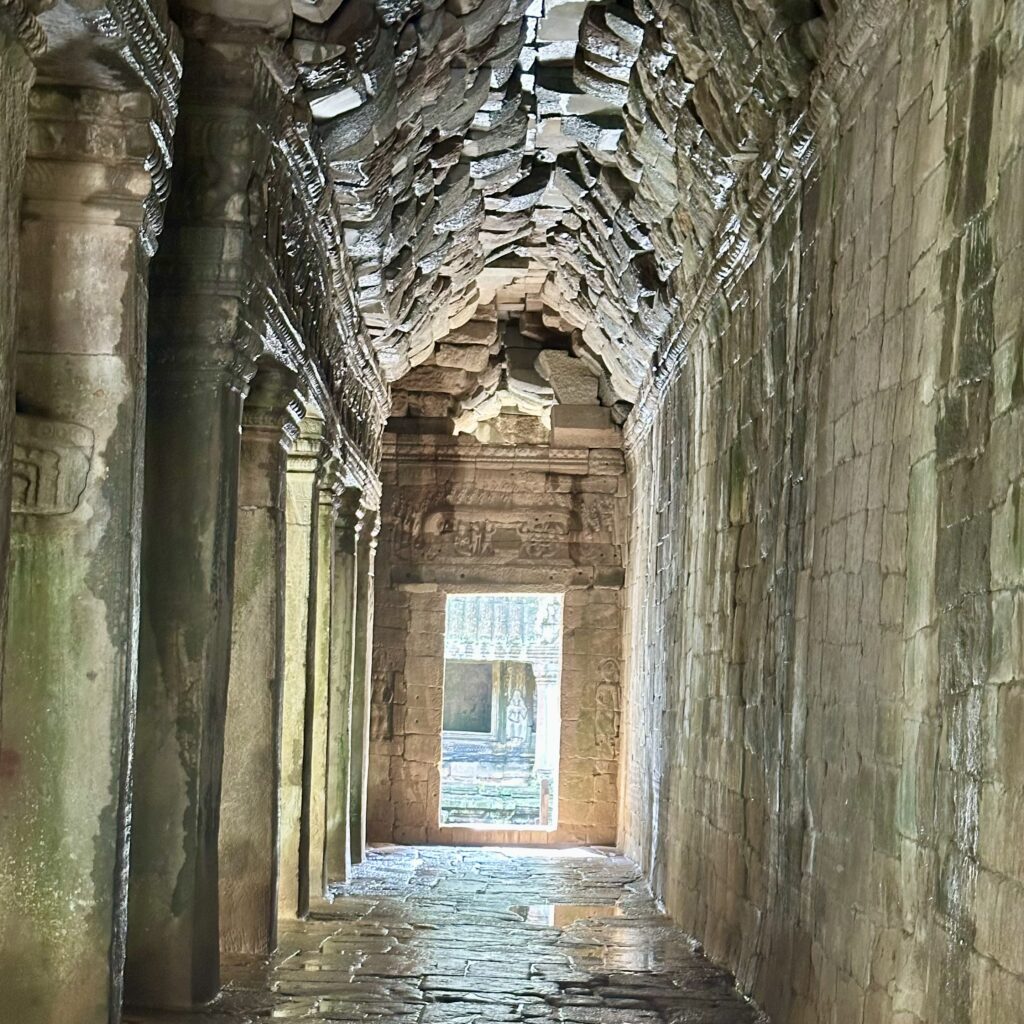
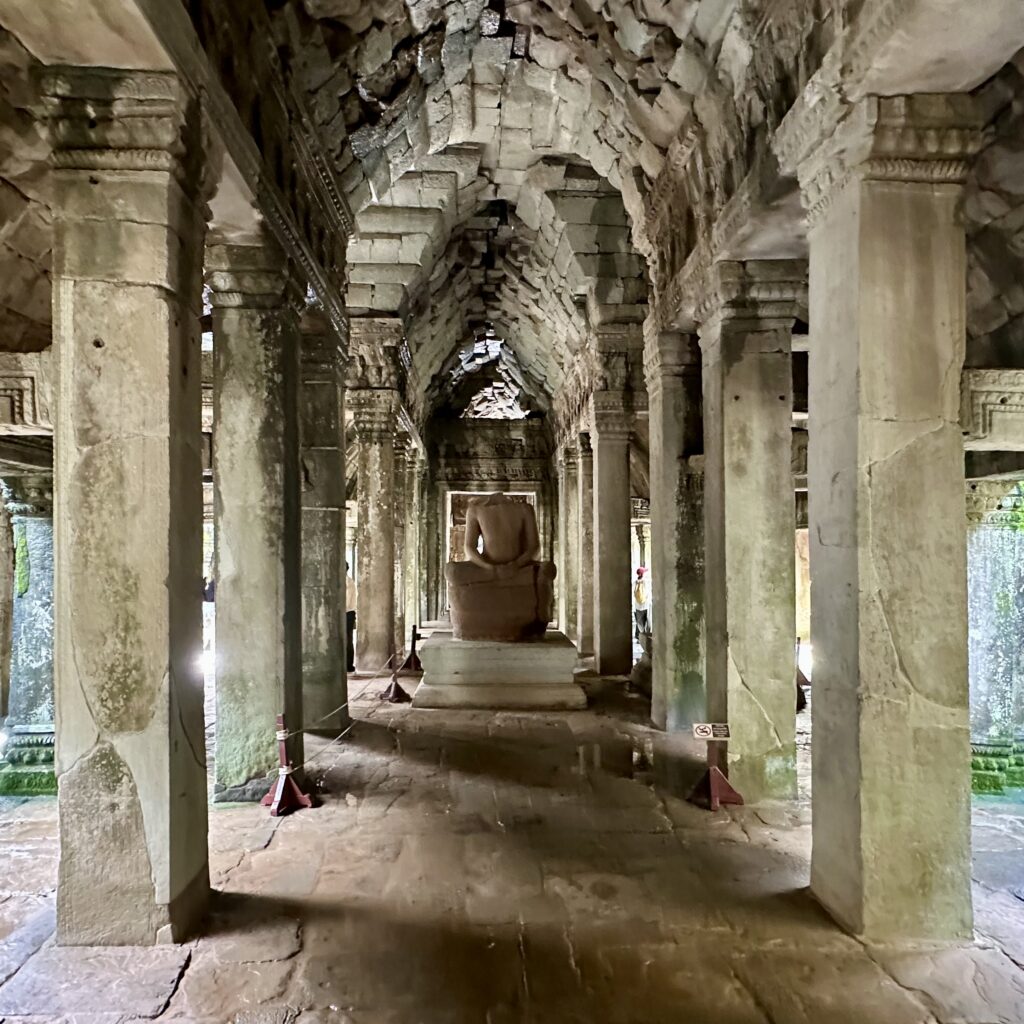
Angkor Wat, Corridors and Columns – The corridors at Angkor Wat are long covered passageways with square pillars, decorated roofs and intricate carvings.
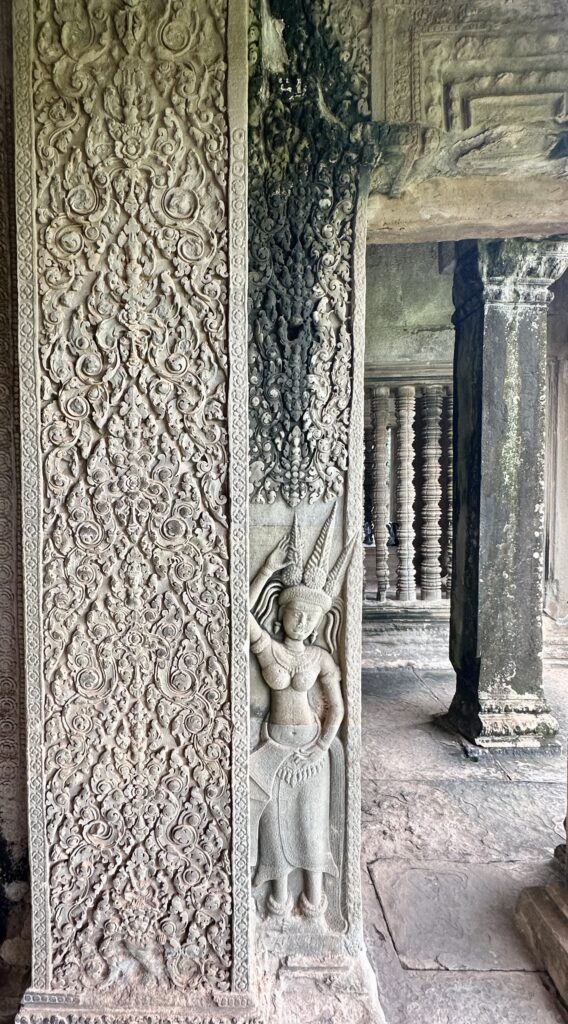
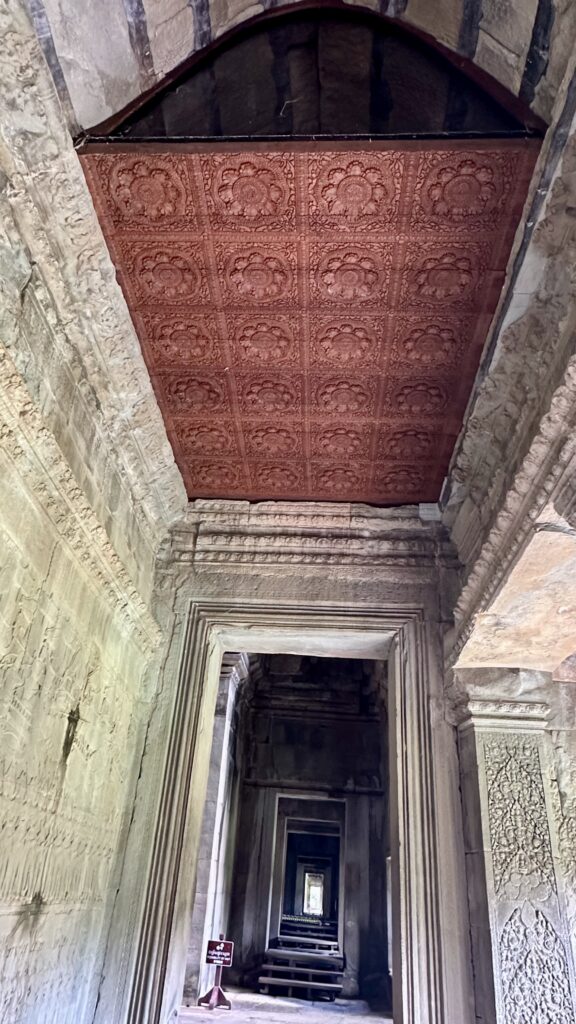
Angkor Wat, Middle Level – The second level can be accessed from the corner towers of the first-level gallery. The middle-level is defined by a rectangular gallery that encloses the inner courtyard and central towers. While the middle level is considered less ornate in its main narrative bas-reliefs than the lower level, its walls and pillars are adorned with exquisite carvings of apsaras (celestial dancers) and devatas (female divinities).
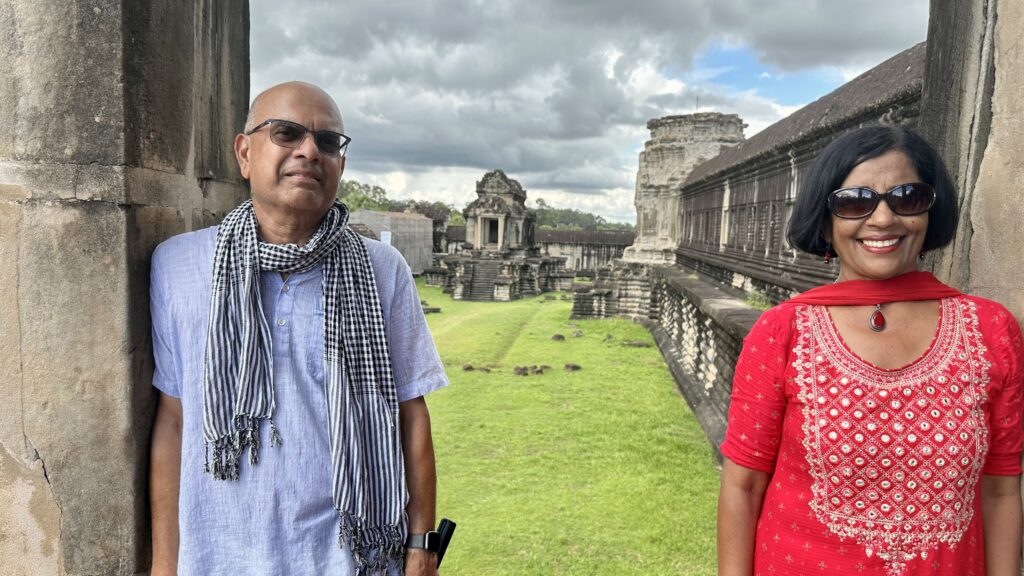
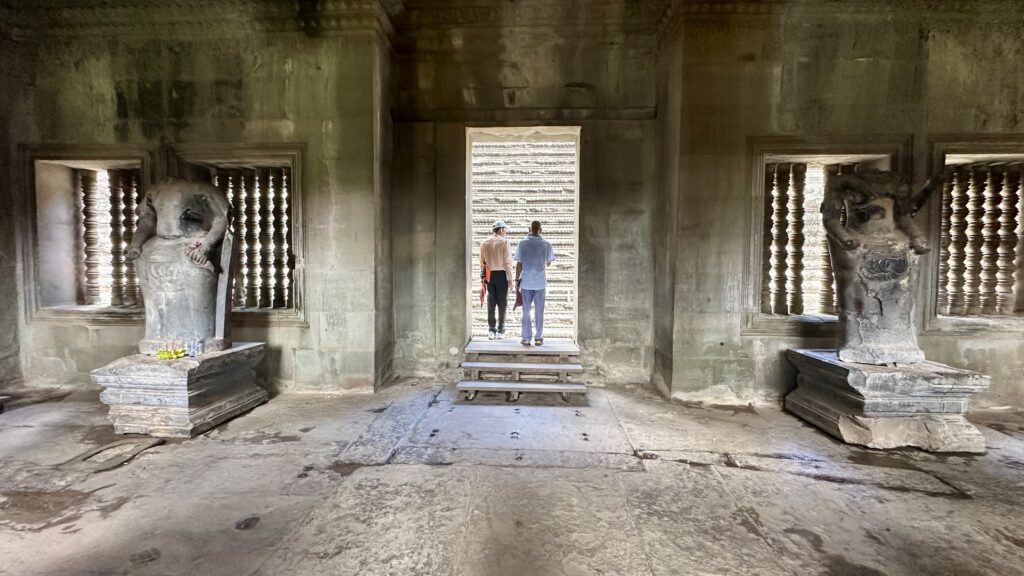
Angkor Wat, Third Level – From the second level, a steep staircases leads to the third level. The third level, called the Bakan, represents the mythical Mount Meru, and consists of rectangular galleries that enclose an inner courtyard. It is also home to the main shrine.
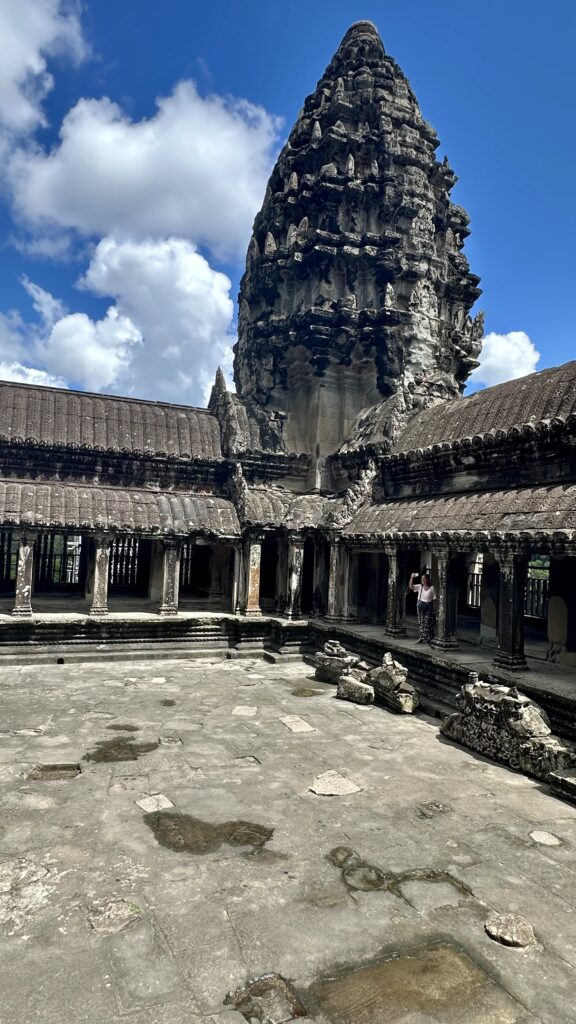
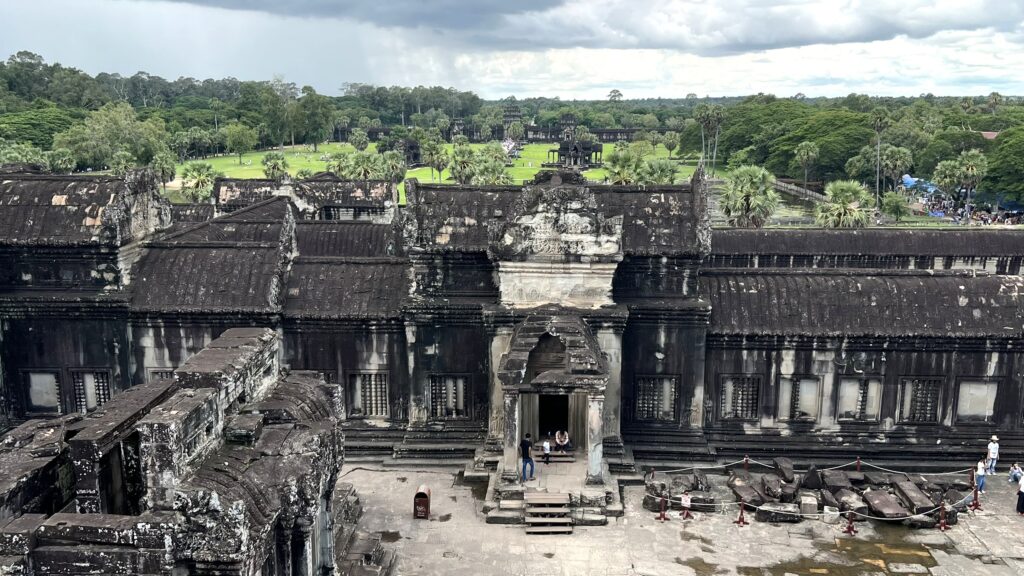
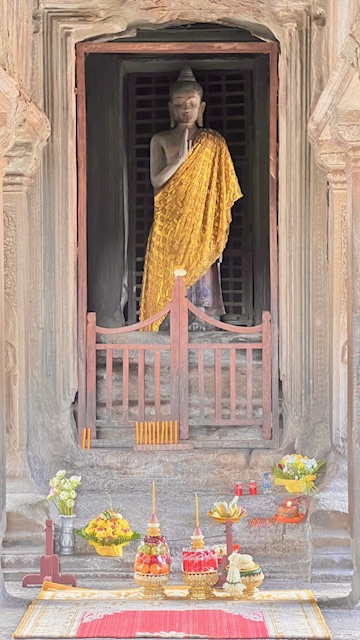
Although this place is crowded most of the time, including non-peak seasons, the sheer vastness of the complex and the overall atmosphere of walking through the ancient ruins, feeling the weight of history will be a combination of humbling/awe-inspiring/spiritual experience.
Angkor Thom and Bayon Temple – Angkor Thom served as the capital of the Khmer Empire, from the late 12th century until the empire’s decline. Established by King Jayavarman VII, the walled city is a 9 sq km complex containing numerous temples, the most famous being the Bayon Temple, known for its over 200 enigmatic smiling stone faces of Avalokiteśvara (bodhisattva of compassion) carved into the temple’s 54 towers. Some locals believe the temple was built for Brahma, since the faces have four sides, representing Brahma’s four faces. Also, the faces have three eyes, which symbolizes Shiva in the Trimurti.
Angkor Thom has 5 entrances, including the four cardinal gates (North, South, East, and West) and the Victory Gate on the east side. Each of the five gates features a tower topped with four enormous faces and leads to the center of the city, with the South Gate being the most famous. Leading up to the entrances at the South and Victory Gates, are 54 statues of Asuras (demons) on one side and 54 Devas (gods) on the other, with each figure holding on to the body of a giant naga (serpent). The Naga’s body forms a long railing over the causeway. This is a symbolic representation of the “Churning of the Sea of Milk” myth. We entered the temple from South Gate.
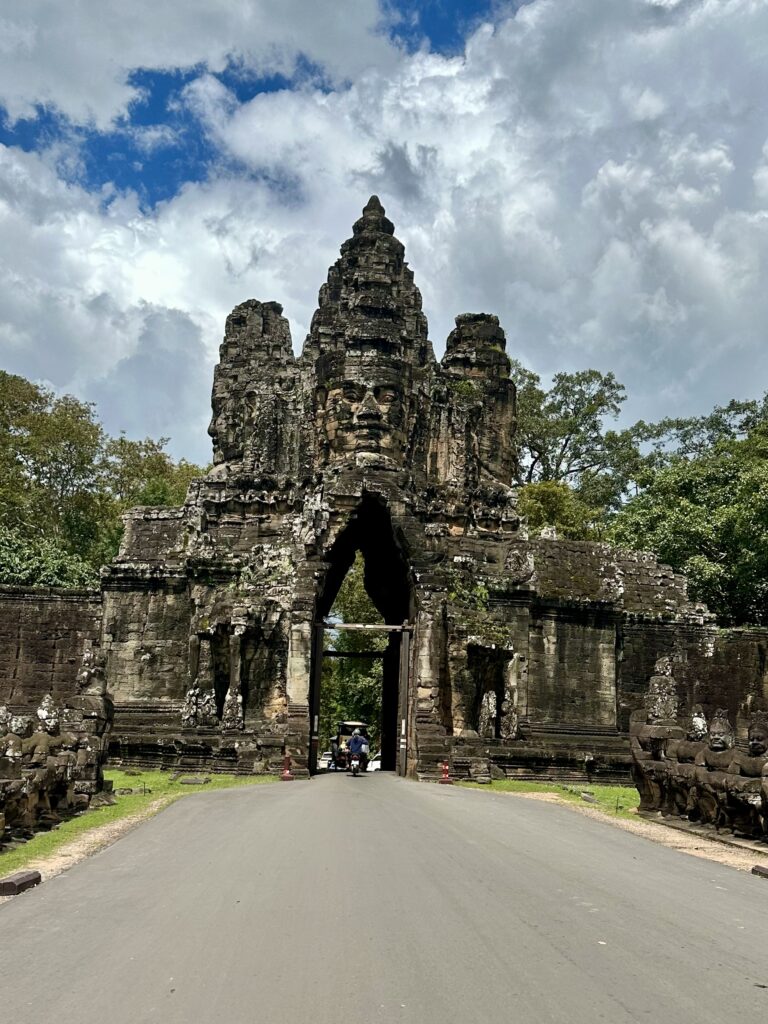
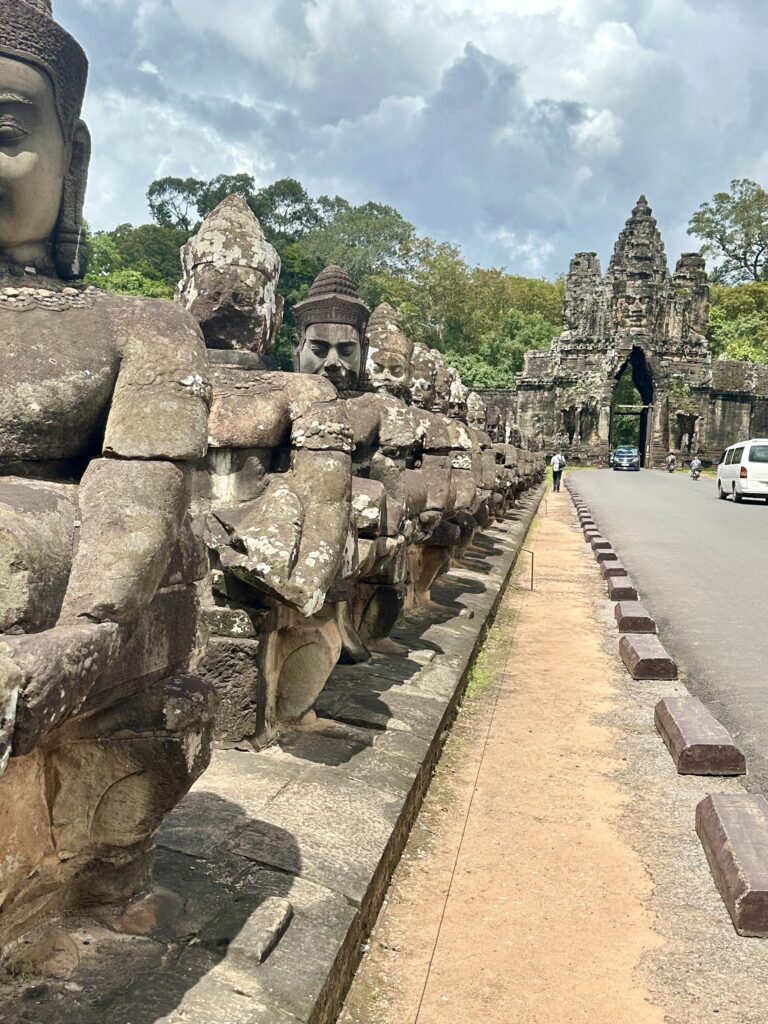
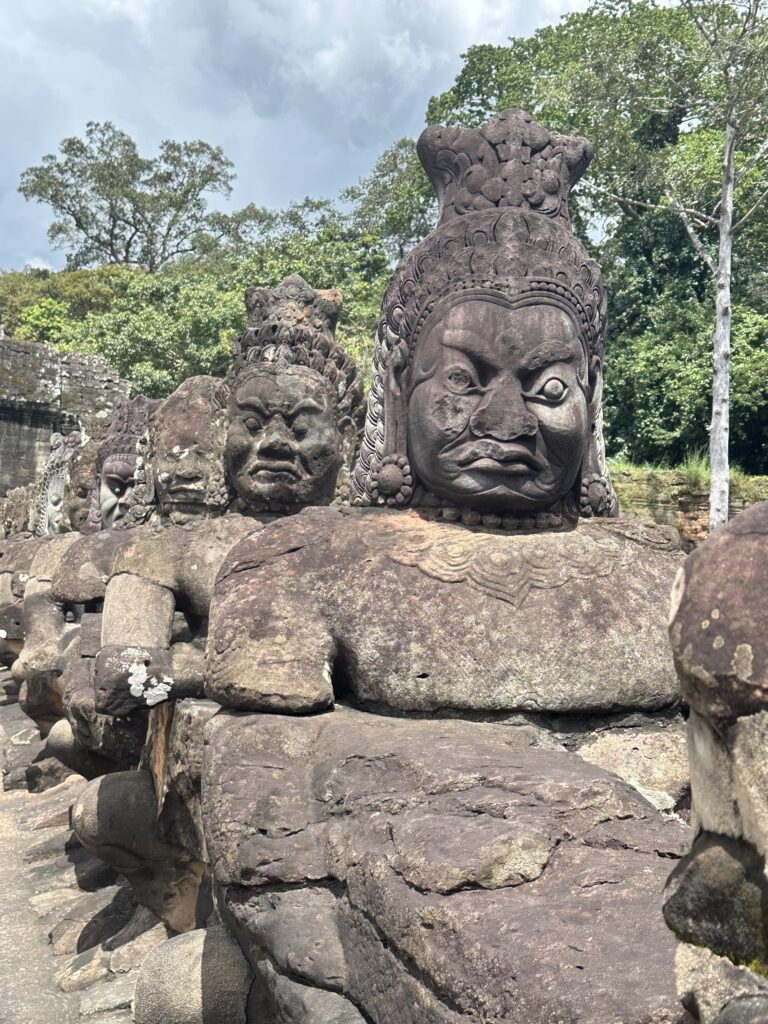
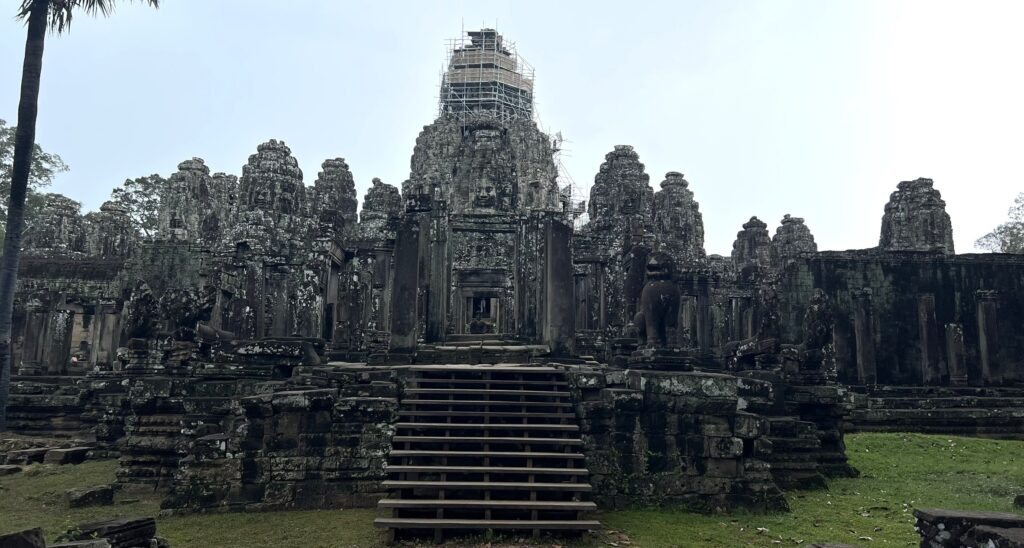
Angkor Thom is part of the larger Angkor Archaeological Park and is a UNESCO World Heritage site, and restoration efforts are ongoing. The site is a testament to the architectural and artistic genius of the Khmer Empire. Bas-reliefs on the walls depict historical events and mythical stories, offering insights into daily life and beliefs.
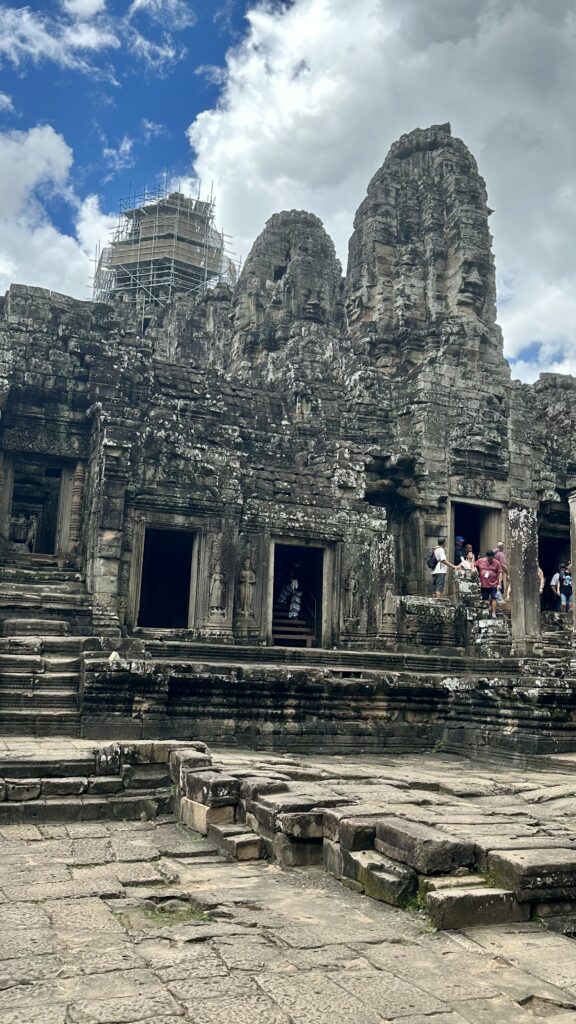
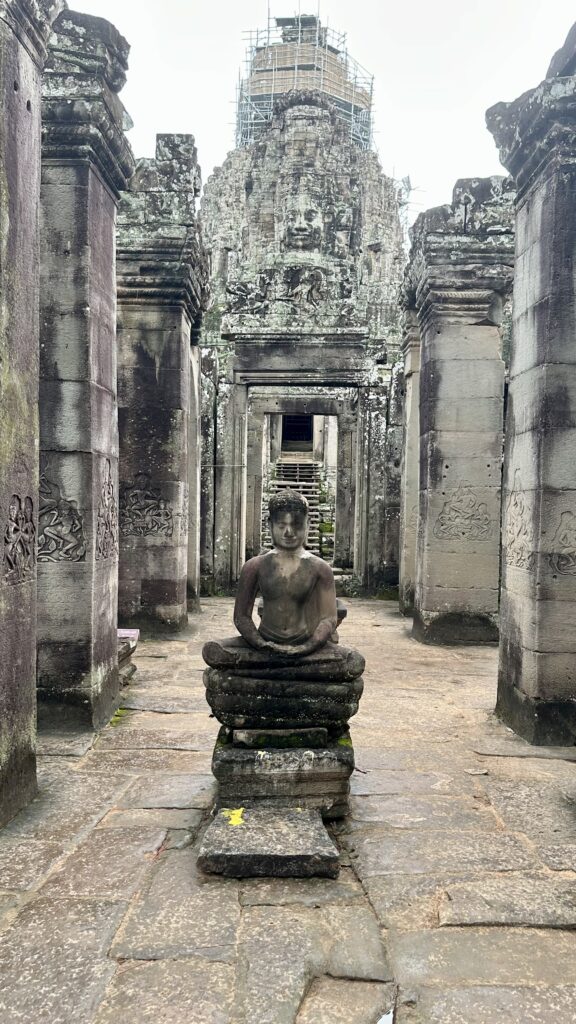
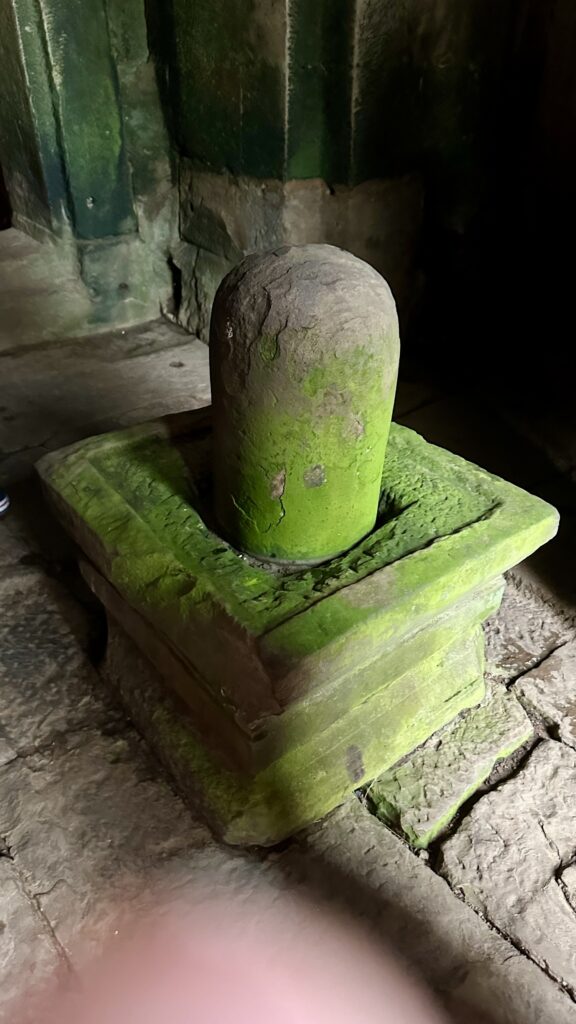
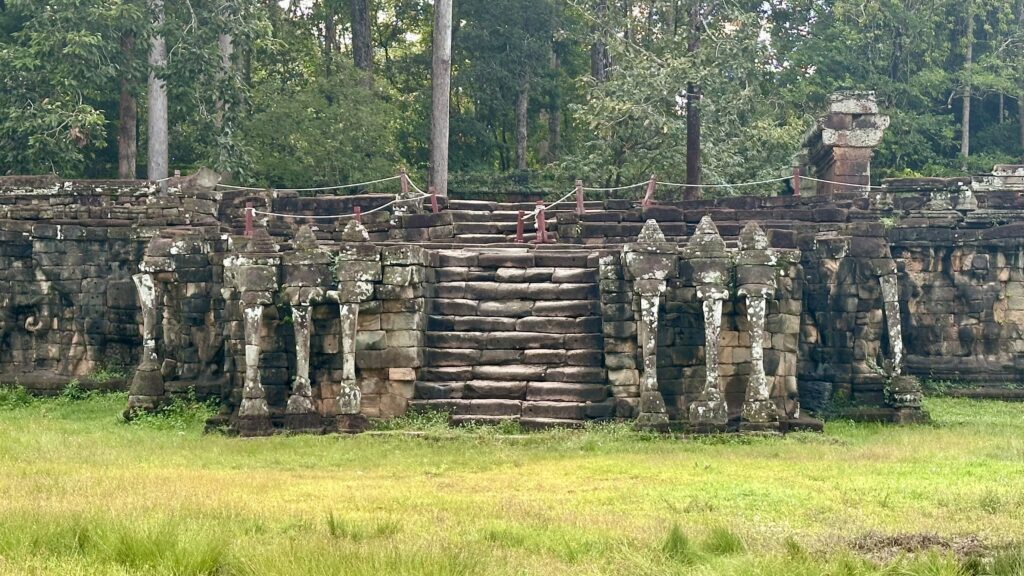
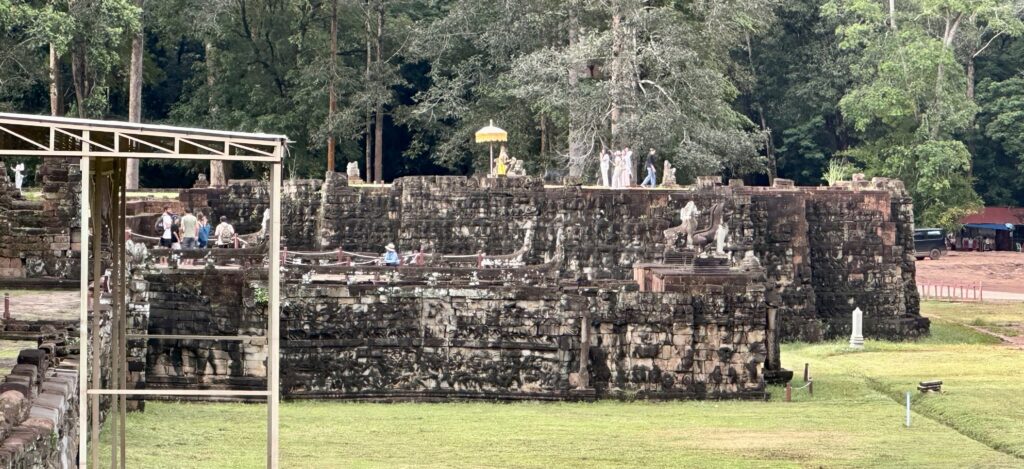
Terrace of the Elephants – This is part of the walled city of Angkor Thom and is named for the carvings of elephants on its facade. The 350 meter-long Terrace of Elephants was used by Angkor’s King Jayavarman VII as a platform for public ceremonies and to view his victorious returning armies.
Most of the original structure has disappeared as it was built with perishable materials such as wood. What can be seen today is the ornate foundations which contain many carvings of elephants, hence the name Terrace of the Elephants.
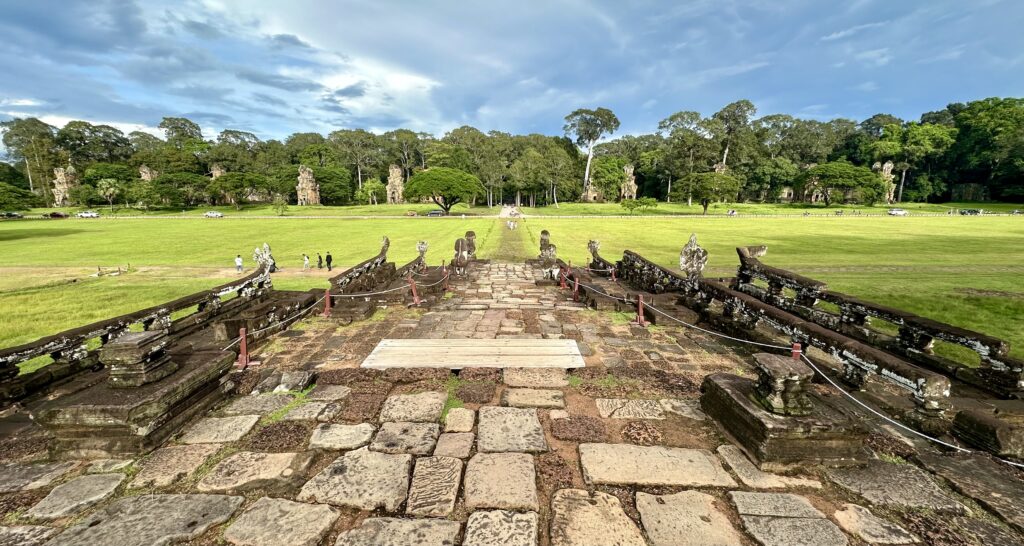
Terrace of Leper King – Located just north of the Terrace of the Elephants is the 7m-high platform of Terrace of Leper King which was built in the late 12th century. It is so named because it is believed that two of the kings from this era had leprosy, though there is some dispute about this. Another theory is that the Hindu god of death, Yama, is depicted in the terrace. The base of the terrace is composed of five layers of detailed carvings.
Ta Prohm Temple (aka Tomb Raider Tomb) – This 12th century temple built by King Jayavarman VII, is famous for its dramatic appearance in the 2001 film Lara Croft: Tomb Raider. You’ll encounter massive tree roots snaking around, over, and through crumbling stone walls, creating a dramatic fusion of nature and architecture. It is one of Cambodia’s most photographed and Instagram-worthy locations. The most popular of the root formations over stone wall is the one at the entrance pavilion, and is nicknamed Crocodile Tree (or Tomb Raider tree)
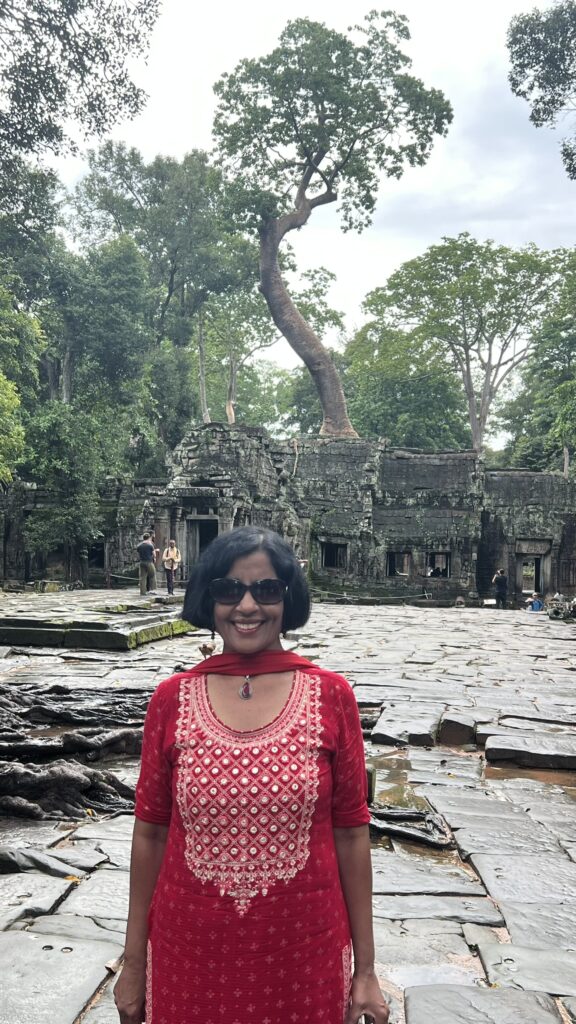
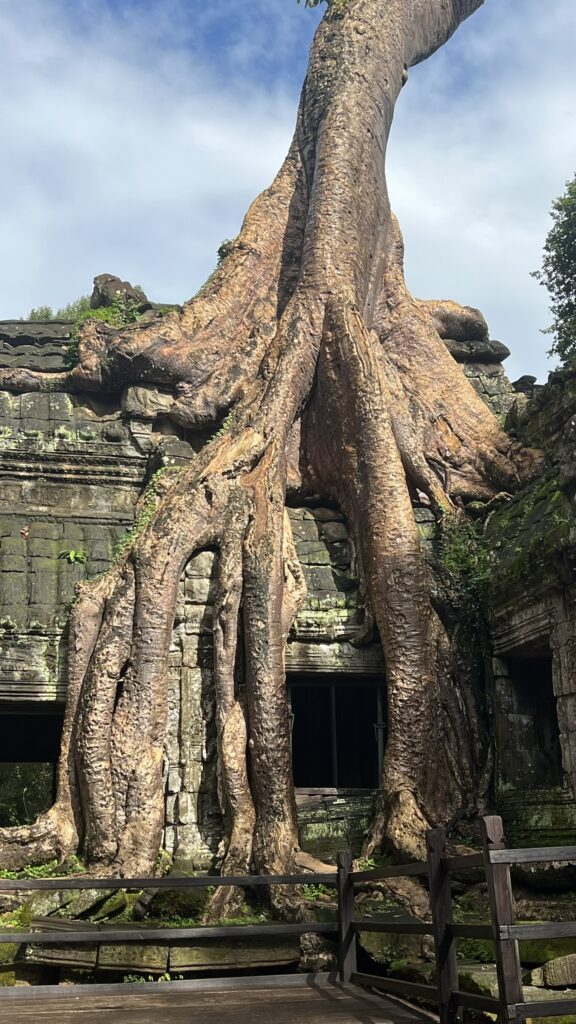
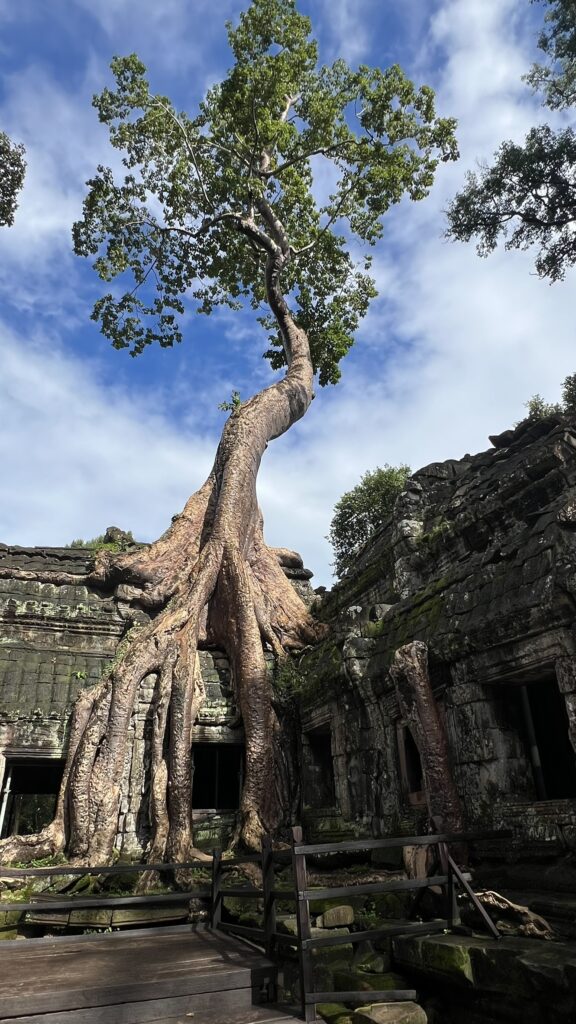
Built from 1186 and originally known as Rajavihara (Monastery of the King), Ta Prohm was a Buddhist temple dedicated to the mother of Jayavarman VII. It is one of the few temples in the Angkor region where an inscription provides information about the temple’s dependents and inhabitants. Almost 80,000 people were required to maintain or attend at the temple, among them more than 2700 officials and 615 dancers. The trees here are hundreds of years old and tower overhead, their leaves filtering the sunlight and casting a greenish pall over the whole scene.
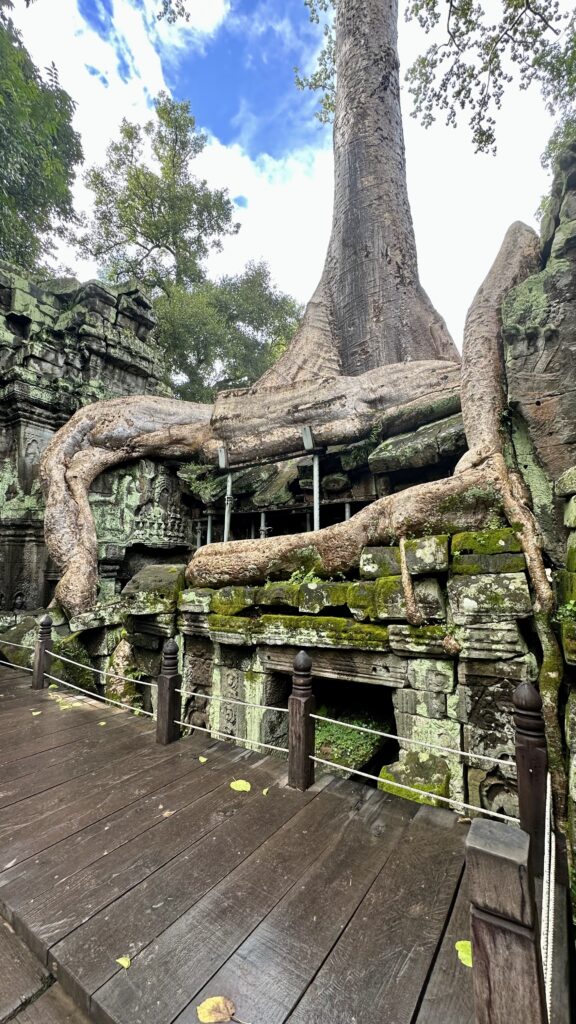
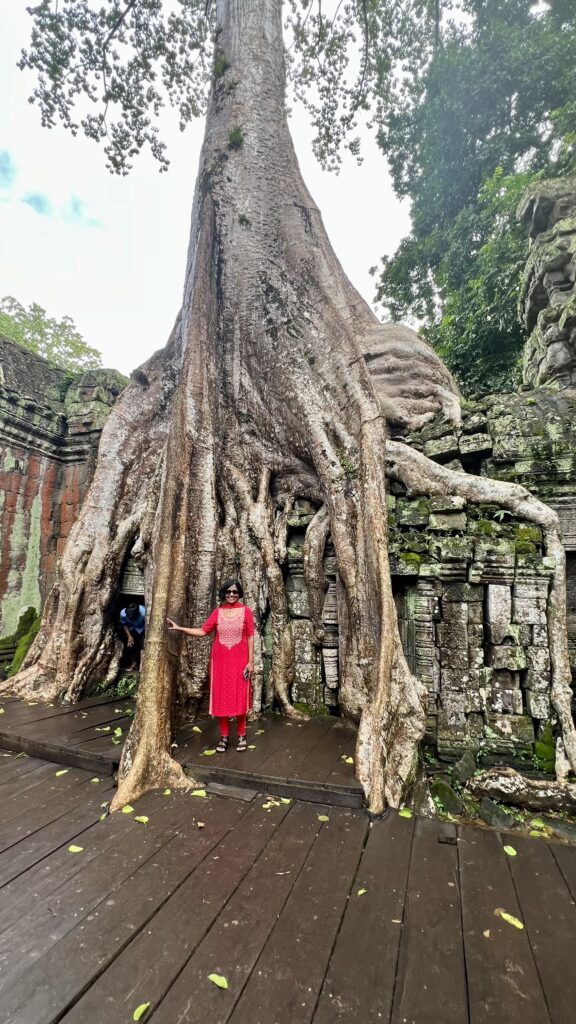
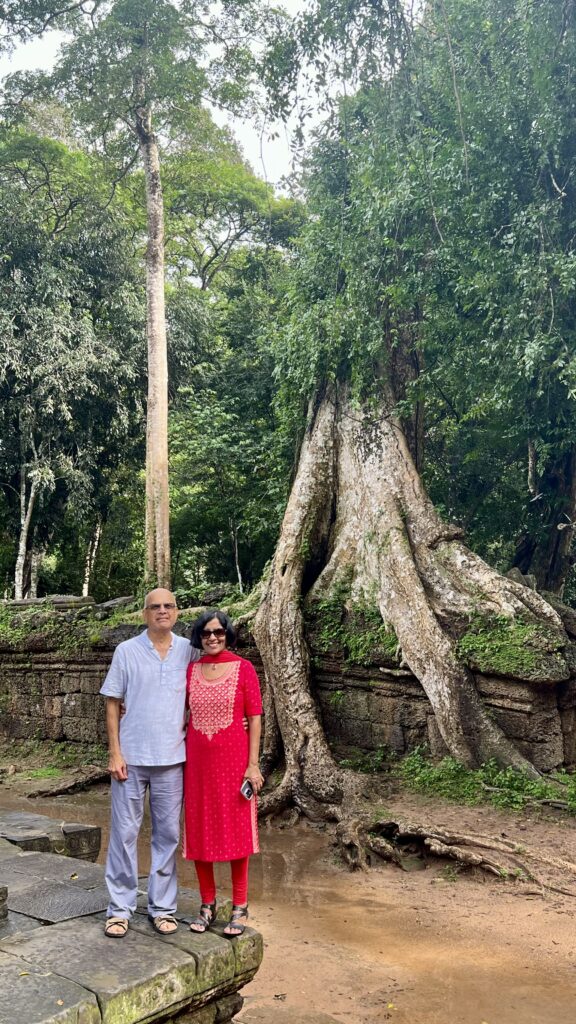
Ta Prohm is currently under stabilization and restoration by an Indian team of archaeologists working with their Cambodian counterparts. In 1992, the temple was confirmed as a UNESCO World Heritage Site. Allow as much as two hours to visit, especially if you want to explore the maze-like corridors and iconic tree roots.
Phnom Kulen National Park (Kulen Mountain National Park) – Located about 50 miles north of Siem Reap, we went on a day trip to this mountain range that stretches for about 40km with its highest point at 487m. The scenery along the drive is gorgeous with green fields, dense forests, and a great view of the valley below. Phnom Kulen is considered a holy mountain in Cambodia and of religious significance to Hindus and Buddhists who come to the mountain in pilgrimage. There are a few places to visit in this park.
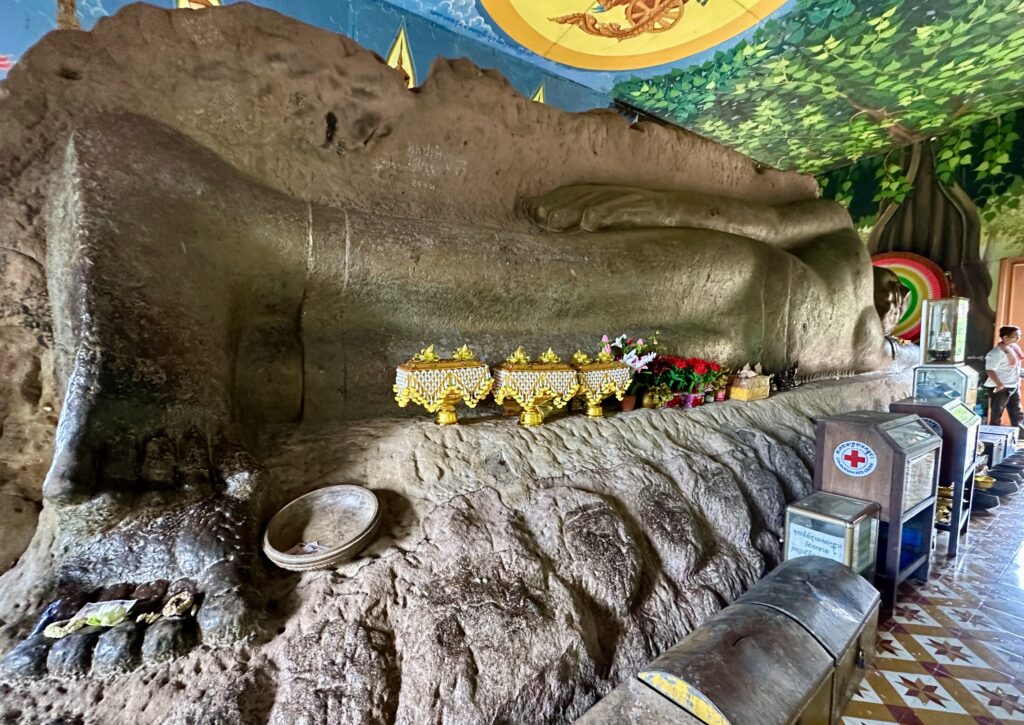
Kulen Mountain, Preah Ang Thom – Located in Phnom Kulen National Park, this 16th century Buddhist monastery is famous for an 8-meter-long reclining Buddha carved from a single boulder. After walking past a small local market selling all kinds of trinkets, you will have to climb a series of steps which will lead to an area with statues of Hindu gods and Buddha statues.
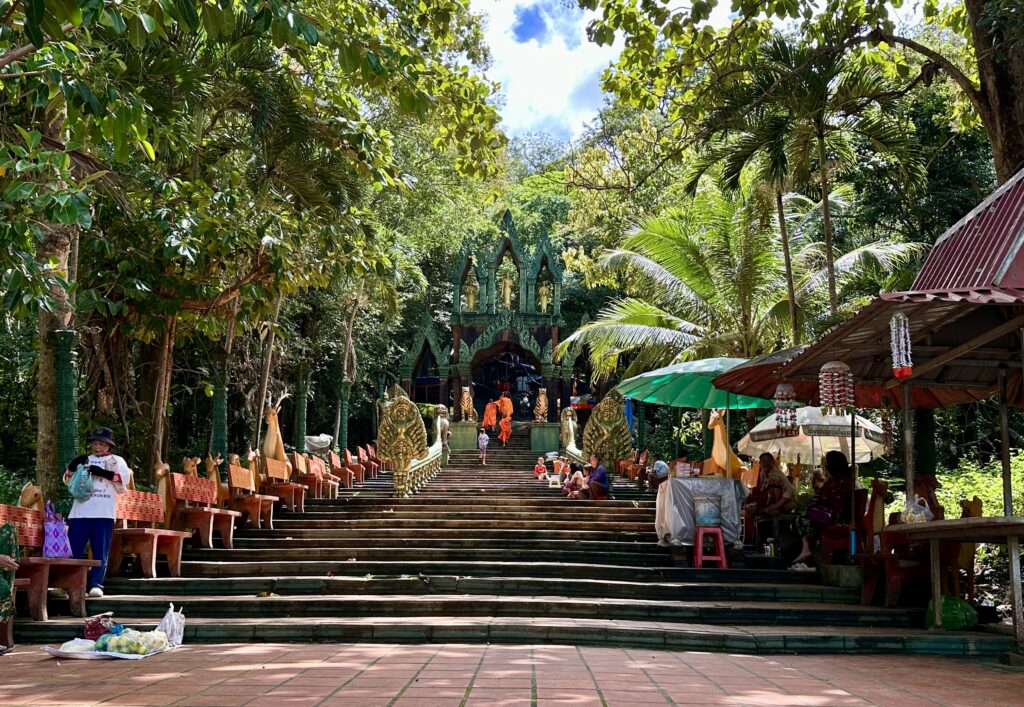
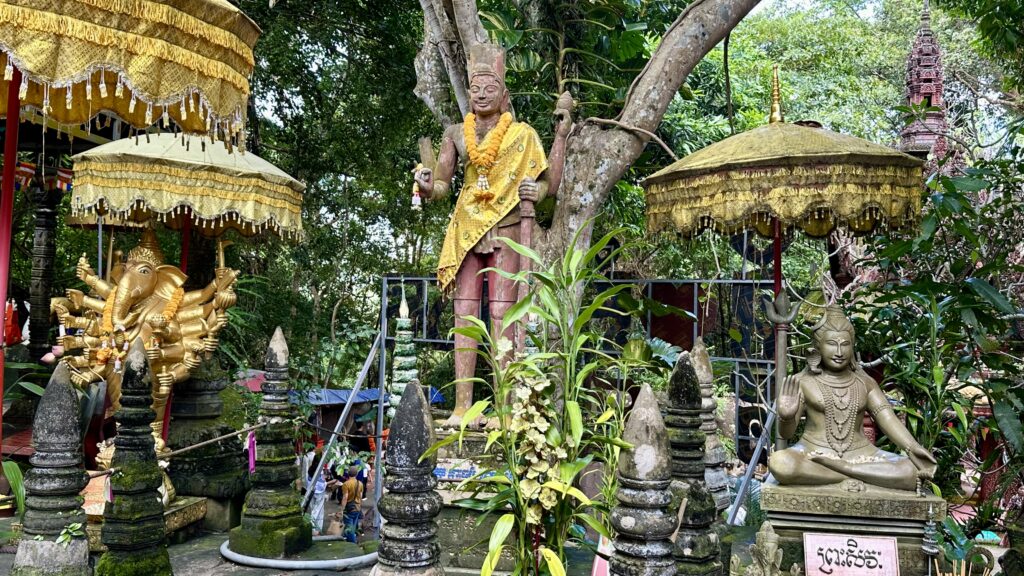
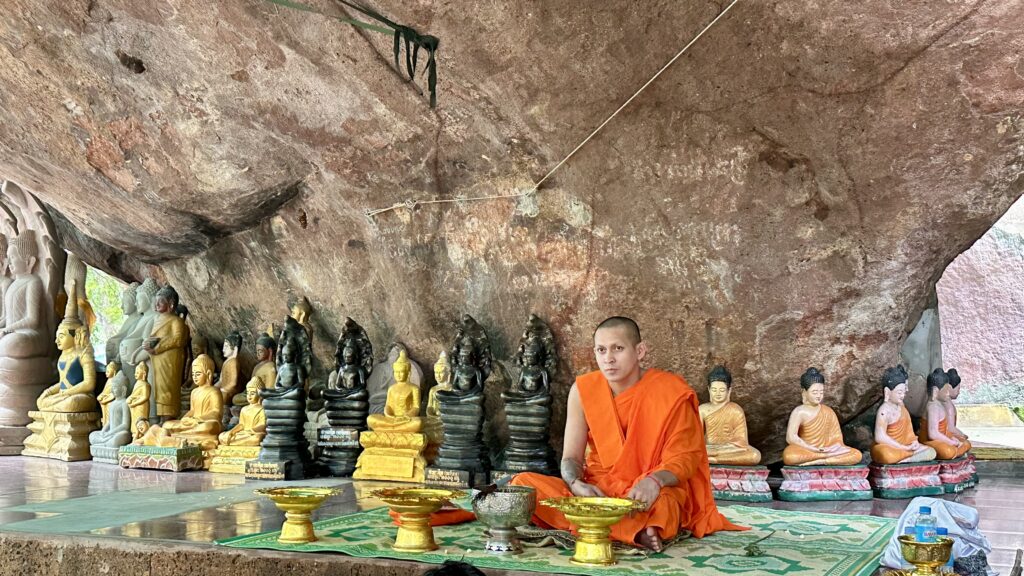
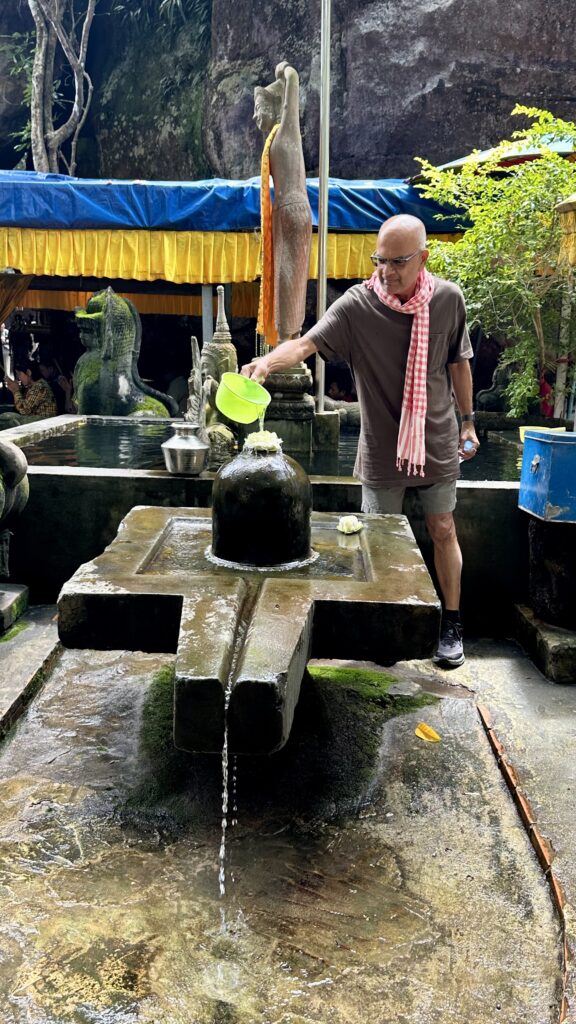
From up here, another flight of stairs leads to the shrine with the reclining Buddha.
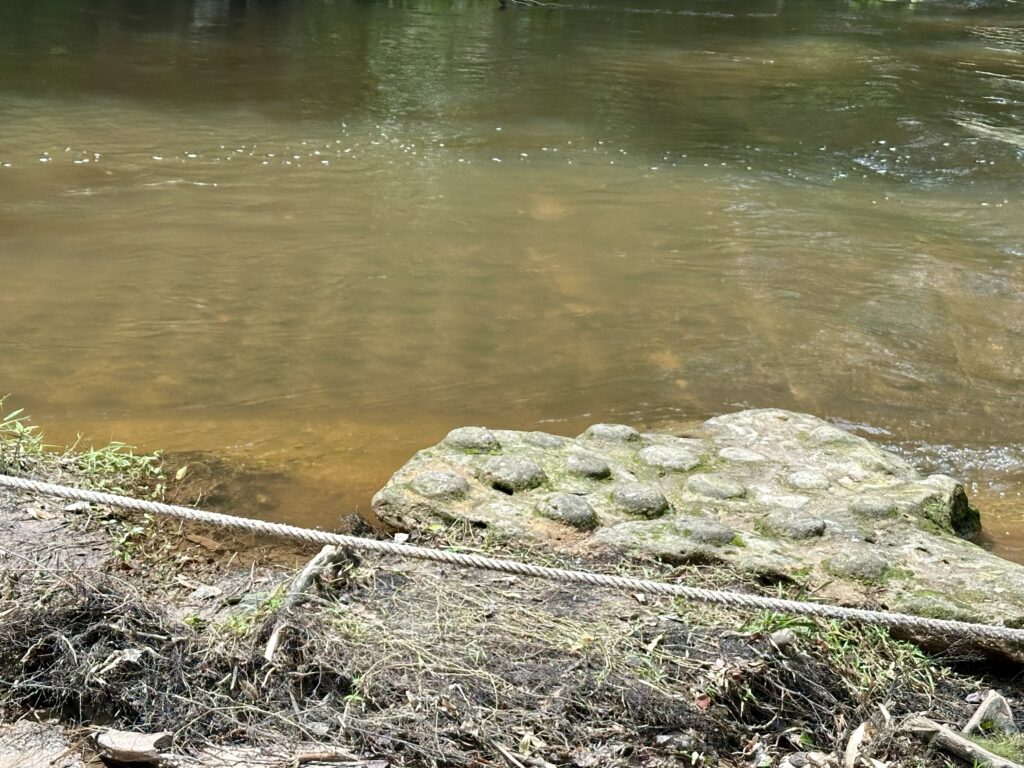
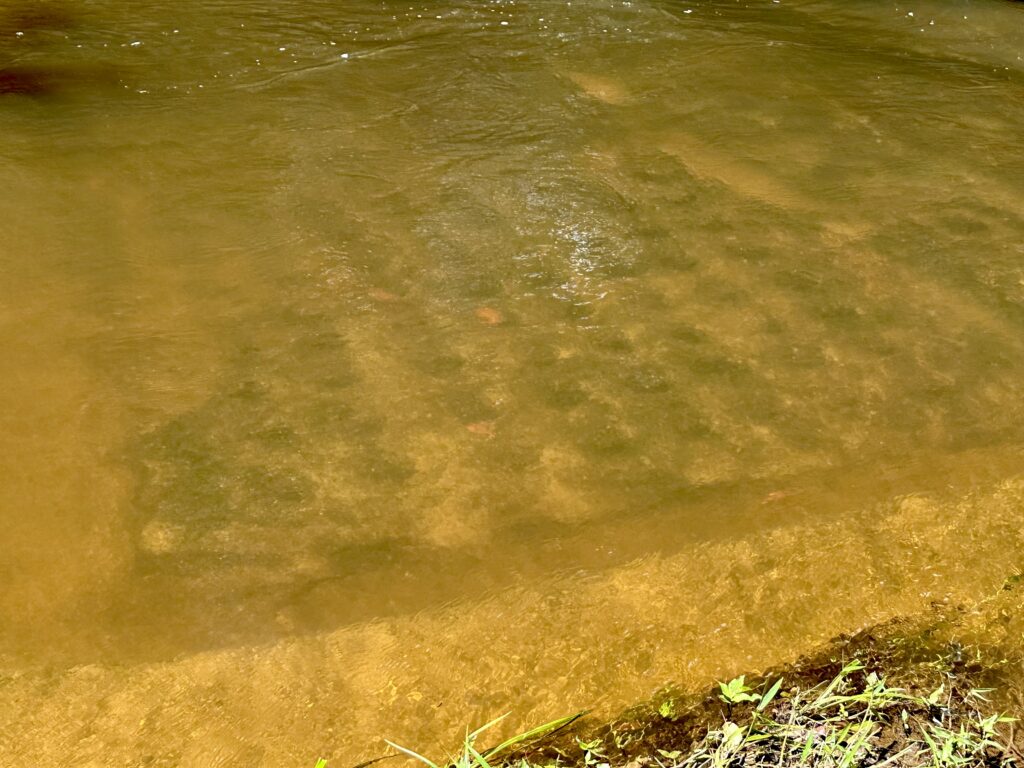
Kulen Mountain, River of 1000 Lingas – our next stop was the nearby River of 1000 Lingas. The Lingams are carved onto a riverbed and will be clearly visible during the dry season when there is not much flow of water. Since we went during the rainy season, the lingams were not clearly visible. They have carved more than 1000 lingams of various sizes on the rocky river bottom. There is also, a carving of Hindu god Vishnu in a happy sleeping position (or Anandha Sayanam) which we couldn’t see .
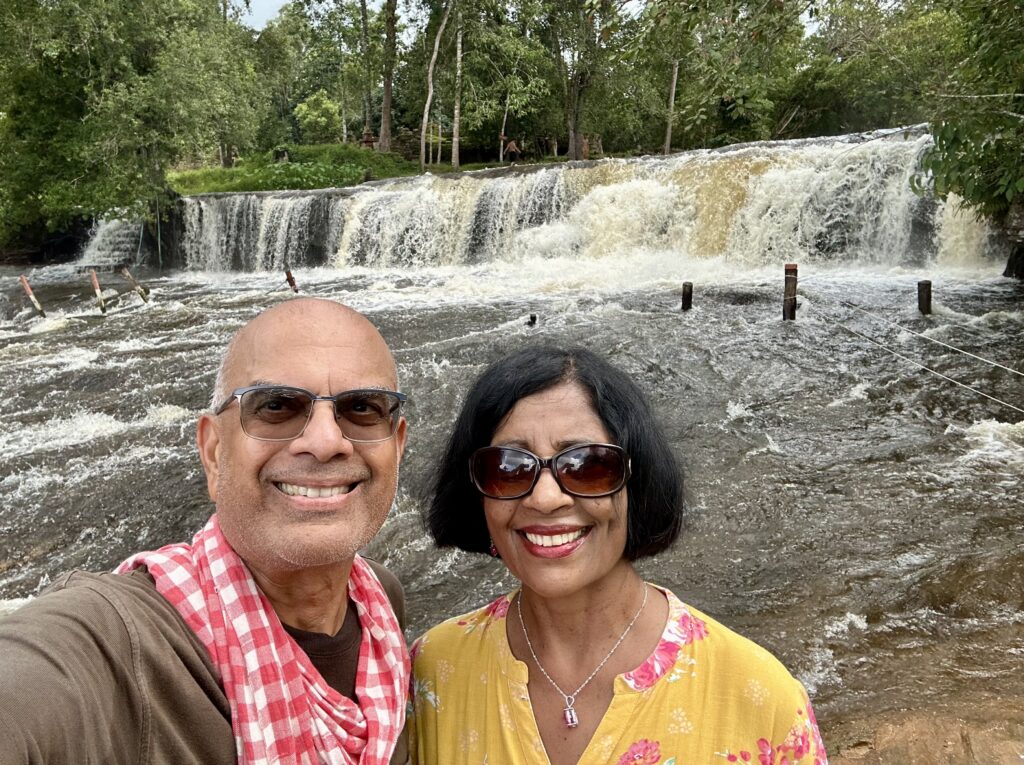
Kulen Mountain, Waterfalls – The river of 1000 lingams leads to a couple of spectacular waterfalls and since we went there during the rainy season, these waterfalls were quite powerful, creating a dramatic and thunderous spectacle.
The first waterfall was about 5m tall and around 25m wide. The hike to this waterfall was not much, about 0.25 km. The second waterfall was about 20m tall and around 15m wide. the hike to this waterfall is a little longer, about 0.5 km with a series of steps at the end of the walk down to the viewpoint.
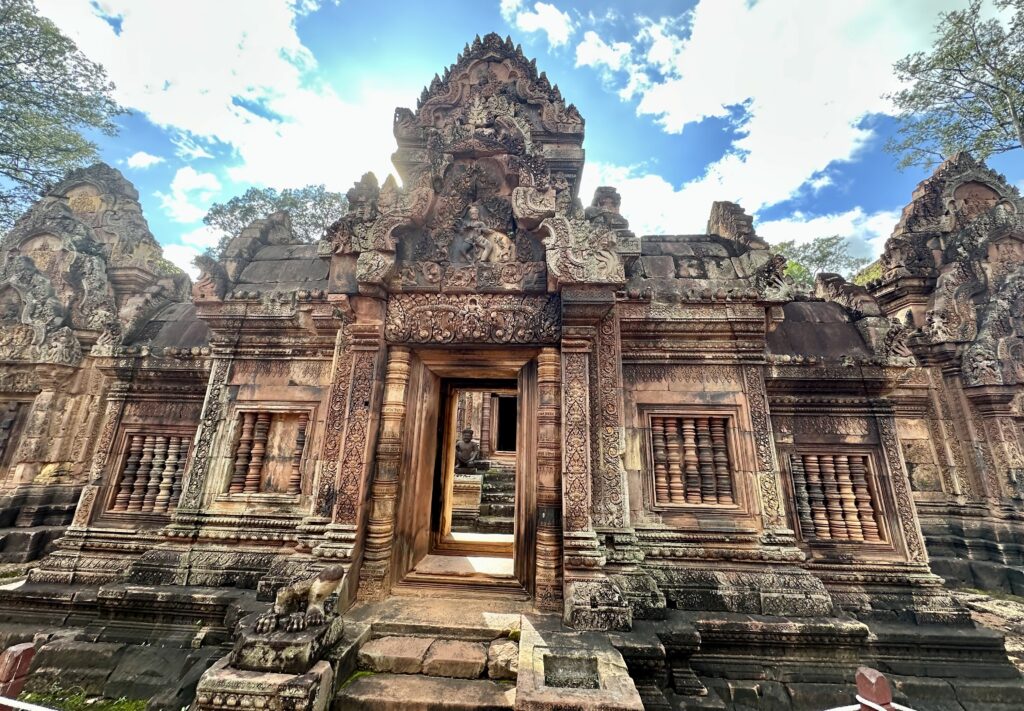
Banteay Srei – located 35km north of Siem reap, this 10th century temple is dedicated to Hindu gods Shiva and Parvati. The temple’s modern name, Banteay Srei – citadel of the women, or citadel of beauty, is probably related to the intricacy of the bas relief carvings found on the walls and the tiny dimensions of the buildings themselves. Banteay Srei is built largely of red sandstone, a medium that lends itself to the elaborate decorative wall carvings which are still observable today.
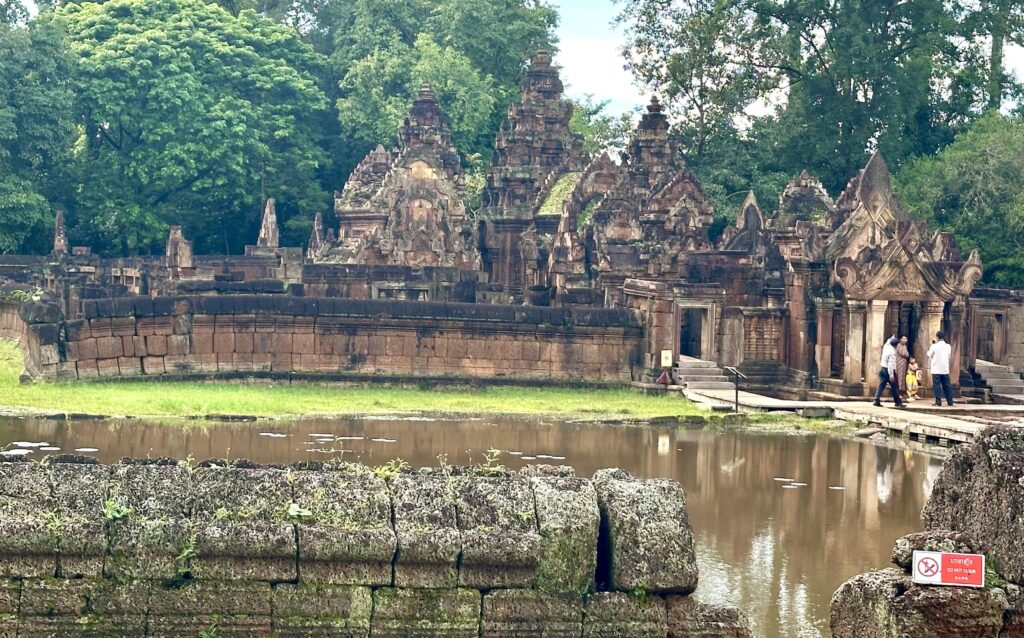
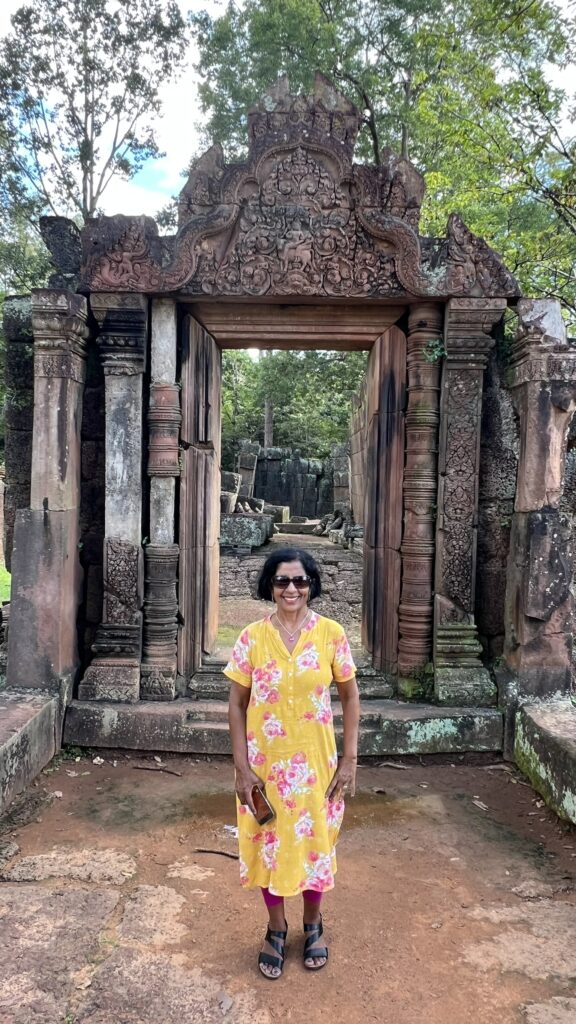
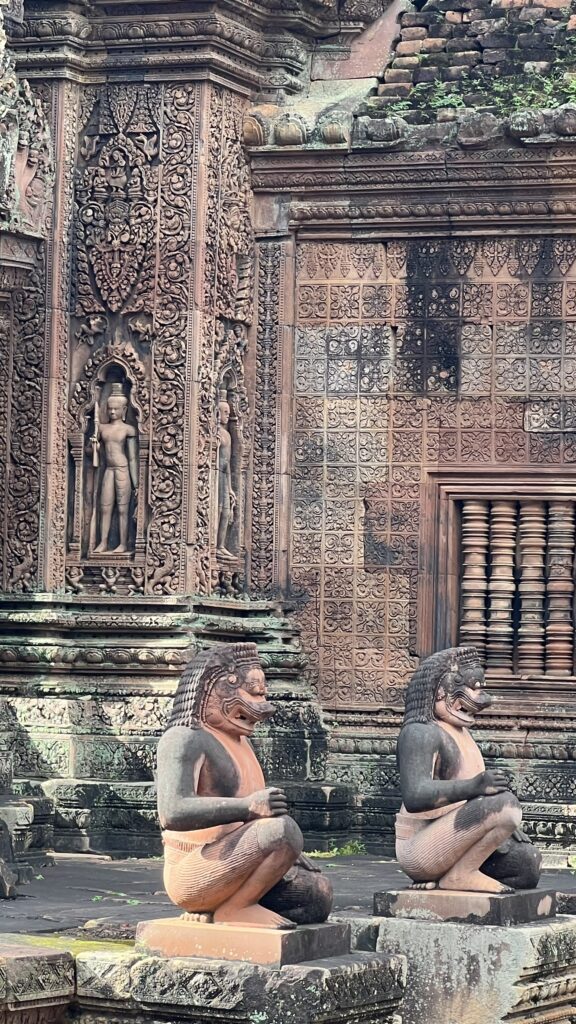
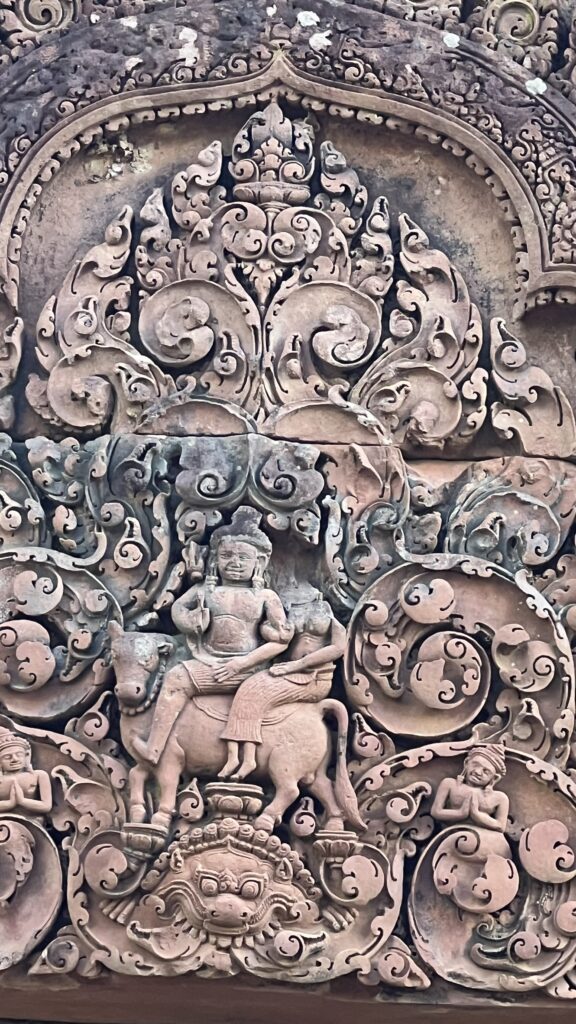
Consecrated on 22 April 967 CE, Banteay Srei was the only major temple at Angkor not built by rulers; its construction is credited to the courtiers named Vishnukumara and Yajnavaraha, who served as counsellors to King Rajendravarman II. Although the temple was primarily dedicated to the God Shiva and carried the name Tribhuvanamaheshvara (lord of the threefold world), the temple buildings appear to be divided along the central east-west axis with buildings located south of the axis devoted to Shiva, and those north of the axis, devoted to Vishnu.
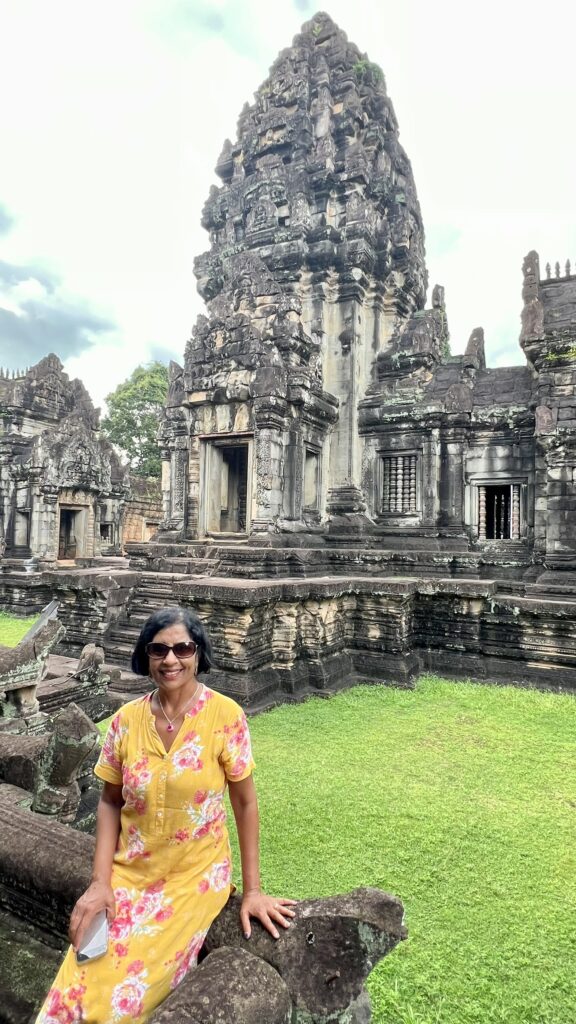
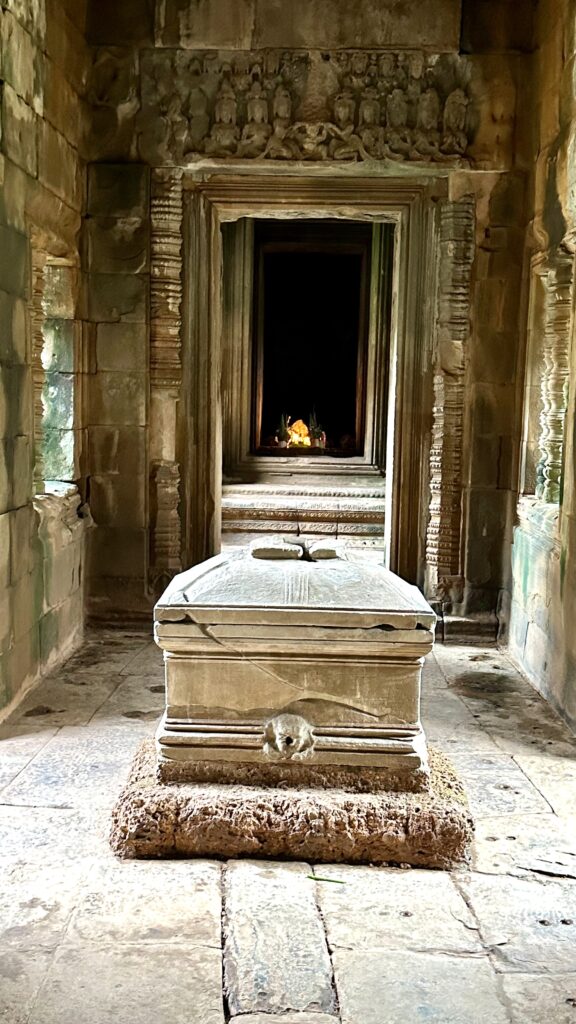
Banteay Samre – Located about 20km from Siem reap, this Hindu temple believed to be originally dedicated to god Shiva, was built in the early 12th century and is a smaller replica of Angkor Wat. This magnificent temple in the 401-square-km Angkor Archaeological Park, is another of the many hidden gems, offering visitors the chance to explore the architecture of the Khmer Empire. It underwent extensive restoration by archaeologists.
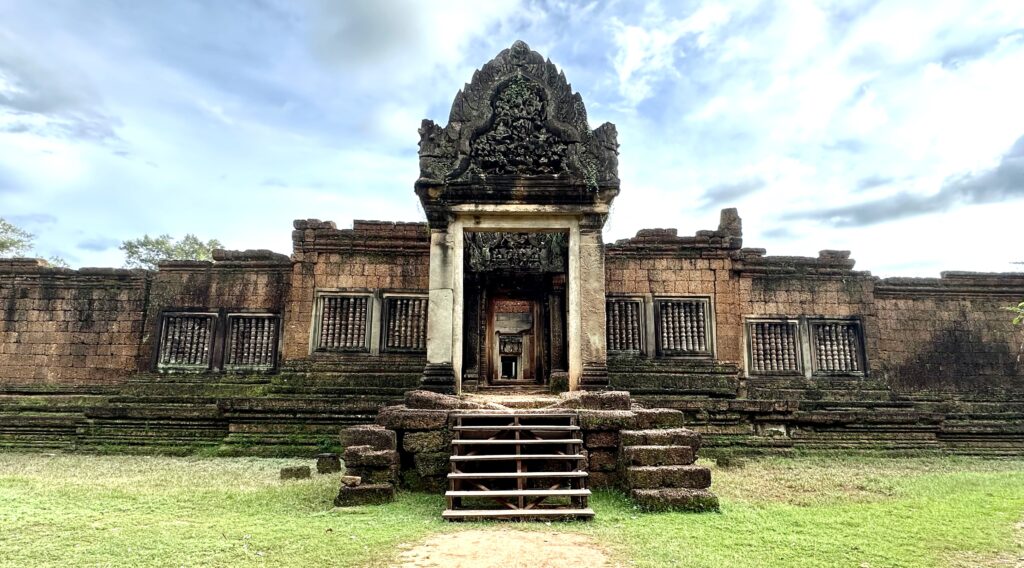
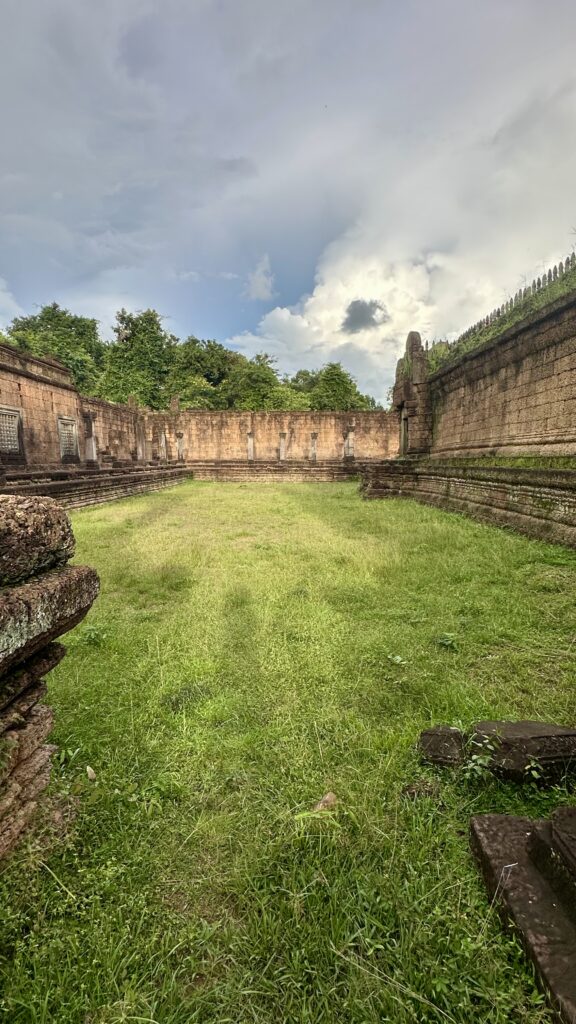
The area consists of a central temple with four wings, preceded by a hall and also accompanied by two libraries, the southern one remarkably well preserved. The whole ensemble is enclosed by two large concentric walls around what would have been the unique feature of an inner moat, now dry.
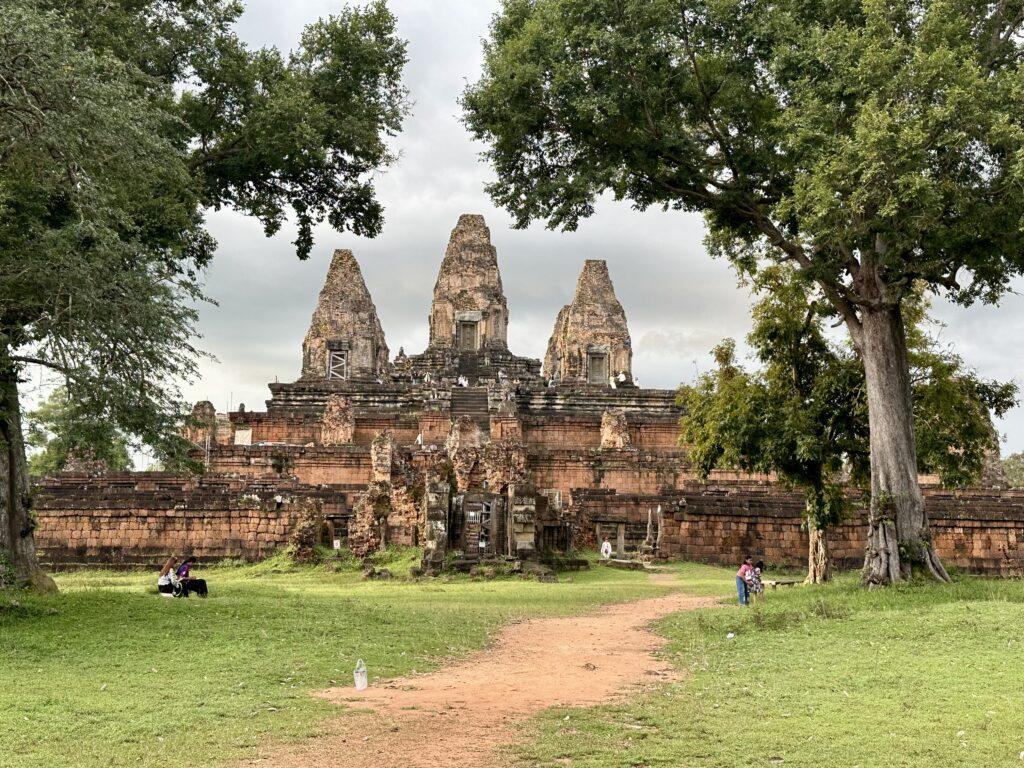
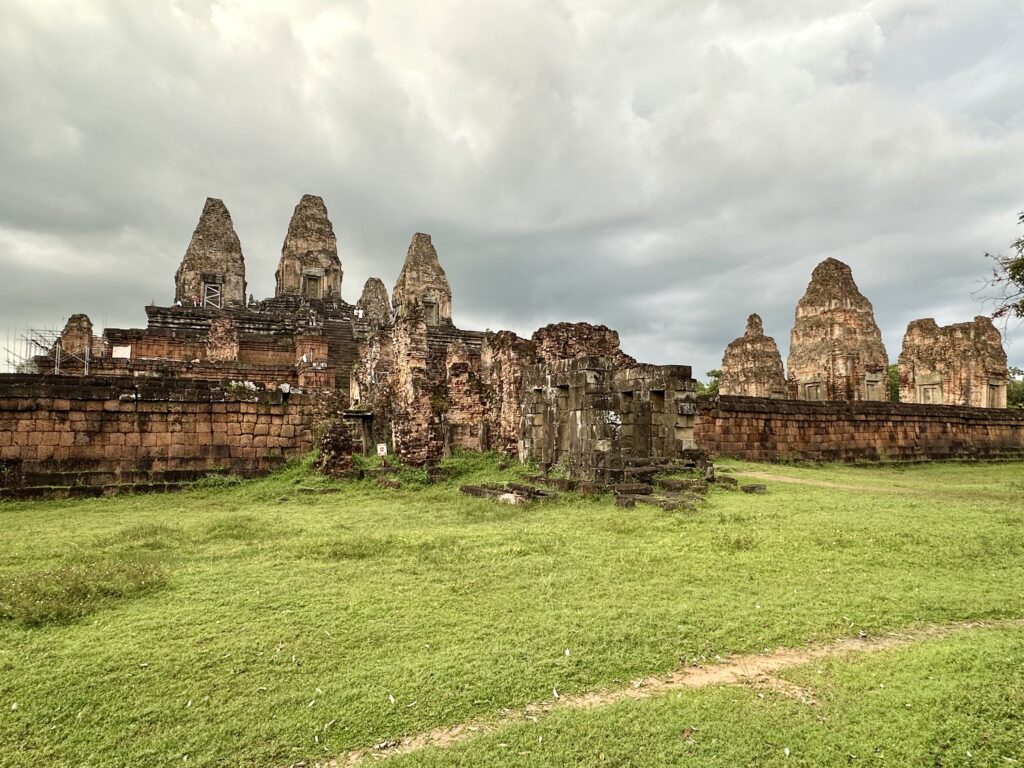
Pre Rup – We passed by this attractive temple on our way back to the hotel and stopped to check it out from outside. This Hindu temple was built using brick, laterite and sandstones giving it a pleasing reddish tone. It was built during the reign of Rajendravarman (944 to 968 AD). The temple’s name is a modern one meaning turn the body. This reflects the common belief among Cambodians that funerals were conducted at the temple, with the ashes of the body being ritually rotated in different directions as the service progressed.
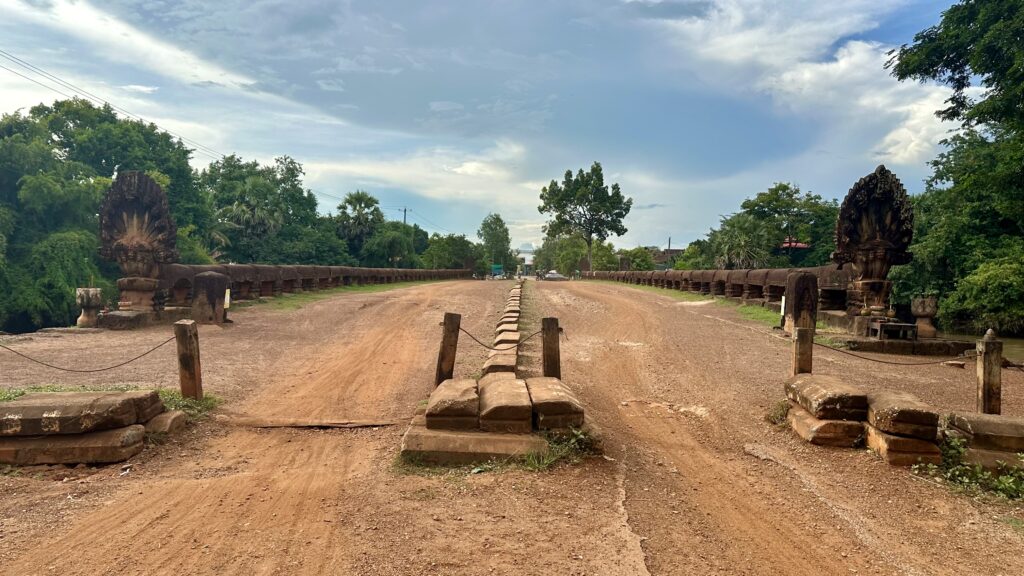
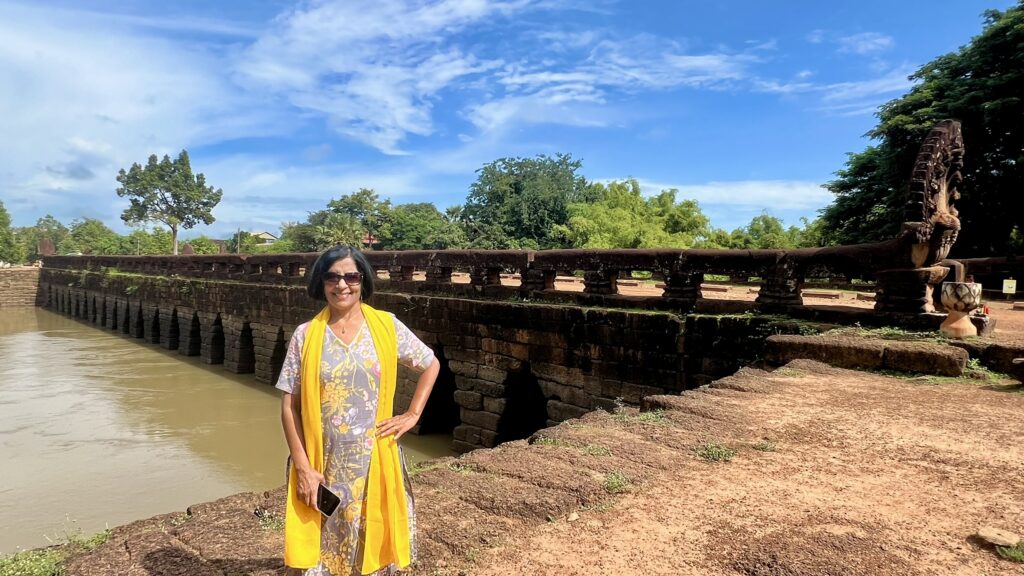
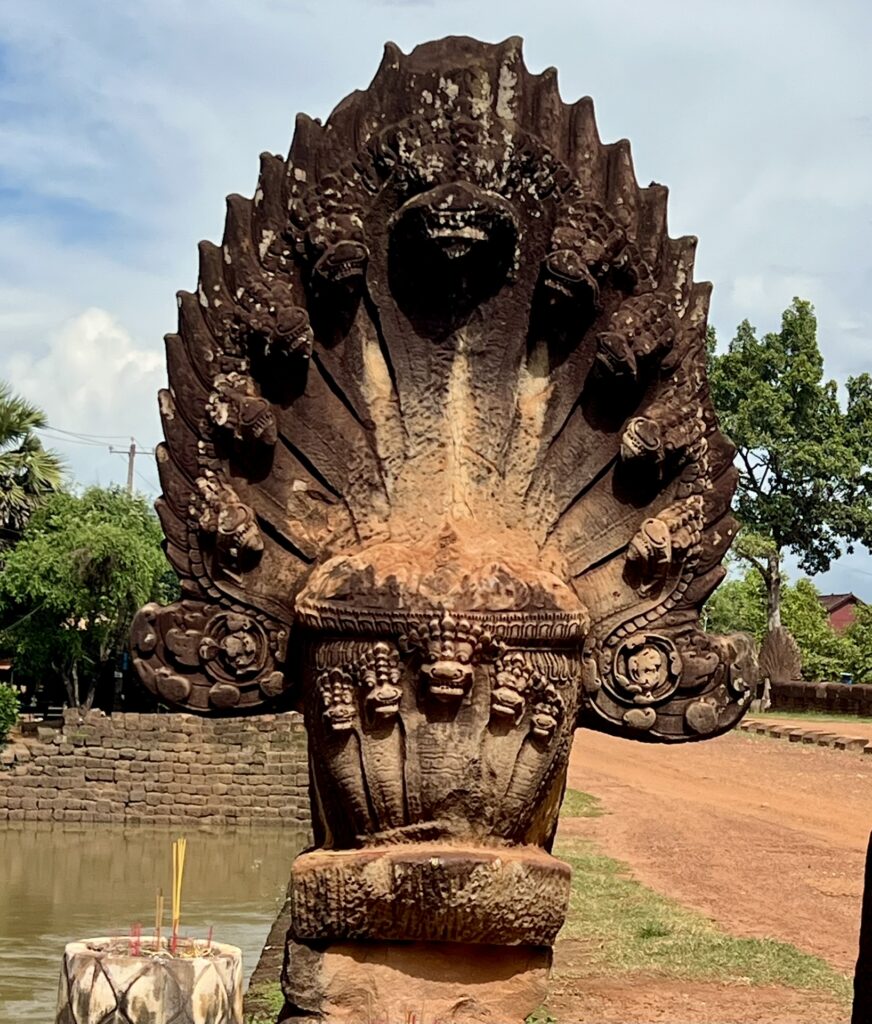
Kampong Kdei Bridge – We stopped by this bridge on our way to Sambo Prei Kuk (see next section). Also known as Spean Praptos, it is a grand ancient laterite bridge measuring 86 m long and 14 m wide with 21 arches and topped by a sandstone balustrade with stunning ornamental naga. Built in the 12th century during the reign of King Jayavarman VII, Spean Praptos once served as a vital link in the empire’s transportation network. Its impressive structure, showcases the advanced engineering techniques of the time. While the bridge has undergone restoration efforts, its original grandeur remains evident.
Sambor Prei Kuk – This archaeological site is located 171 km southeast of Siem Reap and took us about 3 hours to reach. The now ruined complex dates back to the Pre-Angkorian period (late 6th to 9th century), established by king Isanavarman I as central royal sanctuary and capital, known then as Isanapura. It was declared a UNESCO World Heritage Site in 2017.
The architectural complex includes 3 clusters classified as group C for Central, N for North and S for South. Each group has a square layout surrounded by a brick wall. The structures of the overall archaeological area were constructed at variable times and include numerous octagonal towers, shiva lingams and yonis, ponds and reservoirs, and lion sculptures.
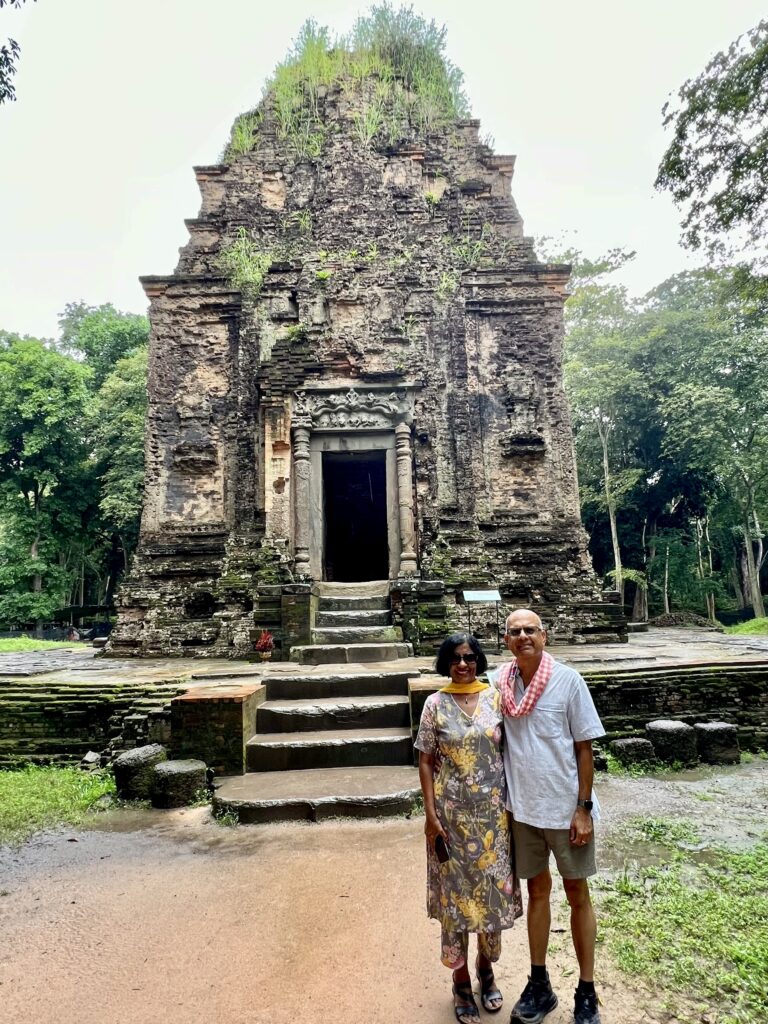
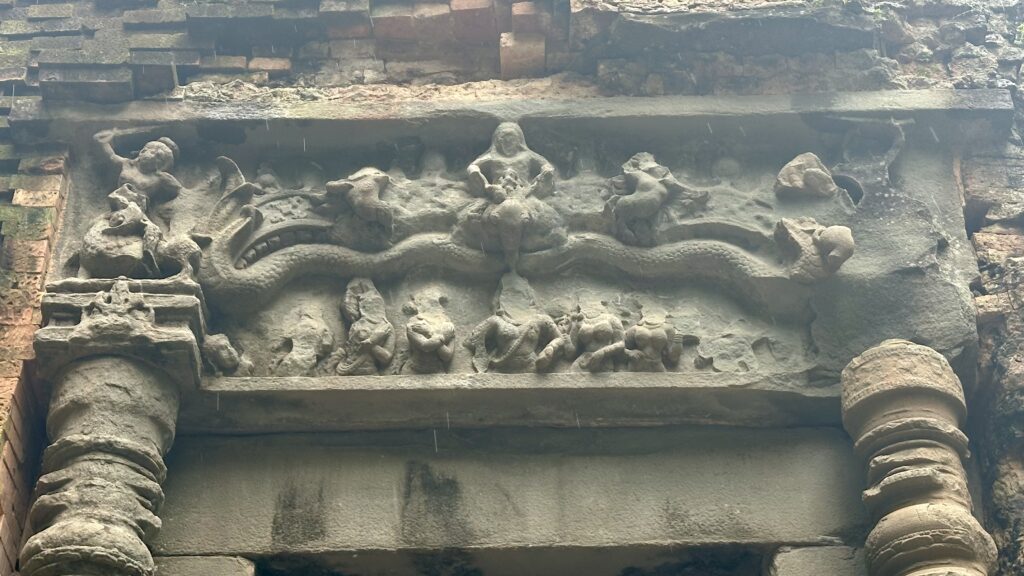
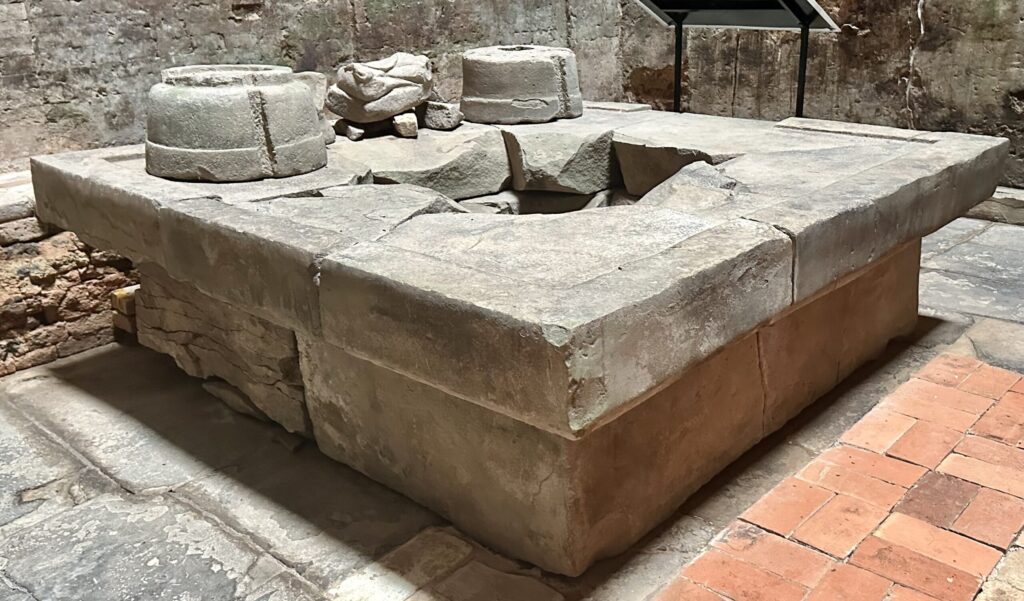
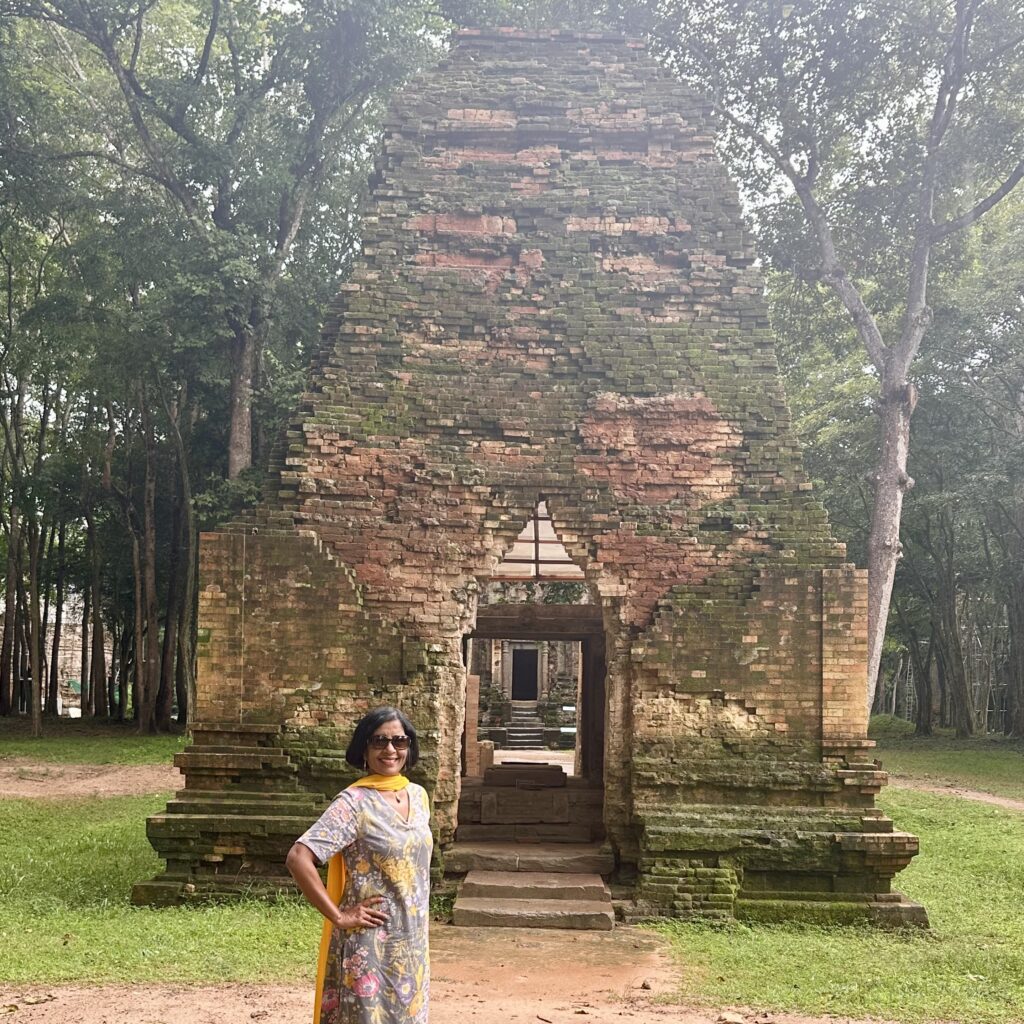
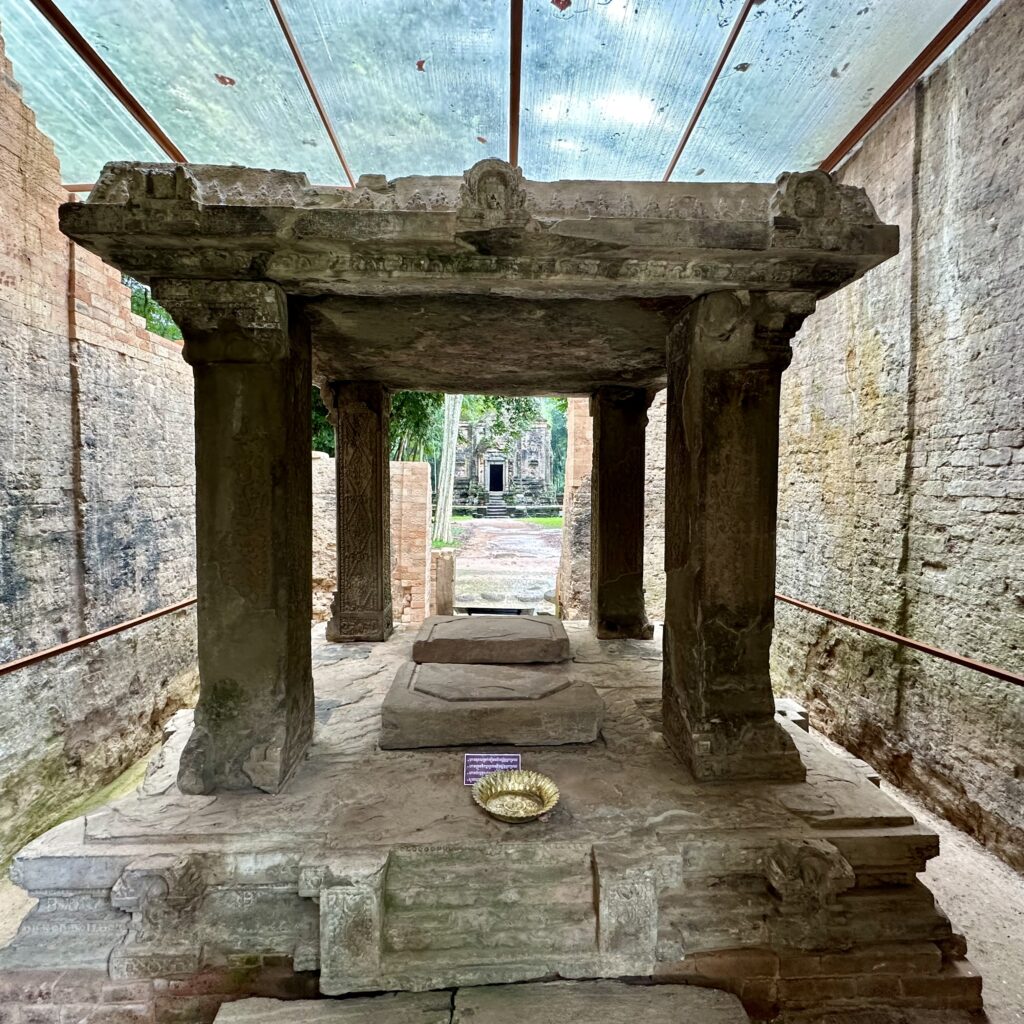
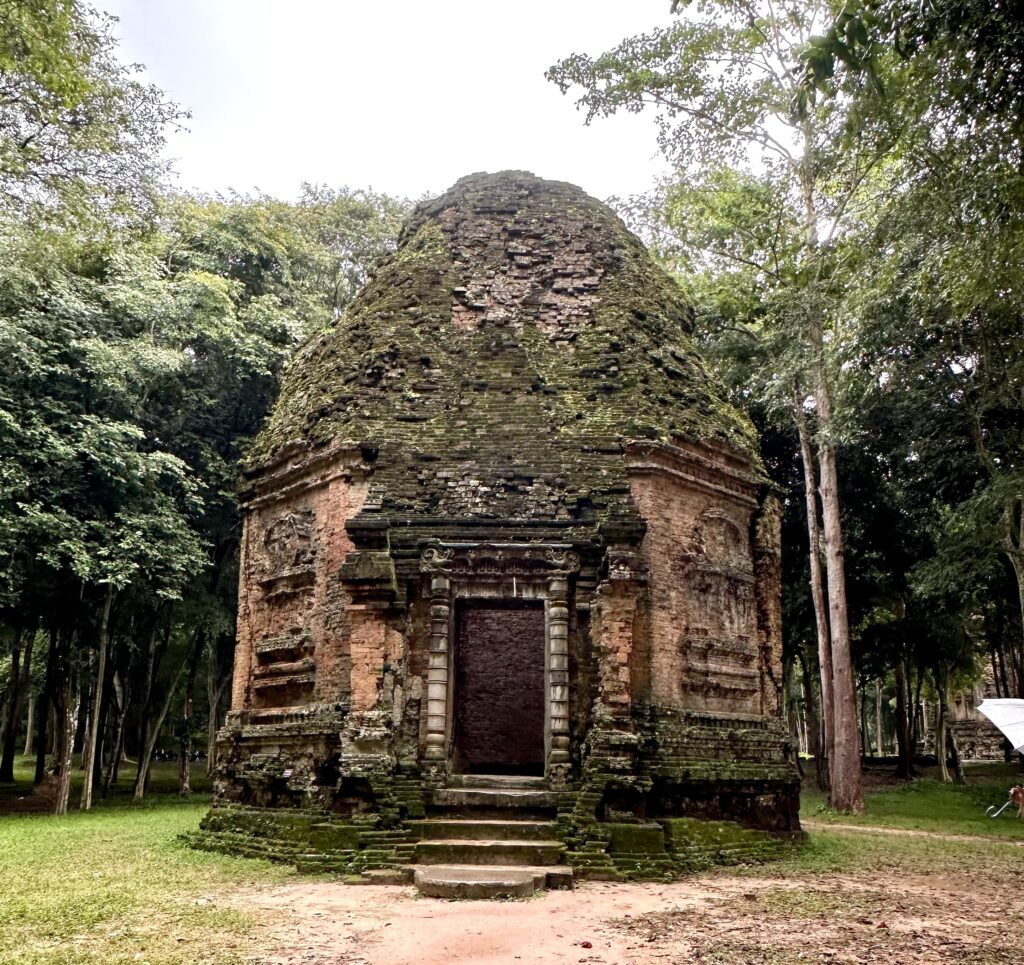
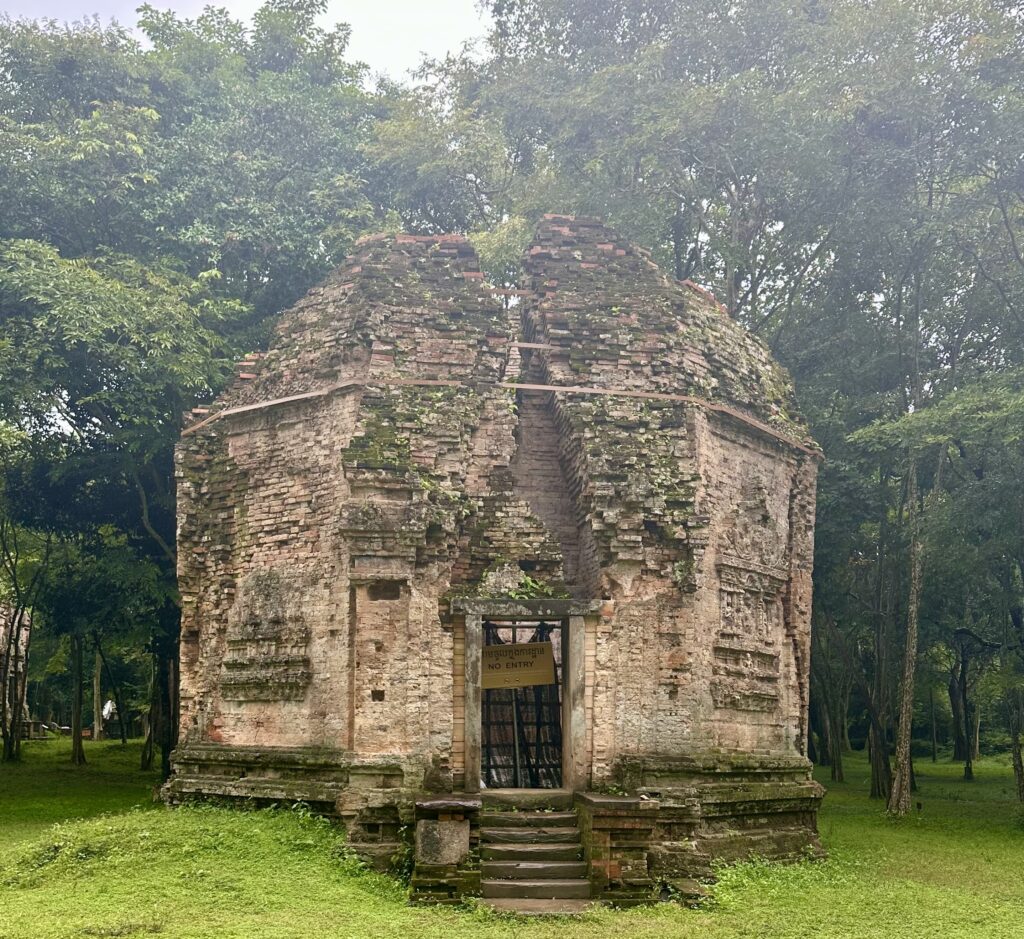
Prasat Tao or Central Group has a central tower that is about 20m high, built on a platform with doors on all 4 sides. The stairway on the entrance side of the temple has a pair of sandstone lions.
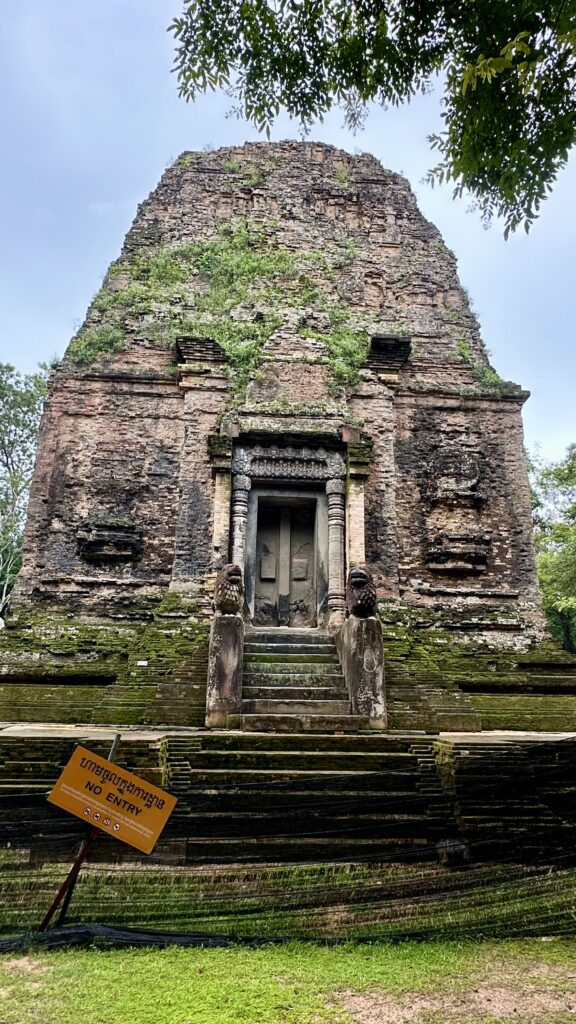
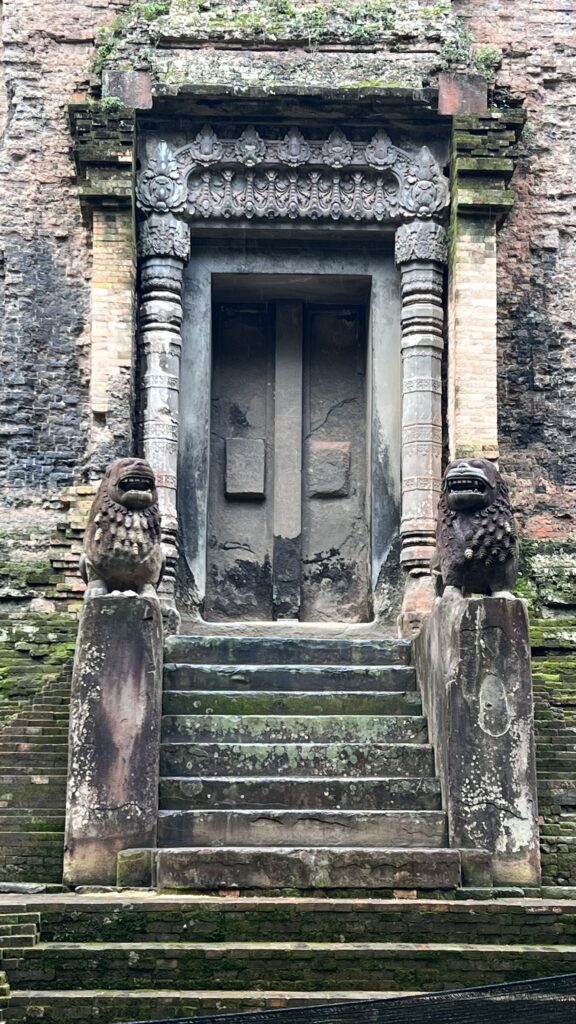
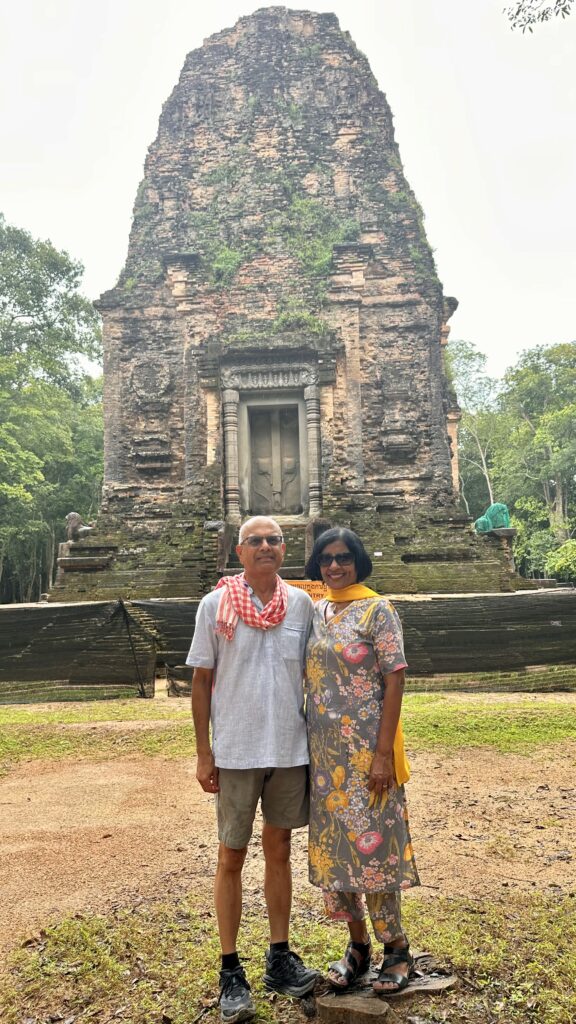
You can spend a few hours in this complex exploring each of the many octagonal tower ruins in the North, South, and Central areas. We spent more than an hour checking out the towers and walking in and out of many of them which had open doorways.
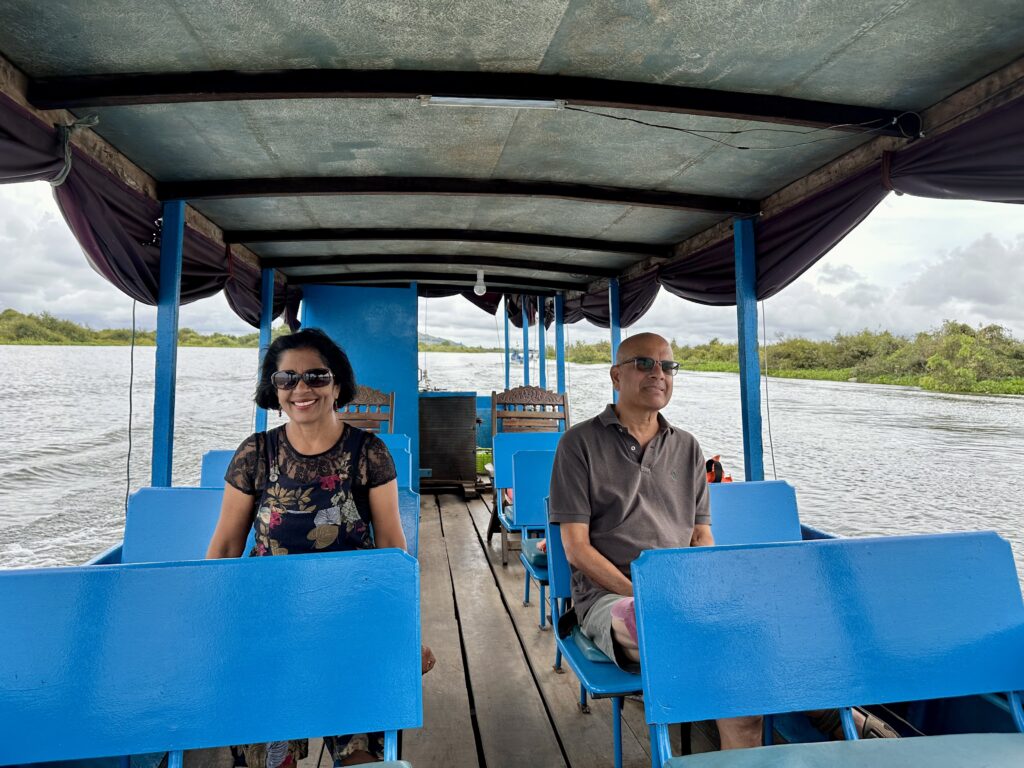
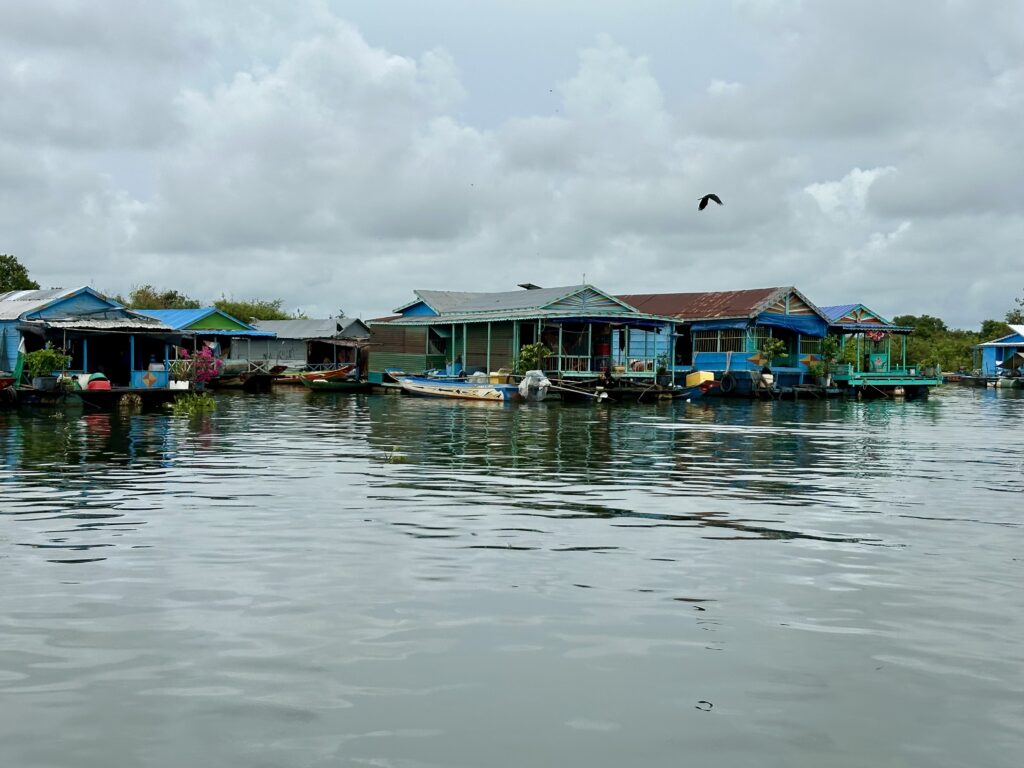
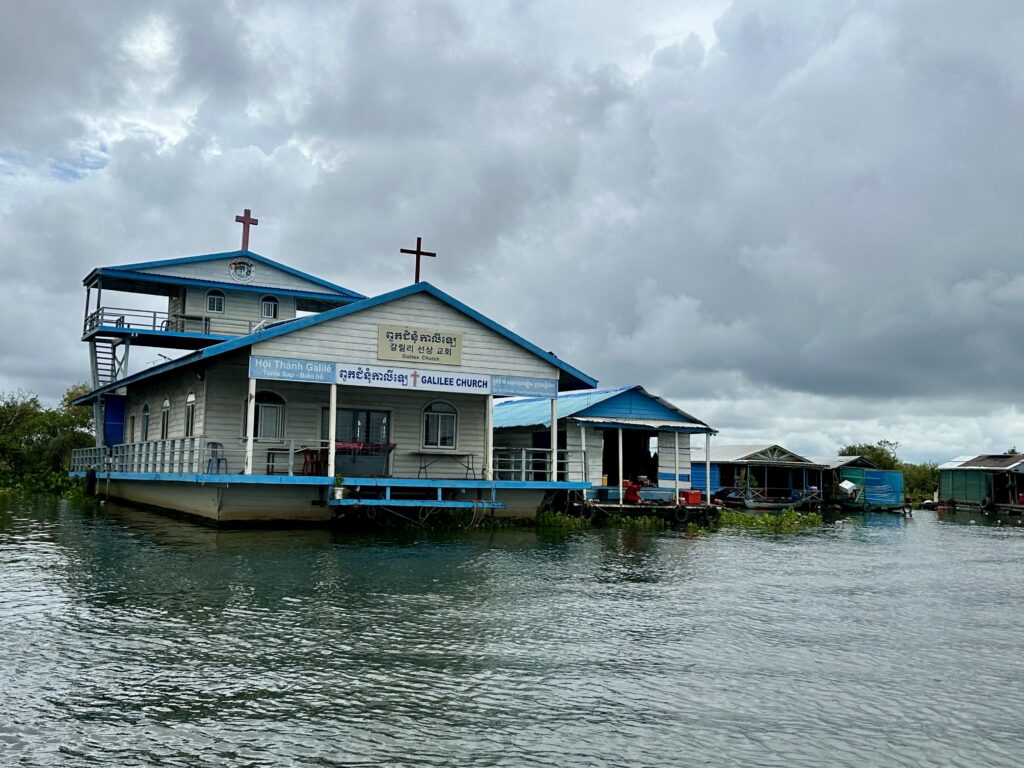
Boating on Tonle Sap River – We went boating on the Tonle Sap River to the floating village of Chong Khnies. It is one of the most popular and accessible floating villages near Siem Reap. We were able to see the floating houses and shops and observe the daily life of the villagers, who often work as fishermen. We also passed by a floating church and school.
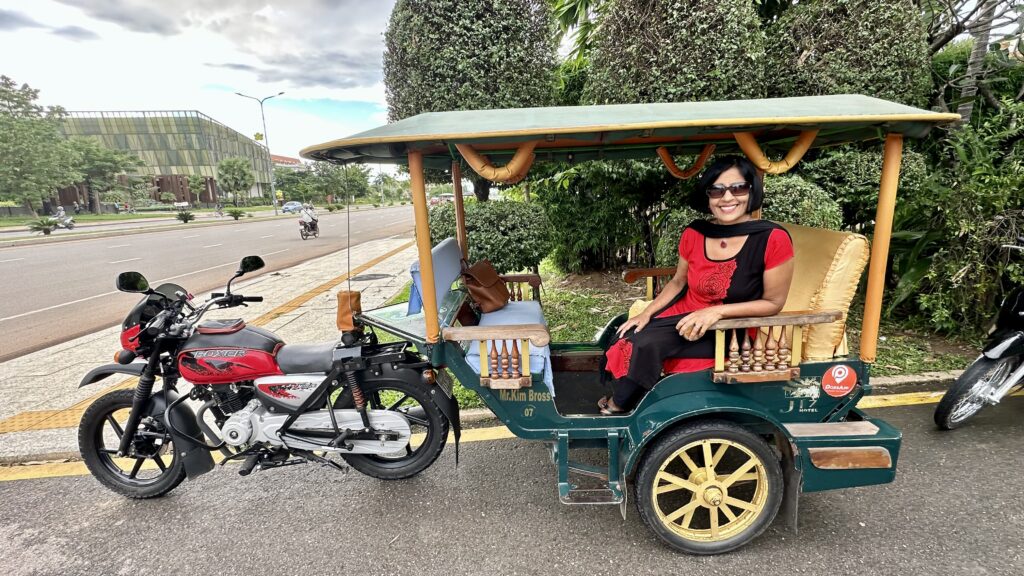
Town of Siem Reap – We stayed in this lovely town for 4 nights. All our guided tours were mostly between 8am-5pm. In the evening, we would take a ride on a tuk-tuk to the city center. Tuk-tuk are the most convenient way to travel to nearby places in Cambodia. A round trip from our hotel to the city center and back (about 2-3 hours which included waiting time) would cost $6.
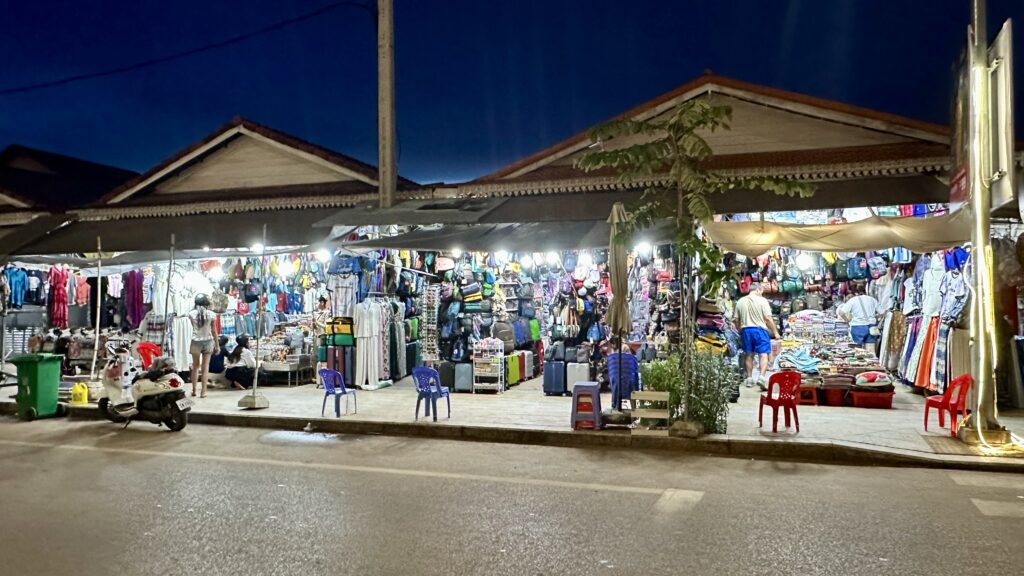
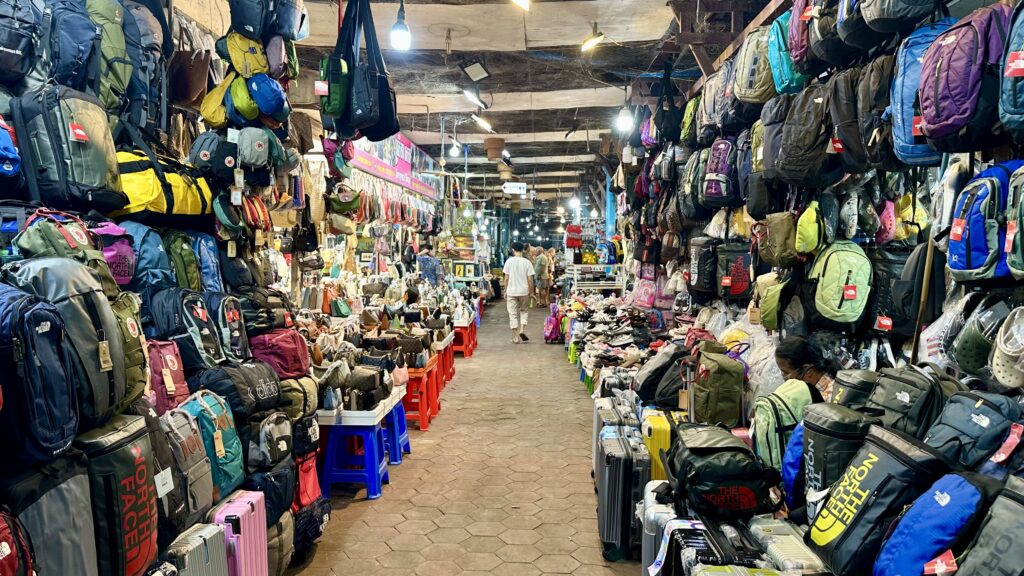
Siem Reap’s market and Angkor Night Market are located at the city center and within walking distance. The markets offer everything from fresh produce and cheap clothing to wood and stone carvings.
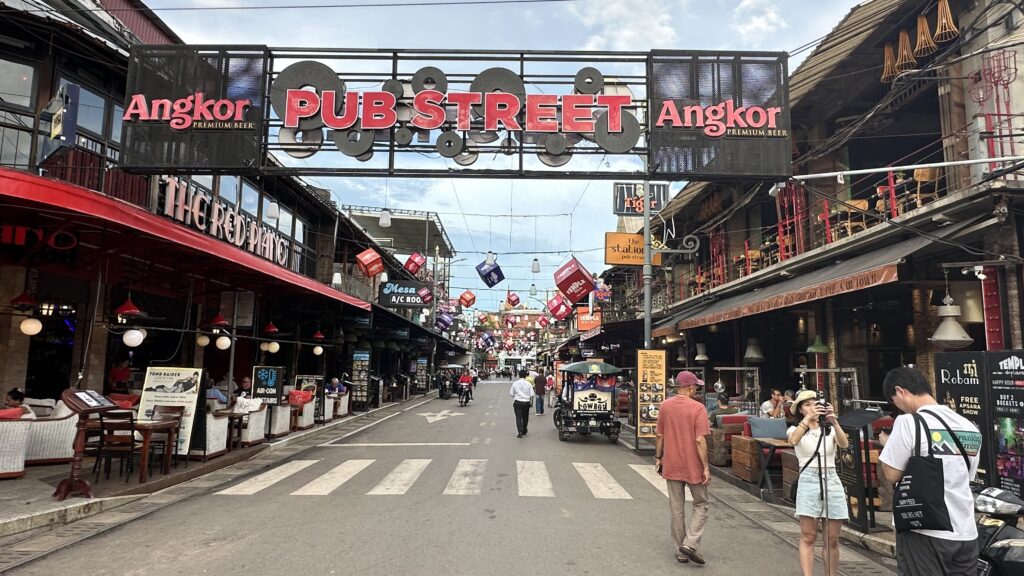
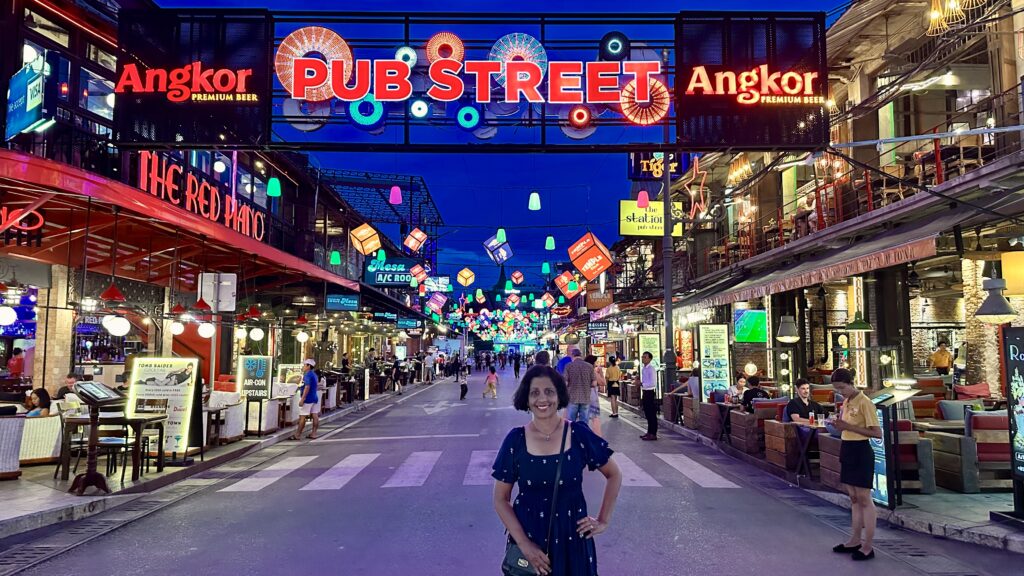
Pub Street area, which was close to the market area, is surrounded by numerous restaurants, bars, and clubs. We would walk along the street, reading the menu outside each restaurant, before selecting one that matched our taste buds for that day.
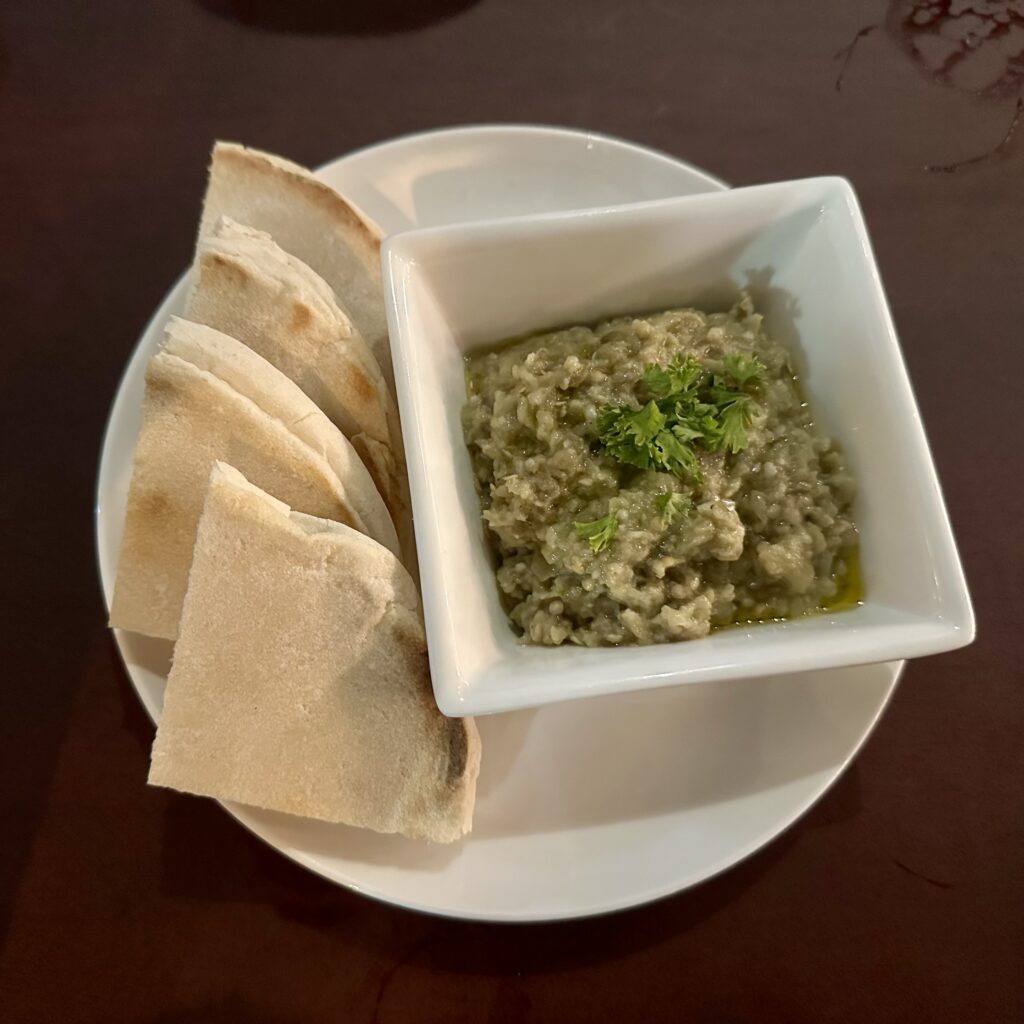
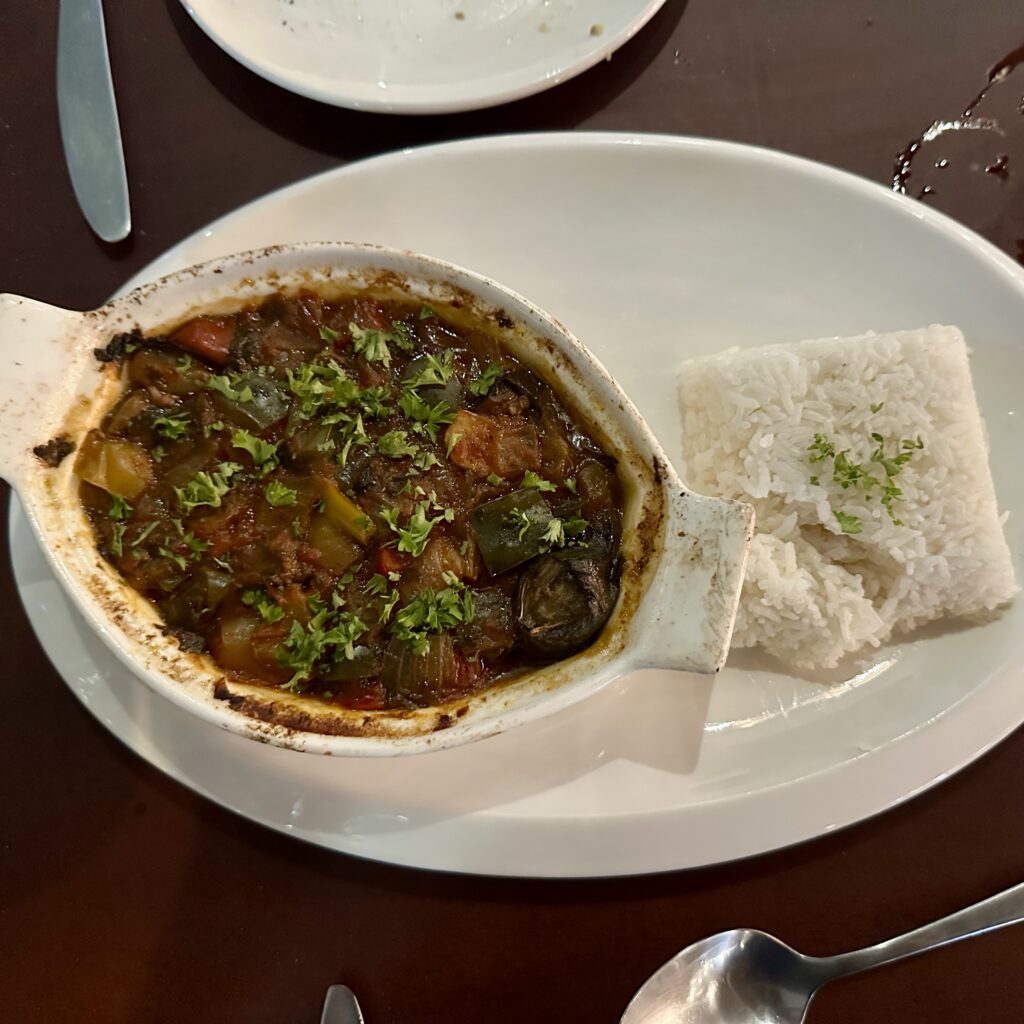
Mediterranean Food for dinner one one of the days 🙂
The Royal Residence and Royal Independence Garden – is a royal villa located that serves as the official residence for the King of Cambodia when he visits Siem Reap. The villa was constructed in 1904. Apart from being the official secondary royal residence for the Cambodian monarch, the villa is a tourist attraction, although direct physical entry is not permitted by members of the public.
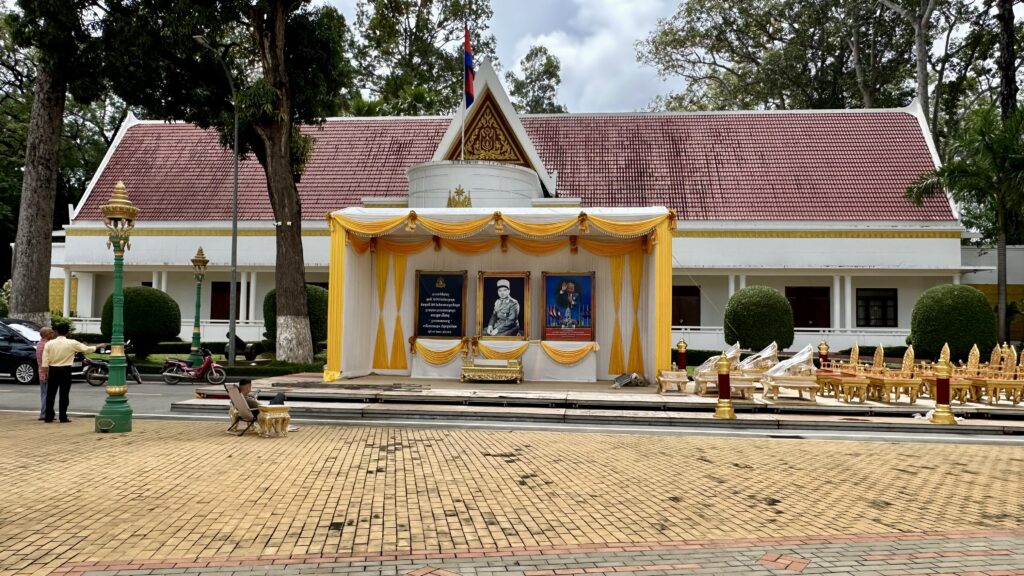
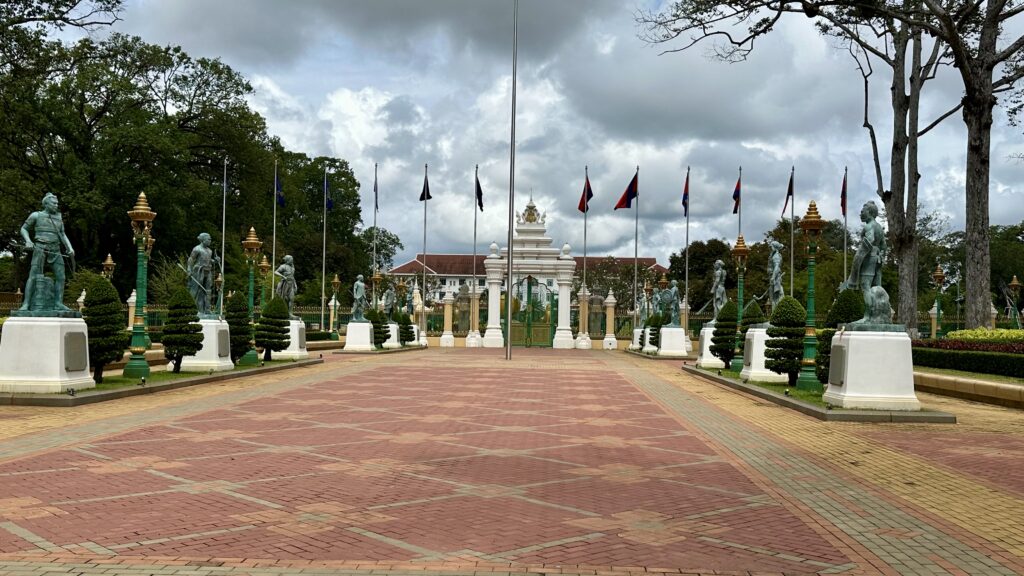
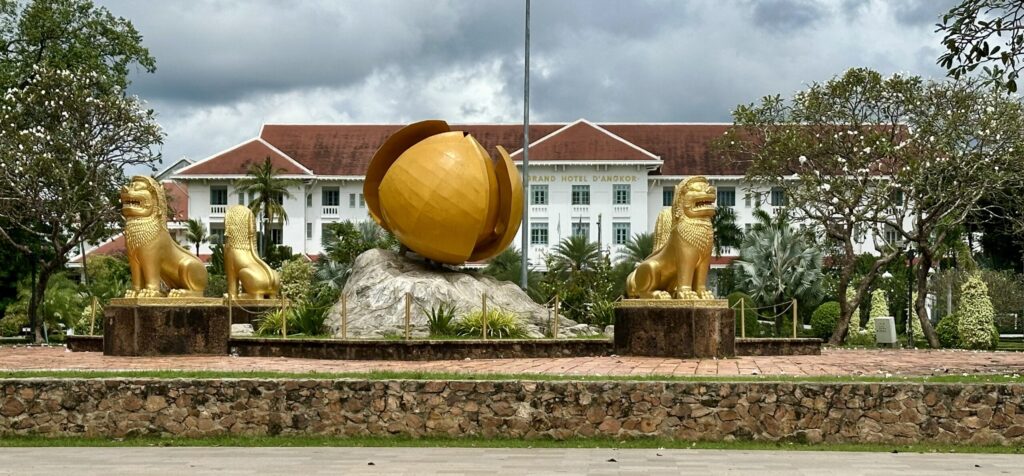
The Royal Independence Gardens situated between the Raffles Angkor Hotel and the Royal Residence building. The park is open 24 hours a day and there are quite a few park benches to sit and rest in the area.
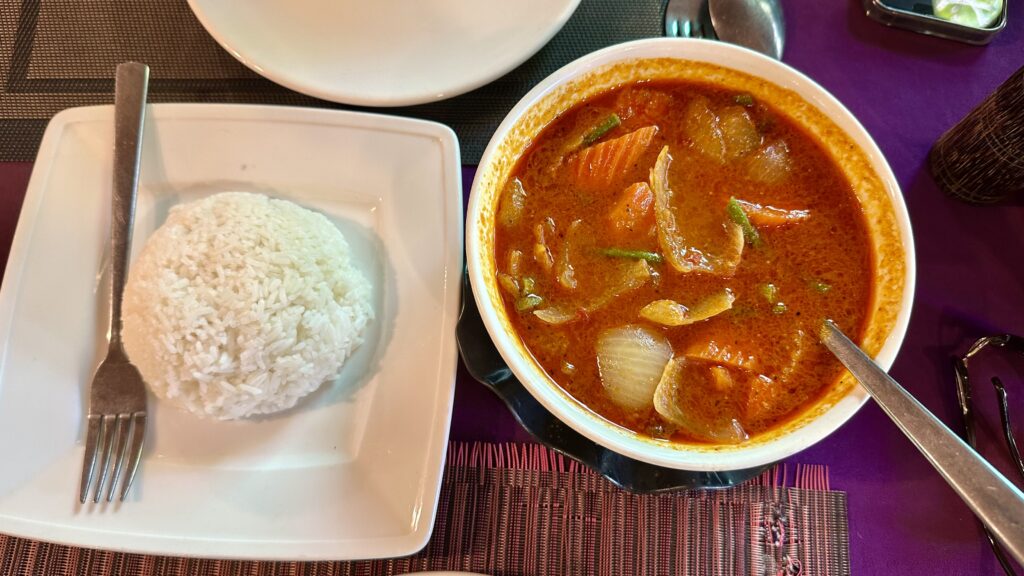
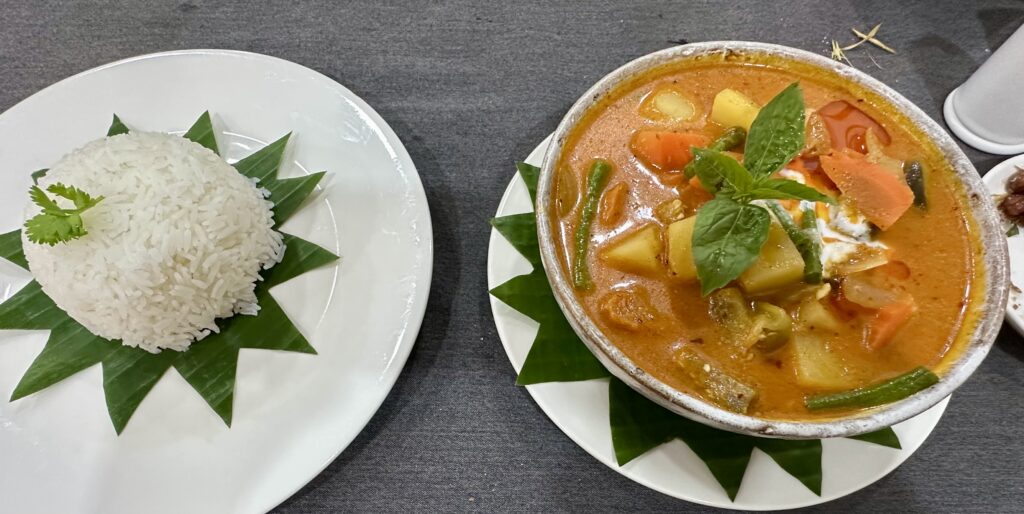
Red Curry and Rice – we ate a lot of this dish on our trip to Cambodia. It had the right amount of spice and the best vegetarian option for us.