Day trip from Poprad
——- Levoča ——-
Levoča is just a 20 min drive east of Poprad. This is another charming town with a well-preserved medieval settlements. The town’s rich architectural and cultural heritage earned it recognition as a UNESCO World Heritage Site in 2009.
- Námestie Majstra Pavla (Master Paul Square)
- Cage of Shame
- Thurzo House
- Stone plague column
- Plaza Buildings
- St. James Basilica
- Town Hall
- Evangelical Church
- Church of the Holy Spirit (Kostol Ducha Svätého)
- Town Fortifications
Námestie Majstra Pavla (Master Paul Square) is the historic heart of Levoča and one of the largest medieval town squares in Central Europe. Surrounded by beautifully preserved Gothic and Renaissance townhouses, the square feels like an open-air architectural museum and forms part of Levoča’s UNESCO World Heritage Site designation. It is home to several important landmarks –
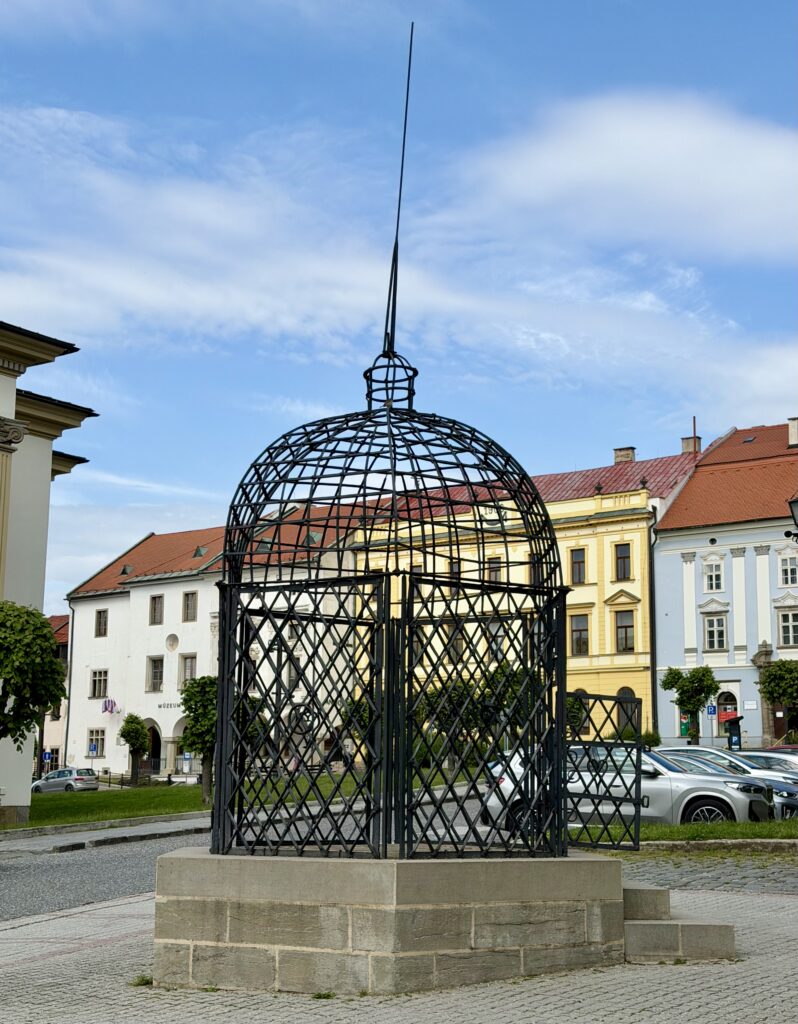
- Cage of Shame, a 17th-century iron cage once used for public punishment and humiliation
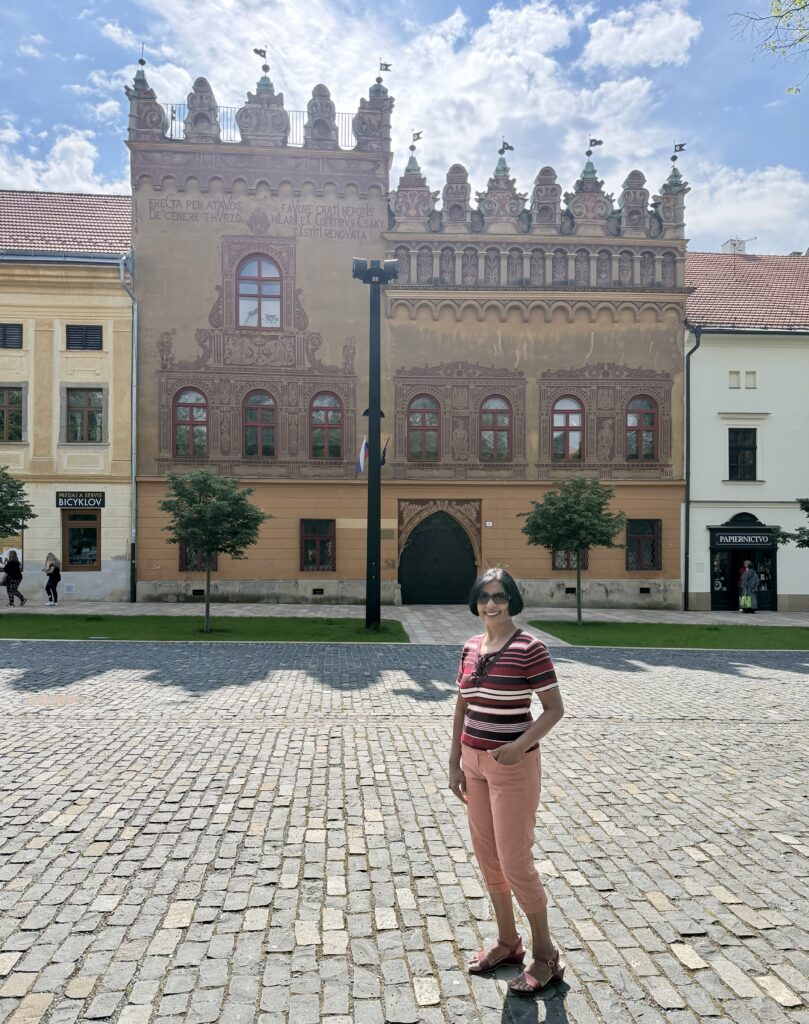
- Thurzo House, one of the town’s most notable patrician residences, distinguished by its Renaissance architecture and decorative sgraffito façade.
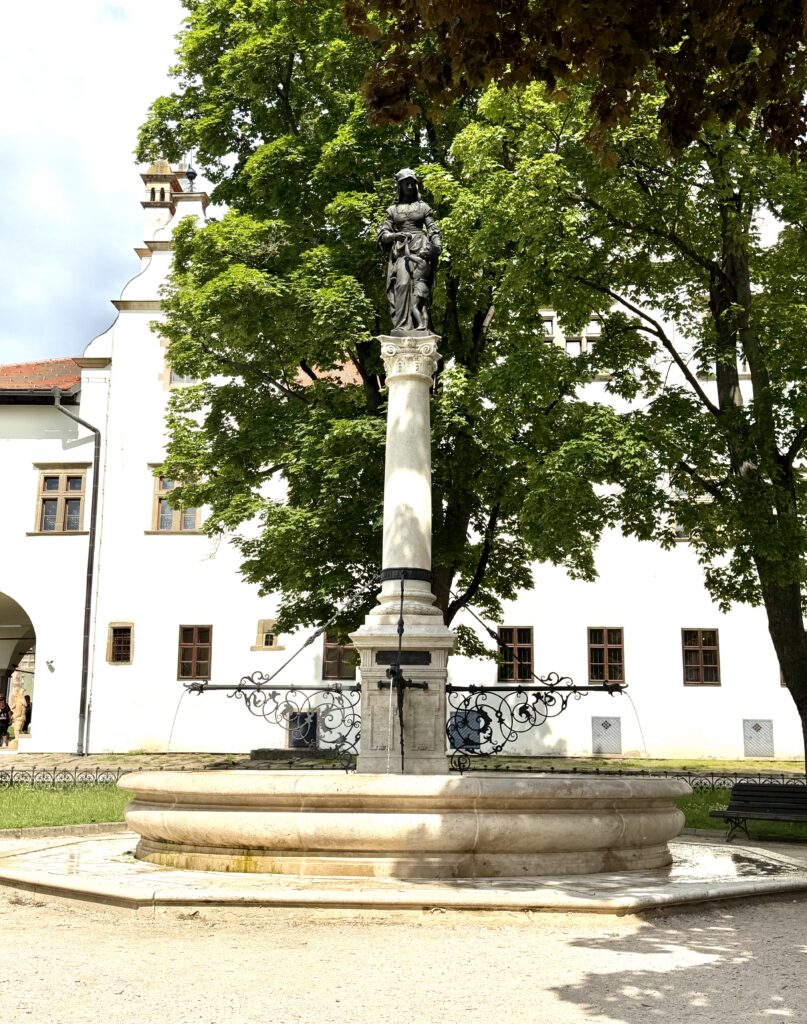
- Stone Plague column – It is located at the center of the square and was erected as a memorial to victims of past epidemics.
The square itself is surrounded by a series of well-preserved burgher houses featuring decorative sgraffito, along with Renaissance and Baroque architectural elements.
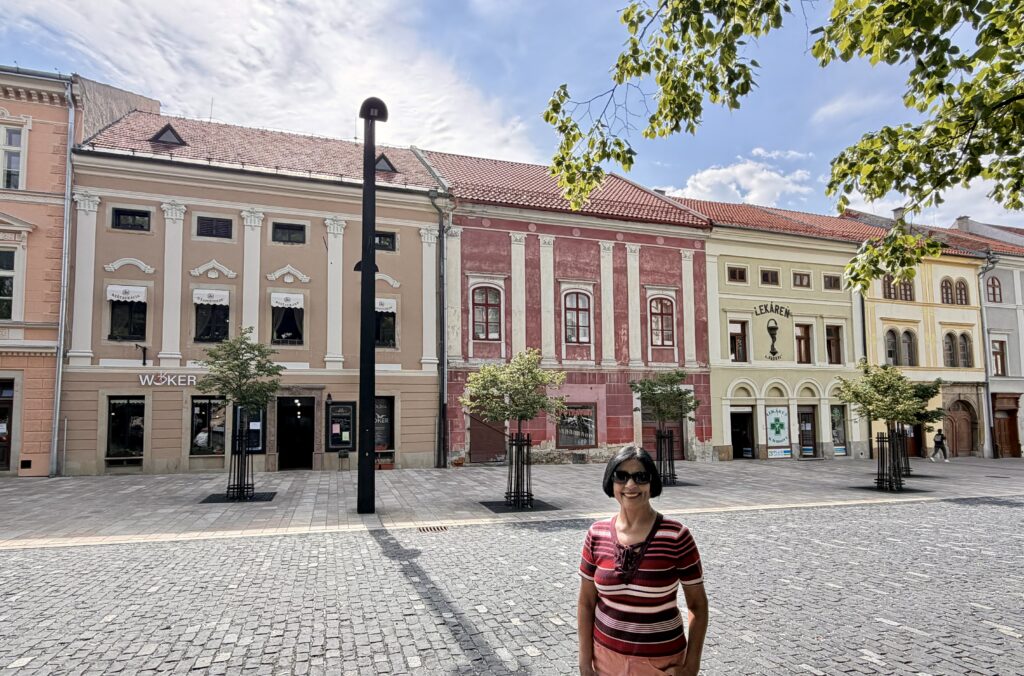
Other important buildings in the square include –
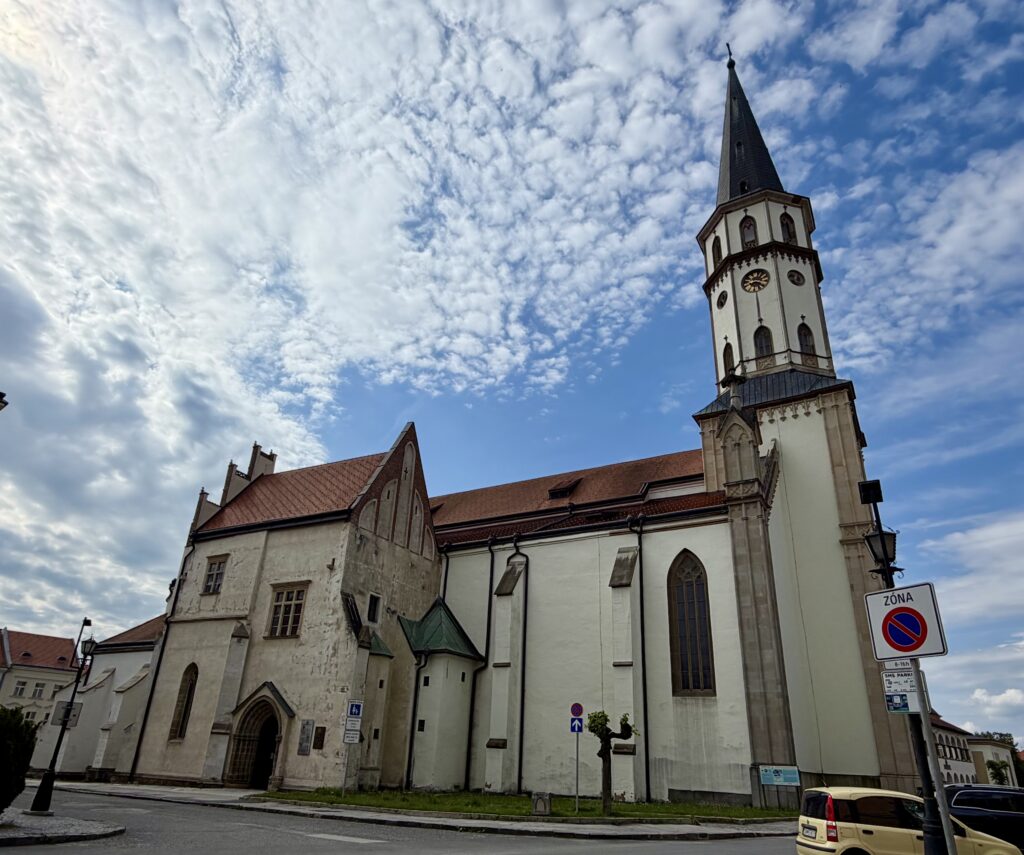
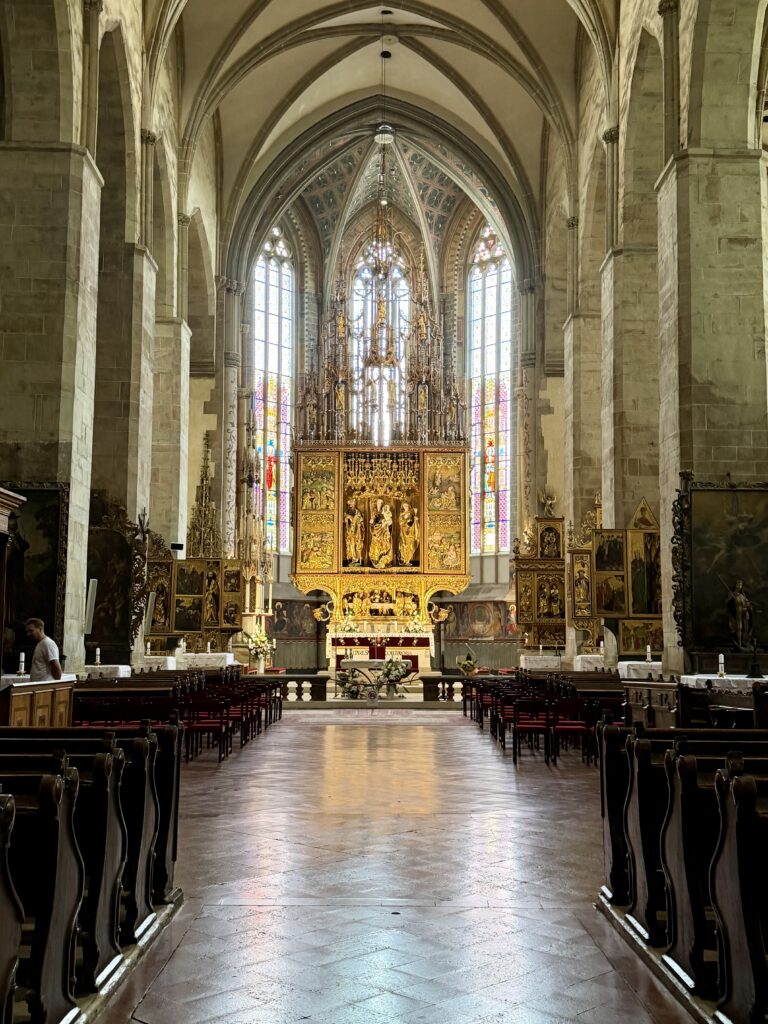
- St. James Basilica (Bazilika svätého Jakuba) – is Levoča’s and Slovakia’s finest examples of Gothic architecture. It is the second-largest church in Slovakia and has been part of the UNESCO World Heritage Site since 2009. The basilica is best known for housing the world’s tallest wooden Gothic altar, standing 18.62 meters (61 feet) high. Construction began in the 14th century, and completed in 1517.
St. James Basilica has tours scheduled every hour in Slovak language. They provided us with an English guide booklet. The tour was 4€ per person and tickets are available at the office building opposite the Church entrance.
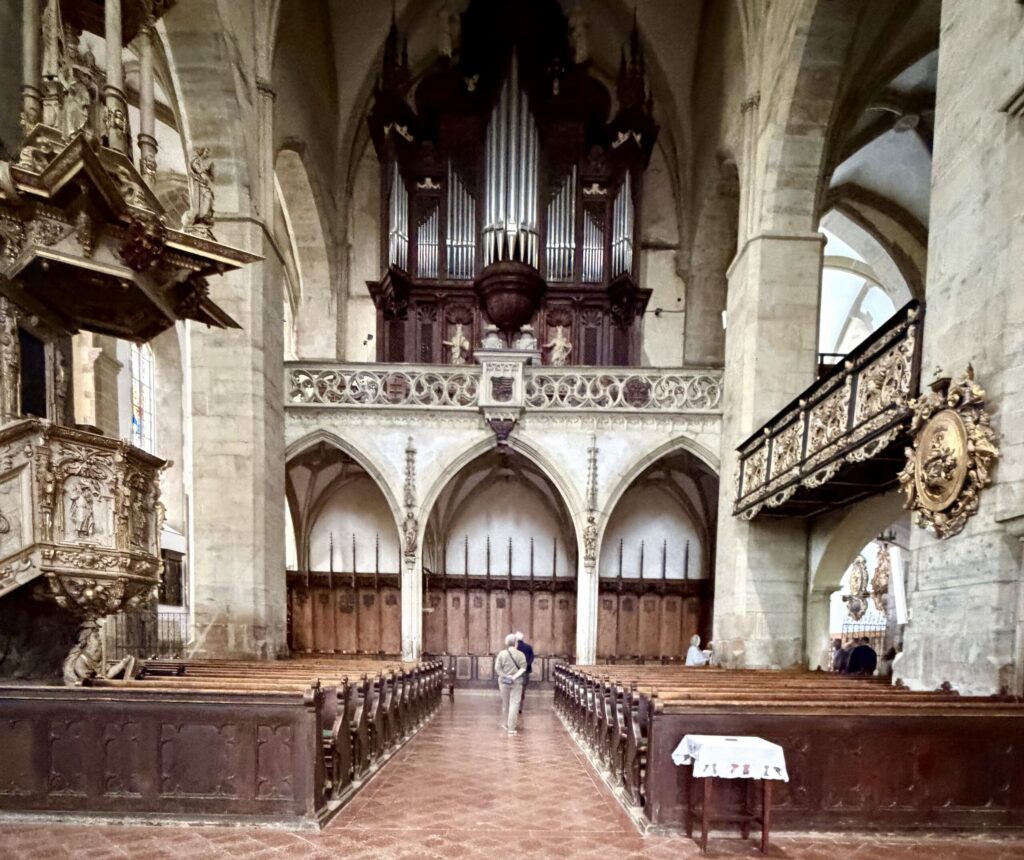
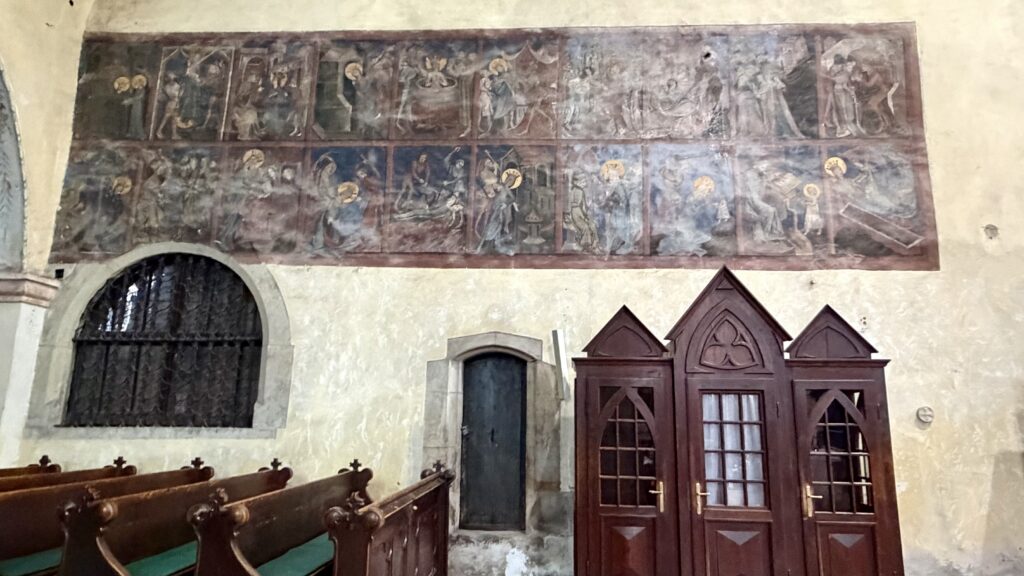
In addition to its intricately carved and gilded main altar, the basilica contains 18 richly decorated Gothic altars, valuable religious artworks, historic furnishings, and an impressive collection of medieval frescoes. Among the most remarkable is the 15th-century fresco cycle of the Legend of St. Dorothy, one of Europe’s most extensive pictorial depictions of a virgin martyr. Spanning 20 distinct scenes, the murals vividly illustrate St. Dorothy’s life, trials, unwavering faith, and the famous Miracle of the Roses.
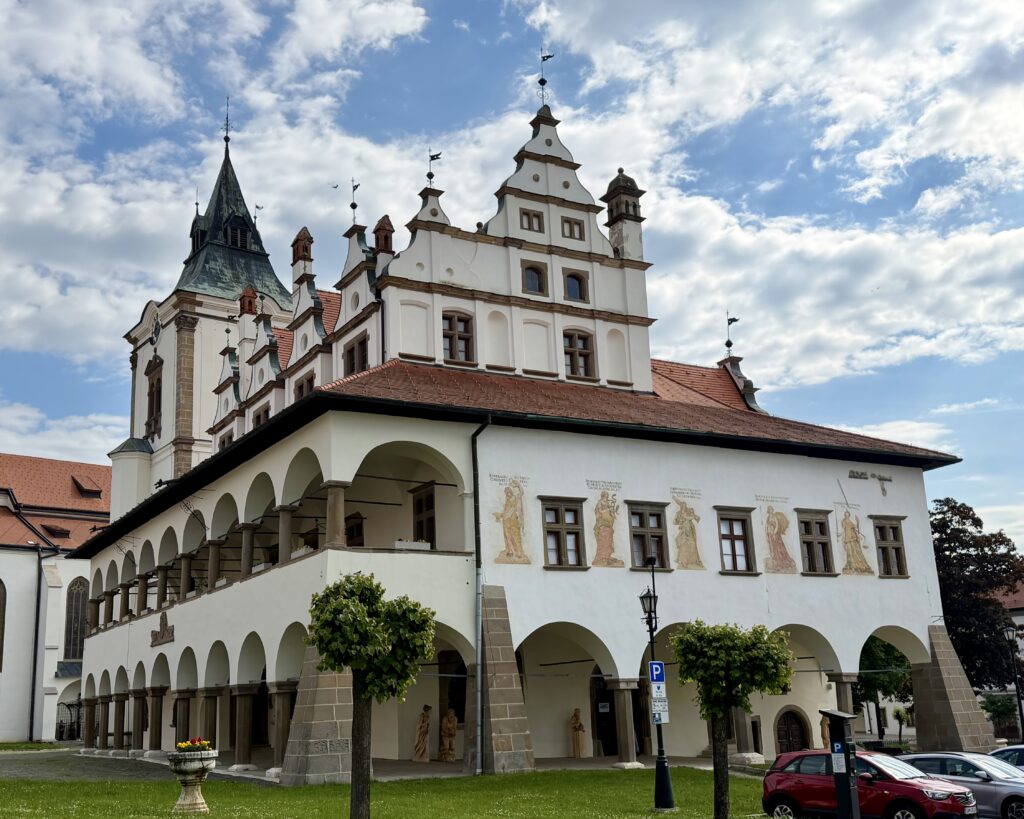
- Old Town Hall – is another historic landmarks, located in the center of the square. Originally built in the 15th century in the Gothic style, the building was heavily damaged by fires in 1550 and 1599 before being rebuilt in 1615 in the Renaissance style. Its elegant arcades, added belfry, and painted southern façade—depicting the virtues of moderation, care, bravery, patience, and justice—reflect the town’s architectural and civic heritage. Today, the Old Town Hall is part of the Spiš Museum, a branch of the Slovak National Museum, and showcases exhibits on Levoča’s history.
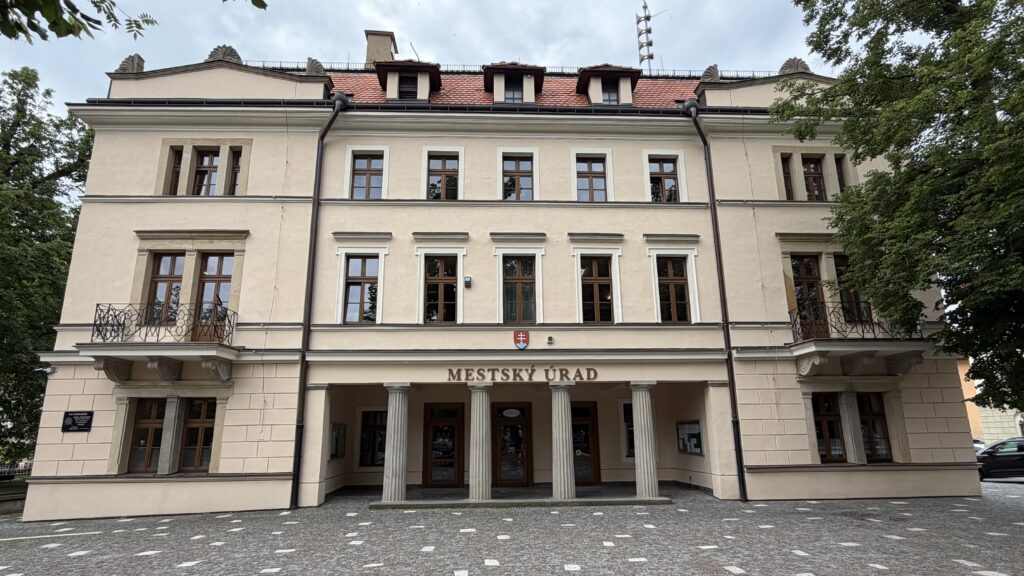
- Mestský úrad (Municipality Office/City Hall) – is located on the main historical square and serves as the primary administrative, civic, and municipal hub for the city of Levoča.
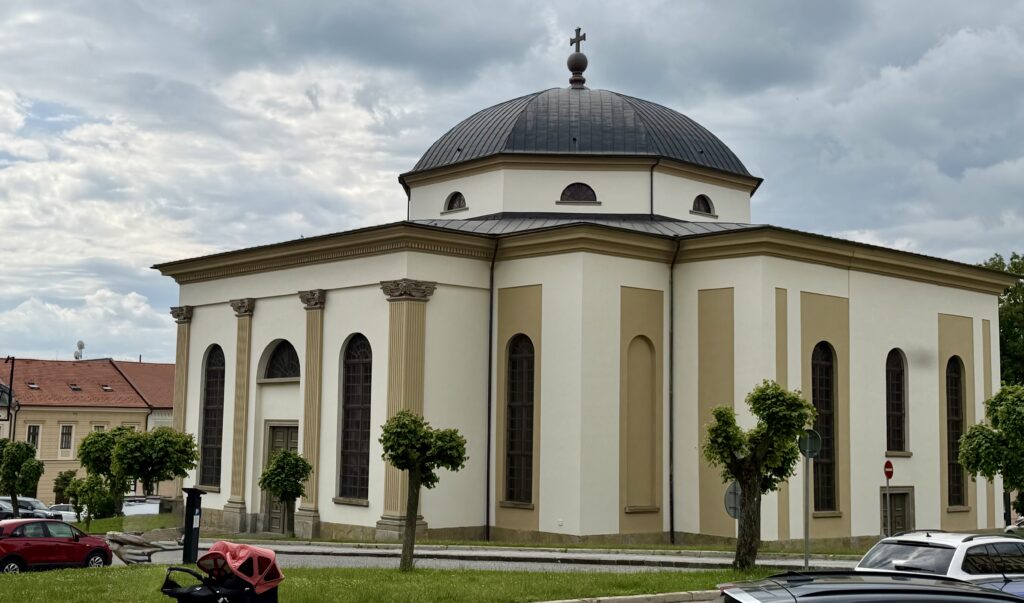
- Evangelical Church – is a prominent Lutheran church, built in the Neoclassical style between 1823 and 1832. It replaced two earlier wooden churches that had served the local Lutheran community outside the town walls. The church has a distinctive Greek cross floor plan topped by a central dome. On the day of our visit, the church was closed and we could only admire the impressive exterior.
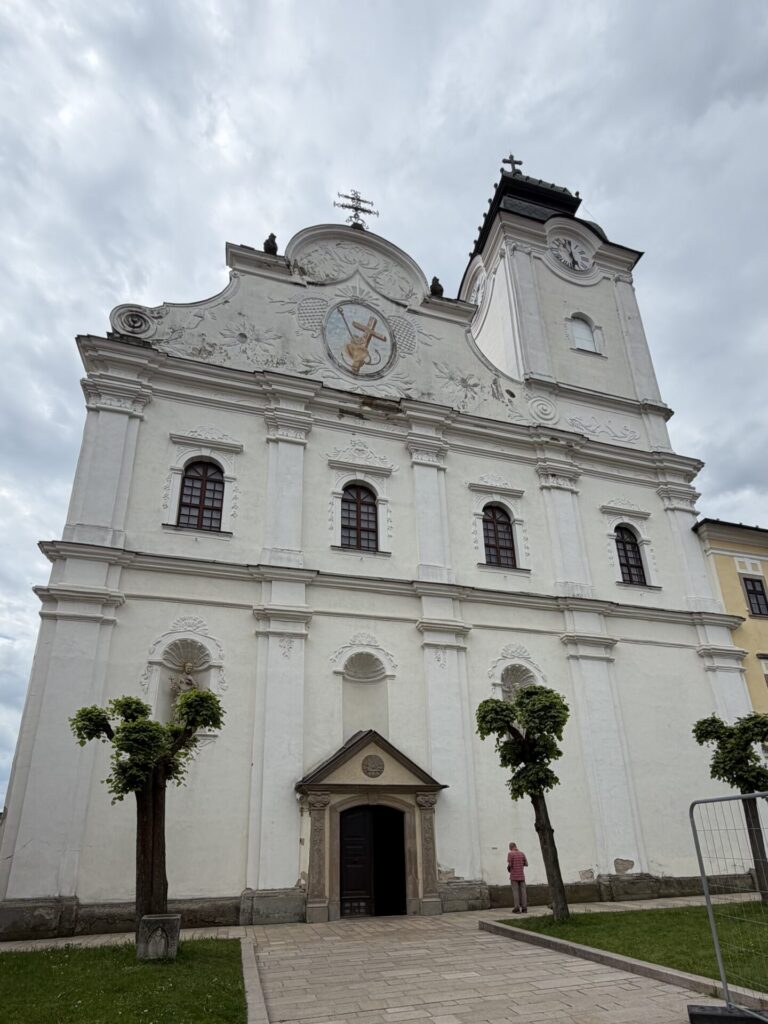
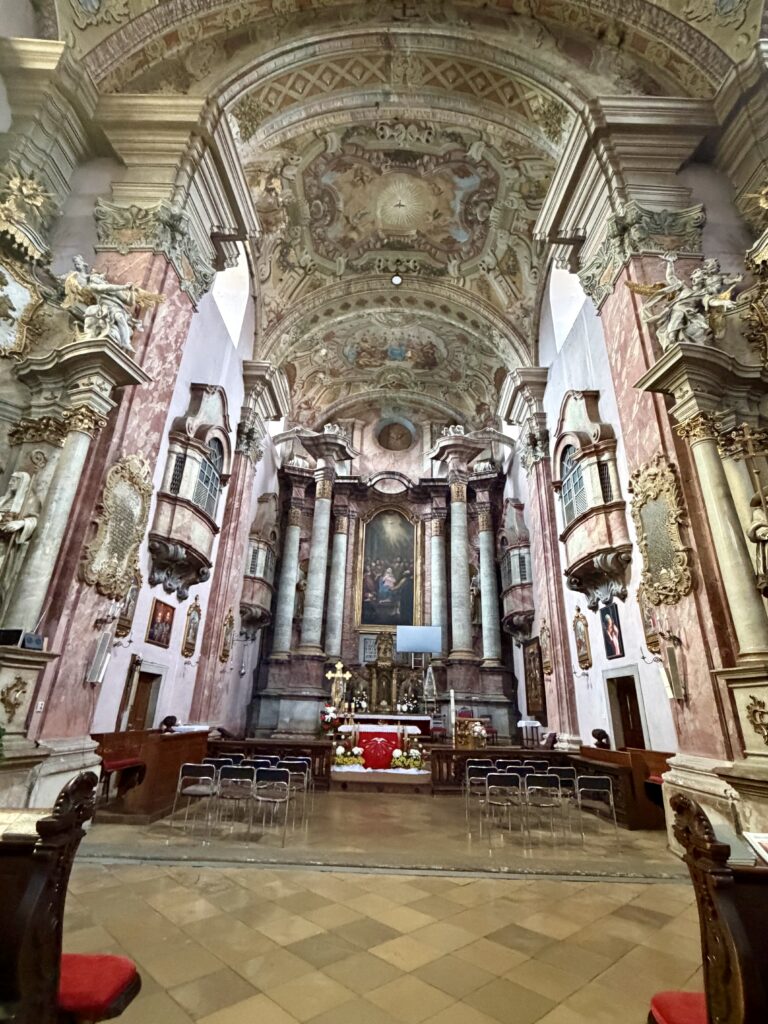
Church of the Holy Spirit (Kostol Ducha Svätého) – As we walked towards the town fortification, we came across this church which was open and stopped to check it out. The gorgeous church and the adjacent Minorite Monastery are located just inside Levoča’s medieval walls, next to the historic Košice Gate. Rebuilt in the mid-18th century after a devastating fire, the church is regarded as one of the finest examples of Baroque architecture in the Spiš region.
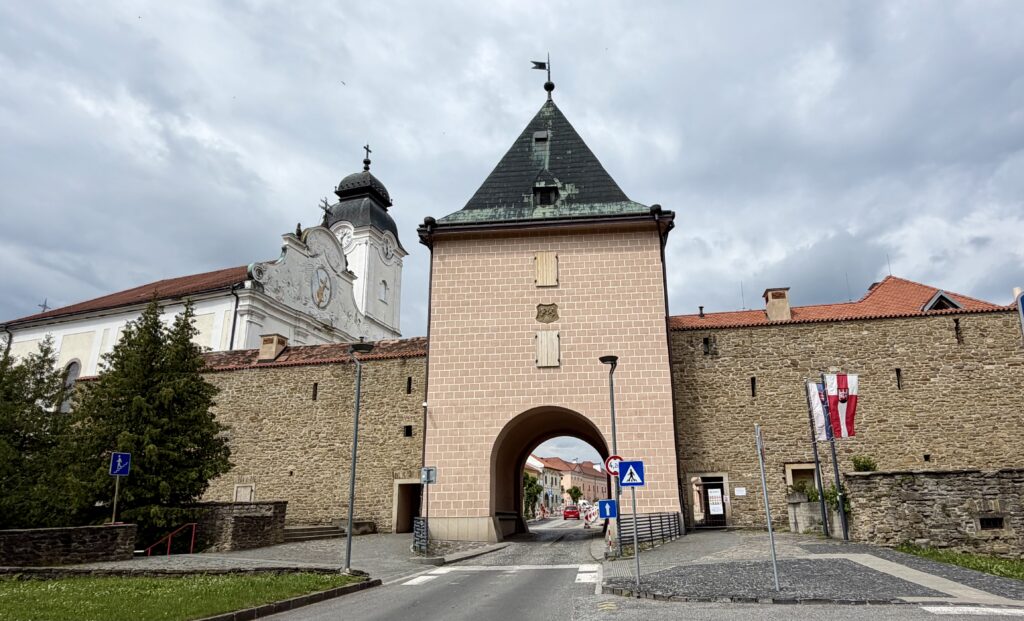
Town Fortifications of Levoča – offer a glimpse into one of Central Europe’s best-preserved medieval fortified towns. Dating back to the 13th and 14th centuries, the UNESCO-listed defensive system once completely encircled the free royal town and included massive stone walls, bastions, and fortified gates. Notable surviving fortification include the Košice Gate (Košická brána), the town’s main southern entrance, and the Polish Gate (Poľská brána), which once connected Levoča with trade routes leading north into Poland. Several defensive bastions still line the perimeter, illustrating the town’s sophisticated medieval defense system. The historic walls are easily accessible from Master Paul Square.
——- Spiš Castle ——-
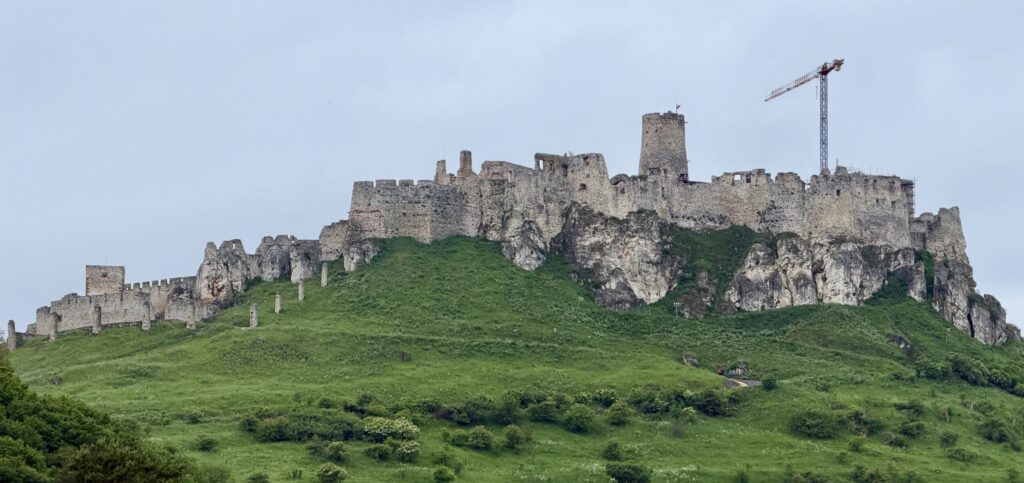
Spiš Castle is one of the largest and most impressive castle complex ruins in Europe and a UNESCO World Heritage Site. Perched atop a travertine hill overlooking the towns of Spišské Podhradie and Žehra, the sprawling medieval fortress covers nearly 4 hectares (9.6 acres). Construction began in the early 12th century, and for centuries the castle served as the political, administrative, and military center of the historic Spiš region within the Kingdom of Hungary. Over time, it evolved from a Romanesque border fortress into a grand Gothic and Renaissance residence under successive noble families.
The castle was abandoned in the early 18th century and a devastating fire in 1780 left much of the complex in ruins, where it remained for nearly two centuries. Extensive archaeological excavations and restoration work began in the second half of the 20th century, preserving the site as one of Slovakia’s most important historical monuments.
Levoča to Spiš Castle is 20km away and a 15 min drive. You get a beautiful view of the castle from the bottom of the road leading to the parking lot. After parking the car, it is a 8-10 minute uphill walk to the entrance of the castle. The admission fee of 8€ includes entrance to the lower, central, and upper parts of the castle.
Castle Entrance and Lower Courtyard – After entering the castle, you’ll arrive at the Lower Courtyard, where you can purchase admission tickets. This area also features museum exhibits, restrooms, a café, and a gift shop. It serves as the starting point for your visit before you continue uphill through the Middle Castle and on to the Upper Castle.
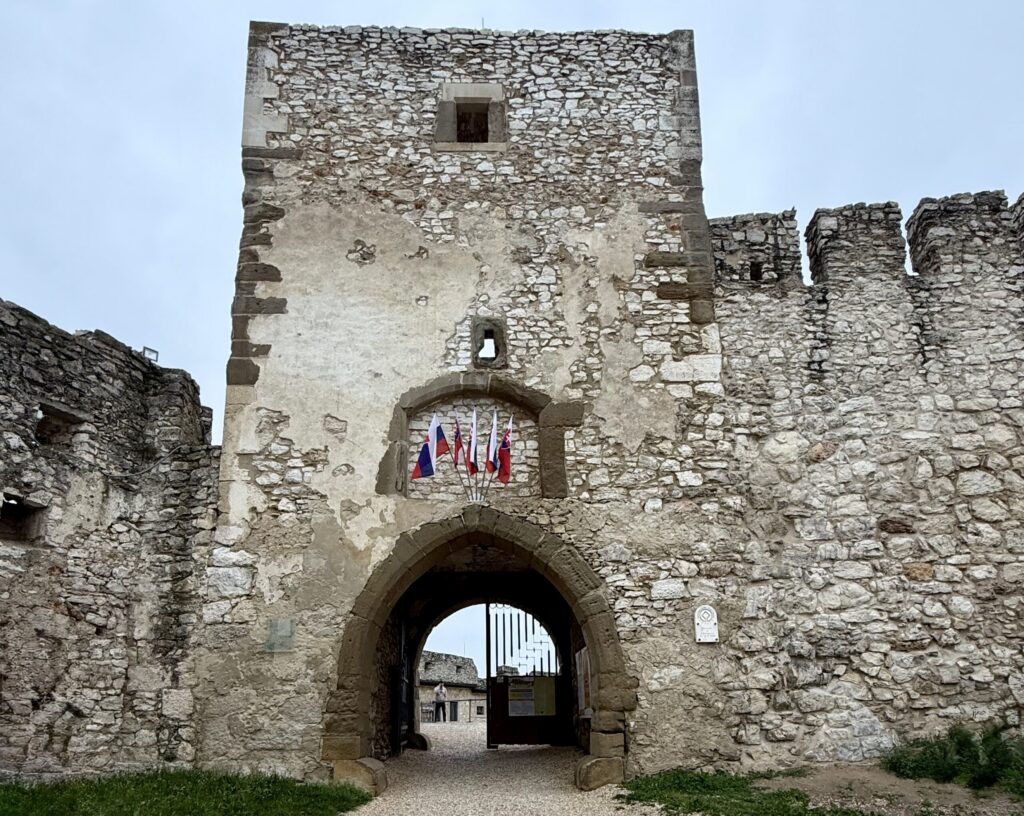
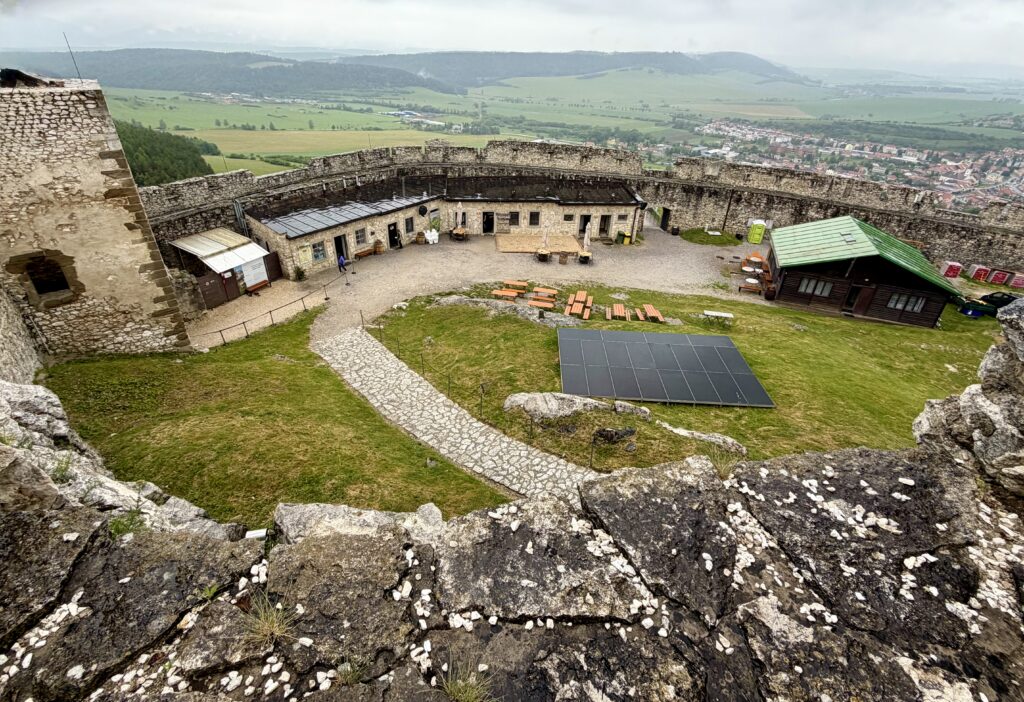
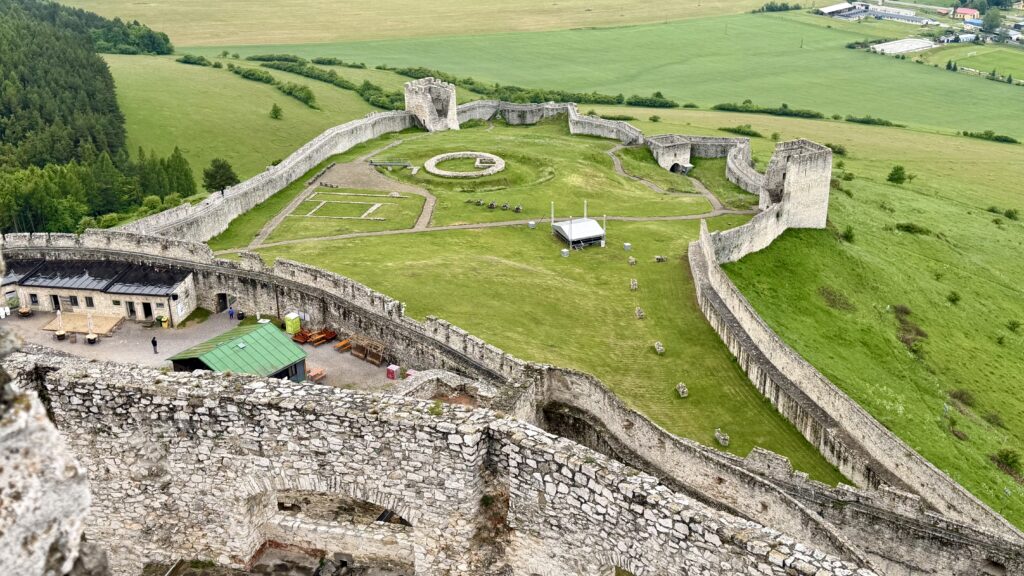
Middle Courtyard, Upper Castle, and Tower – After buying the tickets, we passed through another arched stone gate into the middle courtyard where you’ll can walk among the ruins of former residential and defensive buildings while enjoying increasingly impressive views of the surrounding countryside. Continuing on through another arched stone gate, you will enter the ruins of the Upper Castle, including the Upper Courtyard, medieval ramparts, and the Romanesque Palace, once the castle’s grand residence, with its beautifully preserved stone architectural details. This area also has the ruins of a Gothic Chapel that was built in the 15th century, and featured elegant Gothic stone arches.
The tower stands at the highest point of Spiš Castle. You can reach the top of the 13th-century tower by climbing a winding stone staircase. From the top, you’ll be rewarded with breathtaking panoramic views of the surrounding Slovak countryside and, on clear days, the High Tatras.
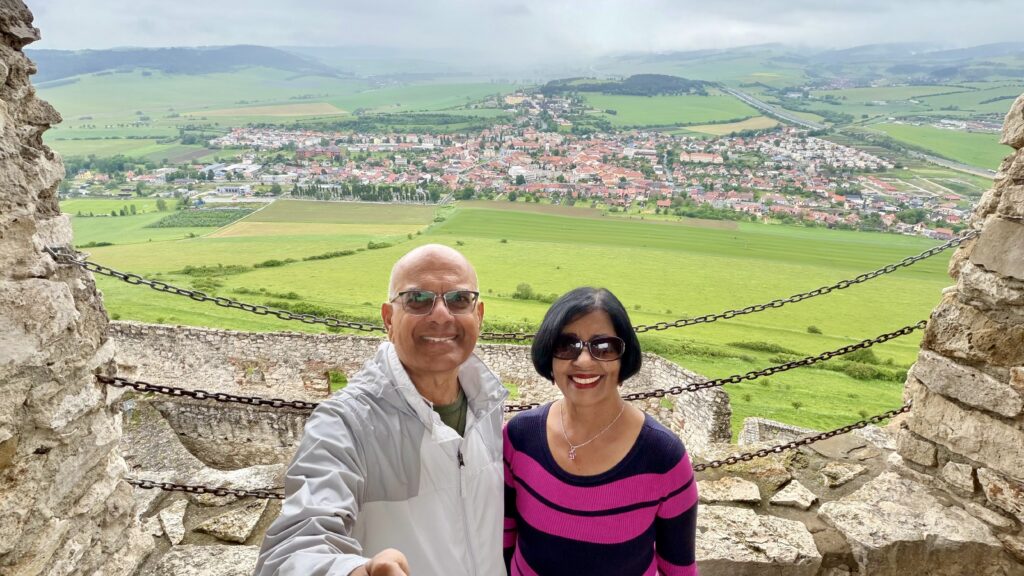
Lower Fortification – After exploring the Middle and Upper Castle, we made our way back down and spent some time walking along the walls of the Lower Fortification. From here, you can enjoy impressive views of the castle grounds while appreciating the scale of the fortress’s defensive walls.