Visited in 2015 – Day trip from Madrid
Toledo is located in central Spain, 72 km south of Madrid. Often called the City of Three Cultures, Toledo reflects centuries of Christian, Muslim, and Jewish coexistence, visible in its cathedrals, synagogues, mosques, and winding cobbled streets. Once the capital of Spain, the city is a UNESCO World Heritage Site and is renowned for its well-preserved medieval architecture and rich cultural heritage. We took a Viator guided tour of this historic city.
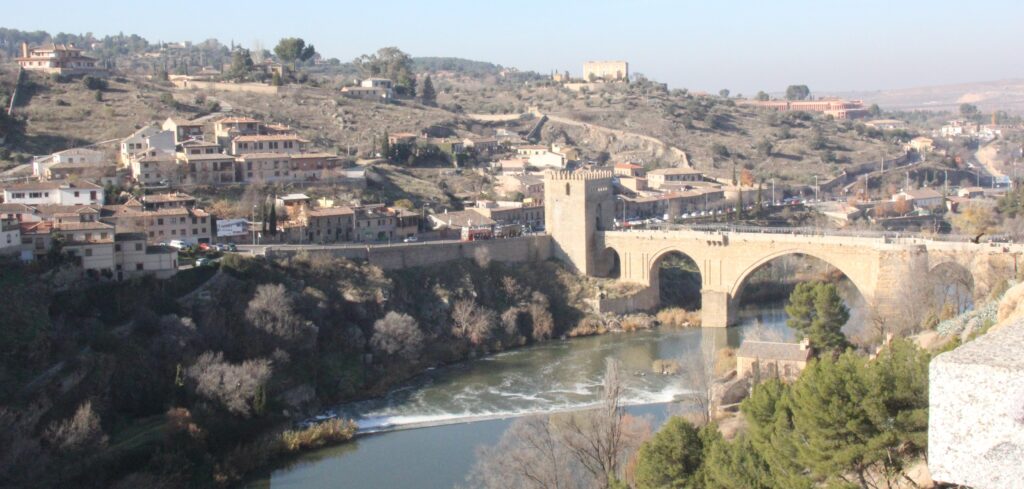
- Puente de San Martín (St Martin’s Bridge)
- Toledo Cathedral
- Stroll the picturesque streets of Toledo
- Santa María la Blanca
- Viewpoints of Toledo – Mirador del Valle
Puente de San Martín (St Martin’s Bridge) – Built in the late 14th century, St Martin’s Bridge is a striking medieval bridge spanning the Tagus River to provide access to the old town from the west. The bridge features five arches, with the central arch reaching an impressive 40 meters, an extraordinary engineering achievement for its time. Fortified towers guard both ends of the bridge, reflecting its strategic importance. We walked across the bridge to enter the historic town of Toledo.
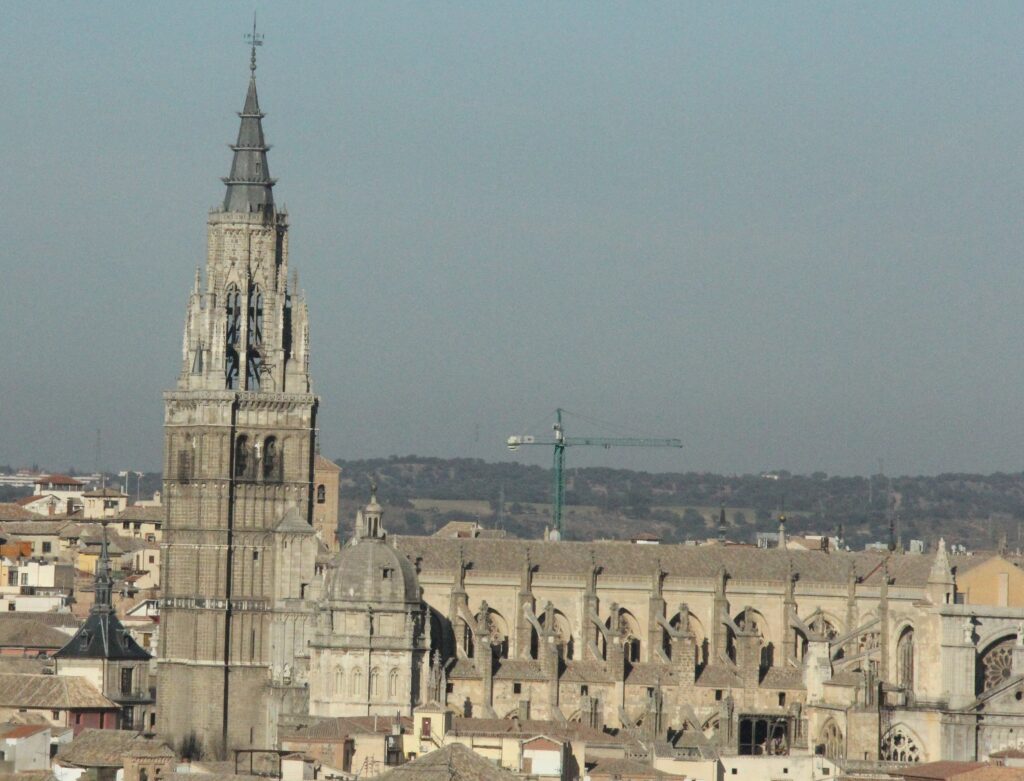
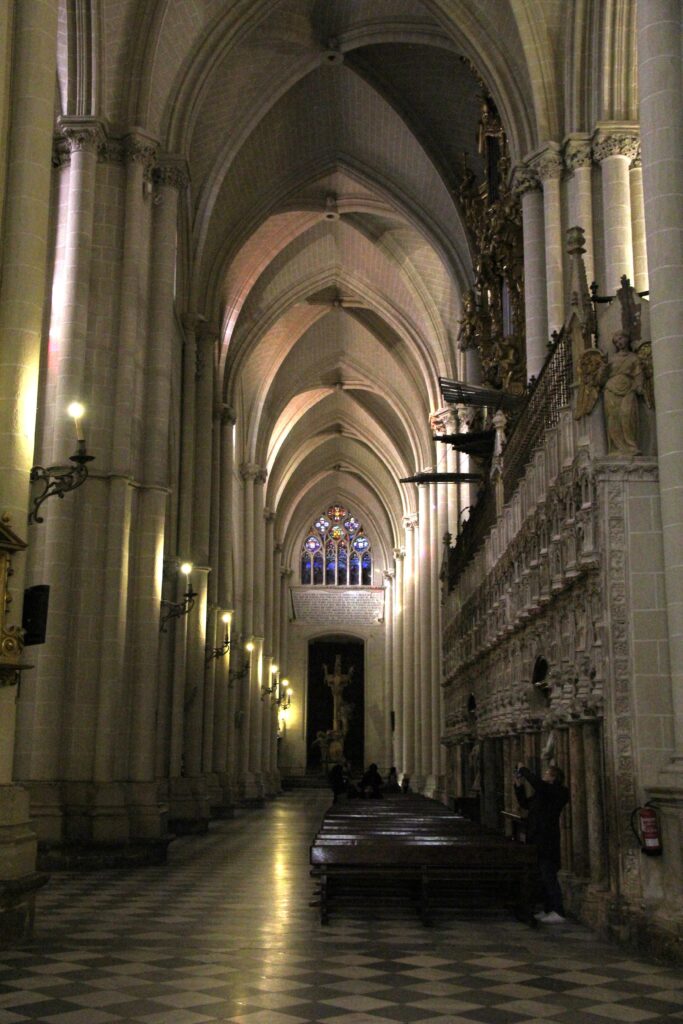
Toledo Cathedral – officially known as the Primatial Cathedral of Saint Mary of Toledo, it is one of the largest and most impressive Gothic cathedrals in Spain. Construction began in 1226, with the main Gothic nave completed in 1493, and additional chapels and modifications added over the centuries.
We spent more than an hour here with a guide, and even that felt like only scratching the surface. There is an incredible amount to see inside, including the vast nave and side chapels, the dramatic Baroque altarpiece known as El Transparente, the cloister, crypt, choir, and the museum, which display works by masters such as El Greco, Caravaggio, Goya, and Titian.
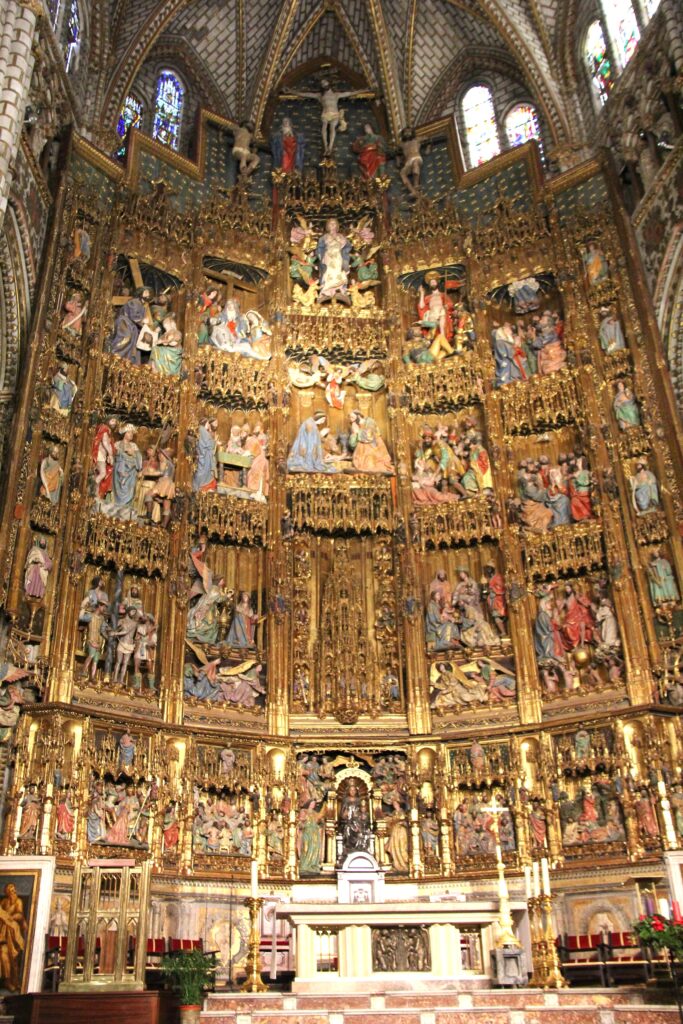
- Main Altarpiece is a richly detailed late Gothic retable commissioned by Cardinal Cisneros and built between 1497 and 1504, at the transition from Gothic to Renaissance art in Spain. Created by a team of leading architects, painters, and sculptors of the period, it rises dramatically above the altar in five panels and five storeys, adorned with intricate carvings, statues, spires, and filigree. The central panel narrates key Christian themes, from the Virgin and Child and the Nativity to the Ascension, culminating in a monumental Crucifixion at Calvary, making it one of the cathedral’s most striking artistic highlights.
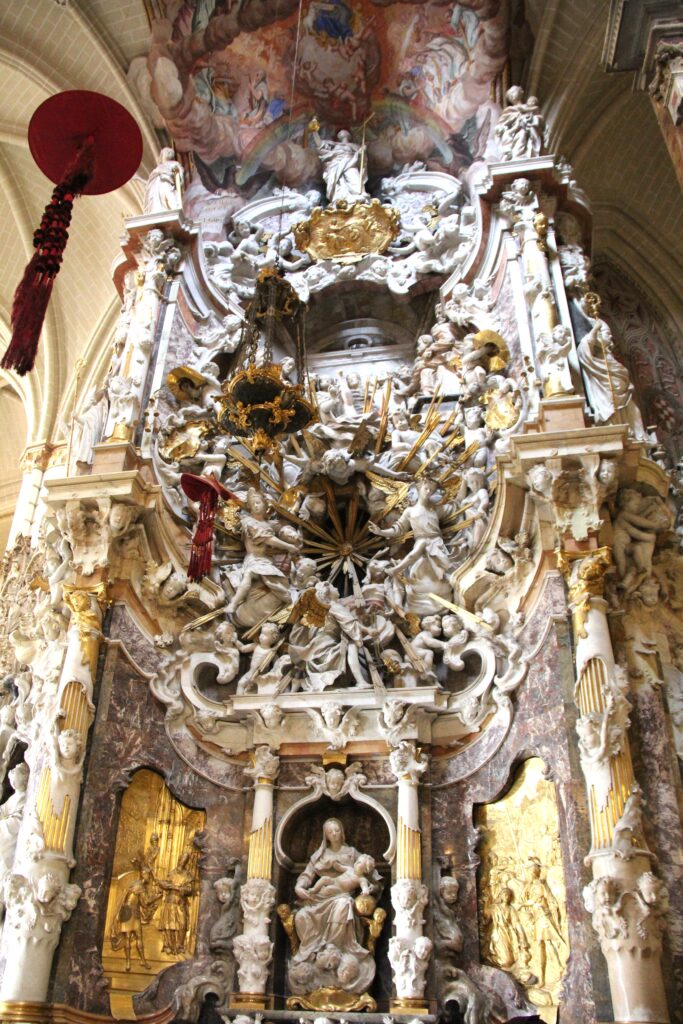
- El Transparente is a multi-storey masterpiece by Narciso Tomé and his sons, combining stucco, painting, bronze, and richly colored marble. Especially striking during morning Mass, when sunlight floods the altar from the east, the soaring Baroque composition appears almost to rise heavenward, forming a dramatic contrast with the cathedral’s predominantly Gothic interior and its hundreds of historic stained-glass windows.
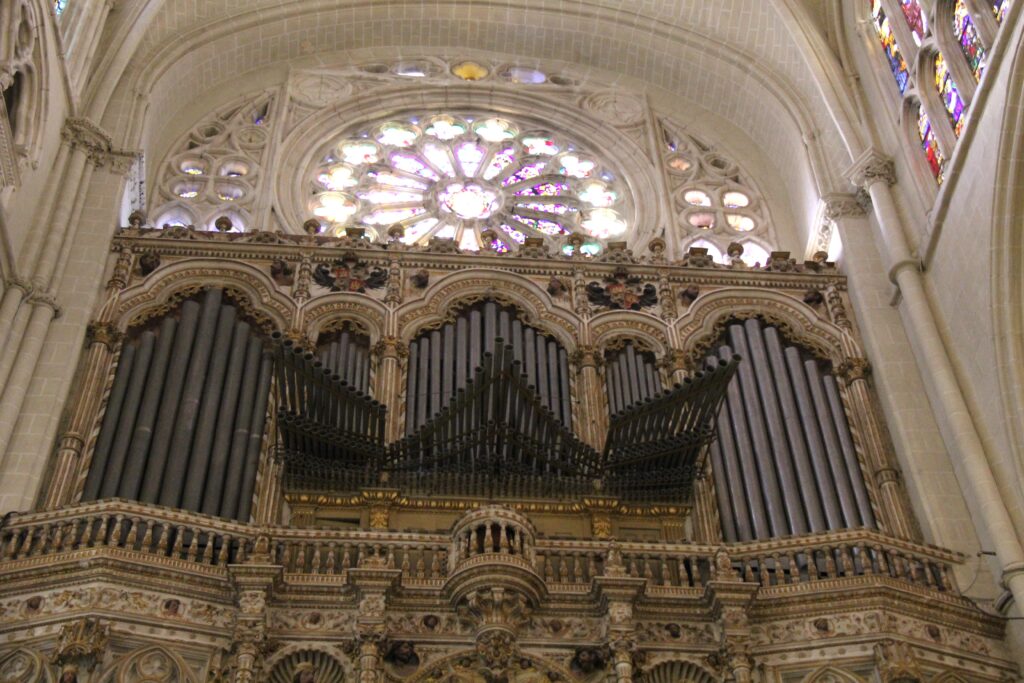
Toledo Cathedral, The Emperor Organ – is a grand historic pipe organ built in the mid-16th century for Emperor Charles V. Located on the north side of the choir, it was originally constructed by Gonzalo Hernández de Córdoba and Juan Gaytán and later extensively modified in the late 18th century by José Verdalonga. Along with the facing Epistle organ, it creates a dramatic stereo effect within the cathedral. Known for its powerful sound, rich tonal range, and distinctive horizontal reed pipes, the organ is still used for major celebrations and special concerts.
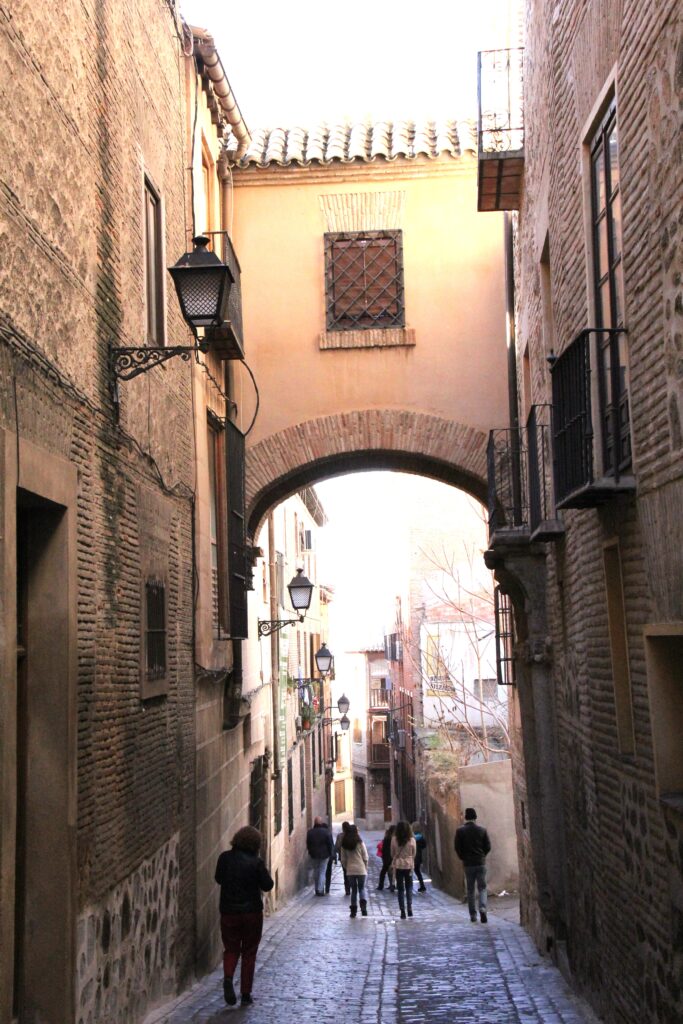
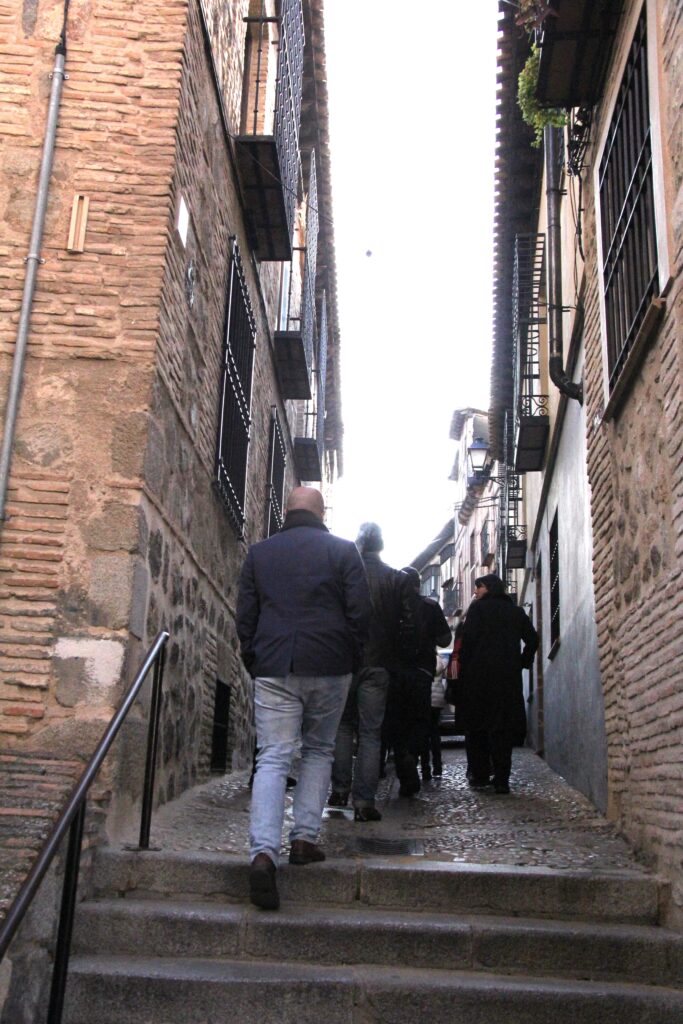
Stroll the picturesque streets of Toledo – Strolling through the charming streets of Toledo feels like stepping back in time. Narrow, winding lanes lined with stone buildings lead past hidden courtyards, small plazas, centuries-old churches and gates, reflecting the city’s rich blend of Christian, Jewish, and Muslim heritage. As you wander, you’ll encounter artisan shops, historic synagogues, and scenic viewpoints overlooking the Tagus River.
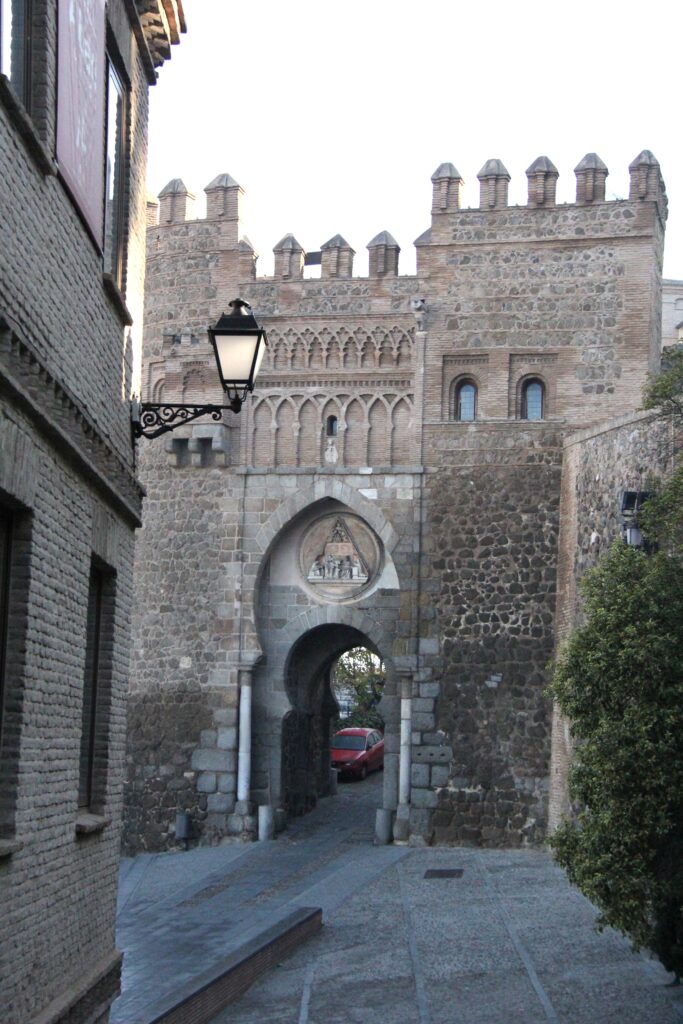
Puerta del Sol (Sun Gate) – is a historic city gate built by the Knights Hospitaller between the late 13th and early 14th centuries. It showcases Mudéjar military architecture, blending Romanesque and Islamic styles, with horseshoe and blind multifoil arches. A medallion above the arch depicts the ordination of Toledo’s patron saint, under the sun and moon, which also gives the gate its name and reflects its eastern orientation toward the rising sun.
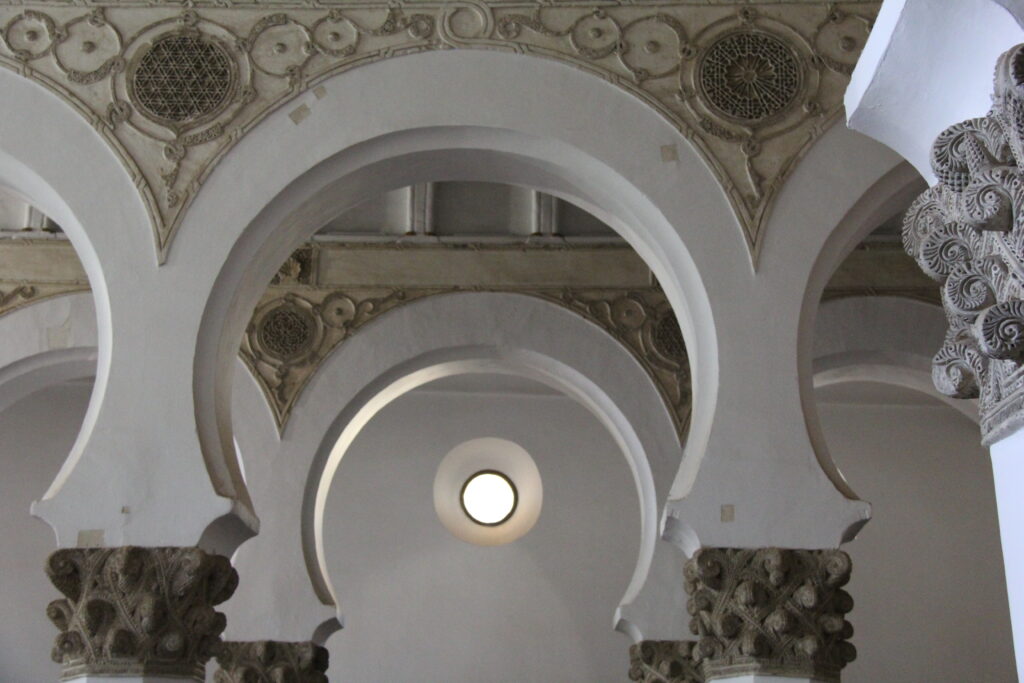
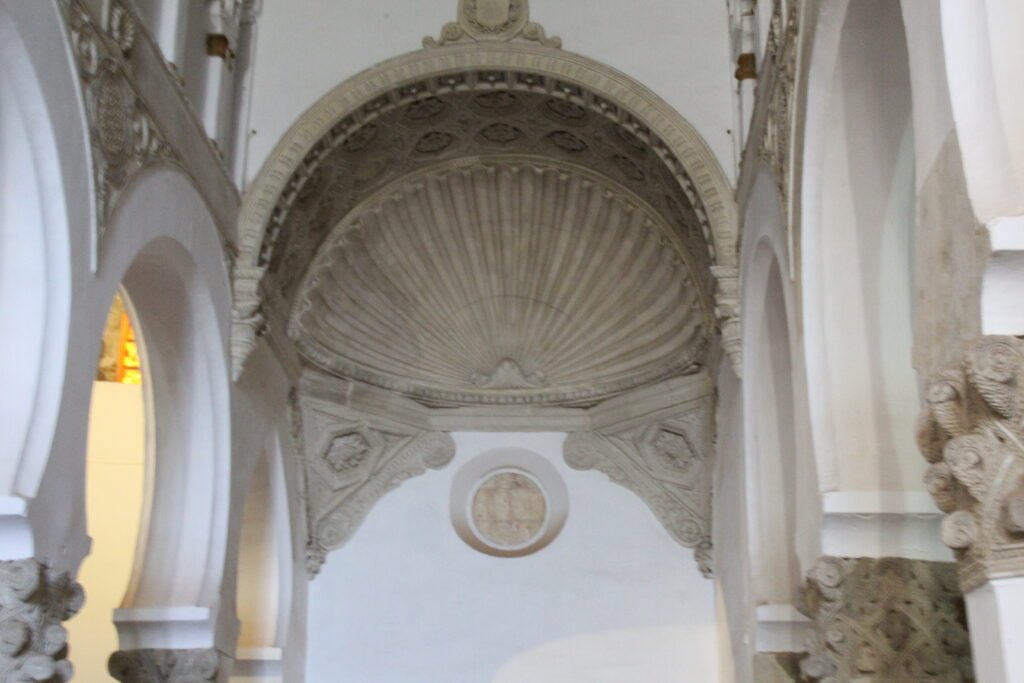
Santa María la Blanca – a Synagogue located in Toledo’s former Jewish Quarter and one of the best-preserved examples of Mudéjar architecture in Spain. Built in the late 12th or early 13th century under Christian rule, it was constructed by Jewish craftsmen and reflects strong Islamic influences, with horseshoe arches, white columns, and a serene, mosque-like interior. Following anti-Jewish riots in 1391, it was converted into a Christian church in the early 15th century and later adapted for various uses. Today, Santa María la Blanca is a museum and cultural monument, symbolizing Toledo’s layered Jewish, Christian, and Muslim history.
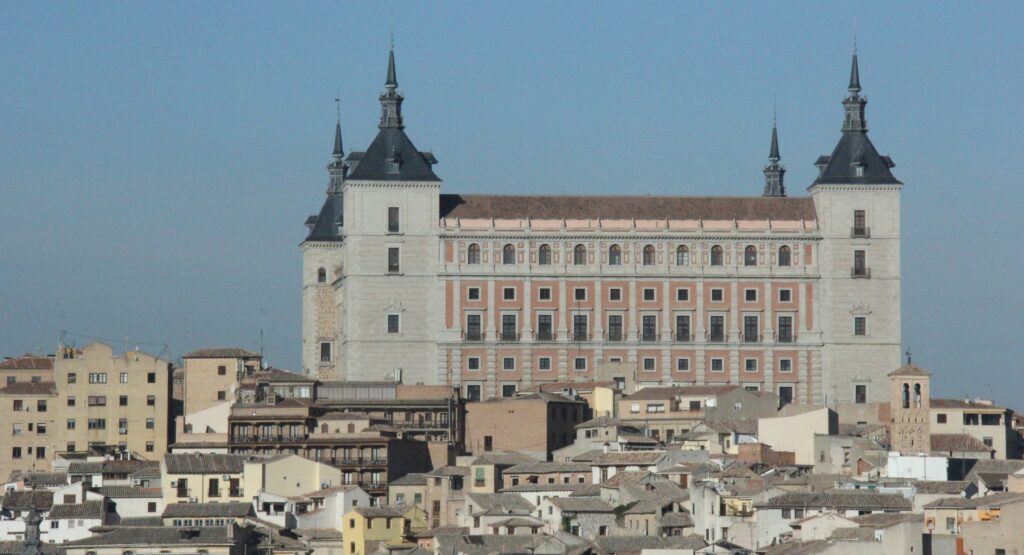
Mirador del Valle – Perched atop the Tagus River valley, this viewpoint offers sweeping panoramic views of the city. From here, you can admire the medieval houses, the imposing Alcázar, and the city’s historic churches, all framed by the winding river below. It’s one of the best spots to appreciate Toledo’s unique skyline and medieval charm.
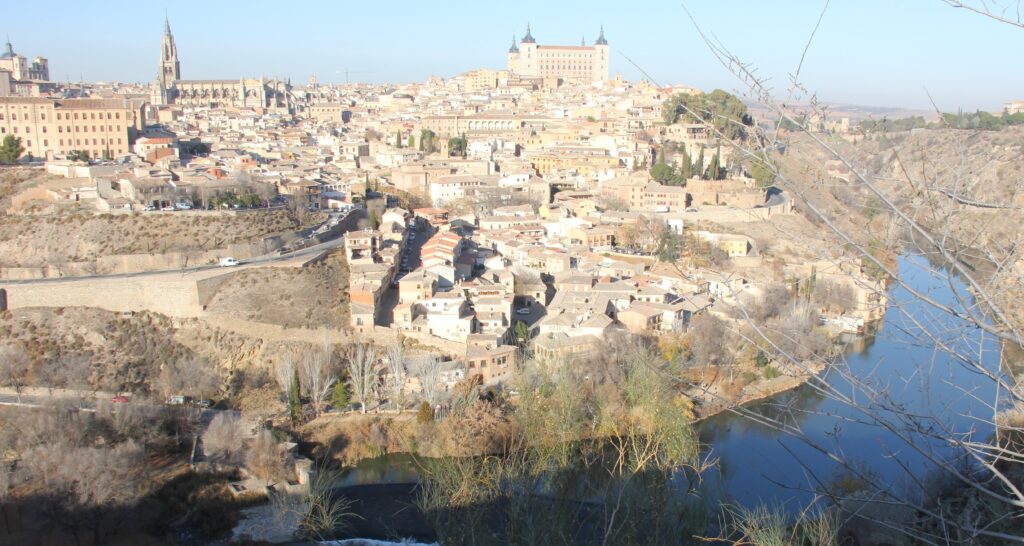
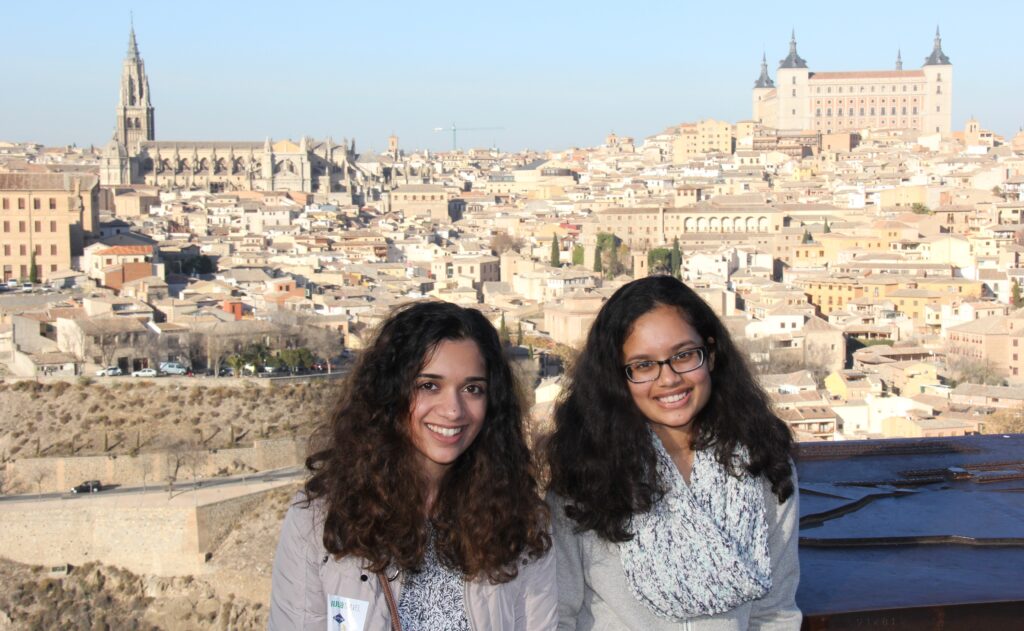
Army Museum (Museo del Ejército) in Toledo is housed in the historic Alcázar, the city’s iconic fortress overlooking the Tagus River. The museum showcases Spain’s military history from the medieval period to modern times, featuring impressive collections of weapons, armor, uniforms, and artillery. Beyond the exhibits, the Alcázar itself is a highlight, with its striking architecture, panoramic views of Toledo, and historical significance as both a fortress and royal palace.