Visited in 2015
Seville, the capital of Andalusia in southern Spain, is another vibrant and beautiful city known for its rich history and stunning architecture. Although a big city, most of the attractions are located within the city center and can be easily explored by walking. We spent a couple of days here wandering through the narrow streets, enjoying the warm climate, and visiting the city’s UNESCO World Heritage Sites (Royal Alcazar and Seville Cathedral).
- Royal Alcazar
- Seville Cathedral
- Torre del Oro
- Plaza de Toros de la Real Maestranza de Caballería de Sevilla (Bullring of the Royal Cavalry Mastership of Seville)
- Híspalis Fountain (Fuente de Híspalis)
Royal Alcazar – is one of the oldest royal palace in use in Europe and one of Spain’s finest examples of Mudéjar architecture, reflecting centuries of Islamic and Christian influence. Originally built as an Islamic citadel in the 10th century under Umayyad rule, it was expanded by later Muslim dynasties before being transformed after the Christian conquest of Seville in 1248.
Its most celebrated section is the richly decorated Mudéjar palace commissioned by King Pedro I in the 14th century, blending Islamic artistry with Christian symbolism. Over time, Gothic and Renaissance elements were added, creating a unique architectural fusion. Still used today as an official residence of the Spanish royal family when they visit Seville, the Alcázar is a UNESCO World Heritage Site, recognized for its historical significance, ornate courtyards, and lush gardens.
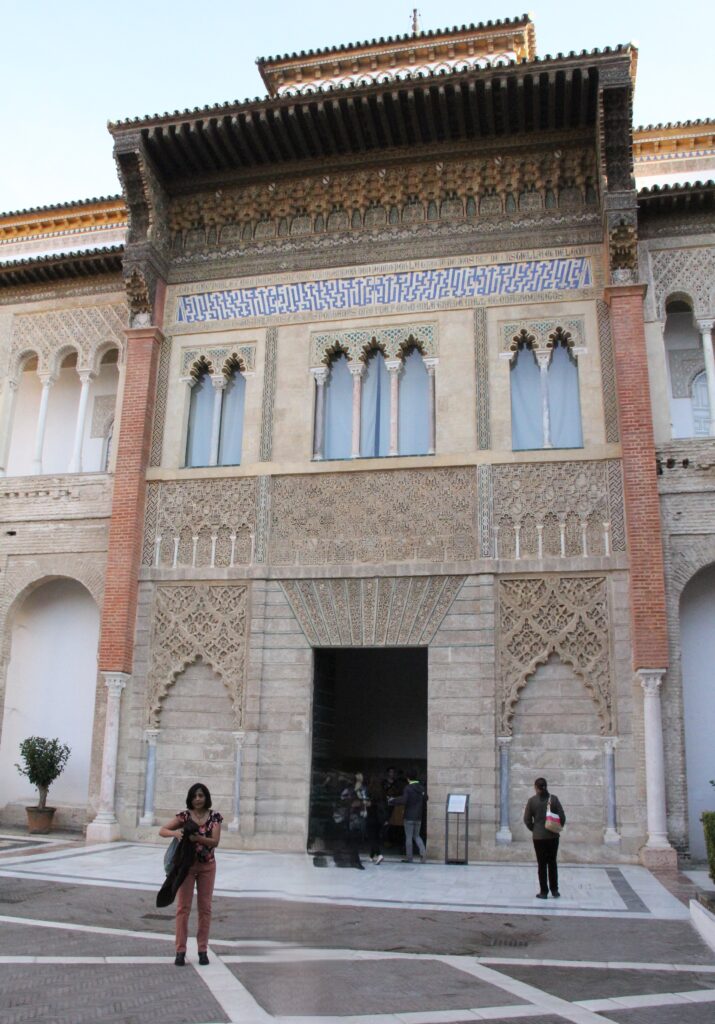
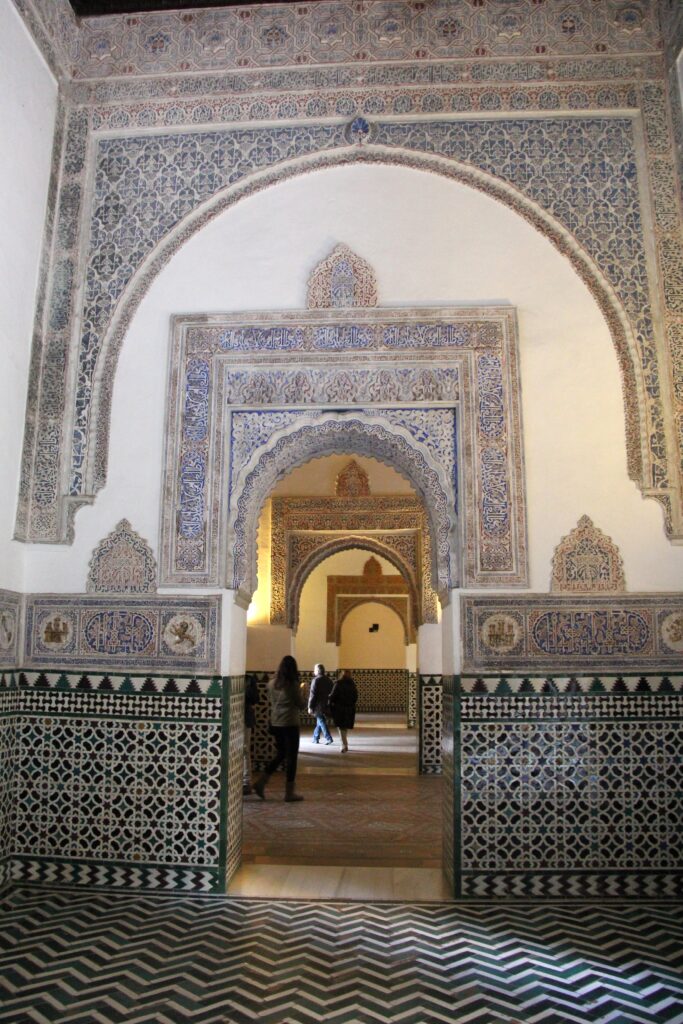
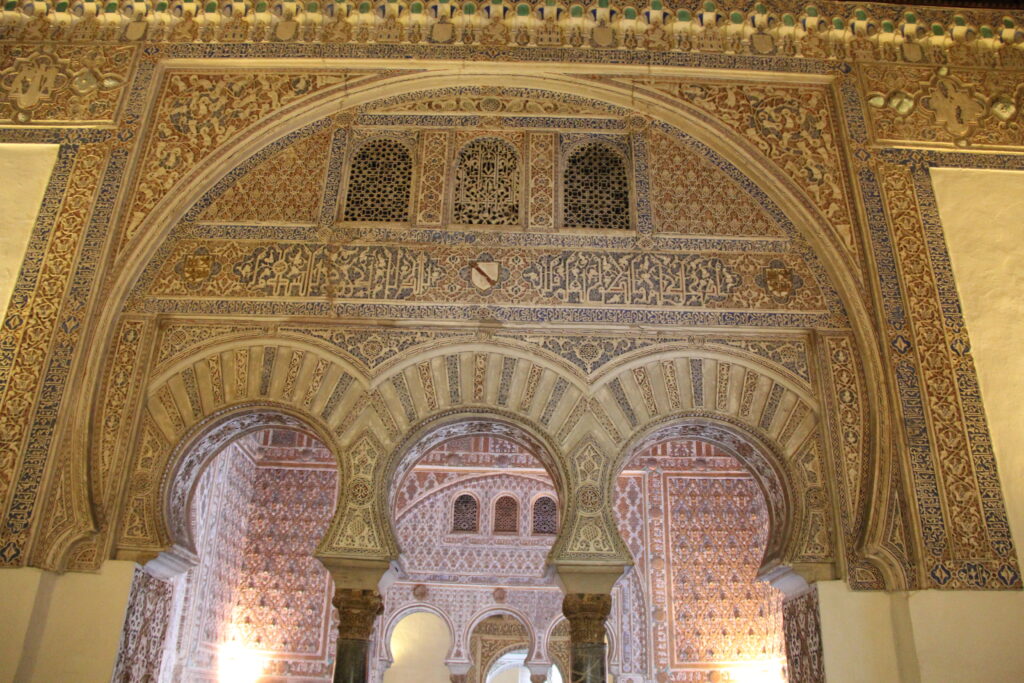
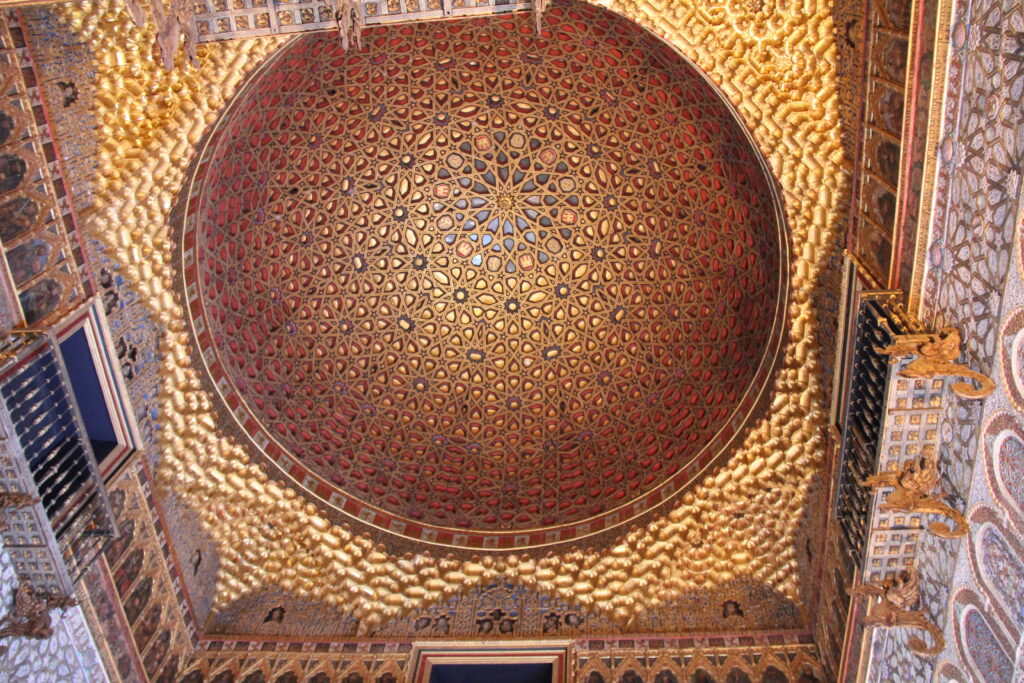
The interior of Royal Alcázar is a premier example of Mudéjar architecture, featuring a breathtaking combination of Islamic, Gothic, and Renaissance styles characterized by intricate, colorful decorations and precise carvings.
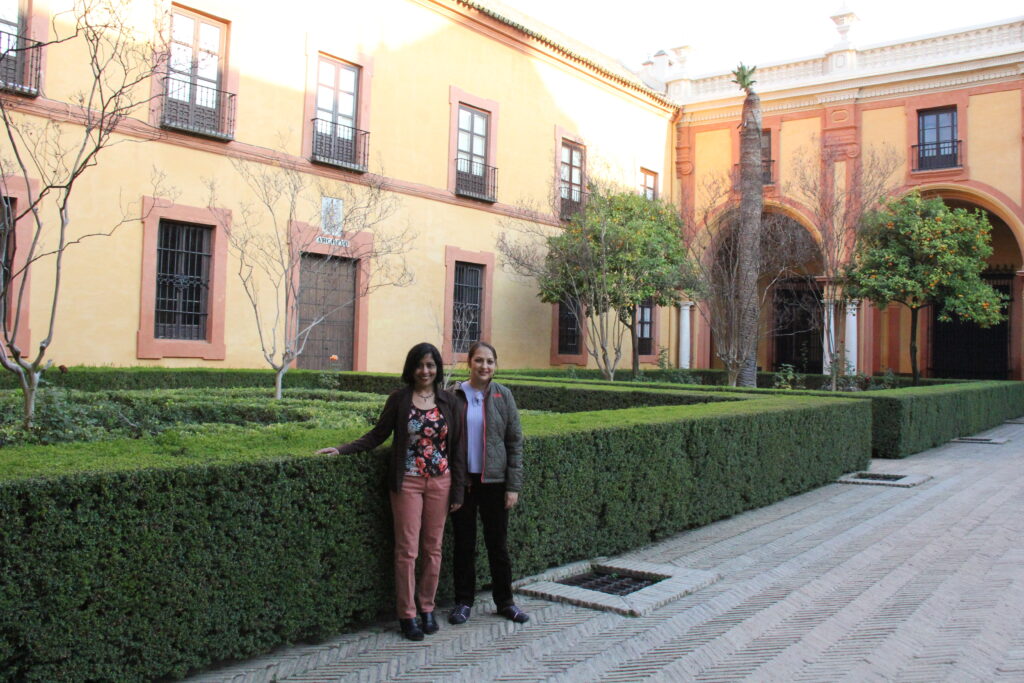
Royal Alcázar Gardens – are expansive and beautifully landscaped and reflects centuries of Islamic, Renaissance, and Baroque design influences. Developed alongside the palace from the medieval period onward, the gardens feature tiled pathways, geometric layouts, ornamental fountains, reflecting pools, and fragrant orange and palm trees that create a peaceful retreat from the city. Water plays a central role, symbolizing life and cooling the space, while pavilions, hedges, and shaded walkways invite leisurely exploration.
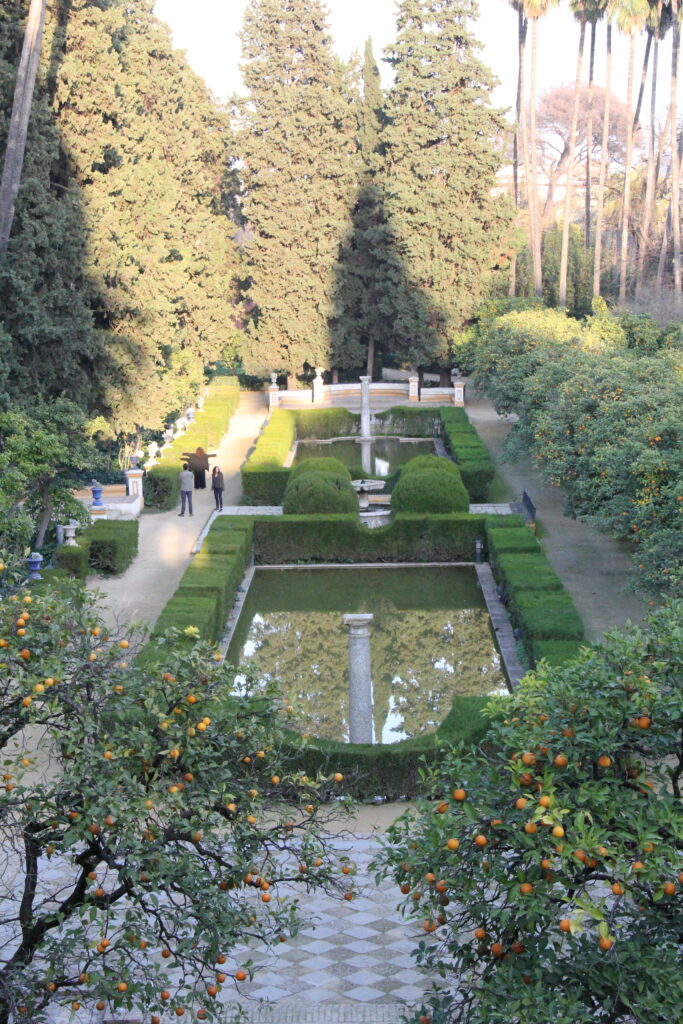
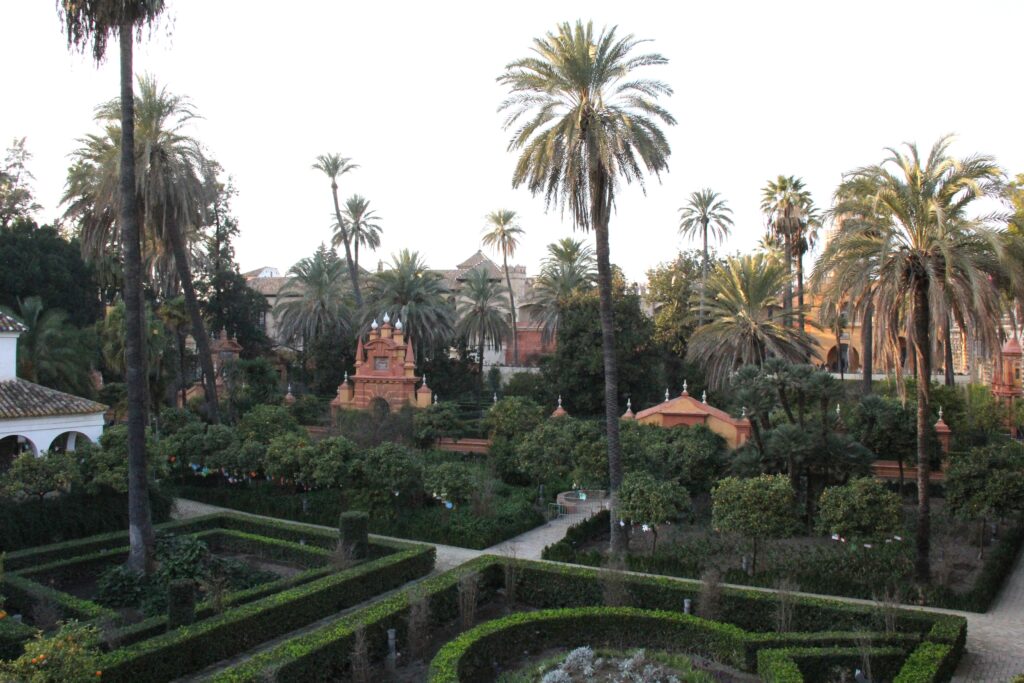
This palace has been featured in movies and TV series. Game of Thrones fans will recognize the gardens and some of the palace rooms as the Kingdom of Dorne (in particular, the gardens and the Hall of Ambassadors).
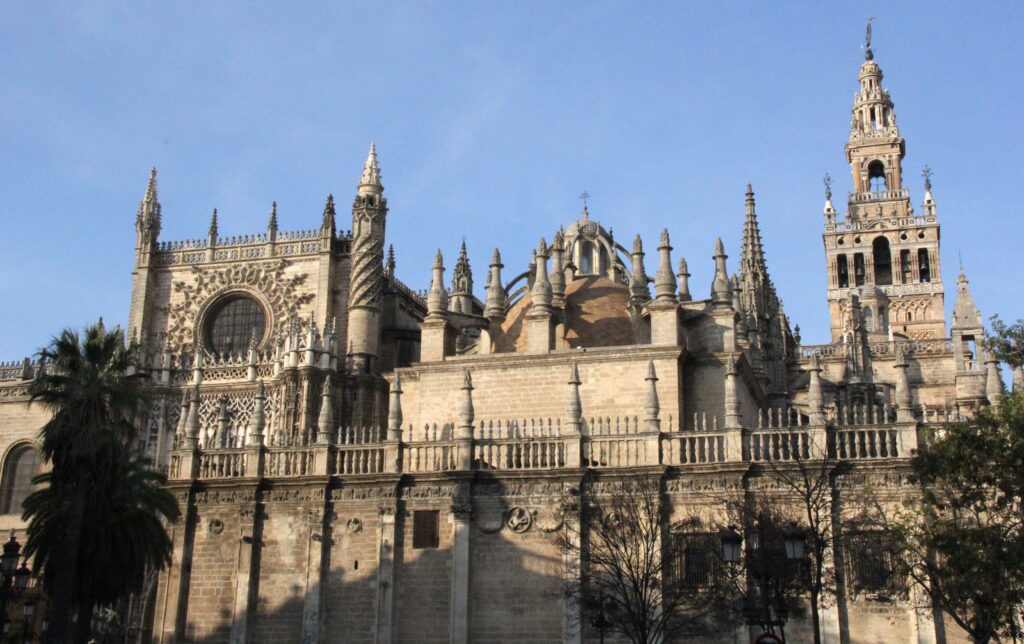
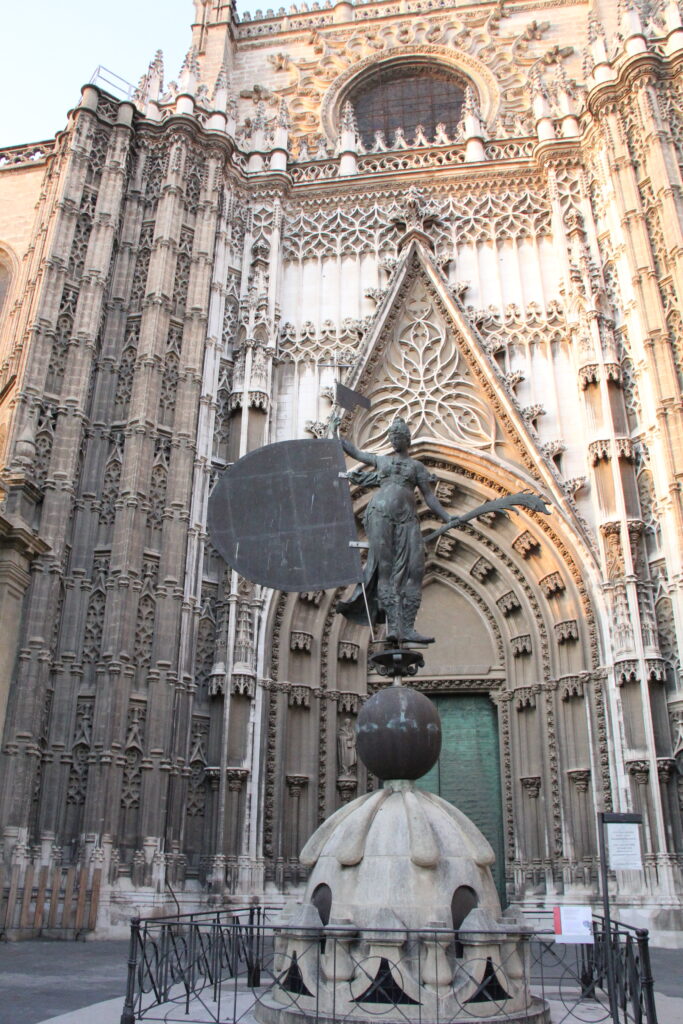
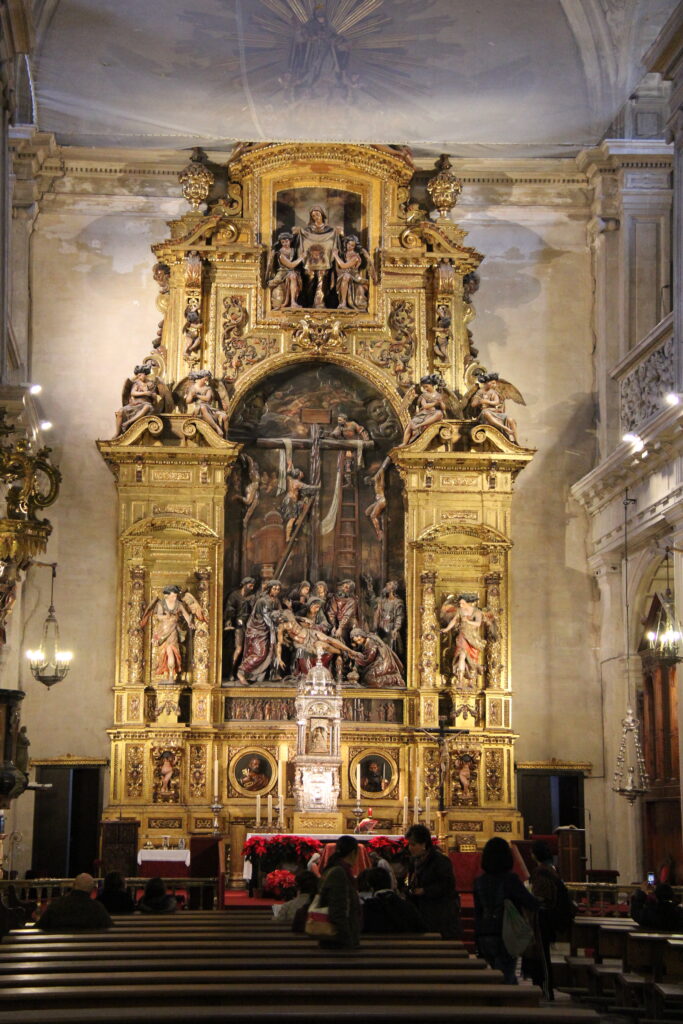
Seville Cathedral – officially the Cathedral of Saint Mary of the See, is one of the largest churches in the world and the largest Gothic cathedral ever built. Constructed on the site of a former Almohad mosque after the Christian conquest of Seville, its construction began in the early 15th century with the ambitious aim of creating a church so grand it would astonish all who saw it. Completed in the early 16th century, the cathedral reflects Seville’s wealth and importance during its golden age as a trading power.
Inside, it houses magnificent chapels, a vast nave, the tomb of Christopher Columbus, and the Giralda, a former minaret turned bell tower. Seville Cathedral is a UNESCO World Heritage Site and a defining symbol of the city’s history and faith.
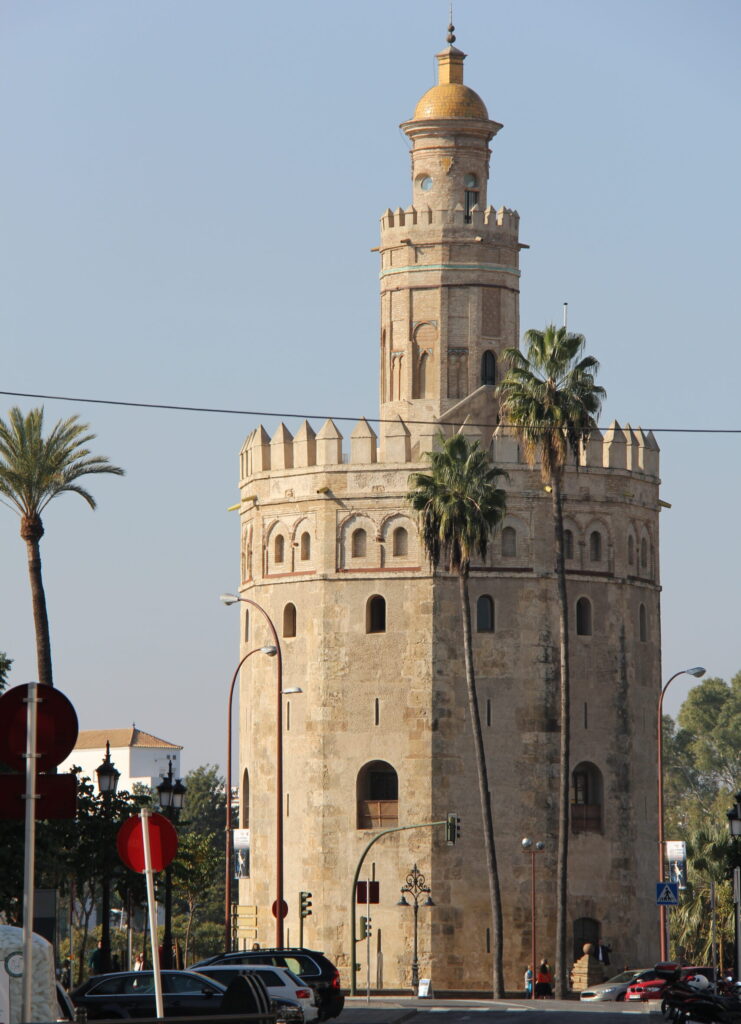
Torre del Oro (Tower of Gold) – is a 13th-century military watchtower located along the banks of the Guadalquivir River in Seville. Built by the Almohad dynasty around 1220, it originally formed part of the city’s defensive walls and helped control access to the river. The tower’s name is thought to come from the golden hue it reflects in the sunlight or from tiles that once covered its exterior.
Today, Torre del Oro houses a small maritime museum and visitors can climb the tower by ascending a narrow spiral staircase to reach its observation deck. The climb involves nearly 100 steps and includes some steep sections, making it less suitable for those with mobility issues, but the effort is rewarded with panoramic views of the Guadalquivir River, the Triana neighborhood, and Seville’s skyline.
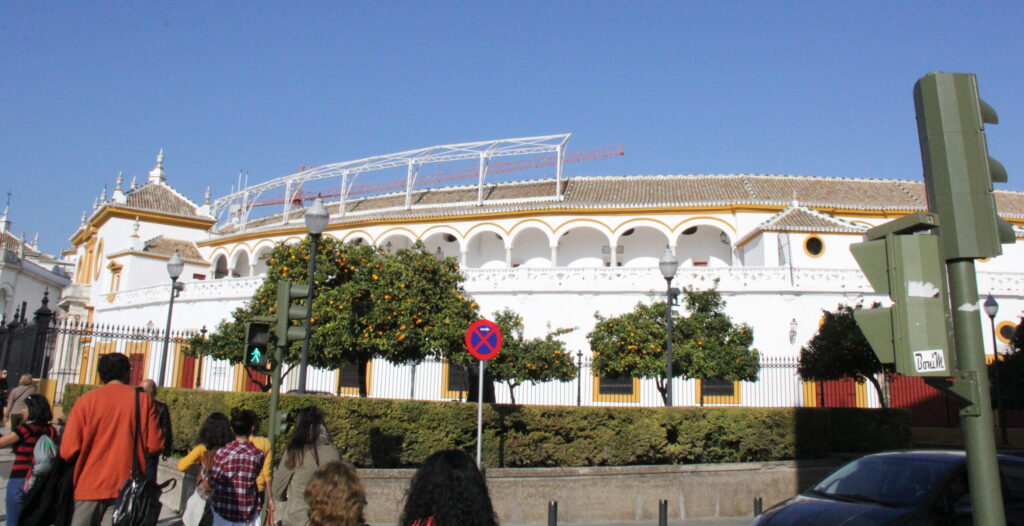
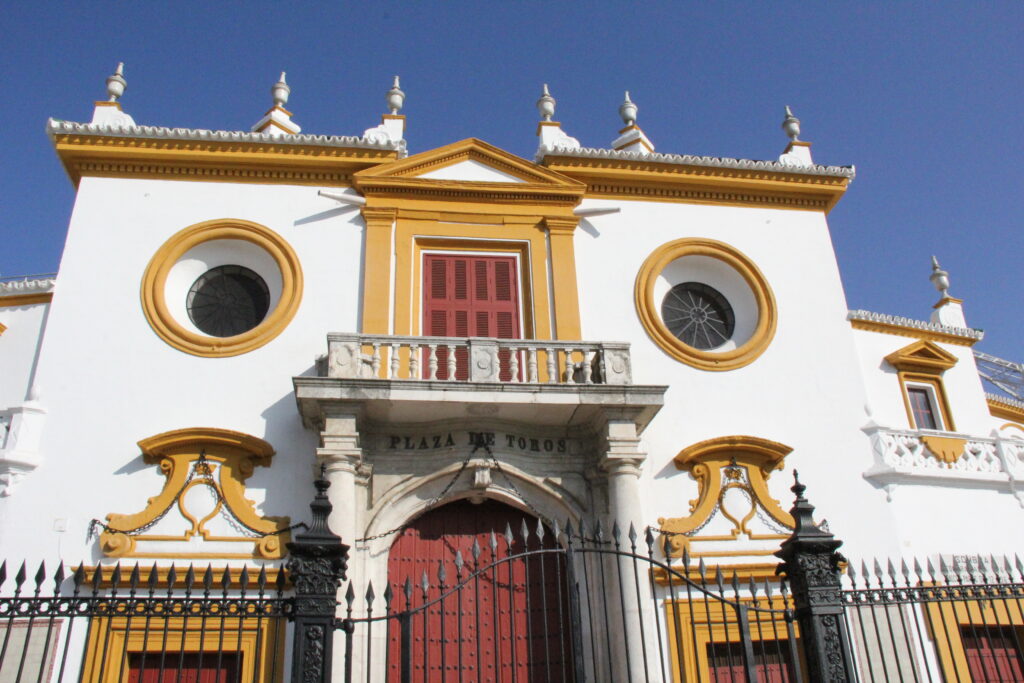
Plaza de Toros de la Real Maestranza de Caballería de Sevilla is a historic bullring with a capacity of about 12,000 spectators and is one of the most renowned venues for bullfighting festivals in the world. Construction began in 1749, with the design evolving into a circular layout during later stages, and the arena was not fully completed until 1881, combining both stone and wooden sections. Subsequent renovations, including early 20th-century improvements, modernized the seating and structure, shaping the elegant bullring seen today.
The stadium was not open to visitors on the day we were in Seville, so we were only able to see it from the outside.
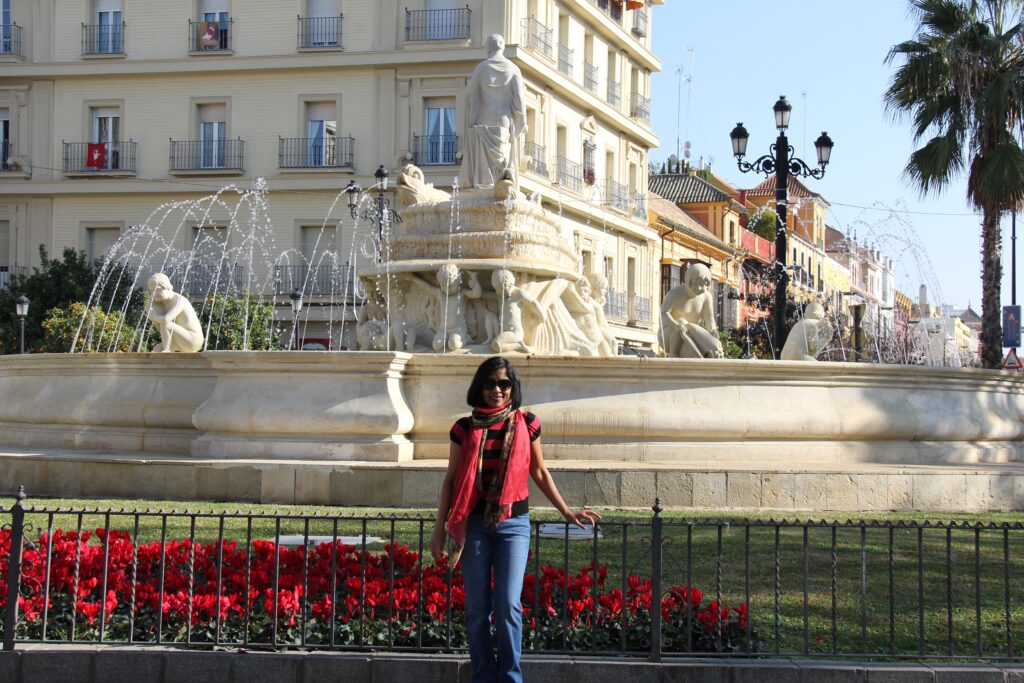
Híspalis Fountain (Fuente de Híspalis) is an artistic fountain created in 1929, whose name comes from Híspalis, the ancient Roman name for Seville, highlighting the city’s deep historical roots. The fountain’s central figure is a majestic female sculpture that personifies the city of Seville, surrounded by children and lotus leaves symbolizing growth, renewal, and historical transformation. Through its allegorical design, the fountain reflects Seville’s evolution from its Roman past to its modern identity.