Visited in 2015
Located in northeastern Spain and the capital of the autonomous community of Catalonia, Barcelona is a vibrant coastal city famous for the works of Antoni Gaudí, including the Sagrada Família and Park Güell. Barcelona blends medieval neighborhoods like the Gothic Quarter with modern urban life, lively beaches, and a strong food scene.
We spent 3 days in Barcelona, staying in an Airbnb near Las Ramblas, which made it easy to explore the city on foot. Many of the major attractions were within walking distance, allowing us to visit landmarks and squares at a relaxed pace. For sites farther away, like Plaça d’Espanya and Camp Nou, we used the city’s efficient public transport, including trains. Barcelona’s transit system, with its combination of trains, metro, and hop-on hop-off buses, made it simple to reach all the key sights.
- Sagrada Familia
- Take a stroll on Las Ramblas
- Gothic Quarter (Barri Gòtic)
- Antoni Gaudí’s Buildings
- Casa Mila aka La Pedrere
- Casa Batlló
- Casa Amatller
- Santa Maria del Mar Basilica
- Plaça d’Espanya
- Palau Nacional
- Arenas de Barcelona
- Telefèric de Montjuïc and Castle
- Camp Nou
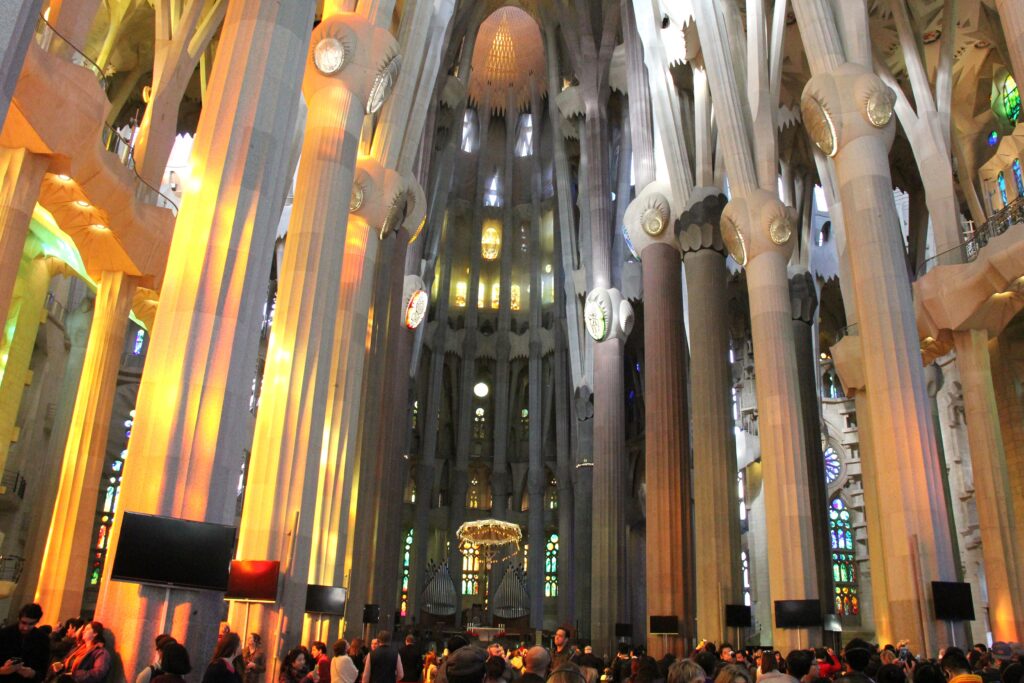
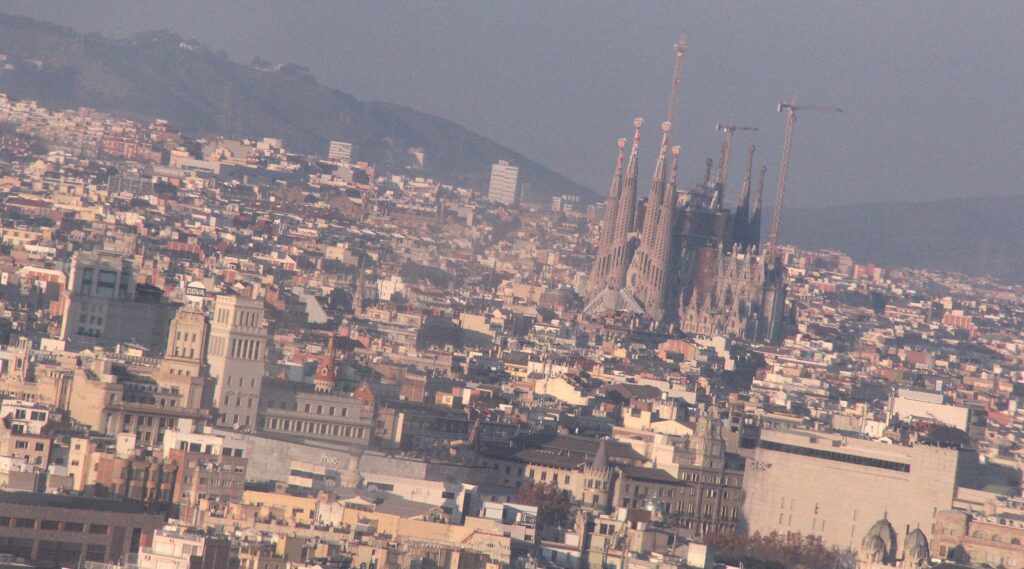
Sagrada Família – The Basílica de la Sagrada Família is Antoni Gaudí’s most famous and ambitious work in Barcelona, still under construction since 1882. A UNESCO World Heritage Site, it combines Gothic and Art Nouveau styles with Gaudí’s signature organic shapes, colorful façades, and symbolic details inspired by nature and the Christian faith. The interior is filled with light streaming through stunning stained-glass windows, while the soaring towers offer panoramic views of the city. Despite being unfinished, the basilica is one of Barcelona’s most iconic landmarks, attracting millions of visitors each year.
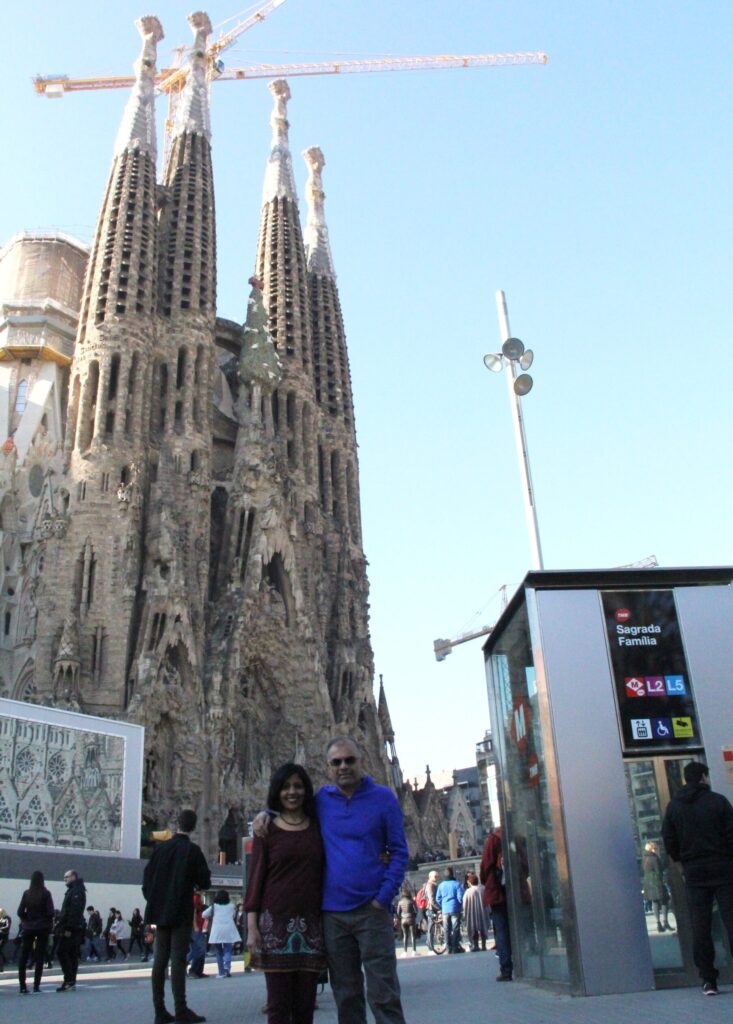
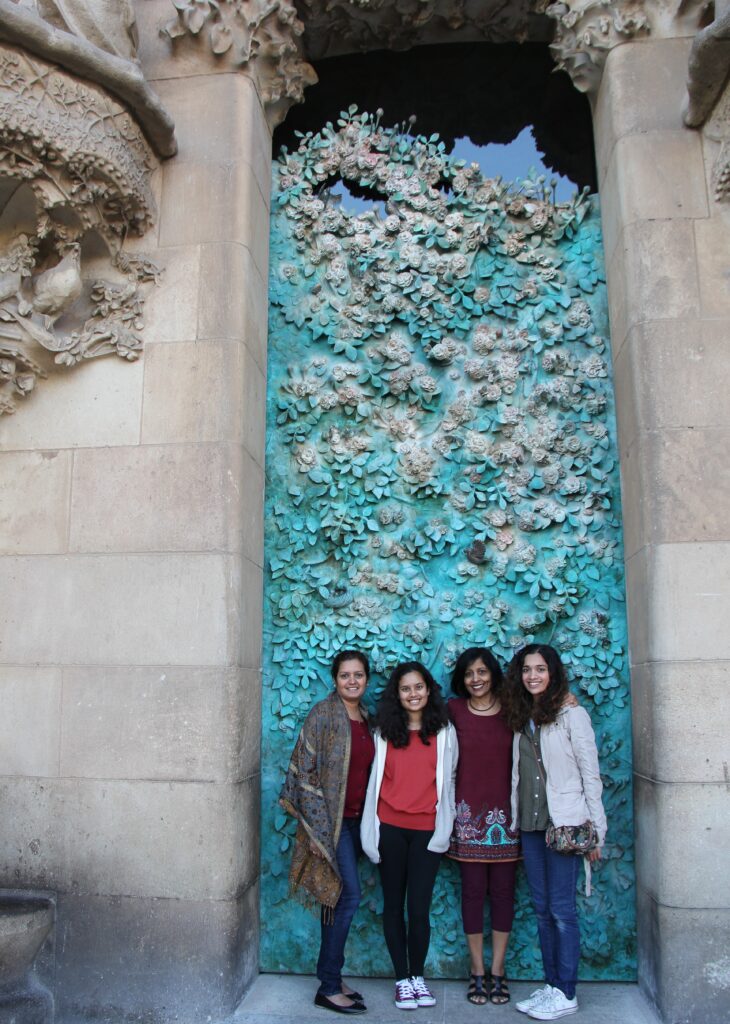
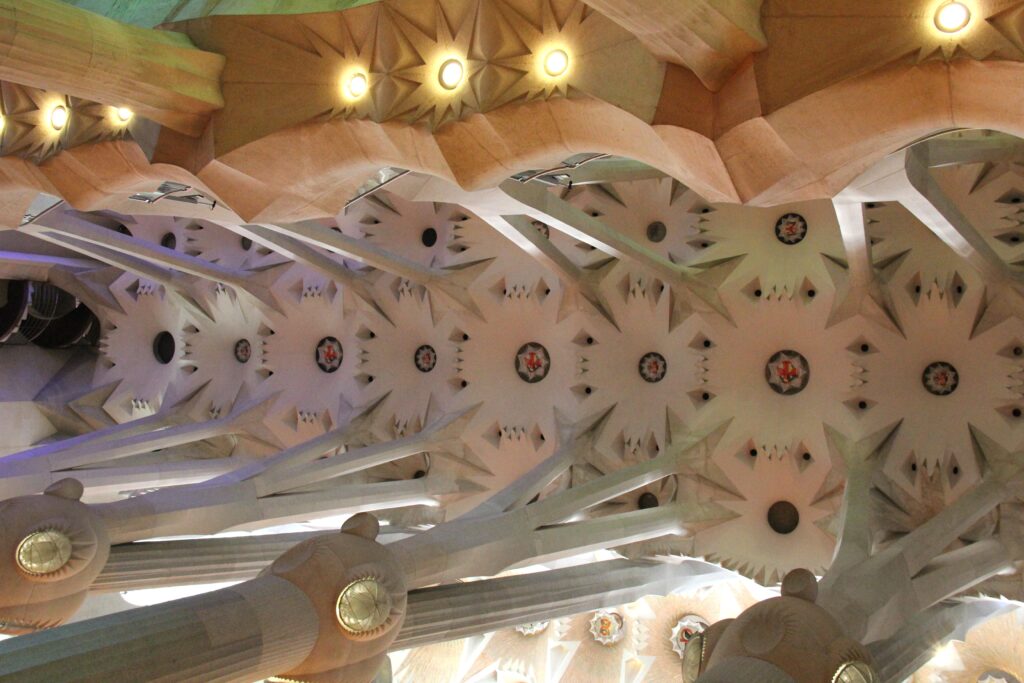
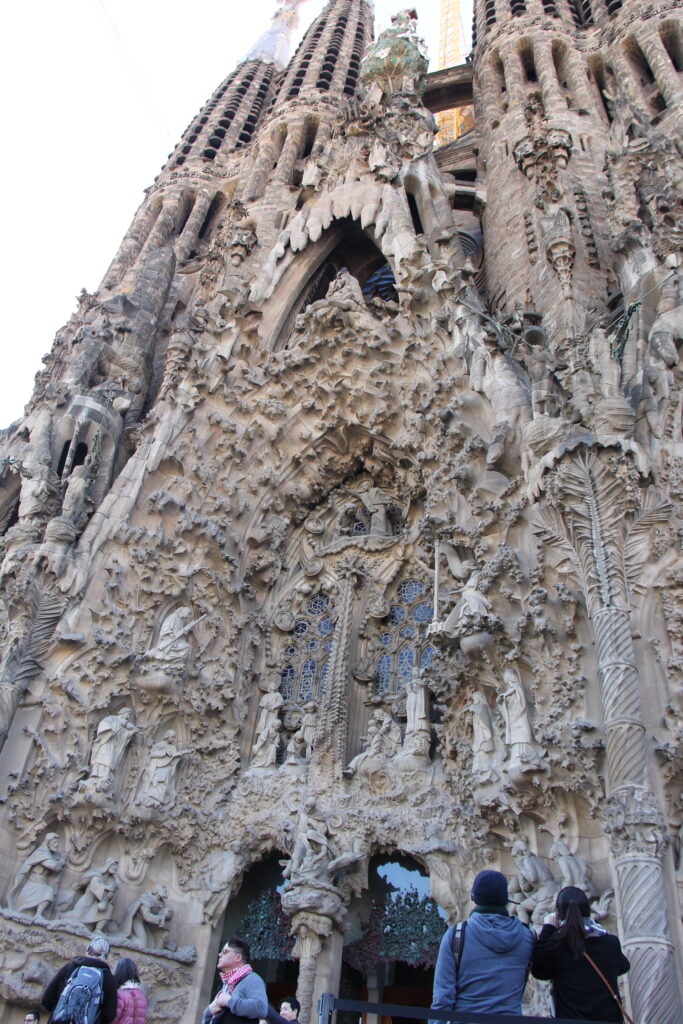
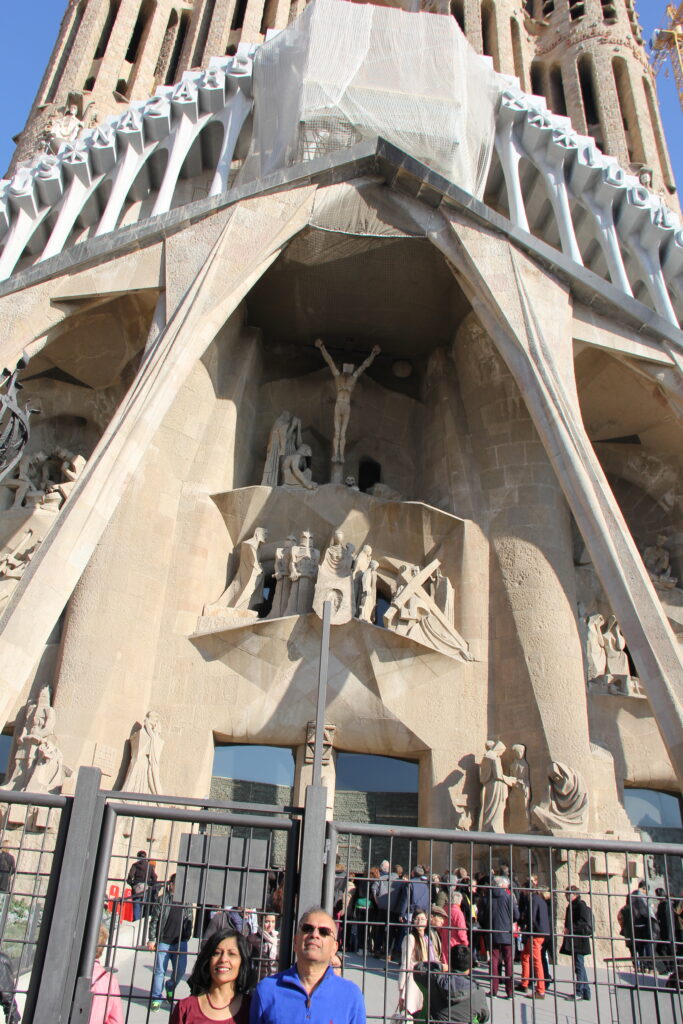
Sagrada Família, Three Grand Façades – The 3 main façades are – the Nativity façade (east) with Gaudí’s intricate style, the Passion façade (west) with dramatic sculptures by Subirachs, and the Glory façade (south, unfinished) depicting the journey to God, including Hell, Purgatory, and the seven deadly sins and virtues. Each façade tells a story and showcases Gaudí’s unique blend of architecture and Christian symbolism.
Take a stroll on Las Ramblas – aka La Rambla, it is Barcelona’s most famous pedestrian boulevard, stretching about 1.2 km from Plaça de Catalunya down to the Columbus Monument by the waterfront. Lined with trees, it is crowded and buzzing with street performers, artists, and musicians. Visitors can enjoy cafes, bars, and famous markets like La Boqueria. Souvenir shops and official Barcelona merchandise stores are scattered along the way, making it a lively mix of culture, food, and shopping.
Font de les Tres Gràcies (Fountain of the Three Graces) – This elegant neoclassical fountain is located in Plaça de Catalunya, Barcelona’s central square and the starting point of Las Ramblas. It depicts the three Charites (Graces) from Greek mythology, representing beauty, charm, and creativity, and serves as a popular meeting point and photogenic landmark in the heart of the city.
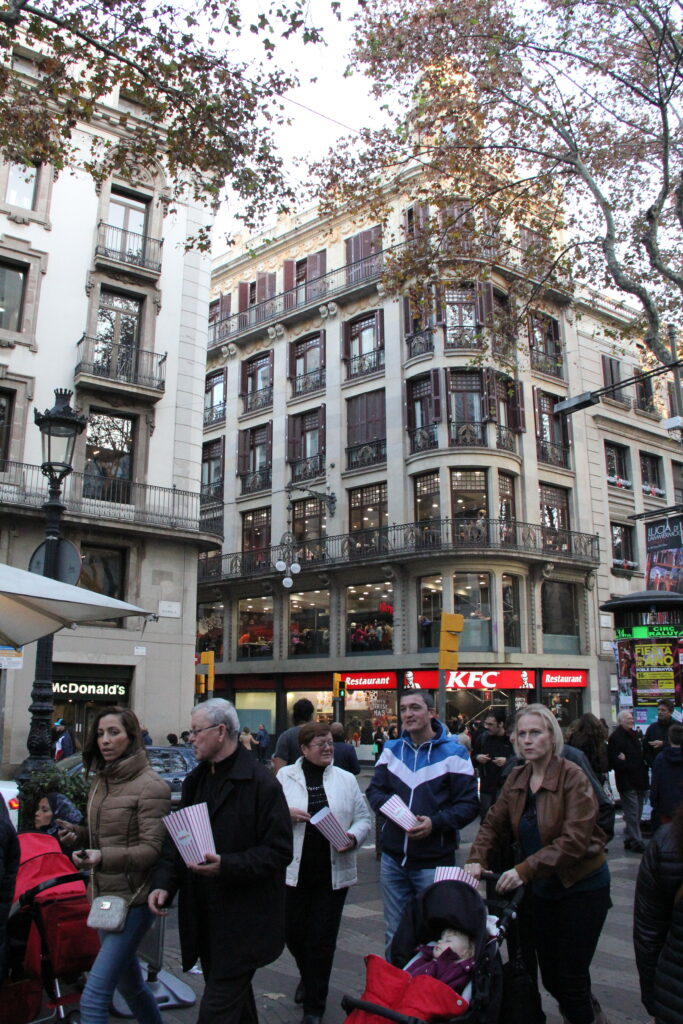
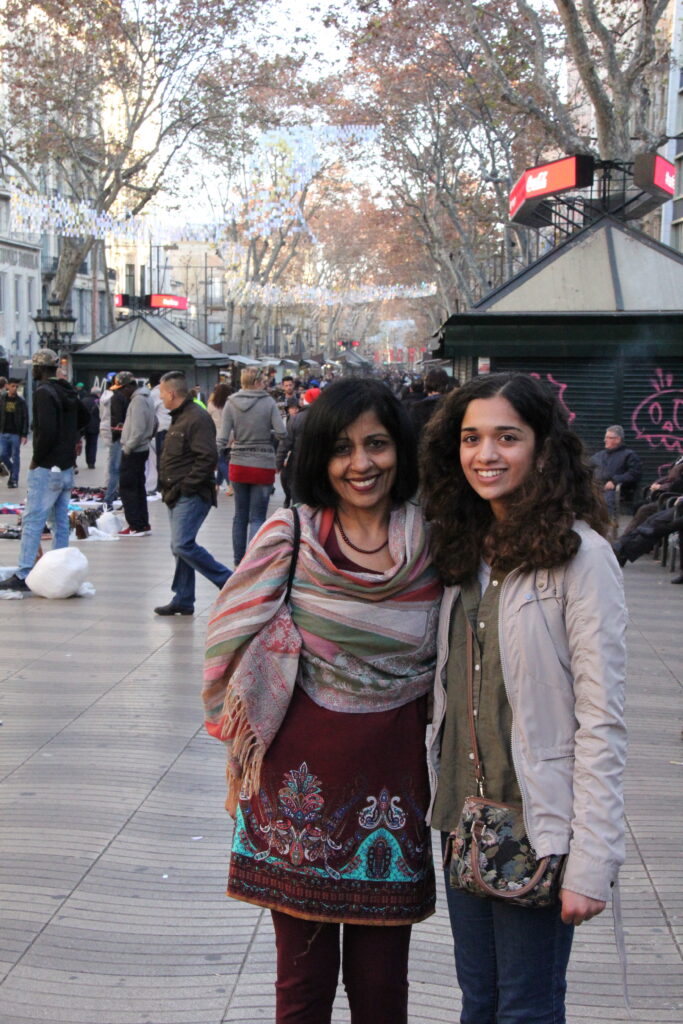
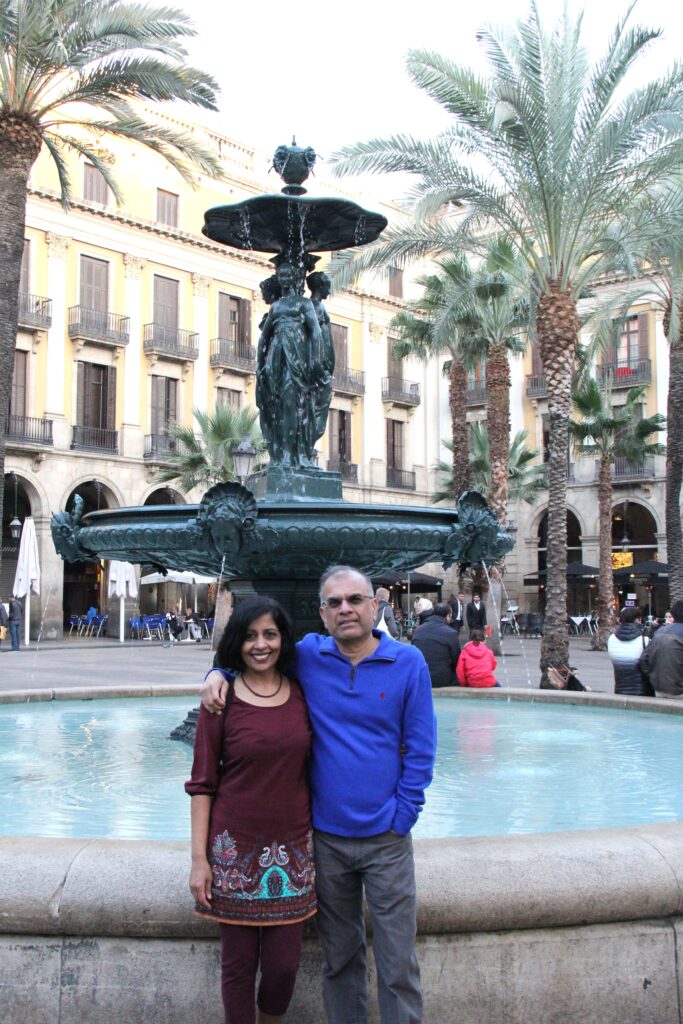
Note – The boulevard is notorious for pickpockets, so visitors should stay vigilant while exploring.
Gothic Quarter (Barri Gòtic) – is the historic heart of Barcelona, stretching from La Rambla to Via Laietana and from the Mediterranean seafront to Ronda de Sant Pere. It contains the oldest parts of the city, and the area’s labyrinthine streets and squares make it a charming pedestrian-friendly zone. Although many buildings are styled in Gothic architecture, much of the quarter was restored or rebuilt in neo-Gothic style in the 19th and 20th centuries, blending medieval remains with more modern reconstructions.
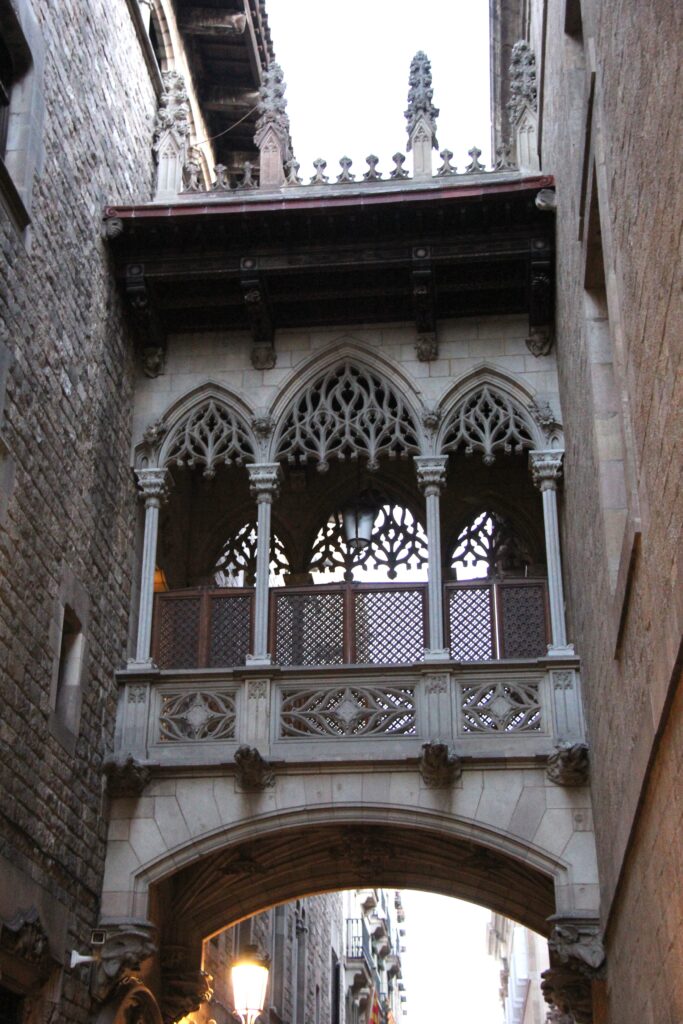
- Pont del Bisbe – or the Bishop’s Bridge, is a picturesque neo-Gothic bridge built in 1928 over Carrer del Bisbe in the Gothic Quarter. It connects buildings on either side of the narrow street and is famous for its ornate stone carvings and intricate details, making it one of the most photographed spots in the Barri Gòtic. Its design evokes a medieval look, even though it’s a 20th-century construction.
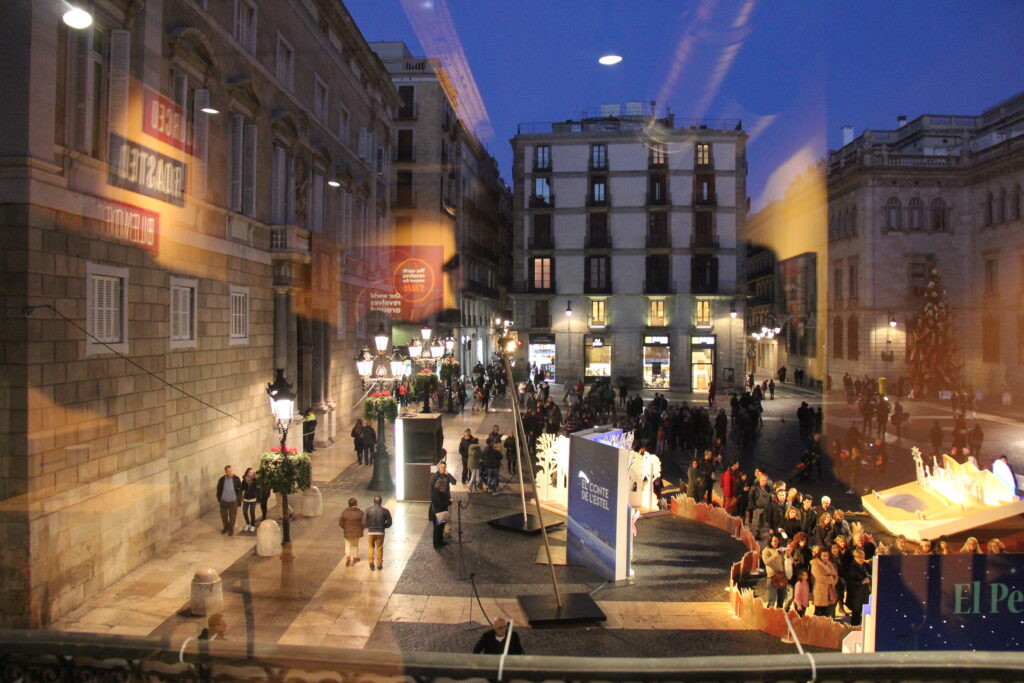
- Plaça Sant Jaume is a historic square in the heart of Gothic Quarter, long considered the political center of the city. It is flanked by two important government buildings: the Palau de la Generalitat de Catalunya (seat of the Catalan government) and the Ajuntament de Barcelona (city hall). The square has been a focal point for public gatherings, celebrations, and political events since Roman times.
Antoni Gaudí Buildings
All of Antoni Gaudí’s buildings required tickets to enter and were quite pricey, so we chose to go inside only one of them. You can still enjoy seeing all of them from the outside, where their unique shapes, colors, and details could be fully appreciated without needing entry.
Casa Milà (aka La Pedrera) – was built between 1906 and 1912 and was commissioned by Pere Milà and his wife Roser Segimon as a private residential building. It was the last such project designed by Antoni Gaudí. Today, Casa Milà is a UNESCO World Heritage Site and serves as a cultural and exhibition center, managed by the Fundació Catalunya La Pedrera, with public visits, exhibitions, and educational activities.
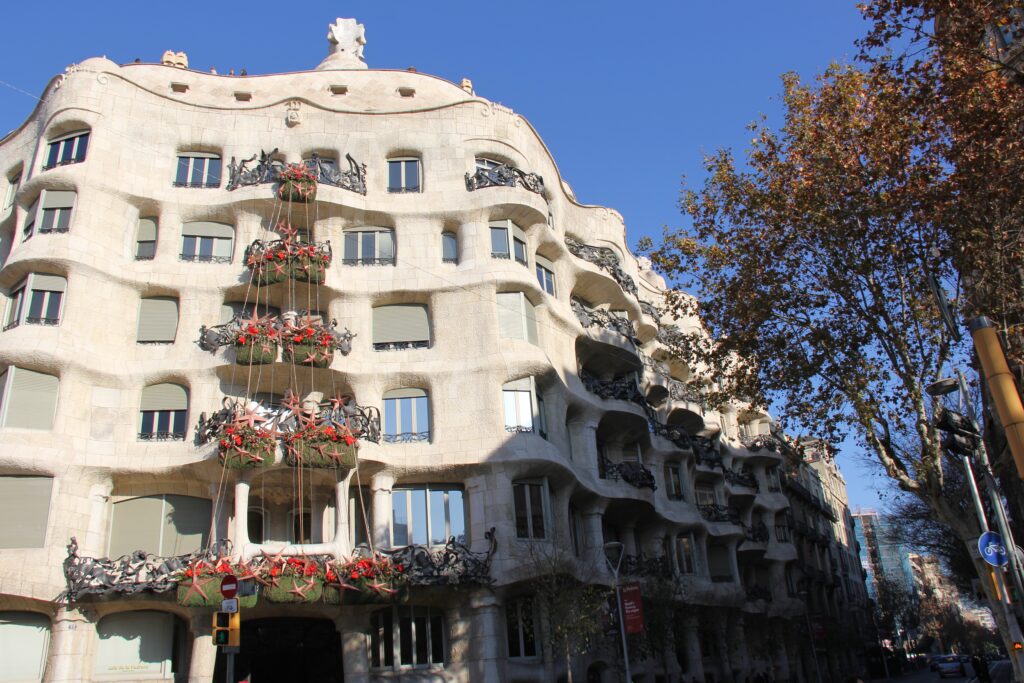
Casa Milà Controversy – When Casa Milà was built, it caused significant controversy in Barcelona due to its unconventional design. The building’s undulating stone façade, irregular shapes, and wrought-iron balconies broke sharply from traditional architectural styles, leading critics and locals to mock it and nickname it La Pedrera (the stone quarry). City authorities also objected to elements that exceeded height and building regulations, resulting in fines for the owners. Despite early criticism, Casa Milà is now celebrated as a masterpiece and one of Antoni Gaudí’s most innovative works.
——————————
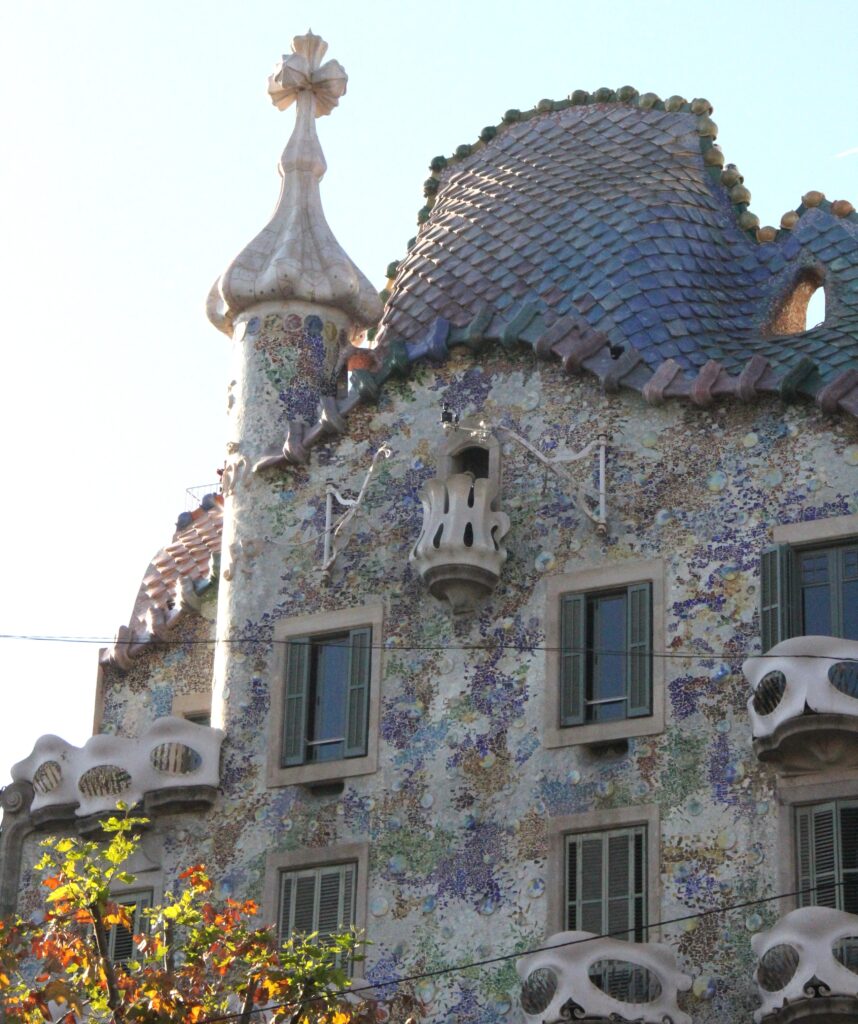
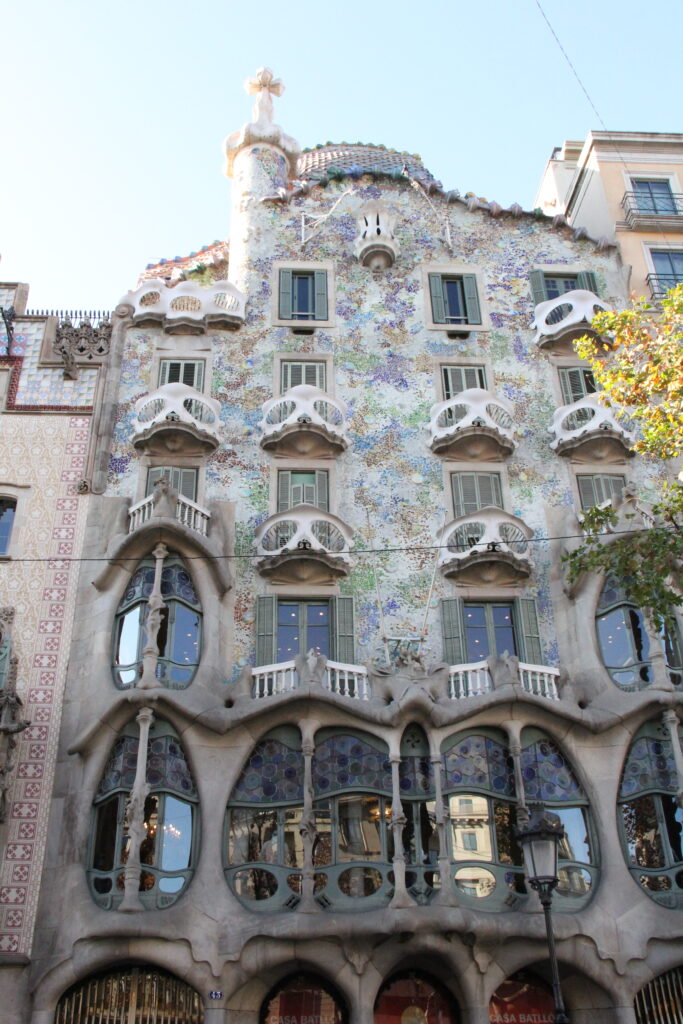
Casa Batlló is another of Gaudi’s famous designs. Located on Passeig de Gràcia, one of the major thoroughfares through the city, Casa Batlló was originally built in 1877 and later remodeled by Antoni Gaudí between 1904 and 1906. The redesign was commissioned by Josep Batlló, a wealthy textile industrialist, who wanted a bold and modern residence for his family. Today, Casa Batlló is a UNESCO World Heritage Site and operates as a museum, open to the public and celebrated for its imaginative design and colorful facade.
Casa Amatller – Located to the left of Casa Batlló, Casa Amatller was built between 1898 and 1900 and was commissioned by Antoni Amatller, a wealthy chocolatier and industrialist. Designed by architect Josep Puig i Cadafalch, the building is a notable example of Catalan Modernisme, distinguished by its stepped Flemish-style façade and rich decorative details. Today, Casa Amatller is a historic house museum and cultural space, open to the public and offering insight into Barcelona’s modernist architecture.
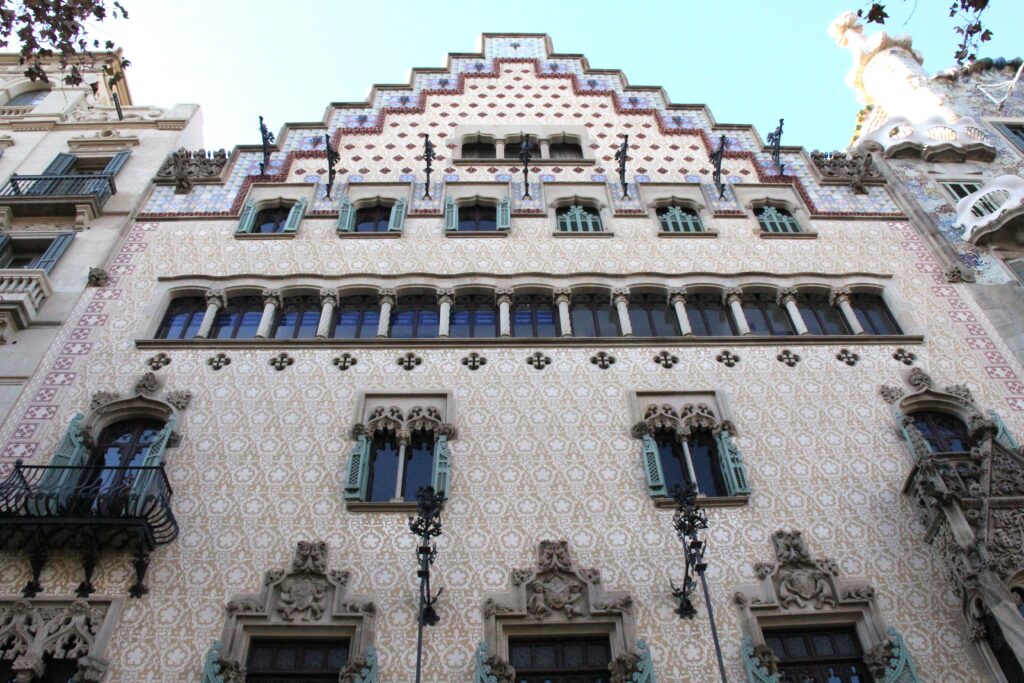
After checking out the building from the outside, we went inside, where there is a shop selling Amatller chocolate, along with a café where visitors can relax and enjoy refreshments.
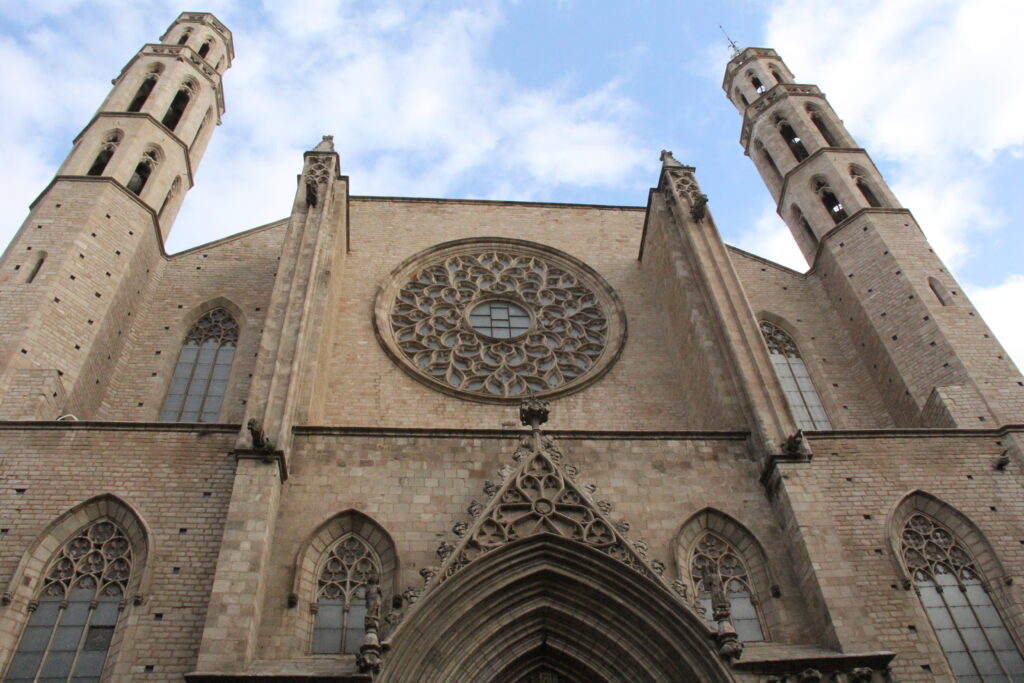
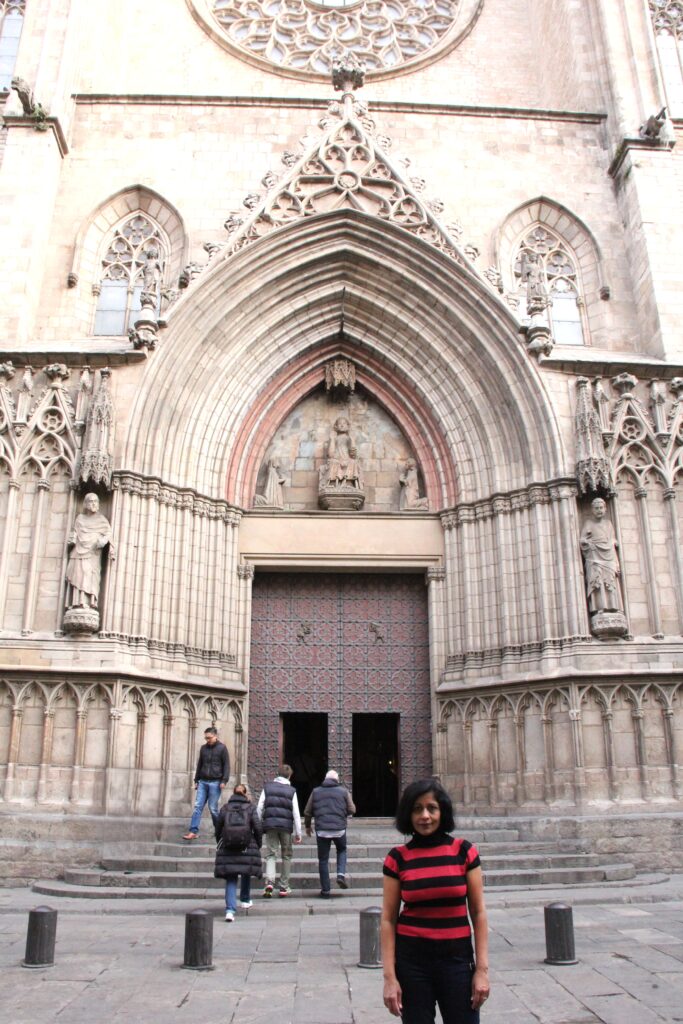
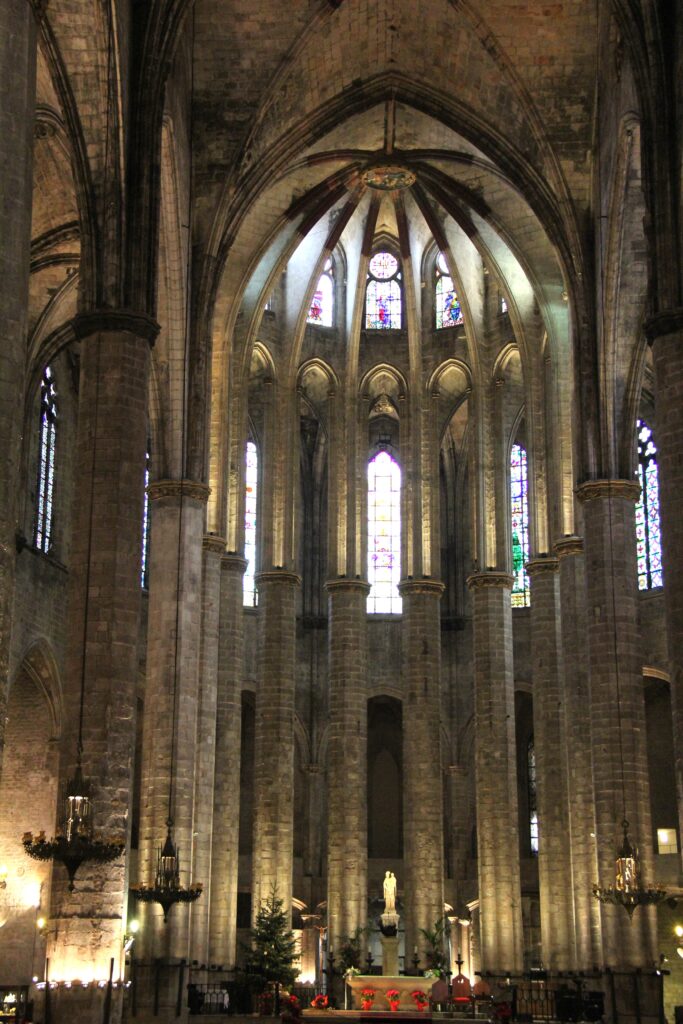
Santa Maria del Mar – This huge and stunning Gothic basilica was built between 1329 and 1384 with strong support from the city’s common people rather than the nobility. The church is famous for its harmonious proportions, tall clerestory windows, and wide column spacing—the widest of any Gothic church in Europe. The exterior is imposing and austere, while the interior feels light and spacious, with slender octagonal columns and ribbed vaults. The church has survived fires, earthquakes, and damage during the Spanish Civil War, and some stained-glass windows remain from various periods, including one featuring the FC Barcelona coat of arms, a unique link between the city’s faith and its beloved football club.
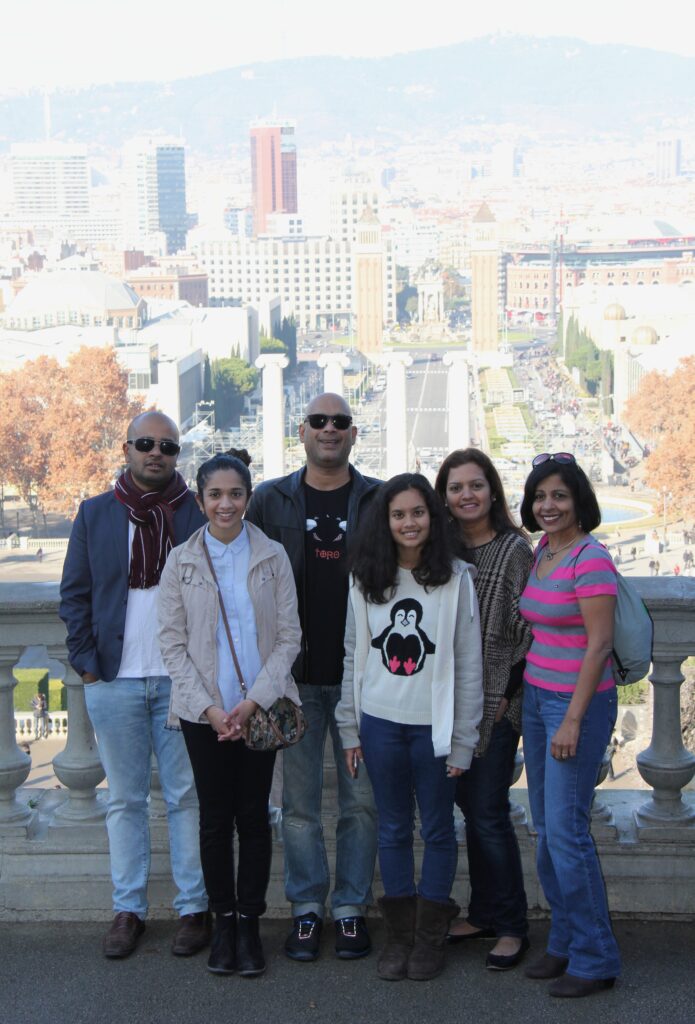
Plaça d’Espanya – is a grand plaza and a major Barcelona landmark located at the foot of Montjuïc hill. From the square, the avenue Avinguda de la Reina Maria Cristina leads toward Palau Nacional, flanked by the iconic Venetian Towers and centered around a large decorative fountain.
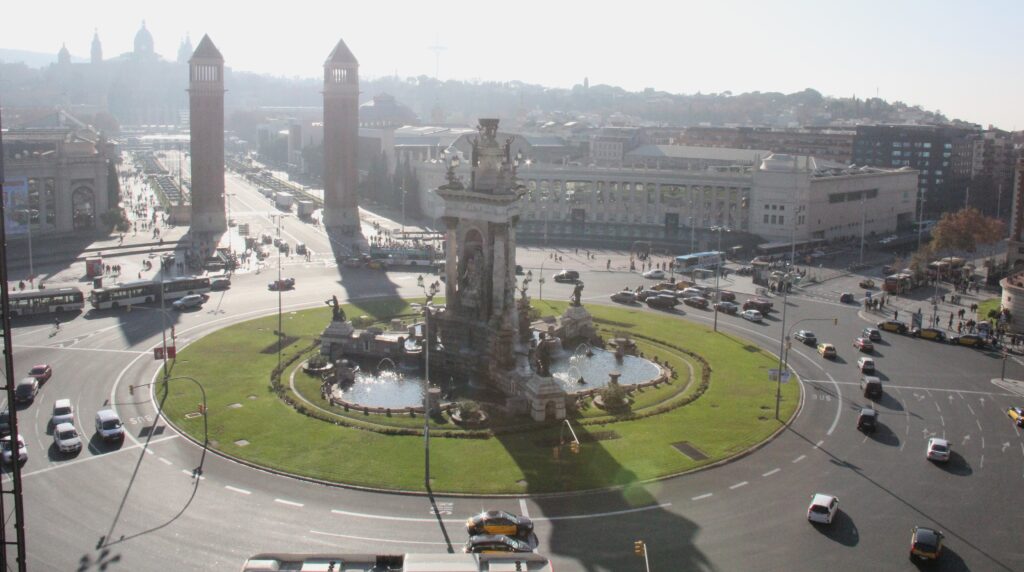
The Venetian Towers were built in 1929 for the Barcelona International Exposition and stand 47 metres high. Inspired by the bell tower in St. Mark’s Square in Venice, they act as a grand gateway to Avinguda de la Reina Maria Cristina, facing toward Montjuïc and the Palau Nacional.
Font de la Plaça d’Espanya (aka Fountain of Montjuïc) -The fountain was designed by Josep Maria Jujol for the 1929 Barcelona International Exposition. The fountain’s sculptural program symbolizes Spain’s rivers, seas, prosperity, and cultural values, making it both a decorative landmark and a symbolic gateway to Montjuïc.
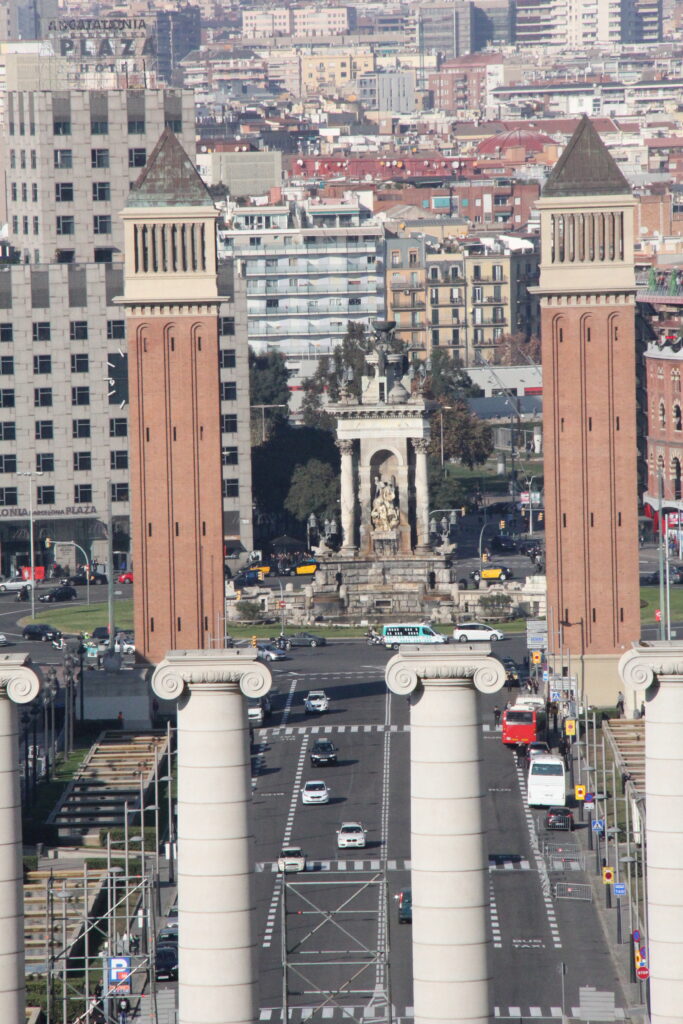
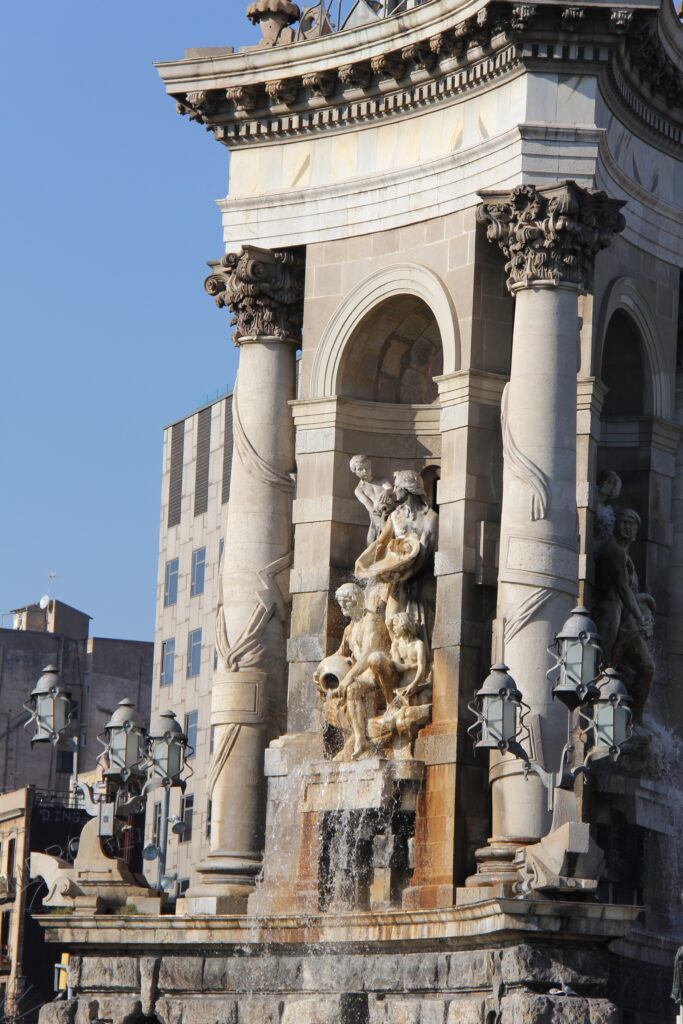
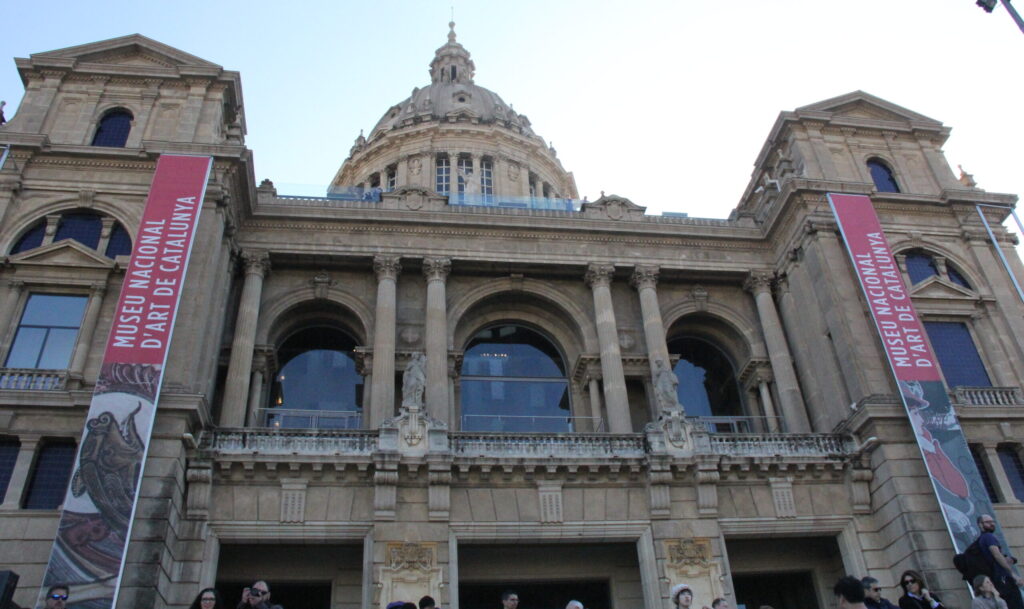
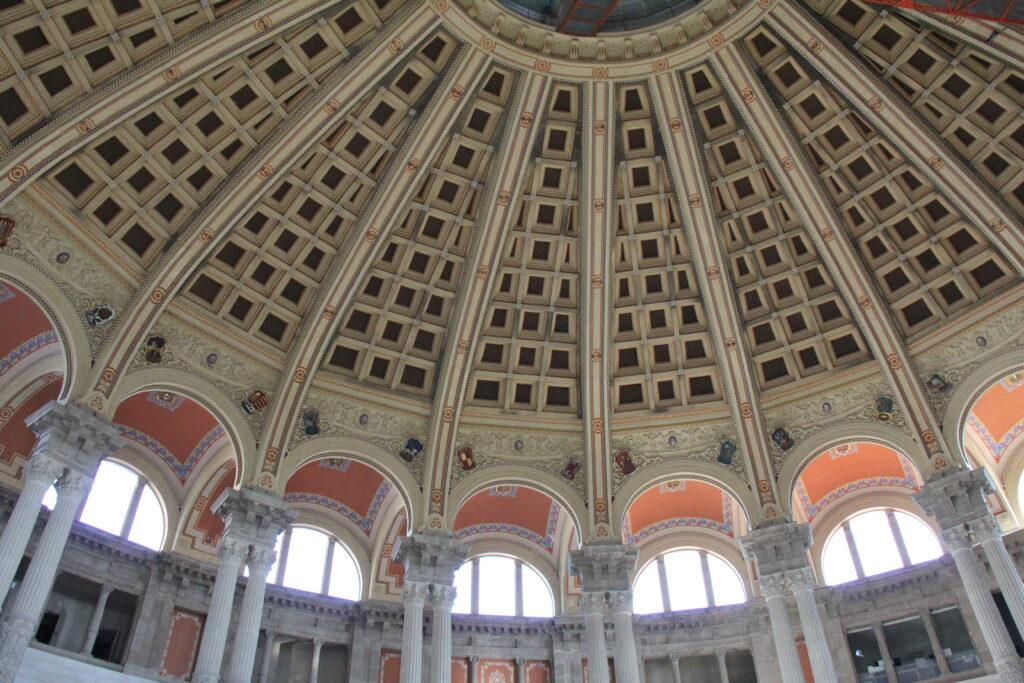
Palau Nacional – Located at the end of the avenue Avinguda de la Reina Maria Cristina, this monumental building serves as the home of the National Art Museum of Catalonia (MNAC). Constructed for the 1929 Barcelona International Exposition, the palace was designed in a grand Neoclassical and Renaissance-inspired style, with a large central dome and sweeping terraces that offer panoramic views over Plaça d’Espanya and the city beyond. It houses one of the most important art collections in Spain, particularly renowned for its Romanesque murals.
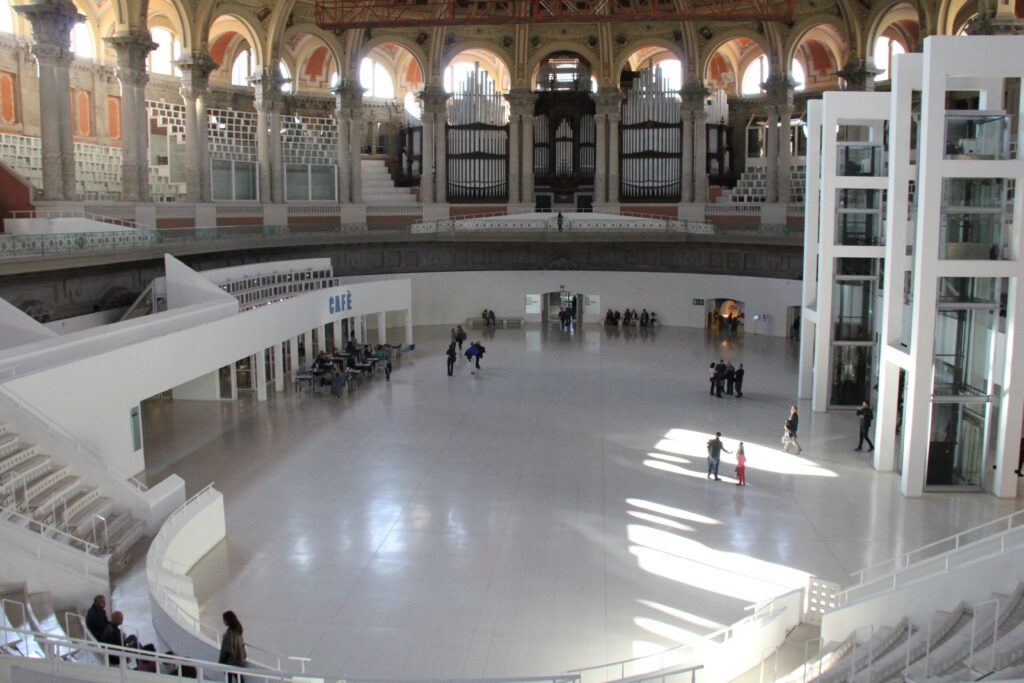
Palau Nacional, Sala Oval – Inside the Palau Nacional, the museum’s most impressive public interior space is the Sala Oval, a vast hall featuring grand arches, decorative columns, and 56 coats of arms. While Plaça d’Espanya is the striking outdoor setting leading up to the museum, the Sala Oval is its monumental indoor counterpart, often used for concerts, exhibitions, and major events.
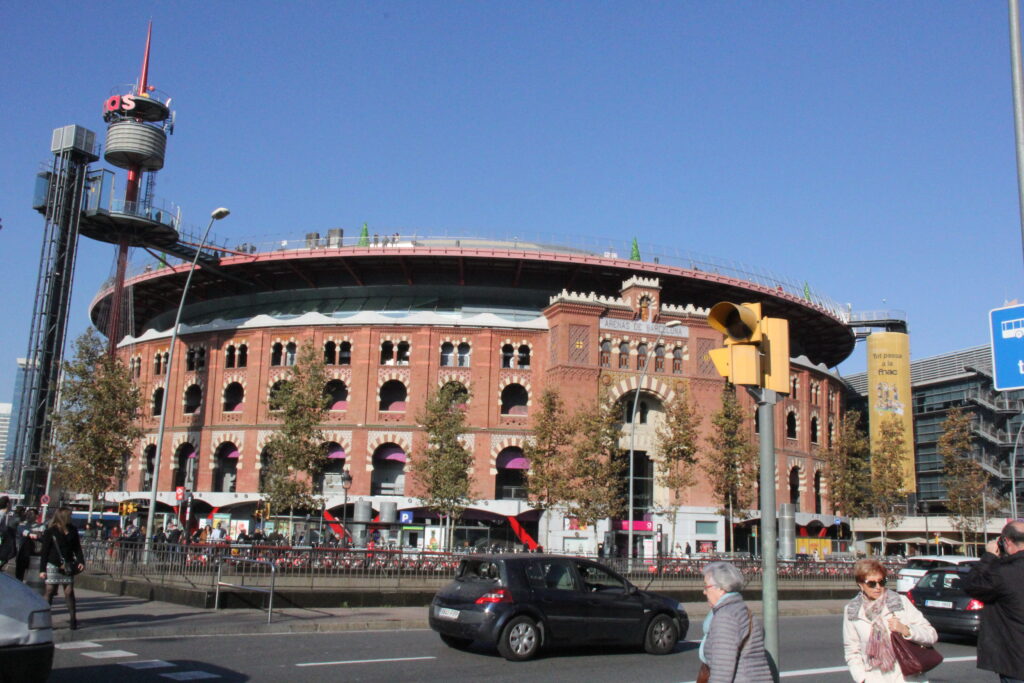
Plaça d’Espanya, Arenas de Barcelona – is a former bullring located at Plaça d’Espanya that has been transformed into a modern shopping and leisure complex. Originally built in 1900, the historic façade has been preserved while the interior now houses shops, restaurants, cinemas, and cultural spaces. A highlight is the rooftop terrace, which offers panoramic views of the city and Montjuïc.
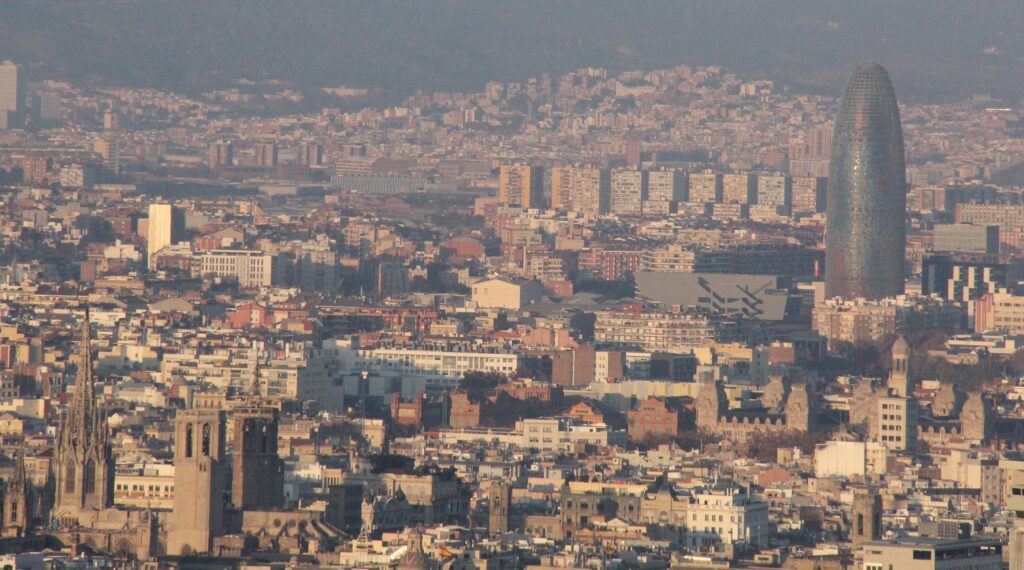
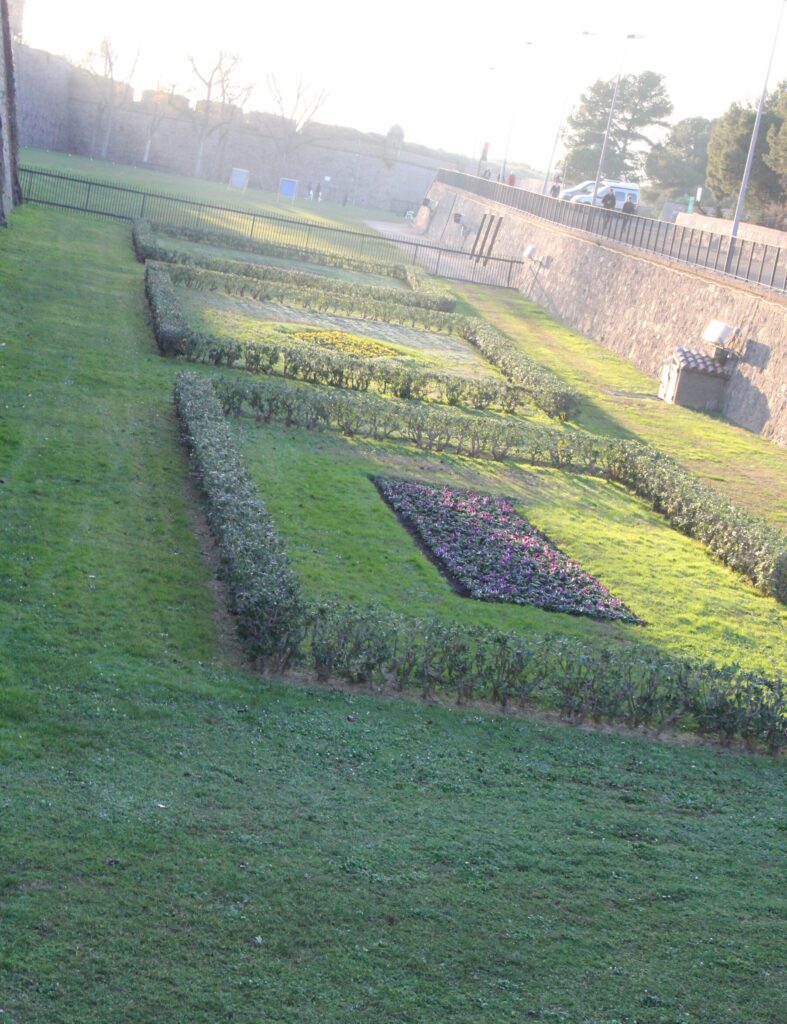
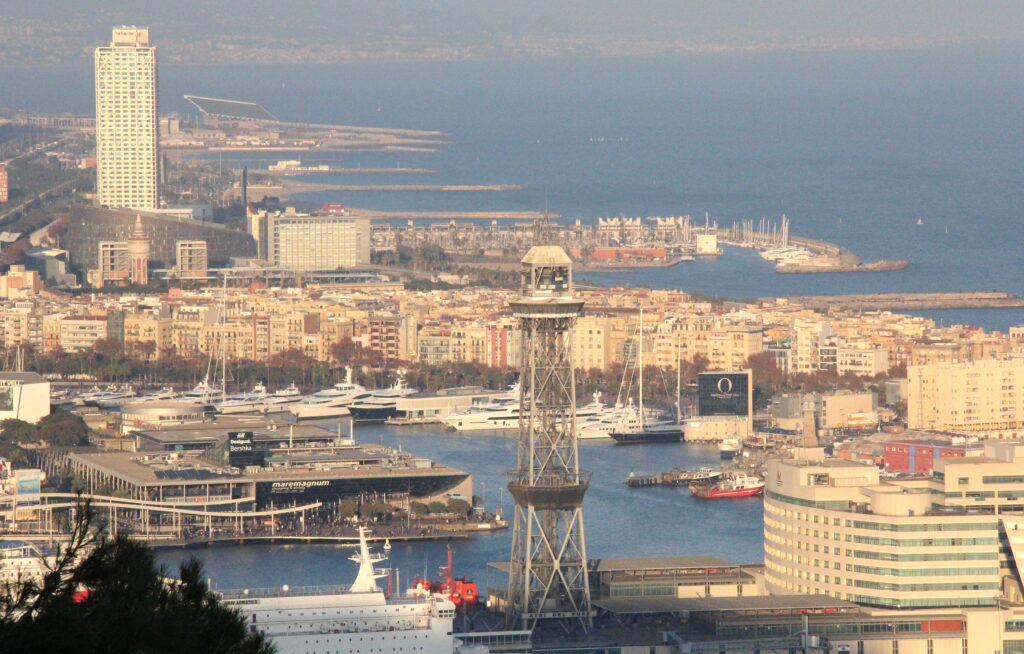
Telefèric de Montjuïc and Castle – Located near Plaça d’Espanya, the Telefèric de Montjuïc is the cable car that takes visitors up Montjuïc hill toward Montjuïc Castle, offering panoramic views along the way. The ride provides sweeping views of Barcelona, the port, and the Mediterranean, and on clear days even distant mountain ranges, making it a scenic way to explore Montjuïc.
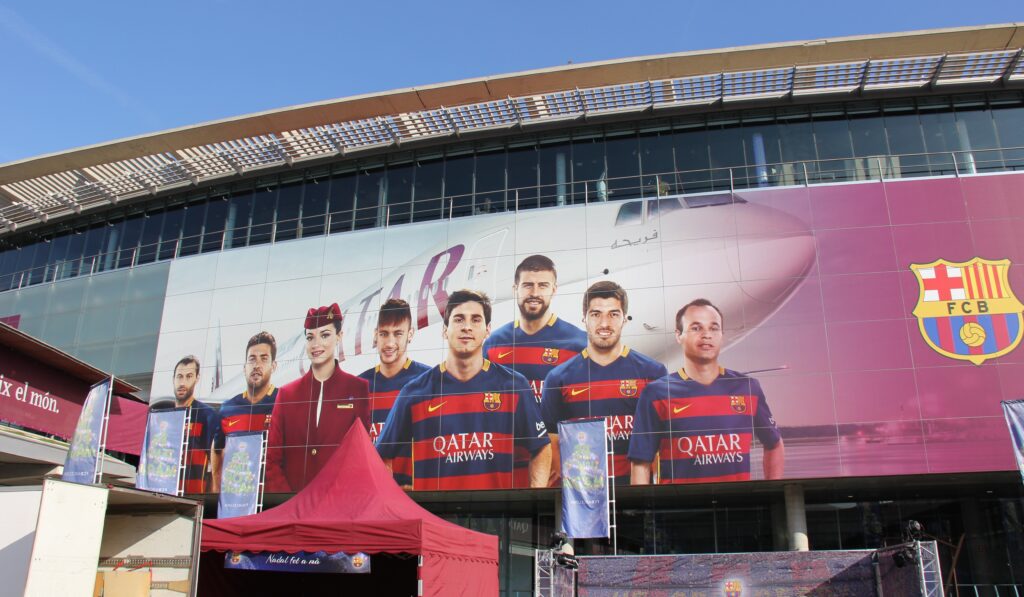
Camp Nou – is the football stadium and home of FC Barcelona since its opening in 1957. Officially known as Spotify Camp Nou, it can seat more than 100,000 spectators, making it the largest stadium in Spain and Europe. Camp Nou has hosted some of football’s most significant events, including Champions League finals, World Cup matches, and the 1992 Olympic football final.
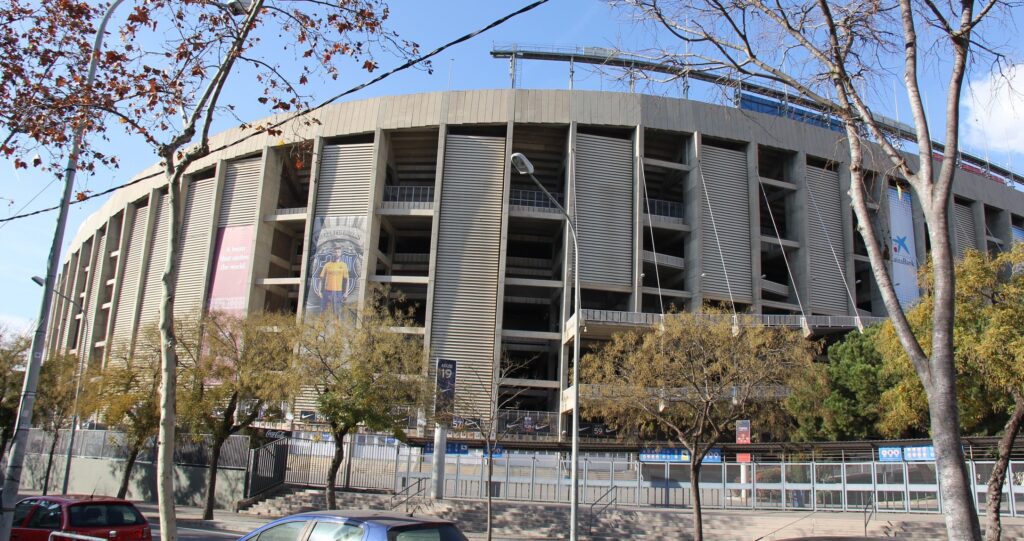
We only had time to visit the outside of the stadium, but it was still an impressive experience. We spent about 10 minutes walking around the massive structure, taking in its sheer size and the huge billboards featuring famous FC Barcelona players displayed around the stadium.