Visited in 2012
Rishikesh is a major pilgrimage town in the state of Uttarakhand, located on the banks of the Ganges River. Known for its spiritual atmosphere, it has long been a center for meditation, with many temples and ashrams along the river. Often called the Yoga Capital of the World, Rishikesh hosts the annual International Yoga Festival each March. The city is strictly vegetarian and alcohol-free, reflecting its religious character. Rishikesh serves as a gateway to the Char Dham – trek to Badrinath Temple, Kedarnath Temple, Gangotri, and Yamunotri—and is also a base for Himalayan trekking destinations.
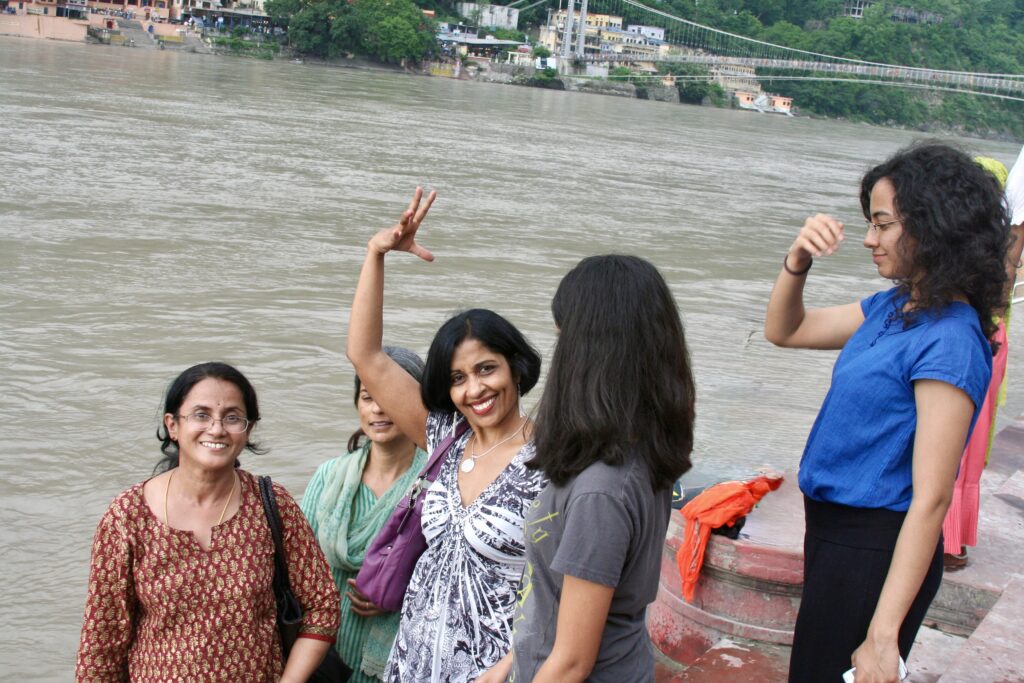
We stayed in Dehradun with my college mate, whom I was meeting after more than 20 years. She took us on a day trip to Rishikesh, which is about 50 km away and took a little more than an hour to reach.
- Ram Jhula and Lakshman Jhula
- Tera Manzil Temple
- Parmarth Niketan
- Muni Ki Reti
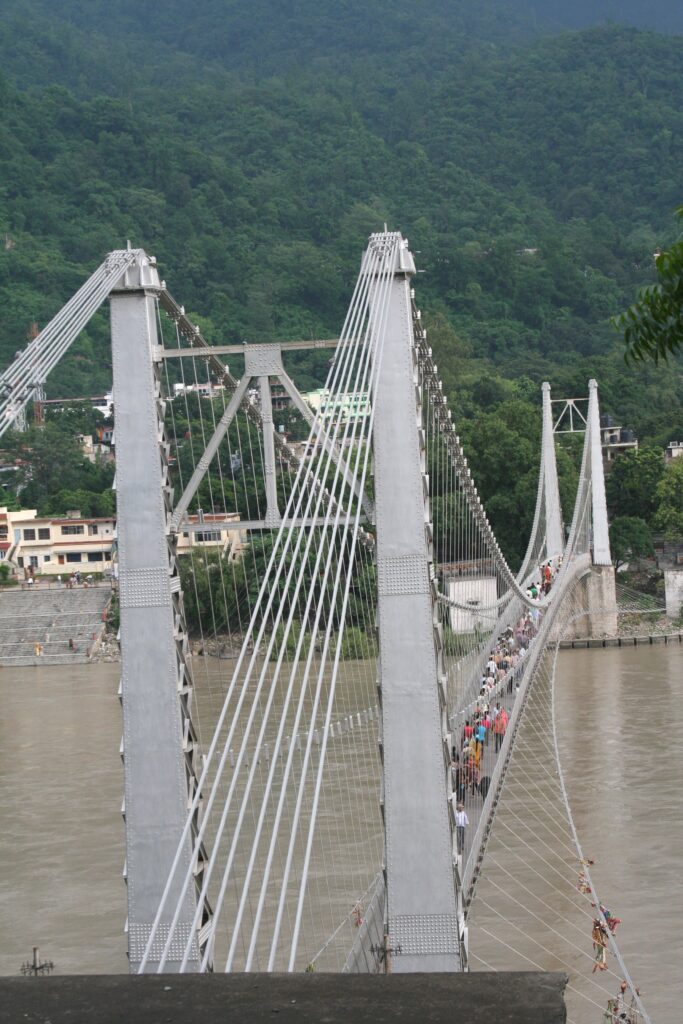
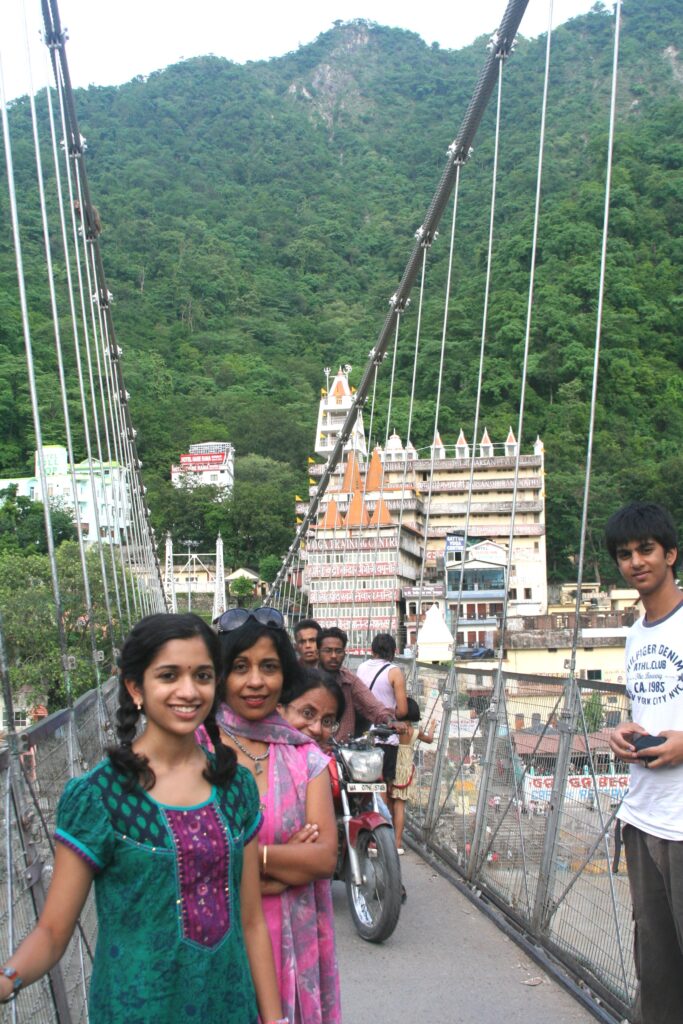
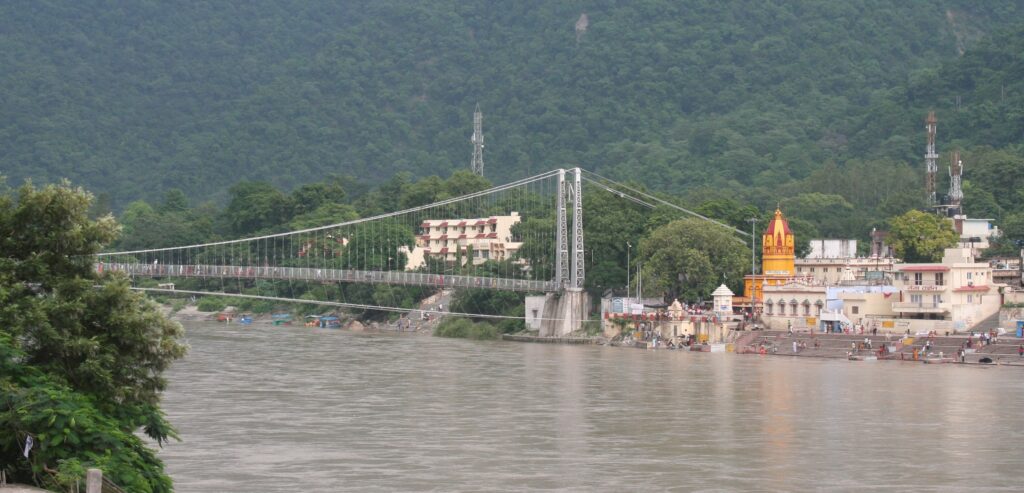
Ram Jhula and Lakshman Jhula – Rishikesh is historically and mythologically associated with Rama and his brother Lakshmana. Ram and Laxman Jhula are two iconic pedestrian suspension bridges in Rishikesh that cross the Ganges River. Although pedestrian, you will be sharing the bridge with cycles, motorbikes, and animals.
Laxman Jhula is the older and more mythologically significant bridge, traditionally linked to the story of Lakshmana crossing the river on a jute rope at this location. The present iron structure dates to the early 20th century. Ram Jhula, built later in 1986, connects Sivananda Nagar with Swarg Ashram, both important spiritual areas. Together, the two bridges form a key part of Rishikesh’s river-crossing network and are widely used by pilgrims and visitors, including those heading toward sites like the Beatles Ashram.
Both bridges are within walking 2km distance of each other and are popular for scenic walks, offering views of the river, temples, and surrounding Himalayan foothills.
Tera Manzil Temple – is a 13-story Hindu temple located near Laxman Jhula, along the banks of the Ganges River. Dedicated primarily to Shiva, the temple is built as a multi-level structure with different shrines on each floor devoted to various Hindu deities. Its design makes it both a place of worship and a distinctive architectural landmark.
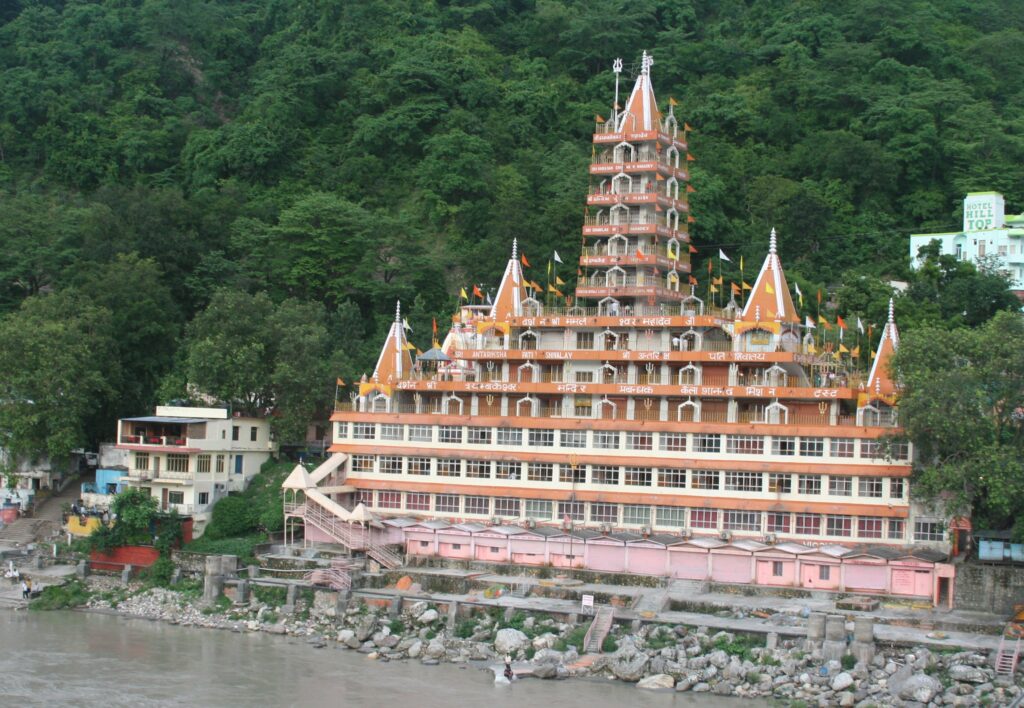
A key feature of the temple is its panoramic rooftop view, which overlooks the river, nearby ghats, and the surrounding Himalayan foothills. Visitors typically climb through multiple levels to reach the top, making it both a spiritual and physical experience.
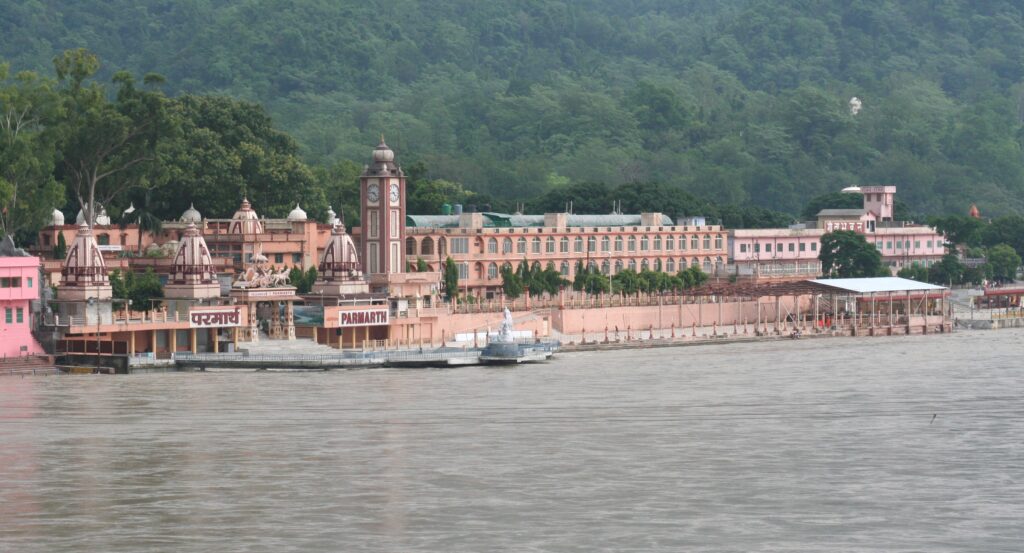
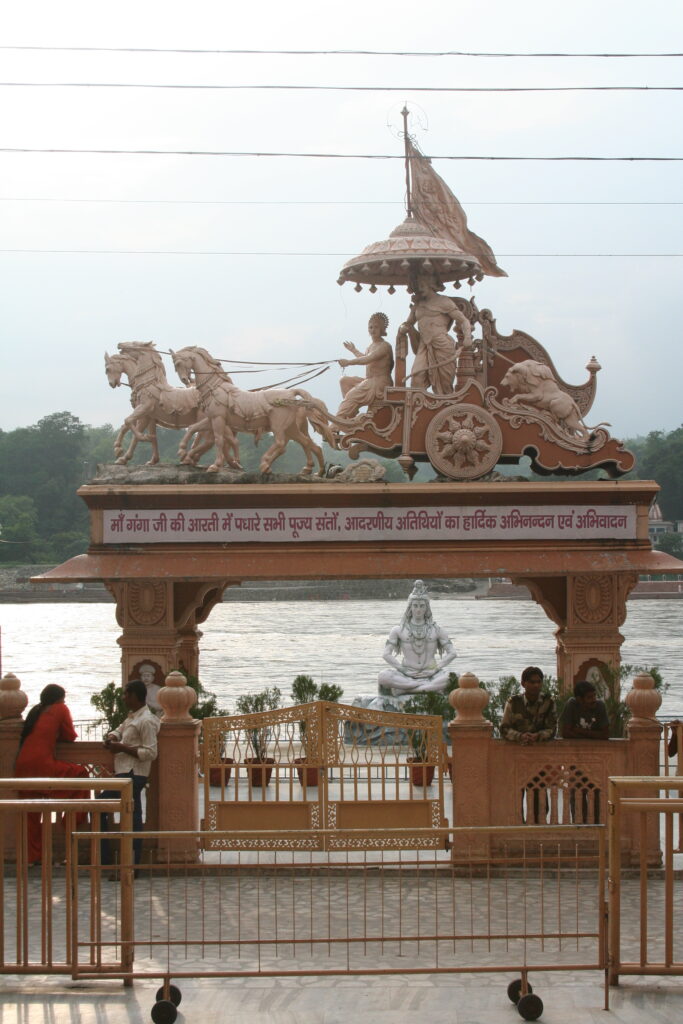
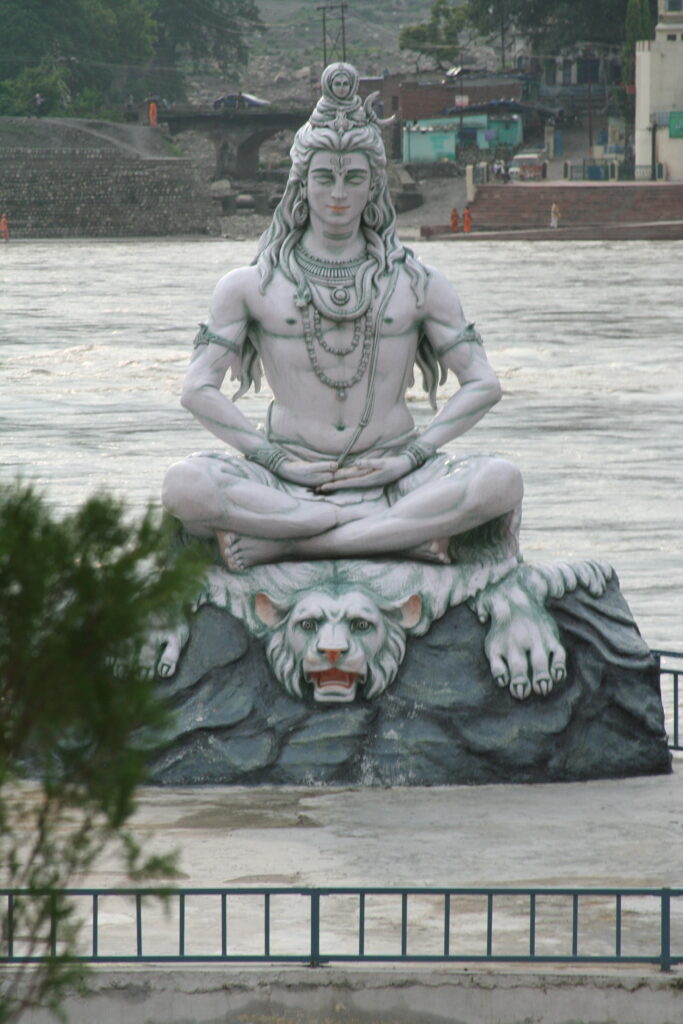
Parmarth Niketan – is a large spiritual ashram located on the banks of the Ganges River, surrounded by the Himalayan foothills. Founded in 1942 by Swami Shukdevanandji Maharaj and later led by Swami Chidanand Saraswati, it is one of the largest ashrams in the city, hosting thousands of visitors from around the world. It offers yoga, meditation, spiritual teachings, and wellness practices such as Ayurveda and pranayama. A major highlight of Parmarth Niketan is its daily evening Ganga Aarti on the riverbank, which attracts large gatherings of devotees and tourists. The ashram also features a notable 14-foot statue of Shiva and hosts cultural and spiritual programs throughout the year.
Shiva Statue – The 14-foot white marble statue of Shiva at Parmarth Niketan is a prominent riverside landmark in Rishikesh. The statue depicts Shiva in a meditative pose and has become one of the most recognizable and photographed symbols of the city. It is closely associated with the daily evening Ganga Aarti at Parmarth Niketan, where rituals of lamps, fire, and chanting are performed along the riverbank, with the statue forming a central visual focus.

Muni Ki Reti – Located on the Ganges River near Rishikesh, its name means sand of the sages, reflecting its long association with meditation and spiritual practice. Historically, it has been regarded as a gateway to the Char Dham pilgrimage route and is linked in tradition to sages and figures from Hindu epics. From the late 19th century onward, it developed into an important spiritual center with major ashrams such as Kailash Ashram, Swarg Ashram, and Sivananda Ashram.
The area became internationally known in 1968 when The Beatles visited the nearby Maharishi Mahesh Yogi ashram, composing many songs during their stay.