Visited in 2002
- Taj Mahal
- Agra Fort
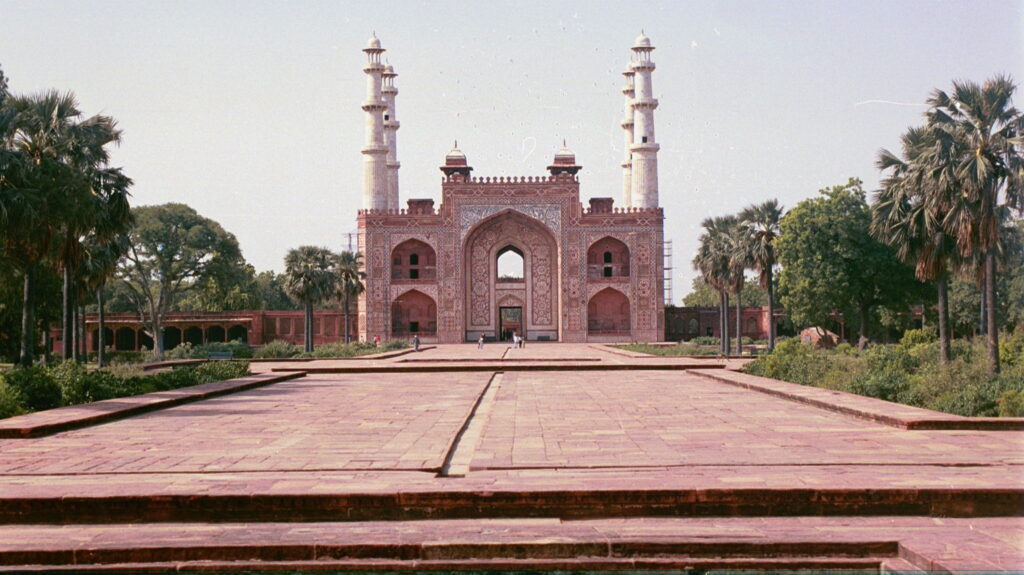
- Akbar’s Tomb
- Fatehpur Sikri
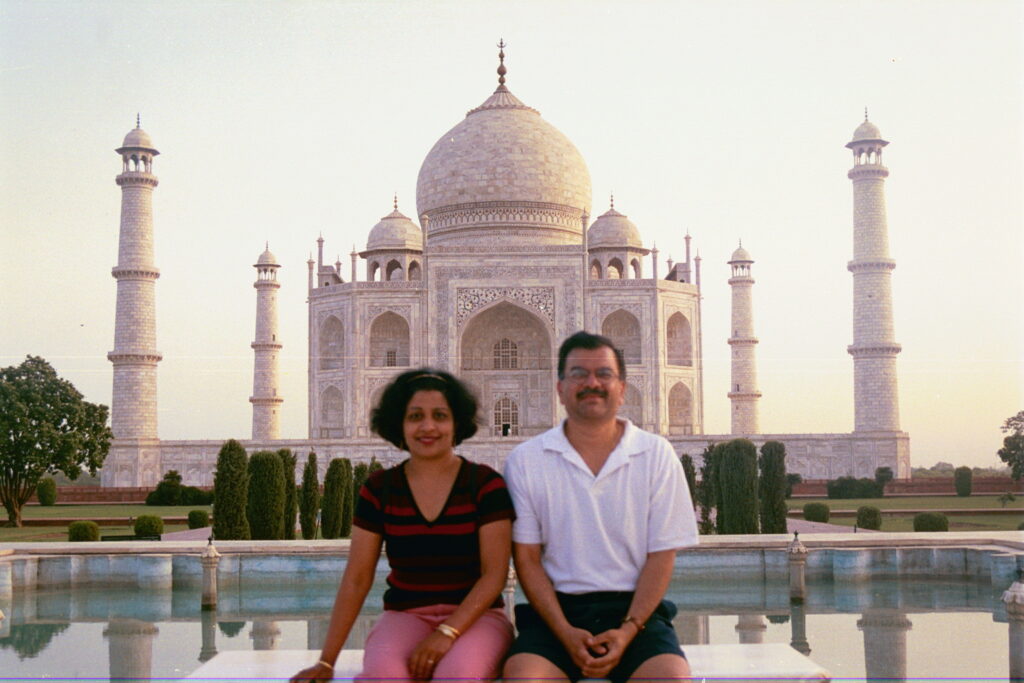
Taj Mahal (UNESCO World Heritage Site) – is an iconic ivory-white marble mausoleum on the banks of the Yamuna River in Agra. It was commissioned in 1631 by Shah Jahan in memory of his beloved wife Mumtaz Mahal, and it also houses Shah Jahan’s tomb. The mausoleum forms the centerpiece of a 17-hectare complex with gardens, a mosque, and a guest house. Built mainly of white marble inlaid with semi-precious stones, the complex blends Indo-Islamic and Mughal architectural styles. Construction of the main tomb finished in 1648, and the entire complex was completed around 1653, involving over 20,000 artisans led by the architect Ustad Ahmad Lahori.
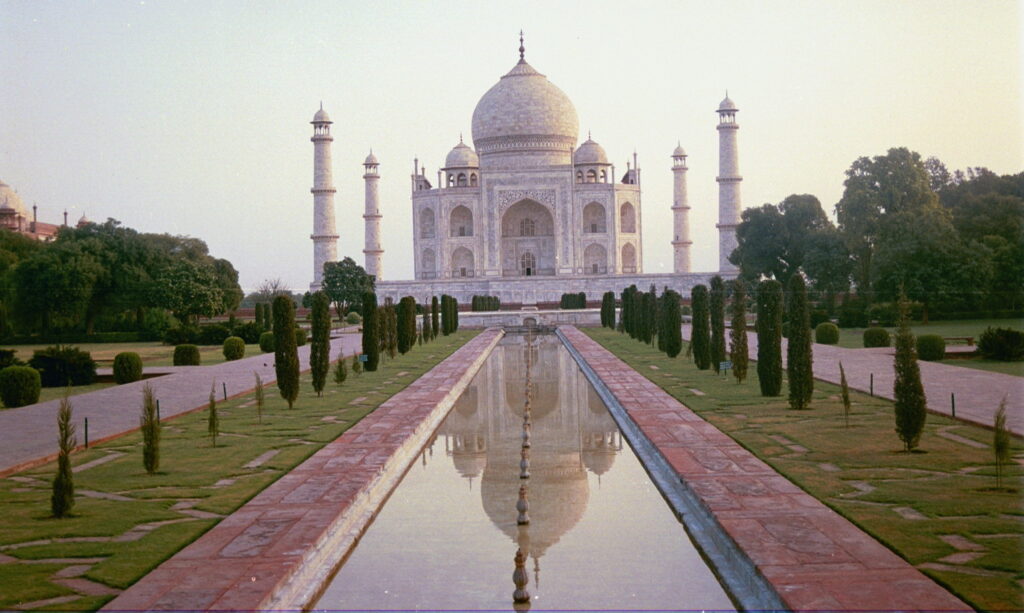
Recognized as a UNESCO World Heritage Site in 1983, the Taj Mahal is considered one of the greatest masterpieces of Mughal architecture and was named one of the New 7 Wonders of the World. Today, it attracts millions of visitors each year and stands as a symbol of love and India’s rich history.
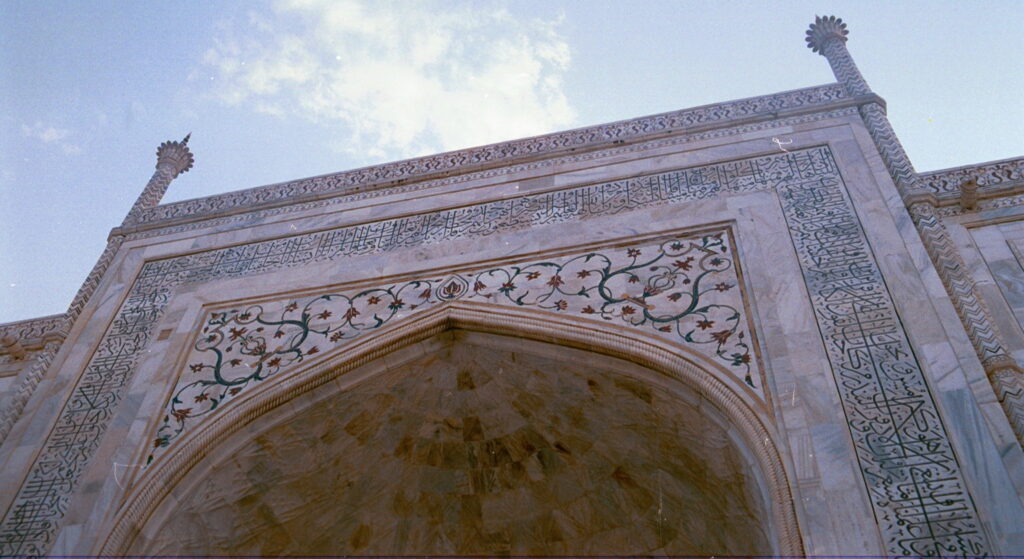
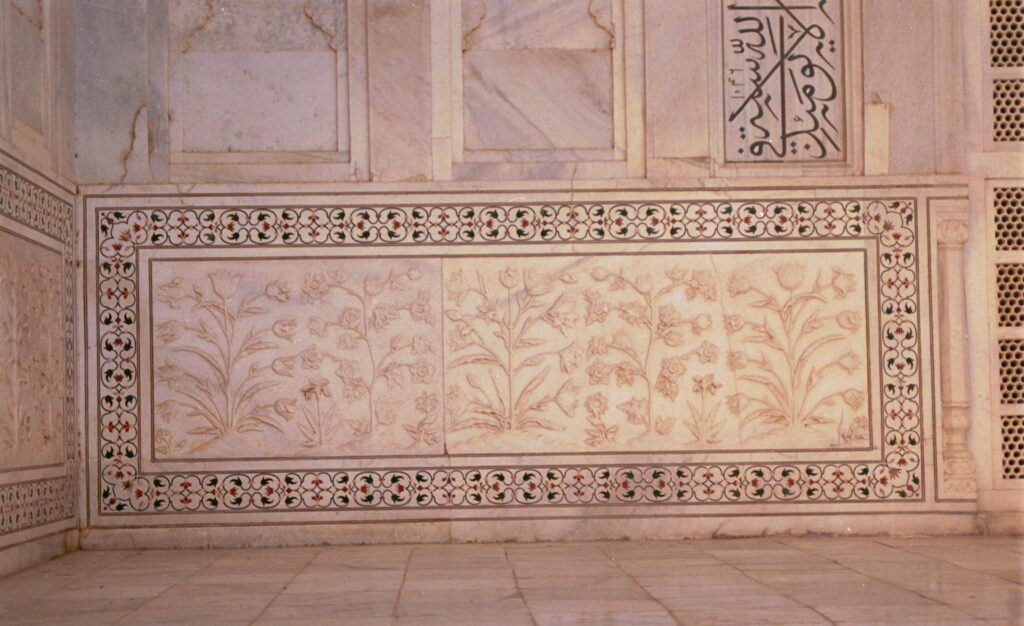
The building’s exterior is richly decorated with intricate relief art using paint, stucco, stone inlays, and carvings, often enhanced with precious stones. Following Islamic artistic traditions, the designs avoid human figures and instead feature calligraphy, geometric patterns, and plant motifs. The white marble surfaces display finely detailed floral carvings and pietra dura inlays of vines, flowers, and fruits.
Other building within the complex include –
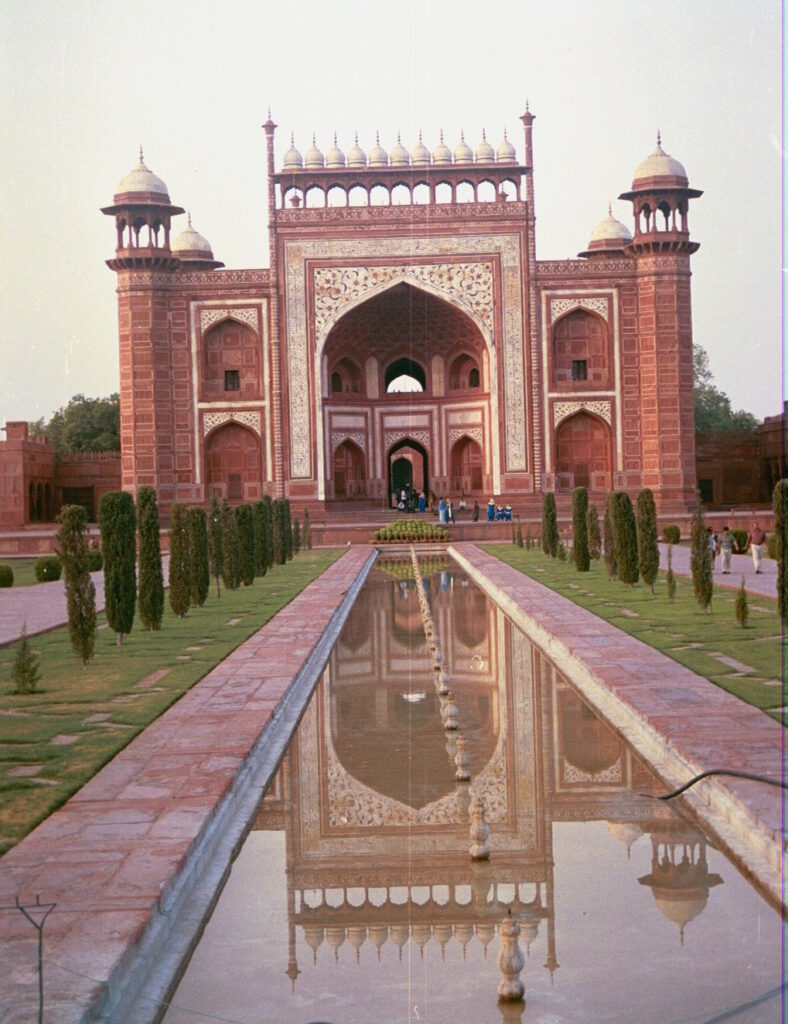
- Main Gateway – reflects the tomb’s architectural style, featuring marble construction with detailed bas-relief work and pietra dura inlays.
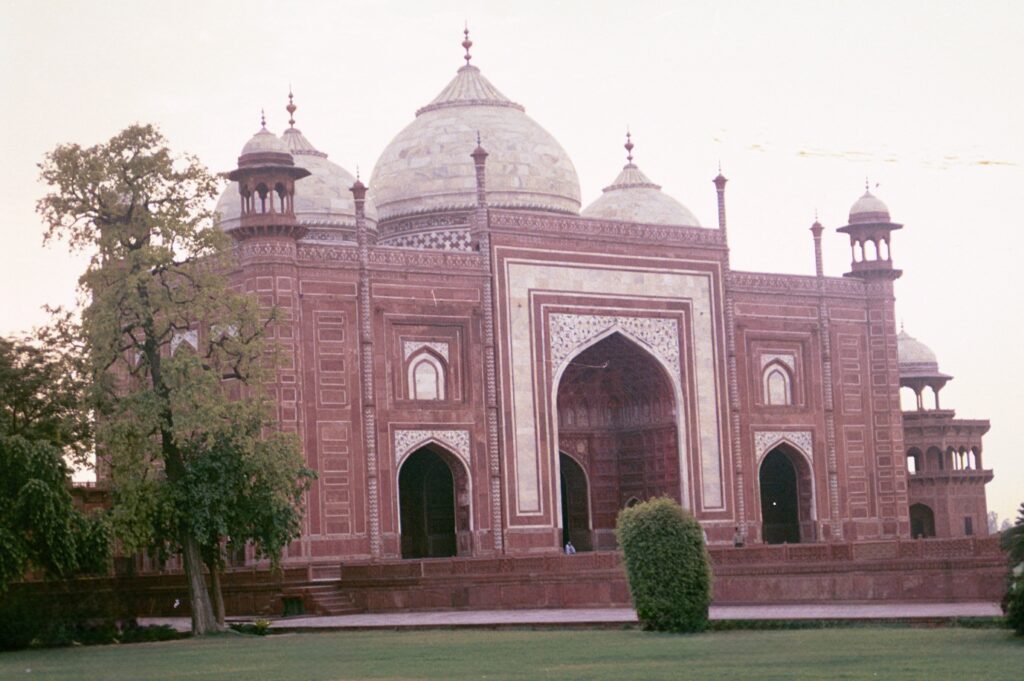
- Kali Mosque – At the far end of the complex are two matching red sandstone buildings: one is a mosque, designed in the traditional style of the period, and the other is the jawab (counterpart), built for symmetry.
Red Fort of Agra (UNESCO World Heritage Site) – Located about 2.5 km from Taj Mahal, this fort was originally made of bricks and known as Badalgarh. It was rebuilt by Akbar between 1565 and 1573 using red sandstone. The fort served as the main residence of the Mughal emperors until 1638, when Shah Jahan moved the capital to Delhi.
During the Mughal succession struggle, Aurangzeb imprisoned his father Shah Jahan in this fort. Over time, the fort came under the control of the Jats of Bharatpur, the Maratha Empire, and eventually the British after the Second Anglo-Maratha War. It also played a role during the Indian Rebellion of 1857.
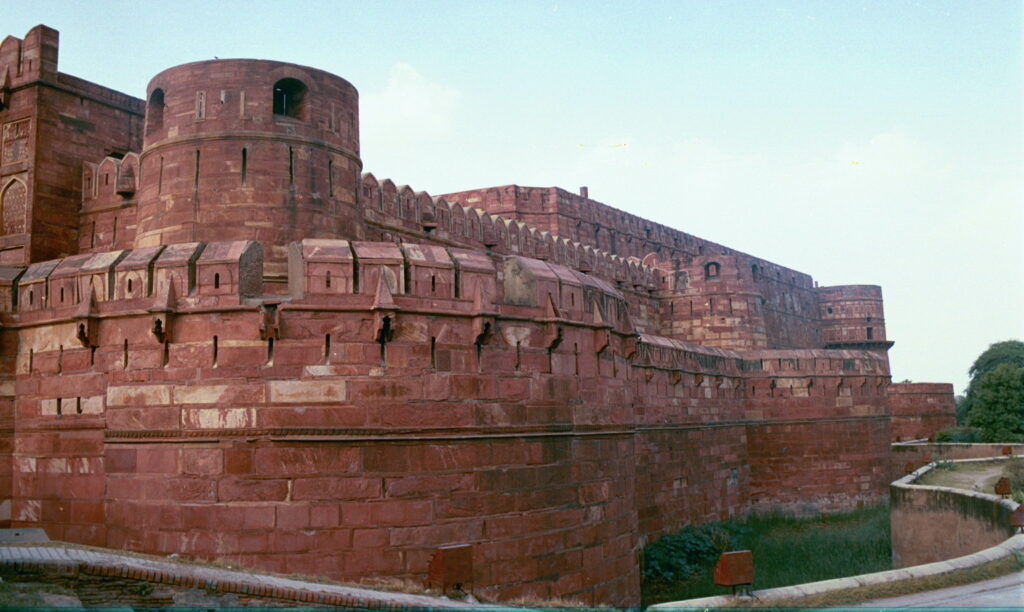
In 1983, the Agra fort was inscribed as a UNESCO World Heritage Site because of its importance during Mughal rule.
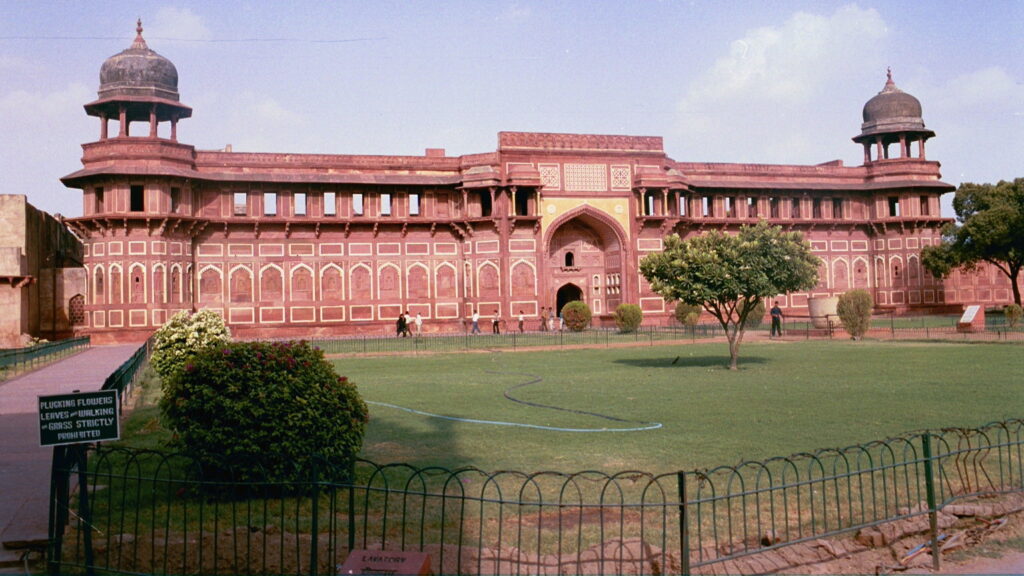
Agra Fort, Jahangir Mahal – is a 16th-century red sandstone palace inside Agra Fort, built by Akbar for his wives and used as a zenana (residential palace). It is one of the earliest and largest structures in the fort. The palace showcases a blend of Hindu and Islamic architectural styles, with features like carved brackets, flat ceilings, geometric patterns, and cusped arches. A notable element is the Hauz-i-Jahangiri, a large monolithic decorative bowl carved from a single stone that sits in front of the palace. This bowl was used for bathing.
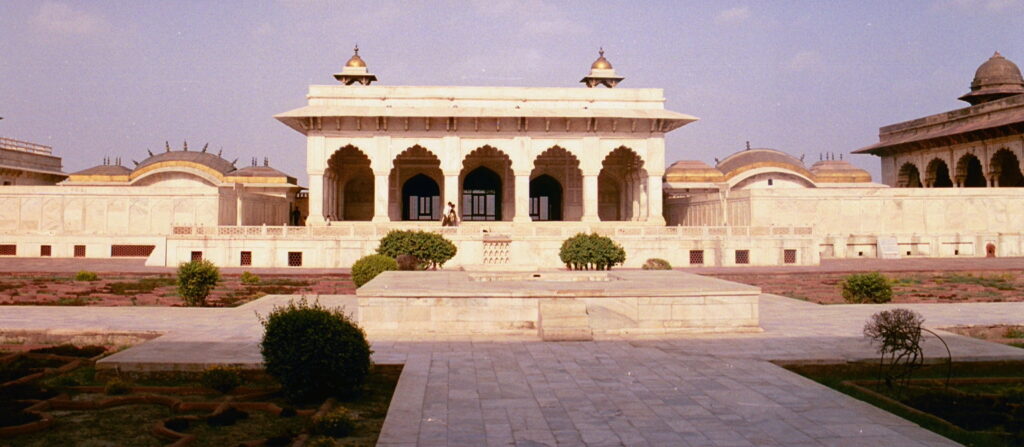
Agra Fort, Diwan-i-Khas (Hall of Private Audience) – built by Shah Jahan in 1635, this is a five-arch, white marble structure used for meeting noblemen and foreign ambassadors. It features exquisite pietra dura inlay work and elegant archways and consists of two large halls, including an outer columned hall and an inner closed hall with polished, delicate floral carvings.
Fatehpur Sikri (UNESCO World Heritage Site) – is a 16th-century structure near Agra, built by Akbar as the Mughal capital from 1571 to 1585. Known as the City of Victory, it is a fortified city made mainly of red sandstone, showcasing a blend of Persian, Indian, and Islamic architectural styles. The city was later abandoned around 1585, possibly due to water shortages or political reasons.
Major attractions include:
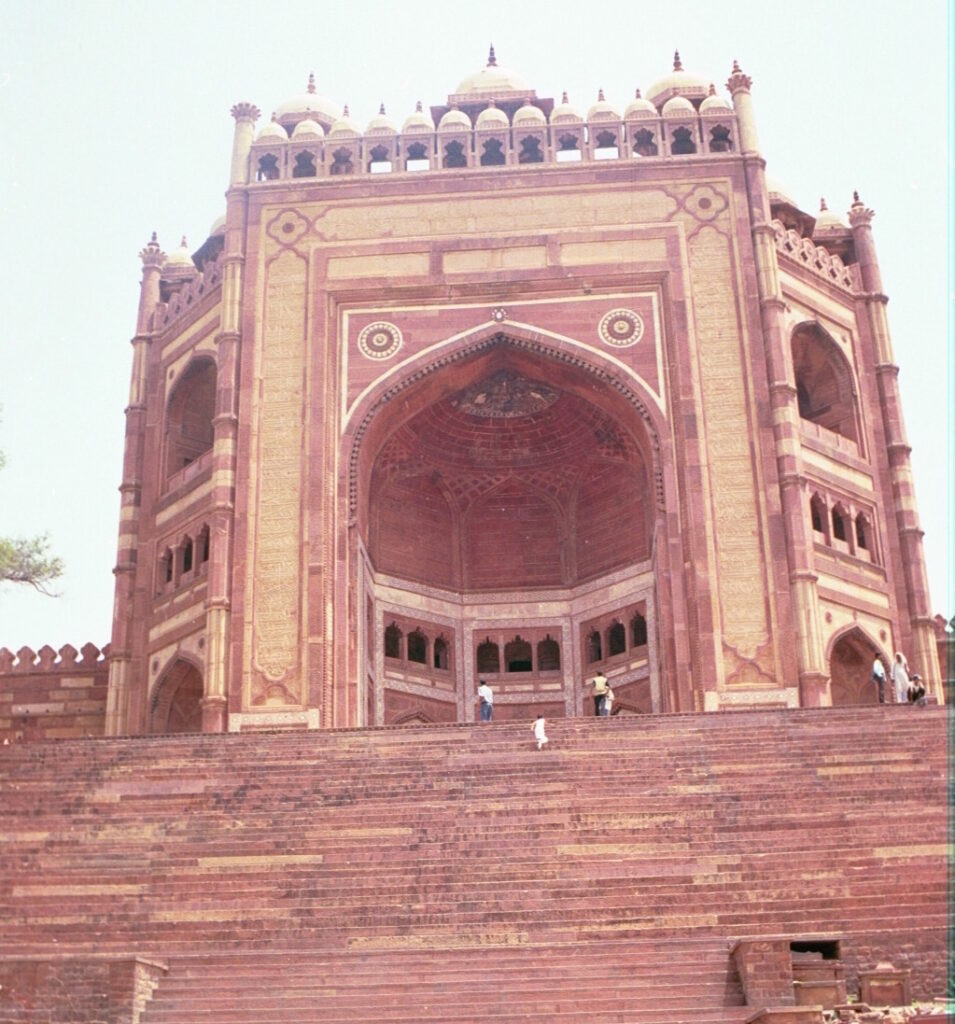
- Buland Darwaza – is a grand gateway built by Akbar to celebrate his victory over Gujarat. Located on the southern side of the congregational mosque (Jama Masjid), it stands about 54 meters high. Constructed around 1576–1577, it serves as a monumental victory arch, designed to appear imposing from the outside while transitioning to a more human scale inside.
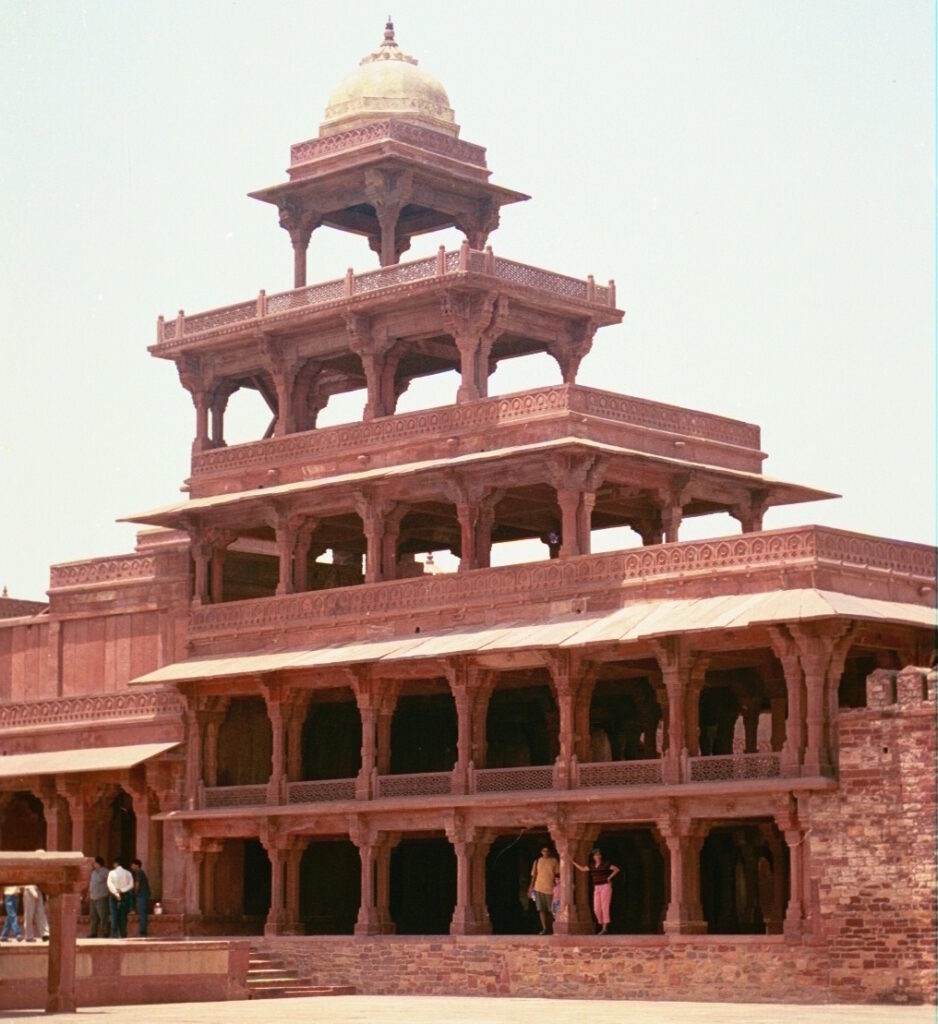
- Panch Mahal – is a five-storied palace with tiers that gradually decrease in size, topped by a single large-domed chhatri. Originally featuring pierced stone screens on the facade and likely inside as well, it was probably designed for the ladies of the court. Each level is supported by intricately carved columns, totaling 176 throughout the structure.
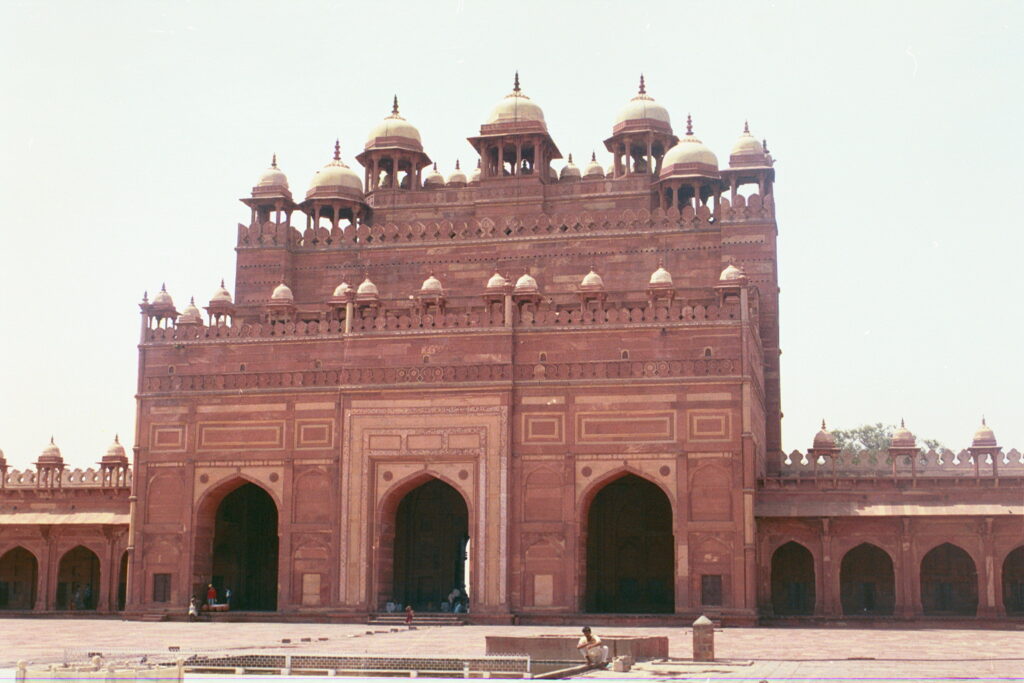
- Jama Masjid – is a congregational mosque completed around 1571–72 (AH 979) and is among the first structures in the Fatehpur Sikri complex. Built in the style of Indian mosques, it features iwans around a central courtyard and a row of chhatris above the sanctuary. The mosque has seven bays, each with three mihrabs, and the large central mihrab is topped by a dome and decorated with geometric white marble inlay.
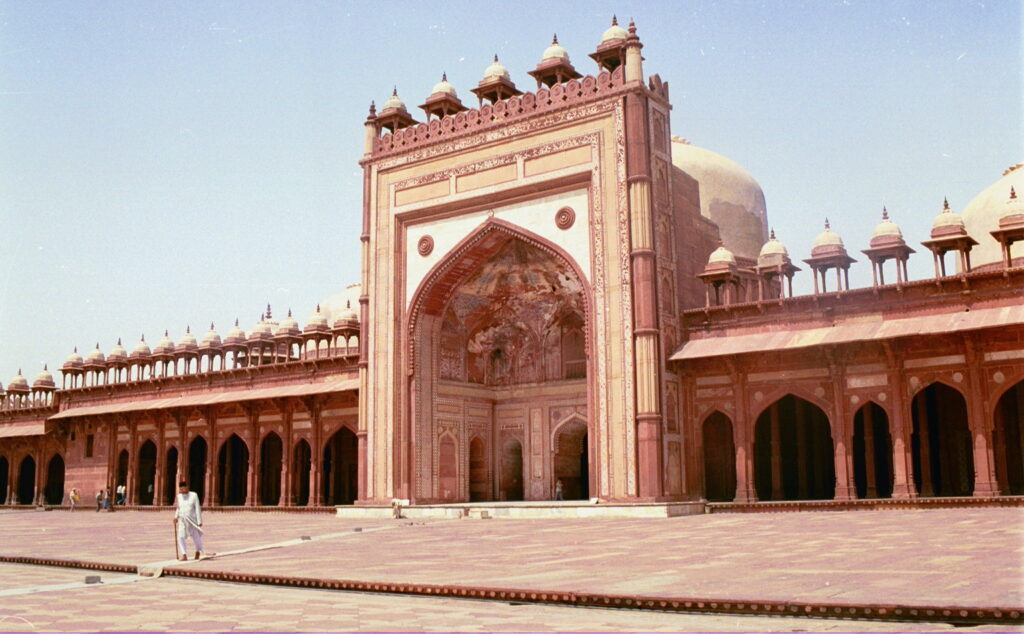
- Tomb of Sheikh Salim Chishti – is a white marble tomb of the Sufi saint Salim Chishti, located within the courtyard of the Jama Masjid and known for its delicate lattice work. The single-story structure has a central square chamber housing the saint’s grave under an ornate wooden canopy with mother-of-pearl inlay. A surrounding passageway allows circumambulation, enclosed by intricately carved jalis and pierced stone screens, with a main entrance on the south. The tomb’s design is influenced by early 15th-century Gujarat Sultanate mausolea and features white marble serpentine brackets supporting sloping eaves.
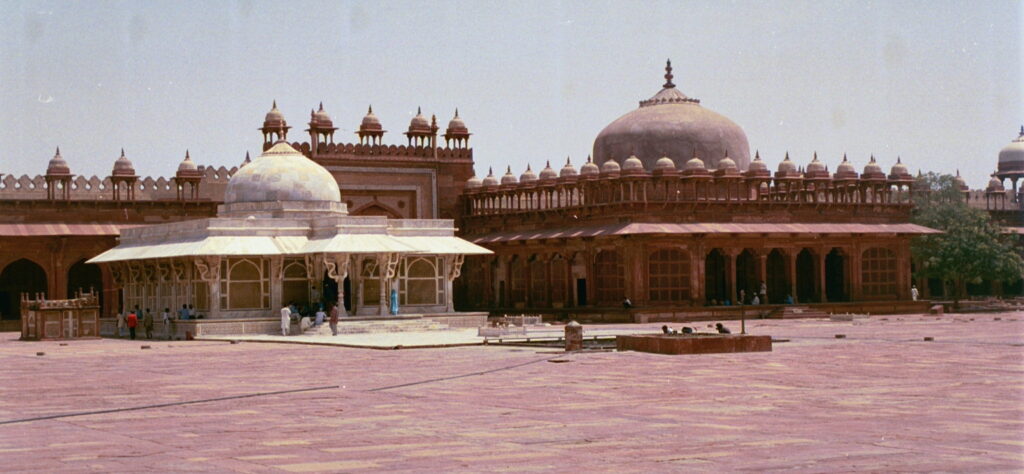
- Diwan-i-Am (Hall of Public Audience) is a pavilion-like, multi-bayed rectangular structure facing a large open space, where the ruler met the general public.
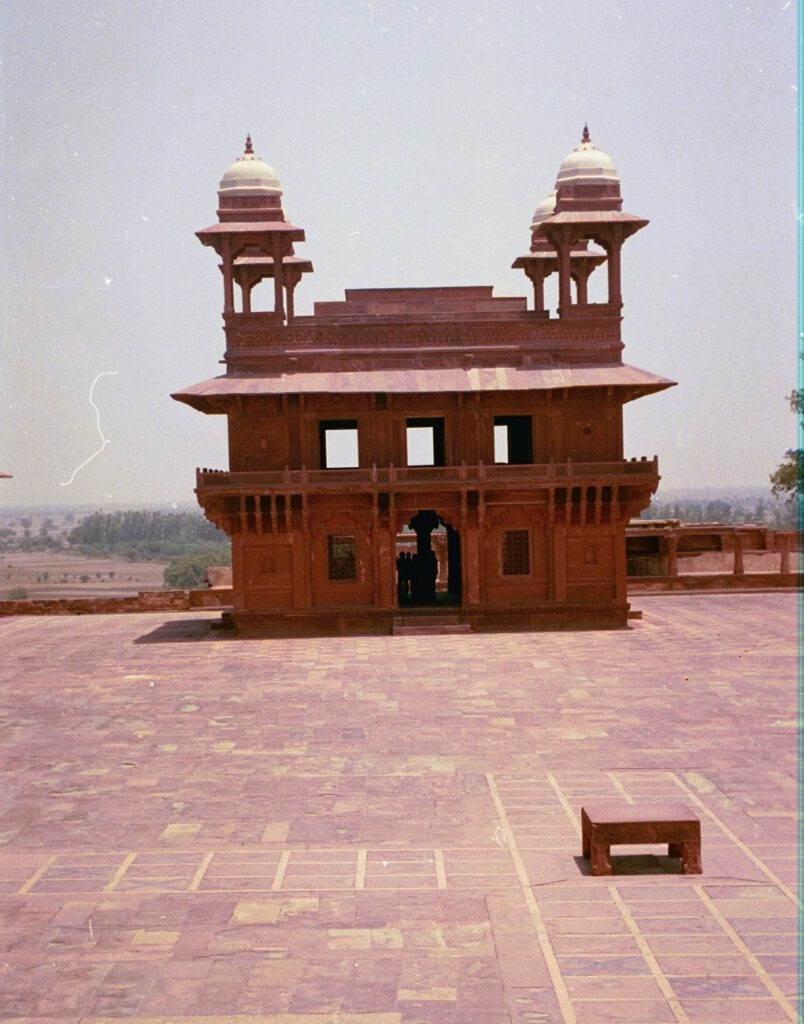
- Diwan-i-Khas (Hall of Private Audience) is a square building with four rooftop chhatris. Its centerpiece is a carved central pillar with a square base and octagonal shaft, supported by thirty-six serpentine brackets holding a circular platform for Akbar. Four stone walkways connect this platform to the building’s corners. Here, Akbar held interfaith discussions and private audiences.
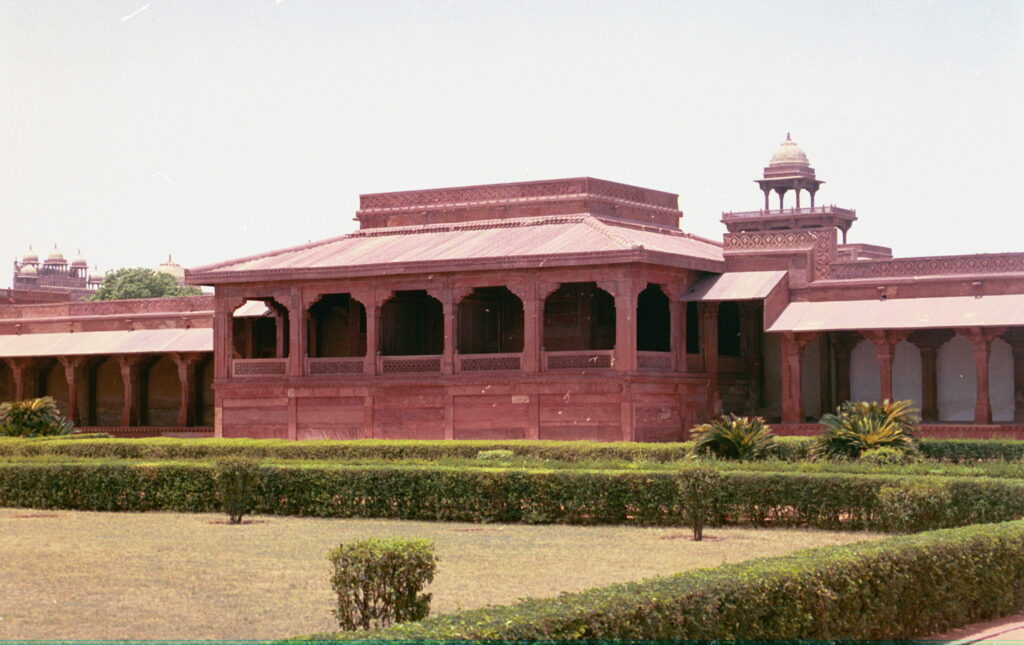
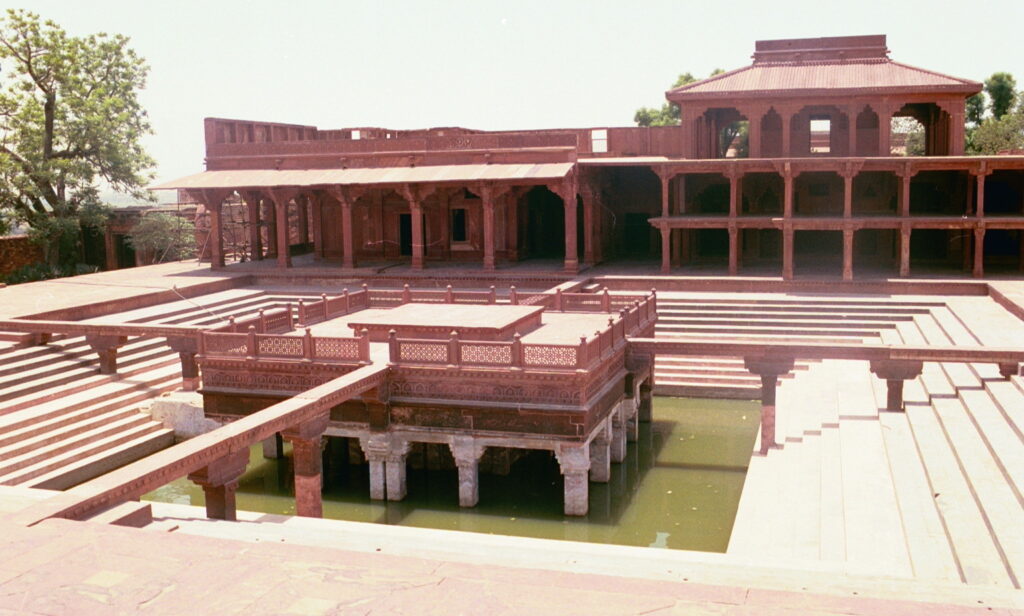
- Anup Talao – is an ornamental pool built by Raja Anup Singh Sikarwar, featuring a central platform connected by four bridges. It is surrounded by key buildings of the royal enclave.
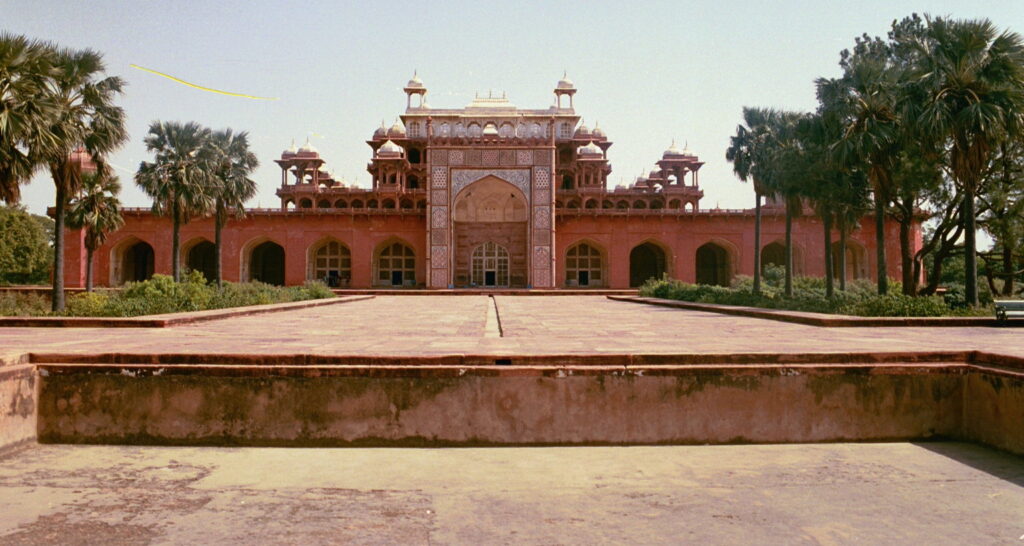
Akbar’s Tomb – is the mausoleum of Akbar, the third and one of the greatest Mughal emperors. Located in Sikandra, about 8 km from Agra, the tomb was built between 1605 and 1613 by his son Jahangir. The monument stands within 119 acres of landscaped gardens and is constructed mainly of red sandstone with white marble decorations.
Akbar ruled from 1556 to 1605, expanding and strengthening the Mughal Empire and turning cities like Agra, Delhi, and Fatehpur Sikri into major centers of art, culture, and learning. He died in October 1605, and his tomb later became one of the most important Mughal architectural monuments.
Akbar’s Tomb suffered major damage in the late 17th century during a Jat rebellion led by Raja Ram Jat in the reign of Aurangzeb. The tomb was looted, and it is said the grave was opened and Akbar’s remains were burned. In the early 20th century, the monument was extensively restored by the British, with the work completed around 1905 under Lord Curzon.
Akbar’s Tomb Entrance – The entrance to Akbar’s Tomb is a massive 4-storied red sandstone gateway known as the South Gate and serves as its main entry point. It is characterized by immense arches, intricate white marble inlay work, and four tall white marble chhatri-topped minarets at its corners, resembling a smaller version of the Taj Mahal’s architecture.