4 nights in Hotel Intercity Manaus
We took a four-hour direct flight from Rio de Janeiro to Manaus, arriving at around 2am. The overnight flight was the only direct option available from Rio. After landing, we took an Uber to our hotel, which was about 20 minutes from the airport. We checked in and went off to sleep immediately.
——————– Day 1 ——————–
The next morning, we slept in and enjoyed a leisurely breakfast before setting out to explore Manaus. October’s weather was oppressively hot, with temperatures reaching 97°F, accompanied by high humidity that made the air feel hot, sticky, and uncomfortable. Our first planned stop was the famous Teatro Amazonas, located about 1–1.5 miles from our hotel. We love walking around the cities we visit, as it allows us to take in the local sights and soak up the atmosphere. However, given the intense heat, we decided to take an Uber.
- Teatro Amazonas
- Largo de São Sebastião
- Monumento A Abertura Dos Portos
- Paróquia de São Sebastião
- Amazon Palace of Justice (Palácio da Justiça)
- Casa da Pamonha
- Mirante Lúcia Almeida
- Adolpho Lisboa Municipal Market
- Palacio Rio Negro
- Senator Jefferson Péres Park
Teatro Amazonas – is a magnificent opera house built during Brazil’s Belle Époque, when the rubber boom brought enormous wealth to the Amazon region. Construction began in 1884, and the theater was inaugurated on December 31, 1896, with its first performance taking place in January 1897. UNESCO inscribed the Teatro Amazonas in Manaus and Theatro da Paz in Belém as Theatres of the Amazon, Brazil’s 26th World Heritage entry
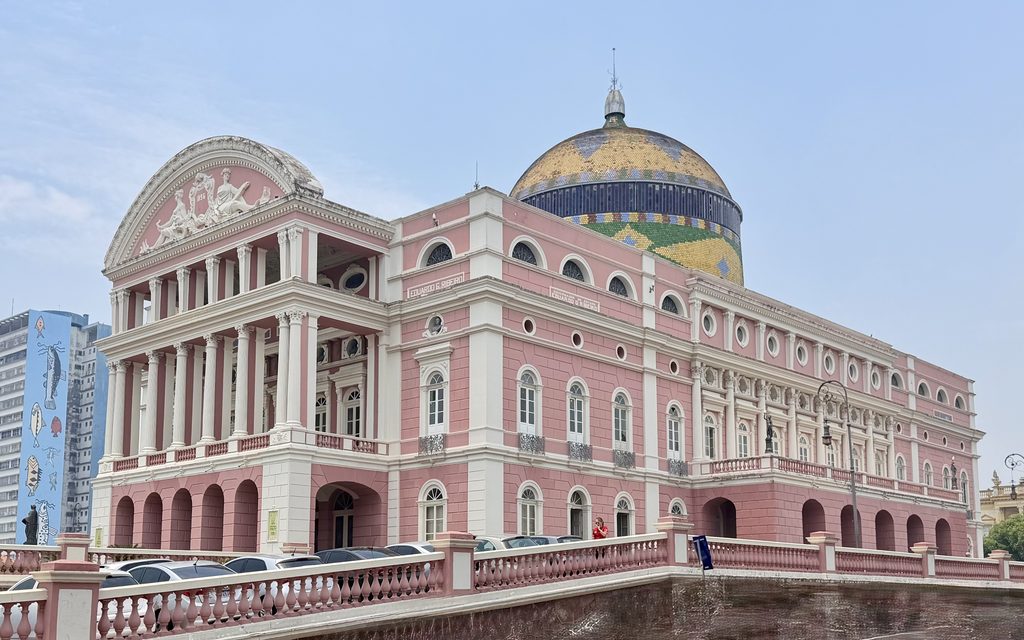
After we arrived at the theater, we discovered that an English-guided tour of the theater’s interior was scheduled for 2pm. We purchased our tickets at the counter and joined the tour, which turned out to be an amazing experience. The knowledgeable guide who spoke perfect English, brought the theater’s fascinating history, stunning architecture, and ornate interiors to life.
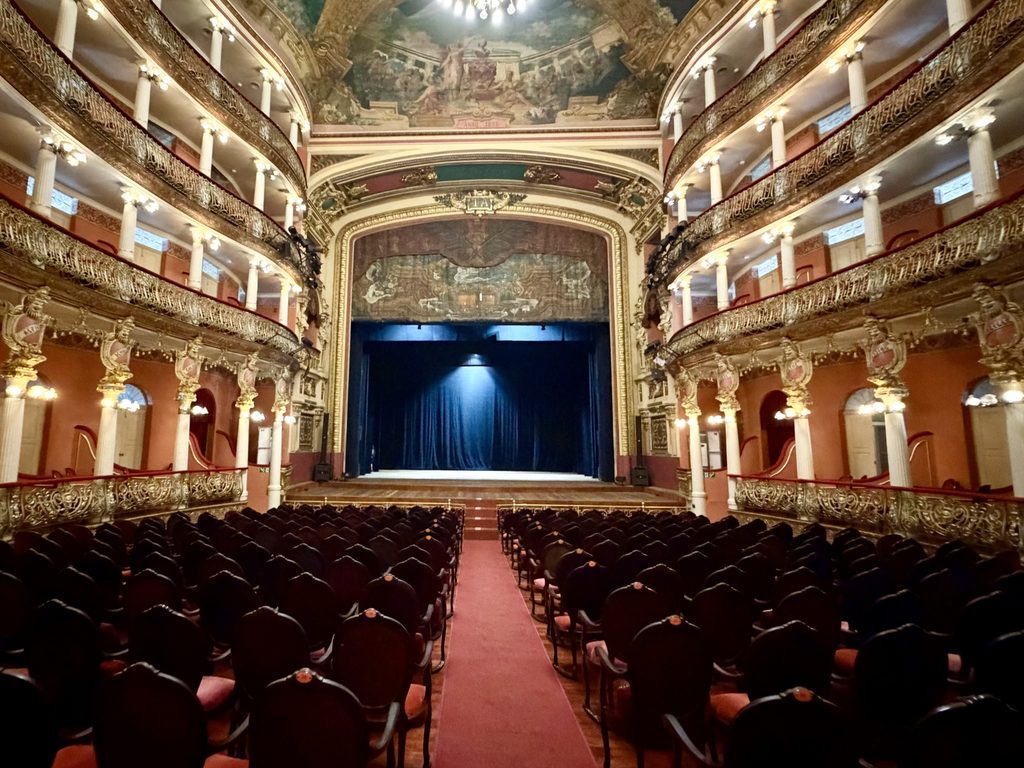
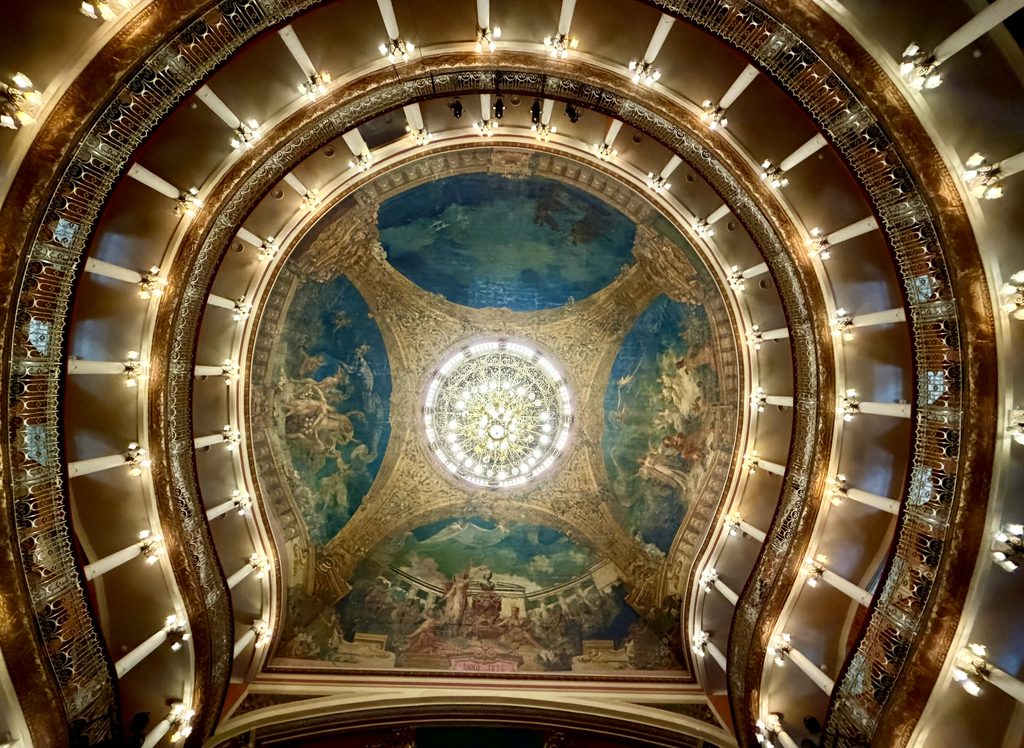
Many of the materials to build the theater were imported from Europe, including Italian marble, Scottish steel, and French furnishings. In the main auditorium, the columns have theatrical masks paired with names of famous composers and musicians. The opulent ballroom on the upper floor reflects the extraordinary wealth of Manaus during the late-19th-century rubber boom. The ceiling showcases the painting, The Glorification of the Arts in the Amazon. Gold-leaf decorations and Murano glass chandeliers imported from Italy add to the room’s grandeur.
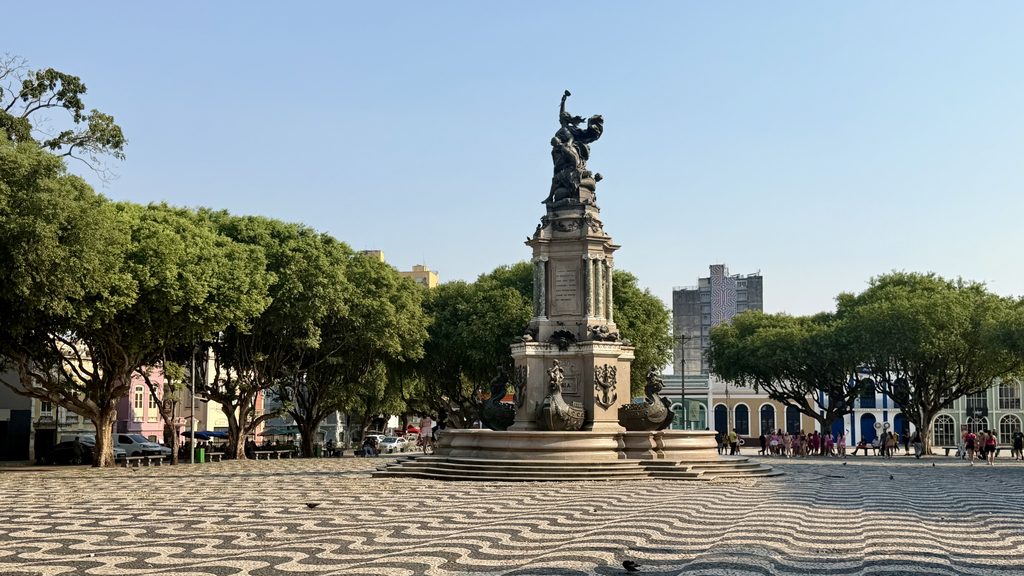
Largo de São Sebastião – this historic plaza in front of the Teatro Amazonas, is a charming cultural hub surrounded by historic buildings, cafés, and the beautiful Church of São Sebastião. Its most distinctive feature is the black-and-white Portuguese stone pavement, laid in a flowing wave pattern inspired by the meeting of the Rio Negro and Solimões rivers. The plaza also features a monument commemorating the opening of Brazil’s ports to world trade, erected in 1900 during the rubber boom.
- Monumento A Abertura Dos Portos – is located in the center of the Largo de São Sebastião plaza. Built in 1899, the monument commemorates the opening of Amazon ports and rivers to foreign trade in 1866. The monument features Mercury, the Roman god of commerce, alongside a female figure representing the Amazon, with four decorative vessels that symbolizes Asia, the Americas, Africa, and Europe.
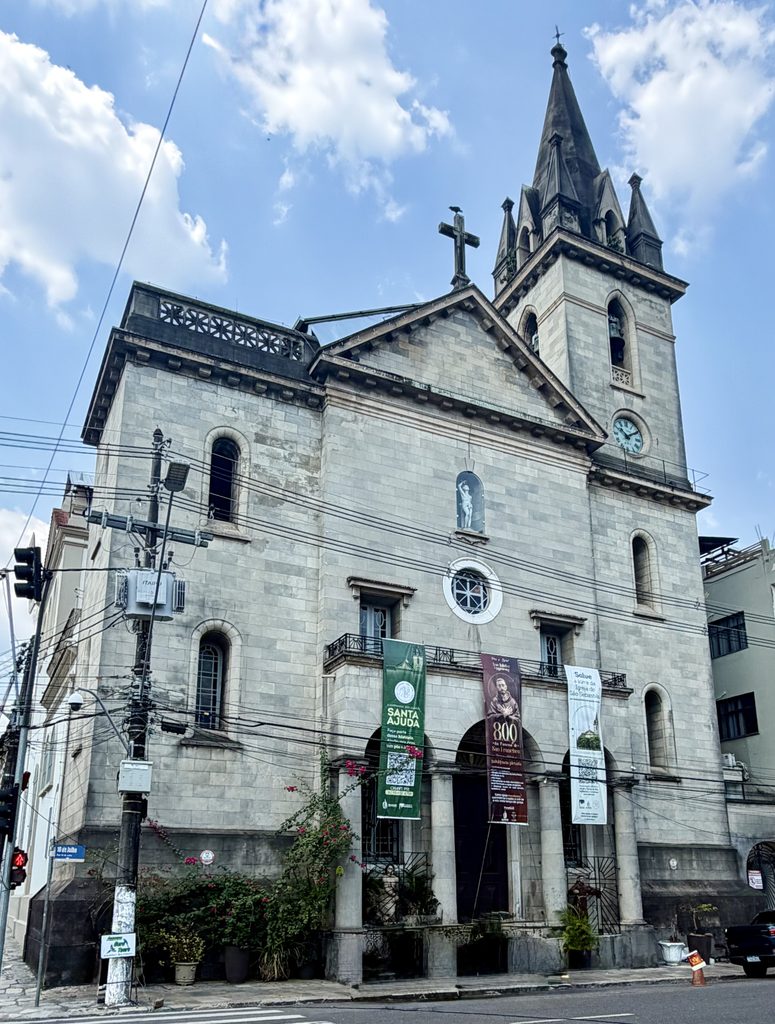
- Church of São Sebastião is one of Manaus’s oldest churches, facing Largo de São Sebastião. Inaugurated in 1888 and elevated to parish status in 1912, it was recognized as a historical heritage site in 1988. The church was closed for renovation at the time of our visit.
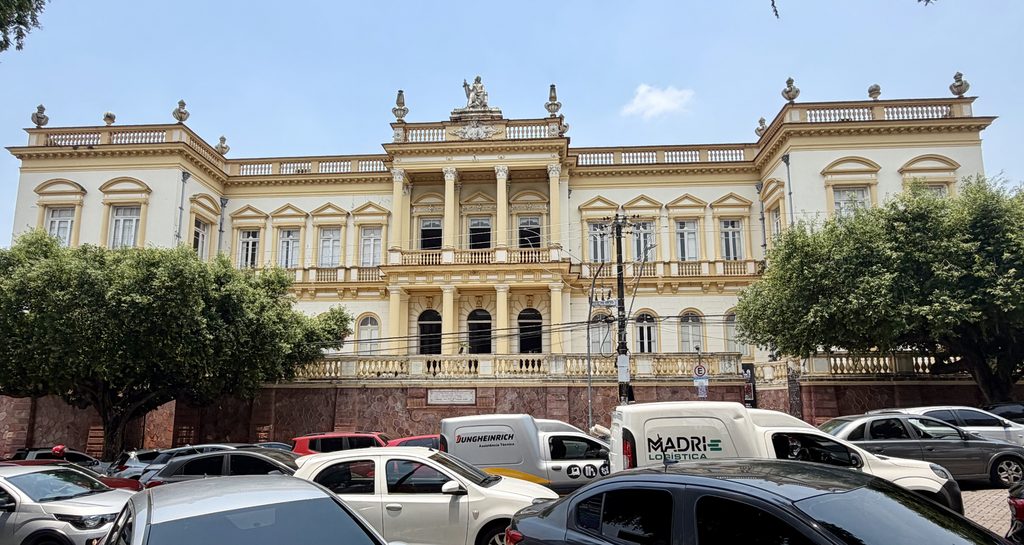
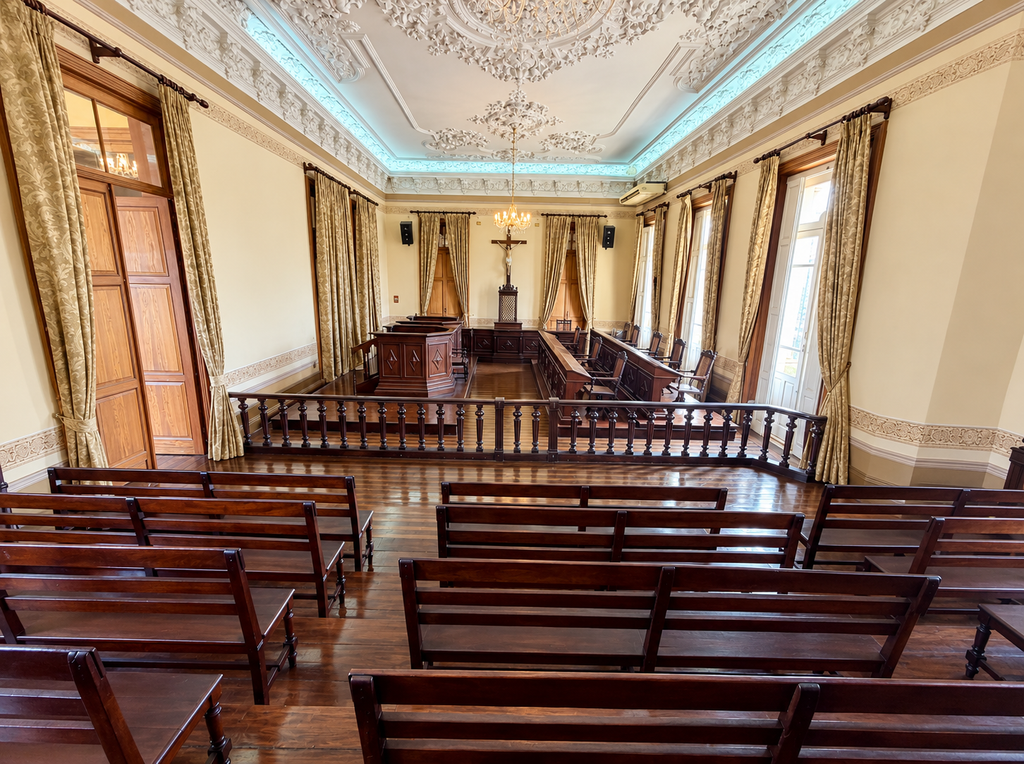
Amazon Palace of Justice (Palácio da Justiça) – Located behind Teatro Amazonas and built between 1894 and 1900 during the height of the Amazon rubber boom, it served as the state’s main judicial building until 2006. Its impressive classical and Renaissance-inspired architecture features ornate interiors, imported stone staircases, decorative ceilings, and an unusual rooftop statue of Lady Justice with open eyes and unbalanced scales. Today the palace operates as a cultural center hosting exhibitions, performances, and a crime museum. You can take a self-guided tour of the interior.
Casa da Pamonha – We stopped for lunch at Casa da Pamonha, a vegan-friendly restaurant near the Teatro Amazonas in Manaus. It offers a variety of vegetarian and vegan dishes in a buffet-style setting, making it a convenient dining option for vegetarians.
Mirante Lúcia Almeida – is a scenic viewpoint offering panoramic views of the city and the Rio Negro. Spread across three floors, the developing complex features restaurants and bars, a small exhibition area with paintings depicting its history, and live music in the evenings. It’s a lovely place to enjoy a meal, watch the sunset over the river, or simply relax and take in the surroundings.
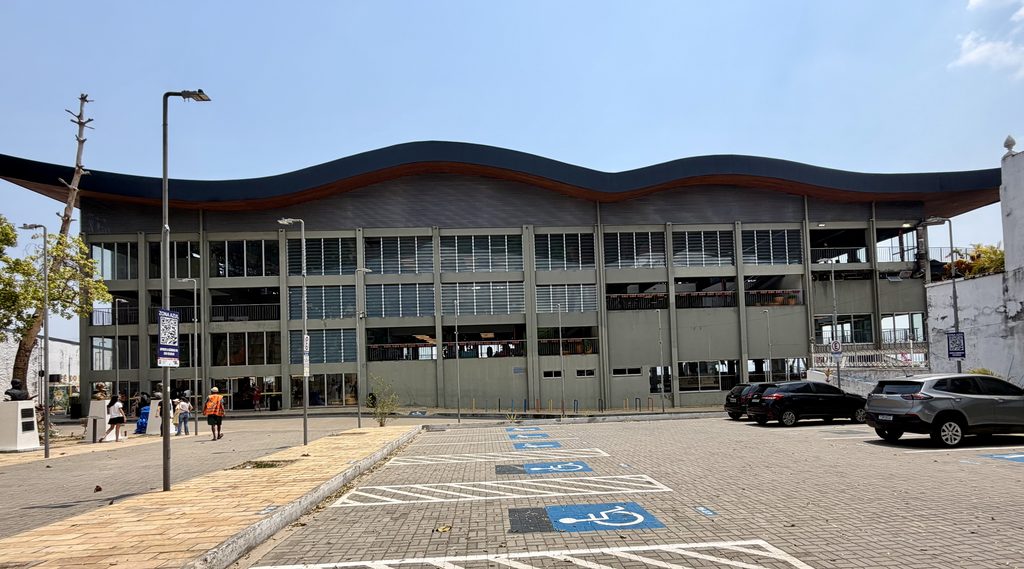
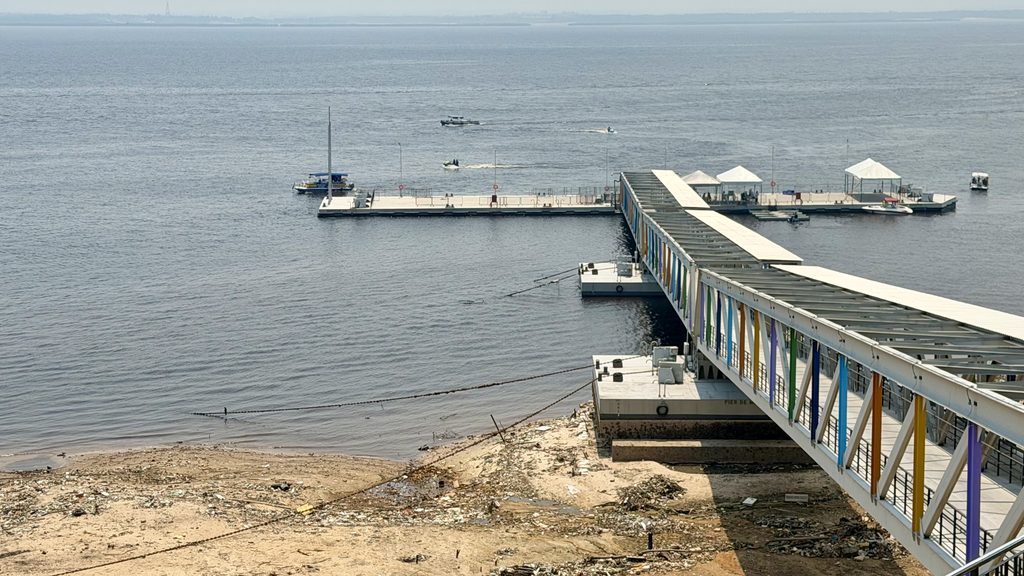
Adolpho Lisboa Municipal Market – Built between 1880 and 1883 during the Amazon rubber boom, the market features elegant Art Nouveau architecture inspired by Paris’s famous Les Halles marketplace, with distinctive iron structures imported from Europe. After undergoing extensive restoration, it reopened in 2013 and continues to serve as a vibrant cultural and commercial hub. Visitors can browse stalls selling fresh Amazonian fruits, fish, spices, local handicrafts, souvenirs, and traditional Indigenous remedies while experiencing the flavors and culture of the Amazon region.
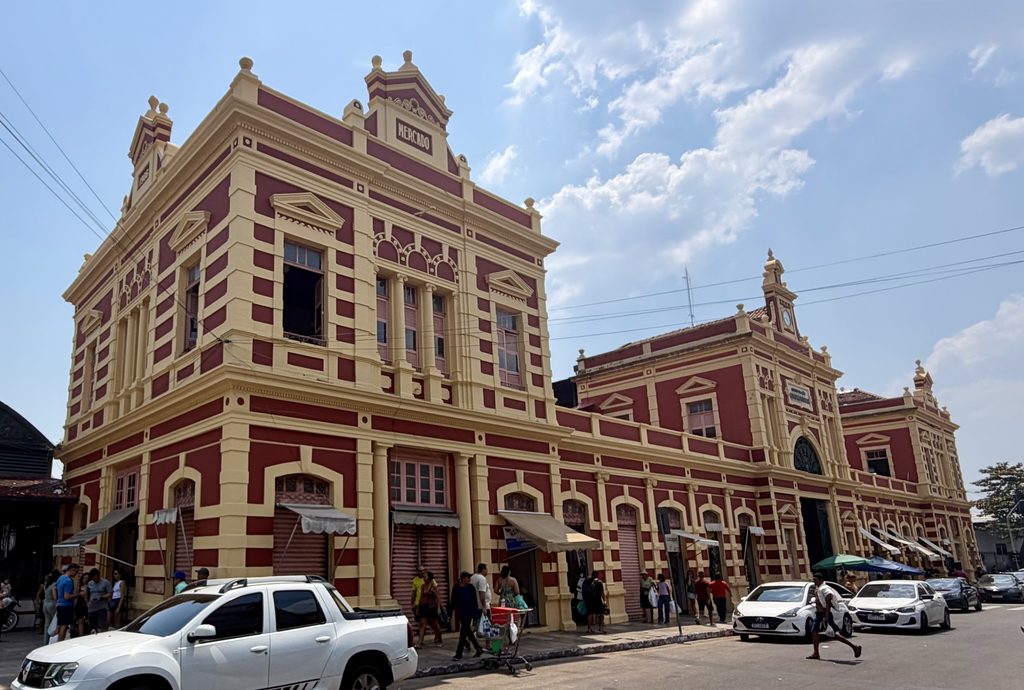
It is a 15-min walk from Mirante Lúcia Almeida.
Palacio Rio Negro – a historic palace that once served as the residence and seat of government of the governor of Amazonas. Built in 1903, it was originally the private residence of Karl Waldemar Scholz, a wealthy German rubber merchant who prospered during the Amazon rubber boom. Following the decline of the rubber trade, the state government purchased the palace in 1918 and renamed it Palácio Rio Negro. It served as the seat of government until 1995, having ceased to be the governor’s residence in 1959. Today, the palace operates as a cultural center and museum, showcasing the history of the Amazon rubber era and hosting cultural events and exhibitions.
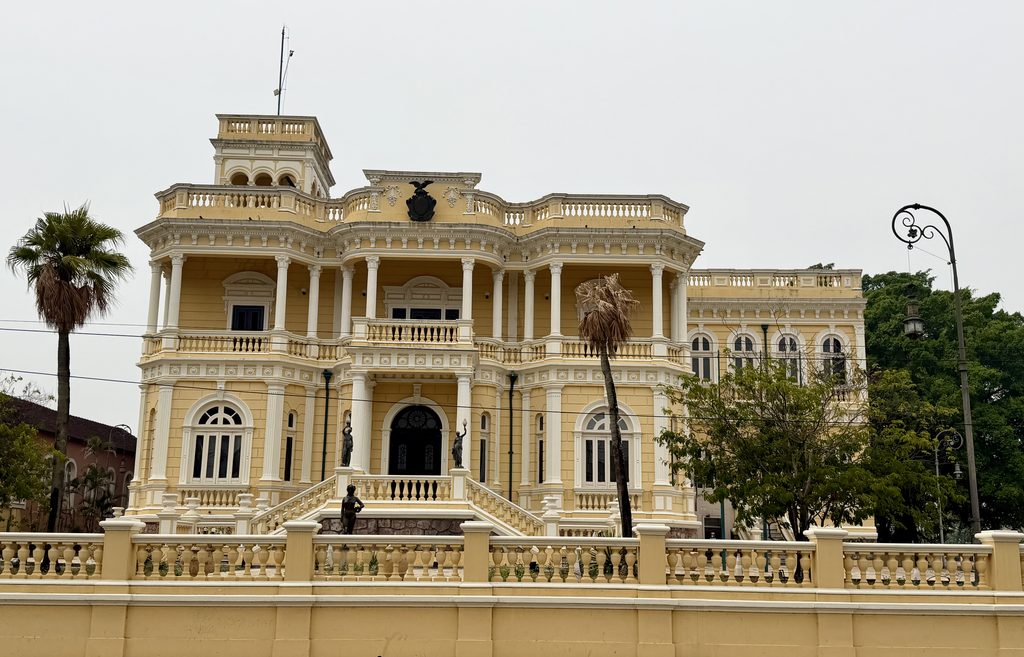
You can visit the interior for free on Mon, Wed-Sat 9am-3pm.
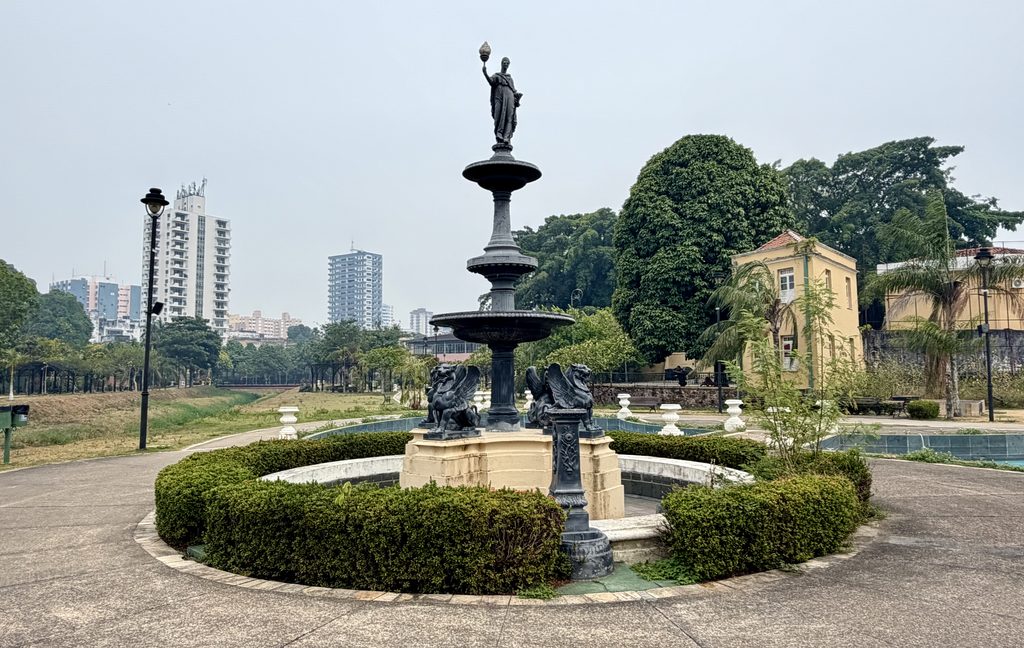
Senator Jefferson Péres Park – is a peaceful urban oasis located behind Palácio Rio Negro in downtown Manaus. Covering approximately 53,000 square meters, the park features landscaped gardens, walking paths, fountains, and modern architectural elements. It offers a welcome escape from the busy city streets, providing a relaxing green space for visitors to stroll, unwind, and enjoy nature amid the urban surroundings.
——————– Day 2, 3 ——————–
On the second and third days of our stay in Manaus, we joined two guided tours booked through Viator to explore the Amazon rainforest and experience its unique natural wonders, wildlife, and local activities.
Amazon Landscape – The Amazon’s landscape changes dramatically with the seasons. From late August to mid-December, water levels are generally lower, so fewer floating houses are visible and the jungle begins farther from the riverbanks. In contrast, from January through July, rising water levels flood larger areas of the forest, allowing boats to navigate deeper into the flooded jungle. As a result, activities and excursions in the Amazon are adjusted according to the seasonal water levels, offering different experiences throughout the year.
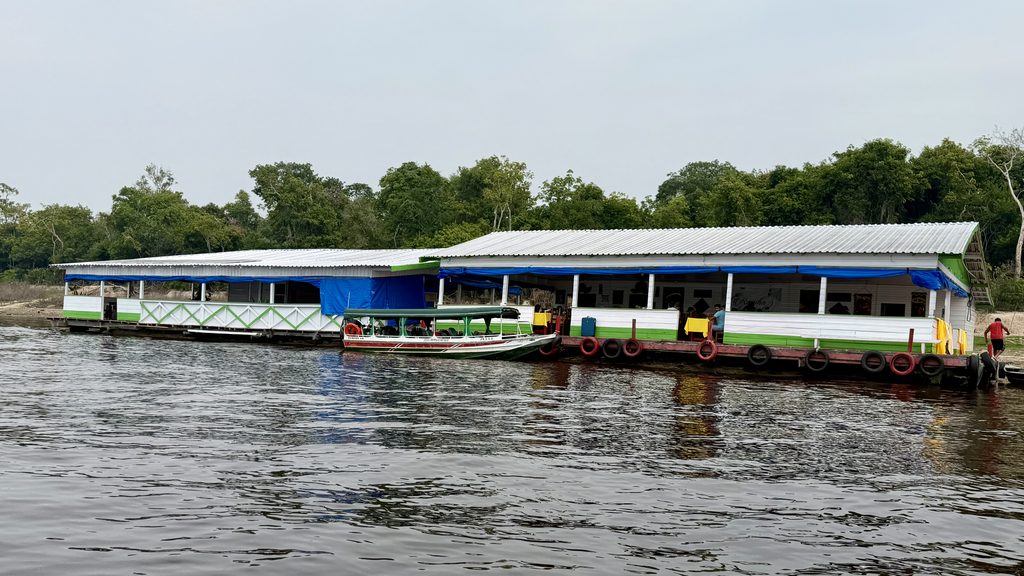
Since we visited Manaus in October, during the dry season, we saw fewer floating houses and restaurants along the river. The lower water levels also meant we had to walk farther into the jungle to reach the spot where boats typically dock during the rainy season, when the rising waters allow them to venture deeper into the flooded forest.
- Day 2
- Lunch in a floating restaurant
- Short walk into the forest
- Feeding Pirarucu (Arapaima gigas)
- Meeting of Waters
On Day 2 of our stay in Manaus, we joined a half-day guided tour, with the Meeting of the Waters as its main highlight.
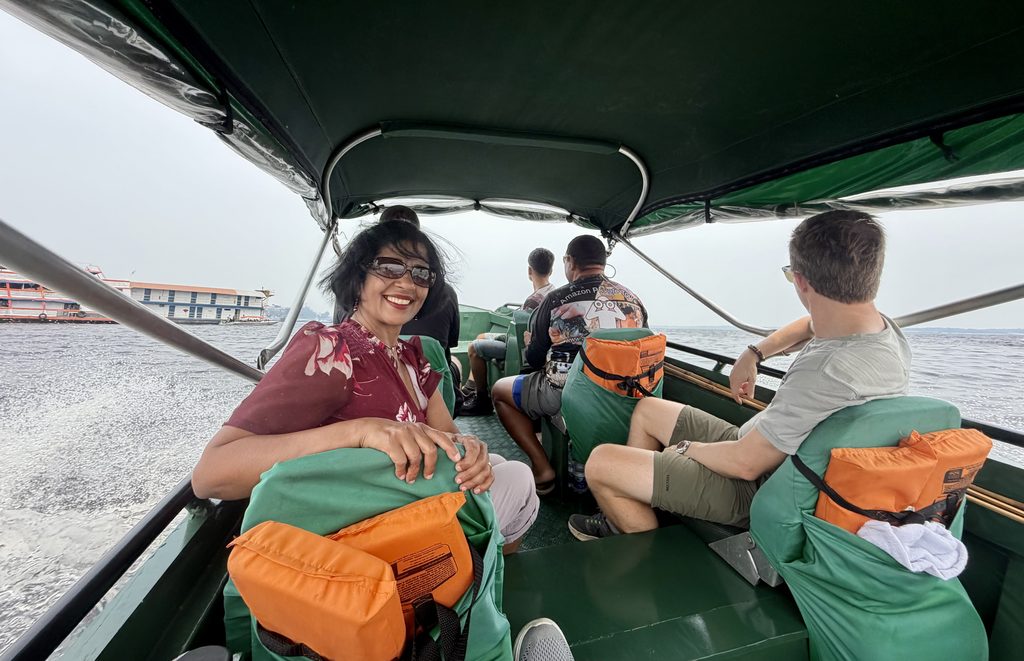
Lunch in a floating restaurant – Departing from Mirante Lúcia Almeida, we traveled east of Manaus by speedboat along the river to a floating restaurant, where we enjoyed a buffet lunch before continuing our Amazon adventure.
——————————————
Short Walk into the Forest – After lunch, we enjoyed a peaceful walk into rainforest, following a muddy path surrounded by tall trees. Since we visited in during the dry season in October, the forest floor was accessible on foot. During the rainy season, when much of this area is flooded, visitors typically explore the same stretch using a suspended walkway above the water.
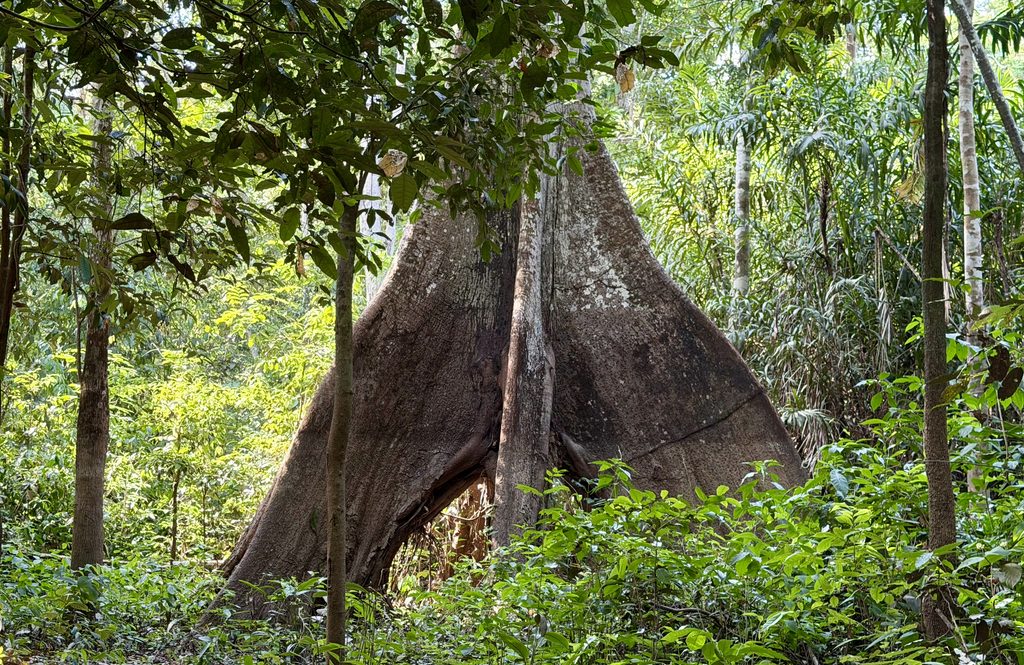
During our guided hike through the Amazon rainforest, we noticed trees with distinctive, star-shaped bases formed by their wide, spreading buttress roots. These roots help support tall trees growing in the rainforest.
——————————————
Feeding Pirarucu (Arapaima gigas) – Our next stop was at a floating fish farm to feed Pirarucu. Arapaima gigas, aka pirarucu in Brazil, is one of the world’s largest freshwater fish and is native to the Amazon River basin. It can commonly grow to around 6.5 feet long and weigh up to 440 pounds. This carnivorous fish has a streamlined, gray-green body, reddish markings near its tail, and remarkably tough, armor-like scales that help protect it from predators such as piranhas. One of its most distinctive adaptations is its ability to breathe atmospheric air, requiring it to surface regularly to survive in the oxygen-poor waters of the Amazon.
——————————————
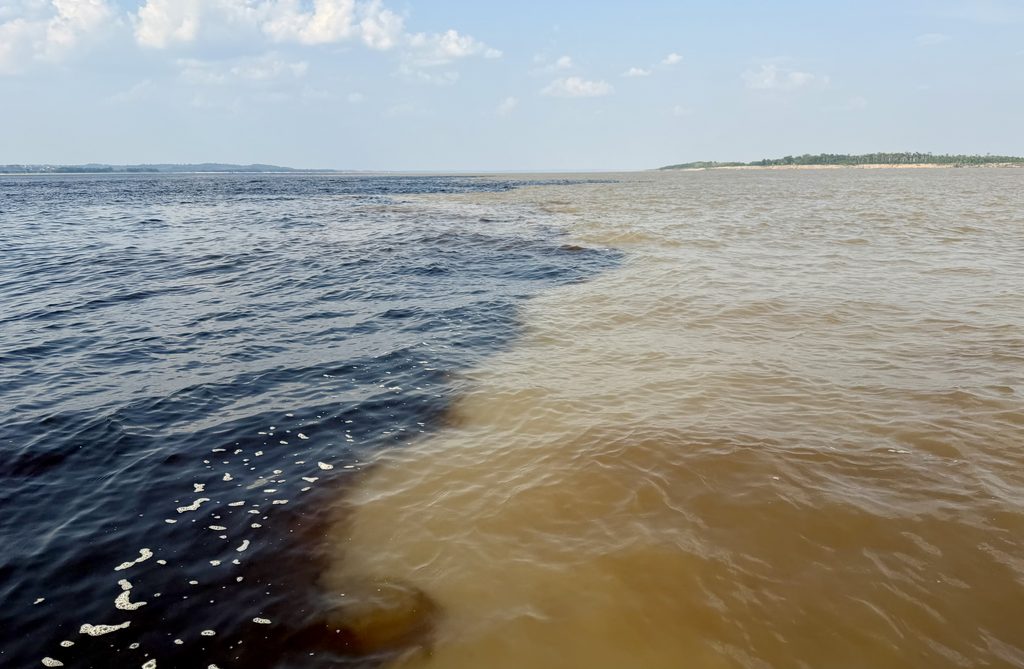
Meeting of the Waters – Our final stop was the breathtaking Meeting of the Waters, where the dark, nearly black waters of the Rio Negro meet the sandy-colored waters of the Rio Solimões. The two rivers flow side by side for 6 km without mixing noticeably, creating one of the Amazon’s most remarkable natural phenomena. Differences in water temperature, flow speed, density, and acidity contribute to this striking effect. Our guide let us touch the water from both rivers so we could feel the difference in temperature firsthand.
On Day 3, we went on a full-day Amazon Rainforest Tour. We began our full-day guided Amazon adventure with a hotel pickup in Manaus at around 8 a.m. After driving west for approximately an hour, we reached Lake Castanho located in the municipality of Iranduba
- Day 3
- Cachoeira do Castanho
- 3-hour Amazon jungle hike
- Floating house – Lunch and afternoon nap in hammocks
- Pink River Dolphin Project
- Fish for Piranhas
- Sunset on Rio Negro
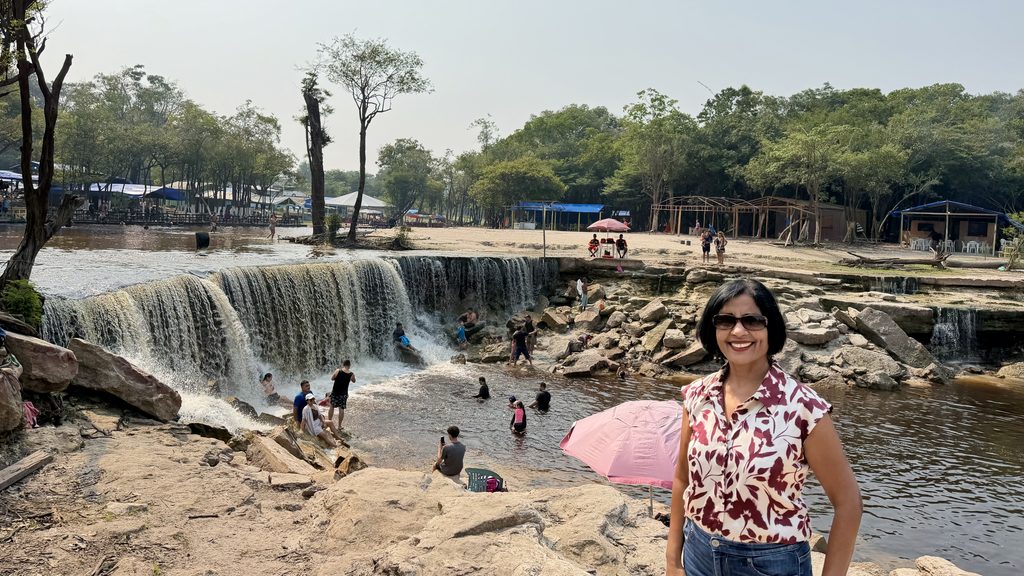
Cachoeira do Castanho – After we got off the van, we walked past this seasonal waterfall which is a unique natural attraction shaped by the Amazon’s annual water cycle. The waterfall is submerged during the rainy season and becomes visible as the rivers recede, typically between August and November, revealing a rocky cascade approximately six meters high and small natural pools. During this period, visitors can enjoy the scenic surroundings, while local residents provide food and other services that support community tourism. Cachoeira do Castanho offers a fascinating glimpse into how dramatically the Amazonian landscape changes with the seasons.
——————————————-
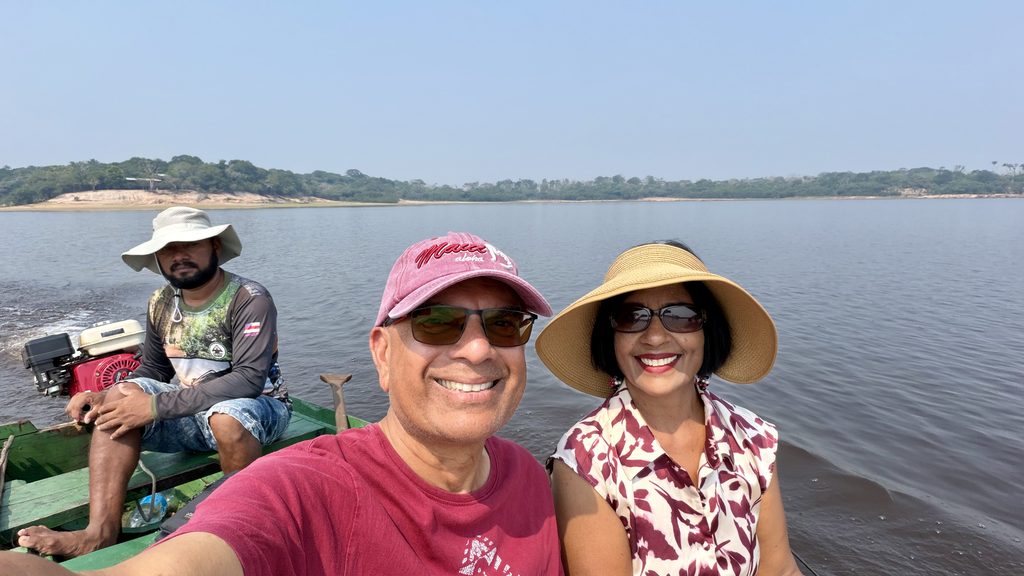
3-Hour Amazon Jungle Hike – We boarded an open, motorized canoe, a traditional form of transportation in the Amazon, and traveled toward the rainforest for a guided jungle hike. Our guide had advised us to wear long pants, long-sleeved shirts, and covered shoes to protect ourselves from insects and vegetation.
I was initially excited about the hike, but the October heat made the experience more challenging than expected. With temperatures around 97°F (36°C) and high humidity, the weather was intensely hot and sticky. Because we visited during the dry season, when water levels were low, we also had to walk for about 30 minutes through an area of the seasonally flooded forest before reaching the deeper jungle. During the rainy season, from January through July, when the forest floor is flooded, this stretch is typically traversed by boat, allowing visitors to reach the jungle more directly. The walk lasted almost 3 hours of wandering in a huge loop which included a steep climb of about 150m (not fun in the humid conditions).
- Bullet Ants – During the hike we learnt about Amazonian fauna and flora, and our guide showed us a colony of bullet ants by disturbing their nest, causing the ants to emerge. These large ants are famous for having one of the most painful insect stings in the world, so it was a fascinating but slightly unnerving encounter.
- Amazon’s Natural Telephone – During the hike, our guide demonstrated a traditional way of communicating through the forest by striking a tree trunk with a large knife. The hollow sound carried through the jungle, much like a natural telephone, allowing people to signal or communicate over distances without modern technology.
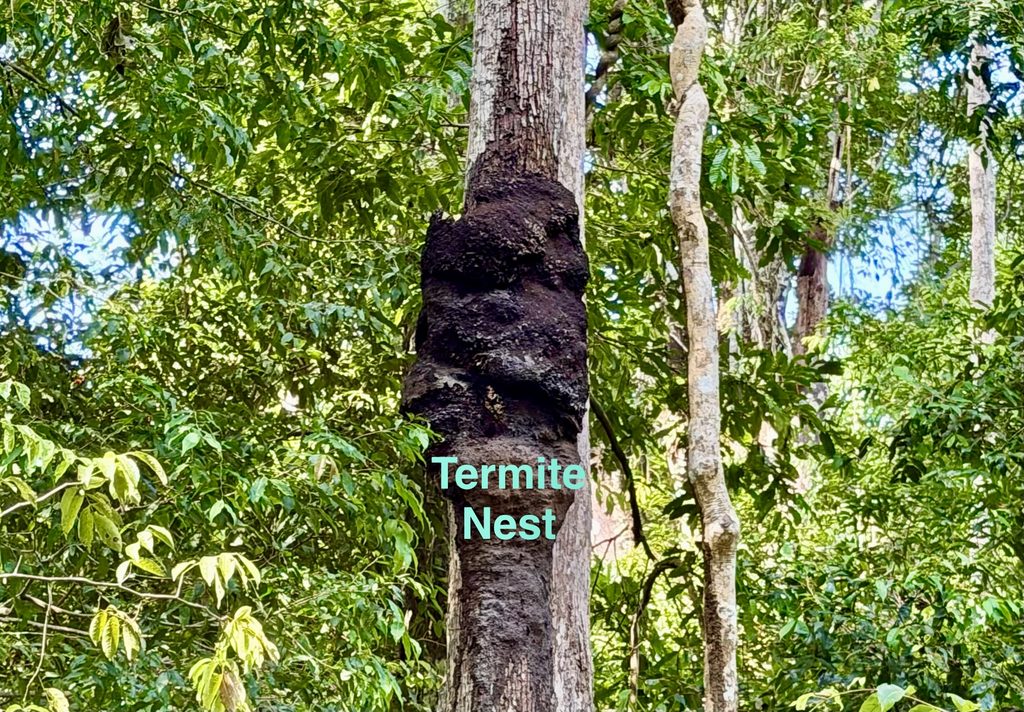
- Termite Nests – We also noticed numerous termite nests attached to tree trunks and branches. In tropical forests like the Amazon, termites play an important ecological role by breaking down dead wood and recycling nutrients, helping maintain the health of the rainforest ecosystem.
——————————————-
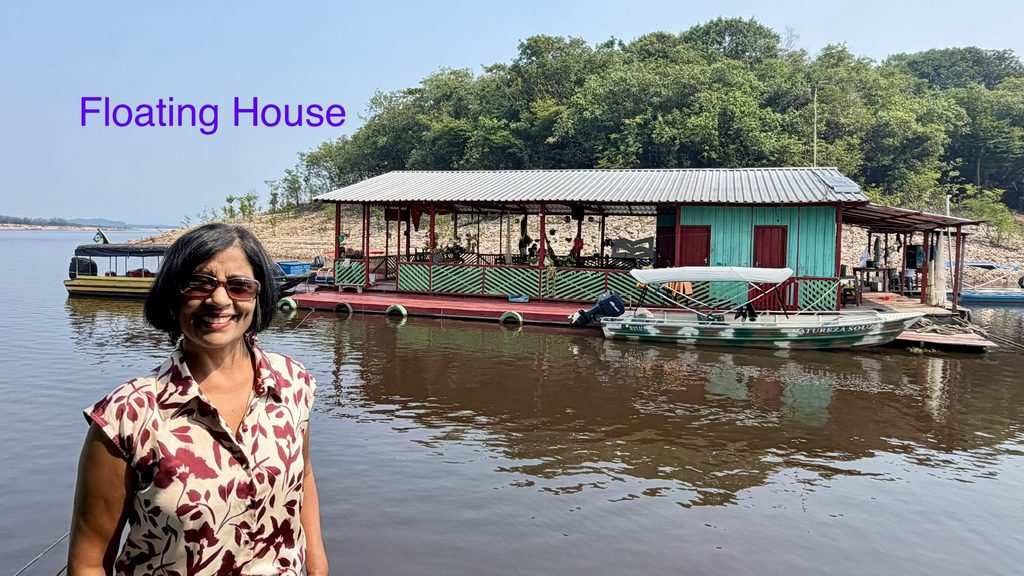
Floating House, Lunch and an Afternoon Nap in Hammocks – After our jungle hike, we returned to the floating house, where we had left our backpacks and a buffet lunch awaited us. The meal included beans, rice, mixed rice, salad, fish, and chicken. After lunch, our guide set up a hammock for each of the six people on our tour. We settled in for a blissful one-hour siesta, a welcome chance to rest and recharge after our strenuous hike in the hot, humid Amazonian weather.
——————————————-
Pink River Dolphin Project – Our next stop was a floating platform operated by a project dedicated to the protection and research of Amazon pink river dolphins. Visitors have the opportunity to get into the water, swim with the dolphins, and watch them up close. Since nobody in our group wanted to swim or get wet, we stayed on the platform and watched one of our tour guides enter the water to feed and interact with these fascinating animals.
——————————————-
Piranha Fishing – We then cruised slowly along the calm waters, looking for a shady spot to stop and try our hand at piranha fishing. A few members of our group were successful in catching these fish, which they carefully released back into the water. It was an exciting opportunity to experience one of the Amazon’s well-known activities firsthand.
Piranhas are freshwater fish native to South American rivers, lakes, and tributaries, including the Amazon River basin. They are known for their sharp, triangular teeth and powerful jaws, although their reputation as ferocious predators is often exaggerated.
——————————————-
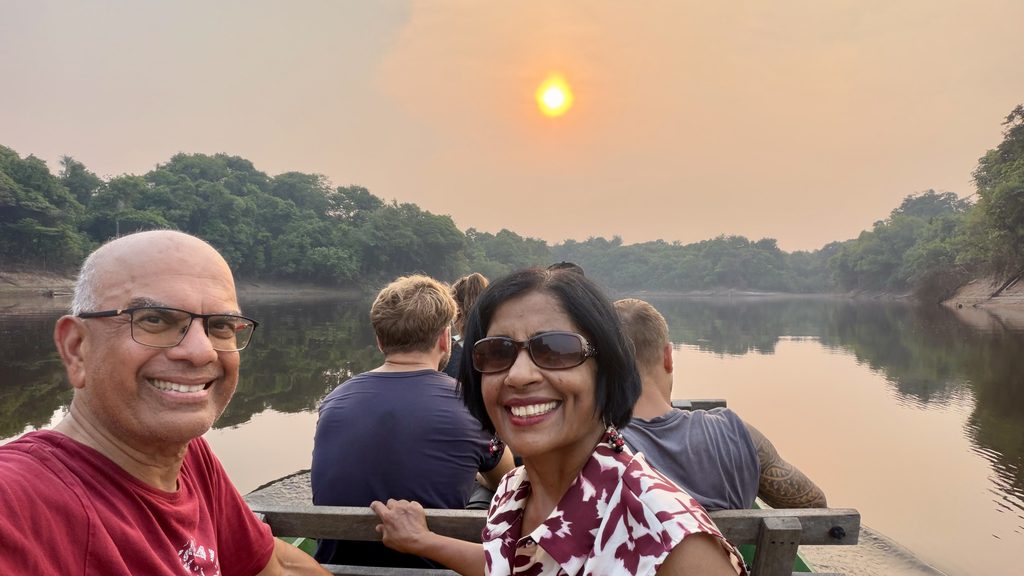
We glided on the calmer part of the river looking for birds and caimans. Watched the setting sun. During the dry season there are a lot of fires in the Amazon and hence it was smoky all around, which is a little sad.