2 nights in Pullman São Paulo Ibirapuera
We flew from Manaus to São Paulo, a journey of about four hours. We had arranged for a hotel car to pick us up at the airport, but we soon realized that taking an Uber would have been considerably cheaper. The drive to our hotel in the Ibirapuera area took about an hour, as we arrived during rush-hour traffic. Along the way, our driver shared some helpful tips on how to organize our sightseeing efficiently and make the most of our time in the city. By the time we reached the hotel, it was getting dark, so we had dinner and spent the rest of the evening relaxing. Our hotel room overlooked Ibirapuera Park, offering views of several attractions we planned to explore during our stay.
- Praca Oswaldo Cruz
- Avenida Paulista
- Mural of Oscar Niemeyer Eduardo Kobra
- Japan House São Paulo
- Paróquia São Luís Gonzaga
- McDonald’s on Avenida Paulista
- Cathedral Metropolitana Nossa Senhora da Assunção
- Buildings and Plazas around the Metropolitan Cathedral
- Praça da Sé
- Palace of Justice (Palácio da Justiça)
- Praça Clóvis Beviláqua
- Martinelli Building (Edifício Martinelli)
- Edifício Copan
- Theatro Municipal de Sao Paulo
- Edifício Itália (Italy Building)
- Praça da República (Republic Square)
- Beco do Batman
- Ibirapuera Park
- Monument to the Bandeiras
- Obelisk of São Paulo (Obelisco do Ibirapuera)
- Monument to Pedro Álvares Cabral
- Monument in Tribute to the Politically Dead and Disappeared
- Ibirapuera Auditorium (Auditório Ibirapuera)
- Oca (Lucas Nogueira Garcez Pavilion)
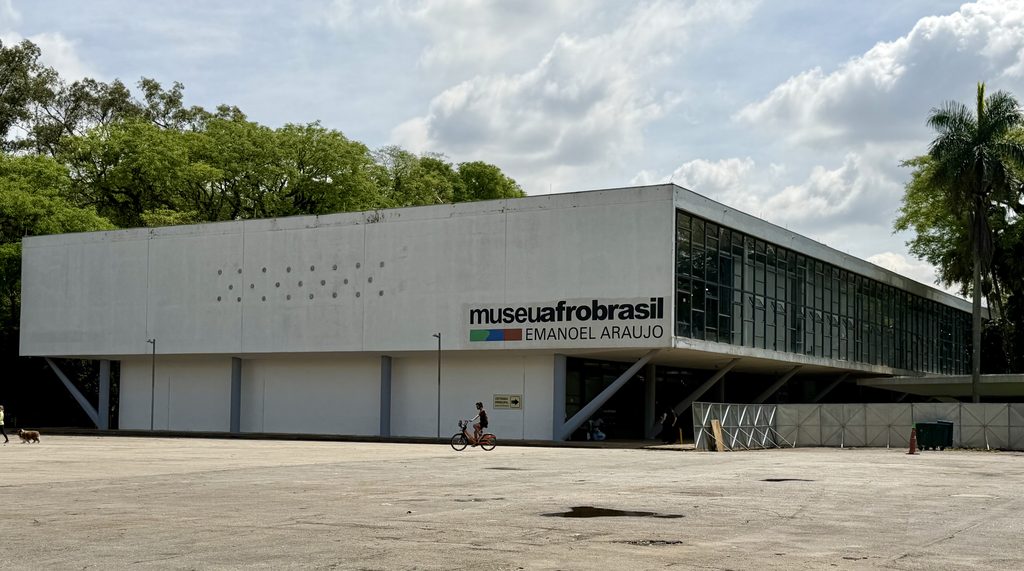
- Museu Afro Brasil (Afro Brazil Museum)
- Museum of Modern Art (MAM)
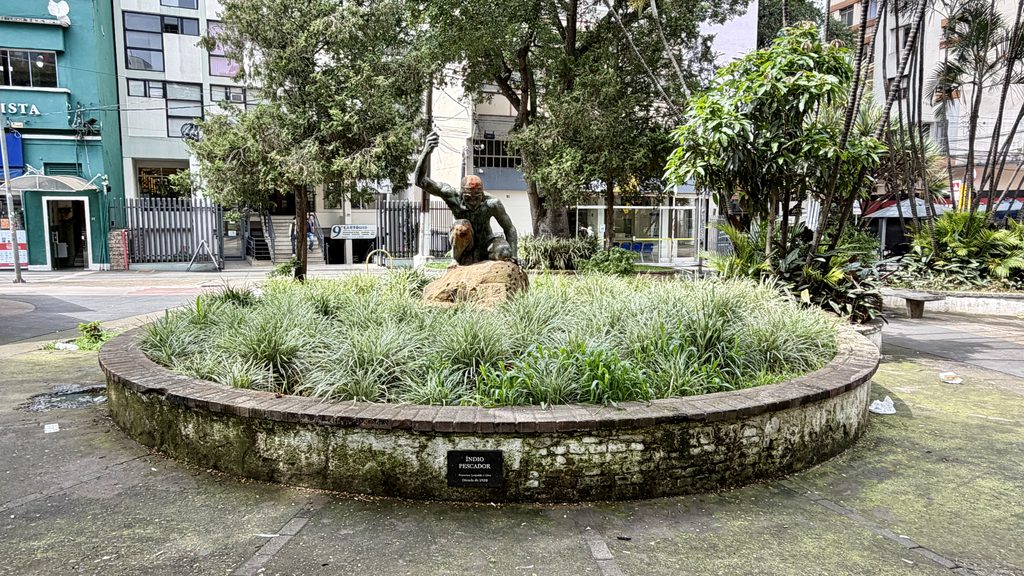
Praça Oswaldo Cruz – We took an uber to this plaza which is located at the beginning of Avenida Paulista. The plaza is an important junction connecting several major roads in São Paulo. Formerly known as Largo do Paraíso, it was renamed in the first half of the 20th century in honor of Oswaldo Cruz, the renowned Brazilian physician and public health pioneer.
Avenida Paulista – is one of São Paulo’s most famous and vibrant boulevards, stretching approximately 2.8 km between Praça Oswaldo Cruz and Praça Marechal Cordeiro de Farias. Construction began in 1891, and in 1909 it became the first paved street in São Paulo. Today, the avenue is a bustling hub where historic buildings stand alongside modern skyscrapers, shopping malls, restaurants, cafés, and cultural institutions.
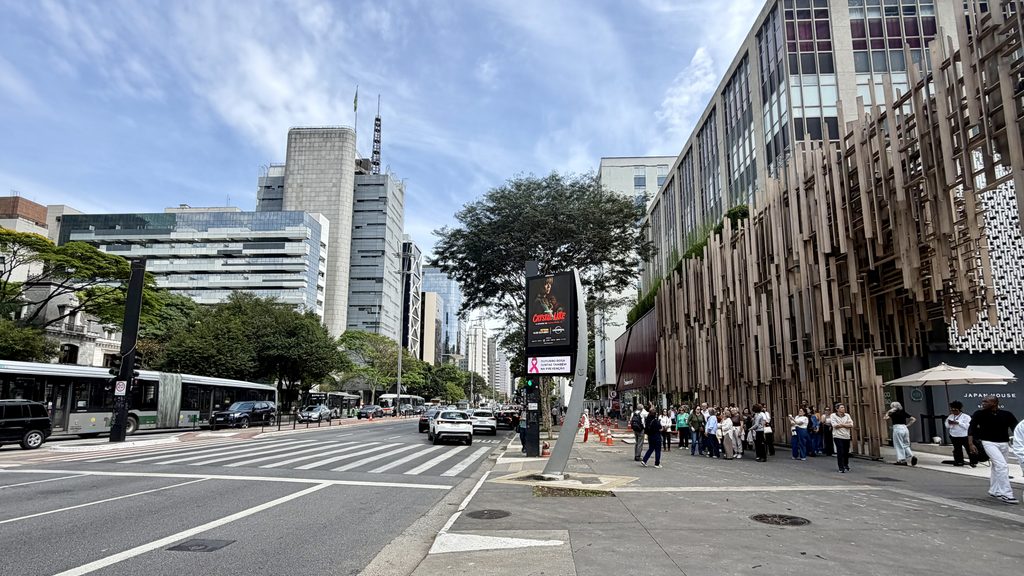
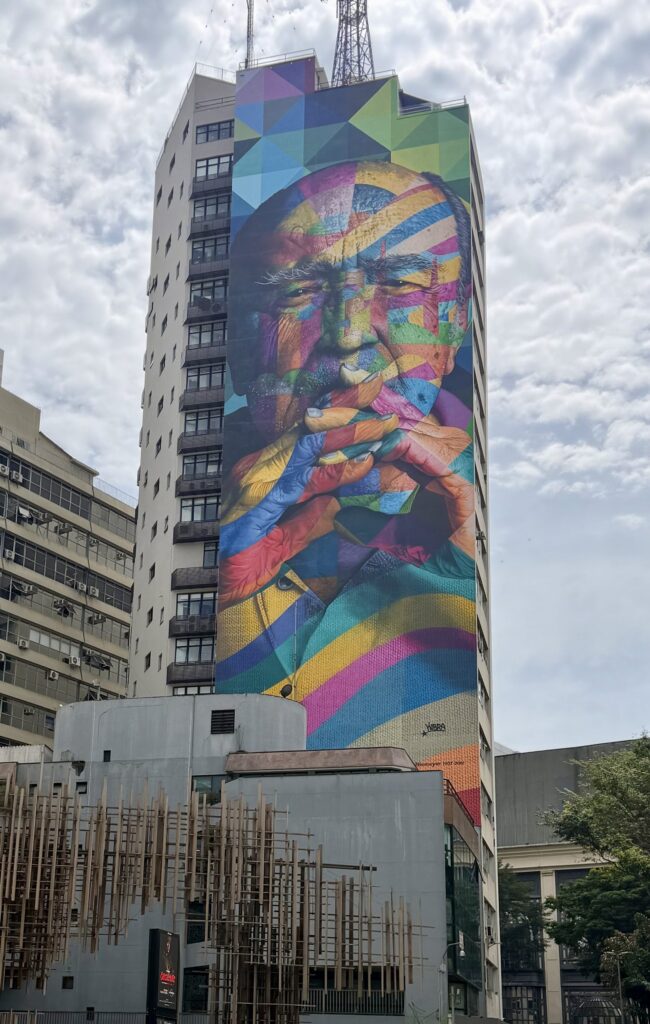
The following 2 attractions are at the beginning of Avenida Paulista near Praça Oswaldo Cruz –
- Oscar Niemeyer Mural by Eduardo Kobra – The colorful mural honors Oscar Niemeyer, one of Brazil’s most celebrated modernist architects. Created in 2013 by renowned Brazilian street artist Eduardo Kobra and his team, the monumental artwork measures approximately 52 meters (170 feet) high and 16 meters (52 feet) wide. The mural features Niemeyer’s portrait in Kobra’s signature kaleidoscopic style, with vivid geometric patterns and flowing shapes that echo the architect’s distinctive designs and love of curves.
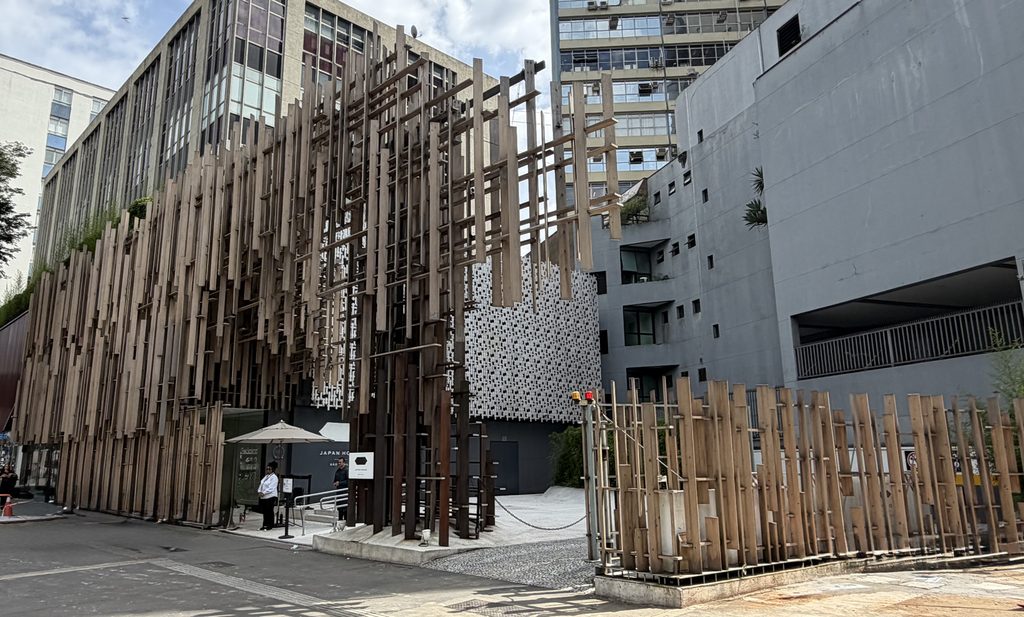
- Japan House São Paulo – Located below the Oscar Niemeyer Mural along Avenida Paulista, Japan House São Paulo is a cultural center dedicated to showcasing Japanese culture, design, technology, and traditions. The building was designed by renowned Japanese architect Kengo Kuma, whose architectural approach blends contemporary design with traditional craftsmanship. Its striking façade features 70-year-old hinoki (Japanese cypress) and a mesh incorporating handmade washi paper, highlighting the beauty of Japanese materials and techniques. Opened in April 2017, Japan House is free to visit.
———————————–
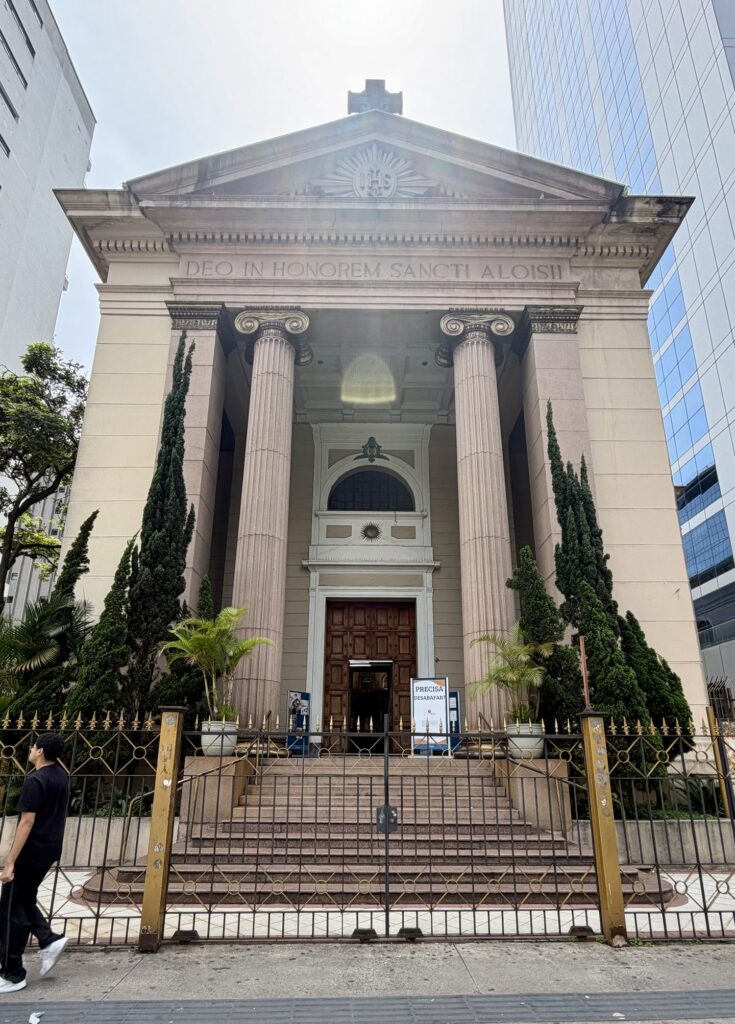
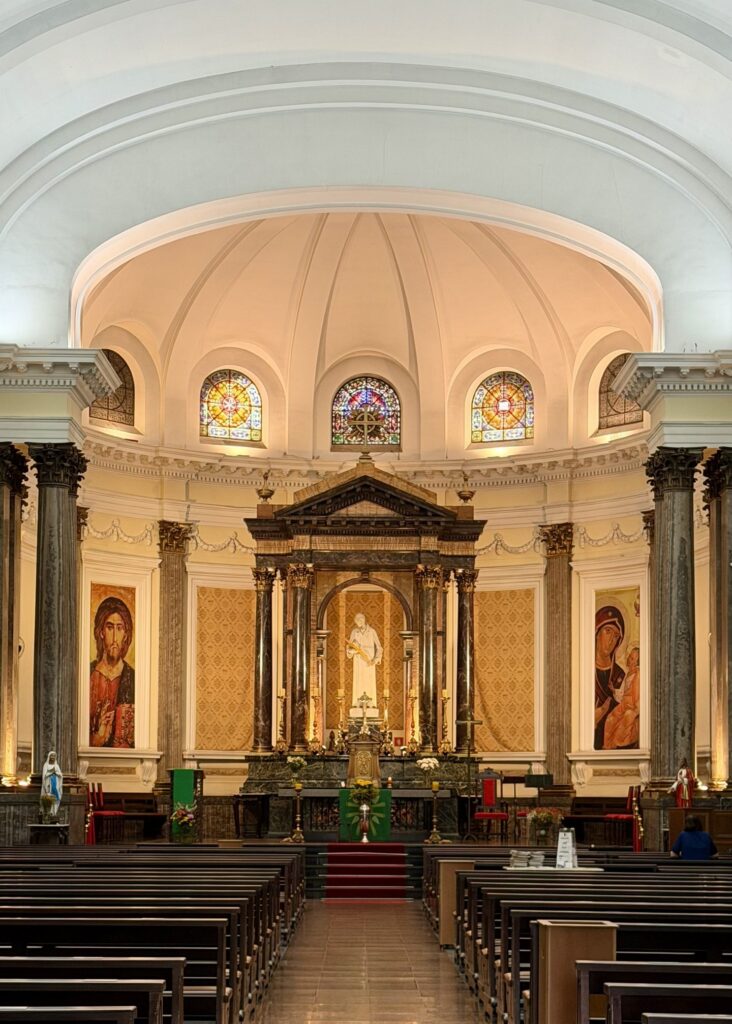
Paróquia São Luís Gonzaga – As we walked along Avenida Paulista, we came across this traditional Jesuit Catholic church known for its striking Greco-Roman architectural style, inspired by the Erechtheion temple in Athens. The church was built between 1932-1935. Its classical columns and elegant façade stand out amid the modern skyscrapers and busy commercial buildings lining the avenue, offering a glimpse of São Paulo’s architectural and religious heritage.
———————————–
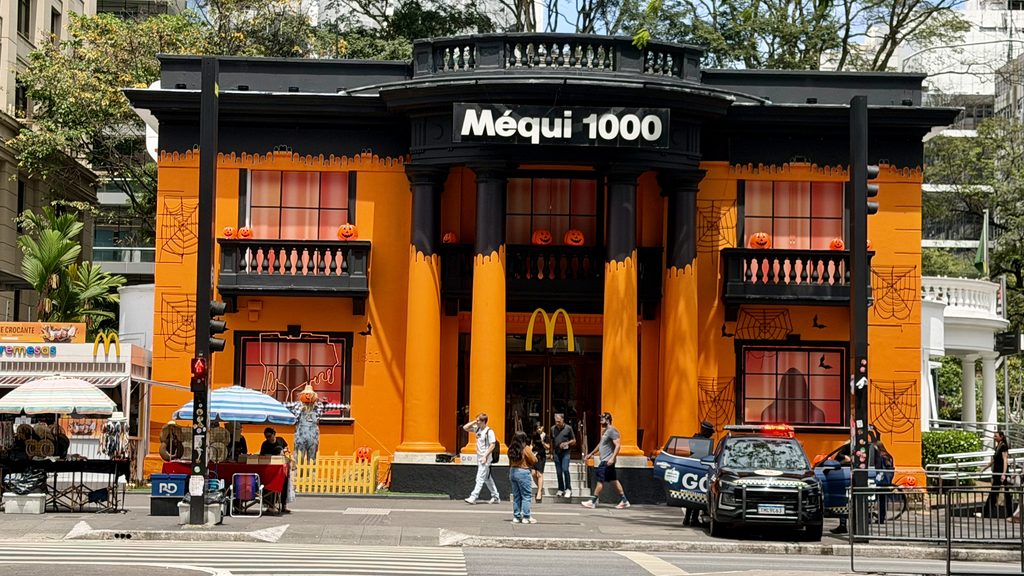
McDonald’s on Avenida Paulista – We also came across a McDonald’s painted in a striking shade of orange, which made it stand out from the surrounding buildings. This unusual color choice gave the restaurant a distinctive look and caught our attention as we walked along the avenue.
———————————–
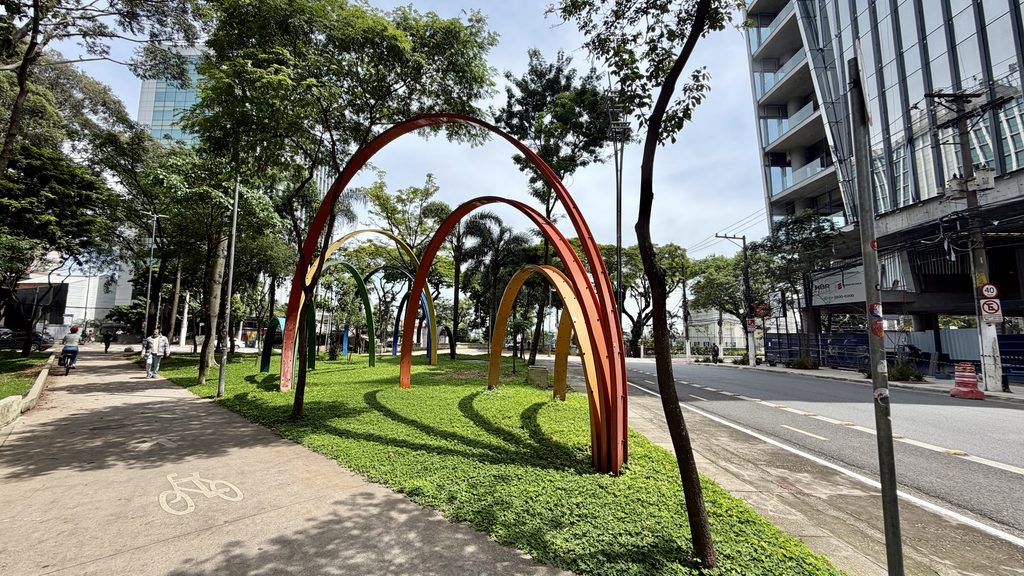
Praça Marechal Cordeiro de Farias (Praça dos Arcos) – Located at the northern end of Avenida Paulista, this plaza’s most distinctive feature is Arcos, also called Caminho or the Metallic Rainbow. Commissioned to celebrate the centenary of Avenida Paulista in December 1991, the artwork consists of a series of colorful arches that visitors can walk through, creating a playful and interactive public space. The square is also named in honor of Brazilian military officer Marshal Osvaldo Cordeiro de Farias.
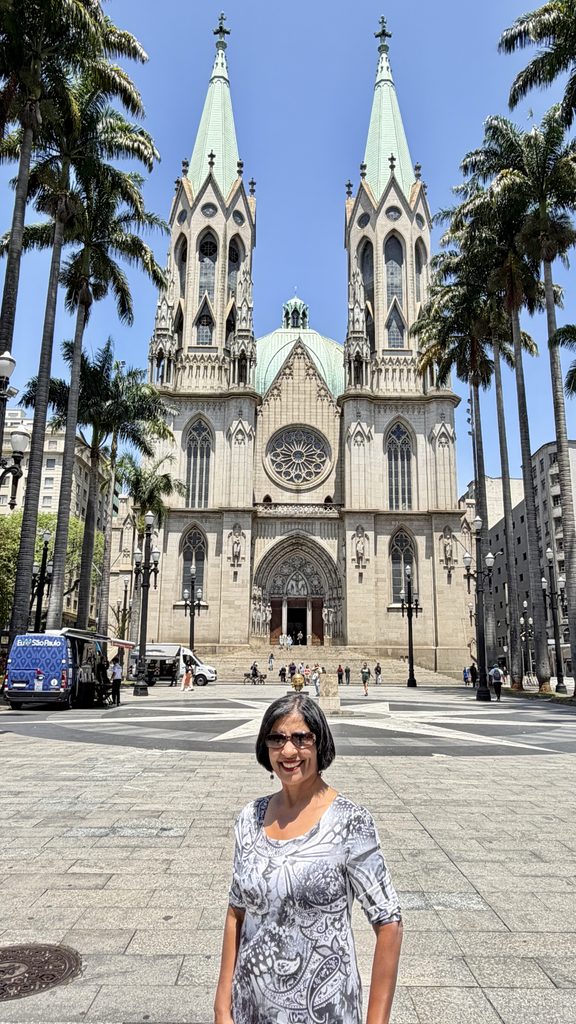
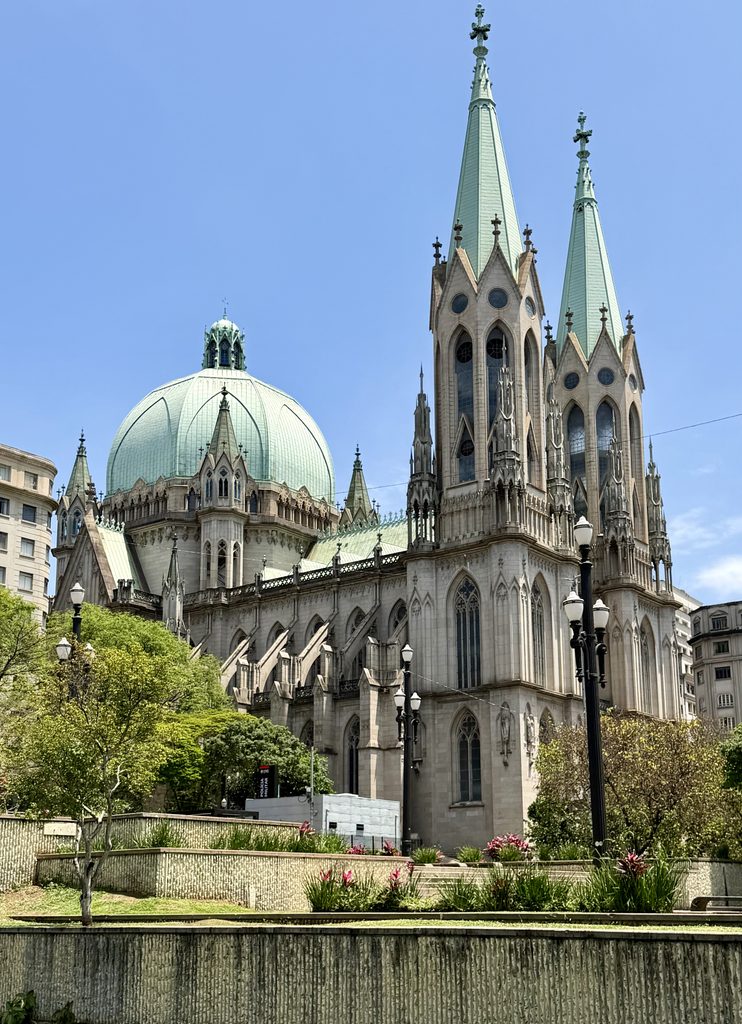
São Paulo Metropolitan Cathedral (Catedral da Sé) – Located in Praça da Sé in the heart of São Paulo, the Metropolitan Cathedral of Our Lady of the Assumption and Saint Paul is the city’s principal Catholic church and one of its most impressive architectural landmarks. Construction of the present cathedral began in 1913 and was inaugurated in 1954 to coincide with São Paulo’s 400th anniversary, although its towers were completed later, in 1969. The imposing structure measures approximately 111 meters long and features twin towers rising 92 meters, elaborate stained-glass windows, intricate sculptures, and extensive marble decoration. Inside, the cathedral can accommodate around 8,000 people and houses one of the largest pipe organs in Latin America, with approximately 12,000 pipes.
——————————-
Buildings and Plazas around the Metropolitan Cathedral
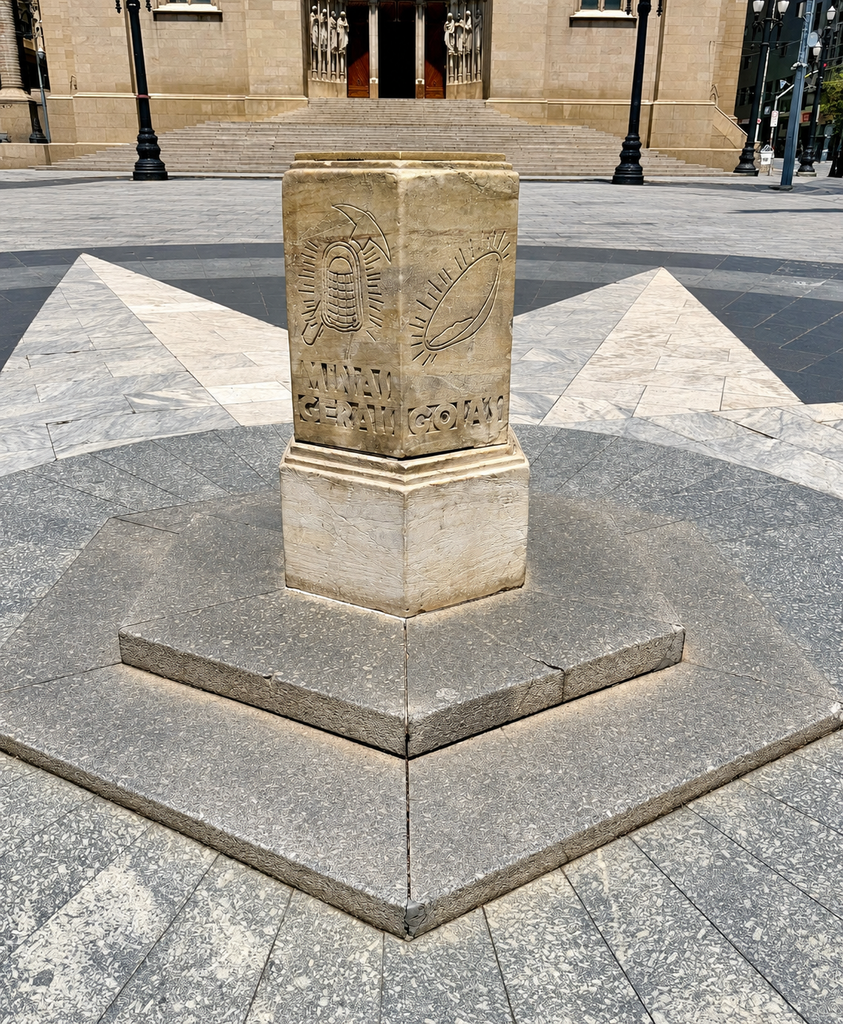
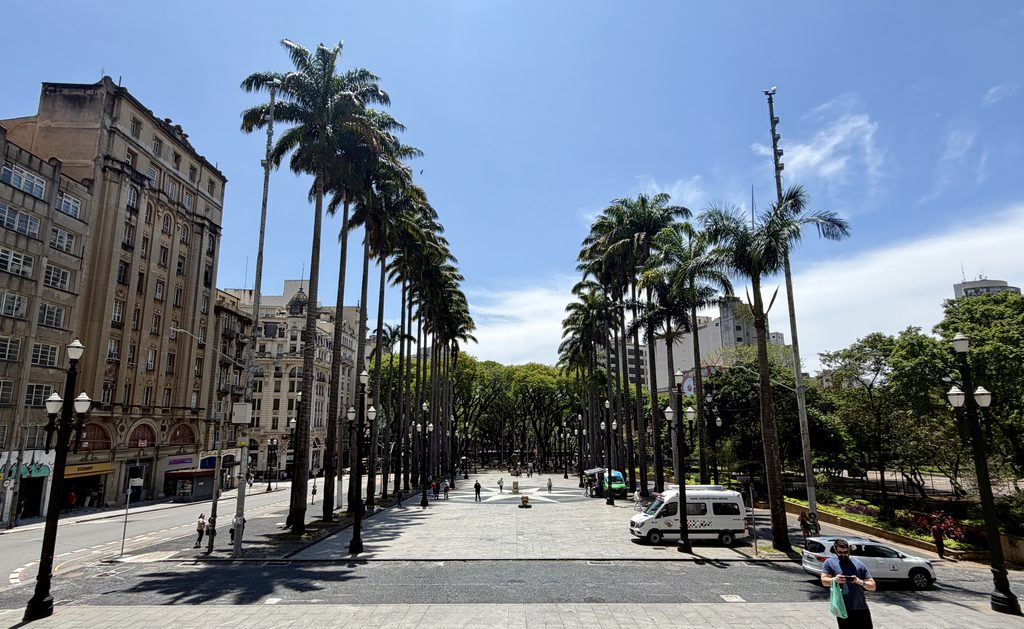
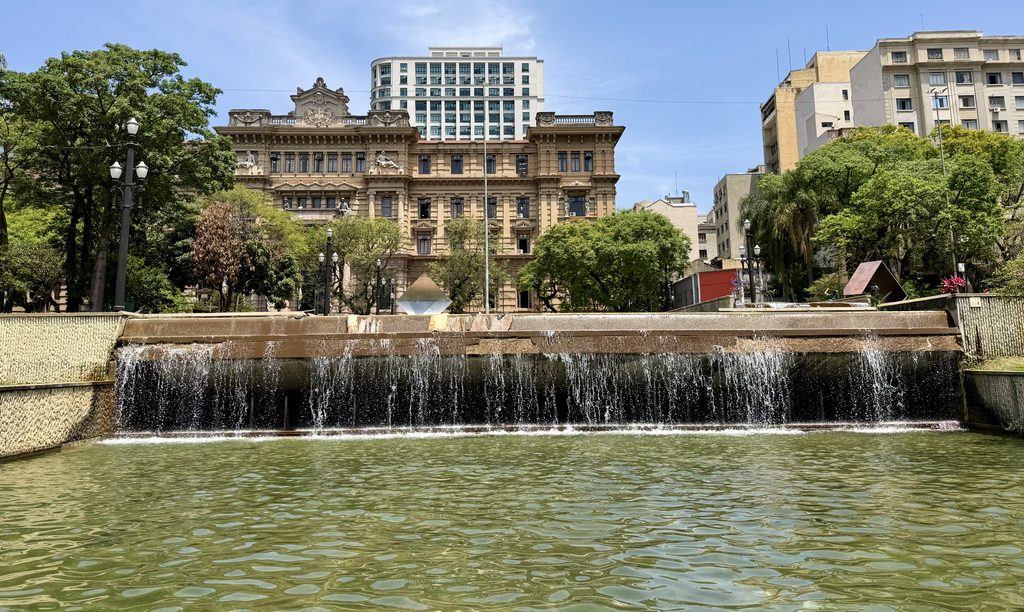
- Praça da Sé – The Catedral stands prominently beside Praça da Sé, a large public square that is home to the Marco Zero monument, a small marble marker that serves as the city’s geographical reference point for measuring distances. Redesigned in the 1970s to accommodate the Sé Metro station, the square features a distinctive multi-level layout with geometric landscaping, concrete structures, and reflecting pools. Tall imperial palm trees frame the approach to the cathedral, creating a striking contrast with its Neo-Gothic towers.
- Palace of Justice (Palácio da Justiça) – Located near Praça da Sé and the Metropolitan Cathedral, the Palace of Justice is the headquarters of the Court of Justice of the State of São Paulo. The design of the building combines Neoclassical architecture with Baroque influences, featuring an imposing façade and elaborate decorative details. Built between 1920-1933, the building was inaugurated in 1933.
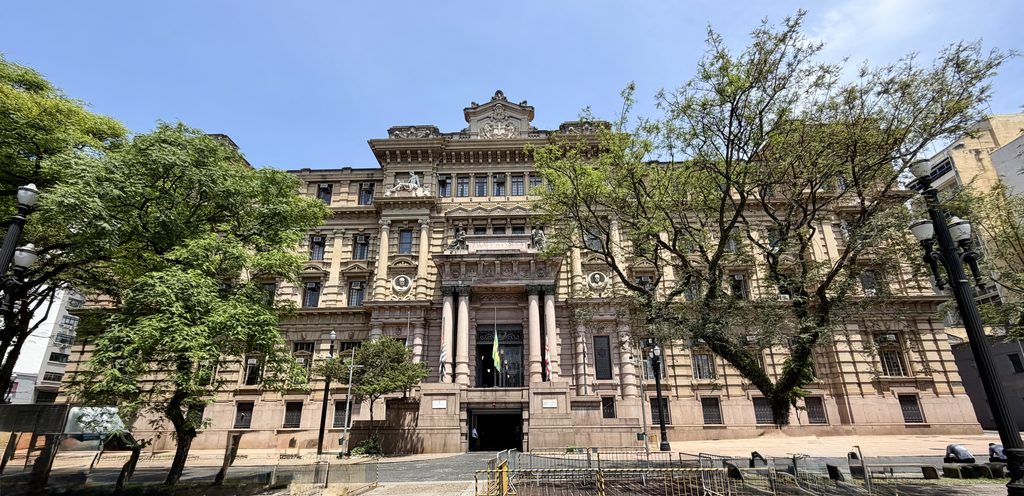
Praça Clóvis Beviláqua – This plaza sits directly in front of the Palace of Justice building and merges with Praça da Sé.
We then walked to a couple of famous skyscrapers that were within walking distance of each other, staring with the Martinelli Building.
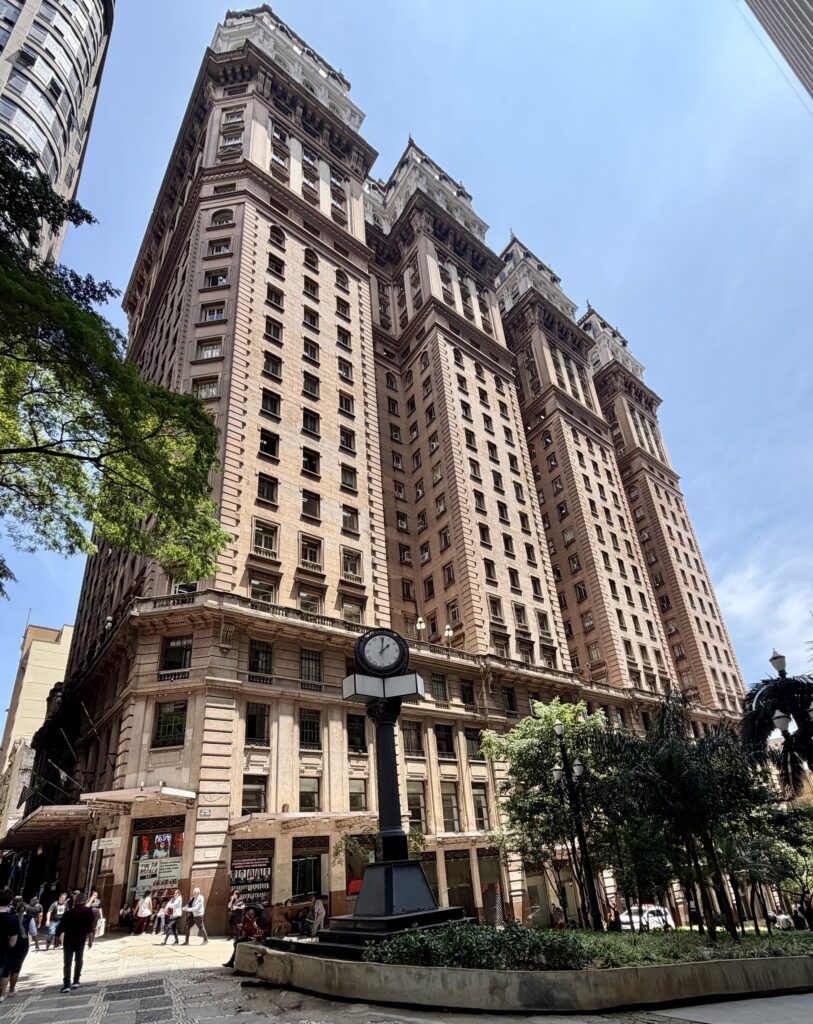
- Martinelli Building (Edifício Martinelli) – Within 10 minutes walk from the Metropolitan Cathedral the Martinelli Building is recognized as Brazil’s first skyscraper. Designed by Italian-born entrepreneur Giuseppe Martinelli, it was constructed between 1924 and 1929. Standing approximately 105 meters tall with 28 floors, it was once the tallest building in Latin America and a remarkable engineering achievement for its time. Today, it accommodates municipal offices, business organizations, and shops, while remaining an iconic landmark that reflects São Paulo’s transformation into a modern metropolis. Visiting the building is on a guided tour only.
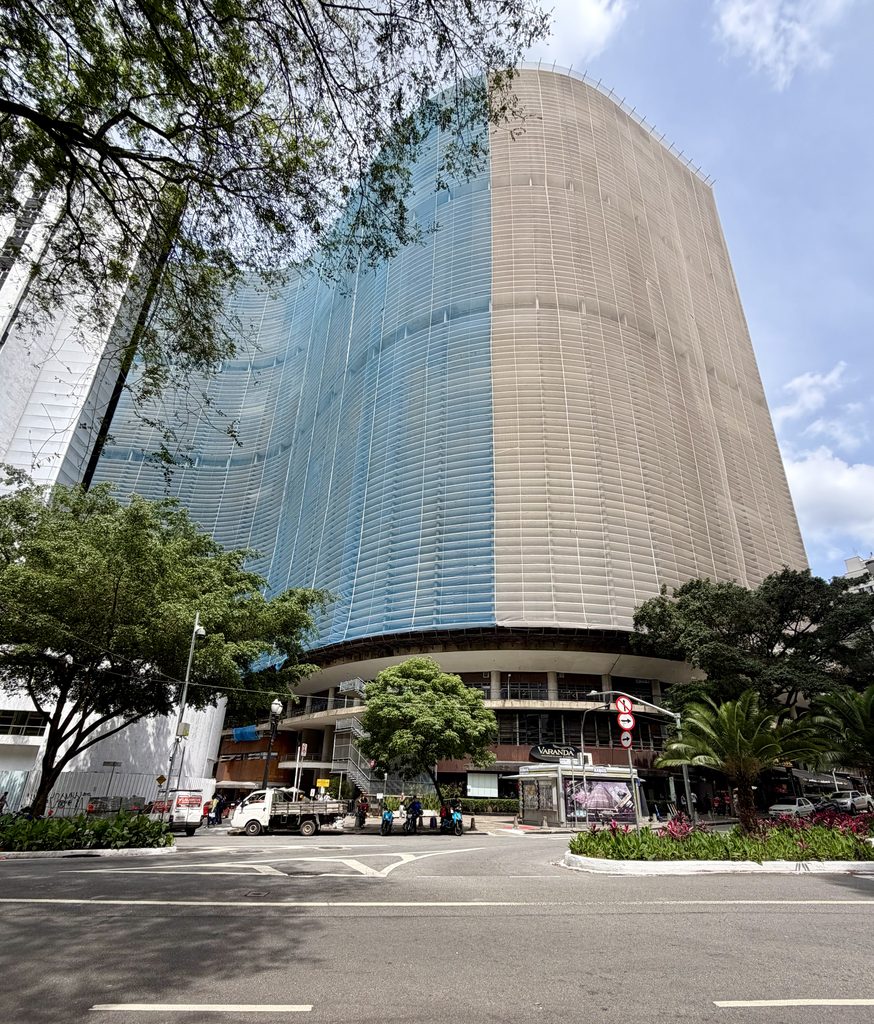
- Copan Building (Edifício Copan) – the Copan Building is one of the city’s most iconic examples of modern Brazilian architecture. Designed by renowned architect Oscar Niemeyer, the building is famous for its distinctive undulating, S-shaped façade. Construction began in the 1950s and the building was inaugurated in 1966. Standing approximately 115 meters tall with 32 floors, it contains 1,160 apartments spread across six blocks and accommodates a diverse residential community. Its ground floor features numerous shops, cafés, restaurants, and other businesses, creating a lively urban environment. Access to the building’s rooftop was not available on the day/week we were there.
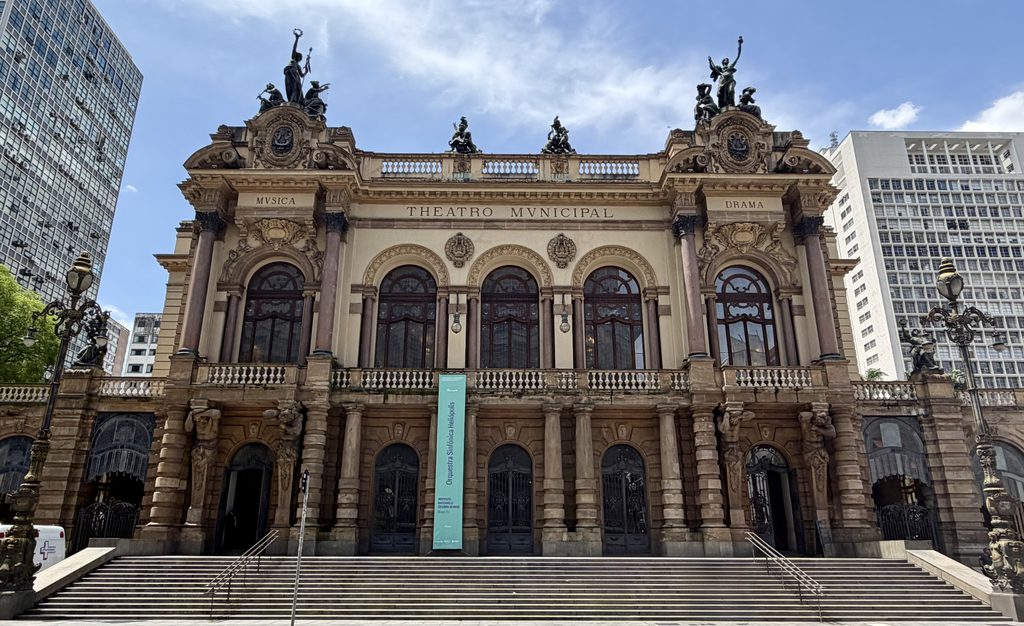
Municipal Theatre of São Paulo (Theatro Municipal) – Located near the Martinelli Building , the Theatre is one of São Paulo’s most celebrated landmarks, renowned for its grand architecture and important role in Brazil’s cultural history. The theatre opened on September 12, 1911, with a performance of Hamlet, an opera by French composer Ambroise Thomas. Its elegant façade and lavish interiors reflect the European architectural influences popular during São Paulo’s coffee-boom era. Today, it is home to the São Paulo Municipal Symphony Orchestra, Lyric Choir, and City Ballet, continuing its legacy as one of the city’s leading performing arts venues.
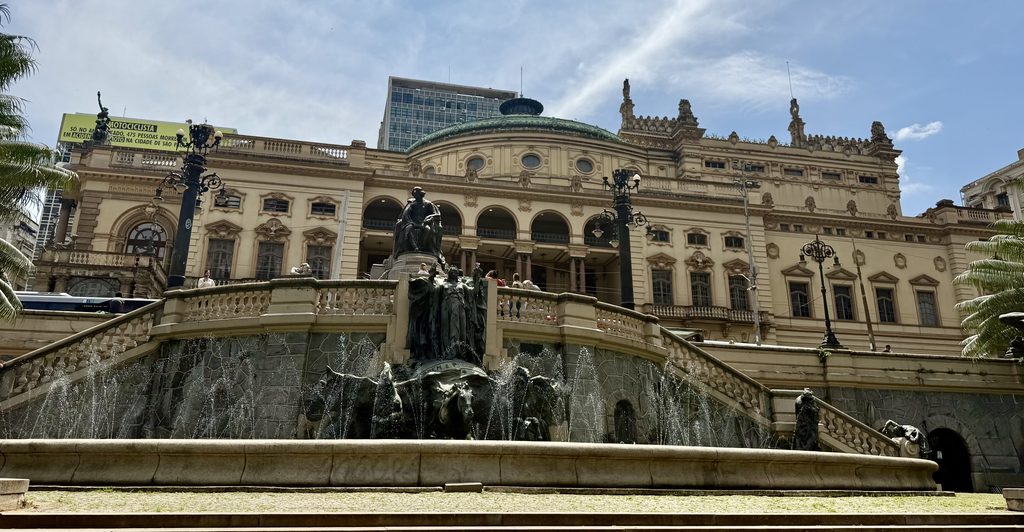
Monument to Carlos Gomes (Fonte dos Cavalos Alados) – Located in Praça Ramos de Azevedo beside the Municipal Theatre of São Paulo, this impressive fountain is also known as the Fountain of the Winged Horses and is sometimes called the Fountain of Wishes. Inaugurated in 1922, the monument was funded by São Paulo’s Italian community to honor Brazilian composer Carlos Gomes and commemorate the centenary of Brazil’s independence. Inspired by Rome’s Trevi Fountain, the elaborate composition features sculptures in marble, bronze, and granite.
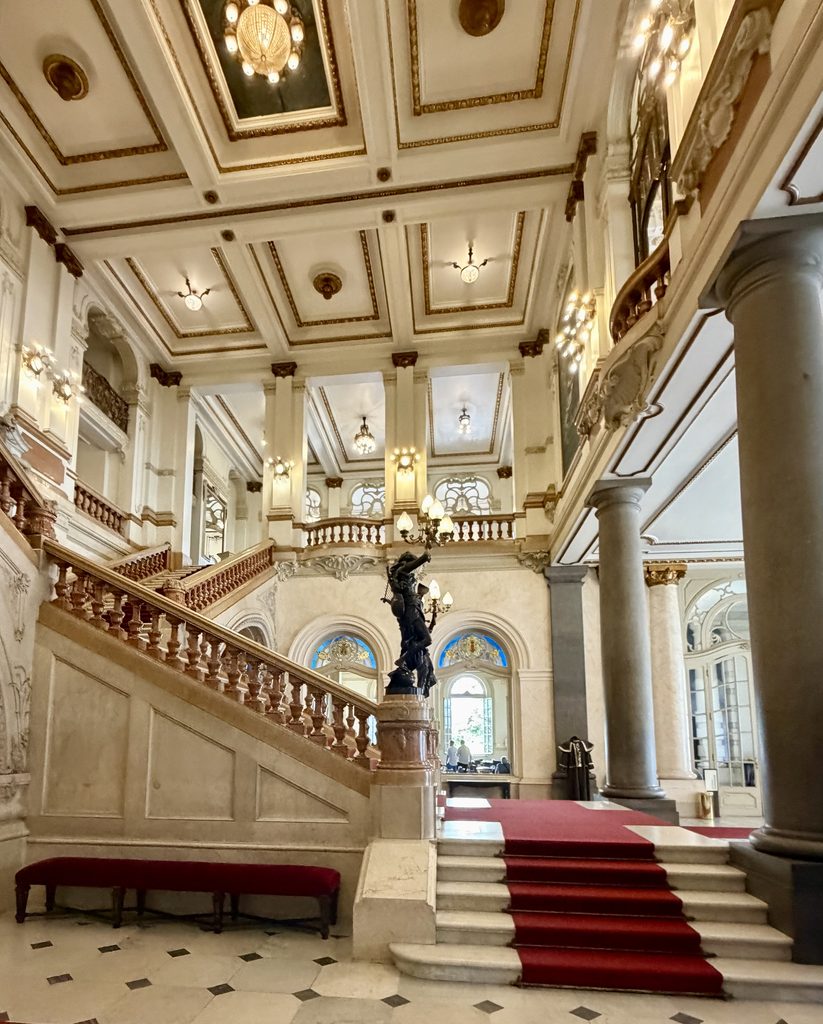
Guided tours of the theater are available and tickets can be purchased at the counter inside. It is worth checking the tour schedule and availability in advance, as tours may be offered at specific times and can vary by day.
Edifício Itália (Italy Building) – Our next stop was at another of the city’s famous skyscrapers. The 165-meter-tall building has 46 floors and was constructed between 1956 and 1965. Its distinctive facade was designed to encourage natural ventilation while reducing direct sunlight. The building is home to the renowned Terraço Itália Restaurant on the 41st floor, which opened in 1967 and is famous for its panoramic views across São Paulo. The building also contains Sala São Paulo, an elegant venue for corporate and social events.
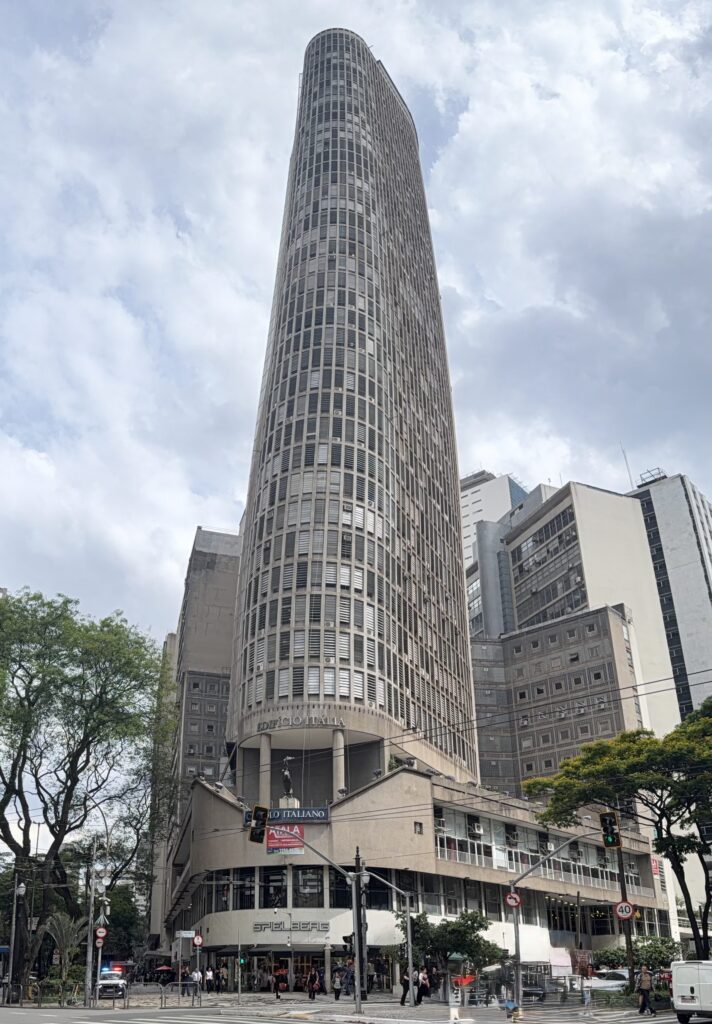
We went up to the 41st floor of Edifício Itália to check out the Terraço Itália Restaurant and its menu, hoping to find an appealing vegetarian dish. However, we couldn’t find anything that suited our preferences. We spent a few minutes admiring the panoramic views of São Paulo before heading back downstairs.
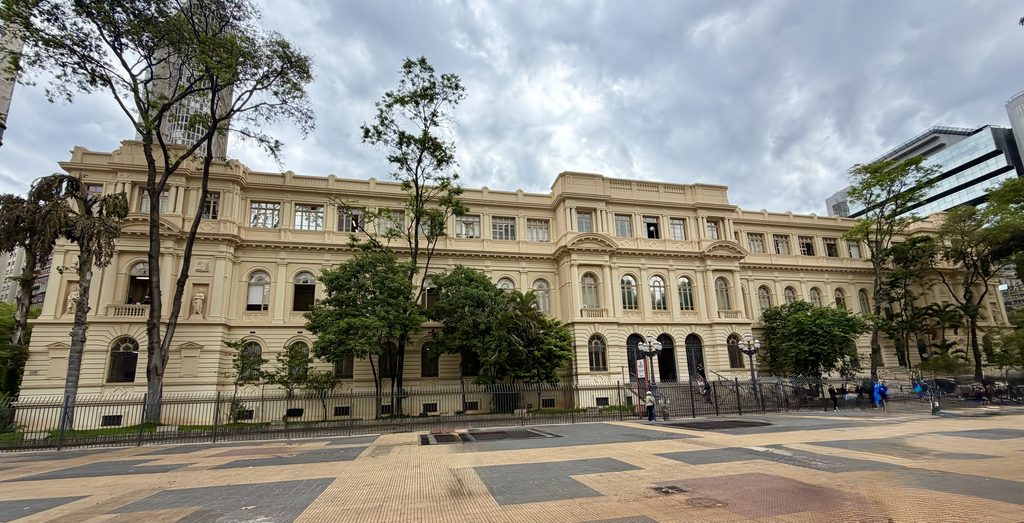
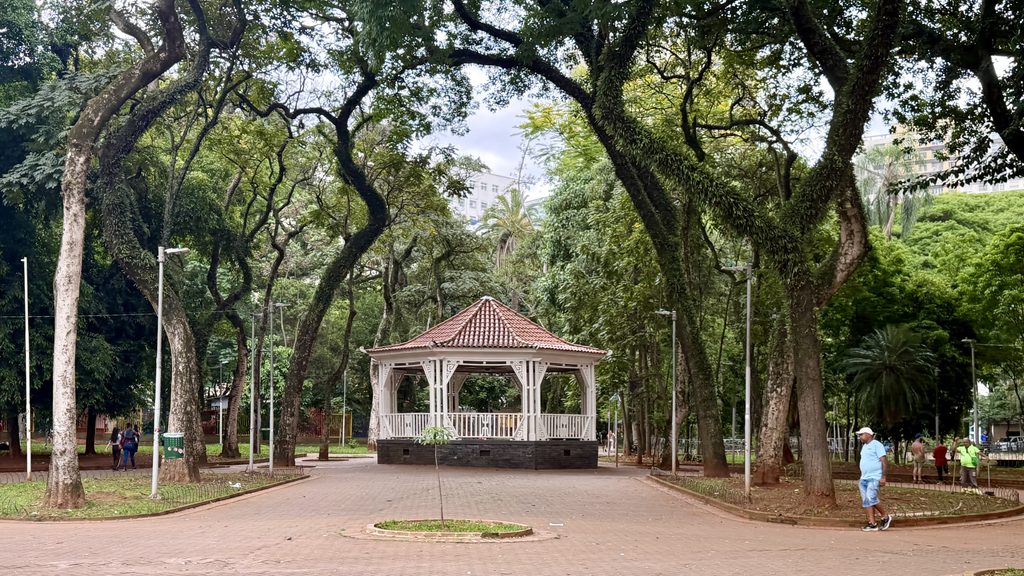
Praça da República (Republic Square) – Located near Edifício Itália this spacious public square received its current name after Brazil became a republic in 1889. One of the square’s most prominent buildings is Casa Caetano de Campos, built in 1894 and home to São Paulo’s State Education Department since 1979. On Sundays, Praça da República hosts a lively open-air market where artisans sell artwork, clothing, jewelry, and handicrafts, alongside food stalls offering a variety of local treats.
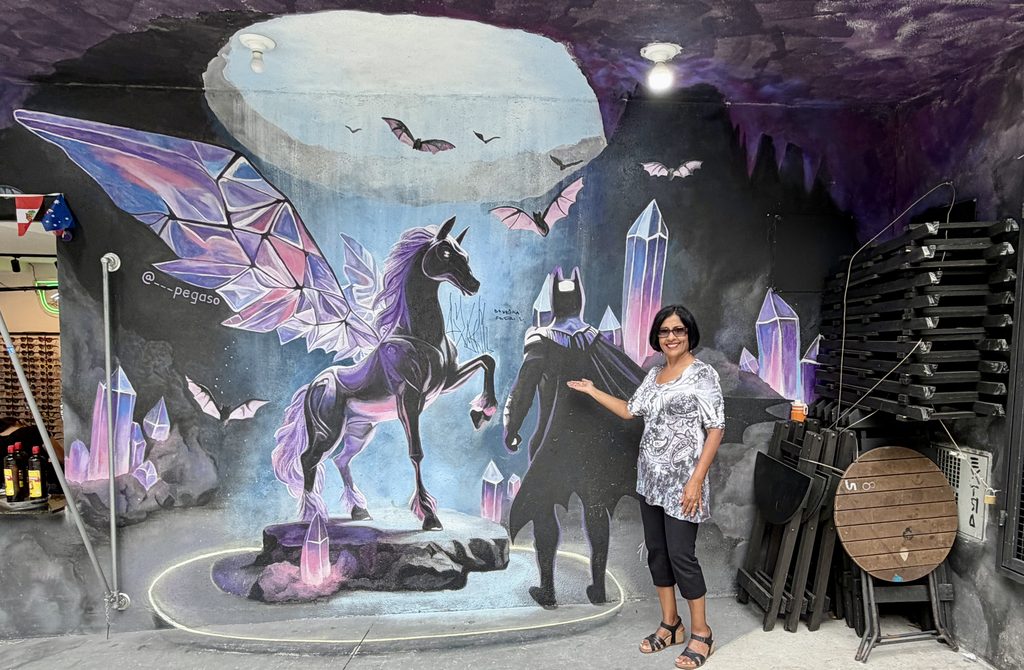
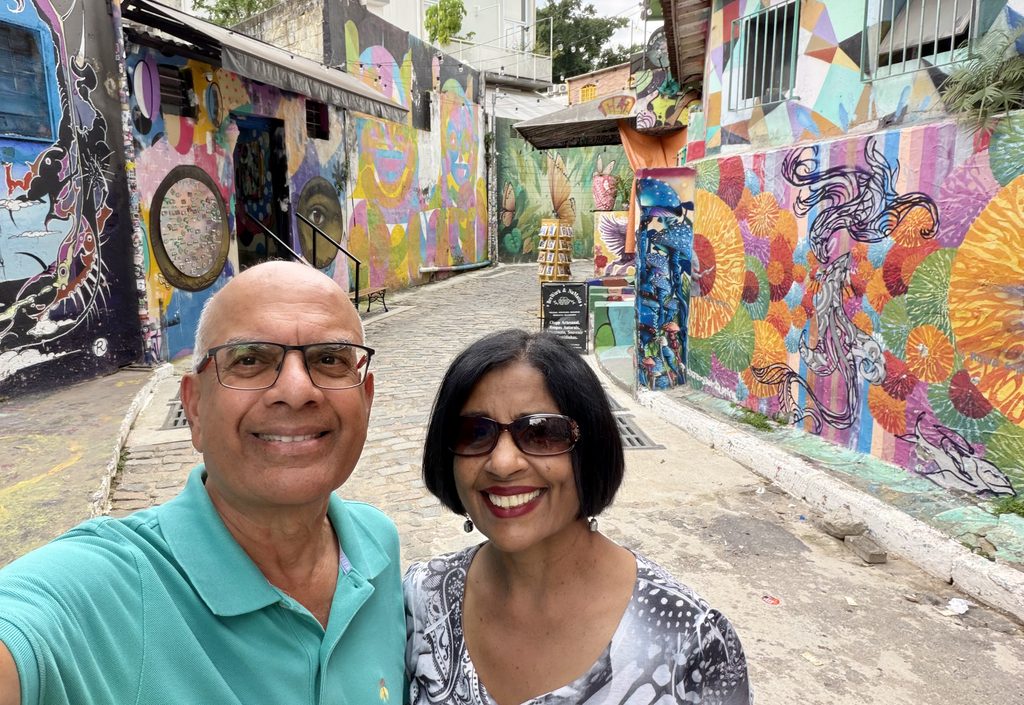
Beco do Batman (Batman Alley) – We took an Uber from Praça da República to Beco do Batman, one of São Paulo’s most famous destinations for street art and graffiti. Located in the Vila Madalena neighborhood, the alley earned its nickname in the 1980s after an image of the DC Comics character Batman appeared on one of its walls. Local art students later began transforming the surrounding walls with colorful murals influenced by psychedelic and Cubist styles. We spent a good hour wandering through the alley and nearby streets, admiring the ever-changing collection of vibrant street art and creative designs.
Ibirapuera Park – We spent the final half-day of our trip to São Paulo and Brazil exploring Ibirapuera Park, a large and beautiful green oasis in the heart of the city. One of Latin America’s most important urban parks, it was developed for São Paulo’s 400th anniversary celebrations in 1954, with architectural contributions by Oscar Niemeyer and landscape design by Otávio Augusto Teixeira Mendes.
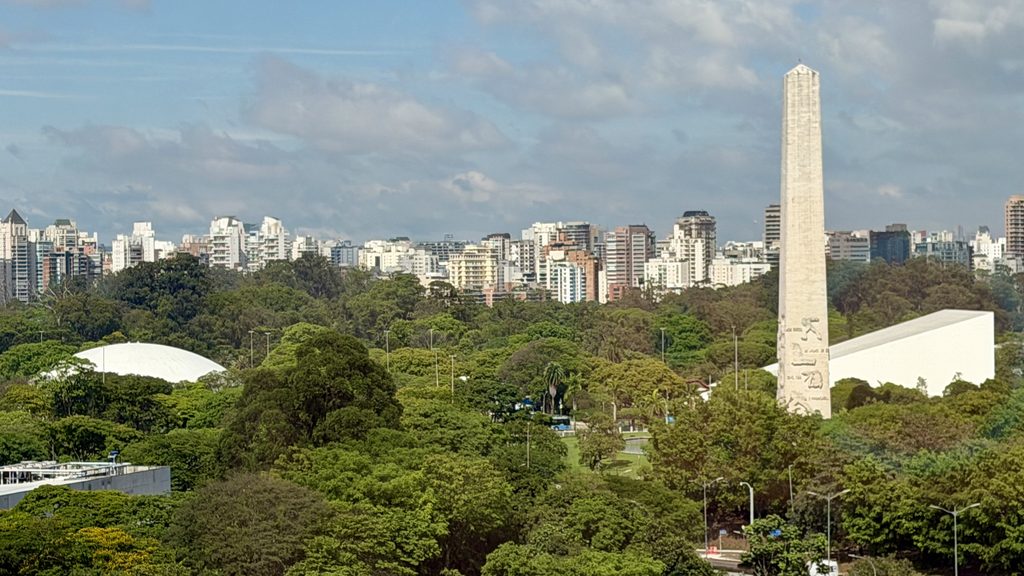
Beyond its expansive lawns, walking paths, and peaceful green spaces, the park is also a major cultural destination, home to several monuments, museums, exhibition spaces, and a concert hall.
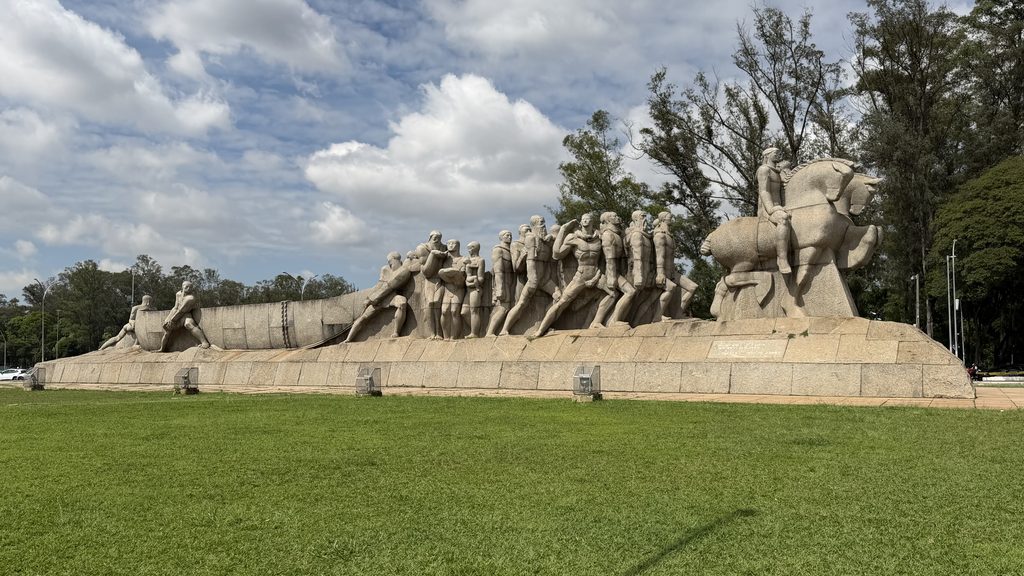
- Monument to the Bandeiras – Located near the entrance to Ibirapuera Park, this monumental granite sculpture was commissioned in 1921 and completed in 1954, and commemorates the bandeiras—17th-century expeditions that ventured into Brazil’s interior—and the bandeirantes who led them. The sculpture depicts a large group of figures pulling and pushing a boat-shaped structure, symbolizing the arduous journeys undertaken by these expeditions. However, the monument is also controversial because the bandeirantes were responsible for enslaving Indigenous people and violently expanding into their territories.
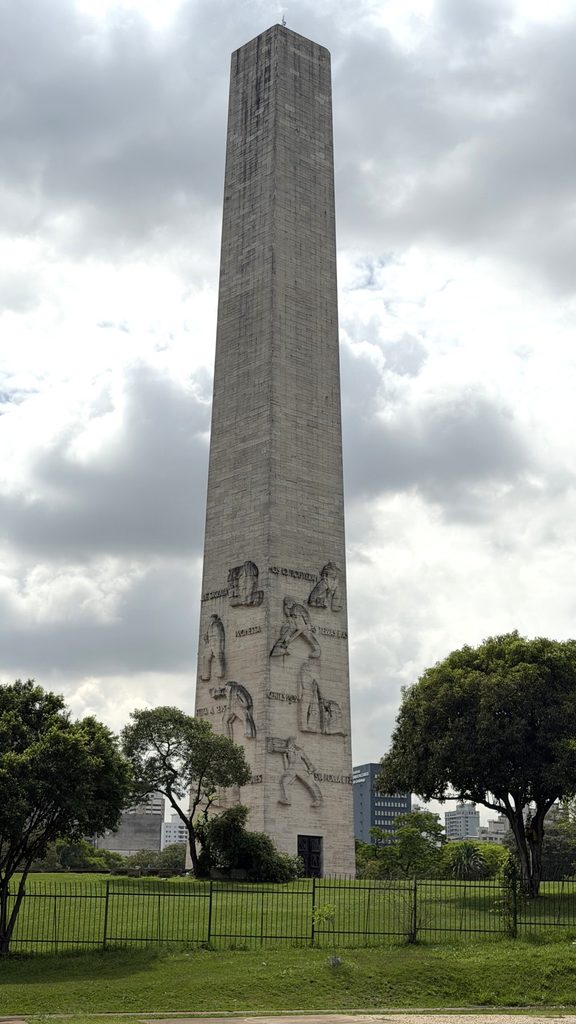
- Obelisk of São Paulo (Obelisco do Ibirapuera) – Located near Ibirapuera Park, this 72-meter-tall monument is the largest monument in São Paulo and a symbol of the Constitutionalist Revolution of 1932, when São Paulo rose against the federal government demanding a new constitution. The monument was inaugurated on July 9, 1955, with work completed in 1970.
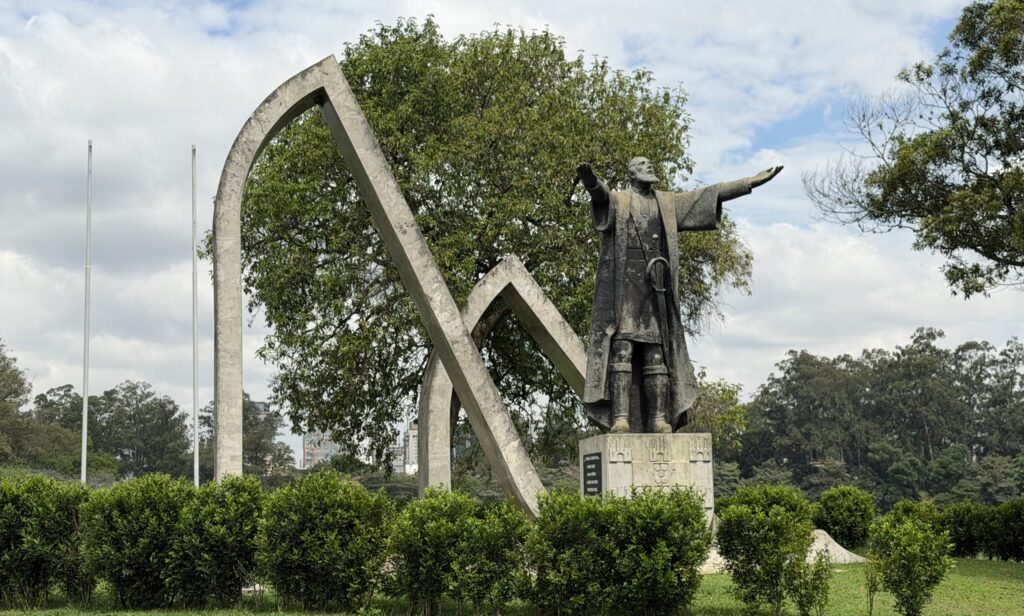
- Monument to Pedro Álvares Cabral – Another monument located near Ibirapuera Park, this bronze sculpture honors Portuguese navigator Pedro Álvares Cabral, whose expedition reached Brazil in 1500. The monument was inaugurated on June 10, 1988, commemorating the historical connection between Portugal and Brazil.
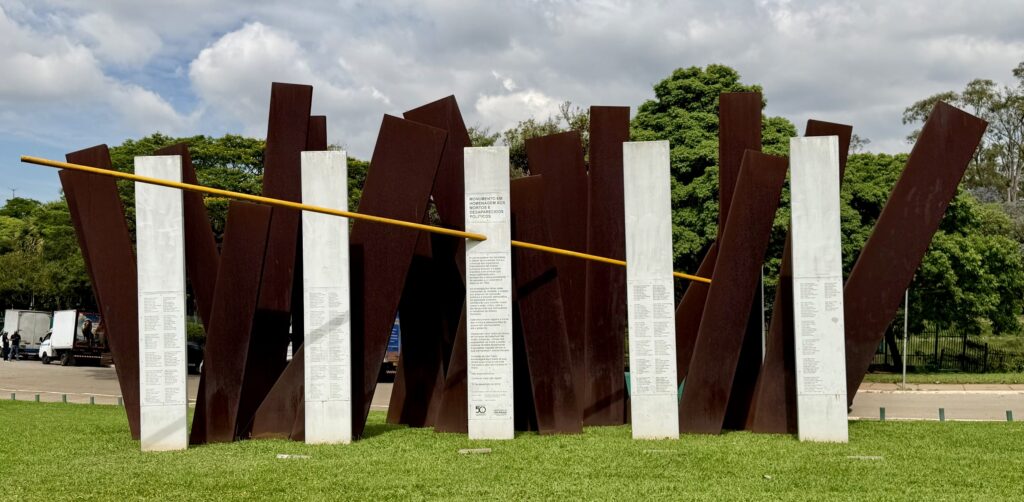
- Monument in Tribute to the Politically Dead and Disappeared – This memorial honors the victims of political persecution and violence in Brazil. Measuring approximately 6 m high and 12 m wide, it features white plaques inscribed with the names of 436 people who died or disappeared under political repression.
——————————————–
Other buildings around the park include the following –
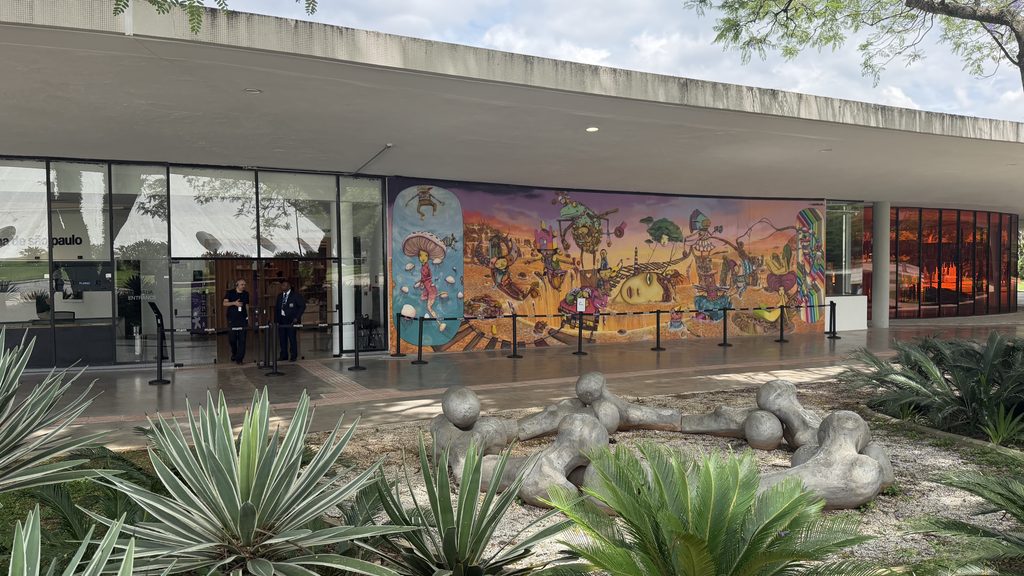
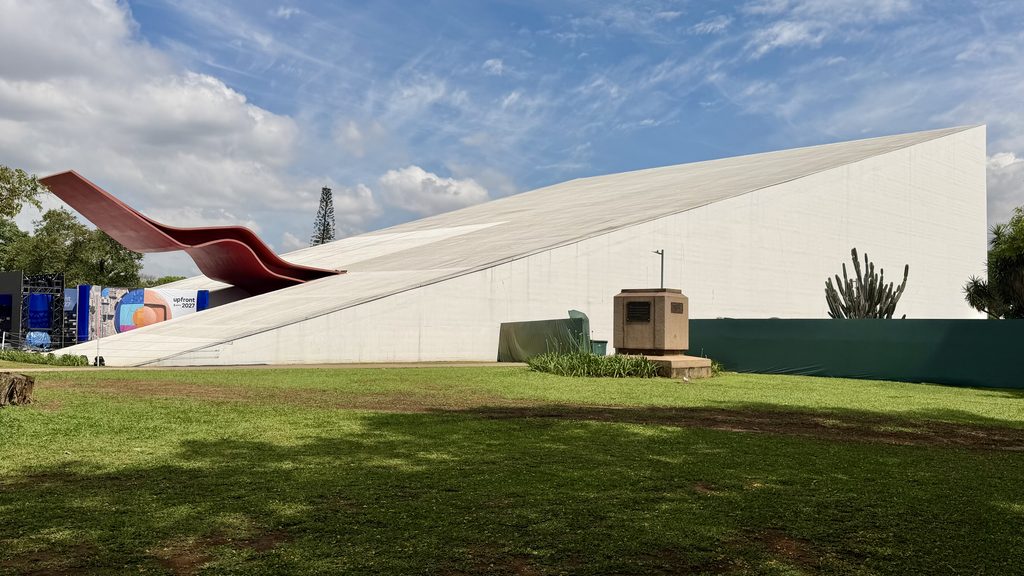
Ibirapuera Auditorium (Auditório Ibirapuera) – is a striking performance venue designed by renowned Brazilian architect Oscar Niemeyer. Originally conceived in the 1950s as part of his plan for the park, the auditorium was completed decades later, adding the final major building to the original architectural ensemble. Its minimalist design features a white, geometric concrete structure with a distinctive red metal canopy over the entrance, officially named Labareda, meaning “flame” in Portuguese. The auditorium hosts concerts and other cultural performances and has also served as a venue for major events, including the 2008 Latin Grammy Awards.
——————————————–
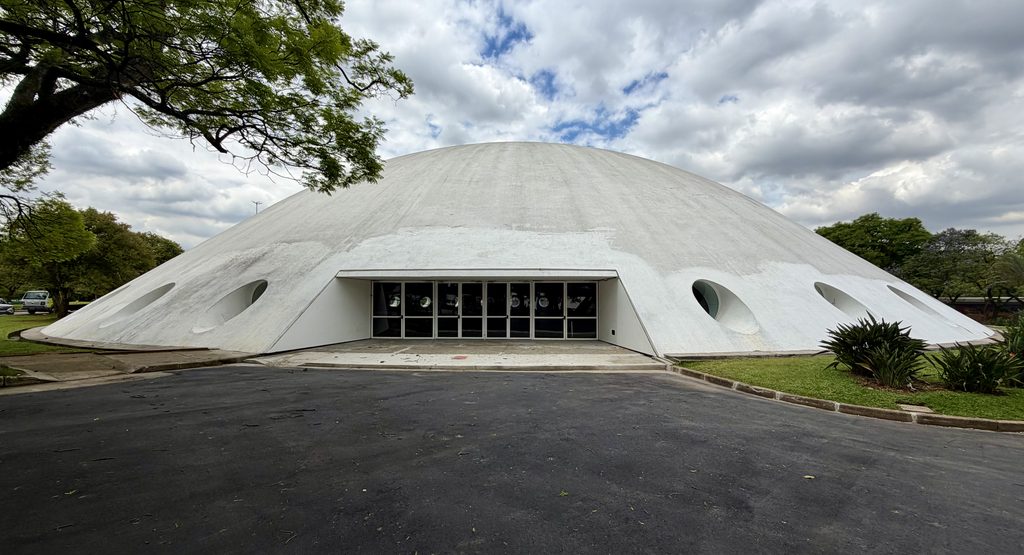
Oca (Lucas Nogueira Garcez Pavilion) – This futuristic, dome-shaped exhibition pavilion was designed in 1951 by renowned Brazilian architect Oscar Niemeyer, and completed in 1954 for São Paulo’s 400th anniversary. The building resembles a giant flying saucer and takes its name from the traditional Indigenous Brazilian dwelling called an oca. Its thin reinforced-concrete shell features circular porthole windows that allow natural light into the interior. Inside, four levels are connected by flowing ramps, creating an expansive exhibition space of approximately 10,000 square meters. Today, Oca serves as an important cultural venue, hosting major art exhibitions and immersive installations.
——————————————–
Museu Afro Brasil (Afro Brazil Museum) – celebrates the history, art, and cultural heritage of Black people in Brazil and their contributions to Brazilian society. Its extensive collection includes more than 6,000 items, such as paintings, sculptures, photographs, and historical documents, spanning from the 15th century to the present day. The museum is housed in the Manoel da Nóbrega Pavilion, part of the architectural complex designed by renowned Brazilian architect Oscar Niemeyer.
Museum of Modern Art of São Paulo (MAM São Paulo) – is dedicated to collecting, studying, and promoting modern and contemporary Brazilian art. The museum features a diverse range of exhibitions and cultural spaces, including a glass room, a library, and areas for temporary projects and installations. Its building was designed by Oscar Niemeyer and later adapted by renowned Italian-Brazilian architect Lina Bo Bardi. Adjacent to the museum is a 6,000-square-meter Sculpture Garden, where visitors can enjoy modern and contemporary sculptures in a beautiful outdoor setting.