Airbnb – 2 nights
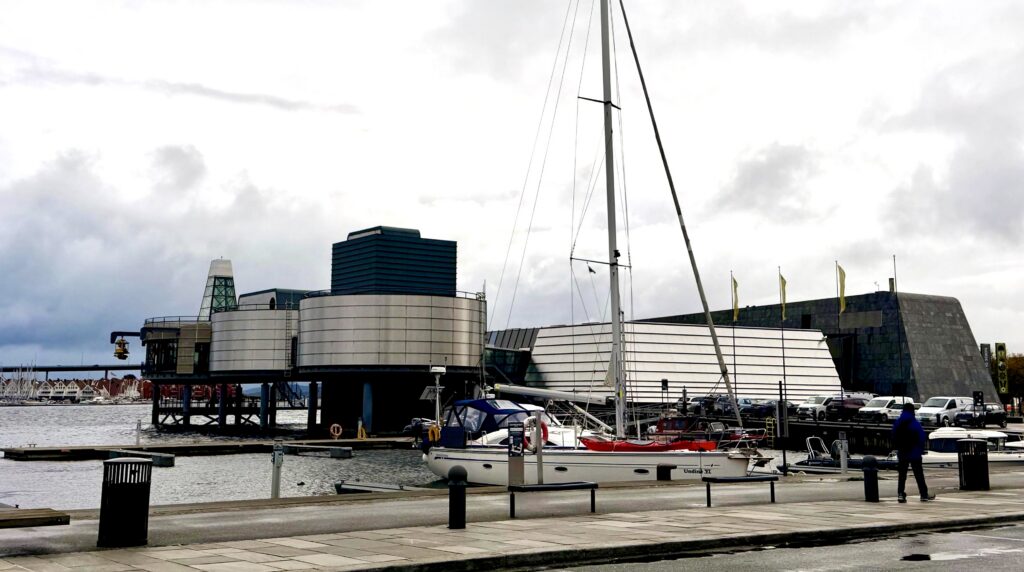
Stavanger is widely known as the Oil Capital of Norway (Oljehovedstaden) due to its role as the hub for the country’s offshore petroleum industry since the late 1960s. Following the first discovery of oil in 1969, the city transitioned from a fishing and shipping town to a technological hub. The Norwegian Petroleum Museum, built to resemble an oil platform, documents this history.
We flew from Oslo to Stavanger, where we were greeted by cooler temperatures and steady rain. Fortunately, the weather didn’t dampen our spirits, and we set out to explore the city soon after arriving. We had rented a car for our two-day stay, primarily to hike Pulpit Rock (Preikestolen), whose trailhead is about a 45-minute drive from Stavanger. Having our own car also gave us the flexibility to visit attractions on our own schedule and at our own pace.
We visited all the major sights in Stavanger on our first day, as they were all within walking distance of our Airbnb. We dedicated the second day to visiting Pulpit Rock, which is an almost full-day excursion.
- Stavanger Cathedral
- Domkirkeplassen
- Lysefjord
- Gamla Stavanger
- Breiavatnet
- Hiking Pulpit Rock (Preikestolen)
- Airbnb
- Norwegian Petroleum Museum
———————————————–
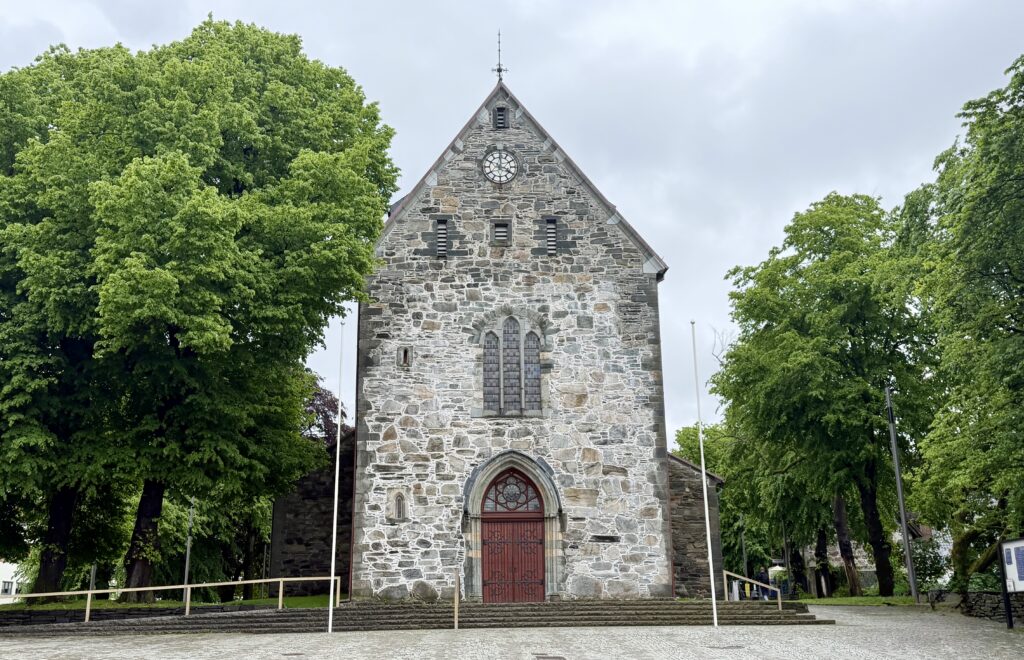
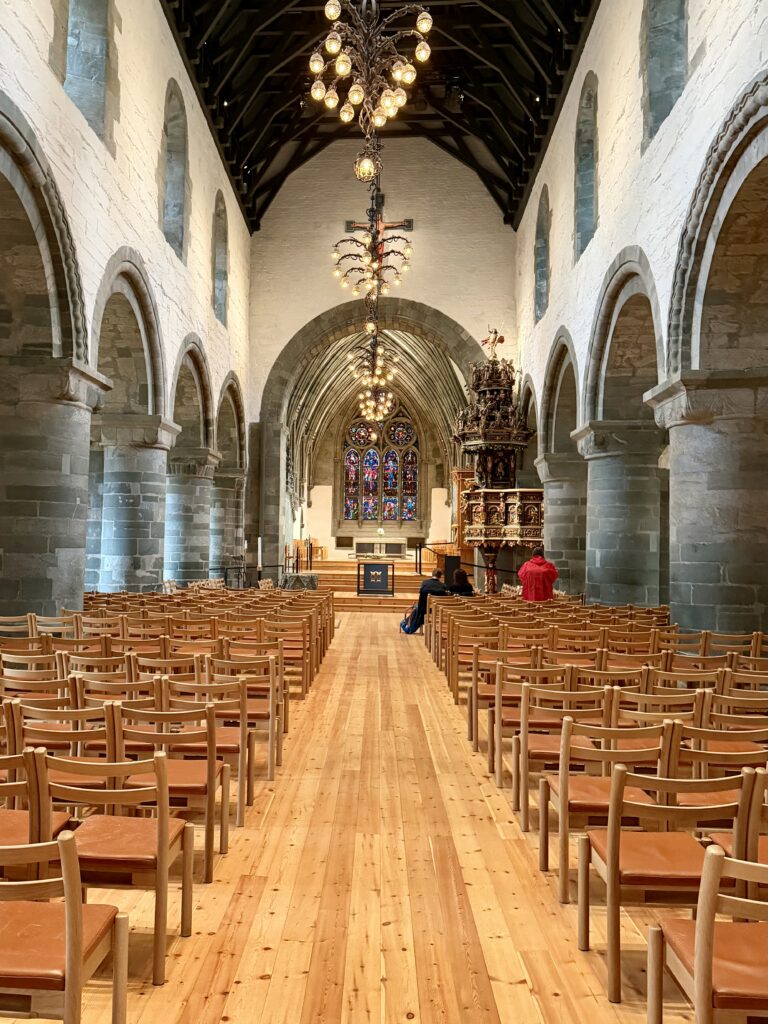
Stavanger Cathedral – Since it was drizzling when we started our site-seeing, our first stop was Stavanger Cathedral. It was the perfect place to escape the rain for a while while admiring one of Norway’s oldest and best-preserved medieval cathedrals.
Located close to the harbour in central Stavanger, it was originally built in the early 12th century in Romanesque style, then rebuilt and expanded in Gothic style after a fire in 1272. Inside, it features notable historic elements such as a richly carved Baroque pulpit (1658), and a soapstone baptismal font in the choir decorated with late 13th-century foliate and arch motifs.
Domkirkeplassen — This large square in front of Stavanger Cathedral leads to the harbour area. You can walk down toward the waterfront, where ferries depart and the harbour promenade offers a relaxed place for a stroll by the water.
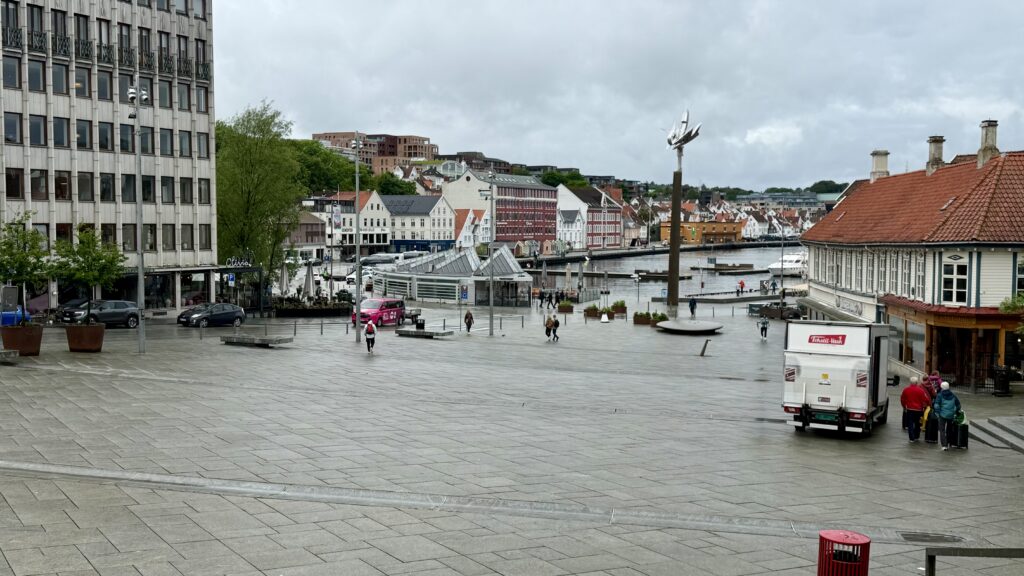
Before 1960, the plaza used to be known as Hestetorvet (the Horse Market) due to the lively trading that took place there during market seasons.
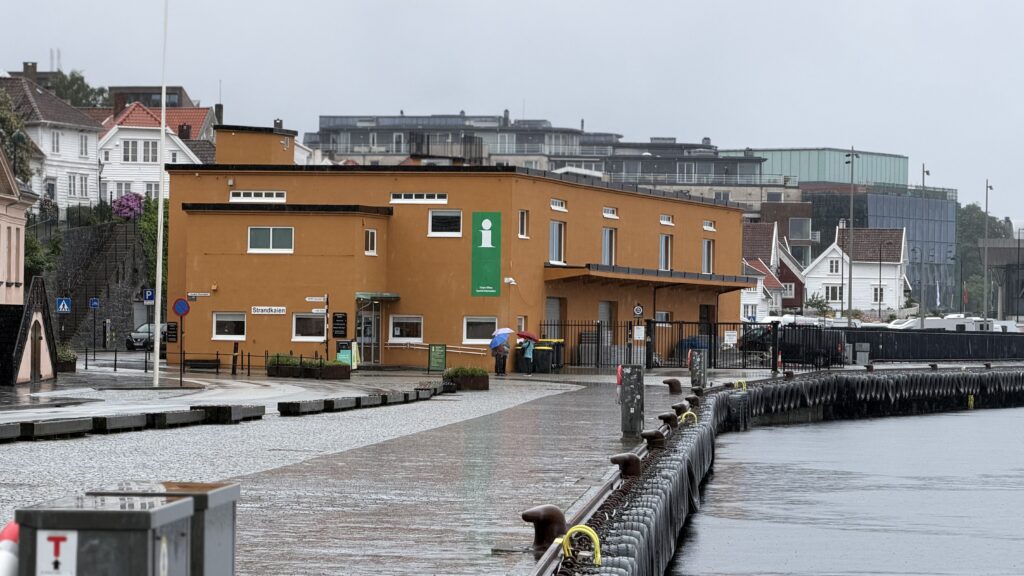
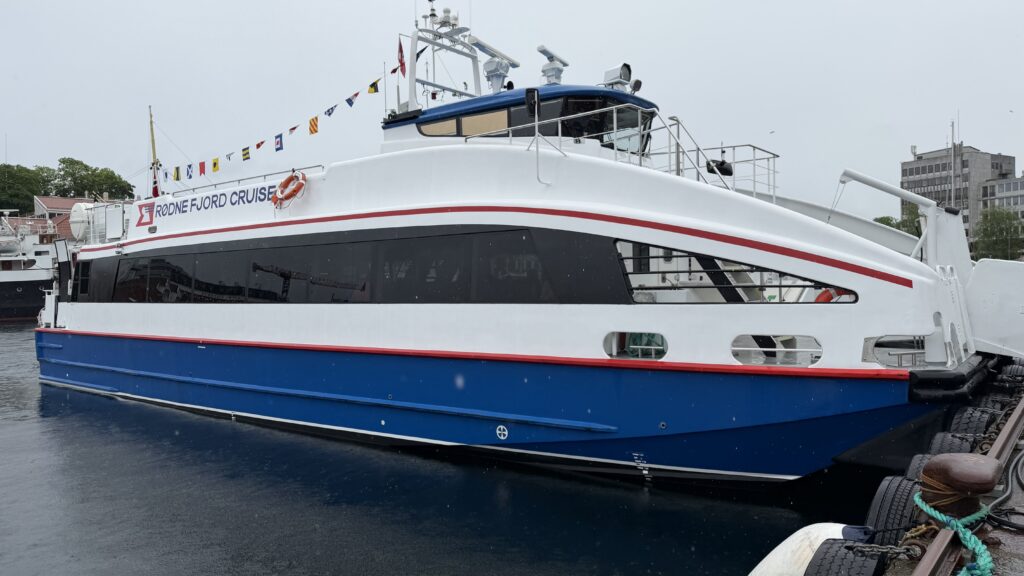
Lysefjord Boat Tour – We bought our tickets for the Lysefjord boat tour at the Stavanger Tourist Information office, which also provides up-to-date advice, brochures, and maps for exploring the Stavanger region, including attractions, activities, and accommodation. It was a quick and easy process – the person at the desk explained all the different tours and options available – we picked 3-hour Lysefjord boat trip with Rødne Fjord Cruise. We found the 3-hour cruise to be the right length—scenic and engaging without feeling too long.
The boat had large panoramic glass windows, allowing us to enjoy the breathtaking scenery from the comfort of the cabin at the start of the journey. It also had a small café serving hot and cold drinks, along with a selection of snacks.
We reached the fjord about an hour into the trip, and the weather cleared enough for us to step outside. The scenery opened up dramatically with steep cliffs and waterfalls dropping straight into the fjord on all sides. The boat made a few stops along the way, including moments to observe mountain goats being fed by the boat staff.

We also passed directly beneath Preikestolen (Pulpit Rock), the iconic cliff rising about 604 meters above the fjord. Another highlight was stopping in front of Hengjanefossen waterfall, where the boat edged close enough to feel the spray. The cruise then turned back and returned to Stavanger. It was the best boat ride we went on.
Gamla Stavanger – Gamle Stavanger is a historic district in Stavanger made up of well-preserved wooden houses from the 18th and early 19th centuries. After World War II, much of the old city was planned for demolition, but preservation efforts led by city architect Einar Hedén helped save this area. Today, Gamle Stavanger is a charming neighborhood of over 250 white wooden buildings, including small cottages and cultural sites like the Norwegian Canning Museum. It has transformed from a neglected area into one of the city’s most popular historic attractions.
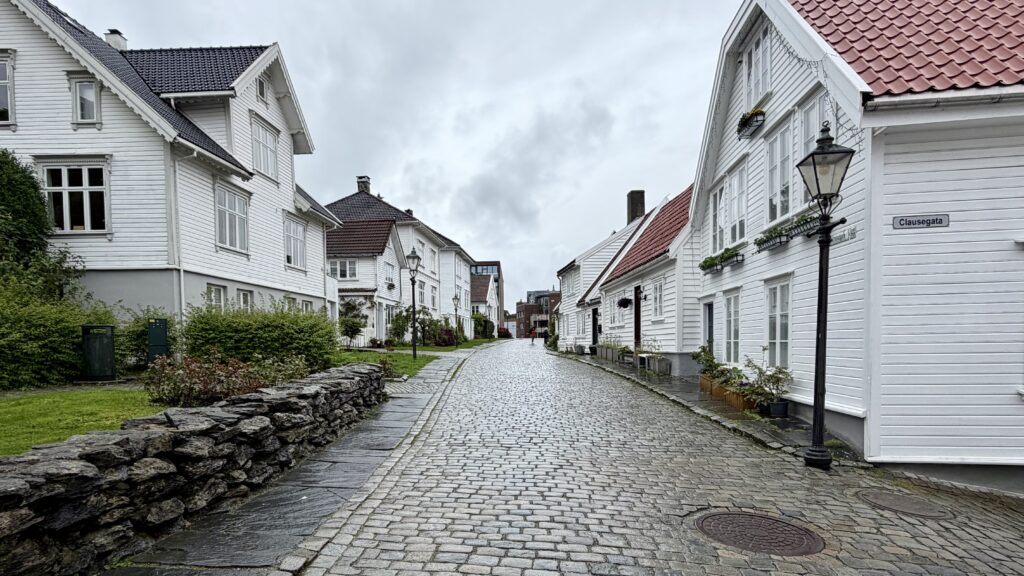
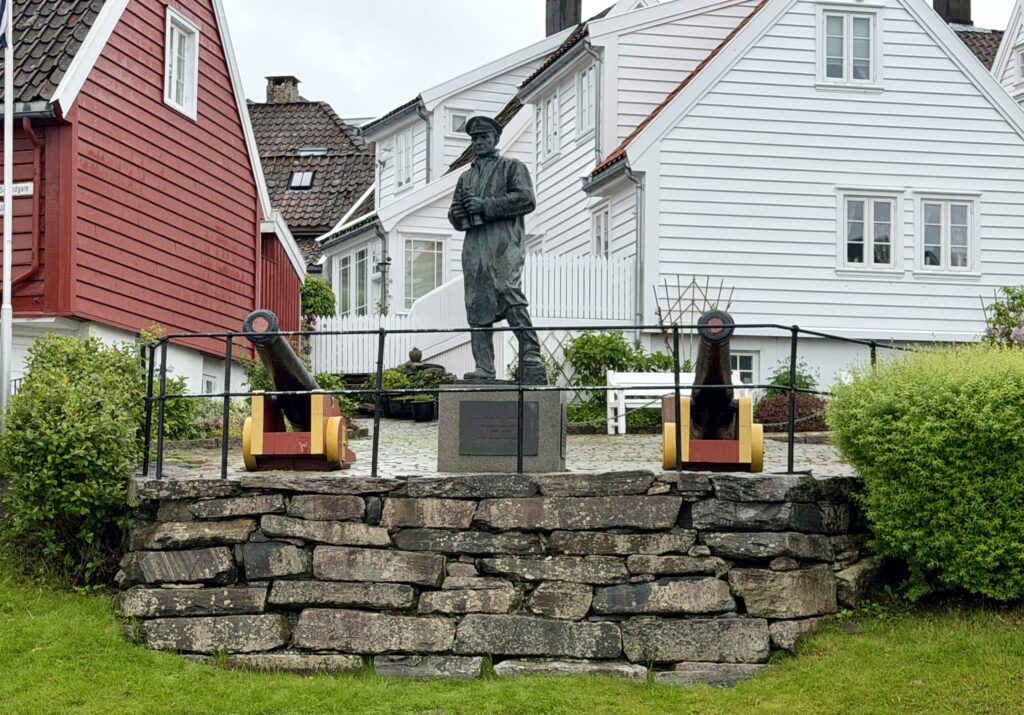
We spent an hour here walking the narrow cobblestone street admiring the whitewashed wooden cottages with cute garden in some of them. On the edge of Gamle Stavanger there is a statue of World War II naval hero Admiral Thore Horve (1899–1990). The statue honors Horve’s role during World War II, including his actions in April 1940 when he helped intercept a German troop transport using the destroyer Draug.
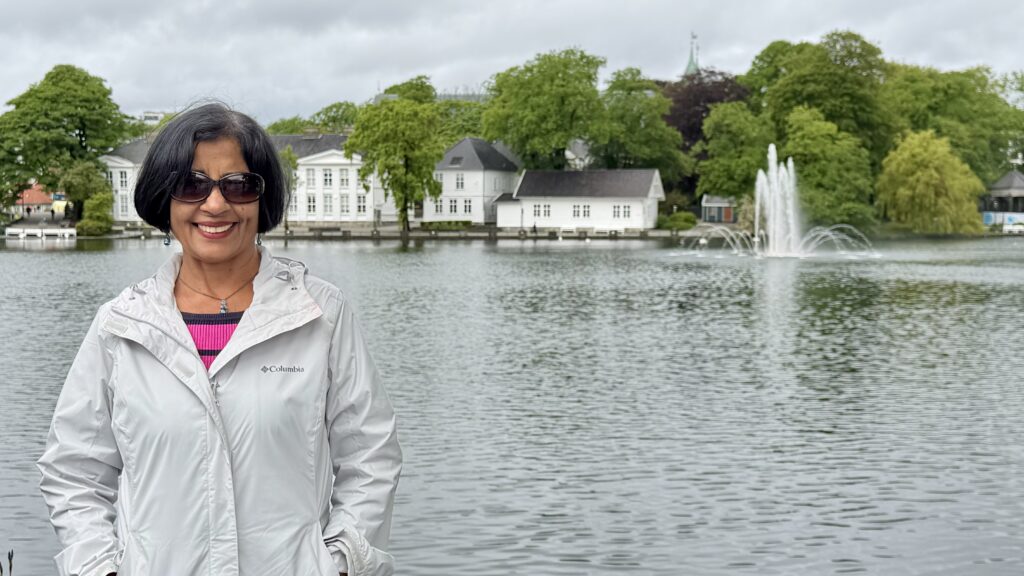
Breiavatnet – As we drove around the city, we came across a small lake with fountain situated in the centre. We stopped here for 10 minutes to admire the scenic location and take a picture.
Pulpit Rock (Preikestolen) is a steep cliff that rises 604 m over Lysefjord. The hike to the top is an 8 km round trip that typically takes 3-4 hours to complete without long stops.
Morning of the walk – When we woke up, it was drizzling and the weather looked gloomy. We decided to take a chance and do the hike anyway, hoping the conditions would improve—and we’re glad we did. The drive from our Airbnb in Stavanger to the Pulpit Rock trailhead took about 45 minutes. We arrived around 10:15 a.m. and the place was still relatively quiet. The trailhead is well-equipped with a café, ice cream shop, souvenir shop, and restrooms. Be sure to use the toilets before setting off, as there are none along the trail.
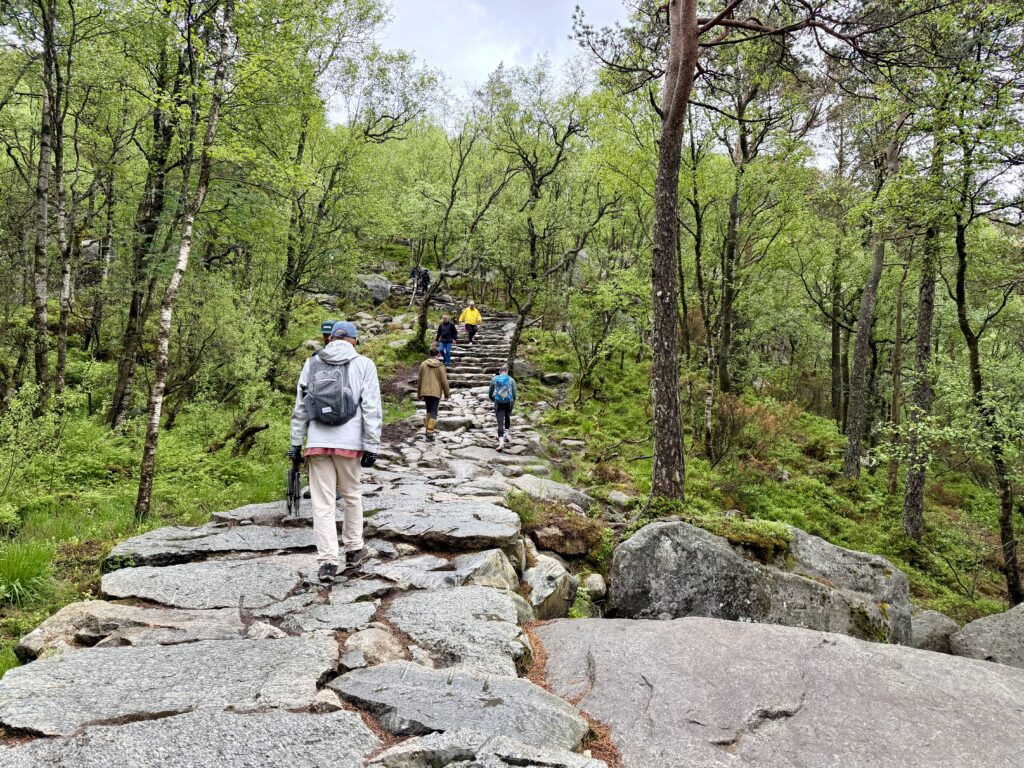
The hike begins with a steep 0.4 km climb, followed by a mostly uphill route with a few downhill sections. Before we even reached the halfway point, the rain had stopped completely and the sun made a brief appearance. Along the way you will pass by a few lakes. The trail alternates between wooden boardwalks, well-built stone steps, and rocky terrain. Although the path can be slippery when wet, we didn’t find it dangerous. With sensible hiking shoes and a bit of care, it’s a very manageable hike, even after rain.
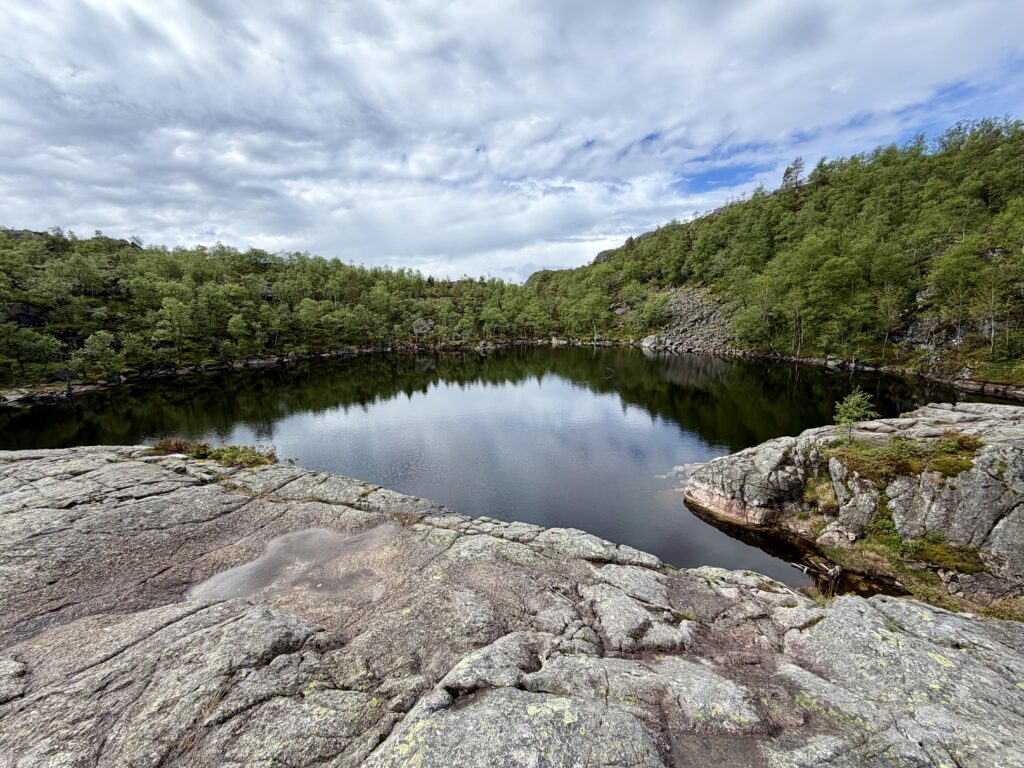
Reaching the summit made every step worthwhile. The clouds had cleared, rewarding us with breathtaking panoramic views over the Lysefjord.
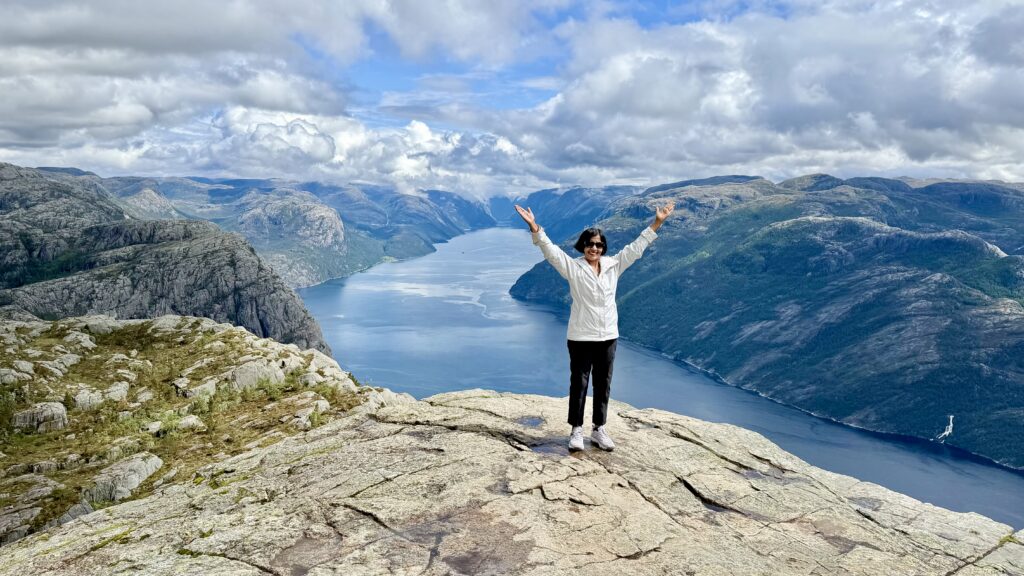
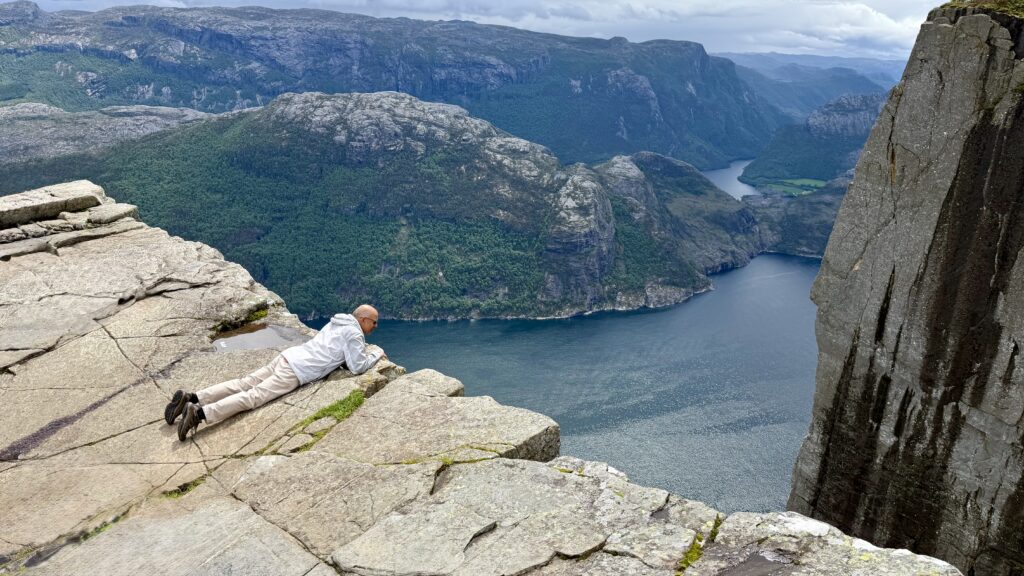
Total hike time – The round-trip hike took us about five hours, which included plenty of stops along the trail to take photos. We also spent around 45 minutes at the summit, soaking in the spectacular panoramic views of the Lysefjord before making our way back down.
Airbnb in Stavanger – was within easy walking distance of the city center and had free parking, washer, and dryer. There was also a supermarket just a few minutes away, where we stocked up on vegetables, bread, eggs, and milk. Having access to a kitchen meant we could prepare our own breakfast and dinner during our two-night stay.
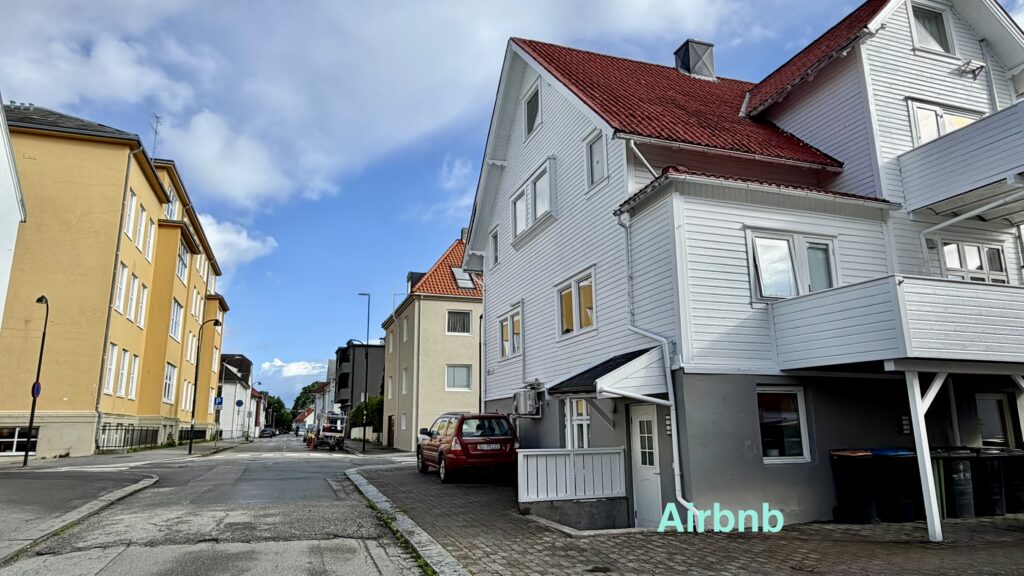
Norway is one of the most expensive countries in Europe, especially when it comes to dining out. Cooking a few meals ourselves was a simple way to keep costs down without sacrificing comfort.
Norwegian Petroleum Museum – We did not have time to visit this museum but heard that it is worth a visit. Even if you don’t have a particular interest in the oil industry, the museum is said to provide a fascinating insight into how offshore petroleum transformed Norway into one of the world’s wealthiest nations. Opened in 1999, the museum’s striking design resembles a small offshore oil platform, making it one of Stavanger’s most recognizable waterfront landmarks. Inside, interactive exhibits, films, photographs, and real-life equipment trace the development of Norway’s petroleum industry—from the first North Sea drilling operations in the 1960s to today’s advanced offshore platforms, production ships, and subsea technology.