2 nights in Scandic Ørnen, 1 Night in Clarion Hotel Bergen Airport Terminal
Nestled between mountains and fjords on Norway’s west coast, Bergen is the country’s second-largest city and serves as the gateway to Norway’s spectacular fjords. The city’s historic Bryggen waterfront, with its iconic rows of colorful wooden buildings, is now a UNESCO World Heritage Site and one of Bergen’s most recognizable landmarks.
Bergen is famous for its ever-changing weather, receiving rain on around 200 days a year, and we experienced that firsthand. It rained on two of the three days we were there, but fortunately the showers were light and short-lived, rarely disrupting our plans. We had packed rain jackets and were well prepared for the rainy weather.
—————————————————
Stay in Bergen – We flew from Stavanger to Bergen and took the light rail from the airport to Scandic Ørnen, our hotel for the first 2 nights. The hotel was just a 3-minute walk from the light rail stop, making it an easy and convenient transfer after our flight. Most of Bergen’s main attractions were within walking distance of the hotel. We were also planning to do Norway in a Nutshell tour on the second day of our stay and the Bergen Railway station—where the journey begins—was within 3-minute walk from the hotel.
On Day 3 after visiting the rest of the sites around Bergen, we checked into an airport hotel for our final night. Since we had an early morning flight to Trondheim, staying near the airport made for a much more relaxed and stress-free departure.
—————————————————
- St. Mary’s Church
- Bryggen
- Torgallmenningen Square
- Lille Lungegårdsvannet
- Byparken
- Bergenhus Fortress and Rosenkrantz Tower
- Bergen Station
- Norway in a Nutshell
- Fløibanen Funicular to Mount Fløyen
- Mount Ulriken
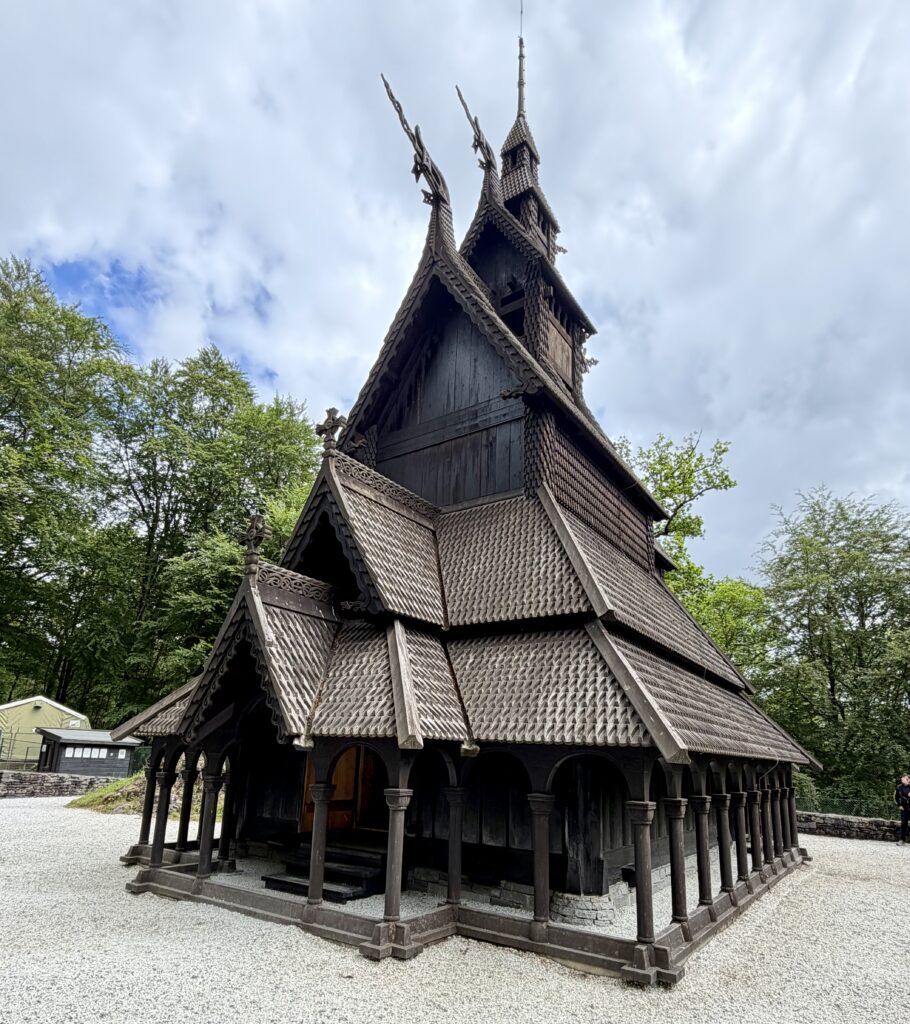
- Fantoft Stave Church
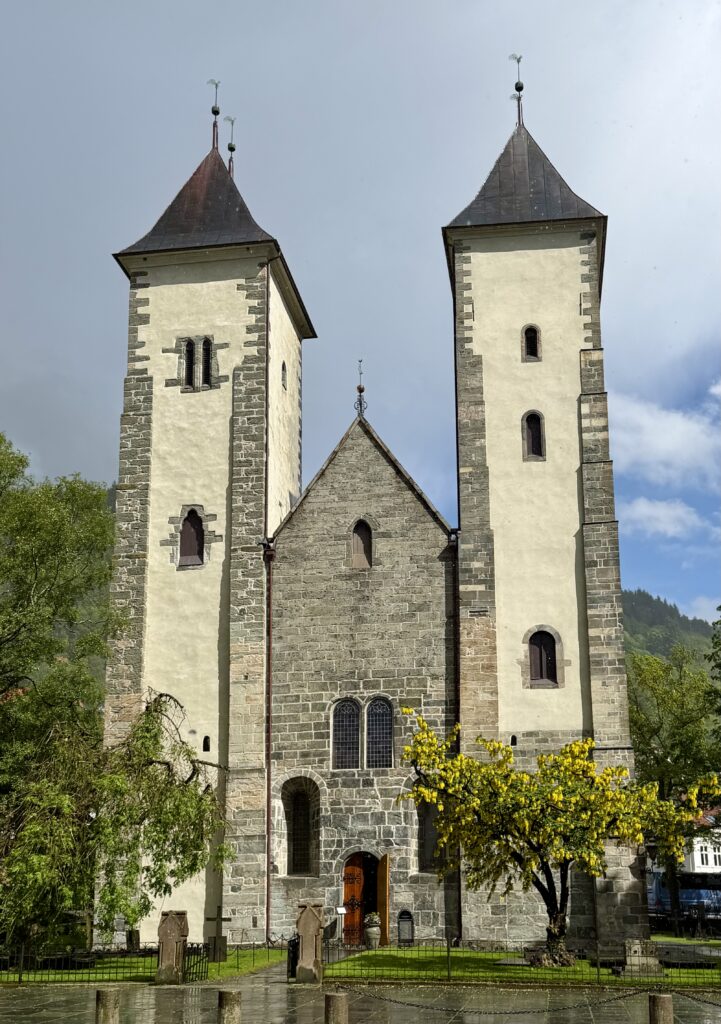
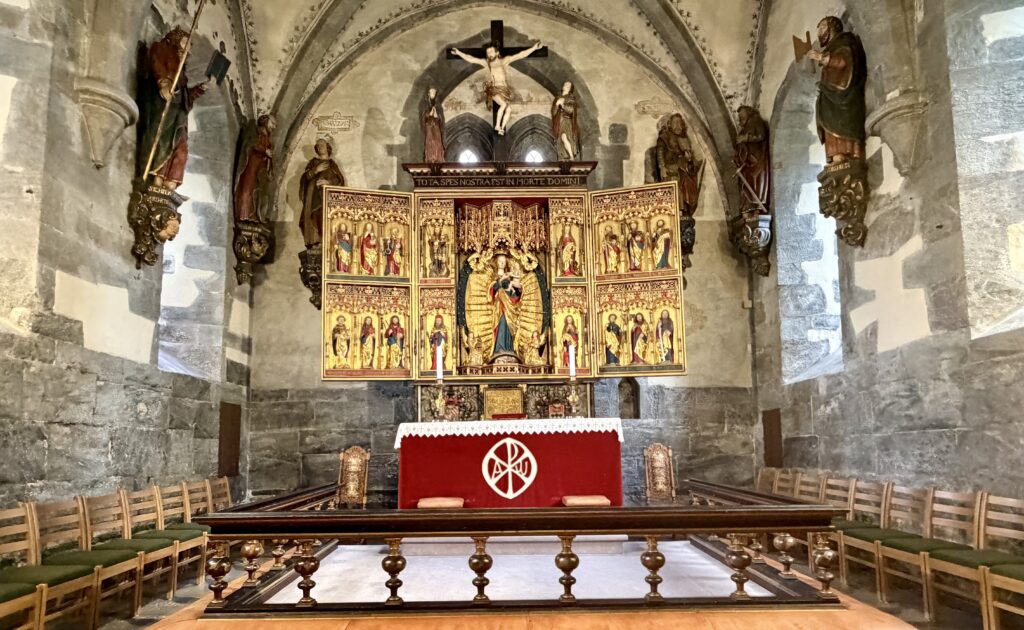
St. Mary’s Church – was our first stop and $10 to see the interior. The church is the oldest surviving building in Bergen, believed to have been constructed between 1130 and 1170. Built in Romanesque style as a basilica, it features a high central nave with two lower side aisles, a design more commonly seen in medieval cathedrals than in typical parish churches. Its most recent major restoration was completed in 2015, carefully preserving its historic structure and reopening it to the public.
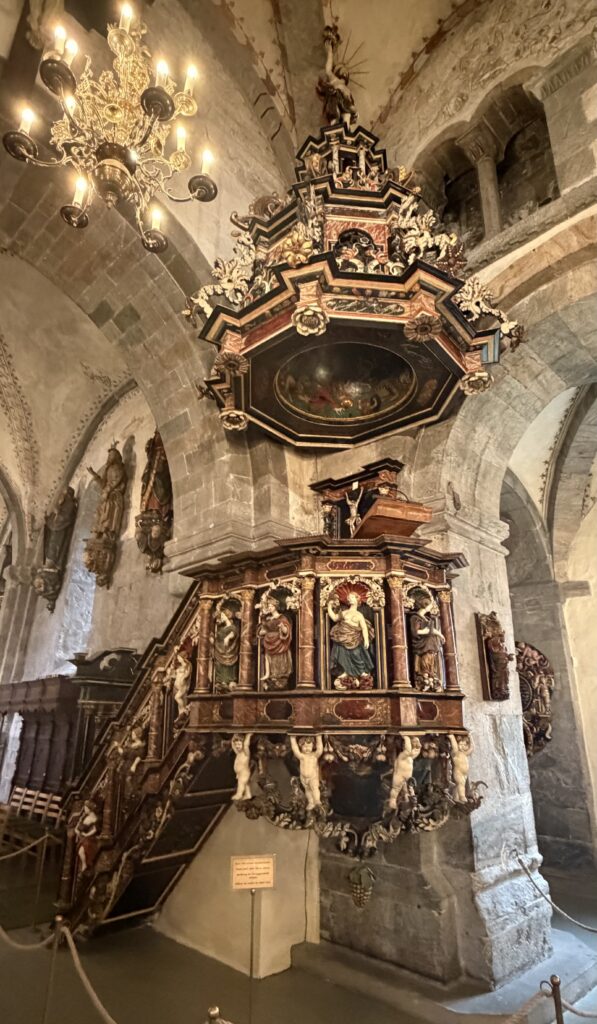
The church is notable for its twin-towered west front. Inside, it houses a late 15th-century North German altar reredos from Lübeck, depicting scenes from the life of Christ along with figures such as Mary, St. Olav, and the apostles. It also features a 17th-century pulpit gifted by merchants from Bryggen and life-sized wooden biblical figures.
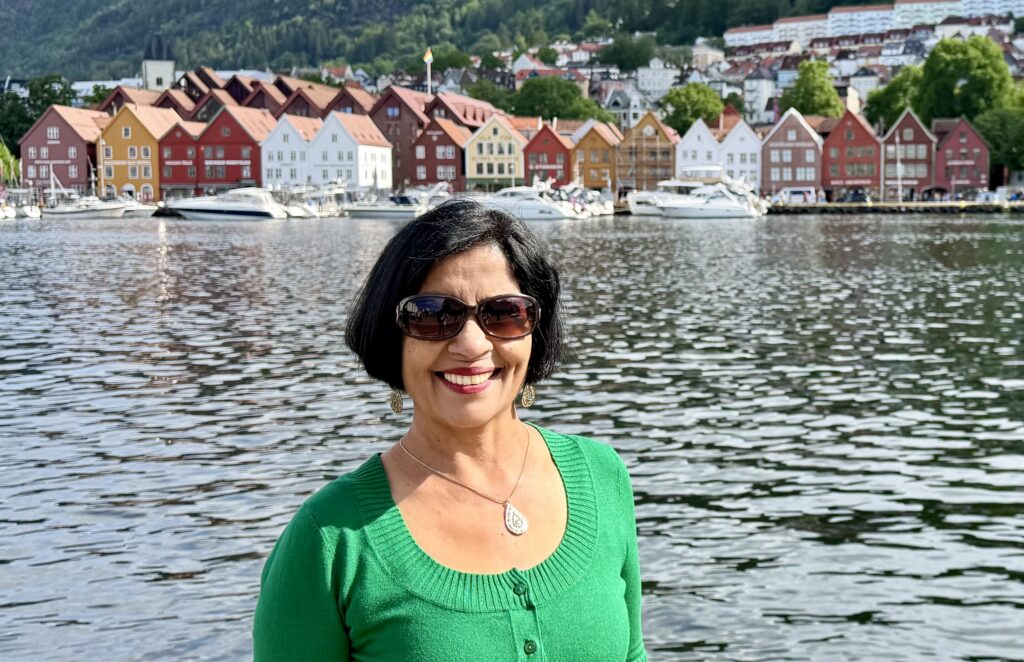
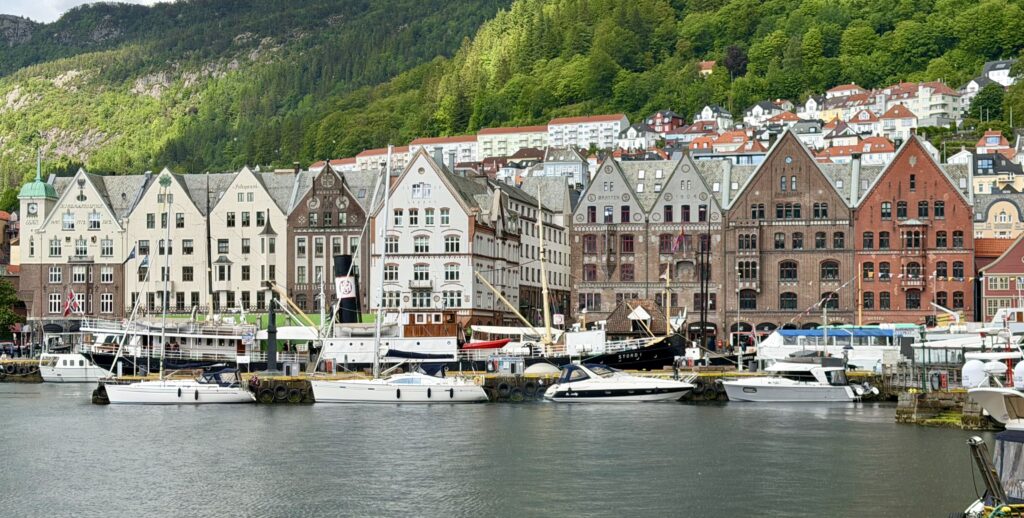
Bryggen – aka Tyskebryggen (the German dock) is Bergen’s historic harbor district and a UNESCO World Heritage Site. In 1350, the Hanseatic League established its trading office here, controlling the export of stockfish from Northern Norway for centuries. The colorful wooden buildings seen today were rebuilt after repeated fires, with the current layout dating largely from after the 1702 fire. The preserved rows of narrow wooden buildings, passages, warehouses, and workshops offer a glimpse into the lives and working conditions of Hanseatic merchants.
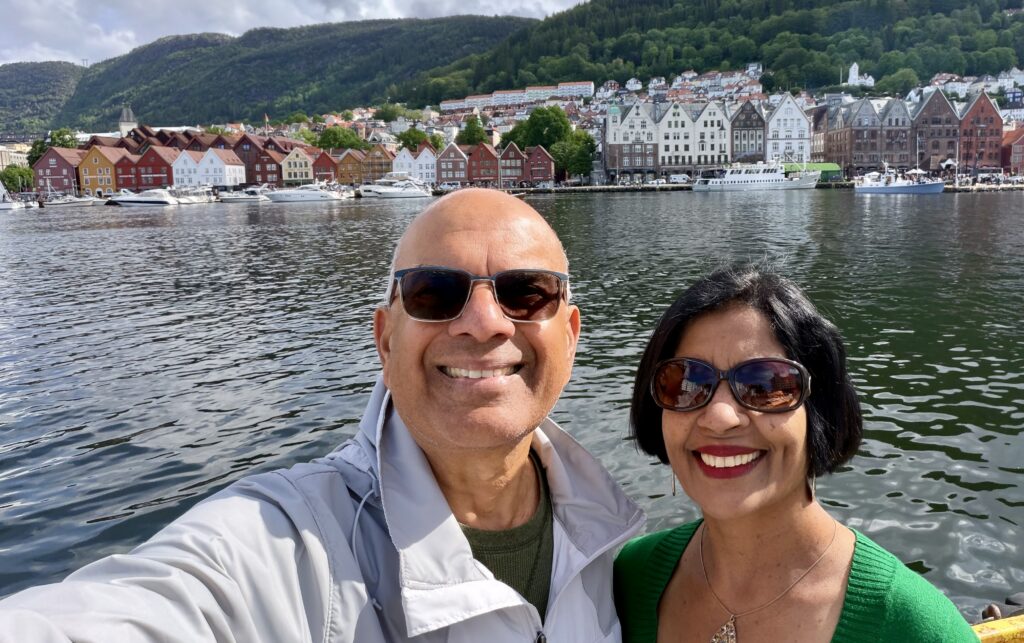
Today, around 60 historic buildings remain, housing museums, shops, restaurants, and artisan workshops. Despite modernization, Bryggen continues to preserve the character and atmosphere of one of Europe’s oldest trading districts.
Torgallmenningen Square – is Bergen’s lively pedestrian boulevard and one of the city’s main gathering places. Known as one of Norway’s best-designed town squares, it is lined with shops, cafés, and historic Scandinavian neoclassical buildings. The square was redesigned after the devastating 1916 fire that destroyed much of central Bergen. Its name reflects its history—Torg means market, while allmenningen refers to the wide communal spaces created in medieval times to help prevent fires from spreading.
At the center of the square stands the Seafarers’ Monument (Sjøfartsmonumentet), a 1950 sculpture by Dyre Vaa depicting Norway’s maritime history from the Viking era to modern times.
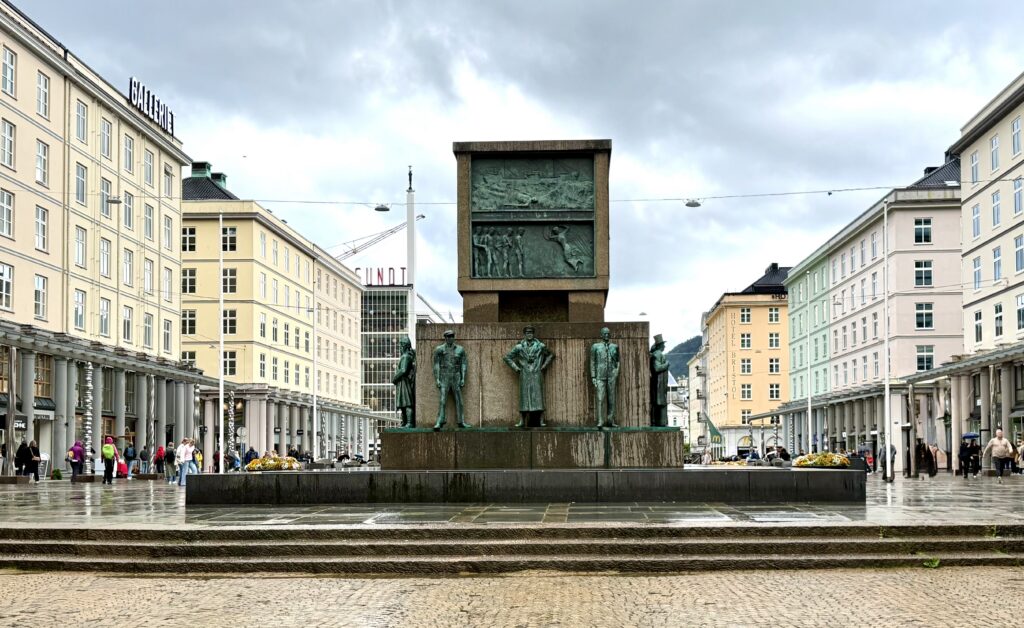
Lille Lungegårdsvannet – This picturesque octagonal lake in the heart of Bergen was located very close to our hotel and we passed by it many times on our walks around the city. At its center is a large decorative fountain that serves as a focal point of the surrounding park. The lake is a great place to take a leisurely stroll, with walking paths, benches, and beautiful views of the surrounding mountains. On a calm day the fountain and nearby buildings are reflected in the water.
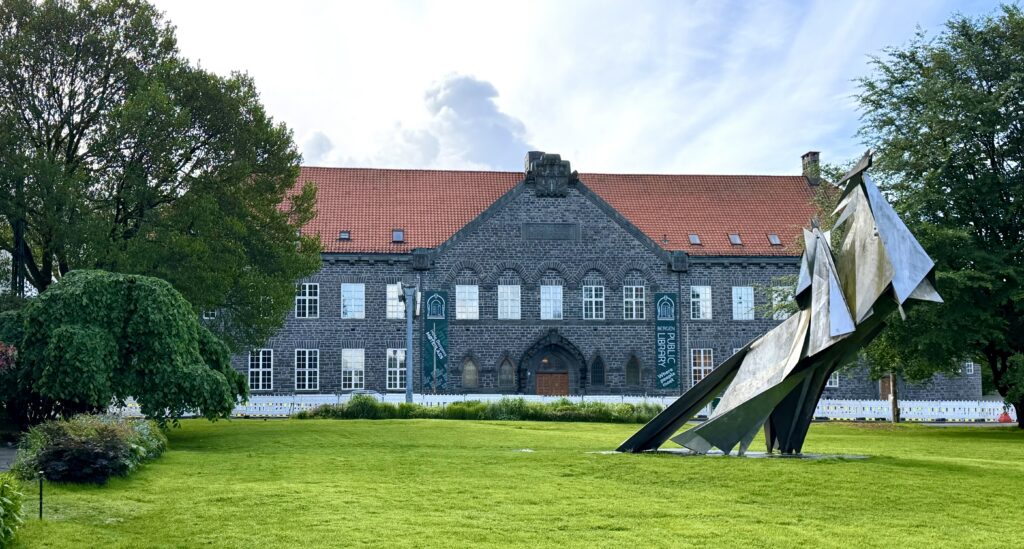
Bergen Public Library – has been serving the city since 1872. Its current building, completed in 1917, was designed in the elegant Neo-Romanesque style. Located near lake Lille Lungegårdsvannet, the library is known not only for its impressive architecture but also as a welcoming public space for reading, studying, exhibitions, and cultural events. If you are looking for a quiet break from sightseeing, it’s worth a quick visit.
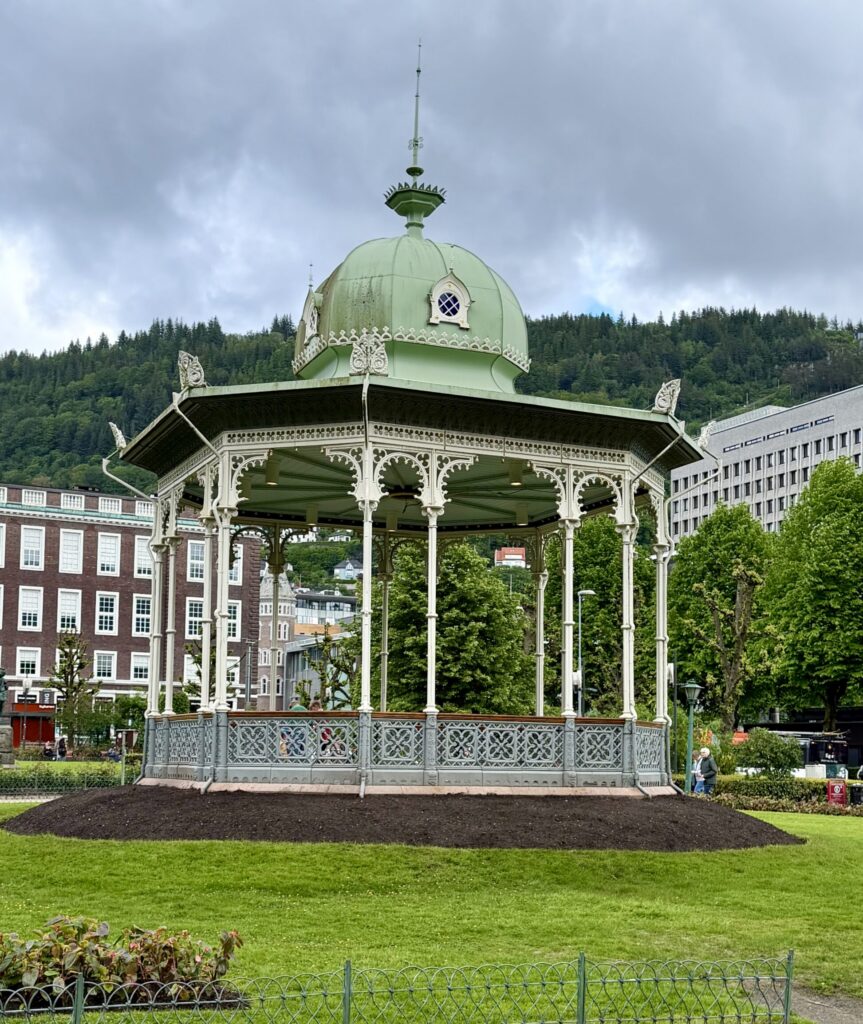
Byparken – is a large city park located at the west end of Lille Lungegårdsvannet. The rectangular greenspace was created in 1865, a decade after a fire ravished over 180 homes in the neighborhood. The centerpiece is this lovely cast-iron Music Pavilion with Moorish details. Musikkpaviljongen was gifted to the city in 1888. In the background is the former Telegraph Building. The first floor is now the Telegrafen Shopping Center.
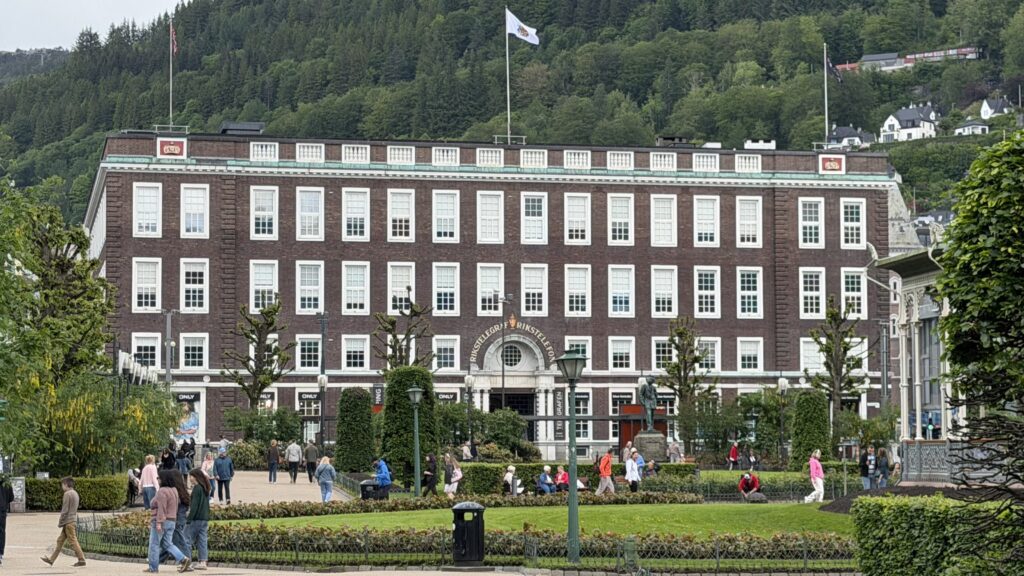
At the Southwestern End of the park is the Den Nationale Scene (The National Stage), Norway’s oldest permanent theater, housed in a distinctive, grandiose Art Nouveau building completed in 1909.
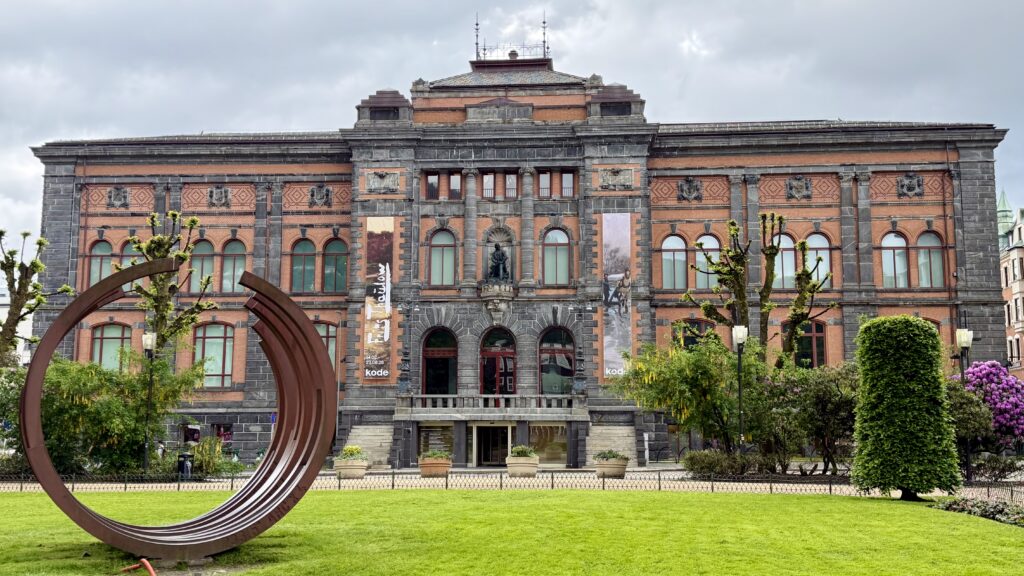
Bergenhus Fortress – is one of Norway’s oldest and best-preserved fortresses. Originally established as a royal residence and later used as a military stronghold, it has played an important role in Bergen’s history for over 700 years. The fortress was expanded during the 16th and 17th centuries and famously defended Bergen during the Battle of Vågen in 1665. During World War II, it served as the headquarters of the German occupying forces before being carefully restored after the war.
Today, most of the fortress grounds are open to the public and provide a beautiful setting for walks, concerts, festivals, and cultural events. Admission to the fortress is free, although museums and special events may require a ticket.
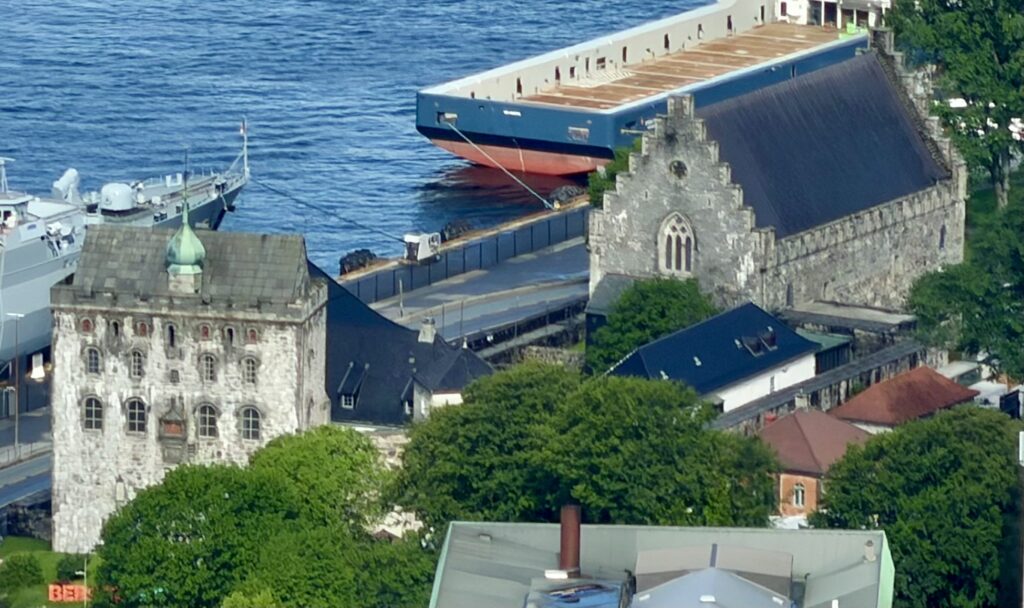
Rosenkrantz Tower – part of the historic Bergenhus Fortress, its oldest sections date back to the 1270s. The tower acquired its present appearance in the 1560s under Governor Erik Rosenkrantz, after whom it is named. Originally built as a defensive keep, the tower later housed dungeons, the governor’s living quarters, and cannon positions. In the 18th century, it was converted into a gunpowder magazine before opening to the public in 1966. Today, visitors can explore the historic rooms, climb to the top for panoramic views of Bergen, and learn about the tower’s important role in the city’s medieval and military history.
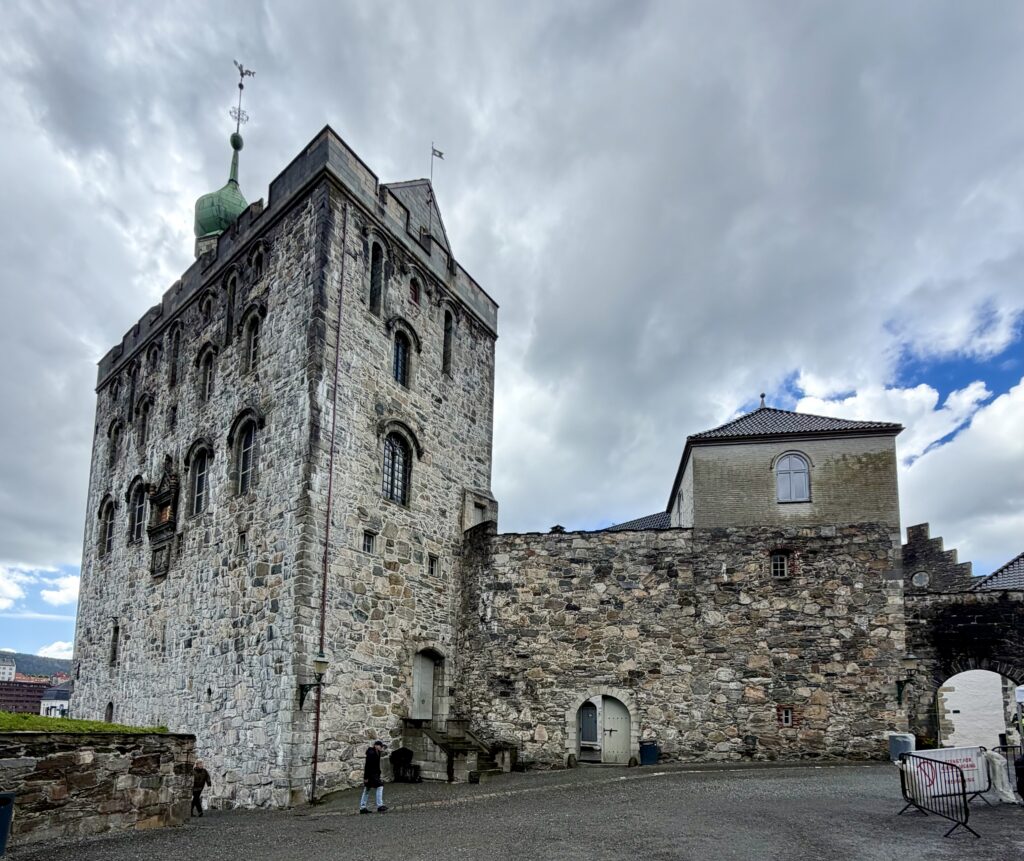
Both the Fortress museum and the Rosenkrantz Tower was not open on the day of our visit.
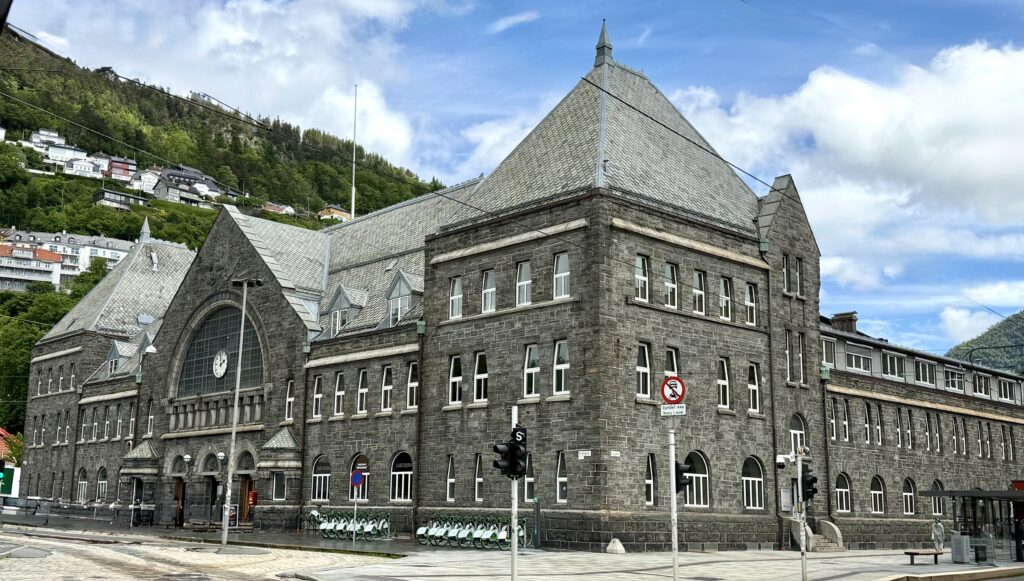
Bergen Railway Station is one of the city’s most striking landmark, with its impressive stone façade catching your eye every time you approach it. Opened in 1913, it replaced an earlier station and has since served as the main hub for long-distance and regional rail services.
Designed in the National Romantic (Nordic) architectural style, the station is considered one of Norway’s finest railway buildings. Located within easy walking distance of Bergen’s city center, it is also the starting point for the popular Norway in a Nutshell tour.
Norway in a Nutshell – This 1-day self-guided tour combines the Bergen Railway, the Flåm Railway, a cruise along UNESCO-listed fjords (Aurlandsfjord and Nærøyfjord), and a bus journey through the Nærøydalen Valley. We took the Bergen-Bergen route.
- Bergen to Voss in a train – 8:29am-9:41am – Voss is surrounded by mountains and waterfalls. The ride was quite scenic with lots of Mountain Views, a few waterfalls, lovely streams and lakes
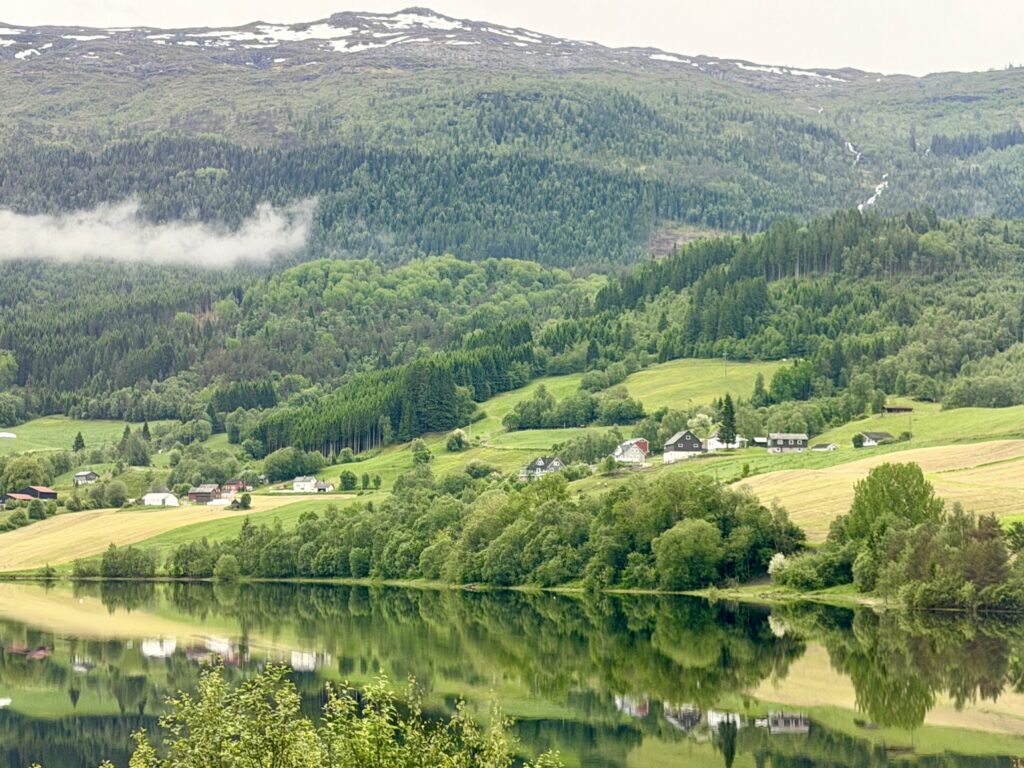
- Voss to Gudvangen in a bus – 10:10am-11:10am – you will drive thru the heart of Norway’s fjord country. We saw some stunning sceneries, cascading waterfalls, and towering cliffs with gushing water streams below. It was hard to capture the scenic beauty from the moving bus.
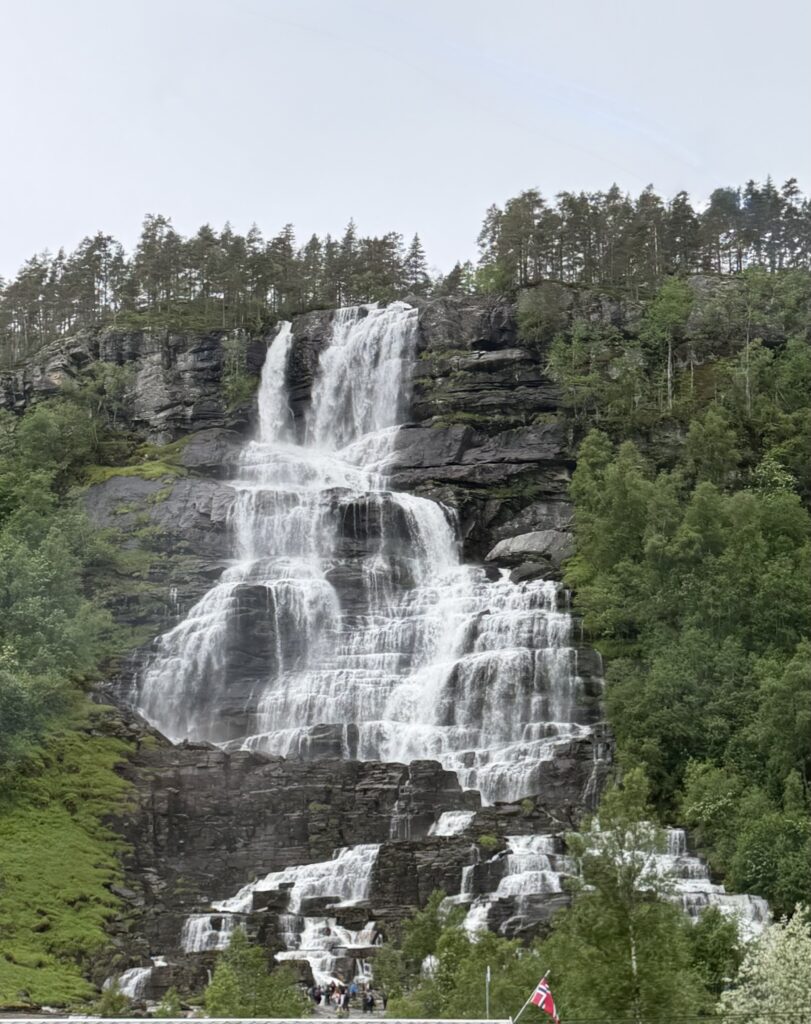
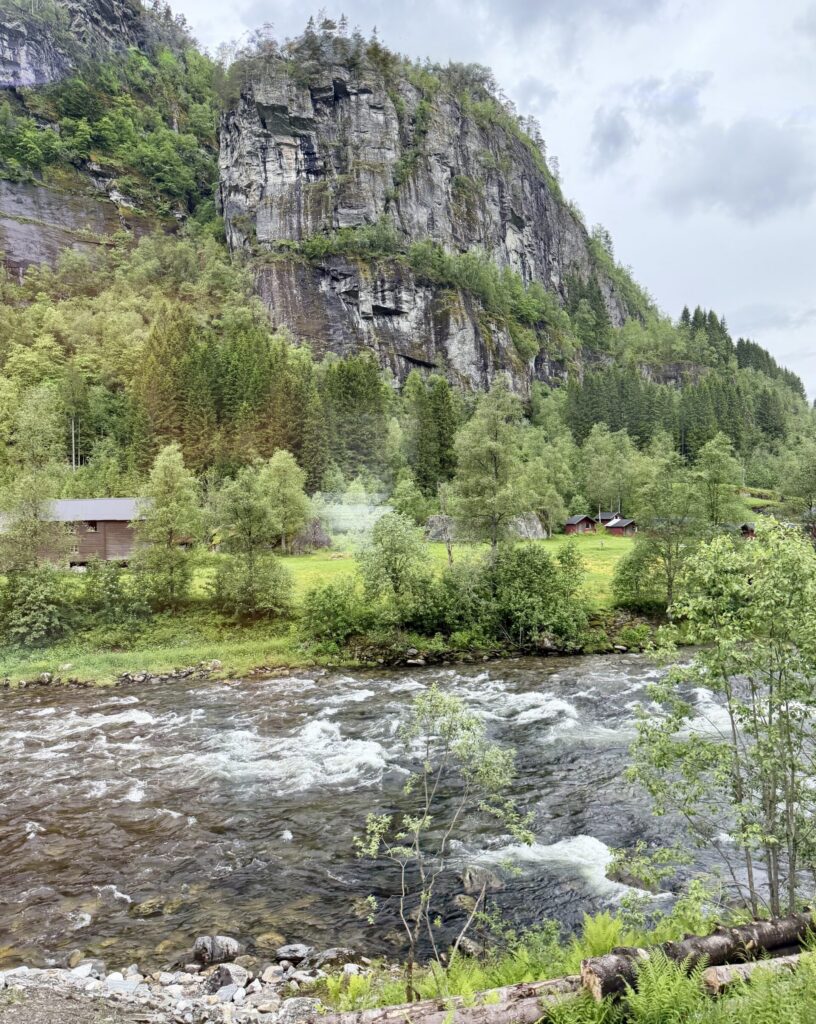
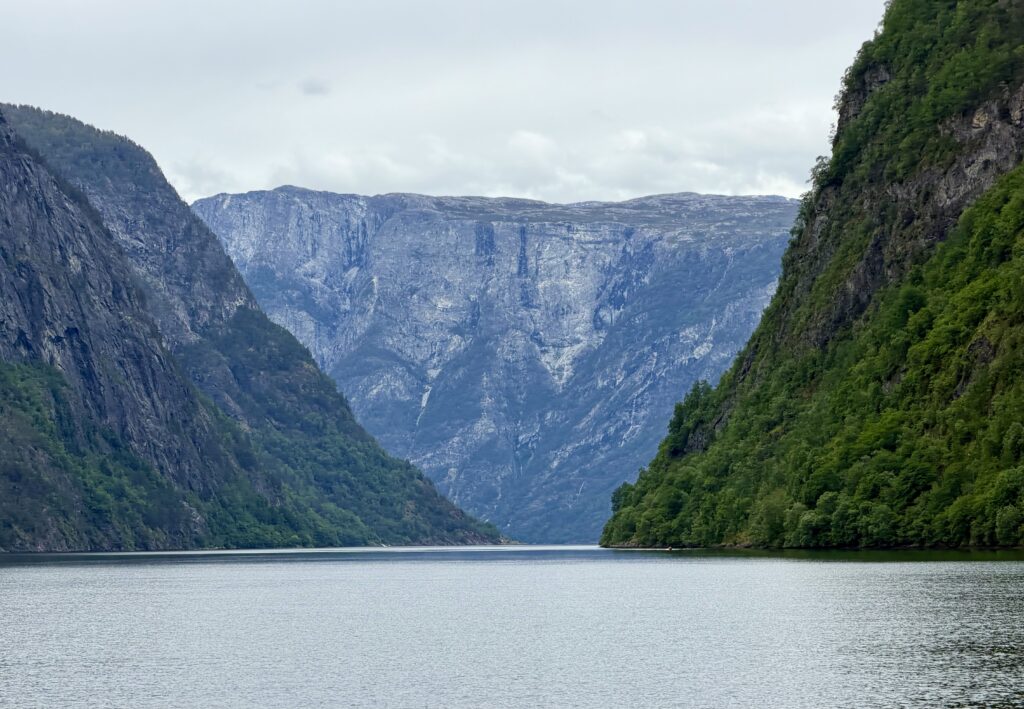
- Gudvangen to Flam in Boat – 12:10pm-14:10pm – Gudvangen is a tiny village nestled in the Naeroyfjord. It is the starting point for the fjord cruisers and also boasts an authentic Viking village, Njardarheim. This electric cruise through the UNESCO-listed Nærøyfjord and Aurlandsfjords was the highlight of the entire tour. Surrounded by towering mountains, waterfalls, and tiny farms clinging to the cliffs, it was an unforgettable experience.
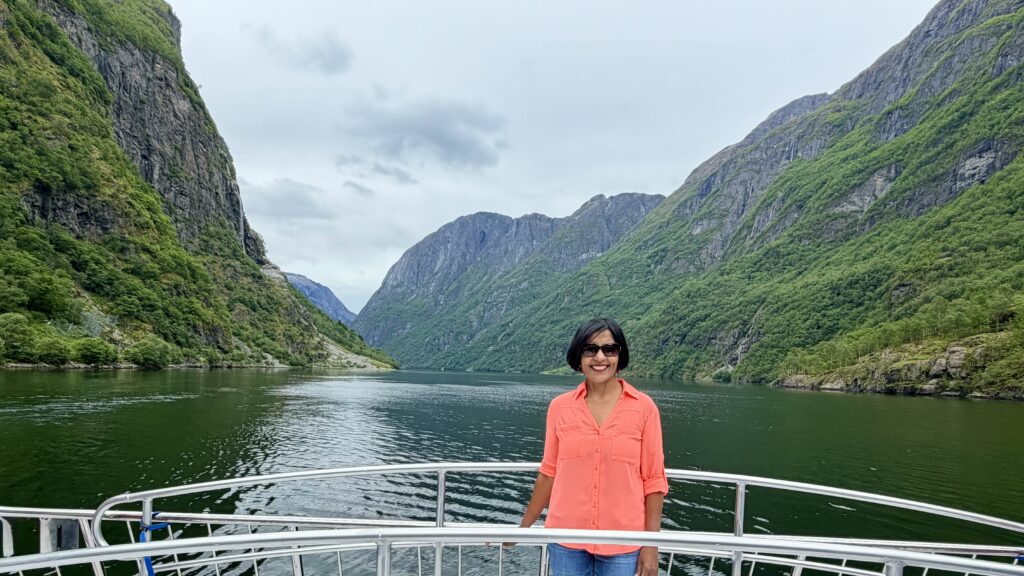
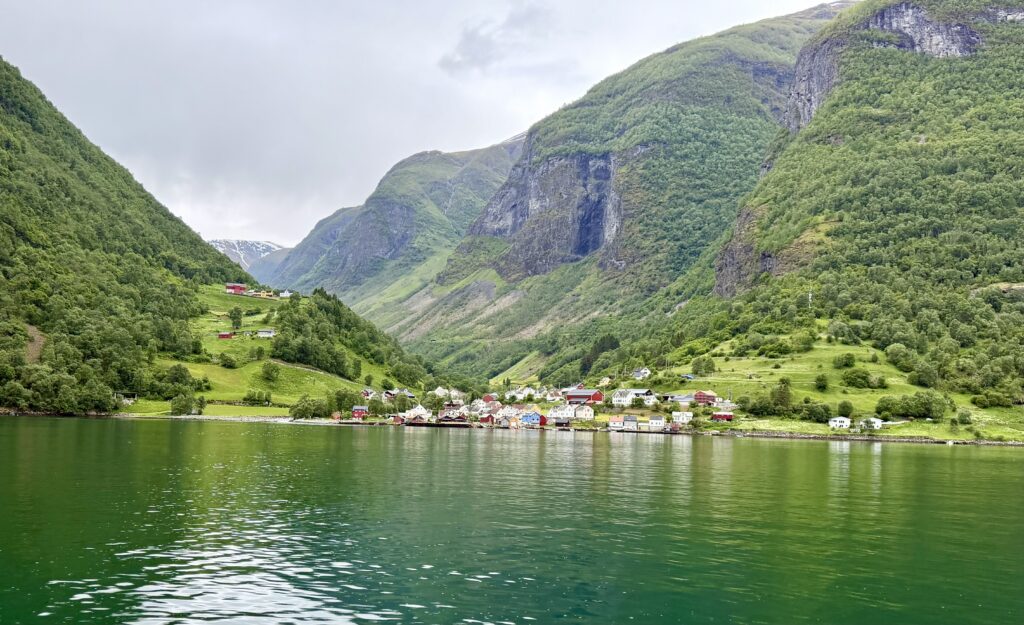
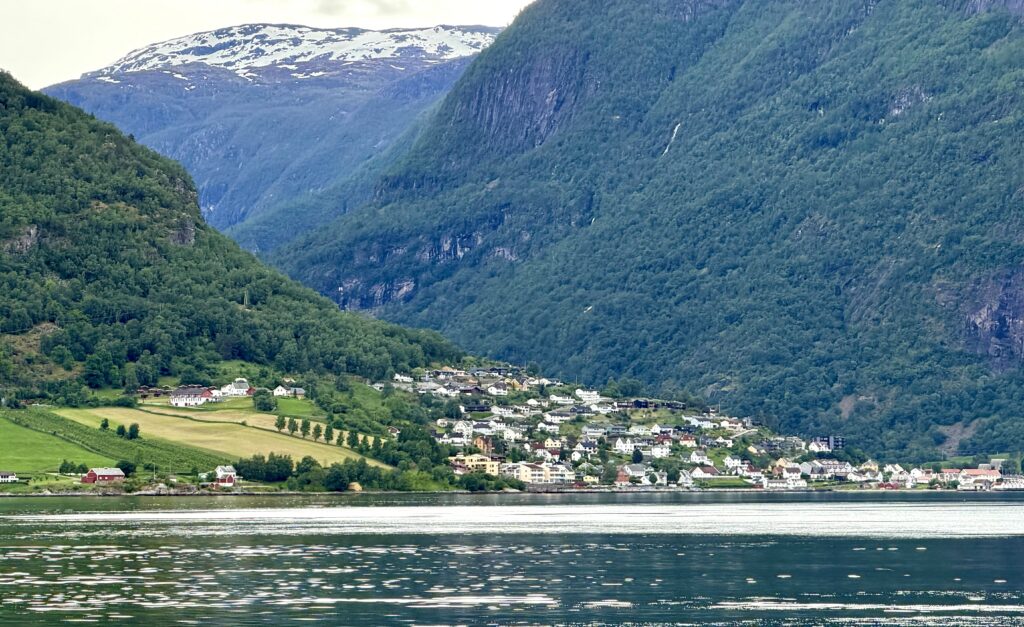
- Flam to Myrdal in Train – 14:45-15:43 – Flam is a small fjord village surrounded by steep mountains overlooking the majestic Aurlandsfjords. This is one of the world’s most scenic train journeys, as the train climbs from the fjord through the spectacular Flåm Valley, passing waterfalls, rivers, and breathtaking mountain scenery. The train made a 10-min stop at the Kjosfossen waterfalls.
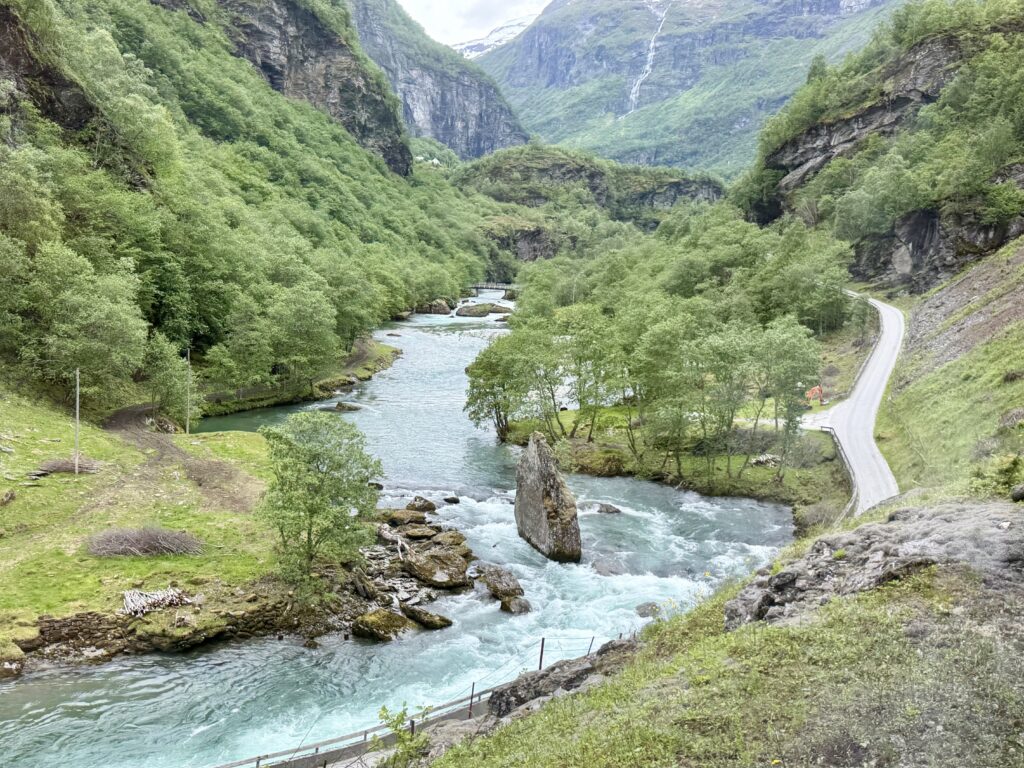
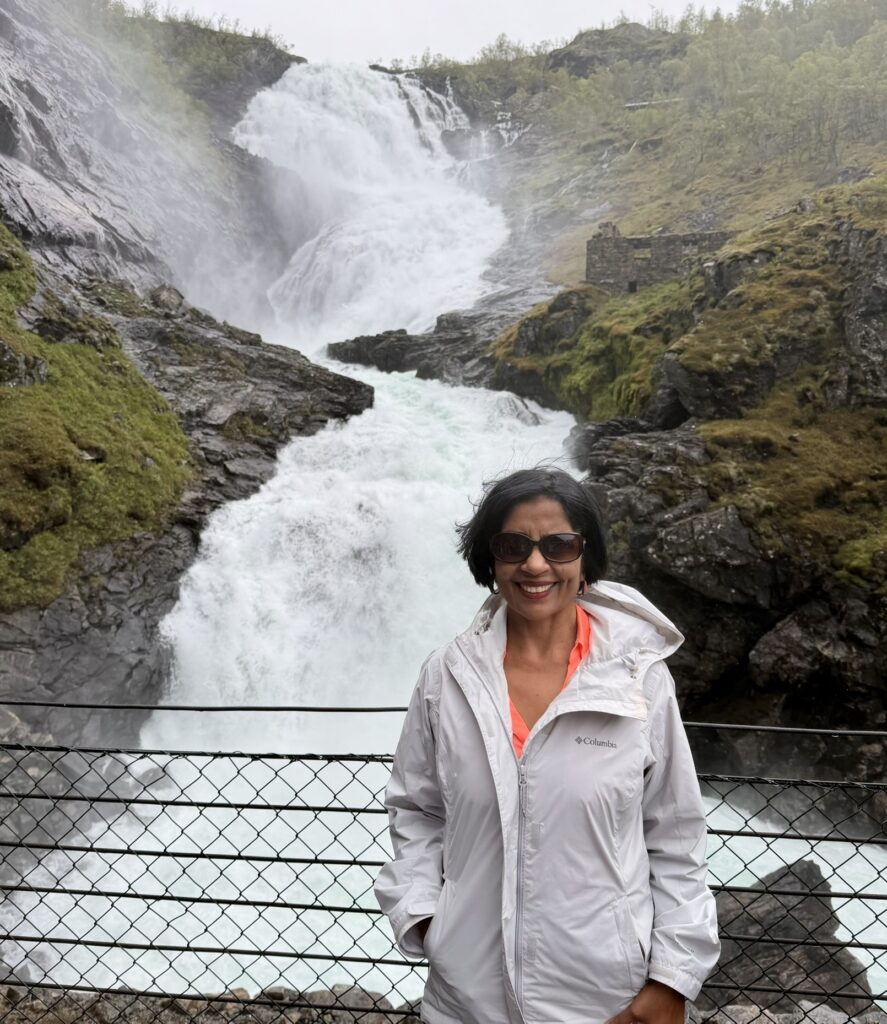
- Myrdal to Bergen in Train – 15:56-18:17 – Myrdal is a mountain station on the Bergen Railway line and this was a longer journey. Although the journey was scenic, by this stage of the day the views felt somewhat repetitive, making the final leg seem longer than the earlier sections.
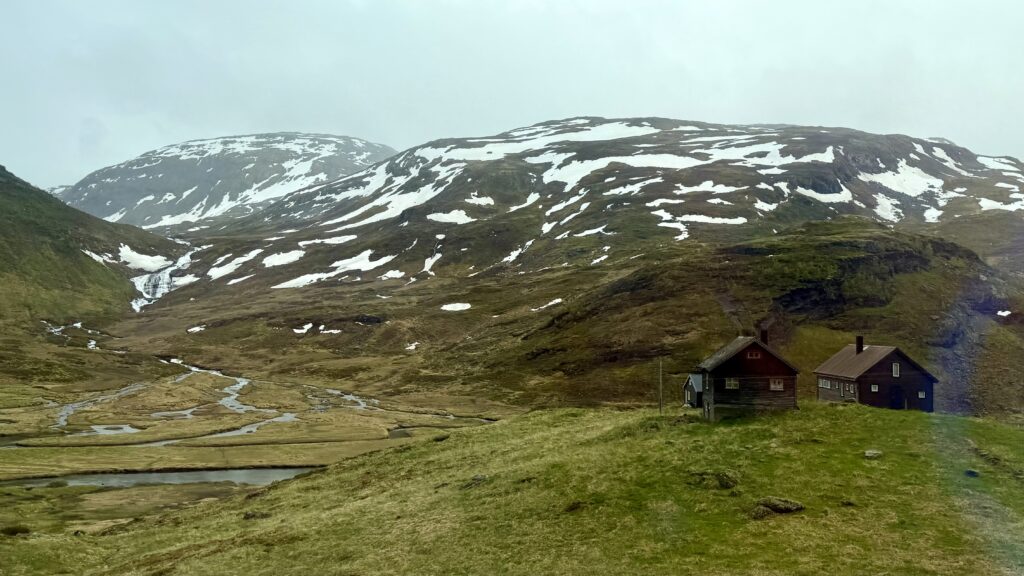
My 2 cents on Norway in a Nutshell – The tour is expensive, but it’s an excellent way to experience Norway’s iconic fjords, mountains, and scenic railways if you have limited time. Everything ran like clockwork—every train, bus, and ferry departed and arrived on schedule, making the entire journey seamless and stress-free.
That said, we had already taken a Lysefjord cruise in Stavanger, so parts of the fjord scenery felt a bit repetitive. The bus segment, while beautiful, could easily be done with a rental car, giving you the freedom to stop at viewpoints, waterfalls, and small villages along the way. If your schedule allows, consider skipping the packaged tour and spending a day or two in Flåm or Aurland. Exploring the region at a slower pace offers a more relaxed and rewarding experience.
Lysefjord vs Nærøyfjord boat rides – Both offer spectacular fjord experiences, but they have very different personalities.
- The Lysefjord cruise stood out for its impressive waterfalls and the unforgettable view of Pulpit Rock (Preikestolen) towering high above the fjord.
- The Nærøyfjord cruise felt more dramatic because of its incredible narrowness. Surrounded by steep mountains rising directly from the water, the fjord creates a more intimate and immersive feeling as the boat slowly passes through the towering landscape.
On the third day of our stay in Bergen, we had planned to visit several attractions that were more than 2 miles (3 km) from the city center. Rather than buying individual tickets, we purchased a day pass for the Bergen Light Rail (Bybanen), which gave us unlimited travel for the day. It was a convenient and cost-effective way to get around, allowing us to hop on and off the trains as we explored different parts of the city.
Fløibanen Funicular to Mount Fløyen – is one of Bergen’s most popular attractions and is located just 150 metres from Bryggen. Operating since 1918, the funicular climbs over 300 metres in just six minutes, taking visitors to the top of Mount Fløyen (425 metres).
From the summit, you’ll be rewarded with spectacular panoramic views of Bergen, its surrounding fjords, and the ships entering and leaving the harbor. The area also offers several walking trails, a restaurant, a café, and a children’s playground, making it a great place to spend a few hours whether you’re looking for a leisurely stroll or a longer hike.
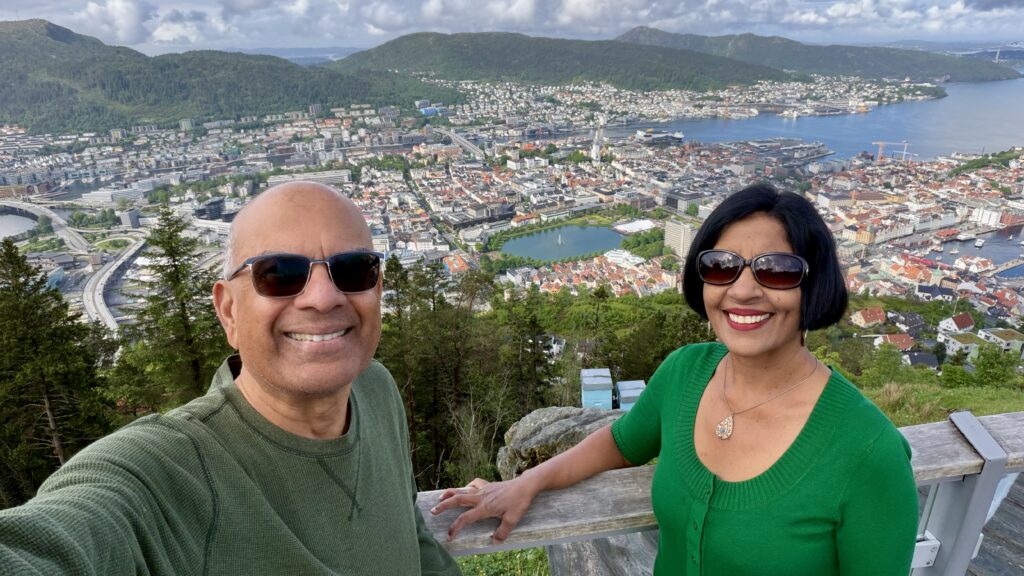
Mount Ulriken – After enjoying the views from Mount Fløyen, we took the Bergen Light Rail to Haukeland Sjukehus. From the station, it was about an 8–10 minute uphill walk to the Ulriksbanen aerial tramway, which has been carrying visitors to the summit of Mount Ulriken since 1961.
At 643 metres, Mount Ulriken is the highest of Bergen’s seven mountains. The summit offers breathtaking panoramic views of the city, surrounding fjords, and mountains, along with viewing telescopes, a restaurant, and the city’s distinctive TV tower.
For those who enjoy hiking, it’s also possible to hike to the summit on the challenging Oppstemten Sherpa stairs. Many visitors choose to buy a one-way tram ticket, ride up, and hike back down, making for a rewarding way to experience the mountain.
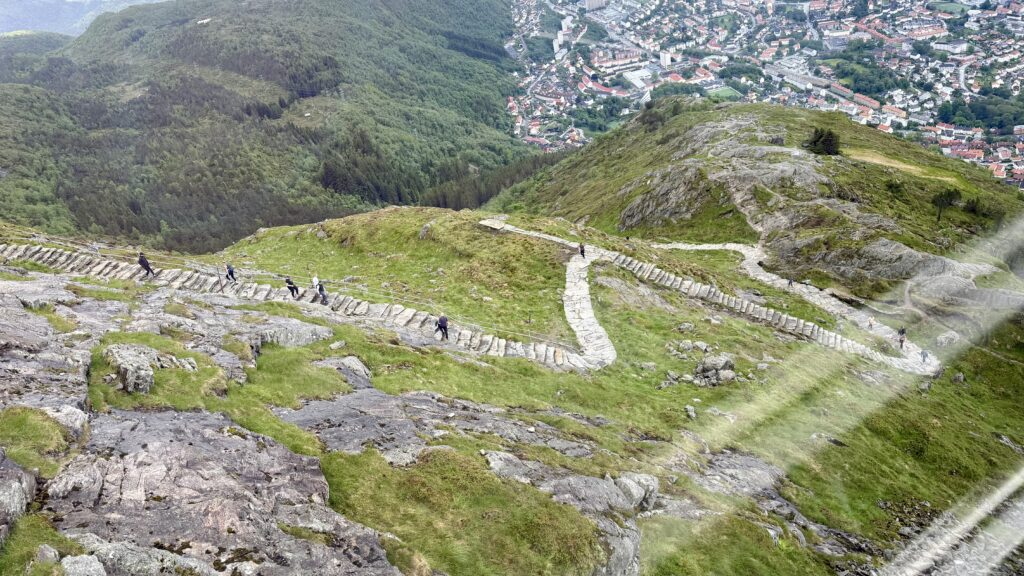
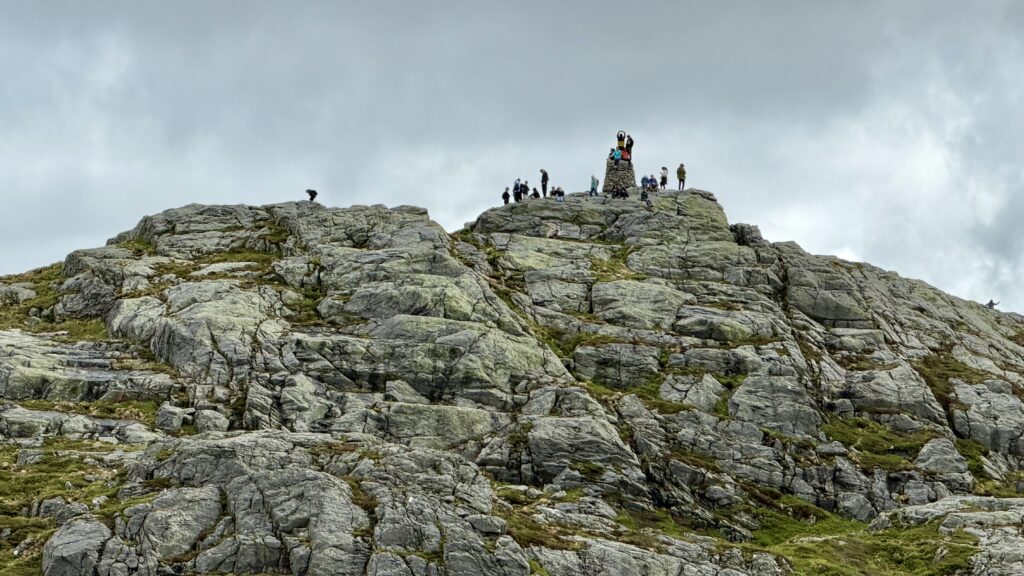
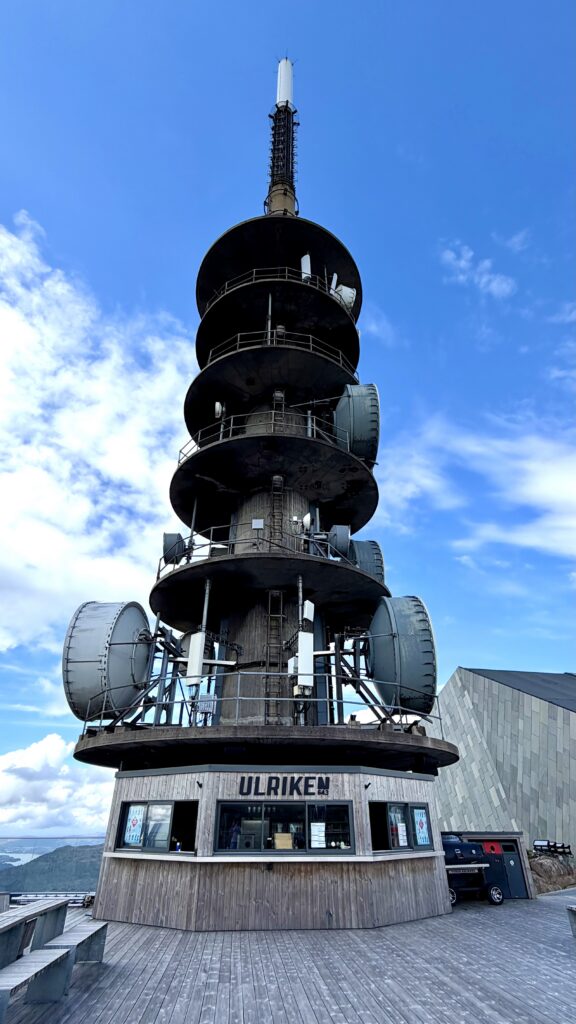
Behind the main viewing area is a small rocky hill that many visitors hike up for even higher viewpoints and different perspectives of the surrounding landscape.
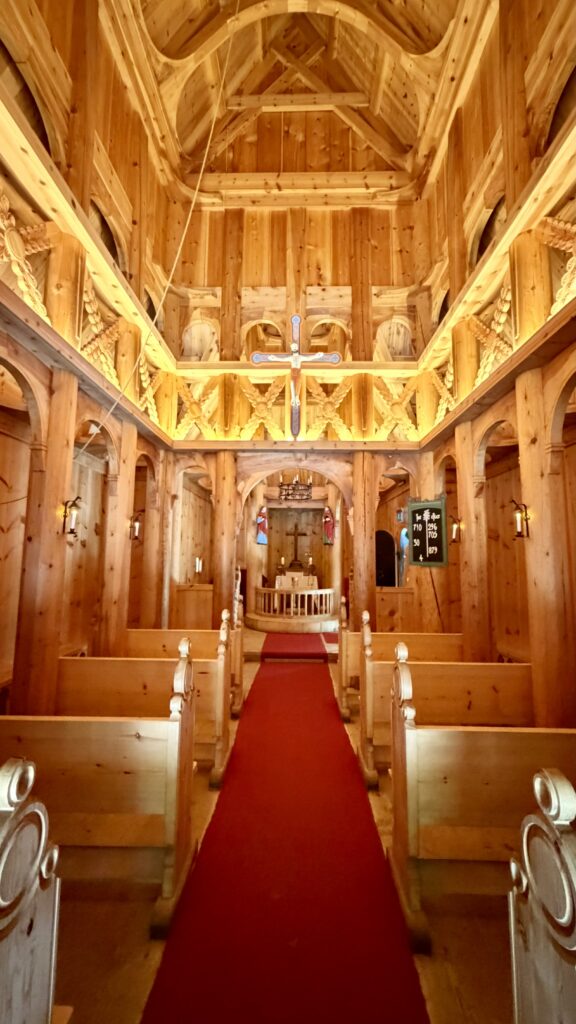
Fantoft Stave Church – From Mount Ulriken, we had to take 2 trains to reach Fantoft. After we reached Fantoft, it is another 8-minute walk to the Church. Originally built around 1150 in the village of Fortun in the Sogn region, the church was dismantled and moved to its current location in 1883 to save it from demolition. In 1992, it was destroyed in an arson attack, but was meticulously reconstructed over the following five years.
Although very little of the original structure survived, the rebuilt church is a striking example of Norway’s traditional stave church architecture. A few original artifacts, including the gold altar cross and a historic stone cross, were preserved and remain on display.