3 nights in Airbnb – Námestie 1. mája 2946/11, Bratislava
The capital and largest city of Slovakia, Bratislava lies along the Danube River at the foot of the Little Carpathians, near the borders of Austria and Hungary. It is the only national capital in the world that shares land borders with two neighboring countries, and Vienna is just 50 km (31 miles) away, making them Europe’s closest pair of capital cities. With a history spanning more than a thousand years, Bratislava has been shaped by Slovak, Hungarian, German, Austrian, and Jewish influences. From 1536 to 1783, it served as the capital of the Kingdom of Hungary and was the coronation city for 11 Hungarian kings and eight queens at St. Martin’s Cathedral.
Our one-bedroom Airbnb was within easy walking distance of all the sights we visited, with Námestie Slobody (Freedom Square) and Grassalkovich Palace less than a five-minute walk away.
- Hodžovo námestie
- Grassalkovich Palace
- Palace Garden
- Hurbanovo námestie
- Trinitarian Church (Church of St. John of Matha and St. Felix of Valois)
- Michaels Gate and Tower
- Hlavné námestie (Main Square)
- Town hall Tower and Museum
- Franciscan Church and Monastery
- Other buildings in the square
- Street Sculptures
- Napoleon’s Army Soldier
- Schone Naci
- Čumil
- Primate’s Palace
- Hviezdoslavovo námestie (Hviezdoslav Square)
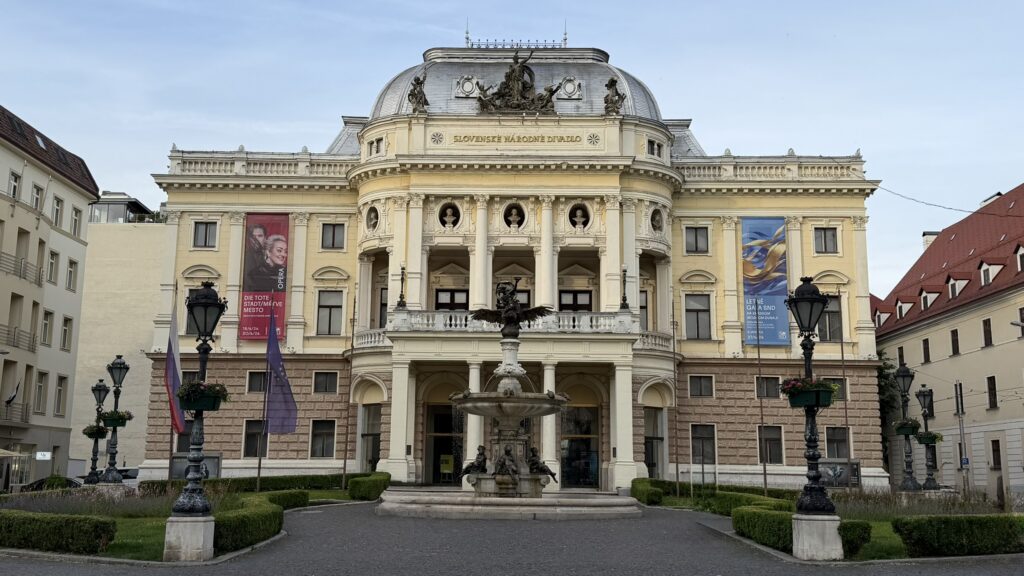
- Old Slovak National Theater
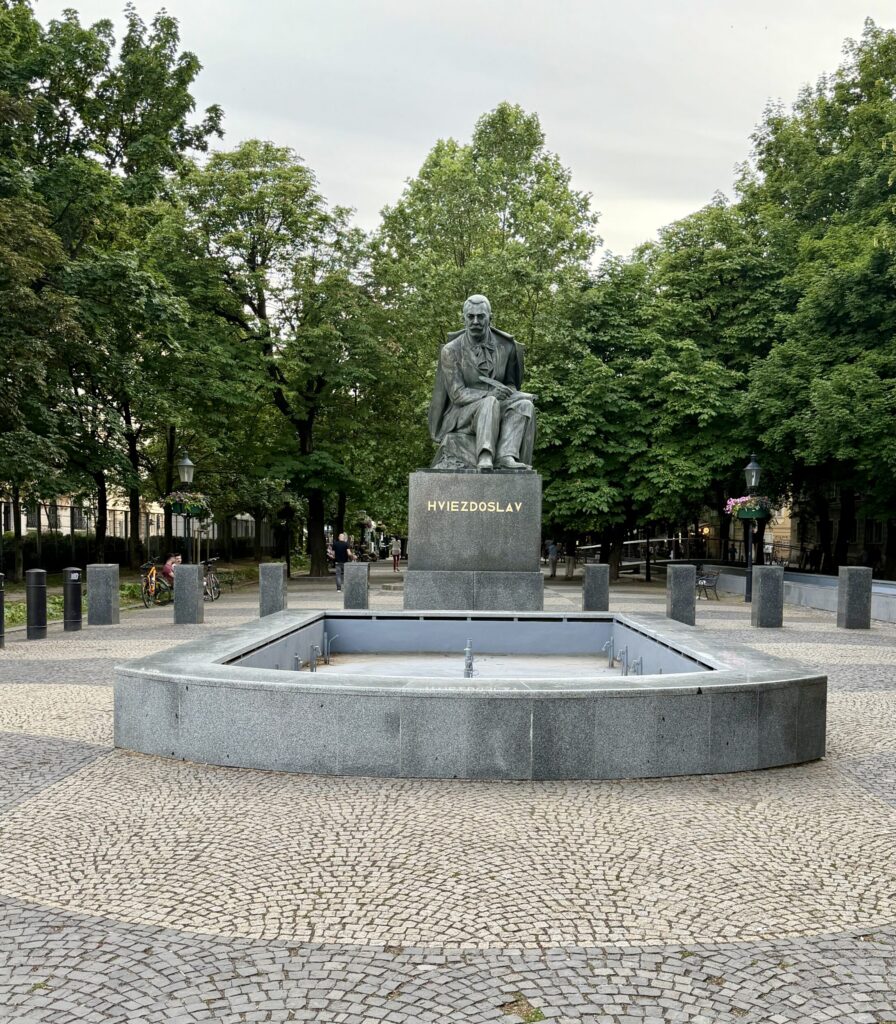
- Statue of Pavol Orszagh Hviezdoslavov
- Námestie Eugena Suchoňa
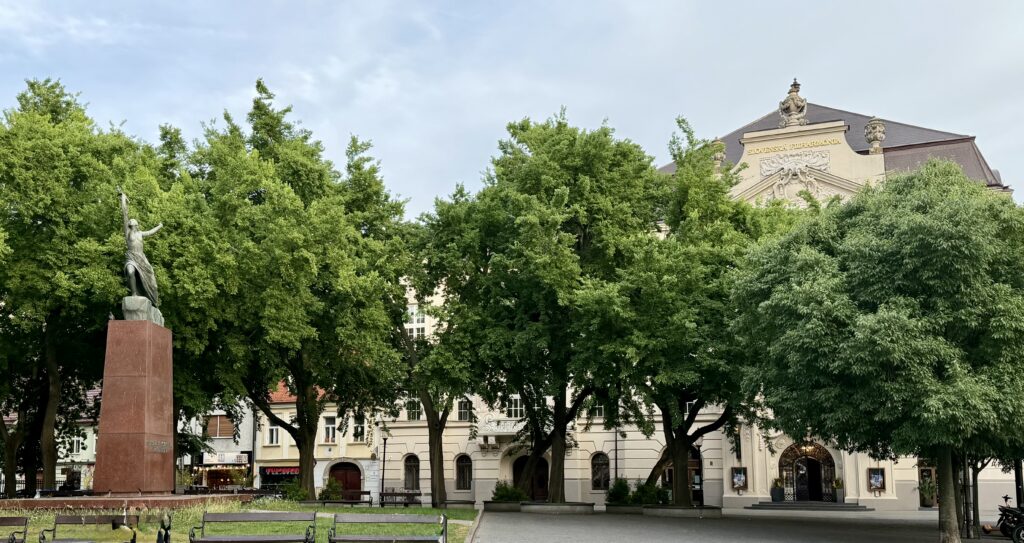
- Victory monument
- Slovak Philharmonic
- Námestie Slobody (Freedom Square)
- Slavín War Memorial
- Rybné námestie (Fish Square)
- Folk dance and music show
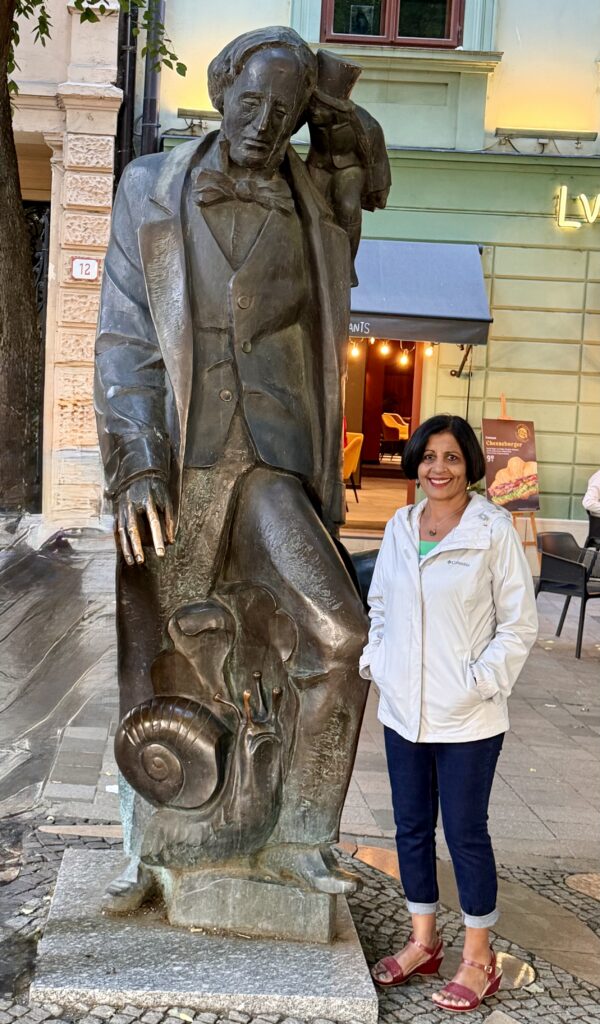
- Statue of Hans Christian Anderson
- St. Martin’s Cathedral
- National Council of the Slovak Republic
- Bratislava Castle
- Židovská Street
- Kapitulská Street
- St Elizabeth’s Church (Blue Church)
- Bratislava Riverfront
- Most SNP Bridge of the Slovak National Uprising
- Sad Janka Kráľa
- Worth a brief Stop
Today, Bratislava is the political, cultural, and economic heart of Slovakia. Its compact historic center is known for its medieval streets, Baroque palaces, lively squares, and riverside promenades, while modern galleries, museums, restaurants, and cafés create a vibrant atmosphere.
Hodžovo námestie – Located just a five-minute walk from our Airbnb, this square was one of the places we passed through frequently during our three-day stay in Bratislava. At its center is the Earth – Planet of Peace fountain, while one side of the square is dominated by the elegant Grassalkovich Palace. The palace is not open to public for tours.
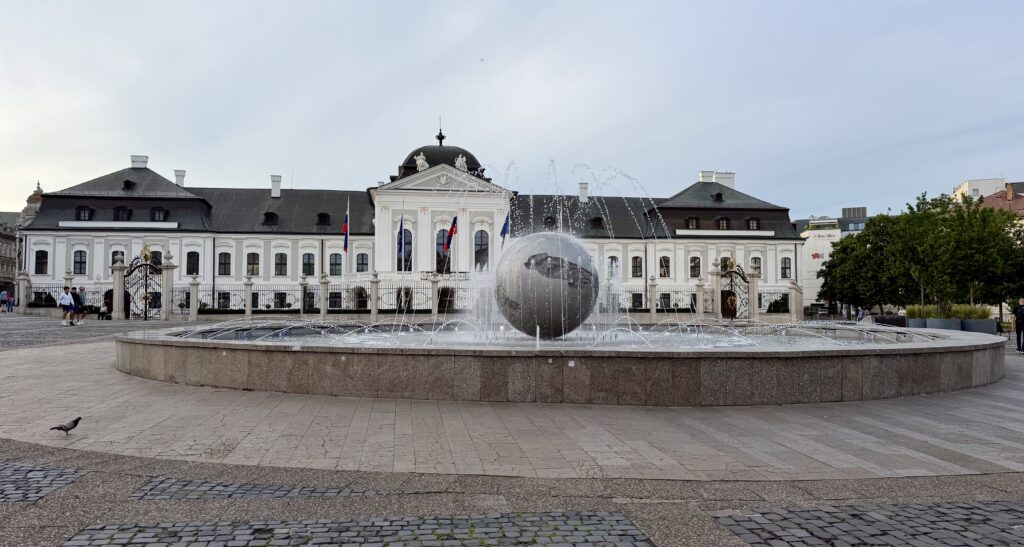
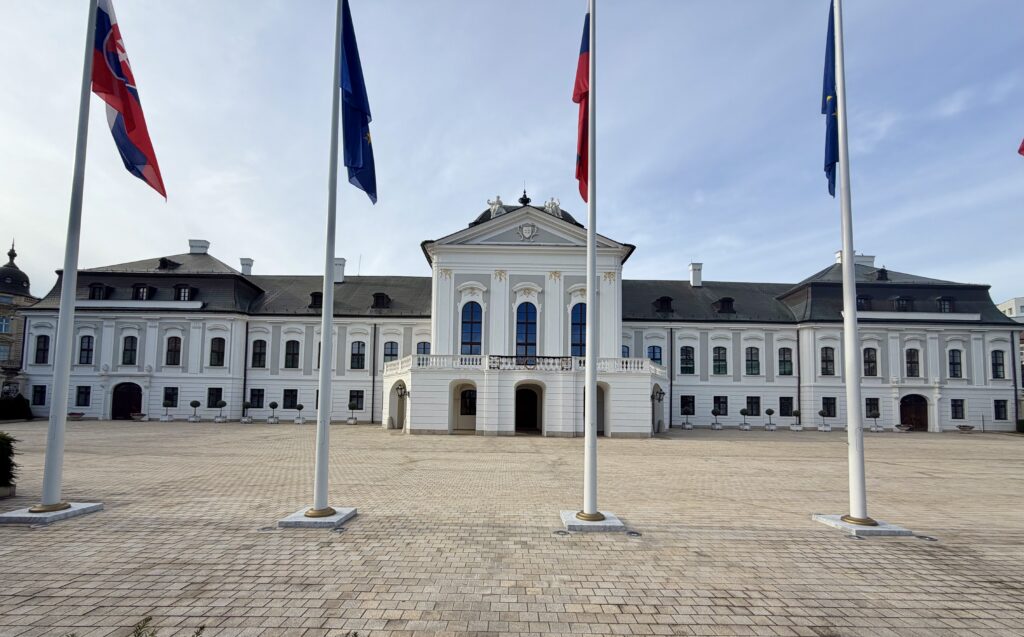
Grassalkovich Palace – Built in 1760 for Hungarian aristocrat Antal Grassalkovich, this Rococo-style palace in Bratislava is today the official residence of the President of Slovakia. It was originally a lavish summer residence and a center of Baroque social and musical life, where composers such as Joseph Haydn are believed to have performed.
—————————————————–
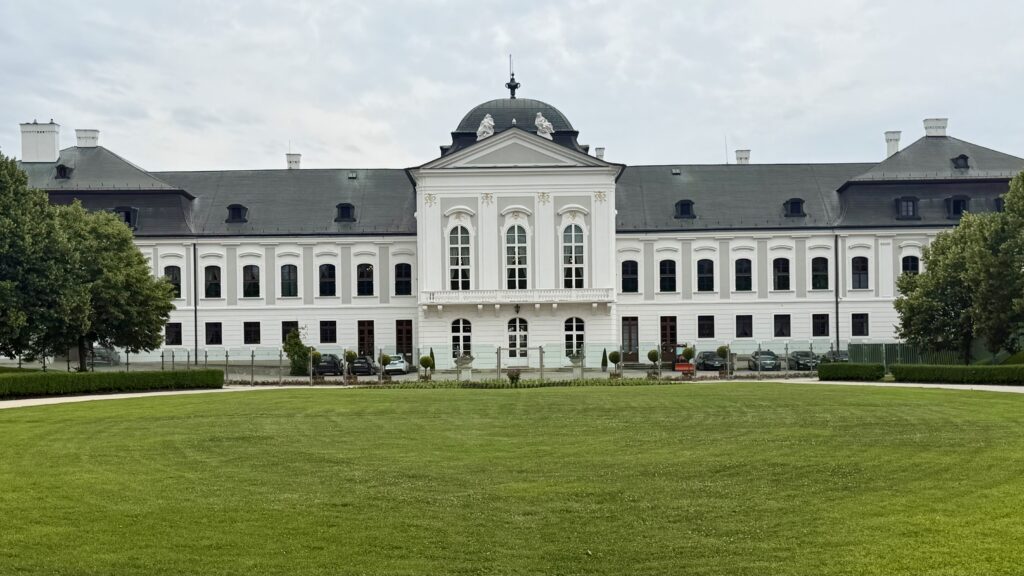
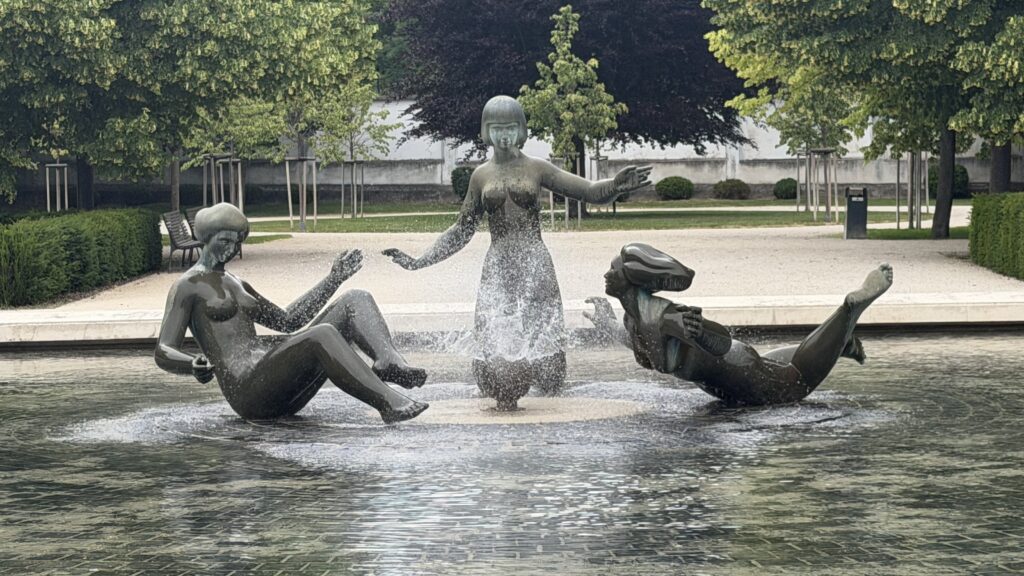
Grassalkovich Palace Garden – Located behind Grassalkovich Palace on Hodžovo Square, this elegant park was originally part of the palace grounds. Today, it is open to the public and features mature trees, well-maintained lawns, statues, fountains, and peaceful walking paths, offering a quiet green space in the heart of the city.
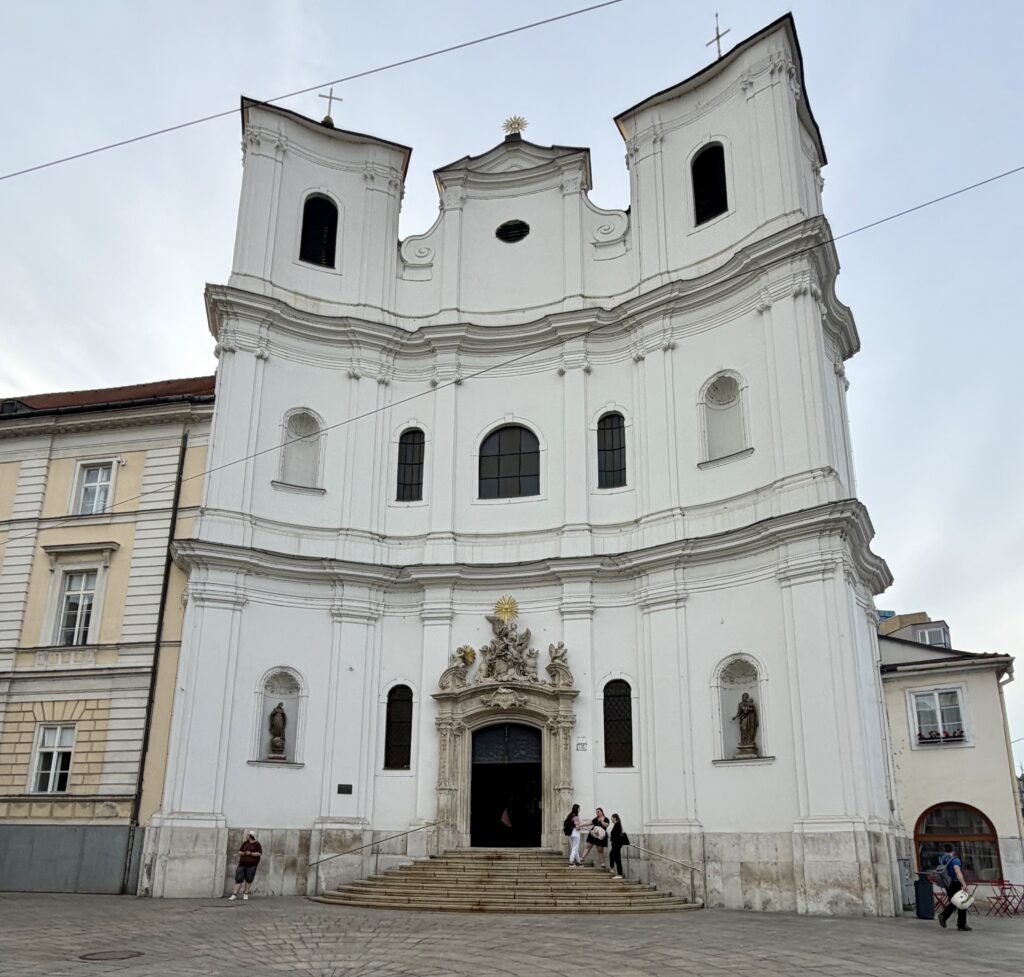
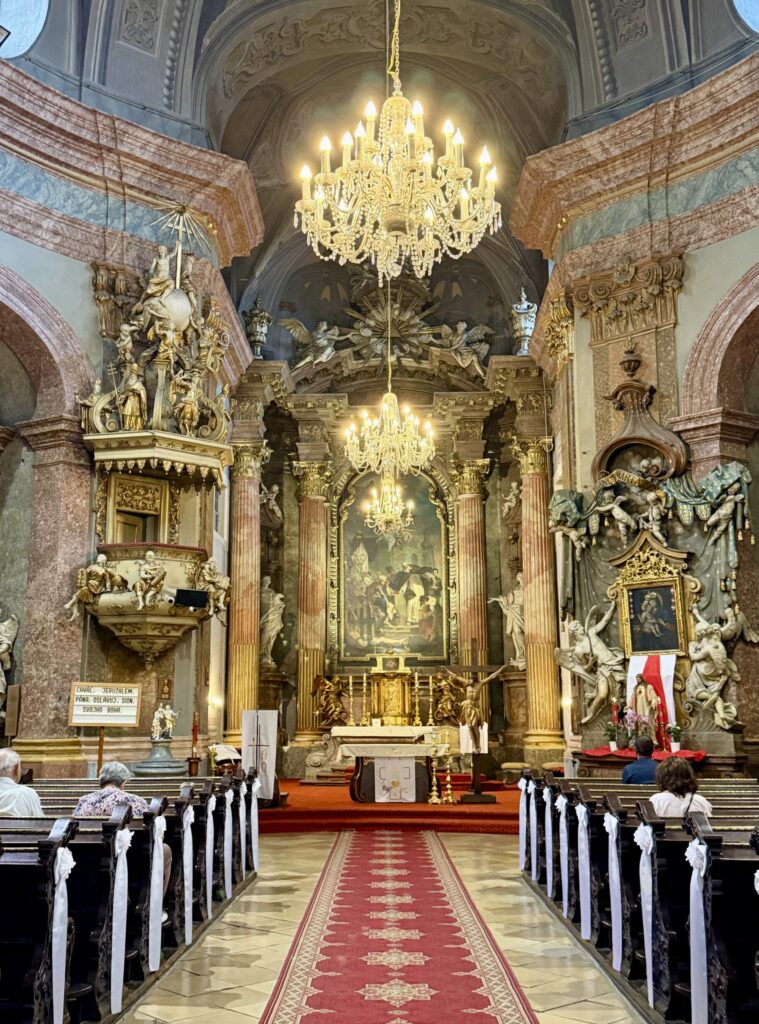
Hurbanovo námestie – This square close to Michael’s gate at the edge of old town houses the beautiful baroque Trinitarian Church (Church of St. John of Matha and St. Felix of Valois). Built between 1717 and 1727, this magnificent Baroque church is one of Bratislava’s architectural gems. Its richly ornamented main altar features a painting of St. John of Matha and St. Felix of Valois, while the Rococo-style main portal is dedicated to the Holy Trinity.
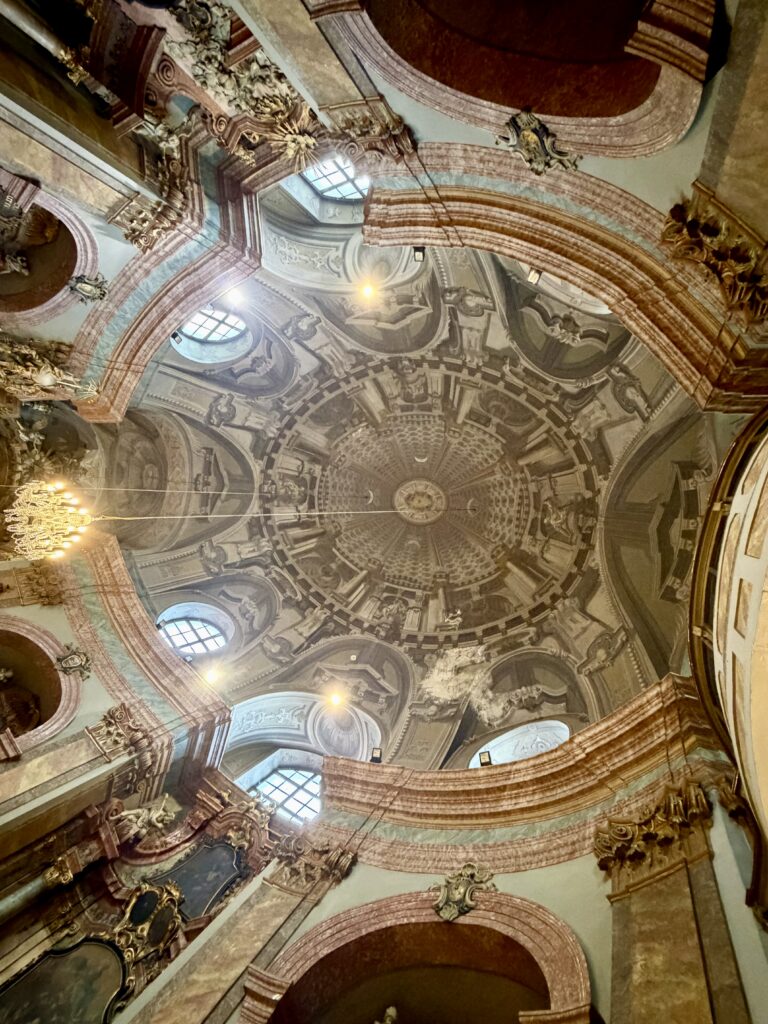
The interior of the large dome is decorated with a trompe-l’œil (deceive the eye) fresco by Italian Baroque painter Antonio Galli Bibiena. Trompe-l’œil is an artistic technique that creates a highly realistic optical illusion of three-dimensional space and objects on a flat, two-dimensional surface
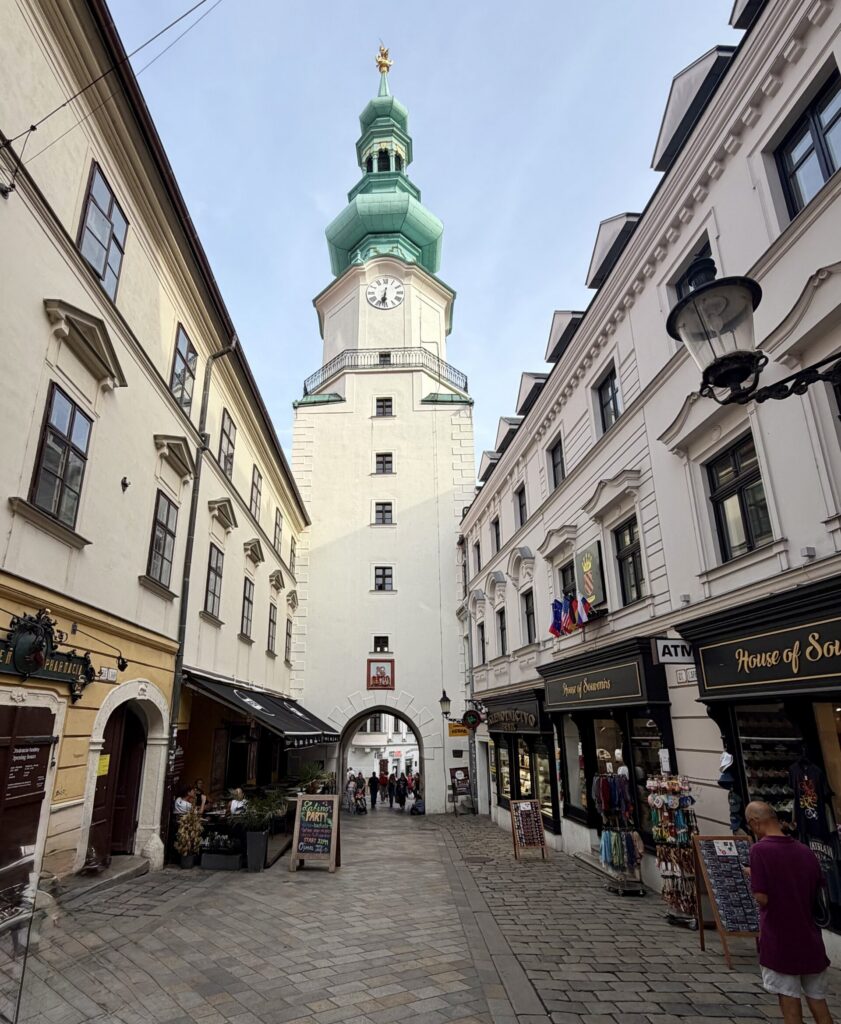
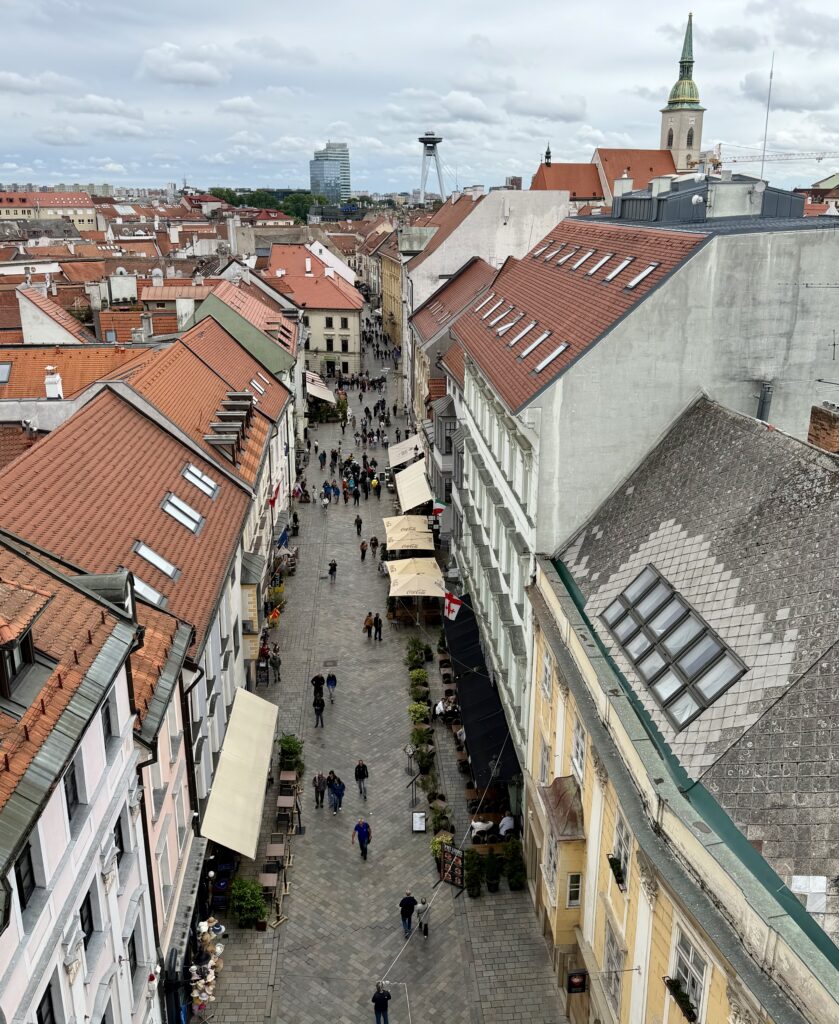
Michael’s Gate and Tower – With its distinctive onion-shaped dome, Michael’s Gate is one of Bratislava’s most recognizable landmarks and the only surviving gate from the city’s medieval fortifications. Dating back to the 14th century, it stands 51 meters tall. A city Museum exposition of arms and fortification are housed in the tower.
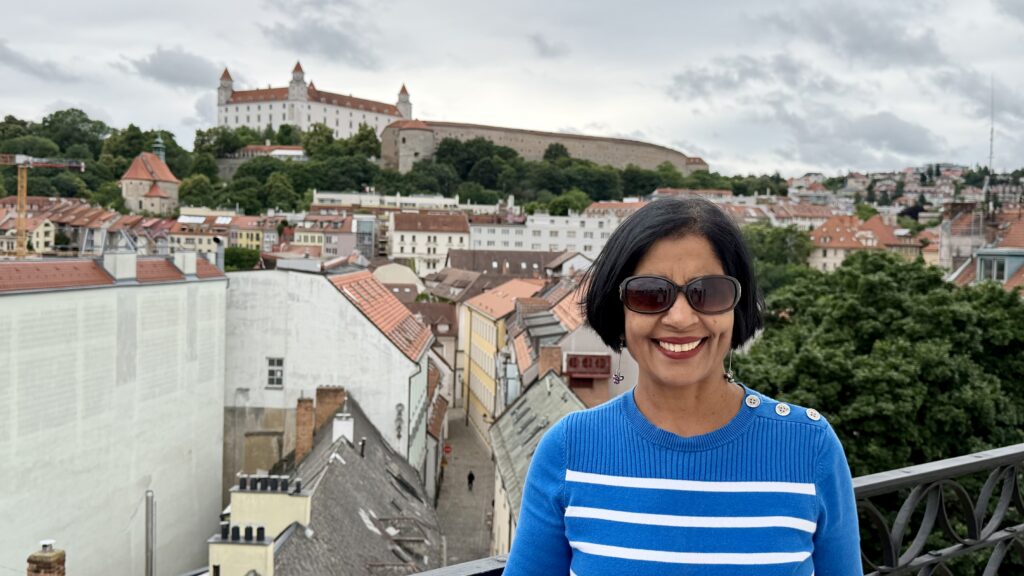
At the top of the tower, a viewing terrace offers panoramic views of Bratislava Castle, the Old Town, and the city’s rooftops and towers. The structure is crowned by a statue of St. Michael. Today, the gate also forms part of the historic coronation route, while a laser line on the ground traces the path of the former city walls and the original medieval korzo.
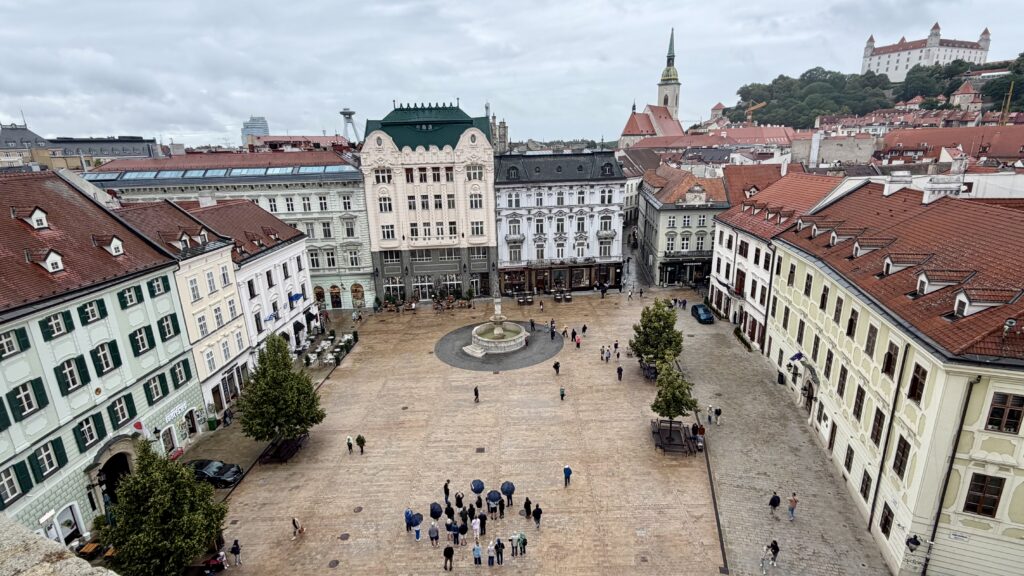
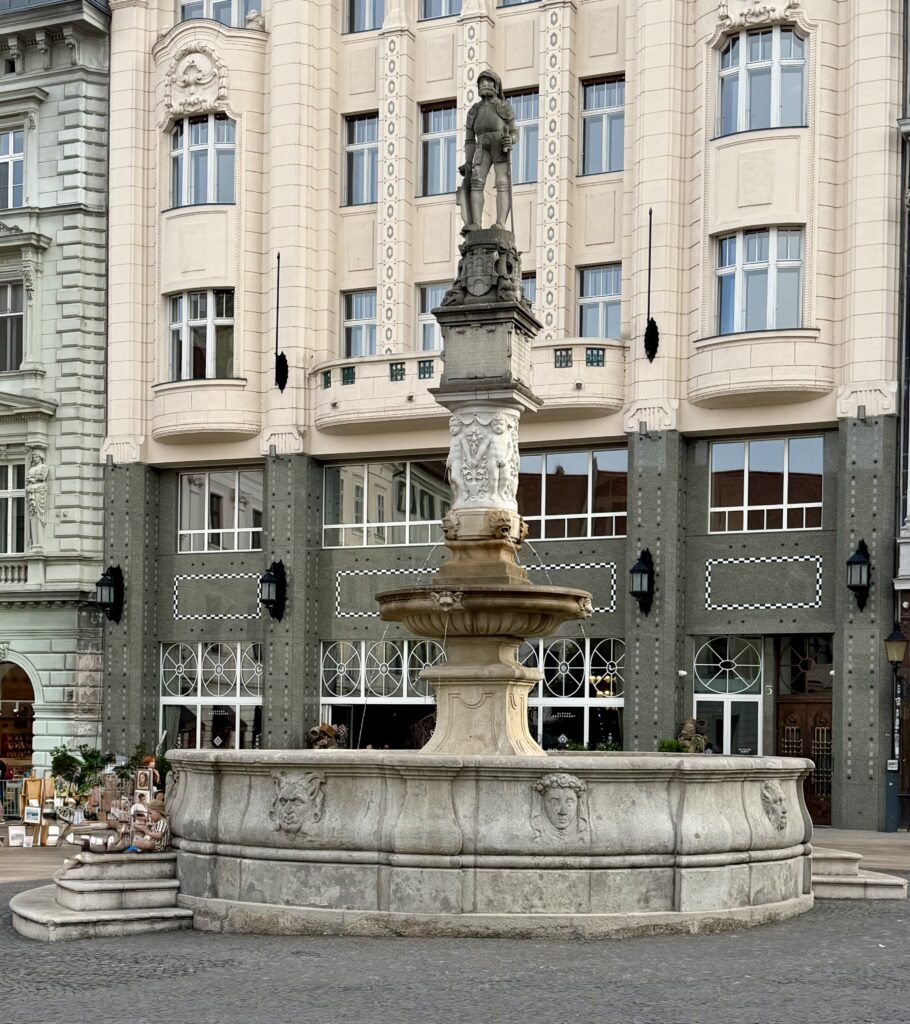
Hlavné námestie (Main Square) – From Michael’s Gate, Michalská Street leads directly to the Main Square. At its center stands the Roland Fountain (Maximilian Fountain) – one of the city’s popular meeting place. Commissioned by King Maximilian II in 1572, it originally served as the city’s public water supply. The fountain is crowned by a statue of Maximilian II depicted as a knight in full armor, symbolizing his role as the protector of the city. The fountain remains one of the most iconic sights in Bratislava’s Old Town and was carefully restored to its 16th-century appearance in 2019.
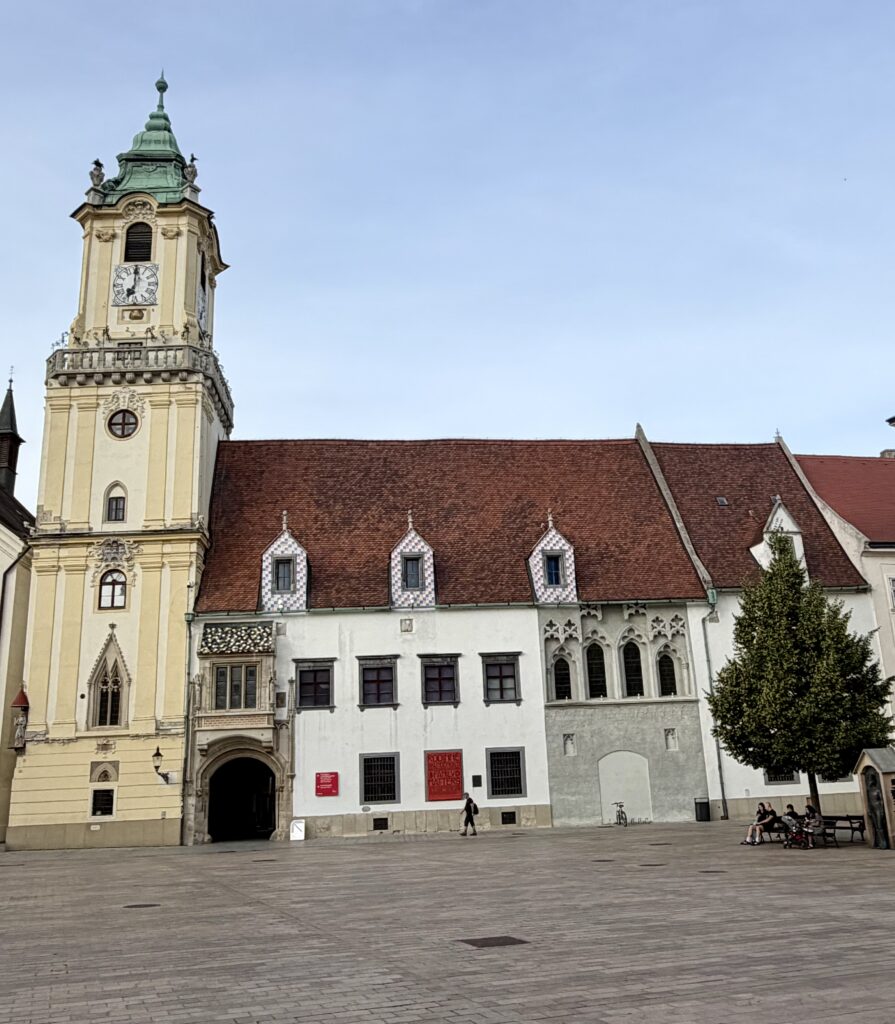
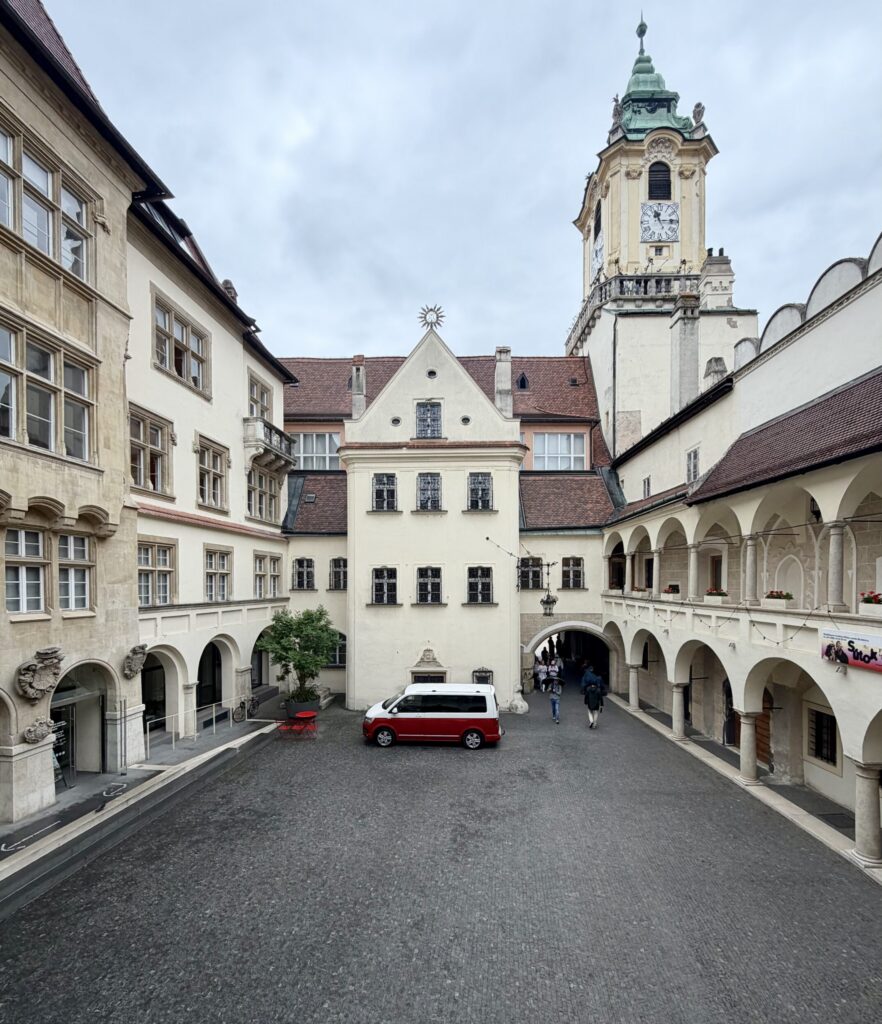
Old Town Hall, Tower and Museum – Located at one end of the Main Square, the Old Town Hall is the oldest city hall in Slovakia and one of Bratislava’s oldest surviving stone buildings. Dating mainly from the 14th and 15th centuries, the complex was formed by joining several medieval townhouses and has been expanded and renovated over the centuries, blending Gothic, Renaissance, Baroque, and Neo-Renaissance architectural styles.
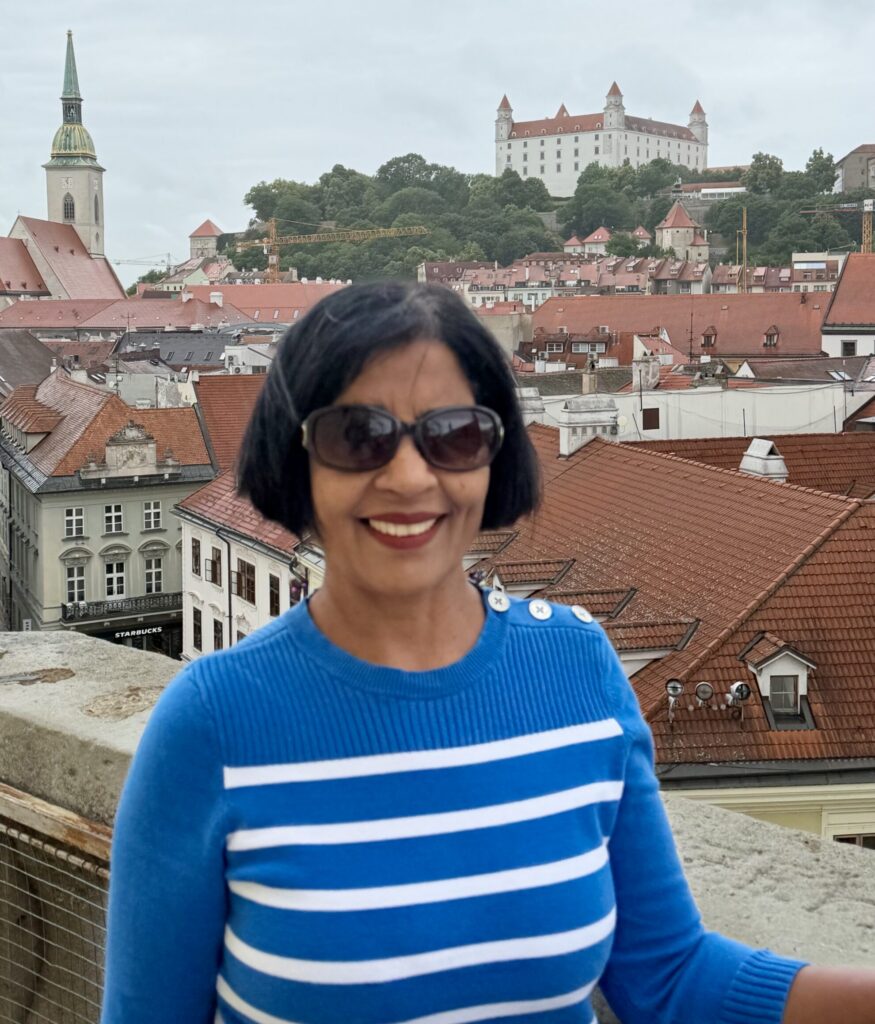
Today, the building houses the Bratislava City Museum, where exhibits showcase the city’s history, including medieval dungeons, historic weapons, and artifacts. Visitors can also climb the 51-meter tower for panoramic views of the Old Town and its colorful rooftops.
—————————————
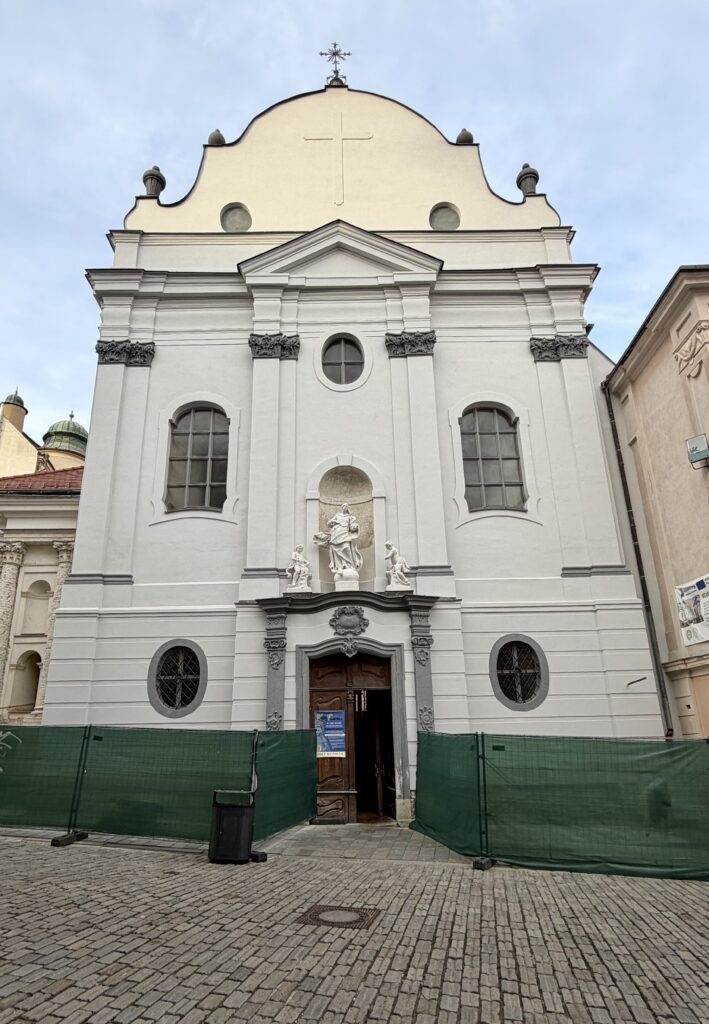
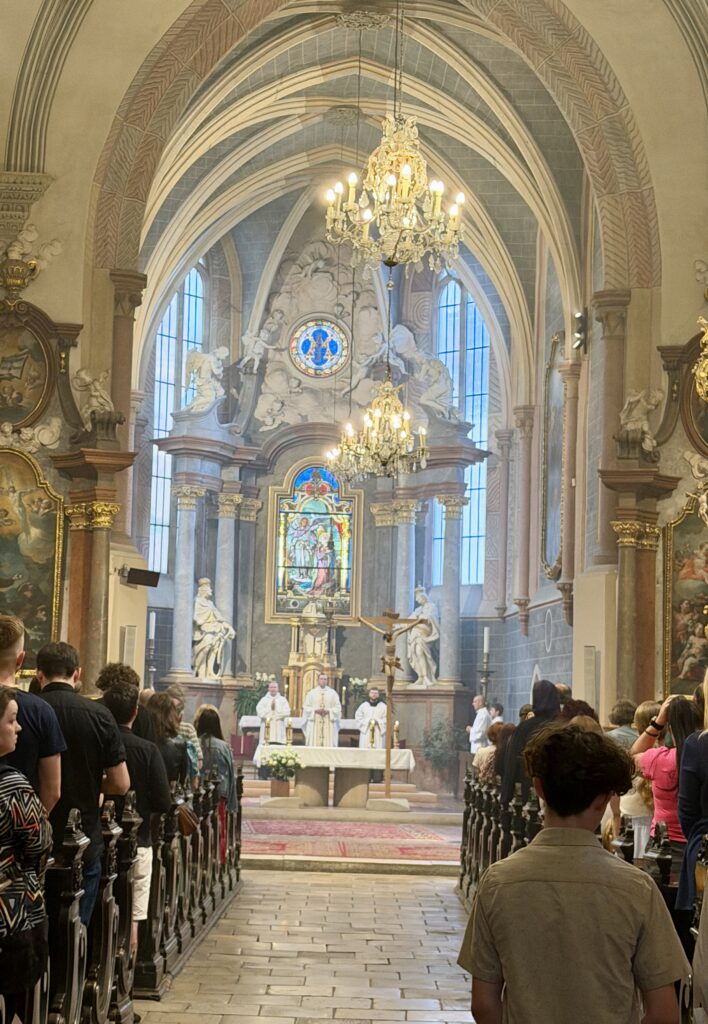
Franciscan Church and Monastery – Consecrated in 1297, the Franciscan Church is the oldest surviving religious building in Bratislava’s Old Town. Originally built in the Gothic style, it has been rebuilt and restored over the centuries, incorporating Renaissance and Baroque elements while preserving parts of its medieval architecture, most notably the presbytery.
—————————————
Other Buildings on Main Square
- Holy Saviour Church (Jesuit Church) – Located next to the Old Town Hall on Main Square, the Holy Saviour Church was built between 1636 and 1638 as a place of worship for the city’s growing German Protestant community. It was later transferred to the Jesuit Order and is now commonly known as the Jesuit Church. We couldn’t see the interior as it was closed at the time of our visit.
- Bratislava City Gallery – Founded in 1961, the Bratislava City Gallery is the second-largest municipal art gallery in Slovakia and houses a collection of approximately 35,000 works of art, ranging from Gothic and Baroque masterpieces to modern and contemporary works.
- Embassy of Japan – is a striking green historic building that stands out among the surrounding architecture. While the upper floors serve as the embassy, the ground floor is home to several upscale boutiques and luxury retail shops.
- Palace of Hungarian Discounting and Exchange Bank – Located beside the Old Town Hall, this striking Art Nouveau building was originally built in 1911 as the headquarters of the Hungarian Discounting and Foreign Exchange Bank, and reflected Bratislava’s importance as a financial and commercial center during the late Austro-Hungarian period. Today, the ground floor houses the Roland Cafe Restaurant.
- Paluďai Palace – Located next to the Hungarian Exchange Bank, Paluďai Palace is an elegant Neo-Baroque building dating from 1880. Built for the prominent wine merchant František Paluďai, the palace reflects the architectural style of French Baroque. Today the building houses shops and reataurants.
Street Sculptures – Some of the most photographed attractions in Bratislava are its life-sized street sculptures scattered throughout the Old Town. These playful statues add a modern, whimsical touch to the historic center, making it engaging for visitors. 3 of the interesting ones are in or near the Main Square.
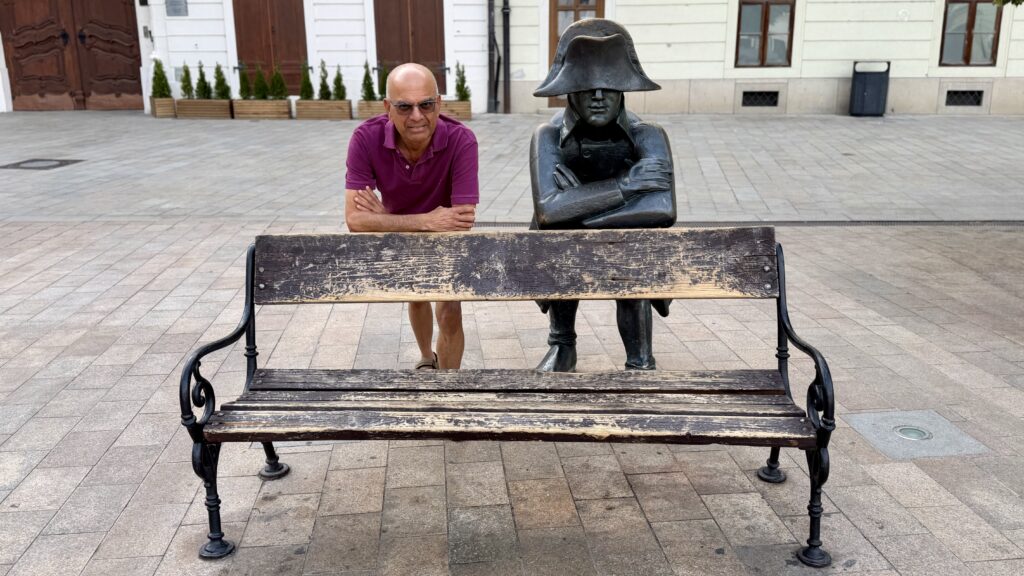
- Napoleon’s Army Soldier – stands at the Main Square near the Old Town Hall, leaning casually on a bench that visitors can sit on for a photo. Napoleon and his army passed through Bratislava in 1805. According to local legend, this soldier fell in love with a local girl, remained in the city, and later became a producer of sparkling wine. His name was Hubert, which is also shared by one of Slovakia’s most well-known sparkling wine brands.
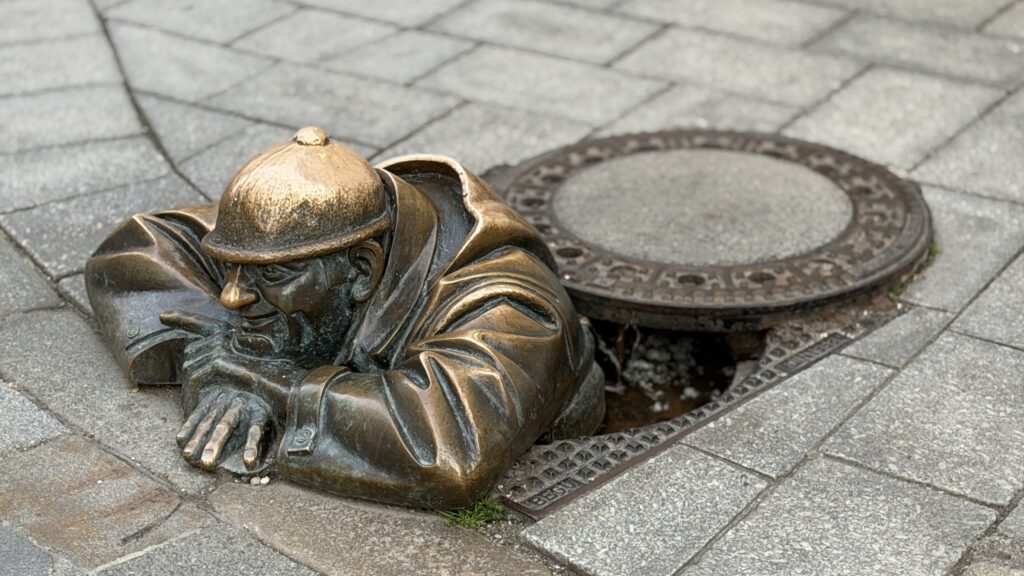
- Čumil – The literal translation of the word is the watcher. There are two common explanations for the origin of his name. One suggests he represents a typical communist-era worker who is more interested in observing his surroundings than doing his job. Another, more playful version says he is peeking under women’s skirts. You can choose whichever interpretation you prefer
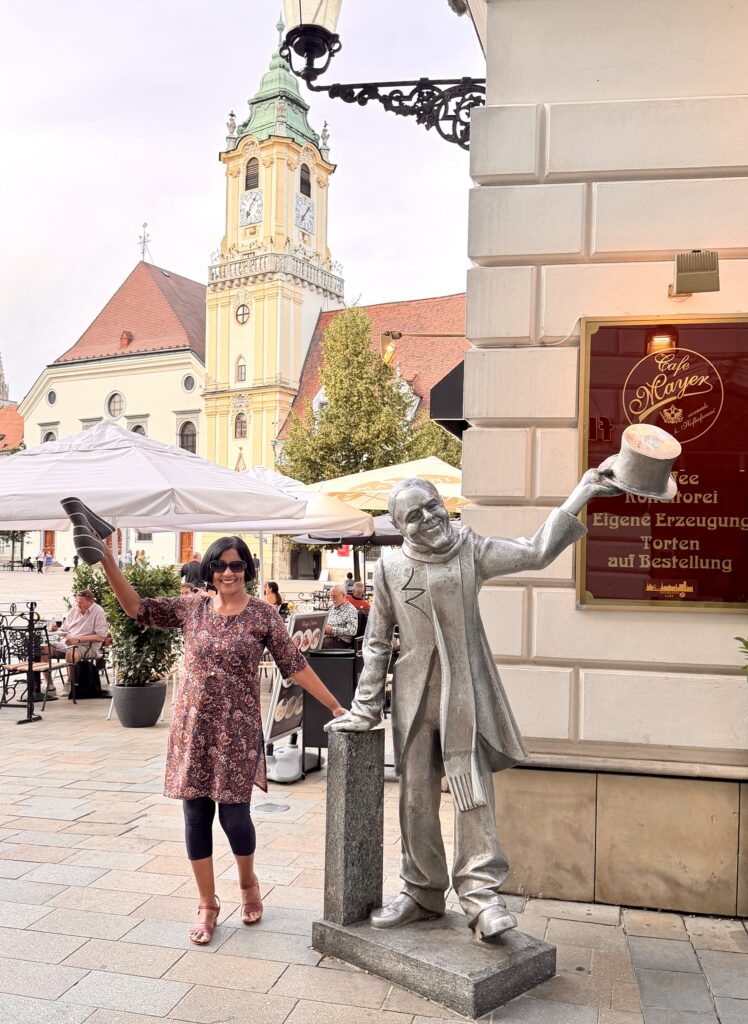
- Schone Naci – This old man is the only silver statue in the city—the others are made of bronze—and the only one depicting a real historical person. His original name was Ignác Lamar, and he lived in Pressburg (the former name of Bratislava) at the turn of the 19th and 20th centuries. According to local legend, he fell deeply in love with a woman who did not return his feelings. Heartbroken, he is said to have lost his mind and was often seen offering flowers to women he met on the streets.
Primate’s Palace (Primaciálny palác) – This palace is located near the Main Square. Built between 1778 and 1781 in the Neoclassical style, Primate’s Palace is best known as the site where the Peace of Pressburg was signed in 1805 following Napoleon’s victory at the Battle of Austerlitz, bringing the War of the Third Coalition to an end. Today, the palace serves as the seat of the Mayor of Bratislava.
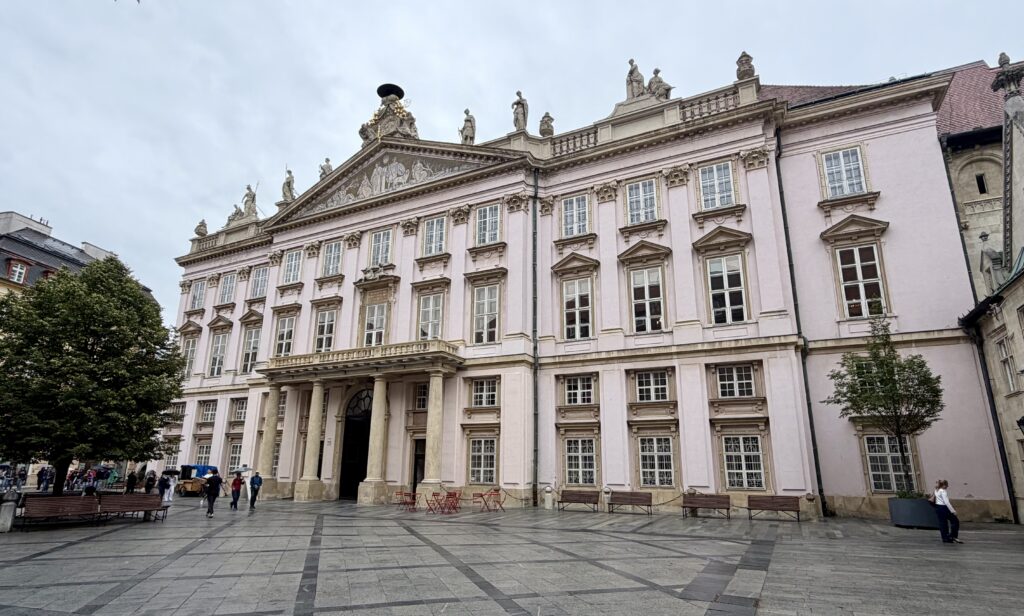
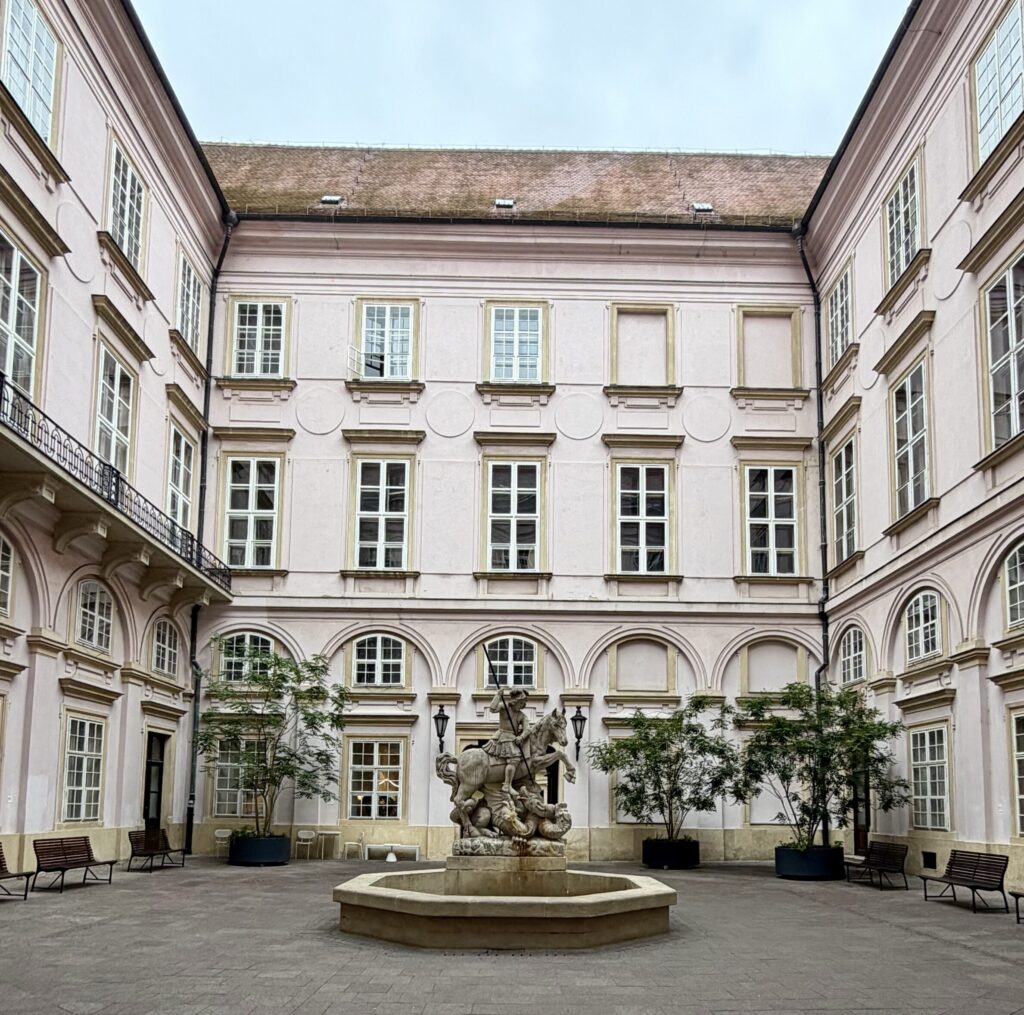
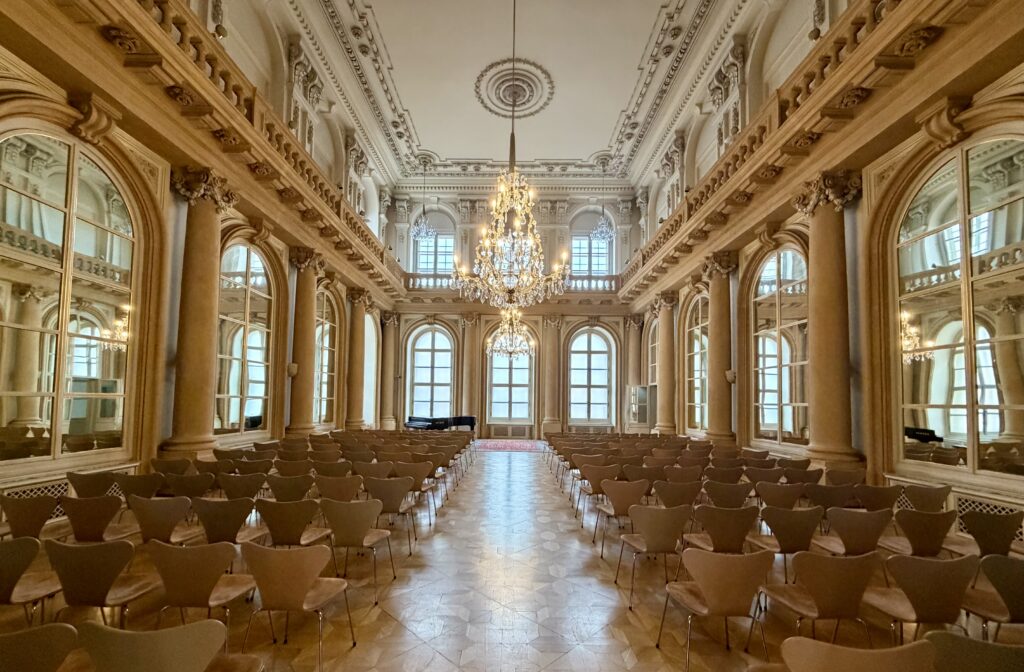
Entry fee is 4€. Visitors can admire its elegant and stunning Hall of Mirrors, and other equally elegant rooms. The Hall of Mirrors was where the historic Peace of Pressburg treaty was signed.
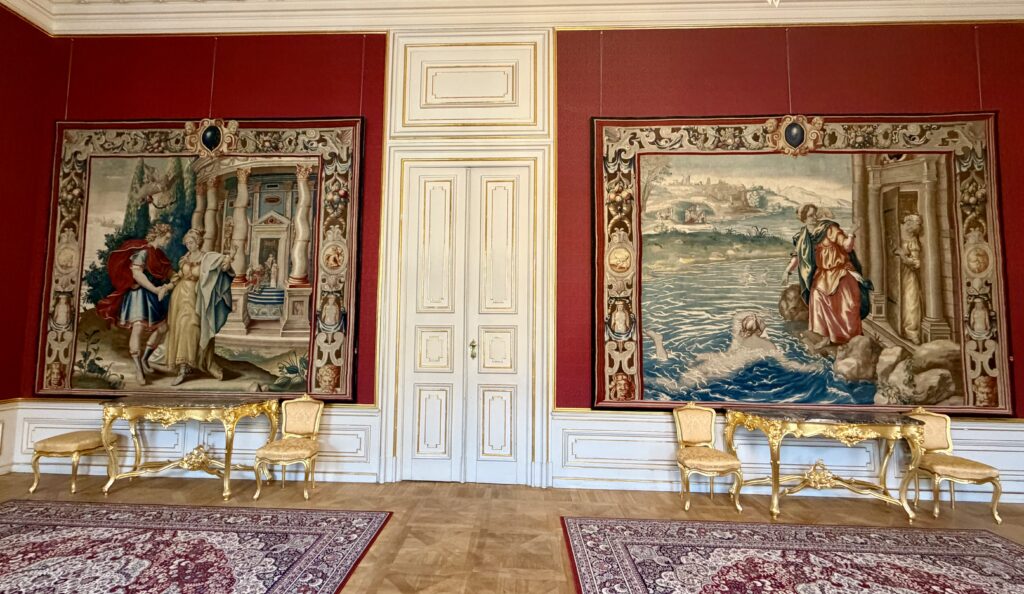
A remarkable collection of 17th-century English tapestries depicting the legend of Hero and Leander was discovered hidden behind a wall during renovations of Primate’s Palace in 1903. Woven in the 1630s at the historic Mortlake Tapestry Works near London, the series depicts the tragic Greek mythological love story of Hero and Leander.
Hviezdoslavovo námestie (Hviezdoslav Square) – Less than a five-minute walk from the Main Square, this large pedestrian square stretches between the Slovak National Theatre and the statue of Slovak poet Pavol Országh Hviezdoslav, after whom it is named.
The square is lined with elegant historic buildings, hotels, cafés, and embassies, creating a lively yet refined atmosphere. It regularly hosts cultural events, making it one of the city’s main gathering places and a popular promenade for both locals and visitors.
Námestie Eugena Suchoňa – Located just across from Hviezdoslav Square, this small square is worth a brief stop to admire the Victory Monument at its center and the impressive Slovak Philharmonic building (Reduta) that anchors one end. We spent about 10 minutes here before continuing our walk through Bratislava’s Old Town.
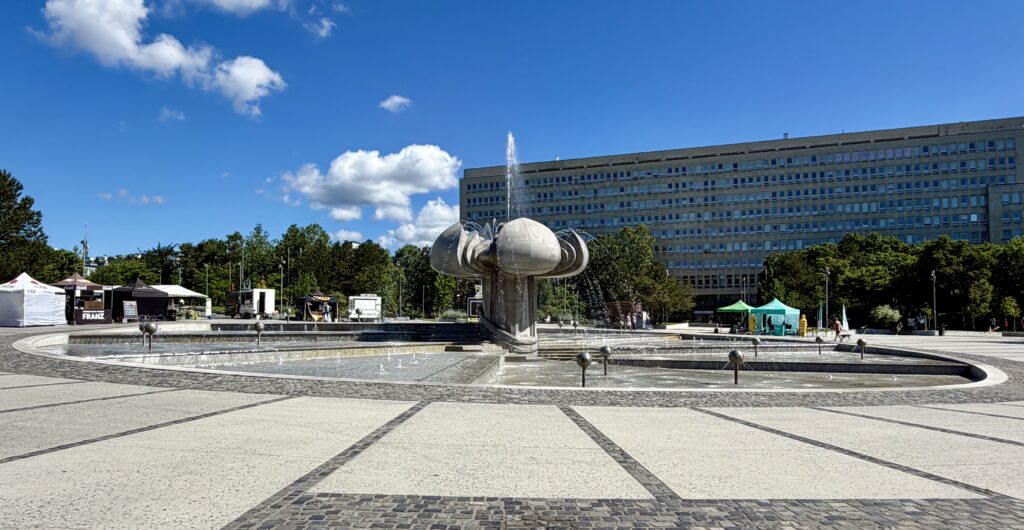
Námestie Slobody (Freedom Square) – This square was a 3-min walk from our Airbnb. One of Bratislava’s largest public squares, the square was originally covered with vineyards. The square’s centerpiece is the Fountain of Union (Fontána Družby), the largest fountain in Slovakia. Completed in 1980, it features a striking 9-meter-high sculpture of a linden flower—the national tree of Slovakia—set within a large circular basin.
Slavín War Memorial – Located at the highest point in Bratislava, it was a 30 minute steep climb up from our Airbnb. The Slavín Memorial is an important World War II memorial which serves as both a monument and the final resting place for 6,845 Soviet soldiers who died during the liberation of Bratislava in April 1945.
Built between 1957 and 1960 on the site of a wartime cemetery, the memorial was inaugurated on the 15th anniversary of the city’s liberation and was declared a National Cultural Monument in 1961. The complex features a ceremonial cemetery, a central obelisk topped by a statue of a Soviet soldier, and walls inscribed with the names of cities liberated during the war.
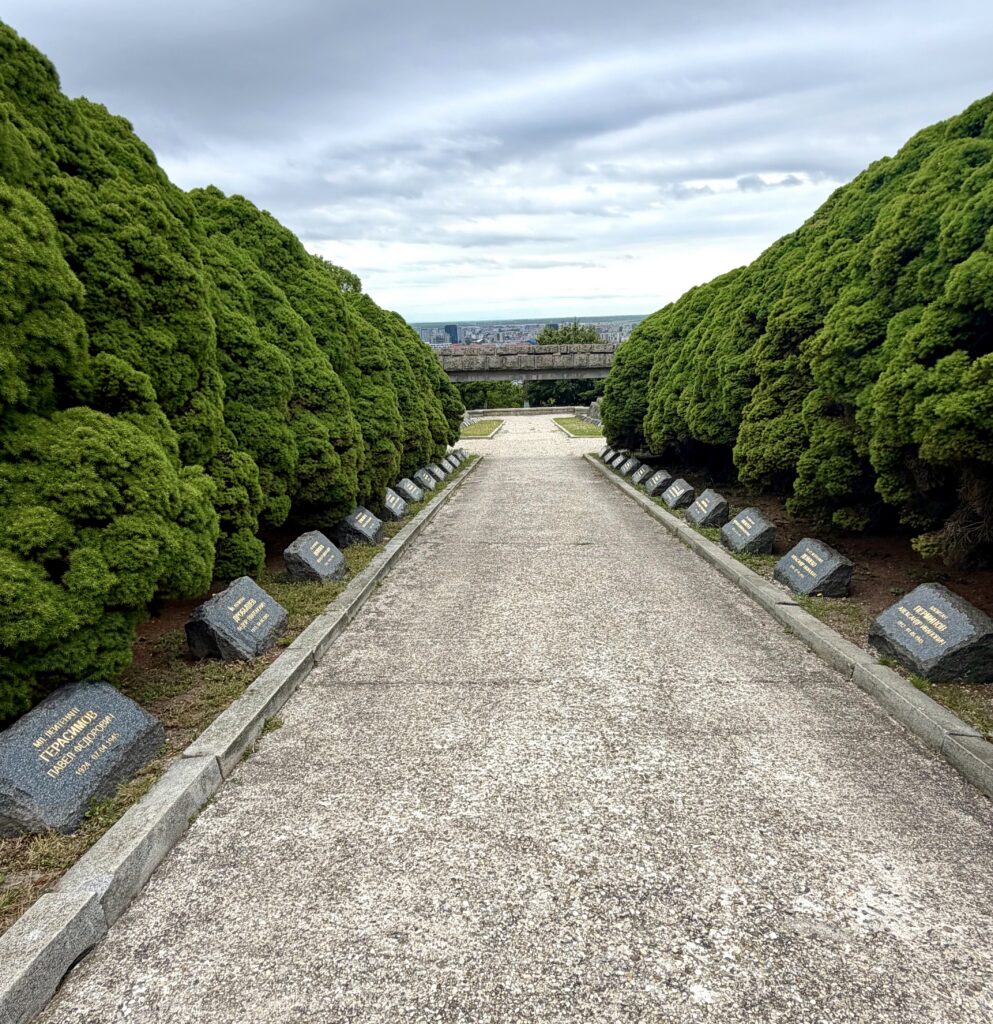
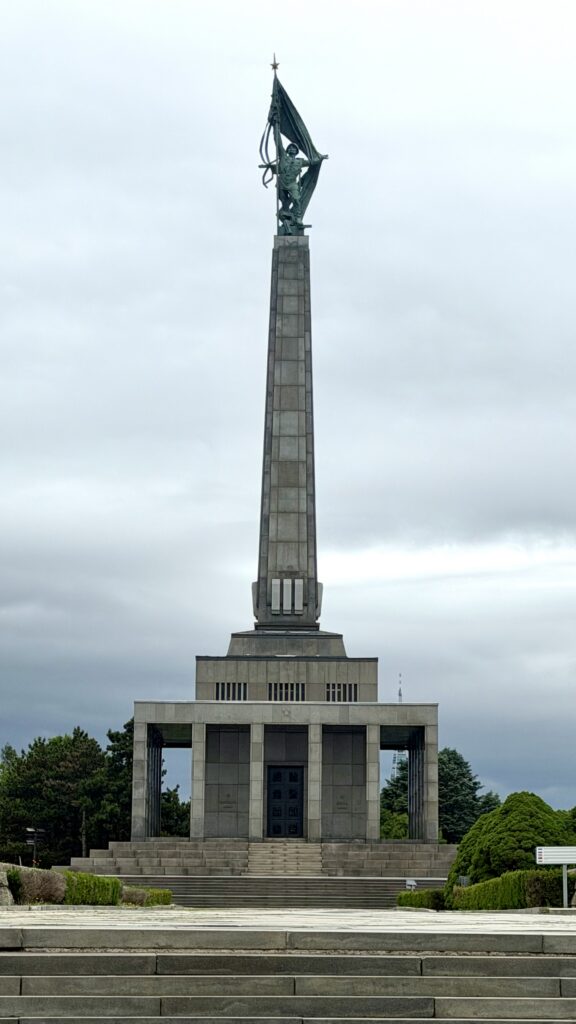
In addition to its historical significance, Slavín offers some of the finest panoramic views of Bratislava.
GuruWalk – is an international free tours community that connects travelers with guides around the world. Most tours are 2-3 hours long of walking in and around city center. At the end of the tour, tip the guide based on how much you enjoyed the walk (minimum recommended amount $10). We went on a 2-hour guided tour starting at Rybné námestie.
Rybné námestie (Fish Square) – Located at the western edge of Bratislava’s Old Town, Rybné námestie was once a lively medieval marketplace where fishermen sold their daily catch, giving the square its name. Over the centuries, it developed into an important public space serving as a gateway to St. Martin’s Cathedral, Bratislava Castle, and the Danube promenade.
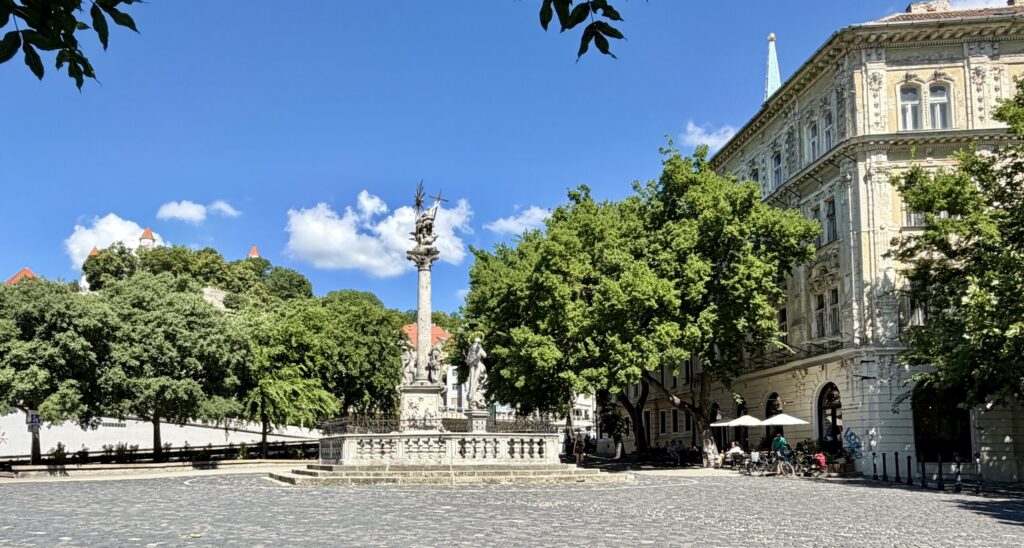
Much of the original square disappeared during the construction of the SNP Bridge in the 1970s, which dramatically altered the area. Today, only a few historic landmarks remain, including the 1713 Baroque Plague Column, erected to commemorate the victims of a plague epidemic.
Slovak Folk Dance Performance – While waiting for our guide to begin the GuruWalk tour, we were treated to a lively performance of traditional Slovak folk music and dance by a group of local children in the square. Their colorful costumes, energetic dancing, and cheerful music created a wonderful and enjoyable atmosphere.
——————————————————–
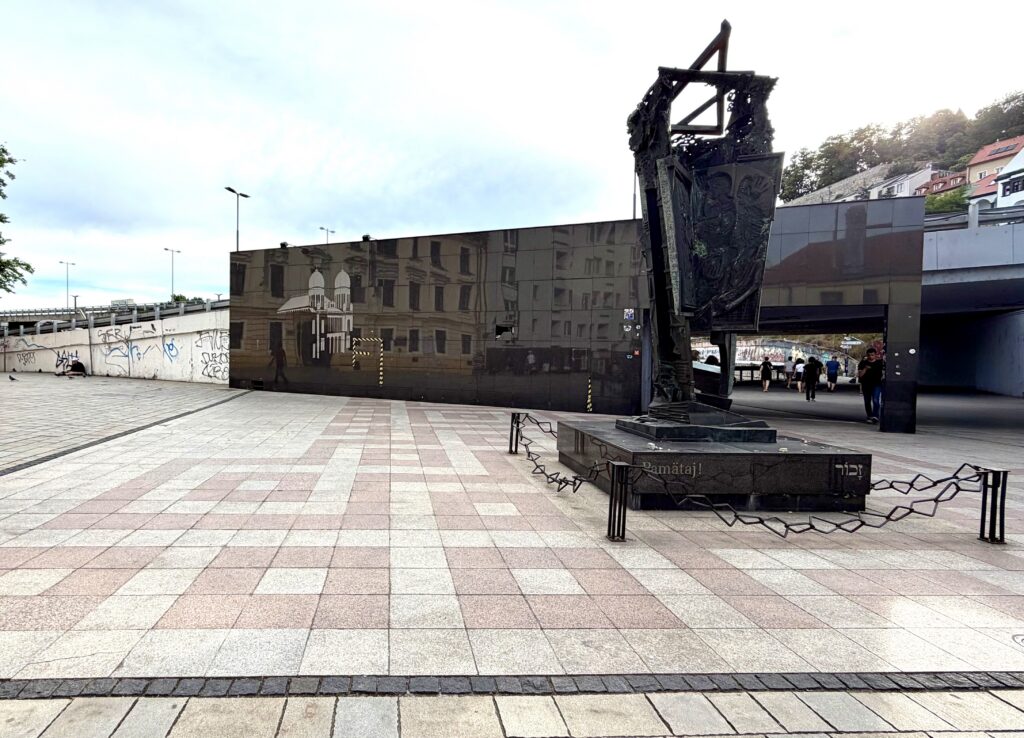
Synagogue Site – Our first stop on the walking tour was the site of the former synagogue, located next to St. Martin’s Cathedral. Although the synagogue was demolished in 1969 during the construction of the SNP Bridge, a memorial now marks its location and commemorates Bratislava’s once-thriving Jewish community. The memorial features a black marble wall engraved with the outline of the original synagogue, an abstract bronze sculpture topped with a Star of David, and inscriptions of the word Remember in both Hebrew and Slovak (Pamätaj).
——————————————————–
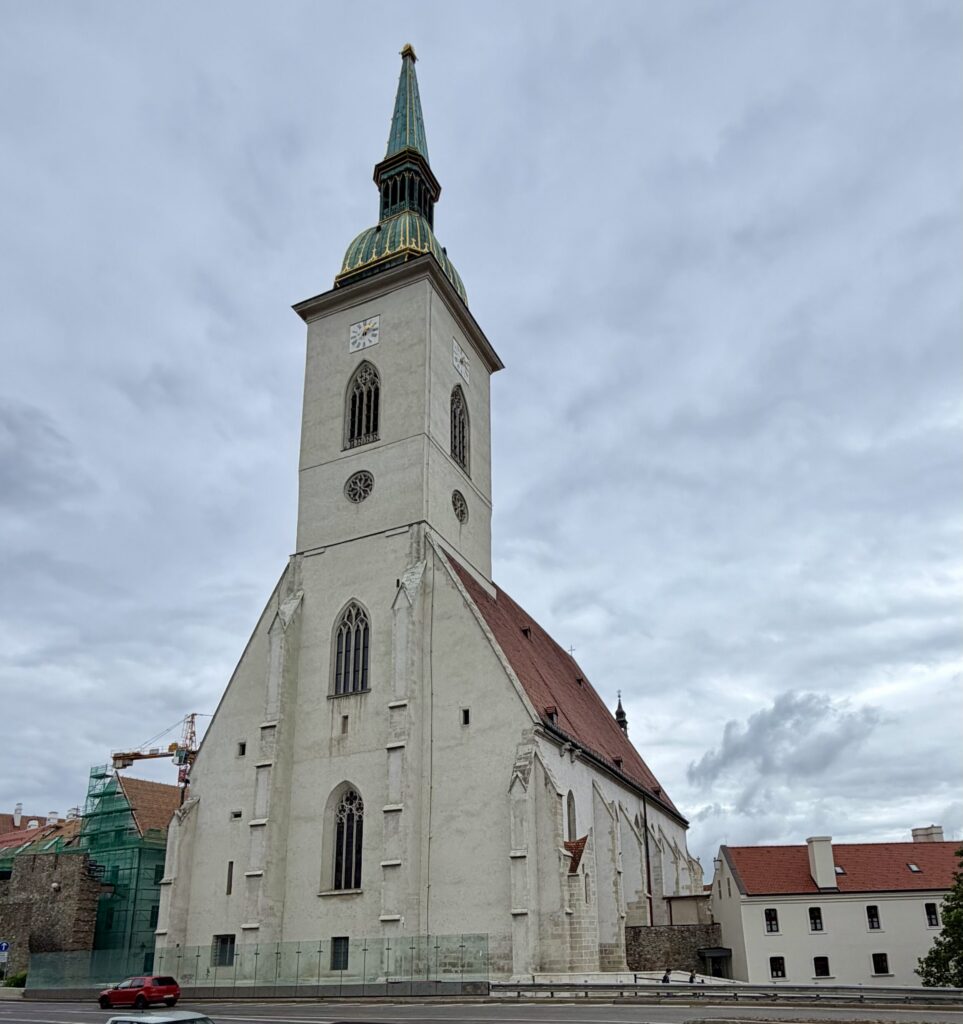
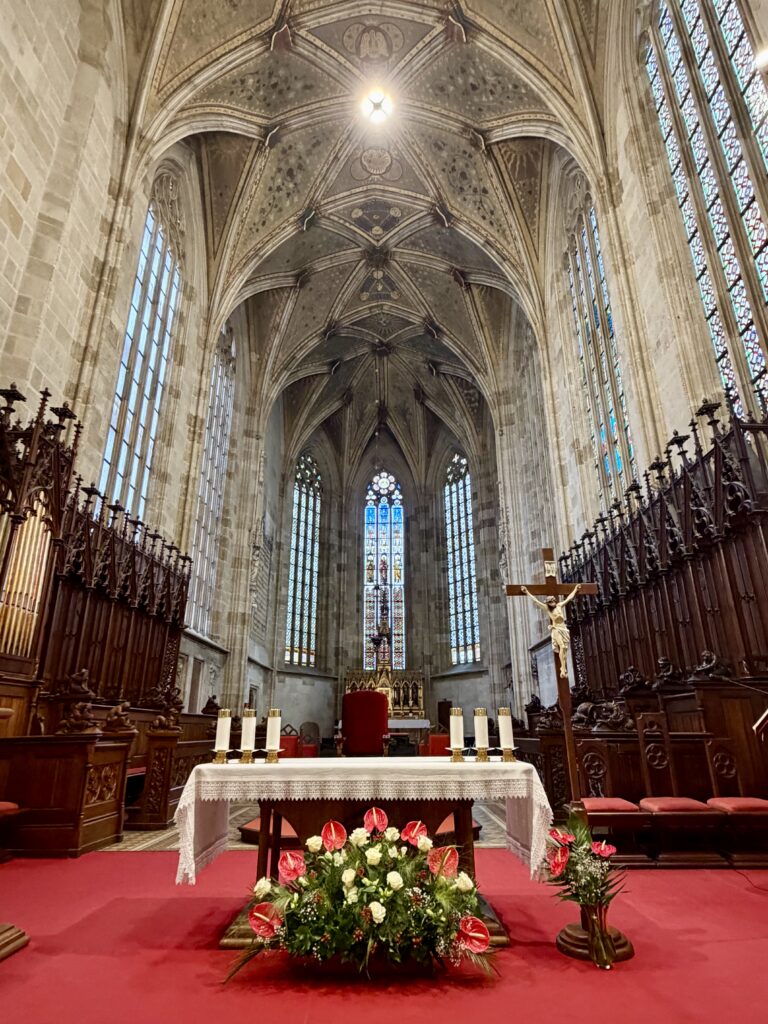
St. Martin’s Cathedral – Standing at the foot of Bratislava Castle, this Cathedral is the largest, and one of the oldest churches in the city. Built mainly between the 14th and 15th centuries in the Gothic style, it has served as the cathedral of the Archdiocese of Bratislava. From 1563 to 1830, the cathedral was the coronation church of the Kingdom of Hungary, where 11 kings and eight queens consort were crowned, including Maria Theresa. In honor of this history, the cathedral’s 85-meter tower is topped with a gilded replica of the Hungarian Crown.
——————————————————–
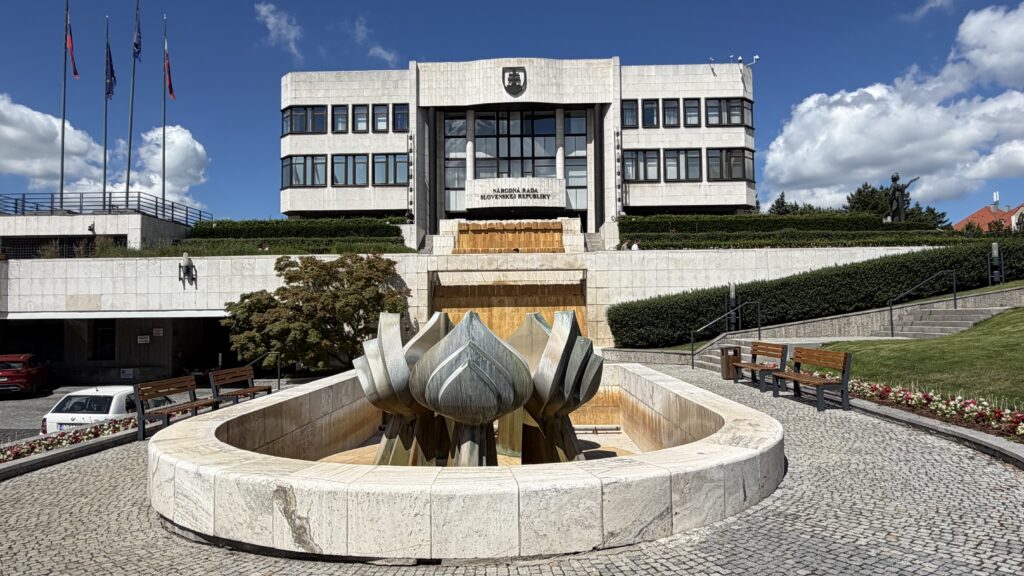
National Council of the Slovak Republic is Slovakia’s unicameral parliament, located on Castle Hill beside Bratislava Castle at Alexander Dubček Square. Housed in a distinctive Brutalist-style building completed in 1986, it originally served as the Federal Parliament of Czechoslovakia before becoming the seat of Slovakia’s legislature following independence in 1993. The parliament consists of 150 elected members serving four-year terms.
———————————————————
Bratislava Castle (Bratislavský hrad) is the main castle of Slovakia’s capital, rising on a rocky hill above the Danube River and forming one of the city’s most dominant landmarks. The large rectangular structure with four corner towers offers panoramic views of Bratislava. Its history spans centuries, with remnants of Gothic and Renaissance architecture still visible within the complex. From the old town, it is an uphill walk to the Castle, but worth the effort.
The Castle has four towers, one at each corner of its rectangular layout. The most prominent is the Crown Tower, located at the southwest corner, which is the tallest and oldest, dating back to the 13th century. It once housed the Hungarian Crown Jewels for nearly 200 years and can be visited as part of the museum. The other three towers positioned at the remaining corners of the castle, contribute to its symmetrical appearance. The towers form the castle’s iconic silhouette which resemble an upside-down table.
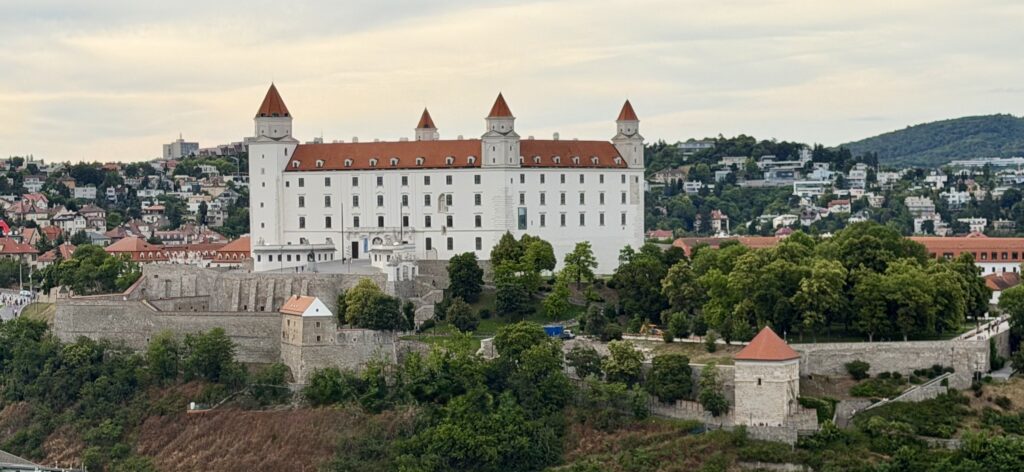
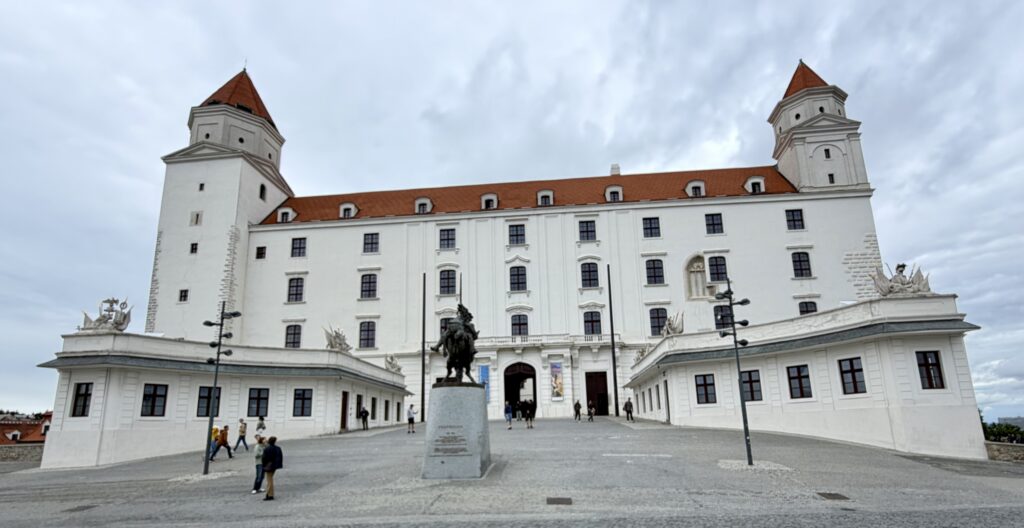
The guide took us around the Castle exterior and some of the Points of Interest included –
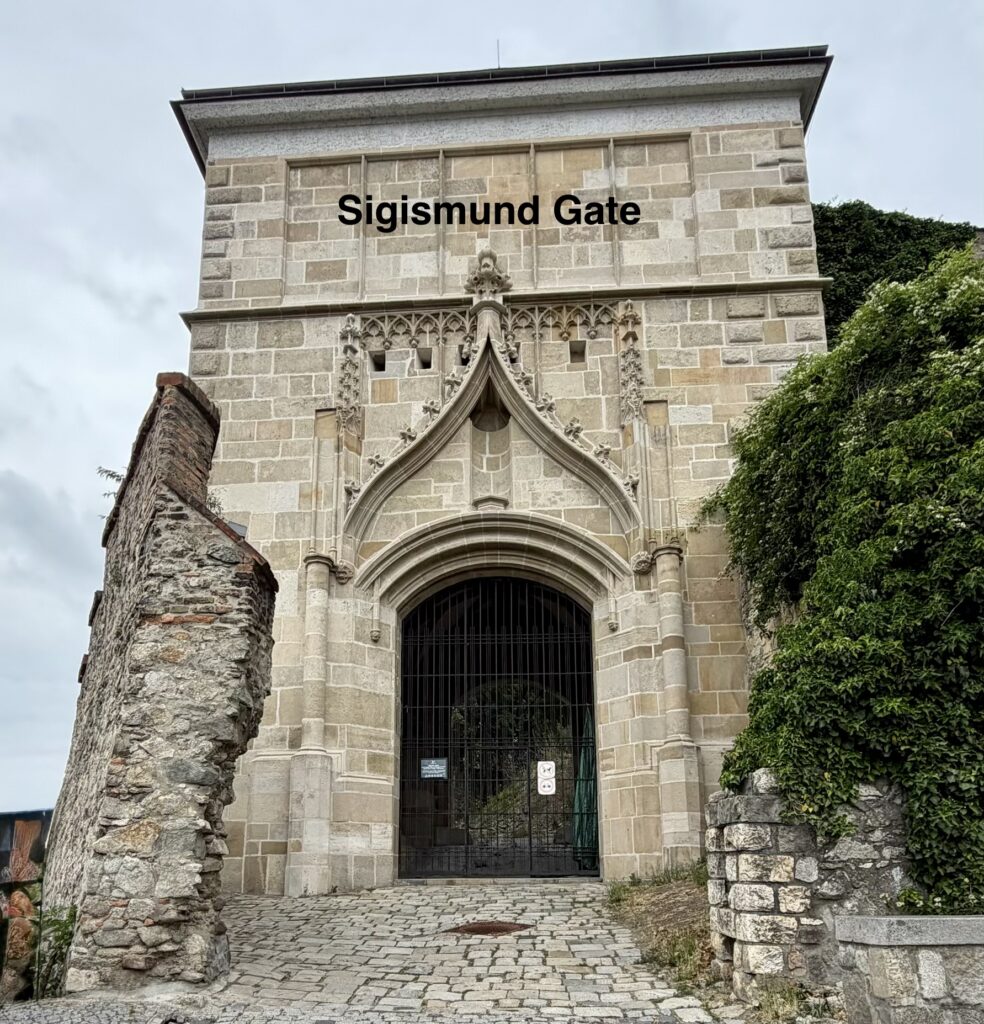
- Sigismund Gate (Žigmundova brána) is located on the southeast side of the Castle and is its best-preserved medieval entrance. Built in the 15th century during the reign of King Sigismund of Luxembourg, it is an example of Gothic fortress architecture and originally served as the main fortified southern access point between the castle, the river, and the town below. This was the first gate we encountered on our tour.
- Vienna Gate – located in the southwest part of the Castle complex, serves as the main ceremonial entrance to the castle grounds. Built in 1712 to commemorate the coronation of King Charles III, it is a key access point to the site. This gate leads visitors into the Yard of Honour, where an equestrian statue of Svatopluk I stands, along with panoramic views over the Danube River and the city.
- Leopold Gate (Leopoldova brána) – built in 1674, it is one of the historic gateways to the fortress grounds and features decorative military motifs, including Habsburg banners, armor, and cannonball imagery. Located in the lower part of the castle area near the Leopold Courtyard, it is primarily preserved as a historical monument rather than a public passage.
- View of the city from the castle
- Castle Courtyard – Once you enter the Castle, you will be in this huge courtyard featuring a deep medieval well at one end.
- Great Moravian Basilica – The ruins of the 9th-century basilica are located on the eastern terrace of the Bratislava Castle complex. Built during the reign of Prince Rastislav, this pre-Romanesque church is the largest known Great Moravian basilica discovered in Slovakia and was an important religious center of its time. Constructed from reused stone and bricks from earlier Celtic-Roman structures, the basilica was destroyed during the early 10th-century Magyar invasions.
- Nicholas Gate – is a 16th-century stone gateway located on the northeastern side of the Castle complex. Along with the Vienna, Leopold, and Sigismund gates, it historically formed part of the fortress’s defensive entrances. Today, it serves as an access point connecting the castle grounds with the Old Town and the historic Podhradie district. We exited the main part of the castle from this gate.
- Castle Garden – We briefly stopped by near the garden to take a peek inside.
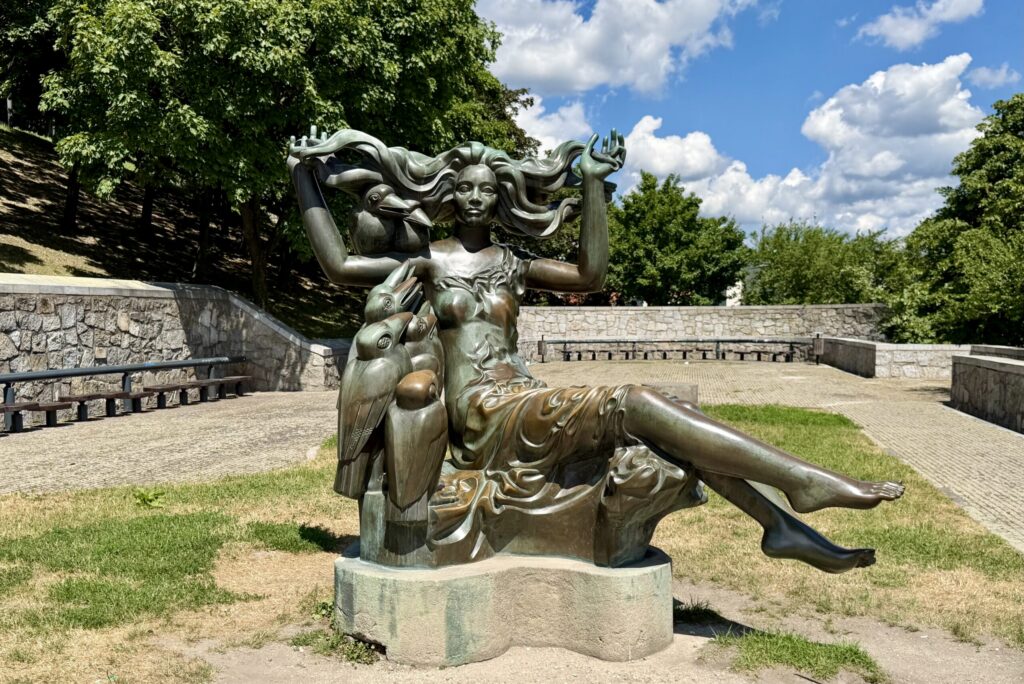
- Girl with Ravens – also known as the Bratislava Witch (Bosorka), is a bronze sculpture located on the wooded slopes below Bratislava Castle. Created in the late 1980s by Slovak sculptor Tibor Bártfay, it commemorates the victims of the city’s 17th-century witch trials, particularly Agáta Tóthová-Barlabášová, who was accused of witchcraft, tortured, and executed in 1602. Depicting a windswept woman surrounded by ravens, the statue serves as a poignant memorial.
- St. Nicholas Church (Chrám sv. Nikolaja) – is located at the foot of Bratislava Castle near the Girls with Ravens sculpture. Built in 1661, this protected cultural monument blends early Baroque and Gothic architecture and has served as an Orthodox church since the mid-20th century.
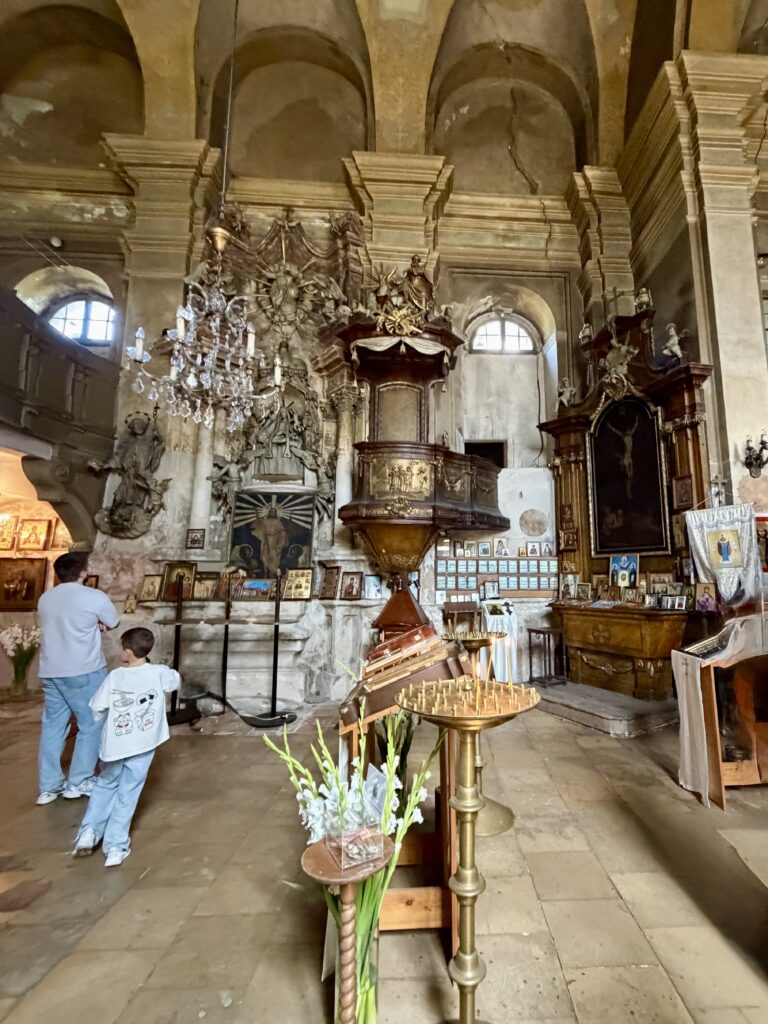
Note: We explored only the exterior of Bratislava Castle; admission is required to visit the castle interior. The ticket includes access to the Historical Museum, which traces the history of Slovakia from the Middle Ages to the present day, as well as the Crown Tower, the castle’s oldest surviving structure, built in the 13th century as a defensive tower and offering panoramic views. Visitors can also explore the Treasury, which displays fine dining ware, decorative arts, and ceremonial objects from Slovakia, Austria, and Germany, dating from the 17th century to the first half of the 20th century.
——————————————————-
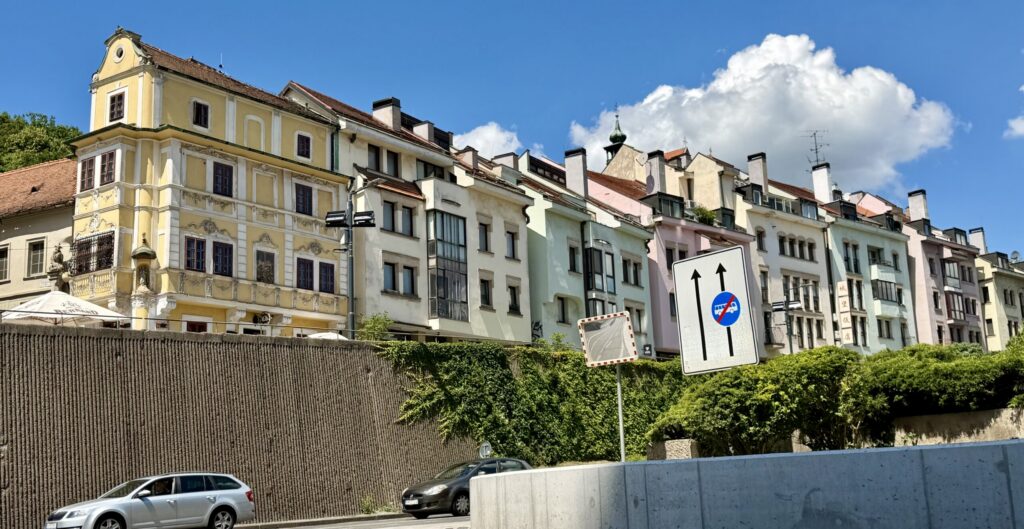
Židovská Street (Judengasse or Jewish Street) was, for centuries, the only area where Jews were permitted to live in Bratislava. Located just outside the medieval city walls on the castle estate, the street was home to the city’s Jewish community from 1599 until 1840, with gates that were locked each night. After Jews gained the right to live elsewhere in the city in 1840, many families moved away, and the neighborhood gradually declined, particularly after a major fire in 1913. Much of the historic area was demolished in the 1960s to make way for the SNP Bridge and its approach roads, leaving only traces of what was once the heart of Bratislava’s Jewish quarter.
House of the Good Shepherd – is a narrow, Rococo-style building located in this street. It was built in 1760–1765 for a local merchant and the lower part of the building was used for commercial purposes, the upper part for living. It is one of the few buildings in the area below Bratislava Castle to retain their original state. Today, the house is home to the Museum of Clocks, which displays a collection of antique timepieces dating from the 17th century to the early 20th century.
———————————————————–
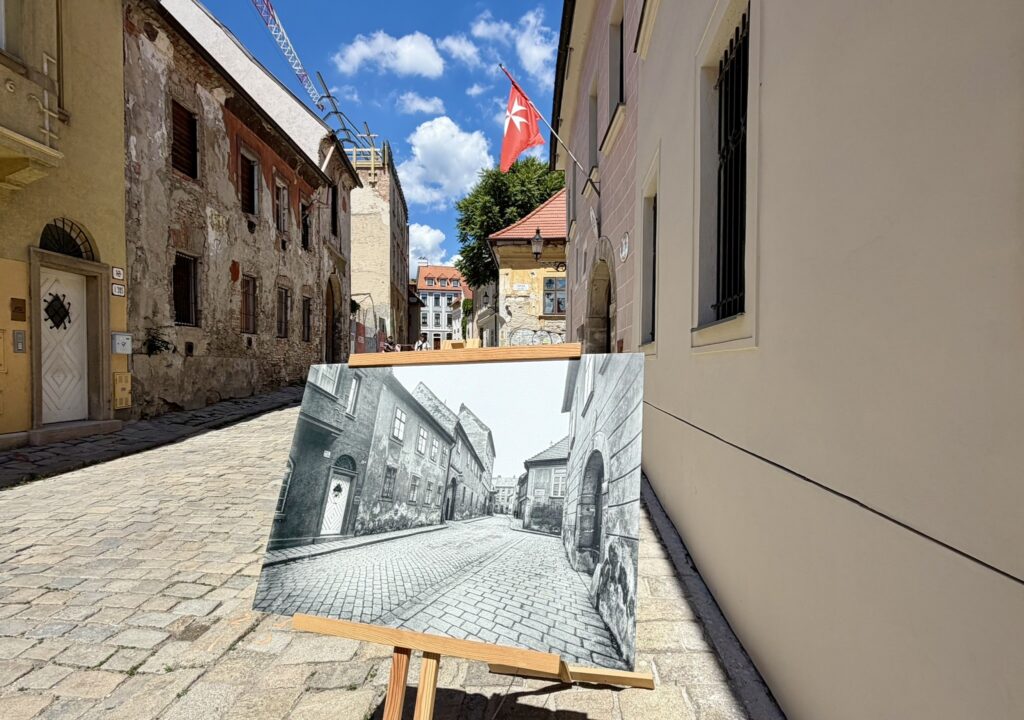
Kapitulská Street is one of Bratislava’s oldest and best-preserved medieval streets, dating back to at least 1204. Lined with Gothic, Renaissance, and Baroque buildings, the peaceful cobblestone lane has remained largely unchanged because most of its properties are owned by the Catholic Church, leaving it free of modern shops and restaurants. Stretching about 300 meters from St. Martin’s Cathedral to the Bax Tower, it can be explored on foot in as little as 15 to 20 minutes.
————————————————————-
The Blue Church (Church of St. Elizabeth) – We ended the GuruWalk tour here. Located in the the eastern part of Bratislava’s Old Town, the church is dedicated to St. Elizabeth of Hungary, the daughter of King Andrew II, who spent part of her childhood at Pressburg Castle.
The church is famous for its distinctive blue façade, mosaics, majolica decorations, and blue-glazed roof. Constructed between 1908 and 1913 in the Hungarian Secessionist (Art Nouveau) style, the building was originally painted in pastel colors before adopting its now-iconic blue exterior. Inside, the church is richly decorated with ornate altarpieces. The main altar depicts St. Elizabeth giving alms to the poor, reflecting her legacy of charity.
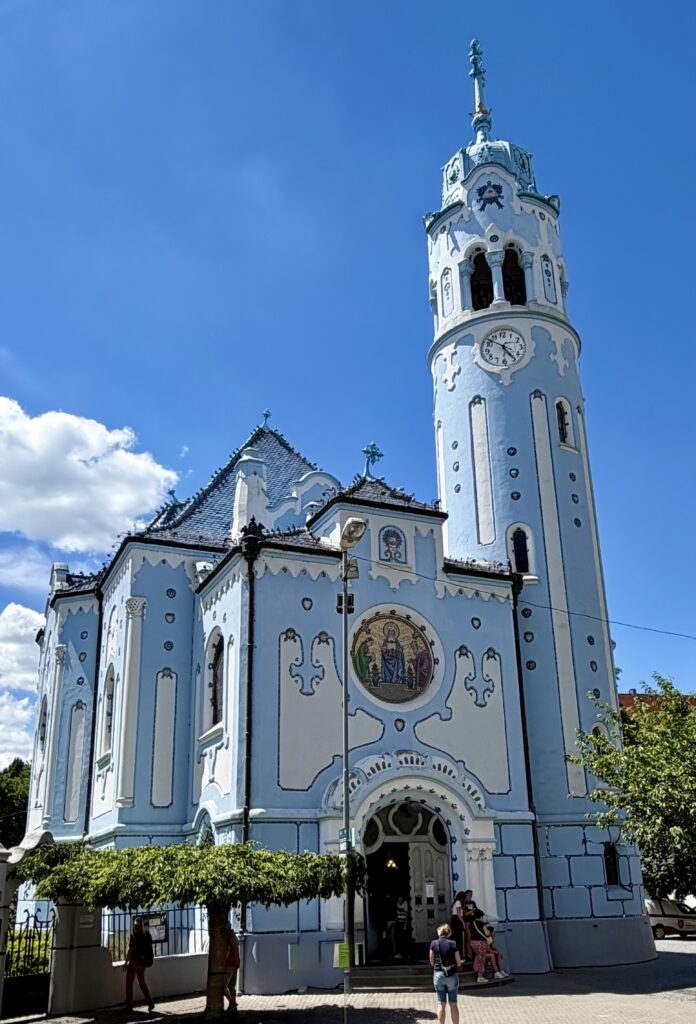
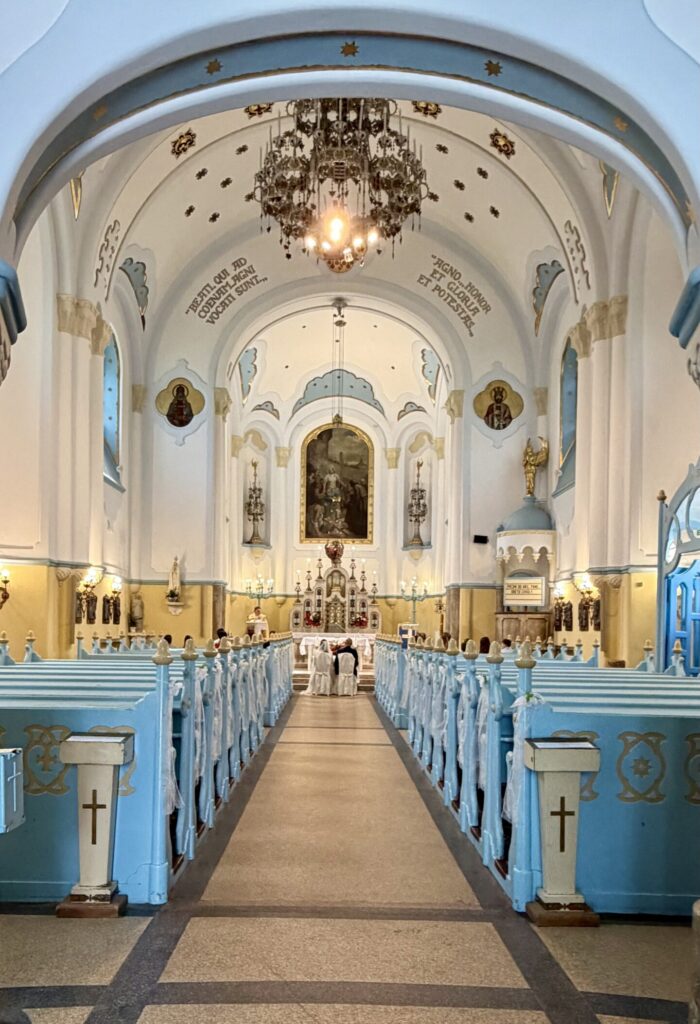
The architect in charge was Ödön Lechner, a pioneer of Hungarian Secessionism and often referred to as the Hungarian Gaudí.
Bratislava Riverfront – Stretching along the banks of the Danube, Bratislava’s riverfront is one of the city’s most popular places for walking, cycling, and relaxing. Lined with broad promenades, parks, and public art, it offers beautiful views of the river and several of the city’s iconic bridges.
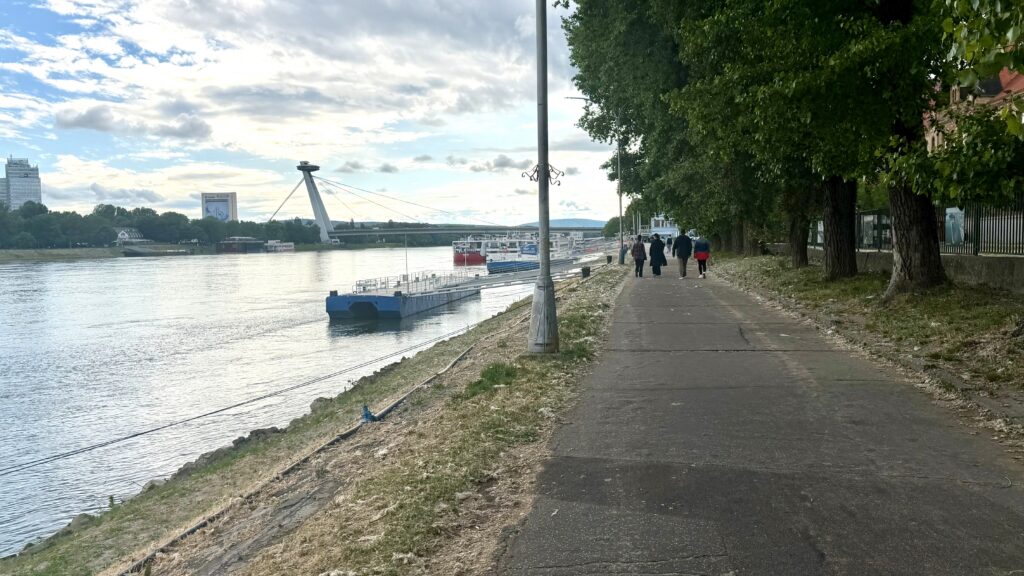
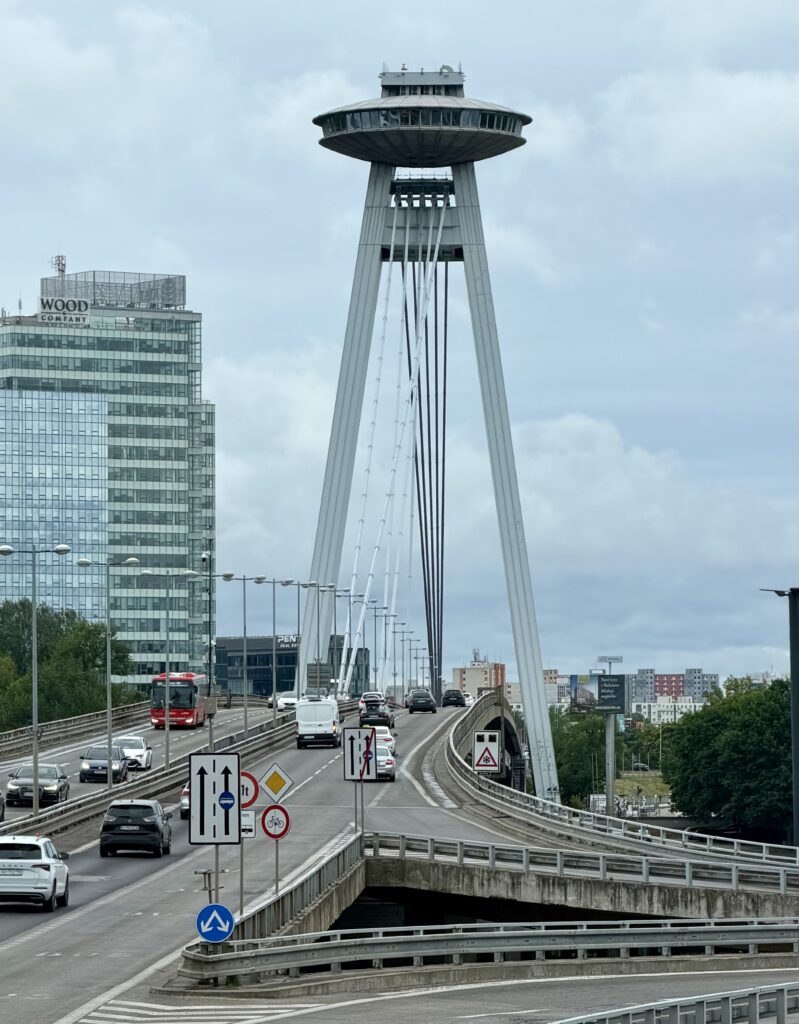
Most SNP (Bridge of the Slovak National Uprising) – often called the UFO Bridge and completed in 1972, it is the world’s longest single-pylon cable-stayed bridge and connects the Old Town with the Petržalka district across the Danube River. Its iconic UFO-shaped structure, perched 84.6 meters above the river, houses a restaurant and observation deck offering panoramic views of the city. While the bridge greatly improved transportation, its construction required the demolition of much of Bratislava’s historic Jewish Quarter, making it both an engineering achievement and a reminder of the city’s changing urban landscape.
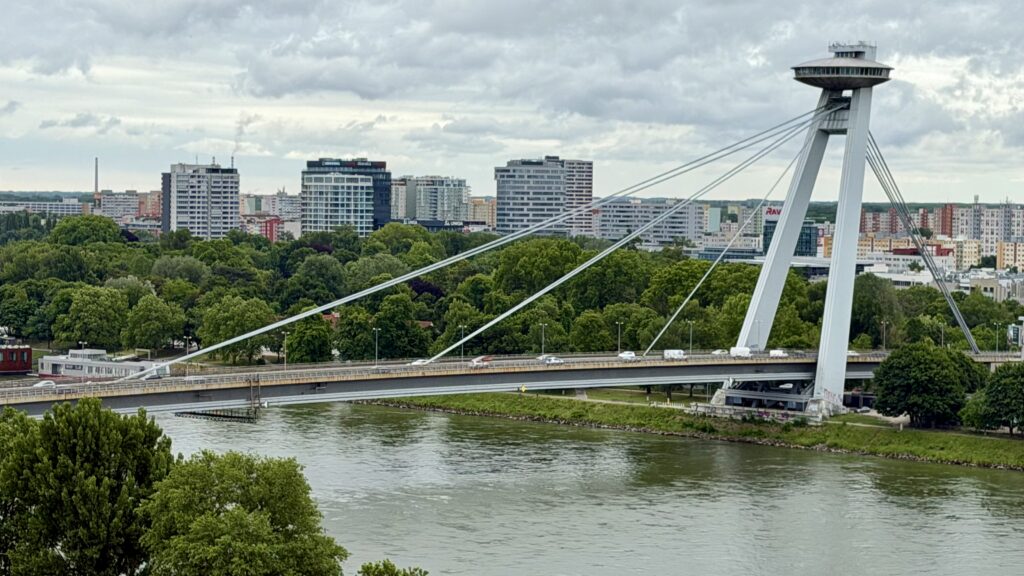
A high-speed elevator inside the east (left) pylon of Most SNP takes visitors to the UFO Observation Deck, offering panoramic views of Bratislava. To reach the elevator – from the Old Town, near Rybné námestie, climb the stairs to the pedestrian walkway beneath the bridge and walk across the Danube to the pylon, where the elevator is located. Tickets cost about €11.90, although the admission fee is deducted if you dine at the UFO Restaurant. For those seeking a challenge, the opposite pylon contains a staircase with more than 400 steps leading to the top.
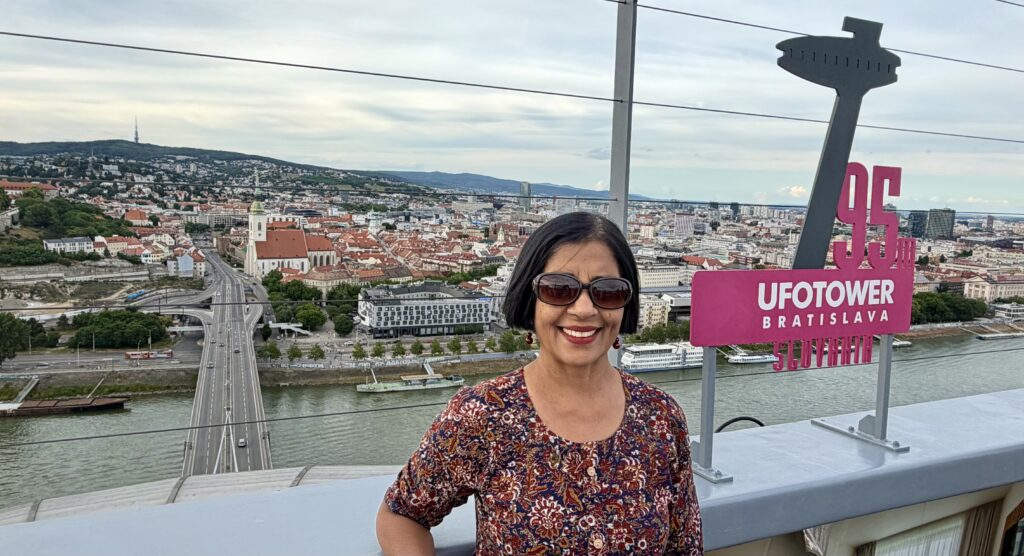
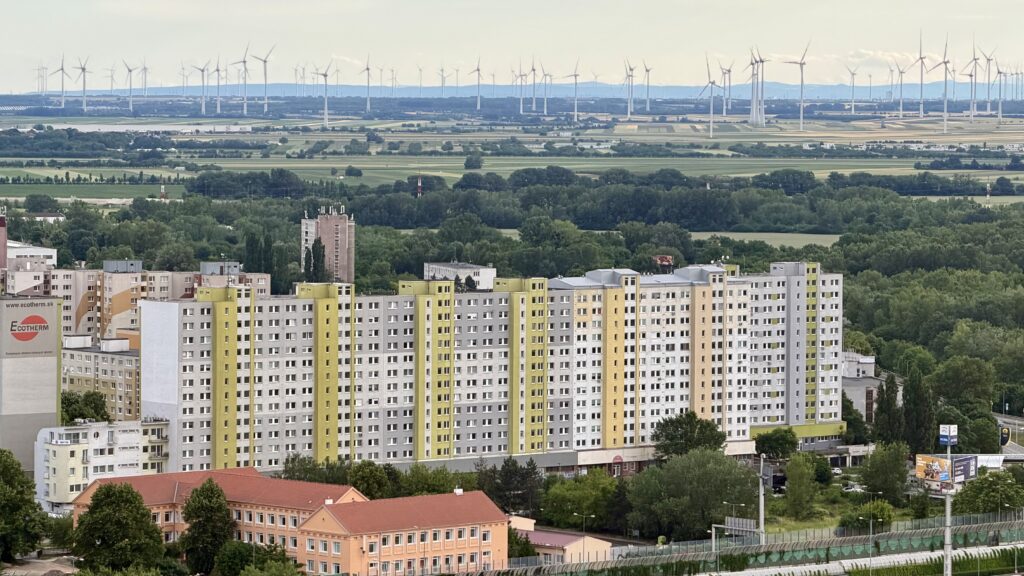
We had a clear day and we could see the large wind farms in eastern Austria . The Austrian border is just 5-10 km from Bratislava and the observation deck has visibility of up to 100 km in favorable weather.
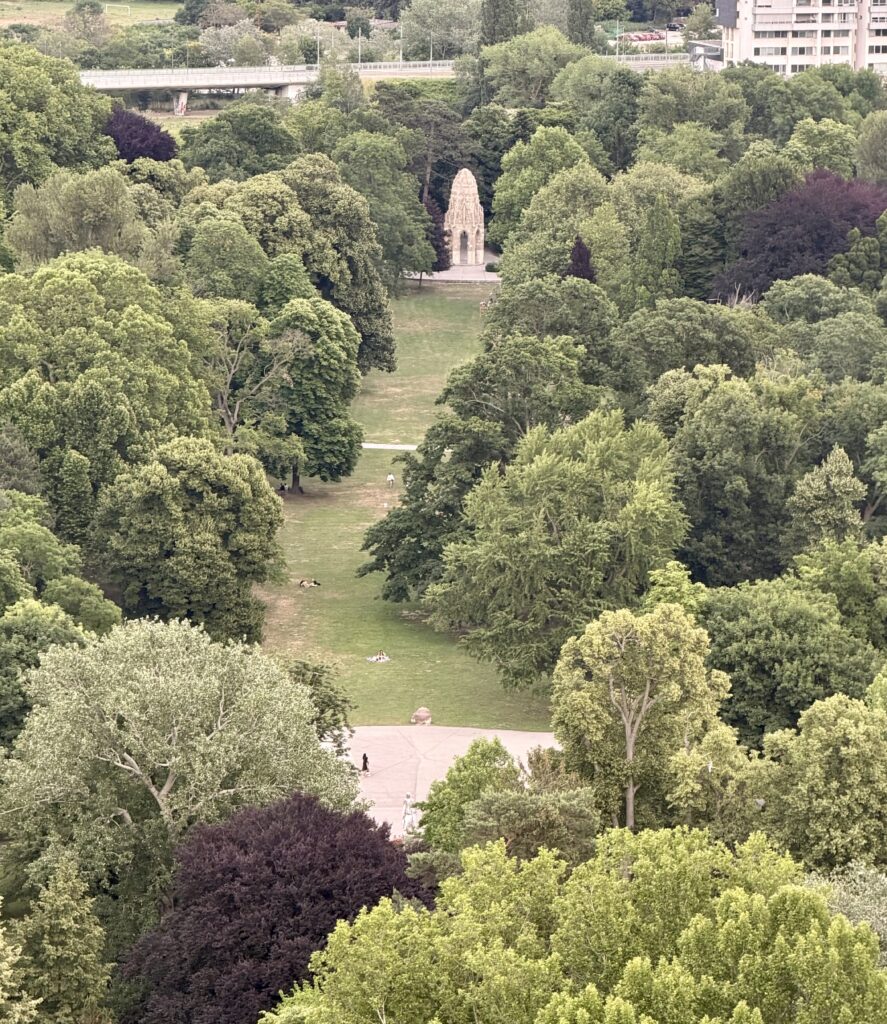
Sad Janka Kráľa – is one of the oldest public parks in Central Europe, located in the Petržalka district between the Old Bridge and the Most SNP. Covering about 42 hectares, it was established in 1774–1776 on former Danube floodplain forest as one of the first parks designed for public use. Originally laid out in a star-shaped pattern of tree-lined avenues, the park was later redesigned in the 19th century and has undergone several major reconstructions, including a significant revitalization in 2006. Today, it features mature trees, diverse plant species, and historic landscape elements such as ornamental circular garden spaces and a central statue of Janko Kráľ.
The park is home to a Gothic Tower (Gotická veža), a unique garden pavilion and one of the park’s key landmarks. Originally a 15th-century bell tower from the Franciscan Church in Bratislava’s Old Town, it was relocated to the park in 1897 after being damaged by an earthquake. Today, the restored structure serves as a decorative gazebo and a popular backdrop for photography, weddings, and leisure activities within one of Central Europe’s oldest public parks.
Worth a brief stop – Here are a few things to notice around Bratislava that does not require much time or money.
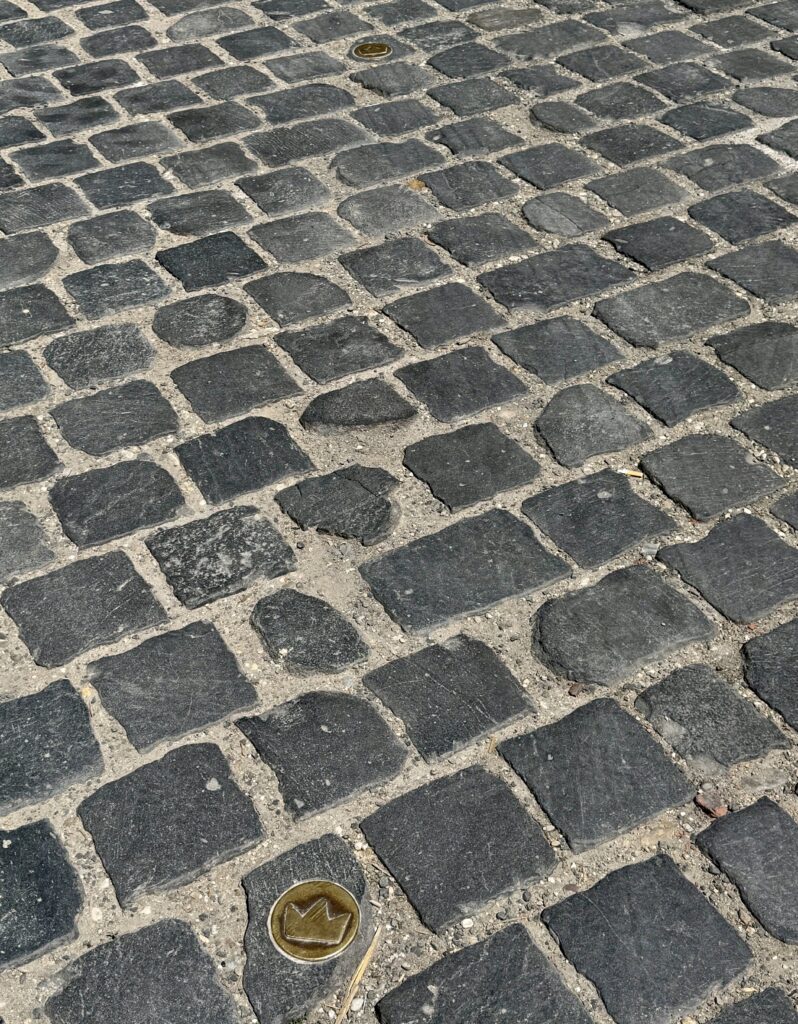
- Royal Route – Small gilded crown emblems embedded in Bratislava’s cobblestones mark the city’s historic Royal Route, which traces the coronation procession between Bratislava Castle and St. Martin’s Cathedral. During the coronation of Hungarian kings and queens, including Maria Theresa, this route was covered with a red carpet for the newly crowned monarch.
- Close-up View of Most SNP – As you walk up the path to Bratislava Castle, you’ll be rewarded with an excellent close-up view of Most SNP and its iconic UFO-shaped observation deck, making it a great spot for photos.
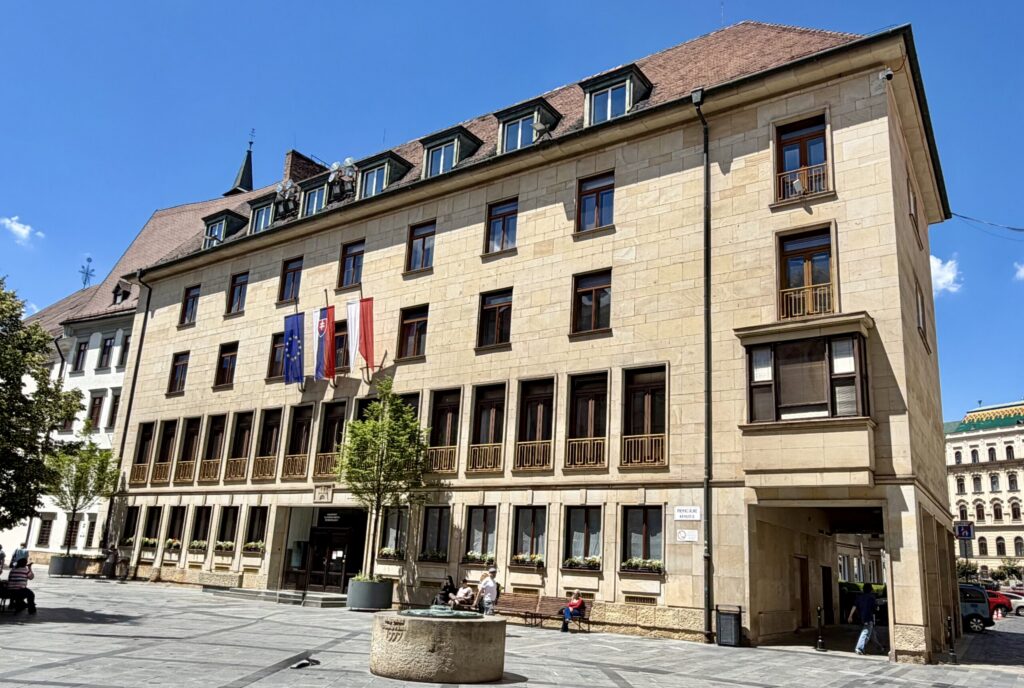
- New City Hall (Nová radnica) – Located directly opposite Primate’s Palace on Primate’s Square, this building was completed in 1948 on the site of a former Jesuit cloister and serves as Bratislava’s administrative headquarters. Although often overlooked in favor of the more ornate Primate’s Palace, it remains an important civic building at the heart of the Old Town.
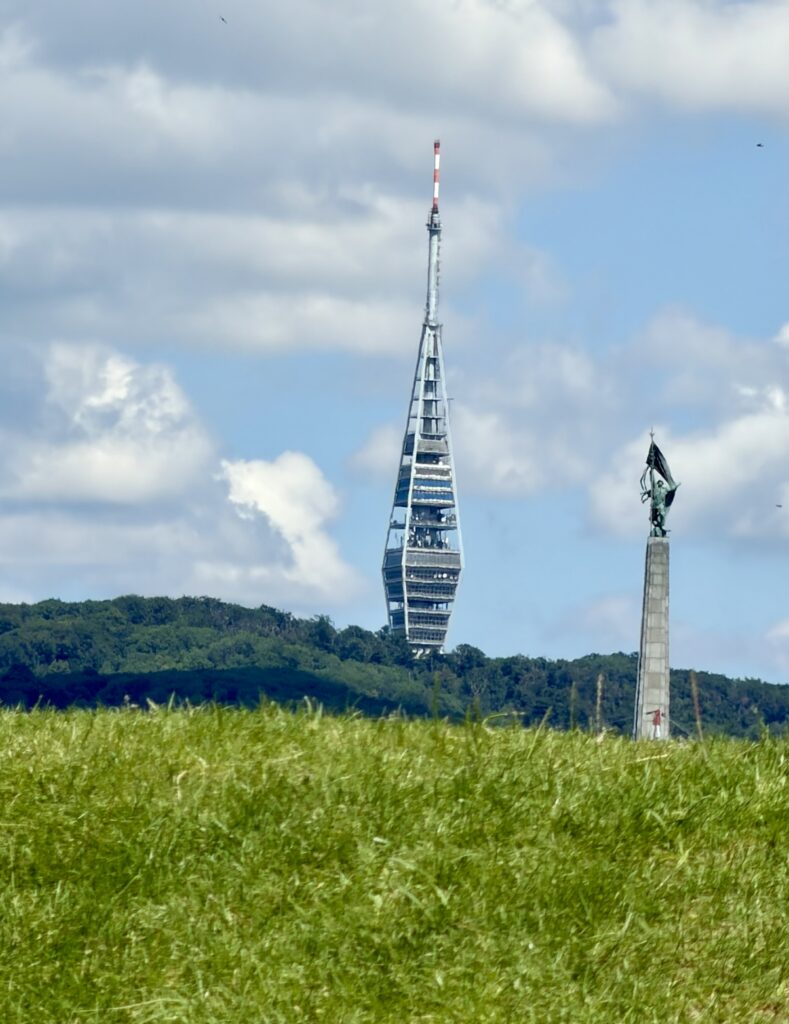
- Kamzík TV Tower – This peculiar television tower is visible from almost any angle in Bratislava, and if you’re ready to go in for a closer look you’ll have to catch the 201 bus from the centre or drive if you have a car. At 70 m, the observation deck has two eateries, one a casual bistro and the other an upmarket restaurant. Both afford spellbinding panoramas of the city, and you can see Austria, Hungary and even as far as the Czech Republic from this height.