Half Day trip from Poprad
Bardejov is one of the 7 UNESCO World Heritage Sites in Slovakia. Located near the Polish border, the town retains its original medieval layout, centered around a large market square surrounded by colorful 15th-century burgher houses. Key landmarks include the Basilica of St. Giles, a Gothic church containing eleven late Gothic altars, and the Renaissance Town Hall at the heart of the square. The historic center is enclosed by an extensive fortification system that was among the most advanced in Central Europe at the time of its construction.
- Radničné Námestie (Town Square)
- Old Town Hall
- Basilica of Saint Egidius
- Other Buildings
- Fortification system
- Franciscan Church of St John the Baptist
- Church of Peter and Paul
- Other things to do in and around Bardijov
- Wooden Church, Church of St. Francis of Assisi
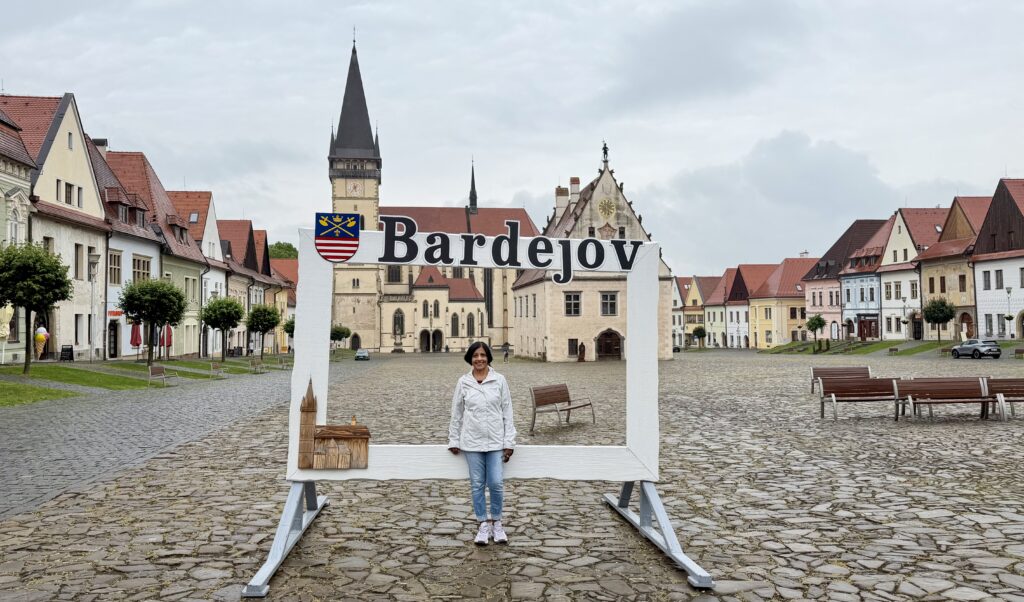
Radničné námestie (Town Square) – We Explored the heart of the town, a spacious central plaza that has retained the character of a medieval marketplace. The square is lined with 46 beautifully preserved Gothic and Renaissance burgher houses, reflecting the town’s historic prosperity.
————————————————–
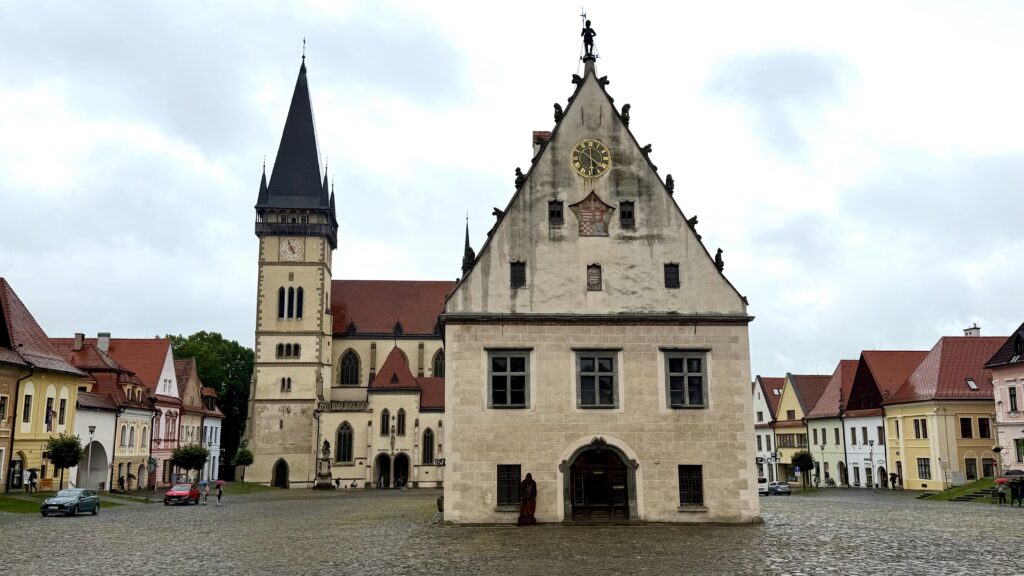
Old Town Hall – At the center of the square stands the Bardejov Town Hall, built in 1505 and notable for its blend of Gothic and Renaissance architectural styles. Today, the building houses a branch of the Šariš Museum. Established in 1903, the museum preserves and exhibits the history, culture, and heritage of the Šariš region.
————————————————–
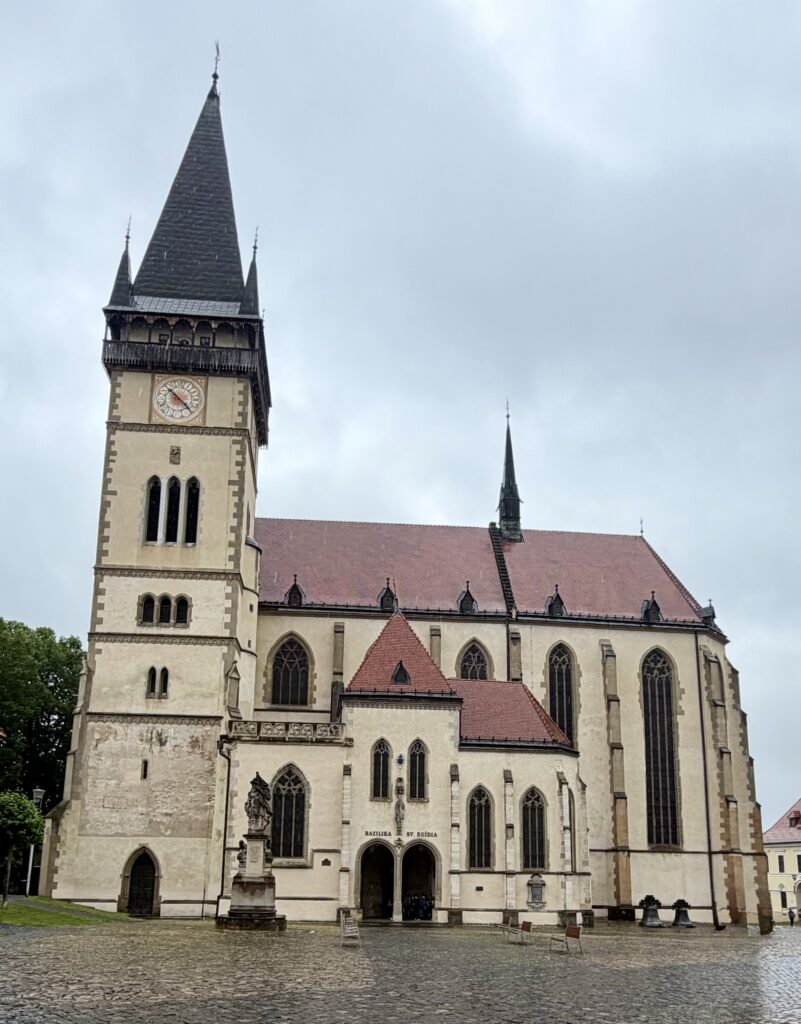
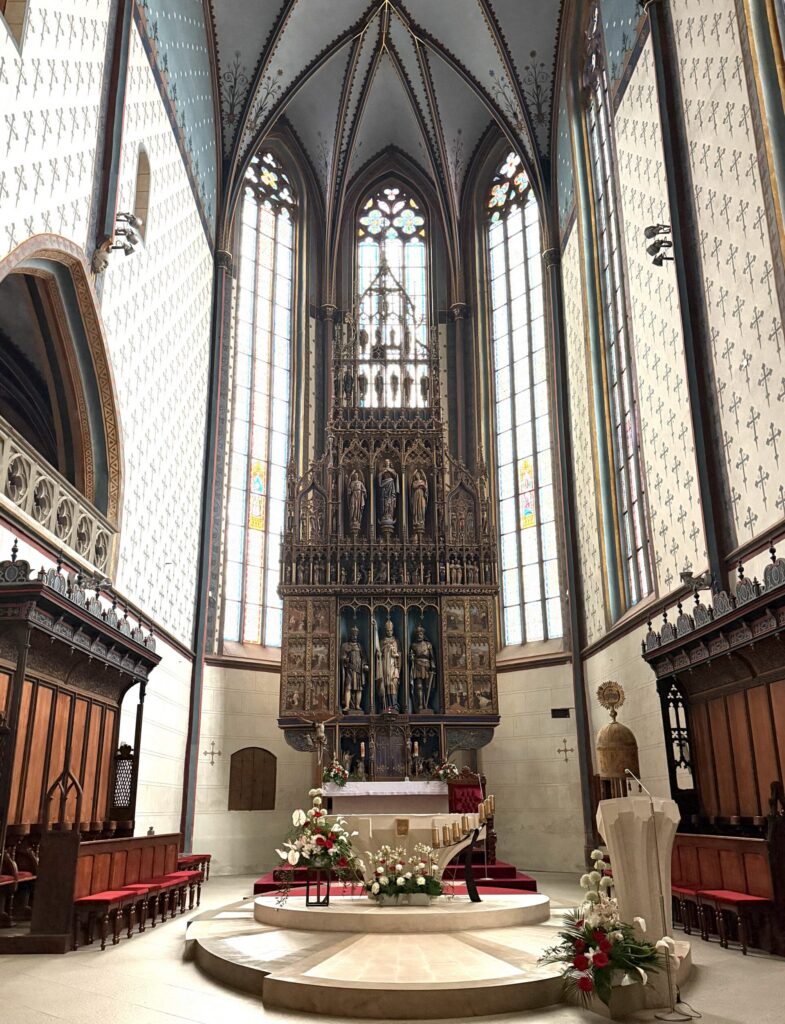
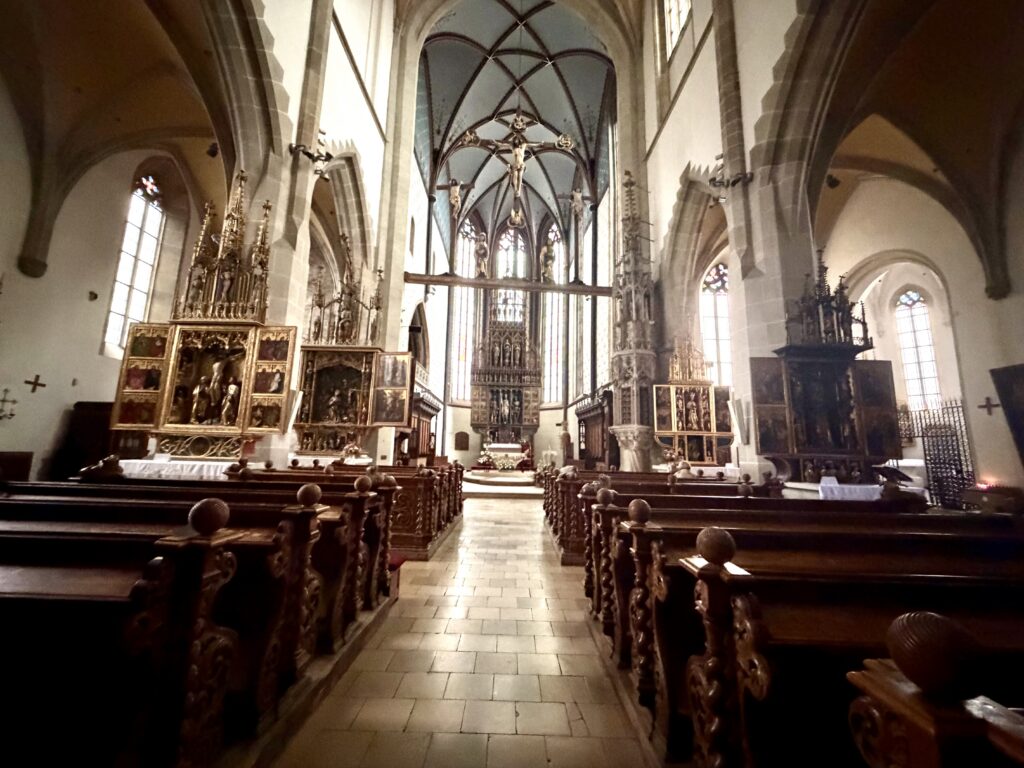
Basilica of St. Egidius (Bazilika svätého Egídia) – Dominating the northern side of the square is the Basilica of St. Egidius, a magnificent Gothic church with its richly decorated interior. Visitors can climb the tower for panoramic views over Bardejov and the surrounding countryside. This church traces its origins to the 13th century, with the present structure largely built and expanded between the 14th and 15th centuries as Bardejov grew into an important medieval trading center. The impressive interior of the church features eleven Gothic altars.
————————————————–
Other buildings in Radničné Námestie – While exploring Radničné námestie, two buildings particularly stood out.
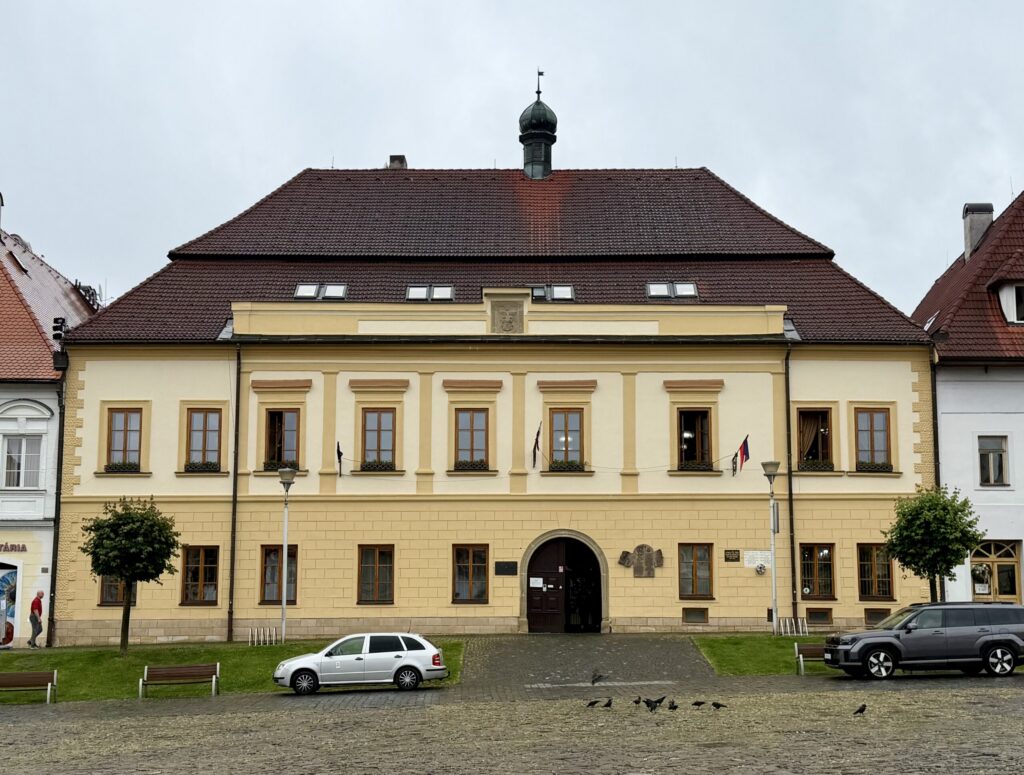
- Municipal Office (No. 16), a large historic townhouse that now serves as the seat of the city administration and mayor’s office. Unlike the original Renaissance Town Hall, which now houses the museum, this building functions as the modern civic center. Curious about its purpose, we stepped inside and unexpectedly found ourselves face-to-face with the mayor, who warmly asked us where we were traveling from—an encounter that added a memorable personal touch to our visit to Bardejov.
- Gantzughof House (No. 13), a striking Gothic burgher house located on the southwestern corner of the square. Originally built as the residence of a wealthy merchant, it remains one of the finest examples of medieval urban architecture in Bardejov.
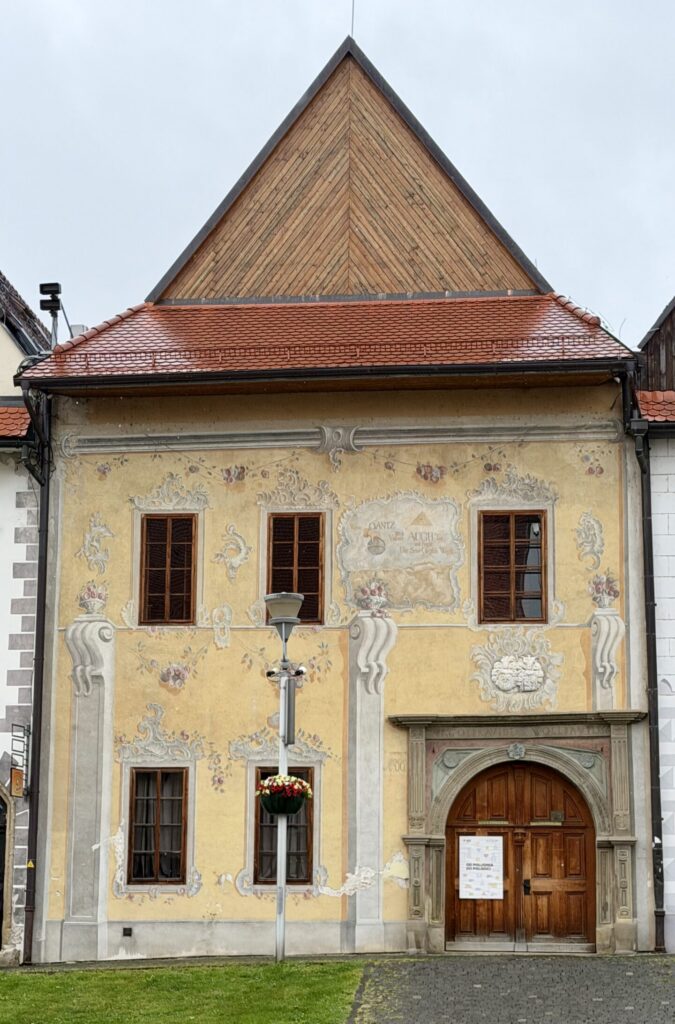
Town Fortifications – Dating from the second half of 14th century, the medieval fortification system of Bardejov is the most complete and best-preserved defensive network in Slovakia and forms an important part of the town’s UNESCO World Heritage designation. The original Gothic fortifications consisted of double stone walls, a water-filled moat, four main gates, and 23 bastions.
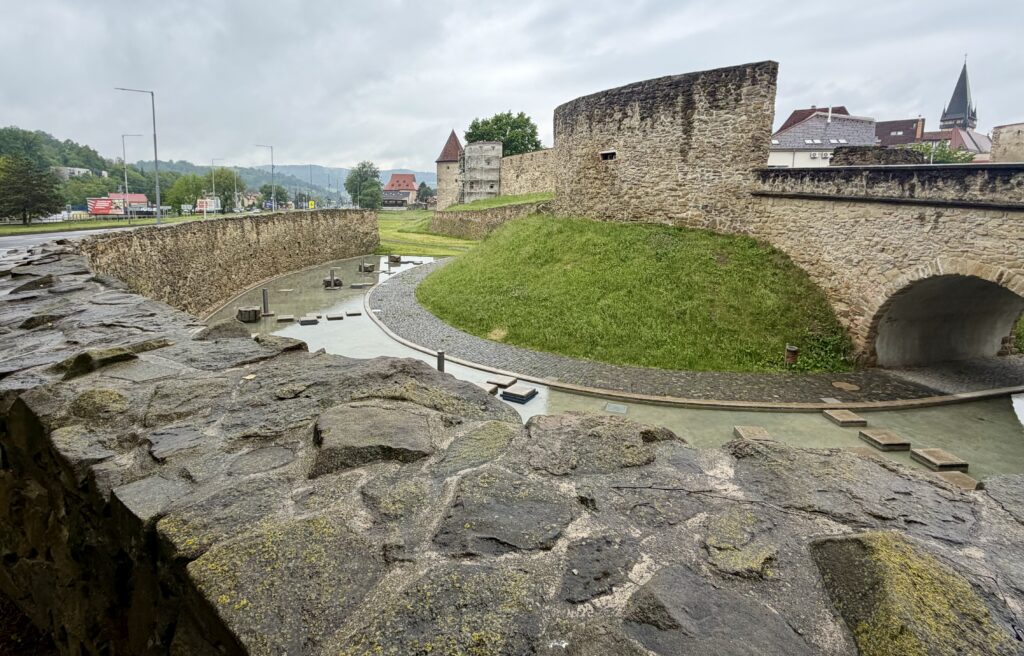
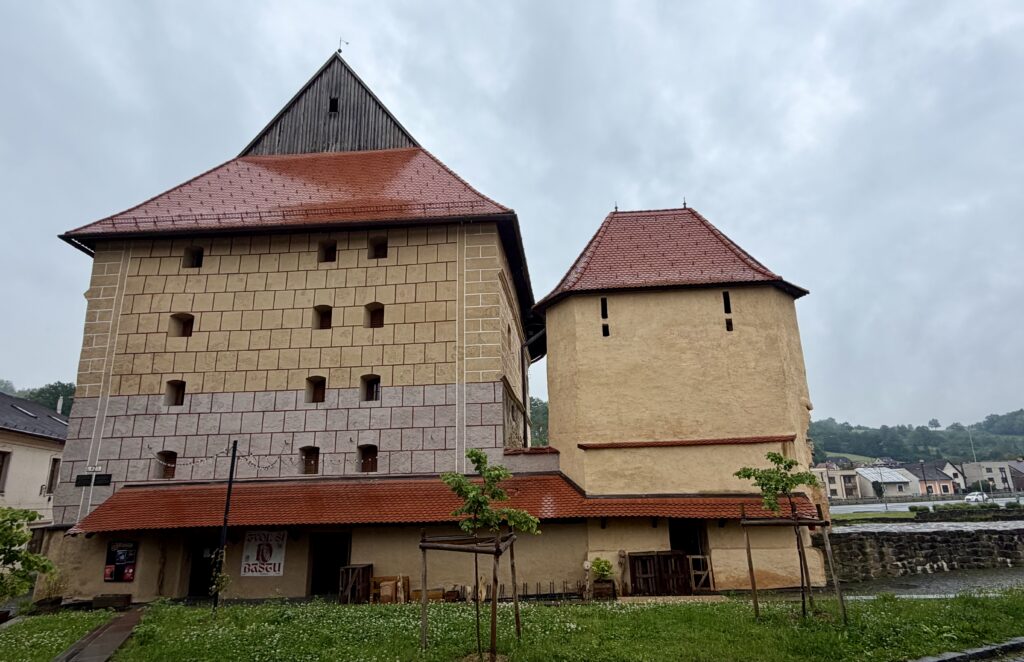
Today, visitors can still walk around much of the historic center and see extensive sections of the walls, three surviving gates, and ten preserved bastions. The largest of them on the southeast side of the fortification is called Thick bastion. Other fortifications – Small bastion, Upper gate, Powder gate, Monastery bastion, School bastion, Šimon Walla gate (West), Archive (North) bastion, Renaissance bastion, Lower gate, Red (Royal) bastion and Great bastion.
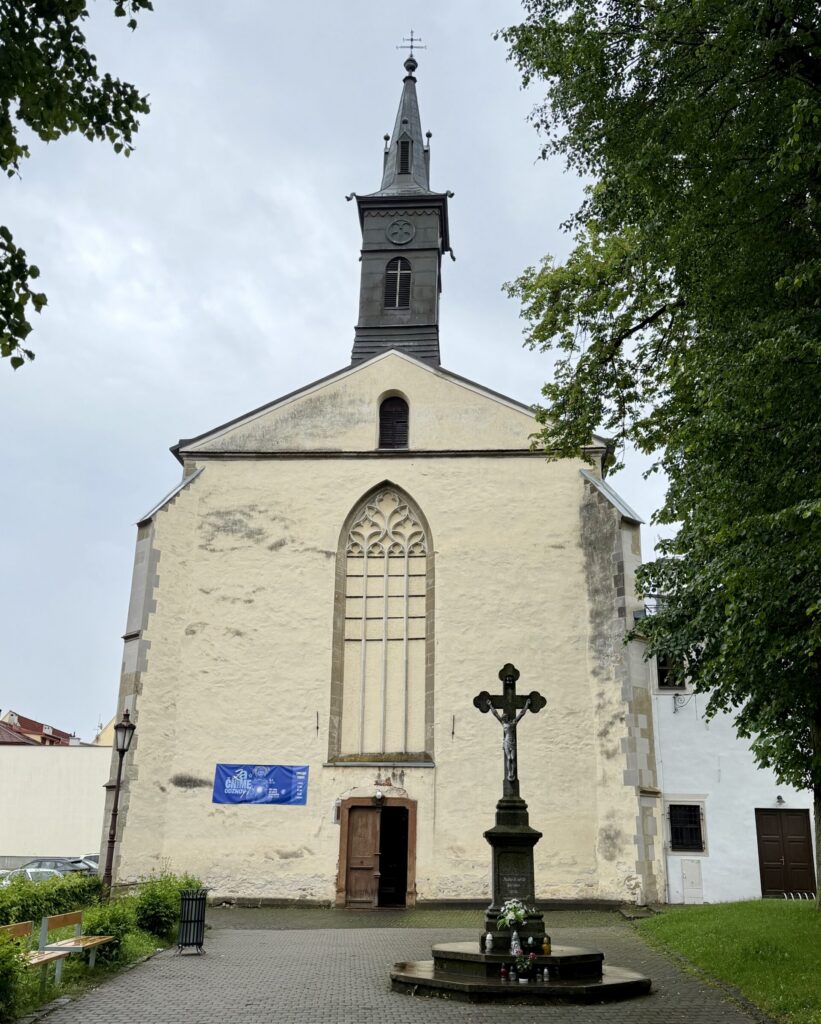
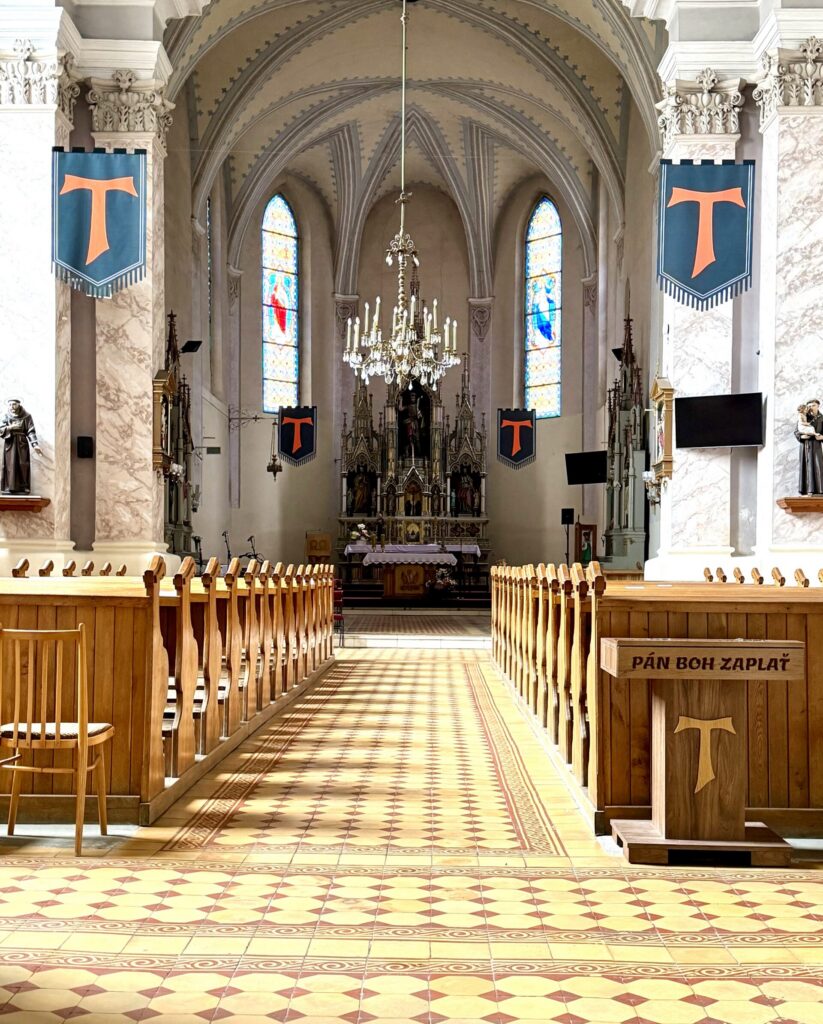
Franciscan Church of St. John the Baptist – was originally built around 1380 by the Augustinians, with its monastery developed in several stages during the medieval period. Over time, it changed hands and purposes—serving a Slovak Protestant community in the 17th century before being taken over by the Franciscans in 1686 during the Counter-Reformation.
Although initially Gothic, the church has been significantly altered by fires and later reconstructions. Today, it reflects a mix of Gothic, Renaissance, and Baroque styles, with surviving original Gothic elements such as parts of the sanctuary vaulting, walls, and stained-glass windows. A major restoration in 1990 helped preserve its structure, and it remains an important part of Bardejov’s religious and architectural heritage.
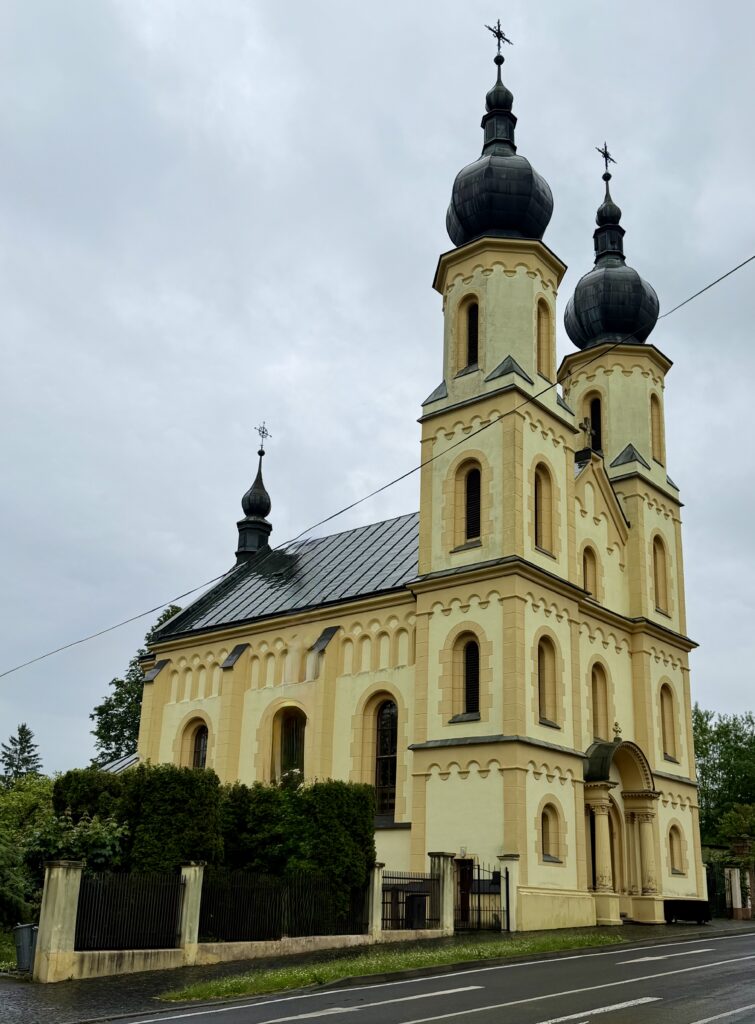
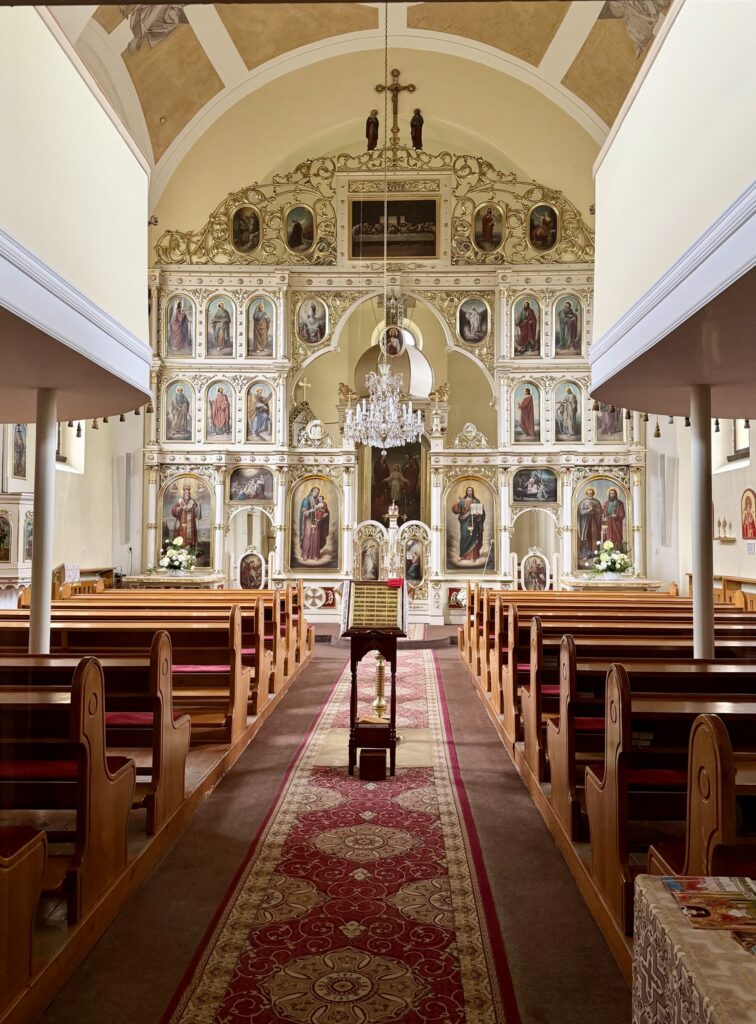
Church of Peter and Paul – is a remarkable Greek Catholic building from 1901-1902, combining an eclectic style with Neo-Romanesque elements. It is located in the southern part of the former moat and the interior features Prussian vaults, the main altar from 1903, and an iconostasis from 1914.
Other things to do in and around Bardijov
- The Šariš Museum of Icons – For more than a century, the museum has collected and preserved icons from abandoned churches, as well as selected originals from active churches, ensuring their long-term protection and conservation. As a result, the museum has assembled an impressive collection of sacred artworks, with some icons dating back to the 16th century. The collection provides valuable insight into the religious traditions, craftsmanship, and cultural heritage of northeastern Slovakia and the Carpathian region.
- Bardejov Spa (Bardejovské Kúpele) – Located just outside the town, the spa is famous for its natural mineral water springs, colonnade, and relaxation in the Wellness Spa.
- Museum of Folk Architecture (Open-air Museum) – Situated in the spa area, this museum displays traditional 19th- and 20th-century wooden buildings from the region.
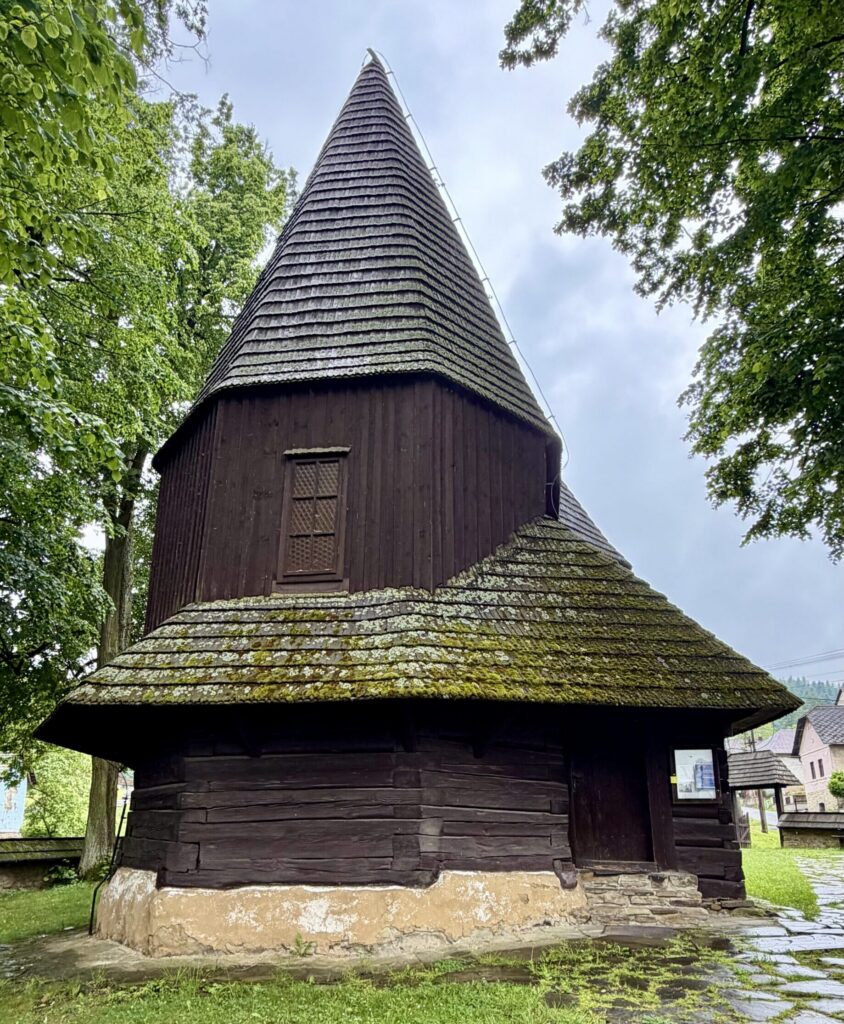
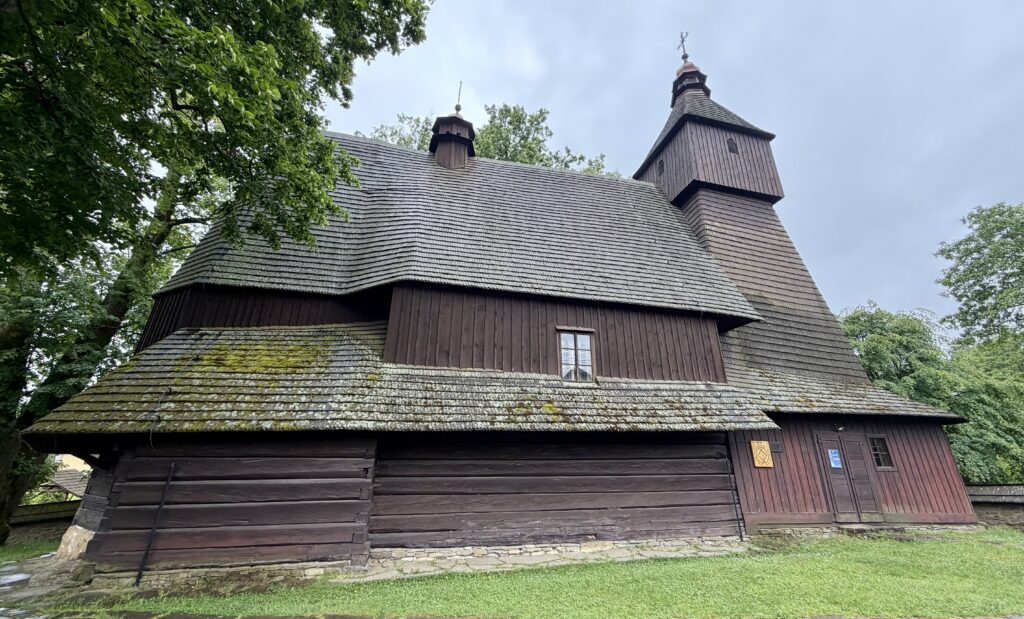
Wooden Church, Church of St. Francis of Assisi – The region around Bardejov is famous for its UNESCO-listed wooden churches, which are among the most significant examples of traditional religious architecture in Slovakia. The closest and most notable is the Church of St. Francis of Assisi, located just 9 km southwest of Bardejov. Built at the end of the 15th century, it is considered the oldest and best-preserved wooden church in Slovakia. The Roman Catholic church is constructed entirely of red spruce wood and features a distinctive Gothic floor plan, making it a remarkable example of medieval wooden architecture. Its exceptional preservation and historical significance have earned it UNESCO World Heritage status, and it remains one of the region’s most important cultural and religious landmarks.
We stopped by this church but was not open at the time of our visit.