2 nights in Sofitel
Gold Coast is a vibrant coastal city in the state of Queensland known for its long sandy beaches, surfing spots, and lively atmosphere. It stretches from Surfers Paradise to Coolangatta, offering a mix of nightlife, dining, and family attractions.
We rented a car in Brisbane and drove about 82 km to Broadbeach, which took a little over an hour. On the way, we stopped at the Coombabah Lakelands Conservation Area.
- Coombabah Lakelands Conservation Area
- Broadbeach
- Surfers Paradise
- Cape Byron
- Natural Bridge (Springbrook National Park) *
- The Spit
*Note – All of the above attractions are in Queensland, except Cape Byron, which is actually located in New South Wales.
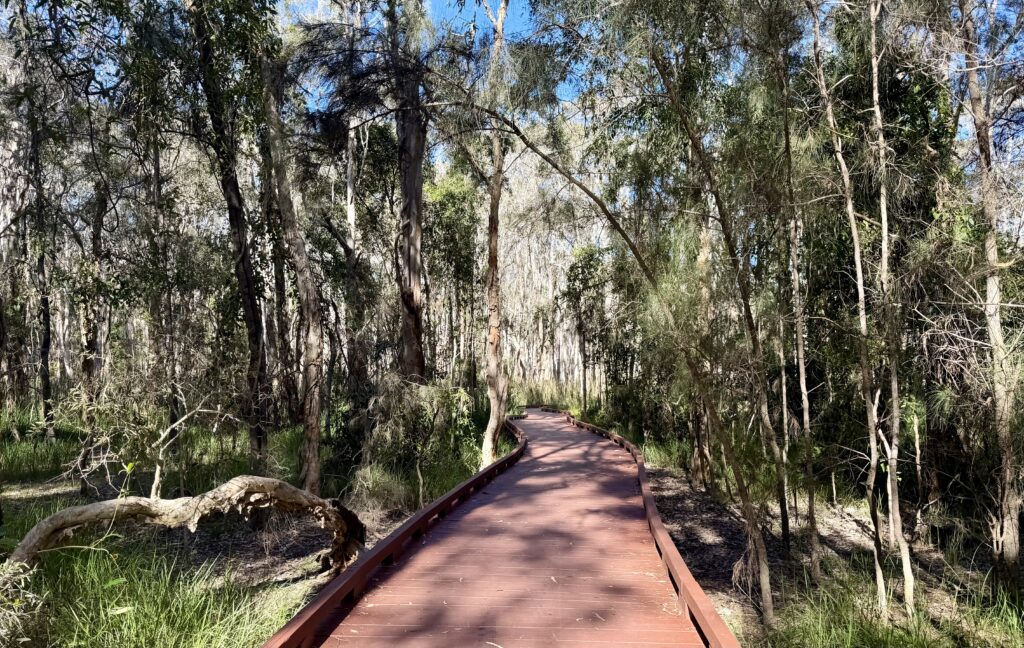
Coombabah Lakelands Conservation Area – is a vast area spanning over 1,200 hectares of wetlands, eucalyptus forests, salt marshes, and mangroves. It forms part of the Southern Moreton Bay Marine Park. The area is ecologically significant, supporting 274 animal species, including koalas, powerful owls, and kangaroos, as well as migratory birds protected under the Ramsar Convention.
It’s ideal for walking, cycling, trail running, and birdwatching, with easy flat tracks and opportunities to spot wildlife like kangaroos and koalas. We saw a couple of koalas resting high up in the trees, and large groups of kangaroos grazing in fields along the hiking paths.
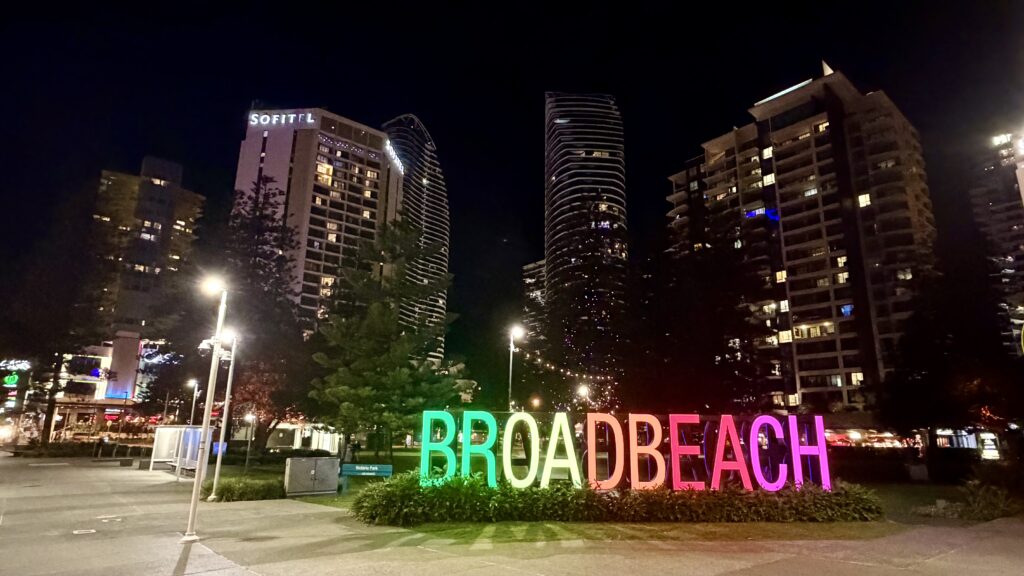
Broadbeach – Our hotel, Sofitel, was located in Broadbeach, which is a popular and prime location, offering easy access to attractions and public transport. Our hotel room was spacious with comfortable beds, and while it was a bit pricey, we were happy with the location and service. The nearby tram station was just a 5-minute walk away and provided an affordable way to get around.
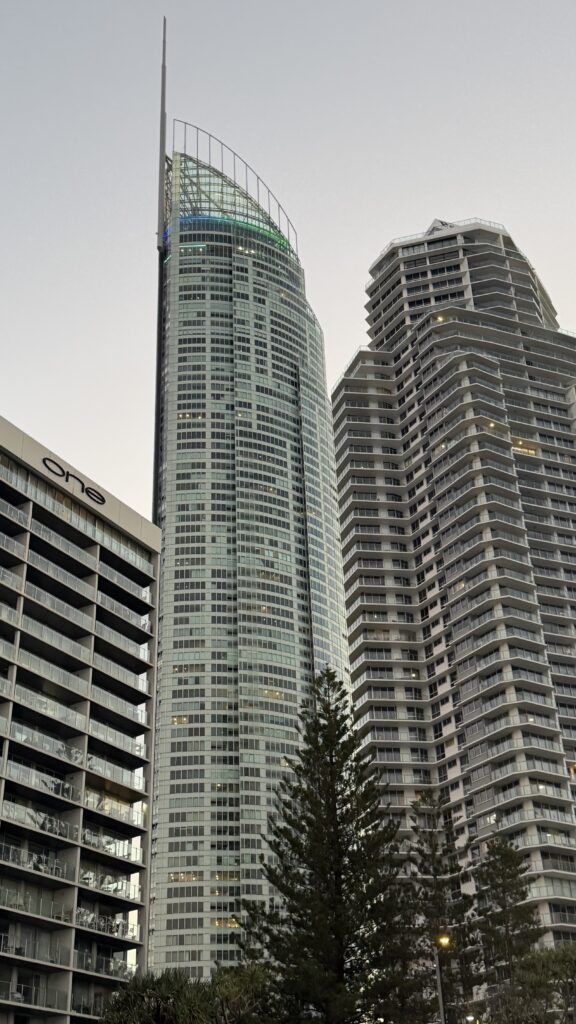
Surfers Paradise – We took the tram to Surfers paradise. We first walked over to the SkyPoint Observation Deck at the Q1 Tower, but decided to skip going up as it felt a bit expensive (around $45 AUD per adult). There’s also an option to combine the observation deck with a guided outdoor climb of over 200 steps higher up, priced at about $99 AUD.
We spent about an hour walking on the beach and watching surfers enjoying the water waves.
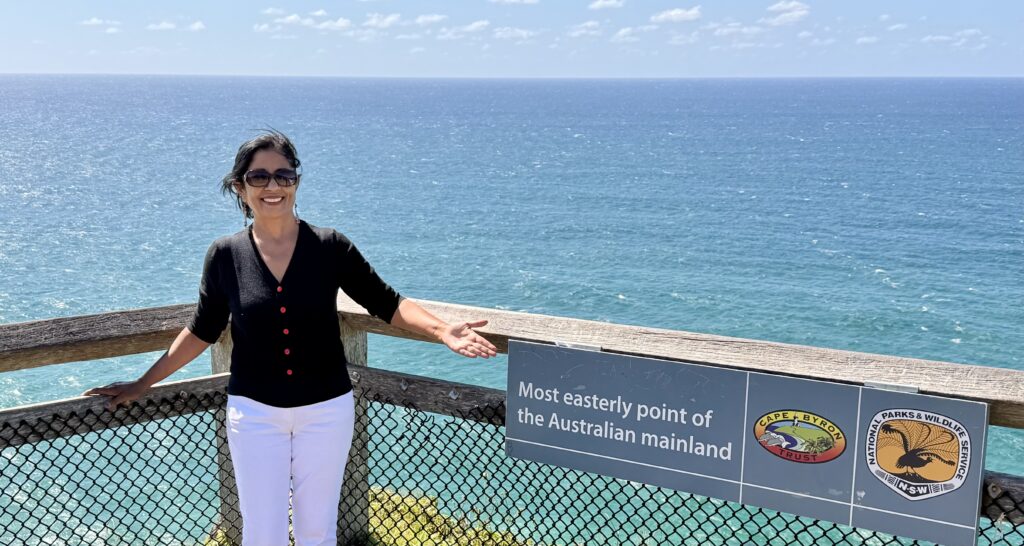
Cape Byron – is the easternmost point of the Australian mainland, located in New South Wales near Byron Bay. It is known for its iconic 1901 Cape Byron Lighthouse, dramatic cliffs, and coastal walking tracks. It is a premier spot for whale watching, surfing, and scenic views. The drive from Broadbeach to Cape Byron was 94 km and took us close to 90 minutes.
As you drive up to the Cape Byron Lighthouse, you’ll come across a small paid parking lot (about 8–10 cars) costing around $5 per hour. We arrived around 10 am on a Sunday in March and found one spot available, so we parked there to be safe. From the lot, it’s less than a 5-minute walk to the lighthouse with beautiful views along the way. There were also a few parking spots available closer to the top near the lighthouse, although they were filling up quickly.
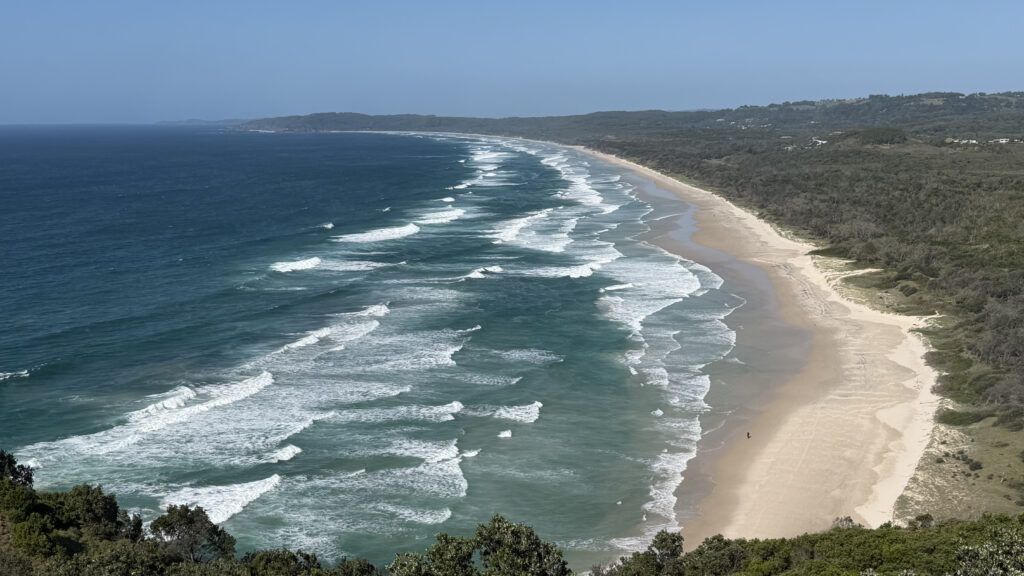
We first took the free guided tour to the top of the lighthouse which is available every half hour. The Cape Byron Lighthouse, built at the turn of the 19th century, stands at the easternmost point of mainland Australia. Originally operated by lighthouse keepers until 1989, it is now automated and remains a key coastal landmark visible from Byron Bay. There is a museum on the ground floor of the lighthouse where visitors can explore its maritime history. From the top of the lighthouse, you get sweeping ocean views.
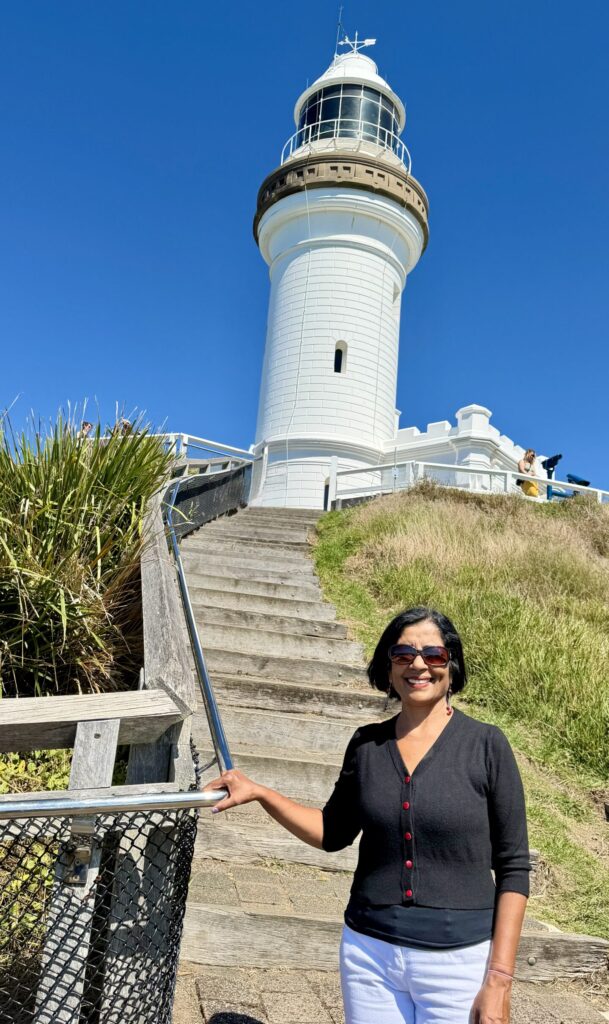
After we visited the lighthouse, we went down the stairs and on to a hiking path that leads to the easternmost part of mainland Australia. Continuing along the path will lead you down to the beach.
The complex also has a small cafe which serves sandwiches, muffins and drinks. Restrooms are also available.
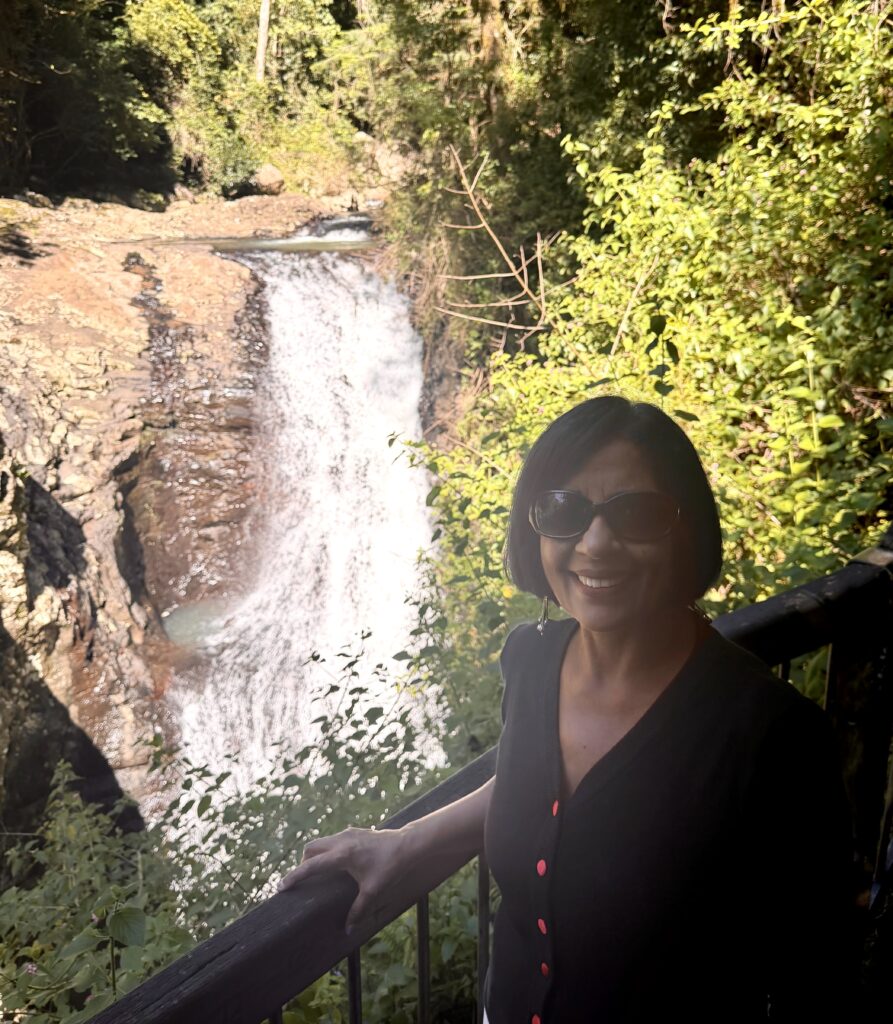
Natural Bridge (Springbrook National Park) – This place was out next stop. It is at a distance of 92km from Cape Byron and takes about 90 minutes. The Natural Bridge is a unique rock formation in the western section of Springbrook National Park, part of the Gondwana Rainforests of Australia. Formed by a waterfall flowing through a basalt cave, it can be reached via an easy 1.2 km walking circuit through ancient rainforest, home to species like birds, frogs, and koalas.
There is a huge parking lot near the hiking path to the natural bridge. The well paved boardwalk takes you down and after 0.5 km, you will reach the bridge. Continue on the path uphill and you will reach the top of the water fall which flows onto the natural bridge. As you continue on, the path splits into 2 – the path to the right (about 150m) takes you to another viewpoint of the waterfall. The path to the left will take you back to the parking lot.
The Spit – The Spit is the northernmost stretch of the Gold Coast beaches, extending into the seaway between the Broadwater and the open ocean. It’s not accessible by tram, so you’ll need to drive or take a ride-share, but there is a large free parking area. From there, you can enjoy a scenic walk along the seawall, especially at sunset, with strong winds, crashing waves, and occasional sea spray along the path.
As you walk toward the small lighthouse at the end, you will pass blowing sand and splashing waves, while also spotting marine life like dolphins and, in season, whales.