Skagway is a compact city in southeast Alaska, set along the popular cruise route the Inside Passage. It’s home to gold-rush-era buildings, now preserved as part of the Klondike Gold Rush National Historical Park. The White Pass & Yukon Route Railroad runs vintage locomotives past the famously steep Chilkoot trail and offers sweeping mountain views during its climb toward Canada.
- Skagway Downtown
- Arctic Brotherhood Hall
- Skagway Centennial Statue
- Skagway White Pass Railroad Summit Excursion
- Hiking in Skagway
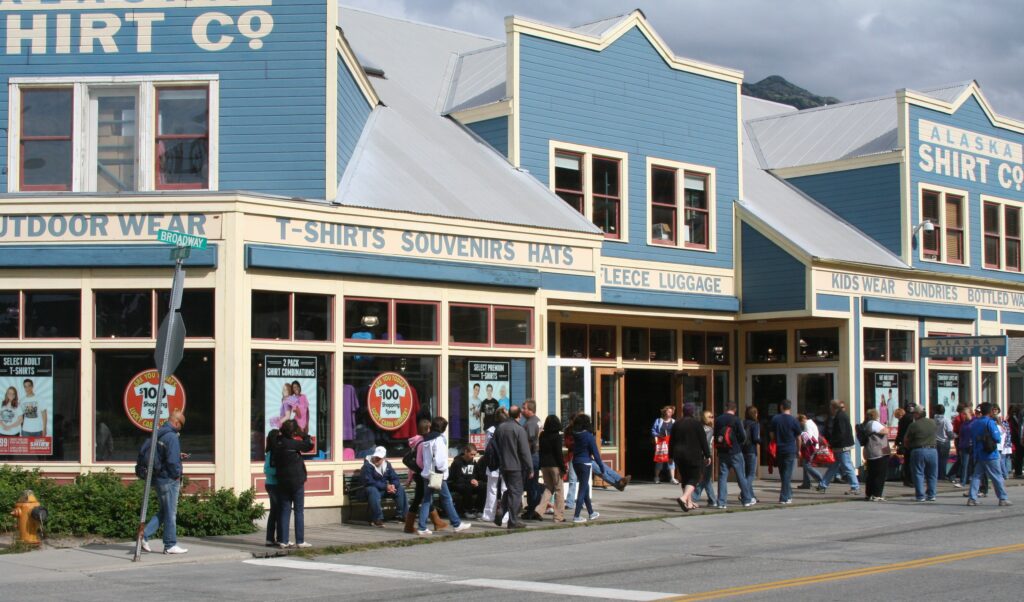
From the dock area of the cruise ship, Skagway downtown is a 10-15 minute walk. We followed the crowds from the ship towards the main town area. We took a stroll along the Broadway street which had many souvenir shops
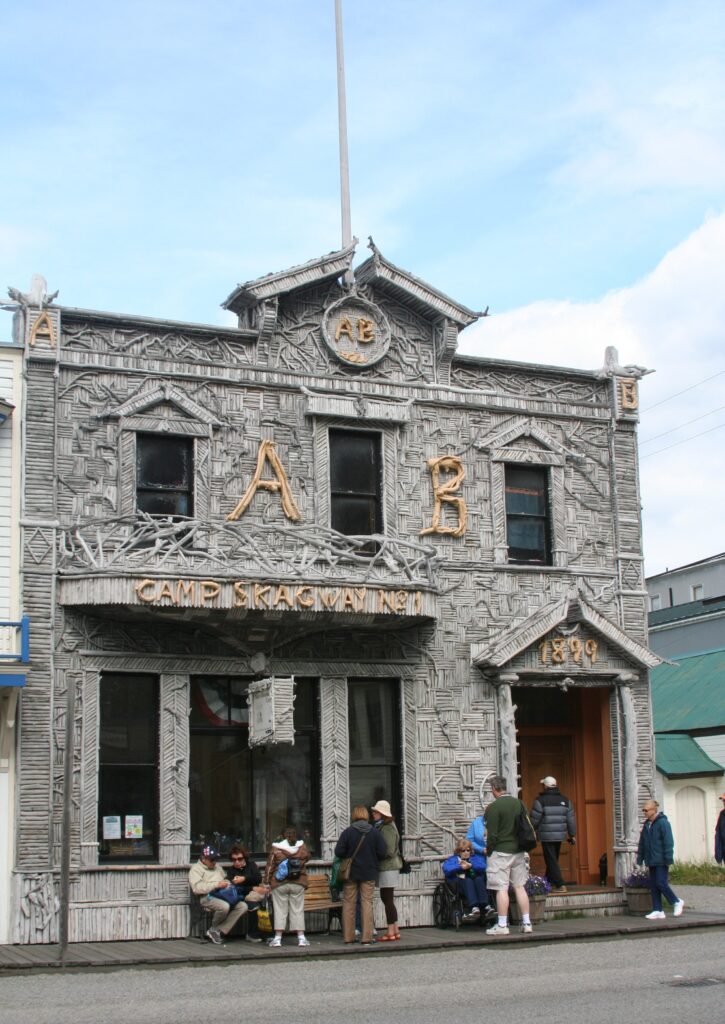
Arctic Brotherhood Hall – This unusual-looking building in the historical corridor of Skagway has thousands of sticks and pieces of driftwood covering every inch of its facade. Giant letters spelling out the initials “AB” poke through the assemblage of wood which stands for Arctic Brotherhood, the fraternal organization that was formed in 1899 and adorned its local hall with over 8,800 bits of wood.
The club was formed by a group of gold prospectors who arrived in Skagway from the City of Seattle ocean steamer, to set off for the Klondike gold fields seeking fortune. The local meeting hall, dubbed Camp Skagway No. 1, started with 11 members and by early 1900s it had swelled to around 10,000 members. Membership was limited to white males over age 18, and included U.S. presidents Warren Harding, Teddy Roosevelt, and William McKinley, as was King Edward VII of England.
The is now home of Skagway Convention and Visitors Bureau and was renovated in 2004, when thousands of pieces of rotted wood were replaced.
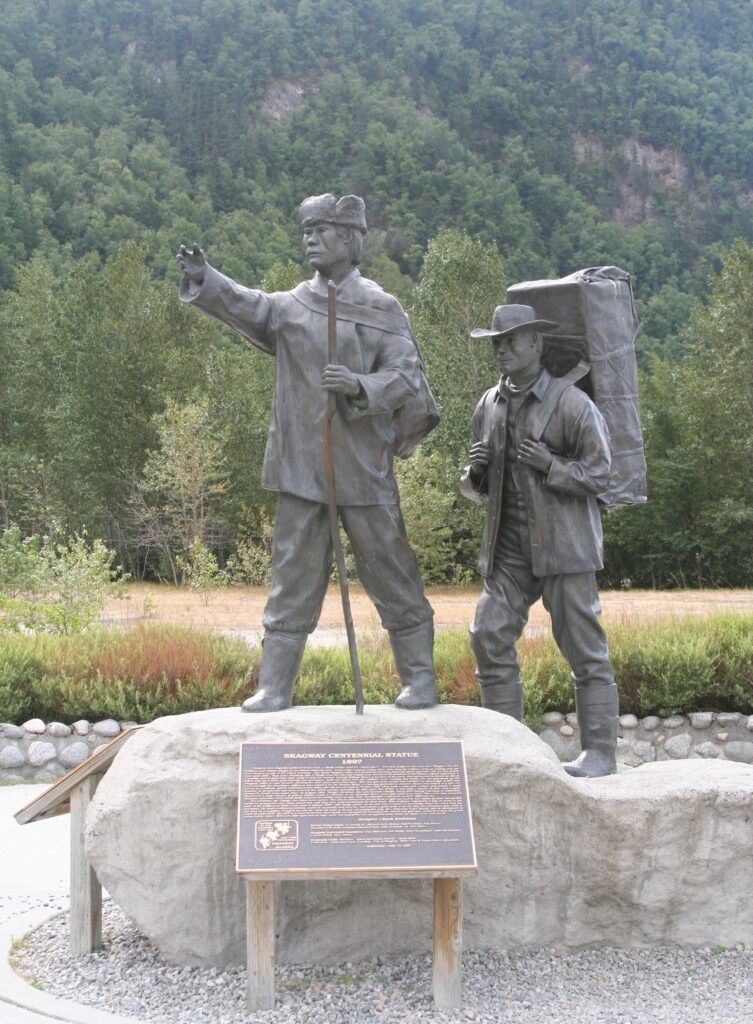
Skagway Centennial Statue – This statue is one of the first Skagway sites you see on the short walk into town from the hillside cruise docks. This large and interesting statue in the middle of a park near the White Pass train depot was erected in 1997 to celebrate the 100-year anniversary of discovering gold in the region. It shows a scene that was typical of the start of a prospector’s journey through the small city of Skagway up to White Pass – a Tlingit packer showing the way.
The inscription on the monument gives you a little history about how Skagway got its name – it was originally called Skagua, which is a Tlingit word for windy place. The Tlingits were the first people in the area and they worked with the stampeders that flocked to the area to make some of the first discoveries of gold during the Klondike Gold Rush.
Skagway White Pass Railroad Summit Excursion – Built in 1898 during the Klondike Gold Rush, this narrow gauge railroad is an International Historic Civil Engineering Landmark. Relax in vintage passenger couch and hear the train whistle as you depart Skagway, slowly climbing the almost 3,300 feet up to the White Pass summit.
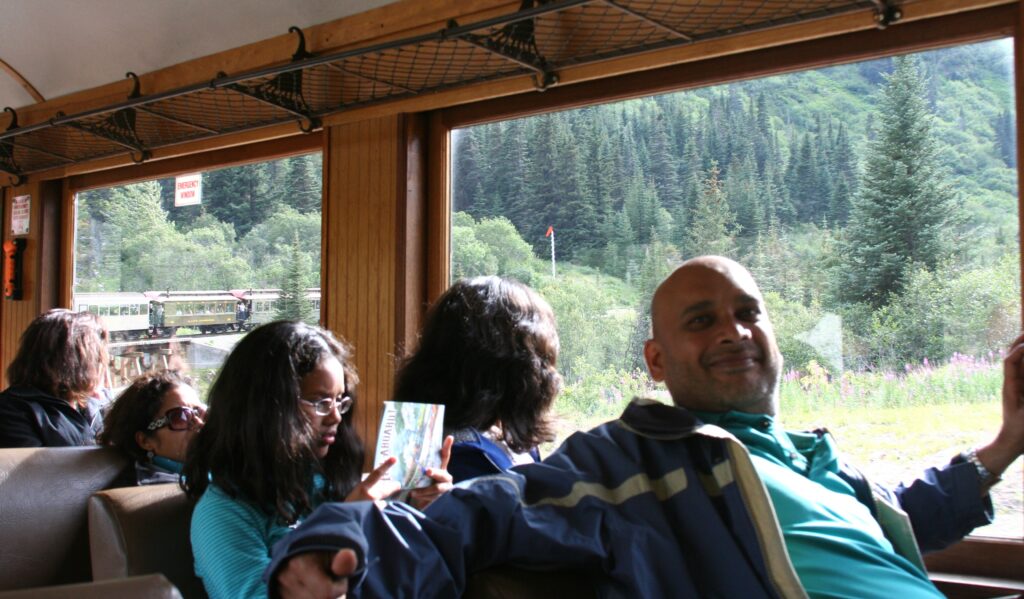
The train passes through two tunnels as it ascends to the White Pass Summit, where it loops around for the return trip. This ensures that passengers on both sides of the train can experience the stunning views.
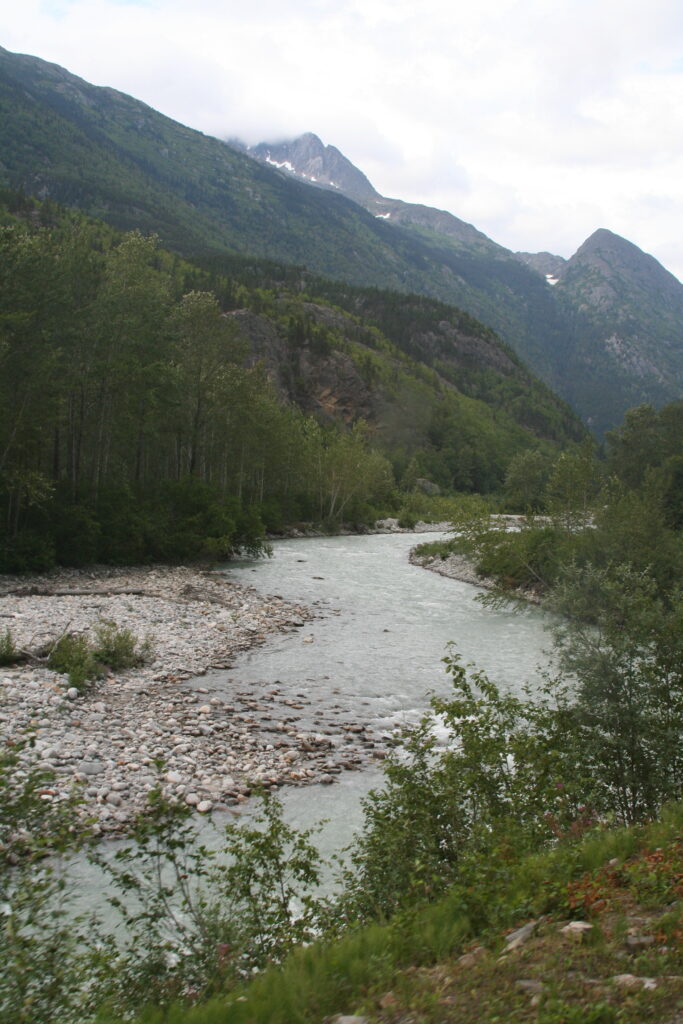
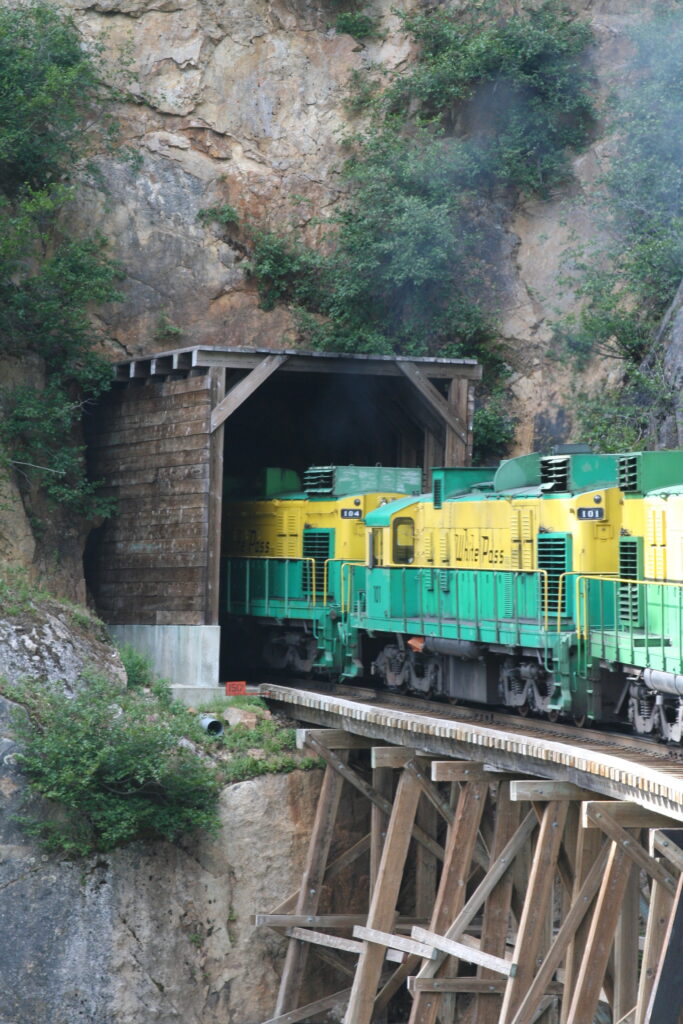
The landscape changes as you climb higher with breathtaking views of gorges, mountains, inspiration point, waterfall, and glaciers, before looping back down. Inspiration point is a lookout point where the train provides spectacular views, rather than a stop where passengers disembark. You will see vast vistas, towering peaks, and the dramatic terrain that the railroad engineers worked to overcome.
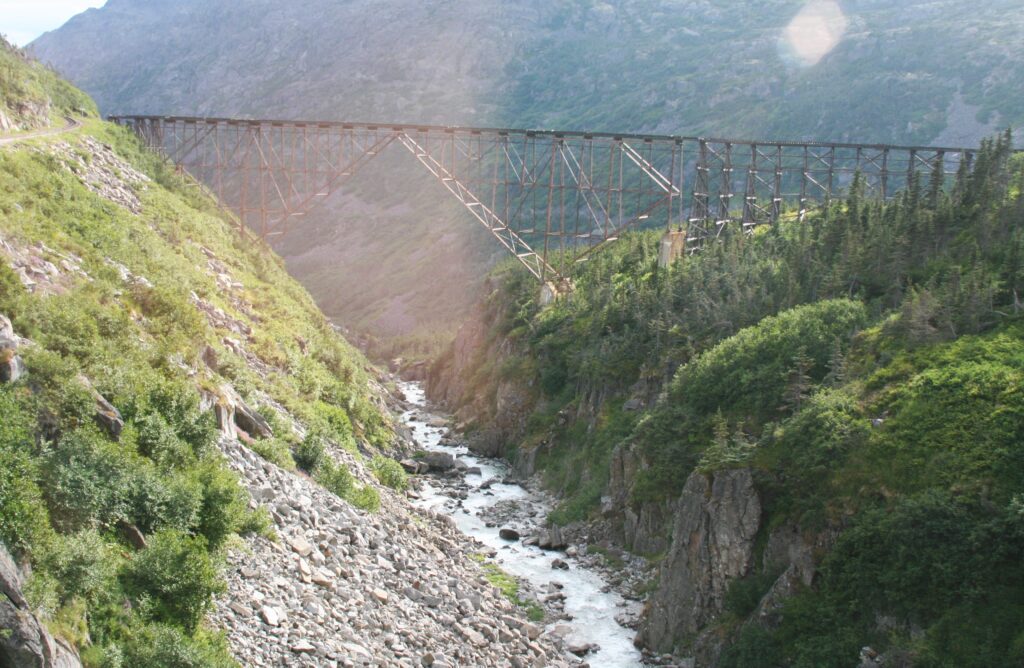
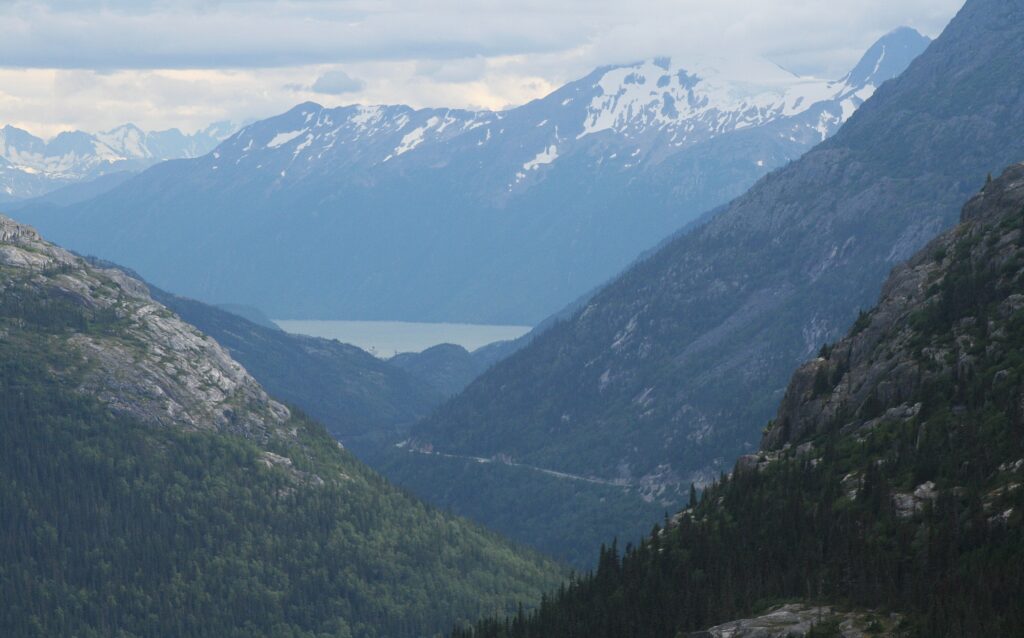
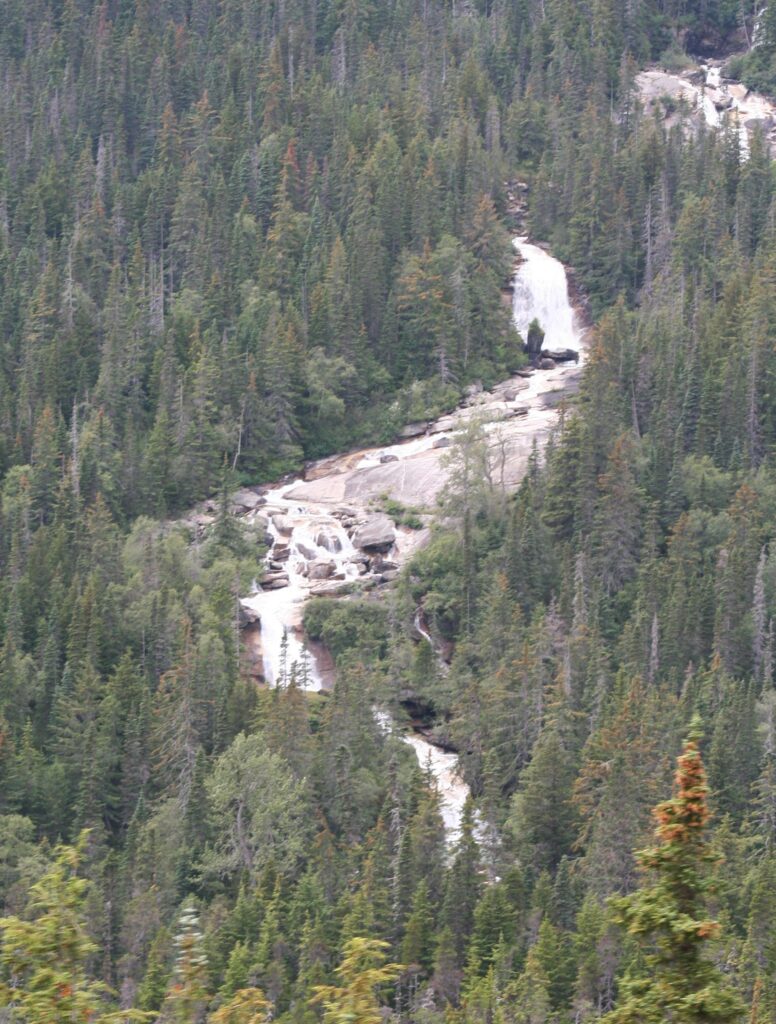
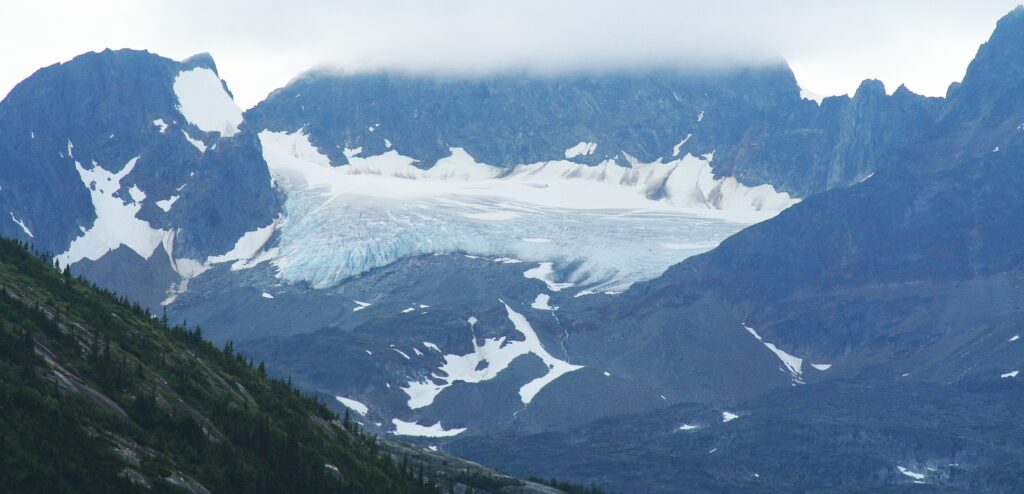
The whole ride was less than 3 hours long and quite enjoyable.
Hiking in Skagway – Several trails, including Dewey Creek Trail and the hike to Lower Reid Falls, are easily accessible and close to the downtown. We decided to spend most of the day walking around the charming Skagway downtown.