Originally named Lancaster, it was renamed to Lincoln in the honor of President Abraham Lincoln. It became Nebraska’s state capital in 1869.
- Nebraska State Capitol in Lincoln
- Sunken Garden
- Pioneers Park
- Haymarket District
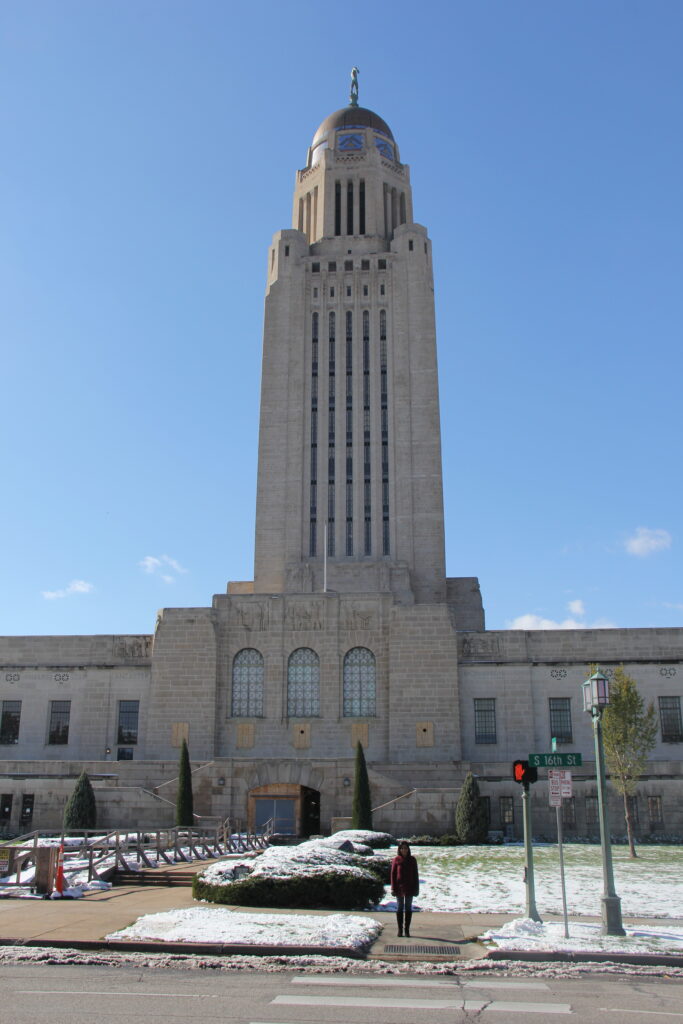
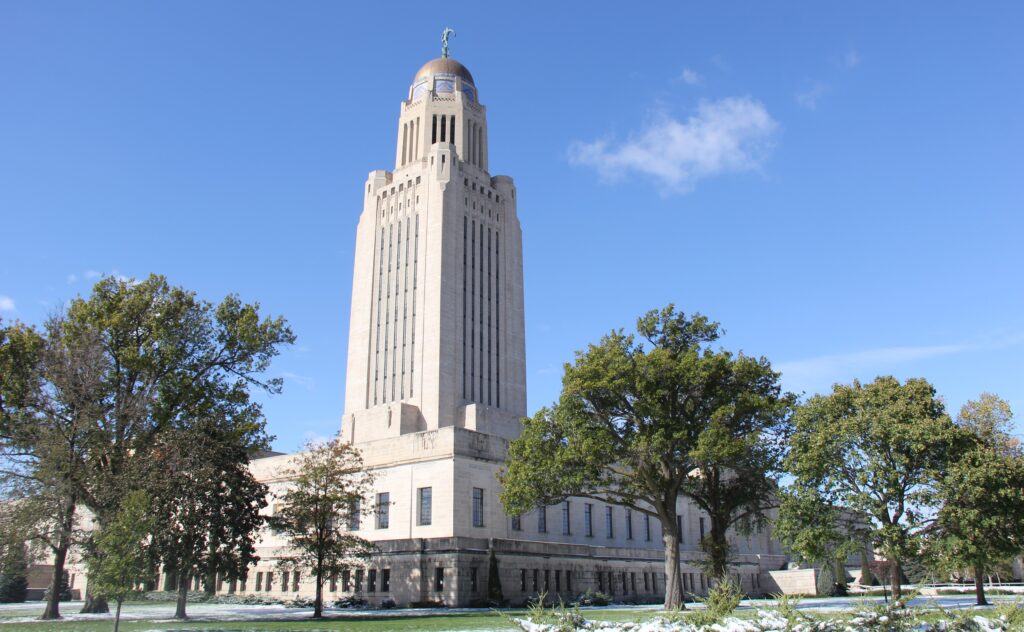
Nebraska State Capitol in Lincoln – The Nebraska State Capitol building rises fourteen stories above the prairie. The Capitol, the third to be constructed on this site, was built in four phases over ten years form 1922-1932. The product was part of a nation wide design competition won by Architect Bertram Goodhue in 1920. To complete the beautiful capitol Goodhue selected Lee Lawrie, sculpture; Hildreth Meiere, tile and mosaic designer; and Hartley Burr Alexander as thematic consultant for the inscriptions and symbolism of the building.
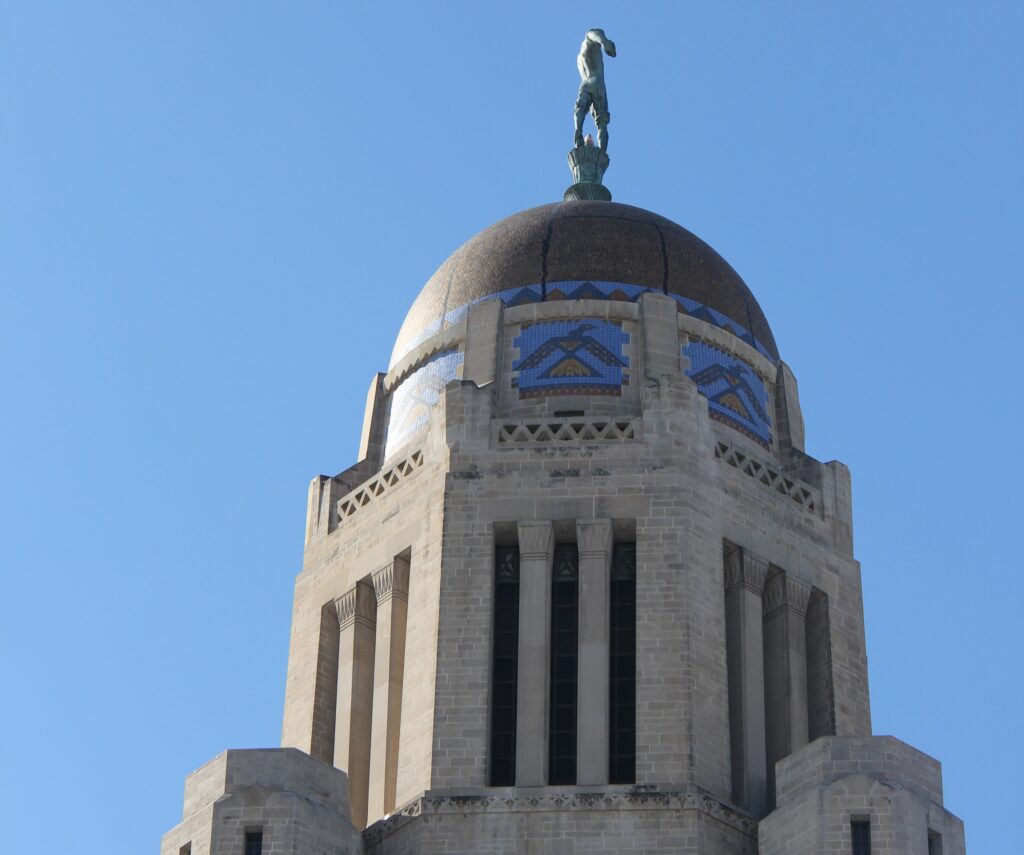
Nebraska State Capitol in Lincoln, Interior – Most of the floor and ceiling inside the building was decorated by Hildreth Meière. The rotunda dome was decorated in glazed ceramic tile. The floors of the vestibule, foyer, and rotunda were decorated with marble mosaic and inlaid marble.
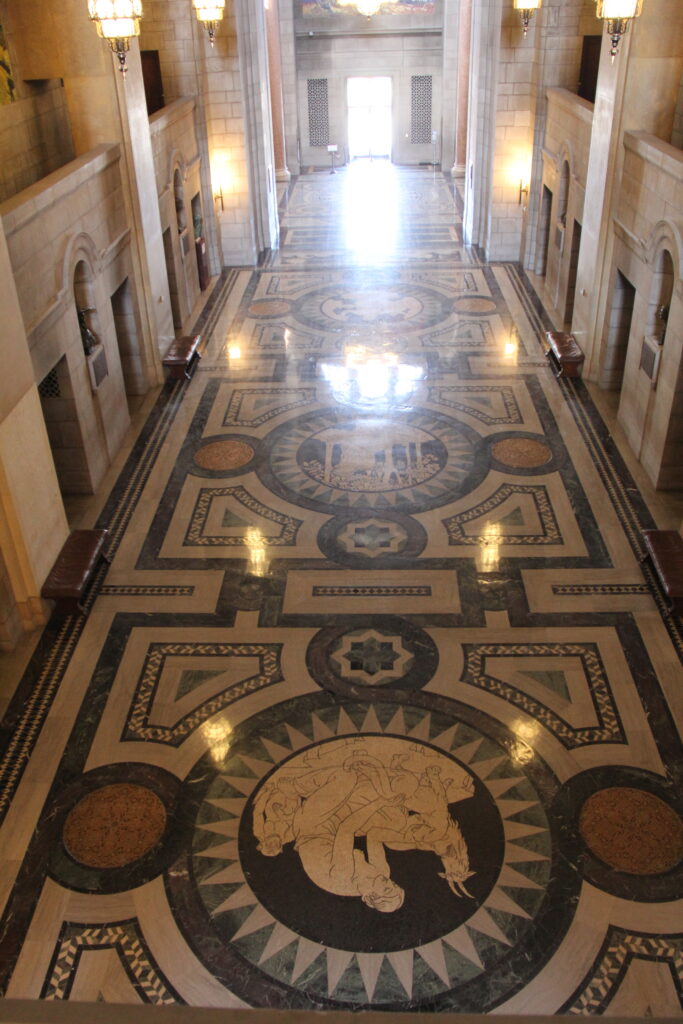
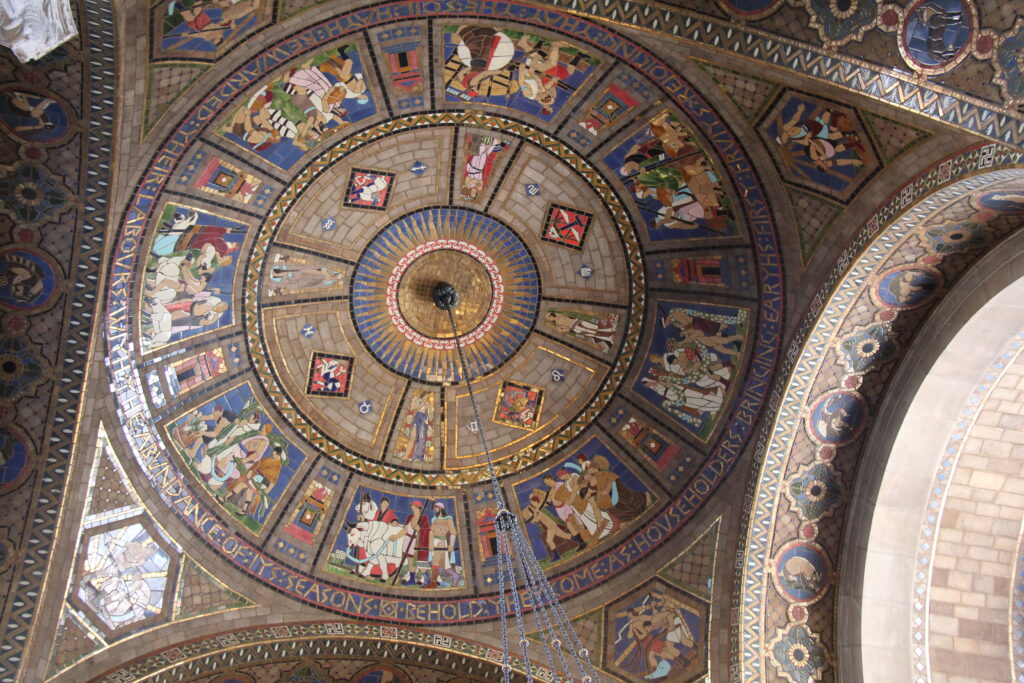
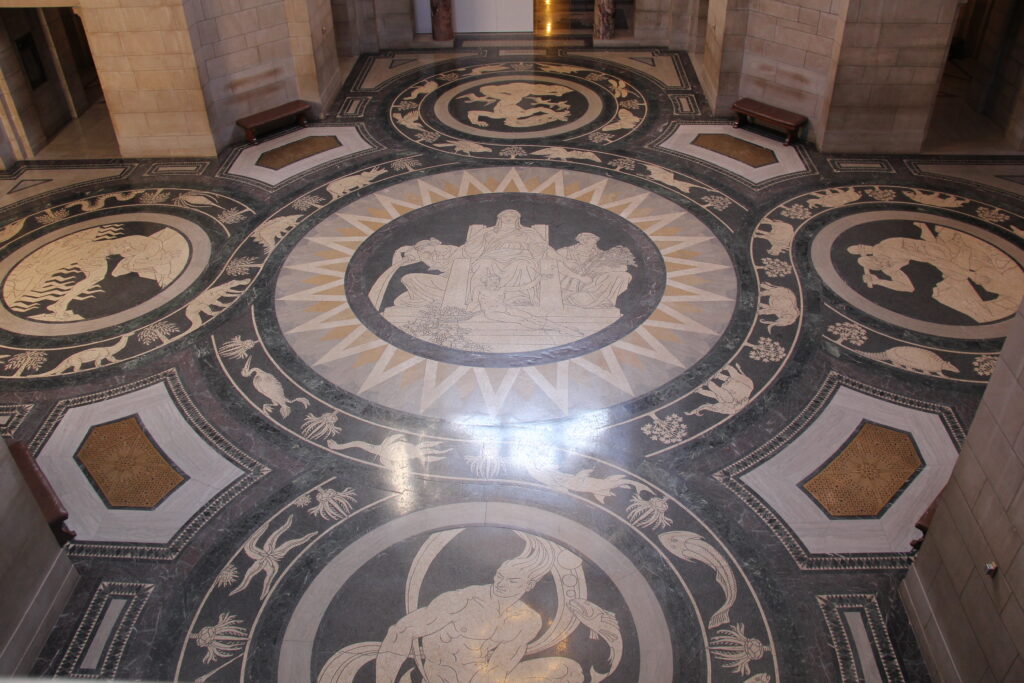
Nebraska State Capitol in Lincoln, Legislative Chamber – Nebraska became unicameral in 1937, at which time, the Senate Chamber became a conference room known today as the Warner Chamber. The larger House of Representatives, or West Legislative Chamber, became the main legislative chamber.
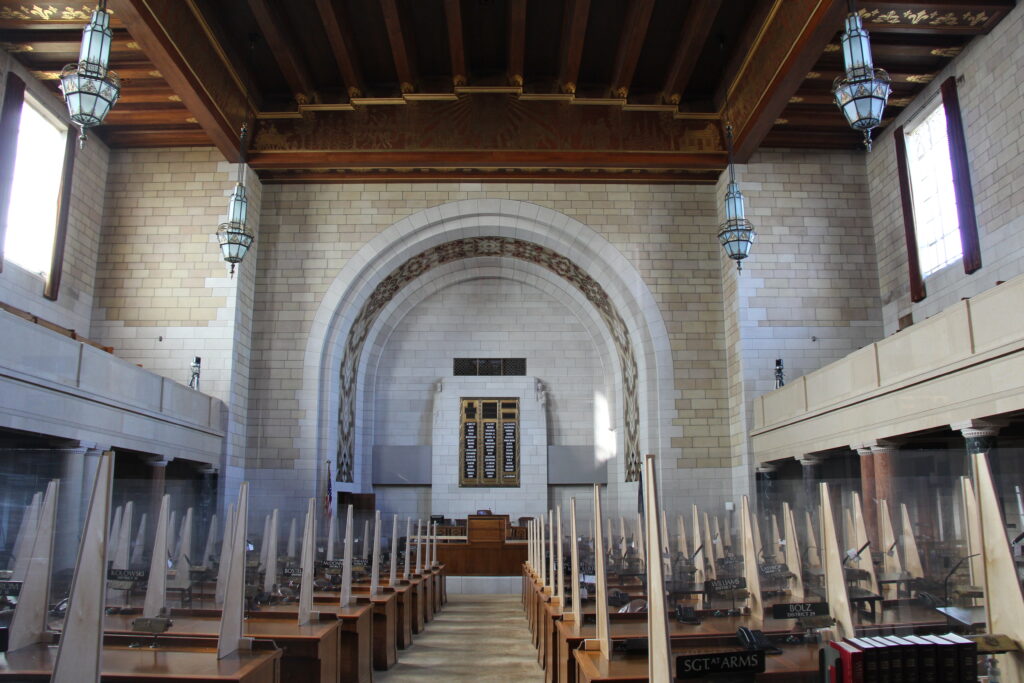
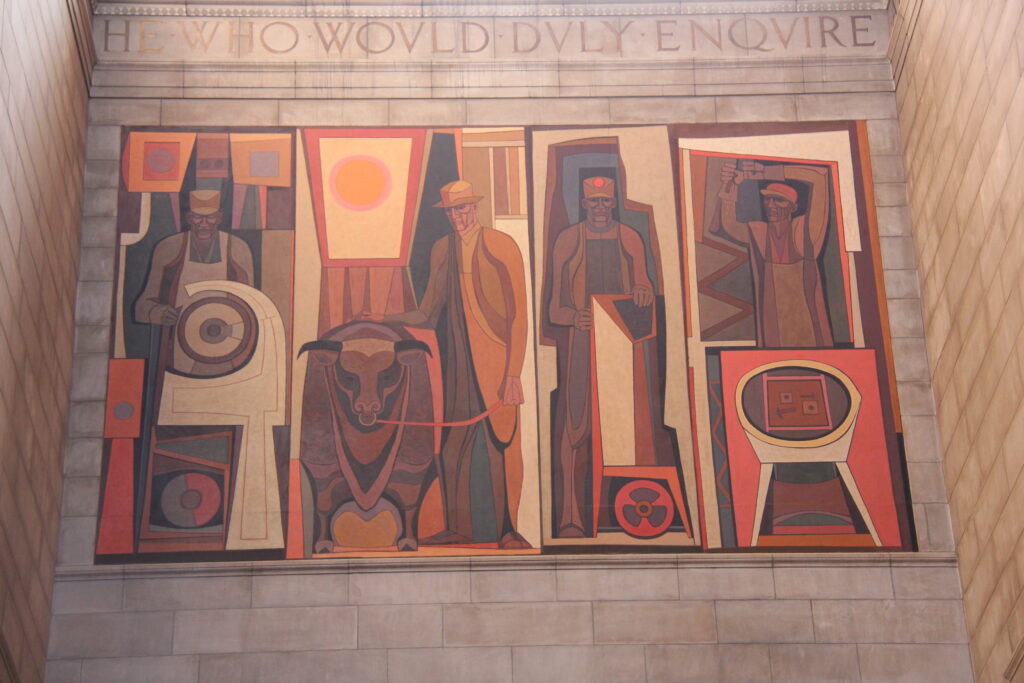
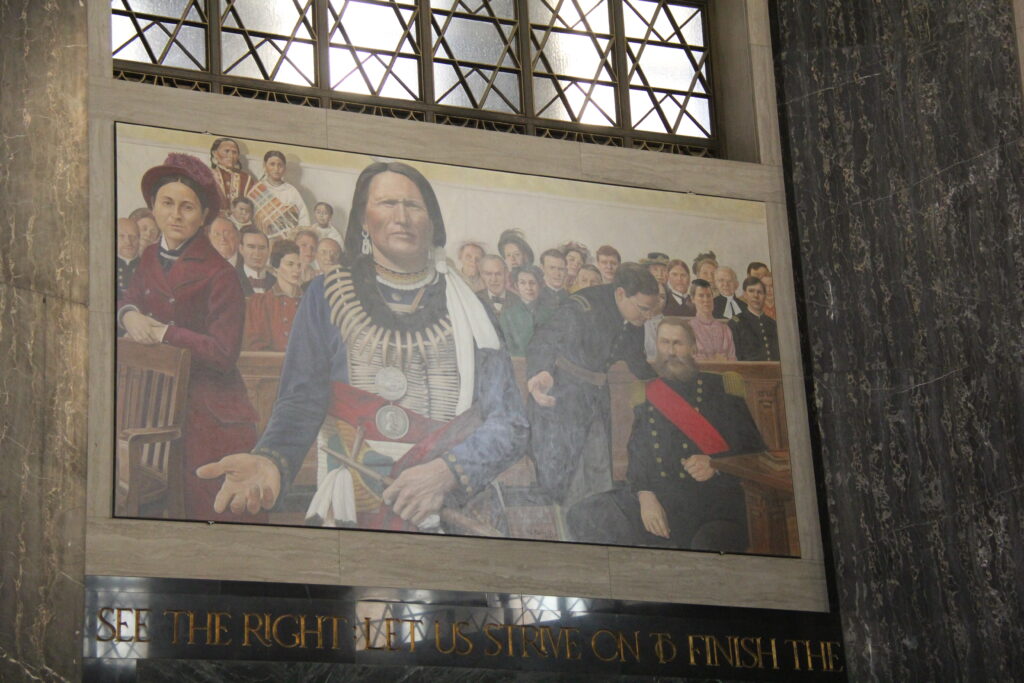
Nebraska State Capitol in Lincoln, Artwork inside the building – When the Nebraska State Capitol was designed, the art received as much attention as the columns and stone that hold up the building. The artwork of the Capitol tells the story of Nebraska.
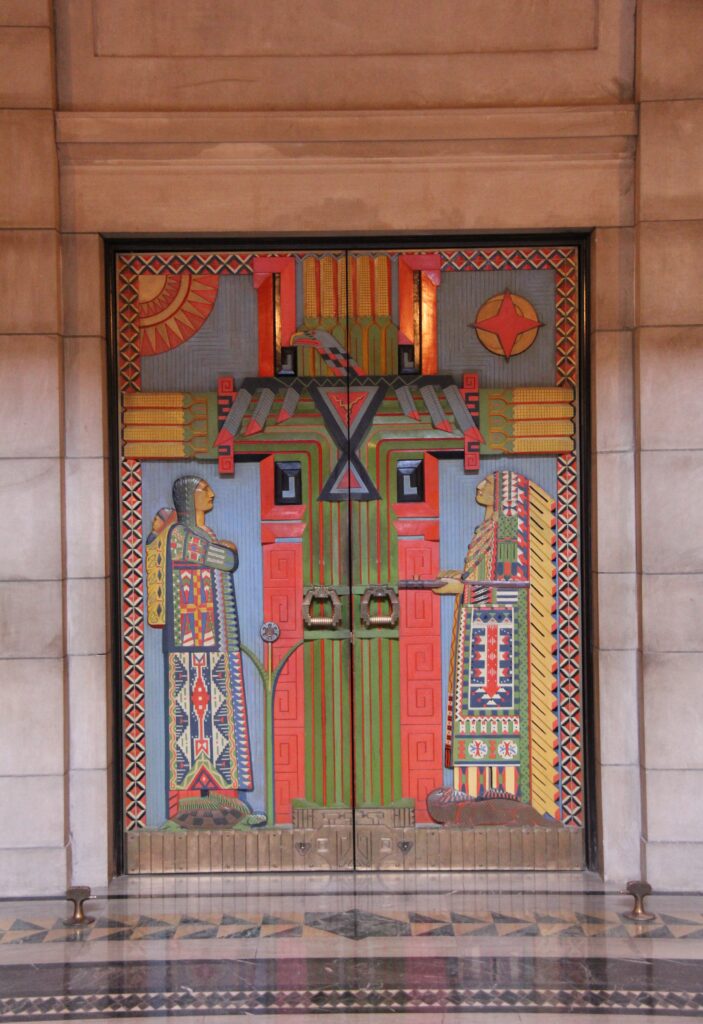
- Doors to Warner Chamber – feature symbology of the Tree of Life. The Tree of Life is depicted using corn, the Native American’s main agricultural crop and an important food source; Thunderbird pictured in the center symbolizes life and rain; Woman with a baby standing on a turtle, which is a Native American symbol of fertility; Man dressed in a traditional headdress, and standing on an otter, a native American symbol of Medicine. Nebraska artist, Keats Lorenz took 3 months to hand-carve the 4-inch thick, 750 pound black mahogany doors. Hartley Burr Alexander, a prolific writer on Native cultures, provided information about the symbols and wardrobes. The Warner Chamber was used up until 1937, when Nebraska moved to a unicameral government.
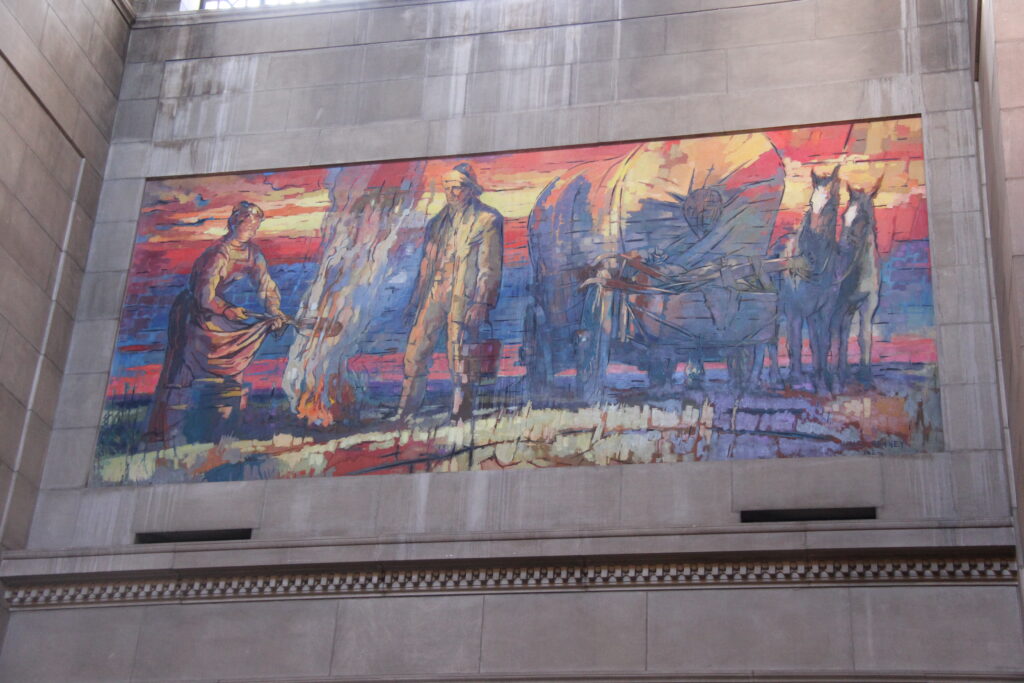
- The Homesteader’s Campfire – depicts a pioneer family making a campfire in front of a Conestoga wagon with horses. The Homestead Act led to rapid population growth after the civil war and started a wave of immigration across the state that brought the population from 29,000 to 1 million in just 20 years. This growth helped Nebraska become the first new state after the Civil War.
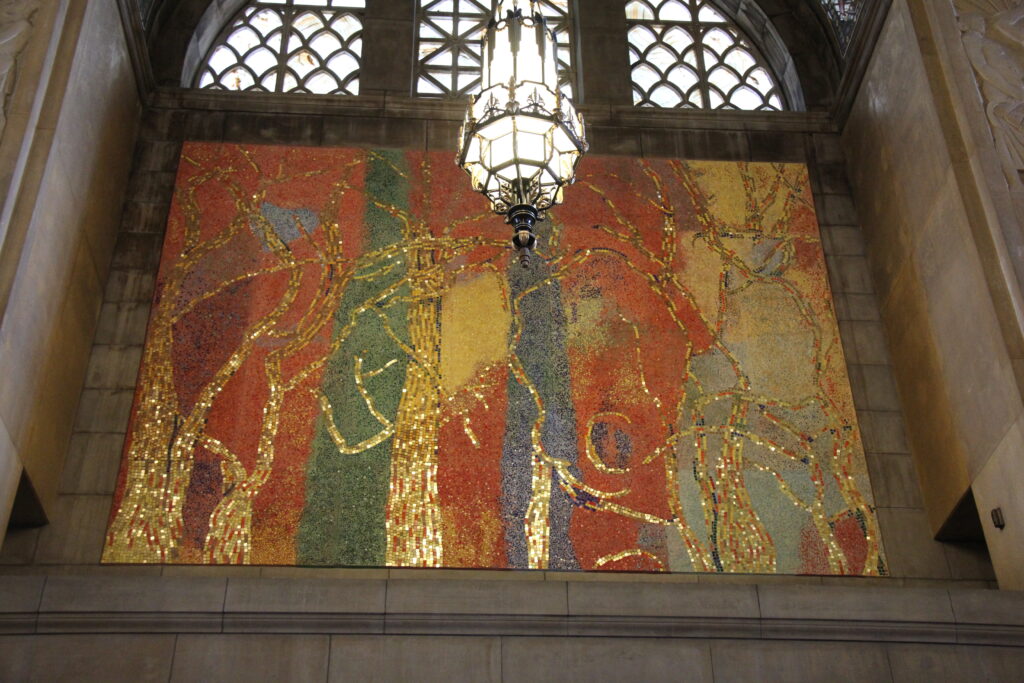
- Tree Planting – is meant to celebrate Arbor Day, a national holiday that celebrates and promotes the planting of trees. Gold Venetian glass tiles reflect the sun light in Jeanne Reynal’s mural celebrating Nebraska’s tree planters
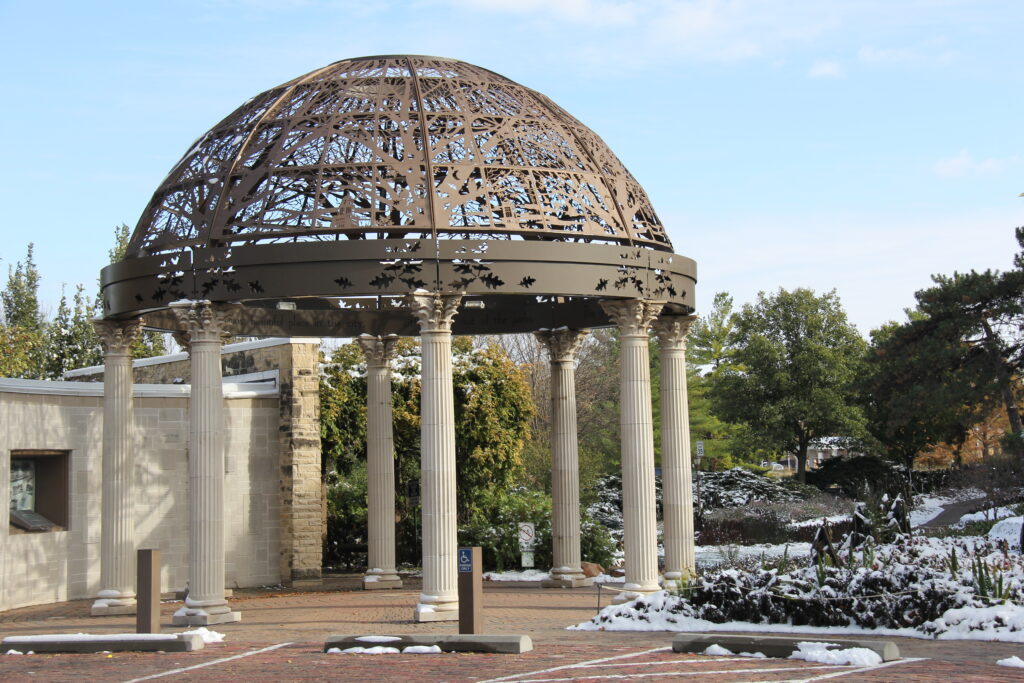
Sunken Garden – The park has three main gardens – the Healing Garden, where all the plants bloom white; the Perennial Garden; and the Annual Garden. The gardens are relatively small, covering less than two acres. The park was covered in snow on the day we visited in October of 2020.
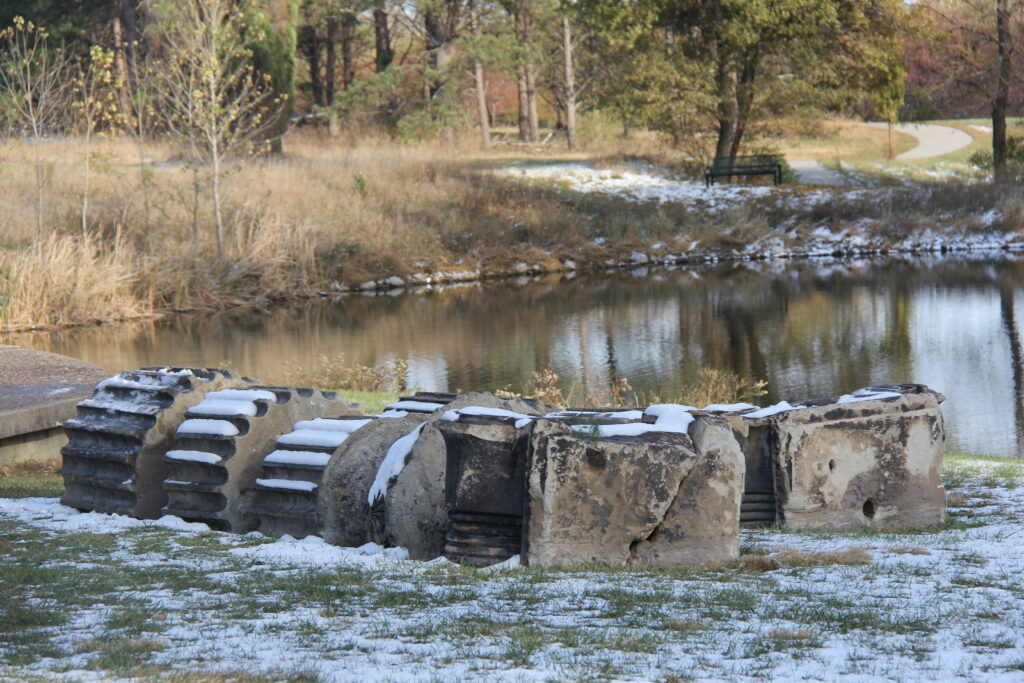
Pioneers Park – This park is one of Lincoln’s oldest and most loved parks and is home to miles of multi use trails, playfields, playground areas, public art, and some old Pillars.
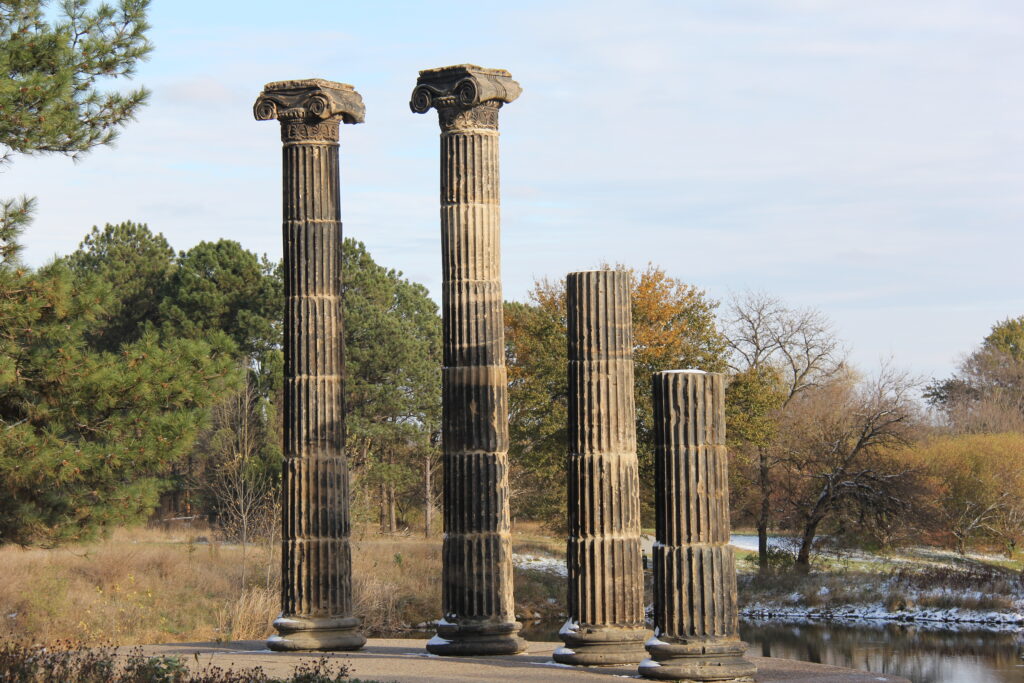
Pioneers Park, Pillars – The Columns at Pioneers Park were part of the U.S. Treasury Department building in Washington DC. Thirty of these 36 feet tall Virginian sandstone columns lined one side of the Treasury Department from around 1839 to 1908. During the Civil War, Union troops occupied the building, and Abraham Lincoln reportedly watched over the troops while standing between the columns.
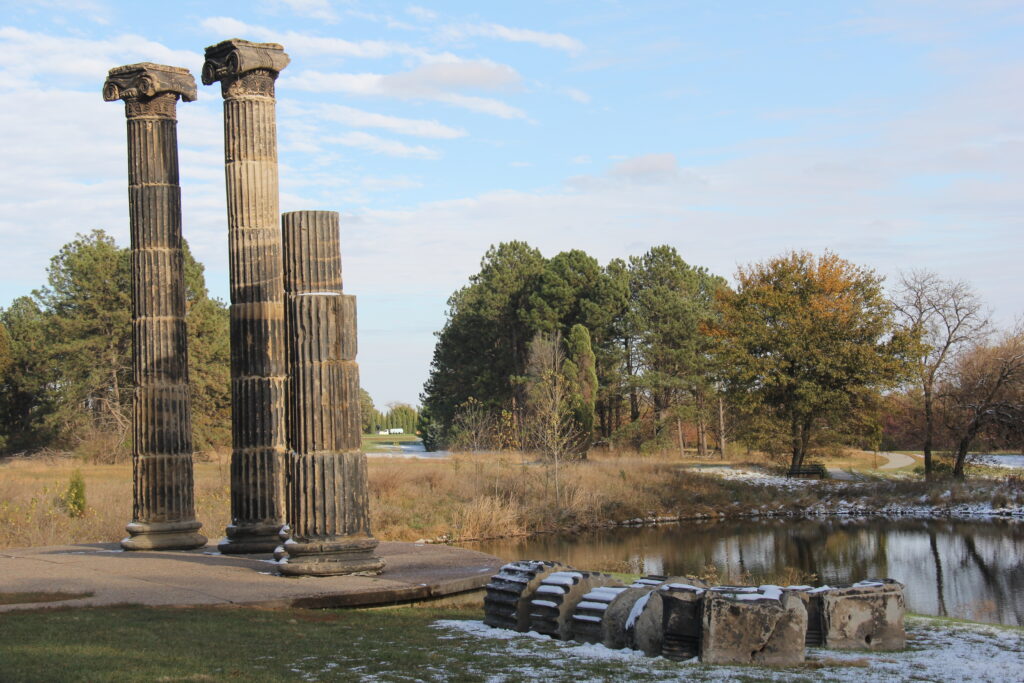
In the early 1900s, the columns were in bad condition due to the soft nature of the stone and the built up grime, and in 1908 all 30 columns were carefully removed and replaced. In 1916 Cotter T. Bride paid for 4 of them to be moved to Lincoln, Nebraska as a gift to his friend William Jennings Bryan. The other 26 columns were blown up shortly after. In 1976 the columns were moved to their current home at Pioneers Park for a bicentennial celebration.
Haymarket District – The Historic Haymarket District is located in downtown Lincoln. It’s a revitalized area known for its restored turn-of-the-century warehouses, vibrant shops, restaurants, and entertainment venues. It is a great place to take a walk, grab a bite to eat, or shop.
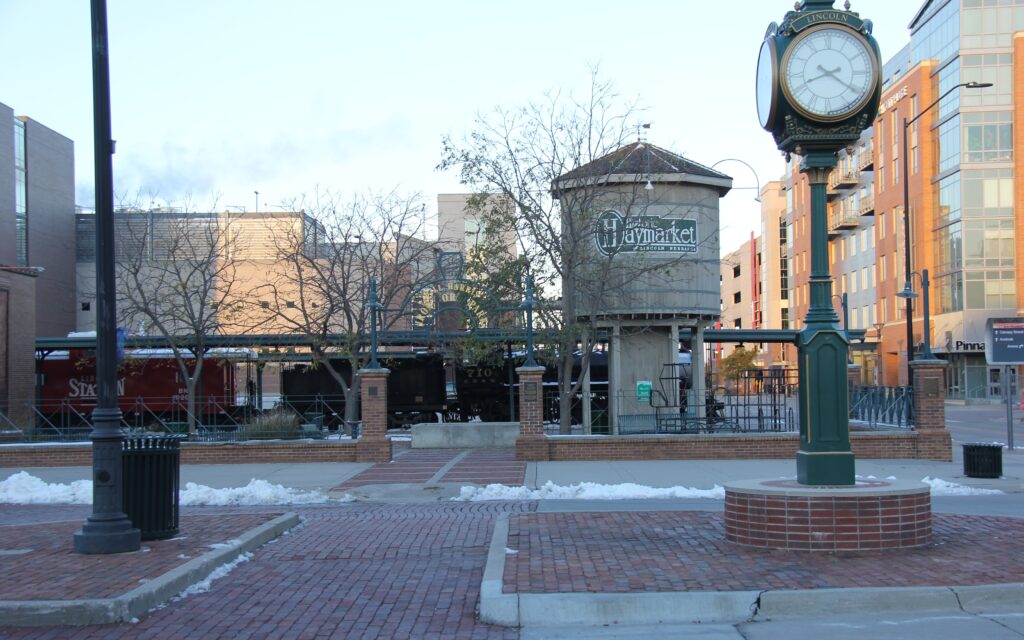
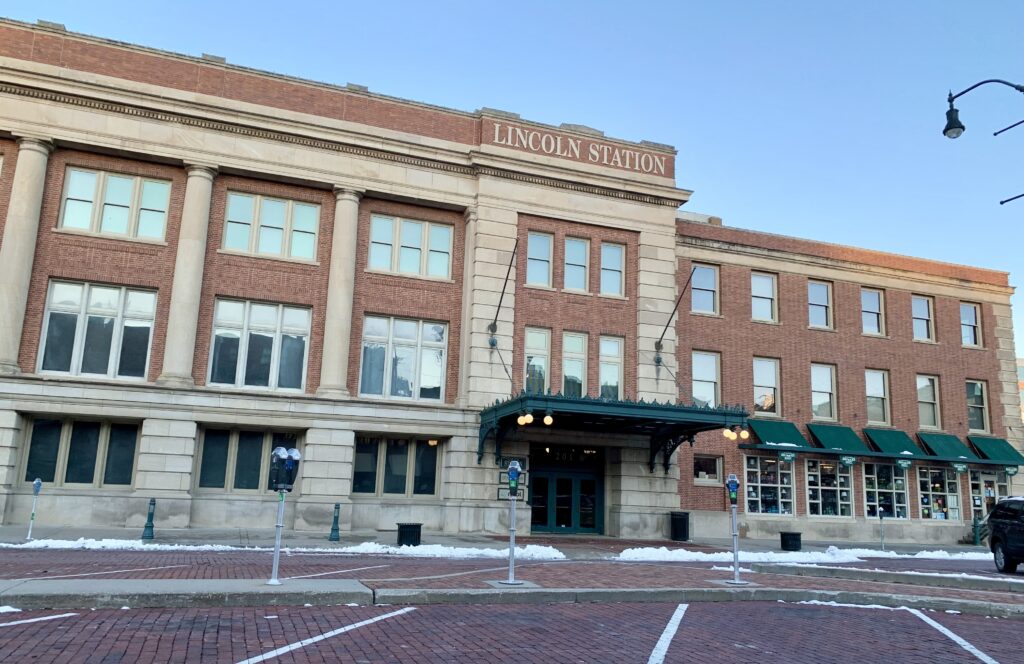
Being close to the University of Nebraska, students frequent the many establishments in the Haymarket District. Another notable building here is the Lincoln station. Once a railway depot, today it houses the visitor center and a restaurant. In the summer, the streets are frequently closed off for festivals and farmers markets.