New Vrindaban is a rural Hare Krishna (ISKCON) intentional community in West Virginia. Founded in 1968 by disciples of Swami Prabhupada, it was named after Vrindavan, India, a sacred Hindu city associated with Krishna. The community covers more than 1,200 acres and includes homes, farms, businesses, temples, and cultural attractions, most notably the Sri Sri Radha Vrindaban Chandra Temple and Prabhupada’s Palace of Gold. New Vrindaban has a history of significant growth and controversy, including its separation from ISKCON in 1988 and eventual readmission in 1998. Today, it is a religious and cultural destination centered on Vaishnava Hindu traditions, vegetarianism, agriculture, tourism, and spiritual life.
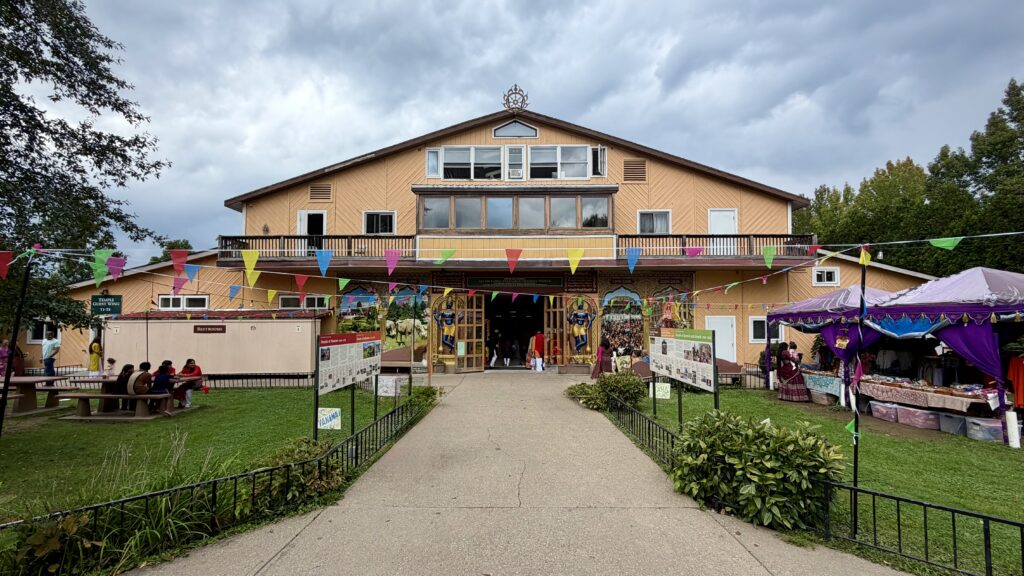
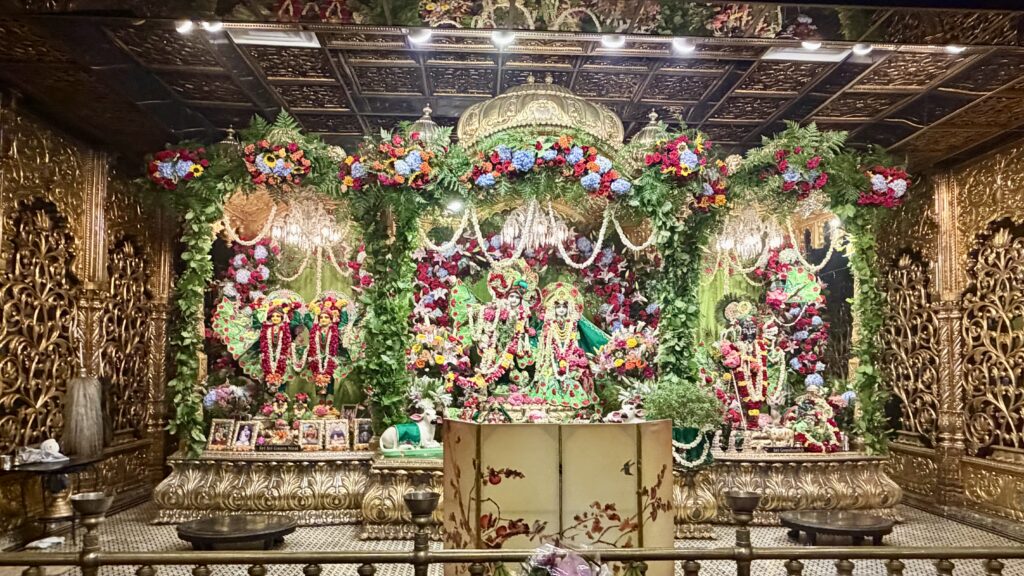
We have visited New Vrindaban several times over the years, most recently in 2026 to attend the Janmashtami festivities, enjoy the spiritual atmosphere, beautiful grounds, and Hindu traditions. Janmashtami is a Hindu festival celebrating the birth of Lord Krishna, marked by religious ceremonies, cultural activities, and, of course, plenty of delicious food.
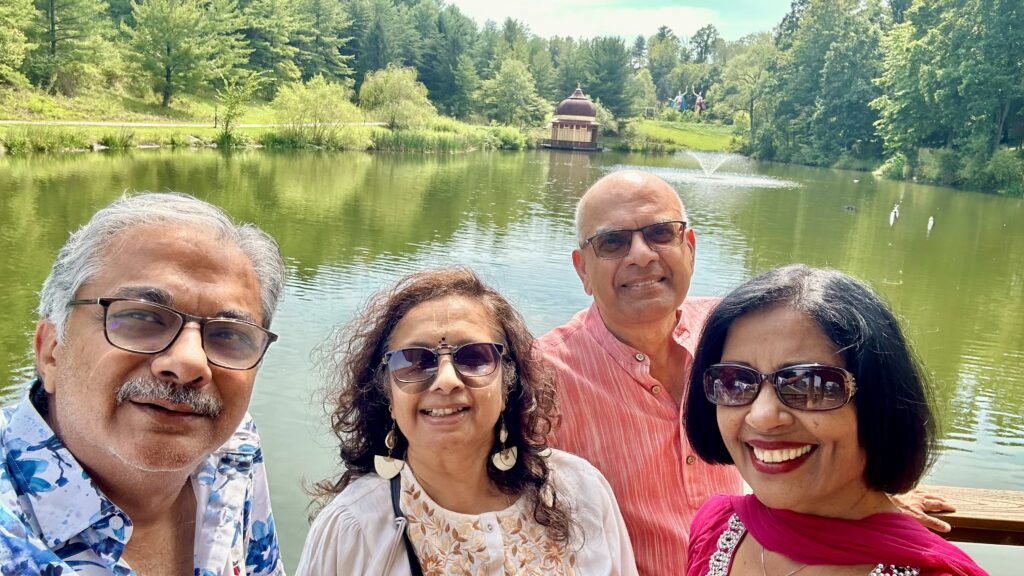
The temple grounds is a peaceful place to take a stroll. Visitors can enjoy a relaxing walk around the Swan Lake, aka Kusum Sarovar, which is home to swans, fish, turtles, and free-roaming peacocks. Visitors can also explore the nearby Prabhupada’s Palace of Gold and Lotus Lake. The area also hosts special events, including the Swan Boat Festival, and offers cabins overlooking the lake for visitors who want to stay overnight.
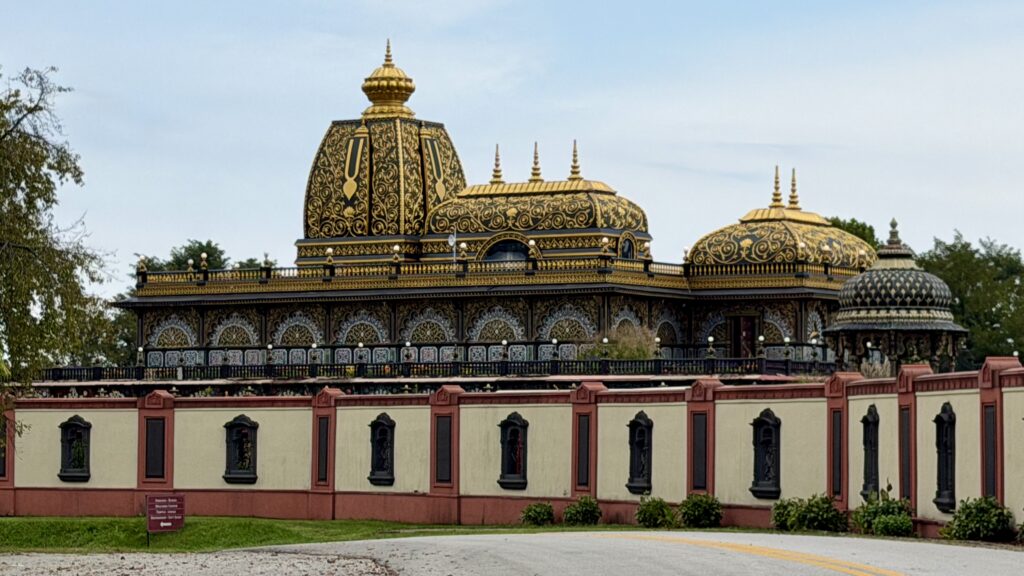
New Vrindaban, Prabhupada’s Palace of Gold – is an elaborate temple complex built by Hare Krishna devotees between 1973 and 1980. Volunteers (who were mostly disciples of Swami Prabhupada) constructed the palace largely without formal blueprints, developing their skills as they worked and creating their own workshops for blacksmithing, marble cutting, and other crafts. After its completion, the Palace became an important pilgrimage destination, leading to the development of additional guest houses, gardens, statues, and other facilities around the community. Guided tours of the interior are offered every half an hour which last for approximately 25 minutes.
A. C. Bhaktivedanta Swami Prabhupada (1896–1977) – commonly known as Srila Prabhupada, was an Indian spiritual teacher who brought the teachings of Krishna consciousness and the Hare Krishna movement to the West. In 1965 (age 69), he traveled from India to New York City and, despite having few resources and knowing almost no one, began teaching and chanting the Hare Krishna mantra. In 1966, he founded the International Society for Krishna Consciousness (ISKCON), which grew into a worldwide religious organization. Prabhupada taught devotion to Krishna through chanting, studying sacred texts, and devotional service, while encouraging his followers to follow a strict vegetarian lifestyle and avoid intoxicants, gambling, and extramarital sex. He translated and provided commentaries on important Hindu texts, including the Bhagavad Gita, Srimad-Bhagavatam, and Chaitanya Charitamrita, writing more than 80 books. Despite controversies surrounding some of his teachings and the movement’s history, Prabhupada remains an influential figure in the global spread of Hinduism and Krishna consciousness.