Washington DC, the capital of the United States, is located along the Potomac River between Maryland and Virginia. Founded in 1790 and named after George Washington, the city is home to iconic landmarks such as the White House, the U.S. Capitol, and the National Mall. With its rich history, world-class museums, and vibrant neighborhoods, Washington, D.C., offers visitors a perfect blend of American history, culture, and architecture.
We have visited Washington DC, many times over the years, including during the spectacular cherry blossom season in March. Most of the attractions detailed below are located in or near the National Mall, making that area the main focus of the visit.
- National Mall
- United States Capitol
- U.S. Supreme Court Building
- Library of Congress
- United States Botanic Garden
- National Museum of the American Indian
- Smithsonian National Air and Space Museum
- National Museum of Natural History
- United States Holocaust Memorial Museum
- Smithsonian Castle
- Washington Monument
- Memorials
- National World War II Memorial
- Vietnam Veterans Memorial
- Korean War Veterans Memorial
- Lincoln Memorial
- Martin Luther King, Jr. Memorial
- Franklin Delano Roosevelt Memorial
- Jefferson Memorial
- Tidal Basin
- The White House
- The Pentagon
- National Museum of African American History and Culture (NMAAHC)
- Adams Morgan
- National Portrait Gallery
- Washington National Cathedral
- Georgetown University
The National Mall – is the heart of Washington, D.C., stretching from the U.S. Capitol to the Lincoln Memorial. Often called America’s Front Yard, it is home to many of the nation’s most iconic monuments, memorials, and Smithsonian museums. Whether you’re exploring its historic landmarks or enjoying its open green spaces, the National Mall is an essential stop for every visitor to the nation’s capital. With so many landmarks to explore, you’ll need at least a week to experience everything—especially if you plan to visit the Smithsonian museums. All the Smithsonian museums on the National Mall are free to visit.
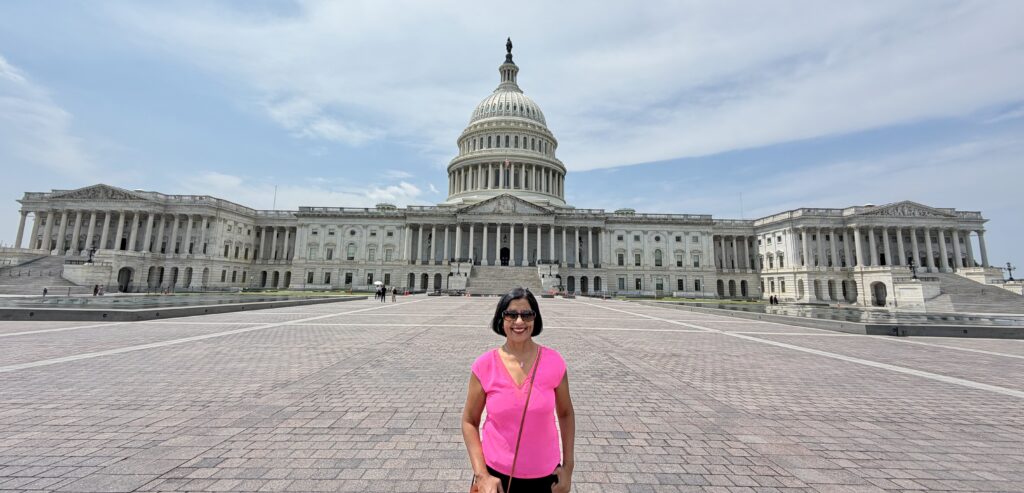
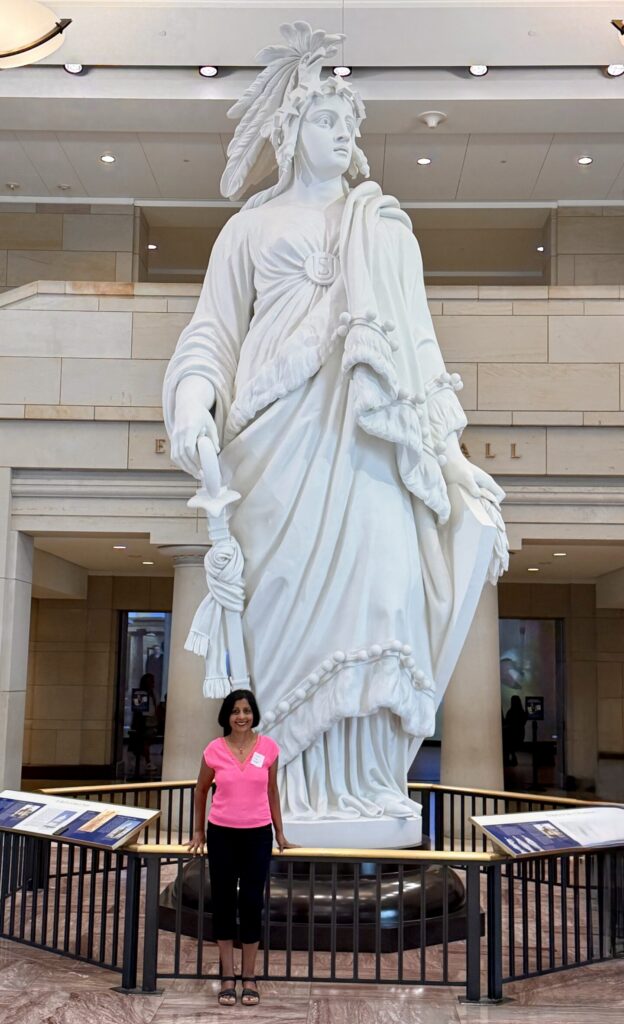
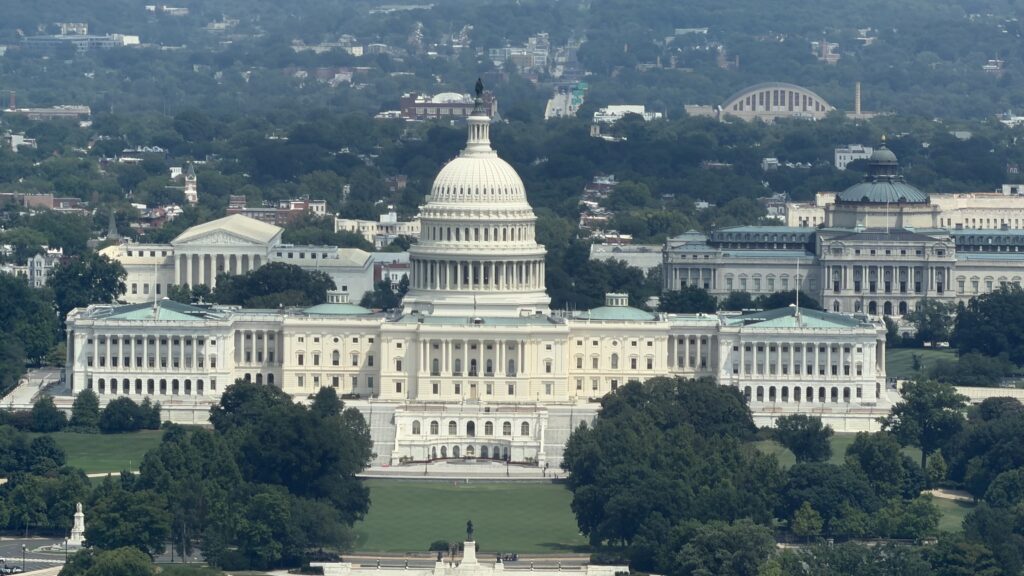
United States Capitol – is one of Washington, D.C.’s most recognizable landmarks and the home of the U.S. Congress. Completed in 1800, the iconic neoclassical building sits atop Capitol Hill at the eastern end of the National Mall. Visitors can admire its impressive dome, explore the Capitol Visitor Center, and take guided tours to learn about the nation’s legislative history. The Capitol is also the backdrop for presidential inaugurations and remains a powerful symbol of American democracy.
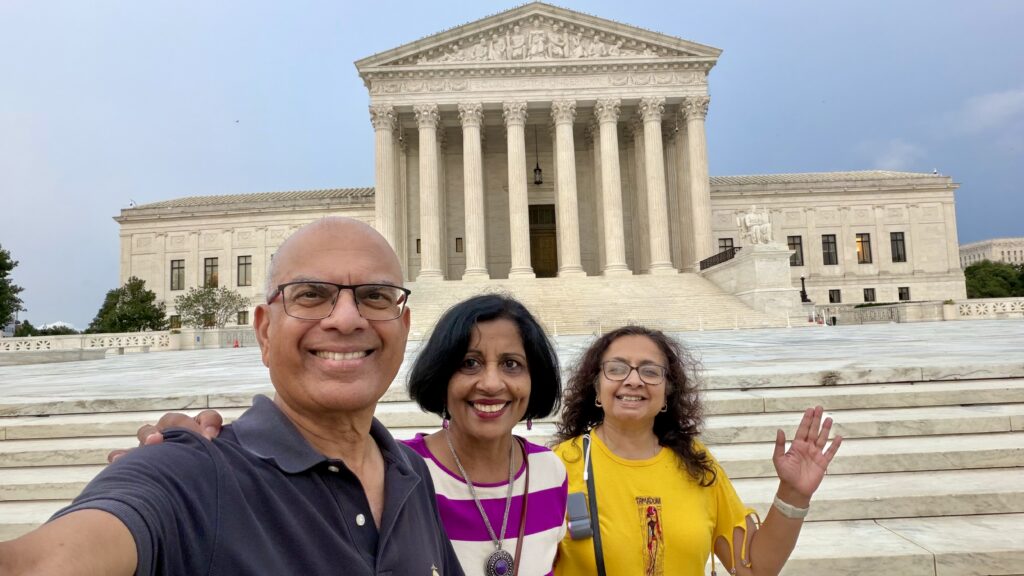
U.S. Supreme Court Building – is located directly across from the U.S. Capitol. Built in 1935 and designed in the Neoclassical style by architect Cass Gilbert, the building resembles a grand classical temple and reflects the importance and independence of the judicial branch of government. The marble façade, grand staircase, massive bronze doors, and intricate sculptures make the exterior especially impressive. The inscription Equal Justice Under Law above the west entrance was one of the most striking details.
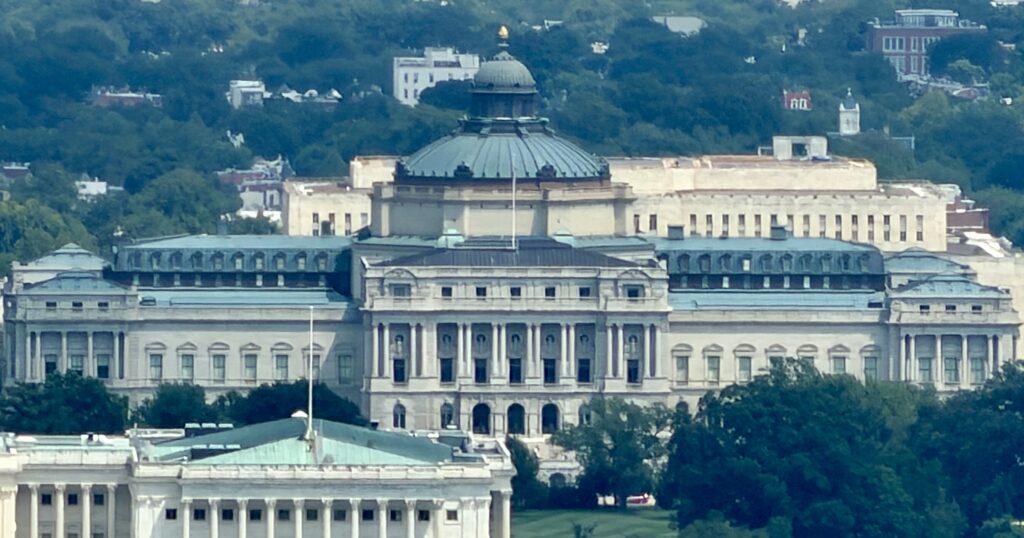
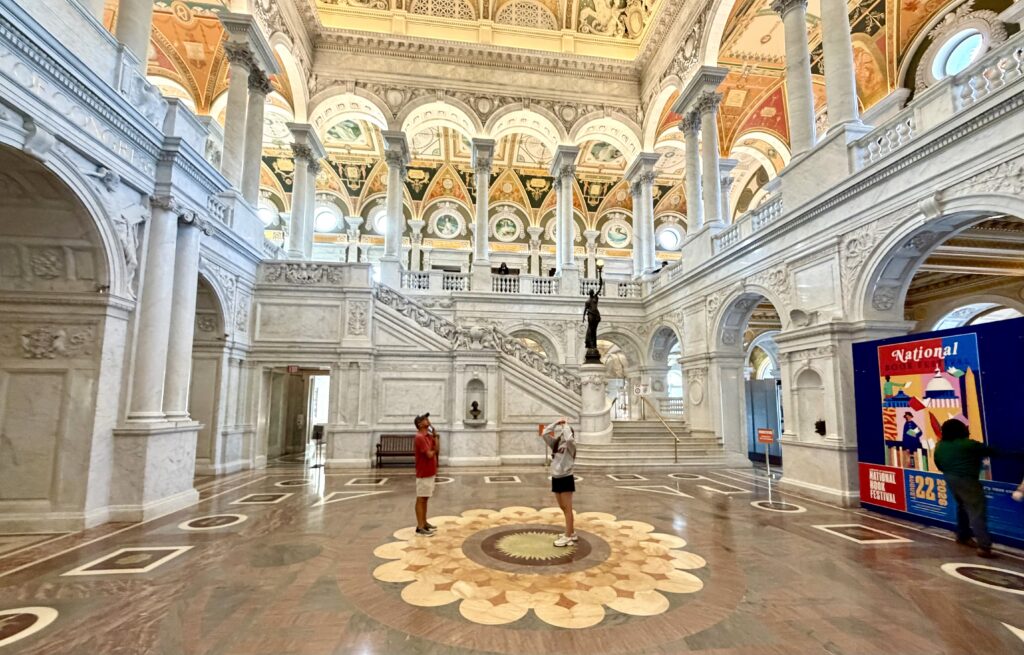
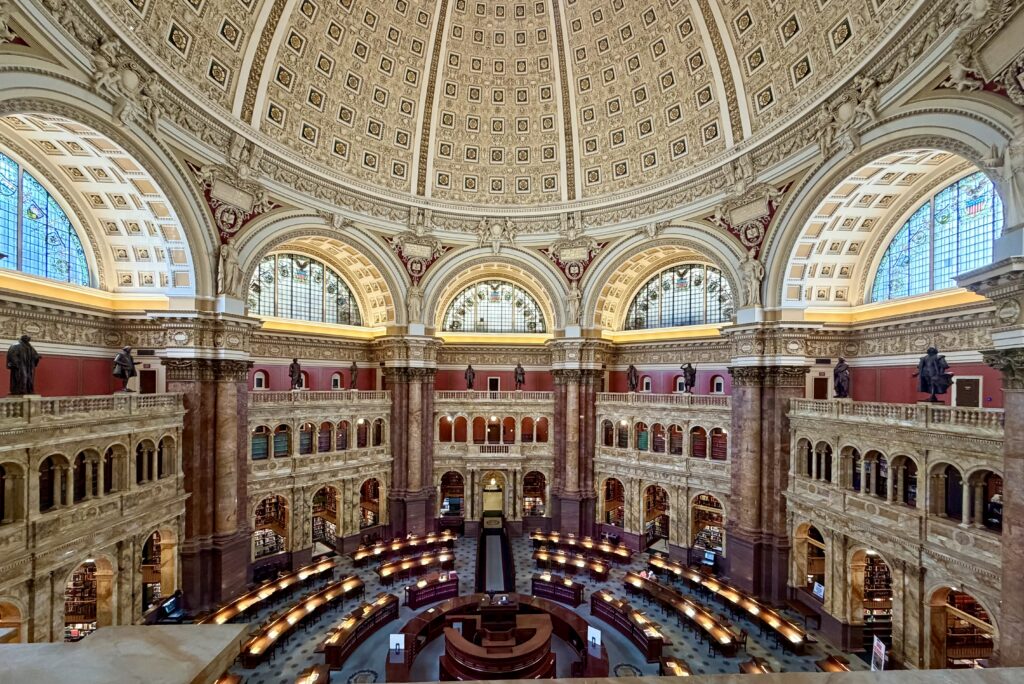
Library of Congress – We had booked a timed entry in advance to visit this magnificent Library of Congress, one of the oldest federal cultural institutions in the United States and one of the largest libraries in the world. Located directly across from the Capitol Building and established in 1800, the library serves Congress and houses an extraordinary collection of books, manuscripts, maps, photographs, and other materials from around the world. The grand interior, with its elaborate murals, sculptures, gilded details, and beautifully decorated ceilings, makes the building feel more like a palace than a library. The stunning Main Reading Room, viewed from above as well as from within, was particularly impressive.
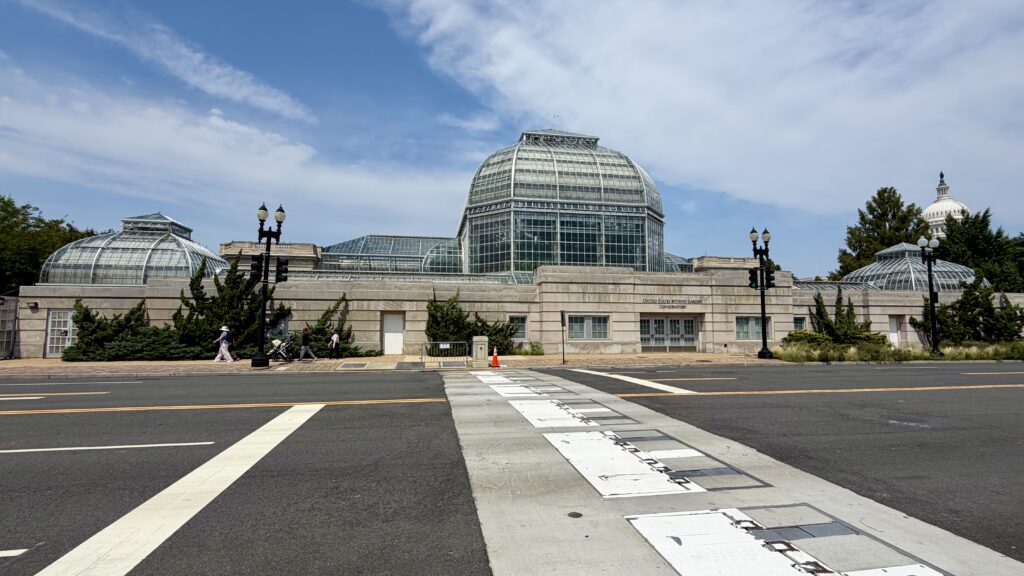
United States Botanic Garden – Located next to the U.S. Capitol, the gardens are the oldest continuously operating botanic garden in the United States. Open year-round with free admission, it features a stunning conservatory, seasonal displays, and thousands of plants from around the world.
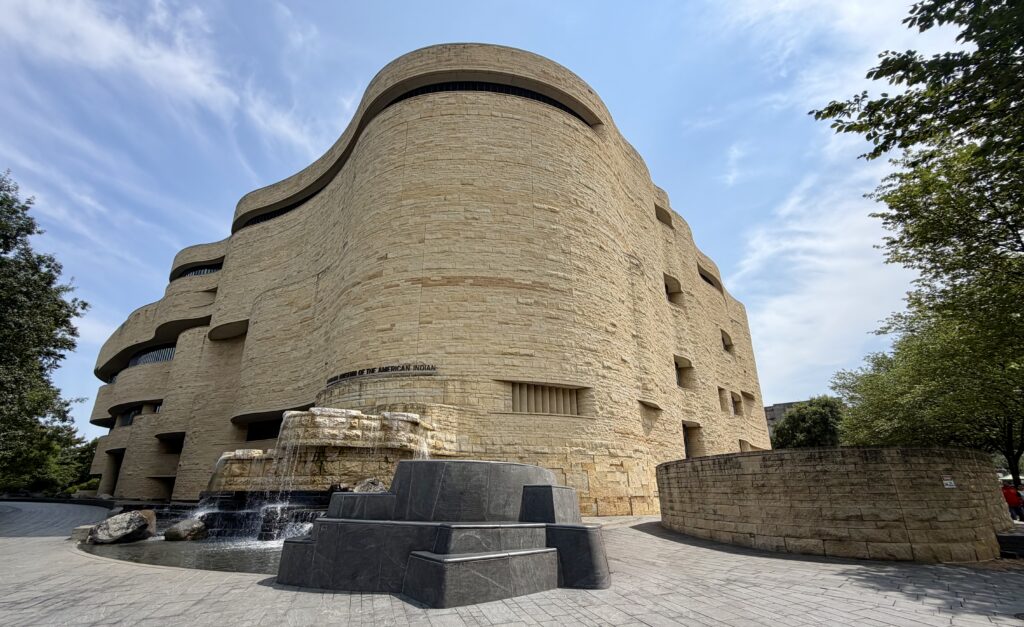
National Museum of the American Indian – on the National Mall is dedicated to the cultures, history, and traditions of Indigenous peoples of the Americas. The building itself is a remarkable sight, with its curving, organic design and golden-colored limestone exterior, inspired by natural rock formations shaped by wind and water. Inside, the exhibits showcase Native American art, artifacts, clothing, traditions, and stories from Indigenous communities across the Americas.
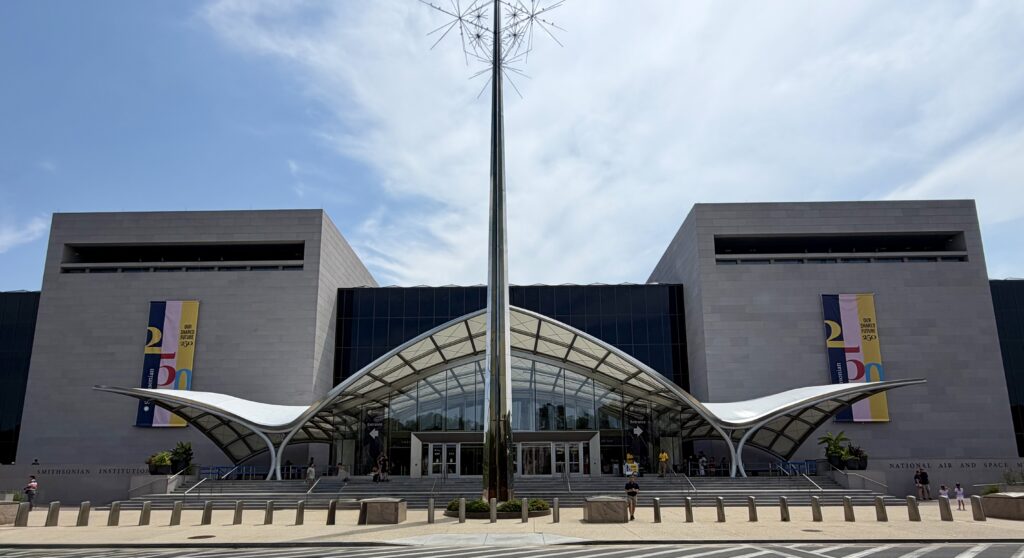
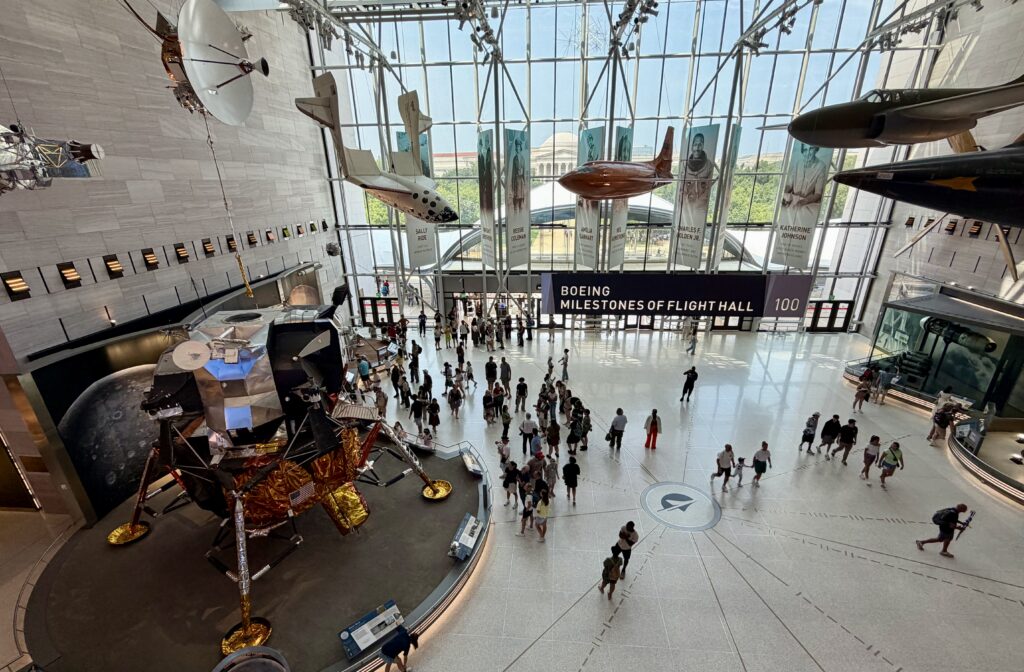
Smithsonian National Air and Space Museum – is one of National Mall’s most popular attractions, celebrating the history and achievements of aviation and space exploration. The museum features legendary aircraft and spacecraft, including the Wright Flyer, Charles Lindbergh’s Spirit of St. Louis, the Apollo 11 Command Module, and John Glenn’s Friendship 7 capsule.
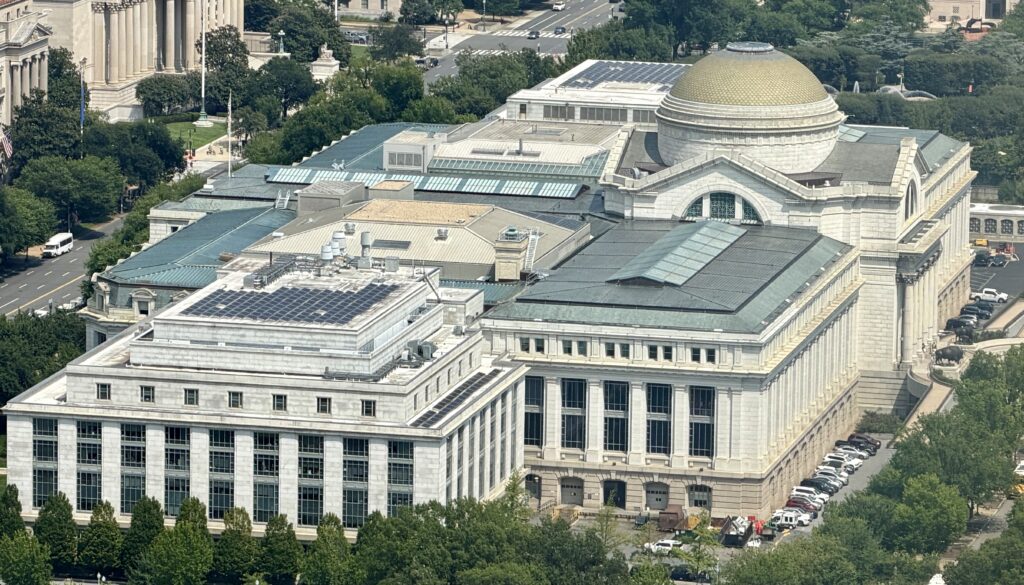
National Museum of Natural History – invites visitors to explore the wonders of the natural world through fascinating exhibits on dinosaurs, gems, minerals, animals, human cultures, and more. Home to one of the largest natural history collections in the world, it offers an unforgettable experience for visitors of all ages.
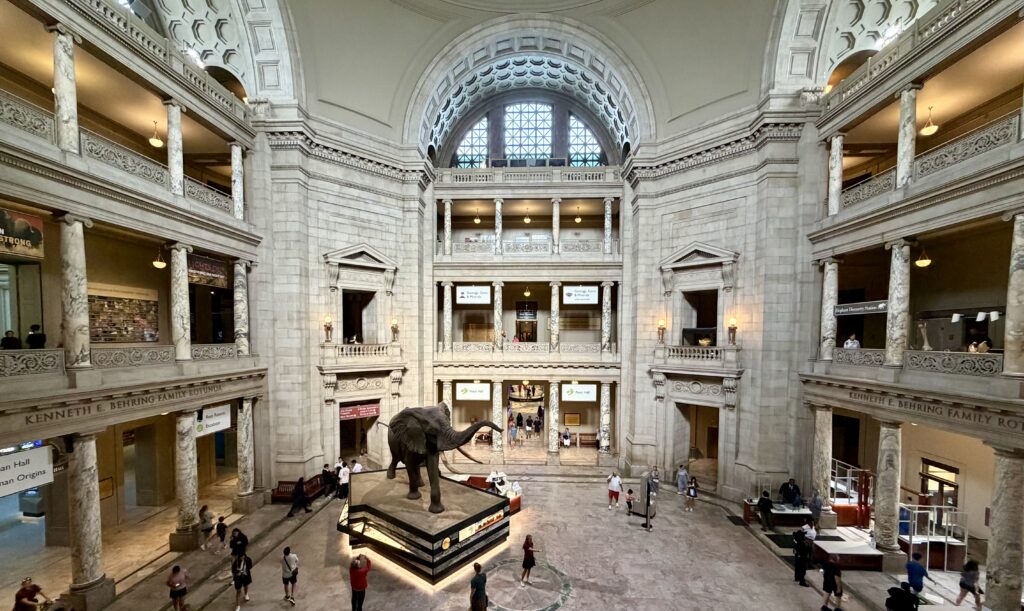
The interior of the museum has a spectacular four-story Beaux-Arts rotunda that serves as the museum’s grand entrance and central gathering space. The centerpiece is Henry, an enormous 11-ton African bush elephant that has welcomed visitors since 1959. With its soaring arches, ornate classical details, and vast open interior, the rotunda creates an impressive first impression. From here, visitors can access major exhibits throughout the museum, including the Sant Ocean Hall, the David H. Koch Hall of Fossils – Deep Time, and the famous Hope Diamond.
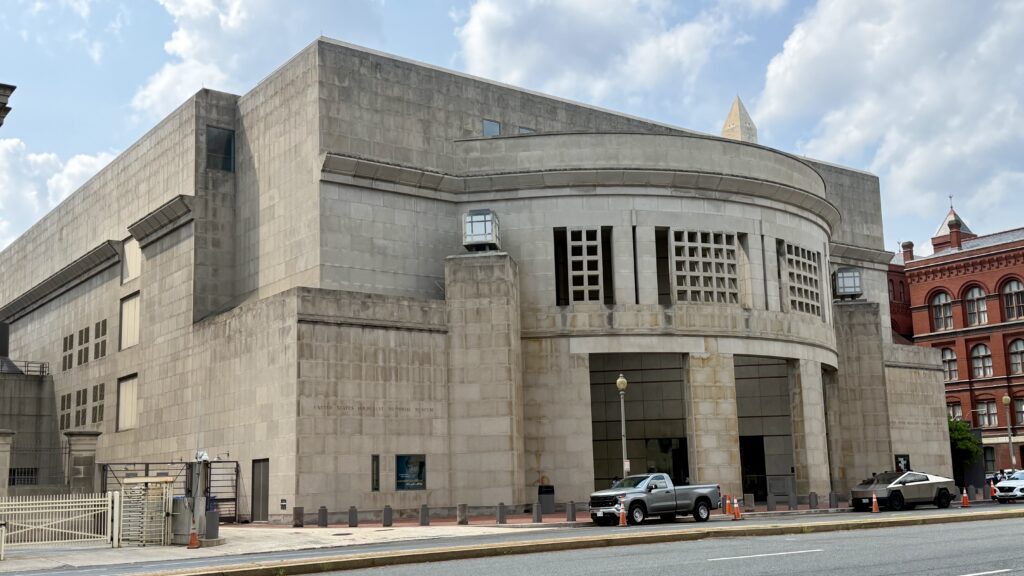
United States Holocaust Memorial Museum – a deeply moving museum dedicated to preserving the history and legacy of the Holocaust. Opened in 1993, the museum presents the history of Nazi persecution and the Holocaust through photographs, artifacts, personal stories, historical documents, and survivor testimonies. The permanent exhibition takes visitors through a chronological journey, from the rise of Nazi Germany and the persecution of Jews to the ghettos, concentration camps, and ultimately the liberation. One of the most powerful aspects of the visit was receiving an identification card telling the story of an individual who experienced the Holocaust.
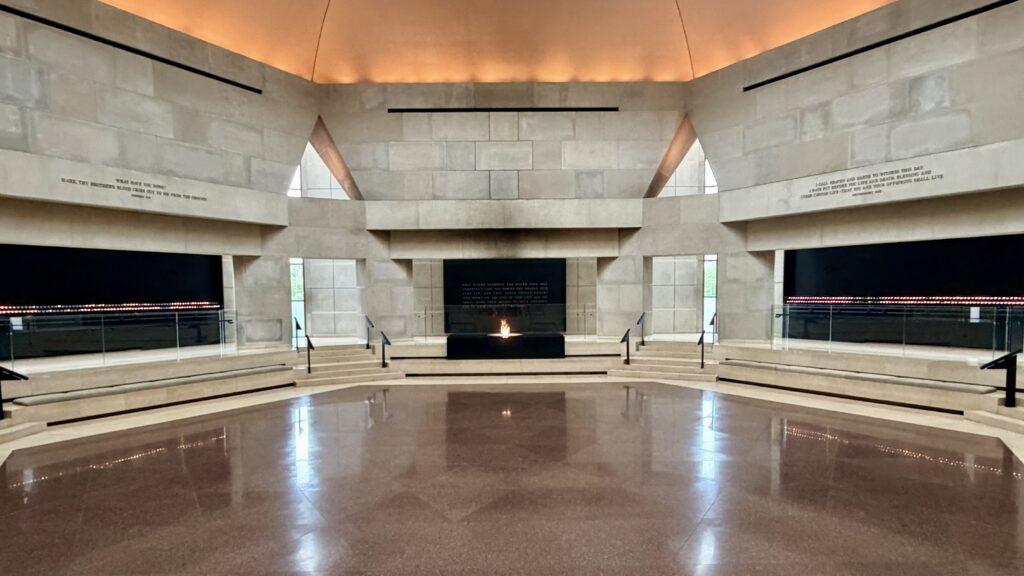
The Hall of Remembrance, with its eternal flame, provides a quiet space for reflection and remembrance. This was one of the most somber and emotionally powerful places we visited in Washington, D.C.
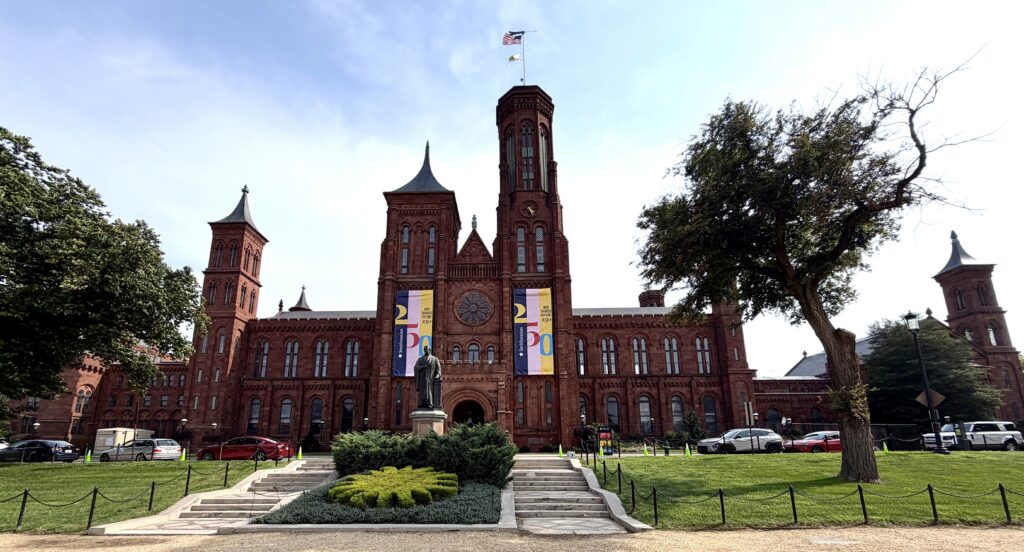
Smithsonian Castle – Built in 1855 from distinctive red Seneca sandstone, this beautiful Norman Revival-style building houses the Smithsonian’s administrative offices and visitor information center. Located on the National Mall, the Castle is a great starting point for exploring the Smithsonian museums and offers a glimpse into the history of one of the world’s largest museum and research organizations.
Washington Monument – This iconic landmarks is a powerful tribute to George Washington, the nation’s first president. Rising 555 feet above the National Mall, this elegant marble obelisk offers breathtaking views of the city from its observation deck. Completed in 1884 after decades of construction, the monument remains a symbol of American history, leadership, and perseverance.
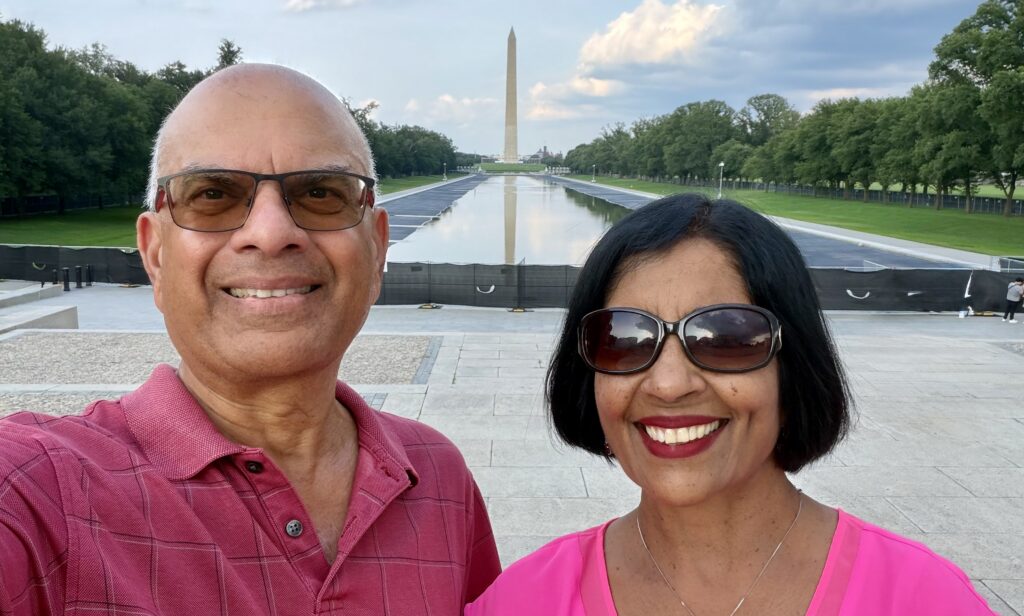
View from top of the Washington Monument – We got timed-entry tickets to take the elevator to the top of the monument. The view was breathtaking, with the city’s famous landmarks—including the Capitol, White House, Lincoln Memorial, and Reflecting Pool—visible from above.
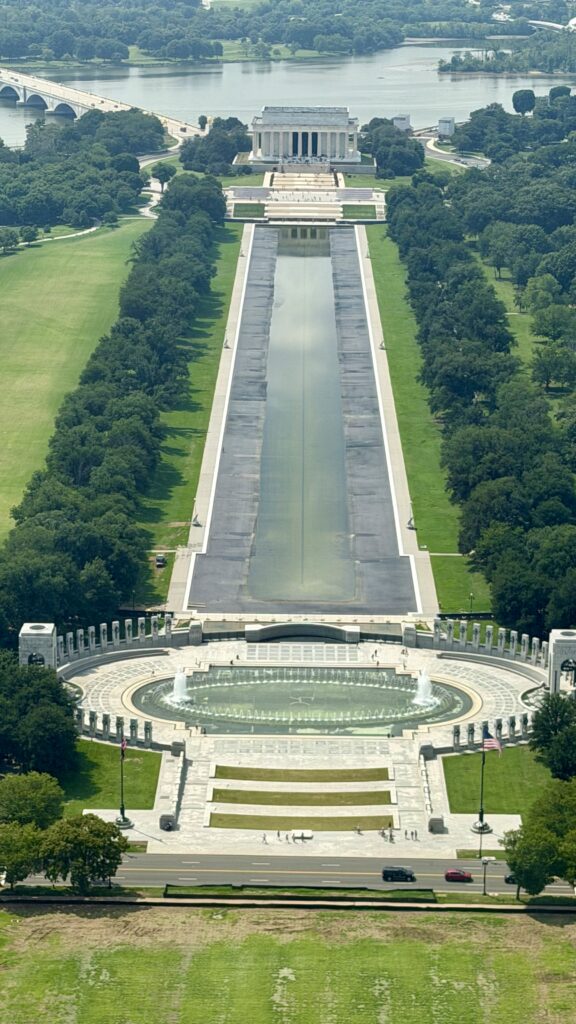
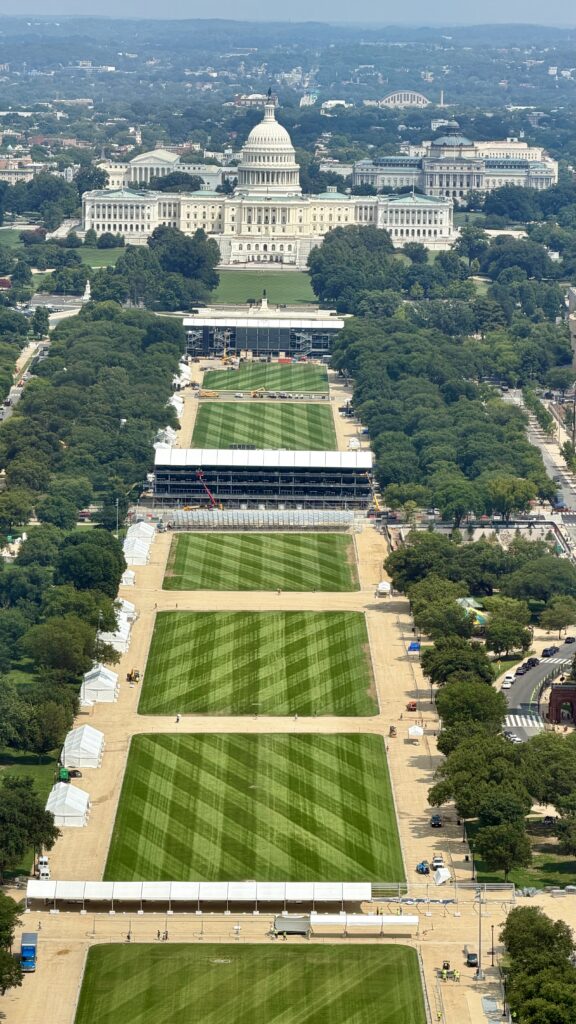
================== Memorials ==================
National World War II Memorial – Opened in 2004, this memorial is a powerful tribute to the more than 16 million Americans who served in the armed forces and the millions of civilians who supported the nation during World War II. Located on the National Mall between the Lincoln Memorial and the Washington Monument, the memorial features 56 granite pillars, two grand arches representing the Atlantic and Pacific theaters, and a Freedom Wall adorned with 4,048 gold stars honoring those who gave their lives.
=================================
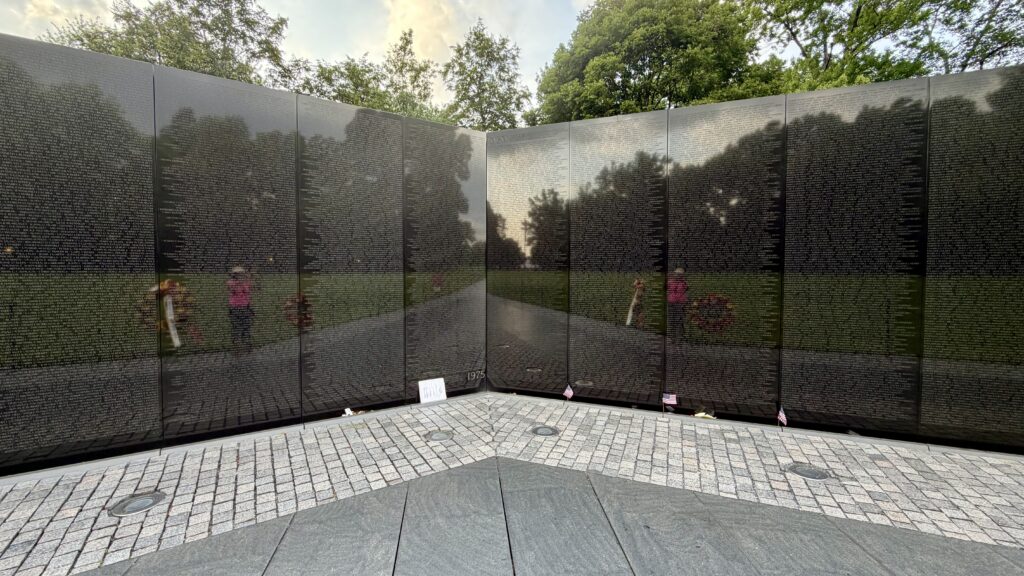
Vietnam Veterans Memorial – is a deeply moving tribute to the men and women of the U.S. Armed Forces who served and sacrificed during the Vietnam War. Located near the Lincoln Memorial, its centerpiece is a striking black granite wall engraved with the names of more than 58,000 service members who died or remain missing.
=================================
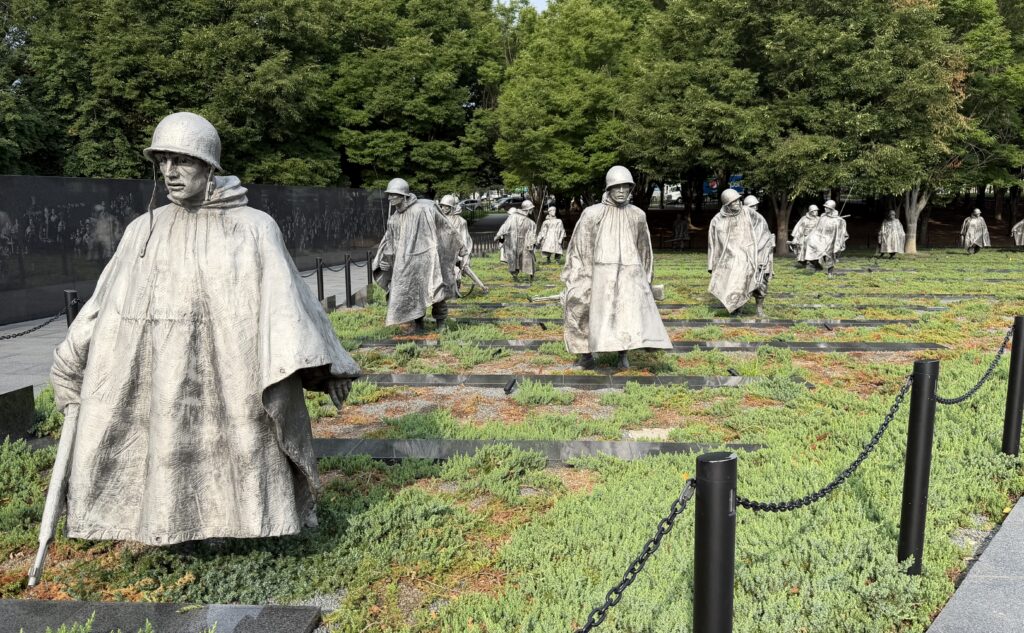
Korean War Veterans Memorial – honors the men and women who served during the Korean War (1950–1953). Located near the Lincoln Memorial, the memorial features 19 stainless steel statues of soldiers on patrol, a granite mural wall, and the Pool of Remembrance. Opened in 1995 and expanded in 2022 with a Wall of Remembrance, it preserves the memory of those who sacrificed for freedom.
=================================
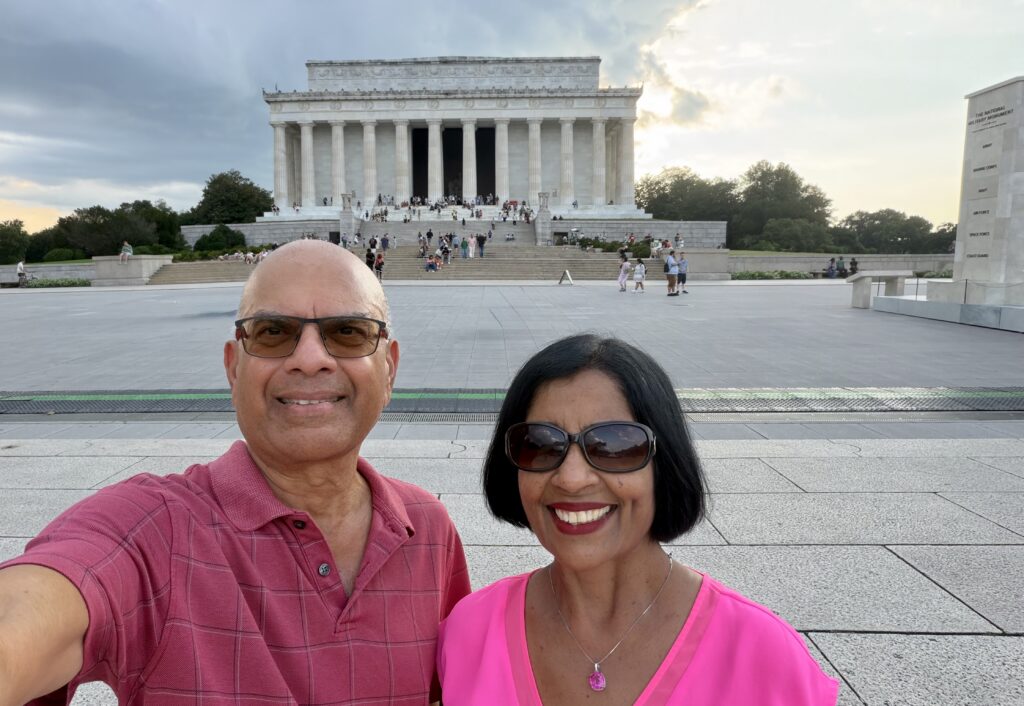
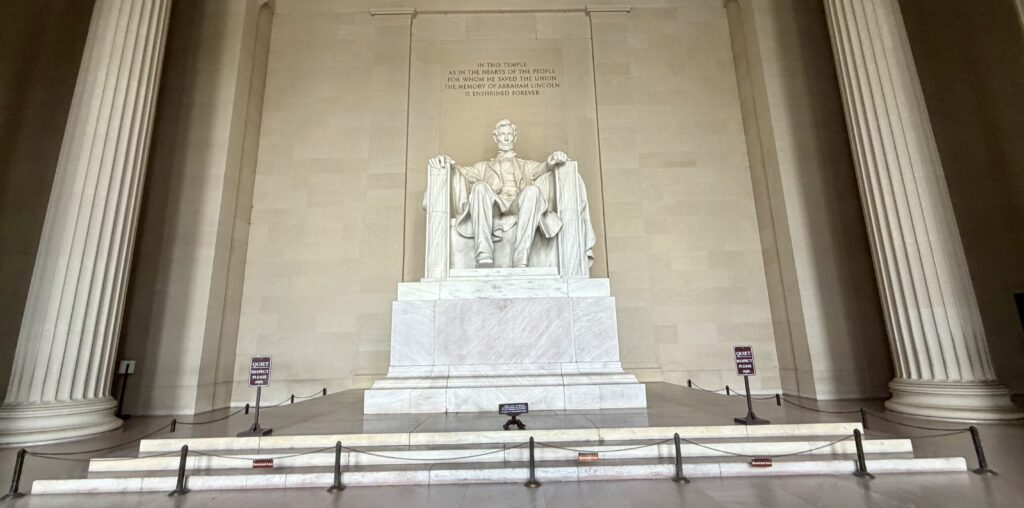
Lincoln Memorial – honors President Abraham Lincoln, the 16th President of the United States. Located at the western end of the National Mall, the majestic marble monument features a towering statue of Lincoln and the inscriptions of his Gettysburg Address and Second Inaugural Address. The memorial is also a symbol of freedom and equality, famously serving as the site of Dr. Martin Luther King Jr.’s historic I Have a Dream speech in 1963.
=================================
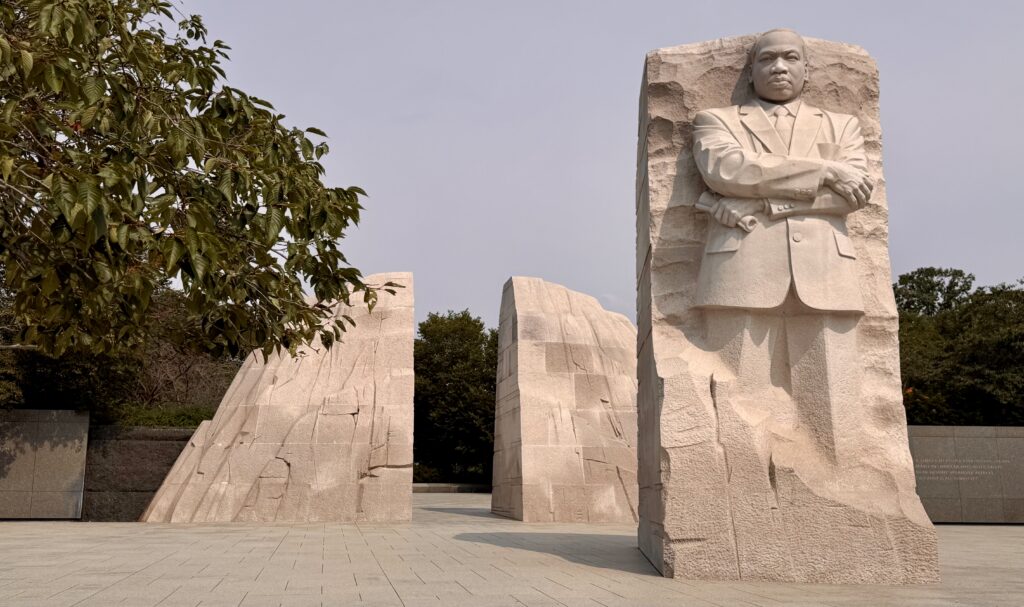
Martin Luther King, Jr. Memorial – honors the life and legacy of the iconic civil rights leader who championed equality, justice, and nonviolent change. Located near the Tidal Basin, the memorial’s centerpiece is the impressive Stone of Hope, inspired by a line from Dr. King’s famous I Have a Dream speech. Opened in 2011, the memorial invites visitors to reflect on King’s enduring message of freedom, dignity, and hope for future generations.
=================================
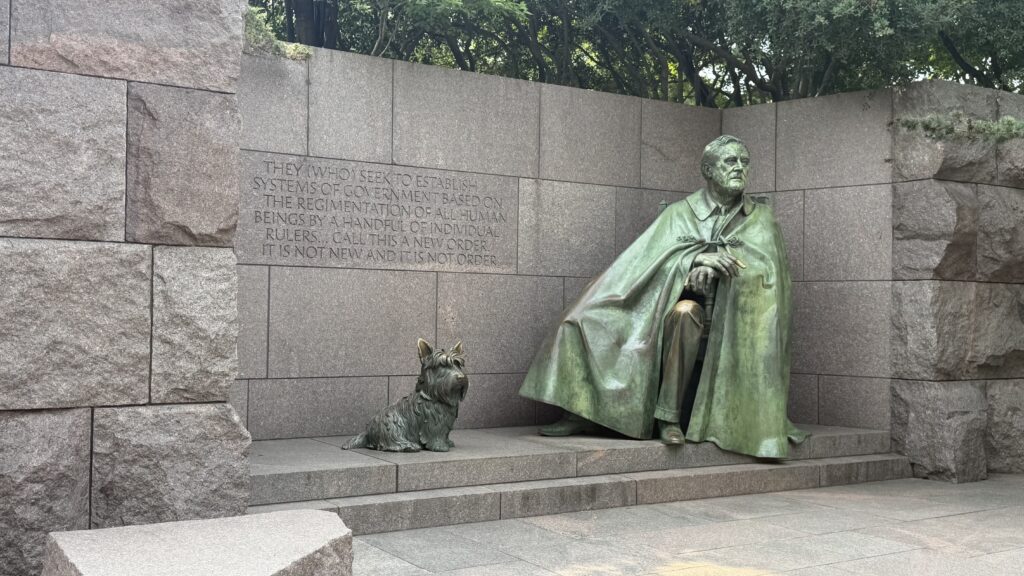
Franklin Delano Roosevelt Memorial – honors the 32nd President of the United States and his leadership during the Great Depression and World War II. Located along the Tidal Basin, the 7.5-acre memorial is divided into four outdoor rooms, each representing one of FDR’s presidential terms. Featuring inspiring quotes, waterfalls, sculptures, and a statue of First Lady Eleanor Roosevelt, the memorial offers a peaceful setting to reflect on one of America’s most influential leaders.
=================================
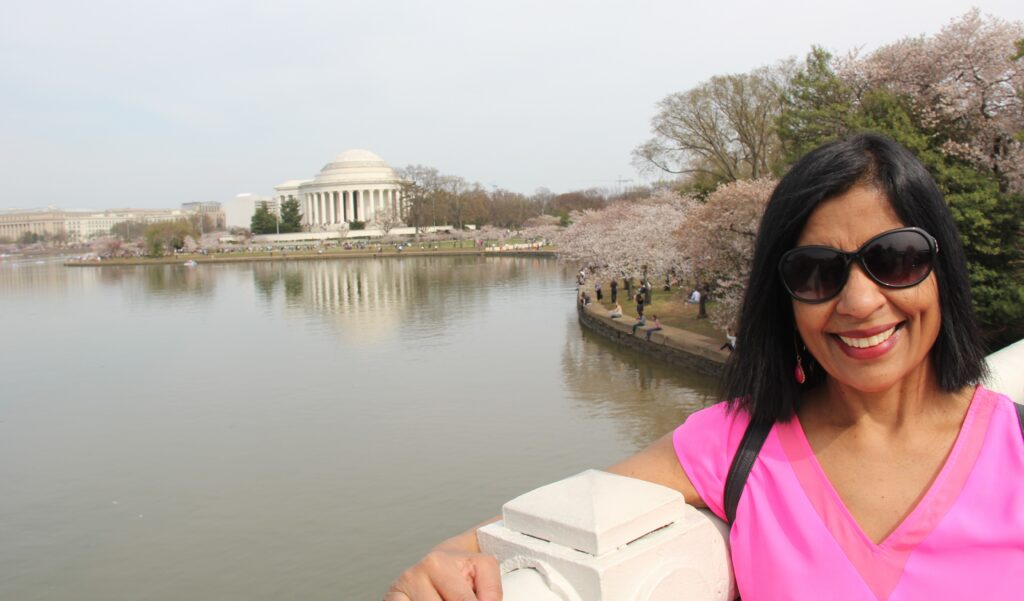
Jefferson Memorial – honors the third President of the United States and principal author of the Declaration of Independence. Overlooking the Tidal Basin, the elegant neoclassical monument features a towering bronze statue of Jefferson surrounded by inscriptions of his most influential writings. Dedicated in 1943, the memorial is especially beautiful during the spring cherry blossom season, making it one of Washington, D.C.’s most photographed and inspiring landmarks.
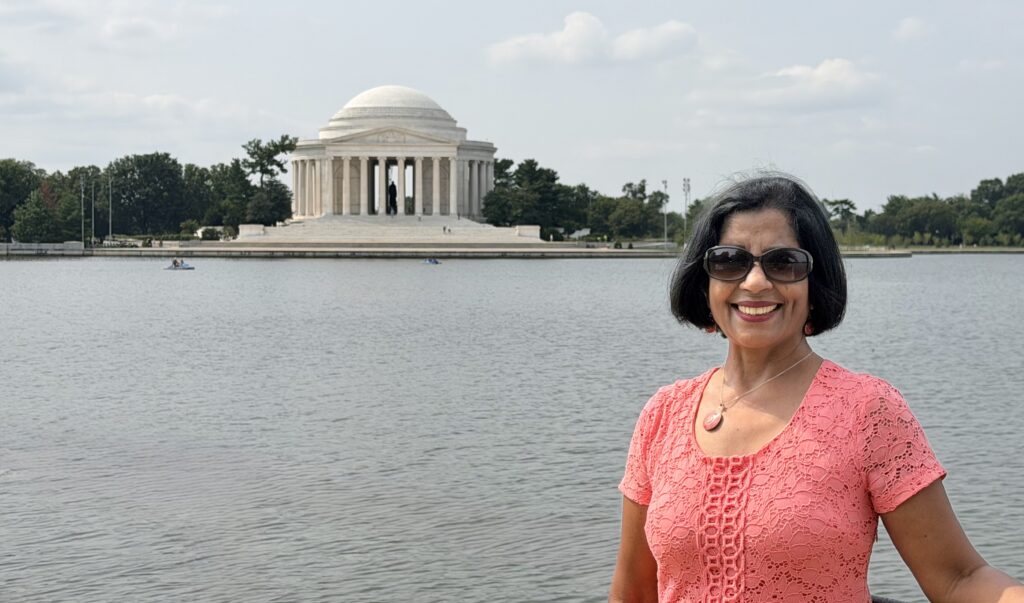
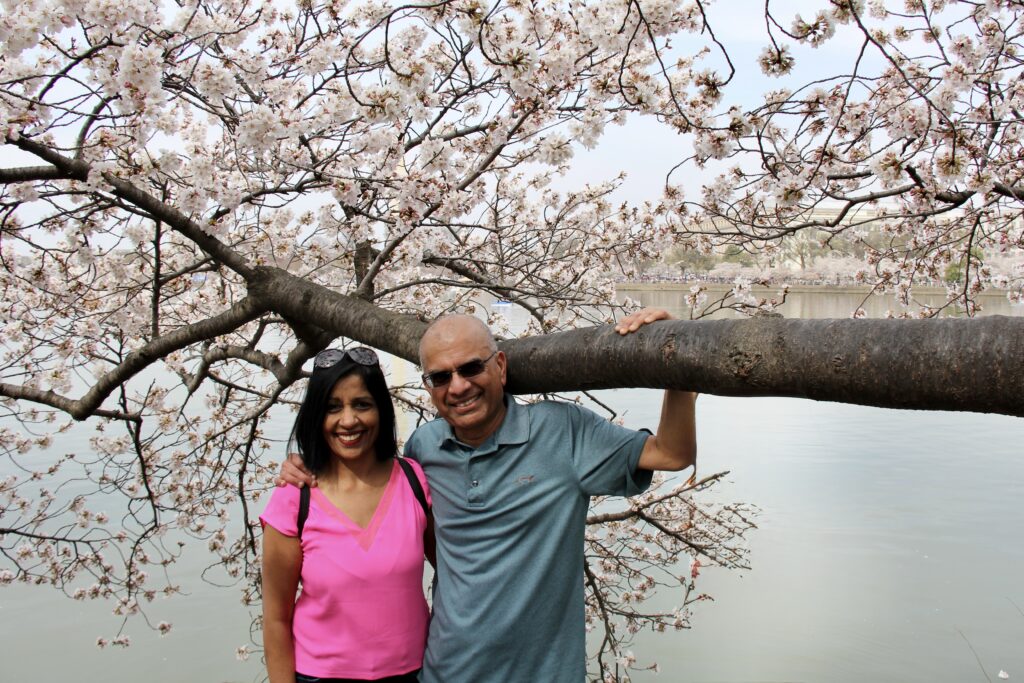
Tidal Basin – is a scenic, man-made reservoir surrounded by some of the city’s most famous landmarks, including the Jefferson Memorial, Martin Luther King, Jr. Memorial, and Franklin Delano Roosevelt Memorial. Best known for its beautiful cherry blossoms each spring, the Tidal Basin offers peaceful walking paths and picturesque views.
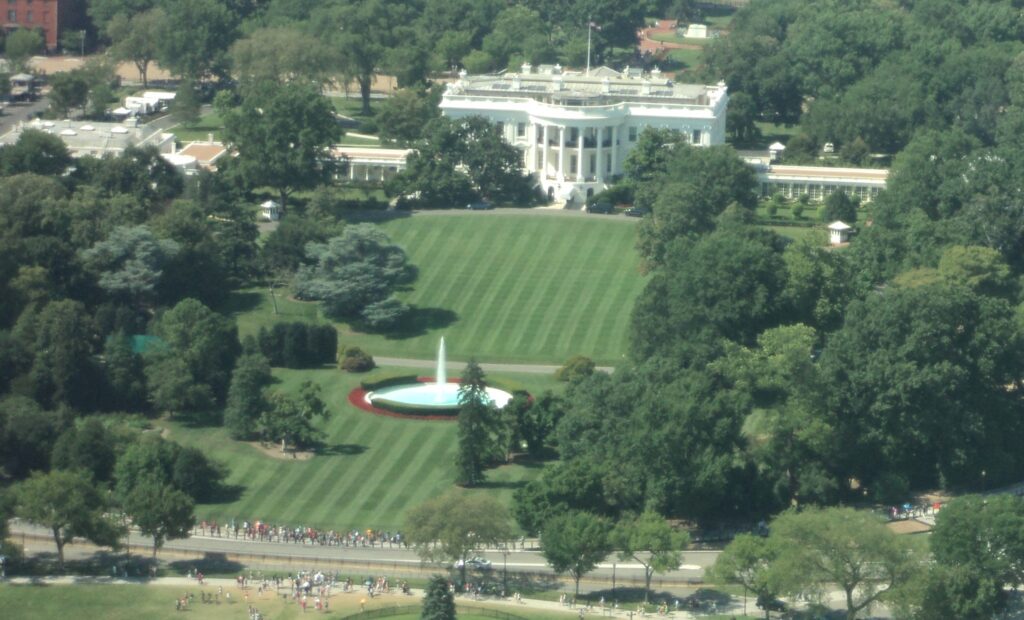
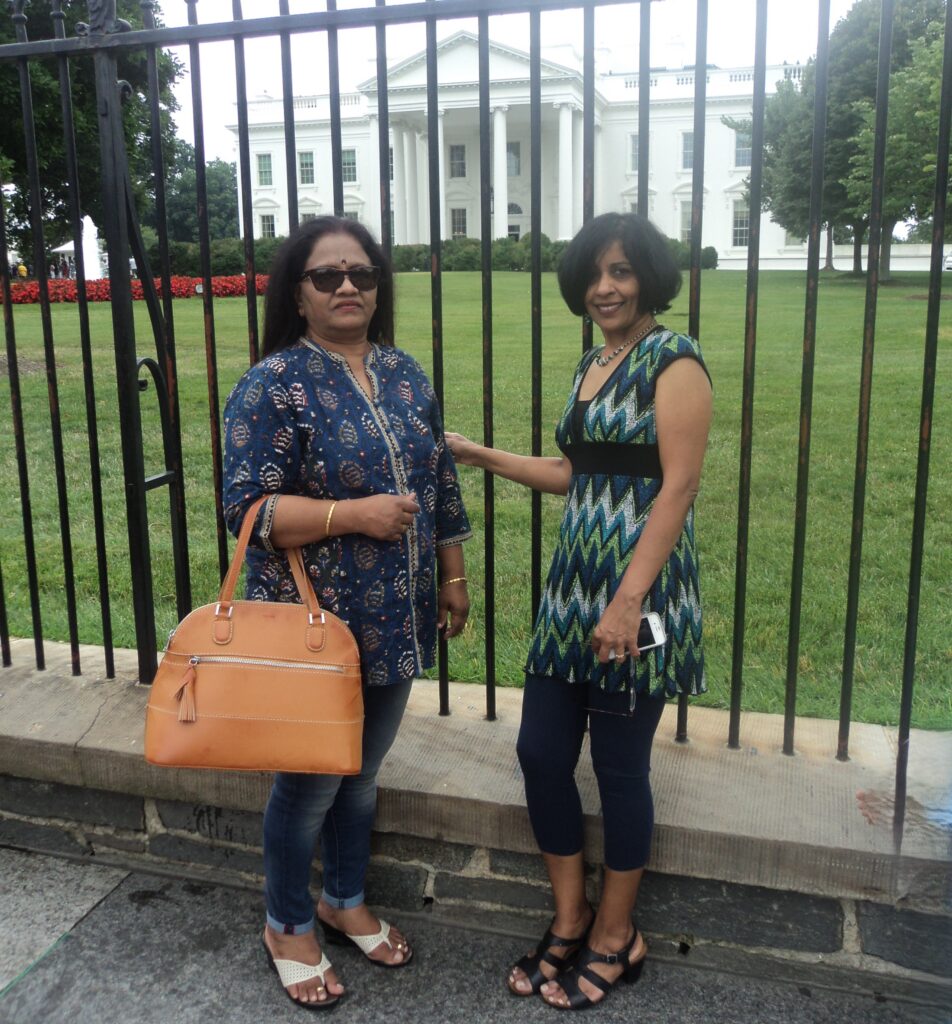
White House – is one of the most recognizable buildings in the world and has served as the official residence and workplace of every U.S. president since 1800. Located at 1600 Pennsylvania Avenue, this iconic neoclassical mansion is a symbol of American leadership and history. While the exterior is a popular photo stop, visitors who plan ahead can also take guided tours to explore parts of this historic landmark. We went on a guided tour of the interior in the early 2000s.
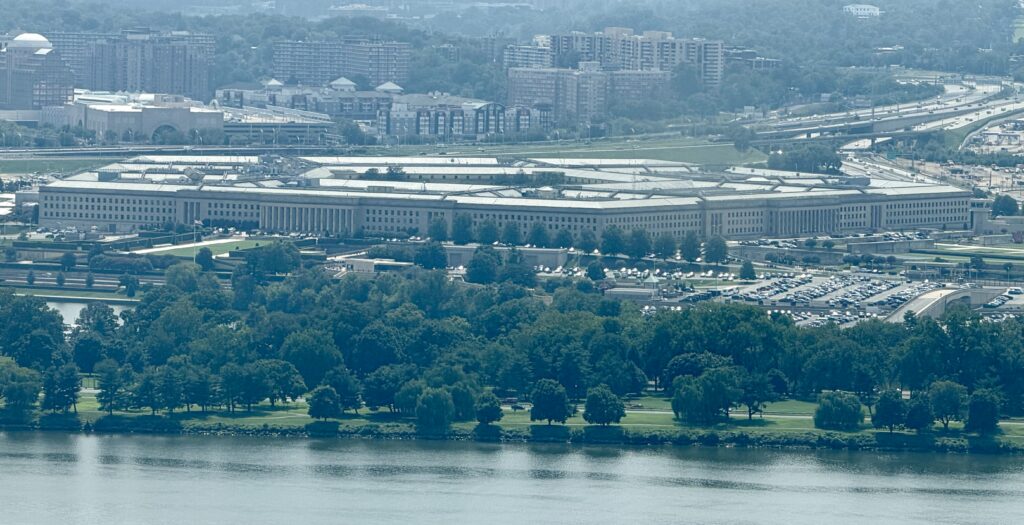
The Pentagon – located just across the Potomac River in Arlington, Virginia, is the headquarters of the U.S. Department of Defense and one of the world’s largest office buildings. Built during World War II, its distinctive five-sided design has become a symbol of the U.S. military. Visitors can view the building from designated areas, visit the nearby Pentagon Memorial honoring the victims of the September 11, 2001, attacks, and take guided tours with advance reservations.
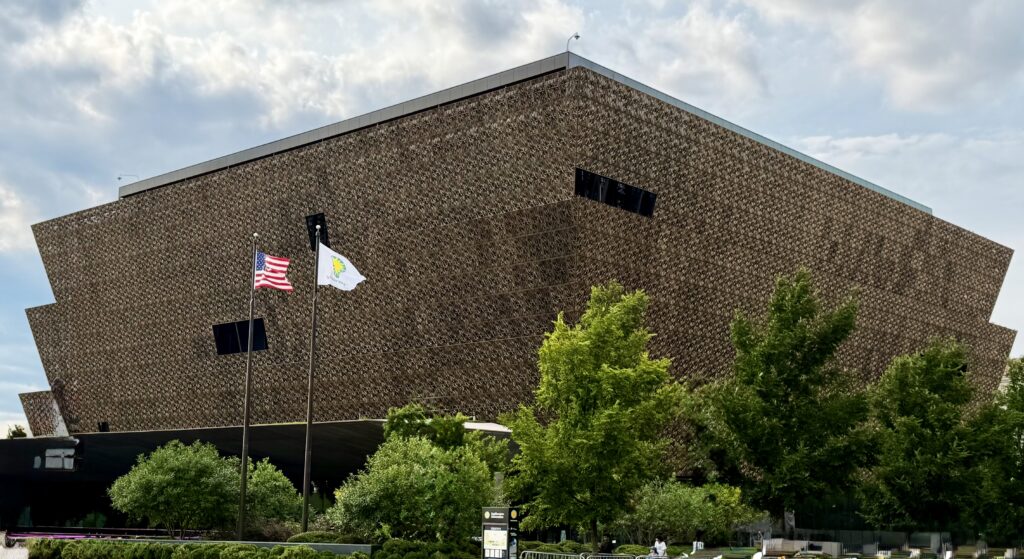
National Museum of African American History and Culture (NMAAHC) – also known as the Blacksonian, is a Smithsonian museum on the National Mall. It was established in 2003 and opened its permanent building in 2016 with a ceremony led by President Barack Obama. It is the largest museum in the world dedicated to African American history and culture. Its collection contains over 40,000 objects, with about 3,500 items displayed at a time. The 350,000-square-foot, 10-story building has received major praise for its architecture and exhibits.
Adams Morgan – is a vibrant neighborhood in Northwest Washington, D.C., known for its arts scene, nightlife, restaurants, and cultural diversity. It has long been associated with counterculture and, more recently, has become a center of LGBTQ culture. In the 21st century, the neighborhood has experienced significant urban redevelopment and gentrification.
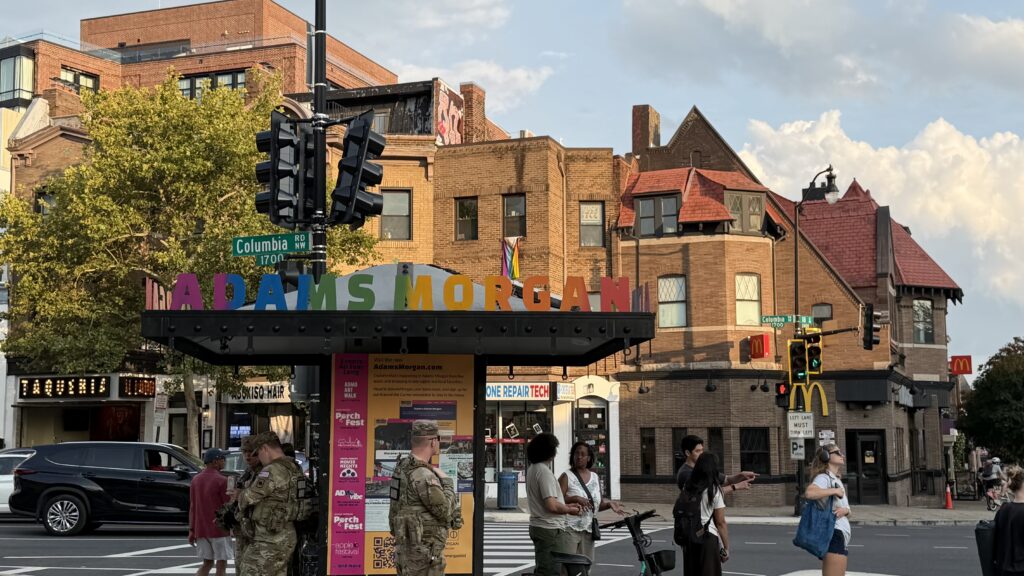
The name Adams Morgan was adopted in 1958, combining the names of the formerly segregated Adams and Morgan schools as part of the community’s desegregation efforts. The neighborhood is also notable as the founding location of Toys R Us (1948) and Dart Drug (1955), and community improvements in the 1960s included the development of the Marie H. Reed Recreation Center.
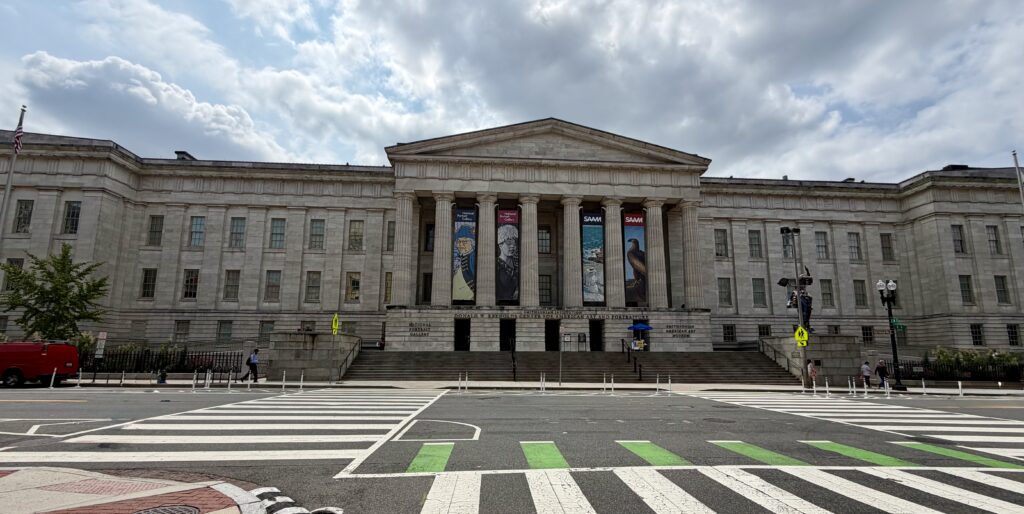
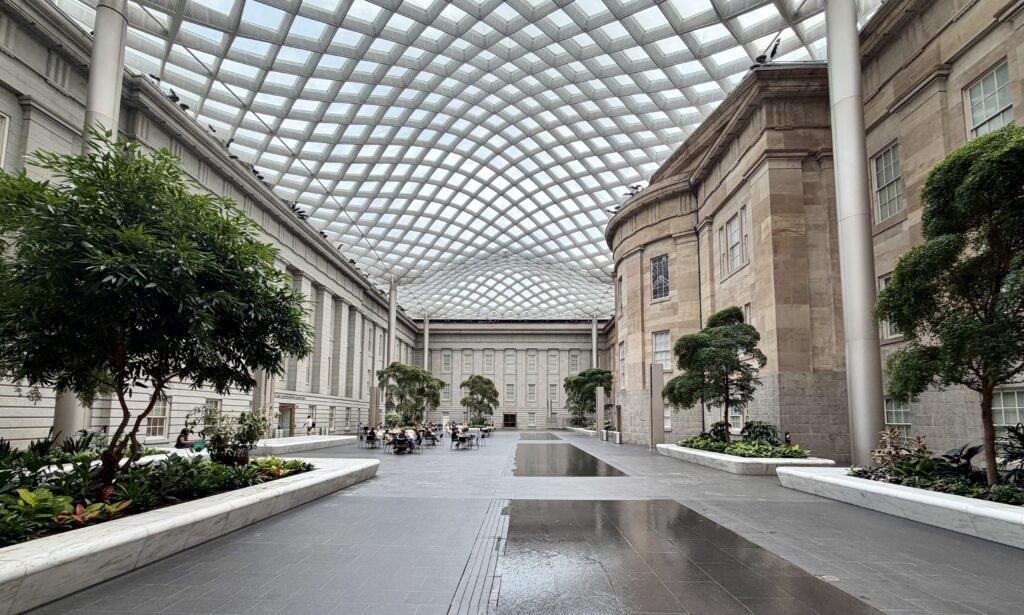
National Portrait Gallery – is a Smithsonian museum dedicated to telling the story of America through portraits of people who shaped the nation’s history and culture, including presidents, politicians, activists, artists, scientists, inventors, and entertainers. Founded in 1962 and opened to the public in 1968, it is housed in the beautifully restored Old Patent Office Building, which it shares with the Smithsonian American Art Museum. The collection includes paintings, photographs, drawings, prints, and engravings, with notable works depicting figures such as George Washington.
Washington National Cathedral ($14 per person to visit the interior) – officially named the Cathedral Church of Saint Peter and Saint Paul, is an Episcopal Church cathedral built in the Neo-Gothic style and is the second-largest church building in the United States and one of the tallest structures in the city. Completed in 1990 and built from Indiana limestone, the cathedral features traditional Gothic elements such as flying buttresses.
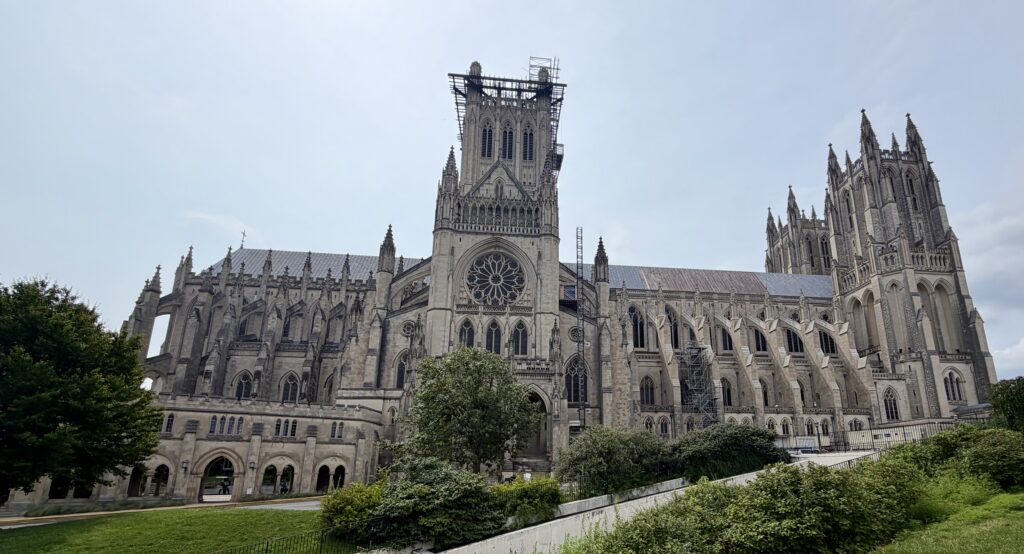
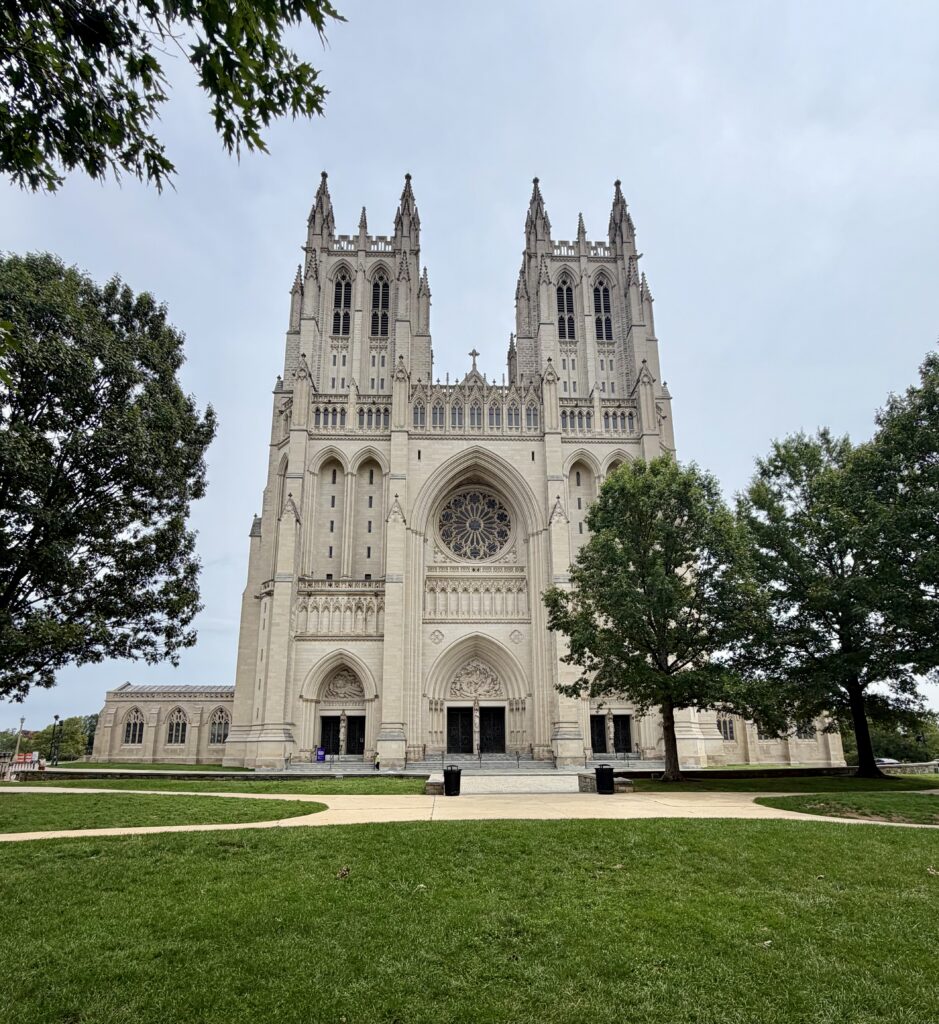
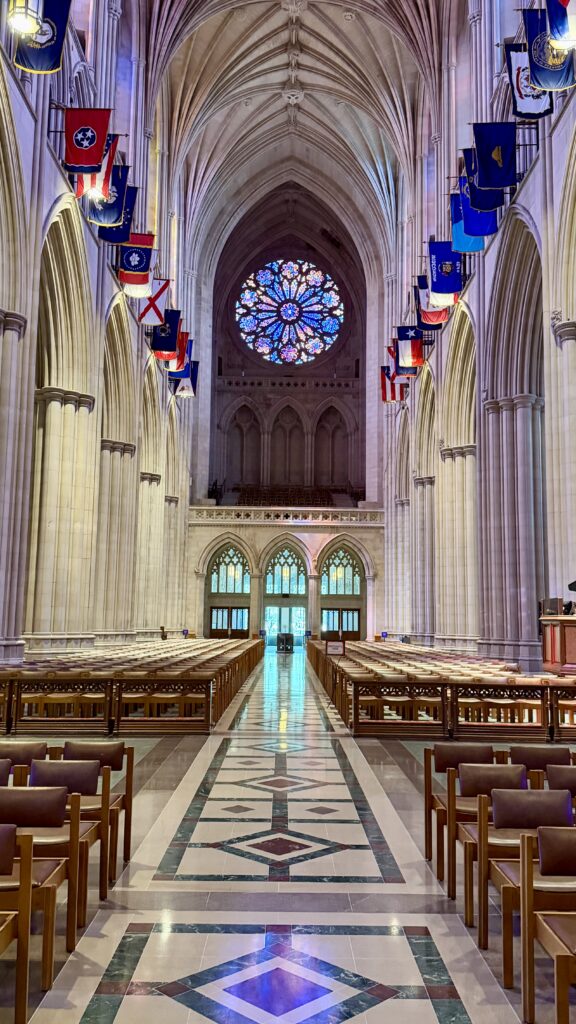
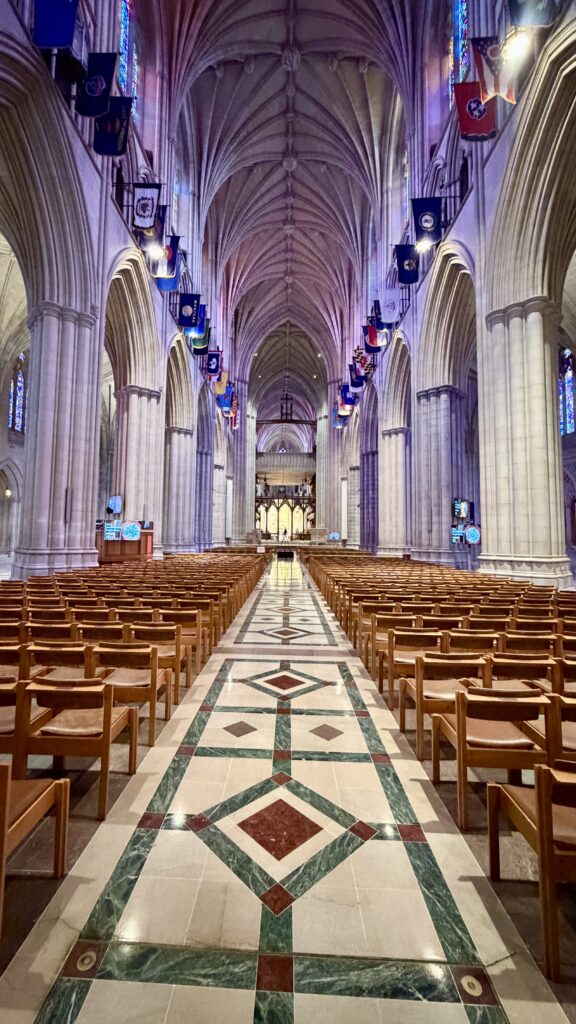
To see the interior of the cathedral, you have to pay $14 per person, which includes access to the crypt and an elevator ride to the top (6th floor). The view from the top overlooks the surrounding area, but it wasn’t particularly impressive. The interior, however, was well worth seeing. The beautiful stained-glass windows and the intricate ribbed ceiling were the highlights for me. The white High Altar, known as the Jerusalem Altar, was also impressive. It is carved from stones quarried near Jerusalem, traditionally associated with Solomon’s Quarry, giving it a unique historical and spiritual significance.
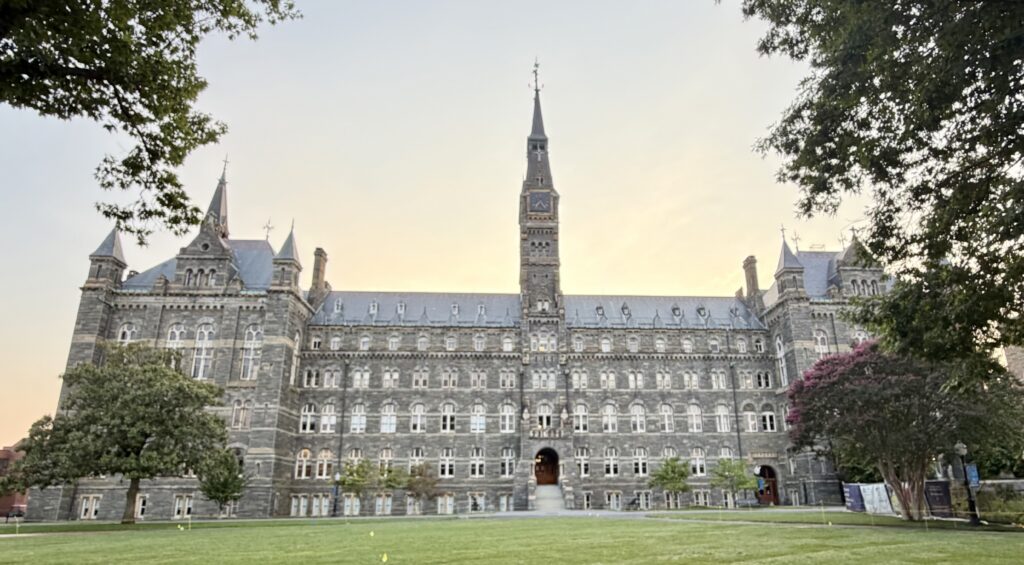
Georgetown University – is a historic private Jesuit research university in Washington DC founded in 1789 by Bishop John Carroll. It is the oldest Catholic institution of higher education in the United States. The university’s picturesque main campus is located in the historic Georgetown neighborhood overlooking the Potomac River. Its most recognizable landmark is Healy Hall, a National Historic Landmark known for its impressive Hogwarts-like architecture.
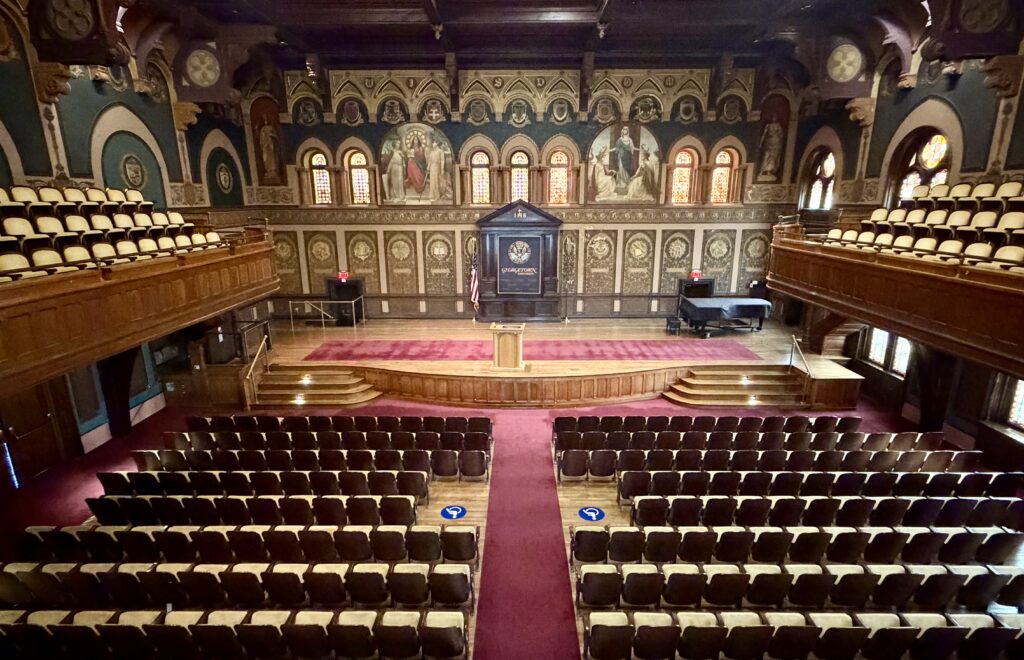
Georgetown University, Gaston Hall – is a spectacular 740-seat auditorium inside Healy Hall. Completed in 1901, it was named after William Gaston, Georgetown’s first student and an important figure in securing the university’s federal charter. Known for its ornate historic architecture and impressive interior, Gaston Hall hosts university ceremonies, honorary degree presentations, concerts, theatrical performances, and speeches. It has also welcomed numerous heads of state, political leaders, and other prominent public figures.
Georgetown is particularly well known for politics, international relations, diplomacy, law, business, and the humanities. Its School of Foreign Service, founded in 1919, has educated numerous diplomats and political leaders. The university has a strong Jesuit tradition, emphasizing education, service, ethics, and social responsibility. Today, it has undergraduate and graduate programs across numerous disciplines and attracts students from around the world.