Nestled in the heart of the Blue Ridge Mountains, Asheville is a vibrant city with a bustling downtown full of art galleries, craft breweries, and farm-to-table restaurants. Just beyond the city, nature lovers can explore the Blue Ridge Parkway, Chimney Rock, and a number of stunning waterfalls, making Asheville a perfect mix of culture and outdoor adventure.
- Ashville Downtown
- Waterfalls Byway
- Chimney Rock State Park
- Someshwara Temple
- Video of all the Waterfalls
Ashville Downtown – Walking the Asheville Urban Trail is a fantastic way to explore the city’s history while enjoying its abundant public art. The trail is about 2 miles long and forms nearly a complete loop around downtown, starting and ending close to the same spot. Along the way, you’ll encounter 30 unique artworks, each telling a story about Asheville’s past, culture, and creativity. Here are a few pictures of the artwork and the story behind them.
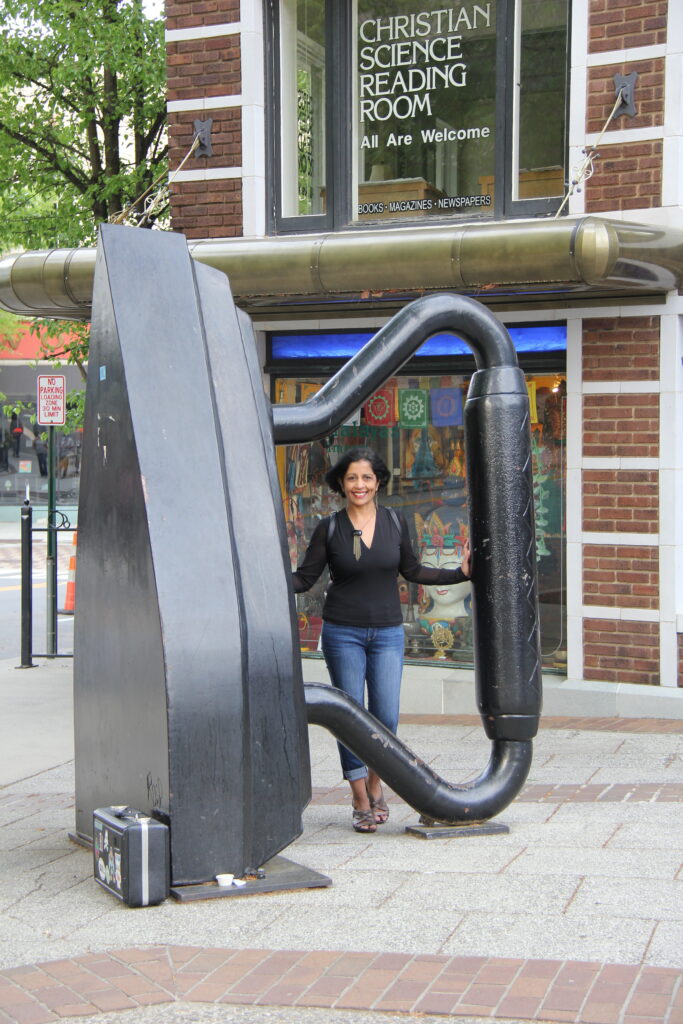
- Flat Iron Architecture #8 – a fabulously large iron, a replica of one used by a local laundry.
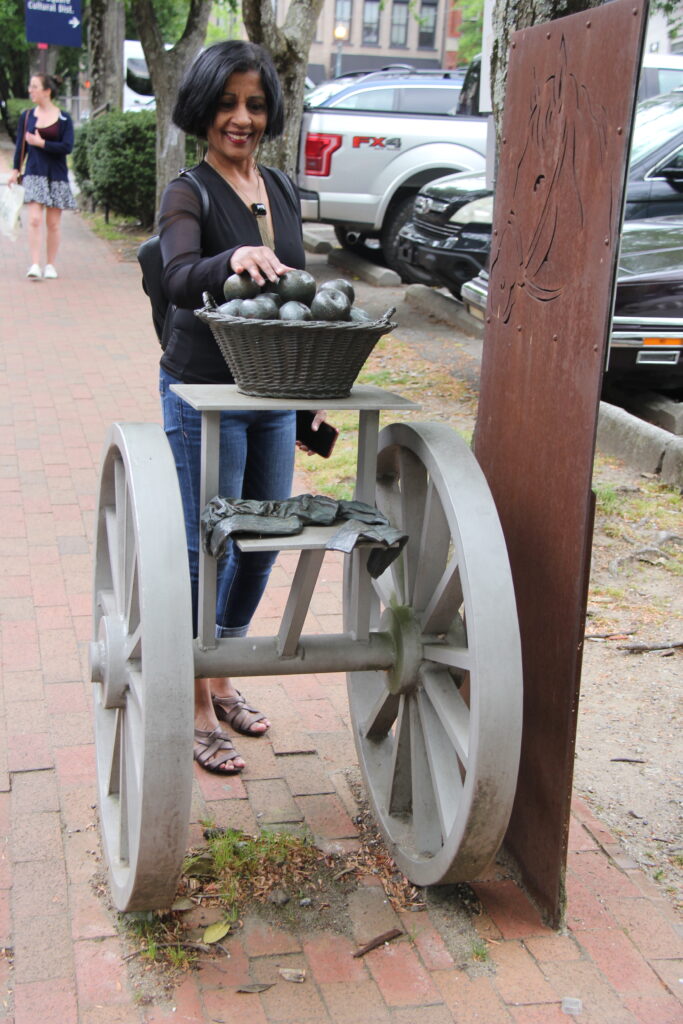
- Marketplace #15 – A basket of apples balanced over wagon wheels recalls a time when produce markets and livery stables lined Lexington Avenue, precursors to today’s tailgate markets throughout the city.
- Legacy of Design #16 – The unbridled imagination of a boy on stilts captures the spirit of architect Richard Sharp Smith who left a lasting impact on the city’s architecture.

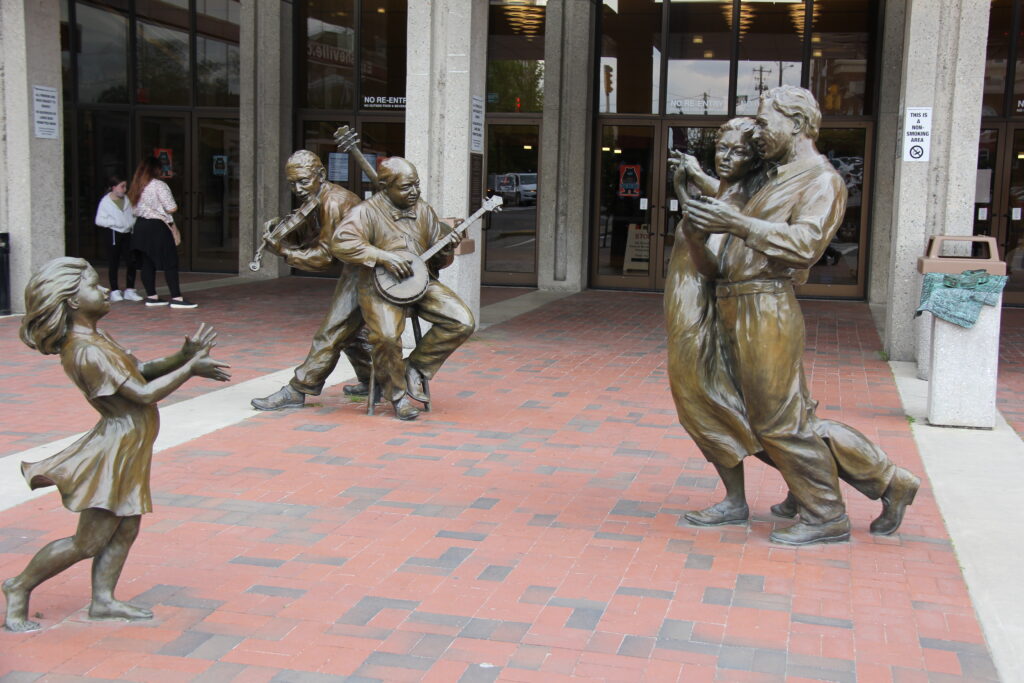
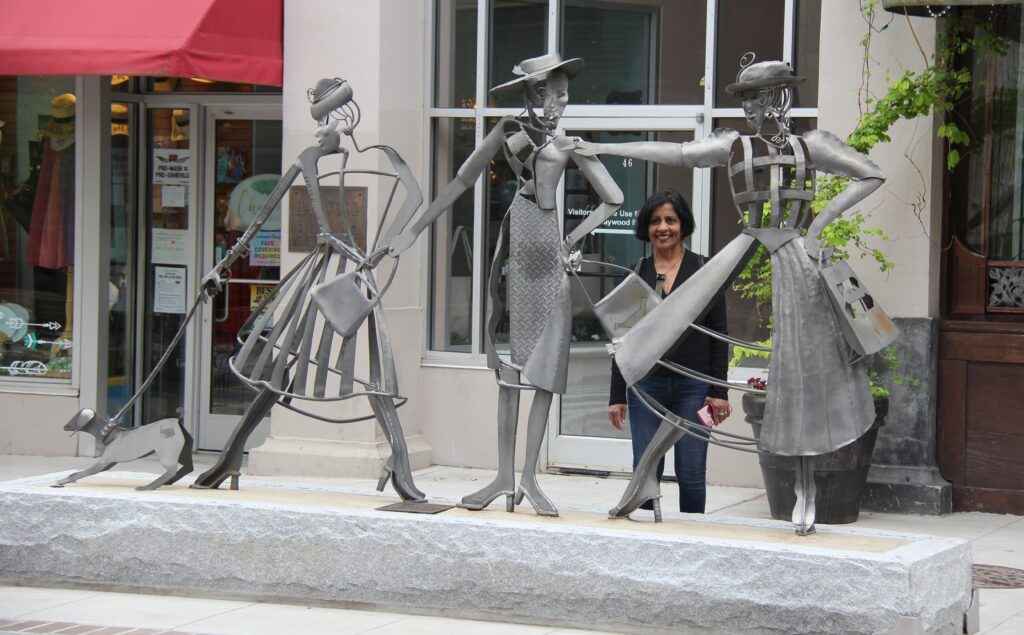
- Appalachian Stage #13 – Five bronze figures seemingly float to the rhythms of Appalachian music, a tribute to the songs of the mountains, and a special salute to the Mountain Dance and Folk Festival first staged by Bascom Lamar Lunsford in 1927. These Gary Aslum sculptures remind Asheville folk and visitors alike to grab a folding chair or blanket and plunk down on Roger McGuire Green for Shindig-on-the-Green, Saturday nights, all summer long.
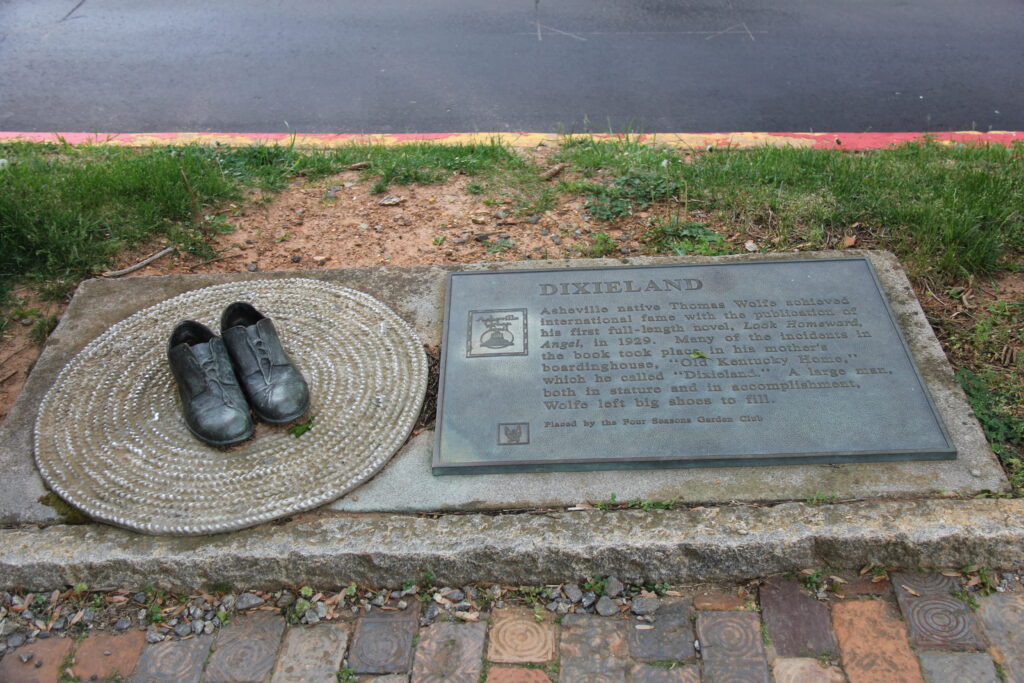
- Dixieland #19 – A bronze version of Wolfe’s shoes draws attention to his mother’s boarding house, Old Kentucky Home, immortalized as “Dixieland” in Wolfe’s stories of his fictionalized hometown, including Look Homeward, Angel, his autobiographical first novel. Thomas Wolfe was a famous writer born in Ashville.
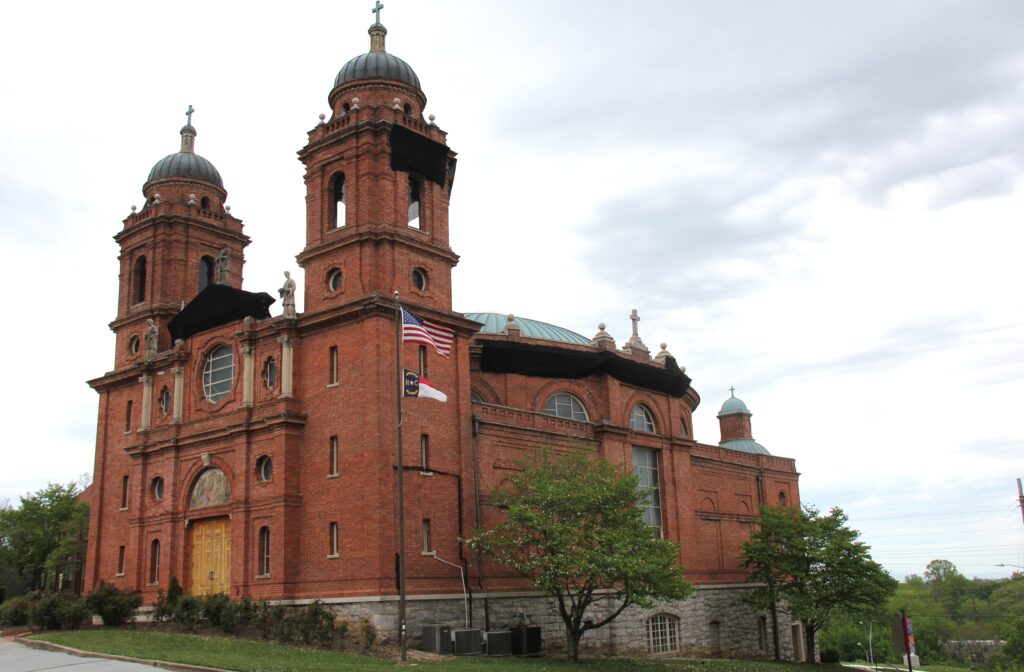
Ashville Downtown, Basilica of St. Lawrence – Completed in 1909, this Basilica is one of Asheville’s architectural treasures and spiritual anchors. Designed by Rafael Gustavino and Richard Sharpe Smith, renowned architects of the Biltmore House, this Catholic church has the largest freestanding elliptical dome in the country. It was not open to visitors on the day of our visit.
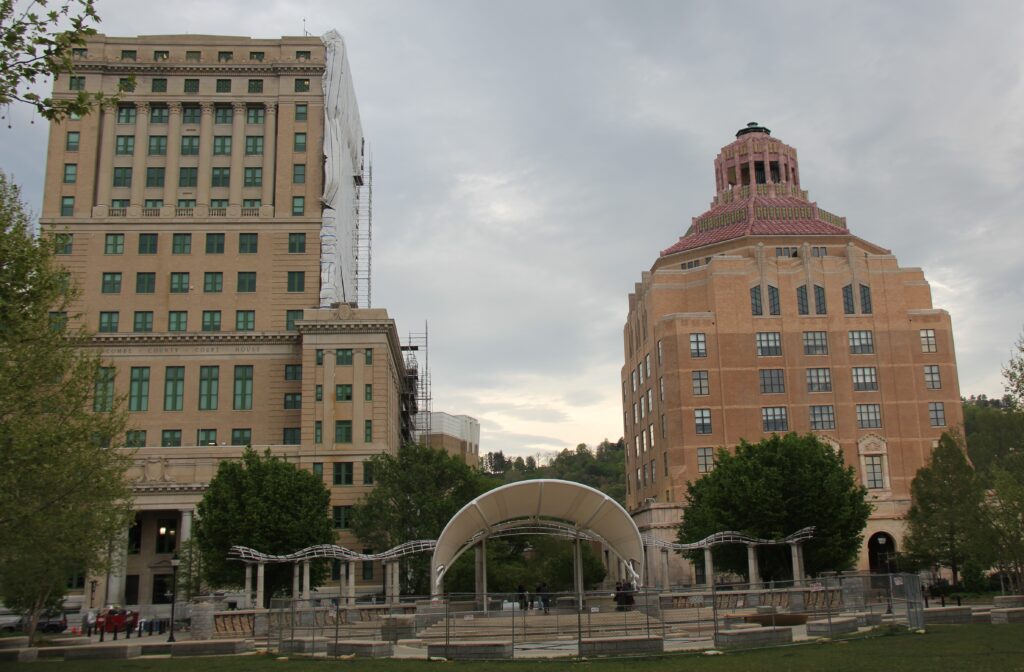
Ashville Downtown, Courthouse and City Building – These two prominent buildings stand next to each other and you can’t help but stop to admire them as you stroll through the downtown area.
- Buncombe County Courthouse – A 17-story, neo-classical skyscraper built between 1924-1928, and designed by Frank Pierce Milburn, known for its setbacks and brick/stone facade.
- Ashville City Hall – this equally eye-catching building is a historic Art Deco brick and stone governmental office building, built between 1926-1928 and famous for its red-tiled ziggurat roof with green and gold feathers.
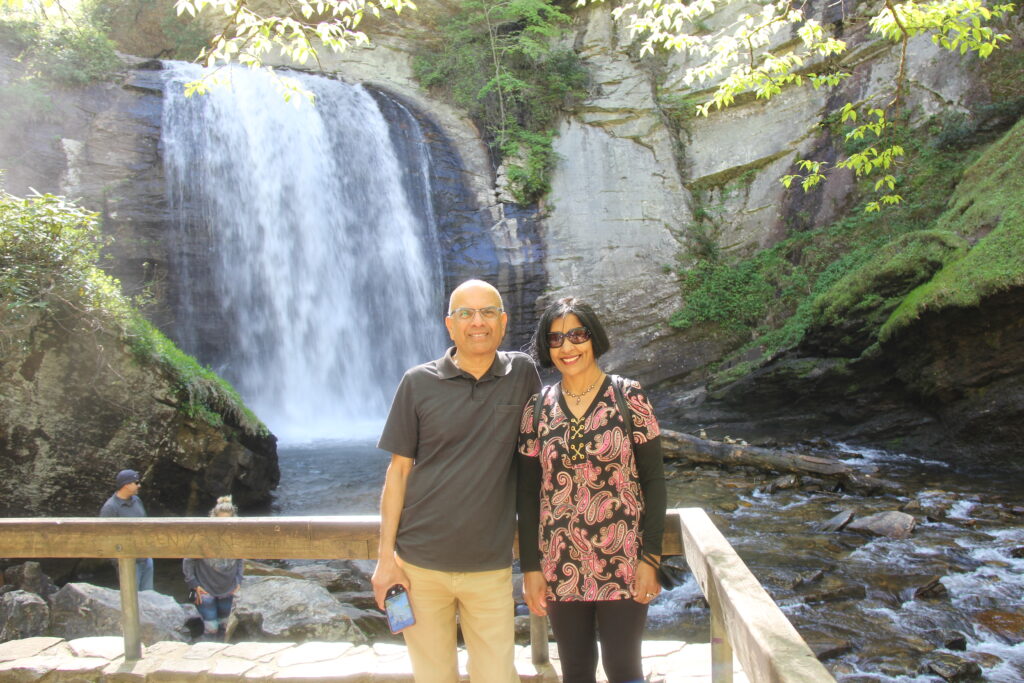
Waterfalls Byway – Highway 64, often called North Carolina’s Waterfalls Byway, winds through some of the state’s most beautiful waterfalls. Several spots along this route are so picturesque that they’ve been featured in major films, including The Hunger Games and The Last of the Mohicans. Some of the waterfalls along the route are conveniently located just off the road or only a few meters from the parking area, making them easy to visit. Others require a bit more effort—we hiked to one of them for a closer, more immersive experience.
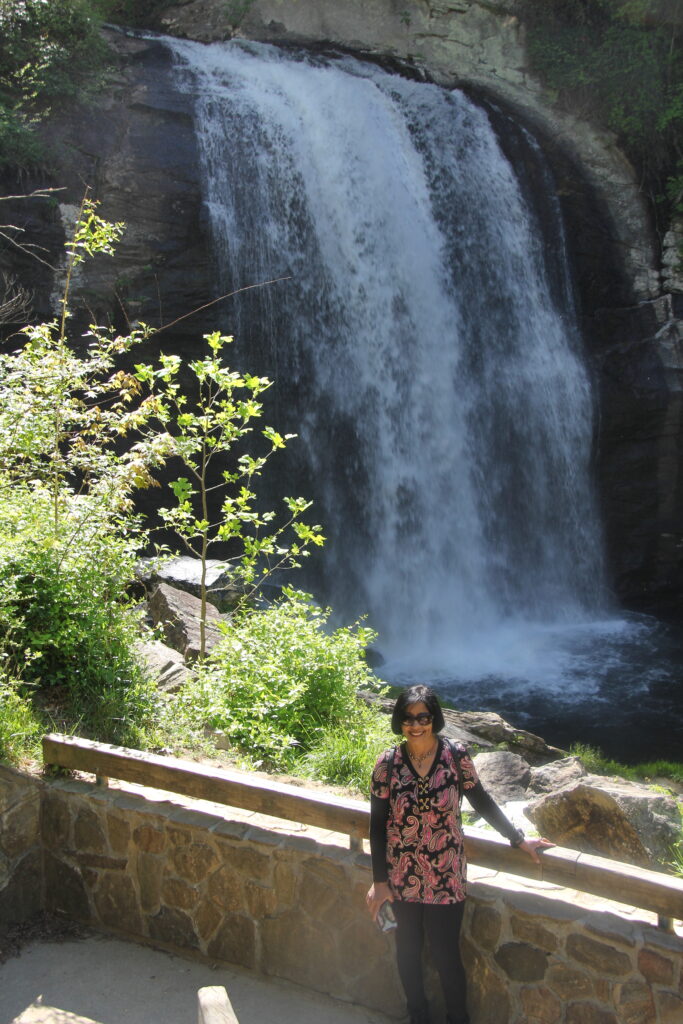
Looking Glass Falls – This 60-foot beauty in the Pisgah National Forest is one of the most photographed waterfalls in the South. It is also one of the easiest accessible roadside waterfalls.
Steps lead down to the falls for a close-up view. You can venture onto the rocks in the stream below the falls, and even do some wading and swimming underneath the falling water when water flow is lower. A video of the falls is in the last section of this page.
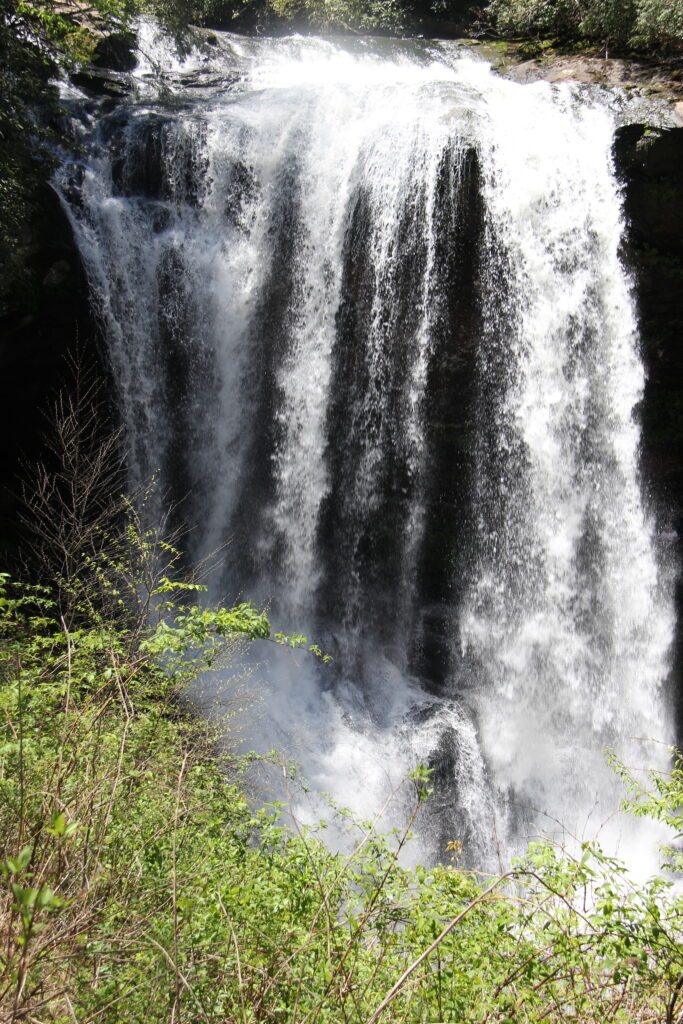
Dry Falls – This is another easily accessible water fall on US Highway 64. The falls, aka Upper Cullasaja Falls, is in Nantahala National Forest and falls from a height of 75 feet. The water flows over a cliff, allowing you to walk behind the falls and stay dry (hence the name).
You can also get a view of this falls from a fully accessible observation area adjacent to the parking area. The real fun though is getting a closer look by climbing down the stairs and walking the short path. There are many great vantage points along the way for photos. The spray from the falls may get you a little wet when you walk behind it, but it is not too bad. A video of the falls is in the last section of this page.
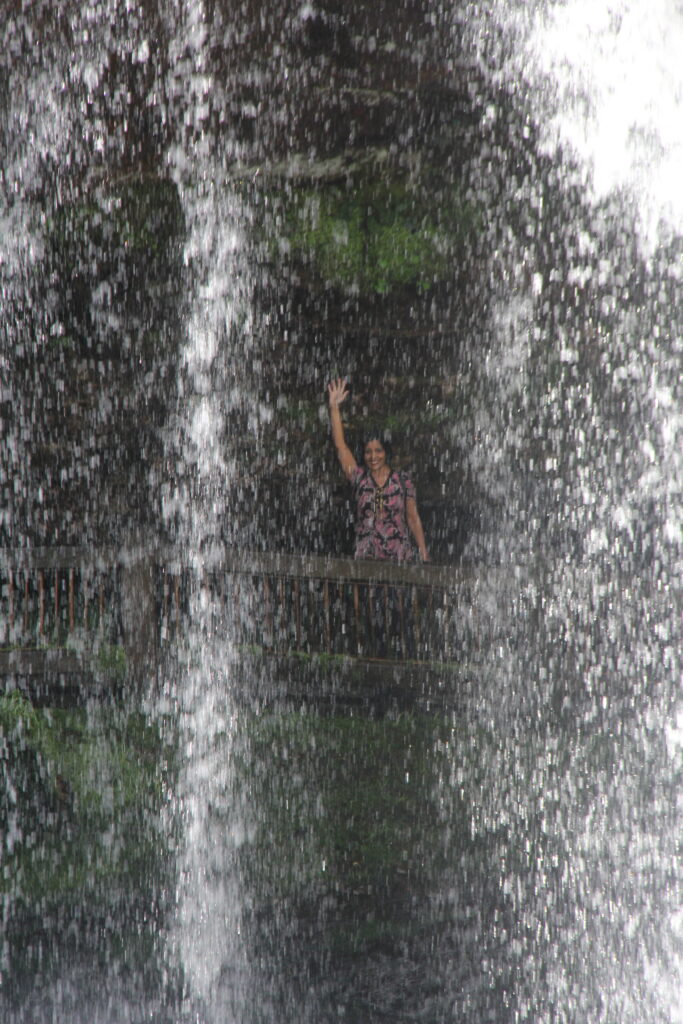
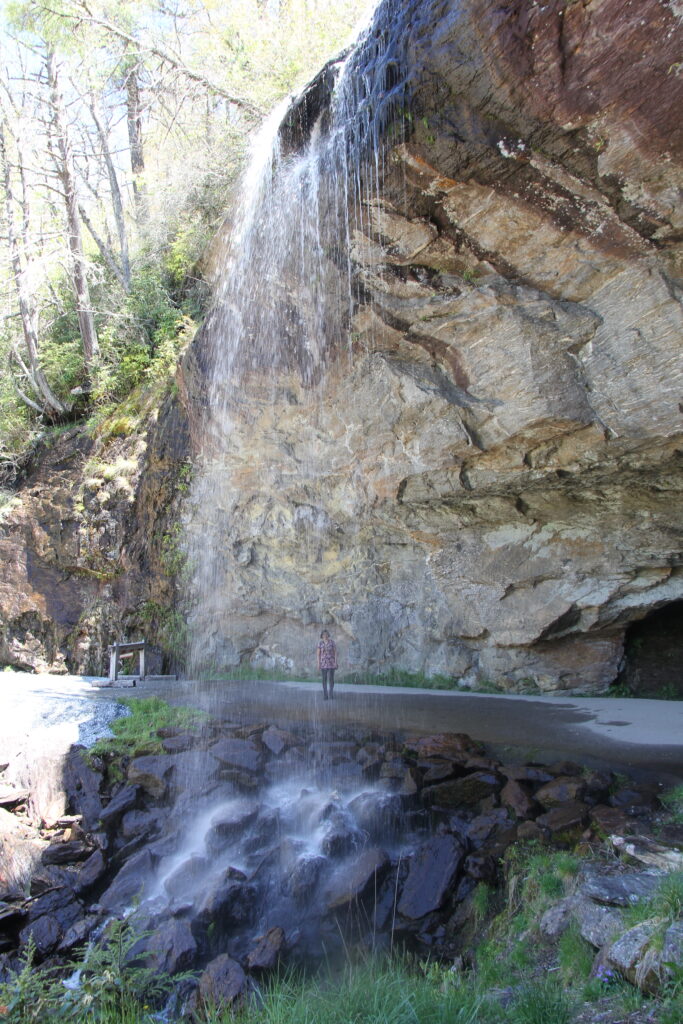
Bridal Veil Falls – This 60-ft. waterfall is located along US Highway 64 and doesn’t have a large volume of water (unless it’s right after a big rain), making it safe and fun to stand behind. There’s roadside parking and very accessible to all. A video of the falls is in the last section of this page.
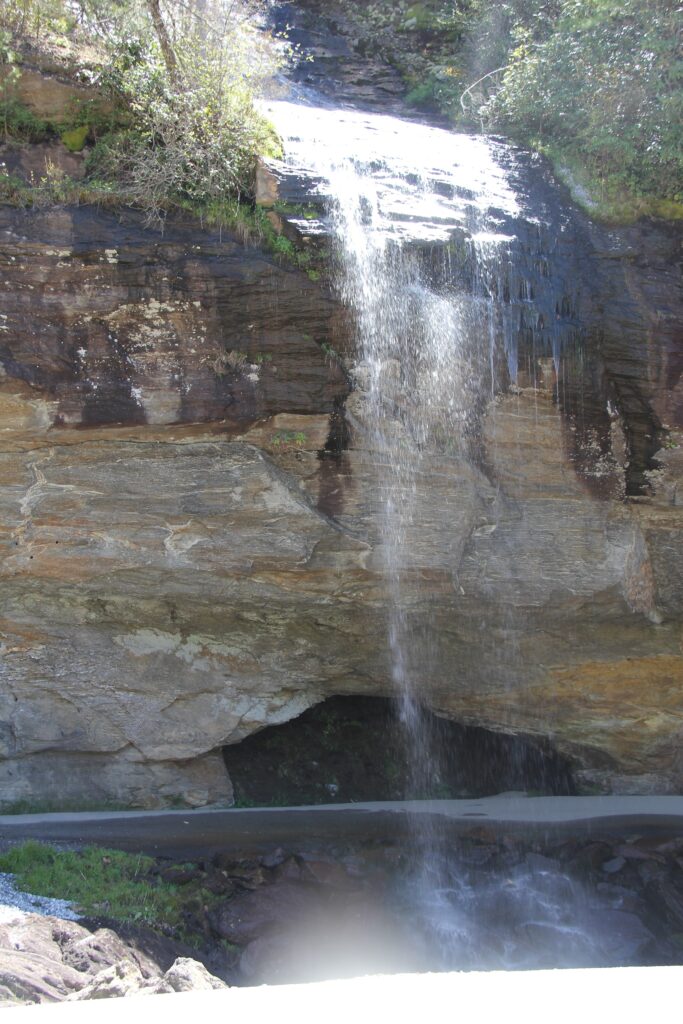
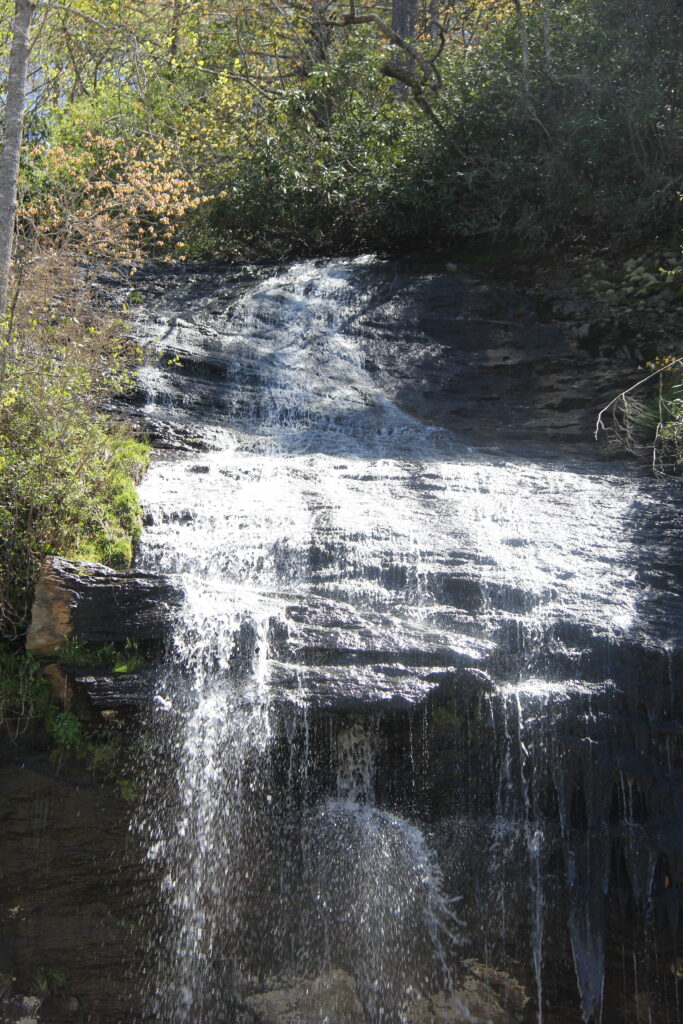
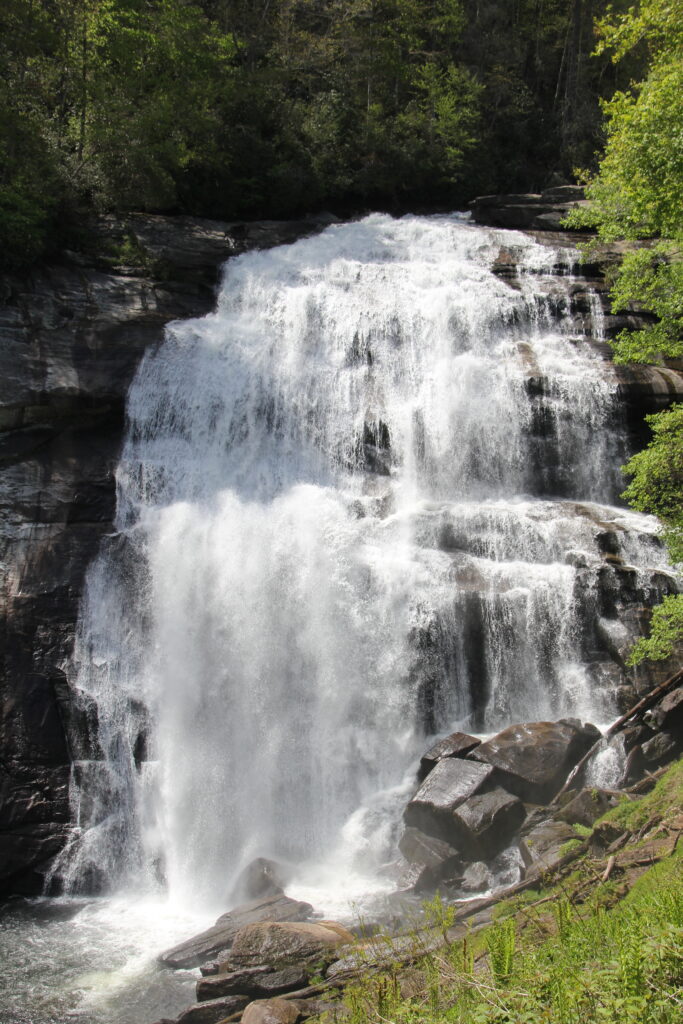
Rainbow Falls – Located in the Pisgah National Forest, Rainbow Falls is one of the most spectacular waterfall settings in the Blue Ridge Mountains of North Carolina. This 150-ft. tall waterfall is impressive, especially after rainy weather that swells the Horsepasture River.
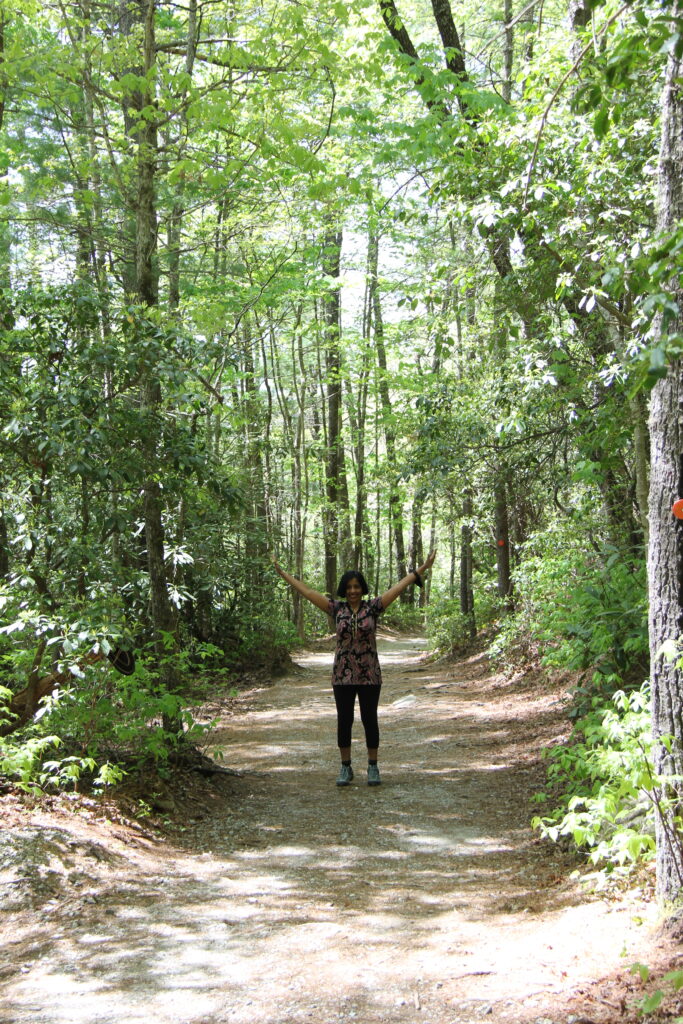
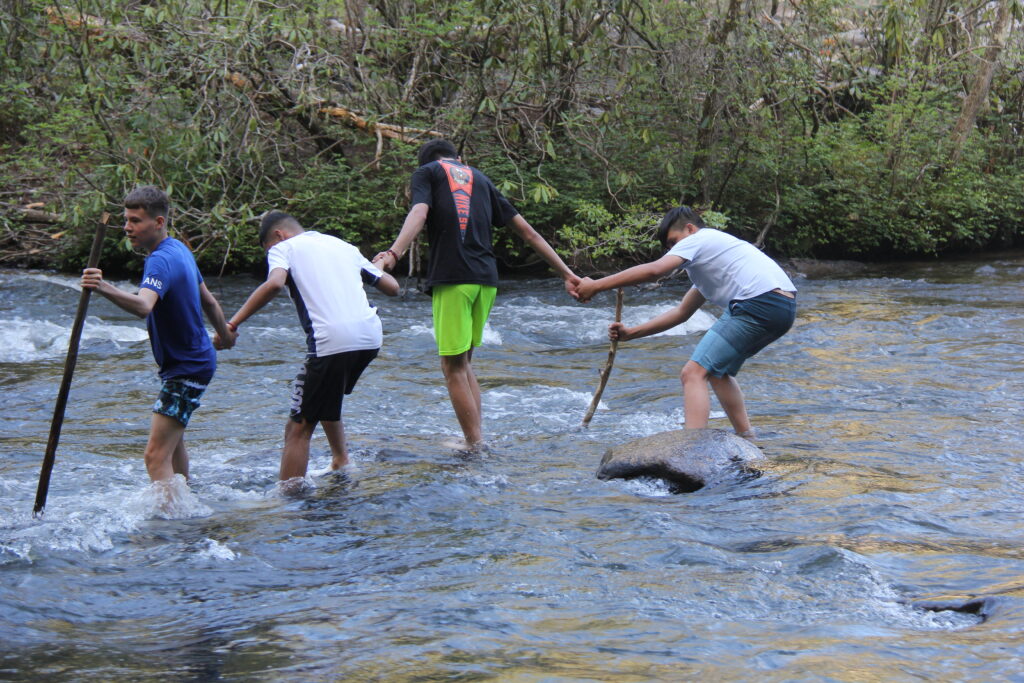
To reach Rainbow Falls, you’ll need to hike 1.5 miles from Gorges State Park at the Grassy Ridge Parking area (3 mile round trip). The the trail is easy to follow with a creek crossing that can be a wet one when the water is high. This section is gradual downhill, so the trek back will mostly be uphill. A video of the falls is in the last section of this page.
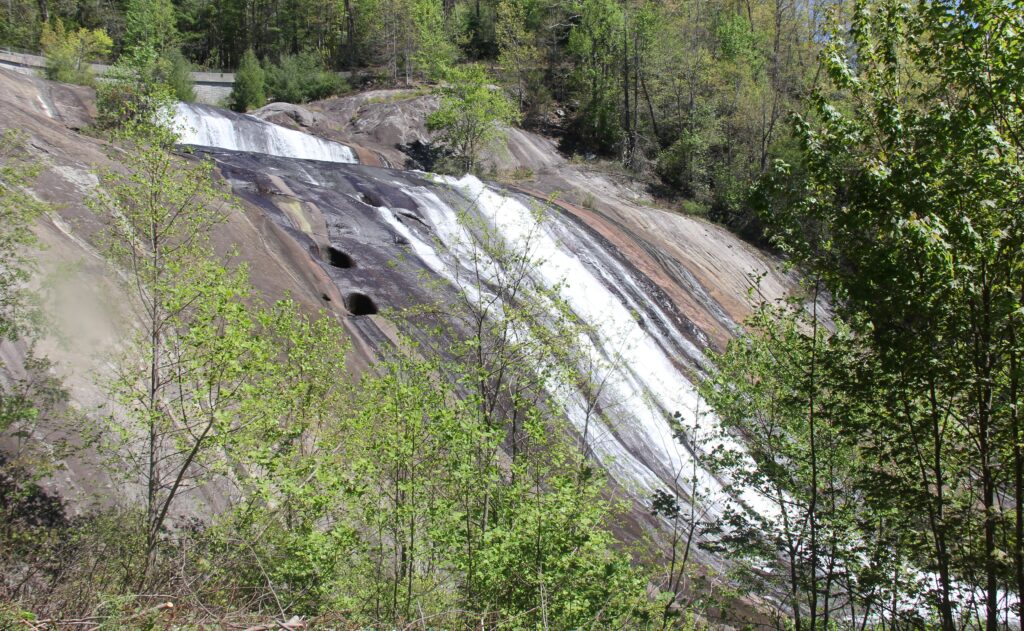
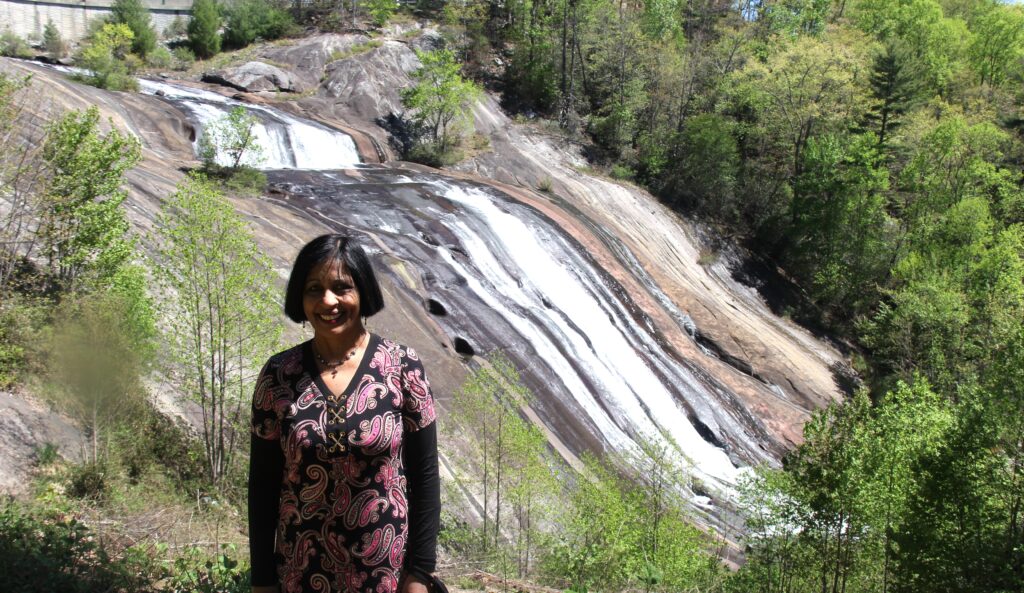
Toxaway Falls – Highway 64 passes over the top of Toxaway Falls on the Toxaway River. It begins at the dam for Lake Toxaway and slides nearly 250 feet out of site.
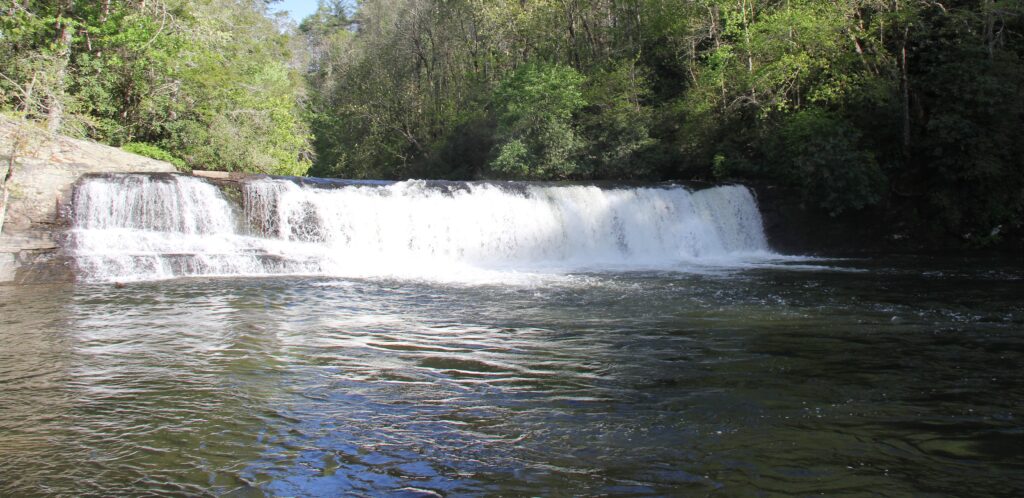
Hooker Falls – is accessed via a moderate 1/4-mile trail from the parking area. Located in DuPont Forest, Hooker Falls stands only 12 feet high, its wide drop into a pool creates a beautiful setting and a great spot for splashing around on hot summer days. Fans of The Hunger Games and The Last of the Mohicans will recognize some of the scenery.
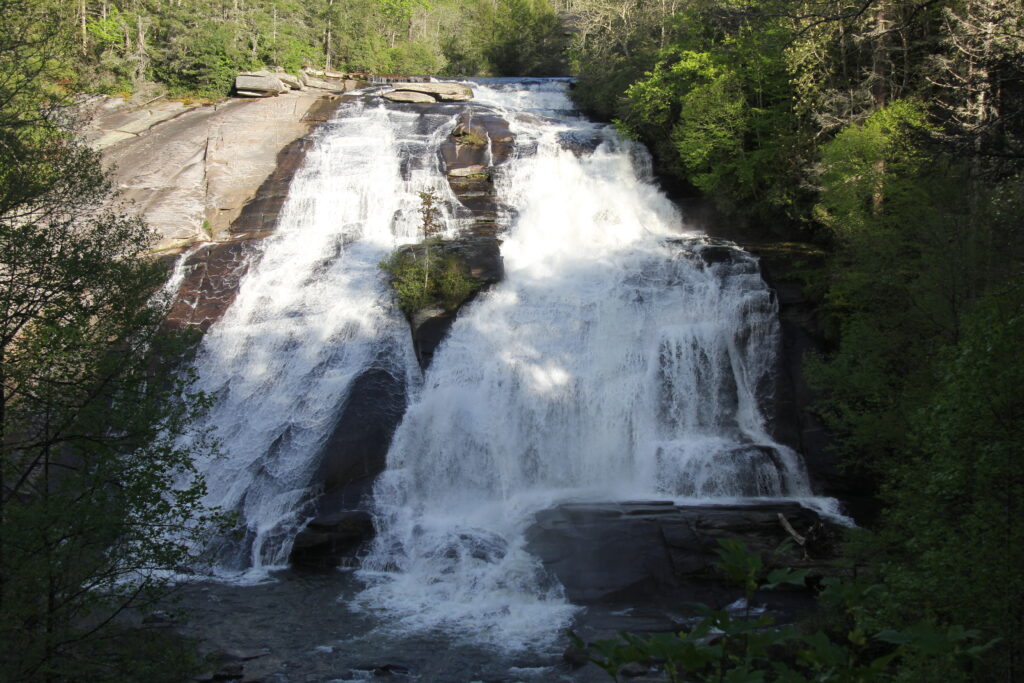
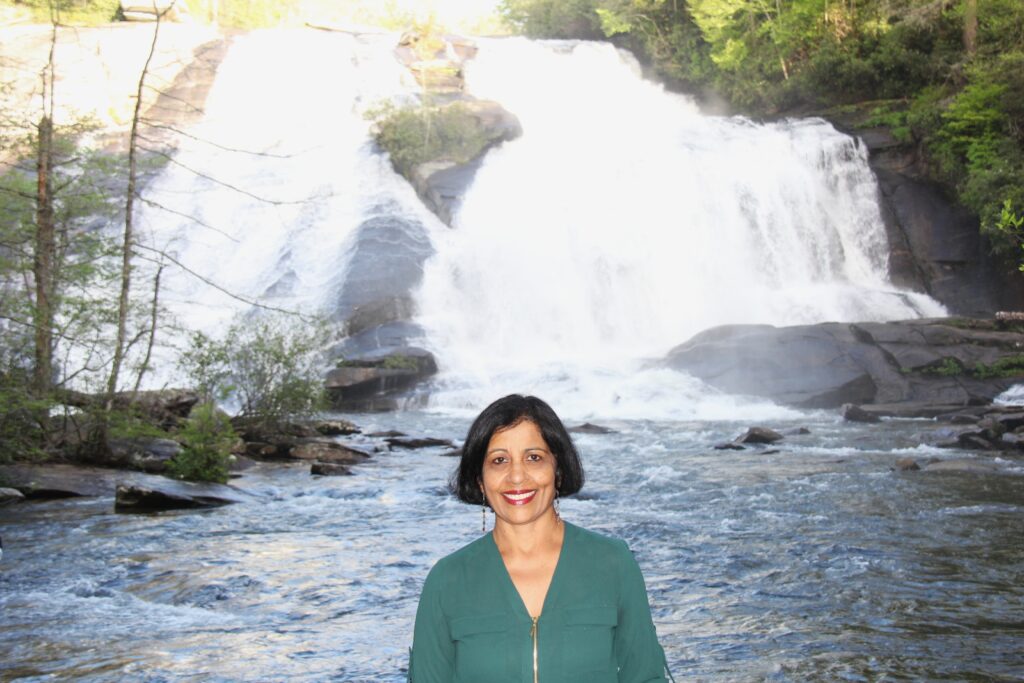
High Falls – The largest waterfall in DuPont Forest, High Falls slides 120 feet down a plane of granite. The falls are an easy 0.5-mile walk from the Visitor Center. You can view High Falls from the overlook and take the spur trail to explore the base of the falls. There are lovely swimming opportunities along the way to take a dip in the cool water. A video of the falls is in the last section of this page.
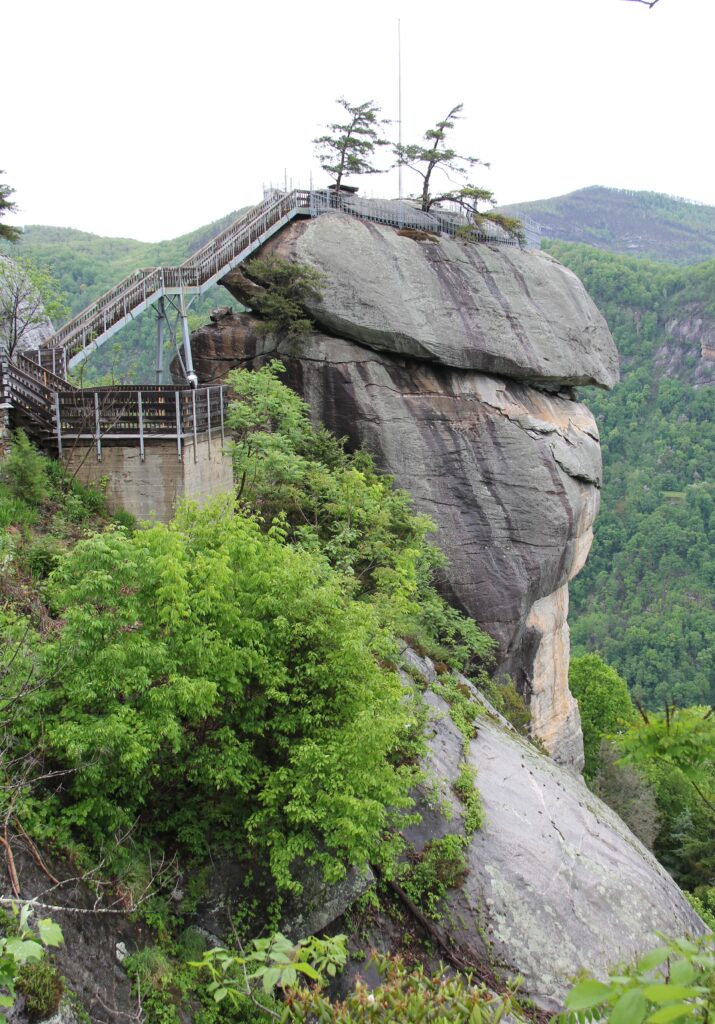
Chimney Rock State Park – In the foothills of Hickory Nut Gorge, you’ll find one of North Carolina’s natural treasures—Chimney Rock State Park, home to sweeping views and a dramatic 404-foot waterfall. The park’s centerpiece is the iconic 535-million-year-old Chimney Rock, a towering monolith that rewards visitors with breathtaking panoramic views of the gorge and surrounding mountains.
There are two ways to reach the incredible views at the top of Chimney Rock –
- Elevator up to a short staircase leading to the top of the Rock
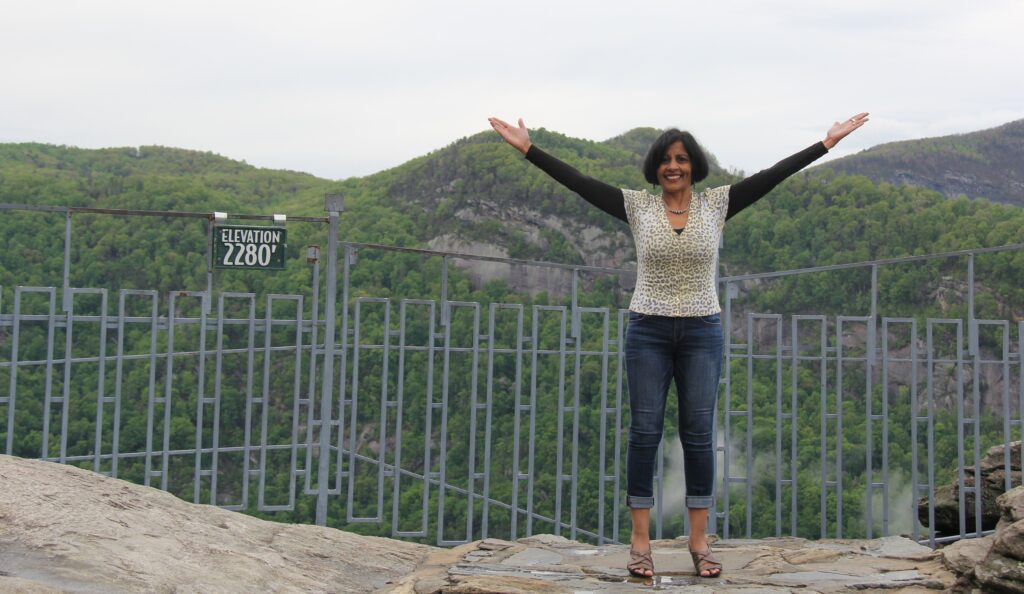
- from the upper parking area, climb the 500 steps to the top of the Rock, which is what we did
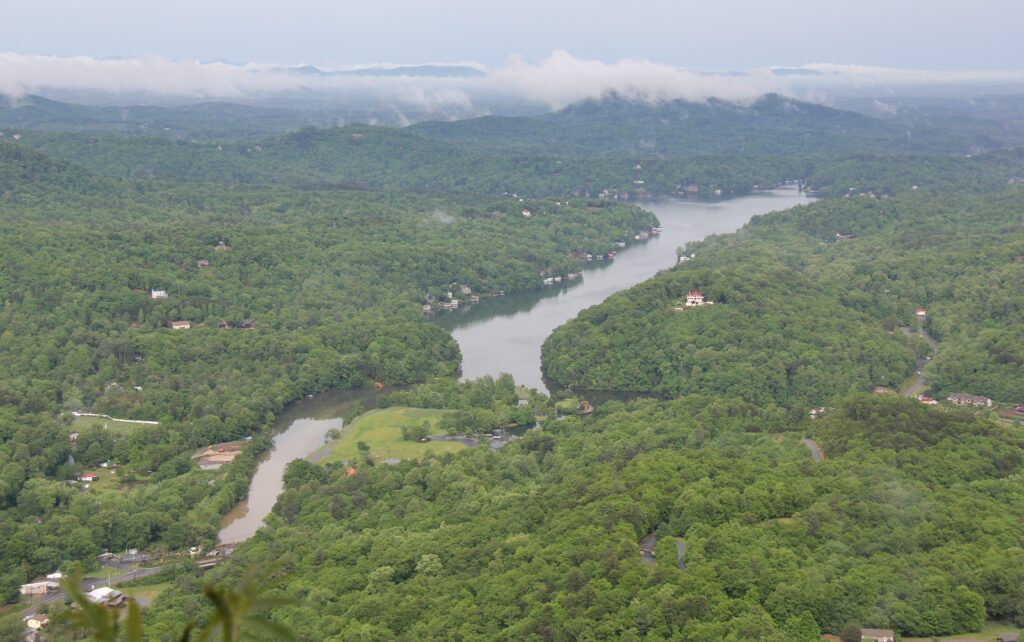
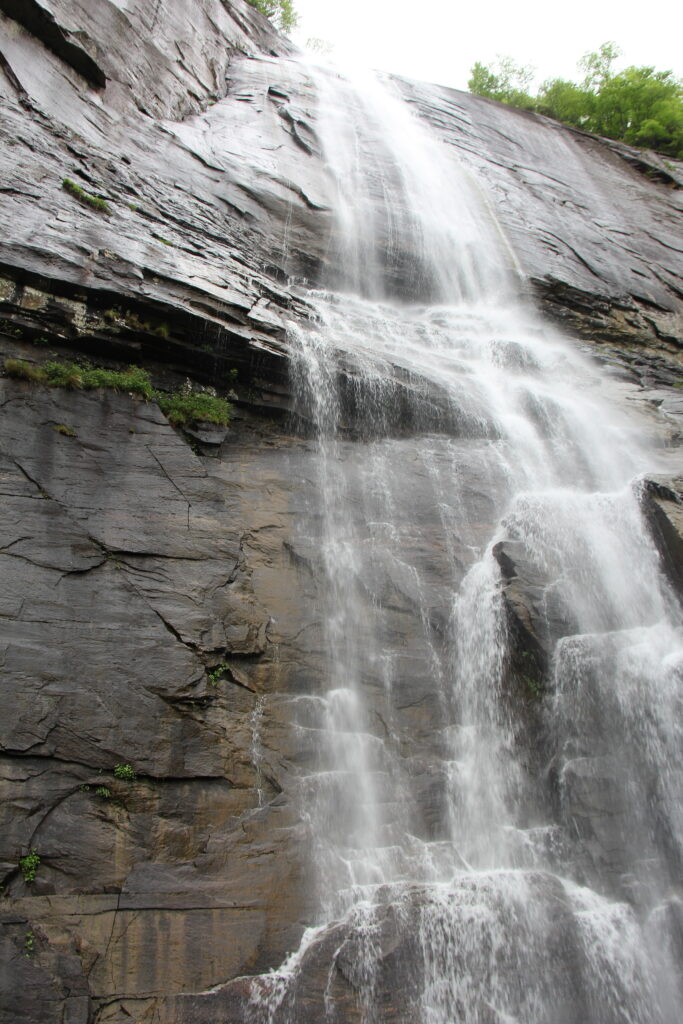
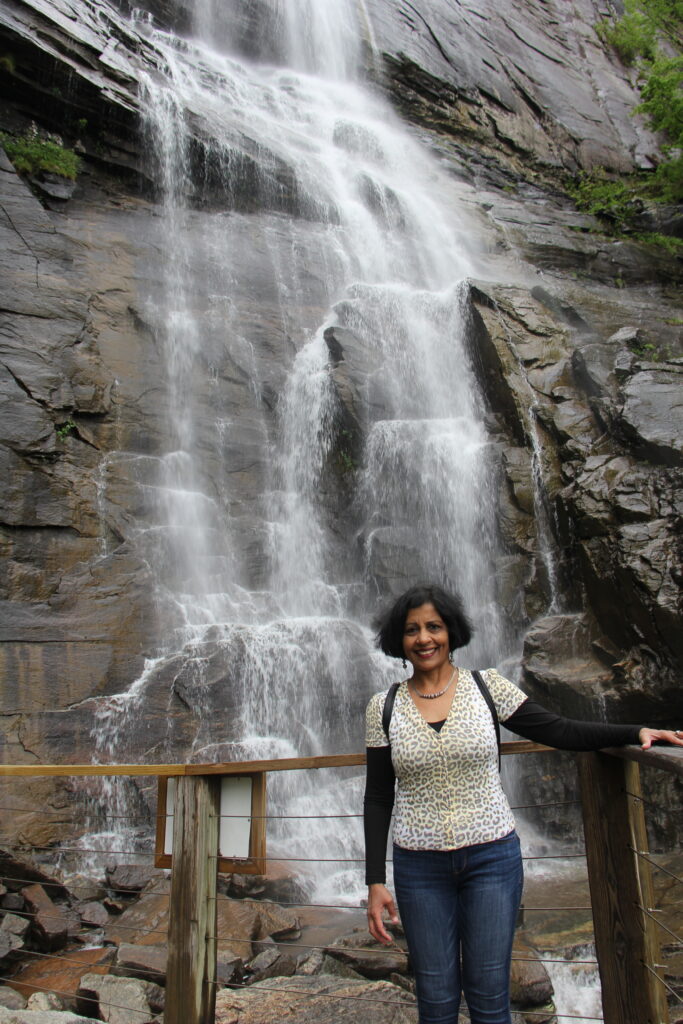
Chimney Rock State Park, Hickory Nut Falls – The park is also rich with wildlife and scenic hiking trails, including the path to Hickory Nut Falls, the impressive 400-foot cascade featured in the film The Last of the Mohicans. A 1.4 mile round trip takes you to the bottom of one of the tallest waterfalls east of the Mississippi River. A video of the falls is in the last section of this page.
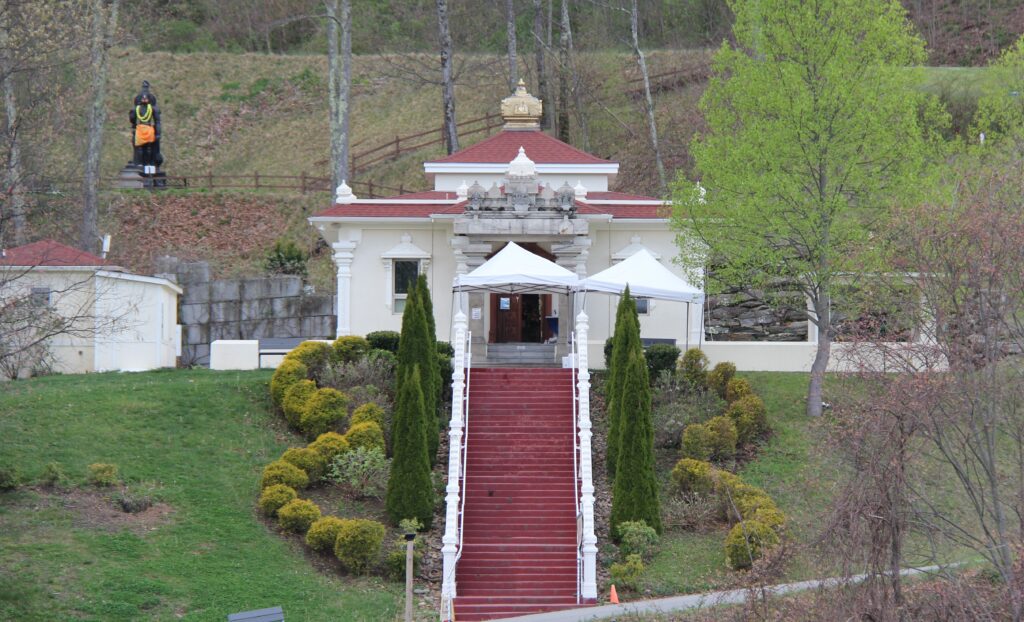
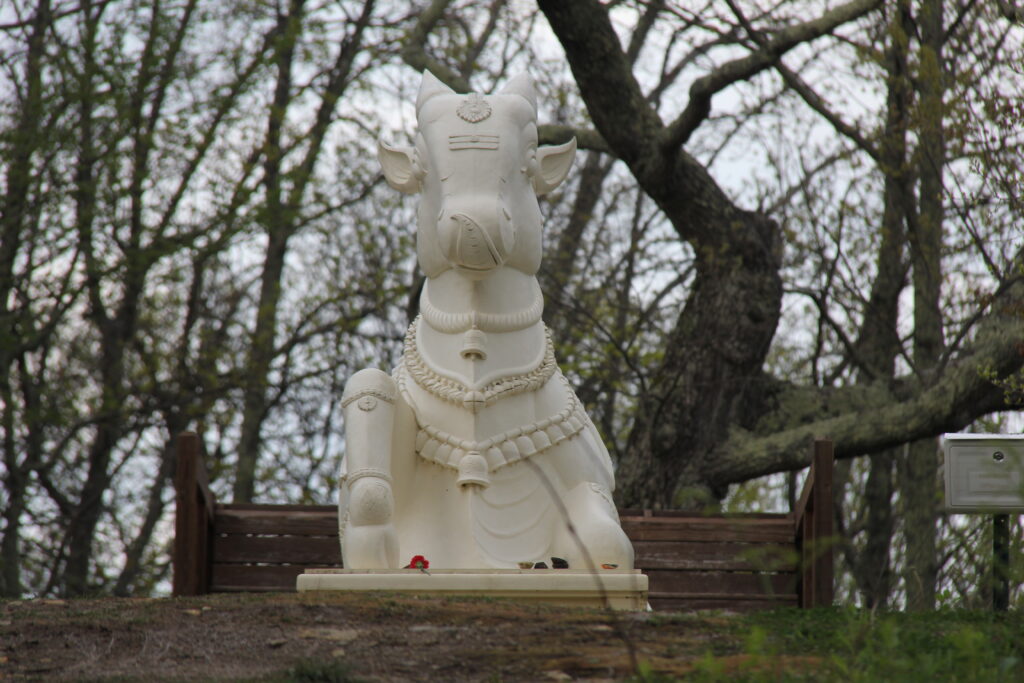
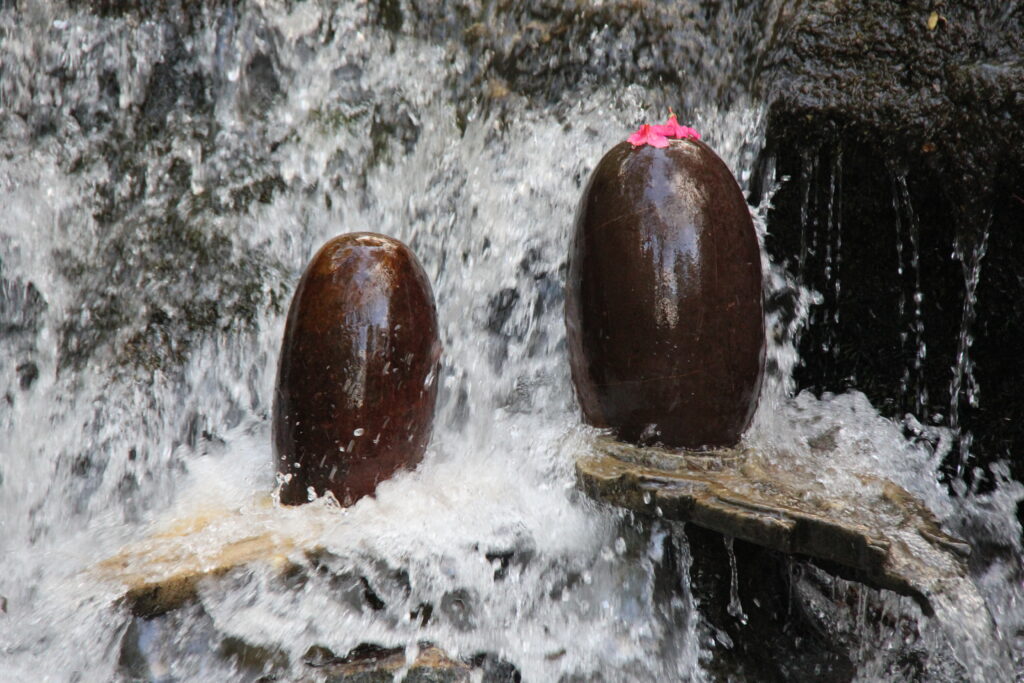
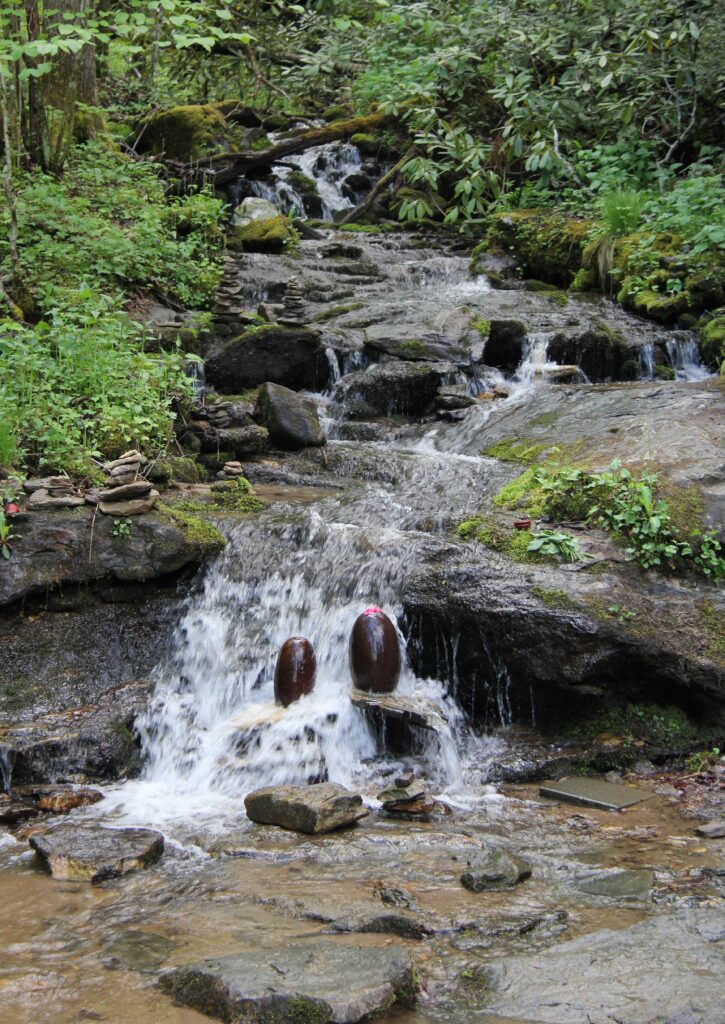
Someshwara Temple – located in the Blue Ridge Mountains about 37 miles west of Asheville, is a serene Vedic Shiva temple at the heart of Mount Soma—a spiritual community often referred to as the Mount Kailash of the West. Inside, the temple houses a striking Shiva Lingam adorned with three lines of tiny diamonds etched into its surface, which seem to glow softly and enhance the peaceful and sacred atmosphere.
Video of all the Waterfalls