New Mexico’s capital is rich in history and culture, and the oldest continuously inhabited capital city in the country. Founded in 1610, it features a unique Pueblo-style architecture and is a renowned hub for art and creativity, with over 250 galleries and a status as a UNESCO Creative City.
- Airbnb
- New Mexico Capitol Building
- Santa Fe Plaza
- Palace of the Governors
- San Miguel Chapel
- Cathedral Basilica of St Francis of Assisi
- Loretto Chapel
- Loretto Inn and Spa
- Santa Fe Art Galleries
- Pecos National Historic Park
- Bandelier National Monument
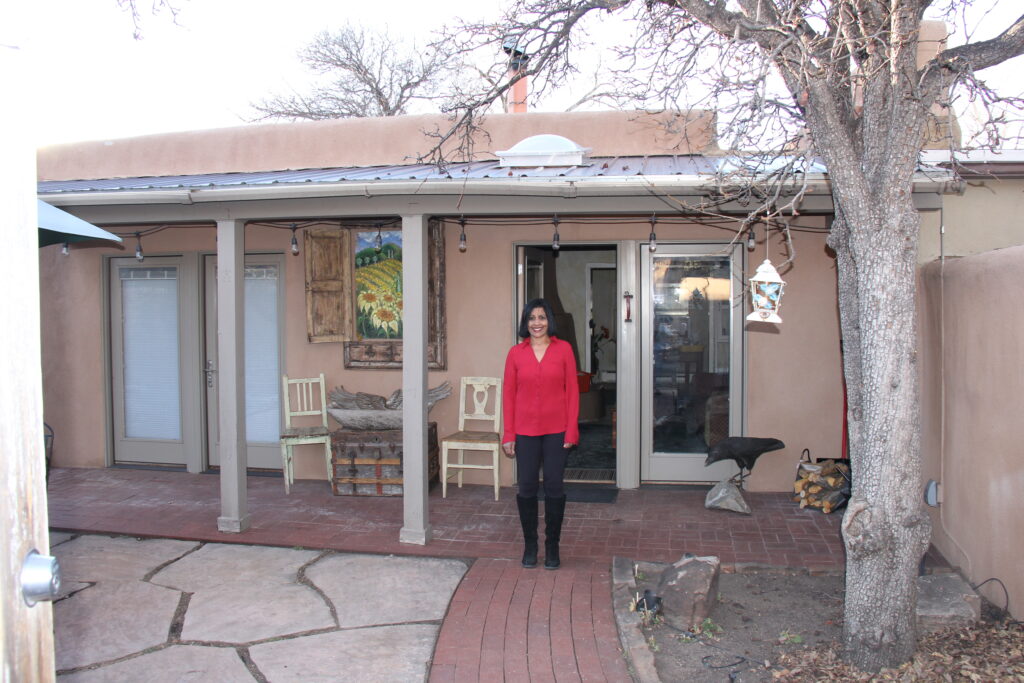
Airbnb in Santa Fe – We loved our spacious 1-bedroom Airbnb we had rented for 3 nights. Earth colored adobe construction with flat roof and artistically decorated interior. It was within walking distance to the city center.
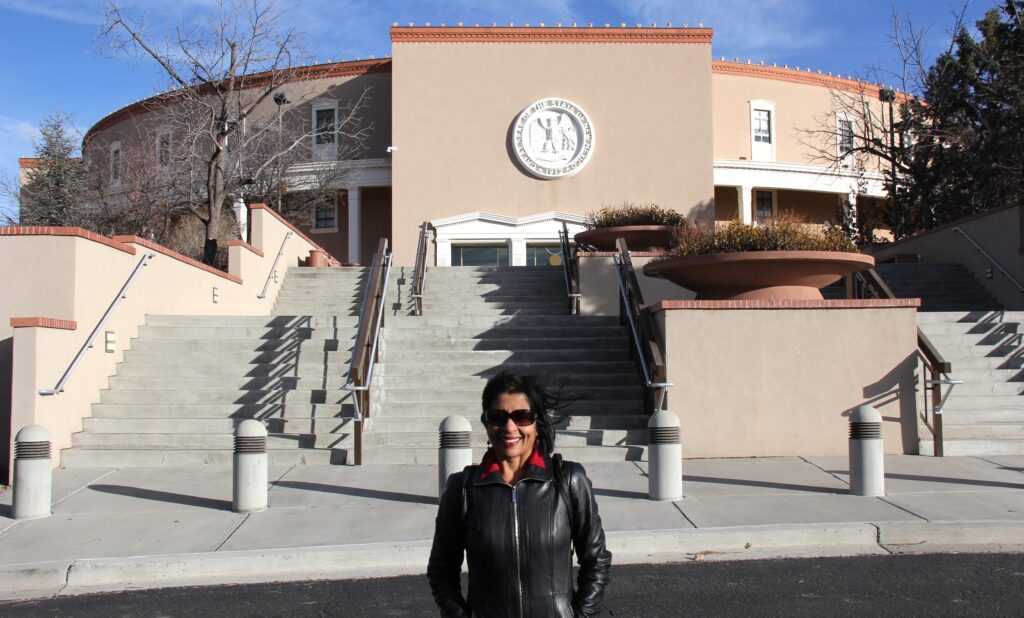
New Mexico Capitol Building – Also known as the Roundhouse, it is the only round State capitol in the United States. It was built by Robert E. McKee with a design by W.C. Kruger that combined elements of New Mexico Territorial style, Pueblo adobe architecture and Greek Revival adaptations. The 232,000 square-foot Roundhouse was dedicated on Dec. 8, 1966.
From a bird’s-eye view, the Roundhouse resembles the Zia sun symbol, which is also emblazoned on the New Mexico state flag. The image, which originated at Zia Pueblo, incorporates elements representing the sun’s rays, the four directions, the four seasons, and the four phases of life. The State Seal of New Mexico, carved in stone, hangs above each of the Roundhouse’s four entrance wings.
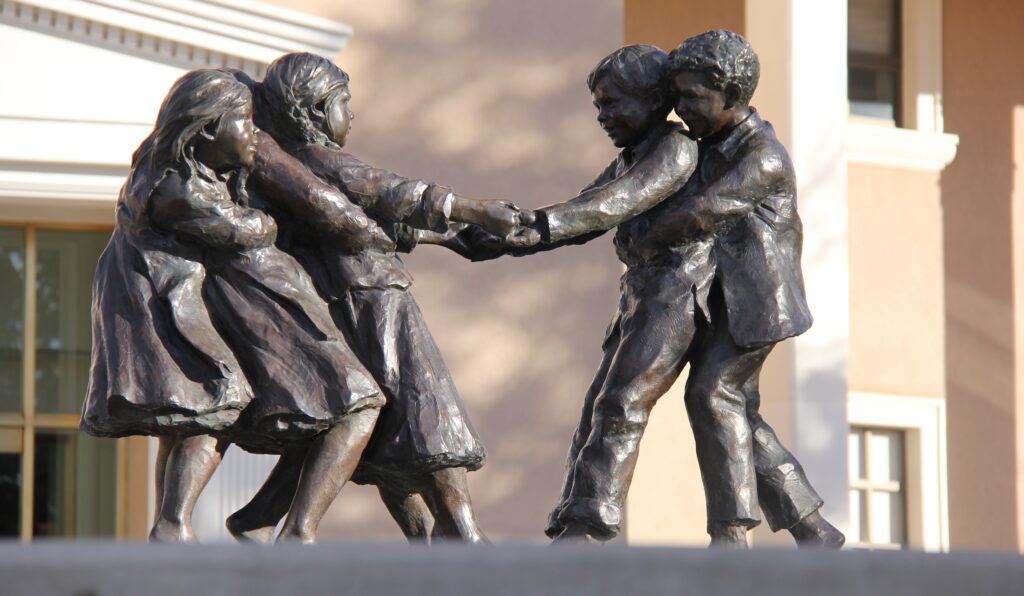
The Capitol building is renowned for its impressive collection of art, much of which is located in its hallways and on its grounds. While the sculptures are varied in style and subject, a notable one is a large outdoor sculpture of children playing.
On the day we visited the capitol building, it was closed. We were able to only able to explore the grounds around.
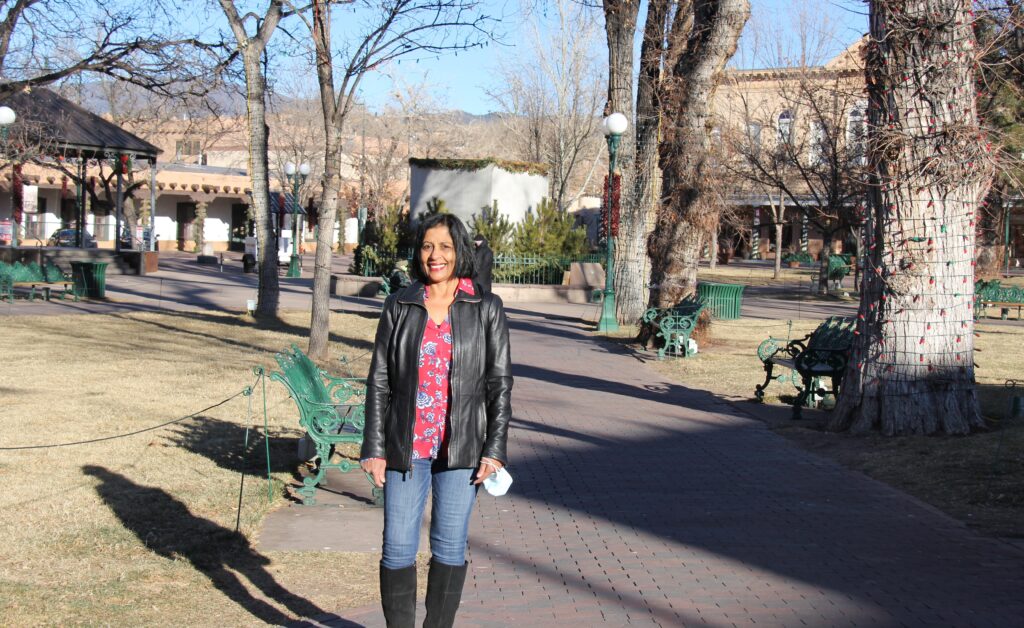
Santa Fe Plaza – has long been the economic and social center of Santa Fe. It is the location of various historic buildings and events throughout New Mexico’s history. Now half its original size, the Plaza is landscaped with flagstone, walks, benches, and trees.
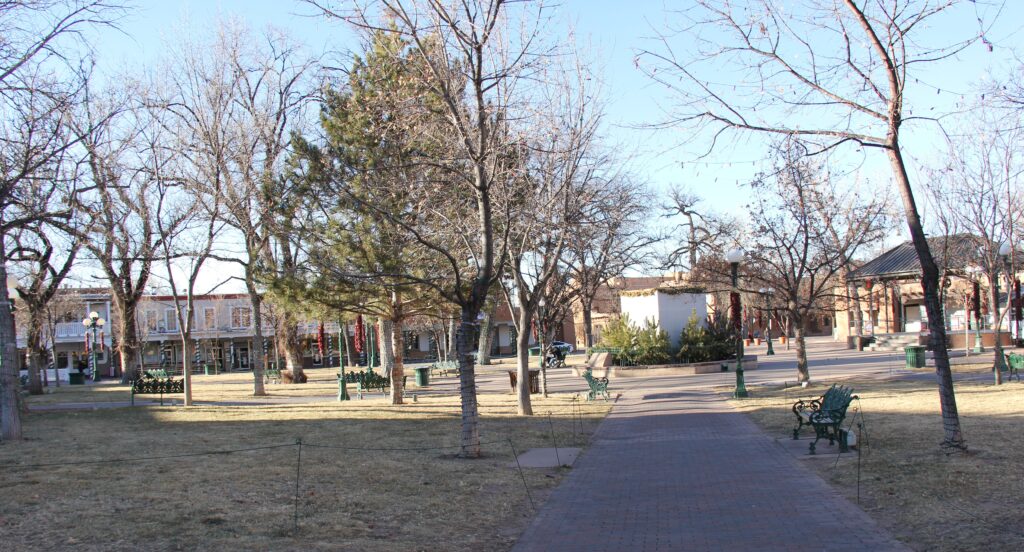
The Plaza was founded by the Spanish in 1609 as a strategic location for defense. During the Spanish occupation, the Plaza was unpaved. When Anglo-Americans arrived in about 1850, they brought the Plaza to its current size—about one city block—and enclosed it with buildings facing the Palace of the Governors.
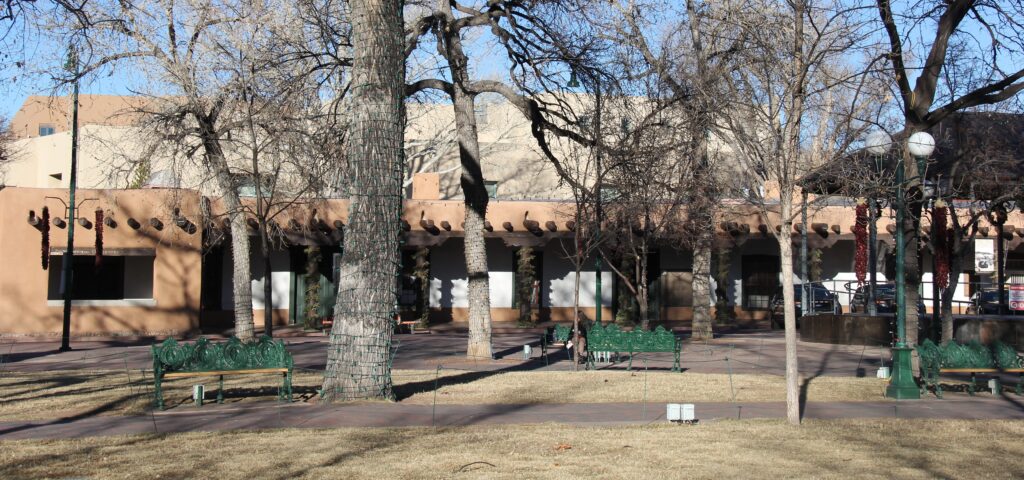
Palace of the Governors – is an adobe structure built in the Pueblo architectural style and is located along the north side of Santa Fe Plaza. It served as the seat of government for New Mexico for centuries, having been established as the capitol building of Nuevo Mexico in 1610. It was New Mexico’s seat of government until 1901.
Today, the building functions as a historic site and the New Mexico History Museum, showcasing exhibits on the region’s past.
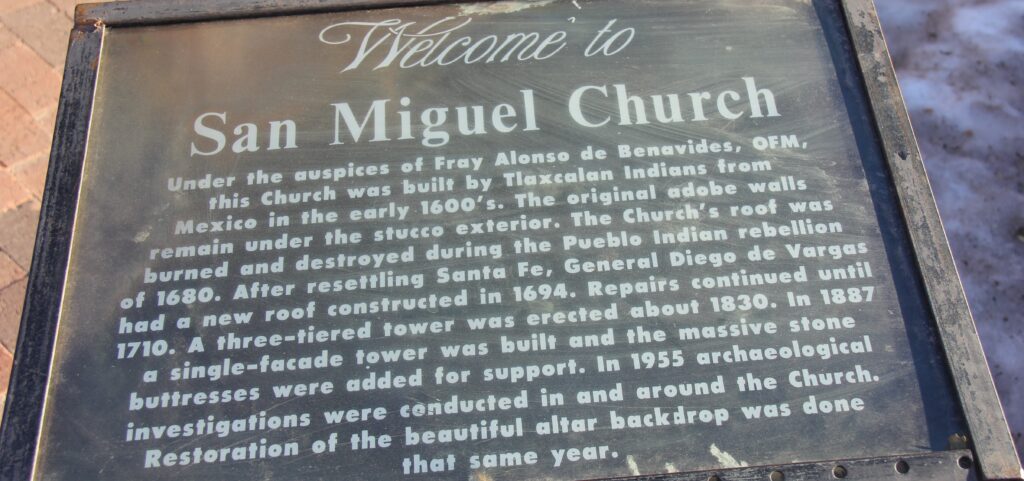
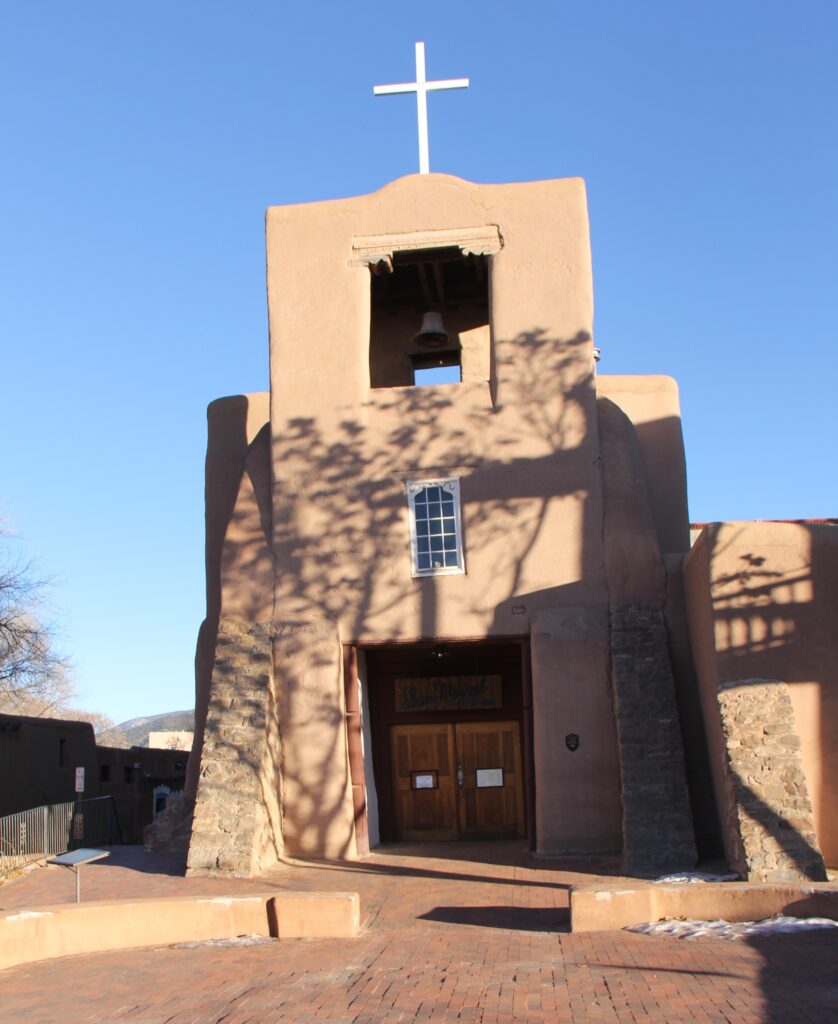
San Miguel Chapel – is the oldest Catholic Church built in the United States part of whose original walls are still standing and which is still used regularly for religious services. Adobe buildings like this chapel, historically, were not exclusively used for worship and ceremonies. Their size and location within the community allowed for a variety of gatherings.
During the 400+ years, first under the rule of imperial Spain, then Mexico, and finally the USA, the Chapel, dedicated to Archangel Michael, has been many things to many people. It has served as a place of worship for diverse groups of Native Americans; an infirmary for Franciscan missionaries; a military chapel; a unique venue for talks, concerts, celebrations and ceremonies; and a sanctified space for Sunday Mass in Latin and English. Today and into the future, this treasured, privately owned structure requires constant vigilance and expert use of traditional construction methods and culturally authentic materials.
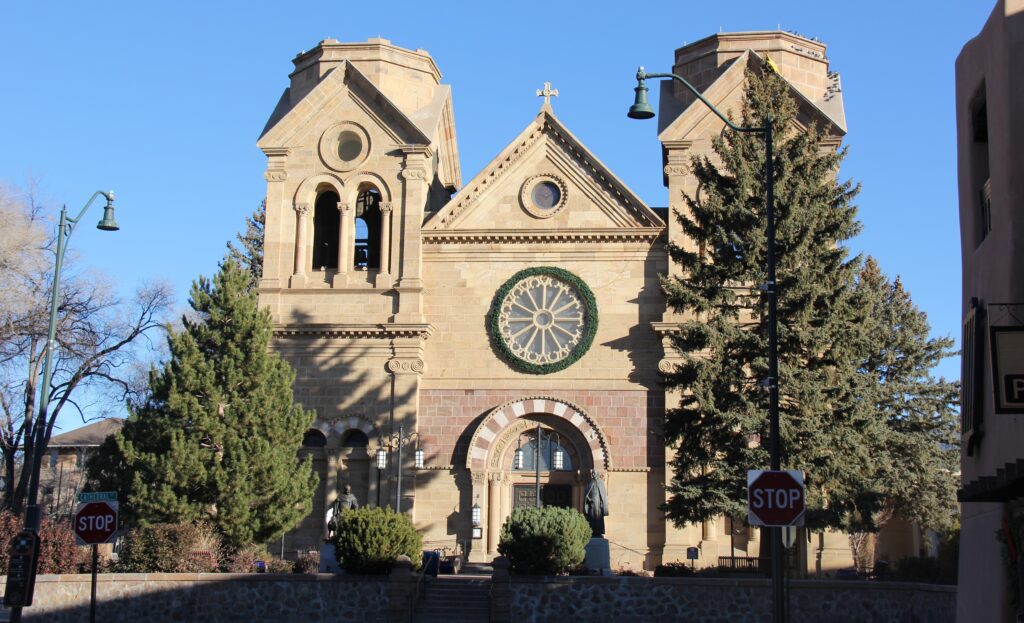
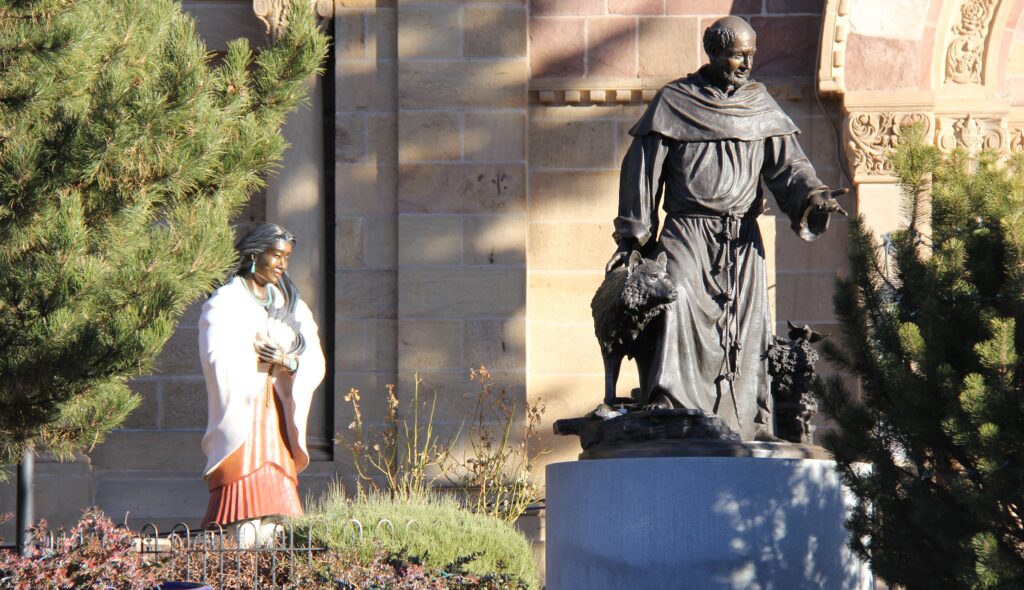
Cathedral Basilica of St Francis of Assisi – commonly known as Saint Francis Cathedral, is a Catholic cathedral in downtown and is the mother church of Archdiocese of Santa Fe. The cathedral was built by Archbishop Jean Baptiste Lamy between 1869 and 1886 on the site of an older adobe church, La Parroquia (built in 1714–1717). An older church on the same site, built in 1626, was destroyed in the 1680 Pueblo Revolt. A small chapel on the north side of the cathedral was kept from the old church.
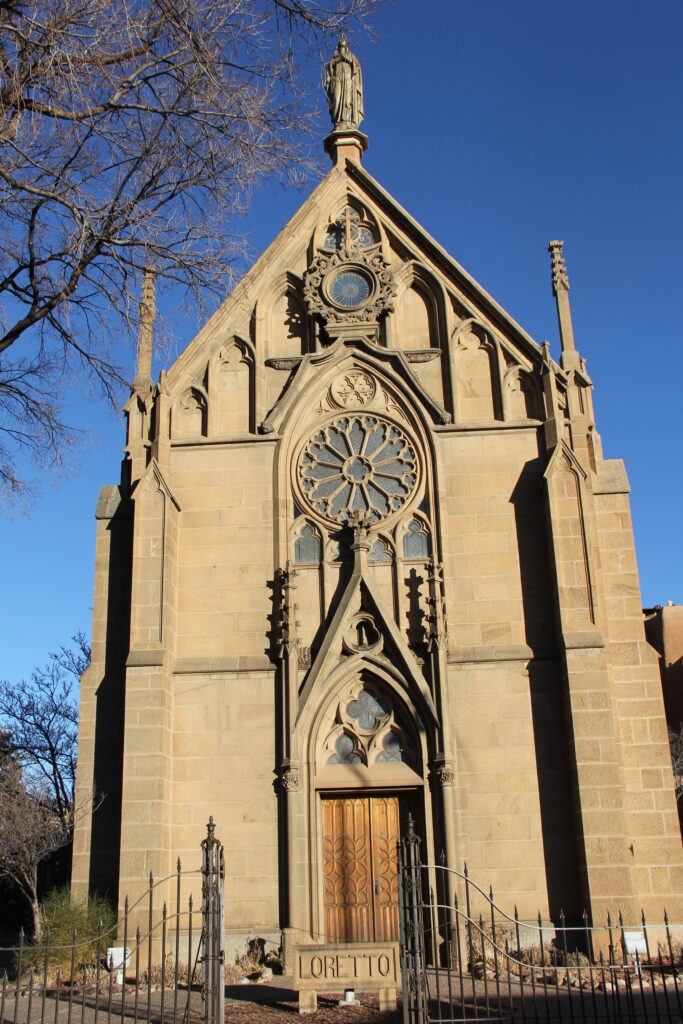
Loretto Chapel – Officially completed in 1878, the Loretto Chapel is a former Roman Catholic church, that is now a privately owned museum and a wedding chapel. It is known for its unusual helix-shaped spiral staircase (Miraculous Stair) which rises 20 feet to the choir loft while making two full turns, all without the support of a central pole. The staircase is built mostly out of wood and is held together by wooden pegs, with no glue, nails or other hardware used.
It has been the subject of legend, and the circumstances surrounding its construction and its builder were considered miraculous by the Sisters of Loretto. According to the version of events passed down by them, multiple builders were consulted but were not able to find a workable solution due to the confined quarters. In response, the nuns prayed for 9 straight days to Saint Joseph, the patron saint of carpenters. On the last day of the novena, a mysterious stranger appeared and offered to build the staircase. He worked alone using only a few simple hand tools and disappeared afterwards without collecting his pay or the Sisters learning his identity.
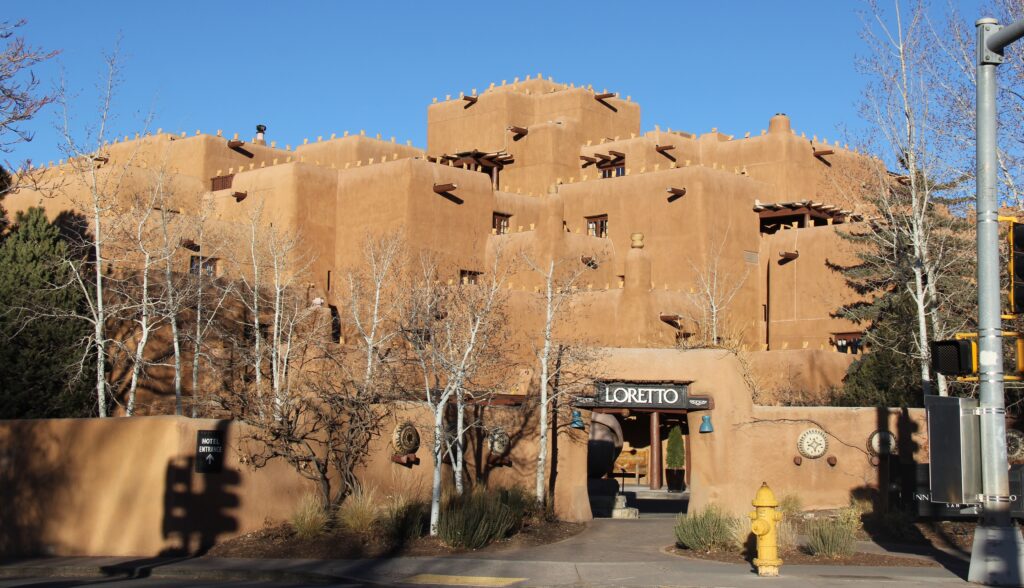
Loretto Inn and Spa – This impressive building is hard to miss as it is located in the heart of Santa Fe, near the historic Santa Fe Plaza’s galleries, museums, restaurants and boutiques. Effortlessly blending old-world charm with world-class splendor, this Santa Fe luxury hotel is one of the state’s most photographed buildings. The Inn is an architectural recreation of the Taos Pueblo, a national historic landmark.
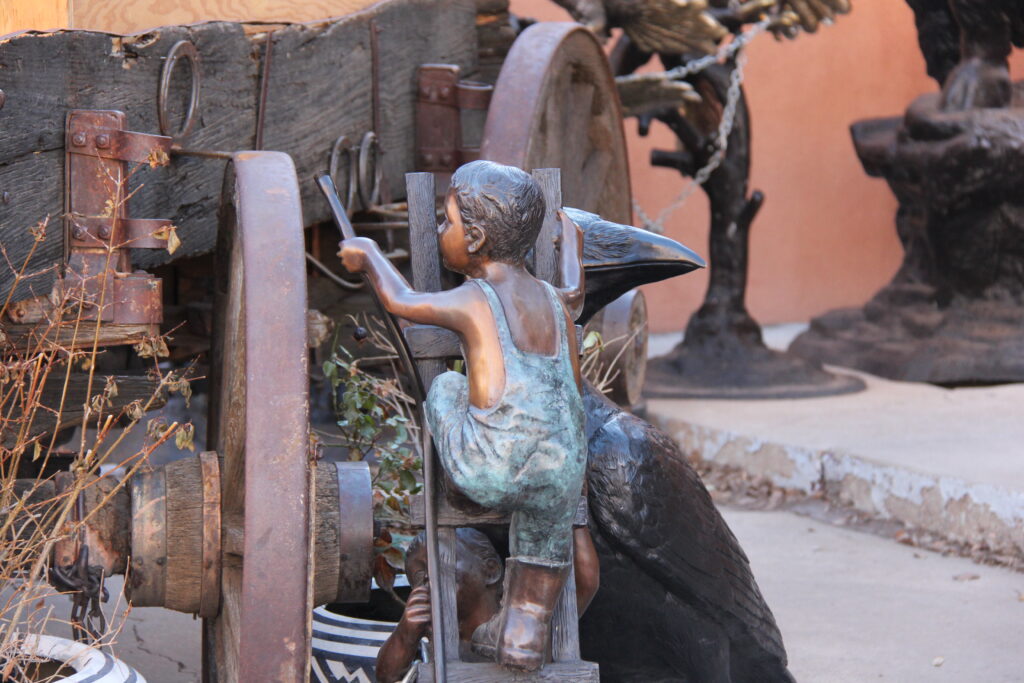
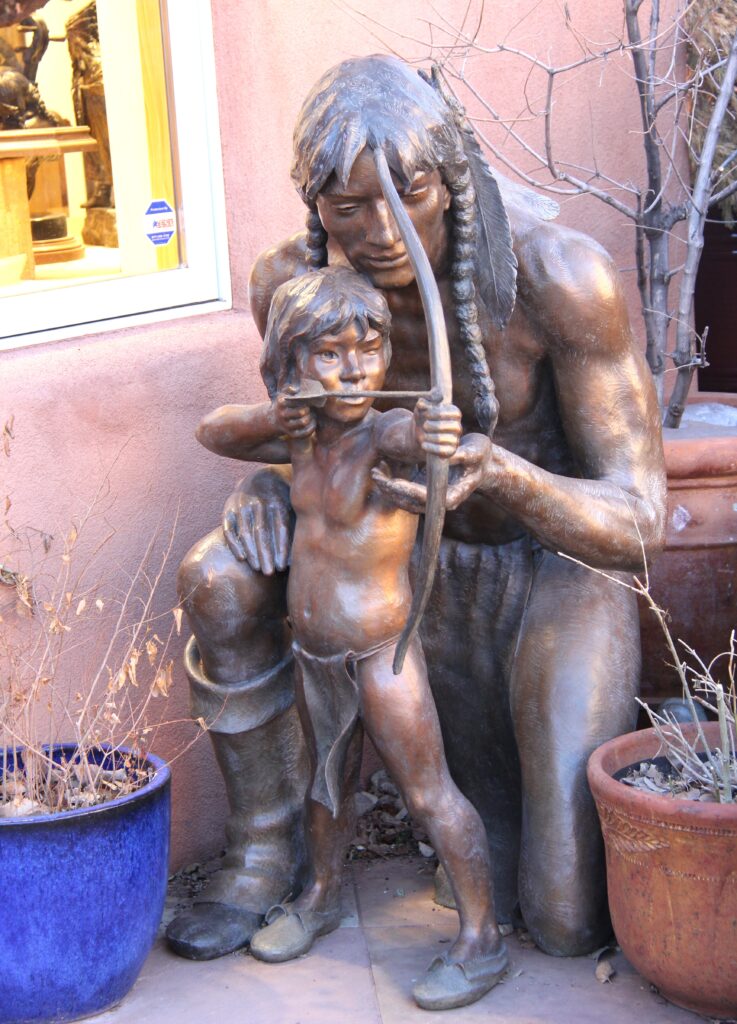
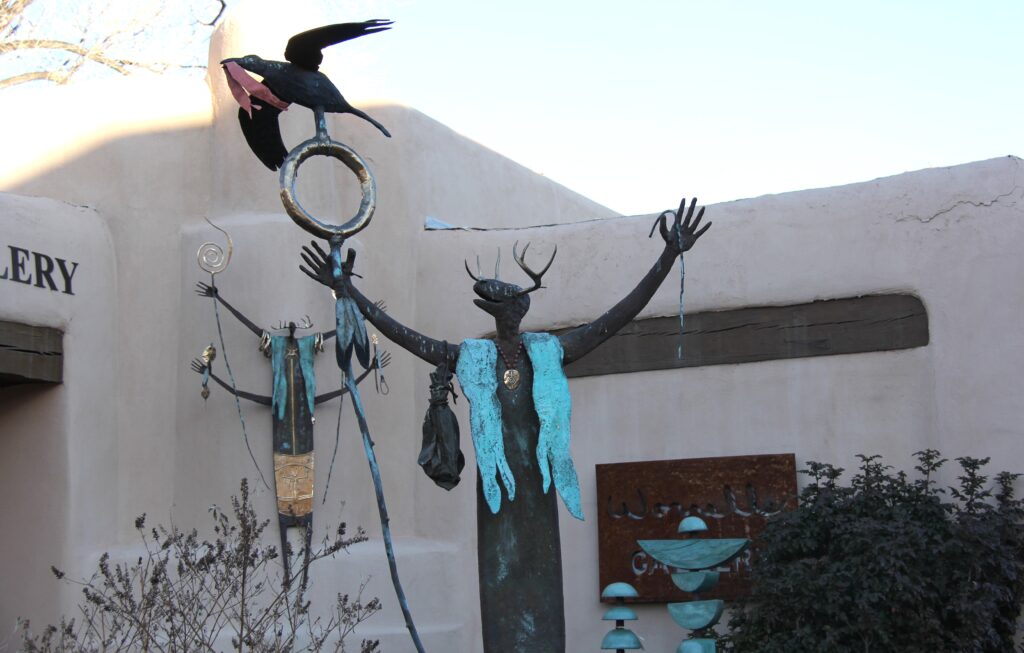
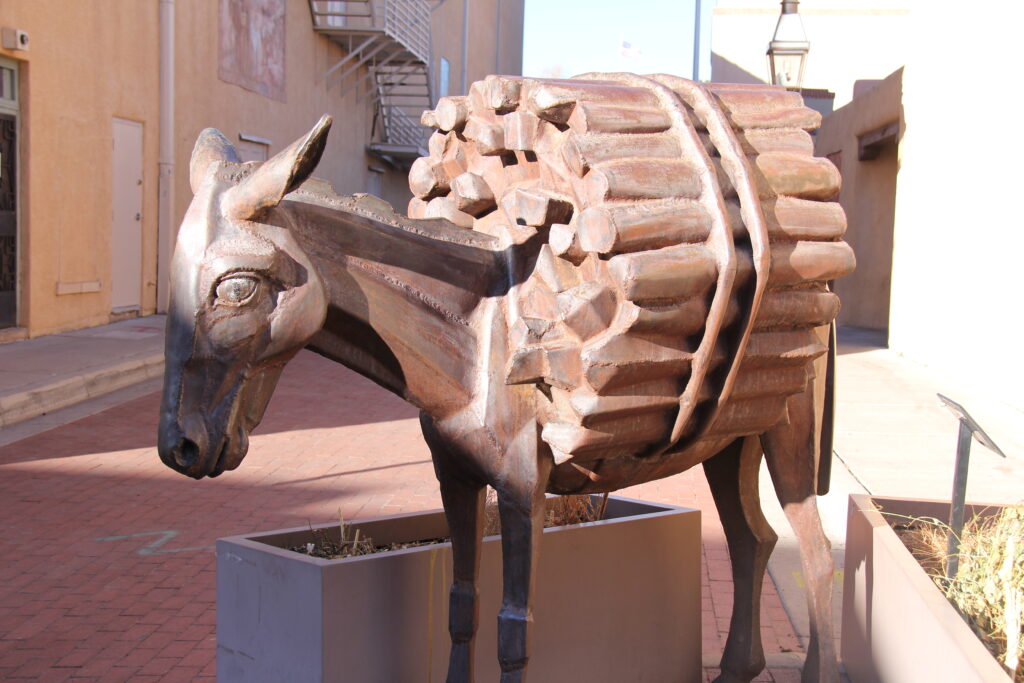
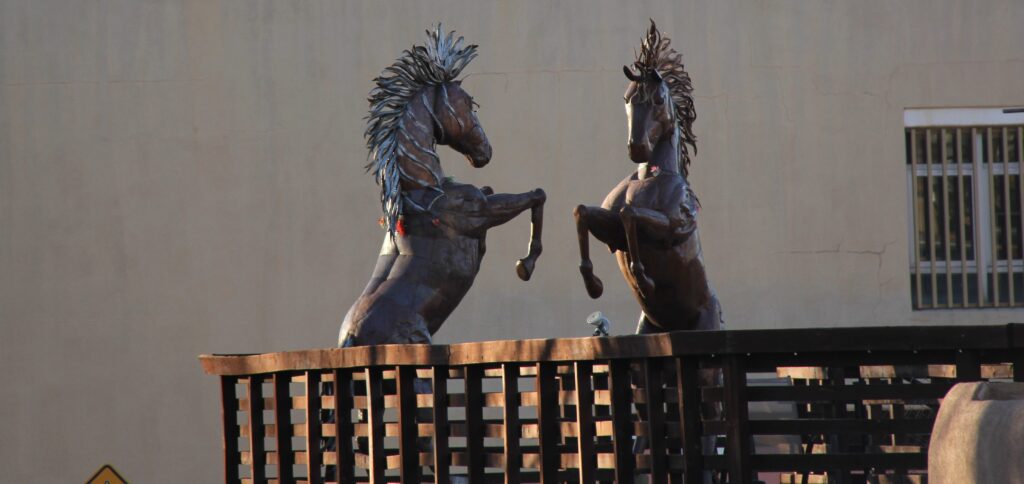
Santa Fe Art Galleries – Santa Fe, known for its vibrant art scene, has many shops with statues in front, especially near the Santa Fe Plaza, where you’ll find galleries featuring sculptures, pottery, and unique Native American art.
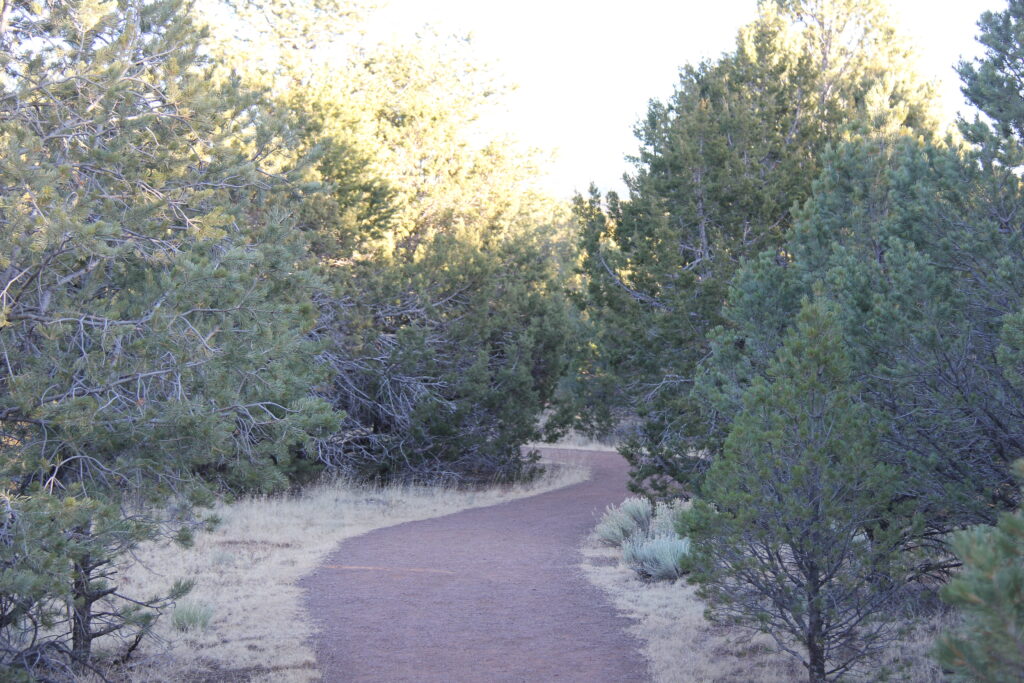
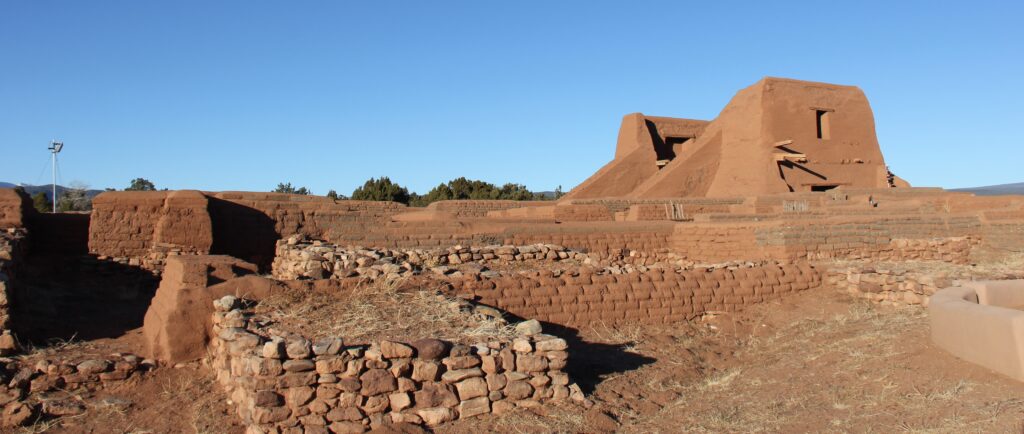
Pecos National Historic Park – Remains of Indian pueblos stand as meaningful reminders of people who once prevailed. This park protects and interprets the history of the upper Pecos River Valley. Visitors can experience remnants of Pecos Pueblo and the 17th century Spanish mission church, and learn about the collision of the two cultures.
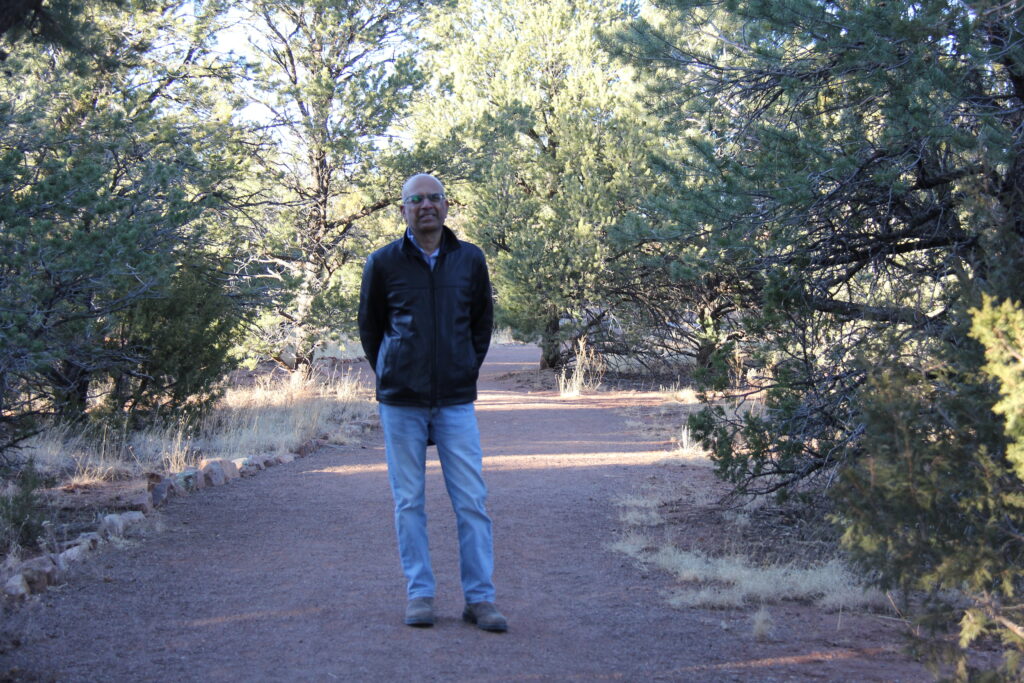
The park has a visitor center and museum, hiking trails, and ranger-led programs. We bought a self guided tour booklet and hiked the Ancestral Sites Trail which is a 1.25-mile loop. Exhibits include the ruins of the 14th-century Pecos Pueblo and the Spanish Mission Church built in 1717.
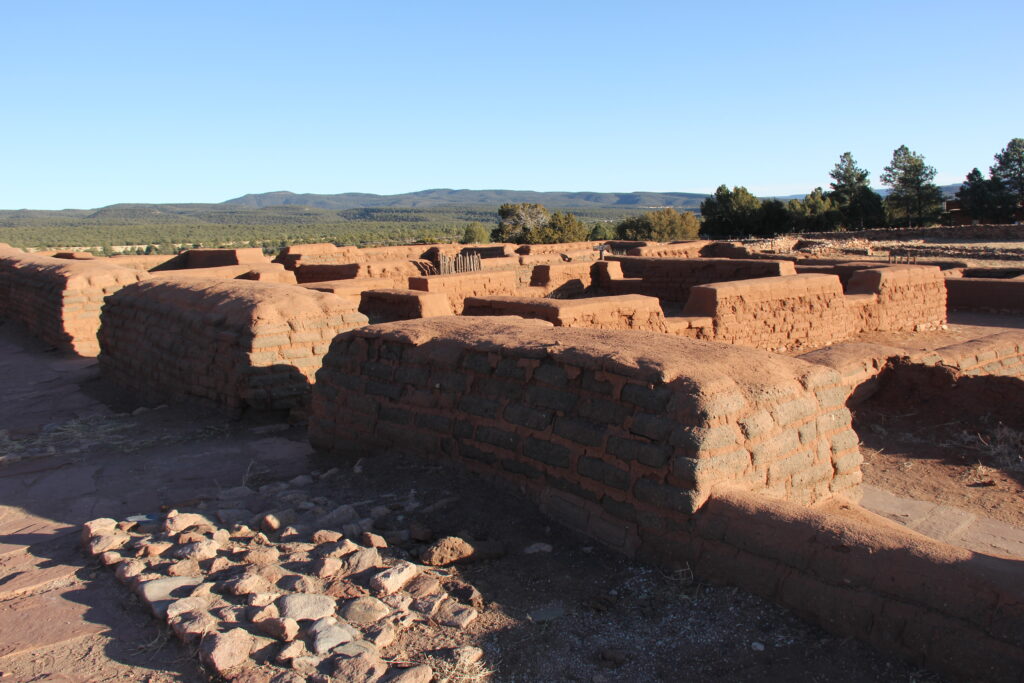
Pecos National Historic Park, Remains of Indian pueblos – Archaeologists believe the pueblo site, comprising a north and a south pueblo unit, had around 1000 rooms and at its height was home to about 2000 individuals. The pueblo structures were built of stacked, mortared, and plastered stones. Daily life of the people here included activities like weaving cotton thread, grinding corn, preparing meals, making clothing, and ceramic pots.
Spanish records describe Pecos as a bustling community that hosted trade fairs drawing people and goods from the Plains Nations and the Rio Grande Pueblos.
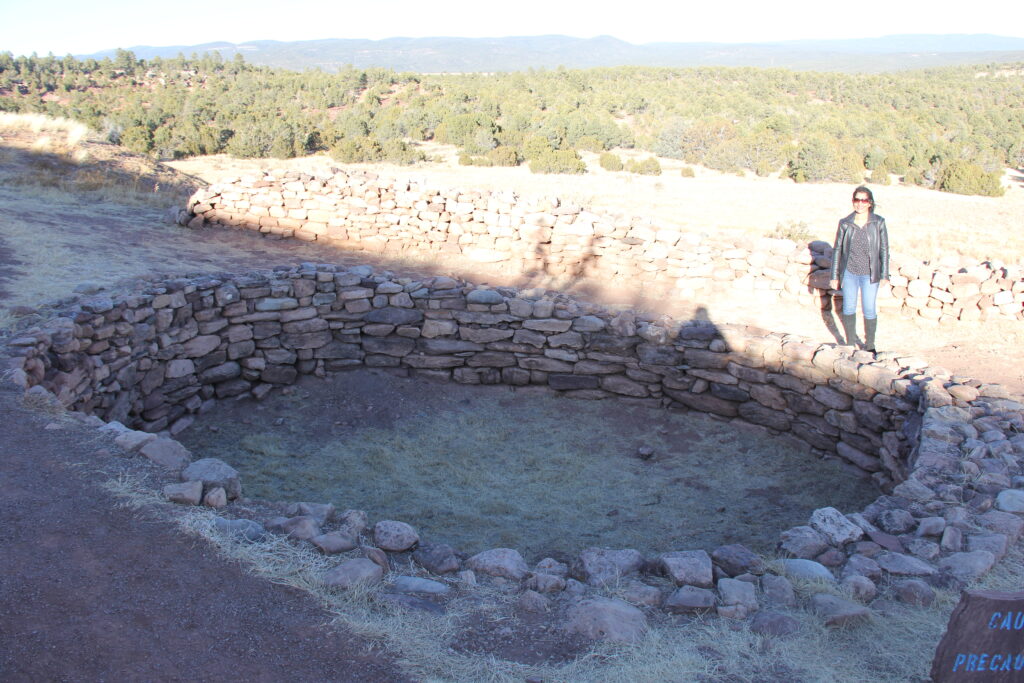
Pecos National Historic Park, Kiva – Underground ceremonial rooms called Kivas were the center of pueblo life. The Pecos people used kiva for religious activities for at least 200 years.
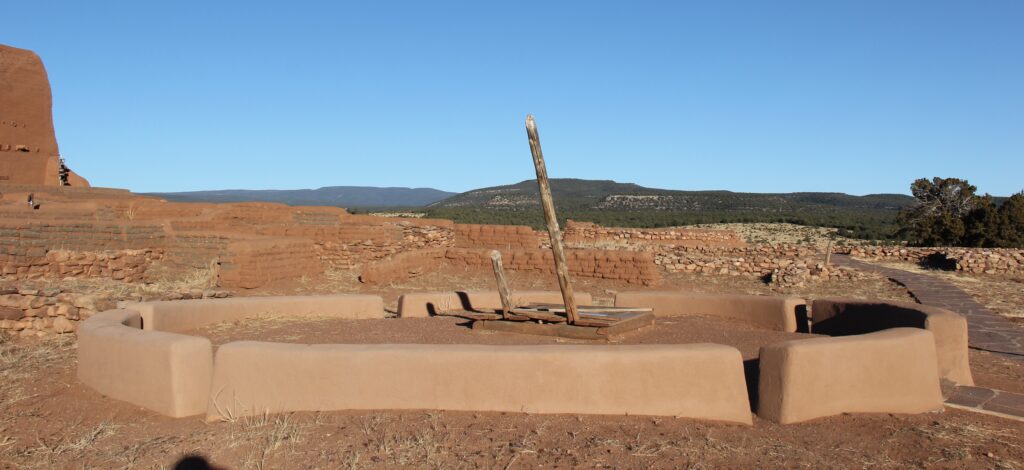
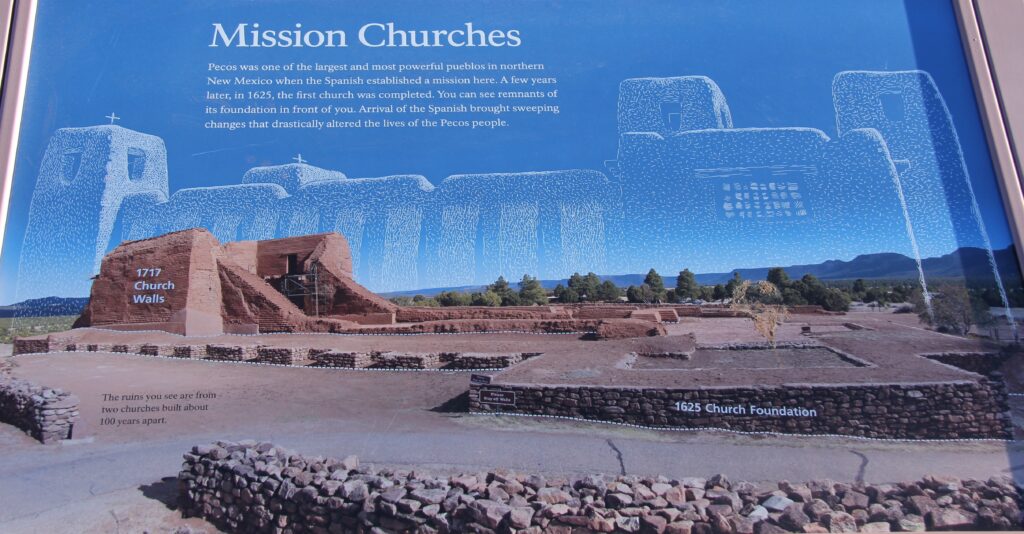
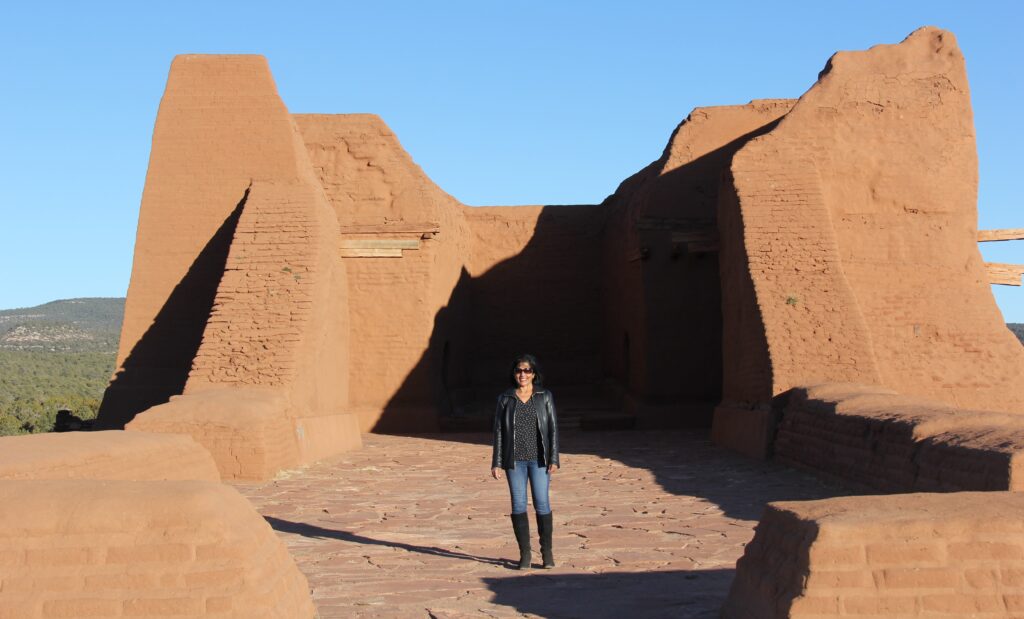
Pecos National Historical Park, The Spanish church – officially the Pecos Mission Church, was originally built by Franciscan missionaries in the early 1600s, and completed in 1625. It was destroyed during the Pueblo Revolt of 1680. A new, smaller church was then constructed on the ruins of the first in 1717, and its remains are what visitors see today. The site includes the church and its attached convent, which served various functions such as storerooms, living quarters, and even prison cells.
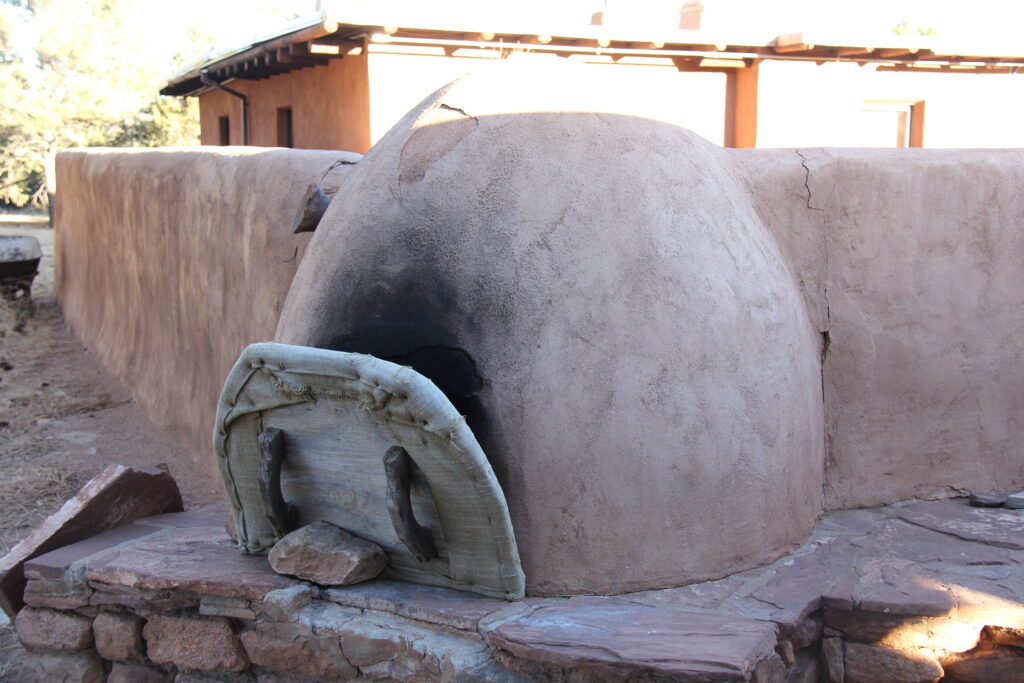
Pecos National Historical Park, Horno Baking – Pronounced or-noh, is an outdoor adobe brick or rock oven introduced to the region by Spanish settlers in the 1500s. Many local households still use them to bake bread and cook meat. A wood fire is built in Horno and when the fire is exhausted, the coals are removed. The entrance door is then sealed and the food cooks by the retained heat.
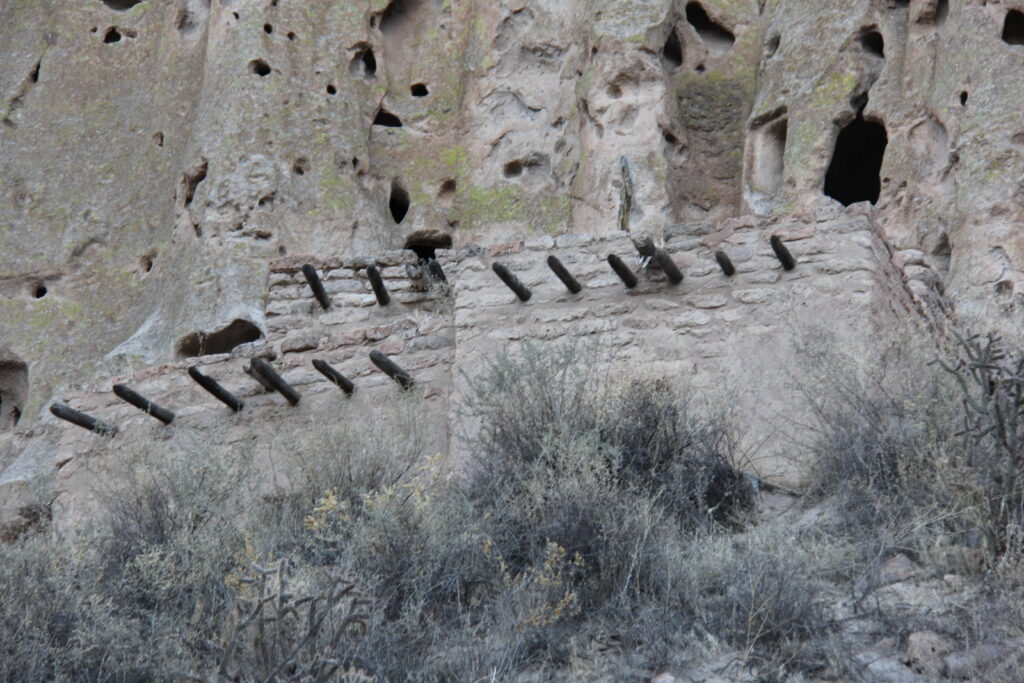
Bandelier National Monument – protects over 33,000 acres of ruggedly beautiful canyon and mesa country. Petroglyphs, dwellings carved into the soft rock cliffs, and standing masonry walls pay tribute to the early days of a culture that still survives in the surrounding communities.
The Ancestral Pueblo people lived here from approximately 1150 CE to 1550 CE. They built homes carved from the volcanic tuff and planted crops like corn, beans, and squash which was their central to their diet. It was supplemented by native plants and meat from deer, rabbit, and squirrel. Domesticated turkeys were used for both their feathers and meat while dogs assisted in hunting and provided companionship.
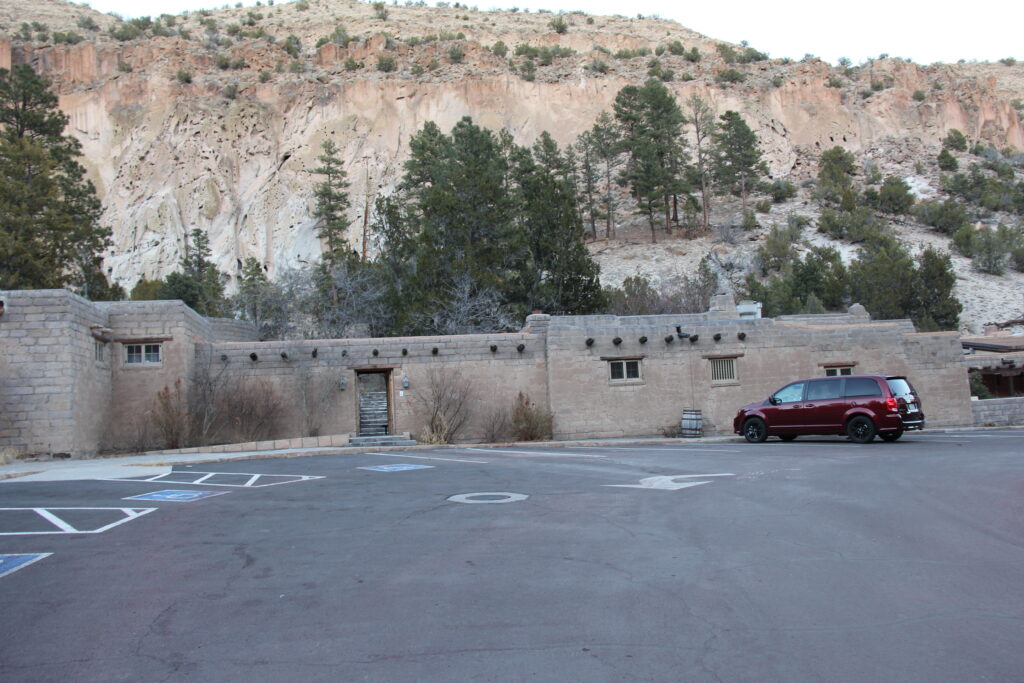
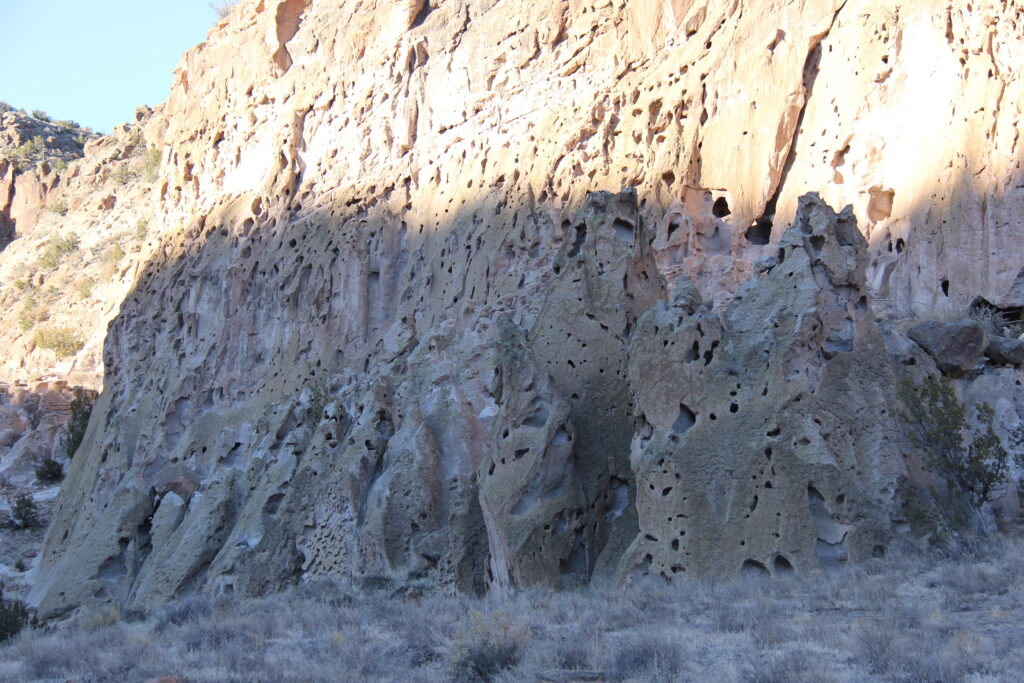
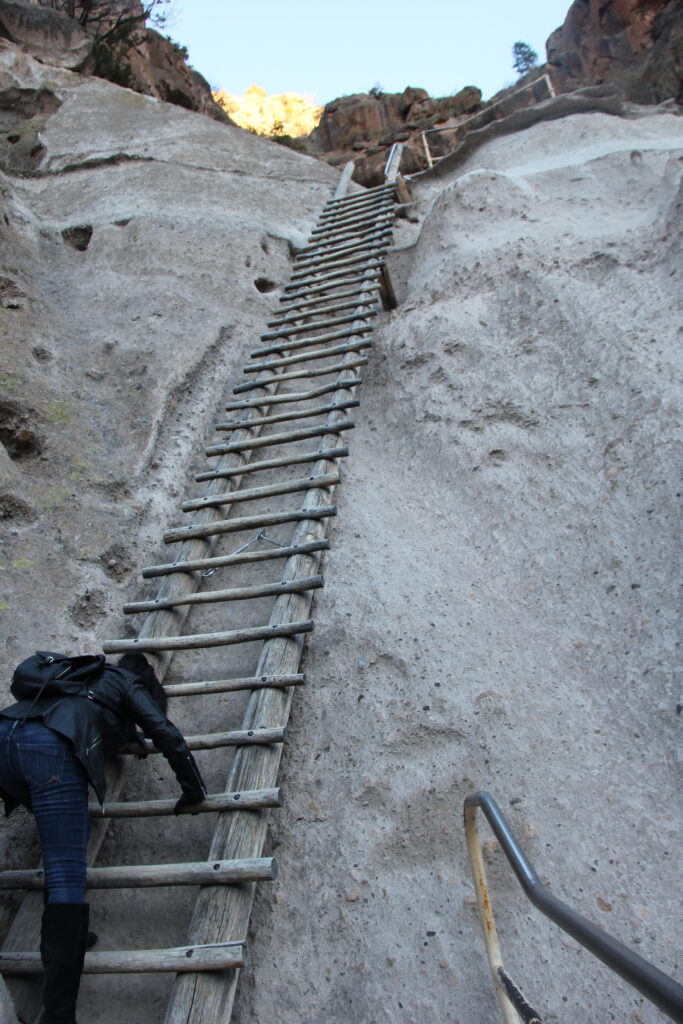
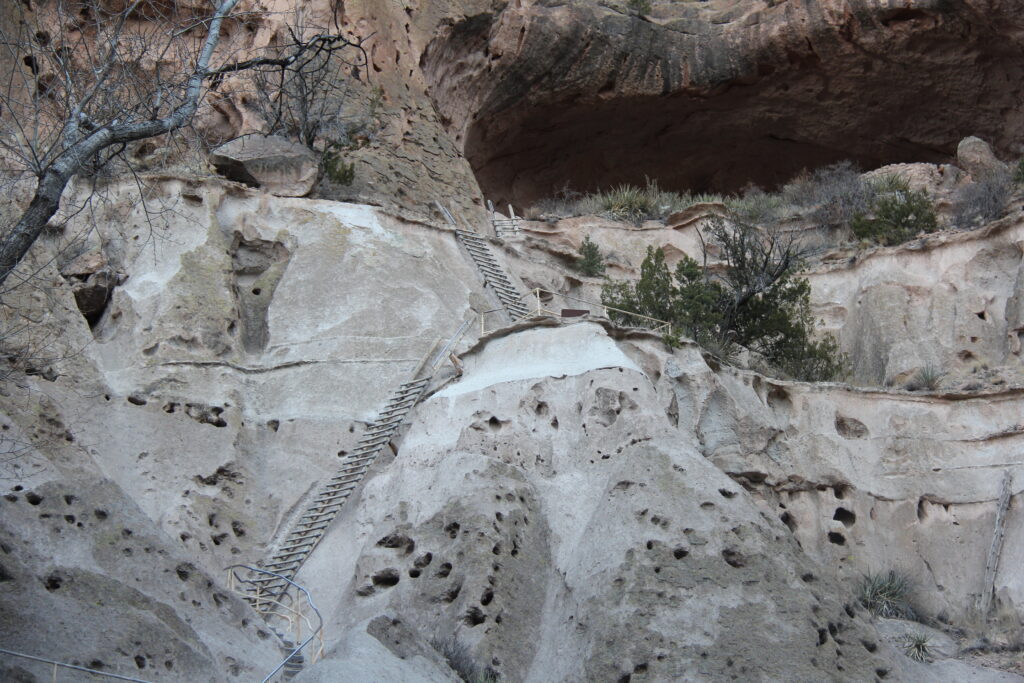
We hiked the main loop trail. There are wooden ladders along the trail that allow visitors to climb into the cliff dwellings carved from volcanic rock. The ladders were safe and easy to climb. We climbed several ladders and checked out the cave dwellings.
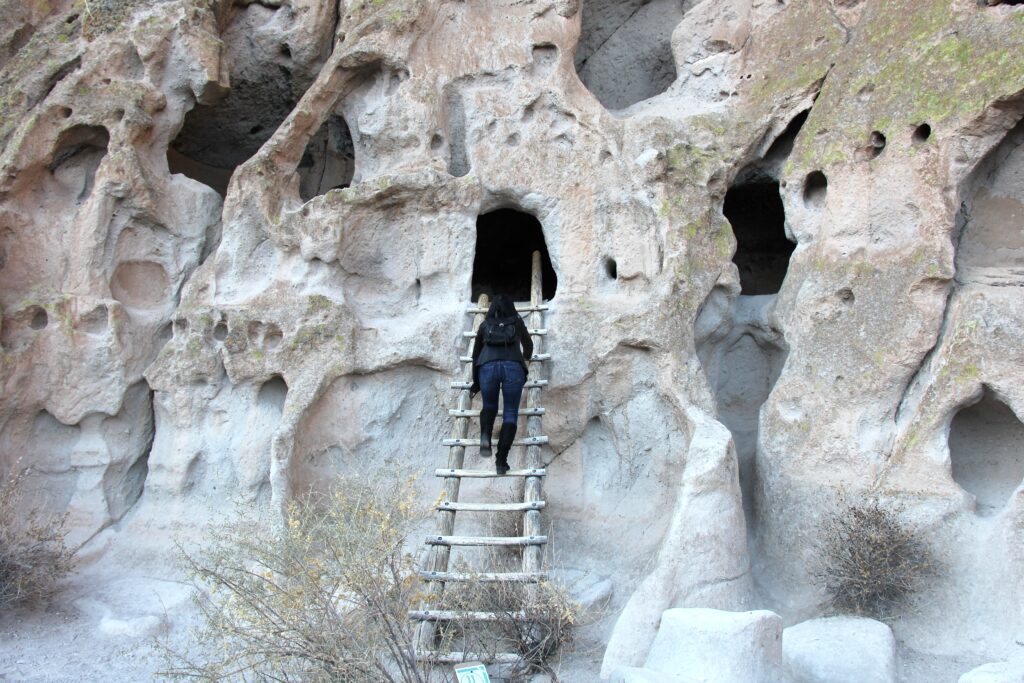
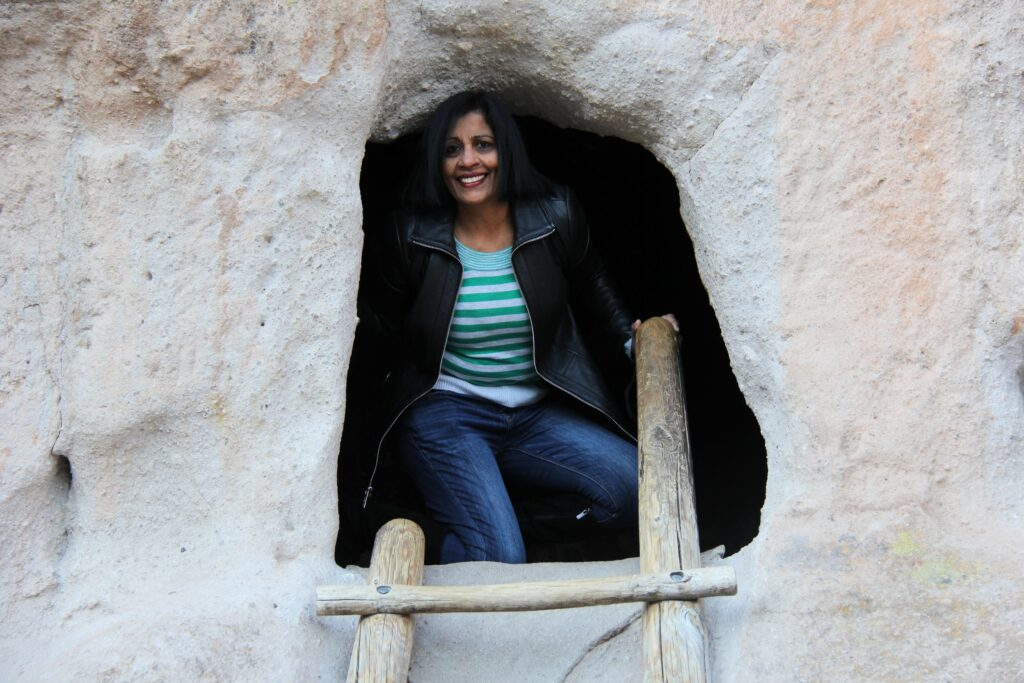
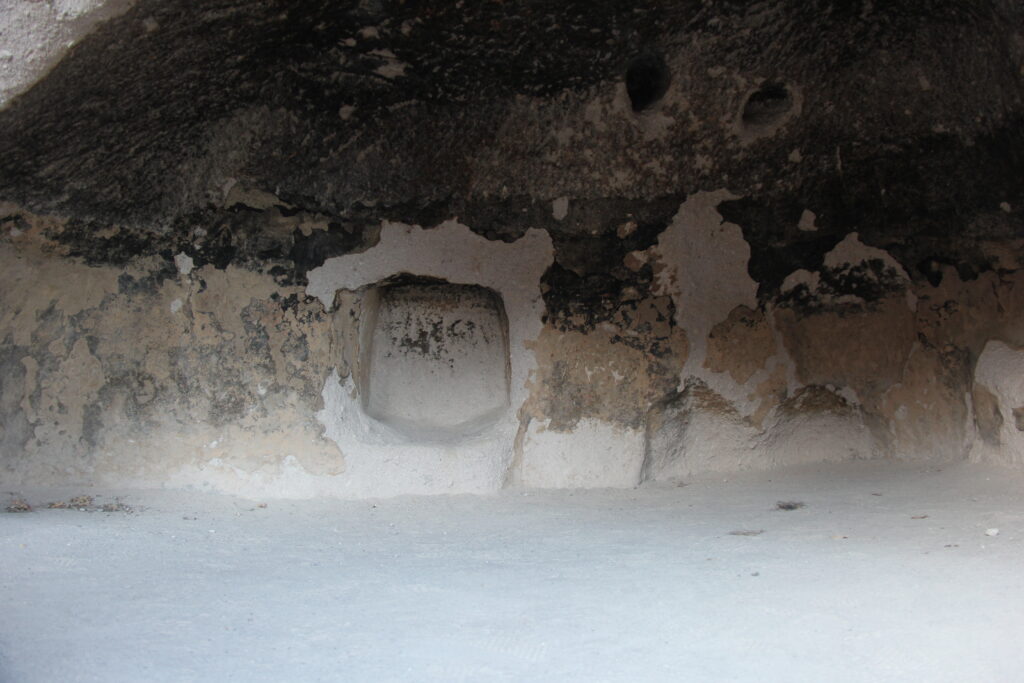
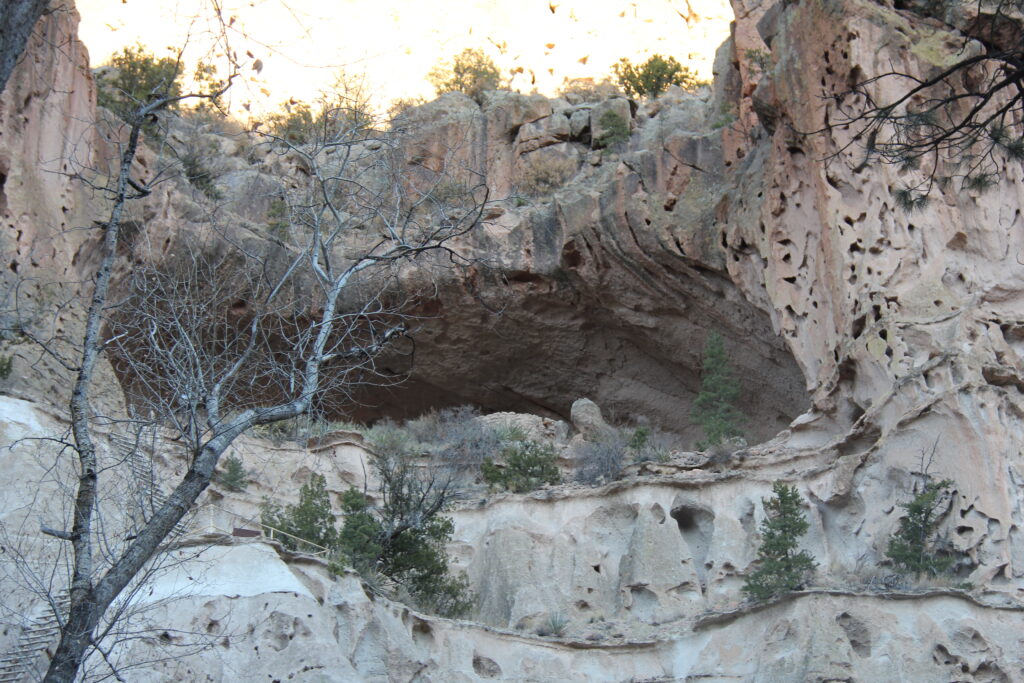
Bandelier National Monument, Alcove House – 1-mile into the main loop trail you will reach Alcove House. Formerly known as Ceremonial Cave, this alcove is located 140 feet above the floor of Frijoles Canyon. Once home to approximately 25 Ancestral Pueblo people, the elevated site is now reached by 4 wooden ladders and a number of stone stairs. In Alcove House, there is a reconstructed kiva and the viga holes and niches of former homes. Imagine climbing these ladders, carrying whatever supplies were needed, to this lofty home.
Bandelier National Monument, Talus House – was reconstructed in 1920 to show the structures that would have been found in front of many of the cavates when the Ancestral Pueblo people were still occupying the canyon.