Albuquerque is New Mexico’s largest city and is known as the Duke City, named after the 10th Duke of Albuquerque, who was the viceroy of New Spain when the city was founded in 1706. The Sandia Mountains, whose name means “watermelon” in Spanish, are an iconic part of Albuquerque’s landscape
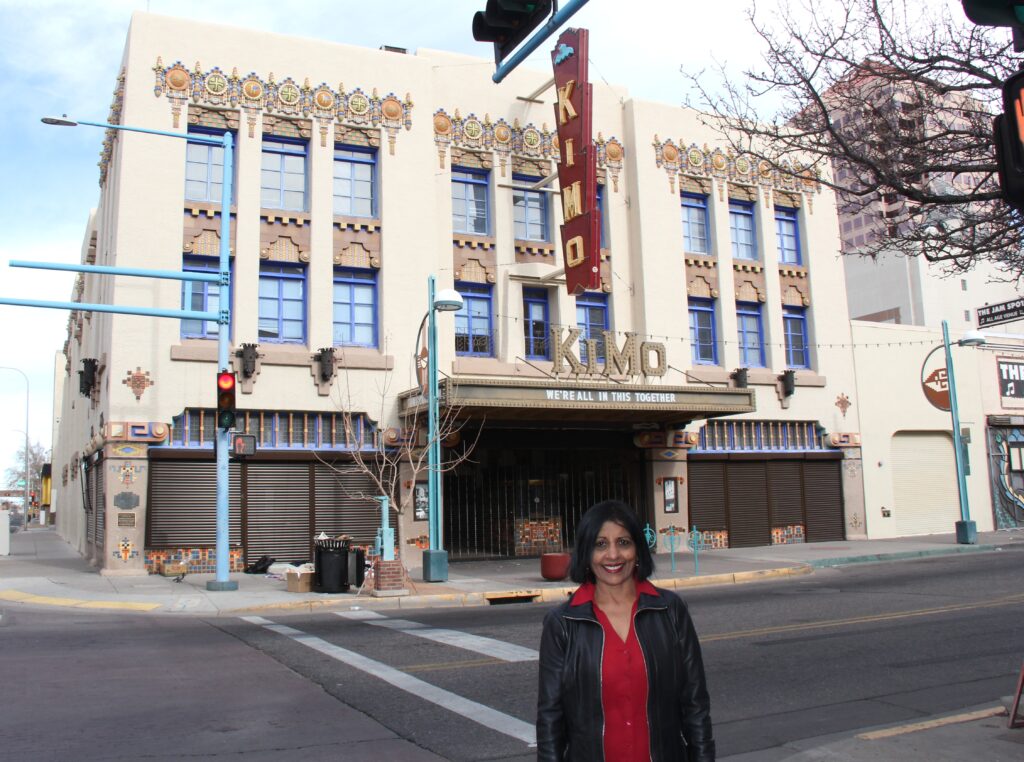
- Kimo Theater
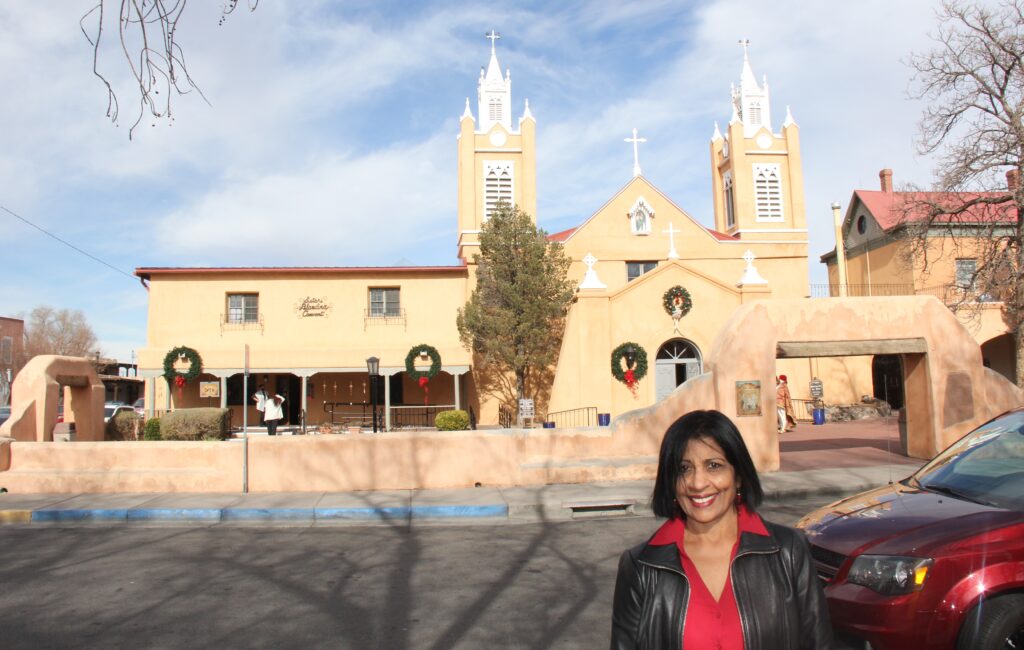
- San Felipe de Neri Church
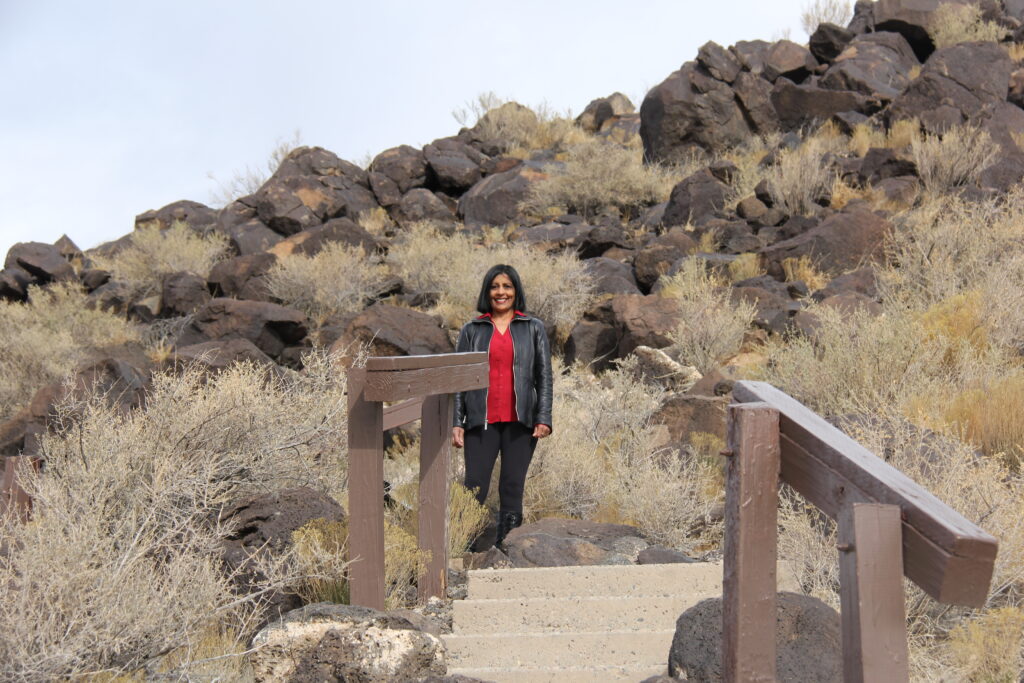
- Petroglyphs National Monument
Kimo Theater – The Kimo Theatre opened on September 19, 1927 as a Pueblo-Deco picture palace. The KiMo’s unique Pueblo Deco design, blending Indigenous Pueblo motifs with Art Deco elements, reflects the city’s embrace of its Native American roots amidst a rapidly modernizing landscape.
After a destructive fire in the 1960s, the theater was slated for demolition but was saved by community efforts and purchased by the City of Albuquerque in 1977. Following extensive renovations, it was transformed into a performing arts center with a seating capacity of 650.
San Felipe de Neri Church – It is the oldest church in Albuquerque, serving the community for over 300 years. The church is the spiritual heart of Albuquerque, offering liturgical, pastoral, and educational services to parishioners and visitors. The present church building, constructed in 1793, is listed on the National Register of Historic Places.
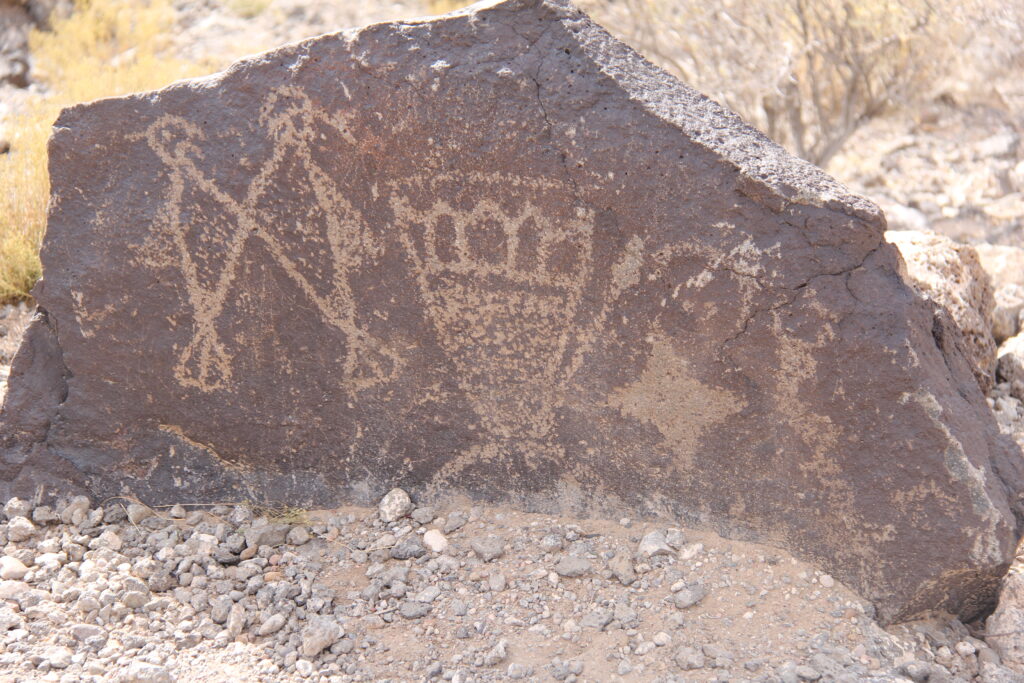
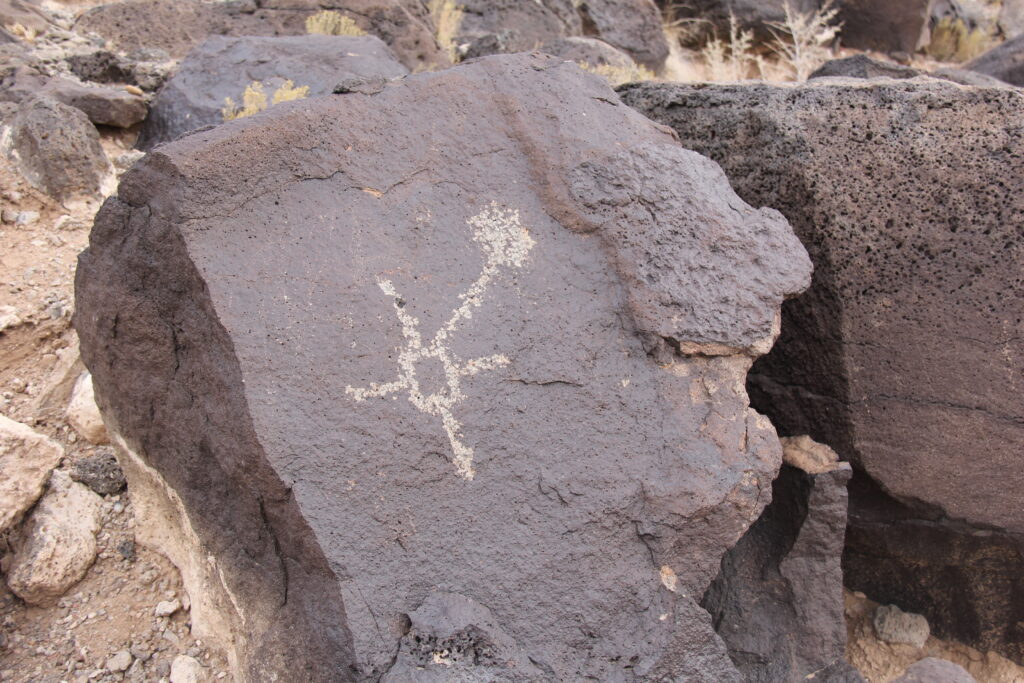
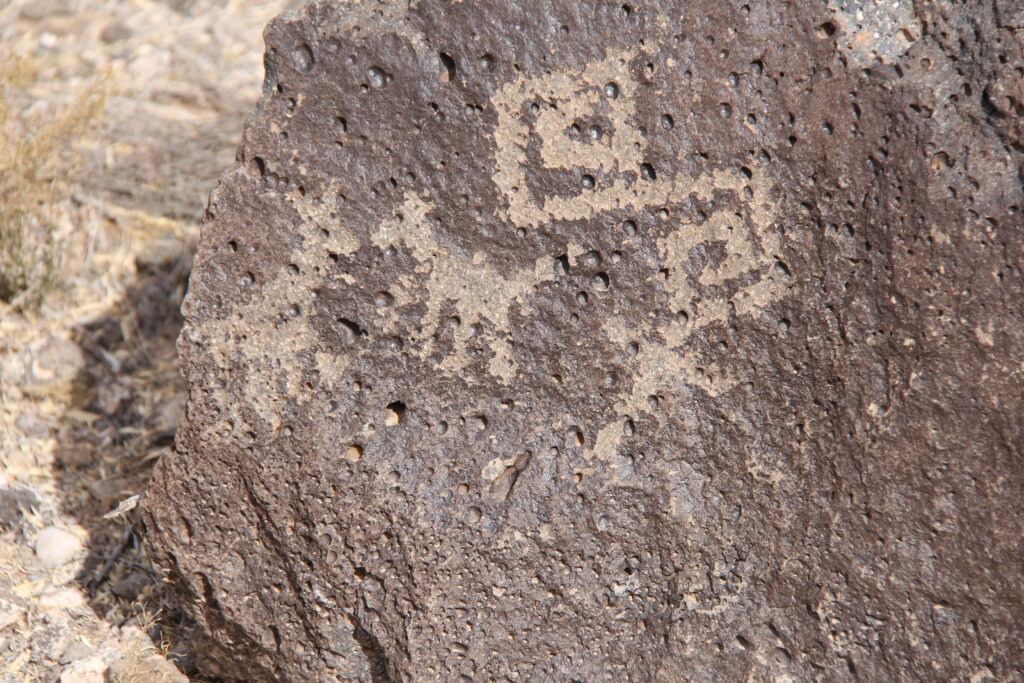
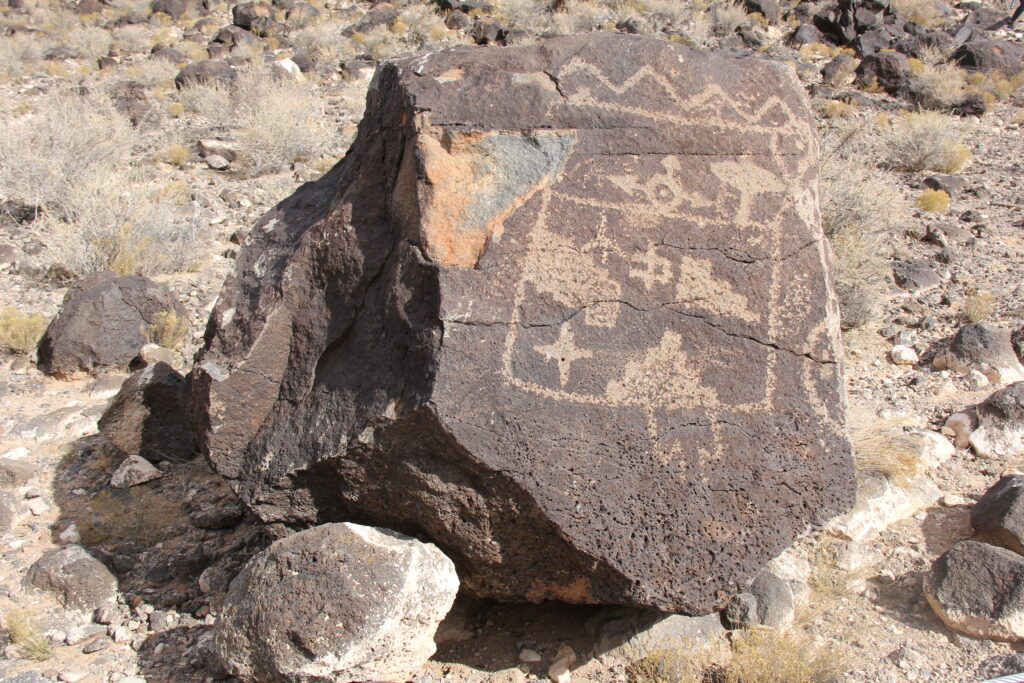
Petroglyphs National Monument – This is one of the largest petroglyphs sites in North America, featuring designs and symbols carved onto volcanic rocks by native Americans and Spanish settlers 700 years ago. Petroglyphs represent a valuable record of cultural expression and human occupation in Rio Grande valley. They have deep spiritual significance to modern Pueblo group. The associated meanings of some petroglyphs are known by few tribal groups, while the direct meaning of other images have been lost over the centuries.
The boulders in the pictures below contains a good example of various images made by ancestral Pueblo people 400-700 years ago. Some images are recognizable to us today; however, their original meanings were known only by the carver and by those who lived during that time period.
Petroglyph National Monument is a day-use park, which means the visitor center and each of the trailhead parking lots close at 4:30 pm. Visitors are allowed to hike the trails at the Volcanoes Day Use Area, Rinconada Canyon, and Piedras Marcadas Canyons from sunrise to sunset by simply parking outside of the gated parking lots.