Boston is the capital and largest city in Massachusetts. The city was named after Boston, England, where many of its early settlers came from. We have visited Boston many times over the years and always enjoy returning to this historic city, rich in American history and character.
- Freedom Trail
- Boston Common
- Massachusetts State Capitol Building
- Park Street Congregational Church and Granary Burying Ground
- Old City Hall
- Boston Irish Famine Memorial
- Old South Meeting House
- Old State House
- Faneuil Hall and Quincy Market
- Christopher Columbus Waterfront Park
- Bunker Hill Monument
- USS Constitution
- Harvard University
- Massachusetts Institute of Technology (MIT)
- Boston Tea Party Ships & Museum
- Boston Duck Tour
- Whale Watching Cruises
- Copley Square
- Trinity Church
- Old South Church
- Boston Public Library
- Boston City Hall Plaza and City Hall
- Brass Teapot
- Skywalk Observatory at the Prudential Center
The Freedom Trail is a 2.5-mile, red-brick path through Boston that connects 16 historic sites associated with the American Revolution. Beginning at Boston Common and ending in Charlestown, the trail passes churches, historic homes, burying grounds, museums, and the Massachusetts State House. Visitors can explore the trail on a self-guided tour or with a guide. We have experienced the Freedom Trail both on a self-guided tour and a guided tour, and enjoyed seeing Boston’s history from both perspectives.
Boston Common – This is America’s oldest park and the beginning point of the Freedom Trail. Founded in 1634, its fifty acres form a pentagon bounded by Tremont, Park, Beacon, Charles, and Boylston Streets. A visitor information center for all of Boston is located on the Tremont Street side of the park.
From Colonial times to the present day, the Common has been at the center stage of American history. It has witnessed executions, sermons, protests, and celebrations, and has hosted famous visitors from Generals Washington and Lafayette to Reverend Martin Luther King Jr. and Pope John Paul II. In Colonial times, it served as a meeting place, pasture, and military training field. Bostonians in the nineteenth century added tree-lined malls and paths and, following the Civil War, monuments, and fountains.
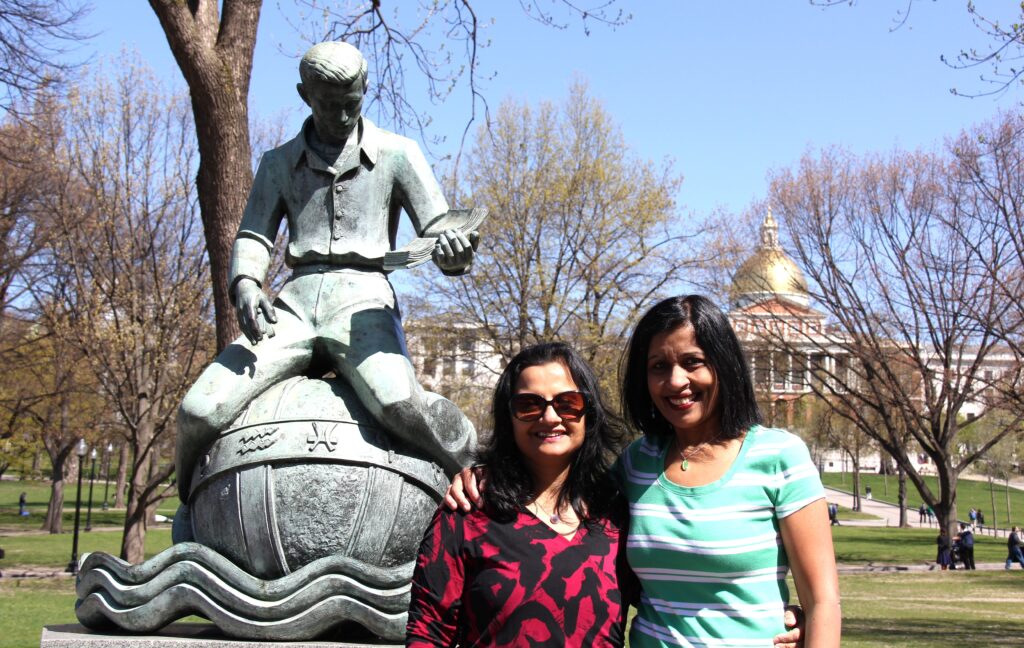
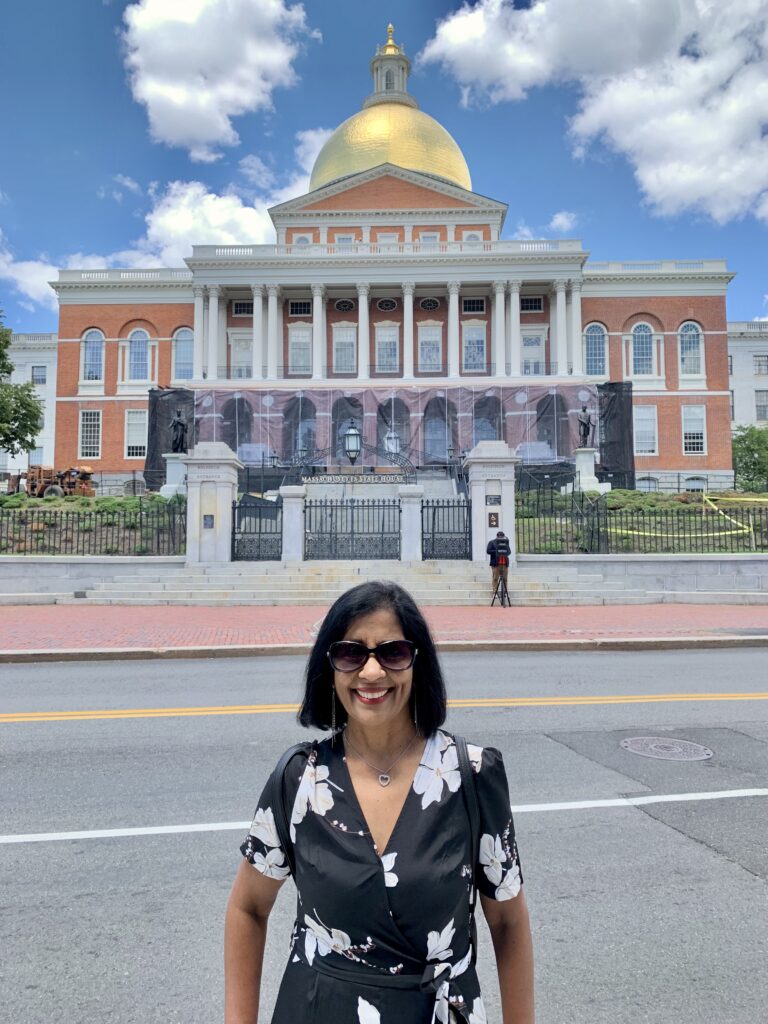
Massachusetts State Capitol Building – With its golden dome clearly visible atop Beacon Hill, the Massachusetts State House sits at the western edge of the Boston Common and is part of the Freedom Trail. Charles Bullfinch designed this monumental building, which completed construction in 1798. We went on a guided tour of the building.
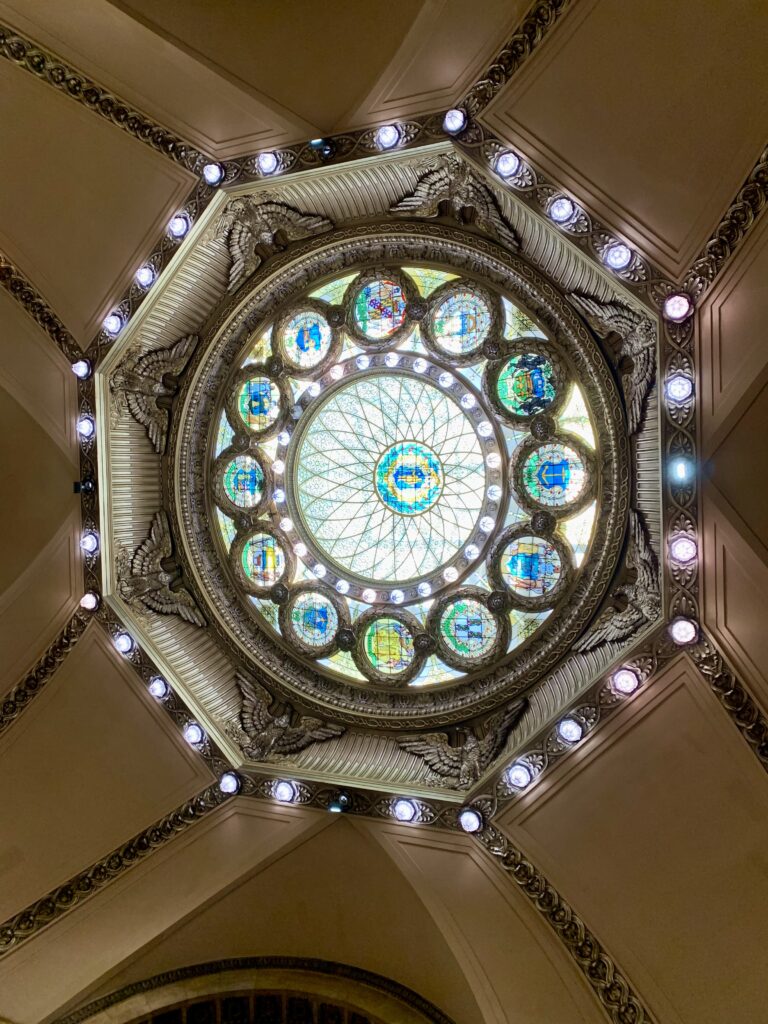
Massachusetts State Capitol, Dome and Rotunda – The building’s iconic dome was designed by Charles Bullfinch and was first shingled before being covered by copper by Paul Revere and Sons to prevent leaks in the early 19th century. The dome was then gilded in gold in 1874 and again at a later date, becoming the golden dome that is visible from the Boston Common. The interior of the dome is colorful and as impressive as its exterior.
Video Display
- Rotunda Dome close up view
- Massachusetts State Capitol, Grand Staircase – A large stairway (Grand Staircase) leads to the third floor. A large stained glass window overlooks the landing, displaying the various seals used by the governments of Massachusetts.
- Senate Chamber
- House of Representatives
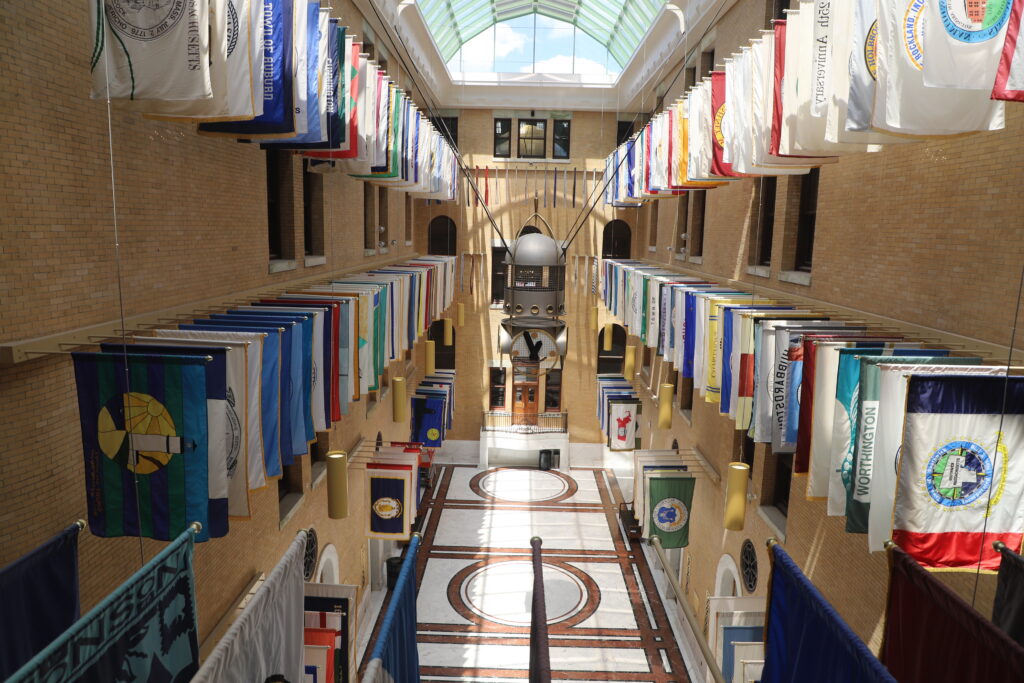
Massachusetts State Capitol, The Hall of Flags – is a special place where all of Massachusetts soldiers are honored and remembered. Flags have been returned after duty in every subsequent war, including the Spanish-American War, World Wars I and II, the Korean War, the Berlin emergency, and the Vietnam War. The hall was built with beautiful Italian marble to appropriately display these flags.
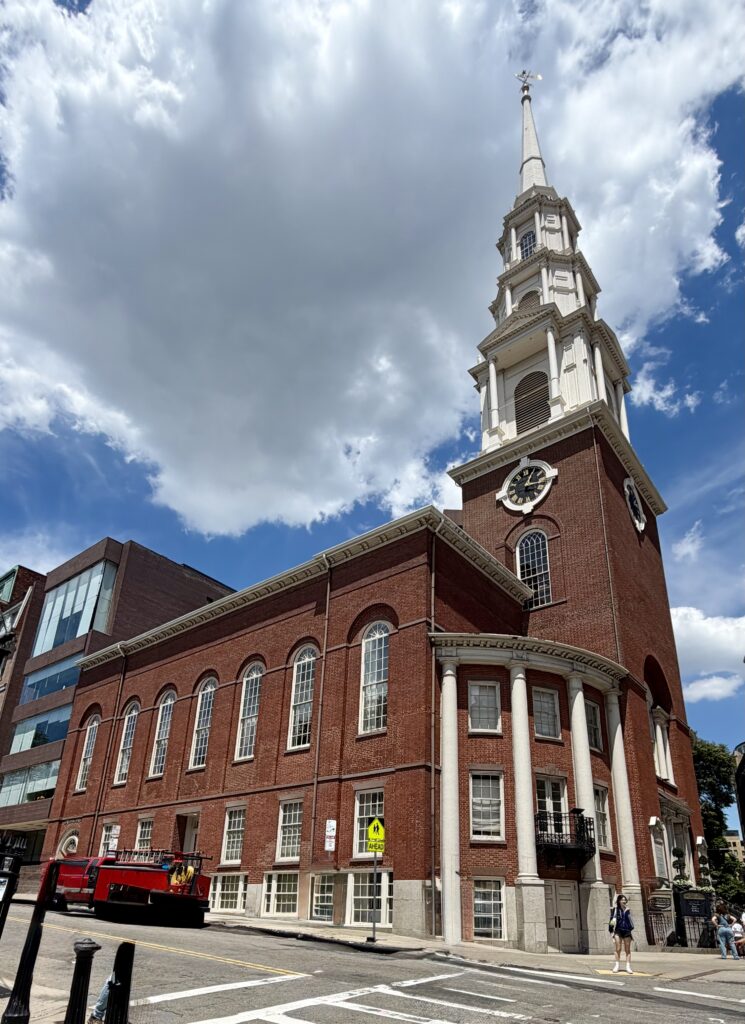
Park Street Congregational Church – This church is another stop on the Freedom Trail. Founded in 1809, it is a historic and active evangelical Congregational church in Downtown Boston and is notable for its tall spire.
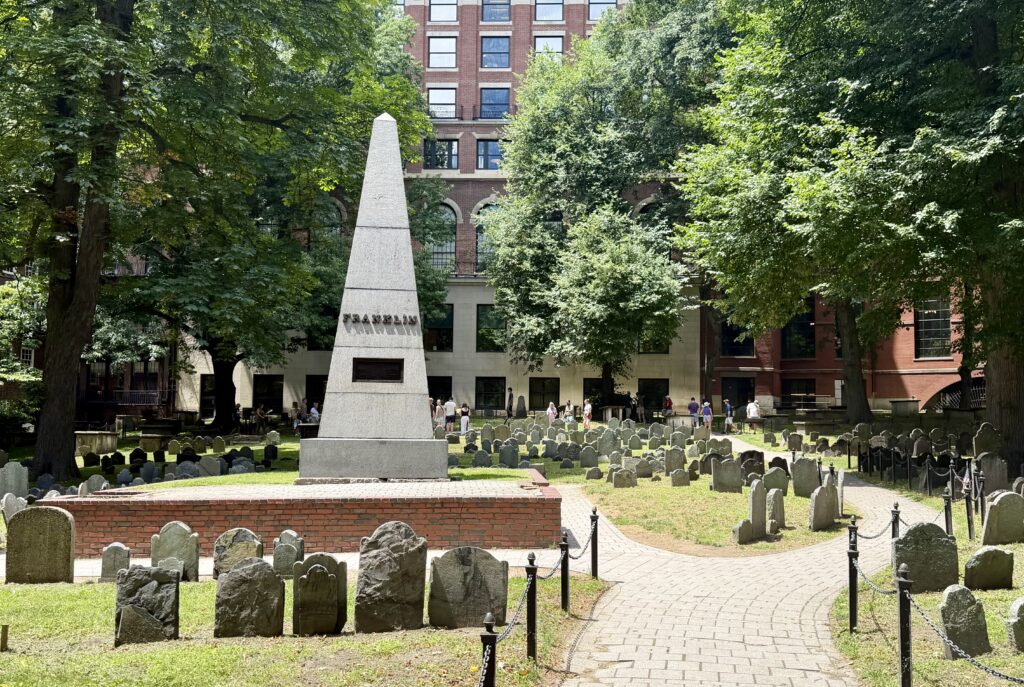
Granary Burying Ground – Another stop on the Freedom Trail, the Granary Burying Ground is the city’s third-oldest cemetery, founded in 1660. It is the burial location of revolutionary War-era patriots, including Paul Revere, the five victims of the Boston Massacre, and three signers of the Declaration of Independence – Samuel Adams, John Hancock, and Robert Treat Paine. The cemetery has 2,345 grave-markers. Historians estimate that as many as 5,000 people are buried there. The cemetery’s name directly refers to its close relationship with the grain storage structure that existed at the time of its establishment.
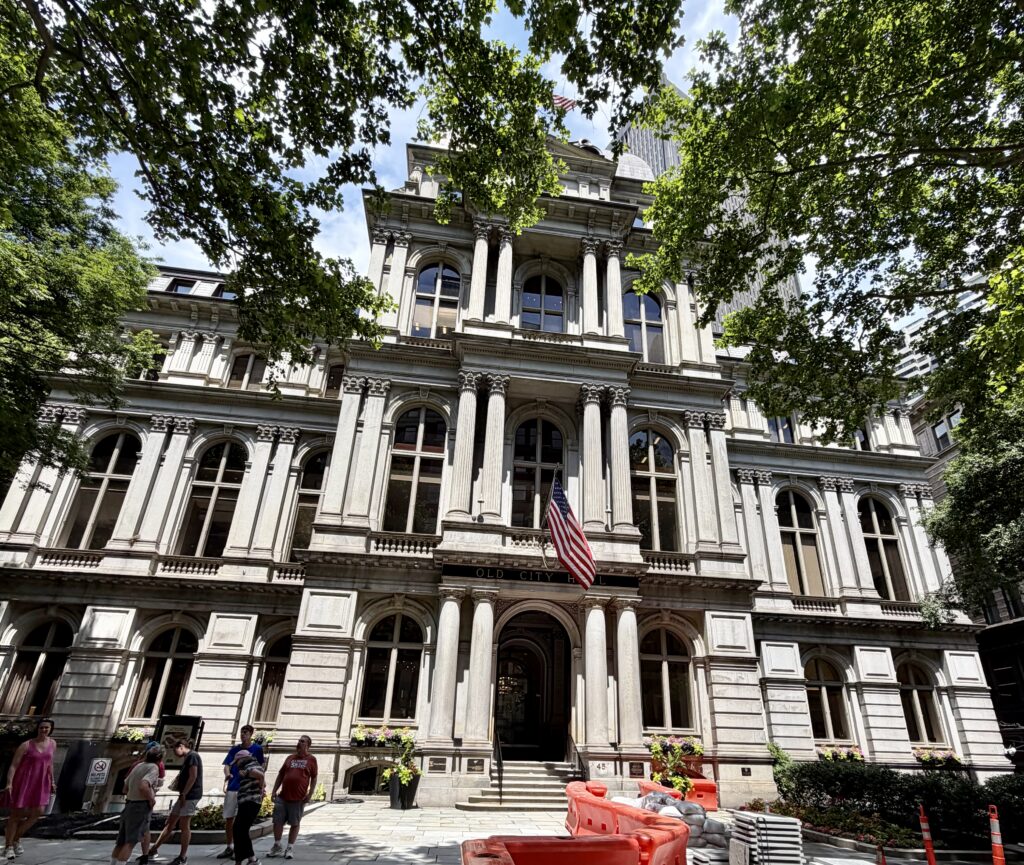
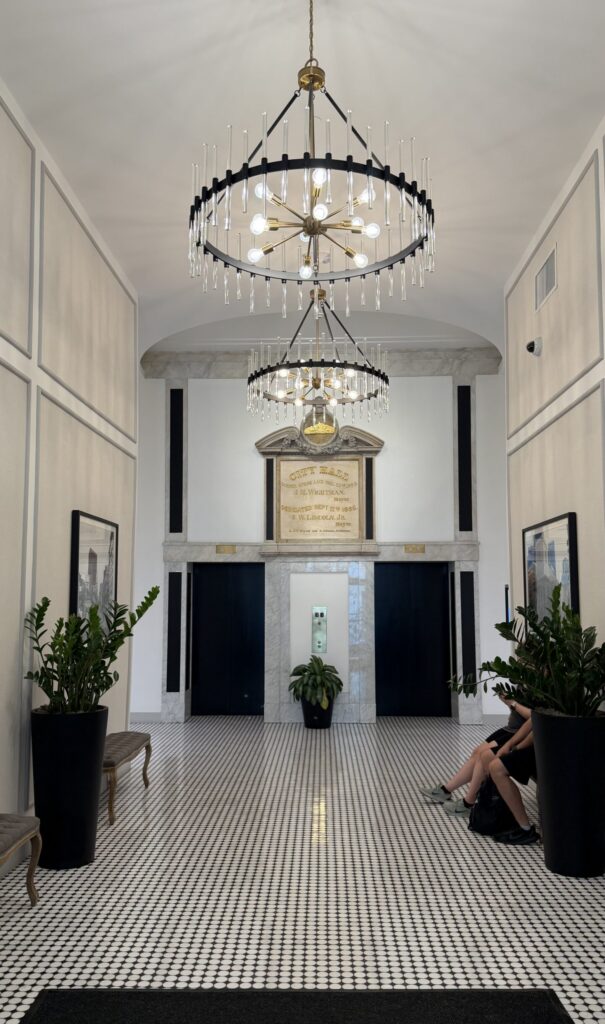
Old City Hall – located along Boston’s Freedom Trail, it served as the city’s government headquarters from 1865 to 1969. Designed by Gridley James Fox Bryant and Arthur Gilman, it was one of the first examples of the French Second Empire architectural style in the United States, influencing the design of many later public buildings.
When Boston’s new City Hall opened in 1969, the building was carefully renovated and repurposed for commercial and office use, becoming an early example of successful adaptive reuse. It was designated a National Historic Landmark in 1970 and remains an important architectural and historical landmark in downtown Boston.
Boston Irish Famine Memorial – Another moving stop along the Freedom Trail, this memorial commemorates the Great Irish Famine (1845–1852) and the journey of Irish immigrants to America. Sculpted by Robert Shure, it features two contrasting bronze groups: one portraying the suffering and starvation endured in Ireland, and the other symbolizing the hope, resilience, and prosperity many Irish immigrants found in Boston.
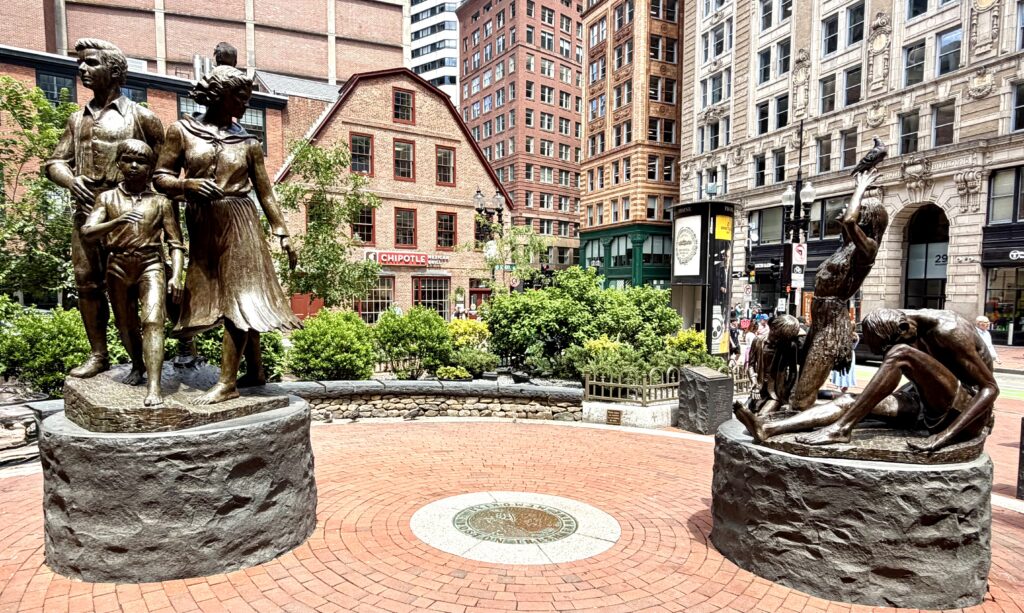
Eight interpretive plaques tell the story of the famine and highlight Boston’s humanitarian response in 1847, when the USS Jamestown carried food and supplies to famine victims in Ireland. The memorial also reflects the lasting contributions of Irish Americans to Boston’s history and culture.
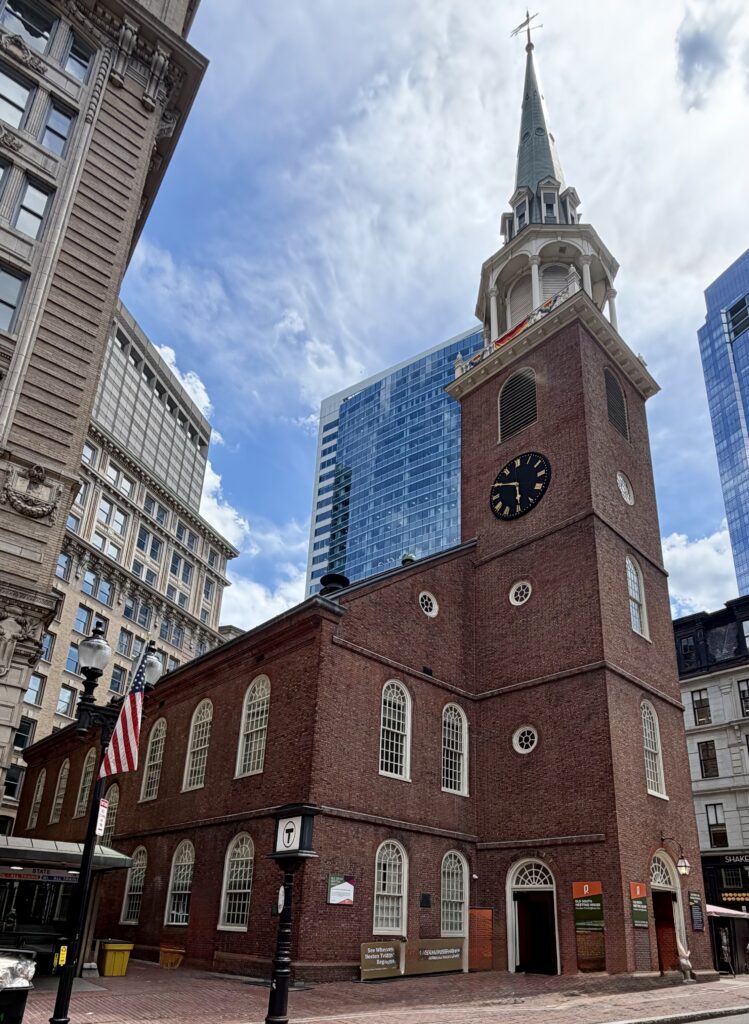
Old South Meeting House – built in 1729, this historic church and museum is another landmark located along Boston’s Freedom Trail. Originally home to the Old South Church congregation, it became famous as the gathering place where thousands of colonists met before the 1773 Boston Tea Party, making it a powerful symbol of free speech and the American Revolution.
The meeting house replaced an earlier 1669 church and served both religious services and public meetings. During the Revolutionary War, British troops occupied the building and converted it into a riding school, damaging the interior. It was restored after the war and remained in use until the congregation moved to a new church following the Great Boston Fire of 1872.
Saved from demolition in 1876 through one of Boston’s earliest historic preservation efforts, the building has operated as a museum since 1877.
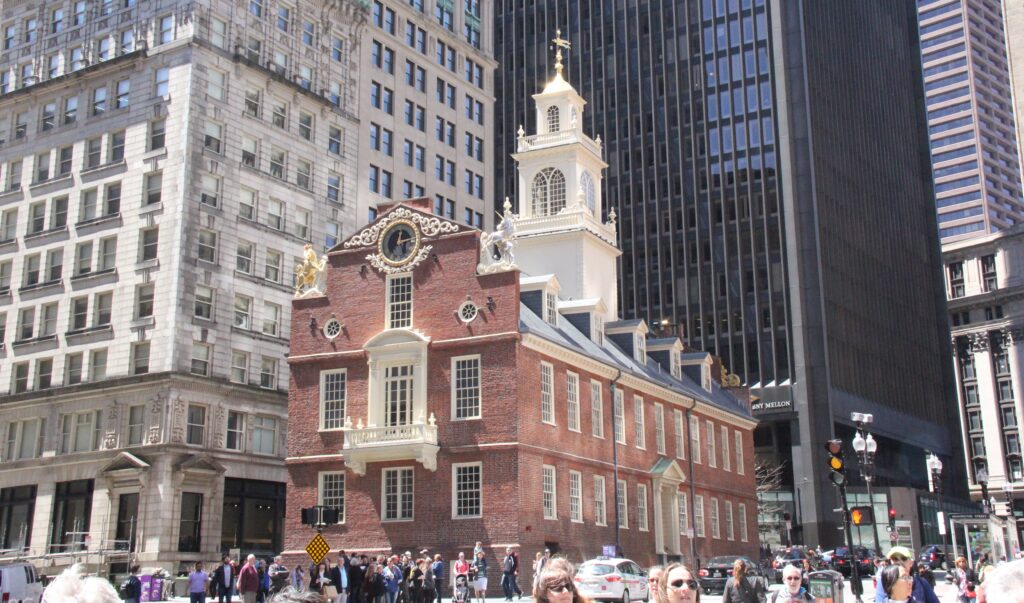
Old State House aka Old Provincial State House – is a historic building built in 1713. It was the seat of the Massachusetts General Court until 1798 and is one of the oldest public buildings in the United States. It is one of the landmarks on Boston’s Freedom Trail and now serves as a history museum. The Old State House was designated a National Historic Landmark in 1960.
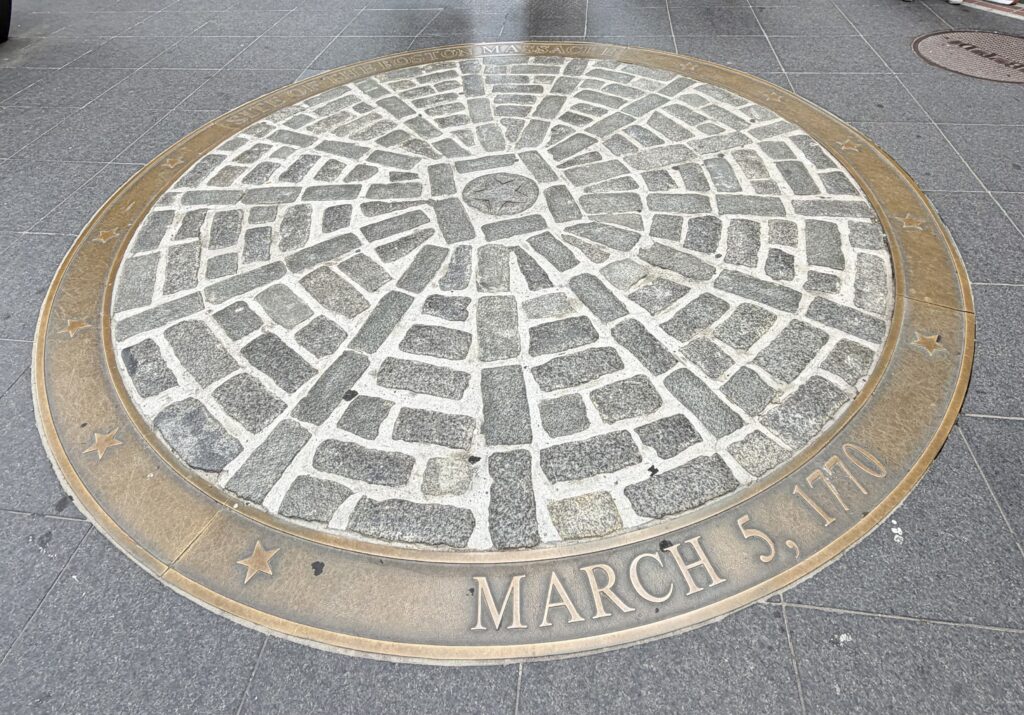
Boston Massacre memorial – is outside the building, marking the site where British soldiers fired on colonists in 1770—an event that helped fuel the American Revolution. Originally installed in the late 19th century, the memorial was relocated during renovations to the nearby State subway station.
Faneuil Hall and Quincy Market – In 1742, Peter Faneuil, one of Boston’s wealthiest merchants, built Faneuil Hall as a gift to the city. The building would serve as a meeting hall and a permanent central marketplace. Located in downtown Boston, steps away from the waterfront, Faneuil Hall is alive today as it was in 1742 when our nation’s fathers proclaimed it The Cradle of Liberty. The statue in front of the hall is of Samuel Adams who was an American statesman, political philosopher and a founding father of United States.
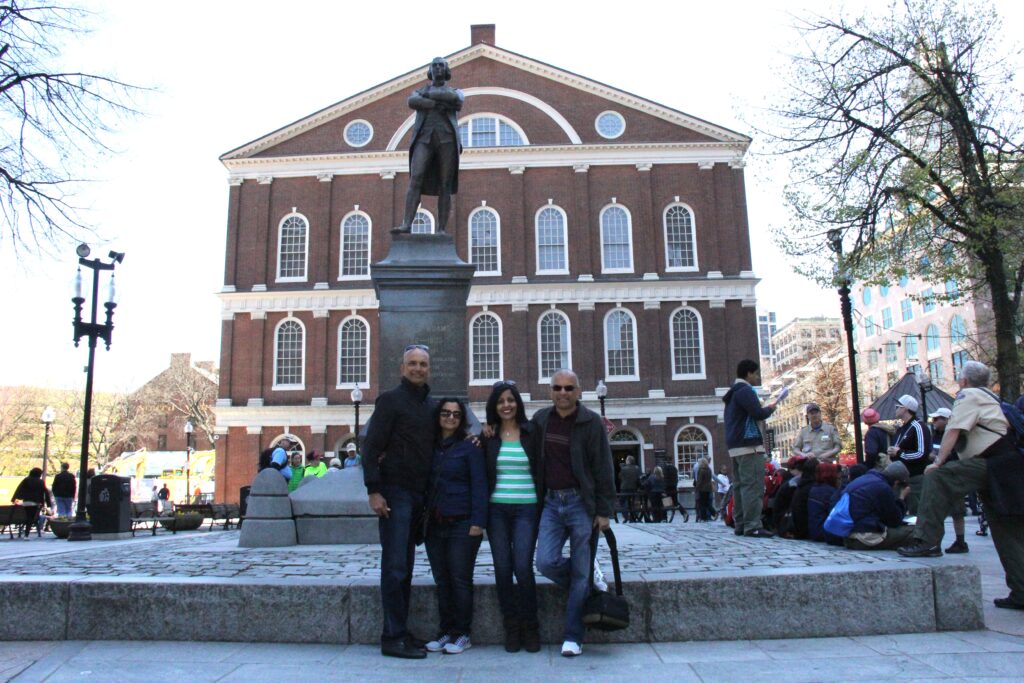
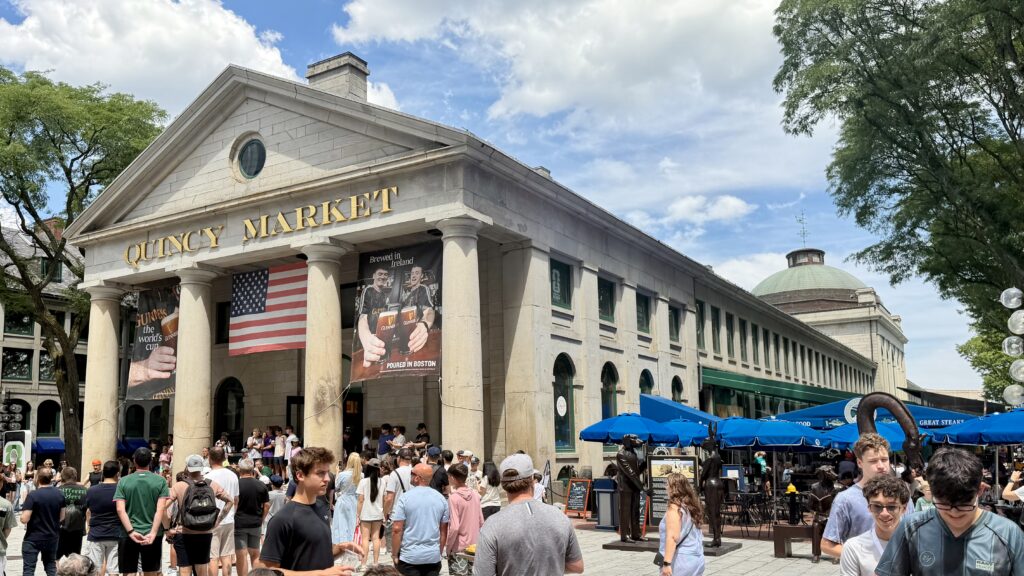
Faneuil Hall was expanded to include Quincy Market in 1826 when Boston’s rapid growth necessitated a larger marketplace. It was named in honor of mayor Josiah Quincy who organized its construction without any tax or debt. The food stalls in Quincy Market are some of the most popular places to eat lunch in Boston.
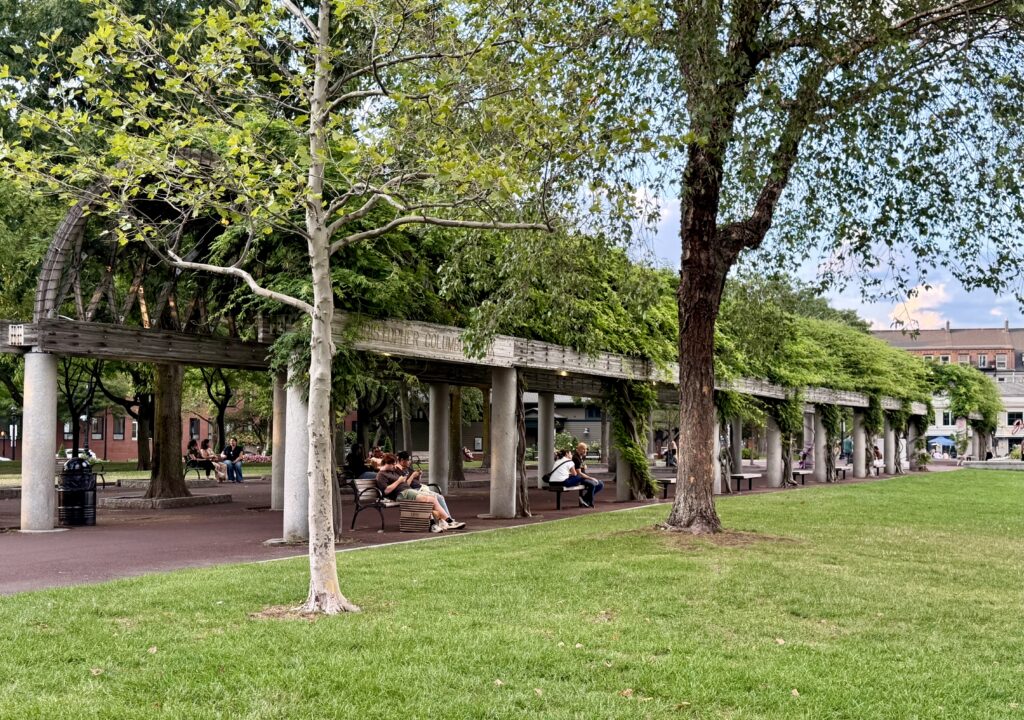
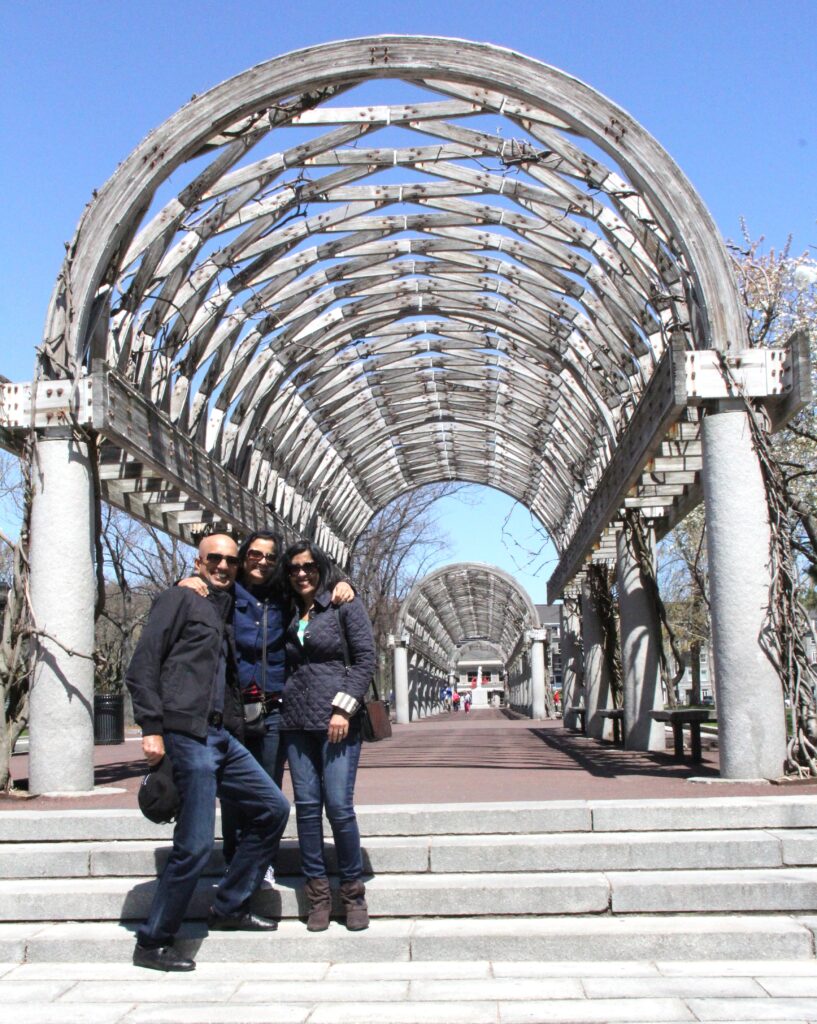
Christopher Columbus Waterfront Park – Opened in 1976, this Park, on the Boston harbor, is one of America’s earliest waterfront parks of the modern era. It has a playground area for smaller kids, a nice garden arch walkway for strolling, several benches and picnic space options. Wooden trellis with wisteria growing on them looks great during the summer.
Bunker Hill Monument honors the Battle of Bunker Hill, a major Revolutionary War battle fought on Breed’s Hill on June 17, 1775. Built between 1825 and 1843, the 221-foot granite obelisk was the tallest of its kind in the United States at the time. Today, the monument is a National Historic Landmark and a popular stop along Boston’s Freedom Trail, surrounded by historic markers and statues that commemorate the battle and those who fought in it.
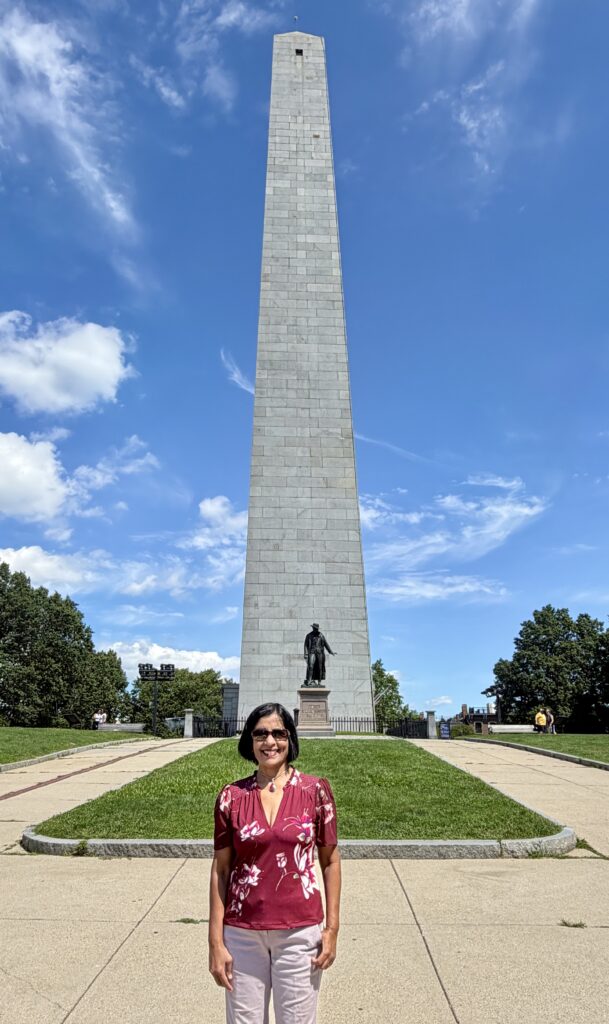
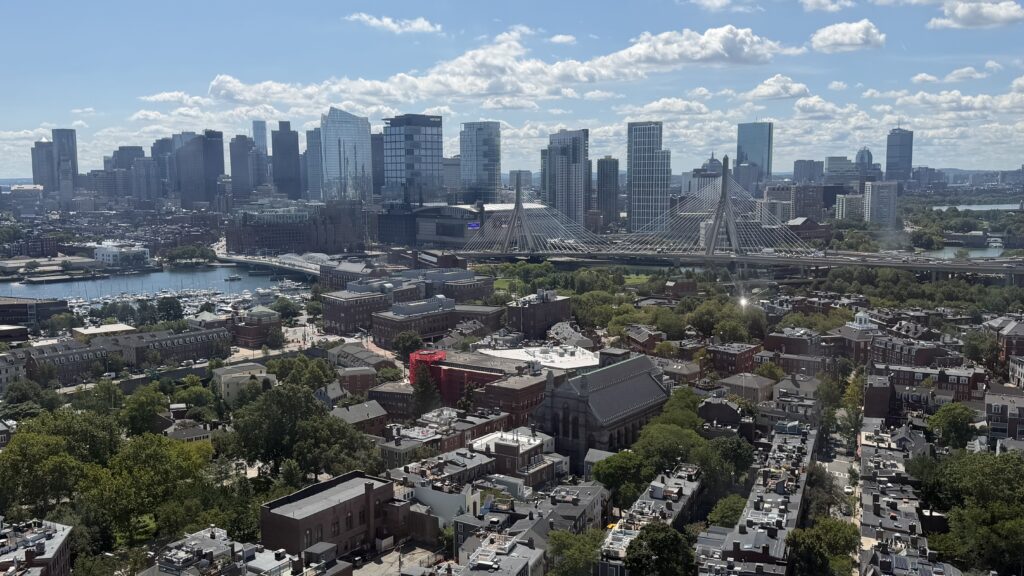
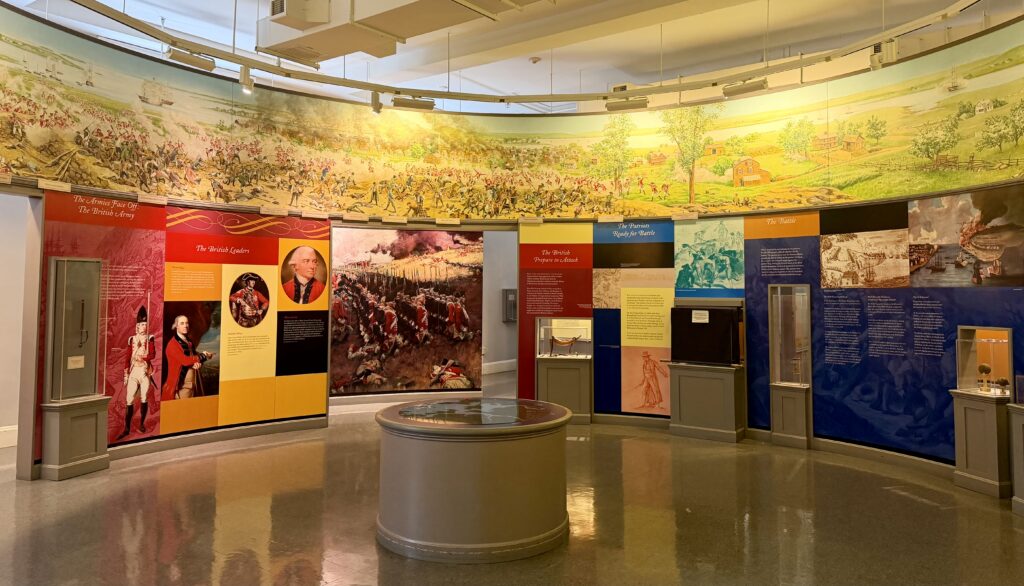
You can climb the Monument for free by ascending 294 stone steps through a narrow, winding spiral staircase to the observation platform. Because only 20–25 people are allowed inside at a time, busy days may involve a wait. The monument is open Wed – Sun from 10AM-5PM. There is also a museum located across from the monument, where visitors can learn more about the monument and the historic Battle of Bunker Hill.
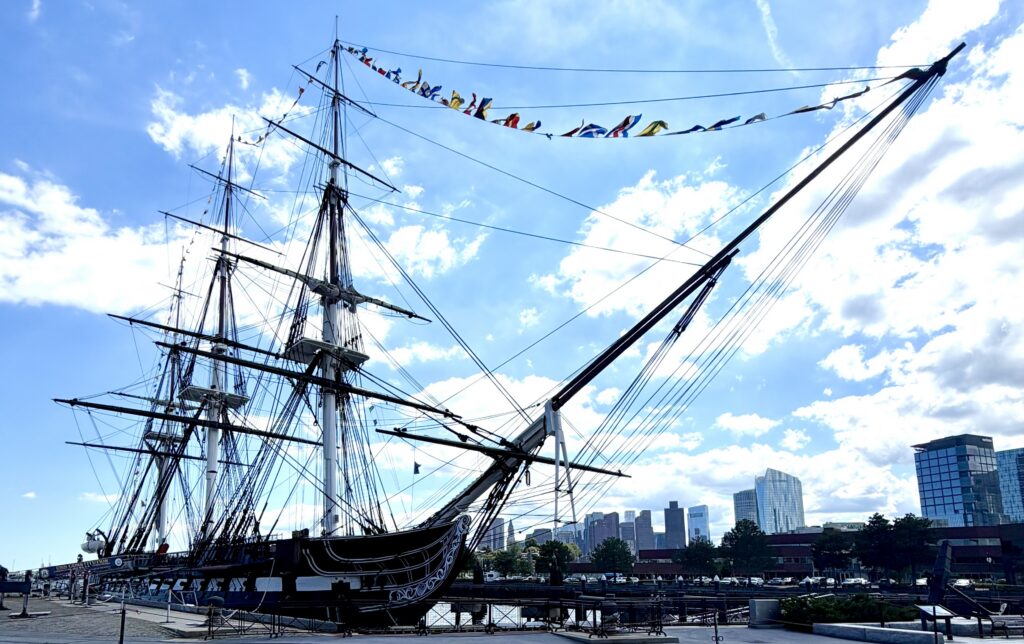
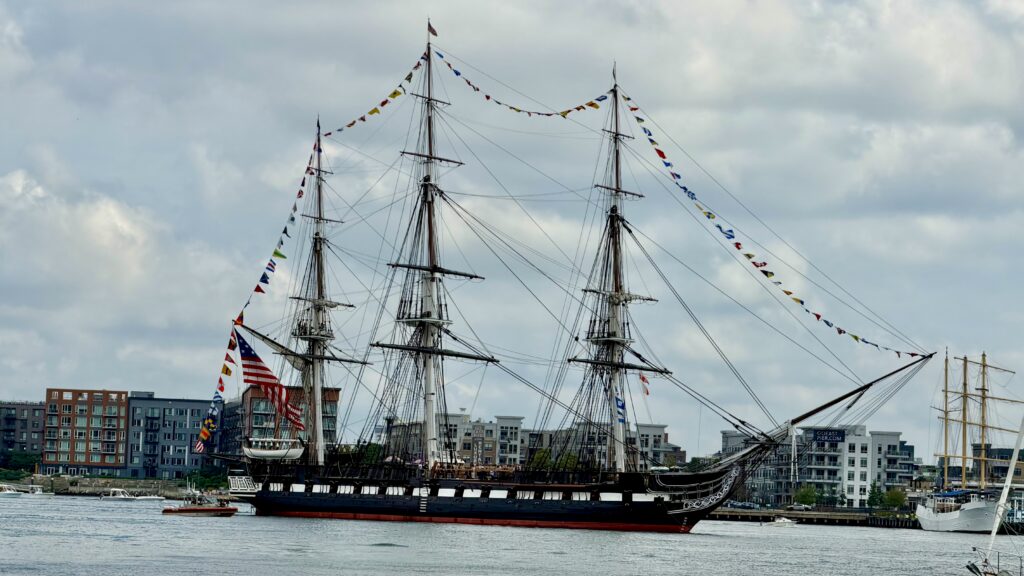
USS Constitution – Located less than a 10-minute walk from Bunker Hill Monument and along the Freedom Trail, the USS Constitution, also known as Old Ironsides, is a must-see historic landmark. This three-masted, wooden-hulled U.S. Navy frigate was launched in Boston in 1797 and is the world’s oldest commissioned naval vessel still afloat. She is best known for her victories over British warships during the War of 1812, which earned her the famous nickname Old Ironsides.
After decades of naval service, the USS Constitution became a museum ship in 1907 and today remains an active U.S. Navy vessel at the Charlestown Navy Yard. Visitors can tour the ship for free and learn about its fascinating naval history, while its active-duty crew continues to participate in educational programs, ceremonies, and public events.
The USS Constitution has 4 main decks inside the hull, comparable in height to a 4-story building.
- Orlop Deck was the bottom most and used for cable storage, the brig, and the surgeon’s quarters during battle.
- Berth Deck was where the crew ate and slept in hammocks. At the rear of the berth deck, the wardroom functioned as the eating and social area for the ship’s senior officers.
- Gun Deck served as the main combat deck, lined with heavy long guns.
- Spar Deck, the upper weather deck, was where the officers directed the ship and the crew carried out sailing operations.
The USS Constitution is scheduled to sail into Boston Harbor on several ceremonial and commemorative dates throughout the year. It happened to sail on one of the days we were in Boston, and it was a wonderful experience to watch Old Ironsides head out into the harbor.
Harvard University was founded in 1636 and was the first college established in the American colonies. Although John Harvard did not actually found the university, he became its first major benefactor. Upon his death, he donated half of his estate and his personal library of more than 400 books to the school. His generous contribution played an important role in the early development of the institution, and Harvard was later named in his honor.
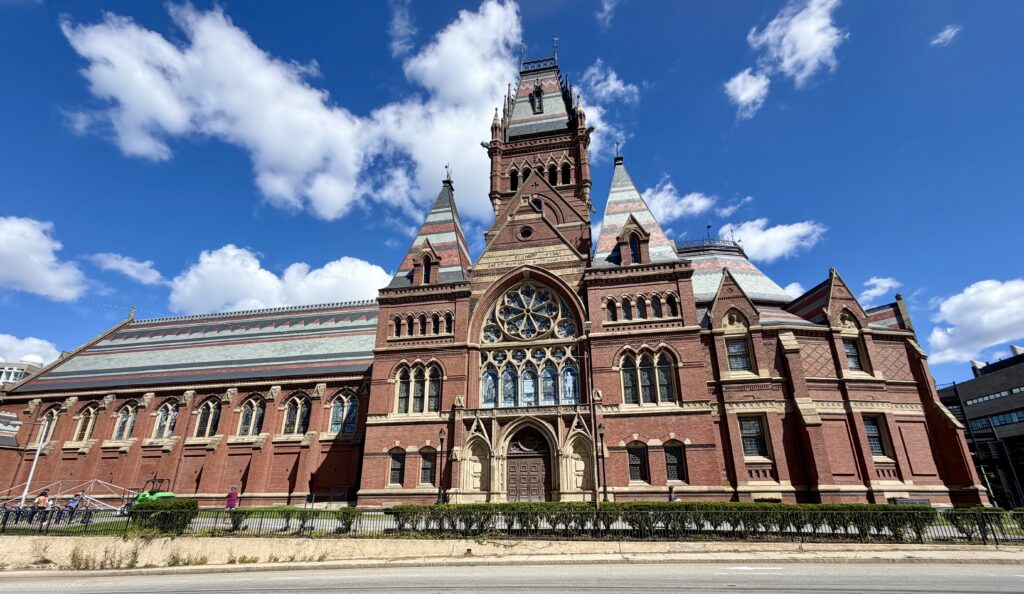
Harvard University, Memorial Hall – was the first building we came across on our tour of Harvard University. This striking High Victorian Gothic landmark was built to honor Harvard alumni who fought for the Union during the American Civil War. Unfortunately, we were unable to tour the interior because a student ID is required for access. Inside, the building features Annenberg Hall, a grand freshman dining hall with beautiful vaulted ceilings and stained-glass windows. Sanders Theatre is a historic Gothic auditorium used for lectures, concerts, and university ceremonies. The Memorial Transept is a soaring central space dedicated to fallen soldiers, decorated with marble tablets and intricate stained-glass windows. The lower level includes Loker Commons and the Cambridge Queen’s Head Pub, a popular student gathering spot.
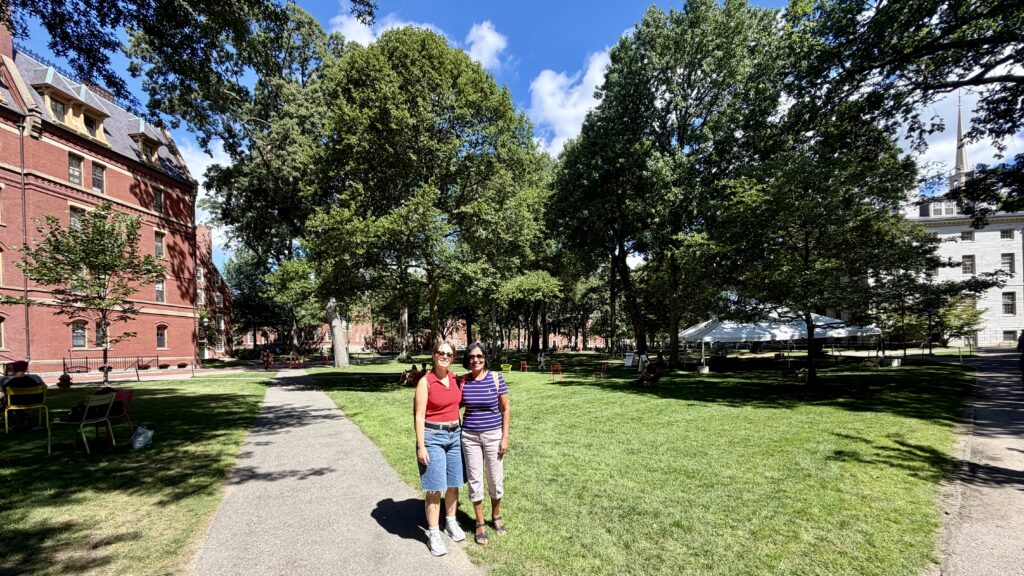
Harvard Yard – Harvard Yard’s central area, Tercentenary Theatre, is a large grassy space that serves as the setting for Harvard’s annual commencement ceremonies. The western section, known as the Old Yard, contains freshman dormitories, John Harvard statue, Memorial Church, Sever Hall and Massachusetts Hall, Harvard’s oldest building and home to the university president’s offices.
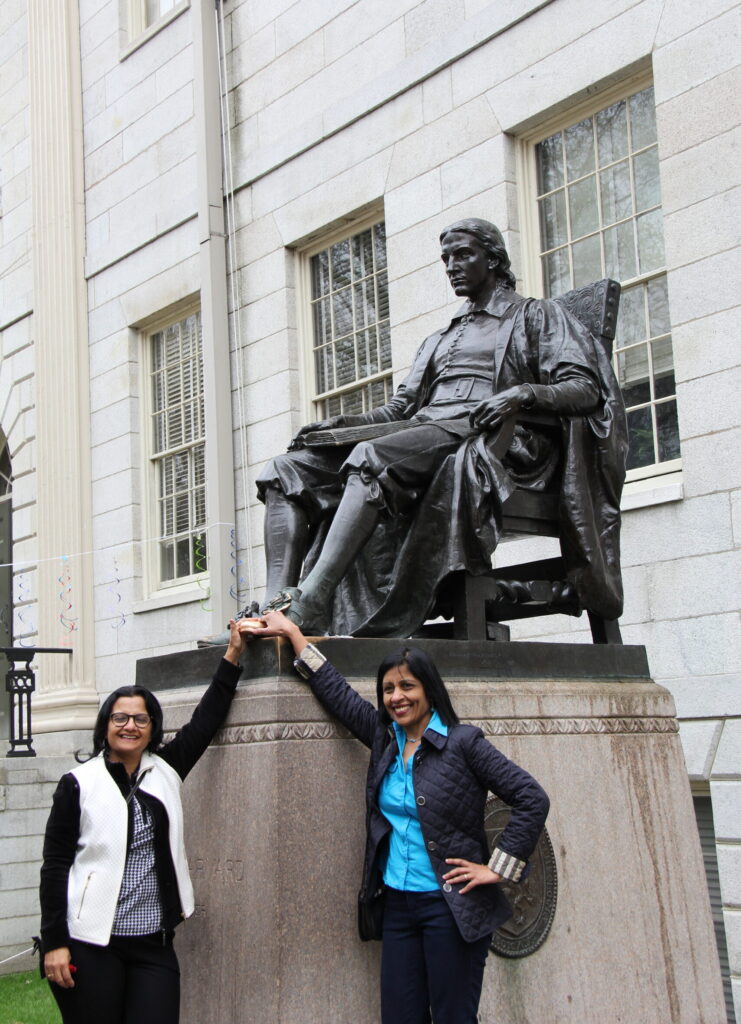
Statue of John Harvard – Sculpted in 1884, the statue of John Harvard who was the University’s first major donor, sits in front of University Hall. It has become a tradition for tourists to rub the left shoe of the statue for good luck, affectionately known as the John Harvard’s Toe. This act has given the shoe a distinctive shine.
Harvard University, Harry Elkins Widener Memorial Library – Built in 1915, this building is the centerpiece of Harvard’s library system and holds about 3.5 million books in more than 100 languages, making it one of the world’s most comprehensive humanities and social sciences research collections. Built in memory of Harvard graduate and book collector Harry Elkins Widener, who died in the Titanic disaster in 1912, the library was funded by his mother, Eleanor Elkins Widener. Student ID is required to access the interior of the library.
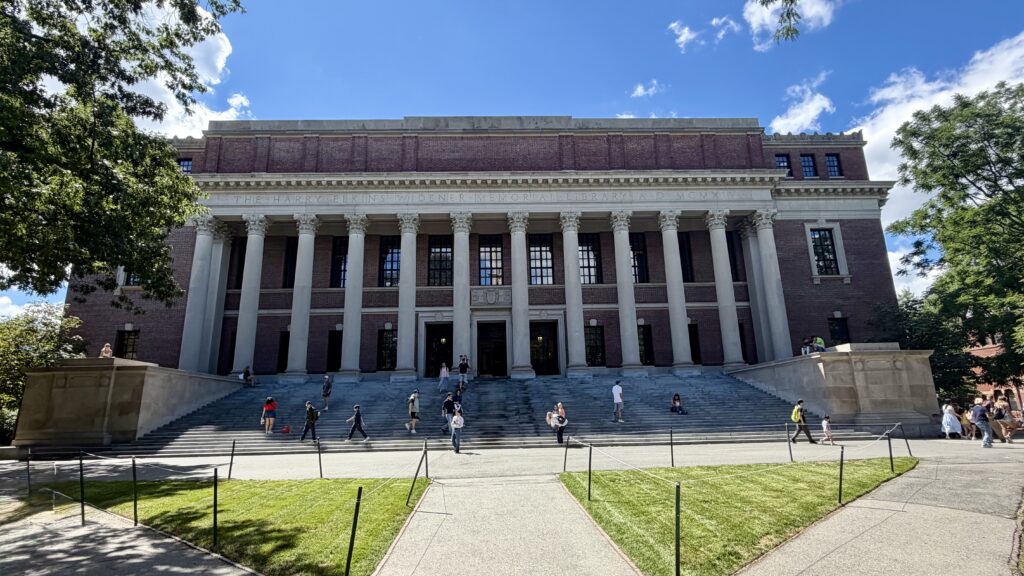
- The Houghton Library, Pusey Library, and Fogg Museum of Art was free to enter and no ID required. Fogg Museum holds major collections of Italian Renaissance, British Pre-Raphaelite, and 19th-century French art.
- Memorial Church – was closed during our visit
- Sever Hall – built between 1878 and 1880, it serves as a lecture hall and classroom building for Harvard’s Faculty of Arts and Sciences.
- Philosophy Building
Massachusetts Institute of Technology (MIT) – is a prestigious private research university, founded in 1861 by William Barton Rogers to advance useful knowledge and support American industrialization through science and engineering. The university grew into a major research institution during World War II, particularly through projects such as the Radiation Laboratory, and later became internationally known for advances in computer science, artificial intelligence, biotechnology, engineering, and other fields. Today, MIT’s campus stretches for more than a mile along the Charles River and includes extensive academic and research facilities.
- MIT, Rogers Building – The main entrance to the University is at 77 Massachusetts Avenue in Cambridge, through the historic Rogers Building. The entrance opens into Lobby 7, a grand, light-filled space beneath a large neoclassical dome and skylight. Lobby 7 also serves as the starting point of MIT’s famous Infinite Corridor, making it an ideal place to begin exploring the campus.
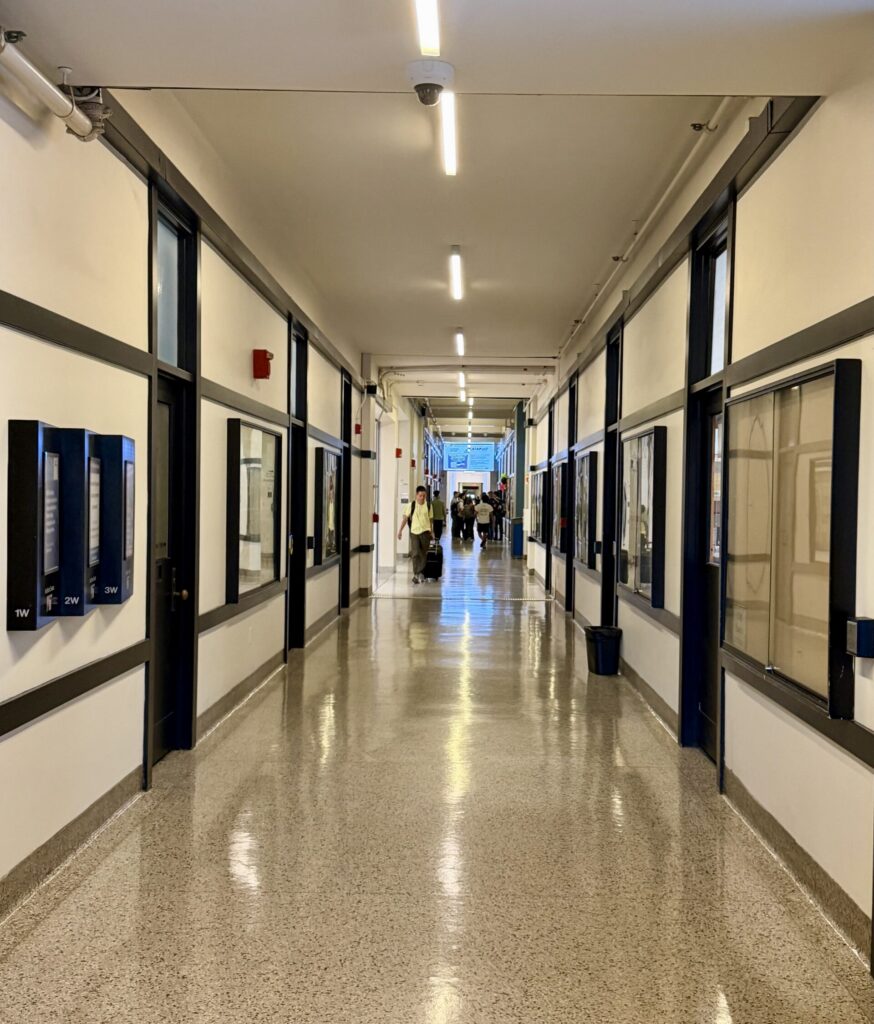
- MIT, Infinite Corridor – is the main pedestrian artery, running through Buildings 7, 3, 10, 4, and 8, beginning at the main entrance. Often described as the campus’s spinal cord, the corridor is typically filled with students and lined with posters, laboratories, classrooms, and entrances to different parts of the university. One of its most fascinating traditions is MIThenge, which occurs twice a year, around mid-November and late January, when the setting sun aligns perfectly with the length of the corridor and illuminates it with sunlight.
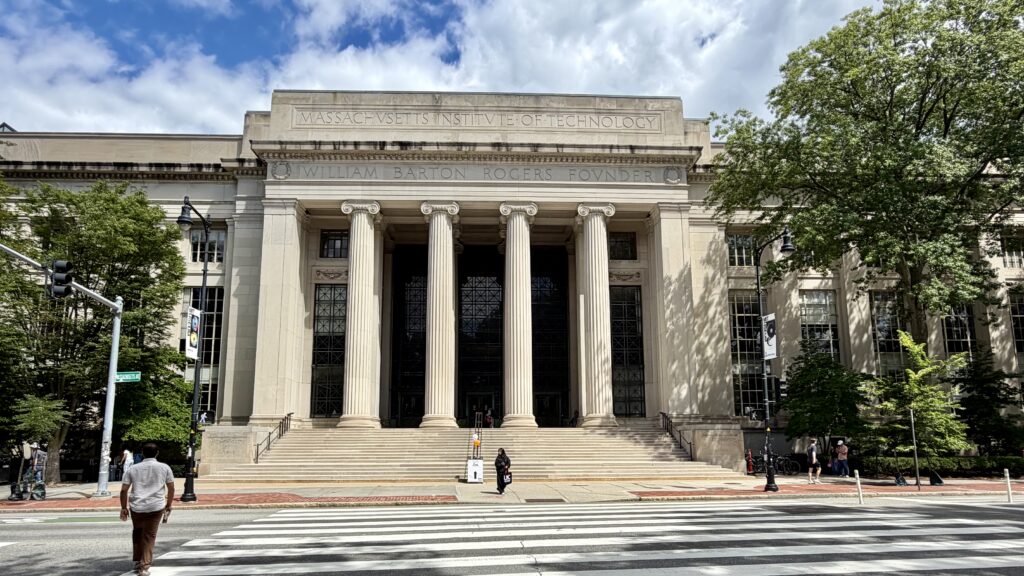
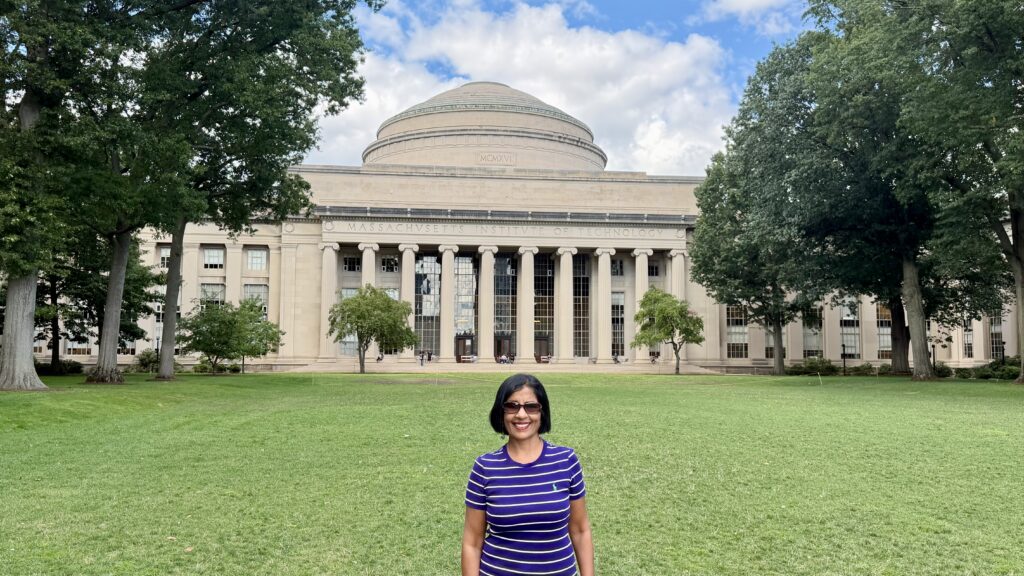
MIT, Killian Court – As you walk along the Infinite Corridor, about halfway through you will come across a grand hall. Step outside from there, and you’ll find yourself in Killian Court, a beautiful, park-like area named in 1974 in honor of MIT President James Rhyne Killian. Designed by campus architect William W. Bosworth, the court faces the Charles River and is best known as the setting for MIT’s annual Commencement ceremony. The marble-clad buildings surrounding the court feature impressive Roman-letter inscriptions honoring influential scientists and thinkers, including Aristotle, Newton, Franklin, Pasteur, Lavoisier, Faraday, Archimedes, Leonardo da Vinci, Darwin, and Copernicus.
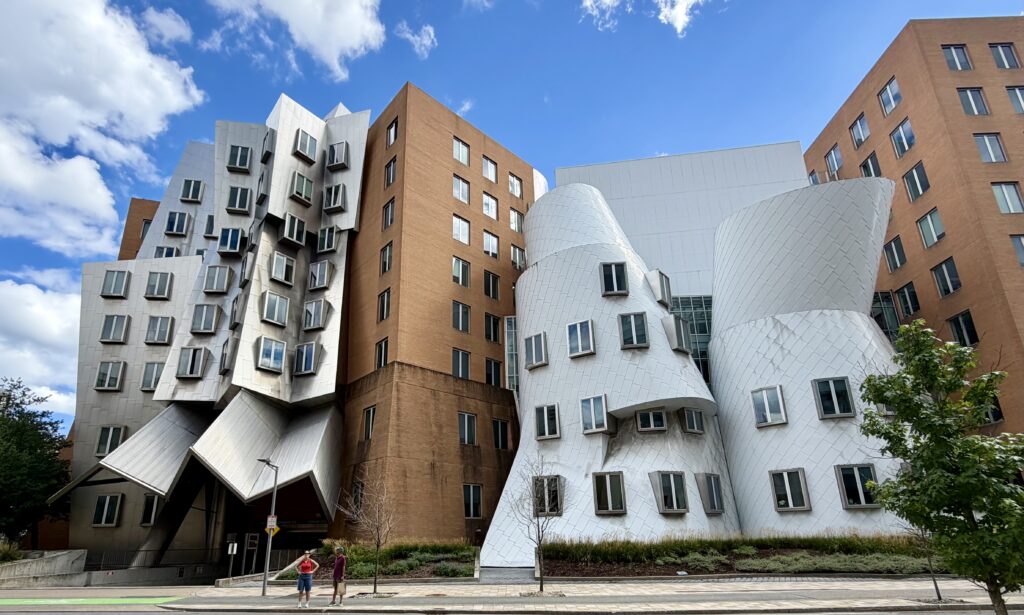
MIT, Ray and Maria Stata Center – After we walked the entire infinite corridor, we walked out and to the memorable Stata Center. AKA Building 32, it is one of the most distinctive buildings on the MIT campus. Designed by renowned architect Frank Gehry, the 430,000-square-foot academic complex opened in 2004. The building’s unconventional design features colorful, irregularly shaped structures and is divided into two towers above the fourth floor—the Gates Tower and the Dreyfoos Tower. The Stata Center houses classrooms, lecture halls, research laboratories, and offices for several departments, including Electrical Engineering and Computer Science, Computer Science and Artificial Intelligence, Linguistics, and Philosophy.
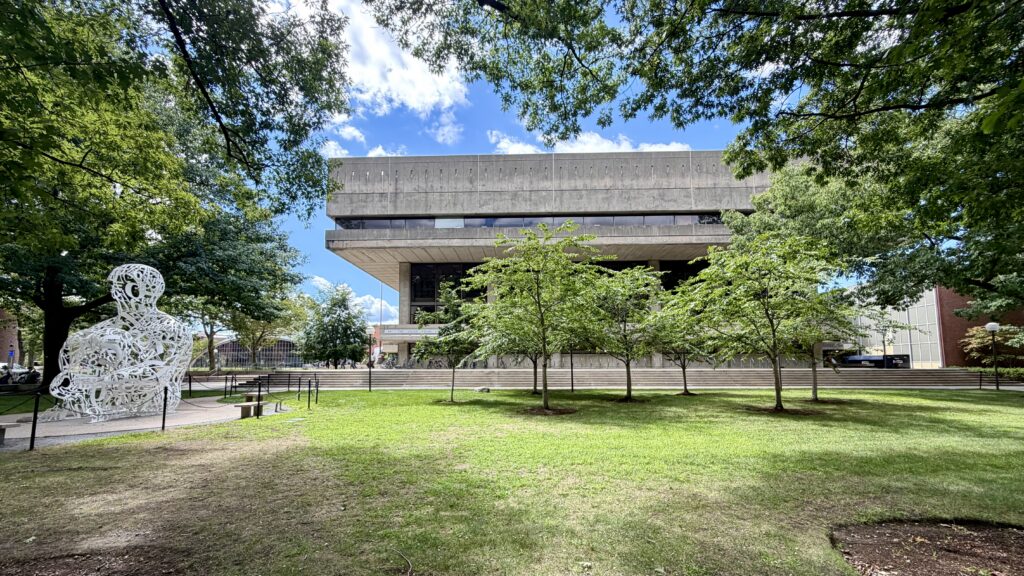
MIT, Julius Adams Stratton Student Center – Opposite the Rogers Building on Massachusetts Avenue, the Stratton Student Center marks the gateway to MIT’s West Campus, an area focused largely on student activities and residential life. The building features a three-story central atrium, lounges, a food court, and spacious dining areas overlooking lush greenery. The atrium serves as a hub for campus life, bringing together students for dining, socializing, studying, and other activities.
MIT, Kresge Auditorium Building W16 (Video below has pictures) – Built in 1955, it is named after its principal funder, Sebastian S. Kresge and is located alongside the nearby MIT Chapel, with both buildings separated by the landscaped Kresge Oval. The auditorium features a copper-clad reinforced-concrete dome that rises 50 feet and rests on three points, creating a striking mid-century modern design. Inside, the main concert hall seats 1,226 people and is known for its excellent acoustics and unobstructed views. The Auditorium holds concerts, lectures, and other MIT events.
On the Video
- Rogers Building, Lobby 7
- Grand Hall leading to Killian Court
- View of Charles River from Killian Court
- 3-piece reclining figure statue in Killian Court
- Barker Engineering Library, Building 10
- Kresge Auditorium (Building W16)
- Kresge Auditorium Interior
- MIT Chapel
- Different angle of Stata Center
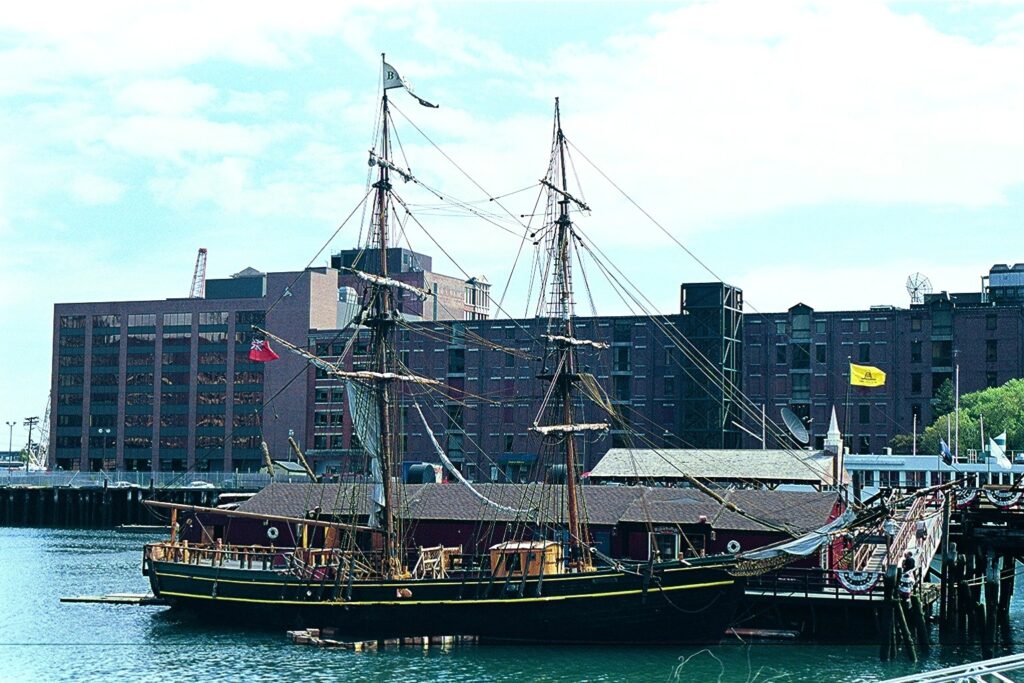
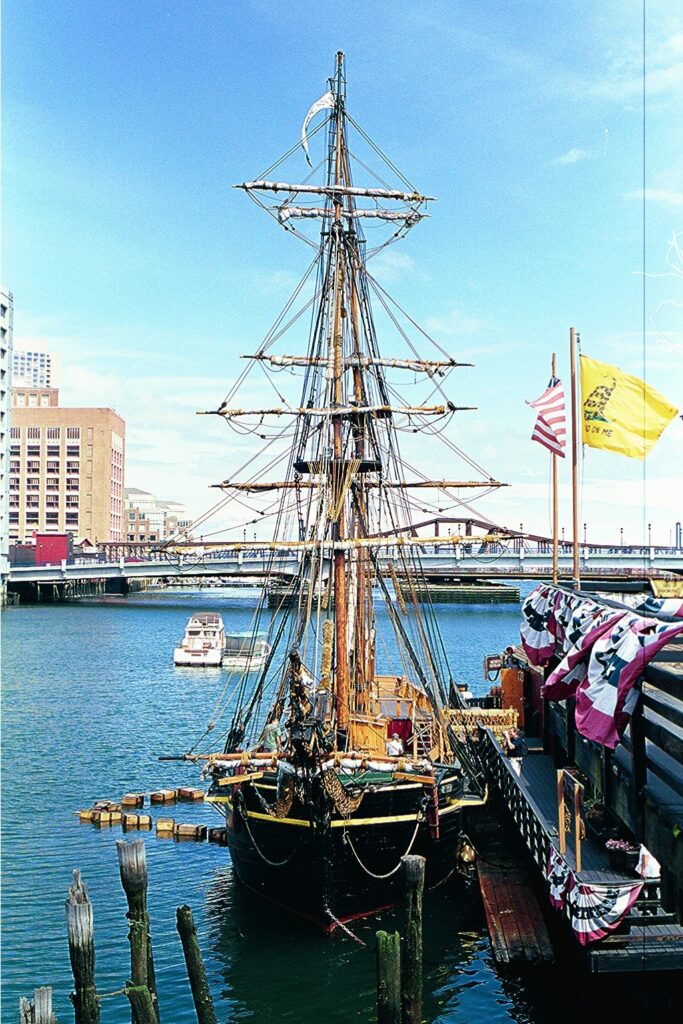
Boston Tea Party Ships & Museum – The Boston Tea Party happened in 1773 because American colonists were angry about the Tea act of 1773, which they saw as taxation without representation and a monopoly for the East India Company. To protest, colonists disguised as Native Americans boarded British tea ships in Boston Harbor and threw 342 chests of tea into the water on the night of December 16, 1773. This political and mercantile protest was one of the key events that lead to the American Revolutionary War and, ultimately, American independence.
At the Boston Tea Party Ships & Museum, costumed historical interpreters lead visitors through that historic night, through interactive exhibits, films, and multi-sensory experiences. At the end of the show everyone gets to dump tea into the harbor.
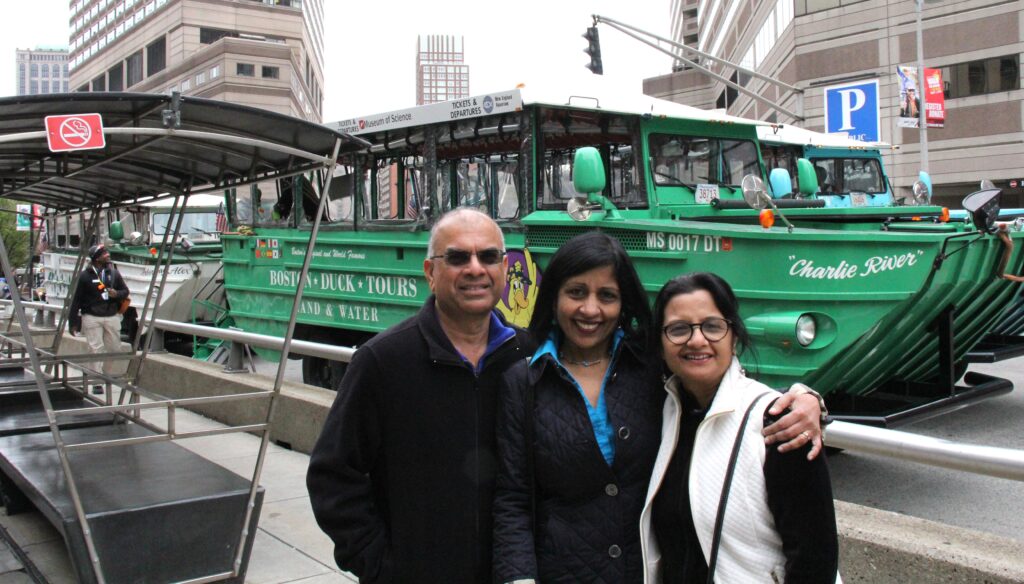
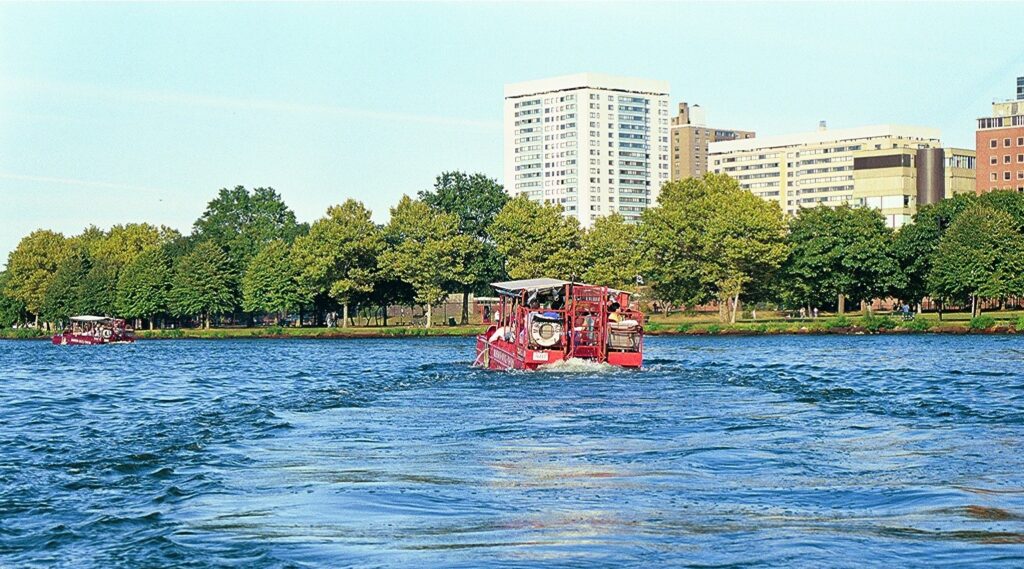
Boston Duck Tour – The tour uses a vehicle that is a bus on land and a boat in the water. The tour first takes you through city landmarks on land before splashing into the Charles River for a unique perspective of the city’s sights. These World War II-style landing crafts offer an 80-minute experience, covering about 60 minutes on land and 20 minutes in the water, providing a fun way to see Boston.
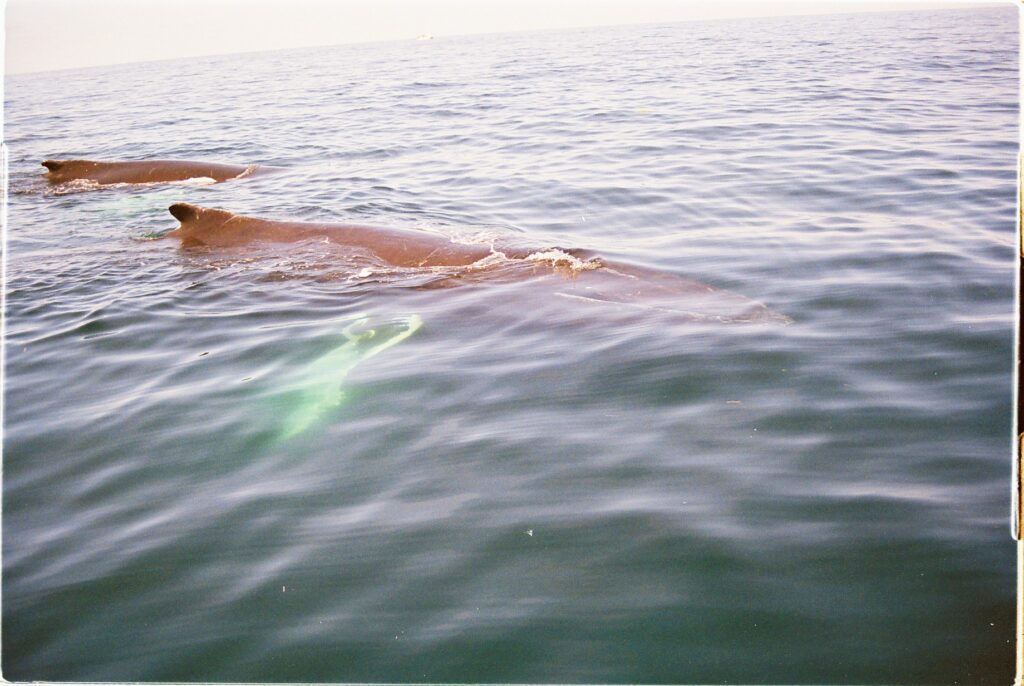
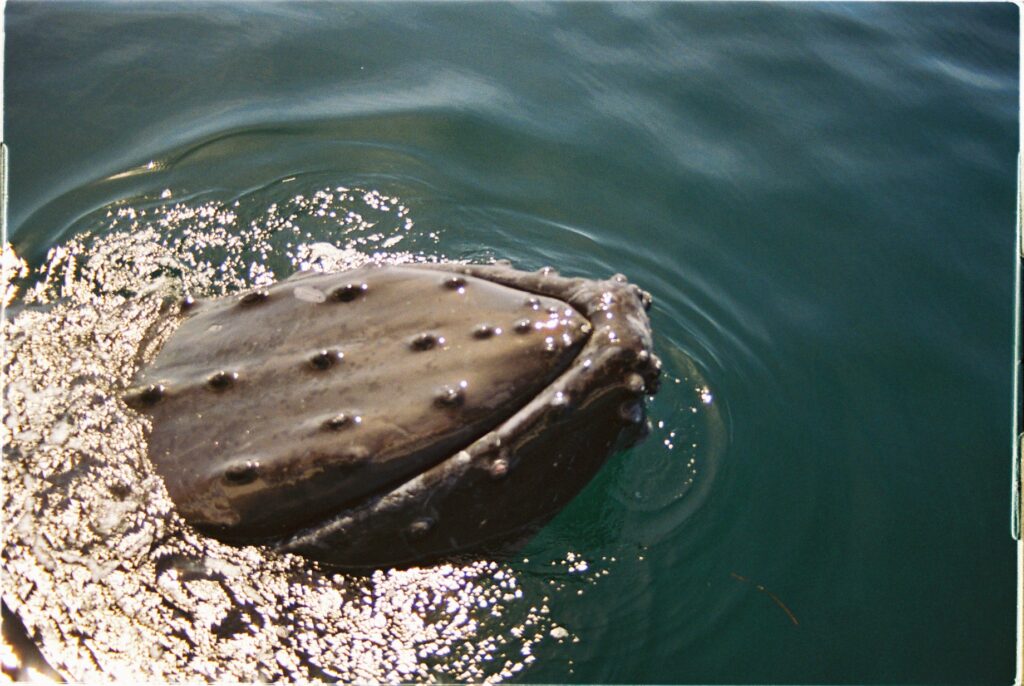
Whale Watching Cruises – There are many whale watching cruises offered in Boston like. These tours typically use high-speed catamarans, providing more time for wildlife viewing, and are equipped with indoor and outdoor seating, snack bars, and naturalist guides who educate passengers about the animals. Bring your cameras, binoculars, sunscreen, and a light jacket, and motion sickness medication (if you think you will get sick). The cruises are normally 1-2 hours in length.
We went of a whale watching cruise in more than 20-years back and had a great day watching fin whales and humpback whales.

Copley Square – is a historic and vibrant public square named after the American painter John Singleton Copley. Some prominent landmarks around the square include Boston Public Library, Trinity Church, John Hancock Tower, and the Old South Church. It is also a site for the Boston Marathon finish line, and a center for dining and shopping.
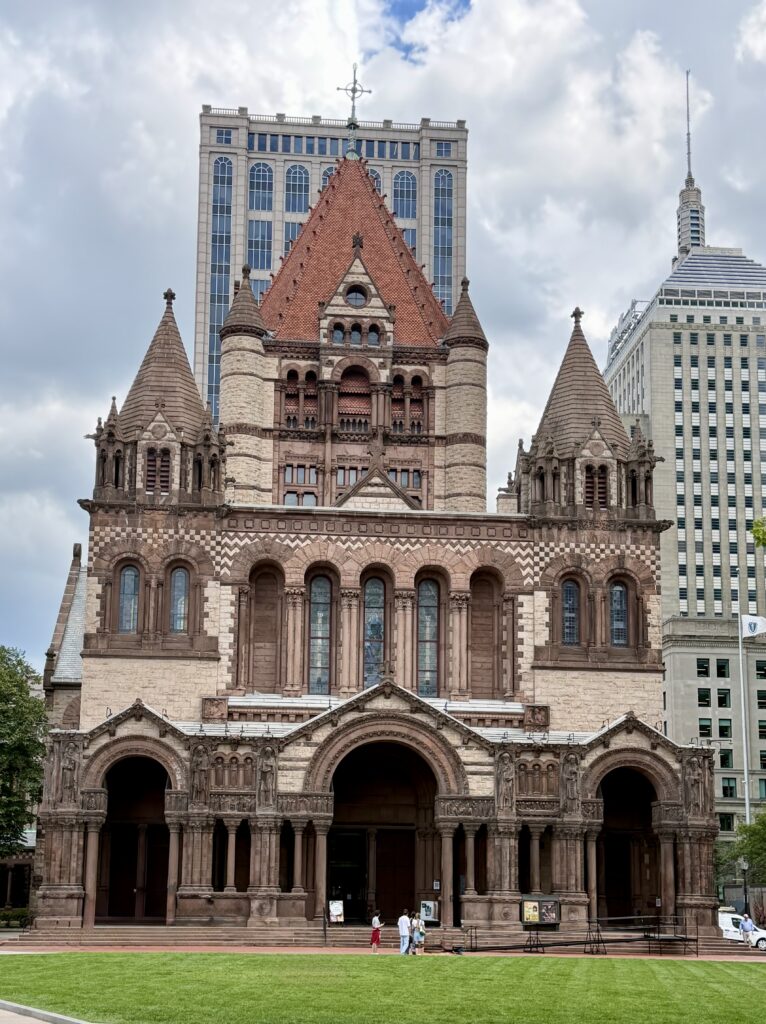
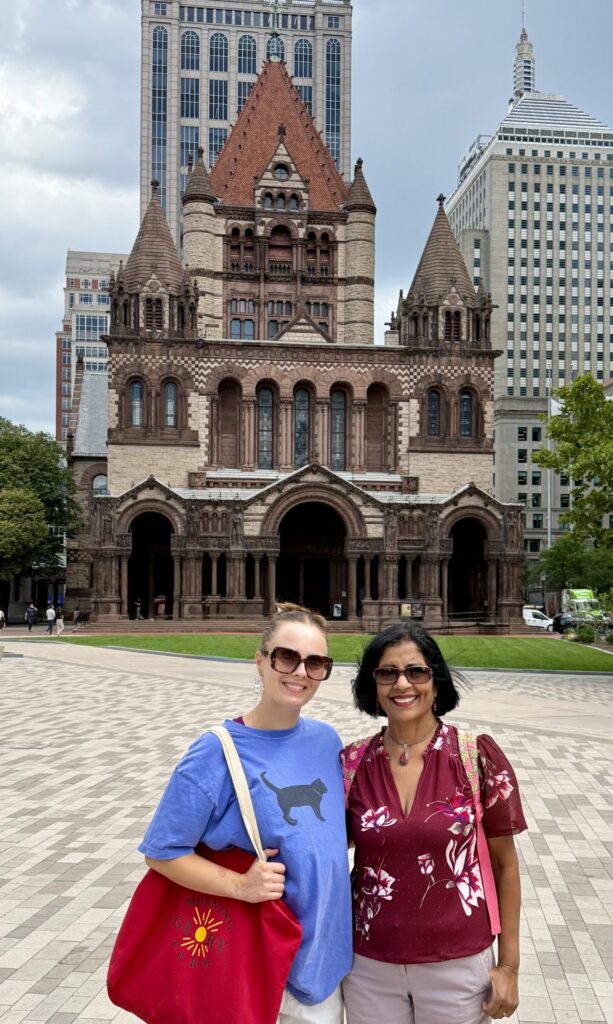
Copley Square, Trinity Church – is a Episcopal parish church in continuous existence since its founding in 1733. The current structure is the third building for the parish and stands as the largest building in the Episcopal Diocese of Massachusetts, with a seating capacity of 1350 people for weekly worship and for special city-wide events. There is an admission fee if you want to do a self tour of the church interior.
———————————–
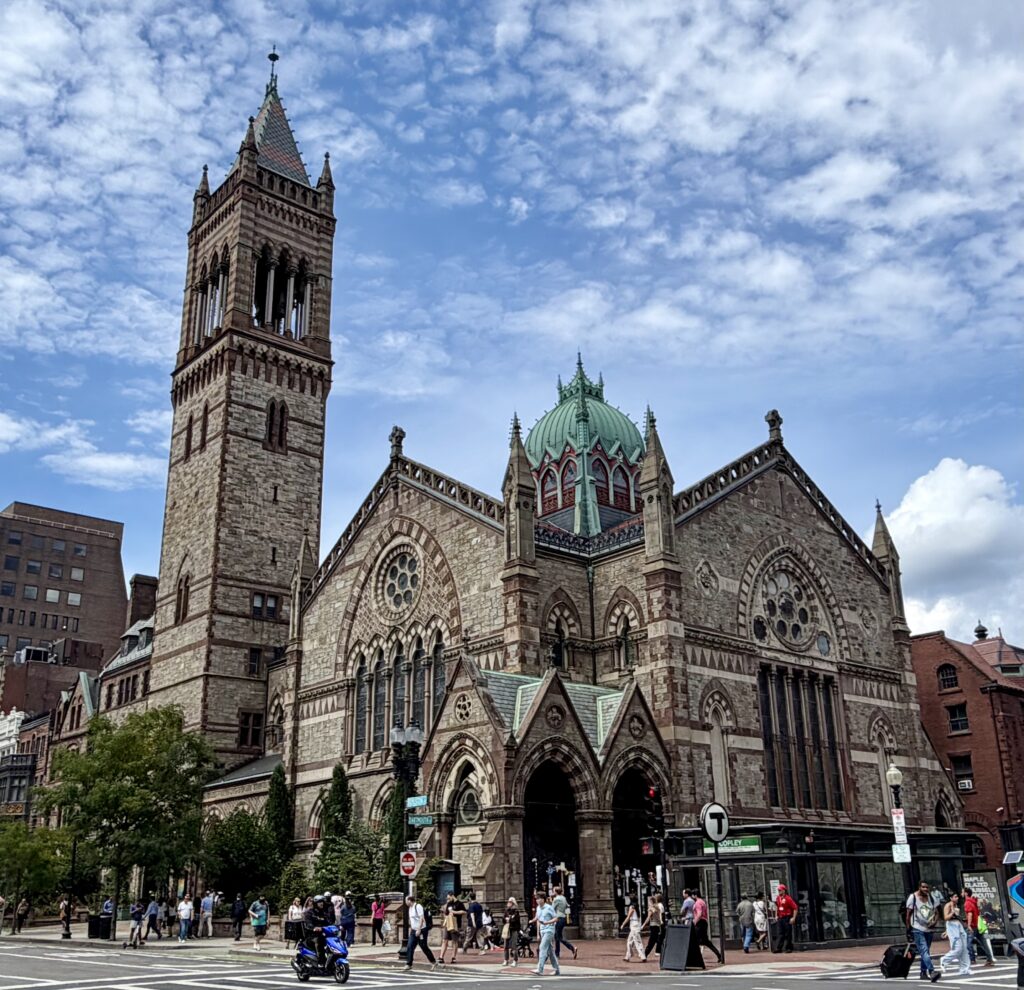
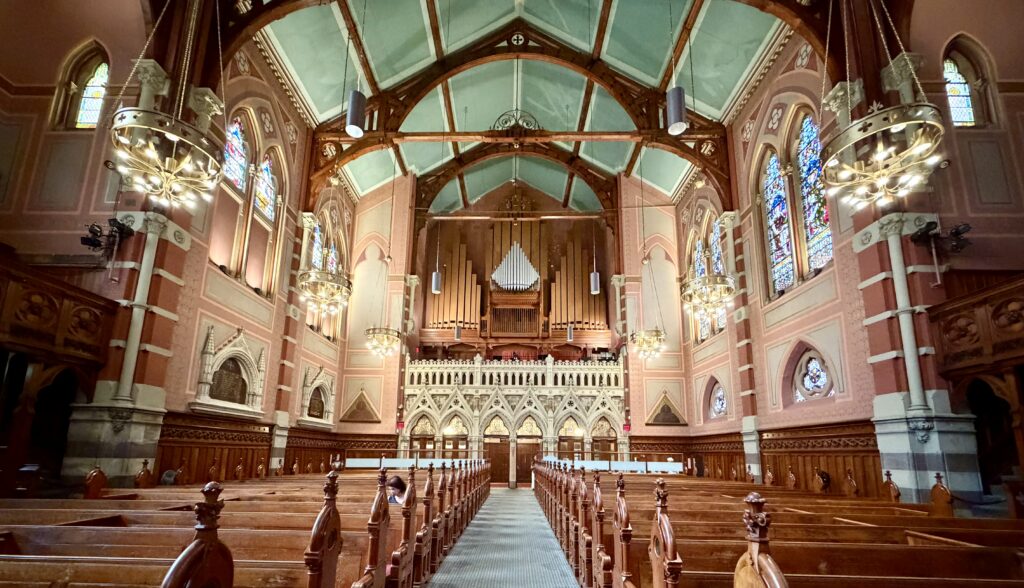
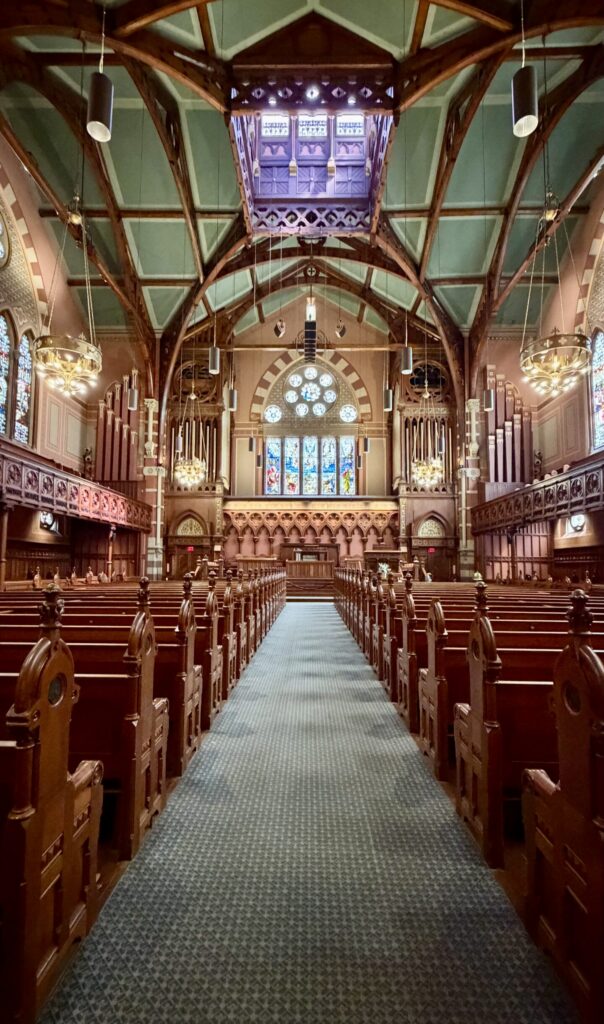
Copley Square, Old South Church – was built in 1669 in a raging argument over the waters of baptism. Twenty eight men and about as many women (known then as “the Schismatics” or “the Dissenting Brethren”) broke away from Boston’s First Church to found a church aching to dispense the waters of baptism more liberally. The church founders were descendants of separatist and dissenting Pilgrims, Puritan reformers, and Bay Colony merchant adventurers. Their parents left England in the 17th century, some to escape persecution, and others to forge a more prosperous life in the New World.
It was designated a National Historic Landmark in 1970 for its architectural significance as one of the finest High Victorian Gothic churches in New England. Admission to tour the interior of the church is free.
———————————–
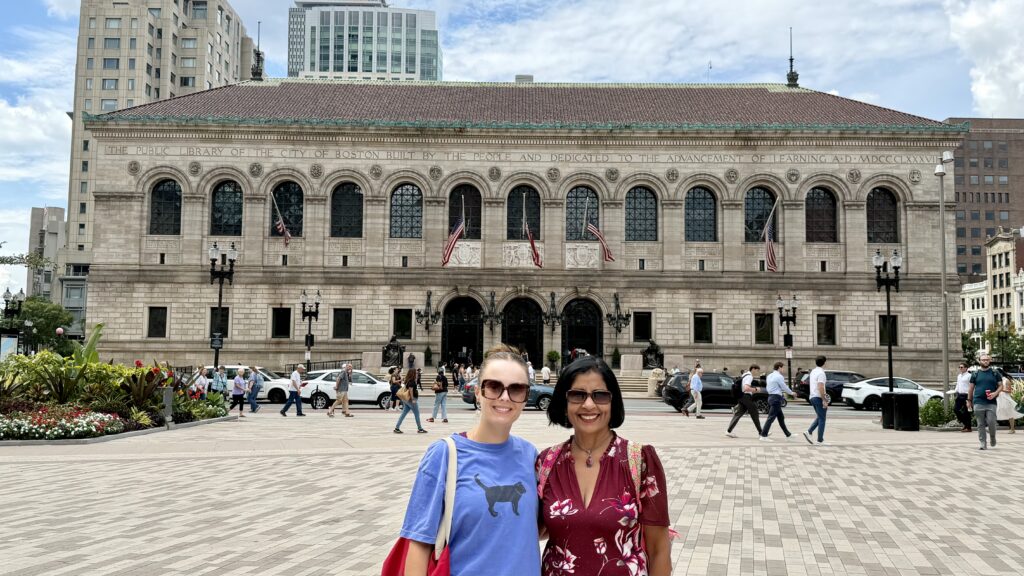
Copley Square, Boston Public Library – Established in 1848, the library is the main branch of the Boston Public Library System. The Central Library is renowned for its Renaissance Revival architecture, with significant features like its Grand Entrance Hall, the Bates Hall reading room, and decorative murals. Beyond its physical presence, the library provides free online and in-person learning opportunities and events.
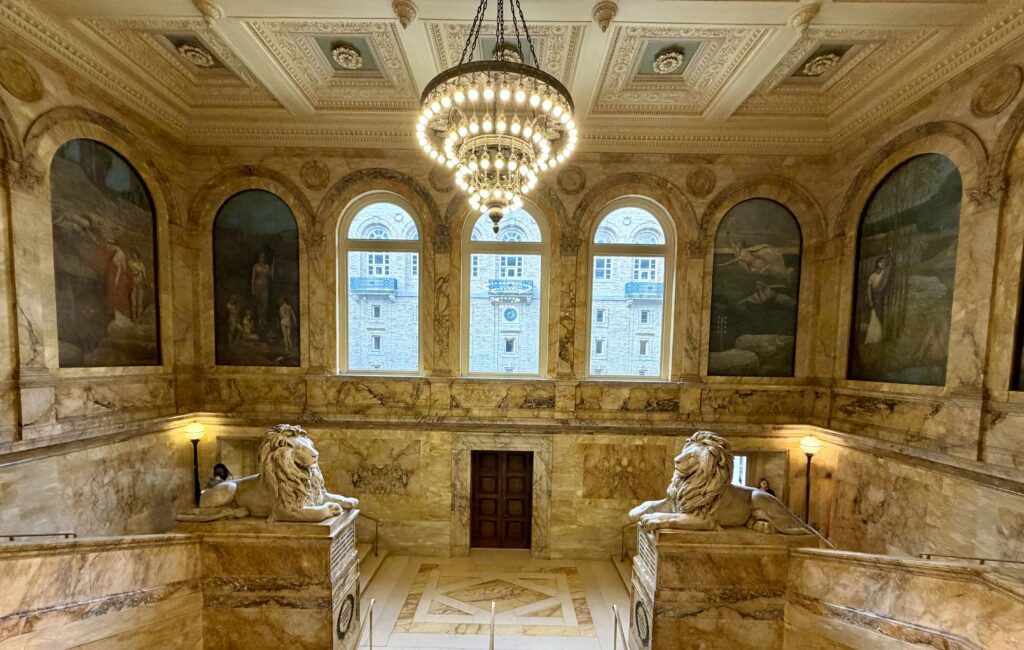
- Grand lobby and Staircase – of the library showcase remarkable architecture and art. The brass zodiac signs in the lobby floor were transferred to the BPL from a building at the 1893 Chicago World’s Fair. The Grand Staircase features carefully selected yellow Siena marble and two unpolished lion sculptures honoring Civil War veterans. Surrounding the staircase are murals by French artist, representing the Spirit of Enlightenment and eight fields of knowledge, making this area one of the library’s most impressive features.
- Bates Hall – the Boston Public Library’s original reading room, stretches the length of the historic McKim Building and features a magnificent 50-foot barrel-vaulted ceiling. Much of its furniture and architecture dates to 1895, including its iconic green lamps and rows of bookshelves.
- The Sargent Gallery – on the third floor features John Singer Sargent’s monumental mural cycle, Triumph of Religion. Sargent worked on the project for more than 30 years, creating paintings inspired by ancient Egyptian and Assyrian beliefs, Judaism, and Christianity.
- Boston Public Library Courtyard – was designed as a peaceful oasis in the city, inspired by the Palazzo della Cancelleria in Rome. At its center stands the bronze sculpture Bacchante and Infant Faun.
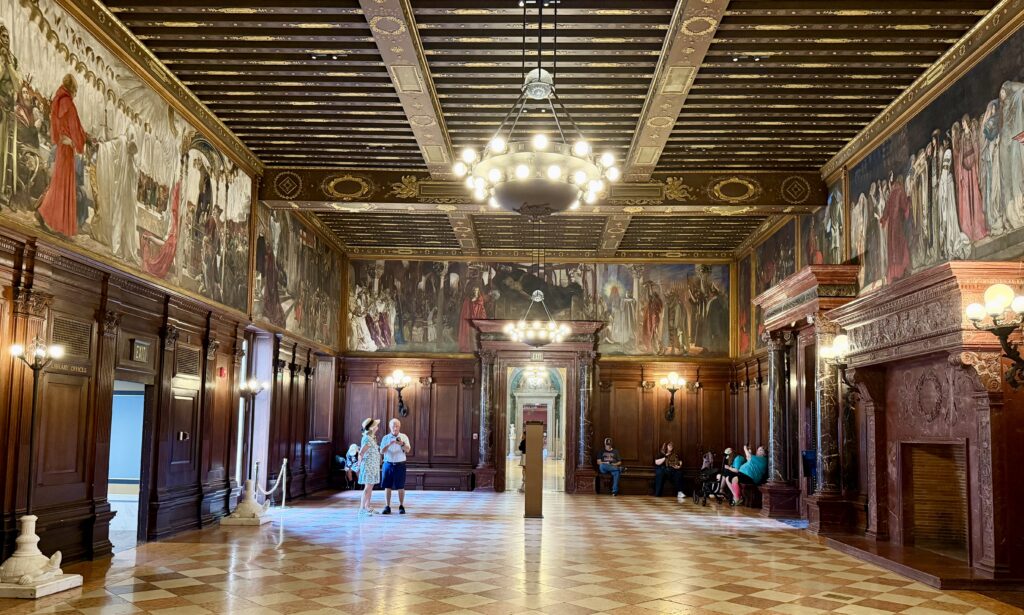
Boston Public Library, Abbey Room – originally served as the Boston Public Library’s book delivery room, where patrons requested books from the closed stacks using a pneumatic tube system. To make the waiting area more inviting, artist Edwin Austin Abbey created 15 murals depicting Sir Galahad’s quest for the Holy Grail. Today, the room is used for special events and allows visitors to admire Abbey’s beautiful artwork, while library staff continue to retrieve books from the closed stacks.
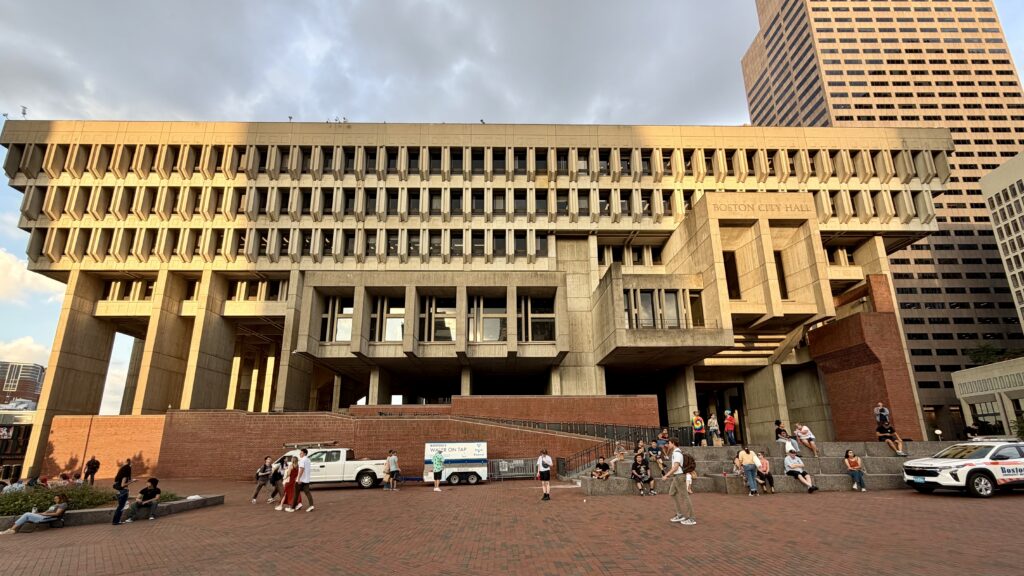
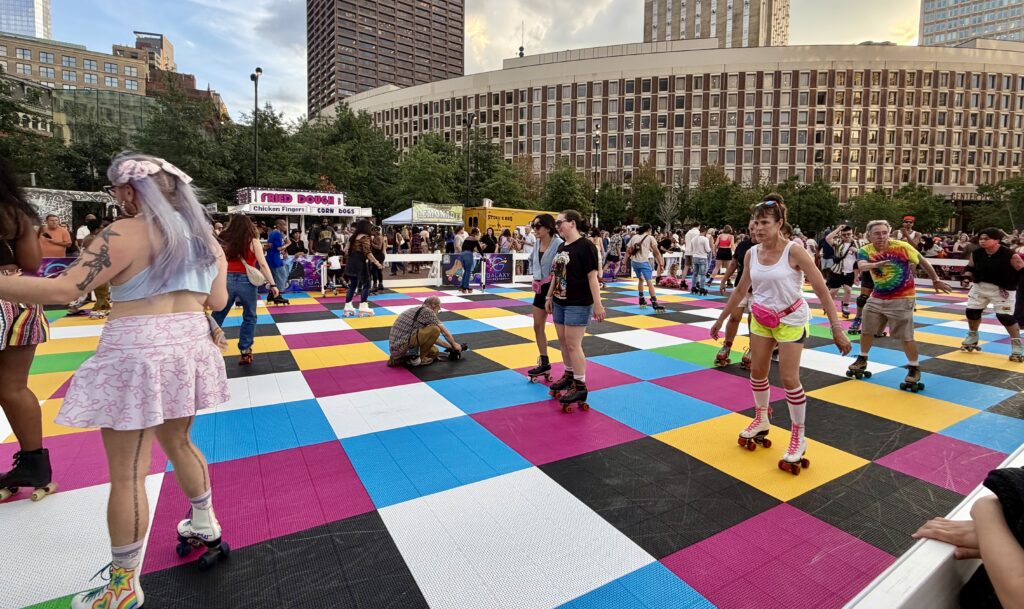
Boston City Hall Plaza and City Hall – The City Hall Plaza is an 8-acre public plaza in Boston’s Government Center. Designed in the 1960s to complement Boston City Hall, it features red brick terraces, concrete steps, trees, seating, and public event spaces. The renovated plaza reopened in phases beginning in 2022 and now includes play areas, terraces, and improved accessibility. The Boston City Hall dominates the plaza on one end. The nine-story Brutalist building was completed in 1969 as part of the Government Center redevelopment and houses the mayor, City Council, and other city offices.
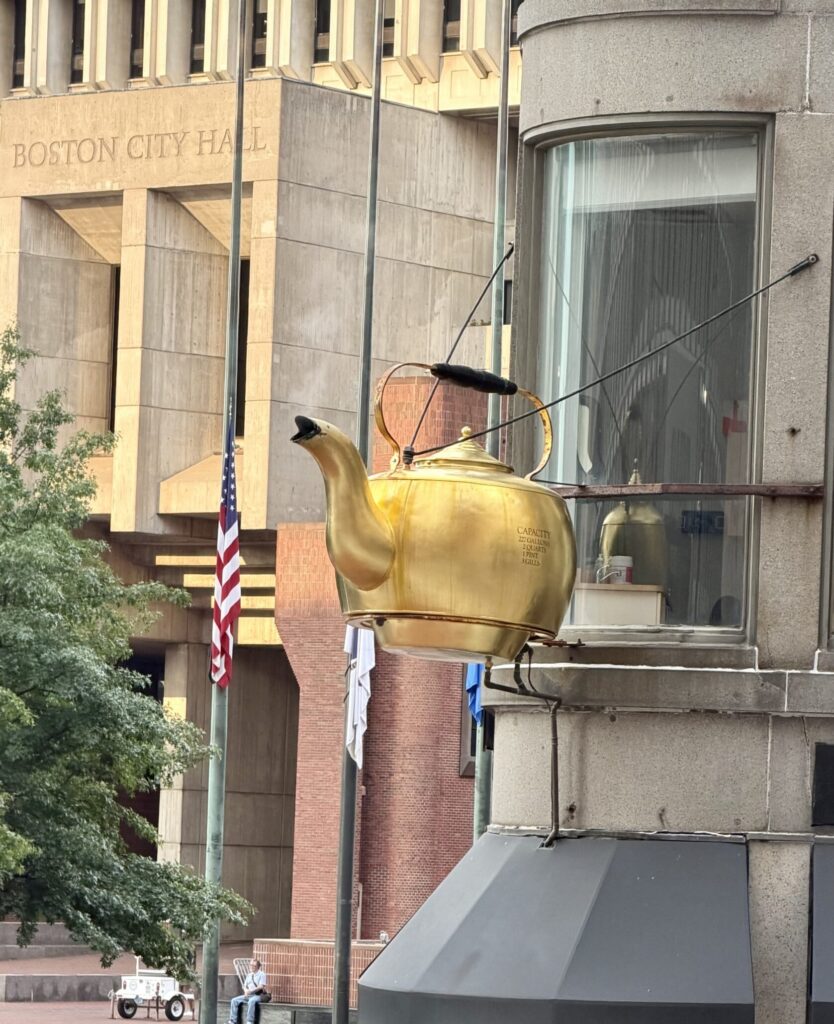
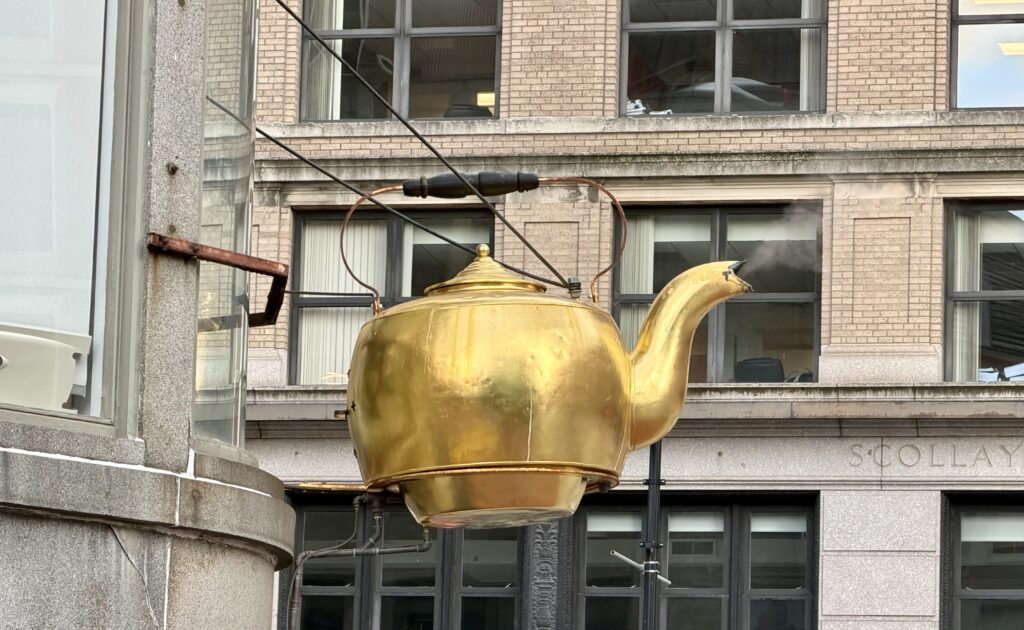
Brass Teapot – Hanging outside a building near the Boston City Hall is the famous steaming tea kettle that was built in 1873 by Boston coppersmiths Hicks and Badger and originally hung outside the Oriental Tea Company in Scollay Square. The giant kettle was an early example of creative advertising, designed to attract attention to the shop. In 1875, the owners took the idea even further with a contest where customers guessed the kettle’s weight—and even how many people could fit inside it.
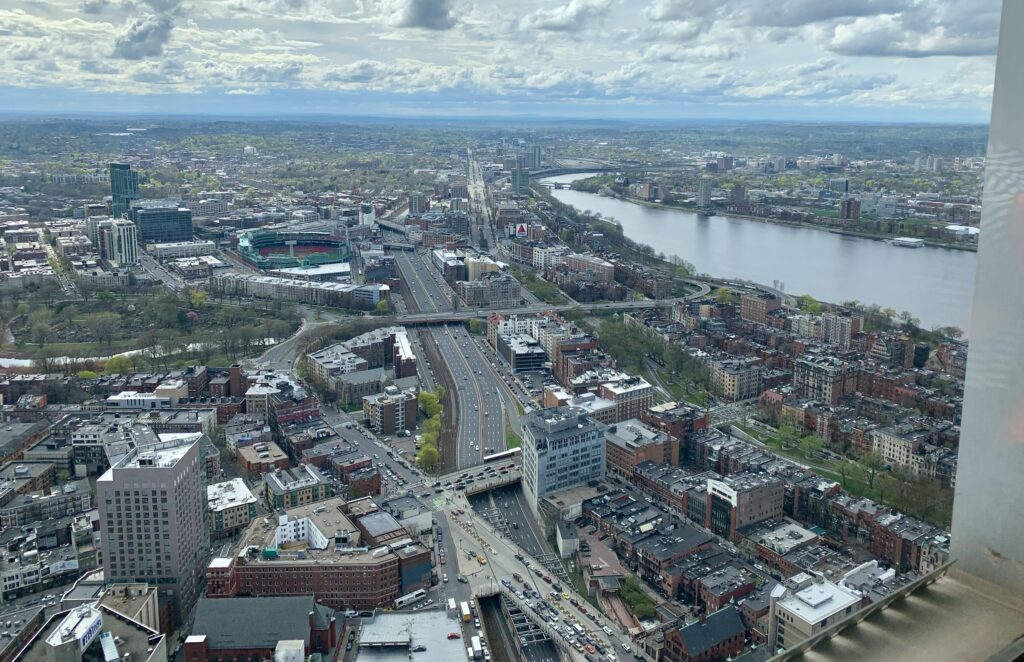
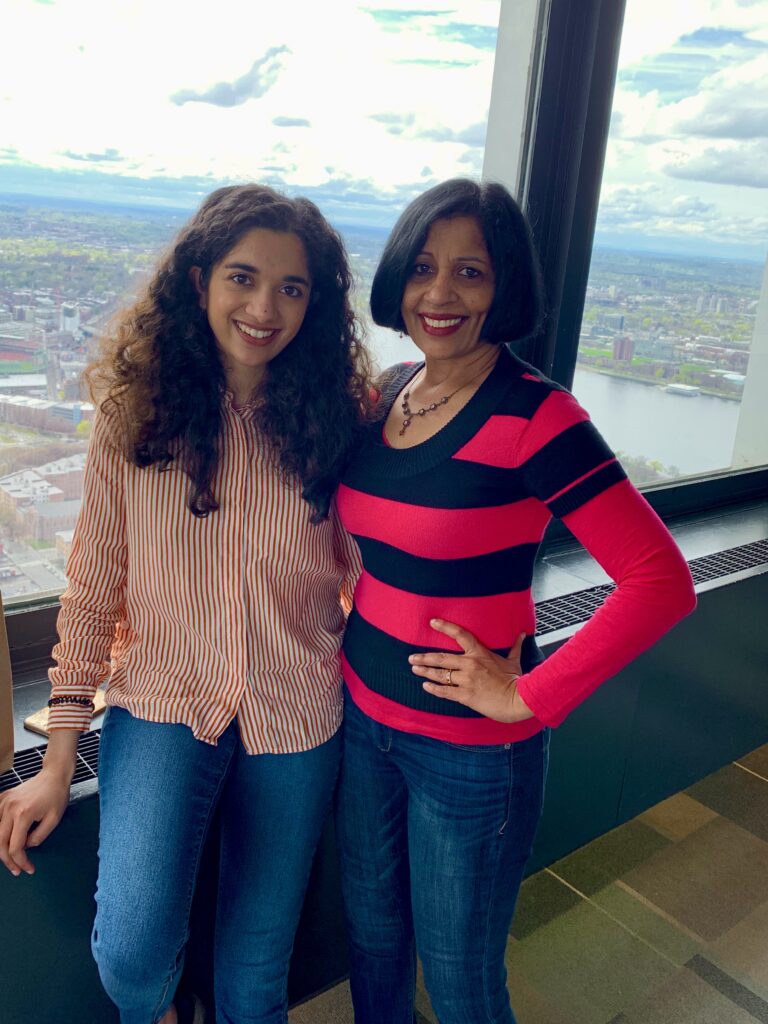
The Skywalk Observatory at the Prudential Center – offers some of the best views in Boston. Located on the 50th floor of the Prudential Tower, it provides stunning 360-degree panoramic views of the city, including iconic landmarks such as Fenway Park, Boston Common, and the Public Garden.
Prospect Hill Monument – is a four-story stone-and-iron tower in Somerville (4 miles northwest of Boston downtown). Built in 1903, it commemorates Prospect Hill’s role during the American Revolution, when George Washington used the area as a command post and established fortifications during the Siege of Boston. The monument offers panoramic views of Boston, Cambridge, and Somerville and is a popular spot for visitors and locals. It also hosts an annual New Year’s Day flag-raising ceremony featuring Revolutionary War reenactors, celebrating the site’s connection to the early history of the United States.
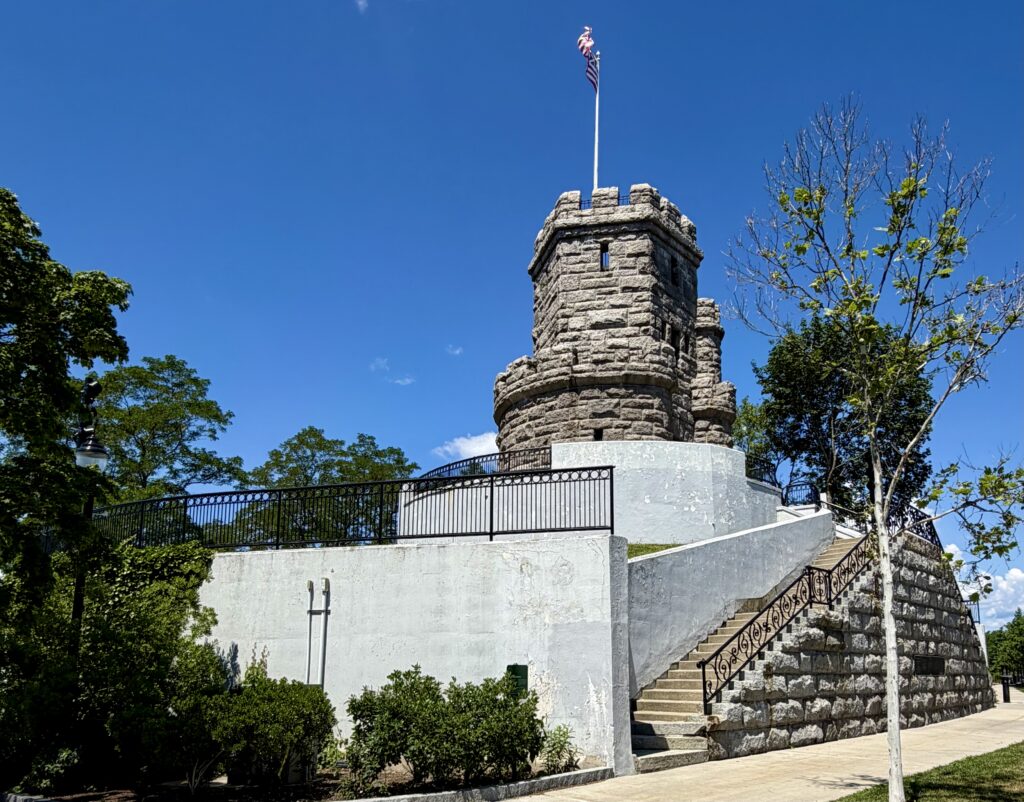
Note – Since my daughter lives in this neighborhood, it was a quick 10 min walk to this monument from her apartment.