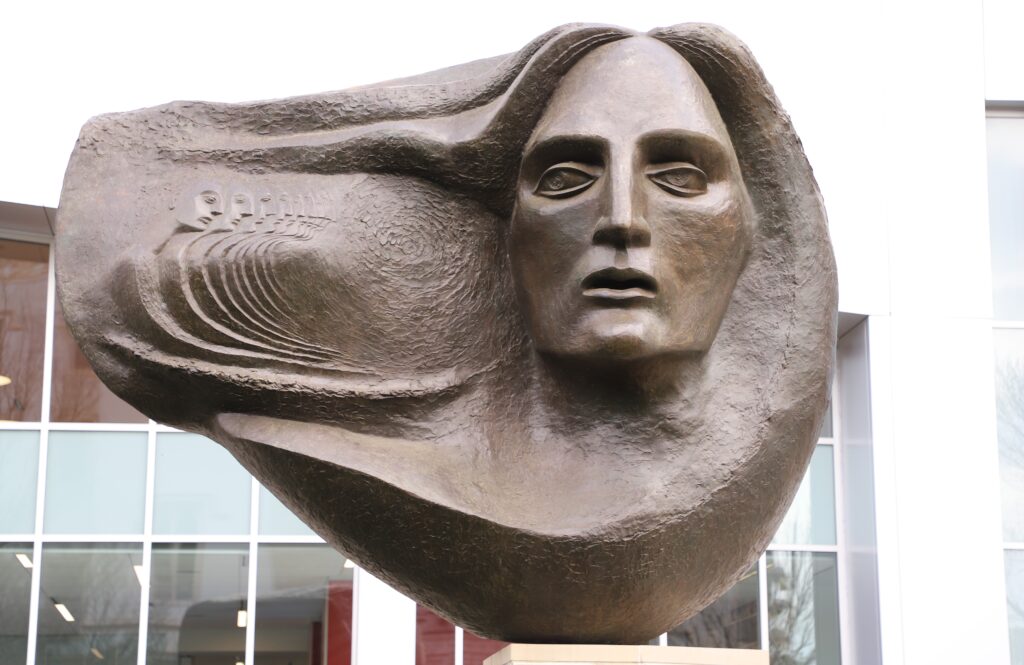
Baton Rouge translates to red stick in French, referring to a large red cypress pole that French explorers discovered in 1699. After the French discovered the area, a fort was built there, and control of the region passed between the French, Spanish, and English before the United States gained control.
- Old State Capitol
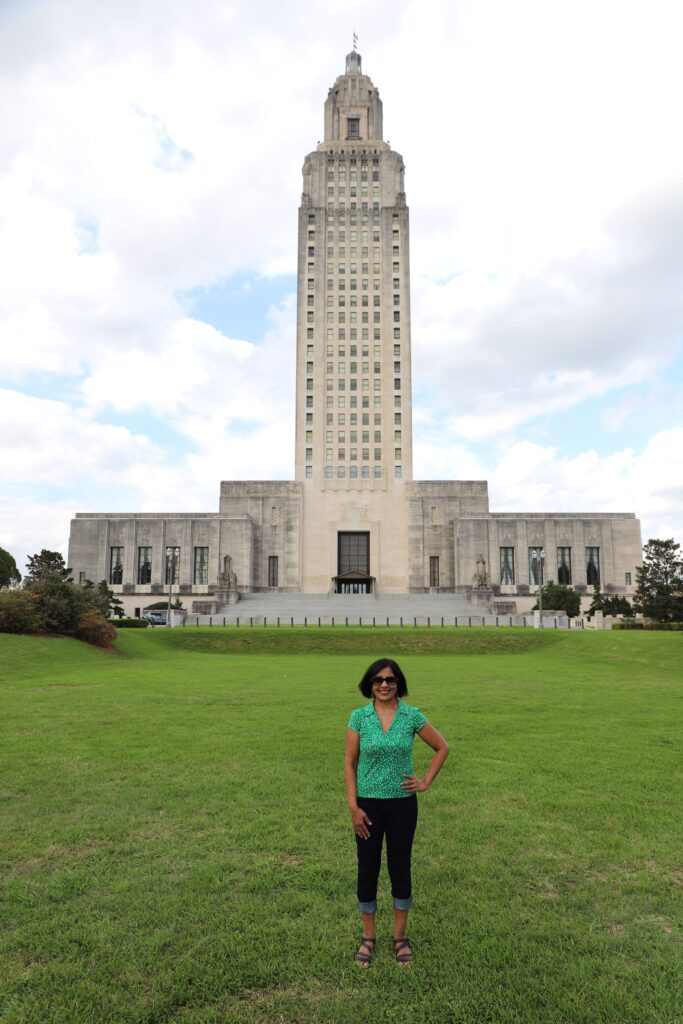
- New State Capitol
- Louisiana State University
- Downtown Baton Rough
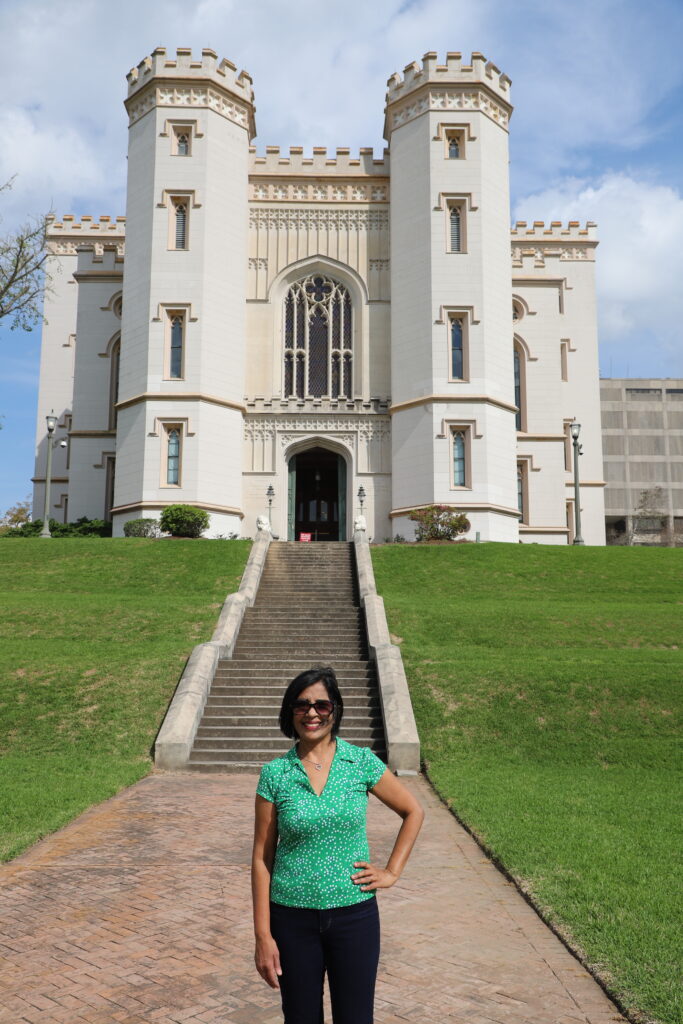
Louisiana Old State Capitol – also known as the State House, this historic government building, housed the Louisiana State Legislature from the mid-19th century until the new capitol tower building was constructed from 1929-32. It was built in 1847 to look and function like a castle and has led some locals to call it the Louisiana Castle, the Castle of Baton Rouge, the Castle on the River, or the Museum of Political History. The building was added to the National Register of Historic Places in 1973, and was designated a national Historic Landmark in 1974.
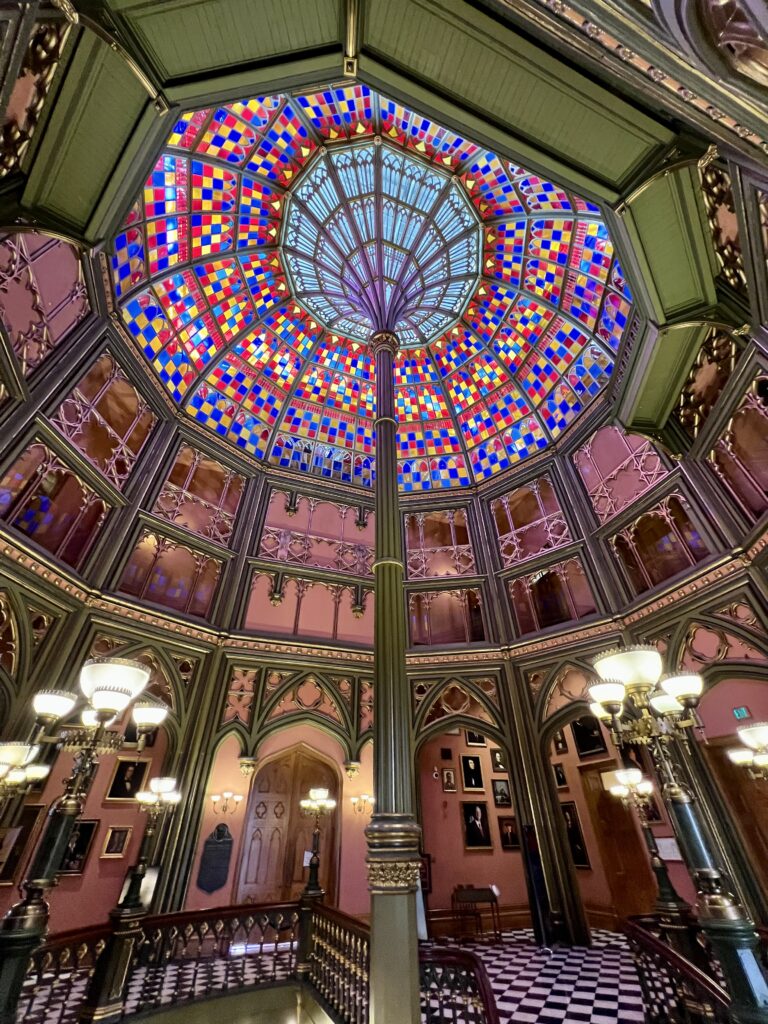
The Rotunda of Old State House is a stunning circular room featuring a large intricately designed stained-glass ceiling. It serves as a central point within this National Historic Landmark, which now functions as a museum dedicated to Louisiana’s history and the democratic process.
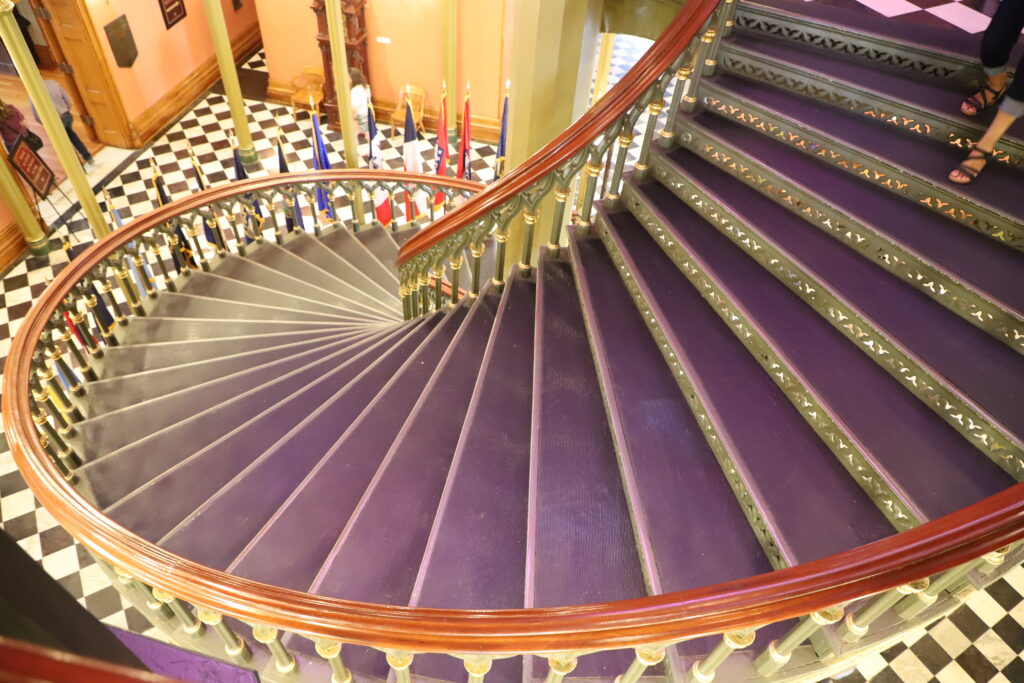
Louisiana New State Capitol – The Louisiana State Capitol is a 34-story, 450-foot tall skyscraper that was completed in 1932 and is the tallest state capitol building in the United States housing the Louisiana State Legislature and the Governor’s office. Guided tours are available on weekdays which includes a visit to the 27th-floor observation deck for panoramic views of the city and Mississippi River.
The Capitol’s facade was constructed out of limestones from Alabama and is decorated with many sculptures and reliefs, and includes much of Louisiana’s symbols and its history. The front entrance to the capitol opens directly into the rectangular Memorial Hall. The Hall is 124 ft long and 40 ft wide, and is often referred to as a rotunda despite not being round as it takes the place of one in a traditional domed capitol.
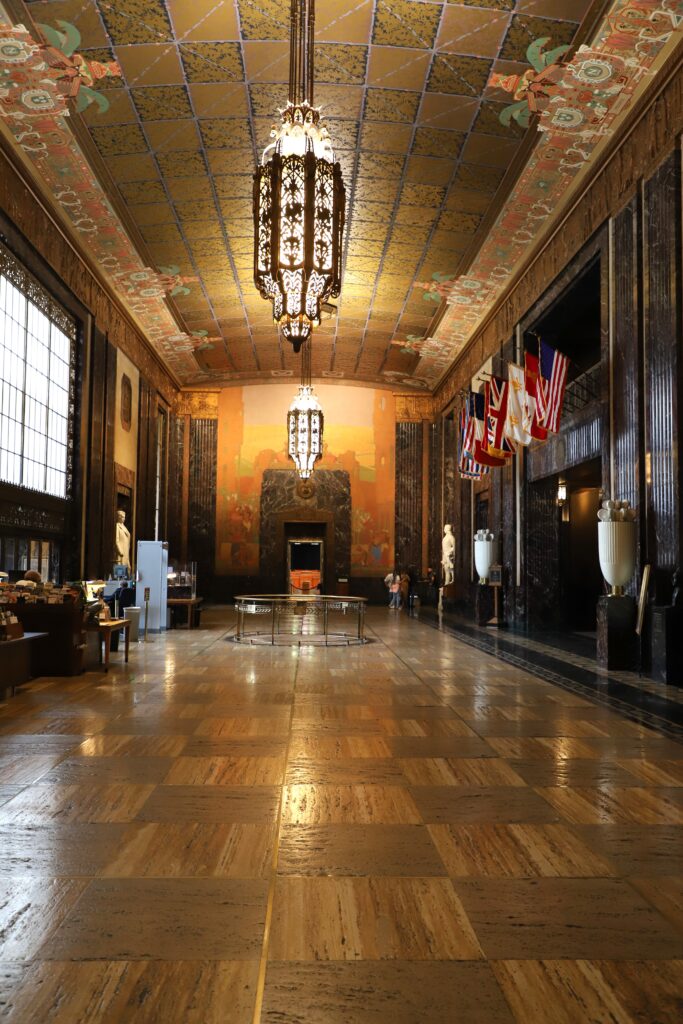
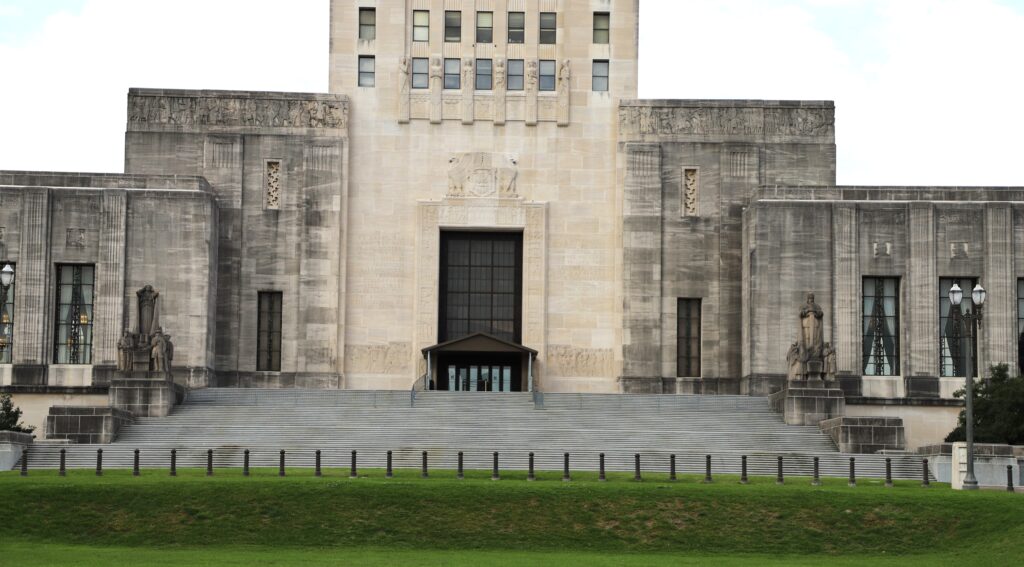
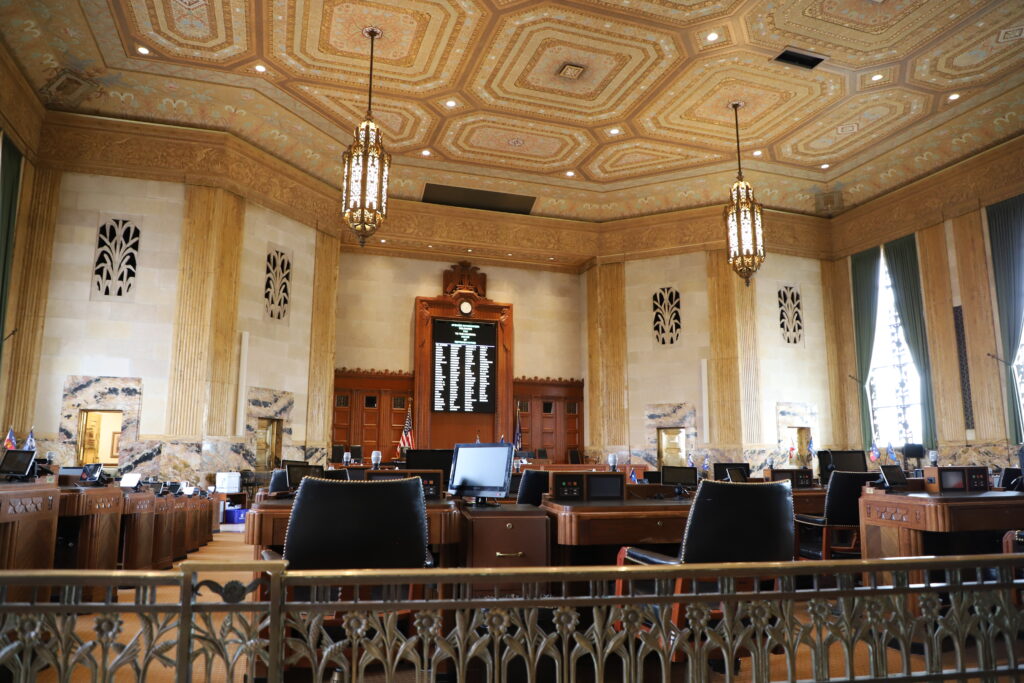
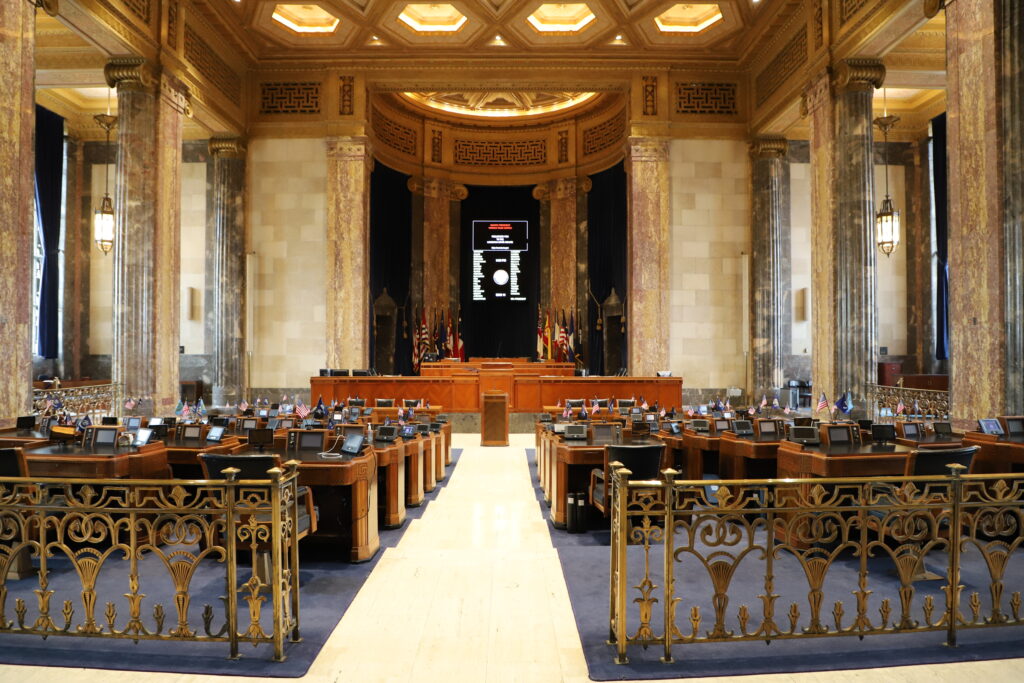
Louisiana New State Capitol, House and Senate – The Louisiana State Capitol houses the chambers for the House of Representative, Senate, office of the Governor of Louisiana, and several other state offices.
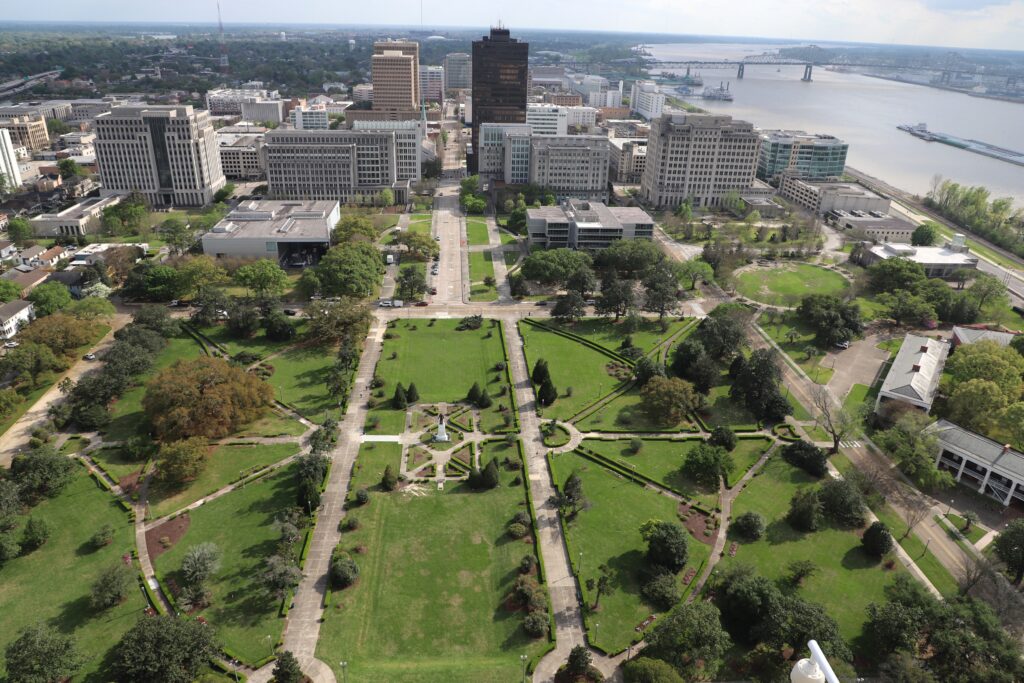
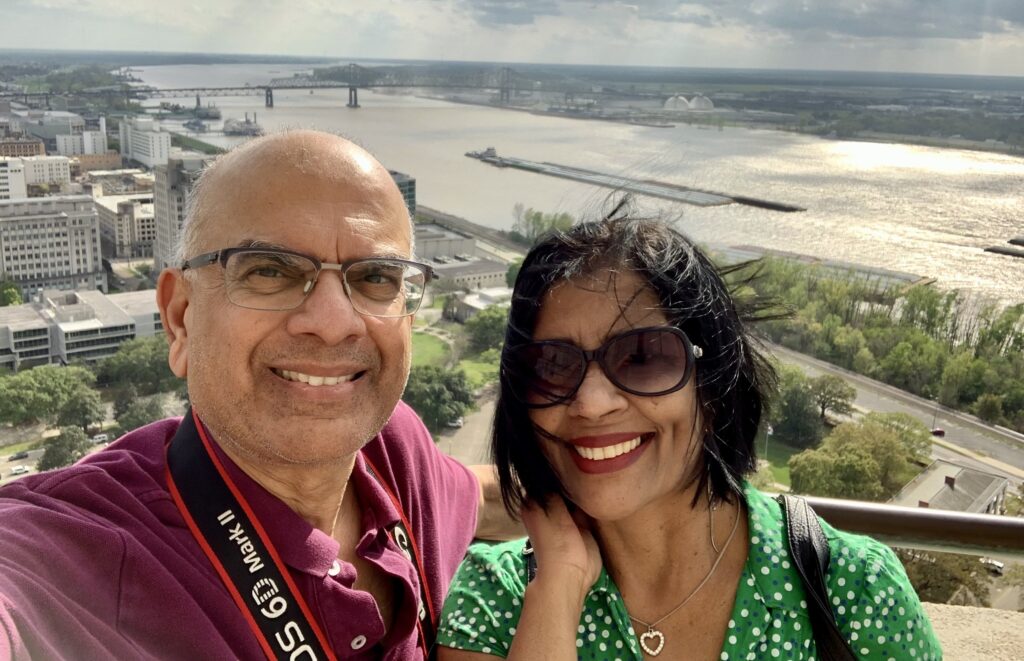
Louisiana New State Capitol, Observation Deck – From the observation deck on the 27th floor, visitors can see the entire city of Baton Rouge and beyond from a height of 350ft. The views of the gardens and the magnificent Mississippi River are spectacular.
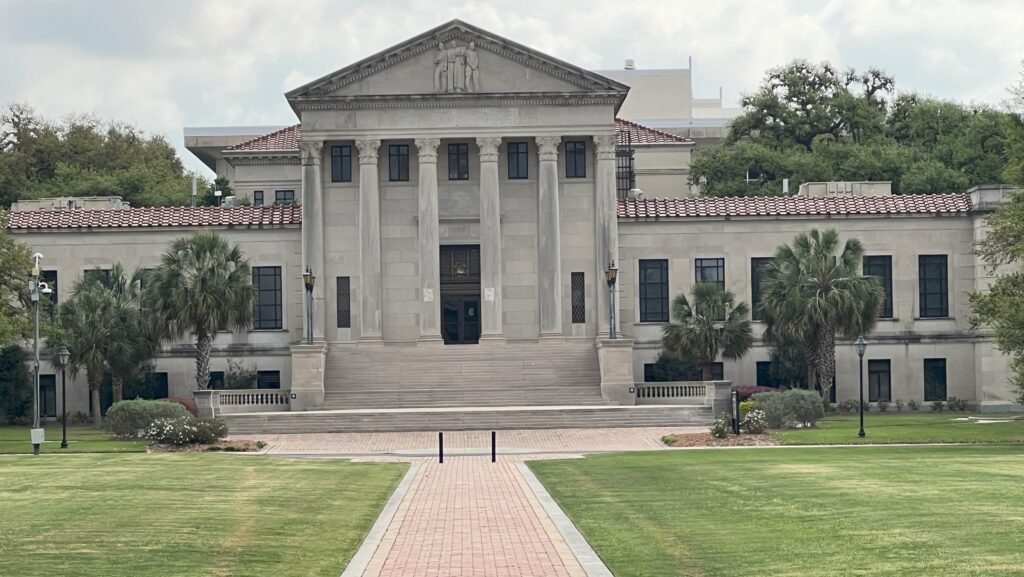
Louisiana State University – commonly referred to as LSU, the university was founded in 1860. The current LSU main campus was dedicated in 1926 and consists of more than 250 buildings occupying a 650-acre plateau on the banks of the Mississippi River.
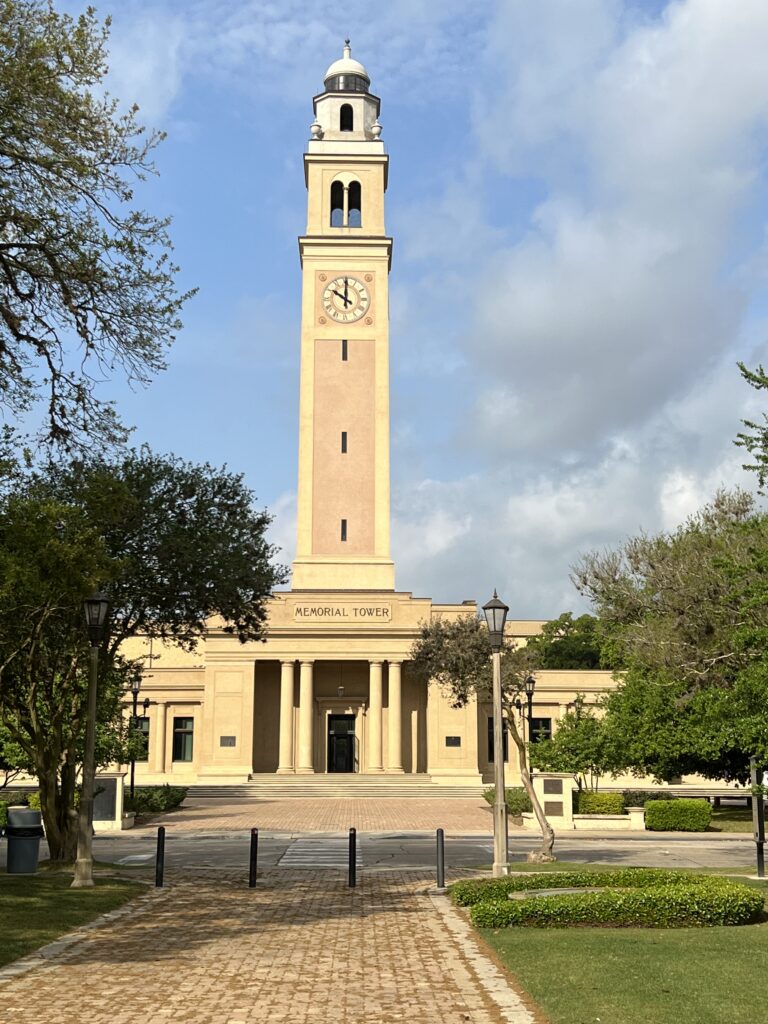
LSU, Memorial Tower – is a 175-foot clock tower in the center of LSU’s campus. Erected in 1923 and officially dedicated in 1926, it stands as a memorial to Louisianans who died in World War I. The plaza area in front of Memorial Tower holds many annual events including Christmas Tree Lighting Ceremony which attracts many visitors to the area. The inside of the tower is also home to a military museum.
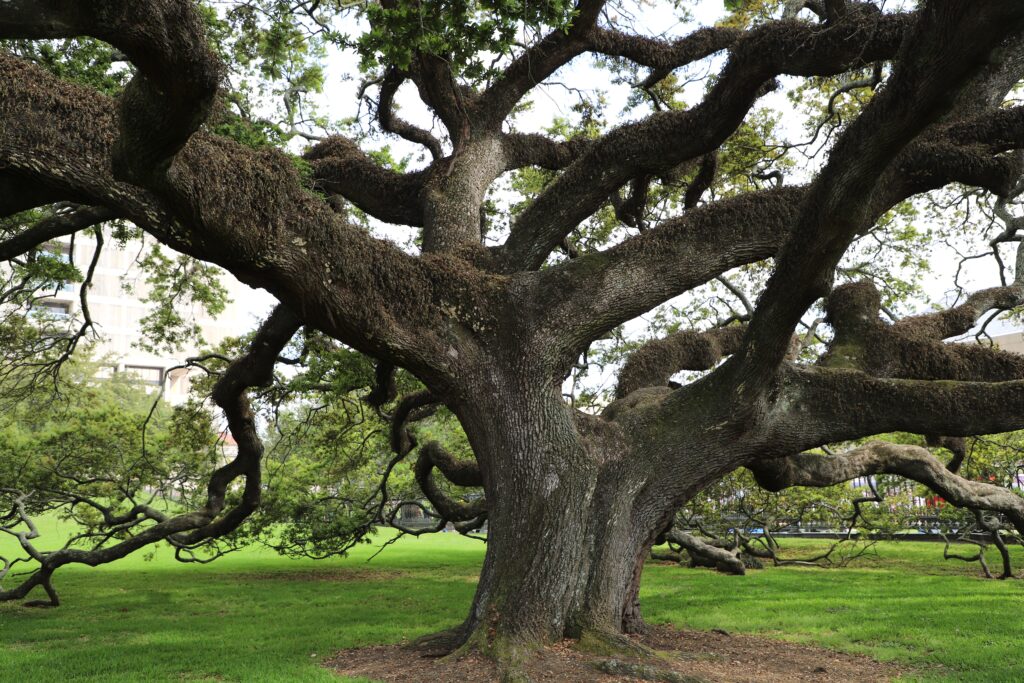
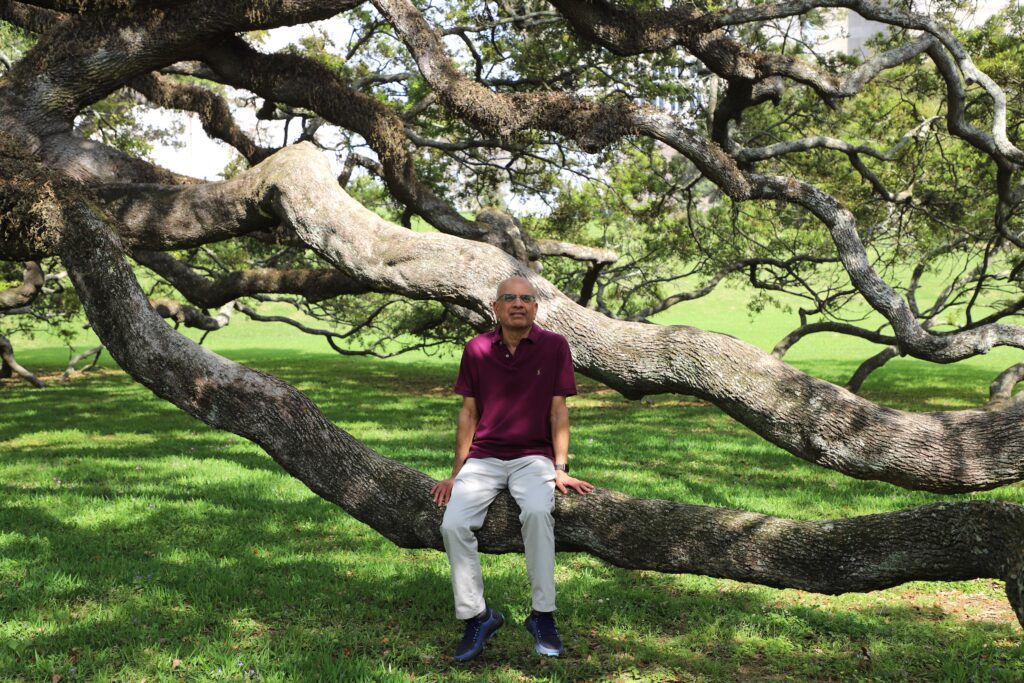
Downtown Baton Rough – We spent half a day walking around the vibrant downtown area. We came across some huge trees that had branches growing outward than up, and the branches were curvy, stretching to over 50ft in length. These trees are apparently the Southern live oak (Quercus virginiana) and are a classic and iconic part of the south Louisiana landscape.
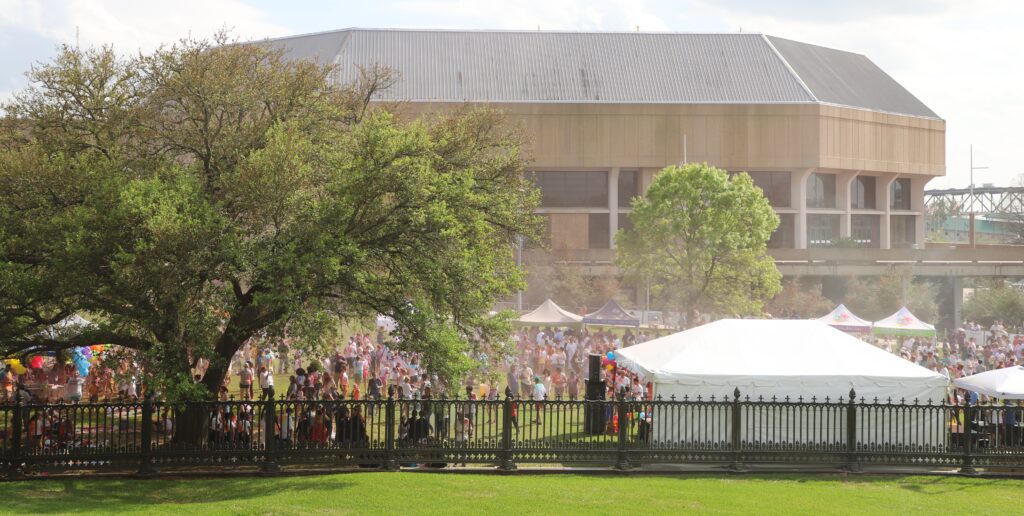
In another area of downtown, the Indian Holi festival celebrations was in full swing with food, music, dancing, and colored powder being thrown around.

Downtown Baton Rough, River Walk – Walking along the picturesque banks of the majestic Mississippi River is a popular thing to do. This area is also home to the Riverfront Plaza & City Dock, a nice park area with a viewing pier that extends over the river.


Downtown Baton Rough, Galvez Plaza – is a public park in downtown Baton Rouge, serving as a central gathering spot for city-sponsored events and surrounded by various dining and entertainment options.
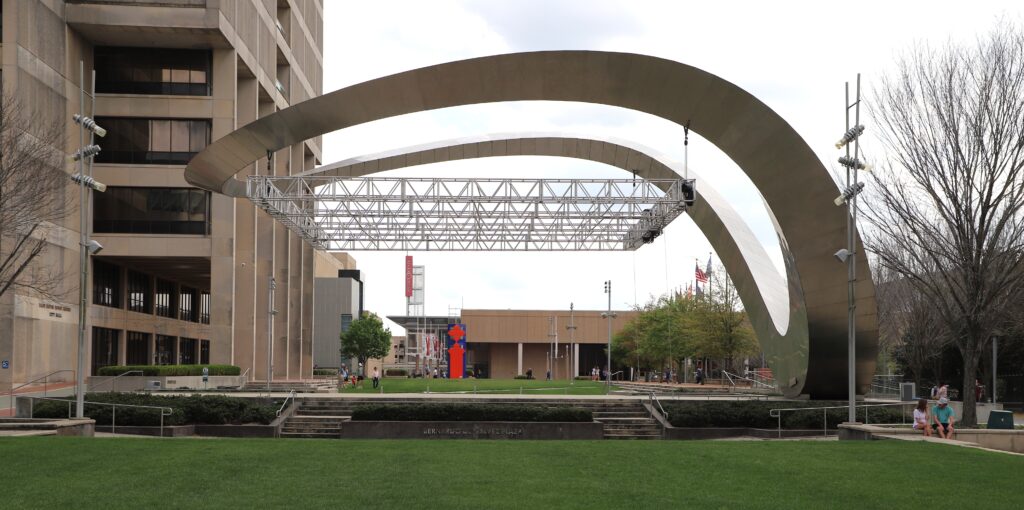
The plaza features the Marcha de Galvez fountain, a 30-foot-long bronze relief sculpture by artist Frank Hayden, depicting Bernardo de Galvez’s 1779 march to engage the British in Baton Rouge. The fountain was restored in 2022 to preserve its historical significance.
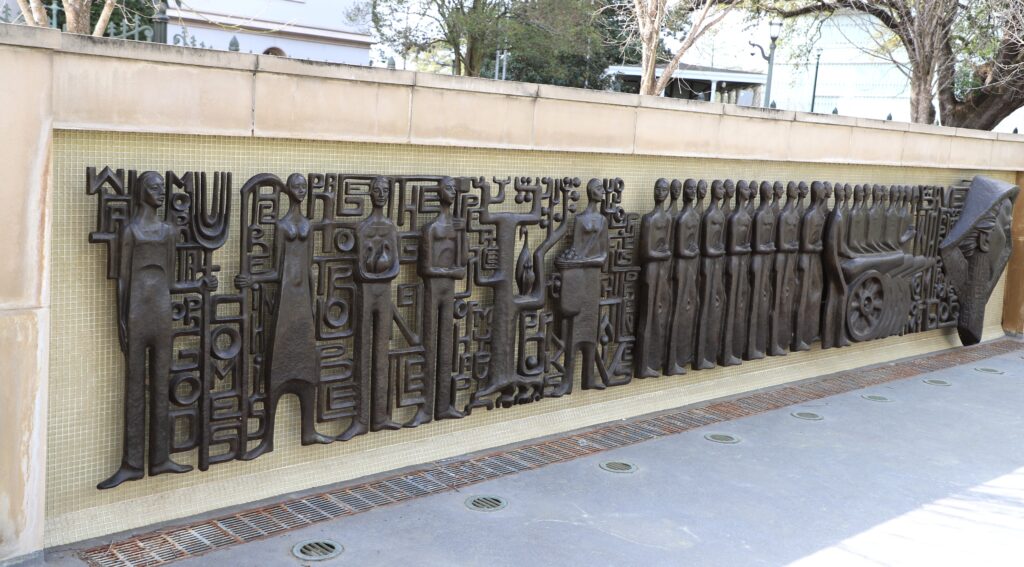
The Plaza also features the A Tribute to Oliver Pollock monument by artist Frank Hayden honoring Oliver Pollock, a merchant and financier credited with creating the dollar sign in 1778. Galvez Plaza hosts numerous events throughout the year, including the annual Baton Rouge Mardi Gras Festival, featuring live music, food vendors, and family-friendly activities.