Topeka became the capital of Kansas when Kansas was admitted to the Union as a state in 1861. It is known as the Crossroads of Freedom due to its role in the fight against slavery. The name Topeka itself is derived from a Kansa-Osage phrase meaning a good place to dig potatoes.
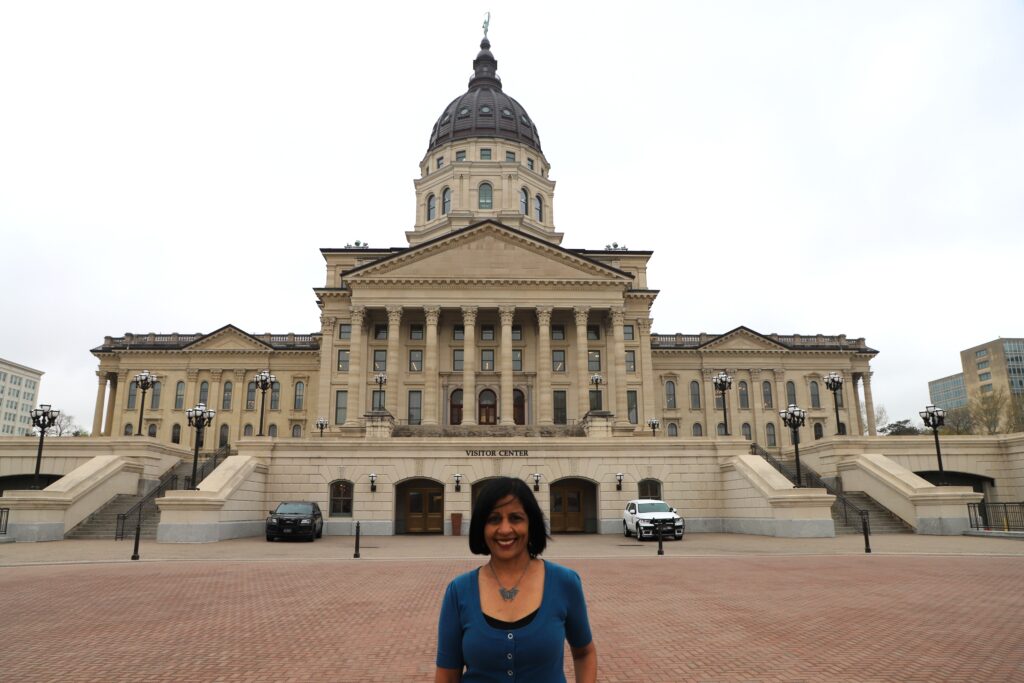
Kansas Capital Building in Topeka – The capital was built between 1866-1903 and was renovated between 2002-2014. The copper dome, at 304ft (93m), is taller than the 288ft (88m) United States Capital dome. In 2002, a bronze sculpture, Ad Astra (Latin meaning to the stars) was installed atop the dome. The sculpture is 22ft (6.8m) tall and weighs 4,420 pounds. The sculpture, depicts a Kansa Native American with bow and arrow pointed at the North Star.
It is one of the few capitols in the United States that continues to offer tours that go to the top of the dome. Visitors enter the dome by climbing 296 steps leading from the fifth floor to the top.
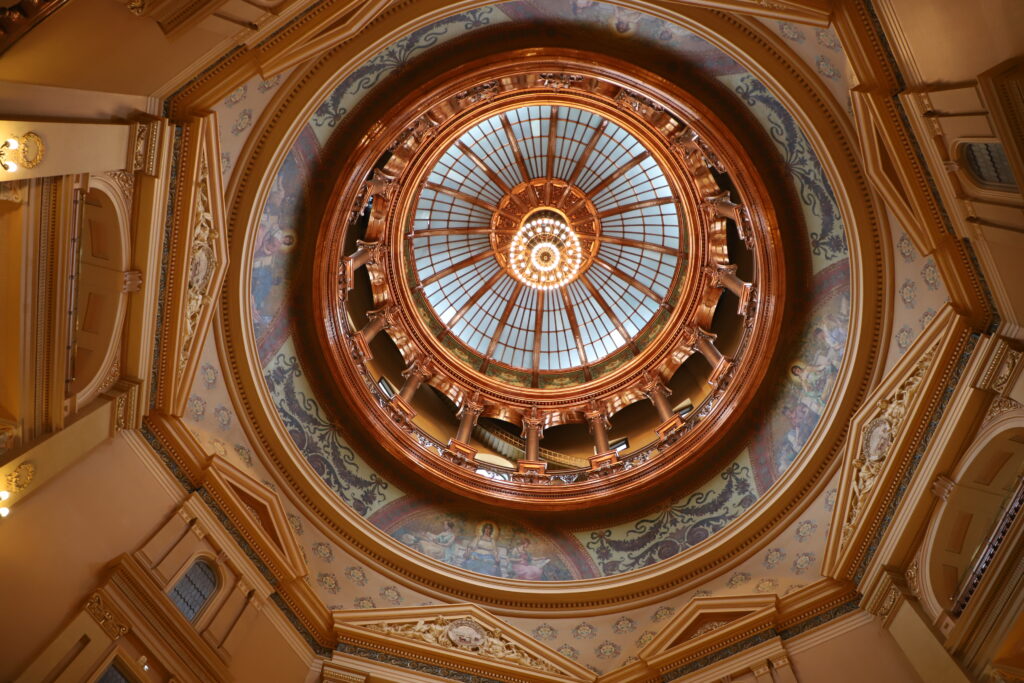
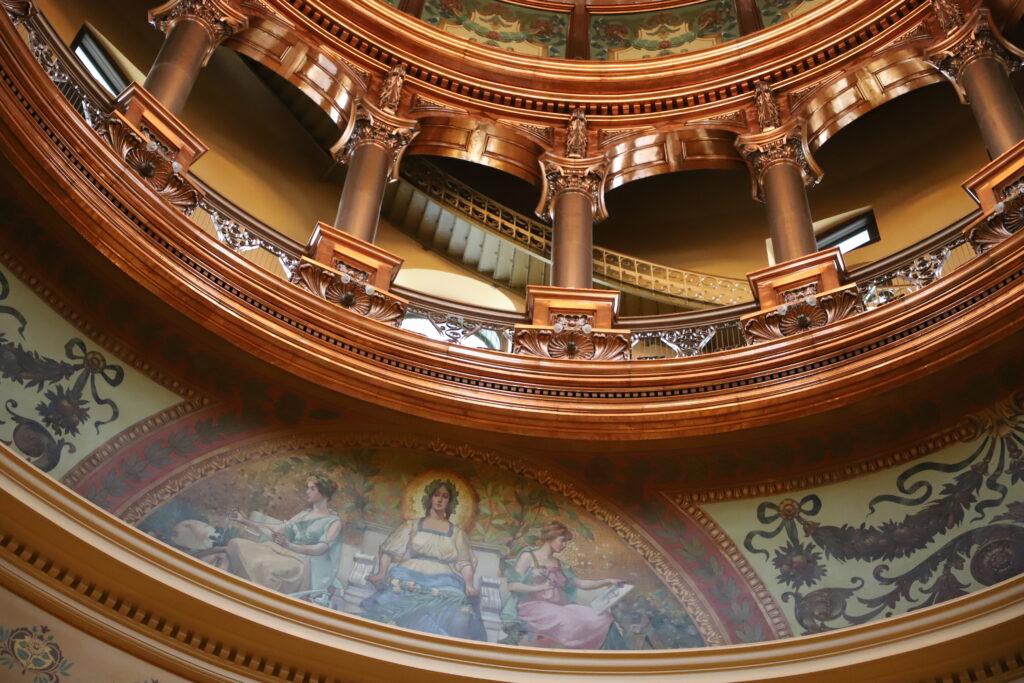
Kansas Capital Building in Topeka, Rotunda – The interior of the building is spectacular with a lot of gleaming copper and marble columns. From the first floor rotunda, gaze upward to appreciate the beautiful murals, glass panels and bright copper and brass railings of the dramatic dome. the inner dome is composed of 256 glass panels.
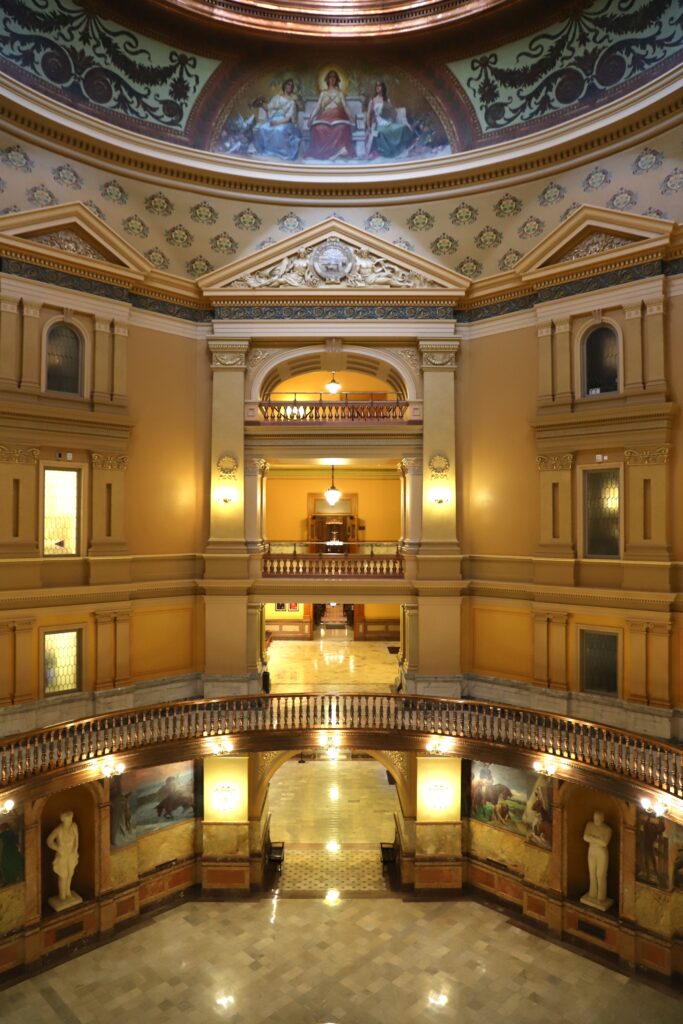
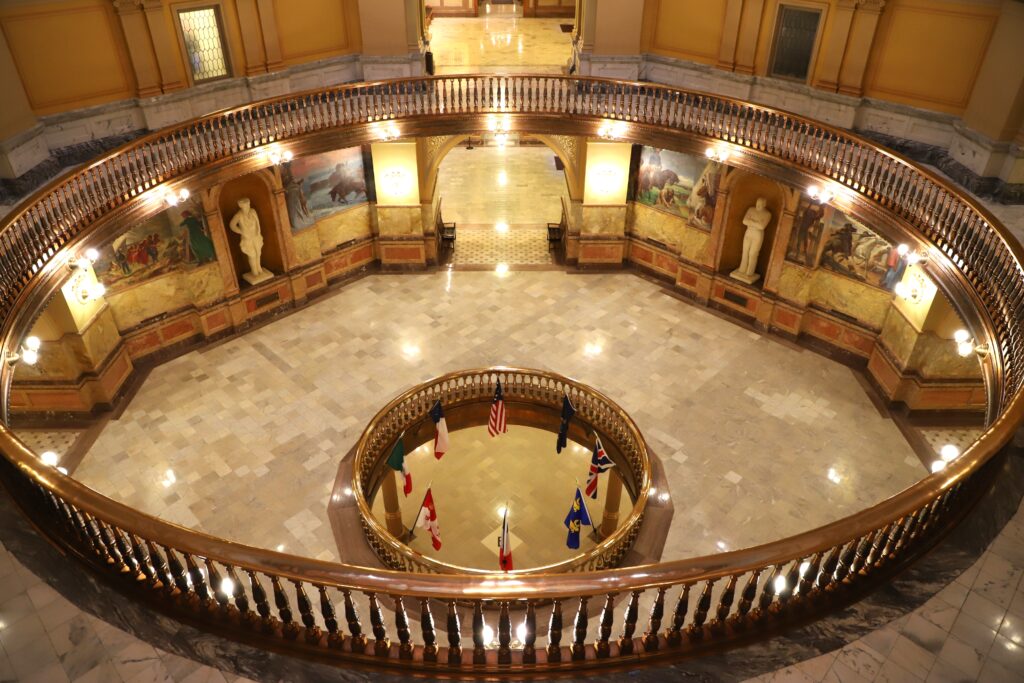
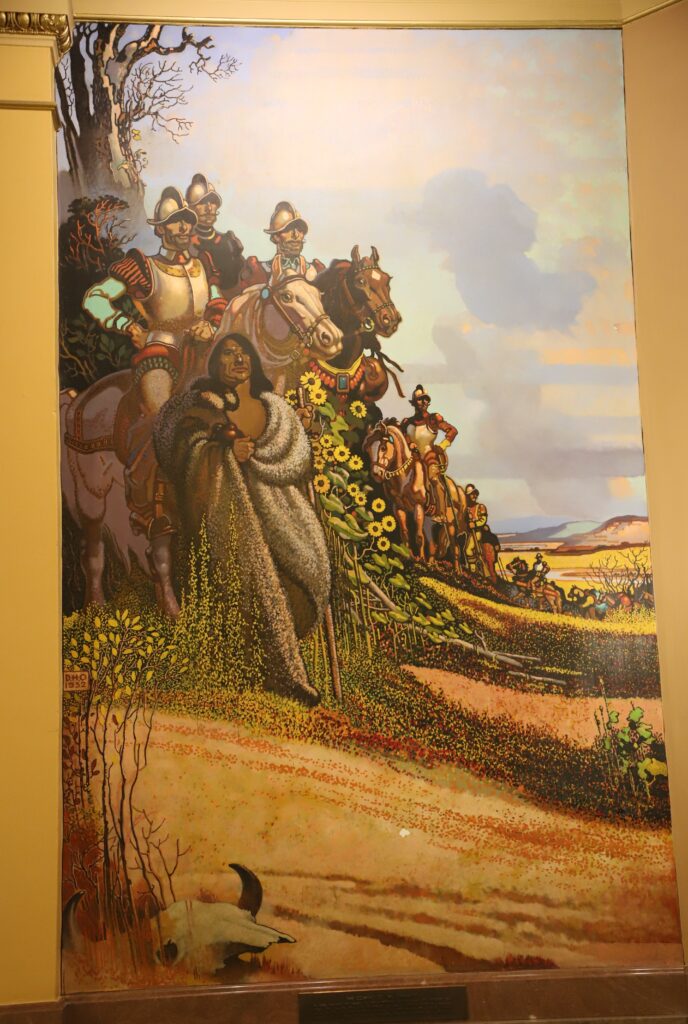
Kansas Capital Building in Topeka, Murals – The Kansas State Capitol in Topeka features several prominent murals, particularly in the rotunda areas on the first and second floors. The first floor rotunda showcases eight murals by David H.Overmyer, depicting scenes from Kansas history, including The Coming of the Spaniards, and Battle of Arikaree.
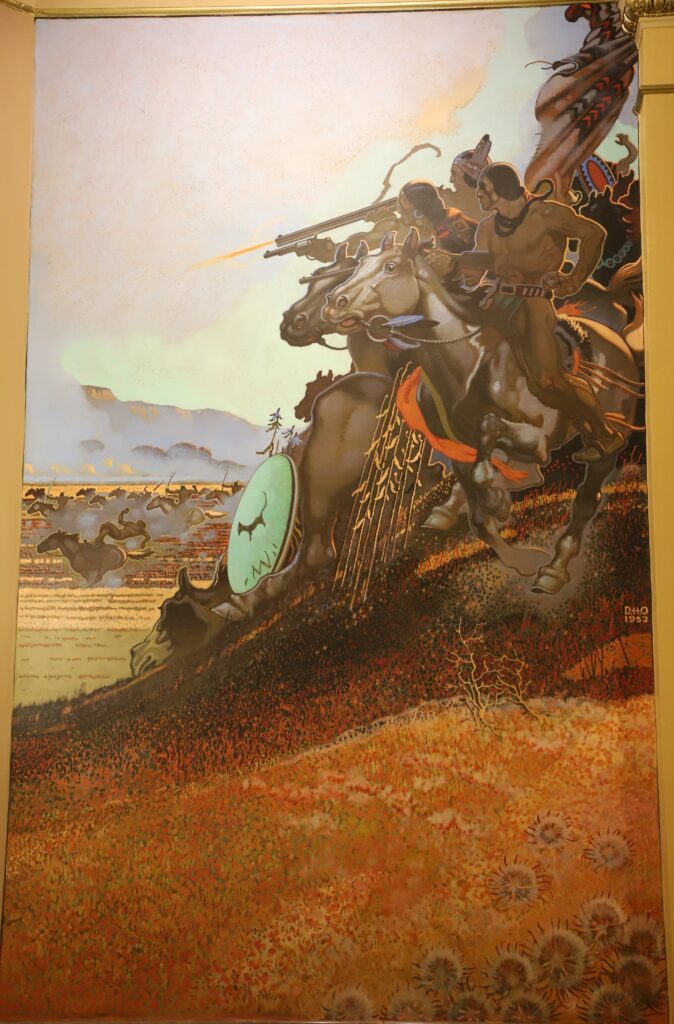
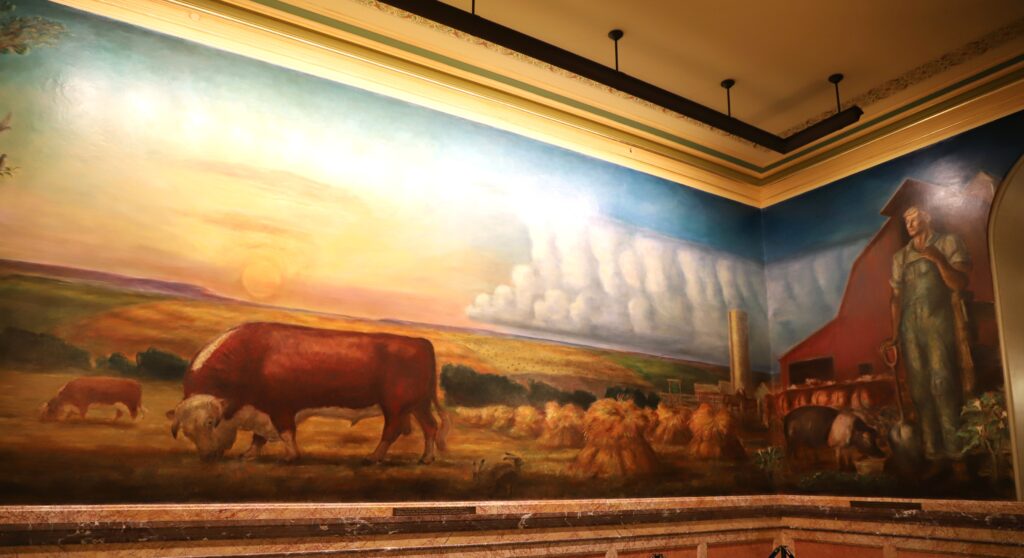
On the second floor, the rotunda features murals by John Steuart Curry, notably the iconic Tragic Prelude, which depicts John Brown and the pre-Civil War era. It also has the Kansas Pastoral mural.
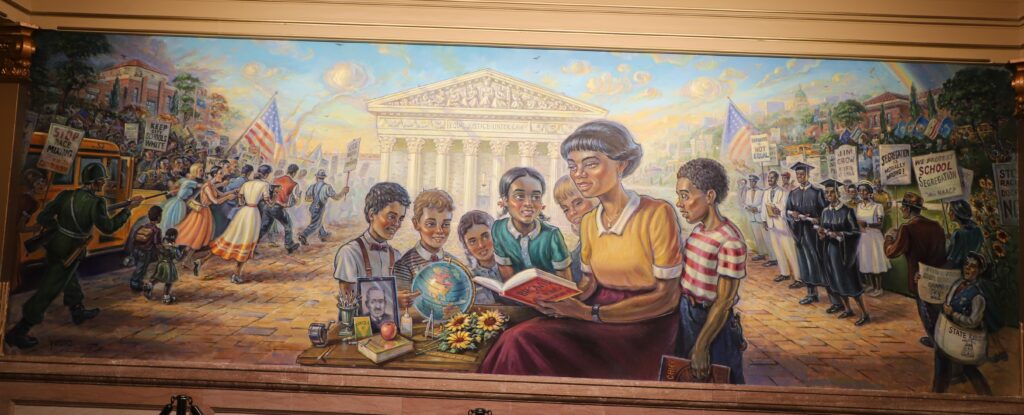
In 1954, the United States Supreme Court handed down the decision to end legal segregation in the public school system as part of the Brown v. Board of Education case. In 2018, a mural was unveiled in the Kansas Capitol in Topeka to commemorate that landmark decision.
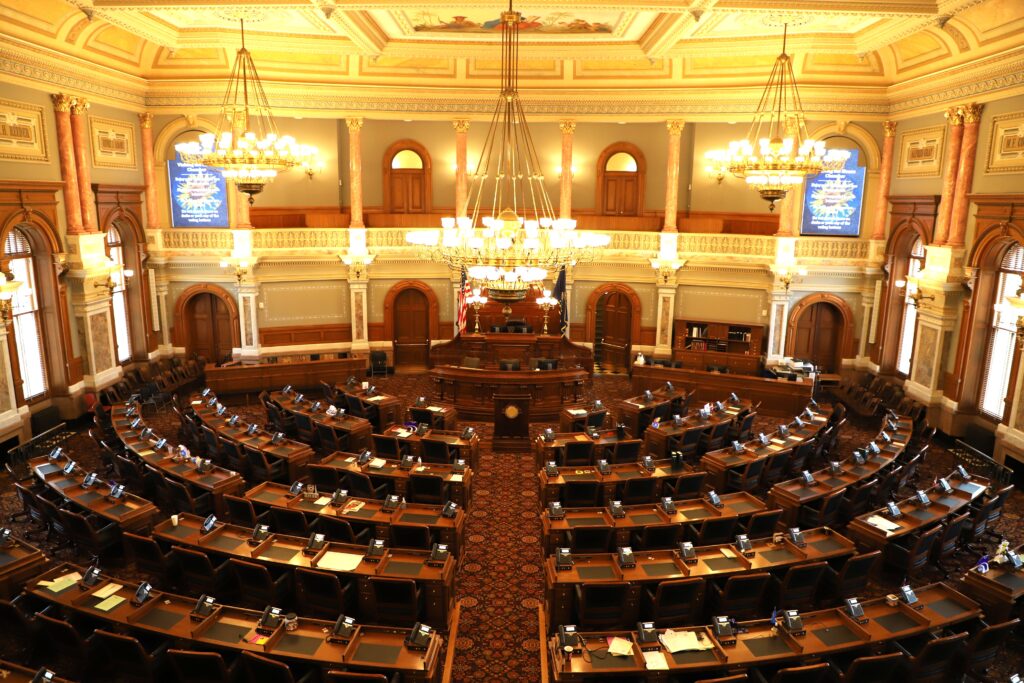
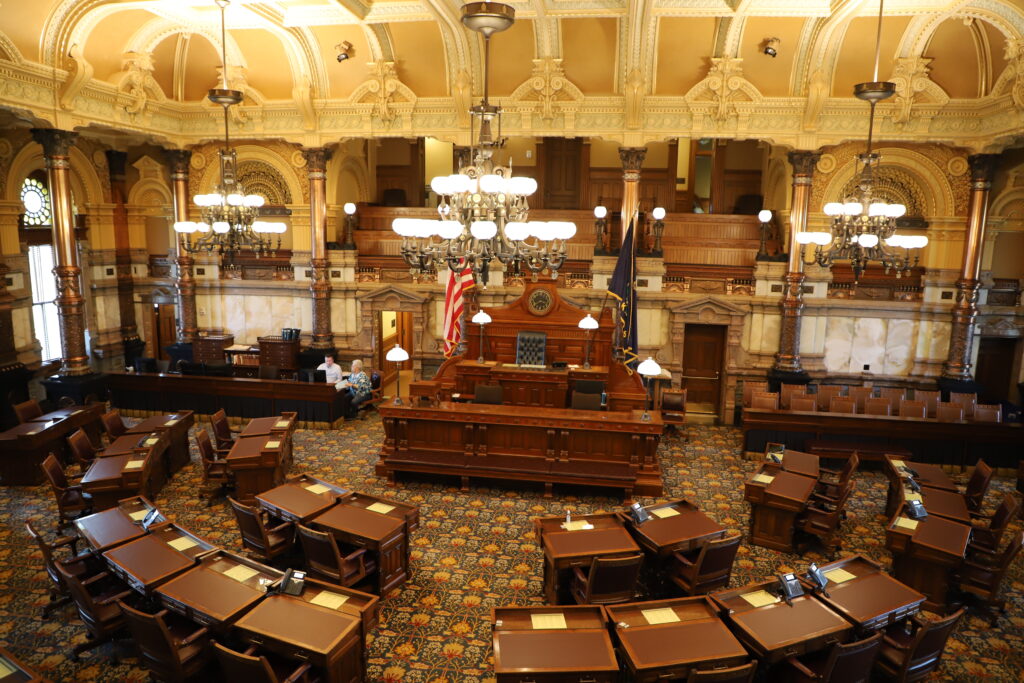
Kansas Capital Building in Topeka, Legislature – The Kansas State Capitol in Topeka houses both the Senate and House of Representatives on the third floor. The Senate chamber is located in the East Wing, and the House of Representatives is located in the West Wing.