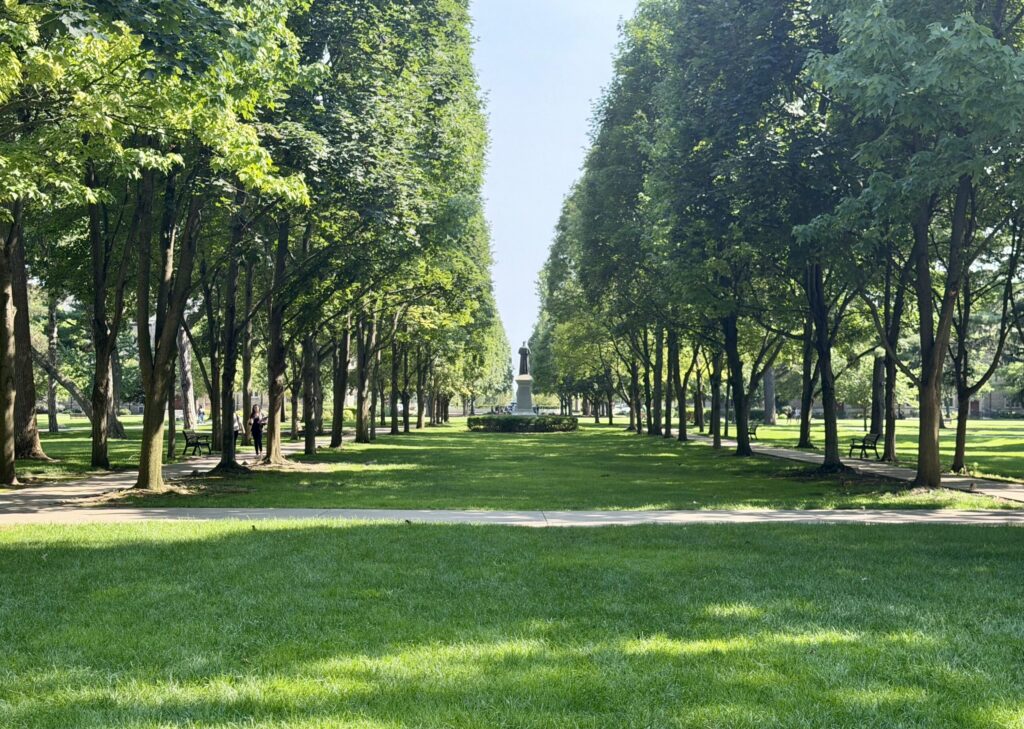
Founded in 1842 by the Congregation of Holy Cross, the University of Notre Dame is one of the most prestigious private Catholic research universities in the United States. Located just outside South Bend, Indiana, its picturesque 1,261-acre campus is renowned for iconic landmarks such as the Golden Dome, the Basilica of the Sacred Heart, the Grotto of Our Lady of Lourdes, the Word of Life mural (popularly known as Touchdown Jesus), and the legendary Notre Dame Stadium. Beyond its beautiful campus, Notre Dame is internationally recognized for its academic excellence, groundbreaking research, and the rich traditions of its Fighting Irish athletic programs, particularly its storied football team.
Located conveniently along the drive from Pittsburgh to Chicago, the University of Notre Dame makes an excellent stop to break up the journey. We spent a couple of hours exploring its beautiful campus, strolling past the iconic Golden Dome, the Basilica of the Sacred Heart, the Grotto of Our Lady of Lourdes, and other striking buildings.
- Main Building (Golden Dome)
- Washington Hall and the God Quad
- Sorin Hall
- Basilica of the Sacred Heart
- Grotto of Our Lady of Lourdes
- Theodore Hesburgh Library
- Clarke Memorial Fountain
- Notre Dame Athletic Facilities
- South Dining Hall
- Other Notable Sights on Campus
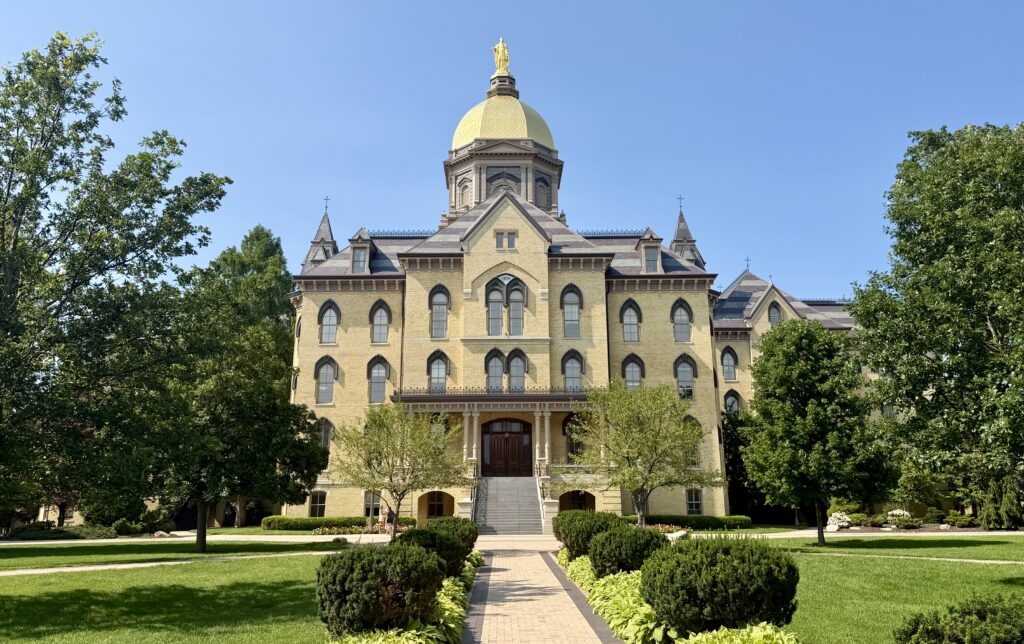
Main Building (Golden Dome) – The iconic Main Building, crowned by its famous Golden Dome, is the university’s most recognizable landmark. Originally built in 1879 after a devastating fire destroyed its predecessor, the building houses the university’s administrative offices, including the Office of the President, along with classrooms, art collections, and exhibition spaces. Topped by a gilded statue of the Virgin Mary, the Golden Dome has become an enduring symbol of Notre Dame and is one of the most photographed features on campus.
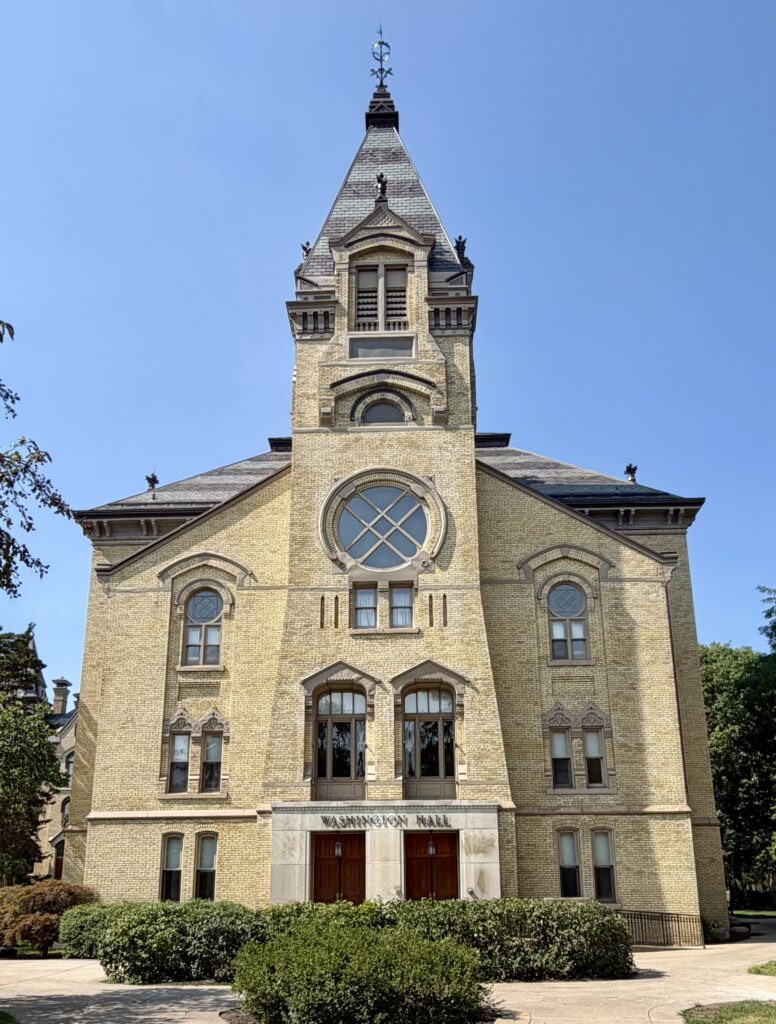
Washington Hall and the God Quad – Located on Notre Dame’s historic Main Quadrangle, Washington Hall is one of the university’s oldest and most recognizable buildings. Completed in 1882 after the original building was destroyed in the 1879 campus fire, it was the original home of the university’s music and performing arts programs. Today, it features a 550-seat theater, a black-box performance space, rehearsal rooms, a scene shop for building stage sets, and storage facilities for student organizations, making it the hub for theater productions, concerts, dance performances, lectures, and other campus events.
The surrounding Main Quad, affectionately known as the God Quad, is considered the heart of the university’s historic campus and is surrounded by some of Notre Dame’s most iconic landmarks, including the Basilica of the Sacred Heart, Sorin Hall, and the Main Building with its Golden Dome.
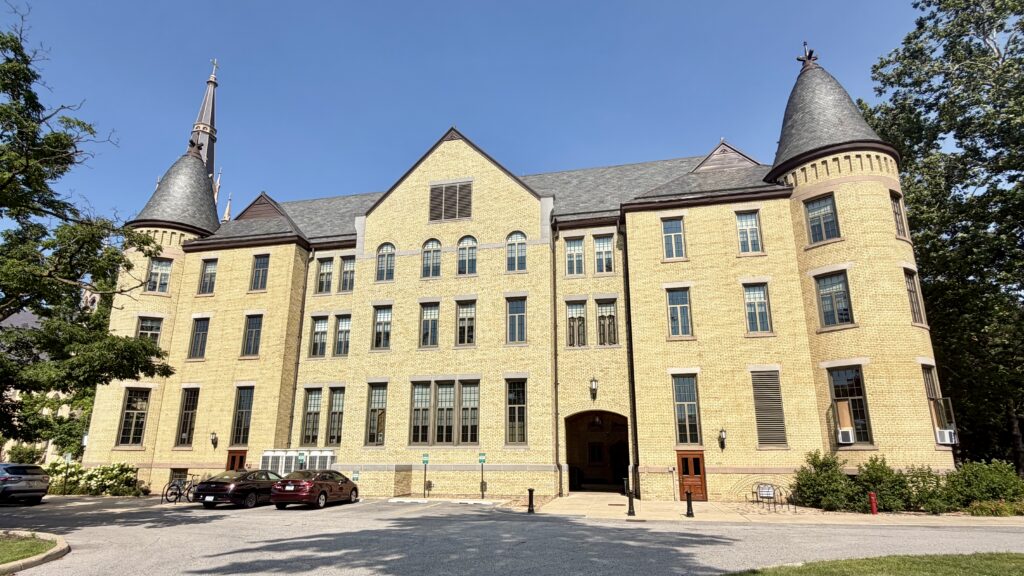
Sorin Hall – Founded in 1889, Sorin Hall is the oldest residence hall at the University of Notre Dame and is named after the university’s founder, Fr. Edward Sorin. Designed in a French château-inspired style with Gothic and Romanesque influences, it is one of the most historic buildings on campus and is listed on the National Register of Historic Places.
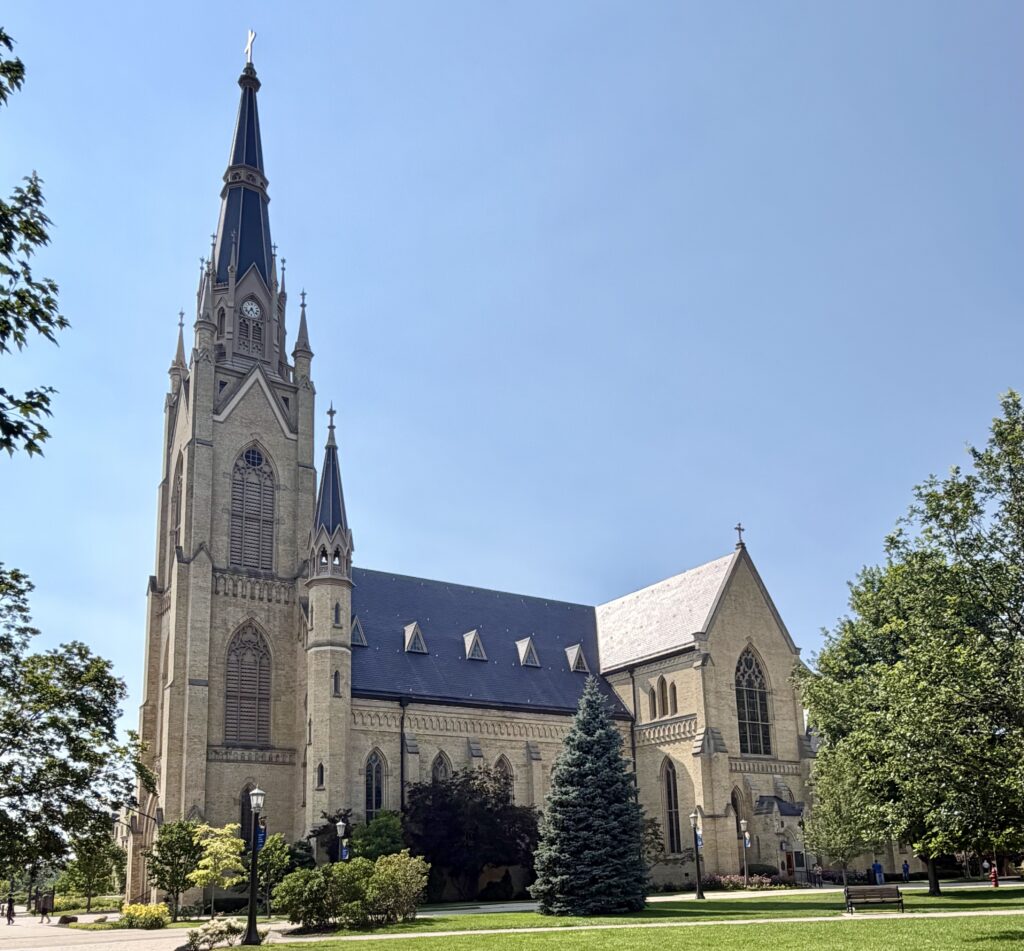
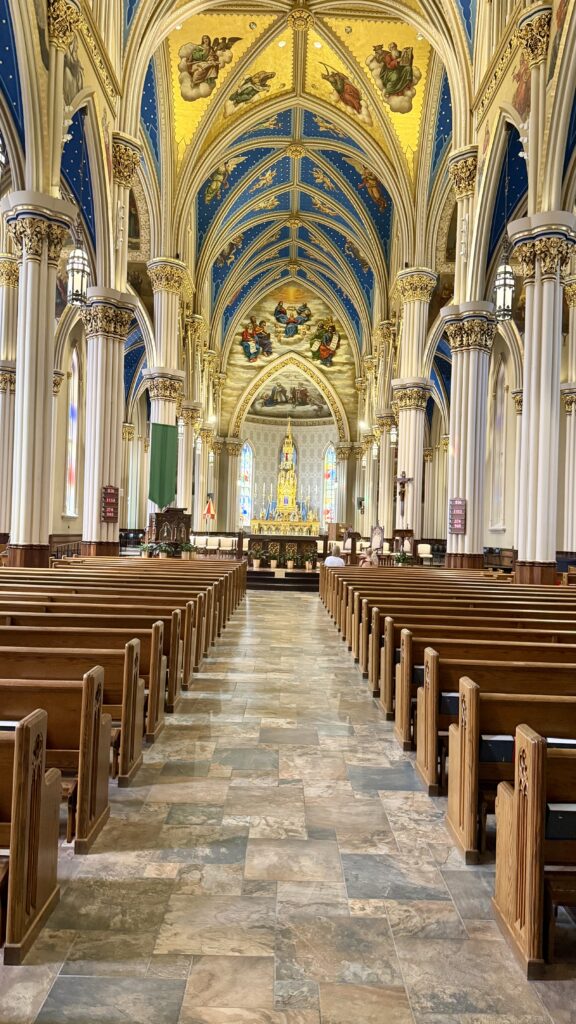
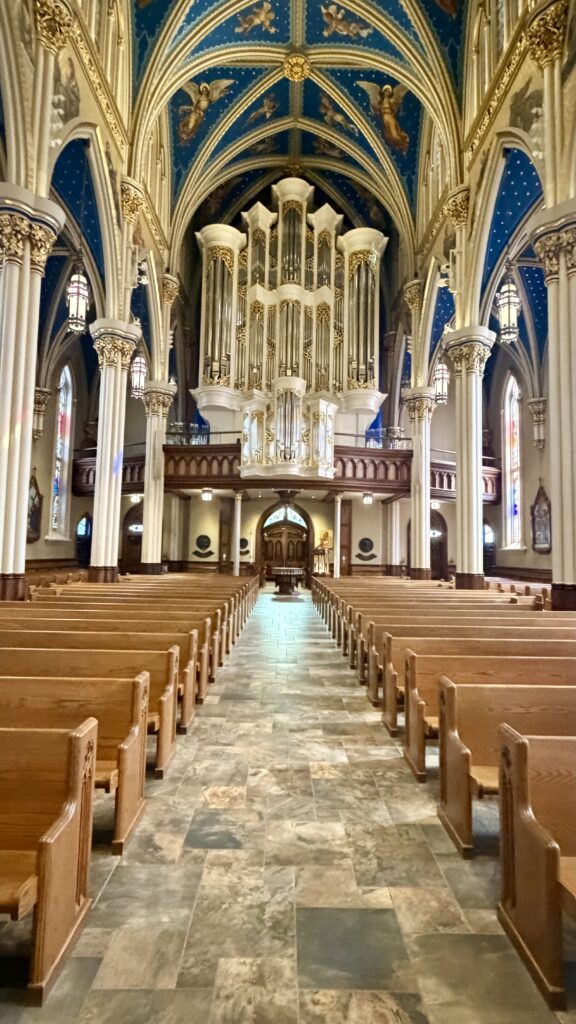
Basilica of the Sacred Heart – Located near the main building, the Basilica of the Sacred Heart is a stunning example of Gothic Revival architecture and serves as the mother church of the Congregation of Holy Cross in the United States. The basilica features 44 magnificent stained-glass windows and intricate murals painted over 17 years by Vatican artist Luigi Gregori. Its 230-foot bell tower, the tallest university chapel tower in America, makes it one of Notre Dame’s most recognizable landmarks.
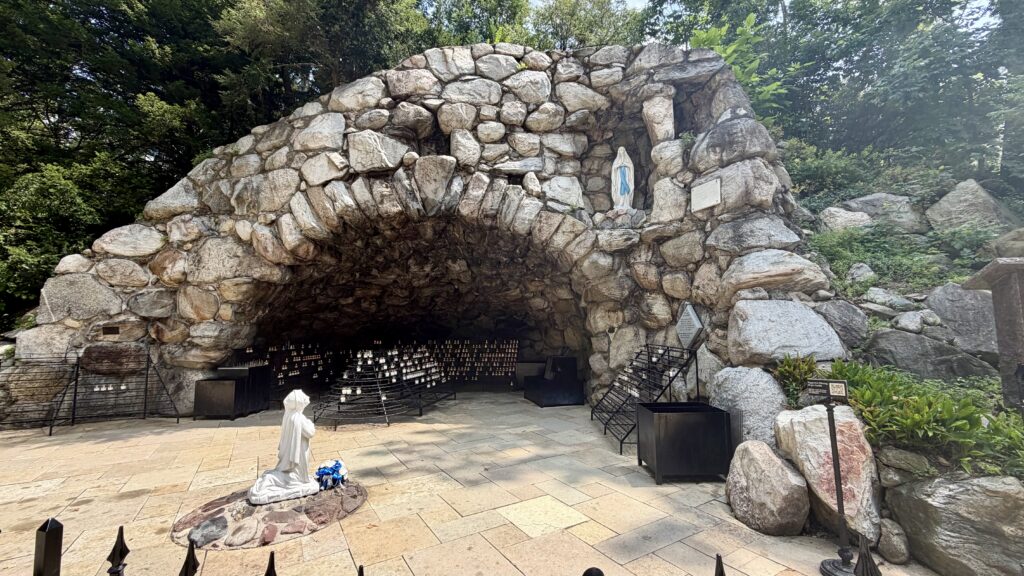
Grotto of Our Lady of Lourdes – Located within a few meters of the Basilica, the Grotto is one of the most peaceful and cherished places on the University of Notre Dame campus, and is a one-seventh-scale replica of the famous shrine in Lourdes, France, where the Virgin Mary is believed to have appeared to Saint Bernadette in 1858. Built in 1896 at the request of Notre Dame founder Father Edward Sorin, the grotto was constructed using large boulders gathered from nearby farms and even contains a small stone from the original grotto in France.
Theodore Hesburgh Library – is the centerpiece of the University of Notre Dame’s library system and one of the campus’s most recognizable landmarks. Opened in 1963 as Memorial Library and renamed in 1987 in honor of longtime university president Rev. Theodore Hesburgh, C.S.C., the library represents Notre Dame’s commitment to academic excellence and research.
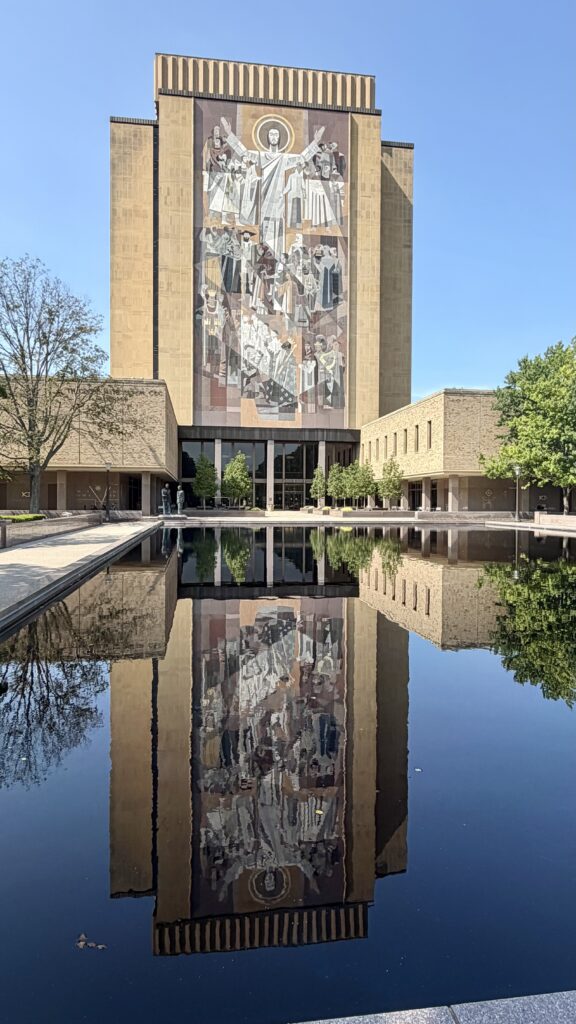
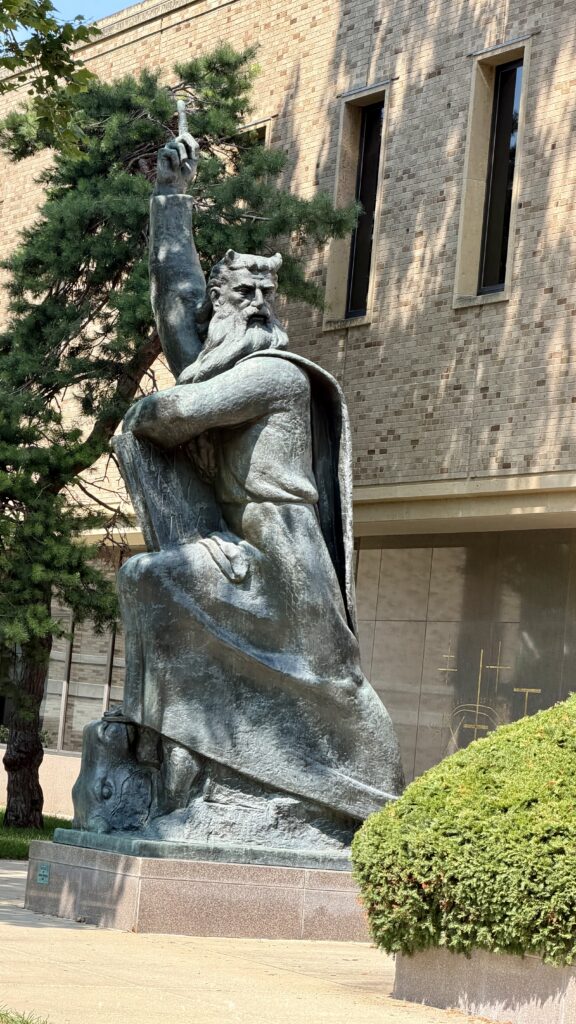
The building’s most famous feature is the massive Word of Life mural, popularly known as Touchdown Jesus, which overlooks Notre Dame Stadium. Measuring 134 feet by 68 feet, the mural has become one of the university’s most iconic images. On the entrance side of the library, visitors will also find First Down Moses, a playful statue depicting Moses holding the Ten Commandments with one arm raised in a gesture resembling a football referee signaling a first down—a nod to Notre Dame’s legendary football tradition.
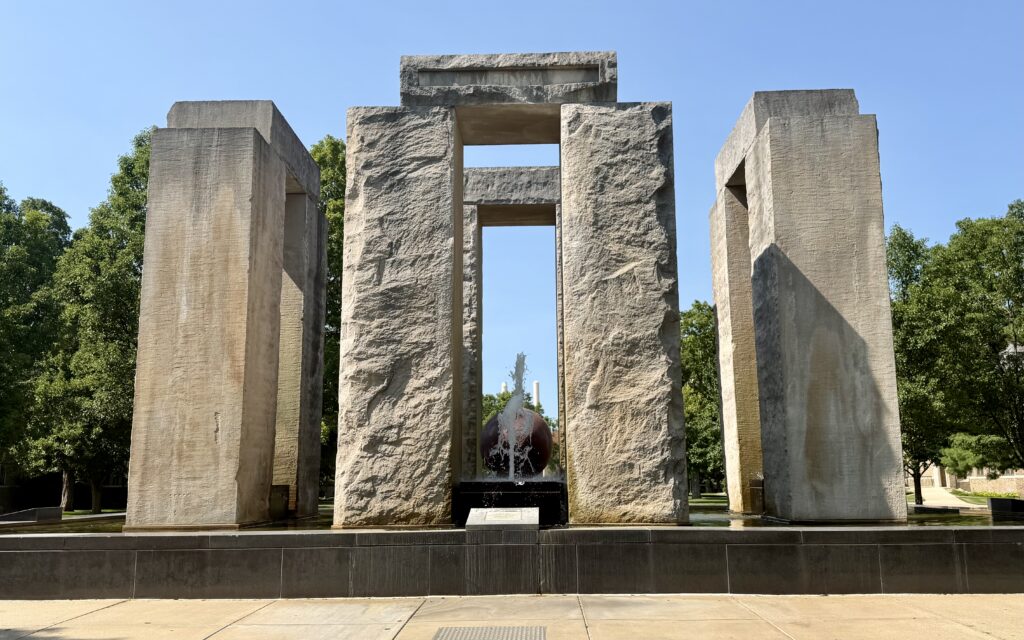
Clarke Memorial Fountain – Located near the Theodore Hesburgh Library, the Clarke Memorial Fountain is a striking memorial dedicated to Notre Dame alumni who lost their lives in World War II, the Korean War, and the Vietnam War. Originally dedicated in 1986 as the War Memorial, it was designed by renowned architects John Burgee and Philip Johnson. The monument features four limestone arches rising from a shallow granite pool, with fountains flowing through each arch and a central granite sphere. The arches are inscribed with the names of the three wars commemorated, while the phrase Pro Patria et Pace (For Country and Peace) reflects the memorial’s message of honoring sacrifice while seeking peace.
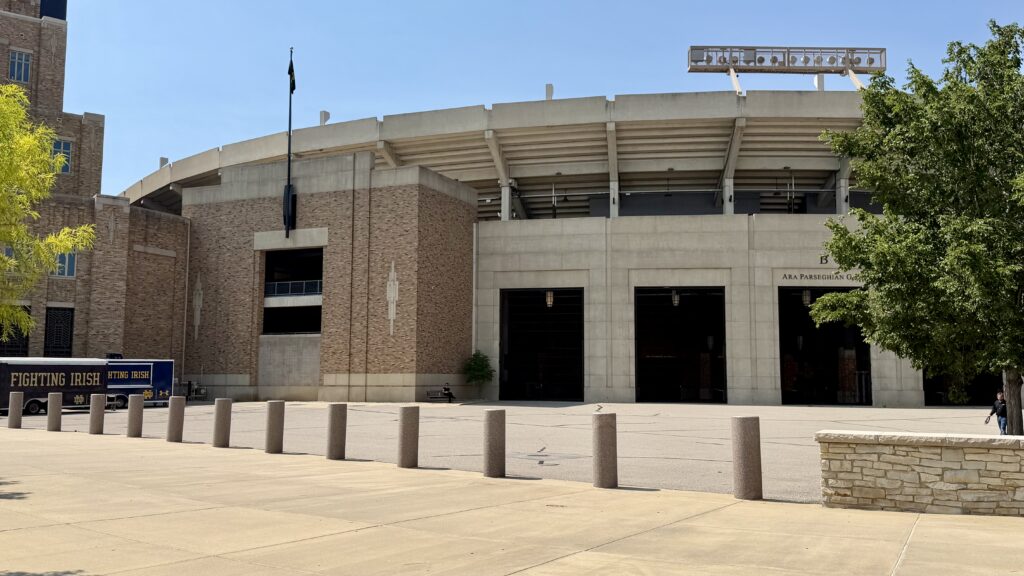
Notre Dame Athletic Facilities – Athletics are an integral part of the University of Notre Dame’s identity, and the campus features several impressive sports facilities concentrated in the southern and eastern sections. The most iconic is Notre Dame Stadium, home of the legendary Fighting Irish football team. With a seating capacity of more than 80,000, the stadium is one of college football’s most historic venues and a symbol of Notre Dame’s rich athletic tradition. Other notable facilities include the Edmund P. Joyce Center, which houses basketball and volleyball courts, and the Compton Family Ice Arena with two ice rinks for hockey.
South Dining Hall – Opened in 1927, South Dining Hall is one of Notre Dame’s two main student dining facilities and is considered one of the finest examples of Gothic architecture in the United States. Its soaring ceilings, stone fireplaces, oak furnishings, and medieval-inspired design often remind visitors of Hogwarts from the Harry Potter films. While the hall now features modern dining stations and made-to-order food, it has retained its historic character, making it one of the most beautiful and unique university dining halls in the country.
We weren’t able to visit the hall on this trip, but hope to explore this remarkable dining hall on a future visit.
Other Notable Sights on Campus
- LaFortune Hall – Known affectionately as LaFun by students, LaFortune Student Center is one of Notre Dame’s two main student centers and serves as a hub for social, cultural, recreational, and educational activities on campus. Housed in the historic former Science Hall, built in 1883, the four-story building now features meeting spaces, student services, restaurants, and gathering areas. The building has evolved from its original role as a center for science education—including housing Notre Dame’s early laboratories and museums—into a vibrant student destination at the heart of campus life.
- Campus Lakes – Notre Dame’s picturesque campus is centered around two spring-fed lakes—St. Mary’s Lake and St. Joseph’s Lake. Connected by a scenic 2.2-mile walking trail, the lakes provide a peaceful setting for walking, jogging, and relaxing. St. Mary’s Lake lies near the Grotto of Our Lady of Lourdes, while St. Joseph’s Lake features a beach, boathouse, and pier for student recreation.
- Corby Hall – Located near St. Mary’s Lake, this hall is home to the priests and brothers of the Congregation of Holy Cross, and serves as the residential and community center for the religious order that founded the University of Notre Dame. The original 1895 building was replaced in 2020 with a modern facility that closely mirrors its historic design, preserving the character of this prominent campus landmark.
- Log Chapel – Just beyond St. Mary’s Lake sits this breathtaking, small worship space. It’s often used for mass and even weddings. The Log Chapel is a replica of the one built by Rev. Badin in 1831 that served as a missionary headquarters for northern Indiana.
- Bond Hall – Originally built in 1917 as the Lemonnier Library, Bond Hall is one of Notre Dame’s historic campus buildings and today houses student learning initiatives, institutes, and the Graduate School. Designed in the Beaux-Arts Classical style by architect Edward Lippincott Tilton and constructed from Indiana limestone, the building served as the home of the School of Architecture from 1964 to 2019. Its grand front steps are especially famous as the stage where the Notre Dame Marching Band performs before football games, making it one of the most recognizable gathering spots on campus.
- Sacred Heart of Jesus Statue – Standing at the center of Notre Dame’s iconic God Quad (Main Quad), the Sacred Heart of Jesus Statue is one of the university’s most recognizable landmarks. The statue faces the Golden Dome of the Main Building with open arms, welcoming students and visitors with the inscription VENITE AD ME OMNES(Come to me, all of you).