Located on the western shore of Lake Michigan, Chicago is the most populous city in the state of Illinois and in Midwestern USA. It is a major destination for tourism with more than 55 million visitors visiting every year. We have been to this city a couple of times, although, the last time we visited the city was in 2005 and the pictures you see on this page are from that year.
- Willis Tower (Sears Tower)
- The Adler Planetarium
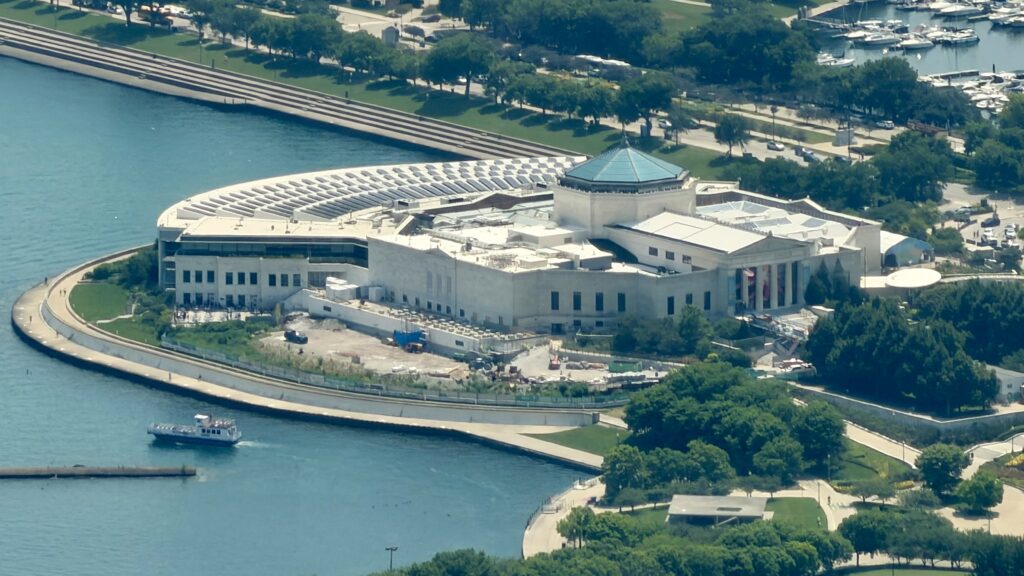
- Shedd Aquarium
- Buckingham Fountain
- Art Institute of Chicago
- Chicago Riverwalk and Lakefront Trail
- BAPS Shri Swaminarayan Mandir
- Lincoln Park
- The Rookery Building
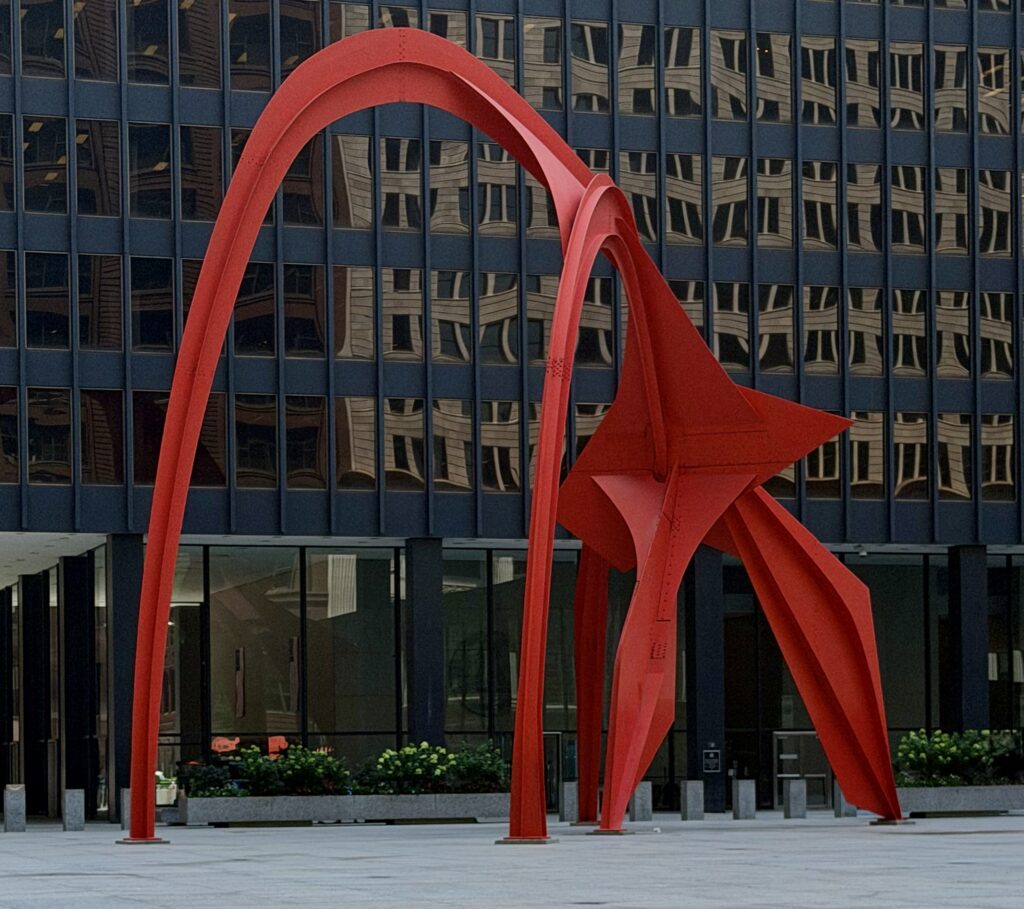
- Flamingo in Federal Plaza
- Millennium Park
- Michigan Avenue and the Magnificent Mile
- Stroll around Navy Pier
- Frank Lloyd Wright–Prairie School of Architecture Historic District in Oak Park
- Other sites around Chicago
- The Chicago Theater
- Museum of Science and Industry
Willis Tower (Former Sears Tower) – For nearly 25 years after its completion, the Willis Tower, formerly known as the Sears Tower, held the title of tallest building in the world. In 1996, the Petronas Towers built in Kuala Lumpur took over as the tallest building. Standing 110 stories tall, its black aluminum and bronze-tinted glass exterior has become emblematic of Chicago. Although its record-breaking height has been surpassed several times over, it laid the foundation for the supertall buildings being built today.
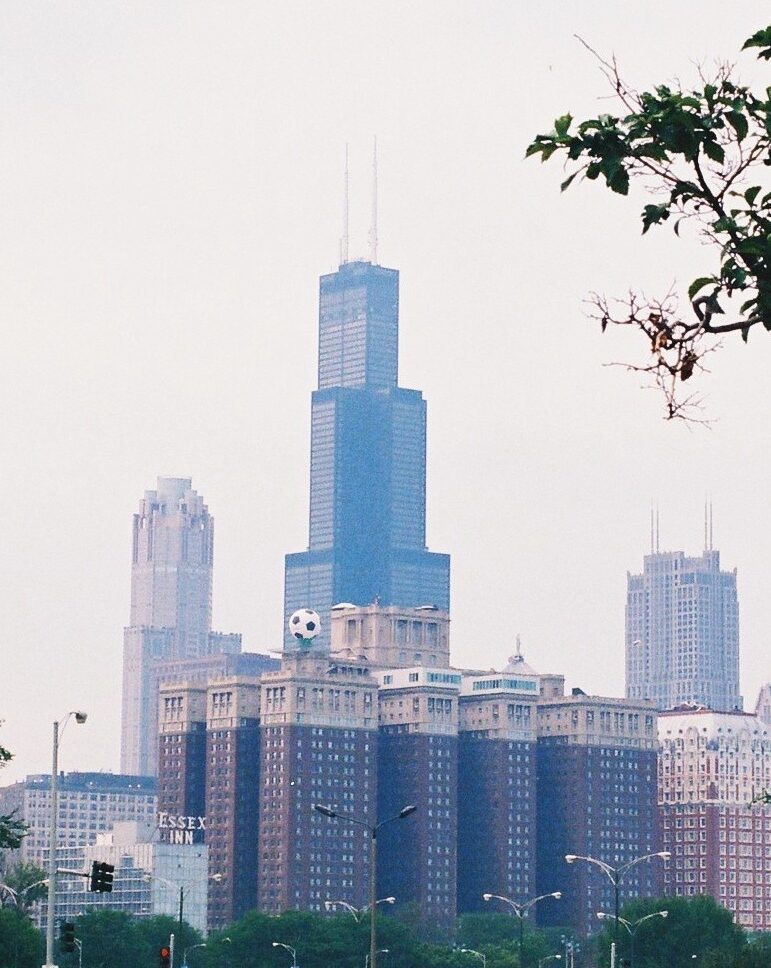
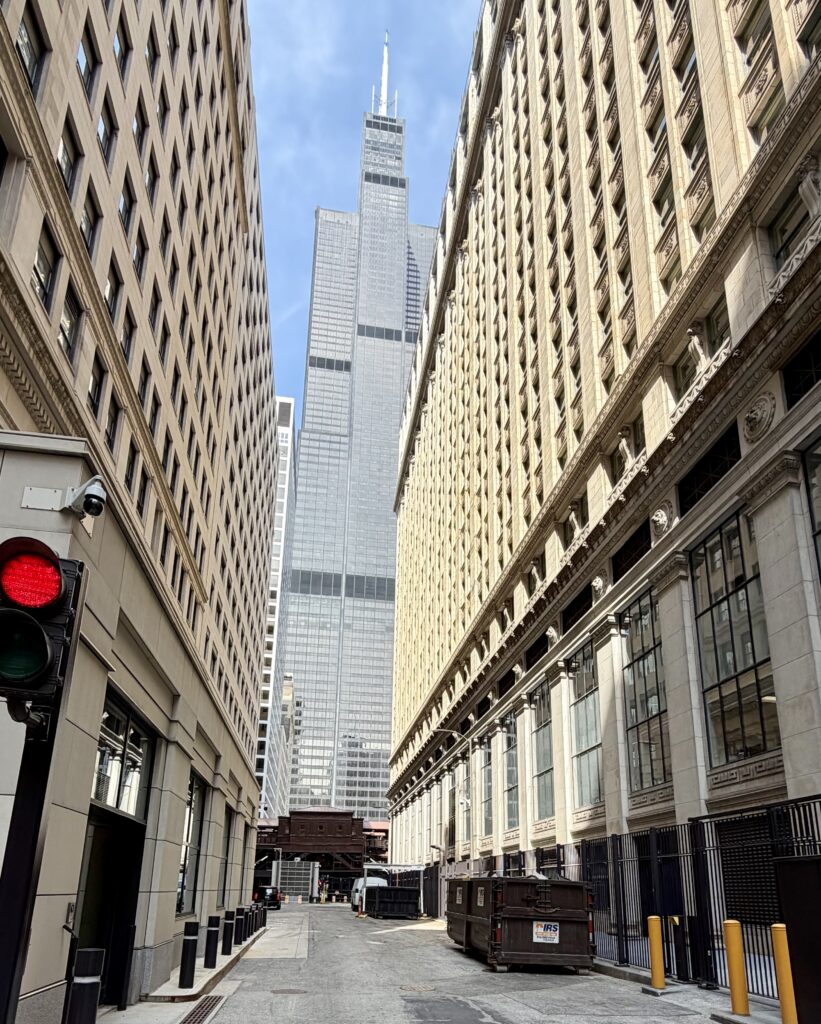
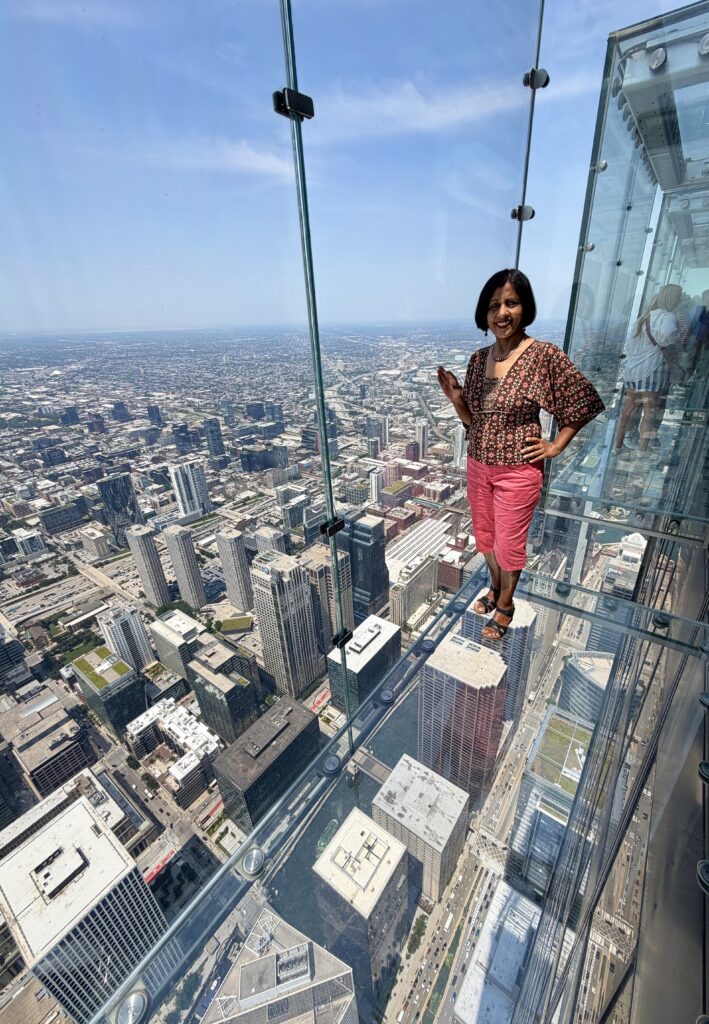
Willis Tower, View from the top – The Willis Tower took three years to build and was opened to the public in 1974. The building is 1,453 feet tall with an observation area, called the Skydeck, on the 103rd floor, 1,353 feet above the ground. A glass box with a glass floor, known as the Ledge, juts out from the Skydeck, where visitors can stand and look directly down at the city below. The view from here is incredible and on a clear day you can see 40 to 50 miles.
The Adler Planetarium – Founded in 1930 by local businessman Max Adler, this public museum is dedicated to astronomy and astrophysics. Its mission is to inspire exploration and understanding of the universe. The building, designed by Ernest A. Grunsfeld Jr., became a National Historic Landmark in 1987.
Today, the Adler Planetarium features three theaters, space science exhibits including the Gemini 12 space capsule, a collection of historic scientific instruments and printed materials, and the Doane Observatory, a public observatory that supports active research.
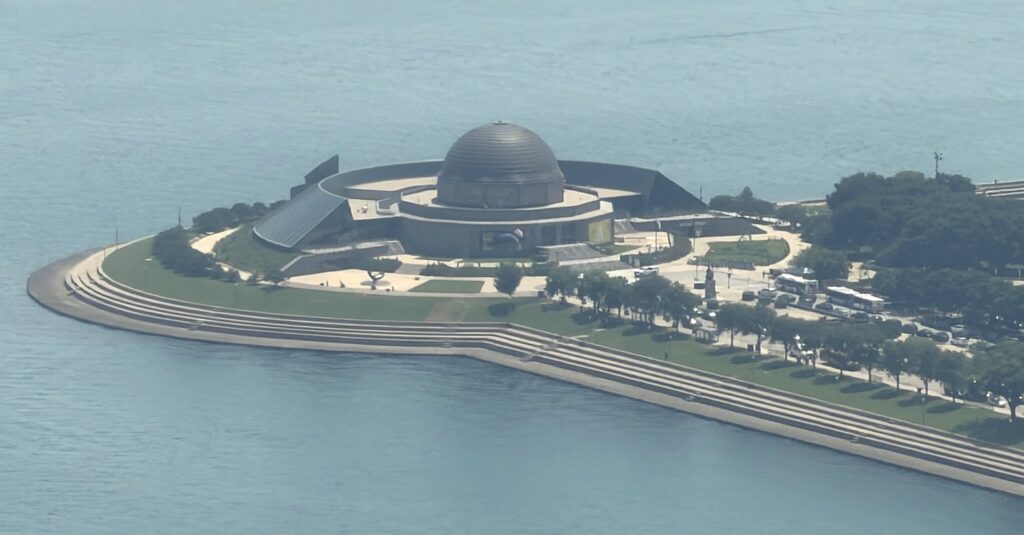
Things to do in Adler Planetarium –
- Dome Theater Sky Shows – watching an immersive space visualization in one of the museum’s dome theaters is the absolute highlight of the trip.
- Exhibits (maybe a bit dated) – You can walk through the Other Worlds exhibit, touch a real Arizona meteorite, and see the Atwood Sphere, the oldest operating sky simulator in the world.
- Views – The outdoor terrace by the Cosmic Cafe offers unmatched, unobstructed views of the Chicago skyline.
———————————-
The Adler Planetarium is part of Chicago’s Museum Campus, which also includes the Shedd Aquarium and the Field Museum.
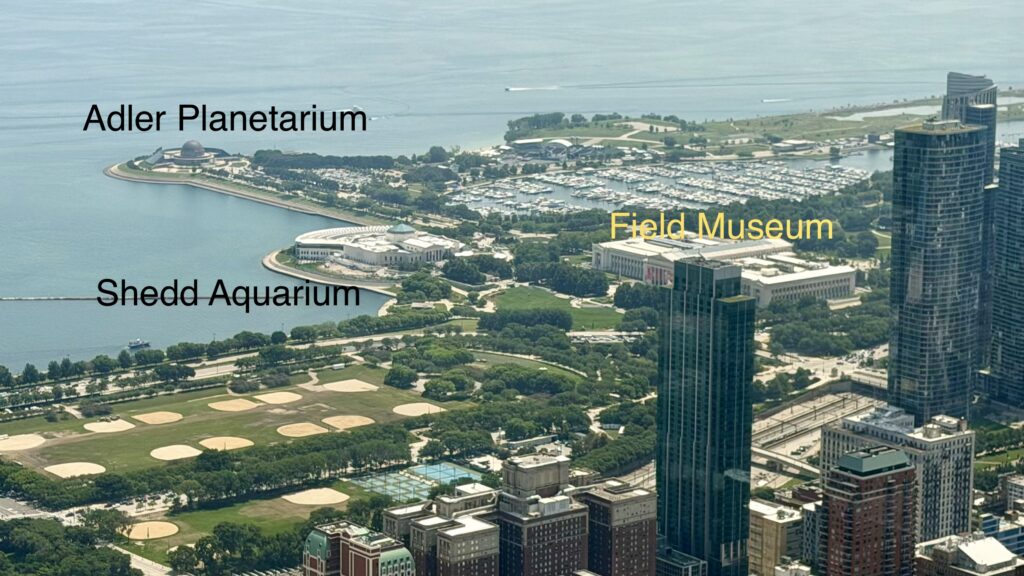
Shedd Aquarium – This public aquarium opened on May 30, 1930, and is located on Lake Michigan in Chicago’s Museum Campus (see above section). The aquarium contains 1,500 species, including fish, marine mammals, birds, snakes, amphibians, and insects. It was designated a National Historic Landmark in 1987.
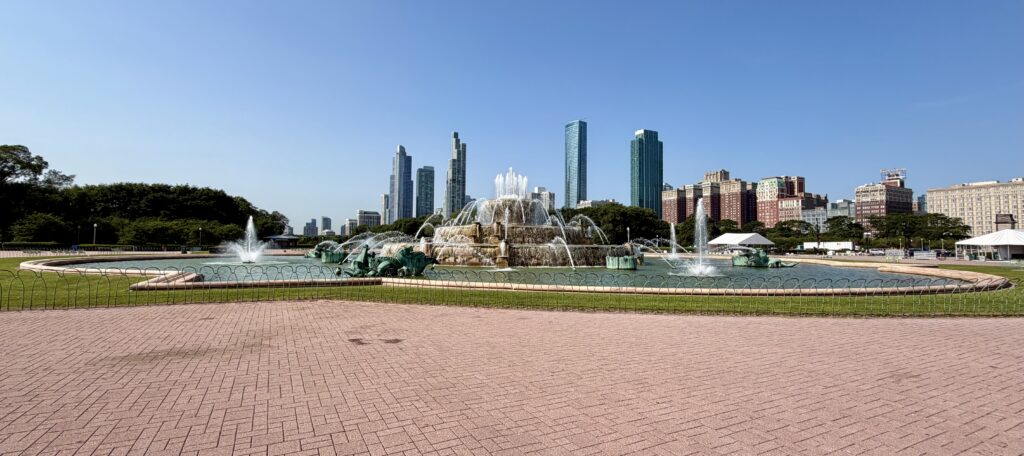
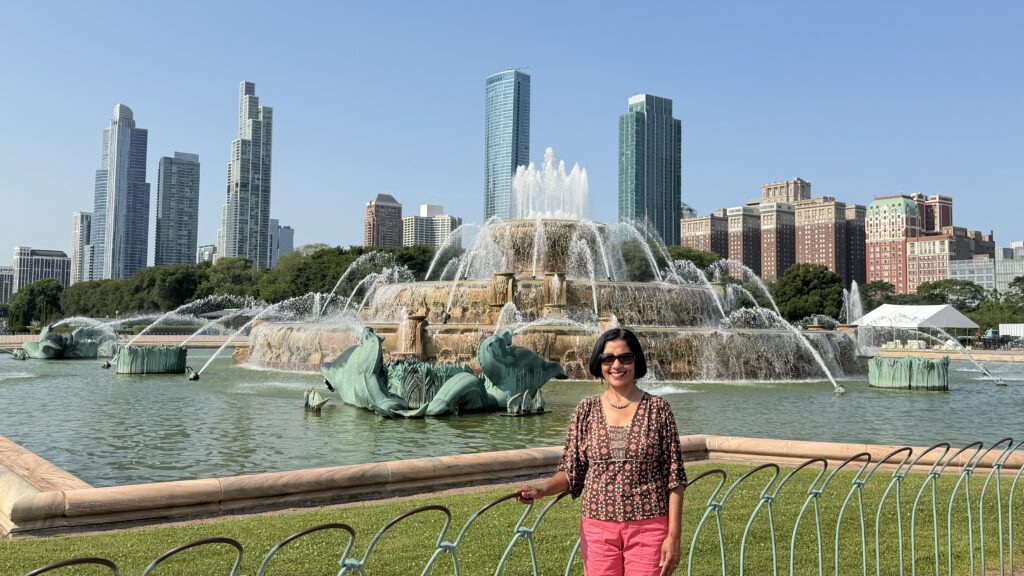
Buckingham Fountain – Located in the center of Grant Park, it is one of the largest fountains in the world. Exceptionally ornate looking, its design was inspired by the Latona Fountain at the Palace of Versailles. It is colorfully lighted in the night.
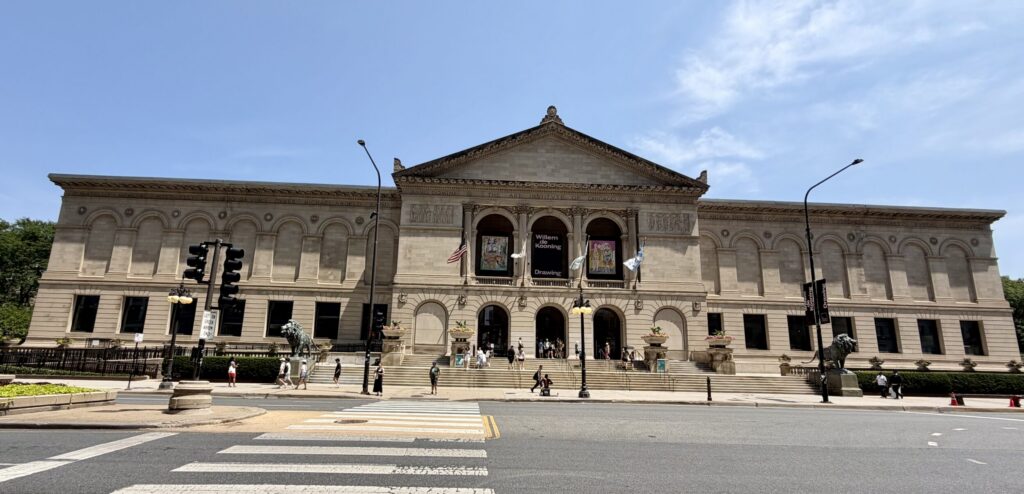
Art Institute of Chicago – Founded in 1879, it is one of the oldest and largest art museums in the United States. You can explore thousands of artworks in the museum’s collection that spans centuries and every part of the globe. The collection encompasses more than 5,000 years of human expression from cultures around the world and contains more than 300,000 works of art in 11 curatorial departments, ranging from early Japanese prints to the art of the Byzantine Empire to contemporary American art.
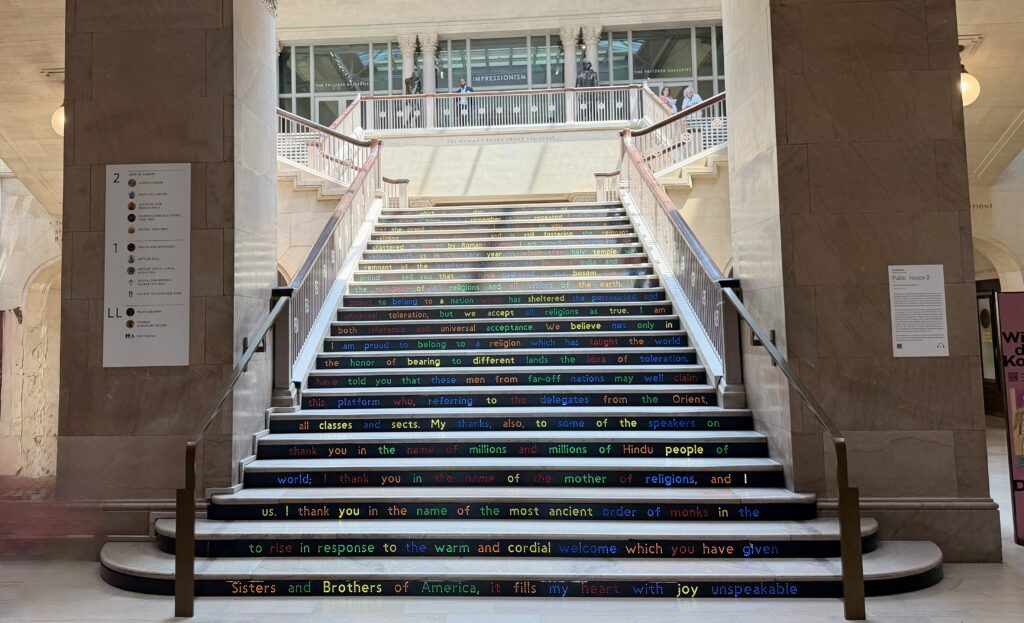
Public Notice 3 – When you walk into the Art Institute of Chicago, you will be welcomed by colorful stairs with words glowing across each step. This installation by Jitish Kallat was originally unveiled on September 11, 2010, and commemorates the connection between Swami Vivekananda’s 1893 speech at the World’s Parliament of Religions and the September 11, 2001 attacks. The installation displays Vivekananda’s message of religious tolerance, unity, and peace across the staircase in the five colors of the former U.S. Homeland Security threat advisory system.
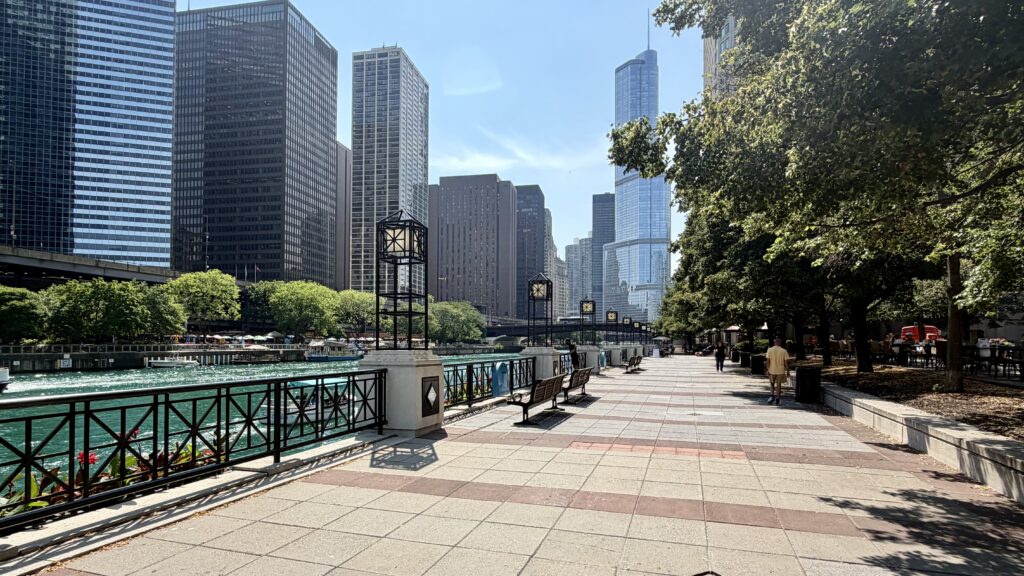
Chicago Riverwalk and Lakefront Trail – The Chicago Riverwalk is a 1.25 mile pedestrian path along the south bank of the Chicago River, offering a scenic and recreational space in downtown Chicago. It features restaurants, bars, public art, and access to various excursions and boat tours. The Riverwalk is free and open to the public daily and is accessible from various points along Wacker Drive.
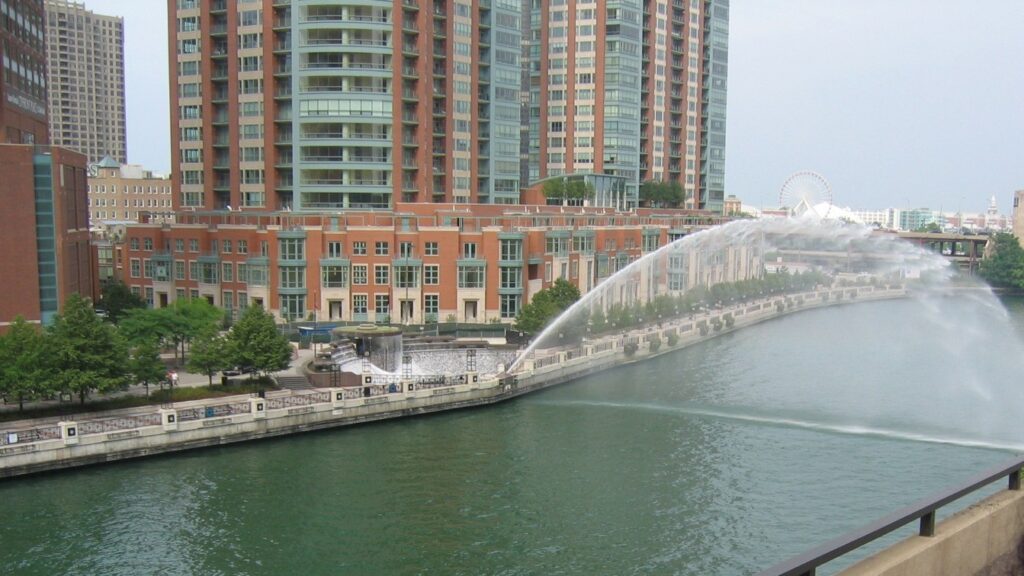
Chicago Riverwalk, Nicholas J Melas Centennial Fountain – is located on Riverwalk and is known for its water cannon, which shoots a large arc of water across the river. It was dedicated in 1989, to celebrate the 100th anniversary of the Metropolitan Water Reclamation District of Greater Chicago.
BAPS Shri Swaminarayan Mandir – is a traditional Hindu place of worship built by the BAPS Swaminarayan Sanstha, a denomination of the Swaminarayan Sampradaya within Hinduism led by Mahant Swami Maharaj. Opened on August 7, 2004, the mandir (temple) is the largest of its kind in Illinois and was constructed using hand-carved Italian marble and Turkish limestone. Inside the central shrine are the murtis(Sculptures) of Swaminarayan and Gunatitanand Swami, worshipped together as Akshar-Purushottam Maharaj, along with other deities and the lineage of BAPS spiritual leaders.
There are over 100 BAPS temples spread across 34 states in North America, with significant presence in New York, New Jersey, Texas, California, and Georgia, among others.
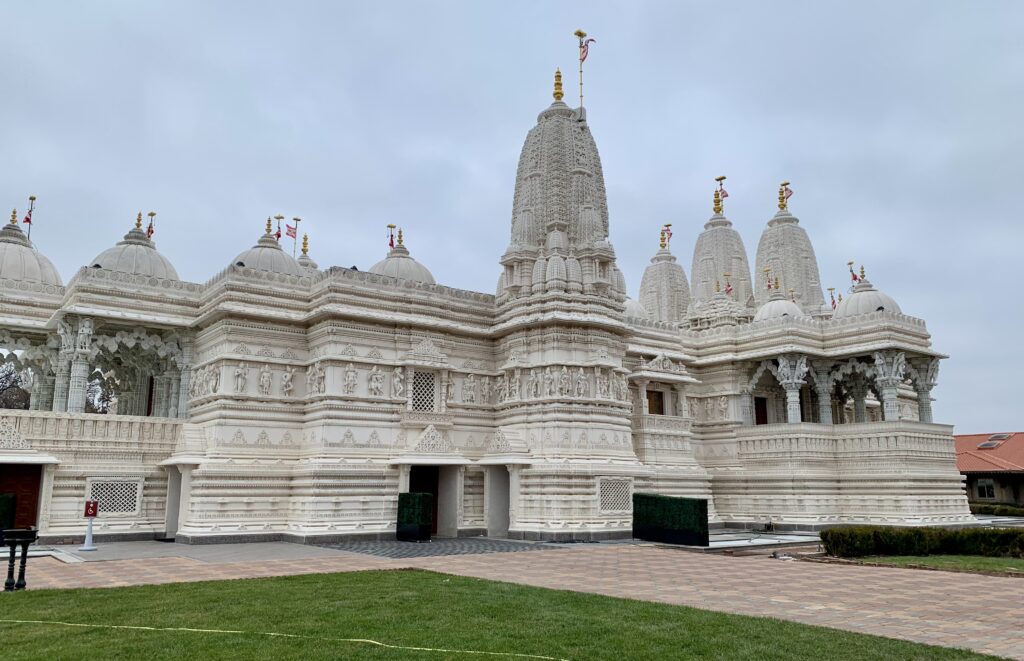
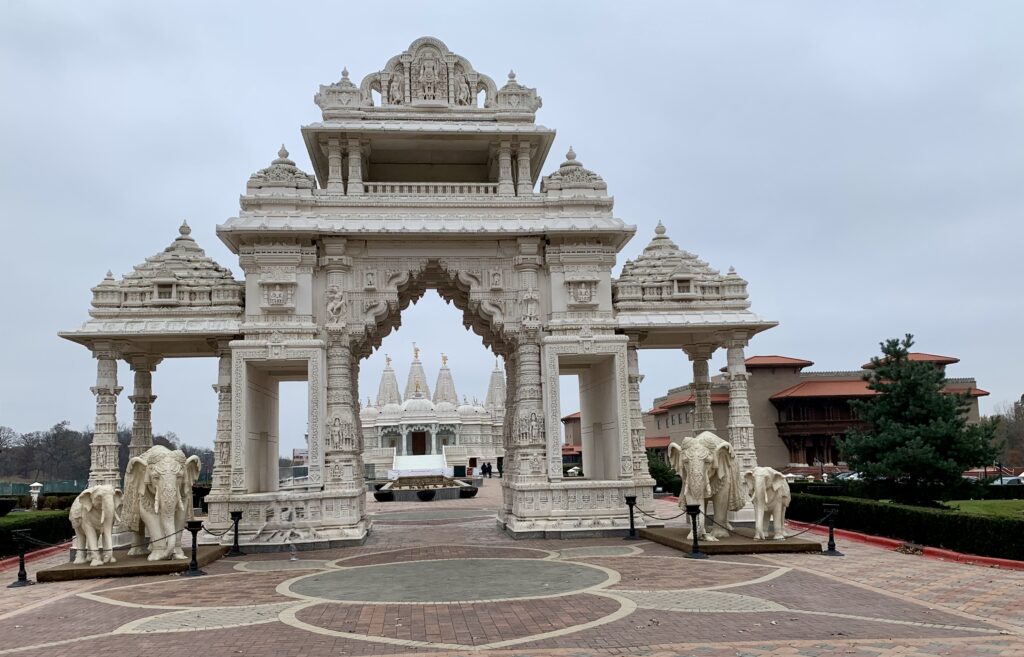
Note – You are not allowed to take pictures inside the temple
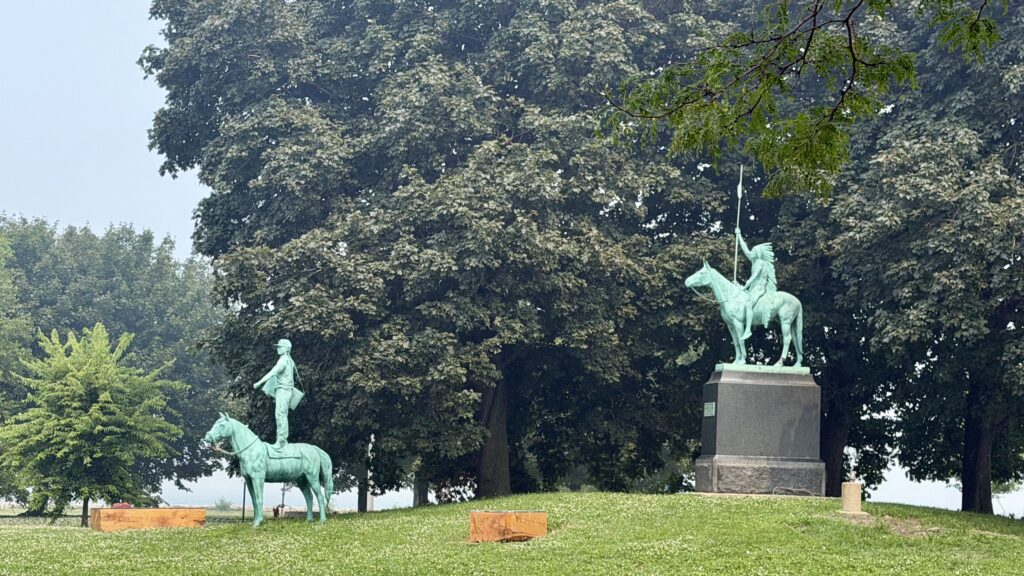
Lincoln Park – This picturesque neighborhood with manicured gardens and tons of lakefront green space, is a nature lover’s paradise. It is also home to one of the country’s oldest free zoos. One can spend an entire day exploring the neighborhood.
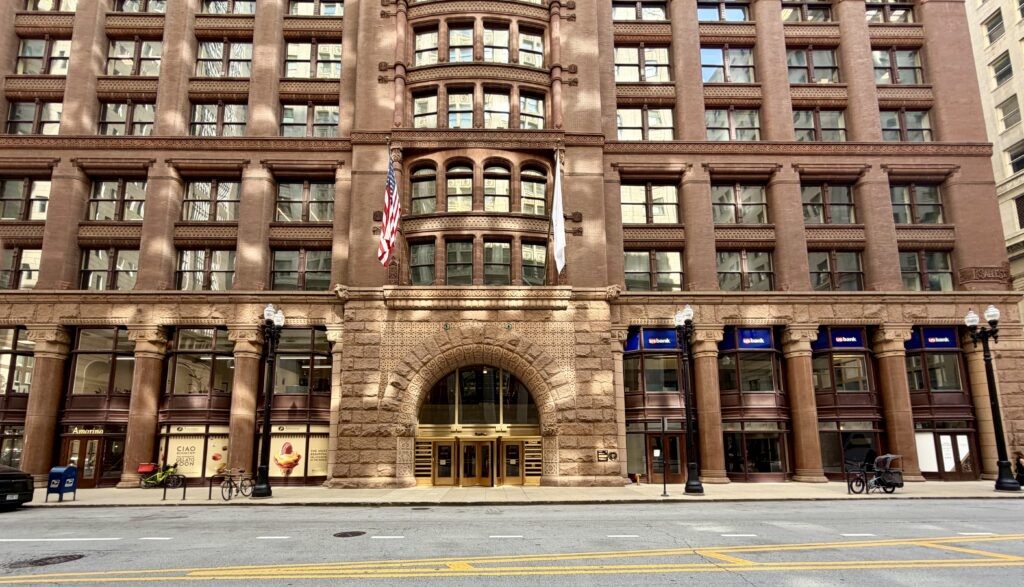
The Rookery Building – An office space that was designed by the renowned architectural firm Burnham and Root, and later renovated by Frank Lloyd Wright. It was designated a Chicago Landmark in 1972 after being added to the National Register of Historic Places in 1970. Originally completed in 1988, the Rookery is universally considered an architectural masterpiece.
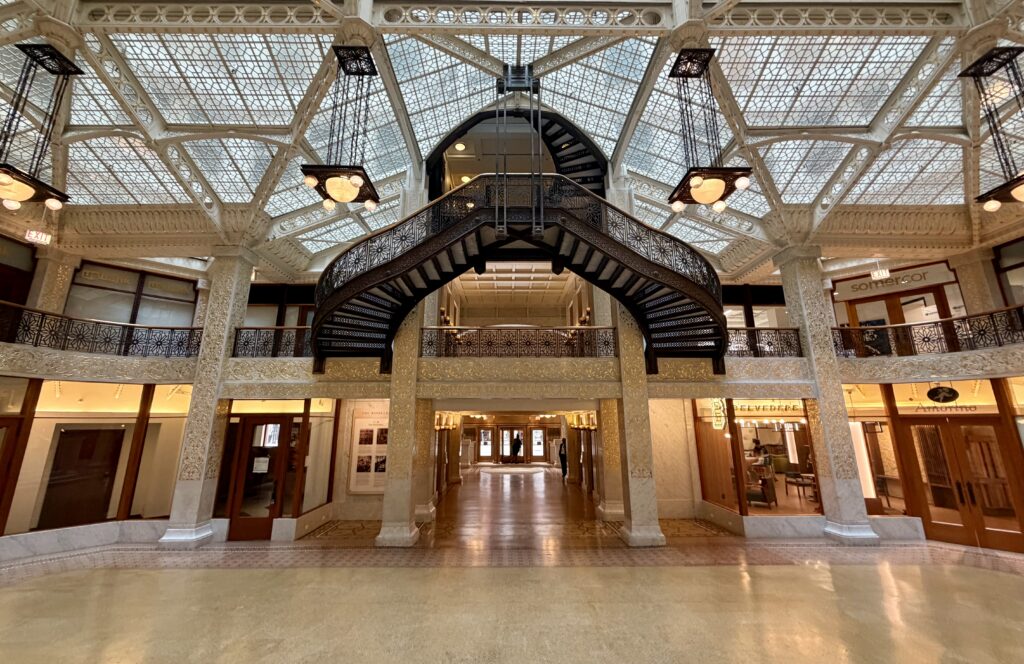
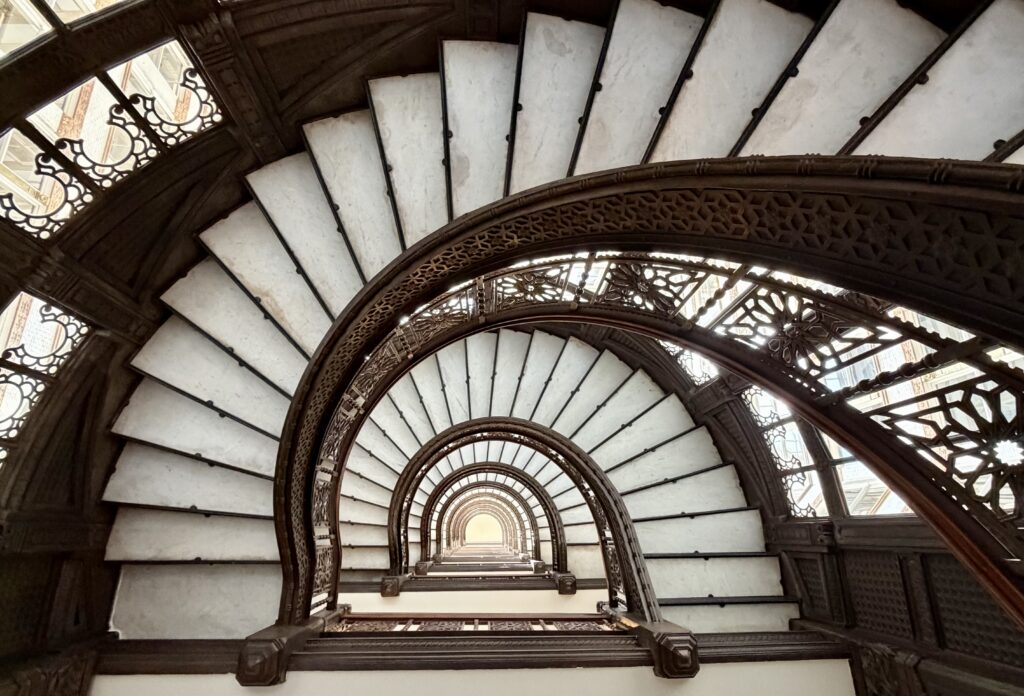
Flamingo in Federal Plaza – We passed by this striking sculpture and stopped for 10 minutes to admire it from different angles. This monumental public artwork was created by American artist Alexander Calder and is located in front of the Kluczynski Federal Building. Completed in 1973 and unveiled in 1974, the 53-foot-tall steel sculpture weighs 50 tons. Calder chose the distinctive vermilion color, often called Calder red, to create a bold contrast against the dark steel and glass architecture of the surrounding modernist buildings, including the Kluczynski Federal Building.
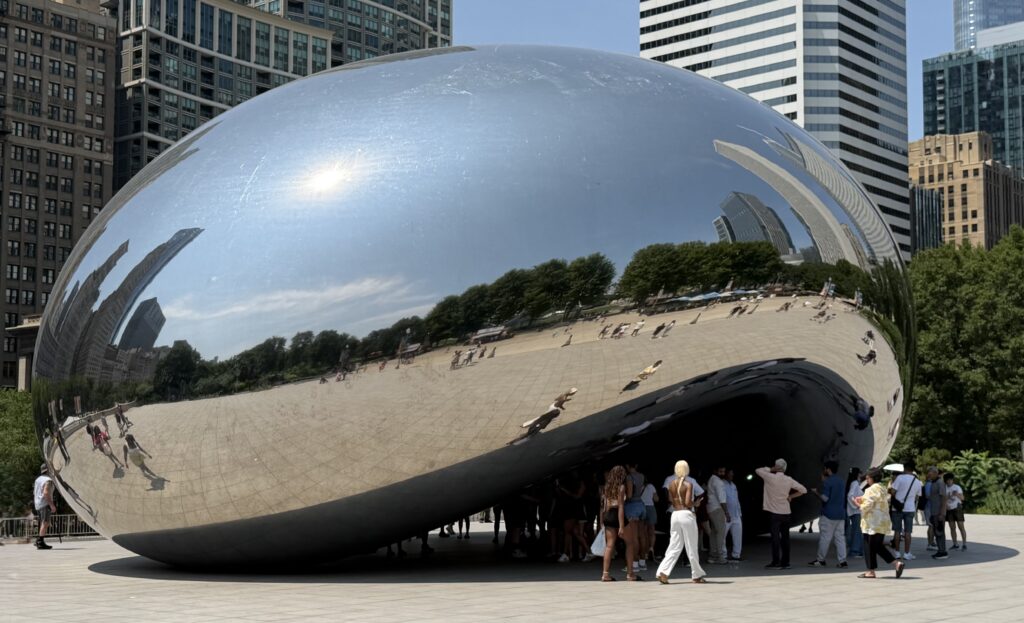
Millennium Park – Located in the heart of downtown, Millennium Park is home to several of the city’s popular attractions.
Millennium Park, Cloud Gate – Unveiled in 2005, this is famed artist Anish Kapoor’s first outdoor public sculpture in the United States, and one of the largest sculptures of its kind in the world. The city skyline is reflected on Cloud Gate’s shiny surfaces.
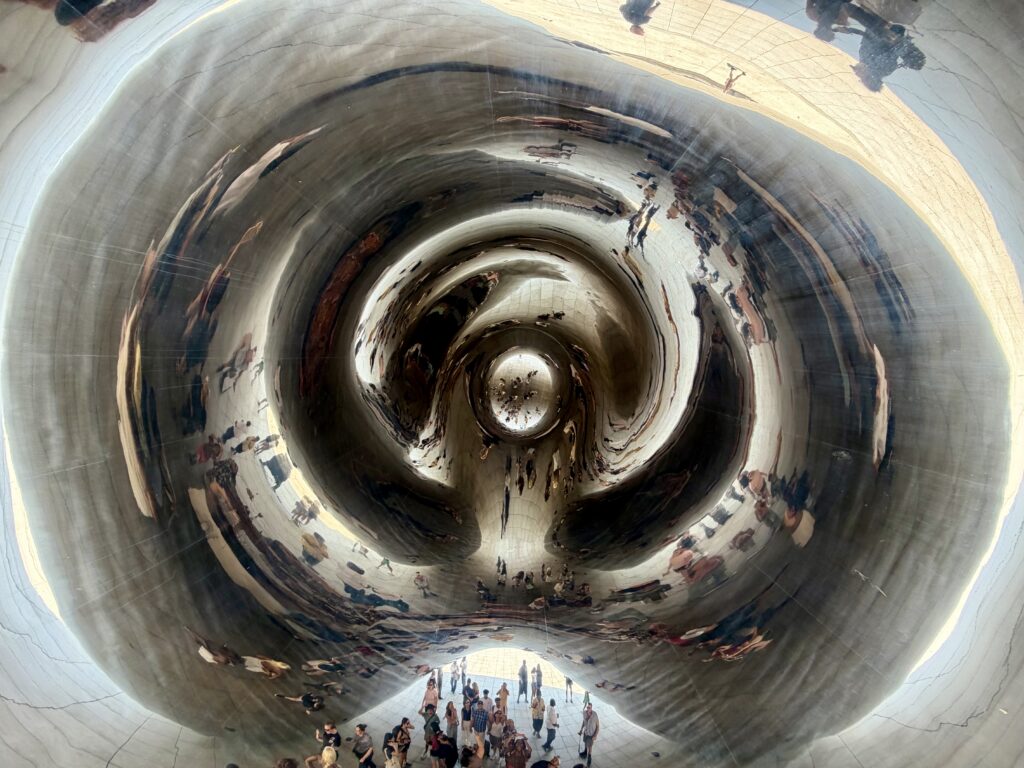
————————————-
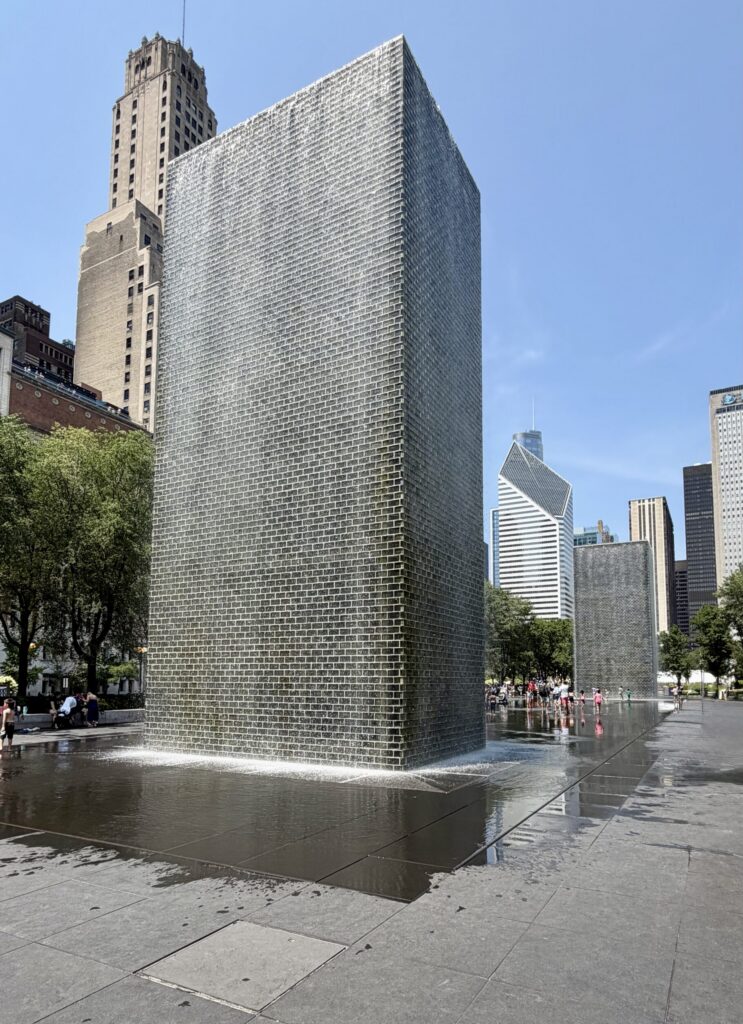
- Millennium Park, Crown Fountain – is an interactive public art installation designed by Spanish artist Jaume Plensa and completed in 2004 and features two 50-foot glass brick towers with LED screens that display videos of local residents’ faces. Water flows down the towers and periodically sprays from the faces into a reflecting pool, encouraging visitors to interact with the artwork.
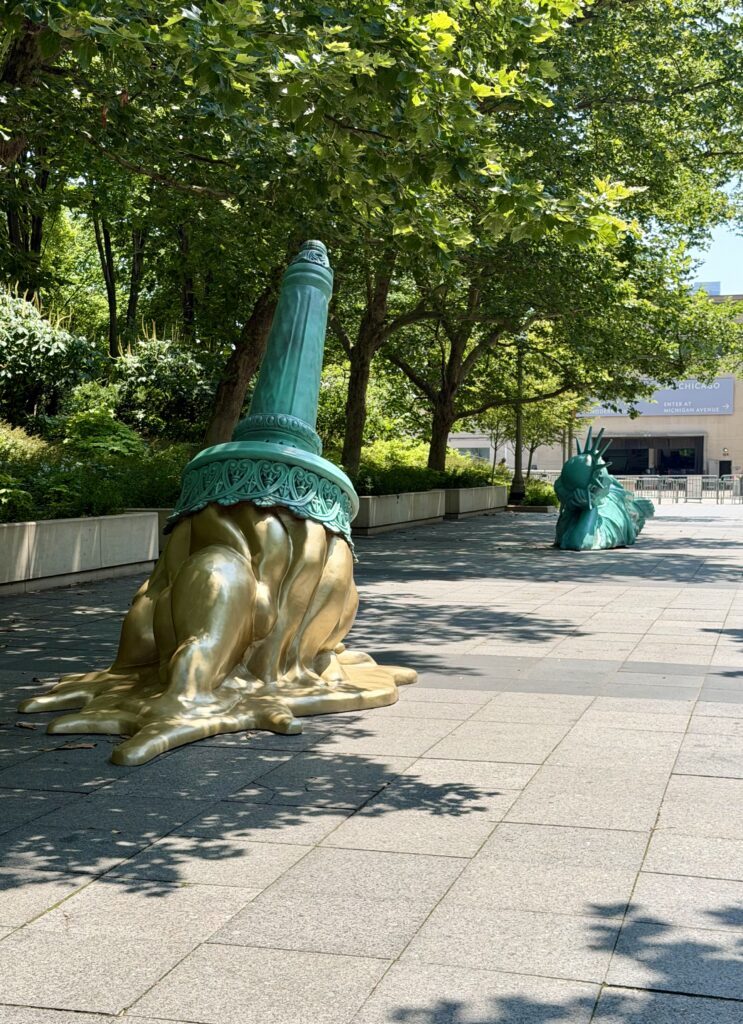
- Millennium Park, Reclining Liberty – at the time of our visit, Millennium Park was hosting a major public art exhibition by artist Zaq Landsberg featuring two playful, interactive Statue of Liberty sculptures. The 25-foot Reclining Liberty merges Lady Liberty with a traditional Buddha pose.
————————————-
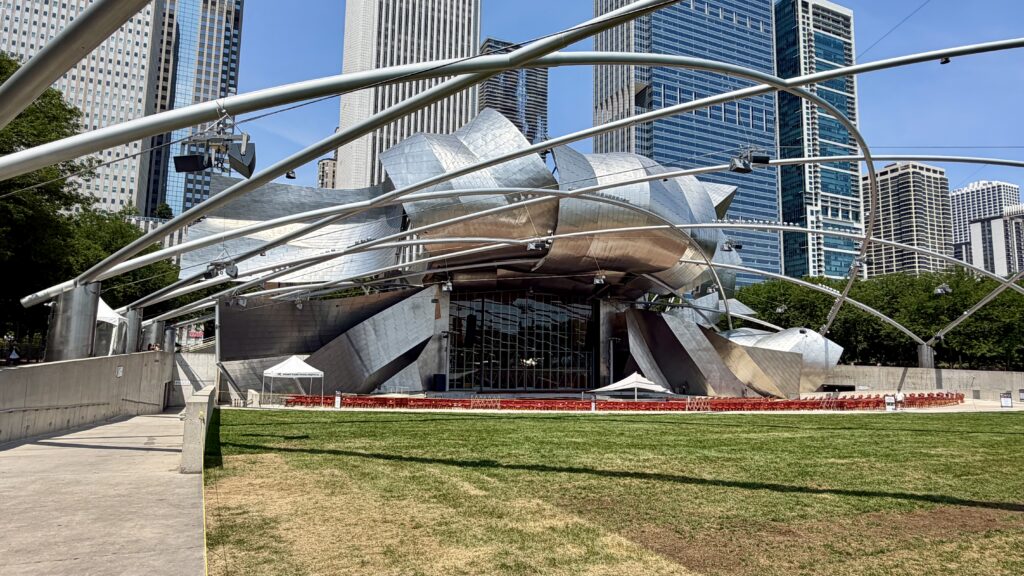
Millennium Park, Jay Pritzker Pavilion – is the primary concert area in Millennium Park. This state-of-the-art outdoor venue designed by Frank Gehry features 4,000 fixed seats and a Great Lawn that accommodates over 7,000 additional guests. The venue is renowned for its sweeping stainless-steel ribbons and a massive overhead trellis that delivers acoustic quality rivaling an indoor concert hall.
Michigan Avenue and the Magnificent Mile – is a legendary 13-block stretch of North Michigan Avenue running from the Chicago River to Oak Street. It serves as a bustling hub for over 450 luxury stores and features some of the most iconic and historically significant skyscrapers in the world.
The Chicago Architecture Center (CAC) offers a variety of guided architecture walking tours, including the Magnificent Mile, Historic Skyscrapers, Art Deco landmarks, etc. We explored part of the Magnificent Mile on foot, admiring its iconic architecture, browsing the shops, and taking a relaxing break to enjoy a cup of coffee.
Some of the buildings in this area include –
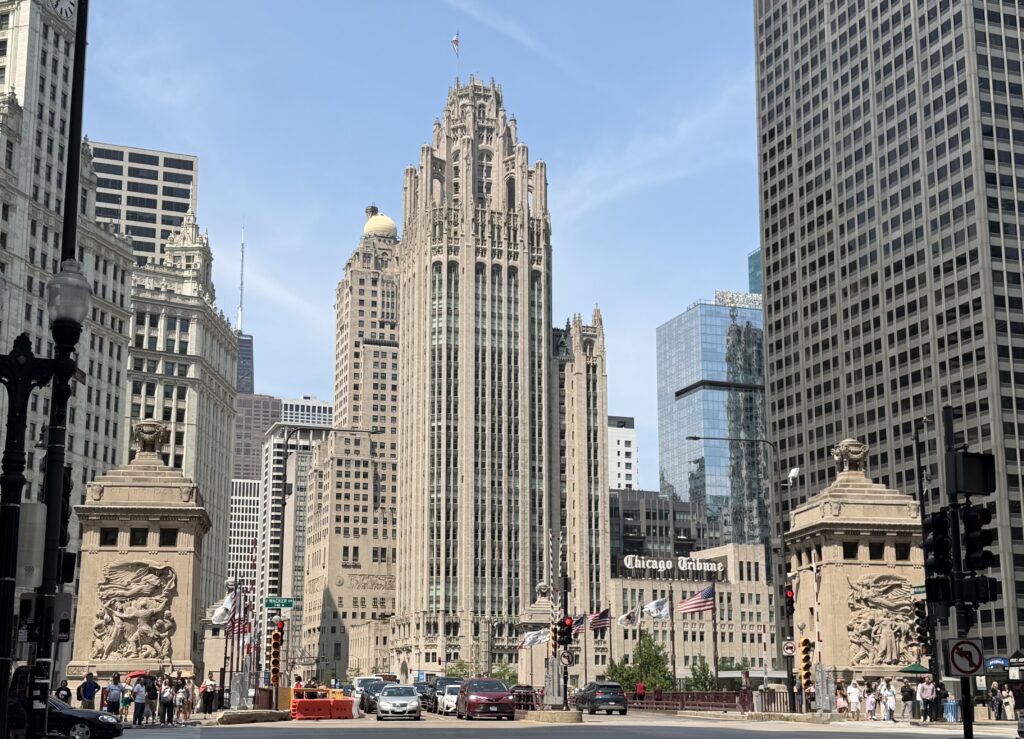
- Tribune Tower – is a 463-foot, 36-story Neo-Gothic skyscraper that was built in the 1920s as the headquarters of the Chicago Tribune. Since 2018, it has been converted into luxury residences while preserving its historic character. A distinctive feature of the Tribune Tower is its façade, which contains stones and fragments collected from more than 150 famous landmarks around the world, including the Taj Mahal, the Parthenon, and the Great Wall of China.
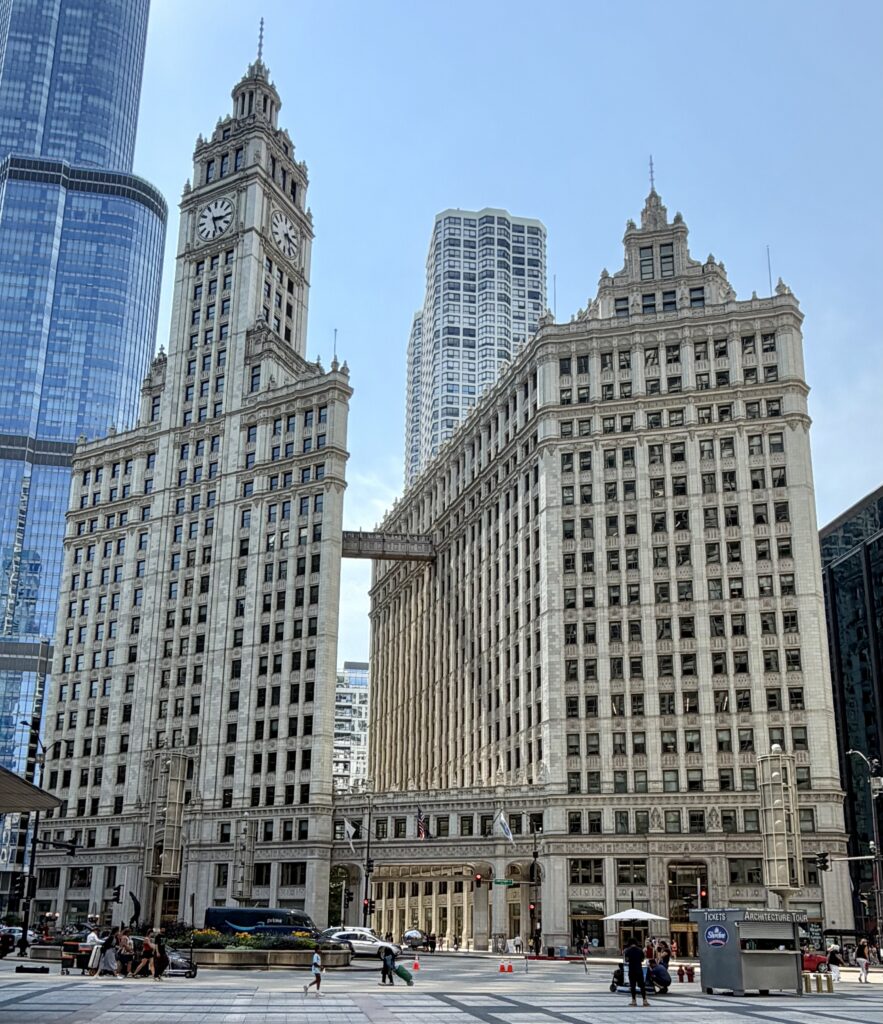
- Wrigley Building – Built between 1920 and 1924, the design of the building draws inspiration from the Giralda Tower of Seville Cathedral and incorporates elegant French Renaissance details. The complex consists of two interconnected towers clad in gleaming white glazed terra cotta. The taller south tower rises 30 stories and features a four-faced clock, while the north tower stands 21 stories high. The towers are linked by enclosed walkways, creating one of Chicago’s most photographed architectural compositions. The Wrigley Building was also Chicago’s first air-conditioned office building.
- London Guarantee Building – now home to the LondonHouse Chicago Hotel, this historic 1923 Beaux-Arts skyscraper designed for the London Guarantee & Accident Company, is one of four iconic 1920s buildings framing the bridge, alongside the Wrigley Building, Tribune Tower, and 333 North Michigan Avenue.
- Mather Tower – is a distinctive Neo-Gothic skyscraper completed in 1928. Clad in cream-colored terra cotta, the 521-foot tower is one of Chicago’s most recognizable buildings and is nicknamed The Inverted Spyglass because of its unusual design—an 18-story octagonal tower rising above a 24-story rectangular base. Today, the lower floors house the River Hotel, while the upper octagonal tower is occupied by Club Quarters accommodations.
- Father Time Clock – Located on the northeast corner of the historic Jewelers’ Building at Wabash Avenue, the six-ton, Art-Deco clock was gifted by the Elgin Watch Company in 1926. The clock features a gilded 5-foot winged figure holding an hourglass and scythe atop four, 5-foot-wide clock faces.
- Jeweler’s Building – was constructed between 1925 and 1927 and originally served as a center for Chicago’s jewelry trade before later becoming the Pure Oil Building. The building rises 24 stories, including a distinctive 17-story tower, and is supported by deep rock caissons.
- Carole A. Feuerman’s art installation – features 10 hyperrealistic sculptures of swimmers in different poses and are inspired by people from the artist’s own life, including friends, family members, and personal connections. The video displays – Justice, The Diver, Miniature Quan, and Bibi on the Ball.
- Plaza of the Americas celebrates the nations of the Organization of American States (OAS) and serves as a symbol of friendship and cooperation among the countries of the Americas. A circle of OAS member nation flags surrounds the plaza. Other notable features displayed include a statue of Benito Juárez, the 26th President of Mexico, and Wings of Mexico, a striking bronze sculpture by Mexican artist Jorge Marín.
- InterContinental Chicago Magnificent Mile Hotel – is easily recognized by its ornate gold-painted onion dome rising above Michigan Avenue. The building was originally built in 1929 as the Medinah Athletic Club, a luxurious private club inspired by Moorish and Byzantine architecture. Today, the beautifully restored building operates as the InterContinental Chicago Magnificent Mile Hotel, where many of its historic architectural features, including the dome and the renowned indoor pool, have been preserved.
- 875 North Michigan Avenue (Formerly the John Hancock Center) – formerly known as the John Hancock Center, the iconic skyscraper was completed in 1969. The 100-story building stands 1,128 feet tall and is renowned for its distinctive black steel exterior and bold X-shaped cross-bracing, an innovative structural design that allows the tower to withstand strong winds while maximizing interior space. The building is home to offices, residences, restaurants, and the 360 CHICAGO Observation Deck, located on the 94th floor.
Stroll around Navy Pier – is a popular attractions, stretching 3,300 feet along the shore of Lake Michigan in the Streeterville neighborhood. Covering more than 50 acres, it features shops, restaurants, theaters, parks, gardens, family attractions, exhibition spaces, and entertainment venues.
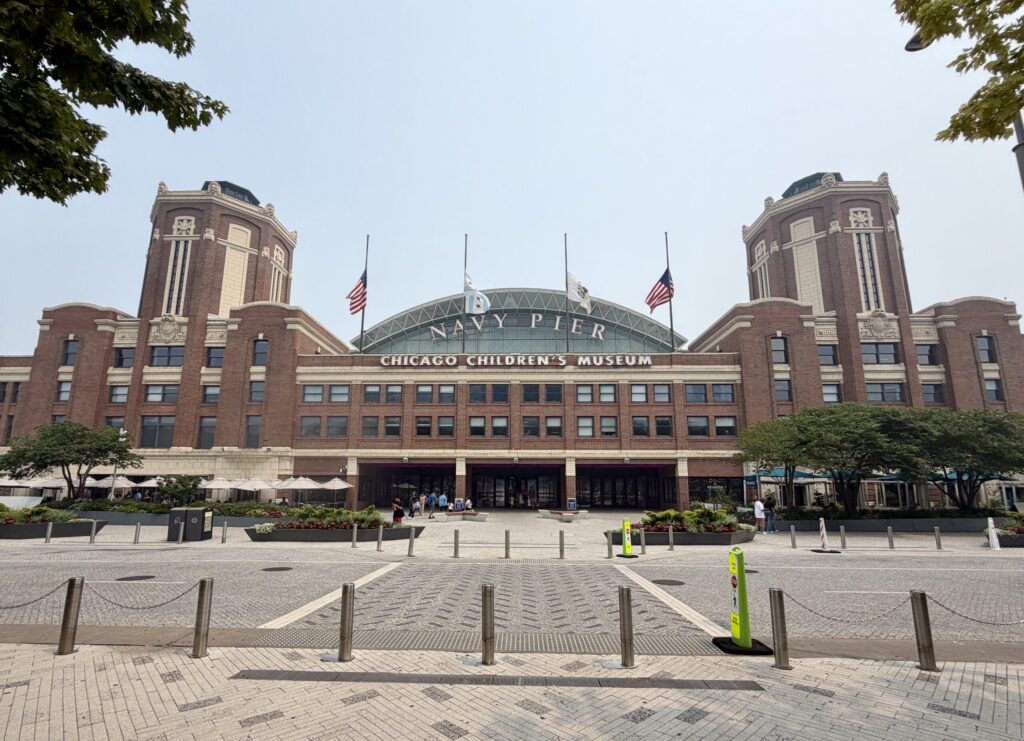
History of Navy Pier – Originally opened in 1916 as Municipal Pier, the pier initially served as a shipping dock for freight and passenger vessels while also hosting public events, exhibitions, and recreational activities. During World War II, Navy Pier became a major U.S. Navy training center, where thousands of sailors lived and trained. After the war, it temporarily served as a campus for the University of Illinois, helping accommodate the surge of returning veterans pursuing higher education. Today, Navy Pier has been transformed into a vibrant lakefront destination that blends Chicago’s history with entertainment, culture, and spectacular views of the city skyline and Lake Michigan.
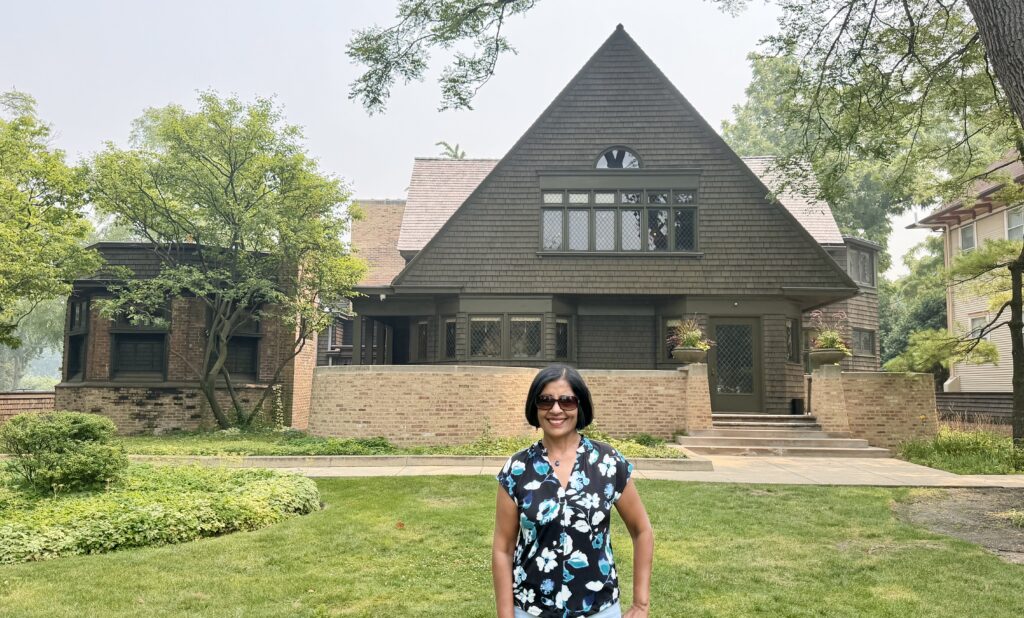
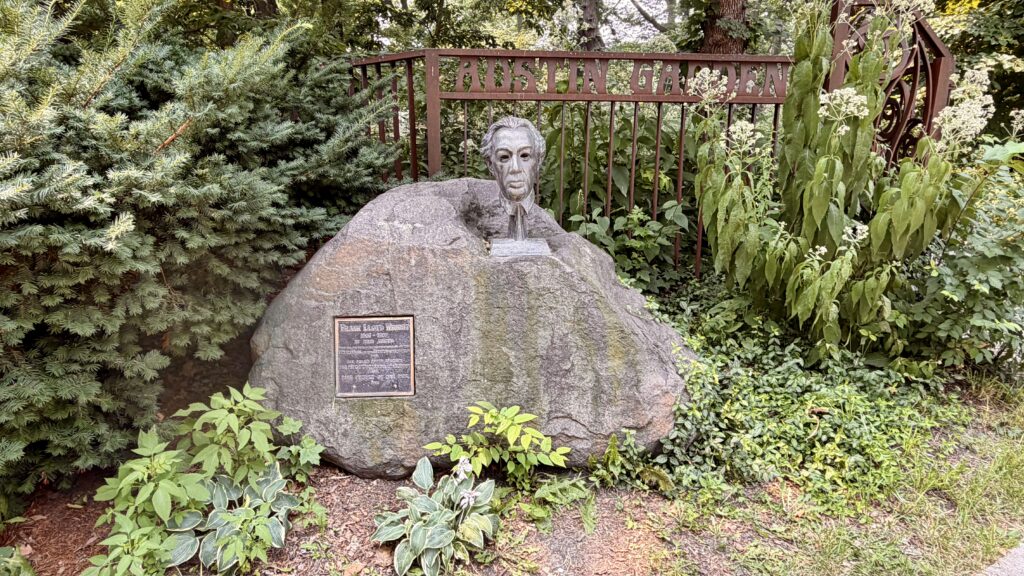
Frank Lloyd Wright–Prairie School of Architecture Historic District in Oak Park – is home to the world’s largest concentration of Frank Lloyd Wright-designed buildings. Wright lived and worked in Oak Park from 1889 to 1909, designing 25 structures in the village, including his own Home and Studio, where he developed the revolutionary Prairie School style of architecture.
The ticket we bought included the following –
- 45-minute guided tour of Frank Lloyd Wright’s Home and Studio, where we learned about the architect’s early career, his innovative design philosophy, and the development of the Prairie School of architecture. One of the greatest influences on Frank Lloyd Wright’s architectural vision came from a simple set of Froebel blocks that his mother, Anna Lloyd Jones Wright, gave him when he was nine years old. Created by Friedrich Froebel, the founder of kindergarten, these educational wooden blocks included geometric shapes such as cubes, spheres, cylinders, and triangles. Wright spent countless hours arranging them, developing an intuitive understanding of geometry, proportion, structure, and spatial relationships.
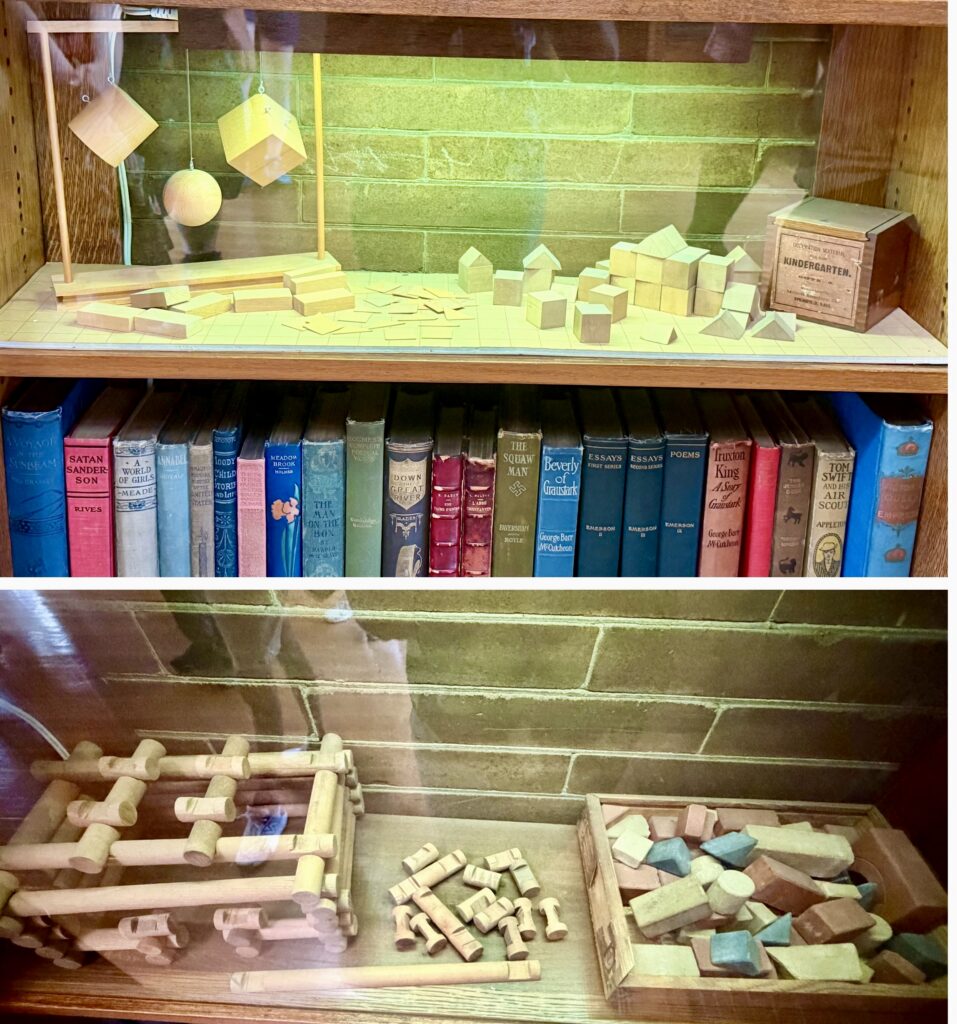
The tour of the building begins in the welcoming living room, where natural light, warm woodwork, and carefully framed views create a sense of comfort and openness. Wright designed much of the furniture himself, ensuring that every element complemented the architecture. Throughout the house, geometric patterns, stained-glass windows, and handcrafted details reveal the design principles that would later define the Prairie School.
- Self-guided audio walking tour through the surrounding Frank Lloyd Wright Historic District. The tour led us past 10 homes designed by Wright, allowing us to appreciate the evolution of his architectural style while exploring one of the world’s greatest concentrations of his work. We spent about an hour exploring and appreciating the 10 houses.
Other sites around Chicago
- The Chicago Theater – Originally known as Balaban and Katz Chicago Theatre, this building was built in 1921 and was designated National Register of Historic Places in 1979 and was listed as a Chicago Landmark in1983. The Chicago Theatre can seat 3600 people.
- Museum of Science and Industry (or Kenneth C. Griffin Museum of Science and Industry) – is a private science museum adjacent to Lake Michigan and the University of Chicago campus. It opened in 1933 and was renamed for benefactor and financier Kenneth C. Griffin in 2024. Among the museum’s most notable exhibits are a full-size replica coal mine, German submarine U-505 captured during World War II, United Airlines Boeing 727 and more.