Located about 40 miles south of downtown Jacksonville on Florida’s Atlantic coast, St. Augustine was founded in 1565 by Spanish settlers and is the oldest continuously occupied European-established settlement in the United States. The city exudes an old-world charm with its Spanish colonial architecture, cobblestone streets, and colorful buildings, all set against the backdrop of beautiful nearby beaches. We spent a couple of days in this charming town in 2021.
- St. Augustine Lighthouse and Maritime Museum
- Castillo de San Marcos Fort
- Ponce de Leon’s Fountain of Youth Archaeological Park
- St Augustine Downtown
St Augustine Lighthouse and Maritime museum – The St. Augustine Light Station is an active lighthouse located on the north end of Anastasia Island. The current tower was built between 1871 and 1874, replacing Florida’s first official lighthouse from 1824. Before that, Spanish and British settlers maintained watchtowers and beacons on the site dating back to 1565. Today, the lighthouse, its original Fresnel lens, and the grounds are owned by the St. Augustine Lighthouse & Maritime Museum.
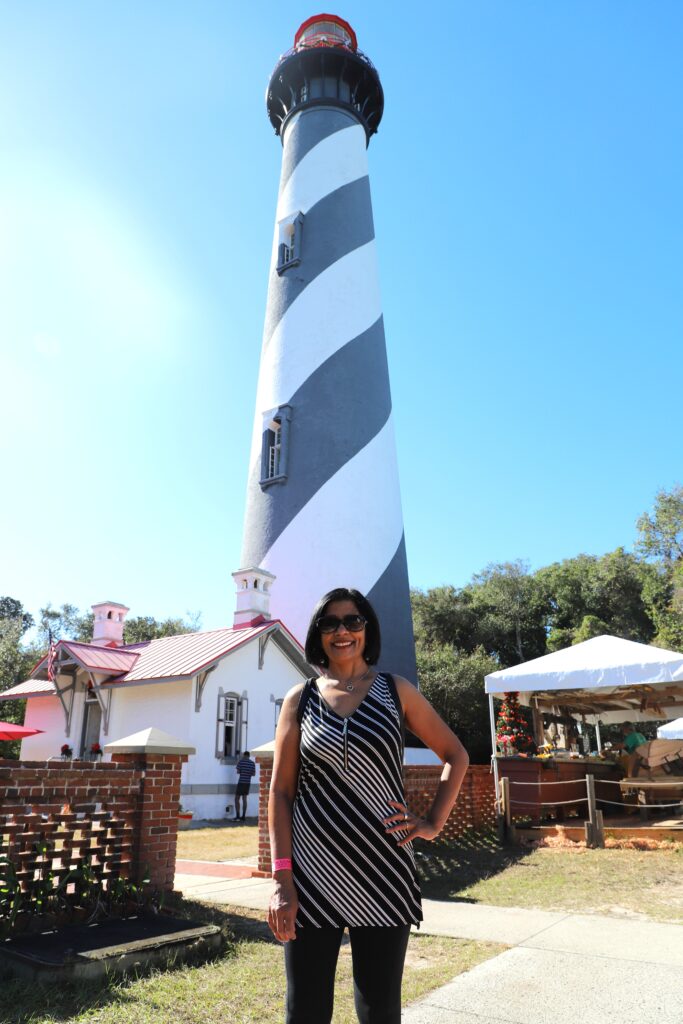
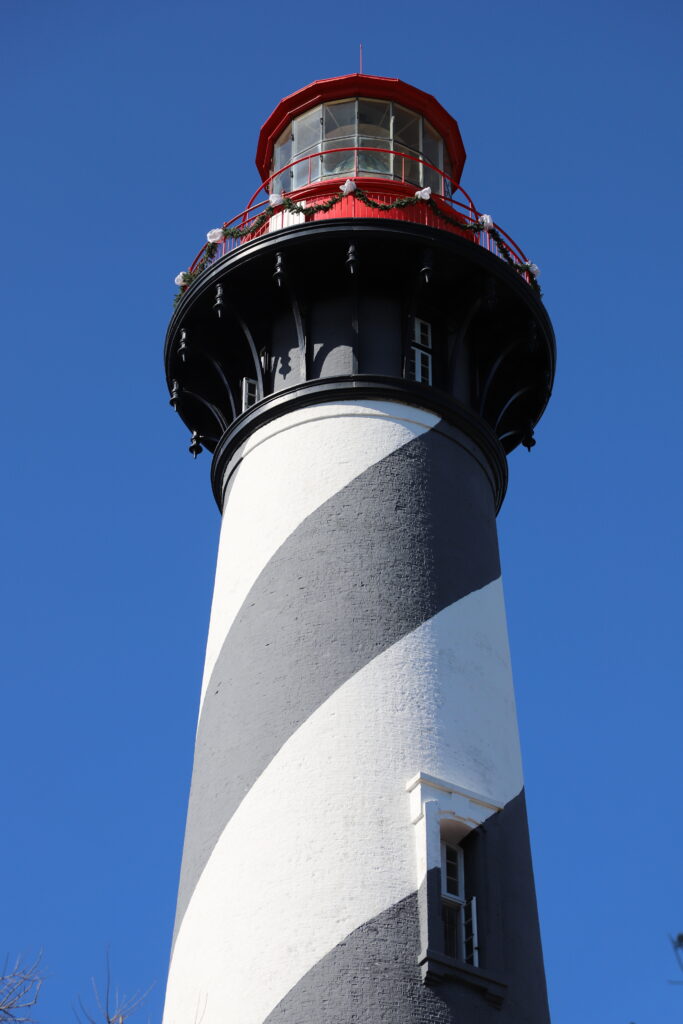
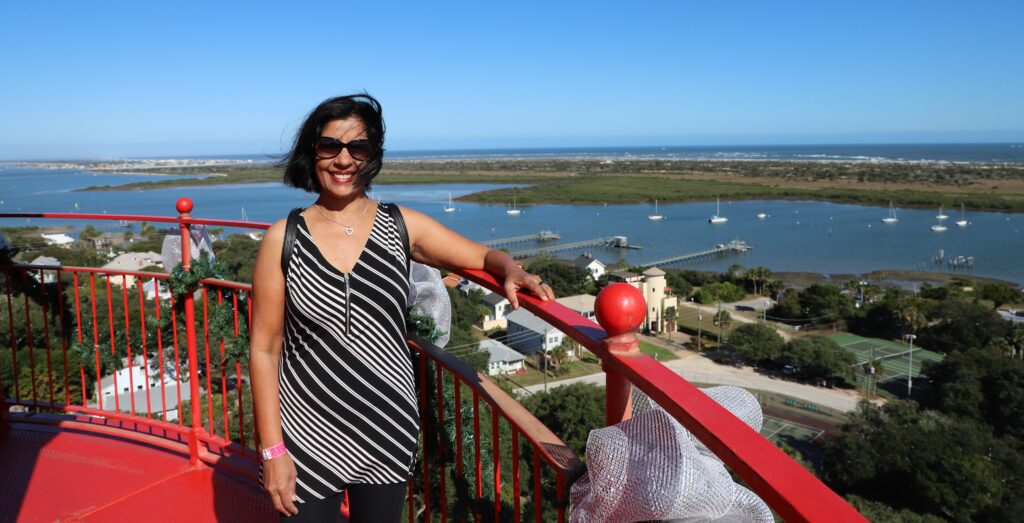
Climbing the 219 steps of the St. Augustine Lighthouse offers stunning 360-degree panoramic views of Anastasia Island, the Matanzas Bay, and the Atlantic Ocean.
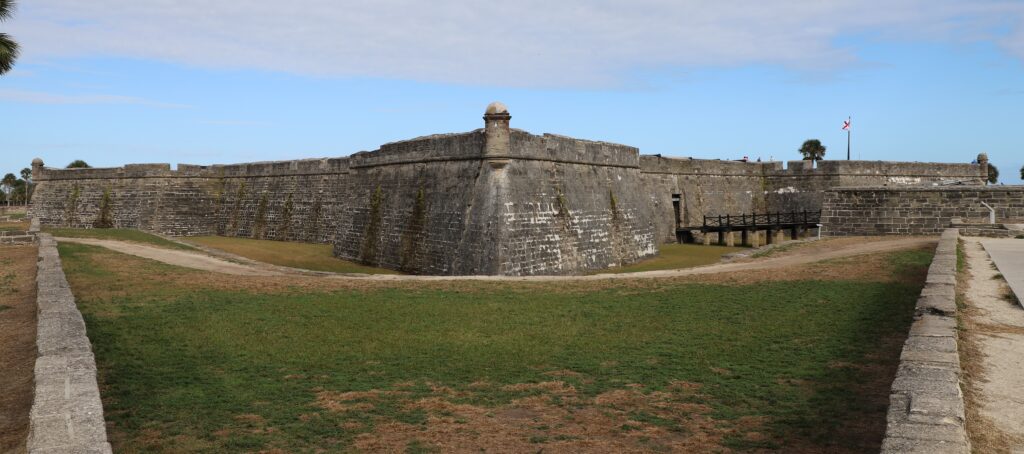
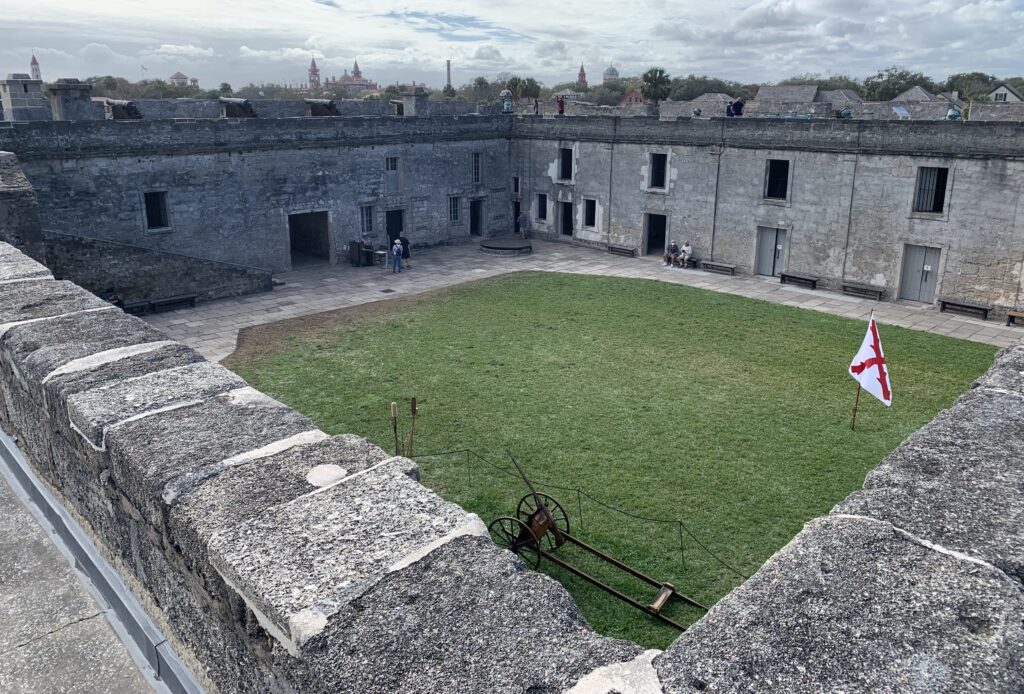
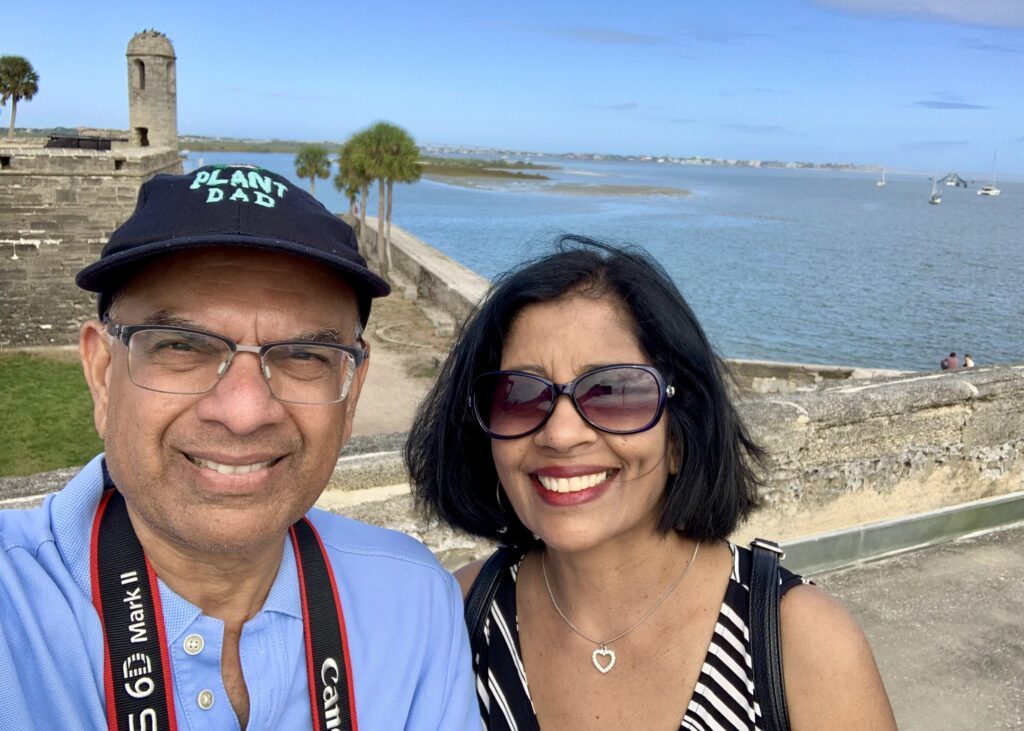
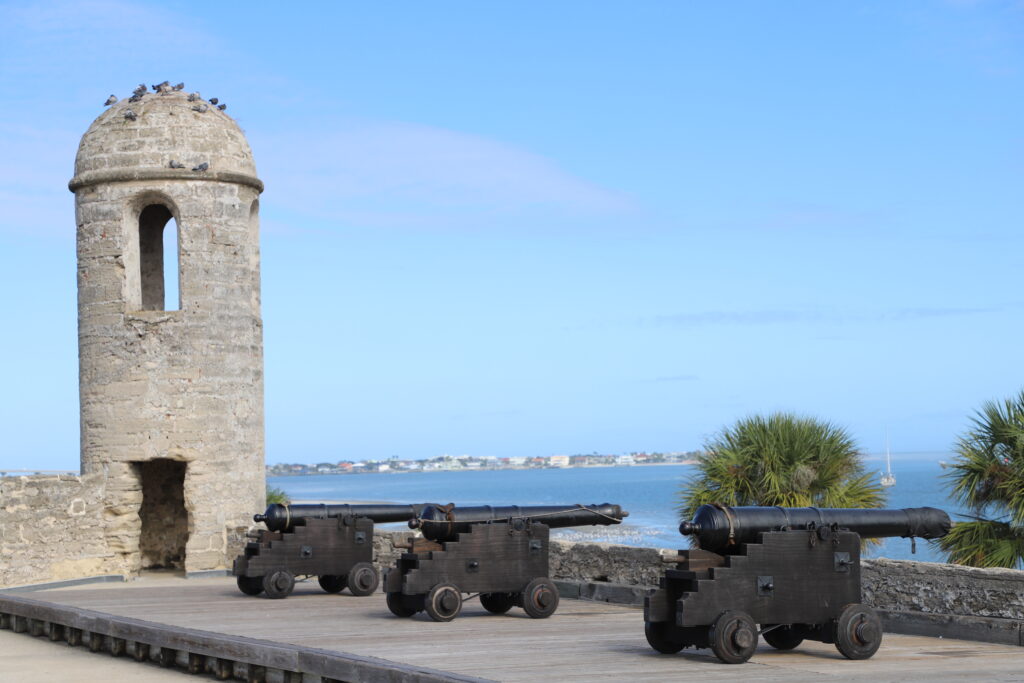
Castillo de San Marcos Fort — This massive Spanish-built fortress was constructed between 1672 and 1695 to protect Florida and the vital Atlantic trade route. Made from coquina, a native shellstone, its thick, fire-resistant walls proved remarkably durable, withstanding British attacks—including the devastating 1702 fire that destroyed much of the city. In 1924, the fort was designated a National Monument, preserving its historic legacy.
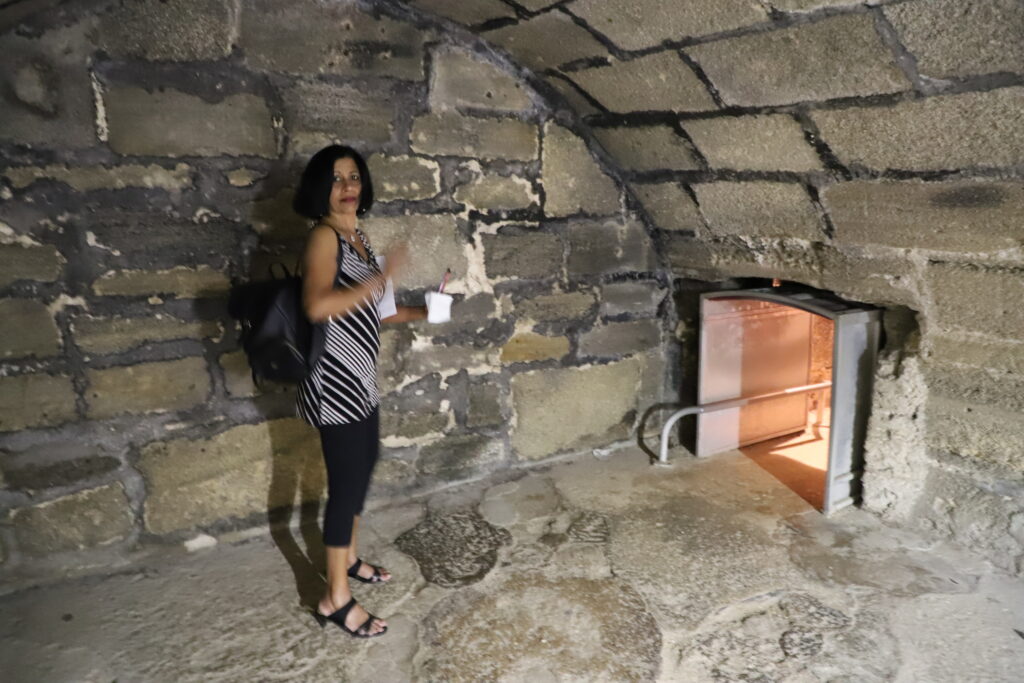
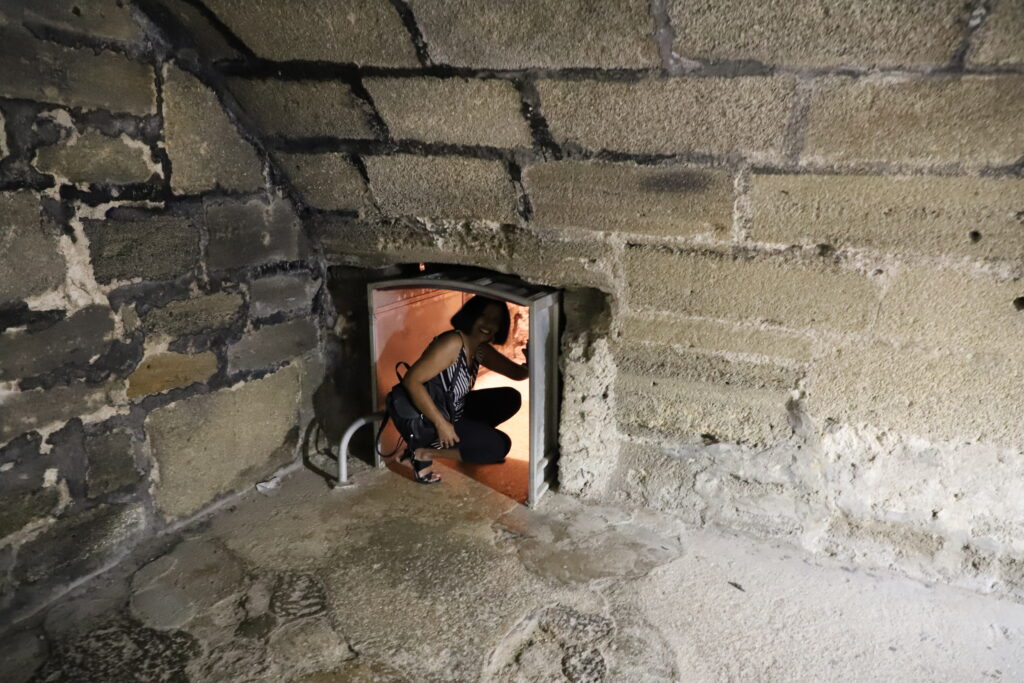
Castillo de San Marcos Fort, Gunpowder Room – The Gunpowder Room at Castillo de San Marcos Fort showcases the careful engineering behind the fort’s defense system. Built with thick coquina walls and minimal ventilation, it was designed to safely store gunpowder away from sparks and enemy fire. To enter the room, we even had to crawl through its low, narrow opening—a reminder of its protective design.
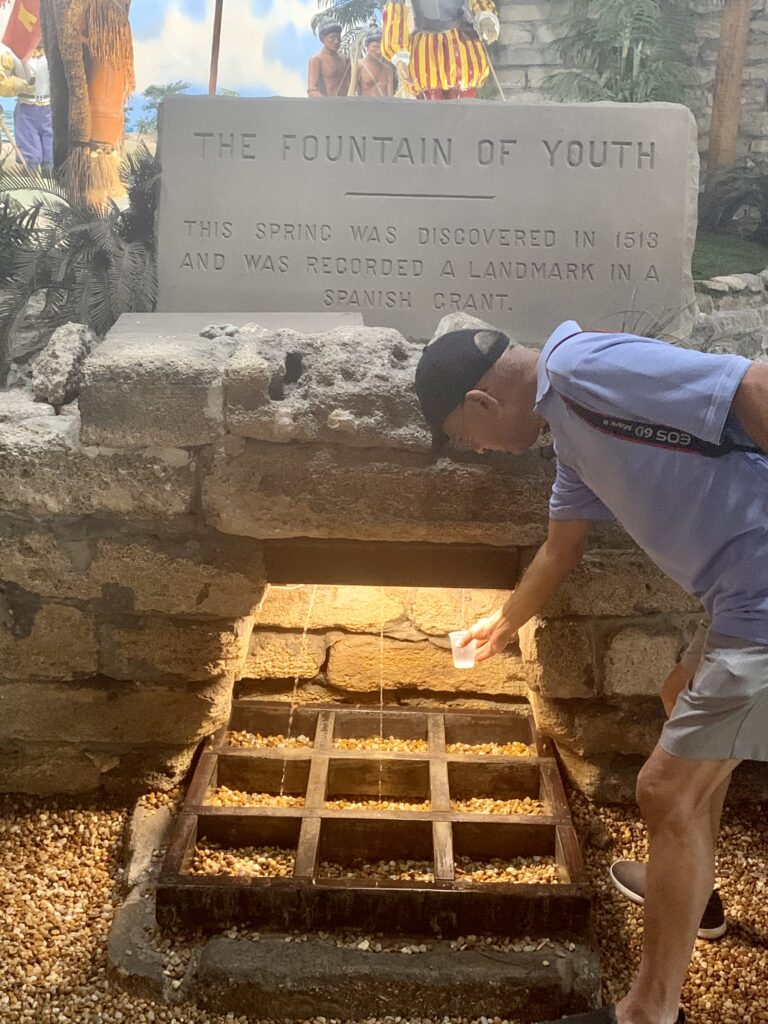
Ponce de Leon’s Fountain of Youth Archaeological Park – The 15-acre park along the Matanzas River is named for the explorer’s famed freshwater spring. It is a working archaeological site, which focuses not only on the first Spanish settlers but also on the native Timucuans.
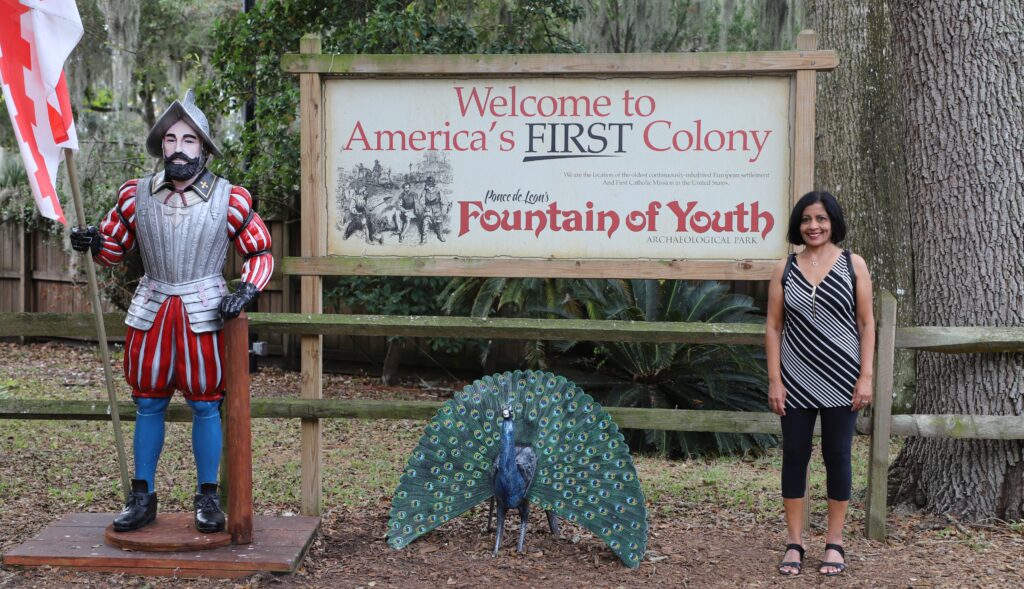
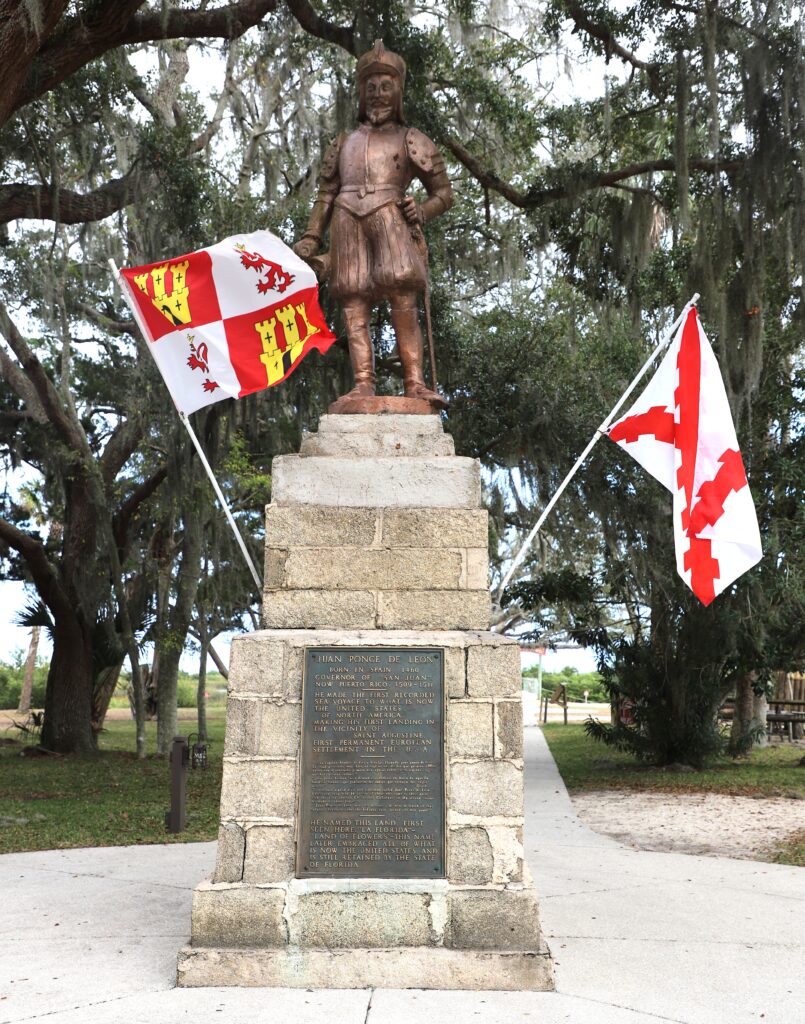
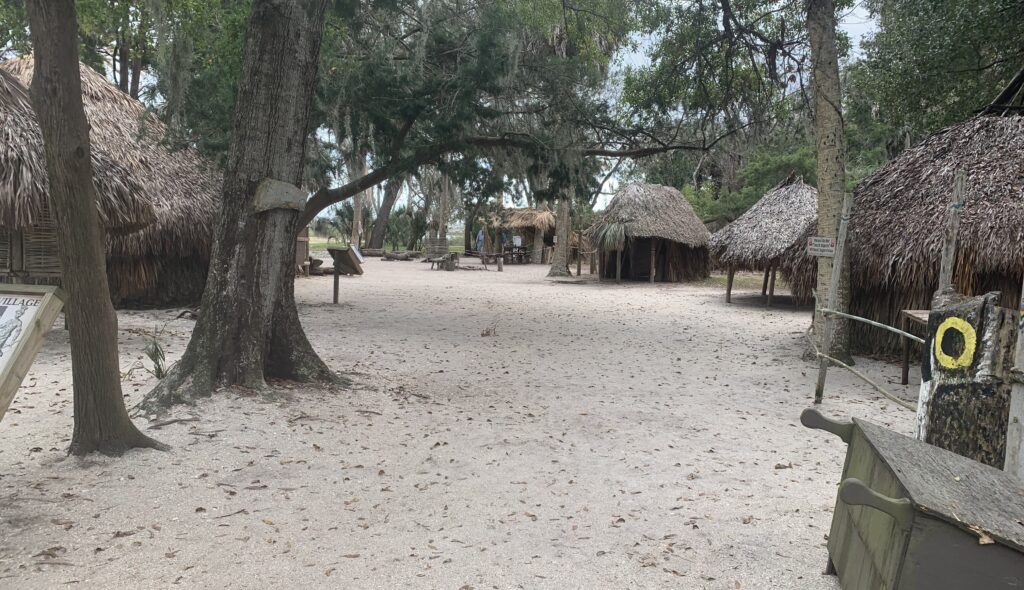
Parts of a replica village were constructed on the original site, including a home and a meeting house. Artifacts from excavations are on display, and reenactments depict native life and traditional crafts.
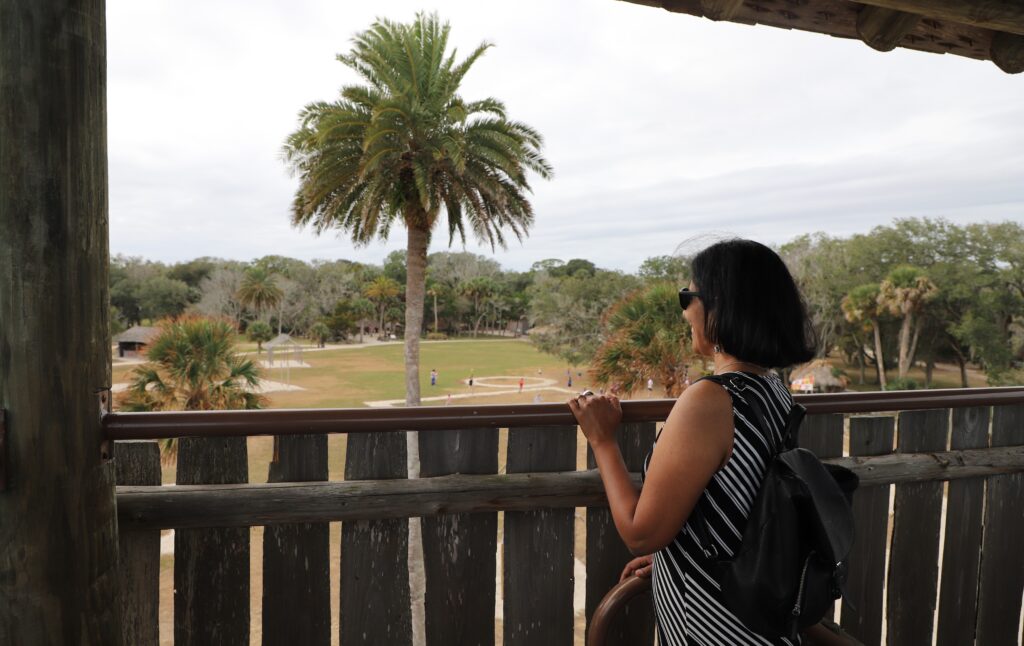
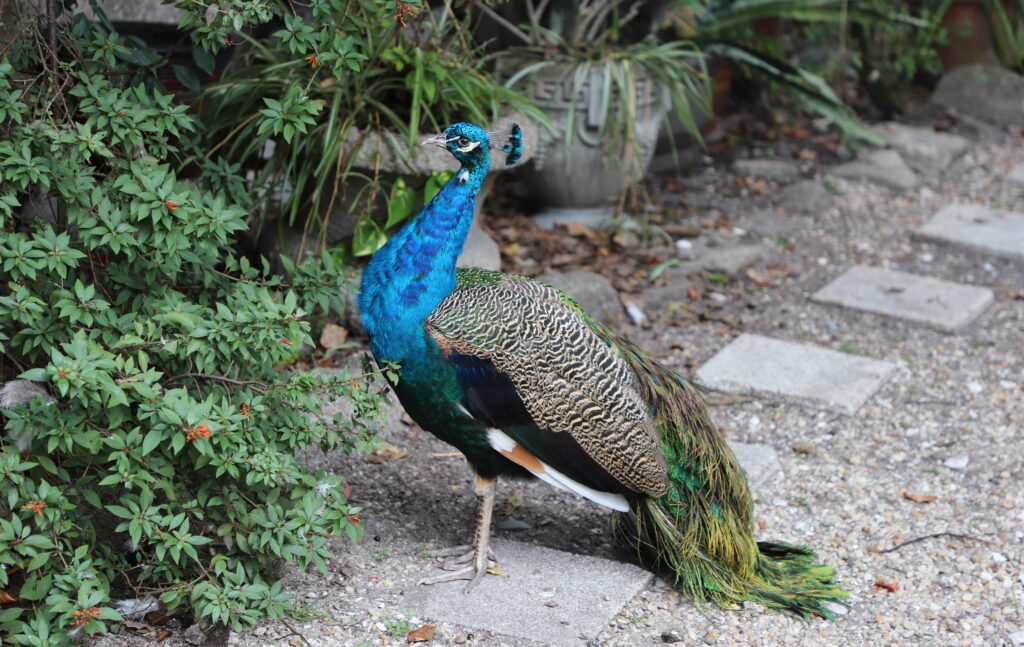
There is a watchtower that offers beautiful views of the surrounding area. The park is filled with colorful peacocks wandering freely, and visitors can even feed these stunning birds.
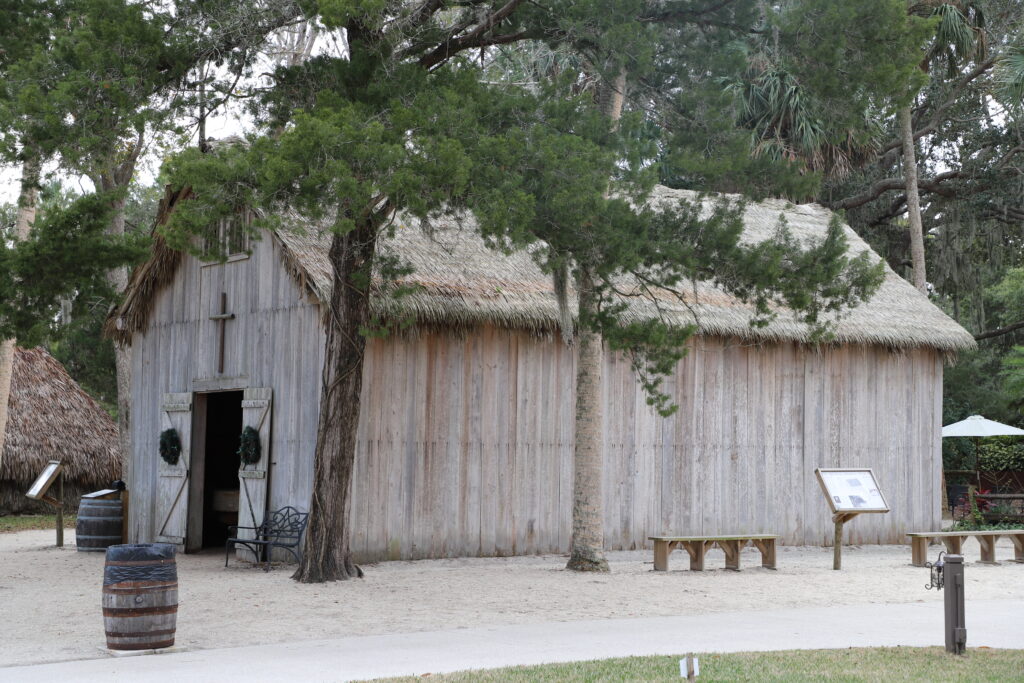
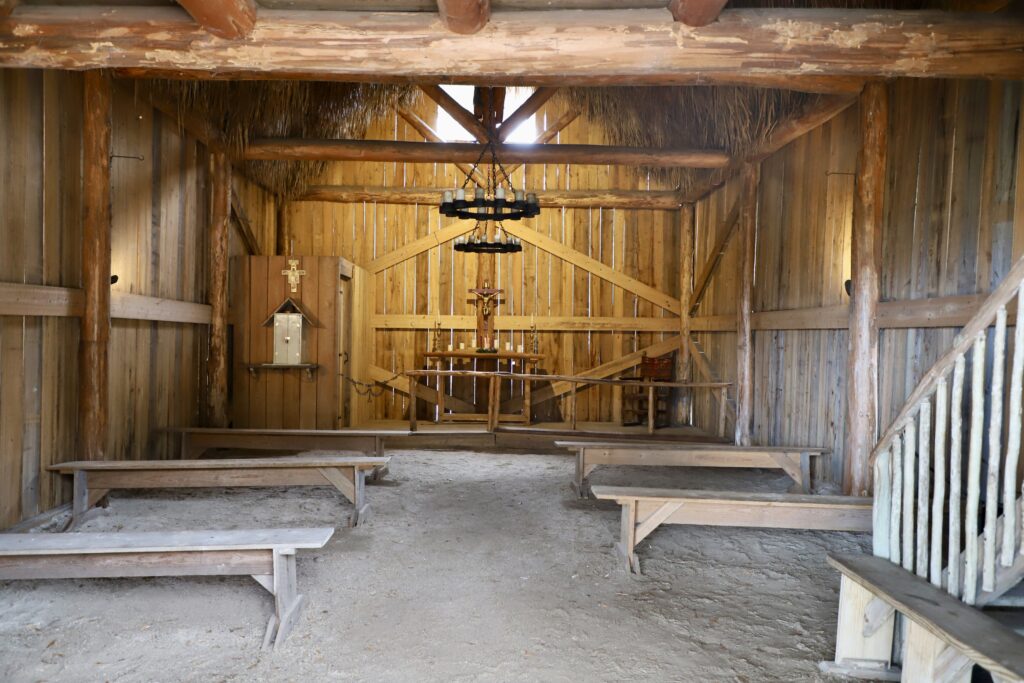
Ponce de Leon’s Fountain of Youth Archaeological Park, The Mission of Nombre de Dios – This church was originally built in 1587 by Franciscan friars on the grounds of this park. A historically accurate reconstruction was later built using traditional materials such as local cypress, palm thatch, and crushed coquina. Inside the simple church, with its open-beamed ceiling, rustic altar, and choir loft, visitors can experience the sights and scents of the earliest days of Christianity in the United States.
St. Augustine Downtown — The historic downtown is the city’s oldest area, featuring many buildings from the 1700s and streets that date back even further. One can spend hours in this walkable district, listed on the National Register of Historic Places.
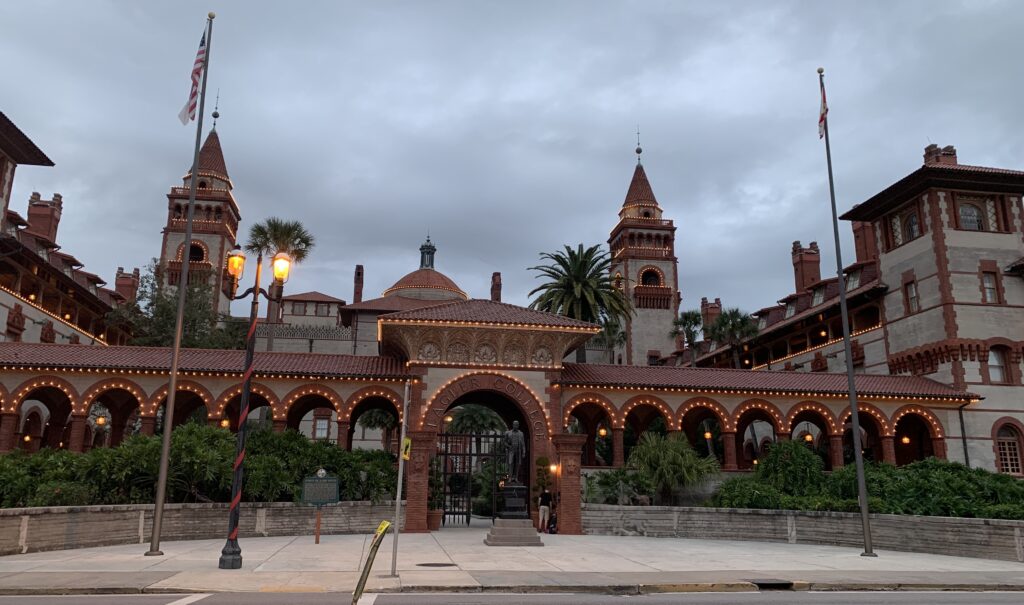
St. Augustine Downtown, Flagler College – We first stopped by to admire this magnificent and colorful building which is a private liberal arts institution founded in 1968. The 49-acre campus is centered around the historic Ponce de León Hotel, a luxury hotel built in 1888 by Henry Flagler and designed by architects John Carrere and Thomas Hastings. Now a National Historic Landmark, the former hotel serves as the architectural heart of the college.
St. Augustine Downtown, Lightner Museum – Housed in the historic Hotel Alcazar, a Gilded Age resort commissioned by Standard Oil executive Henry Flagler, the Lightner Museum sits at the heart of the city. The museum features an extraordinary collection, offering visitors an immersive experience of art, architecture, history, and design.
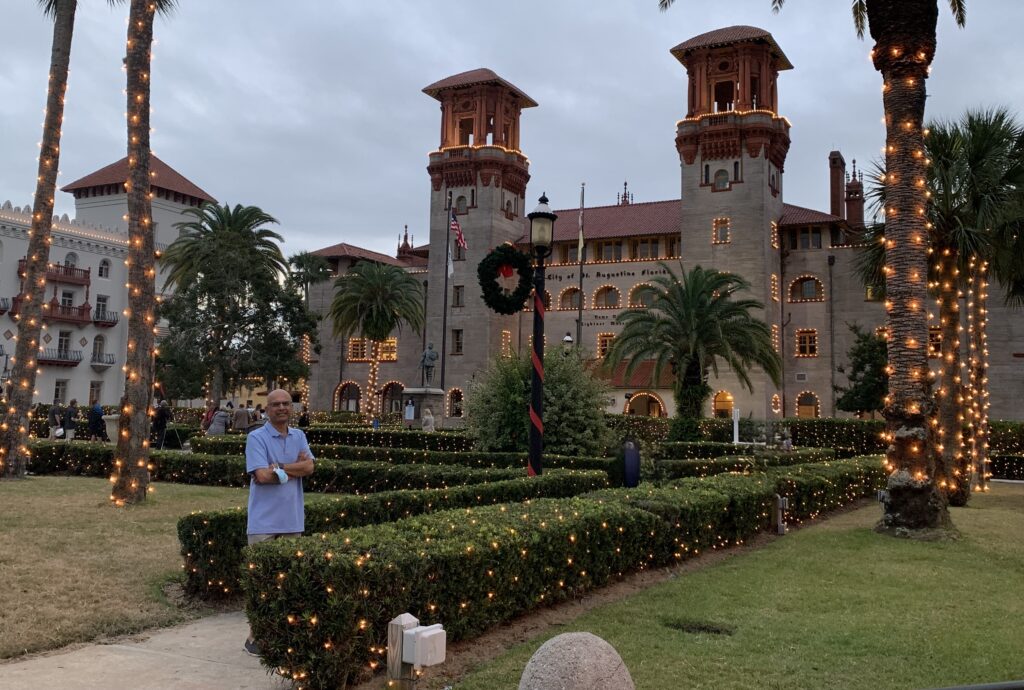
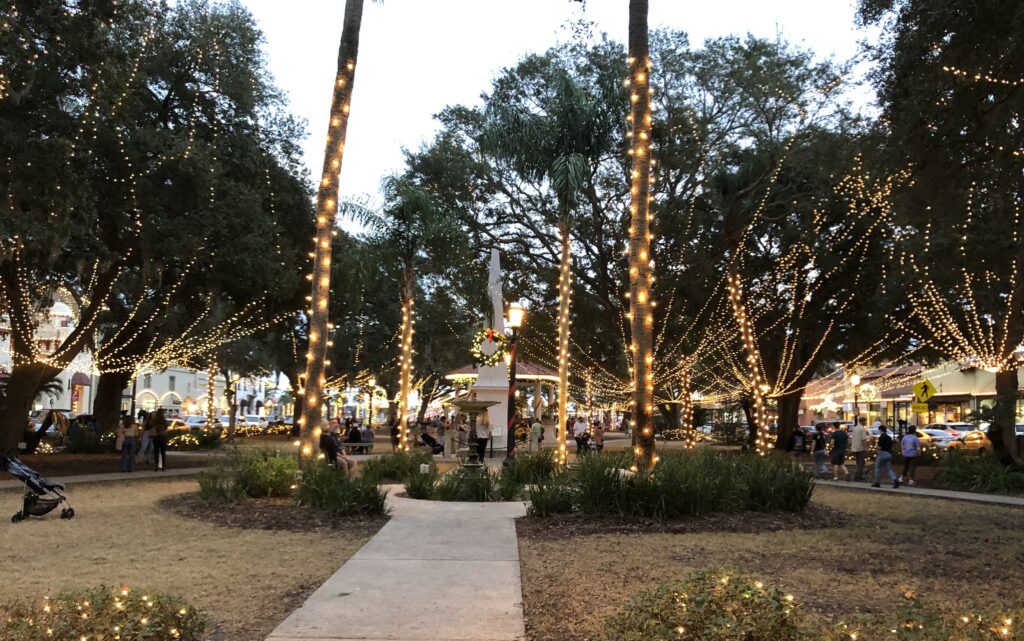
St. Augustine Downtown, Plaza de la Constitución – Located in the city center, the Plaza is one of the oldest public squares in the United States. It has served as a gathering place for civic events, markets, and celebrations for centuries. Today, visitors can enjoy its shaded walkways, monuments, and a glimpse into the city’s rich colonial past.