The city is named for its natural hot springs and therapeutic waters. The center of Hot Springs is Hot Springs National Park established in 1921, but visitors have been coming here for much longer. The park contains lovely old bathhouses still in use today in various forms.
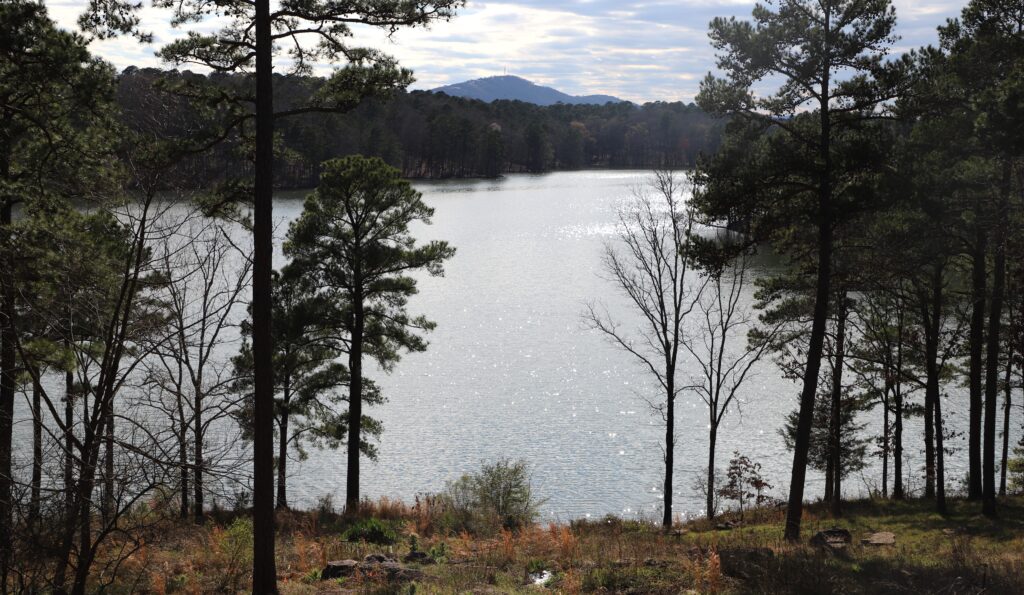
- Hamilton Lake
- Garvan Woodland Gardens
- Bathhouse Row
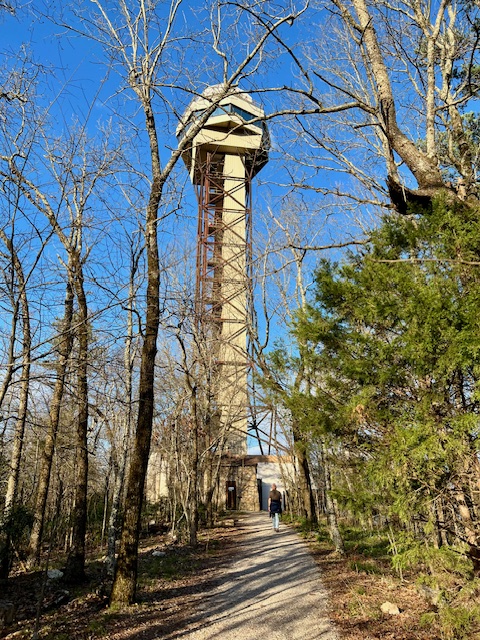
- Hot Springs Mountain Tower
We visited this place (and Little Rock) in 2022 and stayed in a spacious 2-bedroom Airbnb overlooking the Hamilton lake.
Lake Hamilton – is a 7,460-acre man-made lake located south of Hot Springs. It is one of three man-made lakes along the Ouachita River and was created following the completion of the Carpenter Dam in 1932. The lake is a popular site for recreation and residence. There are several hiking opportunities around Lake Hamilton ranging from easy paved trails to more challenging natural surface paths.

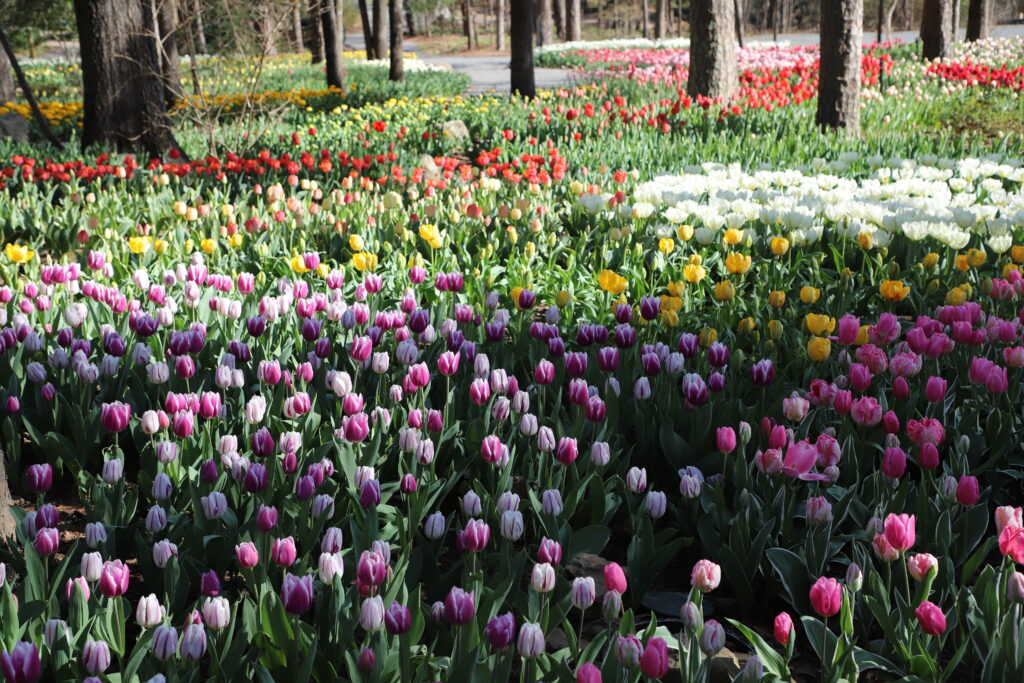
Garvan Woodland Gardens – Owned by the University of Arkansas, the 210-acre garden is situated on a woodland peninsula with 4.5 miles of shoreline on Lake Hamilton and features rocky inclines, floral landscapes, streams, and waterfalls in a natural woodland setting. It has the stated mission of education, research and public service.
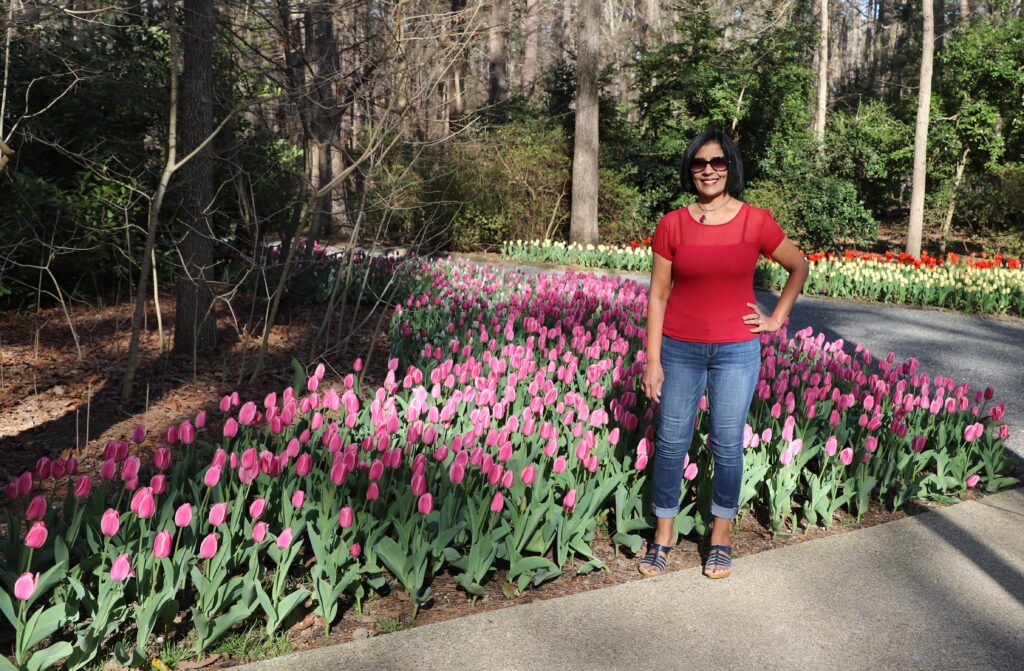
We visited the garden during march and were fortunate to see the wide variety of tulips in full bloom. You can spend half a day here, walking the many sections that includes a tree house and a chapel.
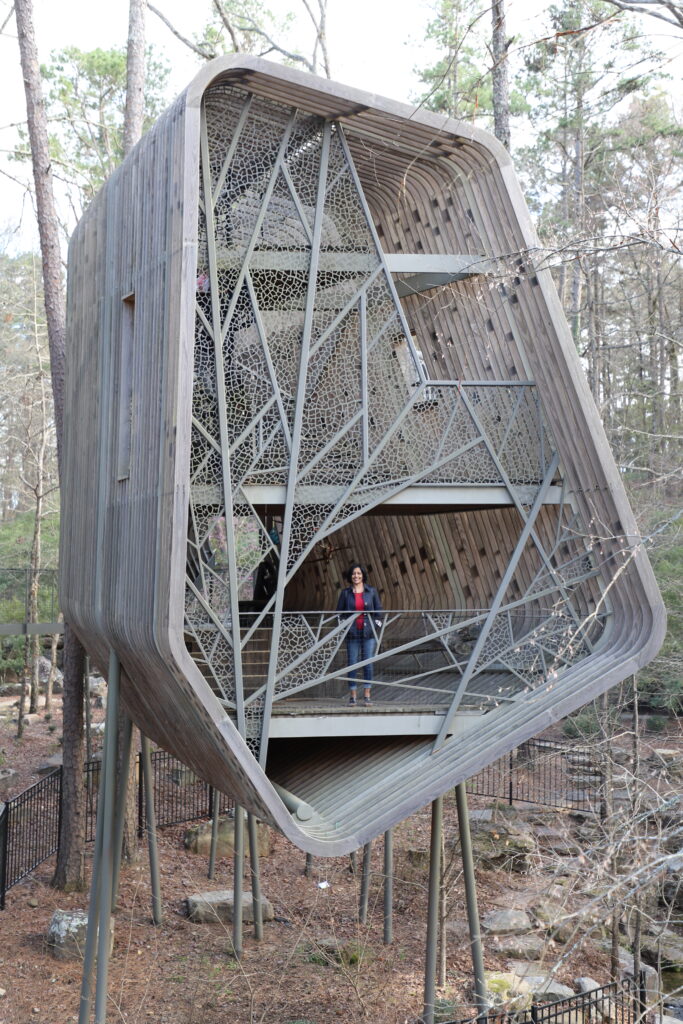
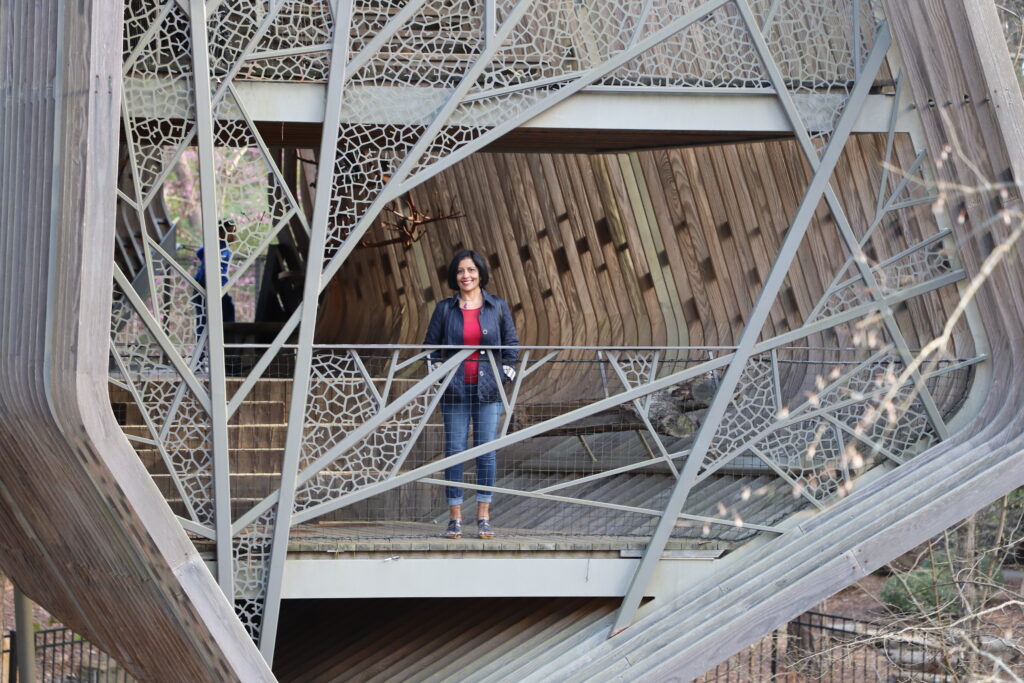
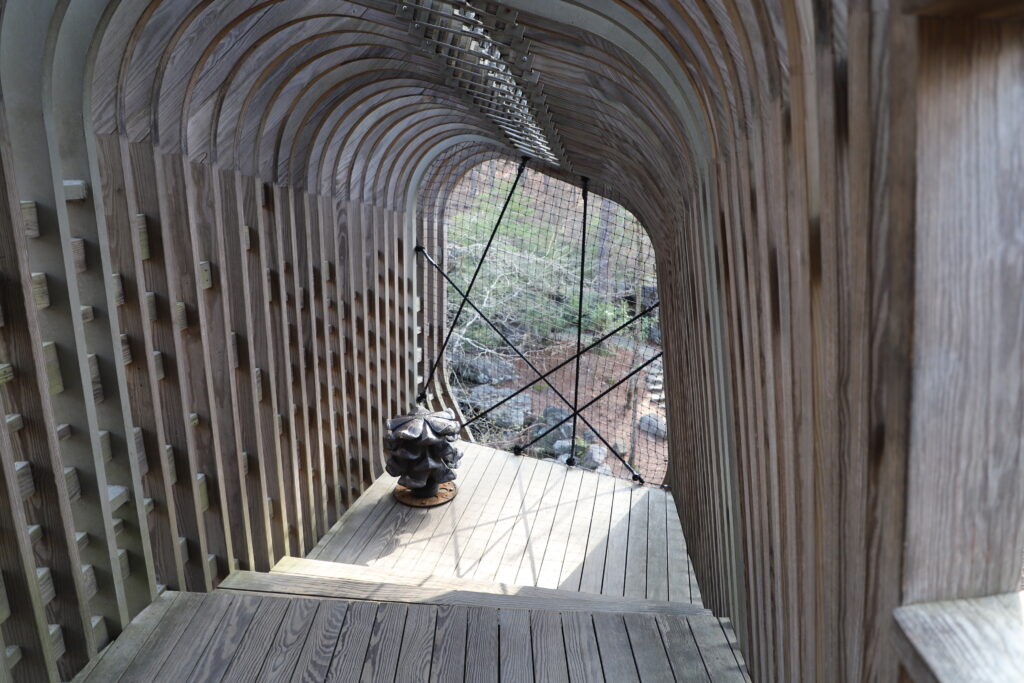
Garvan Woodland Gardens, Tree house – Tucked away in the midst of the garden and in the Evans Children’s Adventure Garden section, is the Bob and Sunny Evans Tree House, an architectural marvel to behold. It is surrounded by pine and oak trees. From inside the elevated treehouse, you have a bird’s eye view of the surrounding natural landscape and a means to see what it feels like to be among the forest canopy.
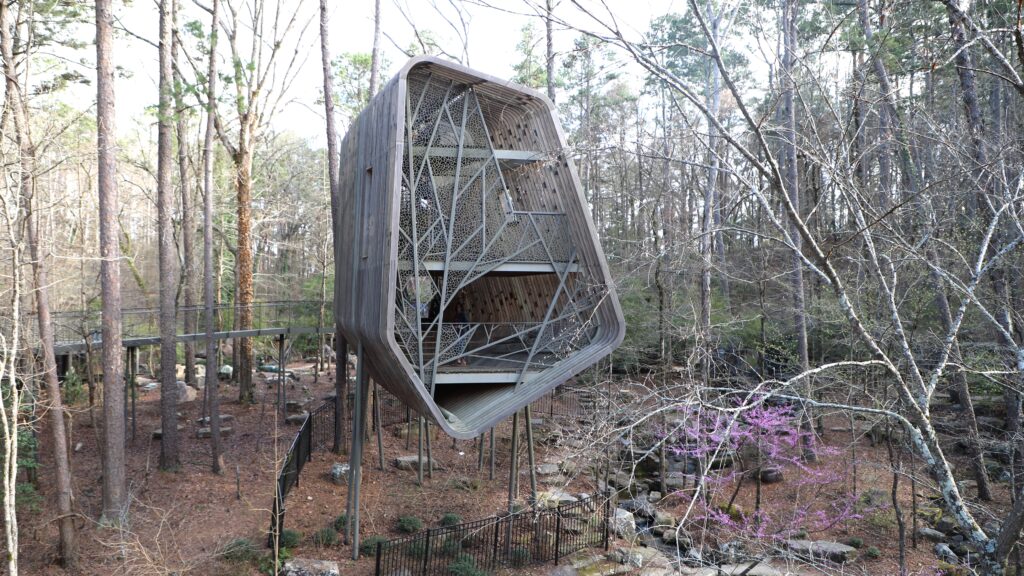
The unique boomerang shape of the treehouse beckons both children and adults to come closer and experience the site up close. The treehouse has four different levels and the design is meant to represent the different parts of a tree. The surrounding 1.5 acres is filled with Arkansas boulders and natural and man-made features to walk through, under and over.
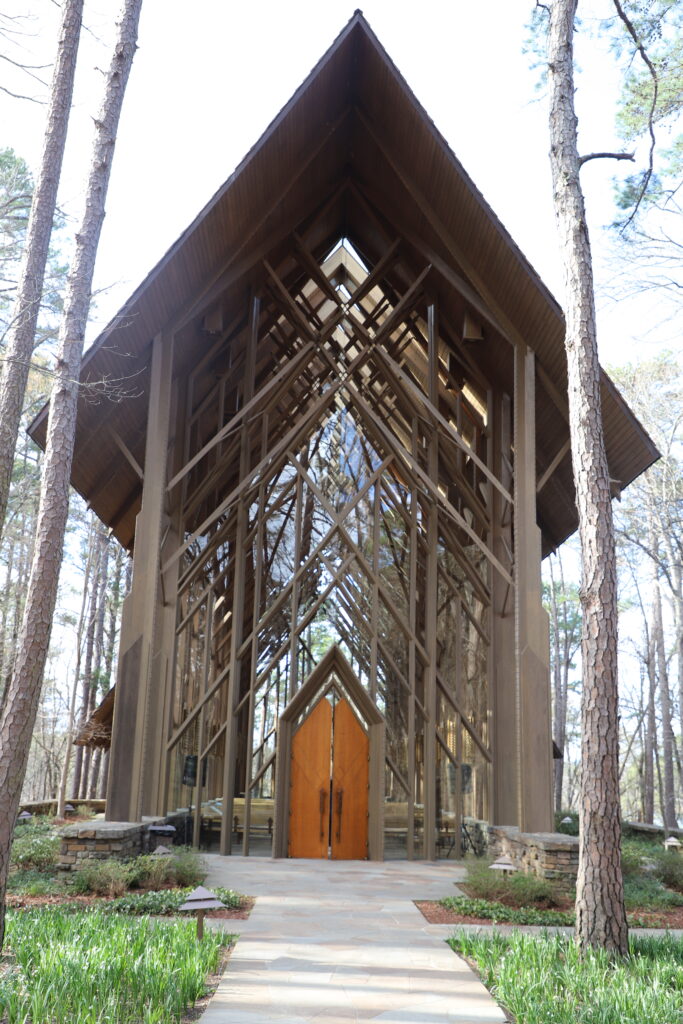
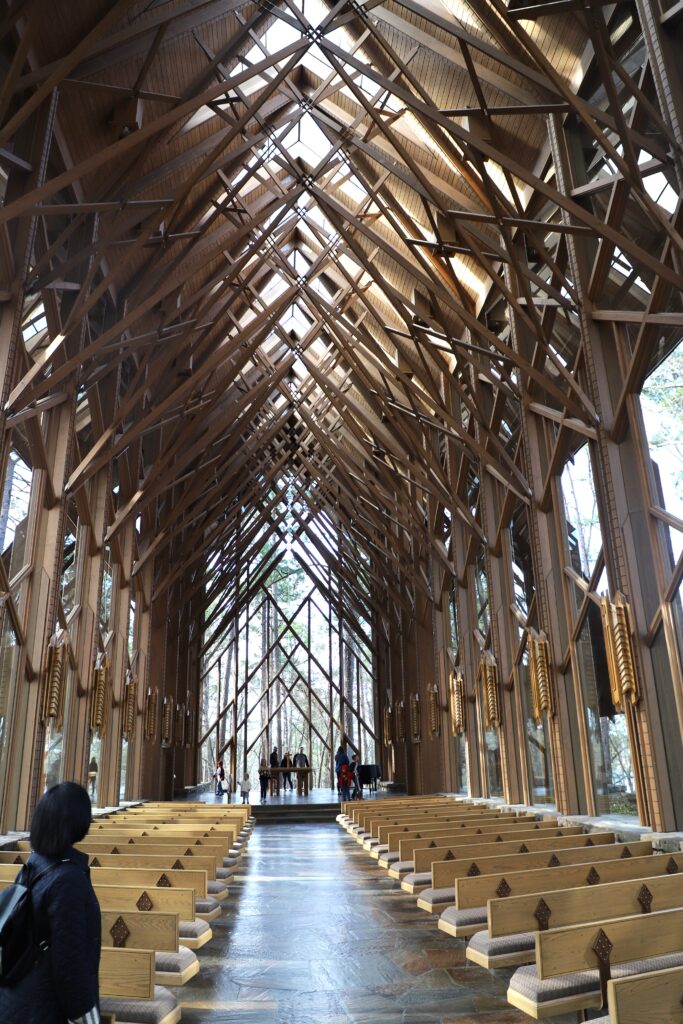
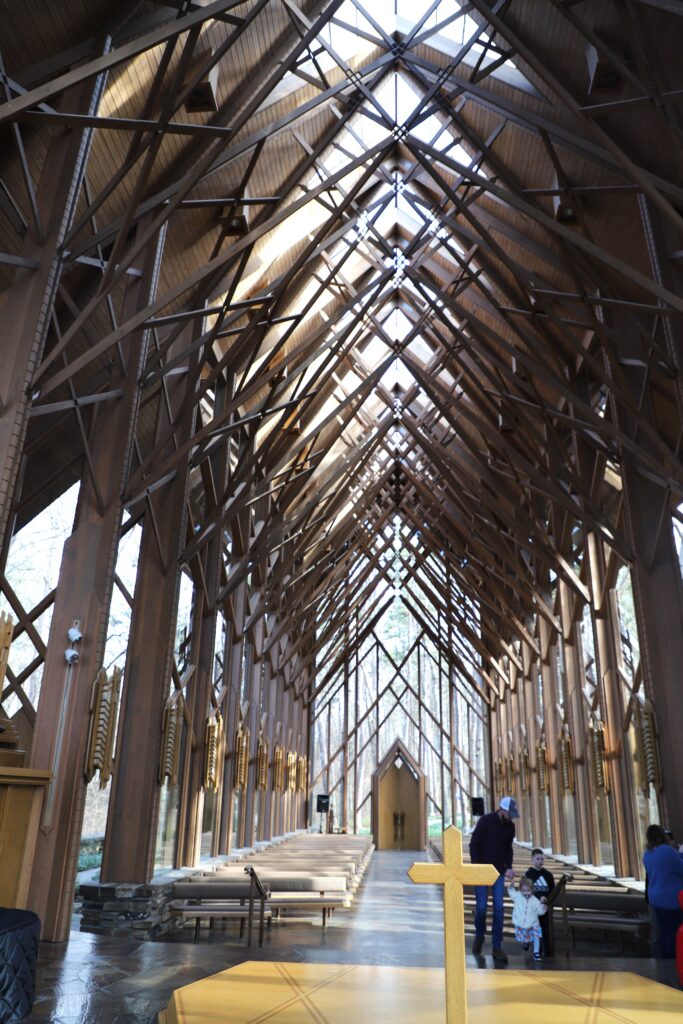
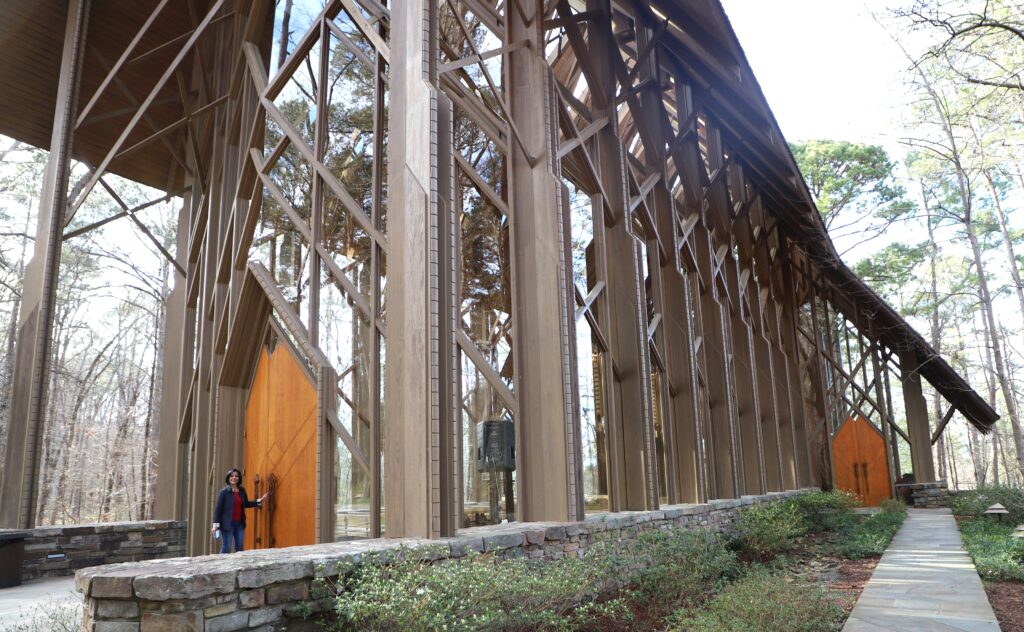
Garvan Woodland Gardens, Anthony Chapel – Located on the grounds of the garden is the beautiful, Anthony Chapel built mostly of glass, with a tall, arched ceiling made from exposed wooden arches. It gives the feeling of being outdoors, with its open-beam structure and great pine columns. The Chapel is a striking example of a structure that seamlessly integrates with its natural environment.
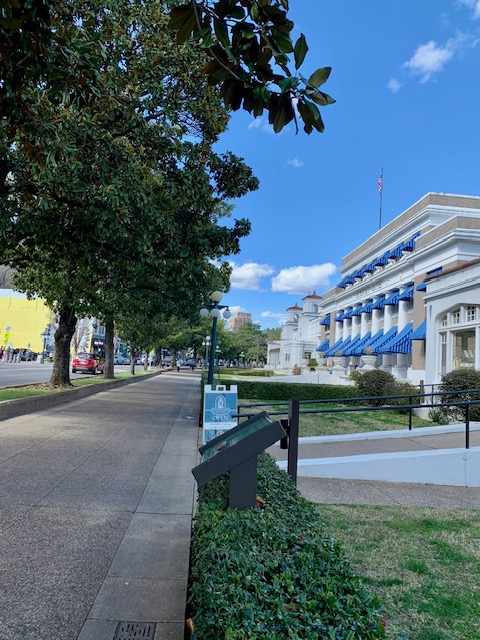
Bathhouse Row – The Bathhouse Row you see today consists of eight bathhouse buildings that were constructed between the years of 1892 and 1923. This area along with the Grand Promenade was designated as a National Historic Landmark District in 1987. We took a leisurely walk along this street admiring the eye catching architecture of all the old Bathhouses. Central Avenue is the main street through town, and there is plenty of shopping.
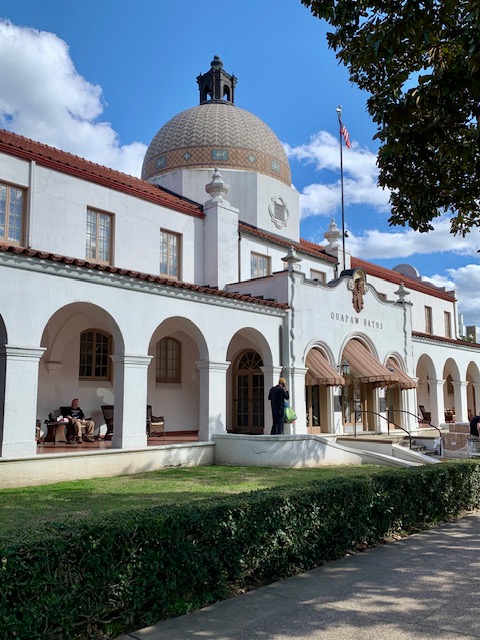
We had a refreshing thermal bath in Quapaw Bathhouse
Bathhouse Row, Fordyce Bathhouse – Now functions as the park’s visitor center. The Fordyce opened in 1915 and was the largest bathhouse on the Row. The Fordyce became the first bathhouse on the Row to go out of business when it suspended operations on June 30, 1962, but it was extensively restored by 1989 and is now enjoying a renaissance as a historically furnished museum.
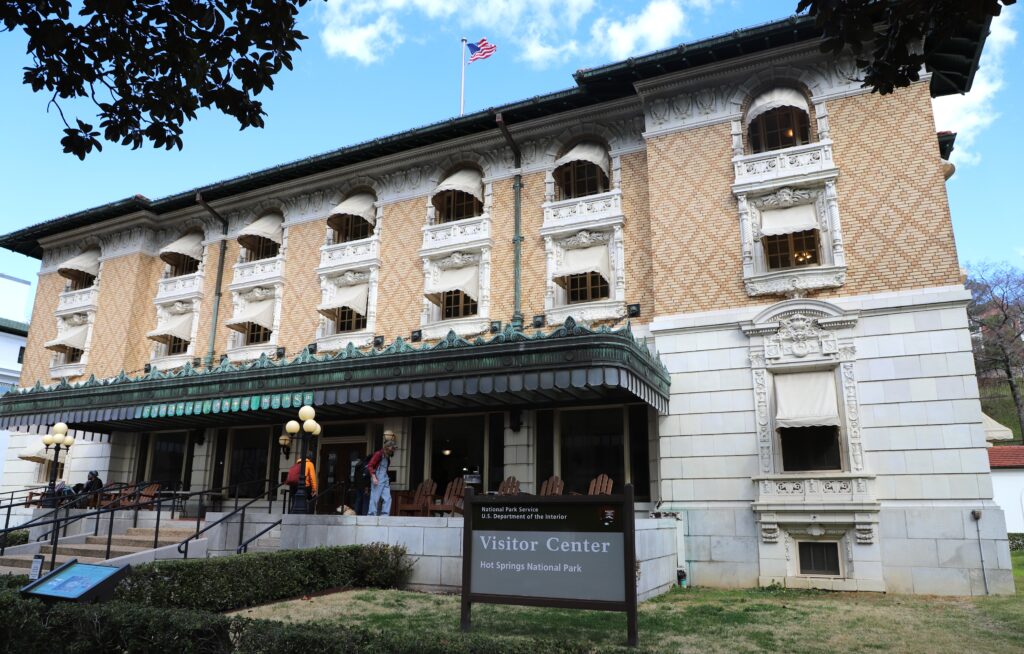
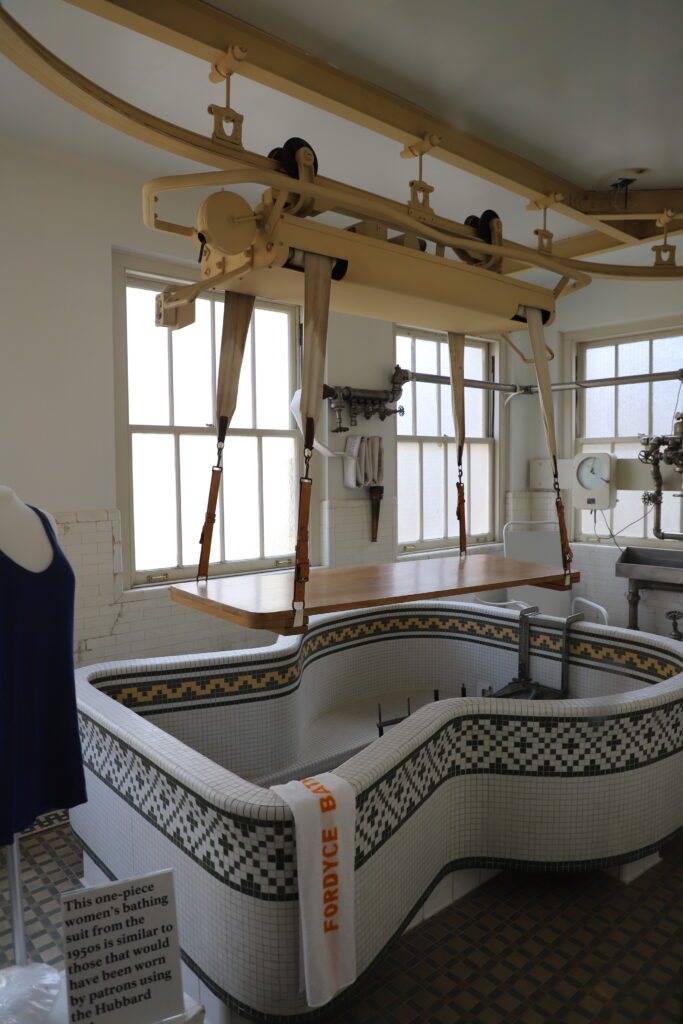
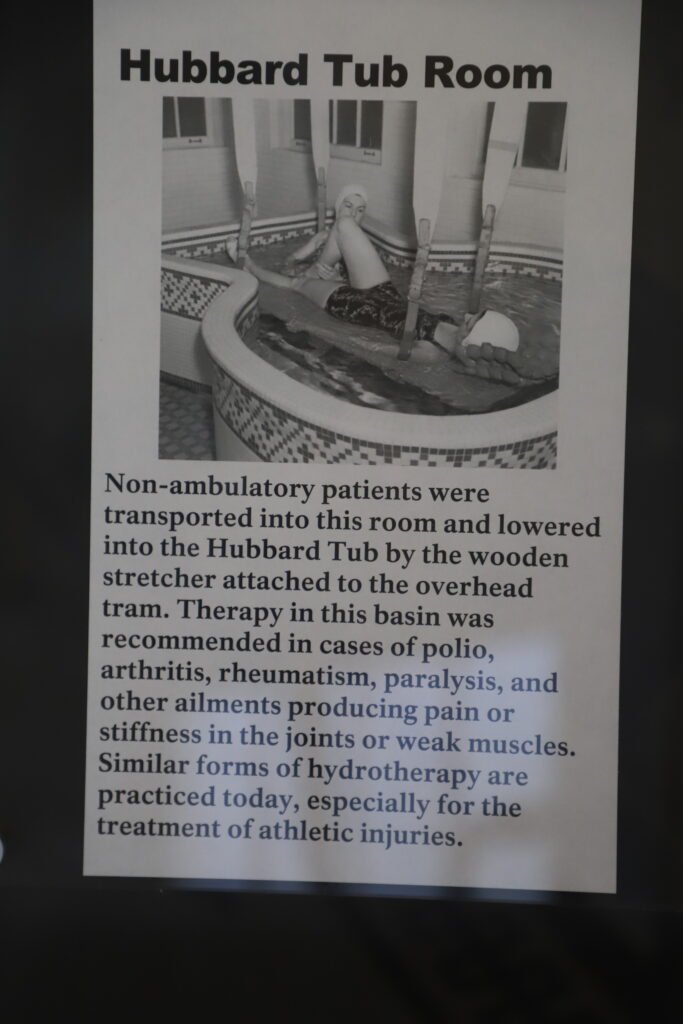
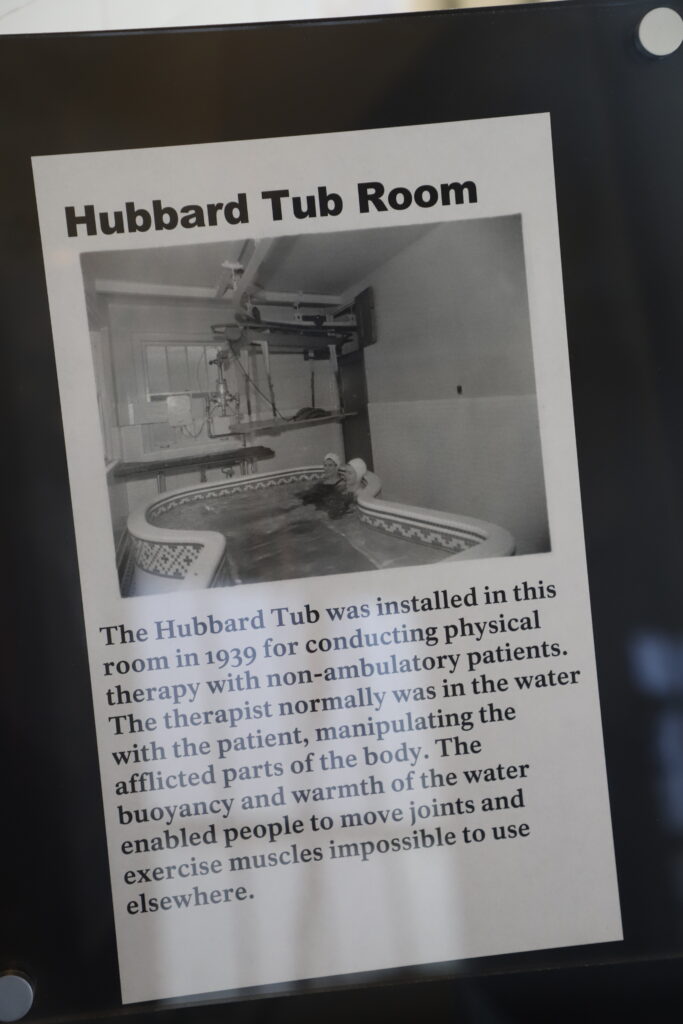
The museum in the Fordyce visitors center has a replica of the Hubbard tub which represents the therapeutic practices of the past.
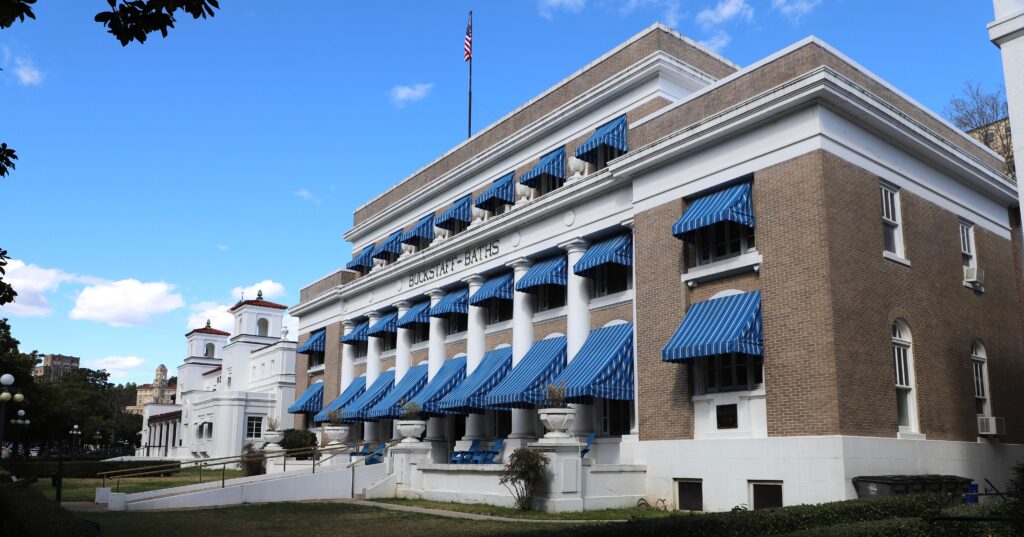
Bathhouse Row, Buckstaff Bathhouse – Originally opened in 1912, the Buckstaff is the only facility on the Row that has never fully closed since it first started offering baths. Because it has been in continuous operation since it opened, it is one of the best preserved of all of the bathhouses on Bathhouse Row.
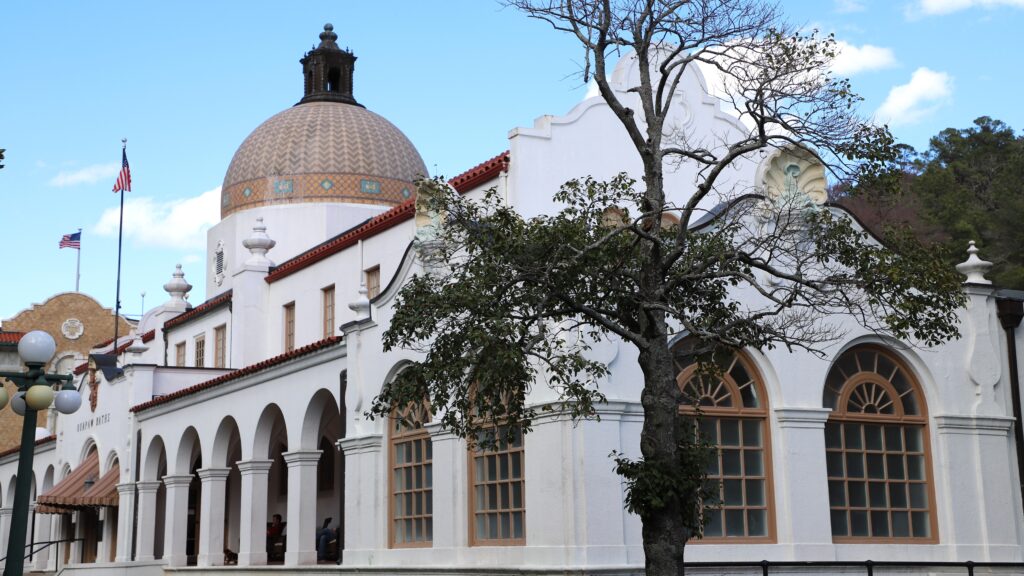
Bathhouse Row, Quapaw Bathhouse – opened in 1922. It is the longest building on Bathhouse Row, occupying the site of two previous bathhouses, the Horseshoe and Magnesia. Vacant since closing in 1984, it was the first to be leased for adaptive reuse. It reopened as a family-oriented spa in late June 2008. The Quapaw Bathhouse is one of two locations where visitors can soak in the thermal springs. Quapaw offers private baths, public pools, and modern day spa services.
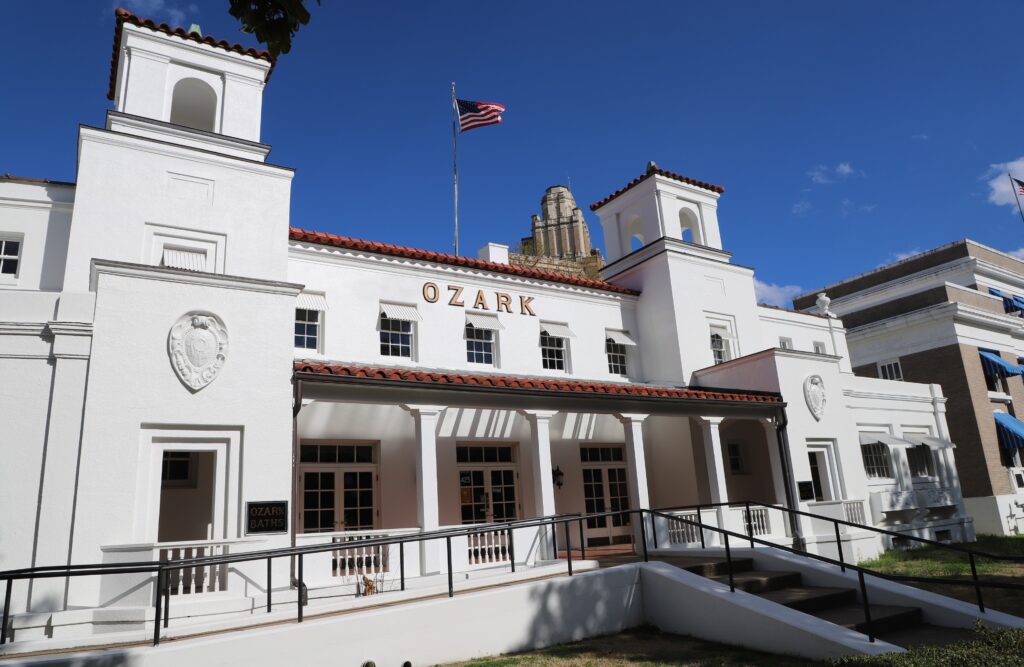
Bathhouse Row, Ozark Bathhouse – The bathhouse was built in the summer of 1922, just a few months after the Quapaw opened for business. It catered to a middle economic class of bathers unwilling to pay for frills. The Ozark closed in 1977.
Until the Fall of 2024, the Ozark housed the Hot Springs National Park Cultural Center. The Center featured gallery spaces for displaying artwork from the park’s Artist-in-Residence Program and other temporary exhibitions. The Ozark is currently unoccupied.
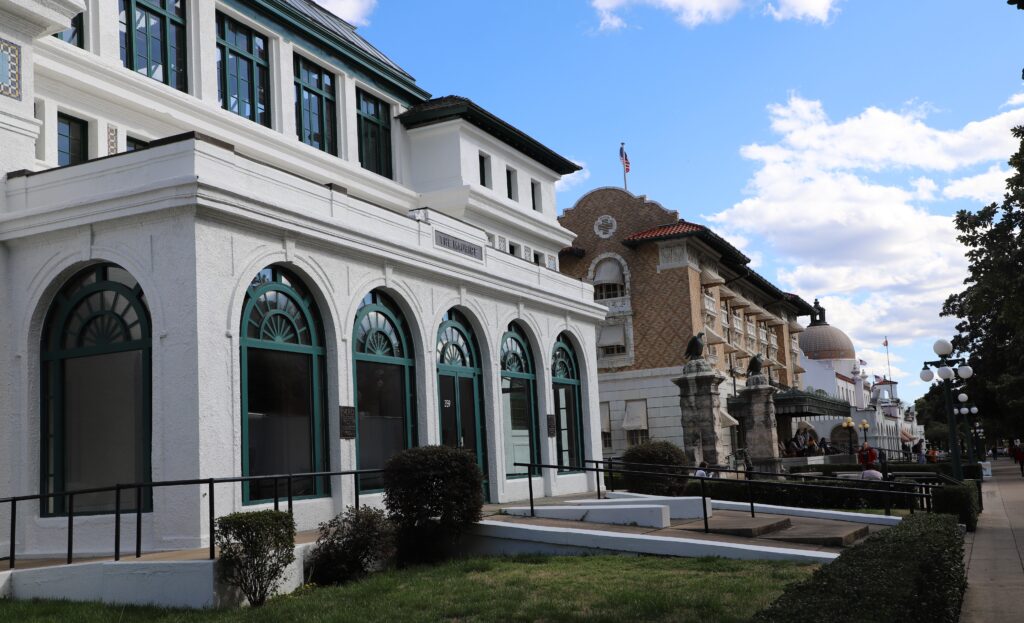
Bathhouse Row, Maurice Bathhouse – was built by William (Billy) Maurice and opened for business on January 1, 1912. With a total floor space of 23,000 square feet, the three-story bathhouse had a complete range of services and amenities, including a gymnasium, staterooms, a roof garden, twin elevators, and a therapeutic pool, situated in the basement. It was the only bathhouse on the Row to have a pool. The Maurice was the second bathhouse to close, in November 1974. The bathhouse is currently unoccupied.
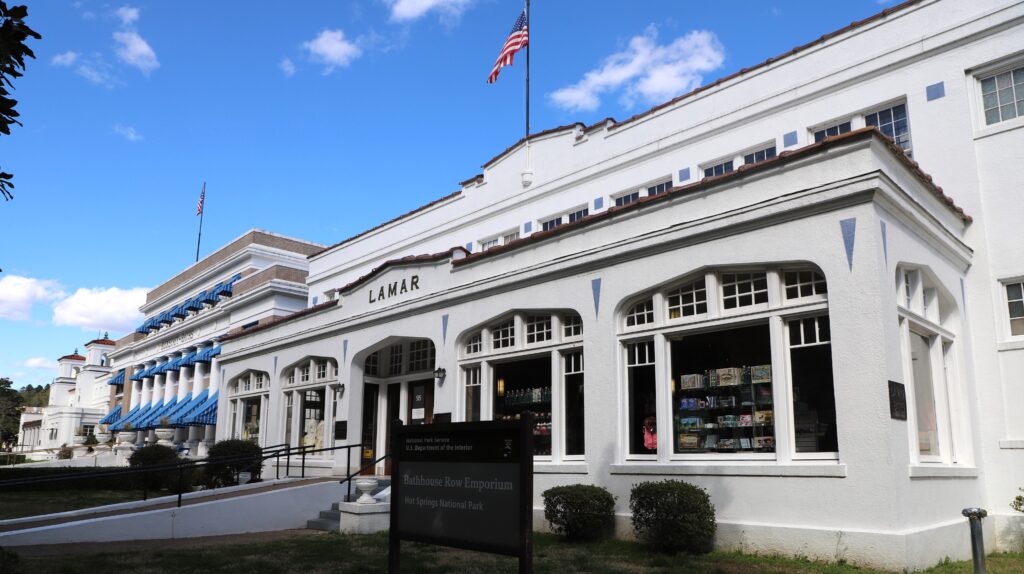
Bathhouse Row, Lamar Bathhouse – opened on April 16, 1923 replacing a wooden Victorian structure named in honor of the former U. S. Supreme Court Justice Lucius Quintus Cincinnatus Lamar. The Lamar was unique in that it offered a range of tub lengths (5′, 5′ 6″, 5′ 9″, 6′, 6′ 6″) for people of various heights. The Lamar Bathhouse closed on November 30, 1985.
Today, the structure houses offices for the park’s Resources Management employees, the park archives, museum collection storage spaces, a small research library, and the park store.
Within the Park, there are several places where you can touch the thermal water. Even though the water comes out of the ground at 143 degrees F, it is cool enough to touch by the time it reaches the pools.
Hot Springs Mountain Tower – The 216-foot tall structure opened to the public in June 1983 as part of the 13th Annual Arkansas Fun Festival. The Mountain Tower is operated as a concession for the park.
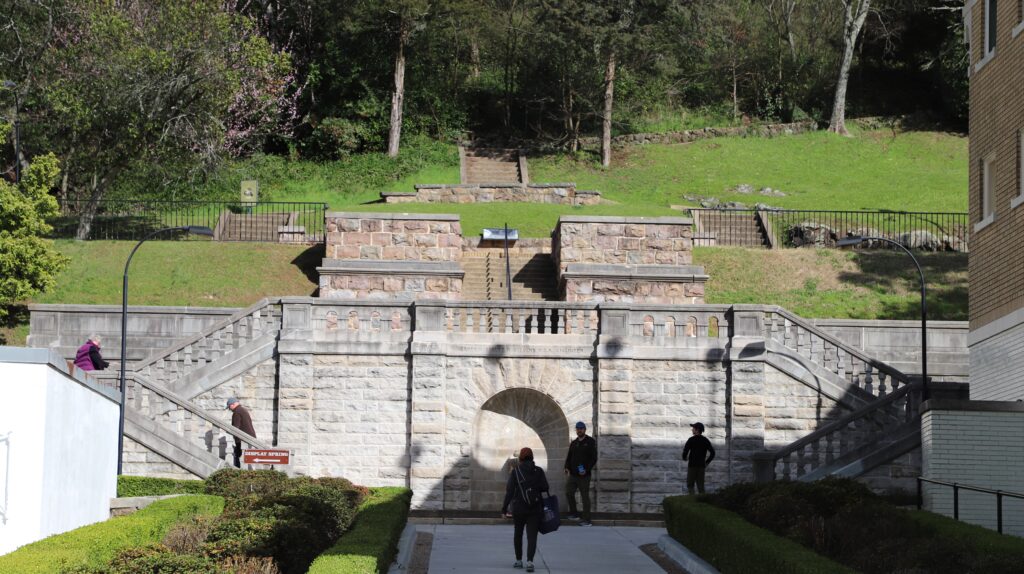
Peak Trail – You can hike to the tower on the Peak trail (2 km round trip). From downtown(or Bathhouse Row), ascend the Stephen’s Balustrade (grand staircase) behind the Fordyce Visitor Center to the Grand Promenade and climb the next two sets of steps until you reach the gravel road. Many trails branch off from here – Take the Peak trail which will lead to the Hot Springs Mountain Tower.
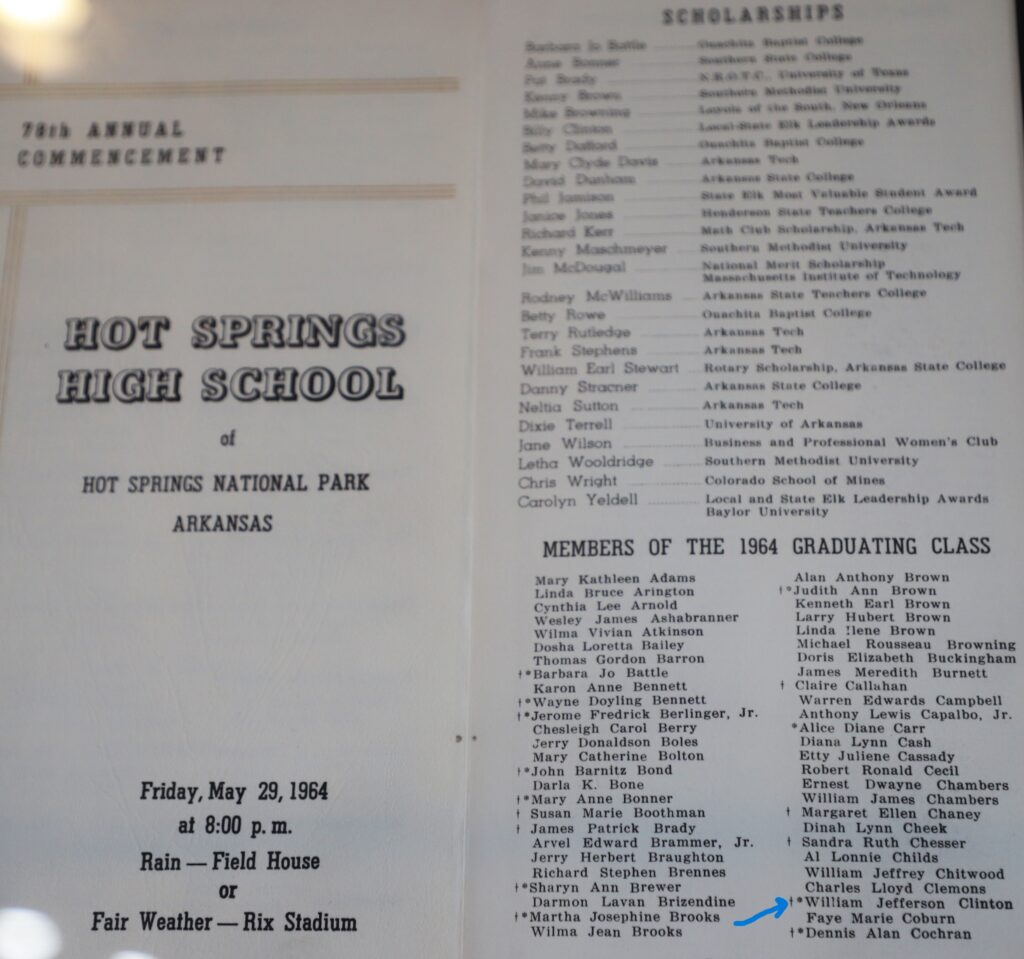
The Mountain Tower’s upper observation deck is open-air and at an elevation of 1,256 feet above sea level. From there, visitors can take in the view over 140 square miles of surrounding countryside, including the entire park and a portion of the Ouachita Mountains. The lower observation deck, enclosed and air conditioned, contains exhibits highlighting park and local history, with a special area devoted to former President Clinton, who was raised in Hot Springs.